Bulgarian journalist reveals how US-purchased arms end up with ISIS in Yemen
‘It’s a tip of an iceberg’
RT | September 5, 2019
Mortar shells shown in an Islamic State propaganda video have put a Bulgarian journalist on the scent of an alleged US-run arms shipping network supplying militants in the Middle East, she told RT in an exclusive interview.
This story began back in June, when Islamic State (IS, formerly ISIS) terrorists in Yemen demonstrated several Serbian-made 82mm mortar shells in their propaganda video. Independent investigative journalist, Dilyana Gaytandzhieva, believes that the deadly munitions ended up with the jihadists after going through US hands.
Tracing origins
Clearly visible on one of the shells is a mark that reads ’82 mm M74HE mortar shells KV lot 04/18.’ The letters KV stand for the Serbian state arms manufacturer Krusik, located in the town of Valjevo, while the digits 04/18 refer to lot 04 produced in 2018. One should not jump to any conclusions, however, as it is not the Serbs who were responsible for the shells suddenly appearing in the hands of terrorists, according to Gaytandzhieva.
A trove of “explosive” leaked documents she said she received from an “anonymous source” shows that the lot in question was part of a deal between the Serbian arms factory and a Pentagon contractor, Alliant Techsystems LLC. It was part of a purchase of more than 100,000 such shells “for the needs of the US government.”
“In the shipping documentation and on the labels on the mortar shells’ containers, there is a name of… the importer… that purchases the weapons on behalf of the US government,” the journalist told RT, citing the documents.
“There are indications and information about a US federal contract, under which these weapons were purchased, and this is absolutely verifiable in the case of Alliant Techsystems LLC, the company, which purchased the mortar shells and this particular lot of weapons pictured in the ISIS video in Yemen.”
Some leaked documents published by Gaytandzhieva do indeed mention a contract between Alliant Techsystems LLC and the Pentagon, which was allegedly aimed at supplying the Afghan National Army. “This lot was purchased under a $50 million contract between Alliant Techsystems and the US DoD for the delivery of non-standard US weapons to Afghanistan,” the journalist said.
Gaytandzhieva believes, however, that this case is just the tip of the iceberg. It could be a part of a far-reaching arms supply scheme involving up to “three million pieces of weapons – rockets and mortar shells – that have been diverted either to Syria or to Yemen.”
‘Corporate international weapons shipment network’
The leaked documents, which include emails, internal memos, photos and correspondence between the American arms dealers and the Serbian arms factory Krusik, have helped Gaytandzhieva to “expose the existence of a secret US special command unit code-named “Task Force Smoking Gun.” That unit has allegedly operated an arms depo since at least 2017, which is used in shady arms shipping operations by the US and its allies.
“I found that four private American companies were US government contractors and they were commissioned by the Pentagon to deliver non-US standard weapons to different destinations. According to the other leaked documents, I found that one of these destinations was Syria.
“This is a whole international weapons shipment network,” the journalist explained to RT, adding that Saudi Arabia and the UAE are also using it for its operations alongside the US. “The scheme is using different routes and diplomatic flights diverting weapons via a third party to their final destination, which appears to be Syria or Yemen.”
Gaytandzhieva said that she investigated at least “350 diplomatic flights carrying weapons for the last three years” by the same Azeri state-run company that delivered the mortar shells to Afghanistan in 2018. “They made technical landings with stays varying from a few hours to up to a day in intermediary locations without any logical reasons such as needing to refuel the planes,” she wrote in a separate report investigating this particular issue.
“That means that this international weapons shipment network has never [ceased to exist] and continues [it operations] to this date.”
RT has managed to independently verify parts of Gaytandzhieva’s report by finding the contracts between Alliant Techsystems LLC and the Pentagon that she mentions in the US Federal Procurement Data System. It has also been established that the company has regularly worked for the US Department of Defense since at least 2016.
Also on rt.com:
Al Qaeda team plays on the same side as the US in Yemen
Weapons ending up with terrorists is OK, as long as Obama did it: The world according to CNN
Moratorium on US oil sanctions to open talks with Iran
By M. K. BHADRAKUMAR | Indian Punchline | September 2, 2019
The diplomatic manoeuvrings over the situation around Iran are entering a crucial phase with an Iranian delegation led by Deputy Foreign Minister Abbas Araqchi leaving from Tehran for Paris today to pick up the threads of the 3-way discussions involving France, Iran and the United States at Biarritz a week ago on the sidelines of the G7 summit.
Araqchi is Iran’s chief negotiator with the E3 — France, UK and Germany — on the nuclear issue. Interestingly, Araqchi openly acknowledged on Saturday that the US has “shown some flexibility on the licensing of Iranian oil sales.”
The formula that was tossed around in Biarritz that the US will not oppose income being generated for Iran through oil sales is being finessed and linked to the working of the European Union’s trade mechanism for legitimate trade with Iran known as INSTEX. In essence, the formula is based on the French proposal of “freeze for freeze” — US freezing oil sanctions against Iran while Iran will freeze its steady pullback from the JCPOA commitments.
Araqchi said Iran and its European partners in the nuclear deal faced “difficult and complex” talks towards salvaging the pact. But a note of cautious optimism is apparent in Foreign Minister Javad Zarif’s remark in Tehran following a meeting of the National Security and Foreign Policy Committee at the Iranian parliament on Sunday afternoon that Iran may review the decision to further reduce JCPOA commitments if the European countries take action on INSTEX to live up to their own obligations. Tehran expects the Europeans to take a final decision by Thursday.
In the above backdrop, Iranian President Hassan Rouhani telephoned French President Emmanuel Macron on Saturday to convey Tehran’s interest in resuming the discussions under the latter’s mediation. Macron welcomed the move. Rouhani also assured Macron that Iran is supportive of a political settlement in Yemen and is willing to guarantee the security of the shipping lanes in the Persian Gulf and the Strait of Hormuz.
Perhaps, in an indirect alert to the US President Trump, Rouhani conveyed to Macron Iran’s misgivings that Israel is pulling all stops to derail the current negotiations which are at a delicate stage. Rouhani specifically referred to the Israeli attempt to provoke a flare-up involving Iran somehow, as evident in its recent air attacks on Lebanon, Syria and Iraq successively. The Hezbollah retaliated on Sunday by attacking Israel’s military vehicles, leaving a number of Israeli forces reportedly dead or injured.
In a sure sign that a broad settlement of the situation around Iran is under discussion, Zarif has travelled to Moscow with a high-level delegation aimed at coordinating the Iranian and Russian positions. Iran’s special envoys for Afghanistan, Yemen, and Syria are accompanying him. (Interestingly, Zarif referred to “serious developments” in Afghanistan, hinting at imminent US-Taliban deal this week.) Indeed, Iran is across the board addressing the western disquiet over Iran’s role in the conflicts in Yemen, Syria and Afghanistan. Tehran’s diplomatic priority will be to underscore that it can be a factor of regional security and stability.
From all appearance, Macron is steering the negotiations along three parallel tracks: a) forestall any precipitate crisis in the implementation of the 2015 nuclear deal by enabling Tehran to generate income out of oil sales that helps alleviate the hardships in the Iranian economy; b) persuade the Trump administration to concede Iran’s prerogative to resume trade relations with Europe and generate income through oil sales; and, c) defuse and de-escalate the various ‘hotspots’ in the Middle East where Iran’s role is regarded as critical — principally, Yemen, Syria and Afghanistan.
A convergence of the three tracks can be expected to lead to a new understanding between Tehran and Washington, possibly even a near-future summit involving the US and Iranian presidents. The clock is ticking and there is urgency to generate momentum for Macron’s efforts, as Trump and Rouhani are due to attend the UN General Assembly in September. A meeting is entirely conceivable as things stand.
Indeed, a deeply troubled relationship such as the Iranian-American is bedeviled with a lot of signalling and grandstanding, especially on the part of Tehran where Rouhani has to overcome significant resistance to the very idea of engaging with the US. The Supreme Leader Ali Khamenei has not said a word so far on Zarif’s visit to Biarritz or the 3-way France-Iran-US discussions under way. Tehran keeps repeating the demand on the lifting of the US sanctions as a pre-requisite for a face-to-face meeting between Rouhani and Trump.
However, it is possible to discern that Tehran is open to negotiations without preconditions and to strive for a meaningful breakthrough by optimally resorting to creative and flexible diplomacy. This flexibility factors in the assessment that Washington too is in a chastened mood.
Trump will not brook disruption by “hardliners”. Several Israeli attempts to have a phone conversation between PM Benjamin Netanyahu and Trump at Biarritz failed to materialise. Trump understands that all attempts by the US to create an international coalition against Iran have failed.
The law of diminishing returns is at work. The maximum pressure strategy against Iran is opening the window for an unprecedented expansion of Russian and Chinese influence in Tehran which may damage American regional interests in the long-term. The planned first-ever naval exercises between Iran and Russia in the Persian Gulf has rattled the US.
All in all, we may expect a moratorium on US oil sanctions in exchange for Iran’s compliance with its JCPOA obligations, which would be followed by direct negotiations for a historic thaw in the US-Iran relations.
Australia Furthers Its Cooperation With NATO
By Ramona Wadi | Strategic Culture Foundation | August 29, 2019
In 2001, Australia became involved in the US “war on terror”, coined by former US President George W Bush as the pretext for invading Afghanistan. The rationale behind Australia’s decision was the ANZUS Treaty – a non-binding security between Australia, New Zealand and the US purportedly in line with the principles of the UN Charter.
Despite the treaty relating to possible attacks on either party in the Pacific, former Australian Prime Minister John Howard invoked Article VI to justify Australia’s involvement in Afghanistan, which states, “This treaty does not affect and shall not be interpreted as affecting in any way the rights and obligations of the Parties under the Charter of the United Nations or the responsibility of the United Nations for the maintenance of international peace and security.”
Since 2001, Australia has maintained a presence in Afghanistan and Iraq. Adopting US rhetoric on security and terrorism, the Australian Defence Ministry described its presence in Afghanistan thus: “Our fundamental objective in Afghanistan is to combat a clear threat from international terrorism to both international security and our own national security. Australia cannot afford, and Australians cannot afford, to let Afghanistan once again become a safe haven and training ground for terrorist organisations.”
Needless to say, the war on terror accomplished a continuation of the terrorism fomented by the US in its plans to permanently destabilise the region. Following its involvement in Afghanistan and Iraq, Australia has also cooperated with the North Atlantic Treaty Organisation (NATO) since 2005, thus prioritising security discourse at a national level.
In 2012, the Australia-NATO Joint Political Declaration established the foundations for cooperation and strategy – in other words, the prolongation of intervention abroad upon pretexts of security. The document recognises Australia as “one of the leading contributors to the NATO-led ISA mission in Afghanistan, which works under a UN Security Council mandate.”
Additionally, the declaration whitewashes foreign intervention through security concerns: “We understand the need to manage effectively risks and threats to our mutual interest, such as political instability from failed states, terrorism, the proliferation of weapons of mass destruction and their means of delivery, and cyber-attacks.” This statement has been reflected in the recent partnership agreement signed by NATO and Australia earlier this month.
NATO Secretary General Jens Stoltenberg described Australia’s role as “helping us to prevent Afghanistan from becoming a safe haven for international terrorists.” Days later, US President Donald Trump spoke about US presence in Afghanistan as a purported deterrent to prevent the country from becoming “a laboratory for terror.”
Far from deterring terrorism, international involvement in Afghanistan has created networks of terror which cannot be dissociated from foreign intervention. Dismantling terrorism in a failed state created by foreign intervention is the pretext for prolonged international presence.
Australia’s involvement in Iraq and Afghanistan as a non-NATO member has been one of the most prominent and reportedly in relation to training missions, although it was also involved in capturing and detaining alleged terror suspects.
As early as 2003 while working in close cooperation with the US, Australia not only was knowledgeable about the torture and abuse meted out at Abu Ghraib in Iraq – it was also a participant. Documents reveal that Australia’s representative at Abu Ghraib, officer and military lawyer George O’Kane, blocked the International Committee of the Red Cross access to detainees undergoing torture sessions. The Australian Government’s response to the revelations refuted responsibility, stating that the techniques applied against detainees were in concordance with the Geneva Conventions.
Australia was also one of the countries, among them NATO members and allies, participating in the Central Intelligence Agency’s (CIA) extraordinary rendition program, which involved the transfer of individuals suspected of terrorism to secret US detention and torture centres.
Speaking about the recently agreed framework, Stoltenberg highlighted Australia’s cooperation with NATO as focusing on preventing terrorism. “Training local forces is the best thing we can do in fighting terrorism; helping countries to stabilise their own countries.”
False premises instigated the war on terror. Maintaining it requires the regurgitation of past, dangerous lies. The West’s appropriation of what constitutes “individual liberty, democracy, human rights and the rule of law” has fomented perpetual war and subjugation to imperialist powers.
In the words of Australian Defence Minister as to the level of involvement of Australia in the region, “what we’re doing at the moment is assessing the ask from the United States, assessing what other allies are doing and how they’re considering this.” A simple statement that shows the Australian government has no consideration for the countries invaded by NATO, the mutating violence, dispossession of people and permanent instability. Neither, for that matter, will Australia assess its own involvement in terms of the human rights violations it helped to propagate. Dropping bombs in Iraq? Australia seems to have no problem with furthering an oppressive legacy.
Trump fine-tunes peace deal with Taliban
By M. K. BHADRAKUMAR | Indian Punchline | August 22, 2019
The US President Donald Trump’s remarks at the Oval Office in the White House on August 20 regarding the Afghan peace talks and related issues exuded an overall sense of satisfaction that the “endless war” is finally ending —although issues still remain to be sorted out before the deal is closed.
This was also Trump’s first public assessment of the meeting he took last week with top officials, including the secretaries of state and defence, CIA director and US special representative on Afghanistan Ambassador Zalmay Khalilzad who leads the American team of negotiators at the Doha talks with the Taliban.
Trump said more than once during his remarks to the media on Tuesday that the talks with the Taliban are going well, and he made it a point to acknowledge publicly that the Taliban genuinely want to stop fighting with the US troops. As he put it,
“I will say this: The Taliban would like to stop fighting us. They would like to stop fighting us. They’ve lost a lot.”
Trump threw light on what to expect. Clearly, the status quo is untenable and Trump intends to withdraw troops. But he is also convinced that the US should “always have somebody there.” Trump left it vague. Is Eric Prince preparing to walk in through that door?
On the other hand, Trump didn’t mince words about the US having a a strong intelligence presence in Afghanistan. That is because, as he put it, “Nobody can be trusted. Nobody can be trusted. In my world — in this world, I think nobody can be trusted.”
Trump has bought into the US military and security establishment’s plea that for ensuring that 9/11 type attacks do not repeat, a total American withdrawal from Afghanistan will be far too risky.
Interestingly, Trump taunted Russia (or any other country) to try to replace the US and NATO in Afghanistan, the graveyard of empires. He flagged that USSR shrunk to Russian Federation following its Afghan intervention. That was the nearest Trump came to admitting that the Afghan war cannot be won.
Significantly, in Trump’s estimation, Taliban does have the capability to prevent Afghanistan becoming a revolving door for international terrorists if it has the political desire to ply such a role. He seemed to imply that a peace deal that accommodates Taliban’s interests and concerns could incentivise the latter to be an ally in the fight against terrorism.
Trump never once disparagingly referred to the Taliban. On the contrary, Trump feels no particular commitment anymore to protect the Ashraf Ghani government. He even let it be known that he could “understand” why the Taliban has no respect for the Afghan government.
Does this mean that Trump may pull the plug on Ghani’s set-up? Most certainly, Trump’s remarks suggest that the US is distancing itself from the Kabul government and is gravitating toward neutral middle ground in the Afghan fratricidal strife.
This works fine for the Taliban and Ghani’s political opponents who have been demanding an interim government. Equally, the tenor of Trump’s remarks would suggest that the US no longer makes a fetish of “Afghan-led, Afghan controlled” dialogue between the Taliban and the Ghani government.
Trump carefully sidestepped any reference to Pakistan. But it goes without saying that Pakistani role is of crucial importance to his efforts in the coming weeks to reach a final agreement with the Taliban.
Looking ahead, it is inevitable that the US’ dependency on Pakistan is only going to increase, given the long-term American military and intelligence presence in Afghanistan and the imperative need to preserve good US-Taliban equations at the working level to counter terrorist threats.
Clearly, in Trump’s scheme of things, the US can learn to live with a Taliban government in Afghanistan.
In this backdrop of a US-Pakistan-Taliban triangle taking shape on the Afghan political chessboard, Pakistan is the big winner. No doubt, Pakistan will go the whole hog to install a friendly government in Kabul. The US is unlikely to put roadblocks.
Conceivably, Pakistan’s agenda includes a settlement of the Durand Line question. The US and western allies as well as China and Russia (and Iran) will be supportive of the resolution of the dispute over Durand Line, without which the lawless Pakistan-Afghan border regions would continue to be a sanctuary for terrorist groups.
Pakistan can hope to leverage the preponderant hold of the Taliban in the southern and eastern provinces of Afghanistan. In turn, friendly, cooperative local governments in the Afghan border regions can be a factor of stability.
All in all, a favourable situation is at hand for Pakistan for the first time since independence in 1947. A big improvement in Pakistan’s internal security situation can be expected once a friendly government in Kabul stops promoting cross-border terrorism.
While big-power rivalries are a fact of life in world politics, the great game also allows convergence of interests between protagonists. The chances of China or Russia torpedoing the implementation of an Afghan peace settlement piloted and negotiated by the US under Trump’s watch are virtually zero.
In fact, Trump expressed no misgivings whatsoever on that score. On the other hand, the US is well aware that both China and Russia have direct links to the Taliban. The bottom line is that Afghanistan’s stabilisation is in everyone’s interests. Trump’s optimism is well-grounded that the endless war in Afghanistan is actually ending.
Daesh Is Curiously Pursuing The Same Strategic Goal As India In Afghanistan
By Andrew Korybko | EurasiaFuture | 2019-08-18
Daesh claimed credit for a suicide bombing at a Pakistani mosque on Saturday that ended up killing the Taliban leader’s younger brother, briefly raising fears that the organization would pull out of its ongoing peace talks with the US in response. Those concerns were quickly dismissed after one of the group’s unnamed representatives told Reuters that “If someone thinks martyring our leaders would stop us from our goal they’re living in a fool’s paradise”, which was met with a sigh of relief by practically everyone in the world, that is, except India. The South Asian state doesn’t support the US’ decision to engage in peace talks with the Taliban, as the author elaborated upon earlier this year in his piece about “Reading Between The Lines: India Has Sour Grapes Over America’s Afghan Peace Talks“, which explained that New Delhi wants Washington to remain in Afghanistan indefinitely since its partner’s military presence guarantees that the landlocked country could be used to expand its “strategic depth” by functioning as a Hybrid War staging ground against the global pivot state of Pakistan.
It’s therefore curious that Daesh’s latest suicide attack in Pakistan could have fulfilled India’s political fantasy of sabotaging the US-Taliban peace talks and thus keeping the Pentagon indefinitely in Afghanistan. One would be inclined to believe that Daesh would prefer for the US to leave the country as soon as possible, yet the world’s most notorious terrorist group defied expectations through its brazen action that could have resulted in the opposite. While Daesh’s rivalry with the Taliban is well known, it’s difficult to believe that it would do what it did at this specific time given the ultra-sensitive context involved relating to the US’ possible withdrawal from Afghanistan if the peace talks succeed, so it certainly makes one wonder whether Indian intelligence might have had a hand in guiding events, at the very least. It wouldn’t exactly be unprecedented either since detained Hybrid War operative Kulbhushan Jadav admitted to organizing terrorist attacks in the Pakistani region of Balochistan, which is where Daesh’s latest one occurred.
There’s no way to know for sure whether this was the case or not, but it’s nevertheless a plausible theory when considering the aforementioned strategic variables at play. Indian intelligence has connections with terrorist groups and is using them as proxies for waging a Hybrid War on Pakistan that’s hitherto mostly been with the intent of sabotaging CPEC, so it’s not inconceivable that some of those same assets could be used to target the Taliban’s younger brother with the intent of provoking the group to pull out of its peace talks with the US. Should that have been the case, then this operation definitely failed, but it would reveal just how desperate India is to keep the American military in Afghanistan that it would resort to orchestrating a carefully calibrated terrorist attack that could have ended up being a global game-changer. It would also speak to just how distrustful India is of its new American military-strategic ally and represent an escalation of the incipient Hybrid War being waged by both of them against the other, albeit with India taking the step to make it kinetic whereas the US had kept it purely within the economic and diplomatic realms for now.
Will Mercenaries Fight America’s Wars?
By Philip Giraldi | American Free Press | August 6, 2019
President Donald Trump’s pre-election pledge to end America’s useless wars in the Middle East and Afghanistan just might turn out to be somewhat less than what was promised if some political allies of the president have their way. For the past year there have been rumors circulating in Washington about the possibility of using mercenaries rather than American soldiers to keep the lid on a volatile Afghanistan and to arrange for regime change in countries like Venezuela.
It perhaps should surprise no one that a country dedicated to “free markets” should at least somewhat embrace the idea of using mercenaries to fight its wars. The concept is already embedded in the federal government, increasingly so since 9/11. A majority of the workers in the intelligence community as well as in the civilian ranks of the Pentagon are already paid contractors who work for the “Beltway bandit” firms that specialize in national security. A substantial number of those hires are armed paramilitaries operating in Afghanistan and elsewhere in the Mideast and Africa.
The logic for going with contractors rather than employees has been that budgets go up and down, so it is the smart thing to have a lot of people working for you who are on one-year contracts and can be let go if the money to pay them is not authorized. The downside is that the average federal employee costs roughly $125,000 per year in pay and benefits. A contractor costs three times as much, which means that the taxpayer pays the piper for something that is a convenience for the government.
The most prominent advocate for mercenary armies is Erik Prince, an outspoken supporter of Donald Trump and the founder of the controversial private security firm Blackwater. Blackwater was a major private military contractor in Iraq, where it provided security for State Department operations and facilities. Notoriously, in 2007, Blackwater employees shot and killed 17 Iraqi civilians at Nisour Square in Baghdad. One of Prince’s employees was eventually convicted of murder and three others have been convicted of manslaughter. Prince subsequently renamed the Blackwater security company and then sold it in 2010.
Prince, the scion of a wealthy Midwestern family that made its money selling auto parts, is himself a former Navy SEAL. Many of his Blackwater employees were drawn from the special operations community. His sister is Betsy DeVos, the conservative secretary of education, which certainly helps make sure that his views will be conveyed to the White House.
Two years ago, Prince was lobbying heavily in Washington in support of his plan to privatize the war in Afghanistan. He claimed that mercenaries operating in the special ops mode and not requiring a huge logistical tail could be more cost and manpower effective at fighting the similarly armed Taliban. But Prince did not see that as their primary mission, which would be training Afghan national forces while at the same time running the key elements in the country’s government that would support the effort, namely the treasury and national security team. In other words, it would be the foreign mercenaries in charge with the Afghan government going along for the ride until the situation would improve. Having the paid soldiers and their administrators in charge would also eliminate the pervasive Afghan government corruption, which has to this point crippled the war and training efforts.
It was a neat and also creative package that would at a stroke end direct U.S. involvement in the Afghan war, in a manner of speaking. It would also be quite lucrative for the company providing the mercenaries and the other support. Empirically speaking, however, it was always a nonstarter. The ability of a group of mercenaries to multitask in a difficult environment like Afghanistan has never been tested at this level, and it is impossible to imagine that the Afghan government would cede its authorities to a band of Americans and Europeans.
More recently, Prince has been supporting something similar, a private mercenary army of a few thousand men that would bring down the government of Venezuela’s socialist President Nicholas Maduro. Having learned from the Afghan experience that it is necessary to come up with the money before coming up with a plan, Prince has been discussing Venezuela with conservative Republican donors as well as with Miami-based Venezuelan millionaires, the so-called “bankers and oligarchs” that ran the country before the election of Hugo Chavez in 1998 forced many of them to go into exile. He has been seeking $40 million in seed money for the operation.
In private meetings in the United States and Europe, Prince sketched out a plan to field up to 5,000 soldiers-for-hire on behalf of Venezuelan opposition leader Juan Guaido. He has argued that a dramatic step is necessary to break through the standoff between Guaido and Maduro. Prince’s pitch detailing how he would accomplish a change in government features intelligence operations preceding deployment of those 5,000 mercenaries recruited in Latin America to conduct “combat and stabilization operations.”
The White House is cool to the plan, particularly in the wake of the poor intelligence that led to the badly bungled and embarrassing Venezuelan coup in May. It is currently more inclined to tighten sanctions to create more unrest, particularly as there are already reports of starvation in some parts of the country.
There also has been concern in Washington policy circles that the introduction of foreign soldiers in Venezuela could lead to civil war, something like a replay of what has been experienced in Afghanistan, Syria, Iraq, and Libya. But the most interesting aspect of the discussion is the fact that it is taking place at all. The United States of America, hostile to the ability of kings to initiate wars on their own authority, was founded in part in opposition to any permanent standing army beyond what was necessary for self-defense.
Now, the U.S. may be considering major military operations using mercenary armies to deal with undeclared and illegal wars thousands of miles away that do not even threaten the homeland. It is, unfortunately, just one more indication of how the United States has been changed beyond all recognition in the past 20 years.
Afghanistan: In Search of Monsters to Not Destroy
By Thomas L. Knapp | Garrison Center | August 2, 2019
America, John Quincy Adams said in 1821, “goes not abroad, in search of monsters to destroy. She is the well-wisher to the freedom and independence of all. She is the champion and vindicator only of her own.” That’s as good a summary ever spoken of the non-interventionist position.
US Senator Lindsey Graham (R-SC) disagrees. He opposes President Trump’s quest for a peace agreement with the Taliban in Afghanistan as “reckless and dangerous,” entailing “severe risk to the homeland.”
Nearly 18 years into the US occupation of Afghanistan, at a cost of trillions of dollars, more than 4,000 Americans dead and more than 20,000 wounded, Graham and his fellow hawks clearly aren’t really looking for monsters to destroy. They want those monsters alive and at large, to justify both their own general misrule and the perpetual flow of American blood and treasure into foreign soil (read: into the bank accounts of US “defense” contractors).
The US invasion of Afghanistan was never militarily necessary. The Taliban offered to hand over Osama bin Laden upon presentation of evidence that he was the mastermind of the 9/11 attacks, an offer President George W. Bush arrogantly declined in favor of war.
The extended US occupation of, and “nation-building” project in, Afghanistan, was even less justifiable. Instead of relentlessly pursuing the supposed mission of apprehending bin Laden and liquidating al Qaeda, US forces focused on toppling the Taliban, installing a puppet regime, and setting themselves to the impossible task of turning Kabul into Kokomo.
It hasn’t worked. It’s not working now. It’s not going to start working. Ever. It should never have been attempted. Afghans don’t want Lindsey Graham running their affairs any more than you want him running yours. Can you blame them after as many as 360,000 Afghan civilian deaths?
Afghanistan is not and never has been a military threat to the United States, let alone the kind of existential threat that would justify 18 years of war. Yesterday isn’t soon enough to bring this fiasco to an end. But Graham and company would, given their way, drag it out forever.
They’re the kind of grifters H.L. Mencken had in mind when he noted that “[t]he whole aim of practical politics is to keep the populace alarmed (and hence clamorous to be led to safety) by menacing it with an endless series of hobgoblins, all of them imaginary.” But they’d rather keep old hobgoblins alive than have to manufacture new ones.
Thomas L. Knapp (Twitter: @thomaslknapp) is director and senior news analyst at the William Lloyd Garrison Center for Libertarian Advocacy Journalism (thegarrisoncenter.org)
Tulsi Gabbard Savages Trump Over Pushing US ‘Closer to Brink of Nuclear Catastrophe’ at Dem Debate
Sputnik – August 1, 2019
2020 presidential hopeful Tulsi Gabbard has skyrocketed to No. 1 in Google Trends after blasting the current US administration’s “warmongering” foreign policy during the second Democratic presidential debate on Wednesday.
Democratic House Representative for Hawaii Tulsi Gabbard has blasted the Trump administration for pushing the United States closer to the “brink of nuclear catastrophe” since relations with a number of nuclear armed countries have dramatically escalated in the past few months.
“Donald Trump and warmongering politicians in Washington have failed us. They continue to escalate tensions with other nuclear armed countries like Russia and China, and North Korea, starting a new Cold War, pushing us closer and closer to the brink of nuclear catastrophe. Now as we stand here tonight, there are thousands of nuclear missiles pointed at us… As president, I will end this insanity”, she added.
Following her speech, Gabbard took the number one spot in Google Trends, becoming the most searched Democratic candidate on the platform.
‘Trump Betrayed US on Afghanistan Pullout’
Speaking at the second Democratic presidential debate on Wednesday, she also accused the US president of betraying the American people by failing to deliver on his promise to quickly withdraw troops from Afghanistan.
Gabbard pledged to pull out all American forces from Afghanistan if elected president next year and end the 18-year war in the country:
“The leadership I will bring to do the right thing to bring our troops home within the first year in office. We have to do the right thing and end the wasteful regime change wars and bring our troops home. Every single month we are spending $4 billion on a continuing war in Afghanistan, $4 billion dollars every single month, rather than ending that war, bringing our troops home and using those precious resources into serving the needs of the people here in this country.”
The Iraq War veteran cited the example of the 2003 conflict, which broke out after the George W. Bush administration falsely claimed that Baghdad produced weapons of mass destruction.
“We were all lied to. This is the betrayal. The problem is that this current president continues to betray us”, she added.
Gabbard’s comments follow an interview by US Secretary of State Mike Pompeo with Economic Club of Washington President David Rubenstein in which he emphasised that President Trump had ordered to “end the endless wars, draw down, reduce” the number of US troops stationed in Afghanistan before the 2020 elections.
Pompeo as well noted that he was hoping for a positive outcome of US negotiations with the Taliban, an Islamic insurgent movement, the Afghan government and opposition groups inside the country that will result in a peace agreement to put an end to the 18-year war.
President Trump has long expressed a desire to pull out American troops from Afghanistan, saying that the future reductions in US forces would be tied to progress in peace talks. In June POTUS indicated that the US was “doing fine” there and will soon see its soldiers halved to 8,000.
“As you know in Afghanistan, when I got there, it was 16,000 people. It’s now 9,000 people. And some good things are happening there frankly. No, I’d like to get out of the Middle East, we should have never been in the Middle East. We should have never been there, and I’d like to get out”, he told Time magazine.
Back in February, The New York Times reported that a Defence Department proposal for the peace talks with the Taliban stipulated that all American troops – an estimated 14,000 – be withdrawn in the next three to five years along with the rest of the international forces in the country.
The United States invaded Afghanistan in 2001 in response to the 9/11 terrorist attacks on American soil and overthrew the Taliban, which seized power in the Central Asian country in 1996. At the time, Washington said that Kabul had become a safe haven for al-Qaeda while the Taliban was in power.
Most US troops were withdrawn from Afghanistan by the end of 2014, but a relatively small contingent has continued to support the Afghan Armed Forces in combating terrorism.
Iran’s Zarif drives Trump to insanity
By M. K. BHADRAKUMAR | Indian Punchline | August 1, 2019
At a time when the Trump administration has no problem negotiating with the secretary of the Russian national security council Nikolai Patrushev, who is technically under US sanctions since April 2018, the cut and thrust of Washington’s move to sanction Iran’s Foreign Minister Mohammad Javad Zarif needs to be understood properly.
How did US Secretary of State Mike Pompeo try to explain the dispatch of Zarif to perdition? Pompeo’s statement on Wednesday attributed to Zarif a singular sin: a) Zarif “acted on behalf of the Supreme Leader”; b) Zarif took “direction from the Supreme Leader and his office”; c) Zarif was “a key enabler of Ayatollah Khamenei’s policies throughout the region and around the world”; d) and, Zarif has been “a senior regime official and apologist” of Iranian government and has “for years now been complicit in these (Iran’s) malign activities”.
Basically, Pompeo’s grouse narrows down to this: Zarif is a disciplined dutiful, loyal Iranian public servant who abided by the Iranian system of government founded in the concept of velāyat-e faqīh (‘guardianship of the Islamic jurist’.)
Does that become a sin? Any foreign minister has his job cut out for him — even Pompeo himself. Pompeo has no pretensions that he is holding the job entirely at the pleasure and discretion of his supreme leader President Trump. Trump, in fact, is an unforgiving stickler for loyalty. Ask James Mattis or Rex Tillerson.
The US establishment knows very well how the concept velāyat-e faqīh operates, how the alchemy of political power is formed in Iran, and how the decision-making process is reached. Even Trump would know it. Which is why he even tried to get through to Supreme Leader Ayatollah Ali Khamenei (and was duly snubbed.) So, where is the beef?
Simply put, Zarif per se is the problem. The Trump administration is desperately keen to put an end to Zarif’s contacts with the American elite. Zarif lived and worked for several years in America from the age of 17 — as a high school student, university student, and career diplomat, ending up as Iran’s representative at the UN from 2002 to 2007. He also kept closely in touch with the US academia and intellectual circles in his capacity as a professor and editor of scholarly journals in Tehran who has written copiously on disarmament, human rights, international law, and regional conflicts.
Indeed, what rankles the Trump administration is that Zarif has extensively networked with American intellectuals, politicians, think tankers and media persons — figures as diverse as Joseph Biden, John Kerry, Nancy Pelosi, Chuck Hagel, Nicholas Kristof, Thomas Pickering, James Dobbins and Christian Amanpour.
Zarif took his job seriously and being a fluent English speaker, he could tweet and debate and spar with any American with delectable ease. Zarif outclassed the mediocre American foreign and security policy team.
Zarif’s periodical visits to New York (ostensibly to attend the UN events) increasingly became a nightmare for the Trump administration as he cast his net wide and ably put across Iran’s narrative. Trump singled out more than once that Zarif had meetings with Kerry, former state secretary who negotiated the 2015 Iran deal.
This is the crux of the matter. By imposing sanctions on Zarif, the US can deny visa to him and render unlawful (and liable to prosecution under law) any contact between him and any American national. Effectively, Trump instructed Pompeo to make sure that Zarif doesn’t come to New York between now and the 2020 November election so that his detractors and critics cannot hear from the horse’s mouth the Iranian narrative.
Trump feels exasperated that Iran is winning the information war. And he is worried that between now and November 2020, his re-election campaign may get booby-trapped. For any longtime observer of the US-Iran standoff, it is obvious that a sea change has appeared in the American discourses on Iran. There is an influential and ever growing body of opinion in the US today, which disagrees with Trump’s ‘maximum pressure’ strategy. This constituency rationally argues that Trump shouldn’t have dumped the 2015 deal.
Equally, there is a far better understanding today in the informed American opinion regarding Iran and its policies, and the zen of dealing with Persian nationalism beneath the veneer of Islamism. The surprising part is that such an awakening has happened despite the Herculean efforts by the Israeli Lobby to demonise Iran and to stymie all contrarian views in the media, think tanks and campuses — and the Hill.
Will Trump’s ploy work? Unlikely. The point is, Zarif is irrepressible. He will continue to tease, taunt, disparage, humiliate and expose and run down Trump’s Iran policies. Worse still, Zarif has driven a knife into the heart of the ‘B Team’ driving the US administration’s Iran policies currently.
Trump’s sanctions against Zarif will not set an example for any other country which has diplomatic relations with Iran. In the final analysis, Trump will have to deal with Zarif, whether he likes him or not.
The best way to counter Zarif would have been to handpick an intellectually resourceful, dynamic state secretary. A mediocrity like Pompeo stands no chance with Zarif. This is a dumb thing Trump has done. He should have known better.
In 2001, Zarif was Iran’s main representative at the Bonn Conference, which brought together regional players in the aftermath of the US invasion of Afghanistan and the ousting of the Taliban. His American counterpart at the event, James Dobbins — who was later named as the Obama Administration’s special envoy to Afghanistan — wrote a memorable essay titled Negotiating with Iran: Reflections from Personal Experience in the Washington Quarterly about Zarif’s erudition, wit and charm — and his pragmatism, which helped the two gifted diplomats to thrash out “over morning coffee and cakes” a deal that led to the replacement of the Northern Alliance government in Kabul with a US-backed interim set-up under Hamid Karzai. (Burhanuddin Rabbani remarked bitterly at that time he hoped that would be the last time a foreign power ever dictated to Afghans.)
Washington has now sanctioned the man who played a pivotal role in that fateful transition in Kabul leading to the installation of the US’ client regime in the Hindu Kush. Some gratitude!
US, Pakistan move in tandem to end Afghan war
By M. K. BHADRAKUMAR | Indian Punchline | July 28, 2019
The US State Department chose Friday to announce the decision to approve a $125 million aid package providing technical support to Pakistan’s fleet of F-16 fighter aircraft. Ironically, the news reached Delhi on the 20th anniversary of the Kargil Vijay Diwas, which symbolises, as Prime Minister Narendra Modi put it on Saturday, “India’s might, determination, capability, discipline and patience” to thwart Pakistan’s hostile acts.
Clearly, Washington has begun to “incentivise” Pakistan, in the downstream of the talks between President Trump and Prime Minister Imran Khan at the White House on July 22.
Meanwhile, the Pentagon also notified on Friday about a proposed $670 million follow-on support programme for the eleven C-17 Globemaster-III air-lift aircraft sold by the US to India in the recent years. By holding out the carrot to India, Washington hopes to create the hype that it is also favouring Delhi.
The intention here is to finesse Delhi’s criticism over the revival of US military aid to Pakistan. Of course, it will be a delusional thought that the US is balancing India and Pakistan. In reality, the Pentagon’s India proposal is a purely commercial transaction — “after-sales service”, which will generate good business for the US vendors — while the military aid to Pakistan providing technical and logistics support for its F-16 fighter jets is on concessional terms and signifies a major political decision.
Delhi will take note that the proposed US military aid may significantly enhance Pakistan’s offensive capability insofar as some of the F-16 jets are capable of delivering nuclear weapons.
Indeed, the “big picture” emerging out of all this is that the US and Pakistan are marching ahead in tandem to implement the decisions taken by Trump and Imran Khan to swiftly end the Afghan war.
No sooner than Imran Khan left Washington on July 23, the chairman of the US Joint Chiefs of Staff General Joe Dunford traveled to Afghanistan’s capital of Kabul for consultations with American, NATO and Afghan officials.
Dunford said he wants to ensure Gen. Austin S. Miller, the US commander in Afghanistan, has all he needs. He added that he wanted to take the pulse of US military operations in the country. Indeed, the pulse rate is rather high, as the US withdrawal from Afghanistan looms large.
Dunford insisted that the negotiations have not changed the military mission in the country. “Day to day, the mission hasn’t changed for General Miller and the team, and they are still taking the fight to the Taliban and supporting the Afghan military,” he said.
But that’s putting on a brave face. Evidently, the US is pushing forward a “face-saving way out of Afghanistan,” as former CIA deputy director Michael Morell has told Axios. The message has gone down the line in the State Department and the Pentagon that Trump wants to move quickly toward a deal to end the war in Afghanistan. Morell is deeply sceptical whether a deal with the Taliban will secure peace.
He said, “I would bet that the US intelligence community and policymakers have a pretty good understanding of what the Taliban’s intentions are. So we’re making a deal that we know isn’t going to be kept just to save face, just to maintain honour.” Morell repeated his past warnings that the Taliban is “ideologically not disposed to sharing power.”
However, an apocalyptic scenario cannot deter Washington anymore. On a parallel mission, the US special representative on Afghanistan Zalmay Khalilzad also took off on July 23 from Washington to Kabul (where he is now speaking with members of the Afghan government as he works to encourage inter-Afghan conversations between the Taliban and the government.)
In immediate terms, Khalilzad expects Pakistan to deliver on the promise that Imran Khan made to Trump to the effect that he plans to meet with the Taliban to persuade them to hold negotiations with the government in Afghanistan. (Taliban has welcomed such a meeting.)
Imran Khan had said, “Now, when I go back after meeting President Trump … I will meet the Taliban and I will try my best to get them to talk to the Afghan government so that the elections in Afghanistan must be inclusive where the Taliban also participate in it.”
It may seem a tough call, but the news from Kabul on Saturday suggests that Pakistan may have made some headway already. The Afghan state minister for peace affairs Abdul Salam Rahimi announced on Saturday that “We (Afghan government) are preparing for direct talks (with the Taliban.) The government will be represented by a 15-member delegation. We are working with all sides and hope that in the next two weeks the first meeting will take place in a European country.”
The Norwegian capital Oslo is mentioned as the venue for the crucial meeting between the representatives of the Afghan government and the Taliban. The Taliban has not yet budged from its longstanding demand that a deal must be forged with the US first. Possibly, a deal may be announced after the 9th round of US-Taliban talks in Doha in the coming week.
Indeed, we are witnessing an utterly fascinating spectacle of diplomatic pirouette being played out between and amongst five main protagonists — Trump who is demanding an expeditious US withdrawal from Afghanistan, assuming Imran Khan will deliver on his promises; Imran Khan, in turn, going through the motions of persuading the Taliban to be reasonable while expecting generous US reciprocal moves to accommodate Pakistani interests; Ashraf Ghani, Afghan president, seeing the writing on the wall that US withdrawal is unstoppable, whilst still hoping to secure a second term in office; Khalilzad pushing the reluctant Afghan government to fall in line with a Taliban deal, while also negotiating with the Taliban for an orderly US withdrawal, albeit with a weak hand; and the Taliban on a roll, sensing victory. There are caveats galore. But the compass has been set.
“US Causes Instability Anywhere It Sets Foot”
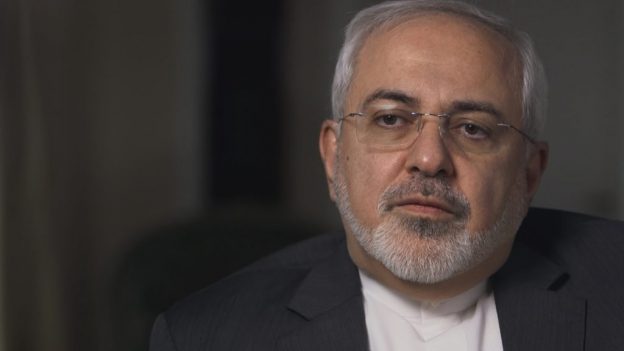
Al-Manar | July 20, 2019
Iranian Foreign Minister Mohammad Javad Zarif said Saturday that the United States causes instability and insecurity everywhere in the world it sets foot, including the Persian Gulf and South America.
Iranian Foreign Minister Mohammad Javad Zarif arrived in the Venezuelan capital early Saturday after a six-day stay in New York.
Speaking to reporters upon arriving in Caracas, Zarif said that “anywhere the United States sets foot in, it causes instability there.”
“At the moment, the US is causing insecurity with its presence in the Persian Gulf, the Middle East, and also the South American region,” said Zarif.
He went on to add that, “I don’t know any place in the world where the US’s presence has brought stability.”
“Anywhere the US has set foot on, it led to pressure on the people and caused extremism and terrorism,” stressed the Iranian top diplomat.
While in Caracas, Zarif is slated to take part in the Ministerial Meeting of the Non-Aligned Movement (NAM) Coordinating Bureau (CoB) on 20-21 July under the theme: “Promotion and Consolidation of Peace through Respect for International Law.” He will also meet with a host of Venezuelan officials before making a visit to Nicaragua and Bolivia.
Featured Video
Seyed M. Marandi: US-Iran War Inevitable: Kuwait and Bahrain May Fall
or go to
Aletho News Archives – Video-Images
From the Archives
Oil and the Israel Lobby
Reknowned economist M. Shahid Alam offers this excellent critique of Noam Chomsky’s defective analysis of the relative influence of Oil versus the Israel lobby over US foreign policy: … continue
Blog Roll
 Aletho News
- ICC ignored ‘very well-documented’ NATO crimes – ex-Libyan minister
- SNSC secretary dismisses US response to Iran’s conditions as ‘inadequate’
- Sanaa says Taiz roads open, secure for residents, warns Saudi forces
- Iraqi resistance group urges Saudi leadership to admit defeat, lift Yemen siege
- Trump’s Retreat: How Al-Aqsa Flood Took Down the US Empire
- Israel’s Military Actions in Lebanon Grossly Violate International Law — Lavrov
- Seyed M. Marandi: US-Iran War Inevitable: Kuwait and Bahrain May Fall
- Leaders Condemn Ansarallah Attack on Saudi Arabia While Ignoring Illegal War Against Yemen
- Leaked: Britain’s Covert Iraqi Psyops Network
- Yemeni Armed Forces Warn Airlines Against Using Saudi Airports, Exempt Mecca and Medina
- If Americans Knew
- After Oct 7, IDF policy allowed civilian casualties for even the lowest-ranking targets
- Israel’s Destruction of Southern Lebanon Intensified After the Cease-Fire
- The Last-Minute Decision That Gave Israel Its Name
- The American Conservative: How Trump Made the World Go Nuclear
- Meet the US generals and admirals advancing Israeli policy
- Opinion: Why news organizations should boycott Israel
- The Israeli witch hunt of Sami Abu Shehadeh exposes the lie of the ‘Jewish and democratic’ state
- No state has a ‘right’ to exist – least of all Israel
- Testimonies about Gaza’s civilian death toll expose Israel’s atrocities – Daily Update
- How Israel Conquered the Latin American Right
- No Tricks Zone
- New Study Suggests Large Regions Of The Pacific Ocean Have Been Cooling For The Last 80 Years
- Germany’s Green Energy Debacle: High Energy Costs Force Kahla Porzellan to Close After 182 Years!
- New Study: 50 Years Of The Most Aggressive ‘Net Zero’ Policies Can Only Affect The Global Climate By 0.03°C
- US September “Heat” Was No Record…Many Records Set Decades Ago
- Latest European Green Energy Debacle; Portugal’s Largest Flagship Solar Park Insolvent!
- Green Energy Debacle: German Expert Professor Fritz Vahrenholt Warns Of Severe Economic And Social Consequences
- Two More Paleo Reconstructions Affirm Meters-Higher Sea Levels Across Ireland, Brazil 7000-6000 Years Ago
- New Study: Earth And Venus Surface Warmth Largely Explained By Convection And Lapse Rate, Not CO2 Or Radiation
- 2025 Nature Paper Claiming Worsening Global Drought Gets RETRACTED …Heavily Flawed
- New Study: ‘Global Drought Shows No Detectable Recent Acceleration Under Climate Warming’

