The Myth of US ‘Inaction’ in Syria
By William Van Wagenen – The Libertarian Institute – July 8, 2018
Introduction
When the Russian military intervened in the Syrian war in October 2015, many in the Western press complained bitterly, demanding that US planners intervene directly in Syria on behalf of the anti-government rebels in response. Reuters alleged that “The Middle East is angry and bewildered by US inaction in Syria,” arguing that “The question on everyone’s mind is: will the United States and its European and regional Sunni allies intervene to stop President Vladimir Putin from reversing the gains made by mainstream Syrian rebels after more than four years of war? Few are holding their breath.” The Washington Post similarly argued that Russian president Vladimir Putin was “exploiting America’s inaction,” while the Guardian lamented the “western inability to care enough about the plight of Syrians.” As Russian and Syrian forces battled rebels one year later in Aleppo, more dramatic accusations of US inaction emerged, with Foreign Policy describing US policy in Syria under Obama as “inaction in the face of genocide.”
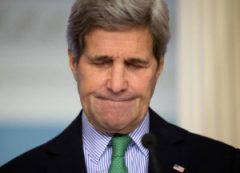 The idea that the United States has not intervened in Syria and is guilty of “inaction,” is a myth however. The United States and its Western and Gulf Allies have intervened in the Syrian conflict from early on. US planners have been fighting what the New York Times described as a “$1 Billion Secret C.I.A. War in Syria” while providing weapons to rebels through a program considered “one of the costliest covert action programs in the history of the C.I.A.” Starting in the fall of 2012, the US and its Gulf partners, under the direction of then CIA director David Petraeus, were openly sending “a cataract of weaponry” into Syria. It is likely that such shipments began much earlier without public acknowledgment, via the “rat line” from Libya, as reported by journalist Seymour Hersh. US Special Envoy to Syria Michael Ratner, in a meeting with members of the Syrian opposition, explained that “The armed groups in Syria get a lot of support, not just from the United States but from other partners,” while Secretary of State John Kerry added in the same meeting, “I think we’ve been putting an extraordinary amount of arms in,” and “Qatar, Turkey, Saudi Arabia, a huge amount of weapons [are] coming in. A huge amount of money.”
Also a myth is the idea that any US intervention in Syria would seek to protect civilians. While allegations that Syrian and Russian forces were committing genocide in Aleppo proved baseless, US planners have themselves supported rebels intent on committing genocide and sectarian mass murder. This was clearly evident in the Syrian city of Latakia, which by the time of the Russian intervention in October 2015 was on the verge of falling to a coalition of Syrian rebel groups including al-Qaeda (known in Syria as the Nusra Front) and the US-armed and funded Free Syrian Army (FSA).
Robert Worth of the New York Times writes that “In Latakia, some people told me that their city might have been destroyed if not for the Russians. The city has long been one of Syria’s safe zones, well defended by the army and its militias; there are tent cities full of people who have fled other parts of the country, including thousands from Aleppo. But in the summer of 2015, the rebels were closing in on the Latakia city limits, and mortars were falling downtown. If the rebels had captured the area — where Alawites are the majority — a result would almost certainly have been sectarian mass murder. Many people in the region would have blamed the United States, which armed some of the rebels operating in the area. . . Andrew Exum, who worked in the Pentagon at the time, told me that the military drew up contingency plans for a rapid collapse of the regime. The planning sessions were talked about as ‘catastrophic success [emphasis mine].’”
Alawite civilians in Latakia faced the prospect of being massacred if rebels had been able to capture the city, due to the virulently anti-Alawite views of Nusra Front members. Nusra religious clerics draw on the writings of the fringe 14th century Islamic scholar Ibn Taymiyya to argue that Alawites are “infidels” deserving of death. Syria analyst Sam Heller described Nusra clerics as promoting “toxic — even genocidal — sectarianism.” Rebels from the FSA, which have fought alongside and “in the ranks” of the Nusra Front throughout the conflict, also posed a threat to Alawite civilians in Latakia. While typically considered moderate in the Western press, many FSA battalions have been armed and funded by the Syrian Muslim Brotherhood (MB). Thanks to the influence of Brotherhood ideologue Said Hawwa, the Syrian Brotherhood strongly promoted the anti-Alawite sectarian views of Ibn Taymiyya from the 1960’s until the 1980’s. This anti-Alawite sectarianism re-emerged in segments of the Syrian opposition, including in elements of the FSA, when peaceful protests and armed insurrection against the Syrian government simultaneously erupted in Syria in the spring of 2011.
While the Syrian and Russian militaries managed to protect Latakia and prevent a massacre of the city’s Alawite civilians, the broader effort to prevent the fall of the country to al-Qaeda and its FSA allies exacted a huge toll on Syria’s Alawites. The Telegraph noted that already by April 2015, “The scale of the sect’s losses is staggering” and that of some 250,000 Alawite men of fighting age “as many as one third are dead” and that “Alawite villages nestled in the hills of their ancestral Latakia province are all but devoid of young men. The women dress only in mourning black.”
While arming rebels threatening the massacre of Alawite civilians in Latakia, US planners were at the same time welcoming the potential massacre of Syrian civilians in Damascus. The Syrian capital was on the verge of falling to the Islamic State (ISIS) in the summer of 2015 after ISIS, with the help of Nusra, captured all of the Yarmouk Palestinian refugee camp in the southern Damascus suburbs. The New York Times acknowledged the ISIS threat to Damascus at this time, observing that “By seizing much of the camp” ISIS had “made its greatest inroads yet into Damascus,” while the Washington Post noted that “Their new push puts [ISIS] within five miles of the heart of the capital . . . even as they are on the retreat in Iraq.”
In a private meeting with members of the Syrian opposition, Secretary of State John Kerry acknowledged that US planners had actually welcomed the ISIS advance on Damascus, in an effort to use it as leverage to force Assad to give up power. Kerry explained that, “the reason Russia came in is because ISIL [ISIS] was getting stronger. Daesh [ISIS] was threatening the possibility of going to Damascus. And that is why Russia came in. They didn’t want a Daesh [ISIS] government and they supported Assad. And we know this was growing. We were watching. We saw that Daesh [ISIS]was growing in strength. And we thought Assad was threatened. We thought we could manage that Assad might then negotiate. Instead of negotiating, he got Putin to support him [emphasis mine].”
Because the US was bombing ISIS in defense of its Kurdish allies in Northeastern Syria and its Iraqi government allies in Northwestern Iraq, the fact that US planners at the same time welcomed the ISIS push on Damascus against the Syrian government was largely obscured.
Had Damascus fallen to ISIS, it is clear that many civilians in the city, including Christians, Alawites, Shiites, members of the LGBTQ community, and pro-government Sunnis, would have been killed. While commenting on the Russian intervention, Michael Kofman of the Wilson Center acknowledged that “Assad may be irredeemable in the eyes of the United States, but it is equally clear that a high human price would be paid when the Islamic State [ISIS] or al-Nusra seizes the major population centers in Syria that he still controls.”
It is also clear that US planners were deliberately supporting al-Qaeda (Nusra), despite its genocidal intentions towards Syria’s Alawites, by flooding Syria with weapons. Because FSA brigades that received funding and weapons from the US and its Gulf Allies were fighting side by side with militants from Nusra throughout the country, in practice much of the money and weapons sent to the FSA ultimately benefited al-Qaeda.
For example, US-made TOW anti-tank missiles sent by US planners to FSA groups in Idlib played a crucial role in helping Nusra conquer the entire province in the spring of 2015. Syria analyst Hassan Hassan observed in Foreign Policy during this period that “The Syrian rebels are on a roll” and that “The recent offensives in Idlib have been strikingly swift — thanks in large part to suicide bombers and American anti-tank TOW missiles,” which the FSA and Nusra deployed in tandem. Syria analyst Charles Lister, also writing in Foreign Policy, described how US planners explicitly encouraged the FSA groups they were arming to fight alongside Nusra in Idlib. Rebel victories in Idlib, in particular the town of Jisr al-Shughour, allowed Nusra and the FSA to then threaten the massacre of Alawites in Latakia.
When Russia intervened militarily in Syria in October 2015, US planners responded by immediately increasing shipments of TOW anti-tank missiles to FSA groups, some of which then helped Nusra capture the strategic town of Murek in central Syria one month later in November 2015.
This prompted Daveed Gartenstein-Ross of the Foundation for Defense of Democracies (FDD) to observe that “it is impossible to argue that U.S. officials involved in the CIA’s program cannot discern that Nusra and other extremists have benefited” from CIA weapons shipments to Syrian rebels, “And despite this, the CIA decided to drastically increase lethal support to vetted rebel factions following the Russian intervention into Syria in late September.”
Nusra did not only benefit from fighting alongside FSA rebels armed with US-supplied weapons, but acquired many of these weapons themselves. That Nusra regularly purchased weapons from the Western-backed military councils supplying the FSA was confirmed in October 2014, when the New York Times reported that Shafi al-Ajmi, a Nusra fundraiser, told a Saudi news channel that “When the military councils sell the weapons they receive, guess who buys them? It’s me.”
That al-Qaeda was purchasing US supplied weapons seemed of little concern to US planners. When journalist Sharmine Narwani asked why US-supplied weapons allegedly meant for FSA groups were showing up in Nusra hands, CENTCOM spokesman Lieutenant Commander Kyle Raines responded: “We don’t ‘command and control’ these forces—we only ‘train and enable’ them. Who they say they’re allying with, that’s their business.”
Obama administration officials themselves acknowledged tacit US support for al-Qaeda, admitting in November 2016 to the Washington Post that they had struck “a deal with the devil,” years before, “whereby the United States largely held its fire against al-Nusra because the group was popular with Syrians in rebel-controlled areas and furthered the U.S. goal of putting military pressure on Assad,” thereby confirming long standing Russian accusations that the US had been “sheltering al-Nusra.”
More recently, Ben Rhodes, deputy national security advisor under the Obama administration, acknowledged providing military support to Syrian rebels, even though it was clear that Nusra comprised a good portion of the Syrian opposition as a whole. Rhodes explained that “there was a slight absurdity in the fact that we were debating options to provide military support to the opposition at the same time that we were deciding to designate al-Nusra, a big chunk of that opposition, as a terrorist organization.”
Despite designating Nusra as a terror group already in 2012, US planners nevertheless provided weapons to the Syrian rebels, of which Nusra comprised a “big chunk,” for the next 7 years. As Sharmine Narwani observes, “U.S. arms have been seen in Nusra’s possession for many years now, including highly valued TOW missiles, which were game-changing weapons in the Syrian military theater. When American weapons end up in al-Qaeda hands during the first or second year of a conflict, one assumes simple errors in judgment. When the problem persists after seven years, however, it starts to look like there’s a policy in place to look the other way.”
US planners welcomed rebel gains in Syria, including by rebel groups advocating genocide against Syria’s Alawite population, such as ISIS and Nusra, because these gains bolstered the broader US goal of toppling the Syrian government, in an effort to weaken its close allies, Iran and Hezbollah. US planners wished to see rebel gains in Syria, in spite of the obviously catastrophic consequences for Syrian civilians, including for Syria’s Sunnis, which rebel success would bring. US support for the rebels belies the myth of US “inaction” in Syria, and the myth that any US intervention would be for the sake of preventing massacres and even genocide, rather than in support of it.
In the remainder of this essay, I will review the US support for rebel advances in the spring and summer of 2015 in Idlib, Latakia, Palmyra, Yarmouk, and Homs. I will describe how these rebel advances nearly led to the massacre of Syrian civilians in two of the country’s main population centers, Latakia and Damascus, if not for the Russian intervention which halted the rebel advance.
Idlib
In March of 2015, rebels from the Jaish al-Fatah coalition, which included Nusra and the jihadist rebel group Ahrar al-Sham, launched a coordinated assault along with brigades from the FSA on Idlib province, leading to the capture of the province as a whole from Syrian government forces two months later.
Rebels captured Idlib city itself on March 29. Al-Jazeera quoted the pro-opposition Syrian Observatory for Human Rights (SOHR) as declaring “Al-Nusra Front and its allies have captured all of Idlib,” in a battle that led to some 130 deaths. Al-Jazeera also quoted representatives of the Western-backed Syrian National Council (SNC) as declaring the capture of Idlib city as “an important victory on the road to the full liberation of Syrian soil from the Assad regime and its allies,” showing the close relationship between the US-supported Syrian political opposition in exile and al-Qaeda affiliated militants on the ground in Syria. Rebels captured the last major Syrian army base in the province on March 19 near the town of Mastouma. Rebel control of Idlib was completed with the ouster of the Syrian army from the town of Ariha at the end of May, causing government forces to retreat to bases on the coast in Latakia.
The rebel offensive in Idlib succeeded largely due to the lethal combination of Nusra suicide bombers and US-provided TOW anti-tank missiles. FSA commander Fares Bayoush from the Fursan al-Haq brigade explained to the LA Times “that his group’s TOW missiles played an important role in repelling government tanks during a March offensive in Idlib province spearheaded by an Islamist coalition called the Army of Conquest, which includes Al Nusra Front.” It was during this period that Syria analyst Hassan Hassan observed in Foreign Policy that, “The Syrian rebels are on a roll,” and that “the recent offensives in Idlib have been strikingly swift — thanks in large part to suicide bombers and American anti-tank TOW missiles,” as well as that,“For the first time since the conflict began, Assad’s heartlands in the Western region [Latakia] seemed exposed.”
The close cooperation between FSA brigades and rebels from the al-Qaeda affiliated Nusra Front in Idlib was encouraged by US planners. Syria analyst Charles Lister, also writing in Foreign Policy, observed that “The involvement of FSA groups, in fact, reveals how the factions’ backers have changed their tune regarding coordination with Islamists. Several commanders involved in leading recent Idlib operations confirmed to this author that the U.S.-led operations room in southern Turkey, which coordinates the provision of lethal and non-lethal support to vetted opposition groups, was instrumental in facilitating their involvement in the operation from early April onwards. That operations room — along with another in Jordan, which covers Syria’s south — also appears to have dramatically increased its level of assistance and provision of intelligence to vetted groups in recent weeks [emphasis mine].”
Lister, who has testified several times before the US House Foreign Affairs Committee to make policy proscriptions for US planners in Syria, argued at that time that US cooperation with al-Qaeda (Nusra) is the best option: “[T]here still remains no better alternative to cooperating with al Qaeda, and thus facilitating its prominence. If the West wants a better solution, it must broaden and intensify its engagement with Syria’s insurgent groups and considerably expand its provision of assistance to a wider set of acceptable groups” echoing a popular view among Western and Gulf think tank analysts that al-Qaeda was worthy of US support.
Predictably, US efforts to help al-Qaeda conquer Idlib had grim consequences for many of its residents, large numbers of whom fled after rebels took control of the city and province. The Guardian reported that while under Syrian government control, Idlib city, with a population of some 165,000 before the war, “had been swollen by hundreds of thousands of displaced people, who had fled there to escape fighting elsewhere.” In contrast, when the rebels came, many civilians fled. The New York Times reported that although “some Idlib residents celebrated Saturday, cheering as fighters ripped down posters of Mr. Assad or embracing insurgent relatives who returned to the city for the first time in years, others streamed out of the city, with convoys of loaded cars and trucks blocking roads.” Citing the United Nations, the NYT reported that already by April 1, just two days after the rebel arrival, at least 30,000 residents had fled the city. One Idlib resident who fled when the rebels arrived explained that “The rebels that attacked Idlib at the end of March 2015 came from all sorts of countries. I even saw children carrying weapons. The rebels had a list of names of people who were to be killed, in the majority of cases because they held pro government views. One of my friends, a teacher, was on the list and was shot. . . . I left Idlib with my cousin who had a car. Afterwards, my house was occupied and looted by the rebels. I had planned to sell my house to enable my daughter to study medicine. Now it’s too late. I also worry about our old Christian neighbors. I am a Muslim but the religion of these rebels is not my Islam. I detest Salafism, and do not want to live under it.”
On April 25, rebels from the Jaish al-Fatah coalition, which included the jihadist rebel groups Nusra, Ahrar al-Sham, and Jund al-Aqsa, captured the strategic town of Jisr al-Shughour, which lies on the highway connecting Latakia to Aleppo. The rebel capture of the town came one month after the capture of Idlib city. The Guardian quoted one senior opposition member who had supplied weapons to the rebels taking Jisr al-Shughour as noting, “I would put the advances down to one word . . .Tow,” referring to missiles made in the US and purchased by Saudi Arabia for supply to the rebels. The opposition member noted as well that “Saudi is not as concerned as it was by who among the rebel groups is winning, as long as it’s not [Isis]. They’ve convinced everyone involved in Syria that the real enemy is Iran,” suggesting Saudi comfort in militarily supplying jihadist rebels from al-Qaeda. Rebel media posted video of civilians fleeing Jisr al-Shughour after its capture, claiming they wished to escape in anticipation of a pending regime bombardment now that the city had fallen. The Guardian also quoted one resident as noting that FSA groups participated alongside the Nusra-led Jaish al-Fatah coalition in taking the city, in accordance with the familiar pattern: “There were people from the normal opposition there. They were strong too, but the jihadists were stronger.”
Though the city fell on April 25, hundreds of Syrian army soldiers and some women and children fled to the National Hospital complex, which remained under siege by rebels for the next month. The soldiers managed to repel multiple suicide car bombs, targeting them with rocket propelled grenades. Rebels then began preparing to detonate a large tunnel bomb below the hospital to destroy it and kill the soldiers inside. The soldiers then attempted to flee the hospital under air cover from the Syrian air force. Of this incident, the Telegraph reports, “Syrian rebel leaders have described massacres of hundreds of Assad troops and fighters in grim detail as the regime’s defenses begin to crumble in the face of revived attacks on several fronts. President Bashar al-Assad had promised to rescue hundreds of his men who were surrounded in a last stand at a hospital in the key north-western town of Jisr al-Shughour. Eventually, the men tried to run for it under the cover of a regime aerial attack, pre-empting a final assault by rebels including Jabhat al-Nusra, the Syrian branch of al-Qaeda, and other Islamist groups. Instead, many of the soldiers were shot down as they were cornered in orchards on the edge of town, a rebel spokesman said.” Rebels claimed to have killed 208 Syrian soldiers, including several high ranking officers, while pro-government sources claimed up to 80 soldiers managed to escape. One soldier who managed to escape alive described the ordeal to Chinese state media, adding that a number of civilians escaped with the soldiers.
Jisr al-Shughour fell four years after rebels initially attempted to take the city in June 2011, just three months after the beginning of anti-government protests. Several hundred rebels attacked the local police station with dynamite, killing a number of soldiers inside, and then ambushed and killed as many as 120 Syrian army soldiers sent as reinforcements. This event was known as the “massacre” of Jisr al-Shughour. The killings were widely attributed to the Syrian army itself at the time, as activists implausibly blamed the Syrian army for the killing of its own soldiers. The story of government responsibility for the killings was widely believed, and reported as such in the Western press, as the rebel attacks took place at a time before armed rebel activity in Syria was widely acknowledged. This was despite correct reporting on the killings at the time by Syria expert and University of Oklahoma professor Joshua Landis. Rebel responsibility for the killings was later confirmed by journalist Rania Abouzeid, who was able to return to Jisr al-Shughour years later and interview witnesses who confirmed rebels had killed the soldiers, as recounted in her book, “No Turning Back: Life, Loss, and Hope in Wartime Syria (pages 55-60).”
Latakia
The defeat of government forces in Idlib, in particular in Jisr al-Shughour, allowed rebels to then push on toward Latakia province on the Western coast of Syria, and to threaten the massacre of the large Alawite population there, as discussed above. A representative from the rebel group Ahrar al-Sham explained to Reuters that “Jisr al-Shughour is more important than Idlib itself, it is very close to the coastal area which is a regime area [Latakia], the coast now is within our fire reach.”
Alawites, which comprised some 50% of the population in Latakia, faced the prospect of being massacred if rebels from Nusra had been able to capture the city, due to the virulently anti-Alawite views of Nusra members, who draw on the writings of the fringe 14th century Islamic scholar Ibn Taymiyya in order to deem Alawites “infidels” deserving of death.
Syrian analyst Sam Heller cites the views of the supreme Nusra religious official Sami al-Oreidi to show that Nusra promotes “toxic — even genocidal – sectarianism” against Syria’s Alawite population. Heller writes that “[T]he verdict on Syria’s Alawites, Oreidi makes clear, is death. Oreidi cites medieval Islamic jurist Imam al-Ghazali, who wrote, ‘Proceed with [the Alawites] as you would with apostates…. The land must be purged of them.’ He also quotes Islamic scholar Ibn Taymiyyah, himself Syrian and among the formative influences on modern Salafism: This people called the ‘Nuseiriyyah [Alawites] . . . are more infidels than the Jews and the Nasara [Christians]; more infidels, in fact, than many polytheists. Their harm to the nation of Muhammad, peace be upon him, is greater than the infidels waging war on it.’”
But it was not only jihadist fighters from the Nusra Front that held strongly sectarian, anti-Alawite views, but also many fighters from the FSA as well, due to the Syrian Muslim Brotherhood (MB) roots of many FSA battalions. Thanks to the influence of Brotherhood ideologue Said Hawwa, the Syrian MB promoted the anti-Alawite sectarian views of Ibn Taymiyya from the 1960’s until the 1980’s.
Islam scholar Itzchak Weismann of the University of Haifa writes that “In defining his attitude toward the ‘Alawis, Hawwa alludes to a fatwa of Ibn Taymiya, which although it concerns a particular Ismal’ili sect can be applied, in his opinion, to any analogous sect in the Muslim world. According to this fatwa jihad against this sect precedes jihad against polytheists (musbrikun) or against ahl al-kitab, as it belongs to the category of jihad against murtaddun [apostates]. Thus, in Hawwa’s view, Syria is a unique case of a Muslim state that is ruled by a heretical batini government, and in such a case he sees no escape from a violent confrontation. The Sunni majority, led by the Islamic movement, must wage an uncompromising war against Assad’s regime and against ‘Alawi dominance in Syria.”
This view helped inspire some Brotherhood members, such as Marwan Hadid, to split from the broader Syrian MB organization and initiate an armed insurrection against the Syrian government in Hama in 1964. Upon Hadid’s death in government custody in 1976, his followers, known as the Fighting Vanguard, initiated an assassination campaign targeting Alawite members of the Syrian government bureaucracy and security forces. As part of this campaign, Fighting Vanguard militants massacred 83 Alawite army cadets in Aleppo in June 1979, while attempting to assassinate President Hafez al-Assad himself in June 1980. In response, Assad ordered the massacre of some 500 MB members then being held in Tadmur prison. The Syrian MB joined the Fighting Vanguard in launching an armed insurrection (which they called a jihad) against the Syrian government in Hama in 1982. Islamist militants attacked police stations, Ba’ath party offices and Syrian army units, forcing the army to withdraw from the city. The army regrouped however, and (in)famously suppressed the insurrection, with the use of considerable violence, leaving thousands dead and much of the city in ruins (for a review of this period, see “Ashes of Hama” by Rafael Lefevre and “The Struggle for Power in Syria” by Nikolaos van Dam).
While the Syrian MB has espoused more moderate positions after the group was defeated in Hama, anti-Alawite sectarianism which colored its conflict with the Syrian government in the 1980’s re-emerged in some segments of the Syrian opposition at the outset of anti-government protests in 2011, and was taken up by some FSA rebel groups.
In some anti-government protests in the spring of 2011, protestors chanted the slogan “Christians to Beirut, Alawites to the grave,” while in June 2011, Syrian opposition cleric and FSA supporter Adnan Arour threatened to put Alawites supporting the government in “meat grinders” and “feed their flesh to the dogs.”
In the summer of 2011, Lebanese Sunnis from the city of Tripoli were entering Syria to fight for the FSA-affiliated Farouq Brigade in Homs, with encouragement from Lebanese cleric Masen al-Mohammed, who insisted that “Assad is an infidel,” because he is a member of the Alawite faith and that “It is the duty of every Muslim, every Arab to fight the infidels.”
FSA groups inquired of Islamic scholars in March 2012 whether it was allowed to raid Alawite villages and kill their women and children in response to alleged crimes committed by the Syrian army.
On April 10, 2011, just weeks after the first anti-government protests in Syria, anti-government activists loyal to local Salafi cleric and protest leader Anas Ayrout murdered an Alawite farmer in Banias named Nidal Janoud. Video emerged of the activists stabbing Nidal to death in the street. In July 2013, Ayrout, by then a rebel commander and member of the Western-backed Syrian National Council (SNC) told Reuters that “We have to drive them [Alawites] out of their homes like they drove us out. They have to feel pain like we feel pain,” and that “(Alawites) are relaxed while areas that have slipped out of regime control are always under shelling (by government forces), always in pain. . . If you do not create a balance of terror, the battle will not be decided.”
Similarly, in September 2013, Zahran Alloush, a Salafi preacher and founder of the Saudi-supported opposition rebel group Jaish al-Islam, called for “cleansing Damascus” of all Alawites, while calling Shiite Muslims, of which Alawites are considered an offshoot, “unclean” and threating to “destroy your skulls” and “make you taste the worst torture in life before Allah makes you taste the worst torture on judgment day.” Proof that Jaish al-Islam was welcomed by the mainstream and Western-backed political opposition became clear when Zahran’s cousin and co-founder of Jaish al-Islam, Mohammad Alloush, was appointed as the lead negotiator for the Syrian opposition at the Geneva peace negotiations in January 2016.
The anti-Alawite incitement promoted by opposition clerics such as Alloush, al-Mohammed, Arour, and Ayrout was at times translated into action. In December 2012, FSA battalions carried out a mass kidnapping of Alawite civilians in the town of Aqrab. Alex Thomsen of Channel 4 News reported that according to residents of the town who had escaped, “rebels wanted to take the women and children to al-Houla to use them as human shields against bombardment from government forces, and they believed they would kill the remaining men.”
In August 2013, one month after Ayrout’s threats against Alawites, fighters under the command of FSA head Salim Idriss participated alongside Nusra and ISIS in the massacre and kidnapping of Alawite civilians in 10 villages in Latakia, according to the BBC. Human Rights Watch (HRC) investigated the massacre further, and reported that on August 4, rebels overran a Syrian army position, killing some 30 Syrian soldiers. Rebels then massacred 190 civilians, including 57 women and 18 children and 14 elderly men. Rebels also kidnapped and held hostage some 200 additional civilians, the majority women and children. Many of the hostages were released 9 months later as part of a ceasefire deal to end fighting between the Syrian army and rebels in Homs, and victims were able to recount horrific details of their captivity to the pro-Syrian government Lebanese newspaper, al-Akhbar.
The massacre came as part of a rebel offensive, led by ISIS, to capture Tartous, a port town crucial for the Syrian army receiving weapons shipments by sea from its Iranian allies. The Telegraph reported that Western-backed Syrian National Council (SNC) denied that rebels were targeting civilians based on their religious identity, but that the SNC nevertheless “praised” the ISIS led-offensive “stating that the villages had been used as launching posts from which pro-government militias had shelled rebel held villages in the north of the province.” At the same time, the Telegraph reported that “Video footage posted showed rebel groups indiscriminately launching rockets in the direction of Qardaha, the Assad village, and many of the comments made in the footage were clearly sectarian.”
In November 2015, Jaish al-Islam placed Alawite prisoners, both kidnapped civilians and captured Syrian soldiers, in metal cages in public squares. The Telegraph cited SOHR reporting that “Jaish al-Islam is using these captives and kidnapped people – including whole families – as human shields,” allegedly in an effort to prevent Syrian government bombing.
Christians in Latakia also feared the rebels. In March 2014, the Armenian Christian village of Kassab in northern Latakia province was overrun by rebels crossing the Syrian border from Turkey. Saudi owned al-Arabia reports that “Kassab’s residents fled after rebels seized their village on March 23, as part of a rebel offensive in the coastal Syrian province of Latakia, Assad’s ancestral heartland.” One resident who fled when the rebels came told al-Jazeera that “There was no obvious reason to invade, no heavy Syrian military presence. . . But that morning, shelling was pouring down like hail.” Once the residents fled, rebels looted their homes and farm equipment. “They have taken the televisions, radios and microwaves to Kassab Square, and they’ve gathered all the tractors at the Kassab Tourist Resort,” a media representative for the Armenians in the town told al-Jazeera. The Washington Post reported that a “mother of three said that after she arrived in Latakia with her children, she called home, and a man who identified himself as a member of Jabhat al-Nusra answered” and told her “Come back, why did you leave your home? We have come here to protect you,” before also telling her “she should convert to Islam before returning.” The mother described how “I pleaded with him, ‘Eat and drink whatever you like, but please don’t destroy the house.’” American celebrity personality Kim Kardashian, herself Armenian, attempted to bring attention to the plight of Kassab’s residents and the danger they faced from al-Qaeda rebels. In response, the Daily Beast published an article making light of her concerns, suggesting Kardashian was simply an apologist for dictators.
Despite rebel attacks on various villages in Latakia province as described above, Latakia city and its some 400,000 residents had largely been spared the violence engulfing much of the country, with some 200,000 displaced persons finding refuge in Latakia, many of whom were housed in tents and pre-fabricated homes in the city’s sports stadium complex.
By the spring of 2015, however, rebels were encroaching closer and closer on Latakia city. In March 2015, Saudi-owned al-Arabiya reported that rebels had detonated a car bomb in Qardaha, President Assad’s hometown, located just 30 kilometers Latakia city, and that the Syrian army was conducting operations in an effort to “put to an end the frequent shelling of loyalist villages and towns on the coasts. Morale is reportedly cracking in the regime strongholds due to repeated artillery shelling.”
When Jisr al-Shughour in Idlib province fell to the rebels in April 2015, pro-opposition Orient News reported that the coming rebel advance on Latakia would be considerably more difficult and complicated, not just for military reasons, but due to demographic ones as well, as Latakia is primarily populated by supporters of the government. Orient News also acknowledged that many towns and cities in Latakia taken by the rebels would be depopulated, explaining that the “entry of the opposition to these regions will cause a large wave of displaced persons, as occurred when the opposition took control of the villages of Ishtabrak and al-Rasmania and Ghania, which are villages surrounding Jisr al-Shughour and whose residents support the government,” noting as well that the capture of these towns by the opposition “led to residents of these towns fleeing to areas under government control in the Sahel [Latakia].”
In June 2015, one Latakia resident told Syria Deeply that, the “opposition’s proximity to Latakia is what everyone talks about these days. People expect that Latakia is next, after Idlib and Jisr al-Shughour. When the opposition took over Idlib, people in Latakia were disappointed, but when they took over Jisr al-Shughour, people were scared.” The resident noted that many young men from Latakia had already died fighting with the Syrian army against rebels elsewhere in Syria: “Many Latakians were killed fighting with the army and serving their country. More than 150 people from my neighborhood were killed in service. Their pictures are hung along the main street. All streets in Latakia are like this.” Despite the fear of a rebel takeover of Latakia, the resident suggested many were encouraged by the fact that prominent Syrian general Suhail al-Hassan, who had had considerable success in defeating rebels elsewhere, had been appointed to re-take Jisr al-Shughour. The resident concluded his comments by stating that “The army is our only hope that Syria would become peaceful again.”
While the threat of the massacre of Alawite civilians in Latakia city loomed in the summer of 2015, Syria’s Alawite community had already suffered terrible losses at the hands of the rebels elsewhere. In April 2015 the Telegraph had noted that “The scale of the sect’s losses is staggering: with a population of around two million, a tenth of Syria’s population, the Alawites boast perhaps 250,000 men of fighting age. Today as many as one third are dead, local residents and Western diplomats say. Many Alawite villages nestled in the hills of their ancestral Latakia province are all but devoid of young men. The women dress only in mourning black [emphasis mine].” The Telegraph quotes a Latakia resident as explaining that “Every day there at least 30 men returned from the front lines in coffins. In the beginning of the war their deaths were celebrated with big funerals. Now they are quietly dumped in the back of pick-up trucks,” which caused some Alawite mothers to “set up ‘road blocks’ at the entrances to some of the mountain villages to prevent the army from forcibly taking their sons to the military draft” and to tell military commanders to “Go and bring the sons of the big shots to war and after that we will give you our children.” Resentment due to the high casualties among Alawite army conscripts had begun years before. The Telegraph reported in October 2012 that “as families see their young soldiers coming home in body bags ‘everyday’ that support [for Bashar al-Assad] is cracking” in his hometown of Qardaha, where “The walls are covered in posters showing the faces of the young men that have been killed.”
On September 2, 2015 rebels detonated a car bomb outside a school in Latakia city, killing 12. In providing context for the bombing, the BBC noted that “Latakia has largely escaped the conflict that has devastated most of Syria and left 250,000 people dead. But a rebel alliance that includes al-Qaeda’s local affiliate, al-Nusra Front, has been advancing on the city and within its surrounding province after driving government forces out of much of neighboring Idlib province earlier this year.” The BBC chose not acknowledge the threat to civilians of the rebel advance, characterizing it instead as simply “the latest in a series of setbacks for the president.” Al-Jazeera cited SOHR as reporting this was “the biggest car bomb attack in Latakia since the war began” and that “This is rare for Latakia city, which is usually hit by rockets.” Al-Jazeera added that “Rebel fighters entrenched in the hilly terrain around Latakia regularly fire rockets and other missiles into the city.”
Robert Worth of the New York Times writes of this period that “the rebels were closing in on the Latakia city limits, and mortars were falling downtown. If the rebels had captured the area — where Alawites are the majority — a result would almost certainly have been sectarian mass murder. Many people in the region would have blamed the United States, which armed some of the rebels operating in the area. . . Andrew Exum, who worked in the Pentagon at the time, told me that the military drew up contingency plans for a rapid collapse of the regime. The planning sessions were talked about as ‘catastrophic success [emphasis mine].’”
The phrase “catastrophic success” is an odd one. Presumably, the rebel takeover of Latakia and possible collapse of the Syrian government would be catastrophic, given the large numbers of people that would have been massacred. Such an outcome would have nevertheless constituted a success, from the perspective of US planners, as the fall of the Syrian government was long a strategic US goal, due to the desire to weaken Syria’s close allies, Iran and Hezbollah.
For example, Flynt Leverett, the former Middle East specialist for the State Department, CIA and National Security Council during the Bush Administration described how, “The unrest in Syria started in March 2011. . . . and by April of 2011, just one month into this the Obama administration was backgrounding David Sanger from the New York Times and other sympathetic reporters that they were looking at the situation in Syria as a way of pushing back and undermining Iran. That if you could bring about regime change in [Syria] the argument was that this would really weaken Iran’s regional position and reignite the Green Movement and produce regime change in Iran. . . This has been very much the real strategic driver for American policy toward the situation.”
Central Syria (Homs and Hama)
In late March 2015, ISIS fighters moved south and west from their stronghold in Raqqa to initiate an offensive to take control of territory in central Syria, in Homs and Hama provinces. Both provinces are strategically important as the M5 highway, which connects Damascus to the major population centers in the north, in particular Aleppo, runs directly through both Homs and Hama and constitutes Syria’s economic and military lifeline. ISIS gains in Homs and Hama, in particular in the ancient city of Palmyra, also helped open the road toward Damascus.
On March 23, 2015 ISIS fighters assaulted the town of Sheikh Hilal, in an effort to control the larger Salamiya area in Hama. Reuters cited the SOHR as reporting that ISIS had killed 74 Syrian government soldiers during the assault, which according to Syrian government officials were either off-duty soldiers or members of the locally formed defense groups. ISIS released photos of five Syrian soldiers its militants had beheaded. On June 27, ISIS raided Sheikh Hilal once again. Al-Arabiya quotes SOHR as reporting that ISIS fighters killed “40 government loyalists, including soldiers and members of the National Defense Forces,’ a local pro-regime militia.” Sheikh Hilal was an important target for ISIS because according to SOHR, “If they seize control of this road, they’ll cut off the regime forces in Aleppo, since the government won’t be able to send reinforcements or supplies there.”
On March 30, 2015 ISIS fighters assaulted the town of Mabouja, 30 km west of Sheikh Hilal. Al-Jazeera cites the SOHR as reporting that “ISIL [ISIS] had killed entire families and that the dead included people who were burned alive. The population of Mabouja includes Alawites and Ismailis — sects deemed heretical by the radical brand of Sunni Islam espoused by ISIL [ISIS], said Rami Abdulrahman, who runs the Observatory. But he said that Sunni residents were among the dead, too [emphasis mine].” Al-Jazeera also observed that, “ISIL [ISIS] fighters have mounted numerous attacks in government-held areas in the provinces of Hama and Homs in recent weeks, even as it has lost ground in the north and northeast under pressure from a Kurdish militia backed by U.S.-led airstrikes.” The New York Times reports that according to a journalist from the area near Mabouja, “48 bodies had been buried on Wednesday, and that residents were angry that the government had not sent ‘real army, tanks and heavy weapons’ to back up lightly armed pro-government militias” from the National Defense Forces (NDF) which had been tasked with protecting the town. According to pro-Syrian government al-Masdar News, fighters from the NDF were able to finally repel the ISIS assault with help from the “Syrian Arab Air Force’s (SAAF) Hind Helicopters,” while the “NDF was successful in retaking all lost territory in Al-Maba’ouji, while also killing over 40 enemy combatants from ISIS, including a number of foreigners from Tunisia, Chechnya, Saudi Arabia, Kuwait, and Bosnia,” while the NDF suffered 31 dead and 23 injured.
On May 20, 2015 ISIS conquered the city of Tadmur at the site of ancient Palmyra, famous for its Roman ruins, and which lies in Homs province on the road between Deir Ezzour and Damascus. CNN reported of the ISIS assault to take Palmyra that “After at least 100 Syrian soldiers died in fighting overnight, Syrian warplanes carried out airstrikes Thursday in and around Palmyra.”
Shortly after capturing the city, ISIS released video of its fighters throwing two allegedly gay men from the top of a building, and then stoning them. CBS News cites an eyewitness as claiming that “ISIS militants blared on loudspeakers for men to gather. Then a black van pulled up outside the Wael Hotel, and Mallah and Salamah were brought out. The first to be thrown off was Mallah. He was tied to a chair so he couldn’t resist, then pushed over the side. He landed on his back, broken but still moving. A fighter shot him in the head. Next was Salameh. He landed on his head and died immediately. Still, fighters stoned his body, Omar said. The bodies were then hung up in Palmyra’s Freedom Square for two days, each with a placard on his chest: ‘He received the punishment for practicing the crime of Lot’s people.’” ISIS also released video of teenage boys carrying out the mass execution of 25 captured Syrian soldiers in the city’s ancient amphitheater. Agence France Presse (AFP) reported that ISIS executed as many as 200 people after taking the city. ISIS militants also murdered Khalid al-Asaad, the 83 year old retired director of antiquities for Palmyra. The New York Times reports that “After detaining him for weeks, the jihadists dragged him on Tuesday to a public square where a masked swordsman cut off his head in front of a crowd, Mr. Asaad’s relatives said. His blood-soaked body was then suspended with red twine by its wrists from a traffic light, his head resting on the ground between his feet, his glasses still on, according to a photo distributed on social media by Islamic State supporters.”
CNN commented that despite these atrocities, “there’s no indication that Syrian ground forces will try to take back the city, 150 miles northeast of Damascus, the capital. Nor that any other countries such as the United States will come to the rescue. ‘The world does not care about us,’ the Palmyra resident said. ‘All they are interested in is the stones of ancient Palmyra.’”
US planners could have indeed bombed convoys of ISIS fighters moving across the open desert from Raqqa to assault Palmyra, but chose not to. The LA Times reported of this period that “as Islamic State [ISIS] closed in on Palmyra, the U.S.-led aerial coalition that has been pummeling Islamic State in Syria for the past 18 months took no action to prevent the extremists’ advance toward the historic town — which, until then, had remained in the hands of the sorely overstretched Syrian security forces. The U.S. approach in Palmyra contrasted dramatically with the very proactive U.S. bombardment of Kobani during 2014-15 on behalf of U.S.-allied Kurdish militias fending off a furious Islamic State offensive [Emphasis mine].” US planners were willing to come to the aid of their Kurdish allies in northeastern Syria against ISIS, but refused to do the same for residents in Palmyra, as the city had been under Syrian government control.
One year later, in March 2016, Russian and Syrian forces were able to retake Palmyra and liberate it from ISIS, to the displeasure of US planners. The LA Times noted that White House officials have “difficulty publicly lauding advances against Islamic State by Assad and his allies, including the Russians and Iranians, after years of calling for Assad’s fall” and that the Russian success in combating ISIS created a “dilemma” for US planners, because “Washington has endeavored to portray the battle against Islamic State as a project of the United States and its allies, while accusing Moscow of attacking ‘moderate’ rebels instead of the extremists. Palmyra seems to embody an alternative narrative.” US dissatisfaction at the defeat of ISIS in Palmyra was also expressed by State Department spokesperson Mark Toner at a press briefing in March 2016, when Toner refused “to laud” the Syrian and Russian effort to liberate the city.
The fall of Palmyra in May 2015 resulted in ISIS control of some 50% of Syrian territory, and constituted “another strategic defeat that could expose Homs and Damascus to the terror group’s advances,” according to the Guardian. Al-Jazeera acknowledged the same, explaining that the “fall of the city potentially opens the way for ISIL [ISIS] to advance towards key government-held areas, including the capital and Homs.”
After capturing Palmyra, ISIS militants attempted multiple times to assault the nearby T4 airbase, located 40 km west to the west of the ancient city in Homs province. Crowd-sourced journalism site Bellingcat reported that “The Islamic State’s [ISIS] offensive in Central Syria has not only allowed the fighters of the Islamic State [ISIS] to expand their operations into areas previously out of reach, but it now also threatens the regime’s gas supplies, its presence on numerous fronts, its control over the only road leading to the vitally important T4 airbase and the airbase itself, the largest of its kind in Syria.”
On August 6, 2015 ISIS advanced further toward the Damascus by capturing the town of al-Qaryatain, which lays roughly half way between Palmyra and the Syrian capital. United Press International (UPI) reports that “37 pro-government forces were killed, as were 23 IS militants. The battle began with suicide bombings at checkpoints of the town of about 40,000; the population of the community, a mix of Sunni Muslims and Christians, has been reduced by the flight of refugees. The capture of al-Qaryatain indicates IS [ISIS] can move troops and supplies across central Syria without interference, from Palmyra in the east and southwestward to al-Qaryatain.” CNN cited SOHR as reporting that “The Islamic extremists [ISIS] have abducted more than 200 people, said Rami Abdurrahman, the observatory’s executive director. Up to 500 people are unaccounted for, but Abdurrahman said the observatory has confirmed that at least 230 people have been taken hostage. He said that ISIS militants targeted Christians, some of whom were abducted from the town’s Dar Alyan monastery, as well as people believed to have alliances with the Syrian regime.” To be considered a collaborator or as having “alliances with the regime” by ISIS, it was often enough to simply have a picture of Bashar al-Assad on one’s phone, despite the fact that “lots of people have a picture of Bashar on the phone because it helps them get through checkpoints,” according to one former ISIS captive. ISIS militants then bulldozed the 1,500 year old monastery and its church, while the senior priest, Father Jacques Mouraud, was among the kidnapped.
The capture of Qaraytain also allowed ISIS forces to threaten to take control of the strategic M5 highway on month later. Patrick Cockburn of the Independent reported in September 2015 that “Islamic State (Isis) forces in Syria are threatening to capture a crucial road, the loss of which could touch off a panic and the exodus of several million refugees from government areas, in addition to the four million who have already fled. Isis fighters have advanced recently to within 22 miles of the M5 highway, the only major route connecting government-held territory in Damascus to the north and west of the country. . . The four million Syrians who are already refugees mostly came from opposition or contested areas that have been systematically bombarded by government aircraft and artillery, making them uninhabitable. But the majority of the 17 million Syrians still in the country live in government-controlled areas now threatened by Isis. These people are terrified of Isis occupying their cities, towns and villages because of its reputation for mass executions, ritual mutilation and rape against those not obedient to its extreme variant of Sunni Islam. Half the Syrian population has already been displaced inside or outside the country, so accurate figures are hard to estimate, but among those particularly at risk are the Alawites (2.6 million), the Shia heterodox sect that has provided the ruling elite of Syria since the 1960s, the Christians (two million), the Syrian Kurds (2.2 million), and Druze (650,000) in addition to millions of Sunni Arabs associated with the Syrian government and its army [emphasis mine].”
Yarmouk
By April 2015, ISIS and Nusra had also captured the Yarmouk Palestinian refugee camp, known as the capital of the Palestinian diaspora, in the southern suburbs of Damascus, and just kilometers from the presidential palace. This allowed ISIS and Nusra to control territory that could be used as a base to assault the heart of the Syrian capital itself.
Flush with newly delivered weapons supplied by the CIA and its Saudi partners, rebels from the FSA and Nusra had invaded and occupied Yarmouk camp two and a half years previously, on December 15, 2012. Rebels entered the camp against the will of Yarmouk’s resident’s, despite explicit requests from the PLO that the rebels not invade, as Palestinians wished to remain neutral in the conflict.
Some 800,000 Yarmouk residents, both Palestinian and Syrian, fled the camp to escape the dangers of the subsequent fighting. Residents, fearing both the rebel mortars and Syrian government MiG airstrikes, sought refuge in other Damascus neighborhoods, in the Palestinian camps in Lebanon, in Turkey, and even in Europe, with the scale of the displacement numerically rivaling that of the 1948 Nakba.
Rebels soon began looting homes, taking over hospitals and stealing medicine. The Syrian government imposed a siege on Yarmouk, which prevented the rebels from advancing further toward Damascus, but which made food, water, and basic necessities scarce, forcing residents to depend heavily on intermittent UNRWA humanitarian aid deliveries. Government and rebel use of heavy artillery and mortars while fighting one another led to significant destruction in the camp, and scores of civilian deaths.
The few remaining civilians, roughly 20,000, became trapped in the camp because, as one Yarmouk resident told the Guardian, “rebel groups were eager to keep people in the camp, she said, particularly men and boys. Their departure was seen as defection from the opposition cause as well as potentially making it easier for government troops to enter the camp by force and regain control.” While the Syrian government encouraged civilians to leave, many nonetheless feared being detained by the Syrian security forces which were screening exiting civilians for fighters. The rebel occupation and government siege continued for years, causing hundreds of deaths due to starvation and lack of medical care.
In April 2015, Nusra fighters facilitated the entry of ISIS fighters into Yarmouk. The BBC reported that “Monitors say IS [ISIS] and the al-Qaeda-affiliated al-Nusra Front, who have fought each other in other parts of Syria, are working together in Yarmouk.”
Several thousand residents who managed to escape the camp and take shelter in a school in an area under Syrian army control told of ISIS atrocities, including one boy who saw ISIS fighters using a severed head as a soccer ball, and a woman who described how “’Daesh’s [ISIS] arrival meant destruction and massacre. Their behavior’s not human and their religion is not ours.”
Clashes between ISIS and local Palestinian rebels (who were loyal to Hamas and had previously supported Nusra’s initial invasion of the camp) exacerbated the humanitarian situation, forcing UNRWA to cease the already limited aid deliveries to Yarmouk. The Guardian quoted one Yarmouk resident as stating, “There is no food or electricity or water, Daesh [ISIS] is killing and looting the camp, there are clashes, there is shelling. Everyone is shelling the camp. . . As soon as Daesh entered the camp they burned the Palestinian flag and beheaded civilians.”
The Syrian government tightened the siege, reaffirming their concern that ISIS fighters controlled territory so near the heart of the Syrian capital. Al-Jazeera reporter Stefanie Dekker explained that “It is a complex situation. The government forces control the northern part [of the camp] towards Damascus. It is their priority to keep the capital safe. . . The fact that ISIL [ISIS] fighters are less than 10km away is of a huge concern. If they allow a humanitarian corridor, who will be coming out?” Despite these concerns, al-Jazeera reported that the Syrian government did indeed allow residents to leave, as some 2,000 were able to be evacuated at this time, with many finding shelter in government schools in neighboring areas.
Fighters from the pro-government Popular Front for the Liberation of Palestine-General Command (PFLP-GC) confronted ISIS fighters at the northern edge of the camp to stop their advance, while the Syrian military bombed ISIS positions. Foreign Policy quoted one PFLP-GC fighter originally from Yarmouk as saying “I will not stop until they [ISIS] leave the camp. . . I have no problem staying here in this position, not sleeping, digging out tunnels, and fighting. We need to do this,” while quoting another PFLP-GC fighter who felt that “If we weren’t here fighting, [the militants] would be able to access Damascus. . . We’re here to protect the camp and Damascus.”
The New York Times acknowledged the ISIS threat to Syrian capital at this time, observing that “By seizing much of the camp” ISIS had “made its greatest inroads yet into Damascus,” while the Washington Post noted that “Their new push puts [ISIS] within five miles of the heart of the capital . . . even as they are on the retreat in Iraq.”
As a result of this threat, 14 Palestinian factions agreed to form a joint operations room with the Syrian army to try defeat ISIS militarily and purge its militants from the camp. PLO Executive Committee member Ahmed Majdalani told a press conference that “The decision will be jointly made by the two sides to retake the camp from the obscurantist terrorists who seize it now.” However, the PLO soon reversed course, claiming the Palestinians should not be dragged into any conflict, allegedly as a result of pressure on Palestinian President Mahmoud Abbas from Saudi Arabia and Qatar.
The US preference for the advance of ISIS toward Damascus, even as US warplanes were bombing the terror group in Eastern Syria and Iraq, was explained by Secretary of State John Kerry. Kerry shockingly admitted that US planners actually welcomed the ISIS push toward Damascus, which they felt they could leverage to put pressure on Assad to give up power to the US-backed opposition. As discussed above, Kerry explained that, “We were watching. We saw that Daesh [ISIS]was growing in strength. And we thought Assad was threatened. We thought we could manage that Assad might then negotiate. Instead of negotiating, he got Putin to support him.” The New York Times reported in detail on the meeting, an audio recording of which was leaked, as did the Guardian and CNN. Despite Kerry’s shocking comments, none of these three news outlets mentioned his admission that US planners welcomed the ISIS advance on Damascus, presumably due to requests by US intelligence officials. CNN initially posted the full audio of the leaked tape, but later took it down, claiming in an editor’s note to have done so for the safety of participants in the meeting.
Russia Intervenes
The Nusra/FSA advance on Latakia and ISIS advance on Damascus and the M5 highway provides the context in which Russian forces intervened in Syria in September 2015. Writing in the New York Review of Books, Charles Glass confirmed Secretary of State Kerry’s view that Russia intervened in the conflict to prevent the fall of the Syrian government to jihadists from Nusra and ISIS. Glass quoted “one analyst familiar with Russian decision making” as noting that by autumn 2015, “it was clear Damascus could fall,” which was a “red line” that “Russia could not abide.” As a result, Russia “increased air support and sent ground forces to guarantee the survival of Syria’s government, army, and institutions. Its action saved Damascus from an insurgent onslaught and gave the Syrian army the upper hand in the long seesaw war.”
US planners responded to Russian efforts to save Damascus and Latakia from Nusra and ISIS respectively by immediately increasing shipments of TOW anti-tank missiles to the FSA, despite their knowledge these weapons had helped Nusra conquer Idlib and threaten Latakia.
The New York Times reported on October 12, 2015, just two weeks after the start of the Russian intervention, that rebels were now receiving as many TOW missiles as they asked for. One FSA commander explained, “We get what we ask for in a very short time,” while another rebel official in Hama called the supply “carte blanche,” suggesting, “We can get as much as we need and whenever we need them.” The NYT also acknowledged that FSA cooperation with Nusra constituted a “tactical alliance that Free Syrian Army commanders describe as an uncomfortable marriage of necessity, because they cannot operate without the consent of the larger and stronger Nusra Front.”
Daveed Gartenstein-Ross of the Foundation for Defense of Democracies (FDD) observed that “at this point it is impossible to argue that U.S. officials involved in the CIA’s program cannot discern that Nusra and other extremists have benefited” from CIA weapons shipments to Syrian rebels, “And despite this, the CIA decided to drastically increase lethal support to vetted rebel factions following the Russian intervention into Syria in late September.”
TOW Missiles Just “Rhetoric”
Understanding that TOW shipments were benefitting al-Qaeda, US planners stopped short of also providing anti-aircraft missiles to FSA groups. US planners have strongly supported Syrian rebel groups, but not at any cost. The New York Times noted that the Russians “appear to be using techniques honed in Afghanistan, where the occupying Soviet Army fought insurgents who were eventually supplied with antiaircraft missiles by the United States. Some of those insurgents later began Al Qaeda. That specter hangs over American policy, and has kept Syrian insurgents from receiving what they most want: antiaircraft missiles . . .”
Opposition supporters, including many oddly identifying as socialists, complained bitterly that US planners were not willing to take the step of providing anti-aircraft missiles to the FSA, for the ultimate benefit of al-Qaeda. Author and opposition supporter Leila al-Shami bizarrely suggested the US refusal to provide anti-aircraft missiles to the rebels proves that “The United States support for Free Syrian Army militias on the ground has never really been any more than rhetoric. It’s never really given any serious support to them.” Al-Shami ignores the over $1 billion of weaponry and assistance provided by the CIA to the rebels directly, not to mention the much larger amounts of aid provided by America’s Gulf partners to both the FSA and Salafi rebel groups Ahrar al-Sham and Jaish al-Islam since the start of the Syrian conflict, with US approval. Some opposition supporters expressed to Secretary of State Kerry that they would not be satisfied unless the US military intervened directly on behalf of the rebels to depose Assad, despite the illegality of doing so under international law, and potential that such an intervention could trigger a direct conflict between the US and Russia. Rebel-affiliated media activists tweeting under the guise of the young girl, Bana al-Abed, suggested the US should come to the aid of the al-Qaeda-dominated rebels in Aleppo even at the risk of starting World War III with Russia.
Conclusion
US planners welcomed rebel gains in Syria, including by jihadist groups advocating genocide against Syria’s Alawite population such as ISIS and Nusra, because these gains bolstered the broader US goal of toppling the Syrian government, in an effort to weaken its close allies, Iran and Hezbollah. US planners wished to see rebel gains in Syria, in spite of the obviously catastrophic consequences for Syrian civilians that rebel success would bring. US support for the rebels belies the myth of US “inaction” in Syria, and the myth that any US intervention would be for the sake of preventing massacres and even genocide, rather than in support of it.
The Syrian government is an authoritarian police state that has long been in need of drastic reform. Like all governments fighting a war, the Syrian government has killed civilians and committed crimes against innocent people during the course of the Syrian conflict (though the extent of these crimes has been massively inflated and often even fabricated in the Western press). Similarly, the Russian military deserves harsh criticism, as it has undoubtedly killed civilians unnecessarily during air strikes against the rebels. The deaths of these civilians are tragic, as are the deaths of civilians in Raqqa and Mosul killed by US bombs in the effort to defeat ISIS in those cities.
It is unclear however, how Syrian civilians generally would have benefited if US planners had succeeded in accomplishing their goal of helping the predominantly jihadist Syrian rebels, including al-Qaeda and ISIS, topple the Syrian government. One Syrian fighting for a pro-government militia articulated why he and many Syrians in general oppose the rebels and the Syrian political opposition which supports them: “At first, my family sympathized with the protesters. But then it became obvious that the hardliners among the secular opposition work in the interests of Turkey and the Arab monarchies. Plus the course for Islamization was visible early on, and that was a concern. Like pretty much all normal people, my family, my friends and everyone I know in Syria are strongly against Wahhabis and religious extremism in general [emphasis mine],” with Wahhabism referring to the state ideology of Saudi Arabia, from which al-Qaeda and ISIS draw much of their inspiration.
In Syria’s major population centers, civilians are terrified that the rebels will come, and look to the Syrian army to protect them. Large numbers of civilians leave any city where rebels gain a foothold and seek refuge primarily in government controlled areas of the country or outside of Syria itself. The threat of Syrian and Russian bombing certainly plays a role in this, but it is clear that rebel looting, the murder of minorities and those sympathetic to the government, and the imposition of extremist religious rule do not endear the rebels to Syria’s civilian population.
Contrary to most reporting on Syria, which suggests the civil war has pitted Syria’s entire Sunni population against its Alawite, Christian, Druze, Shia and other minorities, in fact many Syrian Sunnis support the government and oppose Salafi-Jihadism, the extremist religious ideology undergirding most rebel groups in Syria. The Syrian government would have fallen long ago, if not for Sunni support. For example, the rebels were hated even in the majority Sunni city of Aleppo and many Sunnis continue to fight in the Syrian army against the rebels, while many Syrian Sunnis have been killed by the rebels for this support of the government. For this reason, describing the rebels as “Sunni” is misleading. A more accurate description of Syria’s rebels would be “Salafi-Jihadi” or “Wahhabi,” or “Takfiri,” or “religious fundamentalist” rather than “Sunni.”
Had Damascus and Latakia fallen to the rebels, not only Alawites and Christians, but also pro-government Sunnis and Sunnis opposed to Salafi-Jihadi ideology would have been massacred, not to mention members of Syria’s LGBTQ community. The Russian intervention in Syria then, by all indications, prevented this horrific outcome for Syrians of all ethnic and religious identities, despite the best efforts of US planners to achieve the “catastrophic success” in Syria they had hoped for.
In Nicaragua, is Operation “Contra bis” failing?
By Alex Anfrus | Journal of Our Americas, Investig’Action | July 21, 2018
Thrown under the spotlight since mid-April, the homeland of Sandino is still facing an intense political crisis. From now on, the crisis seems to be approaching its final resolution. On the one hand, the Nicaraguan people are mobilizing more and more alongside the authorities to help them dismantle barricades in insurgent spots. And on the other hand, in one week two big demonstrations for peace took place. Against the wishes of an opposition camp and spokespersons of the US administration, the message of Daniel Ortega during the march for peace of July 7 in Managua was crystal clear: “Here it is the people who set the rules in the Constitution of the Republic. They will not change overnight by the will of some coup leaders. If the putschists want to come to the government, let them seek the people’s vote in the next elections. With all the destruction they have provoked, we will see what support they will have.” But these facts are minimized by the private media and major news agencies, which continue to hide the evolution on the ground and blow on the embers of the dispute. Which side will tip the scales?
A dreadful propaganda scheme
In a recent article, I examined a number of contradictions in the treatment by international media of Nicaragua. Notably, one can recognize one of the principles of war propaganda which is to reverse the aggressor and the victim. The scheme works as follows: first, an opposition sector, one that refuses dialogue with the government, plans to control some parts of the capital and other cities by means of barricades. These areas are then considered “liberated from tyranny”, and thus represent the hearth of insurgency that must recur throughout the country, to defeat the operations of “repression” of police forces. This tactic of deploying barricades has been theorized as an effective means of preventing the authorities from gaining control over the national territory, because it is “impossible for the government to have enough personnel to control every inch of the country”. The first obvious thing to emphasize is that this is not a completely spontaneous crisis that emerges from a massive popular mobilization, but that there is indeed an insurrectional plan in place capable of standing up to the authorities for months. We are witnessing the first phase in the development of an unconventional war to overthrow a democratically elected government.
Then, a number of clashes take place in these areas “liberated” by the opposition. At this point, it is not trivial to note that the activists who defend these barricades are no longer peaceful protesters that the mainstream media has portrayed. Images of hooded youths handling homemade mortars and other explosive devices are impossible to conceal. In fact, they even contribute to the creation of a “romantic” dimension of popular resistance in the context of face-to-face contact with the professional police corps. This is where the second phase of the unconventional war comes in, namely the decisive role of media corporations that contribute to the production of a dominant and one-sided narrative of the crisis. It is easier to identify with a young demonstrator who is rebelling than a young police officer compelled to use force to enforce the law. Thus, when there have been deaths around the barricades, it becomes complicated for an outside observer to know the truth.
Who is not concerned with these victims?
A simple and quick tour of private media news will make anyone realize that the idealized dimension mentioned above serves only to delegitimize government action. No one is asking themselves this simple question: “Was the victim a pro-government Sandinista helping the police dismantle the barricades, or an opponent who defended them?” Many testimonies in favor of the first version have been systematically dismissed! Indeed, the role of the private media is fundamental in order to give maximum credibility to the opposition’s side of the story. Would the latter be manipulating the victims’ memory with the complicity of some private media in Nicaragua? This is quite a strong point for us: what about the many cases of victims whose membership in the pro-government camp has been proven?
In the framework of the peace talks, the Nicaraguan government first accepted that the IACHR (Note: Inter-American Commission on Human Rights, organ of the Organization of American States (OAS)) lead a human rights observation mission. But it went on to denounce that its report does not include the description of many cases of attacks against civilian victims, including public officials, as a result of the violence unleashed by the opposition. Are the dice loaded? Here are some recent examples that illustrate a much more nuanced situation than that described by some media:
– On June 19, the authorities launch an operation in Masaya to release the Deputy Director of the National Police Ramon Avellan and his agents, who were entrenched in the police station, surrounded by barricades since June 2. Every night, protesters fired mortar at the police station, accompanied by threats: “What do you think? That there were only “güevones” (rascals) in this fight? Here again, here is my little sister… ” Then, the mortar fire would start again near the police station… Under the pretext of playful action, a video shows how protesters positioned behind a barricade sing menacing songs against General Avellan, accompanied by shots. According to the Pro-Human Rights Nicaraguan Association ANPDH organization, as a result of the police rescue operation, six people – including three whose identity remains to be verified – were murdered in several surrounding neighborhoods.
– On June 30, in the context of an opposition march, a protester was shot dead. Recorded a few minutes before the tragedy by a journalist who was there, a video shows how opposition members surround a private security officer and ask him to handover his weapon, simulating a hostage situation in order to justify their action. Then, the images show a person who stands behind the agent, points a pistol at his temple and steals his rifle. Later, the protesters will attribute the death to government repression.
– On July 3, two people were kidnapped in Jinotepe by a group of armed hooded men: police major Erlin García Cortez and Enacal worker Erasmo Palacios. Three days later, Bismarck de Jesús Martínez Sánchez, a worker from the Managua City Hall, was also kidnapped. A week later, relatives had still not received any sign of life from them.
– On July 5, the lifeless body of National Police officer Yadira Ramos was found in Jinotepe. She had been kidnapped, raped and tortured. She had been forced to get off her vehicle and her husband had been killed on the spot.
– On July 6, FSLN member Roberto Castillo Cruz was killed by opposition hoodlums who held barricades in Jinotepe. His son, Christopher Castillo Rosales had been killed just a week before him. In a video published shortly before his own murder, Castillo Cruz denounced the murderers: “This criminal gang of the right has killed my son, I only ask for justice and that peace prevails so that our children do not lose their lives!”
– On July 8, during a nighttime clash in Matagalpa, a 55-year-old man named Aran Molina was killed while rescuing Lalo Soza, a Sandinista activist who was under attack. The following day, Frente Sandinista de Liberación Nacional (FSLN) paid tribute to him through a procession. The same day, two other people were killed: social worker Tirzo Ramón Mendoza, executed by hooded people after being kidnapped, and a third victim whose identity remains unknown.
– On 9 July, the authorities dismantled the barricades that prevented free movement in the towns of Diriamba and Jinotepe. Many residents then testified about the many violent actions of the opposition, including torture against the Sandinistas. At the same time, representatives of the Episcopal Conference arrived. Citizens of Jinotepe then entered the church, where they found opposition members disguised as members of the clergy. Residents accused church officials of protecting them and not saying anything or doing anything to stop the violence unleashed in the last two months. In Diriamba, the inhabitants also discovered an arsenal of mortars hidden in the church of San Sebastian.
– On July 12, a criminal gang attacked the Morrito Town Hall in Rio San Juan. A historical Sandinista fighter, Carlos Hernandez, was kidnapped there. Seriously wounded and unable to escape, a youth Sandinista activist, two police officers and their superiors are murdered. A Sandinista activist received a bullet in the abdomen. Later, schoolmaster Marvin Ugarte Campos would succumb to his injuries. The version of the opposition? It says the massacre was … a “self-attack by paramilitaries”!
It seems that some deaths and violent acts have no value, while others are erected as martyrs for a sacred cause. In the end, does everything depend on the prism through which we look at reality? Are we already placed in a camp in a conflict without knowing it or even suspecting it? In this case, would it be a waste of time to try to form one’s own opinion from fact analysis? The search for peace and truth prevents us from succumbing to such resignation.
In a remarkable 46-page work entitled “The monopoly of death – how to inflate figures to assign them to the government”, Enrique Hendrix identified the numerous inconsistencies in the various reports presented by the three main human rights organizations, the CENIDH (Nicaraguan Center for Human Rights), the IACHR and the ANPDH. Comparing the various reports from the beginning of the crisis to the date of the last reports presented (from April 18 to June 25), he concluded that the three organizations recorded a total of 293 deaths. In 26% of cases (77 citizens), information on the deaths is incomplete and remains to be verified. In 21% of cases (60 citizens), the dead are persons murdered by the opposition, either public officials or Sandinista militants who were murdered for helping the authorities dismantle the barricades. In 20% of the cases (59 citizens), the dead were protesters, opposition members or people who erected barricades. In 17% of cases (51 citizens), the dead do not have a direct relationship with the demonstrations. Finally in 16% of the cases (46 citizens), the dead were passers-by who did not take part in the clashes.
As can be seen in this study, the balance sheets of these organizations are sorely lacking in rigor and mix all sorts of victims (fights between gangs, road accidents, murders in the context of vehicle theft, conflict between land owners, police officers, a pregnant woman in an ambulance blocked by barricades …). Conclusion: if we take into account the exact circumstances of each death, it is obvious that we cannot attribute the responsibility to the government alone. In light of these elements, we have the right to challenge the international media about their lack of objectivity. Why such an alignment with a sector of the opposition who has declared itself fiercely hostile to any dialogue?
Who is not interested in dialogue?
This propaganda mechanism is completed by the “blackout” of other information that is not considered relevant. However, while the media focuses on the clashes, other sectors of the opposition continue to participate in the various sessions of the “dialogue tables for truth, peace and justice”, organized to listen to different points of view and seek to establish responsibility in the wave of violence ravaging the country. Moreover, the final conclusions of the various human rights observation missions in the country had not yet been made, they were to be discussed and include new elements. But what can we expect from the dialogue between the two parties, when a number of observers have already decided in advance that the government alone is responsible for the violence?
All over the world, the role of the police is to repress in case of “disturbance of public order”. But we struggle to understand why the authorities would order it to attack civilians wildly and arbitrarily at the same time as the peace dialogue is taking place. On the other hand, one could expect such an attitude from those who, refusing to participate in the dialogues, would seek to sabotage it, having an interest in the derailment of this process. In this case, it is not unlikely that hooded thugs have been posing as police forces on several occasions.
In any case, it is no less credible than the version of these same hooded thugs, who say that the government of Daniel Ortega would have given the green light to disguised civilians to destroy infrastructure and kill other civilians! Still, the government did not deny that at the beginning of the crisis some police officers sometimes acted using disproportionate violence, and it responded that justice will have to determine their responsibility in actions punishable by law. The National Assembly, for its part, has launched an initiative to create a “Commission for Truth, Justice and Peace” with the aim of reporting on the responsibilities of human rights violations within three months.
But in the fairy tale that the mainstream media is manufacturing from dawn to dusk, and on the internet 24 hours a day, it is not even conceivable that the government of Nicaragua is facing difficulties whose causes would be complex and numerous. The media hype and the positions of foreign political figures serve as irrefutable proof! As has been the case in Venezuela in recent years, taking the public hostage in this way is an insult to its intelligence. Of course, not everything is explained by the tentacles of the imperialist octopus. But for those who are interested in the history of inter-American relations for the last two centuries, it is not serious to forget about its weight and consider that this influence is a thing of the past.
How to export democracy in dollars
It seems that few observers are really shocked by the rapid progression of these events, which are shaped like a breadcrumb trail towards a single objective: condemning the Ortega government and demanding early elections. That’s where the hiccup is: Latin American countries where assassinations of trade unionists, peasants and social leaders have been a common thing for years, where the peace efforts of governments are considered, at best, as totally ineffective, and at worst as non-existent, such as Colombia, Honduras or Mexico, are not at all worried about the image of their “democracies”. There is something wrong, isn’t it? To shed some light on this mystery, a reminder of the history of the twentieth century is worth the detour.
The coups and destabilizations fomented from abroad, such as in the Dominican Republic or in Guatemala, show that in the second half of the 20th century the Latin-American context was still marked by the military interventionism of the Monroe Doctrine and the “manifest destiny” of the United States. It was nothing more than an imperialist policy of controlling the resources and raw materials of Latin America, now presented as an anticommunist “crusade” in the context of the Cold War. On the other hand, the dominance of the United States would not be limited to a demonstration of force based on the “regime change” and the sending of troops on the ground, but it would also take forms of cultural domination, in particular through the so-called “development aid” policies.
In his speech in January 1949, US President Harry Truman described non-industrialized countries as “underdeveloped” countries. Thus, in 1950, the American Congress passed an Act for International Development (AID). On September 4, 1961, a US Congress law replaced the AID by USAID, which was to implement a new, more comprehensive vision of “development assistance” directed anywhere in the planet. As can be seen in the coup against Jacobo Arbenz in Guatemala in 1954, the anti-communist struggle was only a pretext. The main concern of the US government was to prevent the development of national consciousness within the armies and police of “underdeveloped countries”. That is why, from 1950 to 1967, “the United States government spent more than $ 1,500 million on military aid to Latin American countries.” (1)
After the victory of the Cuban Revolution in 1959, John Kennedy announced the Alliance for Progress in 1961. It was a similar initiative to the Marshall Plan in Europe. Between 1961 and 1970, the Alliance for Progress provided $ 20 billion in economic assistance to Latin America. One of the objectives was the stabilization of the regimes that fought against communism and the influence of Cuba.
“John F. Kennedy and his advisers are developing an action plan for the region, the Alliance for Progress, consisting of a $ 20 billion investments for economic development and massive military assistance. The decade of the sixties is marked by the formation of a new generation of Latin American military and the transfer of capital and technology from the US military to Latin America. The Pentagon and the CIA draw their strategy to halt the advance of socialism: the US Army-run Panama School trains the cadres of the Latin American armed forces “. (2)
Under the fallacious concept of “development aid policies”, the “creation of strong armies and police” and “military aid to reactionary and pro-imperialist regimes” served to offer to the monopolies “the most favorable conditions of exploitation of underdeveloped countries “. (3) In other words, this “aid” represented above all a political weapon in favor of the economic interests of the countries of the Global North. These were represented in the OECD (Organization for Economic Co-operation and Development), founded in 1961 and also known as the “Rich Country Club”. It consisted of 27 countries, mostly those of North America, Western Europe and Japan.
Resistance emerges sooner or later
But the new reality resulting from decolonization in Asia and Africa also represented an awareness: the strength of the liberated countries now resided in their unity. This would enable them to exercise some orientation on the agenda of the United Nations General Assembly, and to defend the autonomous “right to development”. Thus, in the 1970s, the United Nations Conference on Trade and Development (UNCTAD) would play an important role in defending the interests of the Group 77. Created in 1964, UNCTAD was characterized by the Common Declaration of the 77 countries as a “historic turning point”.
The invasion and the military occupation of Nicaragua by the United States makes it possible to better appreciate the historical value of the Sandinista Popular Revolution and the resistance to the interferences which it showed in the 1980s. The scandal of the financing of Contras by the CIA through the drug trade in Central America was proof that these plans are not infallible. Despite the many interferences and destabilizations suffered throughout history, the peoples of the South have an advantage over the powerful: collective memory and intelligence.
After the dictatorships’ repression, the debt crisis and the rule of the IMF in the 1970s and 1980s, Latin America was to experience many social revolts in the 1990s, paving the way for the arrival of new progressive governments in Brazil, Ecuador, Venezuela or Bolivia. The next step was to launch the Bolivarian Alliance for the Peoples of Our America (ALBA), a regional cooperation body created in 2004 to defeat the proposed Free Trade Area of the Americas (ALCA in Spanish) by the United States.
What remains today of yesterday’s meddling?
Since the 1990s, at the end of the Cold War, US aid no longer had the pretext of restraining communism. It then took the form of “counter-terrorism” or “security and anti-drug policies”. Here are the main recipients of US aid in Latin America: $ 9.5 billion for Colombia; $ 2.9 billion for Mexico; and since 2016, aid to all countries in the Northern Triangle of Central America (El Salvador, Guatemala and Honduras) has exceeded that of the first two. (4) Which explains why we systematically condemn some countries and not others… regardless of reality and the degree of violence.
Yet the Cold War is not over in the minds of some. Thus, OAS Secretary General Luis Almagro believes it is necessary in 2018 to comply with White House requirements, and to harass night and day countries such as Nicaragua or Venezuela at the risk of being ridiculed. Indeed, when in a special session of the OAS the US spokesperson has just criticized the violence in Nicaragua and attributed it exclusively to the government, can we take his word for it? It would be better to remind him that his country does not have the slightest legitimacy to talk about Nicaragua, because it invaded and occupied it militarily for 21 years, then went on to support the clan of the dictator Somoza for another 43 years!
The “conservative restoration” of recent years, with the “soft coups” to overthrow Lugo in Paraguay, Zelaya in Honduras, Rousseff in Brazil; the failure of the peace process in Colombia, the judicial persecution against Jorge Glas, Lula Da Silva and now Rafael Correa, is the ideal context for the OAS, this obsolete organization, to try to put an end to the memory of the social achievements of recent years.
Since the US did not invent hot water, to reach their ends they must use the means at hand. Unsurprisingly, Freedom House, funded among others by USAID and the National Endowment for Democracy (NED), decided to create a special task force to fight the FSLN in Nicaragua in 1988. It is always opportune to hear NED Co-Founder Allen Weinstein: “A lot of what we do today was done covertly 25 years ago by the CIA. The biggest difference is that when such activities are done overtly, the flap potential is close to zero. Openness is its own protection.”. (5)
Today, the interference keeps going through the financing of opposition movements, framed by training programs for “young leaders” ready to defend tooth and nail the values of the sacrosanct “democracy” and to overthrow “dictatorships” from their countries of origin. From 2014 to 2017, the NED has dedicated up to $ 4.2 million to Nicaraguan organizations such as IEEPP (Institute for Strategic Studies and Public Policy), CPDHN (Human Rights Permanent Commission in Nicaragua), Invermedia, Hagamos Democracia and Fundacion Nicaraguense para el Desarrollo Economico y Social. When we remind this to young opponents and their sympathisers, they pretend not to understand…
While it may have been extremely effective in some countries like Ukraine in 2014, the pattern we have described must be confronted with the reality and political traditions of each country. In Nicaragua, the FSLN is the dominant political force that has won democratically in the last three elections. It is significant that opposition sectors that rely on the support of the US, the right wing, and local employers are forced to use references to Sandinismo in an attempt to gain credibility. However, this practice goes too far when it tries to compare the Sandinista government and the dictatorship of Somoza, thus demonizing Daniel Ortega.
The march for peace convened by the FSLN on July 13, in tribute to the 39th anniversary of the historic “tactical retreat” of Sandinism in Masaya, was a new show of strength of the Nicaraguan people and its willingness to defeat the violent strategy of the opposition. Will the peoples of the world live up to the solidarity that this moment demands?
Notes
1) Yves Fuchs; La coopération. Aide ou néo-colonialisme ? Editions Sociales. Paris, 1973, pp. 55 (Cooperation. Help or neo-colonialism?)
2) Claude Lacaille; En Mission dans la Tourmente des Dictatures. Haïti, Equateur, Chili : 1965-1986. Novalis, Montreal, 2014. p 23. (In Mission in the Torment of Dictators. Haiti, Ecuador, Chile: 1965-1986)
3) Gustavo Esteva, “Desarrollo” in SachsWolfgang (coord.) Diccionario del Desarrollo, Lima, PRATEC, 1996. p. 52.
4) https://www.wola.org/es/analisis/ayuda-militar-de-estados-unidos-en-latinoamerica/
5) Washington Post, 22 September 1991.
“Democratic Institutions?” – 10 Lessons from history that will destroy your trust in the CIA
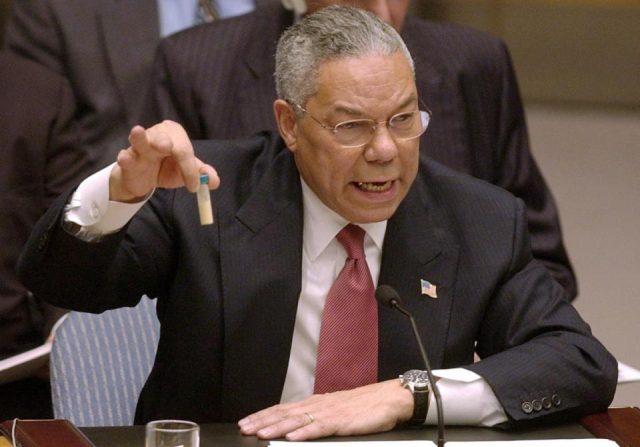
Did everyone urging us to trust the CIA forget this happened? Or do they just want us to?
By Kit | OffGuardian | July 20, 2018
In the hysterical wake of the Trump-Putin Summit in Helsinki, President Donald Trump was roundly criticised in the media for taking the side of a “hostile state” over his own intelligence agencies. The Guardian referred to Mueller as a “heroic marine” who Trump disbelieved in favour of a “Russian dictator”.
In the past, when Trump has criticised the FBI, CIA or NSA he has been accused of “undermining faith in our institutions”. He’s been blamed for a collapse of trust in the government. But was this trust ever earned?
At every corner, we are urged to simply believe what we are told. Whether it is about believing Porton Down and MI6 about “novichok”, or believing the White Helmets about Sarin, or believing the FBI about “collusion”, we are presented with no facts, just assertions from authority. Those who question those assertions are deemed “bots” at best or “traitors” at worst.
Well here, fellow traitors, are the Top Ten reasons to question anything and everything the CIA – or any intelligence agency – has ever told you.
10. OPERATION PAPERCLIP – we’ll start with an oldie but a goody. In 1945, as the allies were advancing on Berlin from both sides, American Army Intelligence (this was before the CIA were founded) were “capturing” (read: recruiting) over 1,600 Nazi scientists and engineers. Most famous of them was Werhner von Braun… sorry, SS Sturmbannführer von Braun.
Whilst Allied soldiers died in the name of defeating fascism, the CIA’s predecessors were actively recruiting Nazis to come and build bombs for them.
9. OPERATION NORTHWOODS – The original, and important, precedent for accusations that the CIA et al. might engage in false-flag attacks. Operation Northwoods was a joint CIA/Pentagon proposal designed around the idea of escalating a war with Cuba by stoking public anger:
The proposals called for the Central Intelligence Agency (CIA) or other U.S. government operatives to commit acts of terrorism against American civilians and military targets, blaming it on the Cuban government, and using it to justify a war against Cuba.
The idea was vetoed by President Kennedy. Fifty years later, the CIA and Pentagon still very much exist, but there’s no longer a Kennedy there to veto their more psychopathic ideas. Funny how that worked out.
8. ALLENDE COUP – In 1970 Salvador Allende was elected to the Chilean Presidency. A Physician and dedicated socialist, Allende was the first socialist president elected in South America. The Nixon-lead government of the United States immediately implemented “economic warfare” (as they do, to this day, against Cuba, Venezuela and others). The economic warfare did not work, and in 1973 Allende’s socialist party increased their parliamentary majority.
In response, the US “assisted” (read: instructed) the Chilean military in carrying out a coup. Allende allegedly shot himself, and Augusto Pinochet was placed in power as the first dictator in Chile’s history. Pinochet was a fascist who executed Chilean “subversives” by the thousand… and was the darling of Western leaders.
7. MOSADDEGH COUP – I could just copy-and-paste the above paragraph and the change the names for this entry. In 1953, the Prime Minister of Iran – Mohammad Mosaddegh, a democratic socialist – wanted to audit the income of the Anglo-Iranian Oil Company with an eye to limiting foreign control of Iran’s oil. Within a few months, a joint US/UK operation – Operation Ajax – had removed Mosaddegh’s elected government and turned over full control of the state to the Shah. He was a brutal absolute monarch, but the question of Western control of Iran’s enormous oil reserves wasn’t raised again under his leadership.
6. OPERATION MOCKINGBIRD – A CIA operation that you could deduce existed, even if were not proven…. and it is proven. Mockingbird was the CIA project to coerce, train, control or plant CIA-friendly journalists in major news networks all across the country and in every medium. It’s existence is no longer disputed, thanks to FOIA releases of internal memos.
Mockingbird was allegedly shut down in 1976 – just after its existence was leaked – then CIA director George HW Bush claiming:
… effective immediately, CIA will not enter into any paid or contractual relationship with any full-time or part-time news correspondent accredited by any U.S. news service, newspaper, periodical, radio or television network or station.”
If you’re willing to stake anything on the word of a Bush, well, good luck with that. It’s a decision that flies in the face of historical evidence.
Remember this one when you hear about the need to trust the CIA from some pundit on CNN or MSNBC.
5. MASS SURVEILLANCE – It’s not really talked about much these days – what with the vast majority of the media and huge sections of the supposedly “anti-establishment” progressive left marching in-step with the Deep State – but the NSA spied on the whole world. The whole world. We know this to be true because an employee of the Deep State – Edward Snowden – leaked the information.
When challenged on this issue, representatives of the NSA and CIA lied. They lied to the public, and they lied to congress. When they were proven to have lied, they carefully qualified their lies.
A qualified lie is still a lie.
There is no indication they have stopped this illegal surveillance, but they may have passed laws to make it legal.
4. NAYIRAH – A classic of “atrocity propaganda”, Nayirah should be required reading material for anybody looking top hop on a pro-war bandwagon. Nayirah – who originally gave only her first name – was a fifteen year old girl who testified in front of the United States Congress. She claimed to be a volunteer from at a Kuwaiti hospital, and to be an eye-witness to Iraqi soldiers throwing Kuwaiti babies out of incubators and leaving them to die:
I volunteered at the al-Addan hospital with twelve other women who wanted to help as well. I was the youngest volunteer. The other women were from twenty to thirty years old. While I was there I saw the Iraqi soldiers come into the hospital with guns. They took the babies out of the incubators, took the incubators and left the children to die on the cold floor. It was horrifying.
It was later revealed, not only that her full name was Nayirah al-Sabah and she was the daughter of the Kuwaiti ambassador, but that she had never volunteered at a hospital and had seen no babies, soldiers or incubators. The whole thing was a fiction. A fiction paid for by the “Citizens of Free Kuwait”, an NGO (and obvious CIA front) set up to lobby the US to intervene in the Iraq-Kuwait war.
By the time this fiction was revealed it was too late, and the US had launched Operation Desert Storm…. which was, of course, the entire point of the exercise.
Remember this, when you hear about Assad gassing children or bombing kittens.
3. COINTELPRO – The FBI’s long running (and sometimes illegal) COunter INTELligence PROgram, COINTELPRO was a series of domestic projects carried out by the FBI (with cooperation from other agencies), over decades, with the aim of “surveilling, infiltrating, discrediting, and disrupting domestic political organizations”.
These political organizations included anti-Vietnam protestors, civil rights groups (including both MLK and Malcolm X), socialists, Communist Party USA, environmental groups and feminist organizations.
The brief for these “disruptions” came straight from J. Edgar Hoover who wanted the FBI to “expose, disrupt, misdirect, discredit, or otherwise Neutralize” people he perceived to be enemies of the state. The capital N in “neutralise” is no accident, as the FBI was implicated in the deaths of several Black Panther leaders, including Fred Hampton.
COINTELPRO didn’t just involve undermining left-wing groups, but also creating right-wing groups:
The FBI also financed, armed, and controlled an extreme right-wing group of former Minutemen, transforming it into a group called the Secret Army Organization that targeted groups, activists, and leaders involved in the Anti-War Movement, using both intimidation and violent acts.
Whether this was done to actually push a right-wing agenda, create a fake threat to step up police powers, or just sow division and chaos, is unclear. But it definitely happened.
Much like MKUltra (below), COINTELPRO was “officially shut down”, not long after the public found out it existed. However, the accidental outing of undercover policeman at a rally in Oakland, and recent relaxation of the laws limiting the FBI’s powers, means that COINTELPRO – or a modern successor – is very likely still a thing.
The aim of COINTELPRO was to “Neutralize” anti-establishment political figures – the vast majority of targets were left wingers – through “smearing individuals and groups using forged documents and by planting false reports in the media”. Remember that when you see Rand Paul called a “traitor” on twitter, or read about “Russian collusion”, or see Jeremy Corbyn branded an anti-Semite.
Remember that it is proven that the Deep State – our trusted intelligence agencies – pay people to plant false stories and discredit political opponents.
2. PROJECT MKULTRA – It might sound like something from a 70s sci-fi TV series, but it is unfortunately real. MKUltra was a series of (illegal) experiments carried out by the CIA from 1953 until it was *cough* “officially halted” in 1973 (just after its existence was leaked). The experiments were wide-ranging, achieved varied levels of success, but pretty uniformly brutal and unethical. They included, but were not limited too:
– Giving LSD to unsuspecting soldiers to see what happened.
– Mass hypnosis and mass suggestion
– Torture studies
– Studies on the effect of verbal and/or sexual abuse
We’ll never know the full range of studies, or how they were carried out, because in 1973 Richard Helms, then director of the CIA, ordered all MKUltra files destroyed. Only a fraction of them survive, thanks to FOIA requests, but it’s reasonable to assume they destroyed the worst parts and kept the more quote-unquote innocent files.
The CIA were not unique in this regard either, MKUltra was their baby – but there were parallel projects in other quarters of the deep state. Army Intelligence had Edgewood Arsenal, whilst the Department of Defense had Project 112. All these projects were “officially halted” in the early 70s… just around the time the public found out they existed.
The CIA (et al.) have strongly denied that these experiments and projects have ever been continued in any way, shape or form…but if you’d asked them in 1969, they would have denied they had ever taken place at all.
1. THE IRAQ WAR – This might not be the most callous, the most dangerous, the most recent, the most secret or the most insidious of the items on this list, nevertheless it is – must be – number one… because it is the most brazen.
The war was started in the name of “weapons of mass destruction” that everyone – everyone – knew never existed. They all knew the truth, but they lied.
The President lied, the vice-president lied, the secretary of defence lied, the secretary of state lied. The Prime Minister lied, the defence minister lied, the foreign minister lied. They lied to the press, the people and the UN.
The CIA, the NSA, the FBI – then headed by the “heroic marine” Robert Mueller – they lied too. The press repeated these lies, without question (see: Operation Mockingbird). They weren’t “misinformed”, they weren’t “mistaken”. They lied, they lied repeatedly – and provably – and they did it in order to start a war, make money, take control, spread influence.
One million Iraqis died.
Our ruling class is peopled with psychopaths and war criminals, who have so little regard for the people they lie to they recycle the same childishly simple falsehoods to further their evil agenda again and again and again. They tried the same in Libya… it worked again. They tried again in Syria… luckily, it didn’t work there.
Our “democratic institutions” lie to start wars. There’s no reason to think they aren’t doing – or wouldn’t do – the same thing about Iran, North Korea… or Russia.
That’s our list, and there’s really only one lesson you can take away from it:
These people, agencies and institutions deserve no trust, have earned no trust and have abused every micron of trust ever placed in them. To suggest we have a duty to believe them – or that they have ever done anything to serve the public good – is to live in a dream world.
This list is not a full catalogue of Deep State crimes, it would be 1,000s of entries long if it were, but these ten are important. They’re important because they are admitted, proven and beyond debate. They are important because they show the many facets of dishonesty, hypocrisy and abuses of power that Intelligence agencies engage in, and they are important because they form the best riposte to the disingenuous clamour for “trust” in our “democratic institutions”.
Never trust the CIA, they have proved they don’t deserve it.
Horror in Helsinki: Trumputin Strikes Again
By Michael Howard | American Herald Tribune | July 18, 2018
Something very extraordinary has just taken place—something unprecedented in American history. A sitting president, one Donald J. Trump, has committed treason against the United States. Don’t take my word for it. This is being documented by our nation’s most important political thinkers. New York Times headline from regular columnist Charles Blow: “Trump, Treasonous Traitor.” Quote from a column by regular New York Times columnist Thomas Friedman: “There is overwhelming evidence that our president … is deliberately or through gross negligence or because of his own twisted personality engaged in treasonous behavior.” Tweet from former CIA Director John Brennan: “[Trump’s meeting with Putin] was nothing short of treasonous.”
And for those whose tastes are a bit more lowbrow (not that the brows of the NYT and the CIA are especially high), here’s a front page headline from the venerable New York Daily News : “Open Treason: Trump Backs Enemy Putin Over U.S. Intel.” Not only treason, then, but open treason. The worst kind.
I know it’s trendy nowadays to play fast and loose with the Constitution, but—call me pedantic—it might be instructive to consult the much-cited document on this particular subject. Article III Section 3 states the following: “Treason against the United States, shall consist only in levying War against them, or in adhering to their Enemies, giving them Aid and Comfort.” Note the use of the word “only”—the Founders had very specific ideas in mind about what constituted treason, namely waging war against the U.S. and/or aiding and abetting its enemies. “Enemy” meaning a state with which we are at war, and the U.S. is, despite routinely bombing seven countries (probably the number is higher now; it’s hard to keep track), not officially at war with anyone, least of all Russia. Therefore, charges of treason in the context of Trump’s Helsinki gambit are rather untenable, and more than a little hysterical. But don’t tell that to Charles Blow’s Twitter followers.
There’s no point singling out one of the hundred manic articles about the Trump-Putin summit to pick apart: they’re all exactly the same. In a nutshell: Trump refuses to acknowledge the U.S. intelligence community’s conclusion that Russia “attacked” our country by hacking into the DNC’s emails; Trump refuses to say anything negative about Vladimir Putin; Trump is helping Moscow to splinter NATO; Trump refuses to condemn Russian aggression; Trump is a Kremlin puppet doing Moscow’s bidding; and so on and so forth.
Needless to say these are all specious arguments. Asked recently about America’s collective panic over Russia’s alleged interference in our presidential election, Noam Chomsky responded: “That has most of the world cracking up in laughter.” It doesn’t take a scholar to understand why. The United States is the world champion when it comes to meddling in the domestic affairs of foreign countries. But we don’t just meddle: we engineer military coups and install mass-murdering dictators or, when that’s not feasible, simply overthrow undesirable governments using unilateral military force. Examples abound. In 1953 the CIA, in tandem with MI6, orchestrated a coup against Iran’s first democratically elected Prime Minister, Mohammad Mossadegh, who had intolerable plans to nationalize his country’s oil industry. The coup was a success, restoring the despotic shah to his erstwhile throne where he remained until 1979, when he was chased into exile by the Islamic Revolution. The following year, Guatemala’s leftist president Jacobo Arbenz was deposed by another CIA-authored coup, Operation PBSUCCESS, paving the way for a series of ultraviolent dictatorships.
A mere three months into his presidency, and acting in accordance with the imperialist Monroe Doctrine, Jack Kennedy went after Fidel Castro’s revolutionary government in Cuba using CIA-sponsored militants. The Bay of Pigs failed miserably, but Uncle Sam was not to be deterred: “Operation Mongoose” was soon set in motion, and countless attempts on Castro’s life were made, all unsuccessful.
Sensing that CIA black ops might not be sufficient to neuter the movement for independence in Vietnam—and, more importantly, to discourage other countries in the region from adopting similar dangerous ideas—the U.S. government opted for full-scale military invasion, killing over three million people and decimating most of the country.
Skipping ahead a couple decades, the CIA armed, trained and financed the Contras, a terrorist gang in Nicaragua whose duty it was to take down the leftist Sandinista government. This particular affair is notable for the fact that, in 1986, the U.S. government was found by the International Court of Justice to be, inter alia, “in breach of its obligation under customary international law not to intervene in the affairs of another State” and “in breach of its obligation under customary international law not to use force against another State.” It was thus ordered by the court to pay an “interim award” of $370.2 million to the Republic of Nicaragua, with the total sum of reparations to be determined at a later date. The U.S. simply ignored the court’s ruling and continued supporting the terrorists.
Nicaragua to this day isn’t free from U.S. harassment. The country’s current political crisis, characterized by violent neoliberal opposition to President Daniel Ortega’s popular leftist government (Ortega won the 2016 election with over seventy-two percent of the vote), is supported by U.S. policy, with the National Endowment for Democracy—funded by the U.S. Congress—channeling millions of dollars to Ortega’s political opposition over the last five years. The reason for this is simple. As Kevin Zeese and Nils McCune wrote in Counterpunch:
Nicaragua has set [an example] for a successful social and economic model outside the US sphere of domination. Generating over 75% of its energy from renewable sources, Nicaragua was the only country with the moral authority to oppose the Paris Climate Agreement as being too weak…. The FMLN government of El Salvador, while less politically dominant than the Sandinista Front, has taken the example of good governance from Nicaragua, recently prohibiting mining and the privatization of water.
If the oligarchs in Nicaragua manage to pull off a coup, you can bet your bottom dollar Trump and co. will offer their full-throated support, as Obama and co. did following the 2009 military coup in Honduras, now one of the most dangerous and repressive countries in the world, and a leading source of those pesky migrants flooding the southern U.S. border.
Simply put, Washington is incapable of minding its own business. Cambodia, Laos, El Salvador, the Dominican Republic, Ecuador, Chile, Bolivia, Venezuela, Indonesia, Libya, Iraq, Afghanistan, Syria, Iran … they all know it all too well. If you step out of line, you get whacked. Iraq, Libya and Syria have been taught the ultimate lesson—they’ve all been pulverized. Iran may yet receive the sledgehammer treatment as well, given that various non-military means of destabilization and subversion have failed to bear fruit, and especially given that the hawkish theocrats governing Israel, along with their mouthpieces in Washington, would like nothing more than to see the mullahs blown to bits.
So yes, it’s easy to see why, in Chomsky’s words, “Russia-gate”—even if we grant that its core allegations are factual—“has most of the world cracking up in laughter.”
Nearly as laughable is the claim, made over and over again, that Trump is a “Russian asset.” Anyone leveling this charge is either a fool or a demagogue. Those amenable to it should put on their thinking caps for a moment. Would a Russian asset impose a series of damaging sanctions on Russian companies and individuals, including those accused of human rights abuses, as Trump has done? Would a Russian asset expel dozens of Russian diplomats from the U.S. in retaliation for a nerve agent attack on a former double agent in Britain that may or may not have been ordered by Moscow, as Trump did? Would a Russian asset twice order the (illegal) use of military force against the Syrian government, Russia’s ally, risking direct military confrontation with Russia, in retaliation for dubious chemical weapons attacks, as Trump did? Would a Russian asset void the Iranian nuclear accord of which Russia is strongly in favor, as Trump did? Would a Russian asset approve the sale of missiles to Ukraine’s stridently anti-Russian government, knowing those weapons will likely be used against pro-Russian counterrevolutionary fighters in the east, as Trump did? Would a Russian asset demand that NATO member states, most if not all of them adversarial toward Russia, increase their defense spending, as Trump did?
Ah, yes, but Trump has never said anything mean about Putin! True enough, but then has he ever criticized el-Sisi, whose security forces massacred over eight-hundred political protestors in the streets of Cairo in 2013? How about Mohammed bin Salman, whose air force daily bombs hospitals, weddings, funerals, mosques and schools in Yemen? Rodrigo Duterte, whose drug war includes widespread summary executions? George W. Bush, Dick Cheney, et al, who invaded two countries and instituted torture centers around the world? Trump has never had an unkind word for any of the forgoing thugs. Most strikingly, he’s offered only fulsome praise for “Bibi” Netanyahu, whose crimes are too numerous to record here. If Trump’s an “asset,” he’s plainly Israel’s.
All in all, the media delirium over Trump’s humdrum meeting with Putin pushes us ever further into the political Twilight Zone. Soon a fanatical opposition to all things Russian will serve as a litmus test for Democratic presidential candidates. Just as the GOP uses gays and guns to energize an otherwise disaffected base, so the Democrats will use this new and more dangerous form of McCarthyism. All this is by design: they understand they can’t rely on their actual policies, created for and by our corporate masters, to secure votes. Hence the diversionary tactics, all of which are beginning to merge into a rabid Russophobia—one that, if allowed to inform policy-making at the highest levels of government, may well get us all vaporized. In the words of Allen Ginsberg: America this is quite serious.
Detente Bad, Cold War Good
By Craig Murray | July 17, 2018
The entire “liberal” media and political establishment of the Western world reveals its militarist, authoritarian soul today with the screaming and hysterical attacks on the very prospect of detente with Russia. Peace apparently is a terrible thing; a renewed arms race, with quite literally trillions of dollars pumped into the military industrial complex and hundreds of thousands dying in proxy wars, is apparently the “liberal” stance.
Political memories are short, but just 15 years after Iraq was destroyed and the chain reaction sent most of the Arab world back to the dark ages, it is now “treason” to question the word of the Western intelligence agencies, which deliberately and knowingly produced a fabric of lies on Iraqi WMD to justify that destruction.
It would be more rational for it to be treason for leaders to blindly accept the word of the intelligence services.
This is especially true on “Russia hacking the election” when, after three years of crazed accusations and millions of man hours by lawyers and CIA and FBI investigators, they are yet to produce any substantive evidence of accusations which are plainly nuts in the first place. This ridiculous circus has found a few facebook ads and indicted one Russian for every 100,000 man hours worked, for unspecified or minor actions which had no possible bearing on the election result.
There are in fact genuine acts of election rigging to investigate. In particular, the multiple actions of the DNC and Democratic Party establishment to rig the Primary against Bernie Sanders do have some very real documentary evidence to substantiate them, and that evidence is even public. Yet those real acts of election rigging are ignored and instead the huge investigation is focused on catching those who revealed Hillary’s election rigging. This gets even more absurd – the investigation then quite deliberately does not focus on catching whoever leaked Hillary’s election rigging, but instead seeks to prove that the Russians hacked Hillary’s election-rigging, which I can assure you they did not. Meanwhile, those of us who might help them with the truth if they were actually interested, are not questioned at all.
The Russophobic witch hunt has its first real life victim in 29 year old Maria Butina, whose life is to be destroyed for chatting up members of the NRA in order to increase Russian influence. With over 20 years of diplomatic experience, I can tell you that every country, including the UK and US, has bit part players of its own nationals who self-start in a country to make their way, and if they gain any traction are tapped by their national security service as potential “agents of influence”. I could name quite literally scores of such people, but have no desire to get anyone in trouble. The elevation of Butina into a huge threat and part of a gigantic plot, is to ignore the way the United States and the United Kingdom and indeed all major governments’ Embassies behave around the globe.
The war-hawks who were devastated by the loss of champion killer Hillary now see the prospect of their very worst fear coming true. Their very worst fear is the outbreak of peace and international treaties of arms control. Hence the media and political establishment today has reached peaks of hysteria never before seen. Pursuing peace is “treason” and the faux left now stand starkly exposed.
Ex-CIA Chief, US Officials Slam Trump-Putin Presser as ‘Treason,’ ‘Weakness’

Sputnik – 16.07.2018
The US President and his Russian counterpart met in Helsinki to discuss a wide array of issues, including bilateral relations between the two countries, their cooperation in Syria and alleged Russian meddling in the 2016 US presidential election.
Former CIA Director John Brennan slammed US President Trump’s “performance” during the press conference after his meeting with Putin in Helsinki as “treasonous” on his Twitter. He also claimed that Trump is “in the pocket” of Russian President Vladimir Putin and said that he had exceeded the “threshold of high crimes and misdemeanors.”
He also expressed skepticism as to why the two presidents discussed matters in private, stating that Trump lacks credibility and is probably hiding something from his advisers.
Brennan also called on Trump’s team to resign in protest against his “performance” in Helsinki on July 16, saying that no “good American patriot” would stay with Trump after that.
“He criticized American citizens, Secretary Clinton, and others as opposed to really taking advantage of a world stage with all the world’s eyes upon them to point out how unacceptable Russia’s behavior and interference in our election […] But he just shirked those responsibilities,” Brennan said.
A number of other US officials have also scolded the US president’s press conference in Helsinki. US Senator John McCain added to the wave of accusations that Trump’s performance at the press conference with Putin was “a tragic mistake.” He also slammed the US president for failing “to defend America.”
“Not only did President Trump fail to speak the truth about an adversary; but speaking for America to the world, our president failed to defend all that makes us who we are — a republic of free people dedicated to the cause of liberty at home and abroad,” McCain wrote on his website.
Former US Ambassador to Moscow Michael McFaul, a strong Kremlin critic banned from Russia over harming bilateral ties, mocked Trump’s statements in which he said that the US has been to blame for deteriorating relations between America and Russia. McFaul suggested that Trump should have blamed Moscow instead.
“For President Trump to just insinuate as he just did in his initial remarks today, well bygones — let’s forget about all that stuff and move on because I want a great relationship with you, Putin. That’s just not serving America’s national interest, in my view,” former envoy said.
Democrat Senator Jeff Merkley suggested in an interview with BuzzFeed News that Moscow is “likely” to have compromising material on Trump, claiming that it is a “standard strategy of Russia” for important visitors to the country. He further speculated that Moscow might have the so called “pee tape” allegedly depicting Trump ordering two prostitutes to urinate on a bed in at the Moscow Ritz-Carlton, where Obama’s family once stayed.
US Senator Lindsey Graham slammed Trumps speech at the press conference by saying that it was a “missed opportunity” to hold Russia accountable for the alleged meddling in the 2016 election. He further claimed that the speech will be seen as a sign of weakness in Kremlin, going on to suggest that Trump should check the soccer ball that Putin gave him during the conference to see if it is wired.
US Republican Senator Bob Corker said in a comment regarding the Helsinki summit that he wants the US to improve relations with Russia, but added that Trump should have been more forceful when he addressed issues with Putin.
US House Minority Leader Nancy Pelosi criticized Trump for not confronting Putin in regards to alleged Russian meddling in the presidential election, days after the Justice Department accused 12 Russian intelligence officers of involvement in the interference.
US President Donald Trump and his Russian counterpart Vladimir Putin met in Helsinki on July 16 and discussed an array of international issues, including the countries’ bilateral relations. The two presidents called the meeting highly “successful” and “productive,” saying that it was just the first step.
Trump and Putin agreed to enhance their cooperation in Syria, particularly regarding the delivery of humanitarian aid and securing the Israeli-Syrian border. Both presidents also pledged to continue the ongoing cooperation between their armed forces in Syria and on preventing terrorist attacks.
The two leaders also discussed the alleged Russian meddling in the US presidential elections. During the press conference, Putin assured that Moscow had not colluded with Trump’s election campaign and would never intervene in the US electoral process.
Trump said that Russia had “zero reasons” to meddle in the elections and said that his victory was due to his “brilliant” campaign. The US president also scolded the Democratic Party and Hillary Clinton for fueling special counsel Mueller’s investigation into the alleged meddling, saying that it has negatively affected US-Russian relations.
Memo to the President Ahead of Monday’s Summit
Consortium News | July 15, 2018
With Friday’s indictments of Russian intelligence officers, Ray McGovern and Bill Binney have written an open letter to President Trump making clear that the “evidence” behind the indictments is as fraudulent as the intelligence alleging WMD in Iraq. It is being published ahead of the Trump-Putin summit on Monday.
BRIEFING FOR: The President
FROM: Ray McGovern, former CIA briefer of The President’s Daily Brief, and William Binney, former Technical Director at NSA
SUBJECT: Info Your Summit Briefers May Have Missed
We reproduce below one of our most recent articles on “Russia-Gate,” which, in turn, draws from our Veteran Intelligence Professionals for Sanity Memorandum to you of July 24, 2017.
At the time of that Memorandum we wrote:
“Forensic studies of “Russian hacking” into Democratic National Committee computers last year reveal that on July 5, 2016, data was leaked (not hacked) by a person with physical access to DNC computer. After examining metadata from the “Guccifer 2.0” July 5, 2016 intrusion into the DNC server, independent cyber investigators have concluded that an insider copied DNC data onto an external storage device.
Key among the findings of the independent forensic investigations is the conclusion that the DNC data was copied onto a storage device at a speed that far exceeds an Internet capability for a remote hack.”
“We do not know who or what the murky Guccifer 2.0 is. You may wish to ask the FBI,” we wrote. However, we now have forensic evidence that shows the data provided by Guccifer 2.0 had been manipulated and is a fabrication.
We also discussed CIA’s cyber-tool “Marble Framework,” which can hack into computers, “obfuscate” who hacked, and leave behind incriminating, tell-tale signs in Russian; and we noted that this capability had been employed during 2016. As we pointed out, Putin himself made an unmistakable reference to this “obfuscating” tool during an interview with Megan Kelly.
Our article of June 7, 2018, explains further:
“Still Waiting for Evidence of a Russian Hack”
If you are wondering why so little is heard these days of accusations that Russia hacked into the U.S. election in 2016, it could be because those charges could not withstand close scrutiny. It could also be because special counsel Robert Mueller appears to have never bothered to investigate what was once the central alleged crime in Russia-gate as no one associated with WikiLeaks has ever been questioned by his team.
Veteran Intelligence Professionals for Sanity — including two “alumni” who were former National Security Agency technical directors — have long since concluded that Julian Assange did not acquire what he called the “emails related to Hillary Clinton” via a “hack” by the Russians or anyone else. They found, rather, that he got them from someone with physical access to Democratic National Committee computers who copied the material onto an external storage device — probably a thumb drive. In December 2016 VIPS explained this in some detail in an open Memorandum to President Barack Obama.
On January 18, 2017 President Obama admitted that the “conclusions” of U.S. intelligence regarding how the alleged Russian hacking got to WikiLeaks were “inconclusive.” Even the vapid FBI/CIA/NSA “Intelligence Community Assessment of Russian Activities and Intentions in Recent U.S. Elections” of January 6, 2017, which tried to blame Russian President Vladimir Putin for election interference, contained no direct evidence of Russian involvement. That did not prevent the “handpicked” authors of that poor excuse for intelligence analysis from expressing “high confidence” that Russian intelligence “relayed material it acquired from the Democratic National Committee … to WikiLeaks.” Handpicked analysts, of course, say what they are handpicked to say.
Never mind. The FBI/CIA/NSA “assessment” became bible truth for partisans like Rep. Adam Schiff (D-CA), ranking member of the House Intelligence Committee, who was among the first off the blocks to blame Russia for interfering to help Trump. It simply could not have been that Hillary Clinton was quite capable of snatching defeat out of victory all by herself. No, it had to have been the Russians.
Five days into the Trump presidency, McGovern had a chance to challenge Schiff personally on the gaping disconnect between the Russians and WikiLeaks. Schiff still “can’t share the evidence” with me … or with anyone else, because it does not exist.
It was on June 12, 2016, just six weeks before the Democratic National Convention, that Assange announced the pending publication of “emails related to Hillary Clinton,” throwing the Clinton campaign into panic mode, since the emails would document strong bias in favor of Clinton and successful attempts to sabotage the campaign of Bernie Sanders. When the emails were published on July 22, just three days before the convention began, the campaign decided to create what we call a Magnificent Diversion, drawing attention away from the substance of the emails by blaming Russia for their release.
Clinton’s PR chief Jennifer Palmieri later admitted that she golf-carted around to various media outlets at the convention with instructions “to get the press to focus on something even we found difficult to process: the prospect that Russia had not only hacked and stolen emails from the DNC, but that it had done so to help Donald Trump and hurt Hillary Clinton.” The diversion worked like a charm. Mainstream media kept shouting “The Russians did it,” and gave little, if any, play to the DNC skullduggery revealed in the emails themselves. And like Brer’ Fox, Bernie didn’t say nothin’.
Meanwhile, highly sophisticated technical experts, were hard at work fabricating “forensic facts” to “prove” the Russians did it. Here’s how it played out:
June 12, 2016: Assange announces that WikiLeaks is about to publish “emails related to Hillary Clinton.”
June 14, 2016: DNC contractor CrowdStrike, (with a dubious professional record and multiple conflicts of interest) announces that malware has been found on the DNC server and claims there is evidence it was injected by Russians.
June 15, 2016: “Guccifer 2.0” affirms the DNC statement; claims responsibility for the “hack;” claims to be a WikiLeaks source; and posts a document that the forensics show was synthetically tainted with “Russian fingerprints.”
The June 12, 14, & 15 timing was hardly coincidence. Rather, it was the start of a pre-emptive move to associate Russia with anything WikiLeaks might have been about to publish and to “show” that it came from a Russian hack.
Enter Independent Investigators
A year ago independent cyber-investigators completed the kind of forensic work that, for reasons best known to then-FBI Director James Comey, neither he nor the “handpicked analysts” who wrote the Jan. 6, 2017 assessment bothered to do. The independent investigators found verifiable evidence from metadata found in the record of an alleged Russian hack of July 5, 2016 showing that the “hack” that day of the DNC by Guccifer 2.0 was not a hack, by Russia or anyone else.
Rather it originated with a copy (onto an external storage device – a thumb drive, for example) by an insider — the same process used by the DNC insider/leaker before June 12, 2016 for an altogether different purpose. (Once the metadata was found and the “fluid dynamics” principle of physics applied, this was not difficult to disprove the validity of the claim that Russia was responsible.)
One of these independent investigators publishing under the name of The Forensicator on May 31 published new evidence that the Guccifer 2.0 persona uploaded a document from the West Coast of the United States, and not from Russia.
In our July 24, 2017 Memorandum to President Donald Trump we stated, “We do not know who or what the murky Guccifer 2.0 is. You may wish to ask the FBI.”
Our July 24 Memorandum continued: “Mr. President, the disclosure described below may be related. Even if it is not, it is something we think you should be made aware of in this general connection. On March 7, 2017, WikiLeaks began to publish a trove of original CIA documents that WikiLeaks labeled ‘Vault 7.’ WikiLeaks said it got the trove from a current or former CIA contractor and described it as comparable in scale and significance to the information Edward Snowden gave to reporters in 2013.
“No one has challenged the authenticity of the original documents of Vault 7, which disclosed a vast array of cyber warfare tools developed, probably with help from NSA, by CIA’s Engineering Development Group. That Group was part of the sprawling CIA Directorate of Digital Innovation – a growth industry established by John Brennan in 2015. [ (VIPS warned President Obama of some of the dangers of that basic CIA reorganization at the time.]
Marbled
“Scarcely imaginable digital tools – that can take control of your car and make it race over 100 mph, for example, or can enable remote spying through a TV – were described and duly reported in the New York Times and other media throughout March. But the Vault 7, part 3 release on March 31 that exposed the “Marble Framework” program apparently was judged too delicate to qualify as ‘news fit to print’ and was kept out of the Times at the time, and has never been mentioned since.
“The Washington Post’s Ellen Nakashima, it seems, ‘did not get the memo’ in time. Her March 31 article bore the catching (and accurate) headline: ‘WikiLeaks’ latest release of CIA cyber-tools could blow the cover on agency hacking operations.’
“The WikiLeaks release indicated that Marble was designed for flexible and easy-to-use ‘obfuscation,’ and that Marble source code includes a “de-obfuscator” to reverse CIA text obfuscation.
“More important, the CIA reportedly used Marble during 2016. In her Washington Post report, Nakashima left that out, but did include another significant point made by WikiLeaks; namely, that the obfuscation tool could be used to conduct a ‘forensic attribution double game’ or false-flag operation because it included test samples in Chinese, Russian, Korean, Arabic and Farsi.”
A few weeks later William Binney, a former NSA technical director, and Ray McGovern commented on Vault 7 Marble, and were able to get a shortened op-ed version published in The Baltimore Sun.
The CIA’s reaction to the WikiLeaks disclosure of the Marble Framework tool was neuralgic. Then Director Mike Pompeo lashed out two weeks later, calling Assange and his associates “demons,” and insisting; “It’s time to call out WikiLeaks for what it really is, a non-state hostile intelligence service, often abetted by state actors like Russia.”
Our July 24 Memorandum continued: “Mr. President, we do not know if CIA’s Marble Framework, or tools like it, played some kind of role in the campaign to blame Russia for hacking the DNC. Nor do we know how candid the denizens of CIA’s Digital Innovation Directorate have been with you and with Director Pompeo. These are areas that might profit from early White House review. [ President Trump then directed Pompeo to invite Binney, one of the authors of the July 24, 2017 VIPS Memorandum to the President, to discuss all this. Binney and Pompeo spent an hour together at CIA Headquarters on October 24, 2017, during which Binney briefed Pompeo with his customary straightforwardness. ]
“We also do not know if you have discussed cyber issues in any detail with President Putin. In his interview with NBC’s Megyn Kelly he seemed quite willing – perhaps even eager – to address issues related to the kind of cyber tools revealed in the Vault 7 disclosures, if only to indicate he has been briefed on them. Putin pointed out that today’s technology enables hacking to be ‘masked and camouflaged to an extent that no one can understand the origin’ [of the hack] … And, vice versa, it is possible to set up any entity or any individual that everyone will think that they are the exact source of that attack.
“‘Hackers may be anywhere,’ he said. ‘There may be hackers, by the way, in the United States who very craftily and professionally passed the buck to Russia. Can’t you imagine such a scenario? … I can.’”
New attention has been drawn to these issues after McGovern discussed them in a widely published 16-minute interview last Friday.
In view of the highly politicized environment surrounding these issues, we believe we must append here the same notice that VIPS felt compelled to add to our key Memorandum of July 24, 2017:
“Full Disclosure: Over recent decades the ethos of our intelligence profession has eroded in the public mind to the point that agenda-free analysis is deemed well nigh impossible. Thus, we add this disclaimer, which applies to everything we in VIPS say and do: We have no political agenda; our sole purpose is to spread truth around and, when necessary, hold to account our former intelligence colleagues.
“We speak and write without fear or favor. Consequently, any resemblance between what we say and what presidents, politicians and pundits say is purely coincidental.” The fact we find it is necessary to include that reminder speaks volumes about these highly politicized times.
Ray McGovern, a CIA analyst for 27 years, was chief of the Soviet Foreign Policy Branch and briefed the President’s Daily Brief one-on-one from 1981-1985.
William Binney worked for NSA for 36 years, retiring in 2001 as the technical director of world military and geopolitical analysis and reporting; he created many of the collection systems still used by NSA.
Evidence Will Probably Never Be Produced in Indictments of ‘Russian Agents’
By Joe Lauria | Consortium News | July 14, 2018
Charges against 12 Russian intelligence agents for allegedly hacking emails from the Democratic Party during the 2016 presidential election were announced by the U.S. Justice Department on Friday at the very moment President Donald Trump was meeting Queen Elizabeth II at Windsor Castle and just days before a summit between Trump and Russian President Vladimir Putin in Helsinki.
A central claim of Russia-gate has been that the Russian government with help from the Trump campaign stole emails from the Democratic Party and the Hillary Clinton campaign and then gave those emails to WikiLeaks for publication to damage Clinton’s quest for the White House.
Until Friday however, the investigation into the allegations had produced no formal indictment of Russian government interference in the election. Like previous U.S. government accusations against Russia for alleged election meddling, the indictment makes assertions without providing evidence. Under U.S. law, indictments are not considered evidence. And it is highly unlikely that the government will ever have to produce any evidence in court.
Friday’s indictments do not include any charges against Trump campaign members for allegedly colluding with the Russian government to carry out the hacks. That has been at the core of allegations swirling in U.S. media for two years. If the alleged co-conspirators “known” to the DOJ were on the Trump team, the indictments do not say. There is only a hint that “unknown” persons might be.
In announcing the indictments at a press conference Friday, Deputy Attorney General Rod Rosenstein said: “The conspirators corresponded with several Americans during the course of the conspiracy through the internet. There’s no allegation in this indictment that the Americans knew they were corresponding with Russian intelligence officers.”
The indictment alleges that Russian agents, posing as Guccifer 2.0, communicated on Aug. 15, 2016 with “a person who was in regular contact with senior members” of the Trump campaign, mostly like advisor Roger Stone, who has spoken about communicating with Guccifer 2.0. The indictment says Guccifer offered to “help u anyhow,” apparently indicating that Stone did want Guccifer 2.0’s help.
Clinging to ‘Collusion’
The lack of evidence that the Trump campaign was colluding with Russia has never stopped Democrats and their media outlets from believing unnamed U.S. intelligence sources for two years about such collusion. “Collusion” is the title of a best-selling book about the supposed Trump-Russia conspiracy to steal the election, but such a charge is not to be found.
The indictment excluding collusion also undermines the so-called Steele dossier, a work of opposition research paid for by the DNC and Clinton campaign masquerading as an intelligence document because it was compiled by a former MI6 agent. The memos falsely claimed, it turns out, that Trump’s people started colluding with Russia years before he became a candidate.
But even after Friday’s indictments failed to charge anyone from Trump’s team, the Democratic media continued to insist there was collusion. A New York Times story, headlined, “Trump Invited the Russians to Hack Clinton. Were They Listening?,” said Russia may have absurdly responded to Trump’s call at 10:30 a.m. on July 27, 2016 to hack Clinton’s private email server because it was “on or about” that day that Russia allegedly first made an attempt to hack Clinton’s personal emails, according to the indictment, which makes no connection between the two events.
If Russia is indeed guilty of remotely hacking the emails it would have had no evident need of assistance from anyone on the Trump team, let alone a public call from Trump on national TV to commence the operation.
Instead of Trump operatives, the indictments name 12 Russians, allegedly agents from the GRU, the Russian military intelligence agency. The agents “knowingly and intentionally conspired with each other, and with persons known and unknown to the Grand Jury (collectively the ‘Conspirators’), to gain unauthorized access (to ‘hack’) into the computers of U.S. persons and entities involved in the 2016 U.S. presidential election, steal documents from those computers, and stage releases of the stolen documents to interfere with the 2016 U.S. presidential election,” the 29-page indictment says.
“Starting in at least March 2016, the Conspirators used a variety of means to hack the email accounts of volunteers and employees of the U.S. presidential campaign of Hillary Clinton (the ‘Clinton Campaign’), including the email account of the Clinton Campaign’s chairman,” the indictment says.
Obvious Timing
The timing of the announcement was clearly intended to embarrass Trump as he was meeting the Queen and to undermine his upcoming meeting with Putin on July 16. The indictments may also have been meant to embarrass Russia two days before the World Cup final to be held in Moscow.
Pressure was immediately brought on Trump to cancel the summit in light of the indictments, which may have been the main aim in the timing of their announcement. “Glad-handing with Vladimir Putin on the heels of these indictments would be an insult to our democracy,” Senator Chuck Schumer (D-NY) said in a statement less than an hour after the indictments were announced. “President Trump should cancel his meeting with Vladimir Putin until Russia takes demonstrable and transparent steps to prove that they won’t interfere in future elections,” Schumer said.
With no apparent irony, The New York Times reported, “The timing of the indictment … added a jolt of tension to the already freighted atmosphere surrounding Mr. Trump’s meeting with Mr. Putin. It is all but certain to feed into the conspiratorial views held by the president and some of his allies that Mr. Mueller’s prosecutors are determined to undermine Mr. Trump’s designs for a rapprochement with Russia.”
Russia Denies
The Russian government on Friday strongly denied the charges. In a statement, the Foreign Ministry called the indictments “a shameful farce” that was not backed up by any evidence. “Obviously, the goal of this ‘mud-slinging’ is to spoil the atmosphere before the Russian-American summit,” the statement said.
The Ministry added that the 12 named Russians were not agents of the GRU.
“When you dig into this indictment … there are huge problems, starting with how in the world did they identify 12 Russian intelligence officers with the GRU,” said former CIA analyst Larry Johnson in an interview with Consortium News. Johnson pointed out that the U.S. Defense Intelligence Agency was not allowed to take part in the January 2017 Intelligence Community Assessment on alleged interference by the GRU. Only hand-picked analysts from the FBI, the NSA and the CIA were involved.
“The experts in the intelligence community on the GRU … is the Defense Intelligence Agency and they were not allowed to clear on that document,” Johnson said.
“When you look at the level of detail about what [the indictment is] claiming, there is no other public source of information on this ,and it was not obtained through U.S. law enforcement submitting warrants and getting affidavits to conduct research in Russia, so it’s clearly intelligence information from the NSA, most likely,” Johnson said.
CrowdStrike’s Role
The indictment makes clear the evidence of an alleged hack of the DNC and DCCC computers did not come from the FBI, which was never given access to the computers by the DNC, but instead from the private firm CrowdStrike, which was hired by the DNC. It is referred to as Company 1 in the indictment.
“Despite the Conspirators’ efforts to hide their activity, beginning in or around May 2016, both the DCCC and DNC became aware that they had been hacked and hired a security company (“Company 1”) to identify the extent of the intrusions,” the indictment says.
The indictment doesn’t mention it, but within a day, CrowdStrike claimed to find Russian “fingerprints” in the metadata of a DNC opposition research document, which had been revealed by DCLeaks, showing Cyrillic letters and the name of the first Soviet intelligence chief. That supposedly implicated Russia in the hack.
CrowdStrike claimed the alleged Russian intelligence operation was extremely sophisticated and skilled in concealing its external penetration of the server. But CrowdStrike’s conclusion about Russian “fingerprints” resulted from clues that would have been left behind by extremely sloppy or amateur hackers–or inserted intentionally to implicate the Russians.
One of CrowdStrike’s founders has ties to the anti-Russian Atlantic Council raising questions of political bias. And the software it used to determine Russia’s alleged involvement in the DNC hack, was later proved to be faulty in a high-profile case in Ukraine, reported by the Voice of America.
The indictment then is based at least partially on evidence produced by an interested private company, rather than the FBI.
Evidence Likely Never to be Seen
Other apparent sources for information in the indictment are intelligence agencies, which normally create hurdles in a criminal prosecution.
“In this indictment there is detail after detail whose only source could be intelligence, yet you don’t use intelligence in documents like this because if these defendants decide to challenge this in court, it opens the U.S. to having to expose sources and methods,” Johnson said.
If the U.S. invoked the states secret privilege so that classified evidence could not be revealed in court a conviction before a civilian jury would be jeopardized.
Such a trial is extremely unlikely however. That makes the indictment essentially a political and not a legal document because it is almost inconceivable that the U.S. government will have to present any evidence in court to back up its charges. This is simply because of the extreme unlikelihood that arrests of Russians living in Russia will ever be made.
In this way it is similar to the indictment earlier this year of the Internet Research Agency of St. Petersburg, Russia, a private click bait company that was alleged to have interfered in the 2016 election by buying social media ads and staging political rallies for both Clinton and Trump. It seemed that no evidence would ever have to back up the indictment because there would never be arrests in the case.
But Special Counsel Robert Mueller was stunned when lawyers for the internet company showed up in Washington demanding discovery in the case. That caused Mueller to scramble and demand a delay in the first hearing, which was rejected by a federal judge. Mueller is now battling to keep so-called sensitive material out of court.
In both the IRA case and Friday’s indictments, the extremely remote possibility of convictions were not what Mueller was apparently after, but rather the public perception of Russia’s guilt resulting from fevered media coverage of what are after all only accusations, presented as though it is established fact. Once that impression is settled into the public consciousness, Mueller’s mission would appear to be accomplished.
For instance, the Times routinely dispenses with the adjective “alleged” and reports the matter as though it is already established fact. It called Friday’s indictments, which are only unproven charges, as “the most detailed accusation by the American government to date of the [not alleged] Russian government’s interference in the 2016 election, and it includes a litany of [not alleged] brazen Russian subterfuge operations meant to foment chaos in the months before Election Day.”
GRU Named as WikiLeak’s Source
The indictment claims that GRU agents, posing as Guccifer 2.0, (who says he is a Romanian hacker) stole the Democratic documents and later emailed them to WikiLeaks, named as “Organization 1.” No charges were brought against WikiLeaks on Friday.
“After failed attempts to transfer the stolen documents starting in late June 2016, on or about July 14, 2016, the Conspirators, posing as Guccifer 2.0, sent Organization 1 an email with an attachment titled ‘wk dnc linkl.txt.gpg,’” the indictment says. “The Conspirators explained to Organization 1 that the encrypted file contained instructions on how to access an online archive of stolen DNC documents. On or about July 18, 2016, Organization 1 confirmed it had ‘the 1Gb or so archive’ and would make a release of the stolen documents ‘this week.’”
WikiLeaks founder and editor Julian Assange, who is in exile in the Ecuador embassy in London, has long denied that he got the emails from any government. Instead Assange has suggested that his source was a disgruntled Democratic Party worker, Seth Rich, whose murder on the streets of Washington in July 2016 has never been solved.
On Friday, WikiLeaks did not repeat the denial that a government was its source. Instead it tweeted: “Interesting timing choice by DoJ today (right before Trump-Putin meet), announcing indictments against 12 alleged Russian intelligence officers for allegedly releasing info through DCLeaks and Guccifer 2.0.”
Assange has had all communication with the outside world shut off by the Ecuadorian government two months ago.
Since the indictments were announced, WikiLeaks has not addressed the charge that GRU agents, posing as Guccifer 2.0, were its source. WikiLeaks’ policy is to refuse to disclose any information about its sources. WikiLeaks’ denial that the Russian government gave them the emails could be based on its belief that Guccifer 2.0 was who he said he was, and not what the U.S. indictments allege.
Those indictments claim that the Russian military intelligence agents adopted the personas of both Guccifer 2.0 and DCLeaks to publish the Democratic Party documents online, before the Russian agents, posing as Guccifer 2.0, allegedly supplied WikiLeaks.
The emails, which the indictment does not say are untrue, damaged the Clinton campaign. They revealed, for instance, that the campaign and the Democratic Party worked to deny the nomination to Clinton’s Democratic Party primary challenger Bernie Sanders.
The indictments also say that the Russian agents purchased the use of a computer server in Arizona, using bitcoin to hide their financial transactions. The Arizona server was used to receive the hacked emails from the servers of the Democratic Party and the chairman of Clinton’s campaign, the indictment alleges. If true it would mean the transfer of the emails within the United States, rather than overseas, presumably to Russia.
Some members of the Veterans’ Intelligence Professionals for Sanity argue that metadata evidence points to a local download from the Democratic computers, in other words a leak, rather than a hack. They write the NSA would have evidence of a hack and, unlike this indictment, could make the evidence public: “Given NSA’s extensive trace capability, we conclude that DNC and HRC servers alleged to have been hacked were, in fact, not hacked. The evidence that should be there is absent; otherwise, it would surely be brought forward, since this could be done without any danger to sources and methods.”
That argument was either ignored or dismissed by Mueller’s team.
The Geopolitical Context
It is not only allies of Trump, as the Times thinks, who believe the timing of the indictments, indeed the entire Russia-gate scandal, is intended to prevent Trump from pursuing detente with nuclear-armed Russia. Trump said of the indictments that, “I think that really hurts our country and it really hurts our relationship with Russia. I think that we would have a chance to have a very good relationship with Russia and a very good chance — a very good relationship with President Putin.”
There certainly appear to be powerful forces in the U.S. that want to stop that.
After the collapse of the Soviet Union in 1991, Wall Street rushed in behind Boris Yeltsin and Russian oligarchs to asset strip virtually the entire country, impoverishing the population. Amid widespread accounts of this grotesque corruption, Washington intervened in Russian politics to help get Yeltsin re-elected in 1996. The political rise of Vladimir Putin after Yeltsin resigned on New Year’s Eve 1999 reversed this course, restoring Russian sovereignty over its economy and politics.
That inflamed American hawks whose desire is to install another Yeltsin-like figure and resume U.S. exploitation of Russia’s vast natural and financial resources. To advance that cause, U.S. presidents have supported the eastward expansion of NATO and have deployed 30,000 troops on Russia’s border.
In 2014, the Obama administration helped orchestrate a coup that toppled the elected government of Ukraine and installed a fiercely anti-Russian regime. The U.S. also undertook the risky policy of aiding jihadists to overthrow a secular Russian ally in Syria. The consequences have brought the world closer to nuclear annihilation than at any time since the Cuban missile crisis in 1962.
In this context, the Democratic Party-led Russia-gate appears to have been used not only to explain away Clinton’s defeat but to stop Trump — possibly via impeachment or by inflicting severe political damage — because he talks about cooperation with Russia.
Joe Lauria is editor-in-chief of Consortium News and a former correspondent for The Wall Street Journal, Boston Globe, Sunday Times of London and numerous other newspapers. He can be reached at joelauria@consortiumnews.com and followed on Twitter @unjoe .
British Collusion and Criminality
By Margaret Kimberly | Black Agenda Report | July 11, 2018
Most people believe that Donald Trump owes his presidency to Russian activity because they have been told this repeatedly for the past two years. There was indeed high level collusion taking place in the 2016 presidential campaign but it wasn’t carried out by Trump. It was Hillary Clinton and the Democratic National Committee who acted in concert with intelligence assets in the United States and in the United Kingdom. The British government continues to manufacture false flag incidents, force international agencies to do its bidding, and push for regime change in Syria. Having failed to defeat Trump, they kept up the campaign to cover their tracks, escape blame for Hillary Clinton’s failure, and maintain the foreign policy status quo.
A law firm retained by the Democratic National Committee paid for the opposition research undertaken by former MI6 agent, Christopher Steele. Steele produced a dossier alleging that Trump was compromised by the Russian government and shopped it to the FBI, CIA, influential journalists and politicians like Senator John McCain. The dossier was used to obtain a FISA surveillance warrant against Trump aide Carter Page but the DNC connection was not disclosed to the judge.
Steele isn’t the only British spook in the story. A man named Richard Dearlove, former head of MI6, is a business partner of Stefan Halper, a CIA asset who also spied on Donald Trump. Halper had contacts with Page and George Papadopoulos, two men now under indictment by Robert Mueller’s special investigation. The lesser lights of the Trump team were no match for seasoned professionals who get protection from the New York Times. The Times calls Halper “an FBI informant” and tries to claim that is somehow different from being a spy.
While Russia is vilified at every turn the British government conducts very public and very shady business which could conceivably impact both countries. The case of former Russian double agent Sergei Skripal has the British government’s finger prints all over it. There is no reason for Russia to poison a former spy whom they had swapped eight years earlier. The only logical conclusion is that the act was carried out with the goal of embarrassing Vladimir Putin and creating a possible pretext for war. The Skripal case was soon followed by questionable reporting of yet another chemical weapons attack in Syria which resulted in a short lived United States, British and French attack on that country.
It is the British who use lies and trickery to sway public opinion into supporting a wider war in Syria. Three months after the Skripals were attacked another pair of Britons are said to have been poisoned with Novichok, a chemical weapon originally produced by Russia but which now can be made anywhere. One of the victims died and the claims of Russian involvement have suddenly become much more dangerous.
This second poisoning took place less than one week after the UK pressured the Organization for the Prohibition of Chemical Weapons (OPCW) to take on the role of judge and juror. No longer will the OPCW just determine if chemical weapons have been used, but they will also be tasked with assigning blame, too. Foreign Secretary Boris Johnson proudly stated, “The U.K. has led the diplomatic efforts to secure this action.”
Collusion continues not between Trump and Russians, but between intelligence agencies, the media and American politicians with hidden agendas. While the public are fed a steady diet of tales of an unfree press in Russia, it is the British press which has been censored by its government. A Defence and Security Media Advisory Notice (D Notice) has been issued which prevents them from reporting fully on the Skripal case. Most Americans are unaware that the British government may prevent the media from reporting on any subject or person they choose. The person being protected now may be a man named Pablo Miller.
Miller was Skripal’s MI6 handler and was also employed at Christopher Steele’s firm Orbis. Miller and Steele may have involved Skripal in writing the anti-Trump dossier. While Americans are given endless misinformation making Russia look like the foreign interloper in their nation’s affairs it is actually the British deep state that is well connected to American media and politicians.
The Russiagate purveyors constantly say, “Connect the dots.” If there are any dots to connect they run from the DNC to former MI6 spies to CIA assets to Russian double agents to American intelligence to alleged chemical weapons attacks used to justify war or to stop the upcoming Trump and Putin summit. It is all being used to further the now obligatory anti-Russian propaganda that is pervasive on both sides of the Atlantic.
Anti-Russia sentiment has been stoked for two years straight and with expert precision. Any counter narratives have been obscured with equal precision. Honest discourse is now nearly impossible and the likelihood of public support for anything up to and including hot war between nuclear powers has increased. The world is a more dangerous place but not because of Russia. As always the United States and its allies are the cause of turmoil. This time they may have created dangers that they are unable to contain.
Margaret Kimberley’s Freedom Rider column appears weekly in BAR, and is widely reprinted elsewhere. Ms. Kimberley can be reached via e-Mail at Margaret.Kimberley(at)BlackAgendaReport.com.
The Two Conflicting Histories of the King Assassination
By Bill Willers | Dissident Voice | July 10, 2018
There are now in the public sphere two totally contradictory narratives of the assassination in 1968 of Martin Luther King, Jr. with each being advanced again and again over the years by respective advocates as if the other did not exist.
Attorney William Pepper, confidant of Martin Luther King, Jr., became convinced in 1978 that James Earl Ray, the officially declared lone gunman, was innocent. Years of investigation led to his 1995 book, Orders to Kill, in which Pepper presented evidence of governmental involvement in the assassination. Three years later, Gerald Posner, already famous for his support for the Warren Commission’s report concerning President Kennedy’s assassination, published Killing the Dream, a defense of the official governmental contention that Ray was the assassin. The King Family also believed Ray innocent, but due to governmental refusal to pursue a criminal trial, there was instead a 1999 civil trial, The King Family vs. Loyd Jowers et al. Jowers, who had admitted having received the rifle actually used in the shooting, was granted immunity to reveal all he knew. All facets of news media boycotted the trial, arguably the de facto “Trial of the Century”.
History A
The trial brought together three decades of accumulated information, much for the first time. James Earl Ray was shown as set up to take blame for the killing. Some Memphis policemen had met in Jim’s Grill, where Jowers worked, while planning the assassination. The fatal shot, rather than fired by Ray from a rooming house, as officially reported, was seen by eyewitnesses to have come from a brushy area across the street from the Lorraine Motel. Police units near the Lorraine were called away prior to the shooting, as were the “Invaders”, a gang being lodged at the Lorraine while coordinating with King on the planned sanitation worker’s strike. Inexplicably, within hours following the assassination the brushy area was cut to the ground by the city. Many witnesses were not interviewed, and those with accounts at odds with the governmental explanation were ignored.
The 30-06 rifle presented as the murder weapon had actually been discovered next to a shop door wrapped in a bedspread ten minutes before the shooting. Moreover, it had not been sighted in so could not have hit at point of aim, and bullets found with it did not match the bullet taken from King’s body. The bathroom from which Ray is supposed to have fired was seen by a witness to be empty at the time of the shooting, and observers saw Ray drive away from the area a quarter hour before the shooting. Jowers, who worked at Jim’s Grill, adjacent to the brushy area, was handed a still smoking rifle after the shot was fired, which rifle he hid until giving it the following day to a collaborator to throw into the Mississippi river.
US Army Intelligence maintained surveillance on King, who had become a problem for the Federal Government through his opposition to the Vietnam War and for his plans for a Poor People’s Campaign aimed at obstructing governmental function. Army photographers, positioned on a roof near the Lorraine, photographed the shooter lowering his rifle and departing the brushy area. There were multiple military snipers as backup shooters if needed. Elements of the military, CIA, FBI, Alabama National Guard, Memphis Police, and the Mafia were identified as components of a carefully organized conspiracy.
The trial ended with the jury unanimous in finding that King had been assassinated not by James Earl Ray but by means of a conspiracy involving Jowers (30%) and “others including governmental agencies” (70%). Although the trial did not make the news, a Washington Post editorial (December 12, 1999, pg B08) stated “The more quickly and completely this jury’s discredited verdict is forgotten, the better”. (Note: That editorial is apparently no longer available in the Post’s online archive). In 2003, Pepper published An Act Of State, a book detailing the court’s findings.
History B
In 2010, writer Hampton Sides published Hellhound On His Trail, like Gerald Posner’s 1998 book an elaboration of the official governmental report portraying James Earl Ray as lone assassin. Sides described movements of King and Ray during days leading up to King’s killing on April 4, 1968 and of the ensuing hunt by the authorities for Ray. In minute-by-minute detail, Sides has Ray, a racist interested in a reported bounty, following King to Memphis and renting a room in a boarding house with a clear view of the balcony outside King’s Lorraine Motel room. With King in view, Ray rests a recently purchased, scoped 30-06 on the bathroom windowsill and fires, mortally wounding King. Ray then wraps rifle and other items in a bedspread, runs from the building and, seeing police within view of his car, ditches the suspicious looking bundle next to a shop door. He then departs and is on the run until his arrest.
Meanwhile, King was hurried to ER at Catholic-run St. Joseph’s hospital, where Drs. Ted Galyon and Rufus Brown attended him. Shortly, others, including various specialists, entered. Ralph Abernathy remained in the room along with Reverend Bernard Lee. At 7:05 PM King was pronounced dead by Dr. Jerome Basso, who closed King’s eyes. The bullet found in King is reported by Sides to be consistent with ammunition purchased by Ray and found with his rifle.
Although Sides claims to have explored all available sources of data, including “court proceedings”, declares that he “drew from a wealth of memoirs written by the King Family”, and lists the King Center in his bibliography, there is mention neither of the 1999 trial nor of William Pepper’s two books, published years earlier than his 2010 book. However, and despite years of media censorship, awareness of both the trial and of Pepper’s books had spread by 2010, so one must conclude that Sides’ omissions were deliberate. The evasion of such a quantity of opposing information is fatal to Hellhound On His Trail as an objective history.
Nevertheless, in 2010, the same year as the release of Hellhound On His Trail, the PBS television program “American Experience” aired Roads to Memphis, a documentary film described as “the entwined stories of assassin James Earl Ray and his target, Dr. Martin Luther King, Jr.” The film, for which Sides was historical consultant, was based on his book and featured commentary by Sides himself, as well as by author Gerald Posner, an established supporter of the official governmental account. As the book, so the film, in that there was no mention of either the trial or of Pepper’s books. Like Hellhound On His Trail, Roads to Memphis serves as forceful support for the Government’s narrative.
2016: Pepper’s Magnum Opus
William Pepper published The Plot To Kill King, a 770-page detailed summation of the Government’s role in the killing with new material gathered since his 2003 book. Here, Pepper traced the long-term strategy to bring both King and Ray to Memphis. Half of the book consists of appendices revealing military, CIA, FBI, Memphis police and Mafia involvement in the assassination and supportive of Ray’s innocence. The claim by attorney Percy Foreman that he had never pressured his client into a rash, untimely guilty plea is shown to be a lie by a letter from Foreman in which he offers Ray money “… contingent upon the plea of guilty and … without any unseemly conduct on your part in court.” There is a photocopy of the letter in the book’s appendix.
Pepper writes, “At Hoover’s request, James [Earl Ray] had been profiled as a potential scapegoat.” Clyde Tolson, Hoover’s deputy at the FBI, and shown by Pepper to be a central figure in the conspiracy, paid a prison official to engineer Ray’s escape from a prison, so that this designated patsy could thereafter be managed by another conspirator, Raul Coelho, who would then guide Ray to Memphis. Tolson distributed cash, some of which apparently made its way to Jesse Jackson. Jackson, along with others within King’s group, is depicted as an informant paid by the FBI to relay information on King. There is also a report that it was Jackson who had King’s room changed from the ground floor of the Lorraine to the more exposed second floor with its open balcony, and who ordered the Invaders away from the Lorraine shortly before the shooting. Pepper claims that evidence indicates the actual shooter to have been Memphis Police sharpshooter Frank Strausser.
Mortally wounded, King was taken to St. Joseph’s Hospital where, surprisingly, “a large presence” of military intelligence officers had taken positions well before the shot was fired. More surprisingly, the hospital’s head surgeon, Breen Bland, accompanied by two men in suits, entered the hospital room in which King was being attended by medical staff. Bland is quoted as shouting, “Stop working on the nigger and let him die” and then ordering everyone out of the room. Personnel hearing the sound of men clearing their throats lingered behind and reported seeing Bland and his two accomplices spit on King, after which Bland smothered King to death with a pillow (Note: Pepper describes this in a 2017 lecture, here on Vimeo).
2118: PBS Takes a Stand
In the spring of 2018 there were multiple airings on the PBS program “American Experience” of Hampton Sides’ 2010 film Roads to Memphis. This is renewed reinforcement by PBS of the Government’s depiction of James Earl Ray as lone assassin and an excellent illustration of how televised media can function as servant of the State.
Sides’ contention that he drew from memoirs of the King Family as part of his thorough research is at odds with a filmed interview by ABC of the entire King Family. From dialogue, as well as from the youth of the family members, it is clear the interview was pre-1999 Trial (Note: The link indicated is to a 2-hour piece available, at the time of this writing, on YouTube. Start at 1:03 for the 5-minute segment of the King Family interview). In it, Dexter King states, “Evidence I’ve seen or heard will vindicate or exonerate James Earl Ray”. When asked who was behind the assassination, Dexter continues, “I am told that it was part-and-parcel Army Intelligence, CIA, FBI”. When the interviewer says, “This is a staggering idea to carry around”, Dexter answers, with a short derisive laugh, “I think we knew it all along. It’s why we’re not, like, jumping out of our seats, because we’ve known for years.” How on earth could Sides (or Posner) have overlooked such as that?
Although the keepers of the nation’s information gates have striven to bury the results of William Pepper’s four decade quest for the truth of King’s death, millions by now have been exposed to the fact that two opposing explanations of King’s murder continue to exist. Theologian James Douglass, who attended the 1999 trial, later wrote an article in which he stated:
The Memphis trial has opened wide the door to our assassination politics. Anyone who walks through it is faced by an either/or: to declare naked either the empire or oneself.
Bill Willers is an emeritus professor of biology, University of Wisconsin at Oshkosh. He is founder of the Superior Wilderness Action Network and editor of Learning to Listen to the Land, and Unmanaged Landscapes, both from Island Press. He can be contacted at willer@uwosh.edu.
CIA Teams Up With Defense Industry To Undermine Korea Negotiations
By William Craddick | Disobedient Media | June 30, 2018
In a new development that will shock no one, factions within the CIA attempted for the second time in just over a month to undermine President Donald Trump’s peace overtures towards North Korea by leaking information calculated to decrease confidence in Kim Jong Un’s willingness to earnestly negotiate.
On June 29, 2018, NBC News released a report quoting anonymous CIA officials who claimed that North Korea was increasing nuclear production at “secret sites” without providing any actual evidence for such claims. The report’s credibility is further weakened by the fact that it also cited reports from a think tank which has strong connections to the defense industry and other private special interests.
In disseminating their report, the CIA used NBC reporter Ken Dilanian as an outlet for leaks. As Disobedient Media previously reported, Dilanian was outed by the Intercept in 2014 as a CIA asset. In the aftermath of the disclosure, Dilanian’s previous employers at the Tribune Washington and Los Angeles Times disavowed the disgraced journalist. In at least one instance, the CIA’s instructions to Dilanian appears to have led to significant changes in a story that was eventually published in the Los Angeles Times.
Since that time, Dilanian has persisted in pushing articles written by former CIA officials who continue to perpetuate the “Trump-Russia” collusion narrative without any regard to facts, such as Steven Hall’s Washington Post article titled: “I was in the CIA. We wouldn’t trust a country whose leader did what Trump did.”
Perspective | I was in the CIA. We wouldn’t trust a country whose leader did what Trump did. https://t.co/4XG8TmhwKq
— Ken Dilanian (@KenDilanianNBC) May 18, 2017
In the absence of hard evidence from the CIA to back their claims about North Korea, Dilanian cited the opinion of Clinton administration official Joel Wit and reports from 38north.org. 38north is a project run by the Henry L. Stimson Center. The Stimson Center’s Board of Directors includes individuals associated with organizations such as Northrop Grumman, the Boeing Company, Warburg Pincus, the Carnegie Endowment, Mercy Corps, The Council on Foreign Relations, the Department of Defense, the CIA and US Department of the Treasury. Their Partners include the George C. Marshall Foundation, Saudi Arabia’s Gulf Research Center and the Jinnah Institute.
Satellite images circulated by 38north claiming to show improvements to North Korea’s Yongbyon Nuclear Scientific Research Center appear to have been obtained from Airbus Defense and Space SAS, a subsidiary of European multinational conglomerate Airbus Group SE. Airbus was the brainchild of Germany’s DaimlerChrysler Aerospace and British Aerospace. The association of a German connected transnational group in efforts to undermine Korean peace negotiations is interesting given the strong connections they held with the now scandalized South Korean government of Park Geun-hye.
The involvement of a think tank in a website that is centered around undermining US confidence in North Korea is hardly a surprise given their connections to the military-industrial complex and internationalist special interest groups. Both Northrop Grumman and Boeing have seen their stock’s value drop in the aftermath of Trump’s Singapore meeting with Kim Jong Un in what analysts saw as a temporary setback to defense stocks. Seeing such corporations use their ties to institutions such as the Stimson Center to collaborate with the CIA in an effort to scuttle commitments to North Korean denuclearization and a peace accord between the Koreas and United States represents a new low.
Despite the best efforts of the CIA, President Trump has stated that there is no current nuclear threat from North Korea, and that the Singapore Summit represented a positive interaction with the leader of the so-called “hermit kingdom.” Trump has repeatedly highlighted the opportunity for Chairman Kim to engage with the world and begin a new era of “security and prosperity” for North Korea. North Korea destroyed portions of their test site at Punggye-ri before a group of foreign journalist observers in the lead up to the US-North Korea summit on June 12.
There is no limit to what NoKo can achieve when it gives up its nuclear weapons and embraces commerce & engagement w/ the world. Chairman Kim has before him the opportunity to be remembered as the leader who ushered in a glorious new era of security & prosperity for his citizens! pic.twitter.com/Xbup4Zyz33
— Donald J. Trump (@realDonaldTrump) June 13, 2018
Featured Video
The Truth About the Trump Shootings with Ken Silva
or go to
Aletho News Archives – Video-Images
From the Archives
The Geopolitics behind the War in Yemen (I)
By Mahdi Darius NAZEMROAYA | Strategic Culture Foundation | 30.03.2015
The United States and the Kingdom of Saudi Arabia became very uneasy when the Yemenese or Yemenite movement of the Houthi or Ansarallah (meaning the supporters of God in Arabic) gained control of Yemen’s capital, Sanaa/Sana, in September 2014. The US-supported Yemenite President Abd-Rabbuh Manṣour Al-Hadi was humiliatingly forced to share power with the Houthis and the coalition of northern Yemenese tribes that had helped them enter Sana. Al-Hadi declared that negotiations for a Yemeni national unity government would take place and his allies the US and Saudi Arabia tried to use a new national dialogue and mediated talks to co-opt and pacify the Houthis.
The truth has been turned on its head about the war in Yemen. The war and ousting of President Abd-Rabbuh Manṣour Al-Hadi in Yemen are not the results of «Houthi coup» in Yemen. It is the opposite. Al-Hadi was ousted, because with Saudi and US support he tried to backtrack on the power sharing agreements he had made and return Yemen to authoritarian rule. The ousting of President Al-Hadi by the Houthis and their political allies was an unexpected reaction to the takeover Al-Hadi was planning with Washington and the House of Saudi. … continue
Blog Roll
 Aletho News
- IRGC air defenses destroy another US MQ-1 drone over Strait of Hormuz
- Imran Khan’s entire immediate family detained in Pakistan ahead of mass protest demanding his release
- EU nation detains former presidential frontrunner
- Leaked: Britain’s Sham Conviction Of Hashim Thaci
- Seyed M. Marandi: U.S. Strike Imminent – Toward Total War in the Middle East
- Russia Voted Under Fire. Washington Is Loading the Tankers.
- 12 Things Your Oncologist Was Trained Not to Tell You
- Anthrax Attacks Paved Way for COVID-Era ‘Junk Drugs and Vaccines’
- How Real Is the Impact of Western Sanctions on Israel?
- France, You Are Guilty: How Paris Turned Western Sahara into the Maghreb’s Powder Keg
- If Americans Knew
- Israeli president pardons soldier convicted for killing wounded Palestinian
- Singer Ed Sheeran says his ‘heart broken’ by Gaza devastation, addresses Macklemore controversy
- Israel Has Imprisoned Female Journalist Bushra Al-Tawil Without Trial Or Charge In Solitary Confinement For Past Month
- Israel poised to teach West Bank a lesson after one Israeli killed – Daily Update
- Salah Sarsour’s Legal Team Says DHS Has Not Met Its Burden to Prove He Is Deportable
- An analysis of tax forms by The Intercept show Kraft’s charity and LLC have donated to Friends of the IDF and AIPAC’s super PAC.
- Israeli attacks kill four Palestinians in Gaza – Daily Update
- Inside Gaza’s death trap of collapsing, bombed-out buildings
- The everyday items Israel bans from Gaza every day
- Inside the siege, the ruined buildings of Gaza – Daily Update
- No Tricks Zone
- 2025 Nature Paper Claiming Worsening Global Drought Gets RETRACTED …Heavily Flawed
- New Study: ‘Global Drought Shows No Detectable Recent Acceleration Under Climate Warming’
- Economic Masterminds: German Socialists Suggest Taxing Productivity Gains Stemming From Using AI
- The South China Sea Has Not Been Cooperating With The Climate Change Narrative
- Energy Crisis: Germany Enters Heating Season With Historically Low Gas Reserve Fill Levels
- New Study: The Antarctic Ice Sheet Gained Mass From 2020-2024 Due To Staggering Snow And Ice Accumulation
- Study: Ocean Heating Rates From Thousands Of Years Ago ‘Dwarf’ Modern Ocean Heating Rates
- Climate Extremists Target, Attack Large-Scale Power Grid Infrastructure In Germany!
- New Study: Antarctic Ice Melt Has Contributed Less Than 1 Centimeter To Sea Level Rise In The Last 30 Years
- Fear Of Debate: Alarmist German Climate Scientist Calls On Mainstream Media To Discredit Skeptic Voices
 Aletho News