The FDA’s proposed “Future Framework” is the worst idea in the history of public health
If approved on June 28, all reformulated Covid-19 shots will skip clinical trials
By Toby Rogers | May 31, 2022
I. Pfizer and Moderna’s Dilemma
Pfizer and Moderna have a problem — their Covid-19 shots do NOT work. Everyone knows this. The shots do not stop infection, transmission, hospitalization, nor death. Over half a billion doses of this product have been injected into Americans in the past 17 months and these shots have made NO discernible impact on the course of the pandemic. Far more Americans have died of coronavirus since the introduction of the shots than before they were introduced.
Pfizer and Moderna are making $50 billion a year on these shots and they want that to continue. So they need to reformulate the shots. Maybe target a new variant, maybe change some of the ingredients — who knows, these shots don’t work so it’s not clear what it will take to get them to work. This is a problem because reformulated shots mean new clinical trials and new regulatory review by the FDA. There is a decent chance that any reformulated shot might fail a new clinical trial and the public is deeply skeptical of these shots so the scrutiny would be intense.
So Pfizer and Moderna have figured out a way to use regulatory capture to get their reformulated Covid-19 shots approved WITHOUT further clinical trials. Their scheme is called the “Future Framework” and it will be voted on by the FDA’s Vaccines and Related Biological Products Advisory Committee (VRBPAC) on June 28.
II. Doubling down on a failed strategy
Viruses vary by region. At any given time, the influenza strain circulating in England is different than it is in South Africa which is different than in southeast Asia. However, pharmaceutical companies prefer to create one-size-fits-all vaccines in order to decrease manufacturing costs and thereby increase profits. So the W.H.O. and public health agencies around the world (including FDA and CDC) have created a vast “influenza surveillance network” that identifies the different influenza strains in circulation. Then they engage in an elaborate theatrical performance called the “flu strain selection process” where they select four influenza strains that will go into the one-size-fits-all flu vaccine used throughout the world that year.
This carefully choreographed process is a complete and total failure. This is not a surprise — using a one-vaccine-fits-all approach to prevent a rapidly evolving virus that varies by region is never going to work. Lisa Grohskopf from the CDC’s Influenza Division reports that last year the flu shot was somewhere between 8% and 14% effective (based on data from seven sites that participate in the U.S. Flu Vaccine Effectiveness Network).

But a case study of a flu outbreak at the University of Michigan between October and November 2021 found that the effectiveness of the flu vaccine was literally zero.

Over the last thirty years, the federal government has paid out more compensation for adverse events in connection with the flu shot than any other vaccine — so we know that the shot comes with a high rate of harms. Given that the flu shot does not stop the flu, the harms thus outweigh the benefits.
In a sane world, the WHO, FDA, and CDC would admit that they made a strategic mistake and then change course to find better ways to support the human immune system. But we don’t live in a sane world. Instead, the FDA is proposing to take the failed flu strain selection process and apply it to future Covid-19 shots.
III. The FDA knew that Covid-19 shots would fail but they proceeded anyway
There are a quadrillion x quadrillion viruses in the world (literally more viruses on earth than stars in the known universe). Only a couple hundred of those seem to have the potential to impact human health. But some viruses make better candidates for a vaccine than others. Viruses that have been around a long time, that are very stable and evolve slowly are the best candidates for a vaccine.
Viruses that evolve rapidly are bad candidates for a vaccine. There is no vaccine for the common cold nor HIV because these viruses evolve too quickly. The SARS-CoV-2 virus is a bad candidate for a vaccine which is why all previous attempts to develop a vaccine against coronaviruses have failed (they never made it out of animal trials because all of the animals died during challenge trials or were injured by the vaccine).
What are some of the bad things that can happen when you vaccinate against a rapidly evolving virus? Original antigenic sin, antibody dependent enhancement, and the possibility of accelerating the evolution of the virus in ways that make it more virulent (and even more resistant to vaccination).
Trevor Bedford has his own lab at the Fred Hutchinson Cancer Center where he researches the evolution of Covid-19. He gave a fascinating presentation at the April 6 meeting of the FDA’s Vaccines and Related Biological Products Advisory Committee meeting where he explained that SARS-CoV-2 is evolving rapidly. He explained that SARS-CoV-2 evolves twice to ten times as fast as the flu virus and these mutations “substantially” reduce vaccine effectiveness. Following the introduction of Covid-19 vaccines, the evolution of the virus has accelerated.
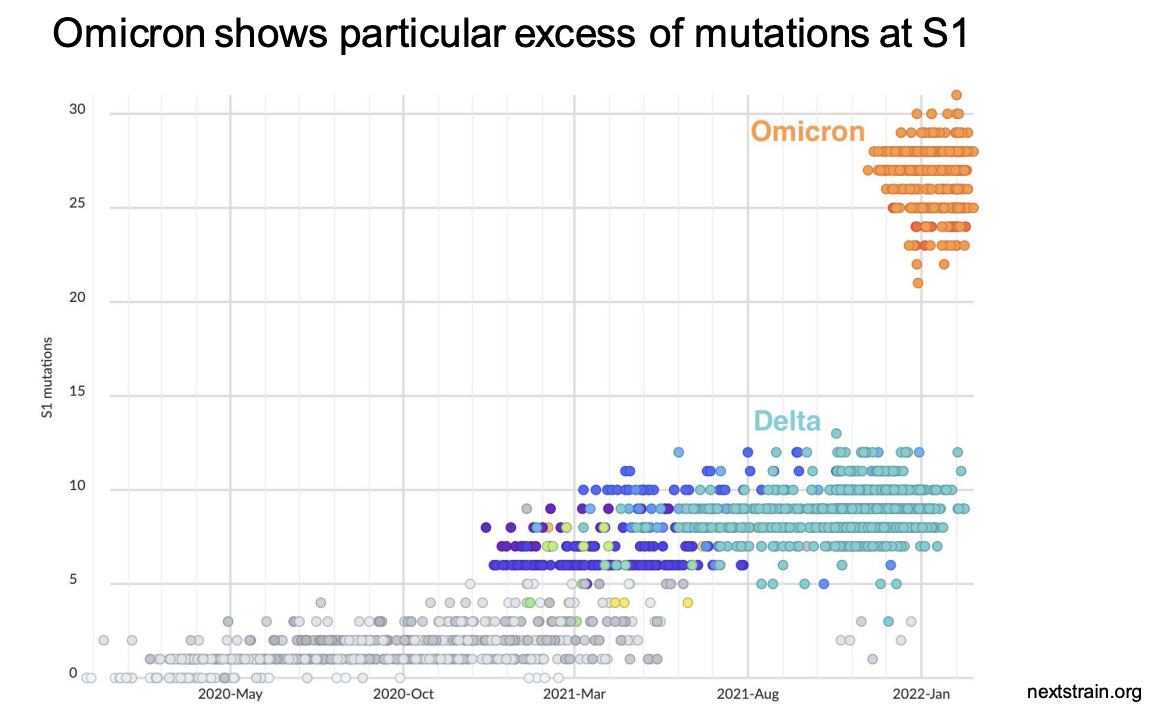
Dr. Bedford’s presentation rattled some of the smarter members of the VRBPAC because his data scream — “SARS-CoV-2 is a bad candidate for a vaccine!” But FDA officials just mumbled some platitudes and then continued on with the meeting.
The only way out of the pandemic is to withdraw these vaccines from the market and pivot to therapeutics. Instead, the FDA is proposing to just hide the data from the American people.
IV. The “Future Framework” = no more clinical trials for Covid-19 shots ever again
The purpose of the “Future Framework” is to rig the Covid-19 vaccine regulatory process in perpetuity in favor of the pharmaceutical industry. If this “Future Framework” is approved all future Covid-19 shots, regardless of the formulation, will automatically be deemed “safe and effective” without additional clinical trials because they are considered “biologically similar” to existing shots.
This is literally the worst idea in the history of public health.
If you change a single molecule of mRNA in these shots it will change health outcomes in ways that no one can anticipate. That necessarily requires new clinical trials — which is what the FDA is proposing to skip.
The FDA’s “expert advisory committee” (VRBPAC) met on April 6, 2022 to discuss the “Future Framework” for the first time. All of the committee members agreed that Covid-19 shots are not working, that boosting multiple times a year was not feasible, and that the shots need to be reformulated. They also unanimously agreed that there are no “correlates of protection” that one can use to predict what antibody levels would be sufficient to prevent SARS-CoV-2 infection.
On June 28 the VRBPAC will meet once again to discuss the “Future Framework” and it will be presented as a done deal because manufacturers want a decision on vaccine strain selection by June in order to deliver shots for autumn vaccination appointments.
So if the FDA authorizes Covid-19 shots for kids on June 14 and 15 and then approves the “Future Framework” on June 28th, the shots that will be given to kids in the fall will be the reformulated shots that skipped clinical trials.
V. Monovalent Covid-19 shots failed, so maybe throwing two, three, or four variants into a single shot will make it better?
When it comes to the flu shot, the FDA tries to hedge their bets by putting four strains of the virus into a single shot (so called “quadrivalent” vaccines). As I explained above, this strategy does not work. But these people are not very clever so that’s exactly what they are planning to do with future Covid-19 shots.
Moderna is already signaling that they intend to manufacture a Covid-19 shot with the Alpha variant and then, to make it “new and improved (TM)”, they will add genetically modified mRNA targeting the Beta variant. Here’s the best part — Moderna claims that this formulation (Alpha + Beta) will somehow protect against Omicron variants — even though by the time these reformulated shots get to market, none of these variants will likely still be in widespread circulation.
There are reasons to believe that this approach will make future Covid-19 shots even less effective and more dangerous than the current failed Covid-19 shots.
Think about it. The more mRNA you put into a shot, the higher the adverse event rate (as the genetically modified mRNA hijacks the cell and starts cranking out spike proteins). So if Pfizer and Moderna put more mRNA into these shots (in order to cover multiple variants) adverse event rates will skyrocket.
But if Pfizer and Moderna put less mRNA per variant into a shot (in order to keep the total amount of mRNA at 100 mcg for Moderna and 30 mcg for Pfizer) then the effectiveness against any one particular variant will be reduced.
The Future Framework is 100% guaranteed to fail. If the “Future Framework” is approved, effectiveness of these shots will decrease, adverse events will increase, these shots will fuel the evolution of variants that evade the vaccines, and there will be no clinical trial data before these reformulated Covid-19 shots are unleashed on the unsuspecting public.
VI. Summary
The FDA’s Vaccines and Related Biological Products Advisory Committee will meet on June 28 to vote on a “Future Framework” for evaluating so-called “next generation” Covid-19 shots. The “Future Framework” is a plan to rig the Covid-19 vaccine regulatory process in perpetuity.
The “Future Framework” would take the “flu strain selection process” that fails every year and apply it to future (reformulated) Covid-19 shots. Federal bureaucrats, many of whom have financial conflicts of interests, would choose which SARS-CoV-2 variants to include in a yearly (or twice yearly) Covid-19 shot. In the process, all future Covid-19 shots will be deemed automatically “safe and effective” without further clinical trials because they are considered “biologically similar” to existing Covid-19 shots.
The “Future Framework” is the most reckless idea in the history of public health. It shows that the FDA has completely abandoned science and its statutory duty to protect the public. If the Republic is to survive, we must stop the “Future Framework” before June 28.
VII. Call to action
We have very little time and an enormous challenge in knocking this proposal down before the VRBPAC meets on June 28. So I am asking to you to contact your elected officials to tell them to reject this dangerous proposal.
Below are talking points that you can paste into an email, a script that you can use on the phone, and a tool for looking up your elected officials. I am only asking you to contact 8 officials — the President and Vice President; your two Senators and U.S. Representative; and your Governor, state House/Assembly member, and state Senator. Please be respectful but make it clear that this plan must be stopped.
Talking points (to paste into an email, letter, or fax)
Subject line: NO “flu framework” for future Covid-19 shots
The FDA and CDC are developing a “Future Framework” to authorize future Covid-19 shots without requiring additional clinical trials. This would be a public health disaster. I am asking you to contact the FDA to tell them to stop all work on this “Future Framework” immediately. If the FDA proceeds with this “Future Framework” I am asking you to eliminate all funding for the FDA in this year’s budget.
Phone script
Hi, my name is ____________. I live at __________________[address]. I’m calling because the FDA is proposing a “Future Framework” to authorize future Covid-19 shots without requiring additional clinical trials. This would be a public health disaster. I am asking you to contact the FDA to tell them to stop all work on this “Future Framework”. If the FDA proceeds with this “Future Framework”, I am asking you to eliminate all funding for the FDA in this year’s budget.
Whom to contact: 8 phones calls, letters, emails, or faxes:
President Joseph R. Biden
The White House
1600 Pennsylvania Ave NW
Washington, DC 20500
(202) 456-1111 (The White House comment line is open between the hours of 11 to 3 p.m. EST Tues.-Thurs.)
https://www.whitehouse.gov/contact/
https://twitter.com/POTUS
Vice President Kamala Harris
The White House
1600 Pennsylvania Ave NW
Washington, DC 20500
(202) 456-1111 (between the hours of 11 to 3 p.m. EST Tues.-Thurs.)
https://www.whitehouse.gov/contact/
https://twitter.com/VP
You can look up contact info for your two U.S. Senators and U.S. Representative here:
https://www.govtrack.us/congress/members/map
The message for State elected officials is slightly different:
Hi, my name is ____________. I live at __________________[address]. I’m calling because the FDA is proposing a “Future Framework” to authorize future Covid-19 shots without requiring additional clinical trials. This would be a public health disaster. If the FDA proceeds with this “Future Framework” I are asking you to nullify the actions of the FDA and reject any Covid-19 shots that have not gone through proper clinical trials.
This is a great tool to look up contact info for your Governor, state Senator, and state House/Assembly member:
That’s it, just 8 people. We want to let them know that we are watching, that we understand what they are up to, and that this wretched plan must be stopped.
Extra credit:
Here are the email addresses for all of the public health political appointees, FDA staff, and VRBPAC members who have a say in connection with the “Future Framework”. Let’s contact them as well (proposed subject line and email text below).
Subject line: The “Future Framework” is the WORST idea in the history of public health. Please vote NO.
1. The FDA must revoke the authorizations for Moderna, Pfizer, and J&J Covid-19 shots and withdraw them from the market immediately. SARS-CoV-2 was never a good candidate for a vaccine. These shots do not stop infection, transmission, hospitalization, nor death. They appear to have negative efficacy and are driving the evolution of variants that evade vaccines. The pandemic will never stop as long as the FDA and CDC are promoting shots that lack sterilizing immunity.
2. The FDA and CDC must pivot to therapeutics. This was always the answer. About twenty off-the-shelf treatments are more effective than vaccines (if used for prophylaxis or early intervention). Get these safe and effective medicines to people who need them and let doctors be doctors again and treat patients based on their own best clinical judgment.
3. Any reformulated Covid-19 shots MUST go through proper clinical trials and FDA review. That means:
• Large (50,000+ person) double-blind randomized controlled trials with inert saline placebos conducted by an independent third party;
• Safety and efficacy studies for two years prior to any application; the treatment and control groups must be followed for 20 years to monitor adverse events and all-cause mortality (no more wiping out the control group after 6 months to hide bad outcomes);
• Greater than 90% efficacy with less than 1% Grade 3 Adverse Events; and
• Proper monitoring for carcinogenesis, mutagenesis, and impairment of fertility.
sean.mccluskie@hhs.gov, commissioner@fda.hhs.gov, ashish.jha@whitehouse.gov, Aux7@cdc.gov, Peter.Marks@fda.hhs.gov, Hong.Yang@fda.hhs.gov,
Richard.Forshee@fda.hhs.gov, Huilee.Wong@fda.hhs.gov, Leslie.Ball@fda.hhs.gov, Doran.Fink@fda.hhs.gov, hanae@bcm.edu, paula.annunziato@merck.com,
adam.berger@nih.gov, hbernstein@northwell.edu, acohn@cdc.gov, anc0@cdc.gov, hjanes@fredhutch.org, hgans@stanford.edu, david.kim@hhs.gov,
asmonto@umich.edu, offit@chop.edu, spergam@fredhutch.org, Jportnoy@cmh.edu, erubin@hsph.harvard.edu, erubin@nejm.org, ashane@emory.edu,
swamy002@mc.duke.edu, fullerao@umich.edu, RandyHawkins@cdrewu.edu, officeofthepresident@mmc.edu, JYLee@uams.edu,
ofer.levy@childrens.harvard.edu, wayne_marasco@dfci.harvard.edu, cmeissner@tuftsmedicalcenter.org, mrn8d@virginia.edu,
Liberals vote to keep travel ban against unvaccinated Canadians
The Counter Signal | May 30, 2022
Members of parliament today voted 202-117 to keep the current travel ban against unvaccinated Canadians in place.
The Conservatives proposed the motion to have the current travel ban against the unvaccinated lifted.
Trudeau, Jagmeet Singh, and Travel Minister Omar Alghabra voted against the motion, as did virtually every Liberal, NDP, and Bloq Quebecois member.
Conservatives all voted to lift the ban.
“Today, the NDP-Liberal government voted against our common-sense motion that would have returned to pre-pandemic rules and service levels for travel and helped end the delays we’re seeing at airports across the country,” their Conservative’s website reads.
“As Canadian travellers are being subject to extreme delays, line-ups, bottlenecks, and missed connections because of unnecessary protocols, our allies across the world, including the European Union and the United States, have loosened rules for passengers on flights and in airports.”
“. . . Airports have directly cited the Liberals’ policies as the reason for these delays . . .”
“After two long years of the pandemic, Canadians are finally looking to return to normalcy and begin travelling again. Unfortunately, the NDP-Liberal government continues to cling to outdated and unnecessary protocols that are exacerbating delays.”
Conservative members of parliament proposed the motion on May 17. However, Charter rights – such as freedom of movement – were not leveraged to justify their call to drop restrictions.
Instead, “unacceptable wait times” at the airport (for those who are allowed to travel), labour shortages, and economic losses caused by the restrictions were cited.
However, the motion also mentioned that the restrictions were ineffective and that international allies have all dropped their restrictions.
Indeed, Canada remains one of the only countries to have a ban on unvaccinated citizens from leaving their own country, and the efficacy of the restrictions appears questionable at best.
The Trudeau Liberal government was expected to renew the federal vaccine policy eight weeks ago but has still not announced anything.
Fears of cover-up of vaccine caused deaths
Pathologist who said 30-40% of post-vaccine autopsies died of the vaccine went oddly silent and suddenly stopped carrying out autopsies
By Will Jones | The Daily Sceptic | May 31, 2022
If we are going to get to the bottom of whether and to what extent vaccines are contributing to the deaths of the vaccinated, autopsies are a crucial tool. So where are all the autopsies to help us answer these questions?
Back last summer, the Chief Pathologist at the University of Heidelberg, Dr. Peter Schirmacher, was pushing for many more autopsies of vaccinated people. His team had just finished conducting 40 autopsies of people who had died within two weeks of vaccination and concluded that 30-40% of them died from the vaccine.
Dr. Schirmacher warned of a high number of unreported deaths from vaccination and lamented that pathologists don’t notice most of the patients who die from a vaccination. The problem, he explained, is that vaccinated people do not usually die under clinical observation.
The doctor examining the corpse does not establish any context with the vaccination and certifies a natural death and the patient is buried. Or he certifies an unclear manner of death and the public prosecutor sees no third-party fault and releases the body for burial.
Dr. Schirmacher’s claims were dismissed at the time by Government scientists, but he stuck to his guns. “The colleagues are definitely wrong because they cannot judge this specific question competently,” he said. He clarified that he is in favour of the vaccines to fight Covid and has been vaccinated himself, but says the benefits and risks must be considered for each person. He argued in favour of “individual protection considerations” instead of quickly vaccinating everyone.
At the time, the Federal Association of German Pathologists was also pushing for more autopsies of vaccinated people. Johannes Friemann, head of the autopsy working group in the association, said this was the only way that connections between deaths and vaccinations could be ruled out or proven. The association had already in March 2021 sent a letter to Health Minister Jens Spahn requesting that German state governments instruct health authorities to order autopsies on site. Five months later, in August, this letter remained unanswered.
Following the reports in the media of his comments, Dr. Schirmacher fell oddly silent. Today, ten months later, no further autopsies by his group have been reported and no further calls for them have been heard. There are also no reports of autopsies being conducted specifically on those who died shortly after Covid vaccination in any other countries – save for the 15 done by Dr. Arne Burkhardt towards the end of 2021, which found “clear evidence of vaccine-induced autoimmune-like pathology in multiple organs” in 14 of 15 cases, but which were ignored by all health authorities and mainstream media.
Where are all the autopsies to investigate the role of vaccines in post-vaccine deaths, and why have Dr. Schirmacher and his colleagues gone quiet, after being so emphatic about the risks and the need?
This looks very much like a cover-up and a silencing. If it isn’t, then why don’t governments order autopsies to be carried out, to put the matter to rest? What have they got to hide?
Data shenanigans as Sweden misleads its public over vaccination-related mortality data
Health Advisory & Recovery Team | May 29, 2022
In December 2021 Norman Fenton, Martin Neil, Clare Craig, Josh Geutzkow, Joel Smalley, Scott McLachlan and Jonathan Engler published an article casting doubt on the vaccine efficacy implied by the UK’s official mortality statistics as they related to vaccination status, raising miscategorisation of vaccinated deaths soon after injection as unvaccinated as a possible significant factor.
The authors — as expected — were unable to publish this article in any mainstream journal, as anything which counters the government’s official position on anything related to the pandemic, especially vaccinations, has effectively been suppressed or censored throughout the last 2 years.
Despite repeated FOI requests by several parties, no UK government agency has ever released sufficiently granular data broken down into the necessary categories to permit any meaningful analysis of the extent (if any) of this miscategorisation issue.
Now, however, it appears that an FOI request to the Swedish Public Health Agency by 29 doctors and scientists has been successful in obtaining such data (for Sweden). They have written an article about it (in English) here.
The data is revelatory. It essentially shows that individuals dying within 2 weeks of vaccination have been classed and counted as unvaccinated. Incredibly, this applies to the 14 day period after the second as well as the first dose. The numbers involved are certainly non-trivial. In a substack blog, Jessica Rose has re-run the implied vaccine efficacy statistics in light of the new data categorizations.
In conclusion, the correct categorization turns the vaccine efficacy calculation totally on its head, suggesting a significantly increased risk of death in the vaccinated compared to the unvaccinated, rather than the vice-versa conclusion the authorities had originally touted. Whilst there is no age-breakdown, the magnitude of the reversal in the conclusions is nonetheless stark enough to conclude that there has been very serious and likely deliberate misrepresentation of what the mortality statistics truly imply about the efficacy of the vaccines against mortality.
One wonders how many other countries have played similar tricks with their data?
Post-script:
A further – anonymous – author has published an article claiming to build on Jessica Rose’s piece by calculating the mortality rates in the vaccinated and unvaccinated and comparing them to flu.
The author acknowledges the possible effect of age-confounding in the text, but in referring to it as having only a “slight” effect this understates its potential to interfere with his analysis; to draw the conclusions he /she does would in fact require a proper age breakdown of deaths month-by-month. However, if the analysis might lead to a misinterpretation of vaccine effectiveness because of the age bias then it is up to those with access to the data by age to refute the analysis.
The main take-away from the episode around this FOI is not that the vaccines are or are not efficacious (vs death), but rather that there has been a systematic miscategorization error which (1) seems likely to have been deliberate and (2) resulted in an extremely misleading picture of what the data suggests.
Such incidents – which now appear all too common in many countries – are likely to shatter the public’s trust in the institutions upon which we are supposed to rely.
Bill Gates: Next Pandemic Likely to be Caused by Climate Change

By Paul Joseph Watson | Summit News | May 30, 2022
Billionaire Bill Gates says there’s a 50 per cent chance the next pandemic will be caused by man-made climate change or be deliberately released by a bio-terrorist.
The Microsoft founder made the comments during an interview with Spanish news outlet El Diario.
Asserting that the next major pandemic is likely to occur within 20 years, Gates said, “It could be a virus made by man, by a bioterrorist who designed it and intentionally circulated it. That is a very scary scenario because they could try to spread it in different places at once.”
“Or it could be something that makes the leap from the natural world. The human population is growing and we are invading more and more ecosystems. That is why I calculate that there is a 50% chance that we will have a pandemic of natural origin in the next 20 years, as a consequence of climate change,” he added.
The prediction that climate change will cause a virus which will then require another global vaccine rollout is somewhat convenient for Gates given that he is heavily invested in both areas.
Gates reiterated the call made in his recent book to pump billions of dollars into researching future pathogens by creating a 3,000-strong team of specialists under the control of the World Health Organization, which would require a 25% budgetary increase.
Commenting on the recent outbreak of monkeypox, Gates said “there is very little chance” it will have an impact anything like coronavirus, although he cautioned that it could mutate into something significantly nastier.
Gates infamously warned of a coming super-virus five years before the emergence of COVID-19 during a 2015 TED talk.
As we highlighted earlier this month, Gates warned that COVID was not over and that there is likely to be an “even more fatal” variant of the virus coming.
During an event at the Munich Security Conference back in February, Gates said that “sadly” Omicron is a “type of vaccine” and has “done a better job getting out to the world population than we have with vaccines” by providing natural immunity.
FDA announces updated schedule for the June meetings regarding five pivotal vaccine decisions
Who needs data when you’ve got regulatory capture?
By Toby Rogers | May 29, 2022
I. The June FDA meetings
This week the Washington Post copied and pasted from a Pfizer press release to announce yet another scientific miracle(TM) that will completely fail in practice. In the process WaPo also got some quotes from the FDA who have now nailed down the schedule for the 4 meetings in June in which they intend to assemble the final pieces for Pharma’s permanent dominance over the American people.
The new schedule is as follows:
June 7, Novavax
June 14, Moderna in kids 6 to 17 years old
June 15, Moderna in kids 6 months to 5 years AND Pfizer in kids 6 months to 4 years
June 28, “Future Framework” (the plan to skip clinical trials in perpetuity)
There is a lot to parse in the WaPo’s brief article.
Contrary to the breathless headline, they still don’t have any data.
Pfizer and BioNTech said the 80 percent efficacy finding was preliminary and based on 10 cases of Covid-19 in the study population as of the end of April. Once 21 cases have occurred, the companies will conduct a more formal analysis of efficacy… Pfizer and BioNTech said they plan to finish filing data with the FDA this week — and warned that the efficacy number was fluid because results are still arriving.
Let’s recap how we got here:
🚩 The Pfizer clinical trial in kids under 5 failed in December 2021.
🚩 So Pfizer added a third dose and that trial also apparently failed in February (which is why Pfizer was forced to withdraw its application on February 10).
🚩 Now Pfizer is describing a jerry-rigged trial of a third dose in 1,678 kids ages 6 months to four years old. Pfizer did not disclose how the kids were divided between the treatment and control group so it is impossible to run our own calculations on efficacy. Out of that sample, 10 developed Covid — although it is not clear how the 10 were distributed between the treatment and control group. (I suppose some quant on Twitter will figure out how to work backwards from Pfizer’s claims to calculate the numbers in each of these categories but needless to say, this is not the proper way to do science.) Of course Pfizer also failed to describe the contents of the “placebo.”
How exactly will Pfizer double the number of Covid-19 cases in the clinical trial in the next month given that 74.2% of kids already had natural immunity in February which means that nearly 100% of children likely have natural immunity by now?
Also, is the FDA seriously considering basing national policy, that impacts 18 million children, by relying a study with only 10 cases? It appears that the FDA is not even pretending to care about science anymore.
What little data they have will be based on antibodies in the blood, not health outcomes in the real world. That’s strange because the members of the FDA’s Vaccines and Related Biological Products Advisory Committee unanimously acknowledged on April 6 that there are “no correlates of protection” in connection with Covid-19 shots (this means that there are no valid proxy measures, such as antibody counts, that can determine whether someone who has received this shot is immune to the virus or not.)
WaPo continues:
While the adult trials recruited tens of thousands of volunteers and waited to see if vaccinated people were better protected, the children’s vaccine trials were primarily designed to measure immune responses using blood tests.
No they were not “primarily designed to measure immune responses using blood tests.” The studies were intentionally undersized to hide harms from the shots in addition to other tricks that they use to skew the results (such as kicking you out of the trial if you call 911 or go the the emergency room). But when one shrinks the sample size, surprise! it becomes impossible to detect actual health benefits from the shots (the signal would have been tiny if at all, but when one uses a sample that small then any positive signal can also disappear into statistical insignificance.)
II. The bigger picture
Tony Fauci and the NIAID funded the creation of a chimera virus that escaped a bioweapons lab and killed 6.3 million people worldwide.
Public health authorities have blocked access to safe and effective prophylaxis and early treatment throughout the pandemic in order to create the market for Covid-19 vaccines.
Covid-19 shots skipped essential safety steps (e.g. challenge trials in animals) and were rushed to market with no long term data.
In practice the mRNA shots suppress immune function for 6 weeks after the first shot, provide about two months worth of protection against coronavirus, then efficacy wanes quickly and becomes negative after six months. Meanwhile, these shots cause more side effects than any vaccine ever invented.
Popular support for the current regime has collapsed. More people have died of Covid under Mr. I Believe the Science(TM) than under Orange Man Bad. Only hypochondriacs in blue states seek out additional doses. Meanwhile Sudden Adult Death Syndrome stalks the true believers. In the past 48 hours alone actor Ray Liotta, Andy Fletcher of Depeche Mode, British drummer Alan White (from the band YES), and comedian Phil Butler were all likely killed by Covid-19 shots. It’s impossible to hide all of the bodies at this point.
The FDA seems to know that their window is closing to implement the Final Solution. So they are rushing to put the finishing touches on their plans to inject this toxic junk into the littlest kids in America. The FDA knows that these shots cannot pass proper regulatory review so they’ve developed a plan to rig the process in favor of Pharma in perpetuity. On June 28, the FDA’s “expert advisory committee” will vote on a “Future Framework” whereby all future (reformulated) Covid-19 shots will automatically be deemed “safe and effective(TM)” without any additional clinical trials, on the theory that they are “biologically similar” to existing Covid-19 shots.
What this means is that by fall, the Covid-19 shots that they will be injecting into Americans of all ages will have a new formula that skipped clinical trials altogether.
Injecting people with genetically modified mRNA that skipped clinical trials is genocide. It’s slower than the Nazi Final Solution. But it’s genocide all the same. Indeed the slower pace of the FDA Final Solution (5% to 15% increase in all cause mortality every year) might be even more lethal in the long run. It’s sinister in that they are intentionally building in plausible deniability (‘the FDA said it was safe’) to help the medical establishment feel virtuous while participating in genocide.
I’ll just conclude by saying: be careful what you wish for FDA. The tide has already turned. The American people know exactly what you are doing. We have the receipts. It will be relatively easy to secure a conviction at Nuremberg 2.0 — we literally have you on video committing crimes against humanity. As a reminder, the courts have determined that “I was just following orders” is not a valid defense.
After Summer, Europe to Target the Unvaccinated
BY ROBERT KOGON | BROWNSTONE INSTITUTE | MAY 28, 2022
Anyone who imagines that the suspension of Covid-related measures in much of Europe means that those measures, and hence the C-19 vaccination campaign, are things of the past should have a look at the recent pronouncements on the subject of the European Commission, starting with Commission President Ursula von der Leyen’s April 27 statement on the “next pandemic phase.”
While acknowledging that the “emergency” phase of the pandemic is over – but apparently not, on her account, the pandemic as such – von der Leyen warns that “we must remain vigilant. Infection numbers are still high in the EU and many people are still dying from COVID-19 worldwide. Moreover, new variants can emerge and spread fast.” “But we know the way forward,” she concluded, “We need to further step-up vaccination and boosting, and targeted testing”. The emphasis is mine.
Note that von der Leyen does not merely say that vaccination and boosting should continue – say perhaps for particularly vulnerable groups – she says rather that they have to be “further stepped-up”! This in an EU in which, according to the European Centre for Disease Prevention and Control, nearly 85% of the adult population has already been fully vaccinated!
In the Commission press release, von der Leyen’s call for “stepped-up” vaccination and boosting is the first of a series of measures that member states are called on to take “before autumn.”
A factsheet on “COVID-19 – Sustaining EU Preparedness and Response: Looking ahead,” which was published by the European Commission on the same day, April 27, reiterates von der Leyen’s point. The first section is entitled “Increasing uptake of COVID-19 vaccination” and the first bullet point reads:
• Member States should increase vaccination uptake and the administration of boosters and fourth doses for those who are eligible. They should also increase vaccination among children.
Here, the emphasis is in the original. The second bullet point continues:
• Member States should prepare COVID-19 vaccination strategies for the coming months taking into account the simultaneous circulation of seasonal influenza and incorporate COVID-19 vaccination into national vaccination programmes.
On May 12, The European Parliament’s recently created special committee on the Covid-19 pandemic (COVI) hosted a question-and-answer session with EU Health Commissioner Stella Kyriakides. (Full video here.) In a tweet, the French Member of the European Parliament Virginie Joron summed up the gist of Kyriakides’s remarks as follows (author’s translation):
PRIORITY: 100 million unvaccinated in EU who will have to be convinced and targeted without discriminating against them.
> combatting misinformation
> next pandemic with new variants this winter
Like Kyriakides, incidentally, the Commission press release also identifies “intensify[ing] collaboration against mis- and disinformation on COVID-19 vaccines” as one of the priority actions for the fall.
Finally, in a more recent May 17 tweet, Virginie Joron shared the below photo of a Commission document that was distributed to the EU Parliament’s Internal Market and Consumer Protection Committee and that includes, in effect, a “vaccination strategy” for the fall. This document likewise “targets” the unvaccinated, its first bullet calling on EU member states to: “Strengthen efforts to increase the uptake or completion of the primary course among the unvaccinated or partially vaccinated including by continuously monitoring and analysing vaccine hesitancy to overcome it.”
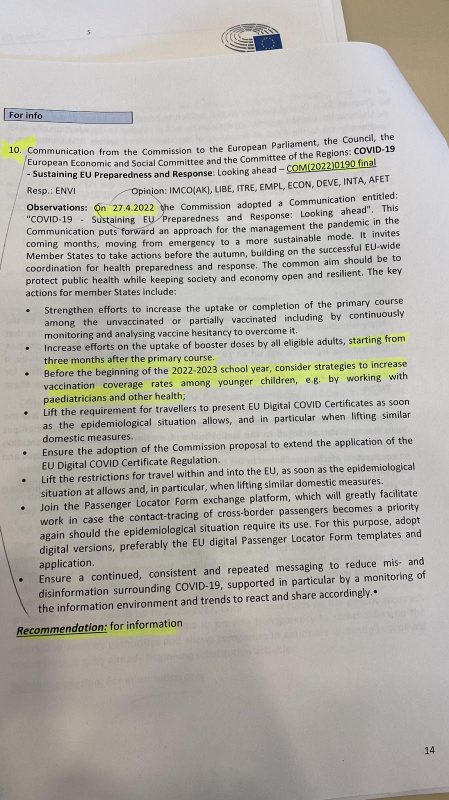
The emphasis on “targeting” the unvaccinated is particularly puzzling given how rapidly vaccine-induced protection against Covid-19 is now known to wane. In immunological terms, once it has, there is, of course, no meaningful distinction to be made anymore between vaccinated and unvaccinated. Some studies and data even suggest that the vaccinated are at this point more prone to infection. Only the very recently vaccinated may perhaps enjoy some added protection.
Numerous observational studies have demonstrated how rapidly the efficacy of the Covid-19 vaccines wanes: in particular, that of the BioNTech-Pfizer vaccine, which is by far the most widely-used vaccine in the EU. But there is no need to cite these studies here, since the very next bullet point in the Commission document tacitly acknowledges the rapid waning of vaccine efficacy, calling on member states to: “Increase efforts on the uptake of booster doses by all eligible adults, starting from three months after the primary course.” The emphasis here is again mine.
The third and last vaccine-related bullet-point specifically concerns child vaccination. It is truncated in the document photographed by Joron, but the full version is to be found in the Commission’s most complete statement of its Covid-19 strategy for the fall: a communication to the Parliament and other EU institutions that likewise dates from April 27. The full version of the recommendation reads as follows: “Before the beginning of the 2022-2023 school year, consider strategies to increase vaccination coverage rates among younger children, e.g. by working with paediatricians and other health professionals who are trusted sources of information for many parents.”
It was considerate of Kyriakides to insist that the unvaccinated should not be discriminated against, even if they need to be “targeted.” But it should be noted that the April 27 communication, as reflected in Joron’s photo, also stresses the need to “[e]nsure the adoption of the Commission proposal to extend the application of the EU Digital COVID Certificate Regulation.” The main effect and purpose of the EU Digital Covid Certificate, which has also served as framework and infrastructure for domestic “health” or “vaccine” certificates in EU member states, is, of course, precisely to reward the vaccinated and discriminate against the unvaccinated.
The European Commission’s April 27th documents thus clearly invoke a new rollout of the Covid-19 vaccination campaign in the fall, specifically targeting the hitherto unvaccinated and also children. Moreover, if the Commission gets its way – as it can be expected to – and the EU Digital Covid Certificate is indeed extended, they also raise the specter of this new rollout being combined with exactly the same coercive, discriminatory measures that turned Europe’s unvaccinated into social pariahs for much of the last year.
Robert Kogon is a pen name for a widely-published financial journalist, a translator, and researcher working in Europe. He writes at edv1694.substack.com.
Australia begins to reap what it has sown. It’s grim.
By Joel Smalley | Dead Man Talking | May 27, 2022
Apparently, it’s really difficult for our ONS to produce deaths by date of occurrence by sex and age until 7 months after year end. This means we won’t get any reliable death data for 2021 until July this year.
Fortunately, Australia is a little more timely with their data releases so we can get a little insight from down under.
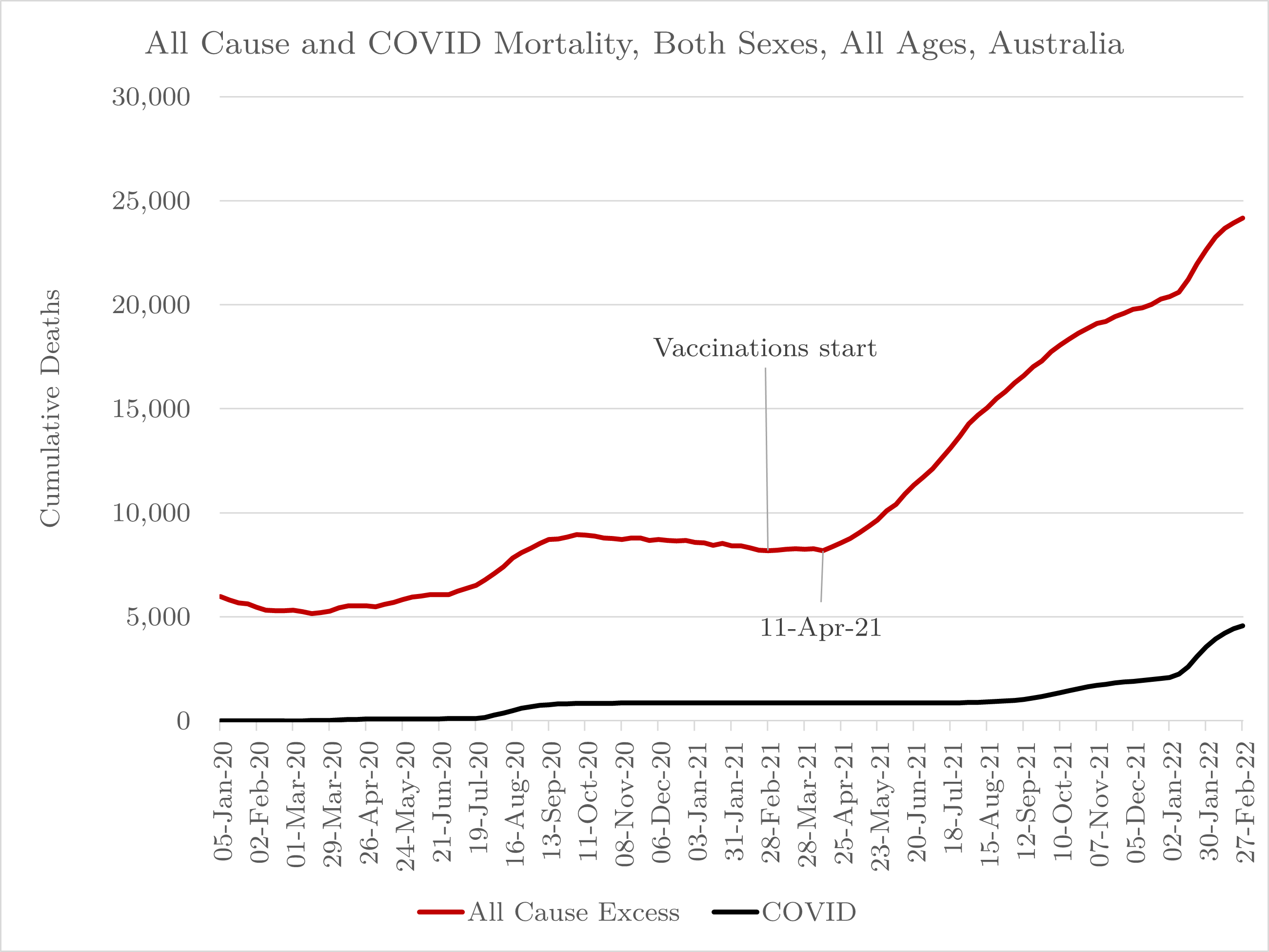
Looking at both sexes and all ages, it is clear that things have gone really wrong for Australia since the week ending 11th April 2021. Between then and the end of Feb 2022, there have been 16k excess deaths.
There have been less than 4k COVID deaths in that same time with most of those coming since Sept 2021.
So, much like every other country of the world, Australia has had more COVID death since the COVID vaccine was introduced in Feb 2021 and substantially more excess death from other causes.
By the end of the period, more than 90% of the adult population has been jabbed.
What if we break it down by sex and age?
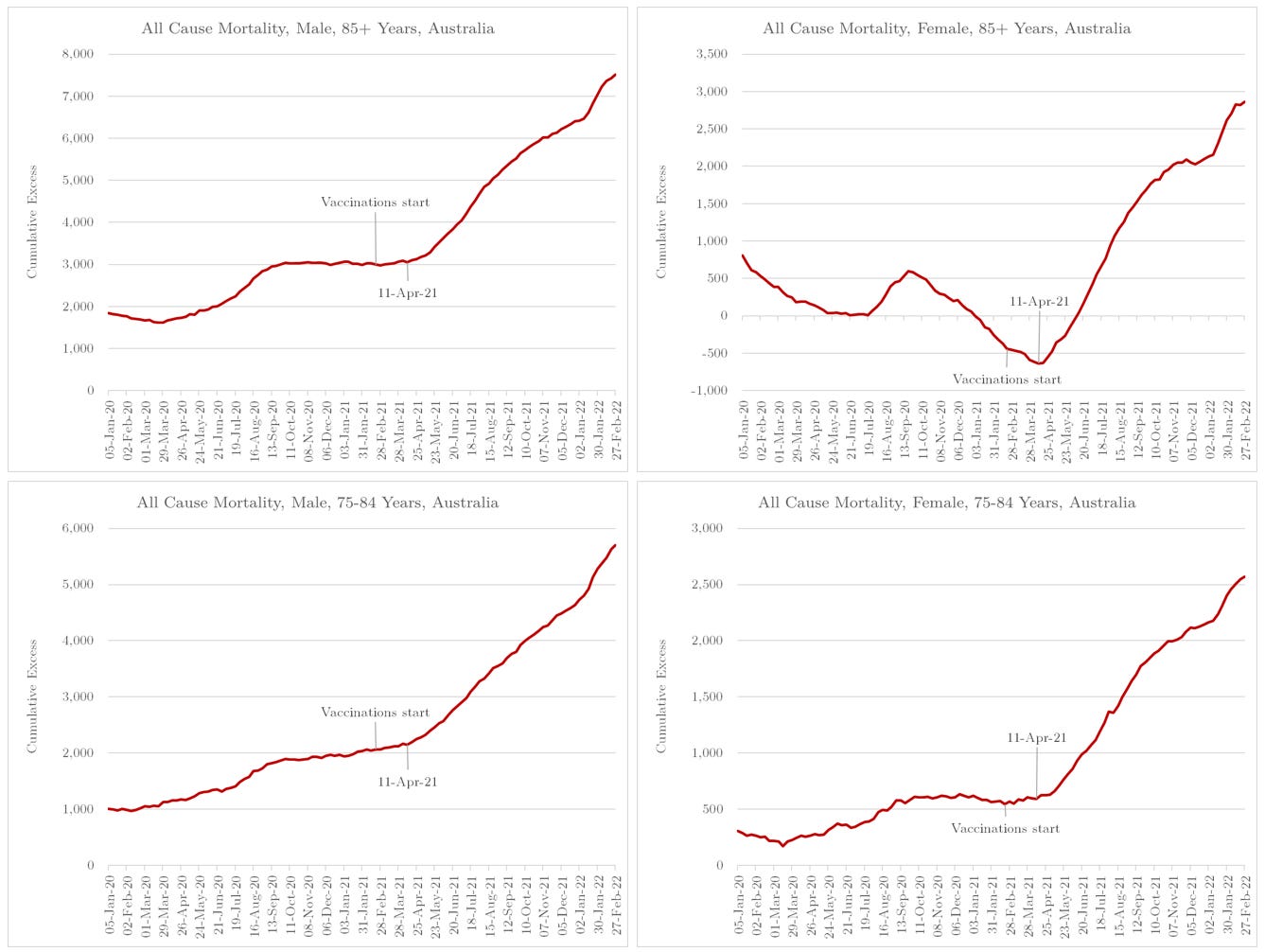
In the over 75s, the pattern is quite consistent, regardless of sex. There was modest excess death during 2020, the year of the plague, followed by significant excess starting exactly on 11th April 2021, just under two months after the mass COVID vaccinations began.
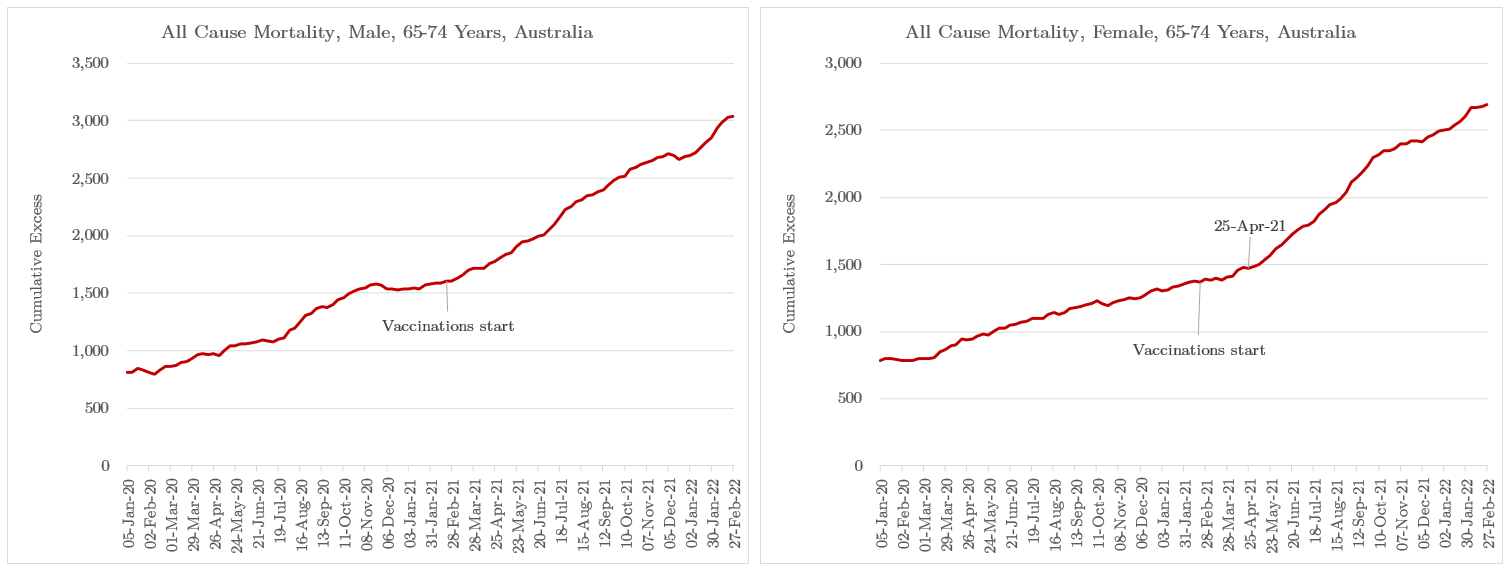
In the 65 to 74 year olds, the men have been dying at a steady excess pace since the start of 2020 with no obvious inflection like the older age groups. The women, on the other hand, were dying at a slightly slower pace but caught up after an inflection on 25th April 2021, two weeks after the older age groups.
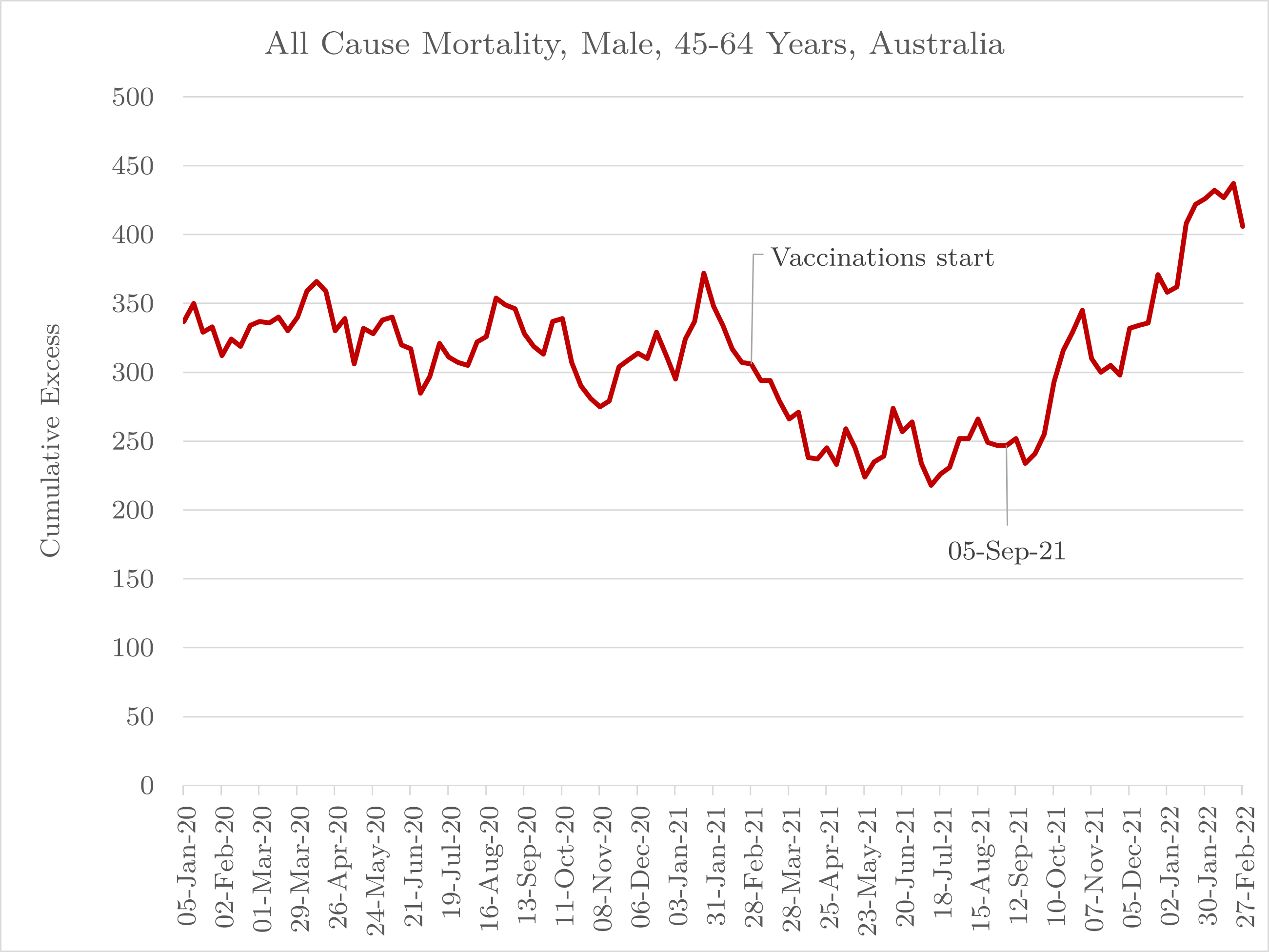
Things to start to get interesting in the 45 to 64 year olds. The men have been dying less than expected since the start of 2020 but stop their decline when vaccination starts and rally in early September 2021.
Conversely, the women seemed to have a little spike Feb to May 2020 when COVID was pandemic before also declining in the run up to mass vaccination. But the biggest anomaly is that their death rally starts on 18th April, 1 week after the oldest groups but 1 week before the 65 to 74s and a massive 5 months before the men.
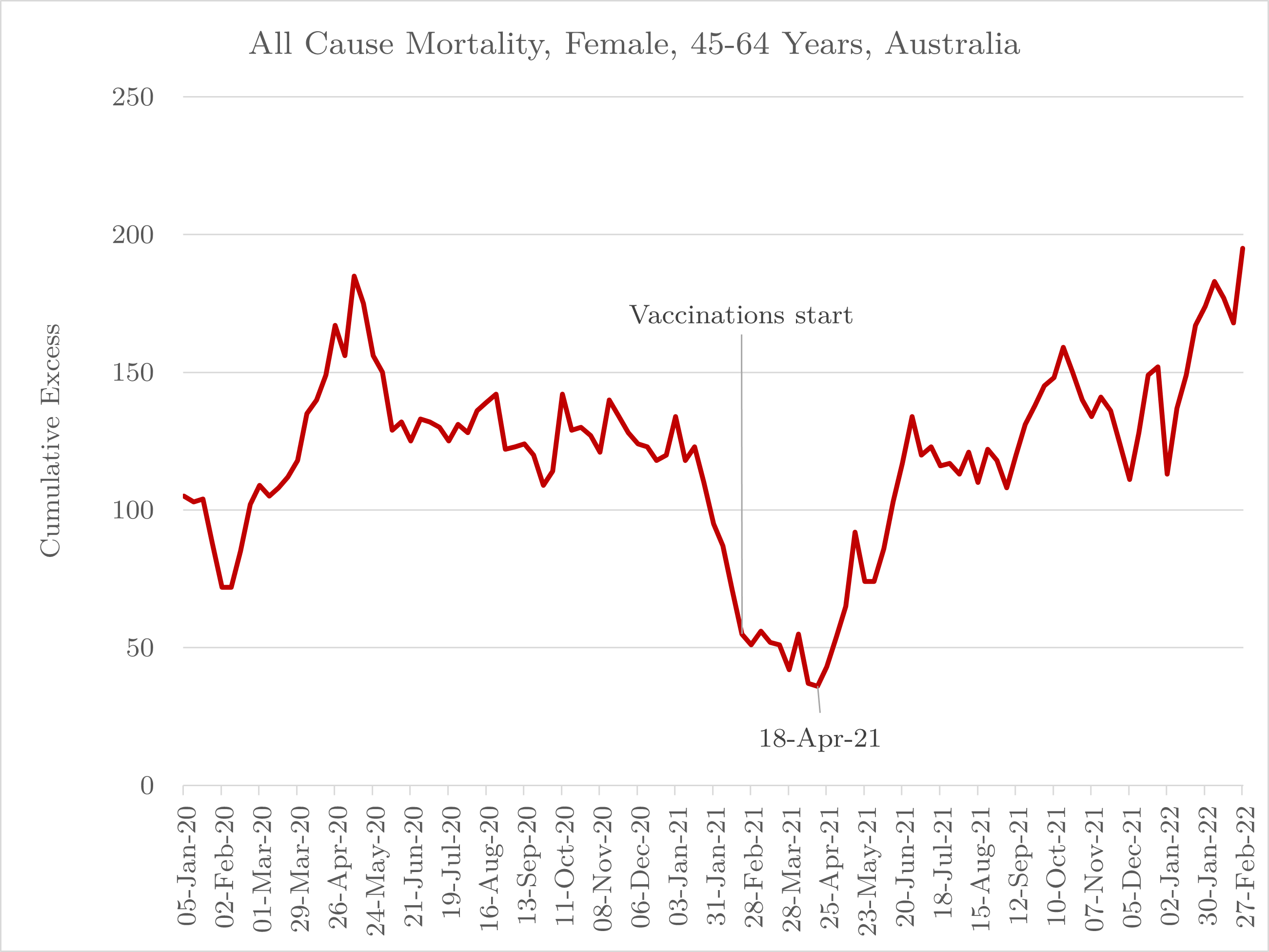
I’m not normally one to speculate, but in the absence of any better quality data from the expert public health authorities, I’m going to have a stab at an explanation – there are substantially more female health care workers, especially in care homes, who would have been “prioritised” over their male peers which is why they die from the jab sooner.
I could be wrong.
What Really Happened in the Pandemic
By Justin Hart | Rational Ground | May 26, 2022
Every year humans endures a “flu season” – a period denoting the high-water mark of that year’s wave of respiratory viral pathogens. Believe it or not we still have strains of the 1889 Russian flu, the 1918 Spanish flu, the 1957 Asian flu, the 1968 Hong Kong Flu, the 2009 H1N1 virus – all these various strains of nasty bugs rear their head every single year.
In late 2019, a new “novel” pathogen appeared on the scene – a bug from the “Coronavirus” family (“corona” describing the spike-like structure of the particles.) The official title was SARS-CoV-2. SARS = “severe acute respiratory syndrome”; CoV-2 = “Coronavirus 2.” This particular virus can cause a disease called COVID-19 (“Coronavirus Disease 2019”). The disease is thought to have originated in China and found significant human-to-human transmission. It is thought to be “novel” because prior infections of other pathogens do not seem to create anti-bodies to tackle this newfound disease within the human body.
Officials raised alarms about the potential mortality witnessed from COVID-19. Governments across the world scrambled to address and protect their populations from what quickly became a pandemic. Efforts ranged from stringent to downright authoritarian. Results were mixed to say the least. In early 2022, it was thought that SARS-Cov-2 and COVID-19 would join the panoply of viruses and diseases we experience during the annual ebb and flow of life.
That’s the short sterile version of what transpired.
Here’s what actually happened:
- Global elites had ramped up significant efforts to reshape the world to address a host of inequalities and imagined boogeymen like climate change.
- These global elites were bolstered by a host of corrupt institutions which included the WHO (“World Health Organization”), big pharmaceutical companies, and world wealth and health players like Bill Gates.
- With the emergence of a new virus these groups pounced at the vulnerable moment to put their plans into action and retool the world with a host of proposals – this was known as The Great Reset. The Coronavirus response was just the first sortie in this plan.
- Governments across the world, under the threat of serious mortality (real or imagined), caved to the plan of action which utilized never-before imagined cram downs on individual rights, massive financial expenses, and enhanced authority overhauls to set the stage for a shift of power.
- Free speech, right to assembly, right to bodily autonomy, representative government all fell within months of the first COVID-19 cases announced in almost every country.
- This newfound power and framework allowed this movement to latch on the decaying carcass of fragile democracies, societal empathies, and eggshell-walking politicos anxious about upcoming elections.
- Unprecedented global lockdowns of populations disrupted the entire flow of commerce and relationships.
- Trillions of tax dollars flowed into the coffers of every connected and corrupt institution under the guise of “protecting” the global populace from this apocalyptic pathogen.
- Disrupted businesses were “bought” off with zero-cost loans and grants to keep employees onboard and keep the money flowing so as not to destroy the economies all at once.
- A massive global testing regime was set up to catch the widest number of COVID-19 infections possible. The chosen test array (the PCR test) could pick up remnants of a virus at 5 days after infection or even 75 days.
- Hospitals were designated as the first point of care ensuring a massive wave of anxiety and alarming centralization of power still felt today.
- Deaths were counted with the widest-possible latitude ensuring a prominent psychological impact at every turn prompting policies mirroring population concerns.
- Governments bought and paid off new entities to ensure compliance. Threats of fines and operational shutdowns were made if new agencies failed to meet expectations.
- A global deterrence was crafted to ward off any pre-hospitalization treatments. The endgame was focused on the ultimate prize: a “revolutionary” vaccination framework thought to be the next generation in global medicine and health.
- An unprecedented wave of funding and government collusion was established to roll out a vaccine across the world.
- Government mandates ranged from coercive inconvenience to full-on house arrest. You could lose your job, your bank account, and your freedom in one fell swoop.
- Simplistic mechanisms of mask wearing were instituted as an outward sign of faith in the “new normal.” Politicians could then wipe their hands of outcomes by pointing to lack-of-use of such procedures.
- Children were targeted for ripe propagandist approaches ensuring that most vulnerable parts of our society were utilized as a bludgeon against anyone going against the grain.
- Wave after wave of virus variants proved a great excuse when vaccines didn’t perform as expected.
- Strategic gaslighting was employed by health officials to distract from their massive failures.
- War followed to cover up the disaster.
All of this was designed to latch onto a virus that many assert has unnatural origins. The ramifications of a man-made virus set loose upon the world by accident or on purpose should frighten us more than the virus itself. Someone was playing god and it appears they are just getting started.
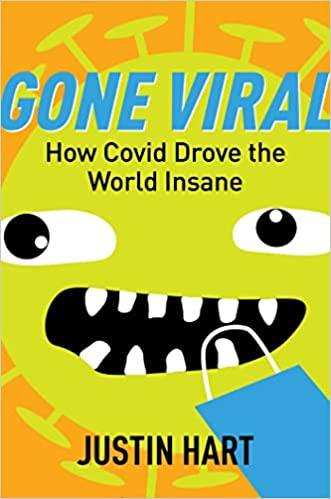
My book, Gone Viral: How Covid Drove the World Insane comes out in September.
DR. MCCULLOUGH ON MONKEYPOX
The Highwire with Del Bigtree | May 26, 2022
As the monkeypox outbreak saturates the news cycle, we check in with Epidemiologist and Cardiologist Dr. Peter McCullough to look into the danger the virus poses to the public.
Featured Video
Houthis Don’t Have to Conquer Saudi Arabia to Make It Pay
or go to
Aletho News Archives – Video-Images
From the Archives
Newly Released FBI Docs Shed Light on Apparent Mossad Foreknowledge of 9/11 Attacks
By Whitney Webb | MintPress News | May 17, 2019
NEW YORK — For nearly two decades, one of the most overlooked and little known arrests made in the aftermath of the September 11 attacks was that of the so-called “High Fivers,” or the “Dancing Israelis.” However, new information released by the FBI on May 7 has brought fresh scrutiny to the possibility that the “Dancing Israelis,” at least two of whom were known Mossad operatives, had prior knowledge of the attacks on the World Trade Center. … continue
Blog Roll
 Aletho News
- MEP blasts ‘Euro-Gestapo’ for lecturing Russia on democracy
- Syria May Send Troops to Saudi Arabia Amid War with Ansar Allah
- UK whines about losing billions to ‘Putin tax’
- Baghaei to Rubio: Distorted narratives cannot erase US record of broken commitments
- Houthis Don’t Have to Conquer Saudi Arabia to Make It Pay
- MOE: Nearly 22,000 Students and Education Workers Killed
- Guterres in Islamabad: Genocide, cowardice, and the cage of Imran Khan
- Johnson, Marandi say Yemen holds upper hand over Saudi Arabia
- False flags won’t save aggressors, Iran FM spokesman says
- The Makkah Pact Enters Into Force: The End of American Dominance or Its New Form?
- If Americans Knew
- Report claimed Mark Levin used by Israeli government to influence Trump
- Over 2,000 Gazans have died awaiting medical evacuation amid Israel’s continued siege
- How a U.S. Diplomat Suppressed and Altered Reports Critical of Israel
- 5 Palestinians Die from Israeli Strikes in Gaza as Relentless Attacks Continue
- Report: Ceasefire Slows Killing but Leaves Devastation Intact
- Country Music Singer Zach Bryan Breaks Attendance Record at Robert Kraft’s Gillette Stadium While Wearing ‘Free Palestine’ Shirt for Second Night in a Row
- Three years of death and devastation: Israel’s war on Gaza in pictures
- Why Hamas believed the status quo was more dangerous than its 7 October gamble
- Debunking Israel’s latest list of ‘terrorist’ journalists in Gaza
- In Gaza, focus is on survival, “every step is a struggle” – Daily Update
- No Tricks Zone
- New Study: 50 Years Of The Most Aggressive ‘Net Zero’ Policies Can Only Affect The Global Climate By 0.03°C
- US September “Heat” Was No Record…Many Records Set Decades Ago
- Latest European Green Energy Debacle; Portugal’s Largest Flagship Solar Park Insolvent!
- Green Energy Debacle: German Expert Professor Fritz Vahrenholt Warns Of Severe Economic And Social Consequences
- Two More Paleo Reconstructions Affirm Meters-Higher Sea Levels Across Ireland, Brazil 7000-6000 Years Ago
- New Study: Earth And Venus Surface Warmth Largely Explained By Convection And Lapse Rate, Not CO2 Or Radiation
- 2025 Nature Paper Claiming Worsening Global Drought Gets RETRACTED …Heavily Flawed
- New Study: ‘Global Drought Shows No Detectable Recent Acceleration Under Climate Warming’
- Economic Masterminds: German Socialists Suggest Taxing Productivity Gains Stemming From Using AI
- The South China Sea Has Not Been Cooperating With The Climate Change Narrative

