RT France Head Announces Broadcaster’s Closure After Paris Blocks Its Accounts
Sputnik – 21.01.2023
On the air in France, Belgium, Canada, Switzerland, and Mediterranean countries since 2017, RT France quickly became one of the largest alternative Francophone news broadcasters in Europe and North America. RT France was banned from broadcasting throughout the EU and Canada in early 2022 for providing a Russian perspective on the Ukraine crisis.
RT France has announced its closure after the blocking of its bank accounts in France.
“After five years of harassment, the authorities in power have achieved their goal, the closure of RT France,” the broadcaster said in a press statement tweeted out by Editor-in-Chief Xenia Fedorova on Saturday.
“Under the cover of the 9th package of sanctions against Russia, which does not target our channel, but its shareholder and parent company, the Directorate General of the Treasury decided to freeze the bank accounts of RT France, making it impossible to continue our activity,” the statement explained.
The broadcaster cited a series of recent articles and columns in French media which it said was designed to smear RT France and take it off the air.
“Clearly working with the authorities, some of our colleagues confused their role as journalists with that of policemen or judges, calling… for censorship of our media, and not hesitating to resort to false information, claiming, for example, that the activity of RT France was prohibited or illegal,” the statement said.
After an EU blanket block against Sputnik and RT in early 2022, RT France continued broadcasting online and via a Russian satellite, and its content accessed via VPN or social media.
In Saturday’s statement, the broadcaster recalled that it has been the target of forces seeking to shut it up since its launch for offering a “breath of fresh air” in an “ever-less representative and increasingly narrow media world, where critical thinking is no longer allowed.” The channel expressed pride in the “seriousness and rigor” of its coverage, and stressed its keenness to “present all opinions, give everyone a voice,” and “dare to question” – to quote its slogan.
The broadcaster emphasized that its coverage of the conflict in Ukraine – which got it banned from television broadcast in 2022, was consistently treated in a “vigilant” and “balanced way,” “whatever our detractors, who very often only rarely glanced at our channel, and obviously with a biased way, say.”
“In this particular geopolitical context, the opportunity presented itself to take advantage of this situation to (finally) gag RT France by banishing it from the European Union and from France,” despite the absence of any legal justification, the broadcaster noted.
RT France also lamented that 123 of its French employees, including 77 journalists with press cards, now risk remaining unpaid for the month of January, and losing their jobs by government decree. “Beyond the terrible economic impact for many families, there is the question of the future of media pluralism in France, its representativeness, and its independence,” as well as “the freedom of thought and expression in our society,” its statement noted.
The broadcaster emphasized that its closure, accompanied by the “deafening silence” of other French media and journalists, is an “extremely dangerous first step, because after our channel other media will be targeted.”
RT France’s bank accounts were frozen this week on the basis of European sanctions adopted last December.
The Russian Foreign Ministry warned Paris that it would retaliate unless French authorities stop “terrorizing” its journalists.
Sputnik and RT Editor-in-Chief Margarita Simonyan blasted the move to freeze the accounts on Friday, sarcastically calling it a true demonstration of “liberte, egalite et fraternite” (liberty, equality and fraternity).
RT France appealed its 2022 ban to the European Court of Justice last spring, but lost, hearing that the broadcaster needed to be silenced “at a time when opinions were forming on the war in Ukraine.”
Large yachts of the super-rich spared from EU’s new CO2 tax
Free West Media | January 21, 2023
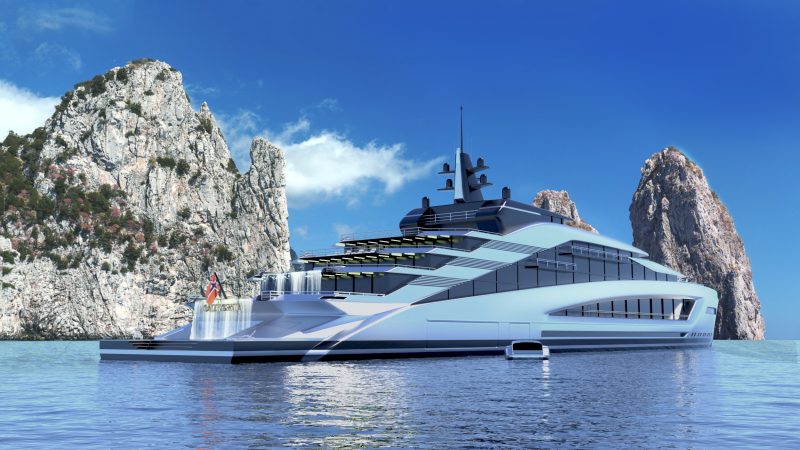
BRUSSELS – CO2 emissions are becoming more and more expensive – a consequence of EU emissions trading. Since 2005, it has been extended to more and more branches of industry. In the future it will also apply to shipping. But there are exceptions: rich yacht owners still do not have to buy CO2 certificates.
Since 2005, some large industrial companies have had to buy certificates for their CO2 emissions. This is a result of the EU’s emissions trading system, which has been gradually expanded since then. Since 2012, for example, airline companies have also had to obtain certificates for intra-European flights.
The system is to be expanded again, the EU decided at the end of 2022. In future, road traffic and buildings will also be included. Many are celebrating the decision to expand emissions trading to include shipping as a major breakthrough. But there are some curious exceptions.
From 2024, only large passenger and cargo ships over 5000 gross register tons will be affected. Owners or renters of lavish yachts can rest easy: they will benefit from an exemption rule in CO2 emissions trading. This was announced by the EU Commission when asked by the German broadcaster NDR.
In other words, no billionaire has to buy CO2 rights for his huge ship, no matter how much he uses it.
The emissions from yachts are enormous as they consume huge amounts of fuel, from “350 liters, 500 liters or even more than 1000 liters of diesel per hour”, reported the Tagesschau.
Some NGOs blasted the new regulation: “Super-rich yacht owners cause more pollution on a summer’s day than the majority of people do in their entire lifetime, but politicians continue to let them get away with it.” The 1500 larger yachts in Europe emit around 725 tons of CO2 per year on average.
Serbian President Calls European Parliament’s Demands on Kosovo ‘Shameless’
Samizdat – 19.01.2023
BELGRADE – The resolution of the European Parliament, demanding Serbia recognize Kosovo as an independent state, is an example of the West’s “shameless” behavior, Serbian President Aleksandar Vucic said on Wednesday.
Earlier in the day, Vucic met in Davos with EU Special Representative for the Belgrade-Pristina Dialogue Miroslav Lajcak to discuss current developments around Kosovo after the EU parliament adopted a resolution based on the report on the common EU foreign and security policy for 2022.
The report demands Belgrade start talks with Pristina on mutual recognition and condemns Serbia’s “continued low level of alignment” with the EU on such issues as the Ukrainian conflict and sanctions against Russia, making the country’s further integration in the bloc contingent on the progress in these areas.
“They organized violent secession of our territory [Kosovo and Metohija in 1999]. How far could this shameless behavior go? I do not have the words,” Vucic told journalists on the sidelines of the World Economic Forum.
“They [West] say it is necessary to condemn those who allegedly encourage secession of parts of Kosovo and Bosnia and Herzegovina. They are the ones who decided to bomb our country and take away a part of our territory in defiance of the laws of the mankind, the UN Charter and norms of the UN Security Council.”
According to Vucic, the West is only interested in the topics of sanctions against Russia and Kosovo’s independence when talking to Serbia, and is not willing to tolerate any other views on these issues.
The Serbian leader also stated that some representatives of Western countries only understand the language of force, which makes it harder for Serbia to conduct its foreign policy.
In 2008, the Kosovo-Albanian structures in Pristina unilaterally proclaimed independence from Serbia. Since then, Kosovo has been recognized by 100 UN member states. In mid-December, Kosovo’s Prime Minister Albin Kurti handed over the application to join the European Union, though out of the 27 EU countries, Kosovo’s independence still is not recognized by Spain, Greece, Cyprus, Slovakia, and Romania.
EU parliament backs tribunal to probe Russia
RT | January 19, 2023
The European Parliament on Thursday voted in favor of an international court to probe Russia over its conflict with Ukraine. Moscow has rejected allegations of war crimes in the past and has also said such a court would have no legal power over it.
In a non-binding resolution, MEPs asked the bloc and its individual member states to create a “special tribunal for the crime of aggression against Ukraine,” accusing Moscow of violating international law. The legislators added that the tribunal would “focus on alleged genocide, war crimes and crimes against humanity committed in Ukraine.”
“The EU’s preparatory work on the special tribunal should begin without delay,” the resolution said.
Ukrainian President Vladimir Zelensky thanked the parliament for the move. “Russia must be held accountable,” he tweeted.
Kremlin spokesman Dmitry Peskov said late last month that an international tribunal tasked with prosecuting Russia would be rejected by Moscow as “illegitimate” and that the West has no legal right to establish it.
He said this in response to European Commission President Ursula von der Leyen proposing a special UN-backed court to probe what she described as Russia’s “horrific crimes” in Ukraine.
Similar suggestions have been made by other Western and Ukrainian officials. Bloomberg reported a few months ago that The Hague-based International Criminal Court (ICC) could start reviewing cases of alleged Russian crimes in Ukraine in late 2022 or early 2023.
The Russian Foreign Ministry said that “the current attempt by Western countries to whip up a quasi-judicial mechanism is unprecedented in its legal nihilism and is yet another example of the West’s practice of double standards.”
Moscow launched a military operation in Ukraine last February, citing the need to protect the people of Donbass, as well as Kiev’s failure to implement the 2014-15 Minsk accords.
Kiev and its Western supporters have since accused Russian troops of killing civilians in Bucha, near Kiev, and other areas. Moscow maintains that its forces only strike military targets and has insisted that allegations of atrocities were fabricated.
Ukraine said in the past that peace can only be achieved if Russia faces an international court. Moscow has rejected this demand as unacceptable.
The Kremlin has said Russian investigators were, however, carefully documenting crimes committed by the Kiev regime since 2014, when a violent coup ousted a democratically elected government and Kiev sent its military to Donbass. Peskov said Moscow had not seen “any critical reaction from the so-called ‘collective West’” on those wrongdoings.
Violating international law, European Parliament urges EU to add IRGC to terror list
Press TV – January 18, 2023
In violation of international law, the European Parliament has voted to call on the European Union and its member states to place Iran’s Islamic Revolution Guard Corps (IRGC) on the bloc’s terror list.
On Wednesday, the parliament members backed an amendment added to an annual foreign policy report, calling for “the EU and its member states to include the IRGC in the EU’s terror list.”
The hostile move passed by a vote of 598 in favor and nine against, with 31 abstentions.
The amendment will urge Brussels to blacklist the IRGC military force, the voluntary Basij force as well as the Quds Force.
And it would hit “any economic and financial activity involving businesses and commercial activities related to, owned, wholly or in part, by, or fronting for, the IRGC or IRGC-affiliated individuals, regardless of their country of operation.”
The vote does not oblige the European Union to act, but it comes as foreign ministers are already due to discuss tightening sanctions on Tehran at a meeting in Brussels next week.
“The EU Parliament has today voted to call for the EU and its Member States to include the IRGC on the EU’s terrorist list. The amendment… was passed with an overwhelming majority,” European Parliament member Charlie Weimers of Sweden tweeted on Wednesday.
He added, “Tomorrow, I hope members will take the next step & call to suspend the JCPOA.”
The JCPOA stands for the Joint Comprehensive Plan of Action, which is the official name of the 2015 Iran nuclear deal.
The marathon talks in the Austrian capital of Vienna aimed at the removal of anti-Iran sanctions and revival of the nuclear deal, underway since April last year, have remained stalled since August over foot-dragging by the United States and refusal to provide necessary guarantees to Iran.
The “politically manipulated” actions of the UN nuclear agency and the probe into so-called “uranium traces” found at “three undeclared sites” have also emerged as a key obstacle.
Iran maintains that the measures taken by the International Atomic Energy Agency (IAEA) have been at the behest of the Israeli regime and the Western states to seek leverage in ongoing nuclear talks.
Israeli foreign minister Eli Cohen welcomed the European Parliament’s decision to blacklist the IRGC.
Earlier on Wednesday, Iranian Interior Minister Ahmad Vahidi censured “some Europeans” for their attempts to designate IRGC as a foreign terrorist organization, stating that the move clearly attests to the mental and political weakness of its architects.
“There is no room for concern about the plan, and Iran’s Islamic Revolution Guards Corps (IRGC) will strongly press ahead with its path,” Vahidi told reporters after weekly cabinet meeting in the capital Tehran.
He underlined that the decision by a number of Western governments to blacklist the elite force as a terrorist organization contravenes the international regulations, and is a testimony to the mental, moral and political weakness of its engineers.
Officially approved by the EU: Four insects hiding in your food
Free West Media | January 18, 2023
 EU citizens who do not want to unknowingly eat insects should be particularly careful: The EU Commission has already approved four types of insects in different forms as “edible insects”.
The most recent approval was on January 5: From now on, after mealworms, grasshoppers and crickets, the grain mold beetle can also be used as an ingredient in foods such as bread, soups, pasta, snacks, peanut butter and chocolate products.
The mealworm received the first approval for a so-called “edible insect” in June 2021 : The EU Commission’s Implementing Regulation 2021/822 approved the placing on the market of dried larvae of Tenebrio molitor (meal beetle) as a “novel food”.
The SAS EAP Group from France has submitted the application and is allowed to market the mealworm in the Union. It may be sold individually or with a maximum content of 10 grams in protein products, cookies, dishes made from legumes and pasta products.
If insects are used, there must be a note on the packaging of the food that consumption may cause allergic reactions in people with known allergies to crustaceans and molluscs and their products and to house dust mites.
In November 2021, the second “edible insect” was approved by Implementing Regulation 2021/1975 : “Fair Insects BV” from the Netherlands has since been allowed to market frozen, dried and powdered Locusta migratoria (migratory locusts) in the EU.
Depending on the form of processing, the locusts may be used as ingredients in different maximum levels in the products such as processed potato products; dishes made from legumes and products made from pasta, meat substitution, soups and soup concentrates, legumes and vegetables in cans/jars, salads, beer-like beverages, alcoholic beverage mixes, chocolate products, frozen milk-based fermented products, cured meats.
Since 2022 and 2023 respectively, the domestic cricket (Acheta domesticus) has been permitted in various forms of processing. Implementing regulation 2022/188 allows the use in frozen, dried and powdered form. The application came again from “Fair Insects BV”. The house cricket, just as locusts, may be used in similar foods.
Since January 3, the Vietnamese company “Cricket One Co. Ltd” has also been allowed to sell “partially defatted powder from Acheta domesticus” in the EU by implementing regulation 2023/5 . Potentially affected foods are multigrain bread and rolls; crackers and breadsticks, cereal bars, dry bakery premixes, cookies, pasta products and many more.
The executive order 2023/58 of January 5 allows “Ynsect NL BV” from the Netherlands to bring larvae of Alphitobius diaperinus (grain mold beetle) in frozen, paste, dried and powdered form as a new food to EU citizens. The list of food categories in which the larvae can be used as an ingredient in most processed foods.
EU sanctions goal is to crush Russian economy – Von der Leyen
RT | January 17, 20023
EU sanctions are aimed at plunging the Russian economy into a recession for years to come and depriving the country of crucial technologies, European Commission President Ursula von der Leyen said in an address to the World Economic Forum (WEF) in Davos on Tuesday.
The European bloc has imposed nine rounds of sanctions against Russia since the beginning of the conflict in Ukraine, targeting many sectors of the economy, including energy, high-tech, aviation, banking, mining, automotive and other industries.
“We have put in place the strongest sanctions ever, which leave the Russian economy facing a decade of regression and its industry starved of any modern and critical technologies,” von der Leyen said.
The latest restrictions came into force in December and include new export controls and restrictions on dual-use goods and technology, along with products and technology that could be used in the defense and security sectors. The measures target key chemicals, nerve agents, night-vision and radio-navigation equipment, as well as electronics and IT components.
Brussels is now working on the next batch of penalties, which will reportedly target Russia’s nuclear industry and diamond trade. Other penalties which the EU is rushing to symbolically implement by February 24 include cutting more Russian banks off from the SWIFT global messaging system and banning more of the country’s media outlets.
Meanwhile, Russian President Vladimir Putin said on Tuesday that the country’s economy is performing “much better than what not only our opponents but even we ourselves predicted” and is on course for further stabilization.
Ukrainian Syndrome. Anatomy of a Modern Military Confrontation
By Viktor Medvedchuk, former Ukrainian opposition leader – Izvestia – 16.01.2023
Listening to many Western politicians, it seems completely impossible to understand the sense and mechanisms of the conflict in modern Ukraine. Take US President Biden. He denies the direct involvement of US troops in the conflict but at the same time he mentions on every occasion the billions in weapons the US supplies to the country.
If billions are spent for military purposes in Ukraine, it means Ukrainian interests are extremely important for the US. But the US army does not want to fight there. So probably they are not so important, after all. And what about these weapon supplies worth billions of dollars? Are they donations? Is it a profitable business? Investments? Some political combination? No answers, only smoke.
Or take the most recent revelations by German ex-Chancellor Merkel that the Minsk Agreements were just an attempt to give Ukraine time. Which means no one was ever going to establish peace in Ukraine. So, Russia was deceived. But what was the purpose? To protect Ukraine or to invade it themselves? Why did they need this deception if they could simply implement what was recommended by Germany? Or did Germany deliberately recommend something that could never be implemented? We could go as far as asking if political swindlers could be drawn to accountability, but it seems much more relevant today to start clearing the smoke around the current situation. That is how it has played out, anyway. But what were the root causes? And how can we get out of this situation, that is getting ever more dangerous? So let us begin our analysis by looking at the origins.
What Was the Outcome of the Cold War?
The beginning of a new war usually finds its origin in the end of a previous one. The Ukraine conflict was preceded by the Cold War. The answer to the question about its outcome will bring us closer to understanding of the essence of the current conflict, one which extends beyond Ukraine and affects many countries. The thing is that Western countries and the countries of the post-Soviet space, primarily Russia, have different perceptions of the outcome of this war.
The West definitely considers itself as a winner and Russia as a defeated party. Since, in their eyes, Russia was defeated, then the territories of the former USSR and the Eastern Bloc are the legitimate prey of the US and NATO and are subject to control by the West under the motto “Woe to the Conquered!” Hence Ukraine is in the zone of influence of the US and NATO, and certainly not Russia. So, any of Russia’s claims to at least any influence on Ukrainian politics and protection of its interests in the region are “groundless” and a clear infringement on the interests of the US and NATO. “We no longer have to view the world through a prism of East-West relations. The Cold War is over” – declared Margaret Thatcher in the early 1990s. It means the position of the East, of Russia, is no longer relevant. There is one victor, one master of the universe, one winner.
Russia has a completely different view of this process. In no way does it consider itself as a defeated party. The end of the Cold War was brought about by democratic reforms of political and economic life, and military confrontation was replaced by trade and integration with the West. So, if one’s former foe becomes a friend today, is it not a victory? Besides, the USSR and then the Russian Federation never had the goal of winning the Cold War but rather exiting the military confrontation between East and West that could have ended with a nuclear catastrophe. Moscow, together with Washington, found this way out, having reached the goals not so much for themselves as for the whole world.
This way out by no means implied that the West would take over the East and subordinate the post-Soviet space in economic, legal and cultural respects. Quite the contrary: it implied equal cooperation and joint work to build a new political and economic reality. So, there are clearly two different attitudes to the outcome of the Cold War: the triumph of the winners, on the one part, and building a new world and a new civilization, on the other. The difference between these two attitudes would predetermine the developments that followed.
New World or New Western Colonies?
In 1991 the Soviet Union collapsed, but in 1992 the European Union was established – something the post-Soviet space including Russia associated big hopes with. Here, at last, there seemed to be a new world, a new supranational body, a new turn in the history of Western civilization. Russia, just like other states of the former Eastern Bloc and the USSR, saw itself in the future as an equal member of this Union. The vision of “Europe from Lisbon to Vladivostok” was born.
In this context, Russia welcomed not only the reunification of Germany but also the accession of its former allies and even former Soviet republics to the EU. In the 1990s, economic integration with the West was a priority for Russia; Moscow considered it as key to its success as a modern state. The Russian leadership had no particular desire to bind to itself the former Soviet republics, including Ukraine. Most of the Soviet republics had lived off subsidies from the central government, in other words, Russia. So, the leaders of these countries were given a friendly pat on the shoulder while Moscow sought to get rid of their economic burden as soon as possible.
Faster than Ukraine, Russia began to integrate into the European market. Russia had vast volumes of energy resources that are in demand in Europe, while Ukraine, on the contrary, couldn’t afford to buy energy resources at European prices. Ukrainian independence could well have ended with an economic meltdown but for the South-East, where heavy fighting is going on right now. With its vast production facilities and advanced industry, the South-East helped Ukraine find its place in the international division of labor. One would not normally mention this fact, but in the 1990s it was the Russian-speaking South-East that saved the economic and hence political independence of Ukraine.
Now let us turn to something different. Since the 1990s, a series of major ethnic conflicts and wars involving millions of people emerged in Europe and close to its borders. Until 1991, there had not been such a big number of ethnic clashes. All of this led to the break-up of Yugoslavia and loss by Georgia, Moldova and Syria of their territorial integrity. This does not make any sense if we look at it from the perspective of European integration. The goal of this union was not the fragmentation of Europe into a multitude of small states, but quite the contrary: the creation of a huge supranational union of nations, and these nations would not have to exterminate each other, nor to multiply the borders, but rather build a new world together. So, what was wrong here?
It only seems wrong if one relies on the concept that Russia used to stick to. And if one proceeds from the concept of the victory of the West in the Cold War, then ethnic conflicts acquire a completely different meaning. The latter was articulated on numerous occasions, e.g., at the meeting of the Joint Chiefs of Staff on October 24, 1995, when US President Bill Clinton said: “Using the blunders of Soviet diplomacy, the extreme arrogance of Gorbachev and his entourage, including those who openly took a pro-American position, we achieved what President Truman was going to do with the Soviet Union through the atomic bomb.”
It suggests that far from all Western politicians wanted to build a new and just world. Their goal was to defeat the adversary – the USSR, Yugoslavia and other states. In this sense, the escalation of interethnic conflicts seems only logical, as they weaken the adversary and in the case of a victory, they help to dismember the country to make it easier for the winner to take over.
Under these circumstances, the real state of affairs does not play any role. The situation is being deliberately escalated. On the one hand, representatives of the titular nation are being declared as organizers of the genocide, annihilating the foreign language and culture and performing ethnic cleansing. On the other hand, representatives of the national minority living in communities in certain parts of the country are being declared separatists and a threat to the state. This tactic dates back to ancient times and was used by the Roman Empire. But the building of a new slaveholding empire is not something we are witnessing these days, is it? Or probably Washington, for example, does consider the post-Soviet space as some provinces of a greater empire that already have their metropole and should be protected from Barbarians who do not want to be under the control of this empire?
So, there are two political strategies: the economic and political integration of the countries with mutual benefit at the cornerstone, and the take-over of some countries by the others, with zero respect for the interests of the states that are being taken over. Such countries can be dismembered, declared rogue states or conquered.
Speaking of the Russian Federation, as it emerges from the crisis provoked by the dramatic change of its political and economic orientation, it is increasingly being faced with clear attempts to weaken it, humiliate it and put it at a disadvantage; increasingly often, is it being declared a rogue state despite its growing economic potential. Growing economic potential should normally increase the influence of the country and be welcomed in the Western world. But exactly the opposite happens. Not only is the Russian influence not welcomed – it is being declared wrong, criminal and corrupt.
Let us elaborate on this in more detail. Russia has taken Western democracy as a model, carried out reforms and begun to integrate into the Western world. From the point of view of building a common European house, this should be welcomed and encouraged. Europe gets a peaceful and economically reliable partner along with its markets and resources, which certainly makes it even stronger. But if one is guided by colonial thinking, one would not tolerate the economic growth and independence of a distant colony. Provinces should not overtake the metropole, neither financially, nor politically, nor culturally.
There is the EU that was engaged in building a new economic reality. And there is the NATO established in 1949 that confronted the East, primarily the USSR and later Russia. Remember the words by the first Secretary-General of the NATO Hastings Ismay: the bloc was intended “to keep the Americans in, the Russians out and the Germans down.” Thus, the NATO ideology implies that the US is in Europe, and in a dominating position, and Russia is not.
But how should Russia take it? It ended the Cold War in good faith, while it seems that the US and the NATO have not. Which means that unification with the West intended for Russia will not happen on equal terms, but rather take the form of an economic and political take-over. Hence Moscow’s requirement to stop the enlargement towards Russia’s borders and revise the attitudes and the agreements. What we see now is that the NATO concept has not only derailed Russia’s integration into Europe but closed the door to Europe’s expansion and development. Of the two concepts mentioned in this article, one has clearly defeated the other.
Russia and Ukraine – the Tragedy of Relationships
Let us move on from the general picture directly to relations between Russia and Ukraine. Let us start from the fact that the relations between these countries have their own specific history. These relationships are closer than the collaboration between England and Scotland, or the Northern and Southern States of the US. Ukraine was part of Russia for more than three hundred years, which influenced its culture, ethnic composition and mentality. Ukraine’s independence in 1991 was gained through an agreement with Moscow, not as a result of a national struggle for liberation. The new economic and political reality prompted the Russian elite not only to grant independence to Ukraine, but also to push for it. At that time, no one could have imagined an armed clash between the two new states, even in a nightmare. The Ukrainians saw Russia as a friendly state, and the Russians as a fraternal nation, and these sentiments were shared by Russians.
In Russia, for a long time, the concept of “Another Russia” prevailed with respect to Ukraine, which supposes much closer relations than, for example, those between Britain and Canada. There was a popular saying in everyday life: “We have one people, but different states.” Ukrainians and Russians were very interested in the political life of their respective neighbors. A suitable example is the current President of Ukraine Zelensky, who made a living from political satire, usually based on the politics of both states.
However, the example of Ukraine clearly demonstrates how the concept of creating a common political and economic space was defeated by the concept of squeezing Russia out of Europe. In the wake of the first ‘Maidan’ color revolution in 2005, Ukraine started building anti-Russian policy at the level of state ideology. In this, one can see clearly that this policy follows the templates of the Cold War. That is, psychologically, the Ukrainians were turned against the Russians through the support of certain politicians, changes in the educational system, in culture and in national media broadcasting. All of this came under the guise of democratic reforms and positive changes supported by all sorts of Western and international organizations.
It is difficult to call it a democratic process. It was simply the dictate of pro-Western forces in politics, media, the economy and civil society. Western democracy was established through totally undemocratic methods. And today, more than ever, the most important question is: is Ukraine’s political regime a democracy?
Within Ukraine itself, two countries had existed since 1991: Anti-Russia, and Ukraine as another Russia. While one does not think itself without Russia, the other does not think of itself with Russia. However, this division is quite artificial. Ukraine has spent most of its history with Russia, and it is tied to it culturally and mentally.
Ukraine’s integration with Russia is definitely dictated by the economy. After all, if there is such a huge market and resources nearby, only a very shallow power could not use it, or go so far as to block it. Anti-Russian sentiments have brought Ukraine nothing but grief and poverty. Therefore, all pro-Western nationalist movements consciously or unconsciously preach poverty and destitution to the Ukrainian people.
We have already mentioned that it was the South-East with its production potential that helped the country find its footing in the international division of labor. It turned out that most of the money was earned by the East, a large Russian-speaking region. Naturally, this could not but effect its political representation in the Ukrainian government. The South-East had more human resources and financial tools, which did not fit into the pro-Western picture of Ukraine. The people who lived there were too proud, too free, and too rich.
Both the first and second Maidans were directed against Viktor Yanukovych, the former governor of Donetsk, the leader of Donbass and non-nationalist centrist political forces. Electoral support for such forces was very significant, and Ukraine did not want to be ‘Anti-Russia’ for a very long time. President Yushchenko, who arrived with the first Maidan, very quickly lost the confidence of the people, for the most part because of his anti-Russian policies.
Then an interesting trend emerged in Ukrainian politics. The elections after the second Maidan are won by President Poroshenko, who promised peace with Russia in one week. So, he was elected as a peacemaker president. Nevertheless, he became the president of the war, failed to implement the Minsk Agreements, and miserably lost the following election. He was replaced by Vladimir Zelensky, who also promised peace, but became the personification of war. So, the Ukrainian people are promised peace and then they are deceived. Having gained power under the rhetoric of peacemaking, he becomes the second Ukrainian leader to have taken an extremely radical position. If he had such a position at the beginning of the election campaign, no one would have elected him.
And now let us return to the general concept of this article. If one says that one is going to build a new world with the neighbors but simply pushes one’s own interests, regardless of anything, even war, even the threat of nuclear conflict, then obviously one is not going to build anything. This is what the ex-president of Ukraine Poroshenko did and this is what the current president Zelensky is doing, but not only them. This is what the NATO leadership and many American and European politicians are doing.
Before the armed conflict, Zelensky simply crushed any opposition, pushing through the interests of his party; he did not build any peace. In Ukraine, politicians, journalists, and public activists who spoke about peace and good-neighborly relations with Russia were repressed before the military clash, their media were closed without any legal grounds, and their property was plundered. When the Ukrainian authorities were reproached for violating the rule of law and freedom of speech, the answer was that the peace party was “a bunch of traitors and propagandists.” And the democratic West was satisfied with this answer.
In reality, the situation was not so simple and straightforward. “Traitors and propagandists” represented, including in the parliament, not just the lion’s share of the electorate, but also the basis of the country’s economic potential. So, the blow fell not only on democracy, but also on the well-being of the citizens. Zelensky’s policy has led to a situation where people began to leave Ukraine en masse due to adverse economic and social conditions, repression, and political persecution. Among them were a lot of Ukrainian politicians, journalists, businessmen, and cultural and religious figures who had done a lot for this country. These people have been excluded from politics and public life by the Ukrainian authorities, although they have the right to have their own position, no less than Zelensky and his team.
The business of the South-East of the country is largely tied to Russia and its interests; that is why the conflict has ceased to be an exclusively internal matter. Russia was faced with the need to protect not only its economic interests, but also international honor and dignity, which, as was shown above, had been systematically denied. There was no one to rectify the situation. The Ukrainian peace party was declared to be treacherous and power was seized by the war party. The conflict dragged on, and took on an international dimension.
It would seem that politics still mean something in Europe, but the politicians massively support Zelensky, dragging Europe into the war and towards the bloc’s economic downfall. It is no longer Europe that teaches Ukraine politics, but Ukraine that teaches Europe how to achieve economic decline and poverty with the help of a policy of hatred and intransigence. If Europe continues to support this policy, it will be dragged into a war, possibly into a nuclear one.
And now let us get back to where we started. The Cold War ended with a political decision to build a new world with no wars. It is clear that such a world has never been built, that current global politics has returned to where it started: with detente. Now there are only two ways out: to slide into a world war and a nuclear confrontation, or to restart the process of detente, for which it is necessary to take into account the interests of all parties. But for this to happen, it is necessary first to acknowledge that Russia has its own interests and that they must be taken into account in the creation of a new detente. And, most importantly, to play honestly, not to deceive anyone, not to blow smoke, and not to make money on someone else’s blood. But if the global political system is not capable of elementary decency; if it is blinded by pride and its own mercantile interests, then even harder times await us.
The Ukraine conflict will either grow further, spilling over to Europe and other countries, or it will be localized and resolved. But how can it be resolved if the party of war reigns supreme in Ukraine, escalating military hysteria that has already gone beyond the borders of the country, and the West for some reason stubbornly calls it democracy? This party of war has declared an infinite number of times that it does not need any peace: what it needs is more weapons and money for the war. These people have built their politics and business on the war, they have rapidly upgraded their international ratings. In Europe and in the US they are greeted with applause, they should not be asked uncomfortable questions, there should be no doubt in their sincerity and truthfulness. The Ukrainian party of war keeps delivering triumph after triumph, while no military breakthrough is observed.
But the Ukrainian party of peace is favored neither in Europe nor in the US. This eloquently suggests that most US and European politicians do not want any peace for Ukraine. But this does not mean at all that the Ukrainians do not want peace, or that Zelensky’s military triumph is more important to them than their lives and destroyed homes. It is just that those who stood for peace were slandered, intimidated and repressed following the incitement of the West. The Ukrainian party of peace simply did not fit into Western democracy.
And here the question arises: if the party of peace and civil dialogue does not fit into some kind of democracy, then is it a democracy? Perhaps, in order to save their country, the Ukrainians have to now start building their own democracy and open their civil dialogue without Western curators, the result of their governance of which is harmful and destructive. If the West does not want to listen to the point of view of the Other Ukraine, then this is its own business, but for Ukraine such a point of view is important and necessary, otherwise this nightmare will never end. This means that it is necessary to create a political movement composed of those who have not given up, who have not renounced their beliefs on pain of death and imprisonment, who do not want their country to become a place of geopolitical showdowns. The Ukrainian situation is catastrophically complex and dangerous, but it has nothing to do with what Zelensky says every day.
NATO waging ‘proxy war’ against Russia – Croatian president
RT | January 16, 2023
Croatian President Zoran Milanovic has claimed NATO, a military bloc of which Zagreb is a member, is waging a “proxy war” against Moscow in Ukraine. He also dismissed sanctions against Moscow as “nonsense,” adding that he does not want to be an “American slave.”
Speaking to Croatian reporters in the city of Vukovar on Sunday, Milanovic said, among other things: “Washington and NATO are waging a proxy war against Russia through Ukraine,” as quoted by media outlet Istra24.
He went on to argue that “The plan cannot be to remove Putin. The plan cannot be sanctions,” adding that such punitive measures are “nonsense and we will not achieve anything with them.”
“They go from war to war. And what should I be? An American slave?” Croatia’s president asked rhetorically.
Milanovic voiced his frustration with the US-led military bloc’s policies in the same interview in which he tore into Croatia’s prime minister, Andrej Plenkovic, over his latest Ukraine-related remark.
Speaking to news channel France 24 on Saturday, Plenkovic said the Balkan nation’s lawmakers, who in mid-December didn’t support the EU’s program to train Ukrainian military personnel in member states, have “failed to be on the right side of history.”
Commenting on the remark, Milanovic, in turn, slammed the premier for bringing “disgrace” to his country “and to its democratic representatives in front of others.” The Croatian president argued that this kind of behavior reaches a low that is “the bottom of the bottom.”
As for the EU’s mission, the Croatian president warned that it effectively means that “for the first time in its history, the EU is participating in a war.” This, according to Milanovic, is “against the Treaty on the Functioning of the EU.”
In December 2022, Milanovic argued that having Ukrainian service members train on Croatian soil would “bring war” to the Balkan nation.
He also insisted at the time that “Ukraine is not an ally,” criticizing Brussels’ decision last June to grant Kiev candidate status as “cynical.”
European Steel Industry Facing Potential Collapse
By Paul Homewood | Not A Lot Of People Know That | January 13, 2023
Seeking Alpha, an investment advice website, has rather bad news for the European steel industry.
Vale, by the way, are the world’s largest producer of iron ore:
Summary:
- The EU steel industry seems set to shrink dramatically, squeezed by environmental policies, and a seemingly permanent energy crisis situation that makes production costs unsustainable.
- Vale is mostly shielded from the kind of problems faced by companies that have extensive exposure to Europe, given its mostly Americas-based production infrastructure.
- The prospects of the European steel industry being decimated should help to keep global steel prices relatively high, which should counterintuitively keep iron ore prices high as well.
Investment thesis: There are growing signs that the European steel industry can potentially collapse, becoming just a shell of itself. Vale is shielded from the problems facing companies that have business ties exposure to the European energy crisis, which is compounded by increasingly draconian environmental policies that make it hard for energy-intensive companies to operate. At the moment the EU steel industry, as well as many other industries are kept afloat by hundreds of billions of euros in aid & subsidies, which is not sustainable in the long term. The assumed collapse in EU steel production is a positive factor for those miners supplying the steel companies, such as Vale that are not directly exposed to the difficulties that the European-based steel production facilities are faced with. On the back of assumed higher global steel prices, Vale stock is likely to see more long-term price appreciation, while the very generous dividend is less likely to be cut.
The European steel industry is already working under draconian environmental regulations and carbon taxes which put it at a disadvantage with foreign steel mills. And now of course high energy prices are putting the whole existence of the industry at risk.
Meanwhile the climate zealots who run the EU and UK want steel businesses to spend billions more to close down the efficient manufacturing processes which actually work, and replace them with low carbon technology, all enforced by crippling carbon taxes.
The net result will, of course, be importing more steel from Asia, made with much greater emissions.
Almost all Hungarians oppose sanctions on Russia – survey
RT | January 14, 2023
The overwhelming majority of Hungarians are opposed to sanctions the West has imposed on Russia over Ukraine and believe that they are detrimental to the economy, the nation’s government said on Saturday, citing the results of a countrywide questionnaire, or “consultation.”
In a Facebook post, the Hungarian government revealed that “97% of Hungarians reject sanctions that cause serious damage,“ adding that “The message is clear: the Brussels sanctions policy must be reviewed.”
Szentkiralyi Alexandra, a government spokeswoman, said that the restrictions the EU had imposed on Russia over Ukraine had failed to stop the conflict, but caused a lot of economic issues for Europe. In this vein, Hungarians tend to reject oil restrictions and planned gas sanctions, she noted.
“The people taking part in the consultation say a clear ‘no’ to sanctions that further increase food prices or place additional burdens on European tourism,” Szentkiralyi added.
The spokeswoman pointed out that Hungary is the first EU country to poll its citizens about the sanctions’ impact. She also described the consultation as “a guideline for Hungarian public actors,” with the results set to be delivered to EU authorities in Brussels. “This is quite necessary because they want to introduce new sanctions instead of revising the sanctions policy,” Szentkiralyi explained.
She went on to thank about 1.4 million people that took part in the survey, noting that detailed results would be released in the near future. The consultation on the matter was launched in mid-October and included seven questions about sanctions on the oil, gas, raw materials export, and nuclear and tourism spheres.
In recent months, the sanctions the West imposed on Russia over the Ukraine conflict have exacerbated Europe’s energy crisis, causing fuel prices and costs of living to surge.
Hungary, which is heavily dependent on Russian energy, has long been critical of EU sanctions policy. On Friday, Hungarian Prime Minister Viktor Orban said that by promoting sanctions in the bloc, German politicians had “miscalculated,” but do not have the courage to admit that.
Last month, Russian Finance Minister Anton Siluanov said that the sanctions were taking a heavy toll on the European economy. He also claimed the US was the only nation benefiting from them, since it has been selling liquified natural gas to Europe at lucrative prices.
Top LNG Producer Qatar Predicts Return of Russian Gas to European Market Within Five Years
Samizdat – 14.01.2023
Gas prices began creeping up in 2021 amid underinvestment in production and fierce competition for limited supplies between European and Asian markets. The supply crunch was exacerbated in 2022, as European countries began rejecting gas from Russia – which accounts for 15 percent of global natural gas output – over the security crisis in Ukraine.
Global instability in natural gas prices and availability won’t be going anywhere in the near term, and Russia will inevitably resume supplying Europe to restore a sense of equilibrium to energy markets, Qatar’s energy minister has indicated.
“It’s going to be a volatile situation for some time to come. We’re bringing a lot of gas to the market, but it’s not enough,” Qatari Energy Minister Saad al-Kaabi said, speaking at an energy forum on Saturday.
Al-Kaabi explained that global energy supply troubles actually started some time before the Ukraine crisis, “where the lack of investment in the oil and gas sector caused really a shortage in gas. And ahead of the Ukraine crisis, the oil and gas prices obviously were clearly going higher due to lack of supply. That lack of investment was driven by many factors, including the bigger push for the green [energy] without having a real plan in how the transition was going to happen. So there was a scarcity of investment over about 5-6 years, and then when the Ukraine situation happened, a big volume was taken out of the market and obviously that would take [prices] even further up.”
Al-Kaabi predicted that the next couple of years would be difficult for Europe, notwithstanding the reprieve granted amid a milder-than-usual winter for much of the region.
“The issue is what’s going to happen when they want to replenish their storages this coming year and the next year. There isn’t much gas coming into the market until 2025, 2026, 2027,” al-Kaabi warned.
The shortages would also mean higher prices, the Qatari official said.
“Prices are a factor of supply-demand. I think some people think that we are very happy for high oil prices and so on. The biggest worry that we would have as oil and gas producers is demand destruction. And you can see that there is demand destruction, whether it’s gas or oil,” he said.
Al-Kaabi also took a jab at Western countries who spent recent years condemning the use of coal for energy on environmental grounds, but turned to the highly polluting resource themselves amid the energy crunch, pointing out that “all the countries that were calling for coal to be stopped are using it at record levels today.”
Buyers Want to Have Their Cake and Eat It Too
Also speaking at the conference was UAE Energy Minister Suhail al-Mazrouei, who echoed al-Kaabi’s concerns about lack of financing in oil and gas, and a basic “lack of understanding what is the future for many countries when it comes to energy strategy – what contributions or what percentages they would have of gas or even the pace of reducing their coal.”
“It’s not clear… And that unclear long-term strategy by many countries put them in a situation where it’s very difficult for them to commit for long-term gas contracts, which has in return made the companies of those who are developing the gas at a very difficult position with their financiers, because they would like to see long-term contracts, and those long-term contracts are not there. Everyone wants to buy, but they want to buy over a two or three year span. And that is not enough for someone to develop gas,” al-Mazrouei said.
Addressing the energy shortages caused by European countries’ politicized decision to reject gas supplies from Russia, the UAE energy minister said the supply crunch was the natural outcome of these policies.
“Of course Russia is a major producer of gas and LNG, and when you shift from one location to another trying to adjust, that takes time. And that’s what happened in 2022 when some of that [Russian] gas had been relocated to another market, and other gas from other markets [was] coming to Europe, especially from the US. But is that sustainable in the longer run? I think you would need more collaboration between the European nations on agreeing on the optimization of the FSRUs [floating storage regasification units, ed.] that are also limited, and also agree on some pipelines. I think that one of the things that contributes to energy security is pipeline gas,” al-Mazrouei said.
Al-Kaabi expressed hope that an “equilibrium” in global energy markets could be achieved after “some kind of a mediation” over Ukraine between Russia and the West, “and the sooner the better.”
“This situation will not last forever, and I understand that the Europeans today are saying there’s no way we’re going back to Russian gas. We’re all blessed to be able to forget and forgive, and I think things get mended with time,” the minister said.
Al-Kaabi clarified that he doesn’t expect countries who relied on Russia for 50, 80, or 100 percent of their gas to return to these same levels of dependence, but emphasized that Russian deliveries will inevitably resume. “They will diversify and they’ll learn from that situation and probably have a much bigger diversity [of supply]. But the Russian gas is going to come back in my view, to Europe. Is it next year, is it in five years, I don’t know, but once this situation is sorted out, and that I think will be a big relief to the whole gas sector, and to the whole market in Europe and will stabilize prices.”
Hypocrisy on Africa’s Energy Needs
Al-Kaabi also addressed the historic underinvestment in energy resources in Africa by Western countries, the World Bank and the International Monetary Fund on the grounds that they failed to meet the criteria of the global green agenda.
“We need growth. One billion people today are deprived of basic electricity that we all enjoy. So we need to be fair. And I think one point I’d like to just add to that on the investment side: it’s very, very unfair of some in the West to say that African countries should not invest in oil and gas and they should remain green or whatever you want to call it while this is God-given wealth that they can create for their national growth for their national growth and for their prosperity, and it is oil and gas that is needed for the world,” the minister said.
Qatar is the world’s fifth-largest producer of natural gas, and the second-largest exporter of liquefied natural gas after Australia, exporting over 106 billion cubic meters in 2021, behind Australia’s 108.1 billion. Doha has announced plans to invest some $45 billion in its maritime fields to more than double production by 2027. The Gulf state ramped up gas exports to Europe through 2022, but warned its European partners that supplies are limited, as much of the new production capacity being brought online has already been reserved by Asian clients.
Russian natural gas deliveries to Europe plummeted last year, with Moscow accusing the Royal Navy of blowing up the Nord Stream gas pipelines running through the Baltic Sea and their combined 110 billion-cubic-meter annual transit capacity. Poland shut down overland pipeline gas deliveries via the Yamal-Europe pipeline. Flows to Europe are now limited to supplies sent through the Soyuz pipeline network, which runs through Ukraine, but have been restricted to between 35 and 43 million cubic meters of gas per day.
Featured Video
Trita Parsi: Middle East Unraveling — Are We on the Path to World War?
or go to
Aletho News Archives – Video-Images
From the Archives
Why Saudi Ties to 9/11 Mean U.S. Ties to 9/11
By Kevin Ryan | Dig Within | September 27, 2015
Media interest in Saudi Arabian connections to the crimes of 9/11 has centered on calls for the release of the 28 missing pages from the Joint Congressional Inquiry’s report. However, those calls focus on the question of hijacker financing and omit the most interesting links between the 9/11 attacks and Saudi Arabia—links that implicate powerful people in the United States. Here are twenty examples. … continue
Blog Roll
 Aletho News
- Neria Leiter Was A Legitimate Military Target
- Integrity Initiative: UK-funded network framed dissent as Russian disinformation for years
- ‘We don’t seek permission to defend our country’: Snippets from President Pezeshkian’s UNGA address
- NATO chief wants Europeans to fight American wars [for Israel]
- German chemicals giant reveals details of downsizing
- Refaat Al-Areer Was The Canary In The Coal Mine In Israel’s War On The Truth
- Israeli election committee bars candidate from Knesset race over Gaza war opposition
- French-Lebanese man files war crimes complaint over Israeli attacks
- Mahan Air Flight Lands in China Despite US Threat against Iranian Airlines
- US eyes $10bn fund to rebuild war-battered Gulf infrastructure
- If Americans Knew
- Caught on Tape: AIPAC CEO Boasted of Controlling Trump’s National Security Officials
- Why Hamas Attacked Israel in October 2023 – Israeli professor Ilan Pappé
- They see them, then kill them: Israeli quadcopters track, deliberately target civilians in Gaza
- Winter could turn Gaza’s treacherous, war-damaged buildings into deathtraps
- Majority of Democratic Voters Want to Prosecute Both Biden and Trump Administration Officials Over Gaza
- As Gaza languishes, world leaders gather at the UN – Daily Update
- Sanctions are collective punishment: immoral and self-defeating
- Phosphorus Munitions Fired by Israel Burn Groves, Orchards in Southern Lebanon
- Israel Carries Out New Ceasefire Violations Across Gaza
- AI – Emphasis on the ‘I’: Israel Is Funding AI Chatbot Propaganda
- No Tricks Zone
- New Study: Earth And Venus Surface Warmth Largely Explained By Convection And Lapse Rate, Not CO2 Or Radiation
- 2025 Nature Paper Claiming Worsening Global Drought Gets RETRACTED …Heavily Flawed
- New Study: ‘Global Drought Shows No Detectable Recent Acceleration Under Climate Warming’
- Economic Masterminds: German Socialists Suggest Taxing Productivity Gains Stemming From Using AI
- The South China Sea Has Not Been Cooperating With The Climate Change Narrative
- Energy Crisis: Germany Enters Heating Season With Historically Low Gas Reserve Fill Levels
- New Study: The Antarctic Ice Sheet Gained Mass From 2020-2024 Due To Staggering Snow And Ice Accumulation
- Study: Ocean Heating Rates From Thousands Of Years Ago ‘Dwarf’ Modern Ocean Heating Rates
- Climate Extremists Target, Attack Large-Scale Power Grid Infrastructure In Germany!
- New Study: Antarctic Ice Melt Has Contributed Less Than 1 Centimeter To Sea Level Rise In The Last 30 Years

