Content production company for RT’s sister channel ceases operations, citing crackdown on media freedom
RT | February 3, 2023
RT DE Productions – a German-based company that produces content for the RT DE TV channel and website in Moscow – has announced that it’s halting all its operations in the country. The company cited “the repressive state of media freedoms within the EU.”
The latest round of sanctions adopted by Brussels has made any further activities of the company in Germany impossible, RT DE Productions said in a statement on Friday.
The ninth sanctions package introduced in December 2022 amounted to “effectively cutting off oxygen for staff,” the firm said, adding that the EU had “betrayed the reliance on the fundamental rights and freedoms recognized in the Charter of Fundamental Rights” of the bloc itself.
“The EU, in permitting the imposition of sanctions on media freedoms, has shown that the very values claimed to define the core of its existence are without any substance,” the statement read, adding that the freedom of the press “does not exist in Germany today.”
The production company also said it was “happy and proud” to be able to provide German-speaking audiences in multiple countries with “essential stories and opinions, often side-lined or overlooked by the mainstream media outlets.”
The sanctions package announced in December blacklisted RT’s parent company, TV-Novosti, as well as revoking the EU broadcasting licenses of Russian media outlets including NTV, NTV Mir, Rossiya 1, REN TV and Perviy Channel. Following the introduction of these new restrictions, Paris froze the accounts of RT France, citing the need to comply with the new regulations. The move forced RT’s French subsidiary to cease broadcasting.
Even before the conflict in Ukraine, RT had faced multiple obstacles to launching a live TV channel for a German audience back in 2021. German banks abruptly refused to work with the broadcaster, and Luxembourg shot down its licensing bid.
When the channel was eventually launched in December 2021, its YouTube page was immediately banned and European satellite TV operator Eutelsat took it off air shortly after, giving in to pressure from the German media regulator, MAAB. The regulator then demanded a broadcast ban on the RT DE channel, accusing RT DE Productions of broadcasting without a valid German license.
RT DE Productions is not a broadcaster, but a production company, while the RT DE channel was broadcast from Moscow under a valid EU-wide Serbian license. However, a German court sided with the media regulator in March 2022.
EU sanctions blocked Nord Stream repairs – company
RT | February 1, 2023
Norway’s Equinor on Wednesday revealed that it was the government in Oslo and EU sanctions that blocked it from responding to a request for assistance in dealing with the damage to Nord Stream pipelines. The Baltic Sea pipelines delivering Russian natural gas to Germany were damaged by sabotage in September, which Moscow blamed on the West.
“The Norwegian Ministry of Foreign Affairs has stated that work on the pipelines would be in breach of the Norwegian sanction regulations – and by extension the EU sanction regulations,” Equinor said a statement emailed to Reuters.
Equinor is the Norwegian oil company that administers the Pipeline Repair and Subsea Intervention (PRSI) Pool, established by Oslo to deal with leaks and ruptures. The Swiss-based operators for Nord Stream and Nord Stream 2 are among the 72 members of PRSI, and sent requests for assistance in October, shortly after both pipelines were damaged by undersea explosions.
Because PRSI “adheres to current legislation related to sanctions,” it “notified NS1 and NS2 (operators) that we were not able to do work as requested,” Equinor said in the statement.
Nord Stream 2 AG told Reuters that it had filed a request for support to inspect the damage, “as a full member of the PRSI Pool,” but was turned down. Its sister company, which operates the original Nord Stream, said in early October that the survey vessel it attempted to charter was waiting for permission from the Norwegian government.
The original Nord Stream was inaugurated in 2011, and supplied Russian natural gas to Germany and the rest of the EU while bypassing Ukraine and Poland. The second pipeline, which would have doubled the volume of gas deliveries, was finished in 2021 but Berlin refused to certify it for operations even before the conflict in Ukraine escalated. The US had sought to block the second pipeline’s construction with sanctions and vowed it would prevent it from becoming operational.
On September 26, 2022 both strings of NS1 and one string of NS2 were damaged in a series of powerful undersea explosions. As NS1 was pressurized at the time, a large quantity of gas was released into the Baltic Sea.
Washington insinuated that Moscow was behind the blasts, while Russia pointed the finger at the West for the “act of terrorism.” Sweden, Denmark and Germany launched an investigation into the explosion, but refused to share the results with Russia. Anonymous EU officials have since leaked to the US media that there was “no evidence” to suggest Moscow was behind the sabotage. Russia’s energy company Gazprom was allowed access to the site only once, in late October.
While the German gas company Uniper has estimated it would take 6-12 months to repair the pipelines, it is unclear whether Berlin even wants to do so.
Irish MEP: US yielding to Israeli pressures over 2015 Iran nuclear deal
Press TV – February 1, 2023
A member of the European Parliament says the United States has bowed to Israeli pressures over the 2015 Iran nuclear deal as negotiations for reviving the agreement have been stalled due to Washington’s excessive demands.
In a post on his Twitter account on Wednesday, MEP Mick Wallace criticized the US and some “hawks” in the European Parliament over the stalled talks on reviving the deal, officially known as the Joint Comprehensive Plan of Action (JCPOA).
“Biden promised to get #JCPOA with #Iran back on track but negotiations have stalled,” he wrote, adding, “[it] seems #US have caved to pressure from #Israel.”
The “hawks in EU Parliament want to abandon” the JCPOA, however, European Union foreign policy chief Josep Borrell “is right to keep dialogue open with Iran,” Wallace added.
The remarks come as negotiations, which started in April last year in Vienna, remain stalled since August as Washington refuses to remove the sanctions that were slapped on the Islamic Republic by the previous US administration of Donald Trump.
This is while after taking office, the Biden administration had criticized his predecessor’s decision to scrap the deal and vowed to reverse the measure.
On the contrary, the Biden administration officials have upped the so-called maximum pressure campaign against Iran and on several occasions announced that the talks to revive the 2015 nuclear deal are no longer their main focus.
The White House, meanwhile, is leveling accusations against Iran over human rights issues during recent foreign-backed riots and drone delivery to Russia to be used in the Ukraine war. Tehran has strongly rejected the allegations in both cases.
Observers believe Washington is trying to use these baseless accusations against Iran to gain leverage in talks and negotiate from a position of strength.
Meanwhile, the Israeli regime has openly expressed opposition to the deal since it was signed back in 2015. The regime, which is the only possessor of nuclear warheads in the region without being a member of the Non-Proliferation Treaty, has made various efforts in the past years to hamper Iran’s peaceful nuclear program, from assassinating Iranian scientists to carrying out acts of sabotage in Iranian facilities and trying to push others away from the deal.
Amount of frozen Russian investments revealed
RT | January 31, 2023
Nearly $81 billion in funds belonging to Russian investors have been blocked by Western financial institutions, according to estimates by the Bank of Russia revealed on Tuesday.
As of November 30, the volume of frozen assets held at Western financial institutions totaled 5.7 trillion rubles ($80.8 billion). More than 20% of these funds are owned by retail investors, the regulator pointed out.
Last year, in an effort to minimize risks and protect investors, the Russian central bank banned brokers from executing trades for unqualified investors to purchase securities from so-called ‘unfriendly’ countries. The regulator has also imposed retaliatory restrictions on assets under Russia’s jurisdiction owned by nonresidents.
Speaking at a conference on the global challenges facing Russian financial markets, the head of the central bank’s investment department, Olga Shishlyannikova, stated her view that the frozen asset “story” is “very complicated” and that it will continue to have a negative impact on investors.
However, some solutions have been implemented, she noted. For example, direct payments of income from Russian securities trading in foreign markets to Russian investors were allowed.
Also, under a scheme introduced last year, Russian companies are able to issue local ‘replacement’ bonds with settlement in rubles to replace outstanding Eurobonds, a type of bond denominated in foreign currency. Russian issuers have experienced major difficulties servicing these bonds in light of Western sanctions.
“If all Russian Eurobonds are replaced, then retail investors will be able to withdraw more than 50% of their assets and start making use of those funds,” Shishlyannikova explained.
The rest of the assets are foreign securities from foreign issuers that have no direct connection with the Russian economy, she added.
Last September, Russia’s National Settlement Depository applied to the finance ministries of Belgium and Luxembourg for general licenses in order to unlock the frozen assets. In December, a general license was issued to release certain frozen funds and economic resources belonging to non-sanctioned Russian investors. However, the Bank of Russia assessed the chances of Western countries returning Russian assets as “extremely low” despite the fact that they haven’t been legally confiscated.
Expert: Seizure of Russian Funds Could Make EU No-Go Investment Area for Rest of World
Sputnik – 27.01.2023
The European Commission’s plans to seize frozen Russian assets and use them to pay for the reconstruction of Ukraine will make the European Union a “no-go investment area” for other non-Western countries that will be scared away by these measures, geopolitical expert Charles Gave told Sputnik.
“I believe that Europe would become a no-go investment area for the non-Western world the day Europe seizes the assets of the Russian sovereign state… there is no legal base for seizing the assets of a foreign state,” the expert said.
In November, European Commission President Ursula von der Leyen proposed the creation of a special structure to manage the frozen assets of the Russian Central Bank and private assets to support Ukraine. On Thursday, a senior EU official said that the possible use of Russia’s frozen assets in the EU was accompanied by complex legal issues, with various EU institutions continuing discussions on the matter.
Gave, who is also a fund manager and investor, criticized another idea of the commission — to use Russia’s frozen funds to generate interests that could be confiscated and then allocated to provide infrastructure help to Ukraine — as he called this step “ridiculous” and “illegal.”
The expert gave the example of a situation where EU or G7 states could seize the interest generated by German bonds that belong to the Russian Central Bank and are deposited at the Bundesbank, the central bank of Germany. In this case, out of 3.4 billion euros ($3.7 billion) invested, the bloc would get only 340 million euros in interest over a year at a rate of 1%, Gave estimated, adding that this would not be enough for Ukraine’s reconstruction.
“It would take years to generate a substantial revenue from European investments of confiscated Russian assets. The G7 has no authority to decide anything. It would be a colossal abuse of power,” the expert added.
Gave also stated that the revenue from the interest of Russia’s assets would be low and it would divert the focus of the EU from the real issues, including the current excessive debt of member states, which could be difficult to repay once inflation falls.
The geopolitical expert said that the issue of Ukraine’s reconstruction should be discussed once the conflict was over. There has to be a negotiated settlement between the two sides, and only then the EU and other Western nations could start rebuilding the country’s infrastructure, Gave concluded.
The European Commission estimates the damage caused by the military operation that Russia launched in Ukraine a year ago at 600 billion euros. The West has blocked 300 billion euros worth of Russian Central Bank reserves and 19 billion euros in Russian businessmen’ assets, according to von der Leyen. Once sanctions are lifted, these funds “should be used so that Russia pays full compensation for the damages caused to Ukraine,” she said last year.
For its part, Moscow has warned that any attempts to confiscate frozen Russian assets fall under the definition of expropriation of property in violation of the European Constitution and international law, pledging to take measures in response if the West goes through with the move.
Crushed Bug ‘Additive’ is Now Included in Pizza, Pasta & Cereals Across the EU
Most people won’t even know they’re eating it

By Paul Joseph Watson | Summit News | January 25, 2023
As of yesterday, a food additive made out of powdered crickets began appearing in foods from pizza, to pasta to cereals across the European Union.
Yes, really.
Defatted house crickets are on the menu for Europeans across the continent, without the vast majority of them knowing it is now in their food.
“This comes thanks to a European Commission ruling passed earlier this month,” reports RT.
“As per the decision, which cited the scientific opinion of the European Food Safety Authority, the additive is safe to use in a whole range of products, including but not limited to cereal bars, biscuits, pizza, pasta-based products, and whey powder.”
But don’t worry, because the crickets first have to be checked to make sure they “discard their bowel content” before being frozen.
Lovely stuff.
Critics suggested that once bugs become widely accepted as a food additive, their consumption will become normalized across the board.
“The Liberal World Order has decided that the little people must eat bugs to prevent the climate from fluctuating, in accordance with ruling class ideology,” writes Dave Blount.
“Yet rather than mindlessly obey The Experts as most did with Covid policy, people have resisted. So our moonbat overlords are furtively sneaking insects into food.”
“This will allow them to reveal in the near future that we have already been eating bugs, so there is no reason to object to them shutting down farms and imposing a new diet.”
The European Union also recently approved the use of Alphitobius diaperinus, otherwise known as the lesser mealworm, for human consumption.
As we have exhaustively documented, globalist technocrats and climate change activists have consistently lobbied for people to start eating bugs to fight global warming, despite the practice being linked to parasitic infections.
I somewhat doubt that elitist technocrats who recently visited Davos will be switching to the bug diet, no matter how much they browbeat us about man-made climate change.
Back in November, the Washington Post advised Americans that instead of a traditional Thanksgiving dinner, which now is unaffordable for a quarter of families, they should instead look to eating bugs.
While livestock farmers in the Netherlands are being climate change regulated out of existence, school children are being indoctrinated to eat bugs, while another German school has banned meat entirely.
Stop Whining & Turn Tap On: Why German Politicians Fear to Tell Truth About EU Energy Crunch
By Ekaterina Blinova – Sputnik – 25.01.2023
German Economy Minister Robert Habeck pinned the blame for the nation’s energy crunch and shift to dirty fuels on Russian President Vladimir Putin, who, according to the minister, “turned off the gas tap.” International observers dismissed Habeck’s remarks as utter nonsense while speaking to Sputnik.
“What else is left for Mr. Habeck to do? He cannot say that it were his actions that led to such unfortunate consequences for the German economy and for German consumers,” Alexey Grivach, deputy head of Russia’s National Energy Security Fund, told Sputnik.
“After all, it is precisely because of his rash actions that all German citizens are now suffering – and not only Germany, but the entire European Union. Therefore, Habeck has engaged in such a political, verbal balancing act, trying to convince someone that if there is no gas in the pipe, then Russia is to blame. But, fortunately, everyone knows perfectly well what really happened.”
Speaking to journalists last Friday, Habeck claimed that half of Germany’s entire gas supply had been stopped by Russia. He added that given that Nord Stream pipelines had been destroyed, Germany would not be able to get Russian fuel through them in the foreseeable future.
Done by Habeck’s Own Hands
Sputnik’s interlocutors have been perplexed by Habeck’s whining: it was Berlin that succumbed to Washington’s pressure last year and froze Gazprom’s Nord Stream 2 pipeline project that would have doubled the total capacity of the Nord Stream system from 55 billion cubic meters (bcm) to 110 bcm.
It was Robert Habeck, in propria persona, who on February 22, 2022, instructed the withdrawal of a security-of-supply assessment granted under former German Chancellor Angela Merkel’s tenure, which was required to authorize Nord Stream 2.
It was Habeck, again, who pledged in early May 2022 to replace all Russian energy imports, most notably natural gas, by as soon as mid-2024, following the beginning of Moscow’s special operation to demilitarize and de-Nazify Ukraine on February 24, 2022.
The minister gleefully announced at that time that Germany’s share of Russian gas had already dropped from 55% in 2021 to around 35% by mid-April 2022, adding that even faster progress was achieved for oil and coal where shares had dropped to 12% and 8%, respectively. To that end, Berlin leased four floating LNG terminals online to supply some 33 bcm/year, seeking to start operating the first of the Floating Storage Regasification Units (FSRU) in late 2022 and 2023.
Apparently, Germany did not resist the actions of Canada which slapped sanctions on Russia and had long refused to return a Gazprom turbine for Nord Stream’s gas equipment. Russia initially sent the turbine to Siemens Canada in Montreal for a scheduled overhaul.
However, in June 2022, Canada imposed restrictions on Russia’s energy companies, including Gazprom, and the turbine remained stuck in the North American country. That disrupted the Nord Stream system’s work and raised concerns about pre-planned maintenance service for the other five turbines. After back-and-forths, Ottawa agreed to issue a “time-limited and revocable permit” to exempt the return of the equipment.
“For some reason, this turbine was returned to Germany without the appropriate documents and guarantees that further maintenance of such turbines will be carried out in accordance with the obligations and not in some kind of sanctions mood,” Grivach noted.
Only in late August 2022, the Canadian authorities said that they would allow for the maintenance of the remaining five turbines used by the Nord Stream 1 pipeline, but the damage was done in terms of reducing the flow of natural gas from Russia to Germany.
A month later, a sabotage attack destroyed three out of Gazprom’s four Nord Stream pipelines. So far, neither Germany nor its European peers have lifted a finger to initiate repair works. This apparently indicates that they don’t need Russian gas, remarked Alexey Fenenko, associate professor of the Department of International Security, Faculty of World Politics of Moscow State University.
Furthermore, following the September 2022 sabotage, European leaders immediately pointed the finger of blame at Russia and did not allow Moscow’s specialists to participate in EU investigations into the blast.
However, in December 2022, the US mainstream press quoted European officials and investigators as saying that they had not found any evidence confirming Russia’s guilt. They admitted that Moscow would have nothing to gain from blasting its own pipelines and agreed that there had been plenty of international players interested in Nord Stream’s destruction. Nonetheless, western journalists and European officials have not made any step to name potential suspects.
“It is clear that if it were Russia, as some had the audacity to assert, then they would have proved it very quickly. But, apparently, the facts indicate some very unpleasant, and maybe even some taboo topics,” Grivach remarked.
Habeck’s gloomy sentiment with regard to Germany’s prospects of receiving Russia’s gas is sly, according to Sputnik’s interlocutors.
First, in October 2022, Russian President Vladimir Putin signaled his readiness to deliver gas to Germany through a Nord Stream pipeline not damaged by the blast. “It has a capacity of 27.5 billion cubic meters per year, which is about eight percent of all gas imports to Europe,” Putin stated on October 12, 2022, stressing that the ball is in Europe’s court. “Russia is ready for the start of these deliveries (…) If [European leaders] want it – they have to turn on the tap, and that’s it.”
Second, the same month, Moscow suggested creating a new gas hub in Turkey capable of delivering the fuel to the Old Continent.
Third, Russia is ready to restore gas supplies through other gas pipelines, as Vladislav Belov, deputy director of the Institute of Europe of the Russian Academy of Sciences and head of the Center for German Studies told Sputnik.
“Germany still has every opportunity to receive [Russian gas],” said Belov. “There is the Yamal-Europe gas pipeline, blocked by Poland, there is a gas pipeline through Ukraine, but it has reduced pumping through it by 40%. Germany has ample opportunity to put pressure on its allies. In addition, there is also the Turkish Stream, through which Russia fully fulfills all its obligations. In general, Russia is ready to supply gas to Germany, but the Germans themselves turned the tap off. It is up to them to be able to get as much gas as they need to keep their homes warm, to fill storage facilities and get gas at the prices that are currently on the spot market.”
It Was Europe’s Decision to Axe Russia’s Gas Supplies
The dramatic reduction of Russia’s gas supplies to Europe is the result of a political decision by EU member states, according to observers.
“The reasons are political. The European Union decided to stop the supply of all raw materials coming from Russia for political reasons.”
For his part, former Greek Energy Minister Panagiotis Lafazanis noted in an interview with Sputnik that he fully supports the position of former Austrian Vice-Chancellor Strache, who said that the German authorities are afraid to tell their own population the truth about the real reasons for rising gas and electricity prices and about a possible shortage of energy resources.
“Europe is paying a high price for the expensive natural gas it now has to buy,” said Lafazanis, adding that Europe itself is entirely responsible for the consequences of its energy policy and shift to LNG.
What’s more interesting, some European countries are continuing to buy Russia’s energy commodities nonetheless, Stepan noted.
“For example, Russian LNG is bought by France, the Netherlands, Belgium, Spain and, of course, the United States are continuing to buy Russian LNG,” Stepan said. “The same applies to Russian oil. The UK claims it does not import anything from Russia, and suddenly there is news in the newspapers that several tankers with Russian oil will arrive in Britain (…) It turns out that there’s a double standard approach: on the one hand, politicians issue statements, and on the other hand, in practice, governments pretend that they know nothing about their companies continuing to import Russian raw materials, or they themselves violate their regulations.”
The allegations that Russia “weaponized” its energy supplies repeatedly voiced by western politicians look ridiculous to say the least, according to Sputnik’s interlocutors.
Moreover, Europe’s energy crisis started long before the Russian special operation in Ukraine, which is routinely cited as one of the causes behind spiking gas prices, according to Mehmet Dogan, a Turkish energy expert and CEO of energy consulting agency GazDay.
“Even before the aggravation of the situation in Ukraine, everyone was talking about the threat of an energy crisis,” Dogan told Sputnik. “Gas prices skyrocketed even before the outbreak of hostilities.”
“The gas crisis in Europe began even before the escalation in Ukraine. It was based on a sharp rise in prices for blue fuel. But European countries have tried to make Russia and Putin responsible for this crisis,” echoed Turkish energy expert Volkan Aslanoglu, stressing that Habeck’s recent statement appears to be completely detached from reality.
Russia Supplying EU Despite Sanctions & Military Aid to Kiev
There is yet another aspect to the ongoing debate that is rarely touched upon, according to Alexey Fenenko. The Russian academic considers Habeck’s remark about the blocking of the “gas valve” by Russia strange, given the intention of the EU to defeat the Russian Federation in an economic war.
Moreover, German Chancellor Olaf Scholz made it clear at the latest World Economic Forum in Davos that to end the conflict in Ukraine Russia’s special military operation “must fail.” To that end, Germany and other western countries provide the Kiev regime with heavy weapons as long as needed, according to Scholz.
Indeed, the German media has reported that Berlin is now planning to send its Leopard 2 tanks to Kiev, something that the German leadership had been previously reluctant to do. Earlier this month, Berlin vowed to supply Ukraine with armored personnel carriers and a Patriot missile battery. In addition, on January 15, expanded combat training of Ukrainian forces kicked off in Germany, according to the US press.
European leaders have stepped up supplies of weapons to Kiev since the beginning of Russia’s special military operation with prominent leaders rubbishing the idea of a diplomatic solution to the conflict, rather claiming that it should be sorted out on the battlefield.
All this time, despite the EU’s bellicose rhetoric and their de facto participation in the Russo-Ukrainian conflict, Russia’s energy producers continued to observe their obligations and supply Europe with natural gas, oil and petroleum products.
Russia is still warming up the Old Continent, be it direct oil and gas exports or ensuring the flow of energy carriers through its territory, energy expert Milos Zdravkovic told Sputnik. Moscow is signaling openness and readiness to provide Europe with energy, even though Russia has enough lucrative opportunities in Asia.
European Gamble Doesn’t Bode Well
Meanwhile, EU economic prospects don’t look good, according to Zdravkovic. He noted that the EU does not know what energy prices will be in the foreseeable future both for heating and the needs of industry. European goods are set to become much more expensive than those produced by Asians and Americans due to turbulent gas costs. This will adversely affect the economy of Europe, Zdravkovic warned.
“Europe consumed at least 500 billion cubic meters (bcm) a year,” Zdravkovic explained. “Its consumption grew by about 10 bcm per year.”
In 2021, the EU imported 83% of its natural gas with Russia delivering over 40% of this volume. Given that, it’s impossible to swiftly replace Russia’s gas with LNG supplies, according to Zdravkovic.
“The capacity of the total fleet of LNG tankers and all terminals on our planet, on all continents, is 400 bcm,” the Serbian energy expert noted, adding that European leaders shouldn’t expect that these volumes will all go to the Old Continent.
Moreover, a complete shift to American LNG would require building the appropriate infrastructure, according to Alexey Fenenko. One should also add fuel costs for tankers which will carry LNG from the US to Europe when supplies become regular. All these costs will make energy pretty expensive for Europeans, the Russian scholar remarked.
Of course, European countries could also switch to coal and nuclear energy, but it will take at least ten years for them to reorient to these sources of energy, Fenenko added.
“Every cloud has its silver lining,” said Zdravkovic. “I am convinced that at the end of this crisis (…), no one will ever be able to force large European economies, EU civilians and inhabitants of [the Old Continent] to join such a gamble again. I think this will definitely never happen again and that in the future there will be much more cooperation.”
EU’s financial support for Ukraine now just shy of €50bn
By Jerome Hughes | Press TV | January 24, 2023
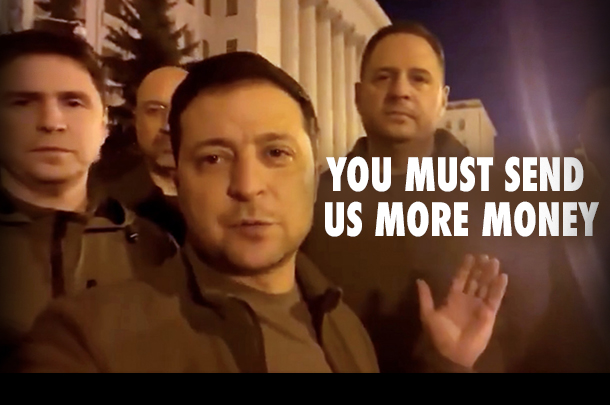
Brussels – Ukrainian officials took part in a meeting of EU foreign affairs ministers on Monday via video link. An additional €500m military aid package for Kiev was confirmed, but the EU is at pains to point out that’s just a drop in the ocean compared to what the bloc has already provided since last March.
Just a few days ago in the European Parliament, the strategy was condemned.
Workers have taken to the streets of Brussels to demand peace negotiations.
EU foreign ministers adopted a fresh round of sanctions against Iran on Monday over alleged human rights abuses. The grounds for such sanctions are vehemently rejected by Tehran. Critics say the West’s policy towards Russia and Iran is being driven by Washington.
Analysts say the EU’s access to markets in these countries is being hampered due to influence from the United States, and ultimately it is ordinary citizens who are paying the price.
Also on Monday, Palestinian Prime Minister Mohammad Shtayyeh updated EU foreign ministers on the appalling situation in the occupied territories. There was absolutely no discussion on the EU side regarding possible sanctions against Israel.
Germany years away from replacing Russian gas – official
RT | January 23, 2023
Germany is a long way from fully substituting Russian pipeline gas supplies with liquefied natural gas (LNG), estimates by the country’s Economy Ministry show.
According to a document published on the Bundestag website, Germany imported 55 billion cubic meters (bcm) of Russian natural gas in 2021. The document also shows that Germany’s new Floating Storage and Regasification Units (FSRUs), which are currently being installed in a number of ports to allow the import of LNG, may reach a similar capacity no sooner than in 2026.
By 2030, those capacities are projected to increase to 76.5 bcm, or about 80% of total German gas consumption in 2021. However, the ministry notes that even once the terminals go online, the global LNG market may not have enough capacity to cover additional demand, which could push these dates further.
The ministry notes that the country’s gas storage facilities are currently well-filled, and there is no immediate danger of gas shortages. However, it acknowledges that once the stores run dry later this year and the time comes to refill them for the next heating season, Germany may face shortages. According to calculations by the Oxford Institute for Energy Studies, Germany faces a supply gap of around 30 bcm of gas this year, and the FRSUs are projected to produce less than half of this volume by the end of 2023.
“The truth is, there won’t be enough in the next three to four years of LNG production capacity in the world to meet the growing demand. So the unspoken strategy is that Germany will continue to pay crazy prices and other, less rich countries go empty-handed,” Christian Leye, a Bundestag Left Party representative told Bloomberg.
Germany did manage to reduce its dependence on Russian energy last year by importing LNG through European neighbors and boosting pipeline gas flows from Norway and the Netherlands. However, its gas storages were filled over the summer, when Russian gas still flowed directly to the country. Another problem is the cost of LNG imports, which is estimated to be four times more expensive than Russian pipeline deliveries. Germany may also face supply constraints if the Netherlands goes through with recently announced plans to shut down the Groningen gas field, the region’s largest gas deposit.
Western ‘theft’ will backfire, Russian tycoon warns
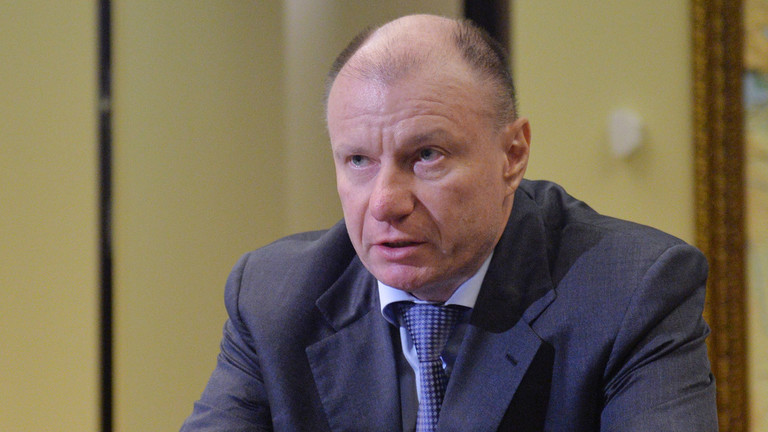
Vladimir Potanin. © Sputnik/Alexei Druzhinin
RT | January 23, 2023
Western countries are sawing off the branch they are sitting on by confiscating Russian assets, billionaire businessman Vladimir Potanin believes.
Following the launch of Russia’s military operation in Ukraine in February last year, multiple countries have frozen assets belonging both to the Russian state, and private companies and individuals to the tune of more than $300 billion.
In an interview with Russian media outlet RBK published on Monday, Potanin, the largest shareholder of mining giant Nornickel, said: “The confiscation [of assets] is a covert or overt form of theft,” and destroys “the investment climate of the jurisdiction where this is happening.”
Potanin noted that the countries comprising the ‘collective West’ had based their societies upon respect for private property.
The recent freezing of Russian assets “will backfire on them,” he said, adding that Russia should refrain from mirroring these measures.
He went on to suggest that by exercising respect for property rights, Moscow will be in a stronger moral position when it fights for its frozen assets in the West, and will send the right signals to entrepreneurs at home.
Potanin also warned against nationalizing property left behind in Russia by Western businesses – instead, the authorities need to “give the investment community the opportunity to solve this problem on its own.” He noted that the exodus of Western companies from Russia has allowed local investors to buy up assets at relatively low prices.
Potanin described the Western sanctions as “absolutely destructive and even, apparently, absolutely illegal,” and in his view, what we are seeing right now is the destruction of basic global rules.
The billionaire acknowledged that Western sanctions have put his plans for overseas business expansion on hold and have adversely affected his ability to travel the world, though he has now switched to exploring Russia instead, he added. Potanin nevertheless expressed confidence that the West “will come to their senses” sooner or later.
FM: Iran to Possibly Quit NPT if Europe Not Stop Hostile Stances
Al-Manar | January 22, 2023
If the Europeans do not change their anti-Iran positions, Iran will possibly withdraw from the NPT as a countermeasure, the Iranian Foreign Minister said on Sunday.
Reacting to a recent move by the European Union to designate the IRGC as a “terrorist” entity, Hossein Amir-Abdollahian told reporters on Sunday, “Parliament’s Sunday measure that binds the government to designate the armies of the European countries as terrorist is a countermeasure.”
Referring to his conversations with EU Foreign Policy Chief Josep Borrell, Amir-Abdollahian said that the resolution is not binding and it’s just an expression of the feelings of a part of the European Parliament representatives.
Answering a question about whether withdrawal from the NPT would be one of Iran’s countermeasures, Amir-Abdollahian said, “A small number of European political leaders, including the German Foreign Minister, have no experience in the field of diplomacy.”
Therefore, if they do not move in the direction of rationality and do not correct their positions, any measure is possible, he noted.
Featured Video

Trita Parsi: Middle East Unraveling — Are We on the Path to World War?
or go to
Aletho News Archives – Video-Images
From the Archives
Why Saudi Ties to 9/11 Mean U.S. Ties to 9/11
By Kevin Ryan | Dig Within | September 27, 2015
Media interest in Saudi Arabian connections to the crimes of 9/11 has centered on calls for the release of the 28 missing pages from the Joint Congressional Inquiry’s report. However, those calls focus on the question of hijacker financing and omit the most interesting links between the 9/11 attacks and Saudi Arabia—links that implicate powerful people in the United States. Here are twenty examples. … continue
Blog Roll
 Aletho News
- Neria Leiter Was A Legitimate Military Target
- Integrity Initiative: UK-funded network framed dissent as Russian disinformation for years
- ‘We don’t seek permission to defend our country’: Snippets from President Pezeshkian’s UNGA address
- NATO chief wants Europeans to fight American wars [for Israel]
- German chemicals giant reveals details of downsizing
- Refaat Al-Areer Was The Canary In The Coal Mine In Israel’s War On The Truth
- Israeli election committee bars candidate from Knesset race over Gaza war opposition
- French-Lebanese man files war crimes complaint over Israeli attacks
- Mahan Air Flight Lands in China Despite US Threat against Iranian Airlines
- US eyes $10bn fund to rebuild war-battered Gulf infrastructure
- If Americans Knew
- Caught on Tape: AIPAC CEO Boasted of Controlling Trump’s National Security Officials
- Why Hamas Attacked Israel in October 2023 – Israeli professor Ilan Pappé
- They see them, then kill them: Israeli quadcopters track, deliberately target civilians in Gaza
- Winter could turn Gaza’s treacherous, war-damaged buildings into deathtraps
- Majority of Democratic Voters Want to Prosecute Both Biden and Trump Administration Officials Over Gaza
- As Gaza languishes, world leaders gather at the UN – Daily Update
- Sanctions are collective punishment: immoral and self-defeating
- Phosphorus Munitions Fired by Israel Burn Groves, Orchards in Southern Lebanon
- Israel Carries Out New Ceasefire Violations Across Gaza
- AI – Emphasis on the ‘I’: Israel Is Funding AI Chatbot Propaganda
- No Tricks Zone
- New Study: Earth And Venus Surface Warmth Largely Explained By Convection And Lapse Rate, Not CO2 Or Radiation
- 2025 Nature Paper Claiming Worsening Global Drought Gets RETRACTED …Heavily Flawed
- New Study: ‘Global Drought Shows No Detectable Recent Acceleration Under Climate Warming’
- Economic Masterminds: German Socialists Suggest Taxing Productivity Gains Stemming From Using AI
- The South China Sea Has Not Been Cooperating With The Climate Change Narrative
- Energy Crisis: Germany Enters Heating Season With Historically Low Gas Reserve Fill Levels
- New Study: The Antarctic Ice Sheet Gained Mass From 2020-2024 Due To Staggering Snow And Ice Accumulation
- Study: Ocean Heating Rates From Thousands Of Years Ago ‘Dwarf’ Modern Ocean Heating Rates
- Climate Extremists Target, Attack Large-Scale Power Grid Infrastructure In Germany!
- New Study: Antarctic Ice Melt Has Contributed Less Than 1 Centimeter To Sea Level Rise In The Last 30 Years

