The West bullies Iran, again
BY M. K. BHADRAKUMAR | INDIAN PUNCHLINE | NOVEMBER 7, 2022
The manner in which Tehran handled its drone deal with Russia has been somewhat clumsy. The fact that the first ‘leak’ on this topic originated from none other than President Biden’s National Security Advisor Jake Sullivan should have alerted Tehran that something sinister was afoot.
Instead, for whatever reasons, Tehran went into a flat denial mode. And now in a turnaround, we are given to understand that Iran’s denial was factually correct, albeit not wholly true in content. Foreign Minister Hossein Amirabdollahian has acknowledged that the “drone part is true, and we provided Russia with a small number of drones months before the Ukraine war.”
The minister added the caveat that “This fuss made by some Western countries, that Iran has provided missiles and drones to Russia to help the war in Ukraine — the missile part is completely wrong.”
Howsoever good Iran’s drone technology might be, it has not been a game changer for Russia in the war in Ukraine. Russia’s own missile capability is surprising even the western experts who had predicted months ago that it was “running out” of its inventory. In fact, the missile strikes may continue until Ukraine collapses and the West has no meaningful interlocutor left in Kiev’s rubble.
Russia and Iran seem to have got mired in a controversy unnecessarily. What seems to have happened is that just as Iran did reverse engineering on US’ drone technology, Russians also did a good job to remake the Iranian kamikaze drones that were in its inventory prior to the special military operation in Ukraine. Kiev now says, after examining the debris of the Russian drones that it shot down, that they had Ukrainian parts, too!
It stand to reason that the Russian defence industry picked something from Iran’s technology, something else from Ukraine’s, and came up with a startling “Russian model”. That probably explains the sophistry in Moscow’ consistent stance that it didn’t use Iranian drones.
Amirabdollahian revealed that Iran offered to explain the situation to Ukrainian authorities and a meeting was even set up in Poland to clear the misunderstanding and restore Iran’s diplomatic ties with Kiev, but the Americans got it scuttled. Evidently, the US is not interested in a normalisation of Ukraine-Iran relations. Israel too would have an interest in keeping Iran at arm’s length from Kiev. The US and Israel would apprehend that a strong Iranian diplomatic presence in Kiev might work to Russia’s advantage.
Be that as it may, Amirabdollahian’s candid admission will have consequences. Iran possibly got carried away by the exhilarating feeling that a superpower stooped to source its military technology, and furthermore, relished the high publicity its drones received — not to mention the embarrassment caused to Ukraine’s western patrons who watched helplessly when the Russian drones created panic on such a scale.
However, belatedly, Iran realised the potential political and diplomatic fallout. In reality, all this “fuss,” as Amirabdollahian put it, stems from Tehran’s refusal to sign the EU draft nuclear agreement at Vienna, which infuriated Brussels and Washington, dashing their hopes that Iranian oil would come to the rescue of Europe by replacing the Russian oil imports that are being terminated w.e.f December 5.
Again, Iran’s increased oil production was what the US was counting on to introduce tensions within the OPEC and split the cartel.
According to a Spiegel report, Germany and eight other EU states have put together a new package of sanctions against Iran in Brussels on Wednesday, which contains 31 proposals targeting officials and entities in Iran connected with security affairs as well as companies, for their alleged “violence and repressions” in Iran. The alibi is human rights violations.
Evidently, the West has reverted to its bullying tactic. President Biden has pledged to “free Iran” from its present political system — although the Americans know from past experience that public protests are nothing unusual for Iran but regime change remains a pipe dream.
Why is the West resuscitating the “Iran question” at this point? There are two underlying reasons — perhaps, three. One is, Benjamin Netanyahu’s victory in the Israeli election last Sunday virtually guarantees that Israel’s existential rivalry with Iran is once again in the centre stage of West Asian politics. Without that happening, Netanyahu will come under pressure to address the core issue in West Asia, namely, the Palestinian problem.
As things stand, the “Iran question” will return to the centre stage of West Asian politics. There is a congruence of interests between Tel Aviv and Washington on that score at a time when there is going to be some friction inevitably in US-Israel relations, as the racist anti-Arab Religious Zionism alliance, Netanyahu’s latest coalition parters, contains elements that the US once regarded as terrorists. Whipping up a frenzy over Iran comes in handy for both Israel and the US.
But on the other hand, Netanyahu is realistic enough to know that it will be suicidal for Israel to attack Iran militarily without American support and second, that the Biden Administration has not yet entirely given up hope on a nuclear deal with Iran.
Therefore, in the event of the midterms radically changing the profile of Congress to the detriment of the Biden Administration, trust Netanyahu to insert the Iran nuclear issue as a key template of US domestic politics and the US-Israel relations.
A second factor is the trajectory of the war in Ukraine. Although the proxy war is in the home stretch and the US and NATO are staring at the defeat and destruction of Ukraine, the Biden Administration cannot simply walk away in humiliation, since this is Europe and not the Hindu Kush, and the fate of the western alliance system is at a crossroads.
Most certainly, US troops have appeared on Ukrainian soil and they can only be regarded as an “advance party.” Will Ukraine turn out to be another Syria, with the regions to the west of the Dnieper River — “the Rump” denuded of natural resources — coming under US occupation so that its NATO allies in the periphery do not jump into the fray of dormant ethnic tensions inherited from history to carve out their pieces out of the carcass? Or, will a US-led “coalition of the willing” be preparing to actually fight the Russian forces in eastern and southern Ukraine?
Either way, the point is, the strategic ties developing between Iran and Russia will remain a focal point for the West, Amirabdollahian’s “clarification” notwithstanding. It is only natural that in the conditions under sanctions, Russia’s external relations are in the cross-hairs of the US. Iran has a stellar record of rubbishing the “maximum pressure” strategy.
Put differently, having Iran as an ally will be a strategic asset for Russia in a multipolar setting. Iran and the Eurasian Economic Union have decided to negotiate a Free Trade Agreement while Tehran is also working out swap deals involving Russian oil. Simply put, Europeans can keep their SWIFT for whatever it is worth and that is not going to make any difference to Russia or Iran — and the rest of the world is watching this happening in real time, especially in Iran’s neighbourhood where oil is traded in dollars.
By now it is also clear to the US and its allies that JCPOA or no JCPOA, the overarching tilt toward Russia and China is Tehran’s version of the Israeli Iron Dome, in diplomacy. The bottom line is that Iran is becoming a role model for the Persian Gulf region, as is evident from the queue lengthening for membership of the Shanghai Cooperation Organisation, even as the parallel track of the Abraham Accords has disappeared in the endorheic basin of the Arabian Peninsula.
French glass maker halts production as energy costs bite
RT | November 4, 2022
France’s largest glass manufacturer, Duralex, has suspended operations for five months due to soaring electricity prices, the company’s CEO Jose Luis LLacuna told the BFM TV channel on Wednesday.
“Our gas and electricity bills have risen from €3 to €13 million a year… The price of energy usually represents 5% to 7% of our turnover. Today, it is around 46%. It is not tenable,” Llacuna explained, adding that the company’s operation had become “nonviable” as it is unable to make a profit after such staggering outlays for energy, in addition to paying salaries and procuring raw materials.
He added that during the five-month closure, Duralex employees would continue to receive 95% of their salaries, 70% of which will be covered by the state.
The head of the company noted, however, that its warehouses are currently sufficiently stocked to survive the winter and not cause a shortage of its goods on the market.
Earlier, France’s largest aluminum smelter, Aluminium Dunkerque, said it would cut production by about 20% due to rising energy prices. Another glass manufacturer, Arc, also said it would lower output and move a number of employees to part-time work.
EU’s carrot and stick policy toward Serbia ends as Brussels drops carrot from equation
By Drago Bosnic | November 3, 2022
After over two decades of keeping Serbia in a semi-colonial state, the European Union seems to finally admit that it sees the Southeast European country precisely as such – a semi-colony. For approximately 20 years, Brussels played the carrot and stick cards with Belgrade, forcing it to renounce important segments of its sovereignty in return for access to EU funds and markets.
The neoliberal economic framework that the EU insisted on devastated the country’s hybrid market socialist economy and ruined domestic economic power, paving the way for the dominance of foreign investors and turning the country into yet another source of cheap labor for Western corporate interests. However, even while implementing such policies, disastrous for any country’s economic (or any other form of) sovereignty, it created an image of growth.
And yet, the waning economic power of Brussels, resulting primarily from its suicidal subservience to Washington DC’s Barbarossa-like push against Russia, is starting to affect the “carrot” portion of the EU’s policy toward Serbia. Frustrated by the country’s refusal to conform with the political West’s clinically Russophobic frenzy, the bureaucratic empire is now resorting to using the “stick”. With little to nothing left to offer, the EU is now threatening to scale back the benefits it gave Serbia in the last two decades to punish the country for its non-compliance in regards to the bloc’s anti-Russian sanctions and policies. To make matters worse, Brussels insists that Belgrade should still continue renouncing parts of its sovereignty while the EU is rolling back the apparent benefits it previously gave in return.
What does Serbia get from all this? A geopolitically worthless shoulder tap that will not help the country in any conceivable way. On the contrary, it may very well ruin its centuries-old relationship with Russia, a country exerting no pressure on Serbia while helping it preserve what’s left of its sovereignty and territorial integrity. For the political West, now effectively operating under a “you’re either with us or against us” foreign policy framework, Serbia’s neutrality is seen as nothing short of hostile. Belgrade is forced to beg to stay neutral in the Ukraine crisis, but to no avail, it seems. Anything less than full compliance is unacceptable to the imperialist power pole. To show just how much, the EU now considers Serbia’s membership ambitions effectively dead, as the negotiations to join the bloc have become a mere formality, having been stalled for years.
Brussels now thinks Serbia should not be conditioned by the termination of accession negotiations, since “joining the EU is as realistic as going to Mars,” as Frankfurter Allgemeine Zeitung put it. The analogy is quite indicative of how the bloc sees Serbia’s future and should serve as an eye-opener in Belgrade. Coupled with recent allegations that Serbia is “trying to destabilize the EU at the behest of Russia”, it’s clear that despite how much sovereignty it renounces, how far it’s ready to go against its national interests, the country will never be good enough to join the bloc. The question remains then, what’s the point? Why would Serbia even want to join the EU? It seems the Serbian populace is well aware of this and it’s not so keen on joining either.
The EU now realizes that stopping membership negotiations would effectively mean nothing to the Serbian people. Frankfurter Allgemeine Zeitung thinks that “the warnings about the possible freezing of accession negotiations are a blunt sword against Belgrade,” as the negotiations have been stagnant for years. “Their termination would not leave an impression on the Serbian population, which is critical of the EU anyway. In addition, even among the advocates of the EU in Belgrade, almost no one believes that joining the EU is realistic. Equally, Serbia could be threatened with a ban on access to Mars,” the report states.
However, it’s a different story when it comes to abolishing visa-free travel for Serbian citizens, a topic first mentioned by the European Commissioner for Internal Affairs Ylva Johansson. “It would greatly affect the Serbian economy, as well as the predominantly urban population that travels, as well as the authorities. It is the most lethal weapon in Brussels’ arsenal,” the German paper commented. “If visas were introduced again, that sense of isolation would be like a nightmare again, which first ended when the visas were abolished in 2009. Anger due to a return to the dark times would certainly be directed against the Serbian government,” the report adds.
The previously veiled threats by Brussels seem to have become quite direct at this point, since the EU isn’t just planning to get the “carrot” out of the equation (it effectively did already), but will also not hesitate using the “stick” now. What’s more, the move is openly aimed against Serbia’s political stability, as the EU expects to cause widespread discontent which, in turn, would result in exerting additional pressure on the Serbian government. Belgrade certainly could comply and start distancing itself from Moscow. It might even feign this while coordinating with Russia by implementing policies that would affect quite literally nothing.
For instance, it could impose sanctions on Russian sea shipping (Serbia is landlocked) or ban access to Russian airline companies, which can’t reach Serbia anyway, as the country is surrounded by EU members which already did that. But the question remains, where does it stop? Will the political West ever be content enough to stop blackmailing and threatening the country? It might be politically unwise for the Serbian government to answer that (rhetorical) question, but it certainly isn’t for the Serbian people.
Drago Bosnic is an independent geopolitical and military analyst.
‘Inflation came from nowhere’ – Lagarde
Samizdat | October 31, 2022
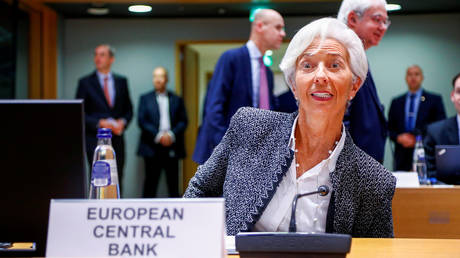
The European Central Bank (ECB) has doubled its key interest rate to the highest level in more than a decade in an attempt to combat soaring inflation, ECB President Christine Lagarde has explained.
In October, the inflation rate in the Eurozone reached 10.7%, according to official preliminary data, released on Monday.
In an interview with Irish state broadcaster RTE on Friday, Lagarde said: “We do it because we are fighting inflation” that had “pretty much come about from nowhere.” She pointed to a speedier-than-expected economic rebound from the pandemic as a cause alongside “the energy crisis caused by Mr. Putin who has decided in an unjustifiable way to invade another country.”
The ECB chief added: “That’s what he [Putin] is trying to do, cause chaos and destroy as much of Europe as he can. This energy crisis is causing massive inflation which we have to defeat.”
She went on to say that “Anybody who is behaving in that way has to be driven by evil forces,” and that the “sick” Russian president is a “terrifying person.”
Discussing her previous meetings with the Russian leader, Lagarde described him as an “unbelievably super-briefed person” with “flashing, freezing eyes.”
After expressing her view, Lagarde however stressed that she’s “just a central banker,” and “shouldn’t be saying all these things.”
On Thursday, the ECB announced another interest rate hike, taking Eurozone rates to the highest level since 2009. According to Lagarde, they are aimed at bringing inflation back to “reasonable levels so the cost of living isn’t as high as it is for people.” In October, inflation across the euro area hit 10.7%, according to preliminary data from Eurostat.
The EU has blamed Russia for the spiraling energy crisis across the continent. However, many economists point to the bloc’s fiscal policy responses as a major reason behind the crisis. Moscow has also criticized the “illogical and often absurd” moves by Western nations, saying that the sanctions imposed by the US, EU, and other countries on Russia have backfired and resulted in a sweeping energy crisis as well as record inflation across the West.
Prague protests: local occurrence or indicator of coming unrest across Europe?
By Drago Bosnic | October 31, 2022
As if the political unraveling across the European Union, United Kingdom and other powers of the political West wasn’t bad enough, the people who have become fed up with the disastrous policies of their failing governments are finally taking to the streets. Pushed to the brink of (or beyond) poverty, with soaring food, energy and housing costs, tens of thousands of protesters railed against the policies of the Czech government. Starting on Friday, the residents of Prague took to the streets, demanding the resignation of the Czech government under Prime Minister Petr Fiala, withdrawal from NATO, as well as direct talks and an agreement on future natural gas supplies from Russia.
“This is a new national revival and its goal is for the Czech Republic to be independent,” organizer Ladislav Vrabel stated. “When I see a full square, no one can stop this.”
Demonstrations were not only limited to Prague, but occurred both in the capital city, as well as the second-largest Czech city of Brno. Organized under the slogan of “Czech Republic First,” the protests drew large-scale support from both sides of the political spectrum, as left-wing and right-wing parties joined forces to protest the subservient policies of the government in Prague.
“Russia’s not our enemy, the government of warmongers is the enemy,” one speaker said, according to a report by the Associated Press. Prague has sent munitions, armored vehicles, tanks, artillery systems and other heavy weapons to the Kiev regime and provided approximately 500,000 visas to Ukrainian citizens, along with full benefits. This has caused frustration among millions of Czechs, many of whom are now struggling to afford basic necessities, as their government is wasting increasingly scant resources by sending them to the corrupt Neo-Nazi junta in Kiev. Among the aforementioned requests such as the halt of anti-Russian policies, protest organizers are also demanding that Ukrainian citizens in Czechia not be granted permanent residency status.
This protest was the third in a series of demonstrations organized by a Czech group demanding Prague’s withdrawal from NATO and the establishment of normal ties with Moscow. According to Bloomberg, Prime Minister Petr Fiala’s government has attempted to dismiss the protests as supposedly “inspired by pro-Kremlin propagandist narratives.” The Czech government has been woefully unprepared for the economic fallout of anti-Russian sanctions and policies it was ordered to implement, resulting in the ever-rising costs which have not been tackled despite aid to businesses and household electricity price caps. On the contrary, price controls only backfired, causing shortages and resulting in even greater price hikes.
Despite attempts by the Western mainstream propaganda machine to present the Prague protests as “merely a local occurrence”, the truth is that they are just a relatively small part of a rising wave of discontent across not just the EU, but Europe as a whole. On October 27, just a day before the demonstrations in Prague erupted, tens of thousands protested in France, demanding higher wages to offset the rising costs of living. The strike also included teachers, healthcare providers and railway workers, among thousands of other French citizens. In recent months and weeks, similar protests have been organized in Netherlands, Belgium, Germany and Austria.
“This is merely the silence before the storm — the discontent is great, and people do not have any sense that the government has a plausible strategy to master the crisis,” German pollster Manfred Güllner told The Wall Street Journal.
At a time when approximately 75% of German families are forced to cut back on energy consumption, a mere 9% of Germans support Chancellor Olaf Scholz in his policies to tackle the escalating energy crisis threatening to destroy the EU’s largest industrial power. Although the protesters in France didn’t put anti-Russian sanctions at the forefront of their demands, German demonstrators have called for an end to these self-harming policies. The massive discontent in Europe will certainly spread all over the world, as hundreds of millions now realize that there is a direct connection between Western sanctions against Russia and their ever-growing economic and financial issues.
It does not take an expert in geopolitical matters to connect the dots and understand how the latest proxy war against Russia is affecting the well-being of the world. The situation in the EU has become so bad now that millions of Ukrainian citizens who have fled to Europe are returning to their (unfortunately) Neo-Nazi junta-run country. According to the latest figures by the International Organization for Migration (IMO), over six million people have gone back, despite the still ongoing conflict. The Kiev regime is now struggling to accommodate everyone and the Neo-Nazi junta officials are urging citizens not to return this winter. Blackouts have become the norm in multiple cities and with the coming sub-zero temperatures heating will be a major concern in the next several months.
Drago Bosnic is an independent geopolitical and military analyst.
The EU reminds Elon Musk about its censorship laws
By Cindy Harper | Reclaim The Net | October 30, 2022
Shortly after he became the owner of Twitter, Elon Musk tweeted “the bird is freed,” which implied Twitter will be more free speech-friendly under his ownership.
Replying to Musk’s tweet, the European Union’s internet market commissioner Thierry Breton said, “In Europe, the bird will fly by our [EU flag emoji] rules. #DSA”
The Digital Services Act (DSA) is a new set of rules for social media and ecommerce companies that was recently passed and will come into effect next year. It aims at making internet businesses liable for societal risks like hate speech. Breton’s tweet was a warning to Musk that Twitter will have to follow DSA rules.
Breton’s spokesperson refused to say whether the European Commission is concerned about Musk’s ownership of Twitter. However, a source told TechCrunch that the bloc was confident the bird’s wings are already clipped.
“With the EU Digital Services Act, the time of big online platforms behaving like they are ‘too big to care’ is coming to an end. The DSA sets clear, harmonized obligations for platforms – proportionate to size, impact and risk,” the source said.
“Europe is open — but on our conditions. Anyone who wants to benefit from the European market will have to fulfill our rules, including on moderation, open algorithms, freedom of speech, transparency, hate speech, revenge porn, and harassment.
“The Commission will supervise very large platforms, including the possibility to impose effective and dissuasive sanctions of up to 6% of global turnover or even a ban on operating in the EU single market in case of repeated serious breaches.”
LNG ships waiting for higher EU prices to unload
Samizdat – October 30, 2022
Several ships loaded with liquefied natural gas (LNG) that have been circling off the coast of Spain are likely to stay there until late November, as they wait for European gas prices to go up, Reuters reported on Wednesday, citing industry sources.
An LNG tanker traffic jam has been building off the Spanish coast for weeks with vessels waiting to unload their cargo. Spain boasts the largest LNG storage facilities in the European Union.
The glut of LNG off the coast could be part of a trading strategy by suppliers, as ships are waiting until prices increase to unload, industry sources told Reuters.
Natural gas prices are at their lowest level in Europe since June, having dropped 28% in a week, due in part to above-normal temperatures and high inventory levels, as the EU’s gas storage is now nearly 95% full, according to Rystad Energy.
“If one single idling vessel discharges its cargo, the price will immediately collapse by affecting the other cargoes in the queue and this domino effect is so painful in terms of opportunity cost,” one of the sources told Reuters.
Just by waiting to deliver in December rather than November, the difference in profit could be in the order of tens of millions of dollars per shipment, Michelle Wiese Bockmann from the shipping journal Lloyd’s List told the BBC.
The backlog of ships has mainly been attributed to a lack of LNG storage capacity in Europe. EU countries went on an LNG-buying spree over the summer to fill up their reserves ahead of winter in view of reduced supplies from Russia. But, as the bloc has long relied on pipeline gas, the continent’s regasification and storage capacities cannot cope, Reuters explained.
EU approves gasoline car ban
Samizdat | October 28, 2022
 The EU has reached an agreement that would oblige carmakers to achieve a 100% cut in CO2 emissions by 2035. The measure would effectively ban the sale of new petrol and diesel-fueled cars in the bloc starting from that year. The deal was struck on Thursday between negotiators from EU member states, the European Parliament, and the European Commission, which all must agree when a new law is to be adopted within the EU.
“The European Commission welcomes the agreement reached last night by the European Parliament and Council ensuring all new cars and vans registered in Europe will be zero-emission by 2035,” the Commission said in a press release following the deal’s announcement.
The agreement also included a 55% cut in CO2 emissions for new cars sold from 2030 against 2021 levels, which exceeds the existing target of a 37.5% reduction.
EU climate policy chief Frans Timmermans said the agreement is a signal to all that “Europe is embracing the shift to zero-emission mobility.”
According to the press release, the new regulation aims “to make the EU’s transport system more sustainable, provide cleaner air for Europeans, and marks an important step in delivering the European Green Deal.”
The agreement is provisionary and now requires formal adoption by both the European Parliament and the EU Council. The timeframe for this is so far unclear.
EU sticks to lockdowns, masks and vaccine passports
By Will Jones | TCW Defending Freedom | October 27, 2022
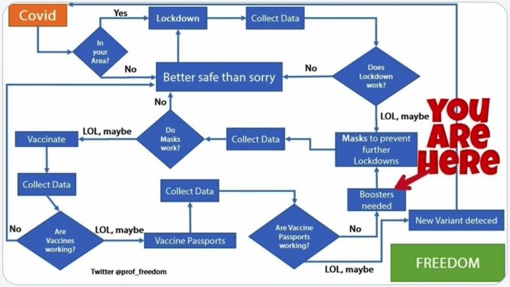
The EU has set out its commitment to the continued use of lockdowns, mask mandates, vaccine passports and other restrictions this winter to control the spread of Covid-19, and also to the creation of a ‘legally binding’ global pandemic treaty with a ‘reinforced World Health Organisation at its centre’.
The document, published on September 2 and titled EU response to COVID-19: preparing for autumn and winter 2023, was prepared by the EU Commission (the EU executive) and sent to the EU Parliament. It reveals how much in thrall to the new biosecurity orthodoxy the EU leadership is and bodes ill for the future management of contagious disease in the bloc and globally.
On lockdowns and other restrictions, it proposes a framework of ‘key indicators to assess when deciding on reintroducing non-pharmaceutical measures’. These indicators include severe disease and hospital occupancy data, and importantly are stated to relate not just to Covid-19 but to influenza as well, potentially making this part of normal winter disease management indefinitely.
It suggests mask mandates as a ‘first option to limit community transmission’, giving a preference for FFP2 masks.
The document recommends the pre-emptive imposition of work-from-home and gathering limits before any rise in infections to try to avoid the ‘need for more disruptive ones such as lockdowns, closing businesses and schools, stay-at-home recommendations and travel restrictions’. It stresses the need for ‘political commitment’ to make lockdowns and other measures work.
The one welcome aspect of the document was the clear statement to avoid disrupting children’s education and lives any further, though even here school closures were not ruled out: ‘The Covid-19 pandemic has disrupted the lives of children and adolescents affecting their everyday routines, education, health, development and overall well-being. It is therefore important to keep in mind the negative impacts of school disruptions on the health and development of children. The implementation of measures at schools should be aimed to be kept at a minimum and the further loss of learning should be prevented.’
The document discourages travel restrictions – freedom of travel and the elimination of internal borders being an article of faith for the EU. However, it recommends use of the EU Digital Covid Certificate (i.e., vaccine passport, though it also recognises natural immunity) wherever travel restrictions are necessary’, boasting about how widely it is already used.
‘The EU Digital Covid Certificate has been a major success in providing the public with a tool that is accepted and trusted across the EU (and in several third countries) and in avoiding fragmentation of multiple national systems. As of August 1st 2022, 75 countries and territories from across five continents are connected to the EU Digital Certificate system (30 EU/EEA Member States and 45 non-EU countries and territories), and several more countries have expressed interest in joining the gateway or are already engaged in technical discussions with the Commission. This makes the EU Digital Covid Certificate a global standard.’
What this fails to mention, of course, is any rationale for the passes. What’s the point of restricting the travel of the unvaccinated (or not-sufficiently-vaccinated) when the vaccinated are no less likely to spread the disease? This key question is entirely unaddressed.
On vaccination, the document provides 15 ‘objectives’, ‘priorities’ and ‘actions’ for Covid-19 vaccination strategies. These include the ‘priority’ of encouraging take-up of the original vaccine (that’s right, for the extinct Covid strains) among all eligible children and adolescents, and an action point of making sure GPs are spending enough of their time vaccinating people (don’t they have anything else to do?) It suggests administering boosters as often as every three months, implying they are of little use after six months. It also encourages governments to counter ‘misinformation’ in the media and online to ensure ‘clear, consistent and evidence-based messaging demonstrating the continued safety and effectiveness of COVID-19 vaccines’. It links worries about vaccine safety with ‘anti-Western and anti-EU narratives’ and with websites which also go off-narrative on the Ukraine war.
The document also trails a forthcoming ‘EU global health strategy’ which ‘will provide the political framework with priorities, governance and tools, enabling the EU to speak with one influential voice and making the most of Team Europe’s capacity to protect and promote health globally’.
This is a very disturbing document. For those of us who still hold to the evidence-based pandemic strategies of pre-2020, premised only on mitigating impacts by expanding emergency healthcare capacity and finding safe and effective treatments, and not imposing intrusive, harmful and unproven methods of trying to prevent the spread of a disease that is anyway harmless to most people, this bodes ill indeed for the current direction of travel in Europe and globally.
Will Ursula von der Leyen be forced to resign, and will her deeds be investigated?
By Vladimir Danilov – New Eastern Outlook – 28.10.2022
Europe has been rocked by large-scale protests over the last few weeks, and many politicians and media organizations in the EU see this as a reflection of public dissatisfaction with the policies of the European Commission and especially its head, Ursula von der Leyen. The main concern is the rising cost of living, the rapid increase in energy and food prices, and the anti-Russian policies of the European Commission, which have led to an energy and economic crisis that is affecting not only Europe but many other countries who have committed themselves to a close relationship with Europe.
Always keen to show her unwavering support for Washington and London, in her speech at the inaugural summit of the European Political Community, the President of the European Commission extended a warm welcome to Liz Truss – despite the fact that no-one other than Ursula von der Leyen considers the former British premier’s policies to be a success. As the Daily Express notes, the speech was greeted with an uncomfortable silence.
Internet users in the EU have criticized Ursula von der Leyen’s most recent promises to help the Kiev regime “as long as is necessary” and provide Ukraine with billions upon billions of Euros in credit. Her statements have been attacked on social media as ignoring the interests and wishes of EU citizens, and users have called for her resignation.
Writing on Twitter, the French politician Florian Filippo criticized her call for regular subsidies for Ukraine: “Ursula is completely crazy! Lock her up!”
In an interview with Le journal du Dimanche, the former French president Nicolas Sarkozy has accused the European Commission of lacking the authority to make decisions on arms purchases. As he explained, the European Commission is an administrative body, and it is unclear on what basis Ursula von der Leyen considers that she has the authority to speak up on matters relating to foreign policy or arms purchases. Just a few days after the beginning of Russia’s special operation in Ukraine, the President of the European Commission announced that the EU would finance “the purchase and delivery of arms and other military equipment” to Ukraine. Europeans are continually hearing about the need to provide the Kiev regime with billions of euros from EU coffers to buy arms, and they blame Ursula von der Leyen. Nicolas Sarkozy alleges that the EU’s policy in relation to Ukraine was too dependent on “escalation, irritation and thoughtless actions.”
The Israeli television channel i24news and the former Socialist candidate for the French presidency (in the 2007 elections) Ségolène Royal have also recently criticized Ursula von der Leyen’s stance. Ségolène Royal claims that instead of helping Russia to stop the war, the President of the European Commission is lobbying on behalf of the USA’s Ukraine policy and has effectively become a NATO and Pentagon press secretary.
In addition to the criticism’s of her policies, Ursula von der Leyen has also found herself at the center of corruption scandals in recent months. Especially since the beginning of the European public prosecutor’s investigation into EU purchases of COVID-19 vaccines. Public attention in relation to the scandal has centered on the role played by the President of the European Commission, who, as even Dmitry Medvedev, deputy chairman of Russia’s Security Council noted on October 20, “went all out and purchased 4.6 billion(!) COVID-19 vaccine doses from Pfizer pharmaceuticals at a cost of 71 billion (!) euros.” “That is 10 vaccine doses for every EU citizen,” he added.
According to the journal Politico, Ursula von der Leyen has admitted to exchanging text messages with Pfizer CEO Albert Bourla while the EU was negotiating the vaccine purchase contract. Two EU supervisory bodies have already accused her of wrongdoing in relation to the purchase, criticizing the Commission for refusing to provide the documents required for the investigation into the matter to proceed further.
However, the Pfizer purchase is not the first scandal that Ursula von der Leyen has found herself involved in. There was another scandal three years ago, when, shortly after a call from the EU elite to “make the process of electing the EU leadership more democratic,” the members of various different political groupings complained that at the beginning of 2019 the heads of the main EU bodies were selected in closed meetings “under cover of night.” The presidency of the European Commission did not go to the leader of the group winning the most votes in the May 2019 elections, but was instead “handed to” Ursula von der Leyen, as Donald Tusk, evidently satisfied that he had done his duty, informed journalists at the end of a two-week EU summit.
This political backroom deal in which the position was clearly reserved for Ursula von der Leyen took place at a time when the EU was supposedly undergoing a “democratic reform.” Since 2014 the so-called leading candidate procedure has been in effect, for the purpose of selecting a new President of the European Commission. Among other requirements, the procedure requires that the candidates from Europe-wide parties who won the largest numbers of votes in European Parliament elections should be given priority when selecting the President of the European Commission.
The reservation of the post for Ursula von der Leyen, the then German Minister of Defense, was highly controversial at the time, even in her native Germany, both among politicians and within the expert community. For example, Markus Söder, at the time head of the Christian Democratic Union, described his views to the DPA press Agency as follows: “Manfred Weber would have been a legitimate President of the European Commission, his election would have been democratic. It is a pity that democracy failed, and the winner was chosen in a behind-the-scenes deal.” The heads of the Social Democratic Party of Germany (SPD)-led coalition, in government at the time, also opposed her nomination to the most senior post in the EU. “The decision to award the presidency of the European Commission to the Minister of Defense undoes all the efforts that have been made to strengthen democracy in Europe, take into account citizens’ interests and support the role of the European Parliament,” the SPD leaders claimed in a statement.
Significantly, at the time Ursula von der Leyen did not even take part in the election campaign, did not stand as a candidate in the European elections, and was probably most known for her anti-Russian position and her unquestioning support for Washington. It was most likely that support that played the key role in bringing about her nomination as President of the European Commission.
So, one may ask, what did Ursula von der Leyen do to achieve the honor of being given the post she now occupies? She is the daughter of Ernst Albrecht, a high-ranking politician in the Christian Democratic Union (CDU), and between 1988 and 1992 she worked as an assistant doctor in the gynecological department of Hanover Medical School. However, in 2016 Hanover Medical School checked her doctoral thesis for plagiarism, and noted its “obvious shortcomings.”
Having raised seven children, she is often informally referred to in her native country as “the mother of Germany.” Her political career began in 1990, when she joined Angela Merkel’s CDU, and in 2005 she was appointed to her first ministerial post, as Minister of Family Affairs and Youth in the Merkel administration. In 2009 she was appointed Minister of Labor and Social Affairs, and in 2013 she became Minister of Defense, a post which she occupied for six years, during which she was involved in regular scandals and responsible for controversial decisions. According to statements by Germany’s three main parties (the Green Party, the Left Party and the Social Democrats), many of the 3,800 contracts concluded during her “management” of the German Armed Forces from 2014 onwards (relating to the restructuring of the Armed Forces and also its IT systems) appear to have been awarded to the “right people,” including relatives and friends, and some contracts may even have involved some form of bribery. Back in 2017 the German newspaper Bild, citing a report by the Federal Audit Office, accused Ursula von der Leyen of being strikingly incompetent during her time as Minister of Defense, when it was revealed that not one German submarine was operational, and less than half of its frigates and tanks and just a third of its military helicopters were in working condition.
With such a “success” record, Ursula von der Leyen was already being seen as a burden on the Armed Forces and the CDU. As, with the elections coming up, there was no suitable free ministerial post she was “nominated” for the presidency of the European Commission – a convenient decision for Germany at the time.
However, as time went by it became clear that the EU could not expect to derive much benefit from her appointment.
For Washington, however, which has no interest in the EU being led by strong politicians following their own line independent of the US, the decision to give Ursula von der Leyen the presidency of the European Commission in 2019 played right into its hands. And as a result she is now promoting the interests, not of European citizens, but of Washington alone, by helping US pharmaceutical companies make huge profits from selling the Pfizer COVID-19 vaccine or by providing the US military-industrial complex with millions upon millions of euros in arms orders, paid for by European taxpayers, to support the Kiev regime.
In the present circumstances it will be interesting to see how Ursula von der Leyen’s “career” ends – will she be brought down by the results of investigations into the corruption scandals which she has clearly been involved in, or following demands for her resignation by the European public, who are becoming increasingly critical of her actions…
Ukraine a test range for Western arms – defense minister
Samizdat – October 26, 2022
The conflict in Ukraine gives Western arms producers a chance to see which products fare best in a real fight against Russia, the country’s defense minister has said.
“We have a combat testing field in Ukraine during this war,” Aleksey Reznikov explained. “We have eight different 155mm artillery systems in the field … so it’s like a competition between systems” to see which one proves best.
The comments came in an interview with Politico published on Tuesday. The testing ground idea was previously expressed by Reznikov’s deputy, Vladimir Gavrilov, who claimed that some American defense contractors were fielding their prototypes in Ukraine.
Kiev expects military aid from NATO members to continue flowing into the country for years and wants to benefit more from it, Reznikov said. For example, Ukraine could start joint ventures with Poland, the UK, or Germany to produce weapons.
“We have to develop a UAV (unmanned aerial vehicle) industry not only for aerial drones but also on land and in the sea because it’s the future” of warfare, he noted.
He was also skeptical about restrictions under which Ukraine’s supporters are shipping arms to Kiev. As the conflict with Russia unfolded, the US and its allies have repeatedly reconsidered previous decisions not to send heavier weapons, the defense minister pointed out.
“I’m really optimistic that Abrams tanks are possible in the future and I am sure that fighter jets like F-16s, F-15s, or Gripen from Sweden will also be possible,” he said.
Washington was initially reluctant to provide lethal aid to Ukraine out of concern that Russia would consider it an escalation but gradually reconsidered and supplied increasingly sophisticated weapons, which Reznikov sees as a favorable trend.
Western officials cited logistical issues with training Ukrainian pilots and maintenance of the fighter jets among the reasons why Ukraine can’t get F-16s or F-15s. But according to media reports, Kiev may get them in the long run.
Reznikov said European NATO allies were looking to the US in their aid decisions, so it was up to Washington to up the ante.
“After the first Abrams [arrives] I’m sure we will have Leopards, Marders, and other types of heavy armored vehicles like tanks,” he told the news outlet.
Among the weapons the US most recently designated for Ukraine are the NASAMS air defense systems. Washington is also reportedly considering sending some old HAWK surface-to-air missiles it has stockpiled to see if they are still effective.
US scales back plan for Russian oil price cap – Report
Samizdat | October 27, 2022
President Joe Biden’s administration has reportedly been forced back to the drawing board on its plan to cap international prices for Russian oil, having failed to secure enough commitments to control how much Moscow is paid for the bulk of its crude exports.
The US and the European Union will likely have to settle for a “loosely policed” pricing cap, enforced by fewer buyers and at a higher price than envisioned, Bloomberg News reported on Wednesday, citing unidentified people familiar with the plans. The original goal was to drastically reduce Russia’s oil revenue – the latest effort to punish Moscow for its military offensive in Ukraine – by imposing a strict price lid to which a broad “buyer’s cartel” of nations would adhere.
Instead, only G7 nations and Australia have committed to honoring the price cap, Bloomberg said, attributing failure of the original plan to investor skepticism, volatile financial markets and efforts to tame inflation around the world. The cap level also might need to go higher than a previously targeted range of $40-$60 per barrel.
Biden’s administration has denied that its plan would fall short of throttling Russian oil revenue. “The White House and the administration are staying the course on implementing an effective, strong price cap on Russian oil in coordination with the G7 and other partners,” White House National Security Council spokeswoman Adrienne Watson told Bloomberg in a statement.
Russian officials have said the country won’t sell oil or other commodities under price caps or unprofitable market conditions. Nor will Moscow supply energy to nations that adopt trade policies contradicting the terms of their existing oil and natural gas contracts, Russian Deputy Prime Minister Aleksandr Novak said earlier this month. A cap on crude wouldn’t be viable because prices are driven by the global supply-demand balance, he added.
The G7 price cap is scheduled to go into force on December 5, along with an EU ban on imports of seaborne Russian crude. Reuters reported last week that after December 5, Russia would still be able to ship the vast majority of its oil exports at market prices because it would have ample access to tankers and other services. The outlet cited a US Treasury official as saying that between 80% and 90% of Russian oil would continue to flow to buyers outside the cap mechanism.
Russia would have access not only to its own oil tankers, but also to Chinese and Indian ships, Reuters added. Traders and insurance companies from Russia, Asia and the Middle East would provide the necessary transactional services. Brent crude, a leading international oil benchmark, is currently selling for around $95 per barrel.
Featured Video
Integrity Initiative: UK-funded network framed dissent as Russian disinformation for years
or go to
Aletho News Archives – Video-Images
From the Archives
Why Saudi Ties to 9/11 Mean U.S. Ties to 9/11
By Kevin Ryan | Dig Within | September 27, 2015
Media interest in Saudi Arabian connections to the crimes of 9/11 has centered on calls for the release of the 28 missing pages from the Joint Congressional Inquiry’s report. However, those calls focus on the question of hijacker financing and omit the most interesting links between the 9/11 attacks and Saudi Arabia—links that implicate powerful people in the United States. Here are twenty examples. … continue
Blog Roll
 Aletho News
- IAEA inspectors cannot return to Iran amid US threats: Russia
- Senate Rejects Iran War Powers Resolution Passed By House
- ‘We did not attack Pakistan with drones’: Afghan sources
- Iraqi Resistance faction links arms to sovereignty, questions US exit
- Cannon fodder no more… South Korea rejects Trump’s pressure to join his criminal war on Iran
- Neria Leiter Was A Legitimate Military Target
- Integrity Initiative: UK-funded network framed dissent as Russian disinformation for years
- ‘We don’t seek permission to defend our country’: Snippets from President Pezeshkian’s UNGA address
- NATO chief wants Europeans to fight American wars [for Israel]
- German chemicals giant reveals details of downsizing
- If Americans Knew
- Israel displaces hundreds of Palestinians amid wave of demolitions in West Bank
- Aid, reconstruction, and Israel’s history of obstruction in Gaza
- Trump administration digs an ever-deeper hole of complicity in genocide – Daily Update
- US-Israel $2.8 Billion Arms Deal, 40,000-Bomb Supply Faces New Gaza Complicity Accusations
- Caught on Tape: AIPAC CEO Boasted of Controlling Trump’s National Security Officials
- Why Hamas Attacked Israel in October 2023 – Israeli professor Ilan Pappé
- They see them, then kill them: Israeli quadcopters track, deliberately target civilians in Gaza
- Winter could turn Gaza’s treacherous, war-damaged buildings into deathtraps
- Majority of Democratic Voters Want to Prosecute Both Biden and Trump Administration Officials Over Gaza
- As Gaza languishes, world leaders gather at the UN – Daily Update
- No Tricks Zone
- New Study: Earth And Venus Surface Warmth Largely Explained By Convection And Lapse Rate, Not CO2 Or Radiation
- 2025 Nature Paper Claiming Worsening Global Drought Gets RETRACTED …Heavily Flawed
- New Study: ‘Global Drought Shows No Detectable Recent Acceleration Under Climate Warming’
- Economic Masterminds: German Socialists Suggest Taxing Productivity Gains Stemming From Using AI
- The South China Sea Has Not Been Cooperating With The Climate Change Narrative
- Energy Crisis: Germany Enters Heating Season With Historically Low Gas Reserve Fill Levels
- New Study: The Antarctic Ice Sheet Gained Mass From 2020-2024 Due To Staggering Snow And Ice Accumulation
- Study: Ocean Heating Rates From Thousands Of Years Ago ‘Dwarf’ Modern Ocean Heating Rates
- Climate Extremists Target, Attack Large-Scale Power Grid Infrastructure In Germany!
- New Study: Antarctic Ice Melt Has Contributed Less Than 1 Centimeter To Sea Level Rise In The Last 30 Years

