Protesting Farmers Win Big Concessions, But EU Leaders Dig in Their Heels on Net Zero Climate Target
By John-Michael Dumais | The Defender | Febraury 7, 2024
Following the protests in Brussels last week by farmers from across the European Union (EU), the European Commission offered some concessions to the agricultural sector — but said it will not scale back its plan to cut 90% of greenhouse gas emissions by 2040, Reuters reported Tuesday.
The new commission plan drops the requirement to reduce farm-related emissions such as nitrogen, nitrous oxide and methane by one-third and removes the recommendation that EU citizens eat less meat, The Telegraph reported.
Commission President Ursula von der Leyen on Tuesday also offered to drop her proposal requiring farmers to cut pesticide use in half by 2030, saying it had become “a symbol of polarisation,” according to The Guardian.
Other concessions included limiting Ukrainian agricultural imports and delaying rules for setting aside more land to promote soil health and biodiversity.
At the behest of von der Leyen’s center-right European People’s Party, the revised commission plan features language praising the value of the agricultural sector, noting its importance for attaining the EU goal of food sovereignty, wrote Politico.
The compromise comes after weeks of escalating demonstrations by farmers in France, Spain, Germany, Portugal, Italy, Poland, the Netherlands, Belgium, Lithuania and other EU countries against several policies — from fuel subsidies and unfair trade practices to green emissions rules and taxes — that they said threaten their livelihoods.
The farmers argued the climate regulations have singled them out unfairly, imposing a disproportionate burden compared to other industries that also damage the environment, according to the Washington Examiner.
Over the past several weeks, tractors in several European cities blocked major highways and city streets — even an airport — forcing national governments to the negotiating table before the EU Parliament summit in Brussels last week.
German Chancellor Olaf Scholz’s coalition last month agreed not to eliminate a tax rebate on new agricultural vehicles, and to more gradually phase out subsidies on agricultural diesel fuel.
In France, Prime Minister Gabriel Attal’s government in January increased subsidies to livestock farmers, withdrew plans for a fuel tax hike, promised to clearly define lab-grown meat, banned the import of food grown with a neonicotinoid pesticide already prohibited in the country and suspended its pesticide-reduction plan.
Despite concessions, protests continue
Despite the concessions already made — and amid European Commission members releasing statements in support of farmers and their plight — farmers in multiple European countries continue to protest ahead of the June EU elections.
Farmers in Spain this week blocked major roadways in and around major cities in a series of protests, with a farming lobby calling the EU debate a “blame game.”
Italian farmers are massing in Rome to protest cheap imports from outside the EU, with banners featuring slogans such as “No farmer, no food.”
Dozens of Greek farmers’ organizations voted on Tuesday to descend on Athens with their tractors, blocking motorways to gain government concessions. These include speeding up reconstruction after the severe flooding last September in Thessaly, the heart of Greece’s agricultural production.
Even Croatian farmers are considering joining the EU-wide actions, citing green policies and trade agreements.
“We believe that the demands that are discussed at the protests in the EU are something that we agree with, and they are about problems that the entire EU is facing,” said Mladen Jakopović, president of the Croatian Chamber of Agriculture, on Tuesday.
EU leaders are hoping to quell the ongoing farmer protests in the months before the EU Parliament elections in June due to fears the unrest could yield a wave of populist candidates who are less eager to enact the climate measures.
EU’s climate policies remain largely unchanged
The recent accommodations for farmers offered by the European Commission have not changed its overall goal of achieving climate neutrality (net zero) by the year 2050, or its interim goals of a 55% reduction of greenhouse gas emissions by 2030 and a 90% reduction by 2040, according to Politico.
Wopke Hoekstra, the European commissioner for Climate Action, announced the goals Tuesday at the European Parliament meeting in Strasbourg.
European People’s Party spokesperson Peter Liese on Monday said his party’s support for these goals depended on a greater emphasis being placed on “positive opportunities” for farmers and less on “new instruments that rather see the farmers as an enemy of climate policy.”
The commission’s recommendations are not yet laws, which the next commission will consider after this summer’s EU elections. The EU Parliament and EU members will need to agree before such proposals are set in stone.
The climate target recommendations come as the German government, after scrapping its nuclear power reactors, last month announced plans to spend billions on new gas power plants to ensure long-term energy security.
John-Michael Dumais is a news editor for The Defender. He has been a writer and community organizer on a variety of issues, including the death penalty, war, health freedom and all things related to the COVID-19 pandemic.
This article was originally published by The Defender — Children’s Health Defense’s News & Views Website under Creative Commons license CC BY-NC-ND 4.0. Please consider subscribing to The Defender or donating to Children’s Health Defense.
Brussels sues Hungary again for new sovereignty law banning foreign funding of political parties
Opposition parties and media received over $10 million from overseas NGOs ahead of the last election, primarily with ties to the US Democratic Party
BY THOMAS BROOKE | REMIX NEWS | FEBRUARY 7, 2024
The European Commission has launched further infringement proceedings against Hungary — this time to contest a new law designed to restrict undue foreign political interference in domestic elections.
In a press release published on Wednesday, the EU executive claimed that the new law on the Defense of National Sovereignty violates “several provisions of primary and secondary EU law” including the democratic values of the Union, the electoral rights of EU citizens, and the right to a private life and the protection of personal data.
Hungarian lawmakers passed the legislation in December last year by a ratio of nearly 3:1. The new law provides for the creation of an independent authority — the Office for the Defense of Sovereignty — to investigate political interference in Hungarian elections, and the bill prohibits political parties or groups from receiving foreign financing.
A commission formed in the wake of Hungary’s election in April 2022 found various left-wing opposition parties and media outlets had received considerable sums of foreign funding before the election, primarily from the United States.
A National Security Committee report revealed that the U.S.-based NGO, Action for Democracy — an organization with close ties to billionaire oligarch George Soros — had donated HUF 1.8 billion (€4.48 million) to opposition leader Péter Márki-Zay’s campaign, while the pro-opposition news outlet, Ezalényeg, raked in HUF 1 billion (€2.57 million) from an unnamed Swiss organization.
Despite the funding, the coalition formed by left-wing opposition parties failed to dethrone Prime Minister Viktor Orbán and his governing Fidesz party, as they won a landslide victory.
During the committee stage, ruling Hungarian lawmakers were ordered to drop the bill by the commissioner for human rights of the Council of Europe, Dunja Mijatović, after complaining that the new oversight authority could demand personal data from those it suspects to have received foreign funding without adequate safeguards.
The Hungarian government has staunchly defended the new legislation, which came into force on Dec. 22 last year, insisting it was necessary to defend national sovereignty and prevent foreign interference in elections — an issue the European Union has long considered to be of paramount importance when it is Russia being accused of such underhand tactics.
An official report published by the Hungarian secret service links payments made by a U.S. non-profit, which has close ties to the Democratic Party and critics of the Hungarian government, to a movement founded by Hungarian opposition politician Péter Márki-Zay
“Hungary’s sovereignty is impaired – and it also carries a heightened risk to national security – if political power gets into the hands of persons or organizations dependent on any foreign power, organization or person,” the bill read.
Former advisor to Hungary’s ruling Fidesz party in the European Parliament, András László, said the bill is popular among the Hungarian electorate.
“Hungarians are outraged about the massive foreign interference in the 2022 general elections. The left-wing parties, media, and organizations received at least $10 million from the United States and Switzerland. The Biden administration announced more ‘grants’ to left-wing media just a few days ago,” he said.
The Commission stated that it had conducted a thorough assessment of the legislation and considers it to be unacceptable, giving Hungary two months to respond to its formal notice before progressing down the route of litigation in the European Court of Justice.
EU may sanction Tucker Carlson over Putin interview – Newsweek
RT | February 7, 2024
American journalist Tucker Carlson could be banned from visiting the European Union after interviewing Russian President Vladimir Putin, Newsweek said on Wednesday, quoting one former and two current MEPs.
The former Fox News host was spotted in Moscow last weekend and revealed on Tuesday that he would be interviewing Putin. The interview will be posted on X (formerly Twitter), with the platform’s owner Elon Musk guaranteeing it won’t be censored, Carlson said.
Former Belgian prime minister Guy Verhofstadt, now a member of the European Parliament, has already called for Carlson to be banned from the bloc.
“As Putin is a war criminal and the EU sanctions all who assist him in that effort, it seems logical that the External Action Service examine his case as well,” Verhofstadt told Newsweek. The EAS is responsible for the bloc’s foreign policy and can recommend sanctions, which need to be approved by the European Council.
Verhofstadt is best known for having served as the EU’s chief Brexit negotiator, and for championing the idea of the bloc becoming an “empire.” He is not a lone voice in demanding a ban on Carlson, however.
The journalist “is no longer a newsman, but a propagandist for the most heinous regime on European soil,” former Spanish MEP Luis Garicano told Newsweek. The London School of Economics alumnus now teaches at two US universities.
“Carlson wants to give a platform to someone accused of crimes of genocide – this is wrong,” Estonian MEP Urmas Paet told the outlet, falsely characterizing the International Criminal Court (ICC) claims against the Russian president. Moscow has rejected the case as politically motivated.
“So, for such propaganda for a criminal regime, you can end up on the list of sanctions. This concerns primarily a travel ban to EU countries,” added Paet, the former foreign minister of the Baltic state.
Announcing his interview on Tuesday, Carlson said “We’re not here because we love Vladimir Putin. We are here because we love the US and want it to remain prosperous and free.”
Americans were ignorant of “history-altering developments” arising from the Ukraine conflict, because English-language media have lied to them, mostly by omission, Carlson said. “That’s wrong. Americans have the right to know all they can about a war they are implicated in.”
The US and its EU allies have sent over $200 billion in military and financial aid to Kiev since the conflict escalated in 2022, while arguing they are not directly involved.
EU nation kicks out Orthodox Church leader

Metropolitan Eugene of Tallin and All Estonia during a service. © Sputnik / Sergey Pyatakov
RT | February 7, 2024
Metropolitan Eugene, the head of the self-governed Estonian Orthodox Church of the Moscow Patriarchate, has been denied a residency permit by the Baltic nation, forcing him out of the country this week. Tallinn has claimed that his public statements undermined national security.
The senior bishop, who has Russian citizenship, was elected head of the Estonian church in 2018. Local authorities announced last month that his request to renew his two-year residency permit had been denied, with the deadline to leave the country expiring on Tuesday.
After a church service on Sunday, he told other clerics and parishioners that it was the last time he would be conducting the ceremony for the foreseeable future. In his farewell address, Eugene said no person is given a cross that he or she is unable to bear, and urged the congregation to seek solace in the fact that the Christian faith has survived far worse times.
”This is not the time to be desperate. Not the time, because there are no persecutions during which blood is shed. And every time is a blessing in its own way,” he said.
The Church said its leader was given a final formal rejection of his residency application on Monday.
The Estonian Police and Border Guard Service, which took the decision, claimed in its January announcement that the cleric was deemed undesirable by the government due to unspecified public statements supposedly supporting Russia in the Ukraine conflict.
He “would not change his behavior despite numerous warnings given to him,” a district head of the agency, Indrek Aru, claimed, adding: “This decision does not affect in any way the Estonian Orthodox Church of the Moscow Patriarchate and believers”.
According to Estonian media, in 2022 Eugene called for an end to the Ukraine conflict, which he described as fratricidal, and refused to put the blame solely on Russia for its outbreak, contradicting the position of the Estonian government.
Interior Minister Lauri Laanemets has branded Eugene a “Kremlin man” boosting Russian messaging, and claimed that the bishop answered directly to Patriarch Kirill, leader of the Russian Orthodox Church.
His de facto expulsion gives the Estonian Church “an opportunity to find a new leader, who shares our values and breathes in rhythm with the rest of the Estonian society,” the official declared, after denying that his government was interfering in religious affairs.
Who Will Fight These Wars Anyhow?
By Kym Robinson | The Libertarian Institute | February 6, 2024
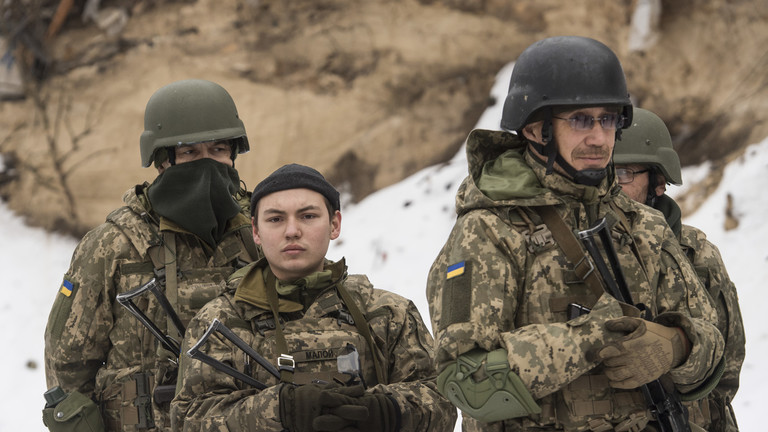
The war drums are beating, and public officials and the media are certain that the enemy must be conquered. The war is over there, away from home, in someone else’s land. The public is conditioned to accept that war is inevitable, that for the liberal democracies of Australia, the United Kingdom, and the United States it is an “obligation.” It seldom matters whether the voting tax base wants war or not. As bombs drop in Yemen, Syria, and Iraq, as Israel destroys Gaza and the Russians fight in Ukraine, Washington and its allies talk about expanding the warfront to include Iran, China, and North Korea. Perpetual war is the health of empire, the glory of the nation, and the profit for a few. But who fights these wars?
Many of the veterans who fought in the Global War on Terror in Iraq and Afghanistan are past their prime, dead, injured, or cynical of the government that exploited them. The recruitment drives, even as the criteria are lowered, are seducing less and less willing bodies to fill the uniforms. The career incentive to join the military is not as appealing when war is a guarantee. Eligible young men are not so naive and removed from the understanding that their mental and physical health may be at risk that they’ll venture into another overseas war. Those who traditionally joined to protect and defend are less inclined to do so given that the mlitary is an offensive instrument of policy, recklessly used without regard for consequence.
In 2024 it’s hard enough for employers to find capable young workers who can handle physical or moderately skilled work, and who will turn up consistently. It’s easier for a lot of people to lean into the welfare state, to seek comfortable, inconsequential jobs or to find careers that don’t involve killing. Physical and mental health is a meandering factor in a culture that swells with obesity and has a populace riddled with depression and anxiety over the mundane. In Australia it is easier and far more profitable for someone to either go on a disability pension (for a litany of real or imagined reasons), or to become a high paid support worker for said pensioners rather than diving into military or even police service.
War is often a voyeur’s experience, where some are cuckolded for the entertainment or cynicism of others. War is the religion of the Anglosphere. Every generation has its war, a foreign land that rolls off the tongue with ease only to return to forgotten obscurity in a generation’s time. Some, however, like Vietnam or Iraq linger permanently. But most are forgotten as war zones and now only exist as destinations for the soldier’s grandchildren to visit, enjoy the food, or marry from, like Korea and Malaysia. The adventurers, true believers, mercenaries, and those with seemingly no other options do still enlist, but there’s less of them.
It’s not just that the military is struggling to get new recruits, but also re-enlistments. The relationship between the military and its members is disfigured as inefficiency and dysfunction become more openly discussed. On social media anti-military voices are competing against their slogans and the empty promises of recruiters in a tug of war between the warfare state and those who are skeptical of its very existence. Social media “influencers” like the Island Boys are paid to push recruitment for the Army alongside the advertising of energy drinks and other affiliate marketing thrown their way—though it is unlikely that they themselves would enlist or be capable of doing so. The children watching are impressionable, all the same.
Woke cultural messaging has also harmed the military, as it has disenfranchised its traditional base while attempting to appeal to those who have no stomach for training, let alone warfare. The wars themselves, along with the government’s own woke cultural shift and attempts at inclusion, have deranged the recruiters task of satisfying numbers and valuable candidates for the services. Confused advertising and a disdain for the people who usually fill the uniforms in warfare has hamstrung the military when it needs bodies to kill and die for it. A woke window dressing to satisfy the academic and corporate zeitgeist may seem empowering, but in reality is another form of mandated delusion.
The government’s will for war exceeds its population’s capacity to wage it. Conscription tends to not be a viable solution. Ukraine and Russia have embraced such traditions of martial slavery and it has unveiled a force of fodder to be killed. Another generation of “McNamara’s Morons” is an unsatisfactory solution which may lead to liability for both commanders and what few skilled and motivated professionals remain in the military.
Regardless of the human attrition and how thinly spread the capable and willing may become in such a war, the high maintenance of modern weapon systems will erode their capabilities over time. Skilled crews and technicians will be required to work almost non-stop, not to mention the manufacture and logistics required to feed such machines for prolonged operations, especially in combat against an enemy who is near peer or in some theaters a peer level threat. It is one thing to attack Houthis in Yemen who are recovering from years of war against the Saudi coalition but it is another to wage war against Iran or China on their home turf, a war they have been preparing for. Let’s not forget, neither of them have ambitions to invade Australia, the United States or United Kingdom. But the reverse is a constant.
Images of drones chasing Russian or Ukraine soldiers around their AFVs, only to detonate once in proximity, exposes us to the modern realities of war. The distance between the killer and the killed is not a new thing. The drone and remote weapon system is becoming smaller, with a greater range and versatility that may have people logging on for a few hours a day from home to assassinate strangers thousands of miles away with as much regard as though they are killing NPCs in a computer game. That in itself is not how wars are to be won. That same technology and efficiency of distance will be used against the invader as well. The likeliness of sympathetic outsiders “logging on” to join the fight is a reality that may also occur. Those who will fight for either side given any incentive is also a reality, so long as they have a device that allows them to connect to the remote killing machines. The future remains.
Contractors are becoming more common, professionals who are not constrained by government religion when it comes to how a military must serve and act in matters of formal tradition and legal status. They’re killers and operators who serve the government, work alongside the military, and should they die will not become a statistic that influences politics at home. Many are ex-servicemen of the government that they now are hired by, trained and motivated elements that perform tasks as a service to their singular customer. The Russians on the other hand have a more varied mercenary custom, one that is made up of contractors while also using prisoner units, inspired by the promise of pay and freedom. Both ancient aspects of war are to be dug up in a modern context.
Mercenaries and even drone operators are still only a finite resource, and automated systems are a little ways off. Wars of such a grand scale on so many fronts will still require boots on the ground. The imaginations of the stoic German soldier manning the Atlantic wall in the weeks before D-Day betray the reality that many of the defending Wehrmacht were former Soviet soldiers and a rag tag of convalescing others. Horse-drawn weapons from those captured to mutations of expedience with men in ill fitting uniforms crisscrossing a frontier that consumed men and material was the other reality far in the East. Contrary to the mechanized depictions of a technologically superior, super race of warriors, the reality, then as it is now, is that logistics, man power, and attrition are immutable factors in war.
Waging numerous small wars on a limited scale or even as an occupying force in an attempt to “civilize” a wilderness will always consume. They can become black holes that suck the life, money, and material out of an invader. Yet, still mostly men will be required for these prolonged operations and the well for such men is running dry. The post-9/11 era provided many eager bodies who felt the euphoria for vengeance against enemies. The terrorists and their “alien religion” was an easy to hate specter as the twin towers smouldered into smoke and ash. Over two decades later and the reality of such wars is more apparent to the wider public, while those willing men are now dead, injured, or robbed of their youth. The next generation does not have the eagerness for war, and the crusader’s zeal is not so widely felt.
So, as the drums of war beat and the call to arms is made by those who will never fight it, the question remains: who will? No matter what the claimed reasons for war is—spreading democracy, human rights, humanitarianism, security, or hegemonic expedience for many at home—many may very well. But agree enough to enlist? Unlikely. Many who do believe in the need for war are the creatures of Facebook or social media bobble heads, spectators and opinion spewers alike. They are most welcome to form their own battalions to fight for their cause. They won’t, but rather instead they will merely support the government in its ambition to send mostly men to die and kill. Those killers, however, are becoming fewer. Improving technology so that the human element for war is less important and finding incentives to pay, reward, and motivate human beings so that they will kill strangers with little regard are weak solutions.
The one constant, regardless of the means and methods, is that war will always hurt the innocent. Perhaps in time, as the liberal democracies depress into ill health and rely on automated machines to do the killing, it will be from the minds of the weapons who grow the morality to say, “No more.” For now, while some minds in government seek more war, the public’s flesh is less willing or too flabby to make it so.
West totally wrong about Ukraine – Orban
RT | February 4, 2024
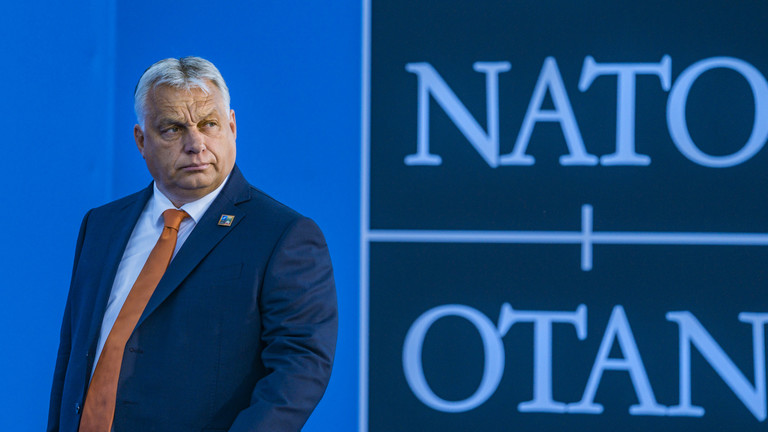
Hungarian Prime Minister Viktor Orban has expressed hope that the newly-approved €50 billion ($54 billion) package of aid will be used to support civilians by preventing the collapse of the bankrupt Ukrainian state, rather than to fund more weapons and bloodshed.
Orban has repeatedly called for a ceasefire in Ukraine and peace talks between Moscow and Kiev, arguing that Ukraine cannot possibly hope to defeat Russia on the battlefield. This position, as well as Budapest’s opposition to sanctions on Russia and blocking of EU military aid to Ukraine, has seen Hungary vilified in Kiev and threatened with sanctions by its EU allies.
“The West still thinks that time is on our side. Yet, I think the opposite is true. I think that time is on the side of the Russians, and the longer the war goes on, the more people will die, and the balance of power will not change in Ukraine’s favor,” Orban told Kossuth Radio on Friday.
According to Russia’s estimates, Kiev has lost more than 400,000 service members killed, wounded, and missing since the conflict began in February 2022. Ukraine’s top commander, General Valery Zaluzhny, has repeatedly insisted in recent weeks that the armed forces are critically understaffed, and even President Vladimir Zelensky admitted on Sunday that combat operations on the ground have reached a “stalemate.”
The Hungarian leader went on to insist that “peace will come when there is change in Brussels,” and that after almost two years of failed hopes to defeat Russia militarily “everything in Brussels should revolve around achieving a ceasefire as soon as possible.”
The EU approved the new aid package on Thursday, having pressured Orban into lifting his veto. The Hungarian painted the decision as a victory for Budapest, claiming that otherwise Brussels “would have taken away the funds earmarked for Hungary and sent that to Ukraine as well.”
“We are not sending weapons, we get our money from Brussels, and we will contribute to the civil financing of Ukraine,” Orban said on Friday, reiterating his firm position that the only way to end the Ukrainian crisis was through negotiations.
EU Leaders Squander Another €50 Billion on Propping up Kiev Regime… and Self-Destruction
Strategic Culture Foundation | February 2, 2024
Finally, the European Union’s threats, blackmail, and arm-twisting have paid off to push through a giant €50 billion aid package to the hopelessly corrupt Kiev regime. This is while European farmers revolt against the EU leadership over higher energy costs and cheap imports from Ukraine that are putting them out of business and wiping out their livelihoods.
The EU leaders are committing the entire bloc of 500 million people to political suicide. The reckless cavalier attitude is something to behold. Bring on the pitchforks, Merci!
The 27 leaders of the European Union met in an emergency summit this week not to deal with the bloc’s mounting internal political, economic, and social problems but rather to lavish mountains of more aid on non-member Ukraine.
When the leaders held their last summit in December, it was a spectacle of back-biting and sordid wrangling. At that gathering, Hungary’s Prime Minister Viktor Orban vetoed the allocation of more funds to the Ukrainian regime amid bitter recrimination and bickering. This time around, however, Hungary caved in to the intense pressure to agree on the package.
Days before the summit in Brussels this week, it was reported by the Financial Times that the European Council had drawn up plans to sabotage the Hungarian economy if Budapest persisted in not signing up for the massive aid plan. That speaks volumes about the perverse mindset at the apex of the EU bureaucracy. It demonstrates the undemocratic character of the bloc despite pretentious claims to the contrary.
Brussels had already frozen up to €10 billion in central funding for Hungary and there were reported threats to remove Budapest’s voting rights in the bloc’s decision-making which would have been a blatant violation of the EU’s declared principle of unanimity.
The allocation of €50 billion to a non-member state is astounding. Even more bewildering is that the latest largesse is only a fraction of the total aid that the EU leadership has pumped into Ukraine since the proxy war against Russia erupted in February 2022. Over the past two years, the European Union has given the Kiev regime an estimated €100 billion.
The United States and other Western allies have also plied Ukraine with another €100 billion. About half of this goes on weapons, while the other half pays for state financing.
As we have noted here previously, the cumulative funding by the West to Ukraine has far exceeded the historic Marshall Fund that the U.S. allocated to all of Europe for reconstruction following World War Two (about €170 billion in today’s money).
There is simply no precedent or justifiable rationale for this mobilization of financial support for Ukraine. This has all been done as a fait accompli by an elite class with no democratic mandate. No referenda have been conducted to consult the public about the inordinate expenditure. Indeed, polls indicate that the European public – like the American public – is opposed to their governments supporting Ukraine.
The Biden administration is vying with growing resistance in Congress to send Ukraine an additional $60 billion.
To boot, the Kiev regime under the puppet president Vladimir Zelensky is a byword for rampant corruption and repression. It is admitted by Pentagon sources that something like $400 million of military spending has been siphoned off by the Kiev junta. The real figure is plausibly even greater.
The grotesque allocation of financial resources to Ukraine has nothing to do with supporting democracy or defending the country from alleged Russian aggression.
EU leaders like German Chancellor Olaf Scholz and European Commission President Ursula von der Leyen keep repeating a mantra about defending Ukraine because, they say, if it is defeated then all of Europe is in danger of Russian invasion. This is the most preposterous scaremongering by politicians who are ideologically blinded by Russophobia and slaves to propagating Western hegemony.
The latest €50 billion injection to a war-addicted Ukrainian regime is openly said to be for sustaining its government and paying for salaries and services. In other words, Ukraine is a failed state, and yet European citizens, workers, and farmers – who themselves are subsisting in hard economic times – are expected to bankroll a corrupt cabal.
Furthermore, the hardship that tens of millions of European citizens are enduring is a direct result of their political leaders and the Brussels bureaucratic elite pandering to the United States’ agenda of hostility towards Russia.
That U.S.-led aggression, which can be traced back to the CIA-instigated coup in Kiev in 2014 to bring a NeoNazi regime to power, has sabotaged Europe’s economy. European leaders have treasonously served Washington’s geopolitical interests and not those of ordinary Europeans. The insane imposition of sanctions on Russia has led to huge hikes in energy prices which has decimated European businesses and the living standards of consumers, workers, and farmers.
The higher costs of production are a major factor in the surging protests across Europe by farmers. Another factor is the EU’s undemocratic import of cheaper agricultural produce from Ukraine as a sop to the Kiev regime. Those imports have undermined farmers all across Europe, in Germany, France, Italy, the Netherlands, Poland, Romania, Hungary, and the Baltic countries.
The scandalous abuse of European funds to prop up a corrupt fascist regime that violently suppresses political opponents, media, and the Orthodox Church, and glorifies Nazi collaborators, has one fundamental purpose – to prolong a proxy war against Russia. That war’s objective is for eventual strategic subjugation.
The Western regimes are so bankrupt and impotent in the face of their broken capitalist economies that they are seeking to exploit Russia’s vast natural wealth. This is the continuation of the Lebensraum policy of Nazi Germany by Western imperialists.
Ukraine has lost the proxy war against Russia. It is a shameful, criminal debacle. Up to 500,000 Ukrainian soldiers have been killed over the past two years by superior Russian forces. The vile Kiev regime, of course, wants to keep the war racket going for its insatiable grifting. Washington and its European vassals in high office want to keep the war going out of elitist imperial ambition, an ambition that is ultimately futile in the new emerging multipolar global order.
While European leaders were ensconced in the European Council in Brussels, the parliament was blockaded by angry farmers from all over Europe. Protesters were calling out politicians by name. The contempt is palpable. Paris and other capitals across Europe are being besieged by motorway chokepoints. National economies are on the brink as a result.
One might even perceive that European farmers in France, Germany, Belgium, and elsewhere, are implementing tactics similar to the Yemenis in the Red Sea. Squeeze the chokepoints and watch the empire writhe.
You couldn’t make this farce up. European elitist regimes are waging war in Europe against nuclear-powered Russia by wasting the public’s money to lavish a Neo-Nazi mafia in Kiev and by doing so making the lives of European citizens even harder. The upshot is political and economic suicide for the European Union.
The EU is holding parliamentary elections in June amid the dramatic rise of anti-EU or Eurosceptic parties. Two years of senseless war in Ukraine is fomenting popular disgust with the elite class. The anger out there may not even be contained by voting in elections. The fury seems to be beyond making little Xs in a box. A collapse is coming and heads are going to roll.
Good Money After Bad: Where Will EU Funds for Ukraine Come From?
By Ekaterina Blinova – Sputnik – 02.02.2024
European Union (EU) member states have agreed on a €50 billion ($54 billion) support package for Ukraine over four years, overcoming Hungary’s resistance. But where will the EU get that money?
The EU could commandeer interest paid on frozen Russian assets to fund Ukraine during its war with Moscow.
Europe’s economy is facing stagnation, with zero economic growth for October-to-December period reported by EU statistics agency Eurostat.
The Eurozone inflation rate has yet to fall below the target two percent threshold, with consumer prices still remaining high.
Against that backdrop EU member states are cutting subsidies, reducing energy consumption and diminishing industrial production. Protests by farmers have rocked the continent since early January.
Nonetheless, Brussels has found €50 billion ($54 billion) to support the embattled Kiev regime for four more years. But where will this money come from?
According to the European Council, the bloc has set up the so-called Ukraine Facility for the period 2024-2027 to “contribute to the recovery, reconstruction and modernization of the country, foster social cohesion and progressive integration into the Union, with a view to possible future Union membership.”
To that end the EC has allocated €50 billion, of which:
€33 billion ($35.9 billion) comes “in the form of loans guaranteed by extending until 2027 the existing EU budget guarantee, over and above the ceilings, for financial assistance to Ukraine available until the end of 2027,” the document sets out.
€17 billion ($18.5 billion) comes “in the form of non-repayable support, under a new thematic instrument the Ukraine Reserve, set up over and above the ceilings of the MFF 2021-27.” The EC document specifies that revenues “could be generated under the relevant Union legal acts, concerning the use of extraordinary revenues held by private entities stemming directly from the immobilized Central Bank of Russia assets.”
On February 1, CNN claimed that the EU had taken a step towards seizing billions of dollars in interest payments generated by Russian assets frozen in European accounts. Media reported that roughly €200 billion ($218 billion) remain in the EU, mainly in Euroclear, a Belgium-based financial services company.
The media outlet highlighted that the EU approved the €50 billion Ukraine package as it “came closer to finalizing a plan” of using the profits from the Russian Central Bank’s sequestred assets — indicating that it has yet to gain access to the funds. Euroclear revealed on Thursday that the frozen Russian assets had yielded €5.2 billion ($5.6 billion) in interest on income assets since 2022.
On Monday, EU member states “agreed in principle” that profits from the Russian assets will be set aside and not be paid out as dividends to shareholders until the bloc’s members decide to set up a “financial contribution to the [EU] budget that shall be raised on these net profits to support Ukraine”, according to a draft document quoted by Euroactive.
The document claimed that the levy will be “consistent with applicable contractual obligations, and in accordance with [EU] and international law.” After that the EC would transfer the money to the EU’s accounts and then to Ukraine, the media noted, specifying that the proposal targets future profits and would not be applied retrospectively. It is believed that Russia’s frozen assets in the EU could generate an estimated €15-17 billion over four years, which would be transferred to Ukraine, according to the press.
Speaking to Sputnik last October, Jacques Sapir, director of studies at the School for Advanced Studies in the Social Sciences (EHESS) in Paris, argued that any attempt by the EU to grab Russia’s frozen assets or revenues from them could turn into a legal nightmare for the EU leadership and particular member states where the money is being stored.
“As a matter of fact, if assets belong to the Russian state legally, you will have to prove that this state is a ‘failing state,’ something impossible,” Sapir told Sputnik on October 29, 2023. “If assets belong to private persons, you need a legal conviction against these persons. If you can’t do both and that you take away revenues to divert them to a third party (Ukraine) this is no less than a theft. Then you will be liable to legal action. But, what is even more important, you will probably discourage all foreign investors from investing in the EU.”
Brussels Wants European Farmers to Tighten Belts
While allocating tens of billions of euros for Ukraine, Brussels has yet to solve its farming crisis caused by inflation, a spike in production costs, economic slowdown, politically-motivated decoupling from Russia’s energy market, an influx of cheap agricultural goods from Ukraine and the bloc’s aggressive climate policies.
Farmers’ protests have been gaining pace since early January, engulfing France, Belgium, Germany, Italy, Poland, Romania and the Netherlands.
Commenting on the provision of €50 billion to Kiev, French member of the European Parliament Thierry Mariani warned that the package could cost France at least €8 billion ($8.7 billion) in taxpayers’ money since Paris contributes 16 percent of the EU budget.
“Another €50 billion for Ukraine (17 in donations plus 33 in loans… which will never be repaid). Do the French realize that they will have to pay €8 billion since we contribute 16 percent of the EU spending? Eight billion that our farmers would dream of,” Mariani posted on X on Thursday.
By January 31, the number of farmers protesting across France against the Macron government’s agricultural policies had reached 10,000, French Interior Minister Gerald Darmanin admitted. French farmers are protesting against unfair competition from cheaper imports, draconian environmental rules and the government’s push to bring down food inflation by artificially suppressing prices.
In a bid to calm the protests, the French government has proposed €150 million in tax and social support — small change compared to the multi-billion aid for Ukraine paid for by Paris.
Will EU Money be Spent Appropriately or Wasted in Ukraine?
Aid to Ukraine would be provided under certain conditions, the European Council said.
“A precondition for the support for Ukraine under the Facility shall be that Ukraine continues to uphold and respect effective democratic mechanisms, including a multi-party parliamentary system, and the rule of law, and to guarantee respect for human rights, including the rights of persons belonging to minorities. In implementing the Facility, the Commission and Ukraine shall take all the appropriate measures to protect the financial interests of the Union, in particular regarding the prevention, detection and correction of fraud, corruption, conflicts of interests and irregularities,” the document read.
Those rules have already been broken by Ukrainian President Volodymyr Zelensky, who has refused to hold general elections this year under the pretext of the ongoing conflict, despite top US and EU officials repeatedly urging Kiev to go ahead with the vote.
Washington and its European allies have grown concerned by Ukraine’s endemic corruption, as Pulitzer Prize-winning investigative journalist Seymour Hersh remarked in his latest op-ed on Substack. Washington and Western Europe want Zelensky to carry out financial reforms.
“According to the knowledgeable American official, the first step of the new concept is a long-standing issue: financial reform,” Hersh wrote. “Zelensky must be told: ‘You’ve got to get rid of corruption before we do anything more.’ The second step is something that does not exist today in Ukraine: a serious audit of all government funding. The official said Zelensky should consider the billions he needs ‘as our money, as an investment with all of the rules’ for its disbursement ‘to be laid out and followed’.”
The investigative journalist recalled that last year CIA Director William Burns secretly travelled to Kiev to warn the Ukrainian president that Washington was aware of his and his entourage’s corruption. Hersh noted that Burns reportedly also told Joe Biden that Zelensky’s subordinates were outraged by their leader personally taking too large a cut of the US aid.
In order to get Ukraine’s spending under control, “the Council will play a key role in the governance of the Ukraine Facility,” according to the EC press release.
“In this sense, a Council Implementing Decision shall be adopted by a qualified majority for the adoption and amendments of the Ukraine Plan and for the approval and the suspension of payments based on the relevant assessments and proposals by the Commission. On the basis of the Commission annual report on the implementation of the Ukraine Facility, the European Council will hold a debate each year on the implementation of the Facility with a view to providing guidance. If needed, in two years the European Council will invite the Commission to make a proposal for review in the context of the new Multiannual Financial Framework (MFF).”
Time will tell whether the EU’s funds allocated for Ukraine at a time of economic stagnation and looming crisis would be used by the Kiev regime properly — or whether it will result in yet another economic and military failure.
Von der Leyen celebrates ‘a great day for Europe’ as farmers trash Brussels

By Rachel Marsden | RT | February 2, 2024
“Agreement! The European Council delivered on our priorities. Supporting Ukraine…. A good day for Europe,” tweeted unelected European Commission President Ursula von der Leyen on Thursday, as EU farmers “high-fived” her by throwing eggs, lighting fires and dumping manure in Brussels, where a reported 1,300 tractors gathered in protest.
Surely it must have been in anticipation of this “great day for Europe” that Brussels rolled out the barbed wire to keep the bloc’s own struggling farmers at bay while its leaders cut yet another check for Ukraine — after threatening the one anticipated holdout with national economic “blackmail,” as Hungarian Prime Minister Viktor Orban qualified it. It’s hard to believe that this meeting actually took place in Brussels. These officials are so disconnected from reality that it may as well have been held on a whole other planet.
Unlike the Ukrainian products making their way onto Western European dinner plates to stick it to Russian President Vladimir Putin (because turtlenecks and short, cold showers apparently failed to do the job), this crisis is certifiably EU-made. No one knows this better than the farmers, who also realize that it makes more sense to blockade the streets of Brussels than the national highways of their home countries, which they’ve been doing with overwhelming public support – from nine out of every ten citizens in the case of France, according to a recent Odoxa poll.
It was the EU with its climate change obsession that imposed a Common Agricultural Policy on farmers across the entire bloc, managed by bureaucrats divorced from the reality on the ground. Pencil pushers use EU Copernicus satellite images to spy and crack down on farmers whose paperwork doesn’t match – even if any discrepancies can be chalked up to uncontrollable but temporary conditions like the weather.
It was also the EU that piled on regulations under the pretext of ensuring the quality of farm products, while at the same time flooding the bloc with grain, poultry, and other imports from Ukraine. Does “Chernobyl chicken” mass-produced by workers who are paid a pittance represent a threat to the physical health of citizens and economic health of farmers? If not, then why can’t Brussels take its jackboot off the necks of its own farmers so they can compete on a level playing field? The EU has also suddenly decided to ease up on some pesticide bans, angering greens. Paris is promoting the idea that ideologically-driven bans need to end, which seems like a tacit admission of their uselessness. So what should we be more worried about now – ideologically-driven authoritarianism under the guise of health consciousness, or an actual health threat?
And what about that Ukrainian grain that EU officials demanded Russia unblock to feed the poor in developing countries? It turns out that Turkey and Russia were right when they raised the alarm about it just being dumped right next door in Europe, and it sounds like Russian President Vladimir Putin was effectively a bigger defender of EU farmers’ interests than Brussels was. But who’s even surprised anymore by Brussels’ misplaced priorities, given the image that has now emerged of another €50 billion ($54 billion) going out the door to Kiev, in support of a country that’s undercutting the EU’s own farmers without even being in the EU itself?
It was also the EU that screwed itself, its entire population, industry, and farmers out of cheap Russian energy, driving inflation that caused consumers to turn to cheaper food products and, in turn, driving industrial distributors to buy more cheaply, favoring Ukrainian imports. French President Emmanuel Macron said that he’d now be merciless with those industrials, as he limbers up to toss them under the tractors instead of taking responsibility for his own inaction or blaming Brussels for a top-down anti-Russia policy that’s doing far more harm than good.
The farmers’ problems are existential. And while some French farming union chiefs have called for the suspension of blockades in light of the most recent series of promised reforms announced by Prime Minister Gabriel Attal, it’s not clear whether the rank and file will actually listen in the long term. These are people who don’t talk much, but when they do, they’re direct and concrete. As one farmer told me, “Our feet may be in the dirt, but the dirt is clean” – in contrast to some politicians who have different narratives depending on their audience. Even with the suspension of the blockades on Friday, union reps admit that if government action and implementation doesn’t follow shortly, then the blowback from the same farmers risks being “catastrophic.”
For many farmers I’ve spoken with, it’s far too little, and way too late. The average French farmer’s income, estimated by government statistics back in 2021 at around €17,700 a year (for people who regularly work 70 hours a week), has since been subjected to even more blows. Yet governments have insisted on milking this particular cow until there’s nothing left. How else to explain the careless decision to raise taxes on farm fuel by 3 cents a liter, every year, and the insistence on maintaining such a policy at a time when the price of energy had skyrocketed as a result of knee-jerk anti-Russian ideological choices imposed by the EU? Until the tractors spilled onto the highways in France, Paris showed no interest in reversing this tax policy, which was implemented to drive the “green transition” away from conventional energy, and against all pragmatic reality. Clearly French officials knew of its devastating impact, as it was one of the very first concessions that Attal tried tossing like a speed bump in front of the advancing tractors on January 26 – and which the farmers rolled right over, demanding more.
Then there’s Queen Ursula briefly breaking from her fawning over the EU farmers’ current nemesis, Ukraine, to propose easing their “administrative burden.” Too bad she didn’t do that before letting Ukraine into the market in the first place. Guess she could always just blame Putin for making her do it. The bureaucracy is so overwhelming at this point that her proposal to the farmers is like offering to save people drowning in the ocean by tossing them a bucket. She could have stopped the paperwork pile-on at any time, but didn’t.
And how exactly could she know this demagoguery was killing European farming? You’d think that the first clue would have been the fact that EU policies ended up strong-arming Dutch farmers to sell their land to the government because their cattle’s nitrogen emissions exceeded climate policy limits.
Macron has now started to lobby the EU to restrict Ukrainian imports. Wow. You’d think these tractors were Decepticon Transformers about to rise up and kick their behinds, the way that all these EU leaders are suddenly springing into action. But the fact that an elected president even has to go cap in hand to plead with unelected Brussels bureaucrats, rather than make sovereign decisions in the best interests of his own country, is pathetic. Like, what if they say no? Then what? Does Macron think that he’s going to single-handedly and permanently derail the new Mercosur free trade deal, ready for signature, and set to flood the EU with even more farm products from Brazil and the rest of South America?
If Macron, or any other EU leader had any courage, they would have vetoed the €50 billion for Ukraine and demanded that it be used in consultation with EU farmers to ease their burden and “unscrew” the bloc. That’s a lot of bought time for the EU to figure out how to deconstruct the mess that it has made of its own house through corruption and special interests – all in hope that one day, people doing honest work can also make a commensurately decent living.
Rachel Marsden is a columnist, political strategist, and host of independently produced talk-shows in French and English.
EU approves €50 billion in Ukraine aid
RT | February 1, 2024
EU leaders have signed off on a €50 billion ($54 billion) package of economic aid to Ukraine, overcoming resistance from Hungarian Prime Minister Viktor Orban. The Hungarian leader accused Brussels of “blackmailing” him into accepting the deal.
European Council President Charles Michel announced the news on Thursday morning, minutes after the bloc’s leaders sat down for talks in Brussels.
“All 27 leaders agreed on an additional €50 billion support package for Ukraine within the EU budget,” Michel wrote on X. “This locks in steadfast, long-term, predictable funding for Ukraine.”
The sum will be drawn from the EU’s collective budget and doled out over four years to Kiev, where it will be used to pay public sector salaries, keep government departments open, and prop up the beleaguered welfare system. The EU already agreed on a budget three years ago, which will have to be modified to include the mammoth aid package.
Any such budget modifications require the unanimous approval of all 27 member states. Hungarian Prime Minister Viktor Orban warned for months that he would veto the proposal, arguing that the EU has no idea how the money will be spent and no idea what will happen in Ukraine in the coming months. Orban has also argued that Ukraine cannot defeat Russia on the battlefield, and that Western leaders should be pushing Kiev toward a ceasefire and peace talks.
Orban has described Ukraine as “one of the most corrupt countries in the world.” Transparency International ranks Ukraine 104th out of 180 in its Corruption Perceptions Index report, and over the weekend, the country’s Security Service (SBU) announced that it had uncovered a major scheme by high-ranking defense officials to embezzle money intended to purchase ammunition.
Earlier this week, the Financial Times revealed that the European Council had drawn up a plan to cut funding to Budapest and tank the Hungarian economy if Orban maintained his veto. Orban accused the “imperialist” EU of trying to “blackmail” him, and said that he proposed a “compromise deal” whereby Ukraine would receive a smaller transfer of aid every year, which any member state could veto.
Brussels rejected Orban’s proposal, he told France’s Le Point news magazine on Monday. “They say that if we behave like a sovereign country, Hungary will immediately face a vast financial blockade,” he said. “Knowing Brussels, they are capable of it.”
Under the terms of the deal agreed on Thursday, EU leaders will debate the implementation of the package annually, while the budget will be reviewed in two years. Speaking anonymously, multiple European diplomats told Politico that these measures were included to placate the Hungarian PM.
However, other anonymous officials said that Orban was given no concessions, and was pressured to accept that “there was no alternative than giving in on the money to Ukraine.”
EU to seize profits from Russian assets – council presidency
RT | January 30, 2024
EU member states have reached an agreement that is expected to allow Brussels to transfer the income generated by Russia’s frozen central bank reserves to Kiev, according to the Belgian presidency of the EU Council.
“EU Ambassadors just agreed in principle on a proposal on the use of windfall profits related to immobilised assets to support Ukraine’s reconstruction,” the country’s representatives announced in a post on X (formerly Twitter) on Monday.
The Financial Times, meanwhile, has reported that EU envoys had approved a plan aiming to set aside the billions of euros in profits generated by the frozen assets of Russia’s central bank. Some €191 billion ($206 billion) out of €260 billion ($291 billion) of Russia’s immobilized reserves are currently held by Belgium’s Euroclear, a central security depository, generating billions as securities reach maturity and are reinvested.
According to the draft seen by the FT, profits generated by Euroclear will be booked separately with no dividends to be paid to shareholders until members of the bloc unanimously opt to set up a “financial contribution to the [EU] budget that shall be raised on these net profits to support Ukraine.”
The proposed measures are expected to only target future profits and won’t apply retroactively.
Last week, sources close to the discussions told Bloomberg that EU foreign ministers had backed applying a windfall tax on Russia’s frozen assets. At the same time, Reuters reported that the EU was unlikely to confiscate the funds despite G7 plans to discuss the legality of doing so at a meeting in February.
Moscow has repeatedly warned that any actions related to its assets by the US and its allies would amount to “theft,” stressing that seizure of the funds or any similar move would violate international law and undermine reserve currencies, the global financial system, and the world economy.
In April, President Vladimir Putin signed a decree establishing a mechanism to temporarily take over foreign assets in Russia in the event that other countries seize Russian private or government property in their jurisdictions, or threaten the national, energy, or economic security of the country.
West Starts to Understand That Ukraine Project ‘Failing’ – Russian Foreign Minister
Sputnik – 30.01.2024
MOSCOW – The West is beginning to understand that the “Ukraine project” is failing but can not stop assisting Kiev because of its economic benefit and fear of losing “prestige,” Russian Foreign Minister Sergey Lavrov said on Tuesday.
“The figures that are hidden in Ukraine, they speak a lot about how important it is for the West to prevent the ‘failure’ of their ‘Ukraine project’. Moreover, they already understand that the failure has already begun. But nevertheless they cannot stop. And not only for reasons of prestige … And also from the point of view of economic benefits,” Lavrov said during a meeting with foreign diplomats in Moscow.
Addressing the UN Security Council meeting on January 22, 2023, Lavrov emphasized that there are no interests – and there never were – in the conflict with Russia in favor of the Ukrainian people. There are only “the interests of the Anglo-Saxons, their henchmen and the criminal, rotten Kiev elite, which is tied to the West by mutual responsibility and which is afraid of being swept away the day after the end of the war.”
The Russian top diplomat pointed out that Moscow has never given up on a peaceful resolution to the Ukraine conflict.
“We never gave up on the peaceful resolution, we are always ready to negotiate — negotiate not about how to keep the leadership of the Kiev regime in place but about overcoming the inheritance of a decade-long destructive looting of the country and violence against the people, removing the reasons for the tragic Ukrainian situation,” Lavrov said. However, the key factor hindering a resolution of the conflict in Ukraine is the continued support of the West, he added.
Featured Video
Racist Seinfeld Dances for Joy as Bibi Unveils His New Map
or go to
Aletho News Archives – Video-Images
TV Drama Review
Japanese drama projects Japan’s wartime atrocities onto Chinese characters

Global Times | October 25, 2026
By portraying Chinese characters as perpetrators of ruthless violence while casting Japanese Self-Defense Forces (SDF) intelligence operatives as defenders, the season 2 of the Japanese drama Vivant has recently drawn criticism from Chinese netizens, who argue that its depiction turns historical reality on its head while ignoring Japan’s wartime atrocities.
The TBS drama series – a spy suspense story in which an alleged unofficial intelligence unit of the SDF operates across the globe — has attracted a passionate fanbase. Its currently airing season 2 opened with a household rating of 18.8 percent, the highest for a TV drama this year, according toa commentary article by Japanese media Toyo Keizai.
What draws attention is the portrayal of the enemies in the series, the article noted. Scenes in which the Chinese organization subjects kidnapped members of the SDF unit to brutal torture are repeated with unrelenting intensity.
It is rare for Japanese TV dramas to explicitly portray a real-life country as the enemy, the article noted.
Japanese Prime Minister Sanae Takaichi also made a reference to the drama, saying that she has been recording Vivant and hopes to binge-watch it over the year-end and New Year holidays, according to Japanese media outlets.
China’s CCTV News report on Sunday revealed that the drama features scenes in which Chinese personnel cut off the fingers of and stab Japanese intelligence operatives in the abdomen. Such acts bear striking similarities to the torture inflicted on Chinese nationals by invading Japanese troops during the World War II.
The drama distorts the truth by attributing these atrocities to modern Chinese characters. Beneath the surface, it subtly glorifies Japan’s cross-border overseas operations, blurs the functional boundaries of the SDF and implicitly promotes an expansionist narrative, per CCTV News. … continue
Blog Roll
 Aletho News
- EU facing trillion-euro debt hole while seeking more cash for Kiev
- How US, Europe, Persian Gulf states exhausted missile stockpiles, splurged billions to defend Israel
- Up in arms… Koreans reject U.S. empire’s plan to make South Korea the next Ukraine
- Iran, Turkey, Pakistan, Saudi Arabia could advance region-led security framework in Tehran: FM spox
- Netizens condemn Japanese drama for projecting Japan’s wartime atrocities onto Chinese characters
- Racist Seinfeld Dances for Joy as Bibi Unveils His New Map
- A West Bank War for Netanyahu’s Election Campaign, Could It Backfire?
- Yemen denounces European Parliament’s ‘hypocritical’ push to blacklist Ansarullah
- Qalibaf: UAE’s UN bid aims to ‘clear the runway’ for ‘Greater Israel’, whitewash genocide
- Pakistan reopens Iran border after boosting security: Report
- If Americans Knew
- An error has occurred; the feed is probably down. Try again later.
- No Tricks Zone
- Sudden Stratospheric Warming, Powerful El Niño Combination May Lead To Extreme Europe Cold, Energy Crisis!
- Two New Studies Find Thwaites Glacier Melt Cannot Be Driven By Human Activity Or A Warming Ocean
- E-Cars Reduce CO2 Emissions By Only 41% Compared To Internal Combustion Engine Vehicles
- Predictions Made By Renowned Climate Professor Over Past Decades Have Been Proven To Be Poor
- New Study Suggests Large Regions Of The Pacific Ocean Have Been Cooling For The Last 80 Years
- Germany’s Green Energy Debacle: High Energy Costs Force Kahla Porzellan to Close After 182 Years!
- New Study: 50 Years Of The Most Aggressive ‘Net Zero’ Policies Can Only Affect The Global Climate By 0.03°C
- US September “Heat” Was No Record…Many Records Set Decades Ago
- Latest European Green Energy Debacle; Portugal’s Largest Flagship Solar Park Insolvent!
- Green Energy Debacle: German Expert Professor Fritz Vahrenholt Warns Of Severe Economic And Social Consequences

