Panic Grips European Leaders as EU Left Out of Trump-Putin Call
By Svetlana Ekimenko – Sputnik – 13.02.2025
Russian President Vladimir Putin and his US counterpart Donald Trump discussed Ukraine, the Middle East, energy issues, and the exchange of citizens in a telephone call that lasted for one and a half hours, Kremlin Spokesman Dmitry Peskov revealed.
The phone conversation between Vladimir Putin and Donald Trump has triggered a litany of reactions from European politicians.
Britain’s Foreign Secretary David Lammy posted a joined statement by several European states that read: “Our shared objectives should be to put Ukraine in a position of strength. Ukraine and Europe must be part of any negotiations.”
UK Defense Secretary John Healey claimed that no peace talks could be done “about Ukraine without Ukraine.”
Boris Pistorius, Germany’s defense chief, lamented the development as “regrettable” arguing that the Trump administration had made “concessions” to Russia, while asserting that “it would have been better to speak about a possible NATO membership for Ukraine or possible losses of territory at the negotiating table.”
Joining the bandwagon, Germany Foreign Minister Annalena Baerbock added that “peace can only be achieved together. And that means: with Ukraine and with the Europeans.”
In addition, Polish Prime Minister Donald Tusk declared that “All we need is peace… Ukraine, Europe and the United States should work on this together.”
For his part, French top diplomat Jean-Noel Barrot insisted that “There will be no just and durable peace in Ukraine without Europeans.”
Meanwhile, Estonian Defense Minister Hanno Pevkur chimed in, saying: “Europe is investing in Ukrainian defense, and Europe is rebuilding Ukraine with European Union money, with our bilateral aid – so we have to be there.”
And finally, NATO Secretary General Mark Rutte called for turbo-charging defense production among member states, adding: “We have to make sure that Ukraine is in a position of strength.”
Soft Power, German-Style: What Does Germany’s GIZ Have in Common With USAID?

By Ilya Tsukanov – Sputnik – February 11, 2025
NATO countries’ ‘aid’ agencies are reeling amid Trump’s freeze on USAID and revelations on the agency’s record of global meddling and largesse. Sputnik has already explored the shady activities of USAID’s British and French cousins. Now it’s Germany’s turn.
The German Corporation for International Cooperation (German acronym GIZ) gets most of its €4 bln ($4.1 bln US) straight from the federal budget, plus EU ‘co-financing’, to support up to 1,700 projects in 120 countries.
Many of GIZ’s projects revolve around ‘climate action’ and ‘sustainability’. From organic farming in Africa to solar/wind power in Latin America, GIZ is involved in pushing countries trying to break out of poverty to adhere to development goals set by the West.
GIZ also supports things like the digitization of governance, local media, Africa’s film industry, and refugee reintegration. In Ukraine, they’ve provided over 1,100 microloans for small businesses from dance studios to fashion ateliers.
A damning 2024 Focus Magazine exposé uncovered tens of millions in questionable GIZ spending, from “vague” multi-million euro grants for “climate awareness” and monitoring projects in Thailand and Turkiye, to €5M spent to make mosques “green” in Morocco, to €44M for bike lanes in Lima as part of a €529M “climate and development partnership.”
In April 2023, the Federal Audit Office revealed, in Focus’s paraphrasing, that “nobody knows what GIZ actually does,” with lack of economic success criteria for projects, lavish salaries up to €240k, first-class flights and a fleet of luxury cars for top officials highlighting the agency’s extravagance.
Waste, combined with the increasingly sorry state of Germany’s own infrastructure amid an unprecedented economic crunch, has prompted opposition figures including the AfD’s Alice Weidel to blast the government for “squandering” millions in tax money on GIZ projects in developing nations “while the transport infrastructure in its own country is in ruins.”
GIZ-USAID cooperation has been extensive, ranging from “climate finance” projects in the developing world to small business development projects in Georgia for the EU’s Eastern Partnership (which aims to sway Russia’s neighbors toward eventual EU membership).
In Ukraine, GIZ has provided “advisory” assistance on the implementation of the EU-Ukraine association agreement – the fateful pact that triggered the 2014 coup and the present European crisis.
Moscow comments on Baltic states’ switch from ex-Soviet grid
RT | February 8, 2025
The decision of Baltic nations to disconnect themselves from the unified energy system with Russia and Belarus will only worsen the economic prospects for the EU, the Russian Mission to the bloc has said, stressing that the move is politically motivated.
Estonia, Latvia, and Lithuania, which are all members of NATO and the EU, began the two-day process of unplugging from the BRELL Energy Ring on Saturday. They will then join the alternative European power grid, known as ENTSO-E. The step is part of EU nations’ effort to cut long-standing energy links with Russia.
“Disconnecting from the BRELL is a politically motivated move that will drive up regional electricity prices, make power grids less reliable, and further erode the EU’s economic competitiveness,” the mission said on Telegram on Saturday, emphasizing that European households and businesses, primarily in the Baltic countries, will bear the costs.
The mission stressed that the EU economy demonstrated “meager” growth of only 0.8% last year, and highlighted that the continued drive to break energy ties with Moscow would only worsen its prospects.
The three ex-Soviet republics decided to disconnect from BRELL and join ENTSO-E back in 2018. This month they plan to test their power grids in isolation before connecting to the EU energy system via Poland.
Built on the existing interconnected Soviet-era power systems, the BRELL energy ring was established on 7 February 2001. It synchronized the power systems of Belarus, Russia, Estonia, Latvia, and Lithuania under Moscow’s central dispatch. Initially, the Baltics depended on Russia for grid stability, while Russia relied on them to power its exclave of Kaliningrad. Russia has since upgraded energy infrastructure in Kaliningrad, reducing its reliance on the Baltic grid.
Authorities in the three states have repeatedly claimed that reliance on the network controlled by Russia jeopardizes their energy security, believing that Moscow could weaponize the electricity supply and sever them from the network on a unilateral basis. Such fears have never materialized.
Controlled by the state, Russian electricity prices are currently among the lowest in the world, averaging around $0.055 per kWh for consumers in 2024. Power prices in the EU vary from nation to nation, with Germany having the highest price per kWh last year at €0.3951 ($0.40).
Germany: Leader of left-wing BSW party calls for referendum on migration

Remix News | February 4, 2025
German MP Sahra Wagenknecht, who leads the self-proclaimed BSW party, urged a referendum on migration in an interview. Referendums on migration are not unprecedented in Europe, the first was held in Hungary in 2016, and the second in Poland in 2023,
“A migration policy that is supported by the majority of the population requires a referendum that gives the federal government a fundamental direction,” Wagenknecht told AFP over the weekend, as reported in Die Welt.
She believes a referendum with a clear result would counter the polarization of society and could take the wind out of the sails of the increasingly popular Alternative for Germany (AfD) party.
Wagenknecht further accused the German government of a failure in its migration policy.
“For 10 years, they have allowed a loss of control over migration, which the majority of people in Germany, including most well-integrated immigrants, do not want,” she said.
There is currently no legal basis for a federal referendum in Germany, although smaller states, such as Berlin, offer non-binding referendum votes on local issues. It is also unclear what the exact wording of Wagenknecht’s proposal would be. Many polls show that a majority of Germans want reductions in migrant numbers and say that migrants bring more disadvantages than benefits.
In the wake of soaring crime, terror attacks, and massive burdens on public service, Germans are now saying that migration is the “most important problem.” That is according to the research group Wahlen, which showed 41 percent of men and women listed this, in equal numbers, as the most important issue heading into national elections. That beats out the economy and concerns about the Alternative for Germany party (AfD).
In addition, a majority of Germans are in favor of permanent border controls and rejecting asylum seekers without documentation, according to Wahlen.
“Germans are divided on the question of whether the Union should accept votes from the AfD when’voting on a stricter migration policy: 48 percent of those surveyed think this is “not a good thing,’ 47 percent think it is ‘good.’ At the same time, a clear majority of those surveyed, 63 and 56 percent respectively, are in favor of rejecting asylum seekers without documents and of permanent border controls,” writes NZZ about the Wahlen research polling.
Other countries have utilized referendums, such as Hungary and Poland.
Hungary held a referendum on resettlement quotas in 2016, in which 98.36 percent of valid voters rejected the possibility of the European Union requiring the resettlement of migrants to Hungary, even bypassing Hungarian legislation.
In 2023, Poland held a referendum, with Jaroslaw Kaczynski, Poland’s deputy prime minister at the time, saying that it “will decide the fate of Poland and Poles, whether they can live in a safe, peaceful country.”
American Enforcement Actions in NATO – Part 25 of The Anglo-American War on Russia
Tales of the American Empire | January 30, 2025
NATO has lost its proxy war in Ukraine. Leaders remain in a state of denial as Russian forces advance daily. Economic sanctions on Russia and now China have caused an economic depression in most NATO states. Nations may try to leave NATO to avoid Anglo-American imperial adventures in Ukraine, Africa, and Asia and to trade freely with Russia and China.
As a result, the United States may take enforcement actions against some NATO members to force them to remain part of the alliance. Few Europeans are aware that the United Nations Charter allows this. The Enemy State clauses is a term used to refer to article 107 and parts of article 53 which are exceptions to the general prohibition on the use of force in relation to countries that were part of the Axis.
Under article 107, the original United Nations members from World War II are allowed to take enforcement action against any state that had been an enemy during World War II, while article 53 states that the renewal of aggressive action against a former enemy state does not require UN Security Council approval. These may be covert actions too, which occur in Germany.
_________________________________
Related Tale: “A Resurrection of the Austro-Hungarian Empire?”;  • A Resurrection of the Austro-Hungaria…
Related Tale: “NATO Contraction”; • NATO Contraction – Part 23 of the Ang…
“COL. Douglas Macgregor : Will Germany leave NATO?”; Judge Napolitano; YouTube; January 7, 2025; • COL. Douglas Macgregor : Will Germa…
UN Charter, former World War II enemies can be invaded by the USA or Britain. https://en.wikipedia.org/wiki/UN_Enem…
Related Tale: “The American Colony Called Germany”; • The American Colony Called Germany
“Ante Pavelić – Hitler’s Forgotten [Croatian] Ally”; Mark Felton; YouTube; June 25, 2021; • Ante Pavelić – Hitler’s Forgotten Ally
“Călin Georgescu to appeal ECHR regarding annulment of Romanian presidential elections”; Radu Dumitrescu; Romania-Insider; January 3, 2025; https://www.romania-insider.com/calin…
“Romania’s silent coup. EU/NATO tries to stop Georgescu”; The Duran; YouTube; January 17, 2025; • Romania’s silent coup. EU/NATO tries …
Related Tales: “The Anglo-American War on Russia”; • The Anglo-American War on Russia
End of Neutrality in Europe
Pascal Lottaz with Glenn Diesen
By Glenn Diesen | January 28, 2025
The belt of neutral states that created a buffer region between NATO and the Warsaw Pact during the Cold War was an important part of the European security system. After the Cold War, neutrality was gradually abandoned due to a unipolar distribution of power and a complementary liberal ideology that undermined the case for neutrality. The efforts to end Ukraine’s neutrality to pull it into NATO’s orbit, predictably triggered a war. Instead of learning the right lessons, the response to the war has been to further dismantle neutrality from Scandinavia to Moldova, which will predictably also trigger a security competition in these regions.
Substack: https://glenndiesen.substack.com/
X/Twitter: https://x.com/Glenn_Diesen
Support the channel: https://www.paypal.com/paypalme/glenn…
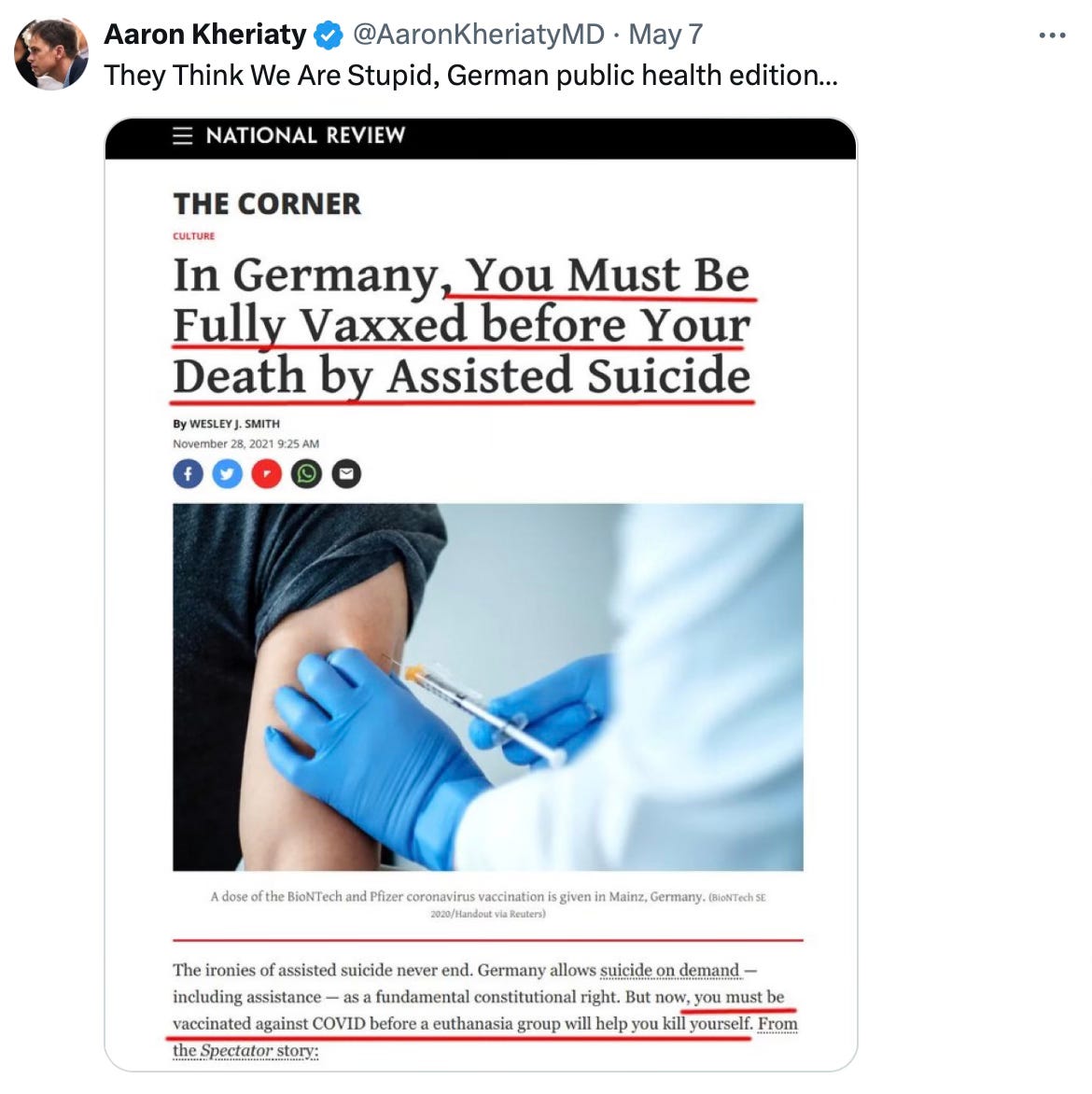
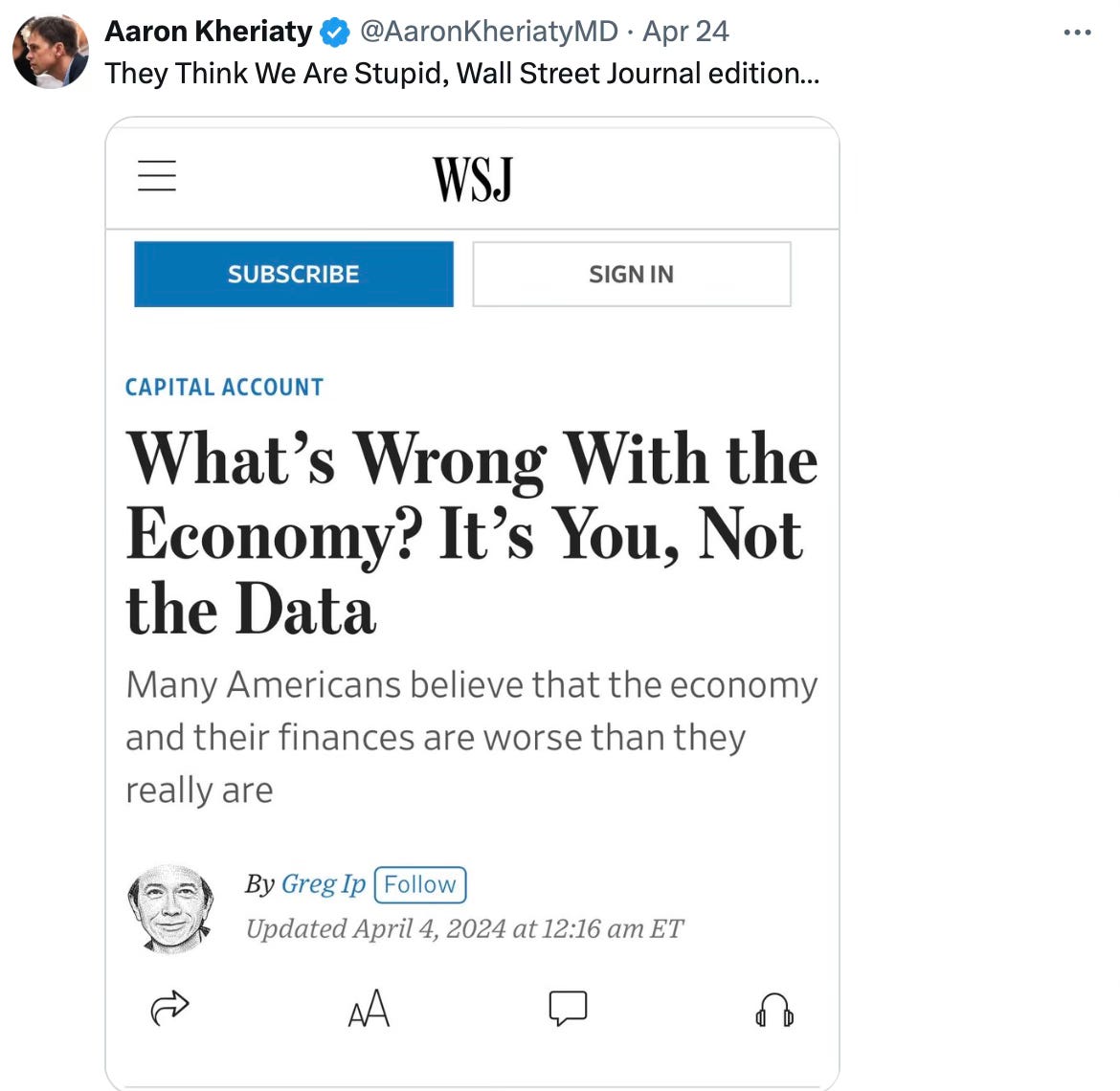
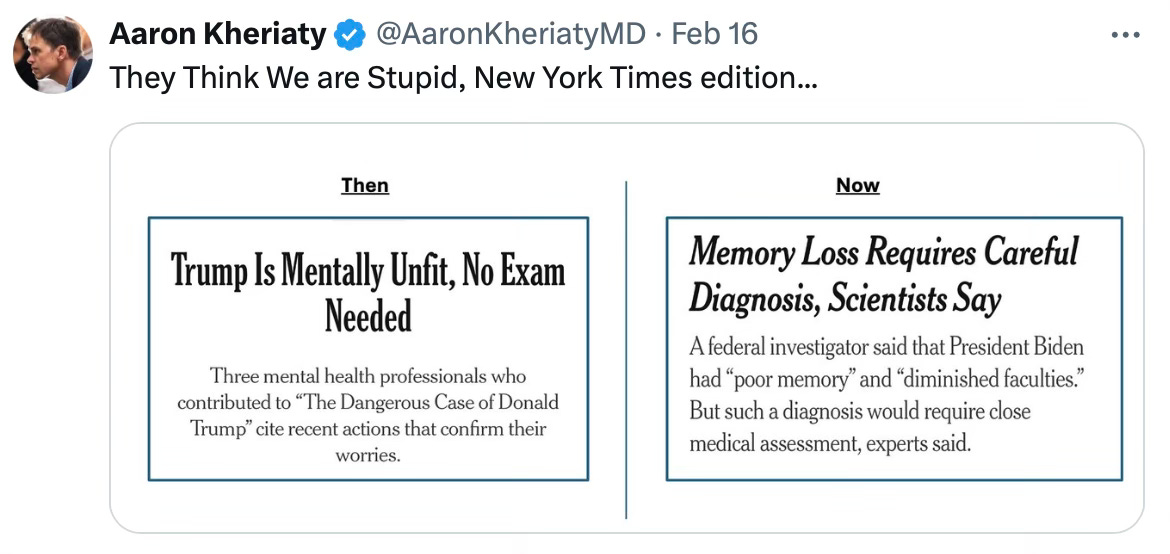
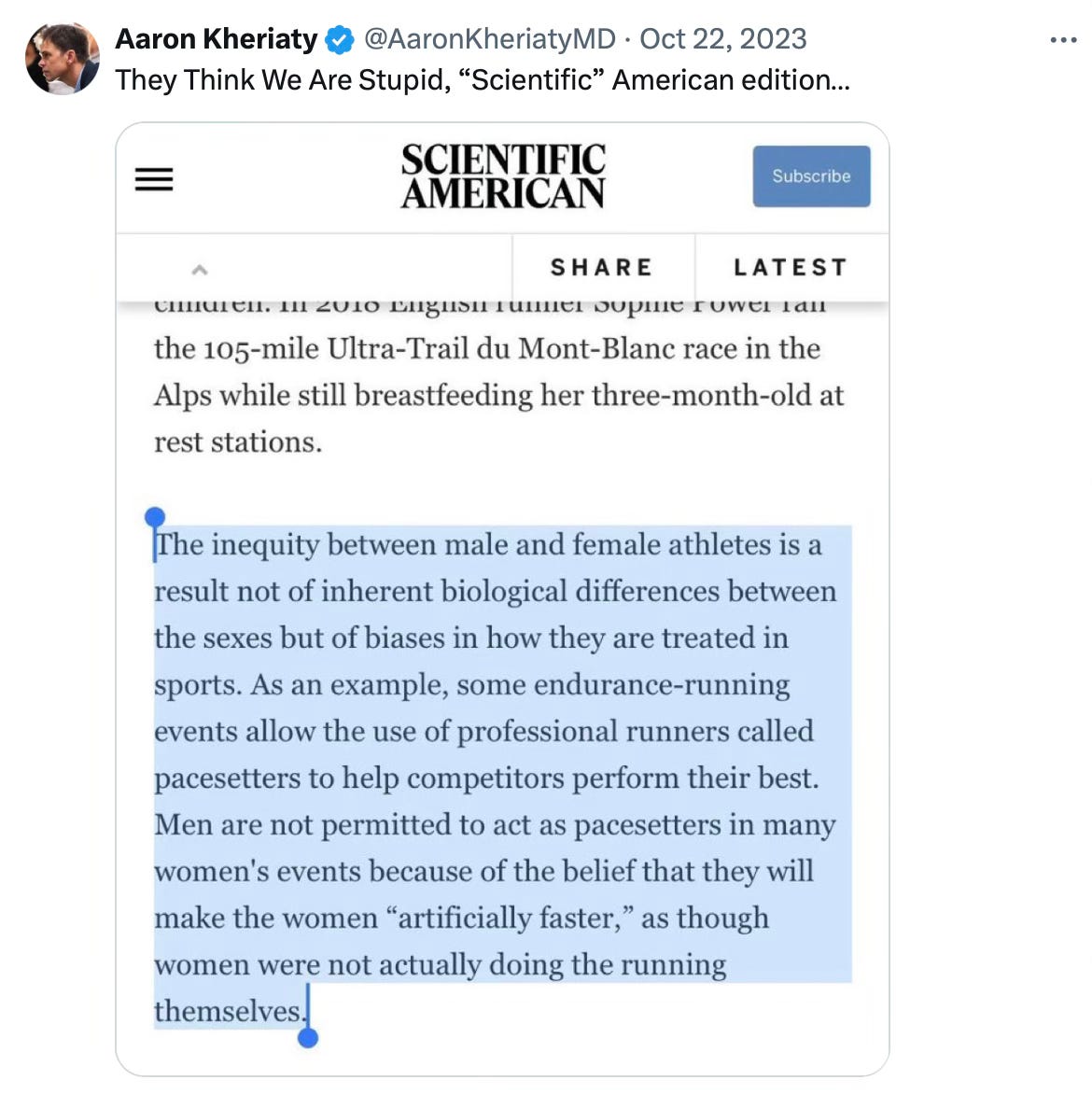
They Think We Are Stupid, Volume 13
By Aaron Kheriaty, MD | Human Flourishing | January 27, 2025
Everything you need to know about our ruling class’s opinion of you. As always, these headlines are presented without commentary.
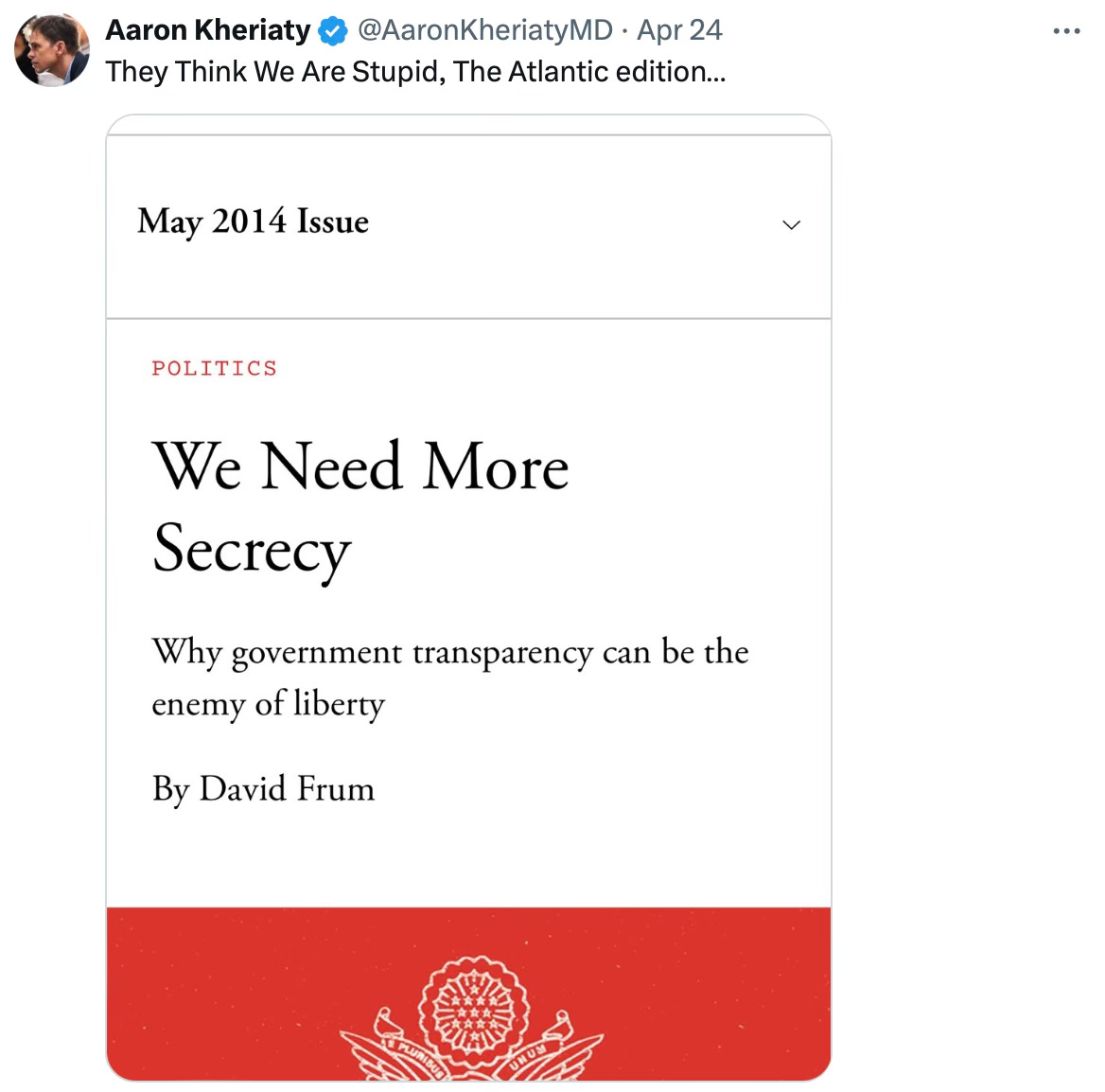
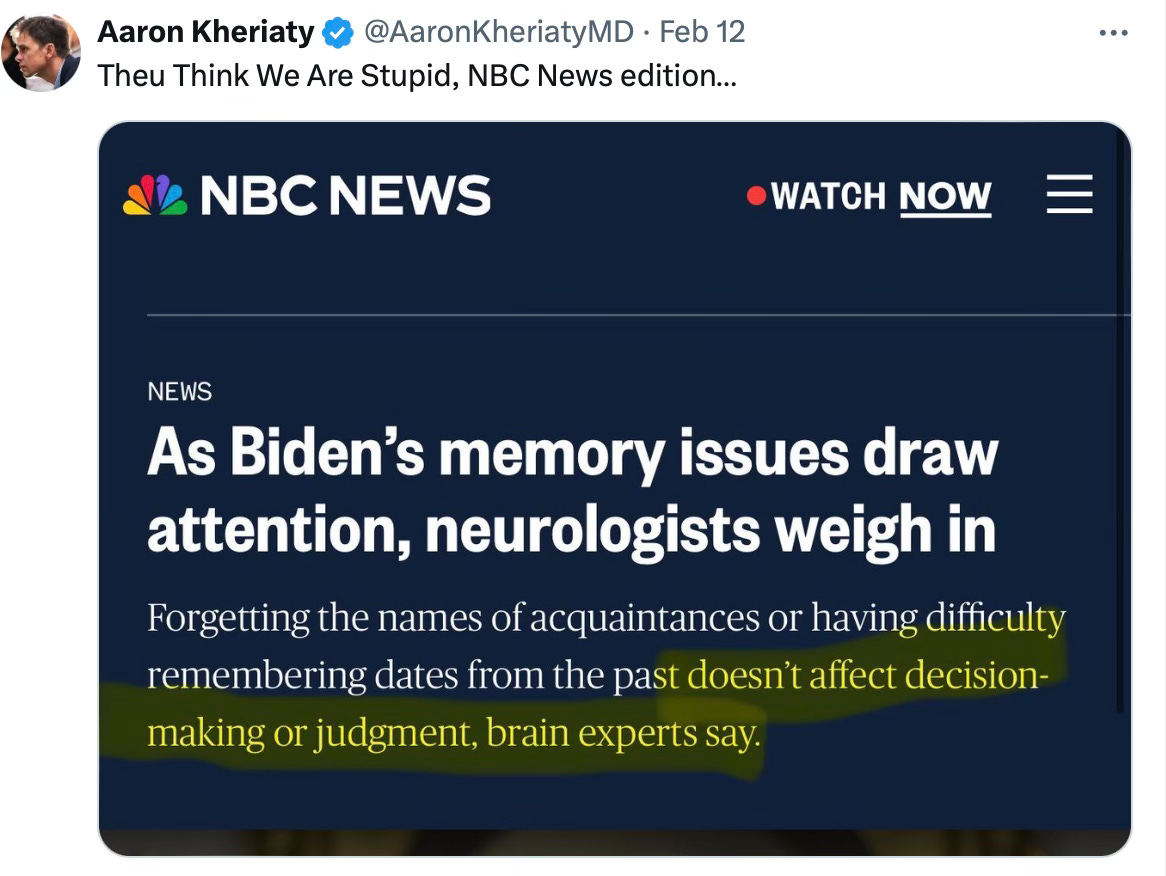
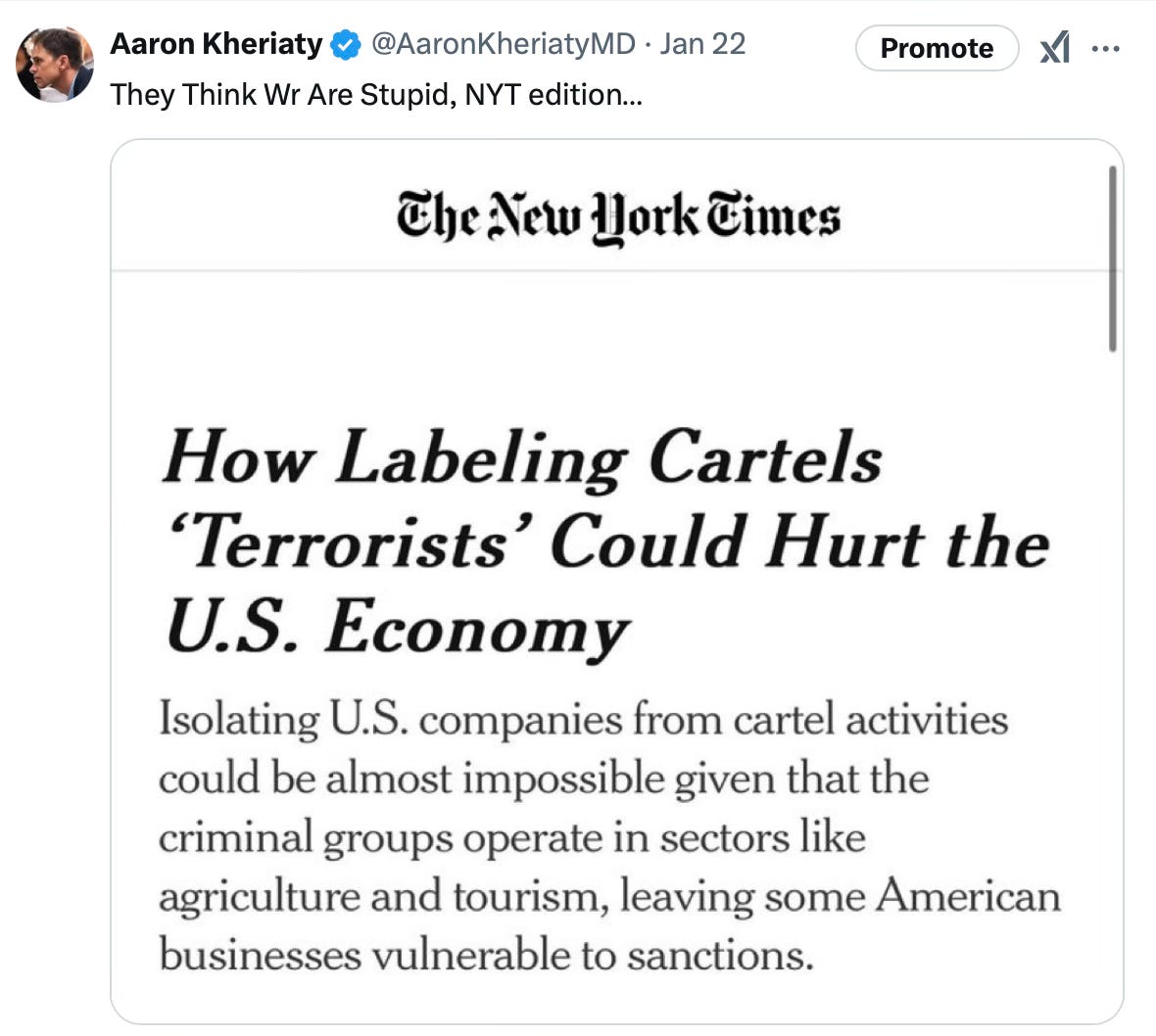
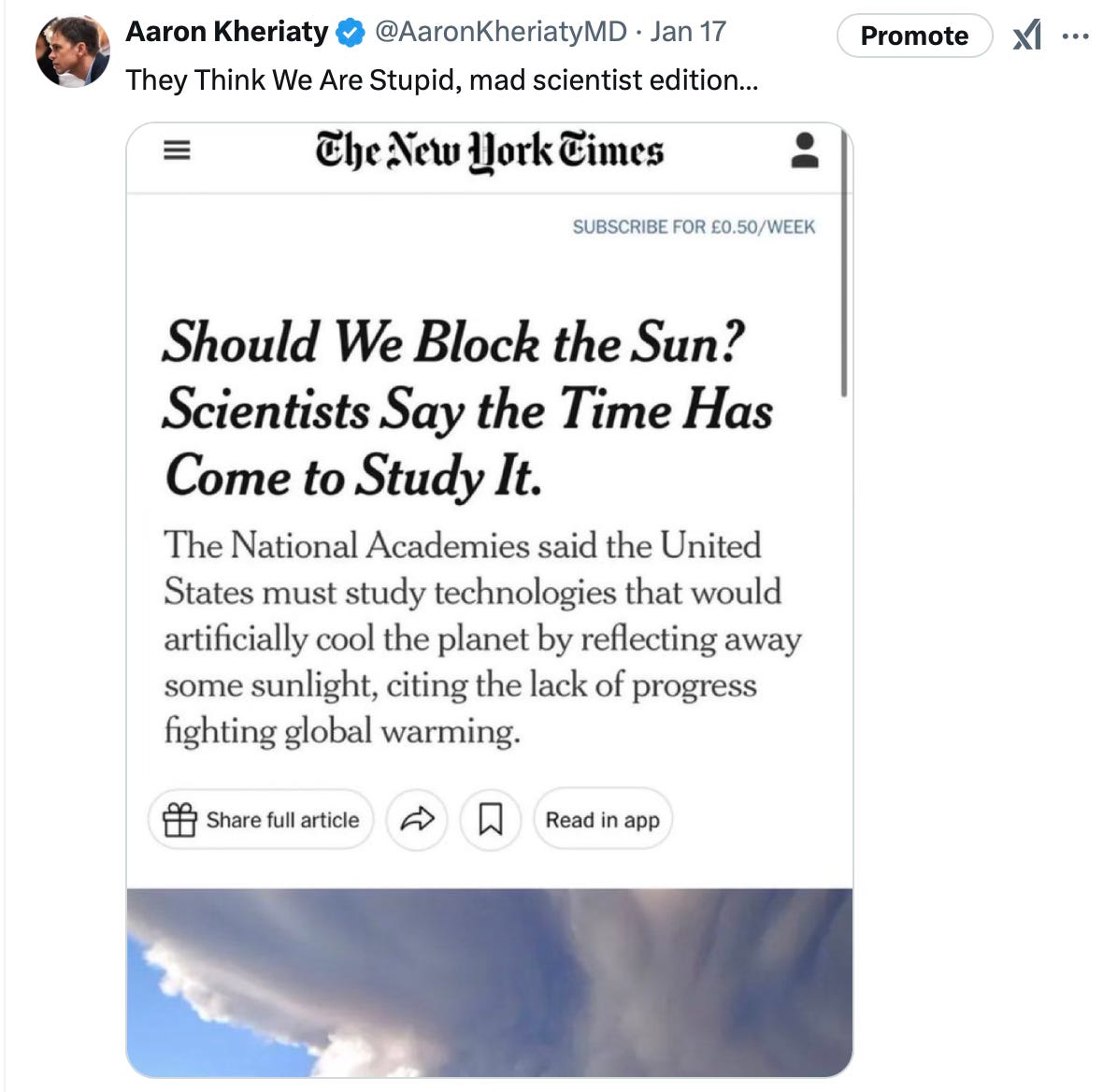
Germany: Berlin needs emergency loans after migrants blow €500 million hole in city’s budget
Refugees have cost Berlin billions and that is only one German city
Remix News | January 27, 2025
Despite claims that migrants are going to fund the entire West and save pensions with all the tax funds they generate, reality is once again encroaching. Now, the Berlin Senate is preparing emergency loans to cover refugee costs at a time when Berlin is cutting services, including for schools, due to increasingly dire budget shortfalls.
Notably, a Christian Democrat (CDU), Kai Wegner, is the mayor of Berlin, but under his leadership, not much has changed from the previous left-wing government. Berlin’s Finance Senator Stafan Evers, also of the CDU, is reportedly preparing efforts to provide an emergency loan to cover the cost of refugees.
One of the problems is that Berlin has a debt brake that keeps the city from taking on further debt, but the government says it has the legal ability to make an exception.
In 2025, Berlin indicates it will cost €500 million to accommodate migrants. Remix News has reported on the soaring costs of housing migrants in Berlin in recent years. In 2023, it cost Berlin nearly €500 million a year to house migrants, which equals €1.5 million a day. Recently, there has been a push to convert massive buildings into refugee housing, which would cost Berlin hundreds of millions over the next decade just for one building.
Notably, Berlin already froze school budgets in 2024, but these budget cuts are not enough. The figure of €500 million also does not factor in other costs, such as education, integration efforts, and policing.
The report from the CDU, prepared in conjunction with its coalition partners, the Social Democrats (SPD), has not been yet made public, according to Tagesspiegel.
Berlin took in 21,000 fewer refugees last year than in 2022, when 32,752 refugees arrived, mostly due to an extreme shortage of housing. Currently, 41,000 people live in accommodations run by the State Office for Refugee Affairs.
In all likelihood, the solution will be more debt and more spending, with Berlin ready to declare an emergency to make up for the shortfalls.
On the federal level, the situation may be even more dire, with nearly €50 billion spent on migrants in 2023. Across Germany and much of the Western world, immigration is not only fueling a debt crisis, but it is also a major factor in skyrocketing housing prices.
On top of the millions of poor newcomers who need housing is also the role of foreign investors, who are buying up property across the West. The issue has gotten so dire that even those on opposite sides of the political spectrum, such as Spanish PM Pedro Sanchez and former Czech PM Andrej Babiš are proposing massive taxes on foreign buyers of property in their countries.
The Gaza Genocide: A New Low in Democracy and Human History
Germany’s Undemocratic Assaults
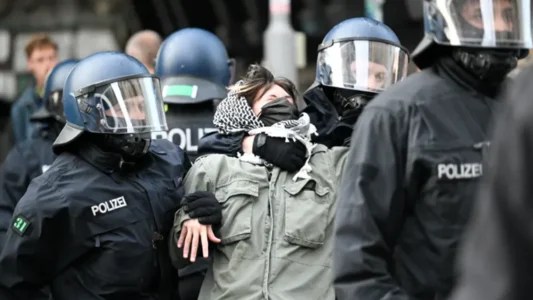
By Ricardo Martins – New Eastern Outlook – January 22, 2025
The genocide unfolding in Gaza continues to expose the inadequacies of the international judiciary, organizations, and, more importantly, the complicity of part of the global community of nations in enabling such atrocities.
Germany Taken to the ICJ for Complicity in Genocide
In March 2024, Nicaragua brought a case against Germany at the International Court of Justice (ICJ), accusing it of aiding and supporting genocide in Gaza by supplying arms to Israel, fully aware of the genocidal risks involved. Shockingly, the ICJ failed to condemn Germany.
Germany also maintains unwavering and unconditional political and diplomatic support for Israel. German Foreign Minister Annalena Baerbock displayed a cheerleader-like demeanor during her initial visit to support Israel after October 7—a stance echoed by European Commission President Ursula von der Leyen.
According to the Middle East Eye, Germany’s support for Israel’s actions highlights a hypocritical approach to international law and human rights. The analysis goes further: “No one can reasonably believe in the fairytale of Germany’s moral responsibility anymore, as the country defends, finances, arms, and diplomatically supports the genocide of Palestinians, in addition to the bombing of Lebanon, Yemen, and Syria, while shielding those responsible from accountability.”
Protests Against Israel Are Considered “Antisemitic” in Germany
With the Bundestag’s adoption last November of the resolution “Never again is now: Protecting, preserving, and strengthening Jewish life in Germany”, the country has entered a proto-fascistic state—without any condemnation from the European Union. Policymakers crafting this resolution refused input from diverse human rights groups and instead relied solely on the controversial International Holocaust Remembrance Alliance (IHRA) definition of antisemitism.
Even before this resolution, but now bolstered by it, Germany has witnessed a gradual erosion of democracy under its ‘proud guilty’ ideology. This includes prior censorship of cultural events partially or fully funded by public money, the cancellation of events featuring critics of Israel’s government, and even conferences discussing the Palestinian question. Concurrently, there has been a sharp rise in the smearing of critics with allegations of antisemitism. Make no mistake—censorship is alive and well in Germany. Protests critical of Israel’s actions in Gaza are being unjustly and undemocratically labelled as antisemitic.
Further, children can be banned from schools for wearing “pro-Palestinian symbols such as the keffiyeh,” as is written in a letter sent to school principals by Berlin’s education senator, Katharina Günther-Wünsch.
Furthermore, this resolution introduced a mandatory declaration for asylum seekers, requiring them to affirm the existence of the state of Israel and pledge not to participate in or support boycott campaigns against it.
Over the past month, German politicians have called for changing laws, including those around the right to demonstrate and freedom of opinion. The idea of withdrawing citizenship, residency, welfare benefits or funding from anyone accused of making anti-Semitic statements has been floated as well as a plan to only allow “native Germans” to protest.
Prior to this resolution, we have already witnessed undemocratic and even fascistic actions in Germany. These include the arrest of citizens for trivial reasons, such as holding a placard stating “I am not complicit in genocide,” and the arrest of a child for holding a Palestinian flag. Former Greek finance minister Yanis Varoufakis was prohibited from addressing a Jew-Palestinian conference and from permanently speaking to the German public online. A meeting organised by the progressive collective DiEM25, alongside Palestinian and Jewish Voice for Peace groups, on April 12th, 2024, was disrupted, dismantled, and labelled an “Islamist” event by the Interior Ministry.
Furthermore, the renowned British-Palestinian surgeon Dr Ghassan Abu-Sitta, who volunteered in Gaza hospitals during the genocide, was banned from entering Germany. Dr Abu-Sitta was due to provide a firsthand account of the atrocities taking place on the ground. Due to Germany’s Schengen-wide interdiction, he was also barred from entering France to speak at a French Senate meeting, despite being invited by the Senate itself.
These actions raise pressing and undeniable questions about a democratic deficit and institutional racism within German governmental structures.
A Threat to Germany’s Academic Freedom and Reputation?
Protests critical of Israel’s actions in Gaza have been wrongfully labelled antisemitic. The German Education Ministry sought to explore whether academic funding could be cut for those critical of clearing the pro-Palestinian camp at Freie Universität Berlin (Free University Berlin). This crackdown led to police detaining over 70 individuals temporarily and initiating 80 criminal investigations, alongside 79 misdemeanour proceedings.
Ironically, the Education Minister, Bettina Stark-Watzinger of the Free Democratic Party (FDP), previously declared that freedom is the foundation “for the way we live in our country, for our democracy, our constitutional state, and our prosperity.” She made this statement during the launch of Germany’s Science Year 2024.
In stark contrast, over 2,900 academics have accused Stark-Watzinger of threatening freedom of expression, calling for her resignation in an open letter. The letter, signed by thousands of German and international academics, accuses the education minister of intimidation, stating: “Repressive reviews of academics who publicly express critical views of governmental decisions are characteristic of authoritarian regimes that systematically suppress free discussion, including within universities.”
Why is Germany Having This Behaviour?
Driven by its ideology of ‘proud guilt,’ which elevates support for Israel to a raison d’état, Germany appears to have abandoned all sense of proportionality and reason—where even a child wearing a keffiyeh in a school is deemed a threat to Israel’s existence and, by extension, to German security.
In many respects, it now exhibits the characteristics of a quasi-fascist state. My few examples above, out of thousands, support this claim. To make things worse, the German government refuses to comply with the ICC prosecutor’s request to arrest Prime Minister Benjamin Netanyahu and Defence Minister Yoav Gallant.
According to Körber Fondation’s latest survey, which polls German citizens on foreign policy, only 19% of Germans support their country’s military aid to Israel. This shows a blatant divide between Germany’s political/media elites and the people they are supposed to represent.
German citizens deserve to know why their freedoms are being restricted and whose interests are being served. Why do Israel’s interests take precedence over those of German citizens and Germany’s international reputation? Why must the Palestinian people continue to pay the price for Germany’s past mistakes? I will delve into this matter further in my next article.
To conclude, the most astonishing aspect of these atrocities against German freedoms and the Palestinian people is the deafening silence of the European Union and the European Human Rights Court. The double standards of the European institutions are blatant and hypocritical.
Ricardo Martins ‒ PhD in Sociology, specializing in policies, European and world politics and geopolitics
New US Nuke Deployment in Europe Raises Serious Questions About NATO’s True Nature
By Ilya Tsukanov – Sputnik – 18.01.2025
The United States has begun the forward deployment of a new generation of its B61 nuclear gravity bomb at bases in Europe, a senior administrator has announced. What signal does the deployment send to Moscow? What impact will it have on strategic security in Europe? Sputnik turned to a senior former Pentagon insider for answers.
“The new B61-12 gravity bombs are fully forward deployed, and we have increased NATO’s visibility to our nuclear capabilities through visits to our enterprise and other regular engagements,” US National Nuclear Security Administration chief Jill Hruby revealed in a talk at the Hudson Institute this week.
“Our strategic partnership with the UK is very strong, as is their commitment to their nuclear deterrent. And we have advanced our thinking together about critical supply chain resilience. NATO is strong,” Hruby added, hinting at the prospects for ‘enhanced’ nuclear cooperation.
Reports have been swirling in recent years about US plans to redeploy tactical nuclear weapons in the UK at the RAF base at Lakenheath, although no official announcements have been made to date.
The B61-12, also known as the B61 Mod 12, is the latest upgrade to the US variable yield nuclear gravity bomb design first rolled out in the late 1960s. The Mod 12 is set to replace the older Mod 3, 4 and 7 variants of the weapon, and features a 0.3-50 kt yield.
Testing of the B61-12 was completed in 2020, with production starting in late 2021, and the Bulletin of the Atomic Scientists expecting 400-500 of the weapons to be produced, in part for deployments abroad.
Older variants of the munition are currently deployed in Belgium, Germany, Italy, the Netherlands, and Turkiye’s Incerlick Air Base. NATO has approved the weapons to be used in battle by select alliance members as part of the bloc’s “nuclear sharing” arrangements.
The announcement of the bombs’ deployment in Europe is meant to “signal to Moscow that NATO and particularly the UK… are prepared for any ‘attack’ on any NATO country,” says ex-DoD analyst Michael Maloof.
What it really signals is just how much of a US protectorate Western European countries and the UK have allowed themselves to become, Maloof, a former senior security policy analyst with the Office of the US Secretary of Defense, said.
“When I used to live there on a military base, we used to joke how the UK was nothing but a floating aircraft carrier because of all the US bases on the RAF facilities there,” the observer, who grew up in southern England during the Cold War, recalled.
The nukes’ deployment once again “underscores how NATO has evolved not into a defensive alliance, but an offensive alliance,” with the bases where the bombs are stored obvious targets for Russia in the event of a deadly escalation, Maloof said.
Can Trump Fix a Broken Alliance?
Maloof hopes that under Trump 2.0, “a total reevaluation of the deployment of US bases throughout NATO” will take place, especially in Germany but possibly also the UK.
NATO’s continued existence, the alliance’s “Cold War 2.0” against Russia and the bloc’s eastward expansion have been a disaster for European security, the observer said.
“I think it’s the beginning of the end of NATO as we know it. This perennial cycle has just got to cease. And given how we don’t even have a defense against hypersonics… it really shows that we’re reaching a very dangerous pinnacle here of escalation.”
The nuke deployment, the termination of the INF Treaty during Trump’s first term and other factors have “made Europe an all the more dangerous place to be,” Maloof emphasized, with reaction time in case of a nuclear escalation being “virtually nil.”
“I think that this posturing that we continually see to ‘show deterrence’ is actually making the West even more vulnerable to attack because it is an agitating factor,” the observer added.
Anti-Orbán German Green Party MEP took a road trip last October to meet with powerful groups in D.C.
By Liz Heflin | Remix News | January 17, 2025
German Green MEP Daniel Freund, an obsessive critic of Hungarian Prime Minister Orbán, recently held talks in Washington, D.C., according to Magyar Nemzet.
Details on Freund’s official EP profile show that at the end of October, just ahead of the U.S. presidential election, he met with several entities in D.C., including the U.S. Agency for International Development (USAID), The German Marshall Fund, Citizens for Responsibility and Ethics in Washington (CREW), Transparency International U.S., and the U.S. State Department.
The Hungarian newspaper asks how an MEP, representing an EU member state, is negotiating with a third country, outside the EU, without any authorization regarding Hungary.
Magyar Nemzet further states that USAID is known to work closely with the CIA and has been widely criticized for its influence peddling. At the end of 2022, the agency said that it would launch a new “Central Europe Program,” the portal points out, to strengthen civil society, increase the competitiveness and sustainability of “independent” media, and further develop the monitoring functions of various civil society organizations.
“Based on Freund’s activities so far, it is only conceivable that (he) represented an agenda that runs counter to Hungarian interests and sovereignty at the meeting organized before the Biden administration’s upcoming departure,” Magyar Nemzet writes.
Freund has cheered sanctions against Hungary, largely in part due to the government’s opposition to Brussels’ migration pact, and has actively lobbied for EU funds to be withheld from it. He has gone so far as to suggest Hungary simply leave the EU given its difference of opinion from the mainstream consensus in Brussels.
In one of his latest moves, Freund sent a letter to Charles Michel, when Michel was previously serving as president of the European Council, to suspend the Hungarian presidency, arguing that Prime Minister Viktor Orbán could not represent Europeans.
And in October, just a couple weeks before his trip to D.C., Freund called for Viktor Orbán to be arrested for corruption. “Who has ever stolen so much from European sources?” asked Freund.
Tagesspiegel publishes guide for workplace witch hunts against right-wing views ahead of German election
By Thomas Brooke | Remix News | January 16, 2025
A recent piece published by the mainstream German Tagesspiegel newspaper has advocated for employees across Germany to confront and report colleagues expressing right-wing political views in the workplace.
Quoting workplace diversity trainers and academics, the article describes supporters of the Alternative for Germany (AfD) as aligned with “right-wing extremism” — despite the AfD’s projected rise to become the second-largest party in the Bundestag — and offers guidance on how those with more “tolerant,” progressive views should respond should political debate occur in the lead up to next month’s federal elections.
Entitled, “Help, my colleague talks like the AfD! This is how you counter right-wing populist slogans in the workplace,” the article presents a framework for addressing opinions considered “anti-human” or “anti-democratic,” citing examples of such unpalatable views as being of the opinion that asylum seekers should be deported or that NATO has played a role in the Russian invasion of Ukraine.
It even singles out those who criticize the mainstream media as the “lying press” as being troublesome in professional settings.
Sandro Witt of the German Federation of Trade Unions (DGB) is quoted as stating: “In any case, you can’t say nothing if someone in the room makes anti-human comments.” He goes further to argue that “such positions should not go unchallenged,” encouraging employees to intervene and report statements they find problematic to human resources or other workplace authorities.
The article advocates for companies to act decisively against right-wing viewpoints, with Witt stating: “Employers should intervene, make a clear statement, address the workforce, create clarity and draw up a guideline,” effectively promoting a culture of workplace surveillance, where political disagreements could lead to disciplinary actions and even dismissal.
It suggests that employees who encounter dissenting views should not hesitate to involve internal mechanisms, such as “complaint management, equal opportunities officers, or human resources.” This directive, combined with advice to “find allies in the workforce,” has sparked concerns about fostering division and hostility in professional environments.
The call for stricter deportation rules for asylum seekers and the belief that NATO is partly responsible for the war in Ukraine may be contentious and may be deemed unpalatable by some political factions, but they reflect concerns shared by significant portions of the German population as evidence by the growing popularity of the AfD.
David Lanius, a philosopher cited in the piece, provides advice on debating colleagues with differing opinions but warns of the difficulty of changing minds. “The goal cannot be to convince the other person of your own point of view or to proselytize the other person,” he states. Lanius also suggests that confronting such views can take an emotional toll, empathizing with those who have to endure the views of those they don’t agree with. “It’s exhausting. It takes strength to stand against right-wing populism,” he says.
The article emphasizes a long-term approach to countering right-wing opinions, with Lanius asserting: “Constant dripping wears away the stone.” This metaphor implies that repeated coercive challenges to a colleague’s views could eventually lead them to change their mind.
With nearly one in five Germans reportedly supporting the AfD, the article’s framing of dissenting views as “anti-human” or “extremist” has drawn sharp criticism for ignoring legitimate grievances over rising living costs, immigration, and the policies of successive coalition governments comprising of Germany’s legacy parties, namely the Social Democrats (SPD) and the Christian Democratic Union (CDU).
Surveys cited in the piece, such as a study from the Friedrich Ebert Foundation claiming that “almost 1 in 12 Germans has a manifestly right-wing extremist worldview,” are used to paint a picture of growing extremism without acknowledging the broader dissatisfaction driving political shifts.
Despite its focus on “fostering discussion,” the article largely promotes an adversarial approach to political disagreements in the workplace. While it advises employees to engage in dialogue and “try to understand” their colleagues, it simultaneously portrays those with right-wing views as needing to be “re-educated” through persistent challenges.
Reingard Zimmer, professor of labor law at the Berlin University of Economics and Law, is cited in the piece as saying that when right-wing extremist or anti-democratic comments are made at work, it can result in reprimands and ultimately dismissal.
“If a colleague complains about ‘foreign infiltration’ in Germany, the employer will first reprimand the behavior” before issuing a formal warning. If such views are repeated, “you will be terminated immediately,” he adds.
“Employers have a duty to protect their employees and must intervene if a case is so serious that it is unreasonable for them to tolerate the poisoning of the working atmosphere to continue,” says Zimmer.
The fundamental issue with the piece is that the term “racist” has been so fundamentally diluted within society to the point that anything that deviates from the liberal, progressive stance promoted by “palatable” political leaders is questioned.
Immigration has become one of the most prominent topics of concern across many European nations, dominating elections that have resulted in those calling for stricter policies prevailing across the continent — take the Netherlands, Austria, and Italy as just three examples.
When citizens no longer have confidence in institutions and others in society to reasonably define racism, it opens up a Pandora’s Box of uncertainty, distrust, and societal breakdown that further fuels division and creates political opportunities for genuine extremists who prey on a frustrated and disillusioned electorate whose only option of resistance is anonymously at the ballot box.
Featured Video

Houthis Keep Advancing as the Red Sea Crisis Deepens
or go to
Aletho News Archives – Video-Images
From the Archives
15 Saudi ‘hijackers’ were CIA agents working for US: Scholar
Press TV – April 13, 2016
Fifteen of the 9/11 “hijackers” from Saudi Arabia were CIA agents working for the United States government, which was seeking to destroy the Middle East for Israel and to double the American military budget, says Dr. Kevin Barrett, an American academic who has been studying the events of 9/11 since late 2003…. continue
Blog Roll
 Aletho News
- Macgregor: We Haven’t Seen the Worst of the Iran War Yet
- ‘We are not like everyone else’ laws that bind other nations do not apply to Israel, says Likud lawmaker
- Report: Saudi Arabia seeks allies’ assistance as missiles deplete amid war on Yemen
- Fuel Crisis Deepens: Pakistan Warns Tanker Attack in Red Sea Would Be an ‘Act of War’
- ‘Bucha massacre’ a false flag orchestrated by UK – Moscow
- China Rejects Outside Pressure on Trade Ties After New US Russia Sanctions Bill
- Houthis Keep Advancing as the Red Sea Crisis Deepens
- Iran spent $1 million to wipe out $30 billion in data center plans, and take down Amazon in the ME
- Zionist billionaire pressure to silence Macklemore sparks exodus from Ed Sheeran tour
- House Votes to End Iran War for Third Time
- If Americans Knew
- US welcomes Israeli, Iranian delegations to UN, but not Palestinians – Daily Update
- Biden’s Genocide Accomplices Targeted by New Accountability Campaign
- AIPAC’s Network Has Already Spent $67.2 Million to Shape the Midterm Elections
- Jewish Supremacist Manufacturing a Civilizational Threat to License Bigotry
- US bans Palestinian president from speaking at the UN
- Israeli Forces Detain Journalist Alaa al-Rimawi amid Widespread West Bank Raids
- Even a pro-Israel Congress member has put a hold on 40,000 one-ton bombs to Israel
- As Gaza crumbles, Israel preps new ground invasion – Daily Update
- ‘We are not like everyone else’ laws that bind other nations do not apply to Israel, says Likud lawmaker
- Trump’s govt makes ‘treasonous’ claim of weapons shortages
- No Tricks Zone
- New Study: ‘Global Drought Shows No Detectable Recent Acceleration Under Climate Warming’
- Economic Masterminds: German Socialists Suggest Taxing Productivity Gains Stemming From Using AI
- The South China Sea Has Not Been Cooperating With The Climate Change Narrative
- Energy Crisis: Germany Enters Heating Season With Historically Low Gas Reserve Fill Levels
- New Study: The Antarctic Ice Sheet Gained Mass From 2020-2024 Due To Staggering Snow And Ice Accumulation
- Study: Ocean Heating Rates From Thousands Of Years Ago ‘Dwarf’ Modern Ocean Heating Rates
- Climate Extremists Target, Attack Large-Scale Power Grid Infrastructure In Germany!
- New Study: Antarctic Ice Melt Has Contributed Less Than 1 Centimeter To Sea Level Rise In The Last 30 Years
- Fear Of Debate: Alarmist German Climate Scientist Calls On Mainstream Media To Discredit Skeptic Voices
- End-Of-August Arctic Sea Ice Extent Hasn’t Fallen In 20 Years, Official Data Show!
 Aletho News