Canada court ruling violates international law: Iran
Press TV – February 19, 2017
Tehran has rejected a recent ruling issued by Canada’s Ontario Superior Court of Justice against Iran, saying the verdict violates international law.
“This ruling contravenes the basic principles of the legal impunity of governments and their assets, and is unacceptable,” Foreign Ministry spokesman Bahram Qassemi said on Sunday.
Justice Glenn Hainey ruled on February 8 that the Islamic Republic had to pay $300,000 in legal costs to those who claim to be victims of Iranian support for resistance groups.
The plaintiffs had sought compensation in the Ontario court under Canada’s Justice for Victims of Terrorism Act. The verdict has given Iran 30 days to pay the sum.
Qassemi said the Islamic Republic has already conveyed its expression of formal protest to the Canadian government and reserved the right to take political and legal measures in that regard.
In June 2016, the same court ordered $13 million in non-diplomatic Iranian assets to be given to three groups of plaintiffs.
The decision was similar to US Supreme Court’s ruling in April 2016 to hand over $2 billion in Iran’s frozen assets to American families of those killed in the 1983 bombing of US Marine Corps barracks in Beirut and other attacks.
Iran’s President Hassan Rouhani announced at that time that the country had filed a lawsuit against the US with the International Court of Justice (ICJ) – the principal judicial organ of the United Nations.
Earlier this month, Iran’s Presidential Office said in a statement that the lawsuit had been officially put in motion.
Washington’s seizure of Iran’s assets is against the Treaty of Amity, Economic Relations, and Consular Rights which was signed by the two countries in August 1955 – referred to as the 1955 Treaty – and is “still effective,” the statement added.
Syria settlement delayed due to Obama’s team, with Trump things might change – FM Lavrov
RT | February 12, 2017
The situation with peace talks on Syria is currently “more favorable” for things to really get better in the war-torn country, Russia’s FM Sergey Lavrov has said. Obama’s team slowed down the process, but under Trump things might improve, according to the diplomat.
“We are currently in the situation… that is much more favorable to start working on a real settlement of the crisis. We were close to it in September last year, but the Americans failed to implement an agreement which had been coordinated with us earlier, which once more confirmed the Obama’s administration inability to negotiate on many issues,” Russia’s foreign minister said in an interview with Russian television channel NTV.
“They took an agreement, and then couldn’t do anything [within it],” Sergey Lavrov said, adding that “largely because of Obama’s reluctance to have an argument with some countries in the region,” a settlement through the UN’s participation “turned to [result in] zero progress.”
Moscow could no longer rely on such dragging partnerships, Russia’s top diplomat said, adding that a decision has been made to take action in other ways, such as through Russian-Turkish relations.
“We know that Turkey has influenced and continues to influence a very considerable number of field commanders,” Lavrov said, noting that Moscow’s cooperation with Ankara resulted in a ceasefire agreement in Syria in late December last year.
“I want to make it clear: we’ve already said on different levels that we are not trying to undermine UN’s efforts [in resolving the Syrian crisis]. Although our initiative was largely based on [others’] inaction, we understand that many more sides should be involved in peace talks than those currently working on Astana [negotiations],” Lavrov told NTV. There should be more participants both from Syria and “players from the outside,” he added.
Parallel to the Astana peace process, Moscow is preparing for talks under the auspices of the United Nations, the minister said, adding that so far such a meeting has been confirmed for February 20.
Talking of Moscow’s expectations of those talks, Lavrov said that the “whims” of some Syrian opposition groups’ leaders, “especially of those who have long been living outside Syria,” should not be taken into consideration. “If it once again becomes a hindrance to hold UN talks, then the organization’s reputation will be seriously damaged,” Lavrov said.
Meanwhile, Russia has been actively involved in meetings on Syria in Astana, where talks with the participation of Ankara and Tehran have recently finished. The sides have generally agreed details on cease fire monitoring, the minister said, adding that the agreements reached “will soon be implemented.” Efforts to summon more fighting groups in Syria to join in talks with the Syrian government are also in the works, he added.
Saying that US representatives were present at the first meeting in Astana as monitors, Lavrov confirmed that an invitation has been sent to Washington to take part in the talks once a new team on the Middle East and Syria is formed under the incoming Trump administration.
Moscow is fully aware that relations between the US and Iran have deteriorated with Trump’s arrival in the White House, Lavrov said, but added that Russia “stands for common sense.”
“If US President Trump’s main priority on the international arena is fighting terrorism, then it should be admitted that in Syria not only the Syrian army supported by Russian Air Force are fighting ISIL [Islamic State terrorist group, IS, formerly ISIS/ISIL], but also Hezbollah groups supported by Iran [are involved in the anti-terrorist fight],” Lavrov said. “There’s a choice of priorities here.”
The minister added that while Americans are known for their “pragmatic” policies, it “wouldn’t be pragmatic to just precariously exclude Iran from the anti-terrorist coalition.” Russia, on its side, “always treats any country’s stance with respect,” he said, having expressed Moscow’s willingness to discuss any ways to solve the crisis, “even those that absolutely contradict” Russia’s views.
“I am sure that Donald Trump is absolutely sincere when he every time confirms his determination to defeat IS. We are ready to cooperate with him,” Lavrov said, having expressed hopes that cooperation between the Russian and American military in Syria “will soon start to form again.”
READ MORE:
Moscow mediates talks between Assad & Syrian Kurds – Russian FM
‘US-Iran tensions could be defused during Putin-Trump meeting’
Russian FM Lavrov expects to talk to US counterpart Tillerson soon on Ukraine & bilateral relations
The Hill Publishes Islamophobic Fake News on Venezuela
By Ryan Mallett-Outtrim | Venezuelanalysis | January 30, 2017
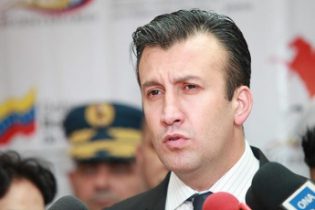 Love it or hate it, The Hill can be a pretty useful source of information on the goings on around DC, but its latest article on Venezuela comes from some disturbing places.
In a recent article, titled “Meet Venezuela’s new VP, fan of Iran and Hezbollah”, The Hill’s Emanuele Ottolenghi profiled the South American country’s new second in command, Tareck El Aissami.
Although El Aissami was appointed vice-president just a few weeks ago, he’s hardly a new face to anyone who has followed Venezuelan politics for a while. He previously served as Aragua’s governor, and also had a stint as interior minister a few years back.
So what’s so special about El Aissami? A lot, according to Ottolenghi, whose piece reads much like the biography of a minor goon from a Schwarzenegger flick, replete with semi-comical claims with the credibility, sophistication and nuance of Ninja Terminator.
Here’s a few highlights:
“Despite the Baathist family background — his father headed the Venezuelan branch of the Iraqi Baath Party — and his Lebanese Druze origins, El Aissami seems to prefer the Islamist Shiite revolutionary Hezbollah and Iran over the Baath’s supposedly secular pan-Arabism.
…
Like his Islamic revolutionary role models, he used violence to advance his politics.
Opposition figures have accused both El Aissami and Nassereddine of recruiting young Arab-Venezuelan members of the ruling party to undergo paramilitary training in South Lebanon with Hezbollah.
…
As if this were not enough, El Aissami reportedly facilitated drug trafficking, a crime for which he is being investigated in the U.S.”
In other words, El Aissami is every boogyman and right-wing scapegoat wrapped up in one nice little package, at least based on Ottolenghi’s depiction. He’s a mish-mash of Baathism, Sunni radicalism and Shiite extremism; plus he smuggles coke.
The obvious question is whether any of this is true. For one, El Aissami is indeed one of many suspects in a US investigation into Venezuela’s narcotics trade. We could discuss the politics of this investigation until the cows come home, but what about the juicier claims? For instance, the claim that El Aissami has been accused of sending young Venezuelans to Lebanon to train with Hezbollah, and that he has colluded with “guerrilla movements”?
If we follow the hyperlinks provided by Ottolenghi, we find that these claims were sourced from the Centre for Security Policy (CSP). It sounds credible, but has been widely dismissed by journalists as basically a joke. According to the Southern Poverty Law Centre, the Centre for Security Policy is “known for its accusations that a shadowy ‘Muslim Brotherhood’ has infiltrated all levels of government and warnings that ‘creeping Shariah,’ or Islamic religious law, is a threat to American democracy”.
“For the past decade, CSP’s main focus has been on demonising Islam and Muslims under the guise of national security,” the Southern Poverty Law Centre stated.
A cursory glance at the CSP’s homepage features ads for books with colourful titles like “CAIR is HAMAS”, “Civilisation Jihad”, “ObamaBomb” and “See No Sharia”. At the time of writing, some of their latest articles included one describing Islam as a “supremacist totalitarian ideology”, and another claiming Iran might already secretly have a “nuclear weapon” (which it doesn’t).
Well, that got weird fast.
So basically, Ottolenghi gets his best material from a website that is so far off the deep end, it has even been banned from the Conservative Political Action Conference.
As a side note, Donald Trump cited a report from the CSP back in 2015, when he falsely claimed one in four Muslims support violence against the US. At the time, the CSP’s claims were widely dismissed as junk.
But hey, that’s just one source – perhaps I’m not giving Ottolenghi’s narrative enough of a chance. Frustratingly though, Ottolenghi’s piece is very light on sources, and he provides no other references for his two most eyebrow raising claims.
Luckily, Ottolenghi is far from the first English language pundit to express this particular point of view on El Aissami. A few years ago, the Gatestone Institute published a piece that reads eerily similar to Ottolenghi’s more recent article. For example, the older piece details how El Aissami supposedly loved Saddam Hussein and Osama bin Laden. Ignoring the fact these two political figures espoused totally different and utterly incompatible political ideologies, the Gatestone article did a somewhat better job than Ottolenghi in terms of providing sources for their claims.
This is where things take a turn for the outright bizarre.
So, where did the Gatestone’s critical intelligence on El Aissami originate? According to the reference list they provided, the answer to that question is: Wikipedia and this obscure blog. Following the breadcrumbs, the blogger also provided a reference list for their sources. This list is extremely short for supposedly groundbreaking investigative reporting, and only features four different names: Al Arabiya, MEMRI, Jihad Watch and another blogspot blog called The Jungle Hut.
…. Okey-dokey then.
The trail runs dry over at The Jungle Hut, where there’s nothing more than a dead link and a nice photo of a waterfall. It’s not quite what I was expecting to find, so let’s look at the other two sources. Al Arabiya is Saudi Arabia’s state media outlet, though don’t let that bother you too much; they’ve actually produced some decent stuff in the past. Unfortunately, there’s no links to specific articles, so again, the trail runs dry. The same problem arises when we head to MERMI. Finally, we get to the El Dorado of anti-Islam trash: Jihad Watch, a blog created by the notorious Islamophobe Robert Spencer. For anyone who doesn’t know, Spencer is perhaps best known for co-founding two prominent anti-Muslim lobby groups, Stop Islamisation of America (SIOA) and the American Freedom Defence Initiative (AFDI). Both have been listed as hate groups by the Southern Poverty Law Centre. Spencer also garnered media attention in the wake of the 2011 Norwegian white supremacist terrorist attack carried out by Anders Behring Breivik. In his sprawling anti-Muslim manifesto, Breivik cited Spencer dozens of times.
This is where our journey down the rabbit hole ends; with an Islamophobe beloved by one of the worst white supremacist terrorists in recent years. I guess this is what I get for checking people’s sources: a browser history full of links to hate groups, anti-Islam garbage and one nice picture of a waterfall. I didn’t find much credible reporting, but I did learn that El Aissami is hated for one reason above all: he’s got a Muslim-ish sounding name.
That’s it.
You might think I’m being harsh on Ottolenghi.
And you’d be wrong.
Ottolenghi is a long time anti-Iran hardliner, and has authored books with names like “Under a Mushroom Cloud: Europe, Iran and the Bomb”. According to a review of this book over at The Jewish Chronicle, “Ottolenghi’s view that Iran, as an exceptional case, merits exceptional treatment, is perhaps unrealistically rigid. His argument is not helped by the absence from his text of source references by which the reader could cross-check the many, selective quotes he adduces in support of it.”
In other words, making far fetched claims based on no real evidence is something of a modus operandi for Ottolenghi.
Along with having an obvious disdain for the notion of providing sources, Ottolenghi seems like just another pundit with a bone to pick with Islam, and anyone who sounds like they might be Arab, Persian or any other ethnic group he doesn’t like. Ottolenghi’s writings seem better suited to publishers like Jihad Watch, and his presence at The Hill is surprising to say the least.
Unfortunately though, this whole saga is symptomatic of a deeper problem in the media. The fact that an article for The Hill can get away with featuring links to the Islamophobic fake news CSP is emblematic of the dismal state of international corporate media. Islamophobic rants are treated like credible political analysis, and conspiracy crackpots are put on pedestals. It’s a grim state of affairs, but the real question is: how much further will we slide?
Middle East: Rapid Tectonic Changes on Regional Chessboard
By Peter KORZUN | Strategic Culture Foundation | 30.01.2017
The Middle East geopolitical scenarios are going through rapid changes with new factors emerging on the regional chessboard.
Cairo’s foreign policy has been given a new twist. It has been announced recently that Egypt is set to receive one million barrels of petroleum per month from Iraq. Saudi Arabia had informed Egypt that shipments of oil products expected under a $23 billion aid deal have been halted indefinitely, suggesting a deepening rift between the countries. From now on, Egypt will enjoy as much oil as it needs at a lower cost, compared to Saudi pricing.
Egyptian President Al-Sisi rejected the Saudi-backed efforts to overthrow the regime of Bashar Assad. He is also reaching out to former-Yemeni president Ali Abdullah Saleh and to his Houthi allies Saudi Arabia is fighting since March 2015. Cairo opened diplomatic channels with the pro-Iranian Lebanese Hezbollah, fighting on the side of President Assad in Syria against the rebel groups supported by Riyadh.
Iraq will provide Egypt with 1 million barrels of Basra light oil each month. The agreement involves extending an oil pipeline from Iraq to Egypt via Jordan. In December, Iraqi petroleum minister Ali al-Luiabi met with the heads of major oil and natural gas companies in Cairo, inviting them to contribute into developing the industry in his country.
Egypt is about to train four Iraqi army units on war against terrorism, in light of the rapprochement between Egypt and the Iraqi-Iranian axis in the region.
It also mulls sending peacekeeping troops to Syria during the coming days to support the ceasefire agreement under the auspices of Russia, Iran, and Turkey. It has been reported that a unit of Egyptian ground forces might deploy to Syria this month. Last October, Syrian National Security Bureau head Ali Mamlouk visited Cairo to meet Khaled Fawzy, the head of Egypt’s General Intelligence Service. The two sides agreed to coordinate political positions and strengthen cooperation in «the fight against terror».
Egypt is a predominantly Sunni nation. Its open support of the Russia-backed coalition in Syria is a game changing event of fundamental importance. It makes the sectarian interpretation of the Syria’s conflict not valid anymore.
Middle East Observer quotes Nziv Net, an Israeli outlet close to intelligence sources, saying that «Egypt has sent a group of officers to Syria for the first time since the relations have frozen during Morsi’s reign».
Last December, Ibrahim al-Eshaiker al-Jaafari, the Iraqi Foreign Minister, called on Egypt to participate in a «strategic project to fight terrorism», which includes Iran.
In September, Egyptian Foreign Minister Samih Shoukry met for the first time with his Iranian counterpart, Jawad Zarif, during their visits to New York to attend the UN General Assembly.
In October, Egypt backed a Russian-backed motion in the UN calling for a ceasefire in Syria. The move angered Saudi Arabia, which suspended oil shipments to Cairo.
Egyptian President Abdel Fattah al-Sisi publicly affirmed his support for the forces of Syrian President Bashar al-Assad.
The relations between Russia and Egypt have been on the rise. In February 2015, Egypt signed a breakthrough agreement on establishing a free trade zone with the Russia’s Eurasian Economic Union.
The progress in military cooperation is tangible. Egypt signed arms deals with Russia worth up to $5 billion by 2015 to include 50 MiG-29M combat aircraft, Buk-M2E and Antey-2500 long range air defense systems and about 50Ka-52K helicopters for Egypt’s new Mistral-class assault ships bought in France. The ships will receive the originally planned Russian helicopters and electronics suite.
The two countries signed several agreements for the renovation of military production factories in Egypt. A protocol is signed to grant Egypt access to GLONASS, the Russian global satellite positioning system. In September, Minister of Defense Sedky Sobhy visited Russia to discuss the issues related to long-term close security relationship. Last October, the militaries held a joint exercise.
Egypt is the most populous country in North Africa and the Arab world, the third-most populous in Africa and the fifteenth-most populous in the world. Last year, the country’s population has just reached 92 million. Its policy shift is well-substantiated. Cairo is fighting the Islamic State on the Sinai Peninsula. The fierce fighting there seldom hits media headlines but the IS poses a grave threat to Egypt. IS militants can also strike Egypt from Libya. The IS presence in Libya brings Egypt and Algeria together as the two great nations face the same threat.
The emerging Iran, Iraq, Russia and Turkey alliance may also include Algeria. In response to the growing menace, Algiers is strengthening ties with Moscow. It has recently purchased 14 Su-30MKA fighters and 40 Mi-28 «Night Hunter» attack helicopters from Russia. Last February, Russia and Algeria laid out a road-map for deepening bilateral economic and military cooperation during Russian Foreign Minister Sergei Lavrov’s visit to Algeria.
Russia’s cooperation with Egypt, Algeria and other countries of the Middle East and North Africa reflects Moscow’s growing clout in the region.
With the Astana process making progress, other large and influential actors, such as Syria, Iraq, Egypt and Algeria, may join the emerging Russia, Iran, Turkey coalition to make the Middle East-North Africa (MENA) region face tectonic and dramatic changes.
The Rebranding of the Anti-Syria Left
Part 1: The Anti-Anti-War-Left
By Barbara McKenzie | November 23, 2016
One could argue that for any serious student of the Middle East, using a range of sources, the approved narrative on the Syrian conflict should have been suspect from the outset: the precedents of Iraq and Libya and the accompanying lies, the well-reported lack of interest in revolution on the part of the Syrian people, the quickly developing violence in contrast with the ready accommodations of the government in terms of reform and release of political prisoners, the dominant role of brutal sectarian gangs in a traditionally tolerant and pluralist society. Those trying to find the truth of the Syrian war, however, found themselves opposed from an unexpected quarter.
There is a large body of commentators in the West who define themselves as ‘left’, ‘progressive’ and ‘anti-imperialist’ insofar as they condemn Israel’s crimes against the Palestinians. Their claimed support for the Palestinians is offset by virulently opposing anything that threatens Israel’s interests in other areas, such as investigation into the role of Mossad’s activities outside of Israel. Israel’s interests are likewise to the fore when it comes to drastic change in Syria (seen by Hillary Clinton as essential to Israel’s interests as far back as 2006) – the ‘soft Zionists’ have been promoting the externally created revolution in Syria from the outset.
The Thirdwayers
Sharing most of these characteristics are a group of people who espouse a ‘third way’ whereby ostensible anti-imperialists criticise their governments’ interventionist policies but at the same time have promoted the revolution and been determined opponents of the Syrian government. While in theory they oppose external intervention, they at the same time facilitate such intervention by peddling propaganda to that end.

For five years, people like Max Blumenthal, Ben Norton and Rania Khalek have actively promoted forced regime change in Syria, insisting on the validity of the popular revolution, characterising the Syrian president as a butcher, and alternately vilifying and patronising those who were unconvinced by the NATO narrative.
At the same time there has been no attempt by proponents of the Syrian war to engage with the anti-war activists who have been carrying out and sharing research on the conflict – instead they have contented themselves with unfounded slurs on the intellect and integrity of supporters of Syria.
However, ripples have been going through social media in recent months as these seemingly diehard opponents to the Syrian government have moved to taking a more nuanced view of the conflict. This was quickly picked up by eagle-eyed users of twitter who have been following the war on Syria for years…

In order to consider the significance and extent of this shift in perspective, it is worth looking back at the views espoused by the thirdwayers over the years
The popular revolution
Long after the violent, sectarian and fundamentally un-Syrian nature of the uprising was revealed along with its external impetus, diehards were still promoting the idea of a popular revolution, with a sentimental attachment to the Free Syrian Army well after its use-by date. While atrocity stories to the disfavour of the ‘Assad thugs’ (Syrian Arab Army) were quickly shared, those which show the ‘revolutionaries’ in an unfavourable light were ignored or speedily forgotten: By 2012 there was abundant proof of FSA atrocities, including cannibalism, decapitation and sectarian massacres, but this did not stop Blumenthal tweeting approvingly in August ‘Protest in the occupied Syrian Golan Heights in support of the #Syrian revolution’.
Thus in August 2014, when most people were discarding the fiction of Syria’s moderate rebels, Ben Norton still had a rosy view of the ‘democratic’ revolutionaries: a spate of tweets in their favour on August 18 included such optimistic claims as, ‘Syrian revolutionaries have already liberated cities, and they ran them somewhat democratically’, and on 22 September, ‘Majority of the FSA consists of average Syrians & former SAA members who refused to slaughter civilians & defected’.
As late as February 2015 Ben Norton complained:
Blame Assad for brutally destroying the progressive and secular resistance against his murderous fascist regime […] not Syrians for standing up to bravely fight for not just food, justice, and dignity, but for their very lives.
In 2014 Khalek interviewed Molly Crabapple, artist, writer and fervent supporter of the ‘Syrian revolution’. Both Khalek and Crabapple assume a non-violent inception to the Syrian conflict, ruthlessly crushed by government forces.
Khalek: […] You addressed the fact that there was a segment of the anti-war left that still till now is very dismissive of the Syrian uprising and in some cases excuses Assad for the horrific crimes he’s committing and you got attacked for pointing this out.
Crabapple: […] Many people I deeply respect are anti-intervention for good reasons. Other ones were pro certain sorts of intervention. But I think what is absolutely wrong is to pretend the Syrian revolution didn’t exist, to pretend that these activists weren’t amazing people …
The ‘evil Assad’
Attacking any movement by demonising its leader is a tried and true tactic where there is no legitimate means to an end – one only needs to look at the treatment meted out to Alex Salmond who, in the run-up to the Scottish referendum, was variously compared to Hitler, Mugabe, Nero and Genghis Khan. Likewise vilification of Bashar al Assad has been a major plank of regime change advocates. For more than five years the anti-Syria movement has relentlessly vilified the Syrian president with an incontinent flow of accusations, making full use of language favoured by the most hard-line interventionists: Assad ‘the butcher’, ‘the brutal tyrant’ has been accused of deliberately conducting a reign of terror, of bombing, starving, raping, gassing his own people, deliberately targeting hospitals, blood-banks, schools, bakeries, children and even kittens.
The thirdwayers have been amongst the most determined proponents of the evil Assad narrative: ‘Assad slaughter continues’ BN8/8/14; Assad’s ‘brutal tyranny’ MB 4/10/11; ‘Assad slaughter’ MB22/2/13; ‘Assad’s atrocities’ MB 14/9/13; ‘Assad’s reign of terror’ MB 16/9/14; ‘Assad family’s ongoing legacy of criminal fascism’ MB 18/10/14; ‘Assad the butcher’ RK 15/8/14 ‘Assad’s butchery’ RK 29/7/14; Assad is a mass murdering criminal’ RK 19/7/16; ‘the criminal Assad regime’ RK 18/1/14; civilians are being intentionally starved by the Assad Regime’ RK 19/4/14; ‘Assad is starving, torturing, & killing not just Syrian but also Palestinians’, BN 26/8/14.
From very early in the war many allegations of atrocities and war crimes have been leveled at the Syrian government and then soon shown to be false. Furthermore, substantial research had been carried out revealing the extent of foreign intervention, the billions of dollars of aid to the ‘rebels’, the many thousands of mercenaries pouring in through Turkey. However even in February 21015 Norton was still undeterred. According to his article 56 dead in one day: a Glimpse of Assad’s brutality Assad was responsible both for the early violence:
Since Assad first tried to drown the nonviolent popular uprising against his fascist regime in blood in 2011 …
and its continuation:
… the Syrian regime has dropped thousands upon thousands of bombs on civilian areas—and has engaged in systematic campaigns of torture, starvation, and rape. […] If you want to see why horrible reactionary groups like Al-Nusra and even ISIS have support among some Syrians, try taking a look at the crimes the fascist Assad regime commits on a daily basis. […]
Norton is, therefore, offering a partial justification for joining ISIS.
No possible accusation has been overlooked. Specific claims of atrocities are seized on, never questioned and then, once debunked by others, forgotten. Although the thirdwayers, unlike the hard-line interventionists, may be prepared to discard discredited anti-Assad horror stories, this never seems to impact on the overall theme of Assad the monster. Thus massacres such as those that occurred at Houla, Ghouta and Banias were all immediately blamed on the Syrian government by both the corporate media and the third-wayers, even though subsequently found to have been carried out by insurgents, for either ethnic cleansing or ‘false flag’ purposes. (Blumenthal was still insisting that the Houla massacre was carried out by ‘shabiha’ (derogatory term for local defence forces) in February 2013, see video, below).
Assad is correlated with Israel, or ISIS, or is even worse than ISIS, according to both Rania Khalek

echoing the sentiments expressed by Josie Ensor of the Telegraph a few months earlier

The public knowledge that both the US and Israel are hell-bent on regime change in Syria was turned on its head with claims that the US and Israel supported Assad: ‘”Israel’s preference is for Bashar al Assad to remain in power…”‘, MB 11/12/2012.
US support for the ‘Assad regime was a favourite theme of Ben Norton, who explored this thesis in an article US Government Essentially Sides with Assad. Despite all evidence to the contrary, Norton supports the US administration in its blatant fiction that its priority is going after ISIS:
‘With the Syrian Civil War approaching its fourth whole year, the evidence increasingly suggests that the Obama administration has essentially sided with the Assad regime. […] In October 2014, Foreign Policy noted that “U.S. officials are beginning to see Assad as a vital, de facto ally in the fight against the Islamic State.”’
With the advent of foreign fighters from Central Asia, polio reappeared in Syria, after having been eradicated in 1995 (the strain in Syria is the same as that present in Pakistan, source and transit point for many jihadists fighting in Syria). Despite being engulfed in war the Syrian [government] acted quickly to set in place vaccination programmes (the latest campaign was announced on 16 October). Rania Khalek, however, laid a large part of the responsibility at the door of the ‘regime’, likewise ignoring evidence available at the time which showed that the Red Crescent is frequently blocked by groups such as the ‘Free Syrian Army’.
The insanely high toll [from chronic disease] is largely due to the Assad regime’s criminal use of food and medicine as weapons in his war against his own people.’
The discrediting of the 2011 lie that Gaddafi was giving black mercenaries viagra to encourage them to rape Arab women did not deter Ben Norton from seizing with alacrity on an obscure and short-lived rumour that the Deputy Mufti of the ‘Syrian regime’ advocated rape by the army.

‘Assad worshippers’

[Pro-Assad Bingo, posted by Ben Norton in April 2015]
In parallel with the demonisation of Bashar al Assad is the recurrent theme of contempt for Assad supporters.
Undermining one of NATO’s principle planks and justification for intervention, ie the demonisation of al Assad, is an enormous threat to the NATO narrative. For this reason a major focus of the anti-Syria left has been to undermine, not just the Syrian government, but also the credibility of pro-Syria activists who have questioned the atrocity narrative.
Critics of the anti-Assad narrative are deemed to be stupid and hypocritical. A spate of tweets about the pusillanimity of ‘Assad worshippers issued from Ben Norton in 2014, eg 24 August: ; I just can’t get over the ludicrous degrees Assad defenders are going to to try to defend the mass murderer… it’s almost unbelievable.’; ‘HAHAHAHAHAHA, these Assad-worshiping conspiracy theorists just get more and more absurd. They are completely deranged’. ‘The Western “anti-imperialists” who support (read: worship) Assad so fervently have never met a working-class Syrian’.

Max Blumenthal is equally contemptous of ‘Assad apologists”, informing writer Miri Wood: ‘when non Muslima say takfiri I cringe almost as much as when they defend Assad’s reign of terror 16/9/14. Even Syrians cannot escape Blumenthal’s derision:

Assad supporters have, we are told, a tendency to Islamophobia, ‘I noted a while ago that Islamophobia informed certain Assad apologists’ MB 12/4/13; or fascism and Stalinism, ‘when you see someone defend Assad, remind them that Fascists & far-rightests throughout europe support Assad’ 12/4/13.

In this tweet of March 2016, Norton is referring to the protester top right, who is holding a placard supporting Bashar al Assad. Not everyone was convinced by Norton:

In October 2013 Blumenthal tweeted:

Thus in an impressive use of twitter, he managed to impugn the integrity of an opponent to regime change, indicated that it was ‘Assad’ that was responsible for the Ghouta sarin attack, and played ‘in bed with Israel’ card.
In late 2012 Max Blumenthal noisily resigned from al-Akhbar News, complaining that the outlet was providing a forum for ‘Assad supporters’. As well as publishing a letter of resignation, Blumenthal’s departure from the newspaper was the subject of an interview with The Real News in which, on the basis of his visit to a refugee camp in Jordan, he presents himself as an expert on Syria. The video is 18 minutes and is an education.
In letter and interview Blumenthal reiterates his position on the Syrian war: ‘the Syrian army’s pornographically violent crackdowns on what by all accounts is still a mostly homegrown resistance’, the regime’s responsibility for massacres such as Houla; ‘the Assad regime’s campaign to delegitimise the Syrian opposition by casting it as a bunch of irrational jihadis’. According to Blumenthal, Assad ‘makes Israel look like a champion of human rights’.
There is an interesting attempt to correlate Hezbollah with al Qaeda and ISIS: ‘ironically [the Syrian regime] seem to have little problem with Hezbollah’s core Islamist values’. One wonders what the people of Maaloula, very thankful to be liberated from jihadists with the help of Hezbollah, would make of Blumenthal’s implication.

[Hezbollah fighter saluting the Virgin Mary after the Battle of Maaloula]
In 2014 Norton wrote a spiteful article termed Meet the Anti-Semitic Conspiracy Theorists Who Are Assad’s Biggest Fans. The primary purpose appears to have been to wreak vengeance on a group of social media activists who found it hard to take Norton at his own evaluation:


Norton starts from the fundamental premise that all who oppose the war on Syria are, without exception, devoid of all moral sense.
Those of us with at least some kind of rudimentary moral compass are compelled to oppose draconian tyrants like Syria’s Bashar al-Assad, whose regime regularly engages in brutal state terrorist campaigns of mass bombing, torture, starvation, and rape of civilians, including children.
The article is a fascinating exercise in dishonesty, damning the ‘antisemites’ by association with the anti-war movement and vice-versa, and conflating all members of the group on every point while ignoring all contrary evidence. (Norton’s piece was answered by one of the group.
Regime change the third way
The part played by the NATO countries, the Gulf States, Turkey and foreign mercenaries has been essentially ignored or denied by the thirdwayers, who have stayed with their narrative of a ‘civil war’. They have theoretically been opposed to proposals for open military intervention, or at least the idea of bombing campaigns, whether by the NATO states or Russia.


The narrative hasn’t been totally consistent: a lot of what is tweeted is ambiguous, even irresponsible, often indicating that intervention might actually be the humanitarian option. 


Again, Blumenthal’s angry response in 2014 to an article by Bob Dreyfuss suggesting that Obama give up on regime change in Damascus hardly seems consist with an anti-interventionist viewpoint.

Max Blumenthal’s own credentials as a ‘reporter from the region’ lie in a visit to Jordan to interview refugees. The article chronicles the dire conditions in Zaatari camp, but Blumenthal chooses to end on a call for bombing Syria: ‘Either bomb the regime or you can bomb Zaatari and get it over with for us.’
The group’s principle plank is that the conflict in Syria is a ‘civil war’, a ‘popular revolution’. While being opposed in principle to external intervention, they have facilitated that intervention by promoting NATO propaganda against the Syrian government and in favour of the ‘revolutionaries’, in effect the jihadist extremists who have controlled the insurgency from the beginning. They may not be responsible for the inception of the war, but they share culpability for its continuation.
The Last Days of Obama: Napoleonic Maneuvers at the Security Council
By Caleb Maupin | New Eastern Outlook | 23.01.2017
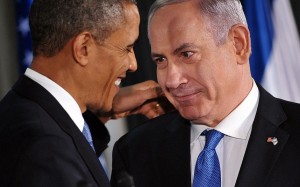 It seemed to come almost out of nowhere. The United States usually protects Israel from critical resolutions at the UN Security Council. However, in a dramatic move, the US abstained and a resolution criticizing recent settlement activity was passed by the 15-member body.
But this was not the end. John Kerry, Obama’s former Secretary of State, gave a lengthy address a few days later. Kerry’s speech was not so different from the statements of previous leaders, both Democrats and Republicans. He defended Israel’s existence, and denounced almost all forces actively opposing Israel.
However, Kerry harshly criticized specific Israeli policies. While Kerry’s speech defending the UN abstention uttered the standard, mildly critical, pro-Israeli talking points, it did contain some words that, taken out of context and spread throughout the internet, could and did indeed make a lot of Israelis and Zionists very angry. The most quoted one was: “If the choice is one state, Israel can either be Jewish or democratic, it cannot be both.”
Kerry was alluding to the fact that if Palestinians are absorbed into Israel in a “one state solution” but Israel remains a “Jewish State” this will not be democratic. According to Kerry, under such circumstances Palestinians would be second class citizens, i.e. non-Jews in a Jewish state.
Immediately, Kerry’s speech was decried by Israelis. Netanyahu fired back, as did the entire pro-Israeli blogosphere. The Republican and Likud Party aligned voices escalated the shrill accusations that Obama was a secret Muslim, a member of the Muslim brotherhood, a terrorist sympathizer, a Neo-Nazi, a Communist, and everything else he has been called for 8 years straight.
Meanwhile, Israel did not stop its settlement activity, and was not really affected at all by the resolution. The billions of dollars in US aid to Israel continued. Obama has left the office on January 20th, and is now replaced by Donald Trump, who claims to be more pro-Israel than Obama. The UN Security Council is not taking any specific action to halt the settlement activities condemned in its resolution.
Nothing really changed, but a lot of dramatic, heated words were exchanged between the USA and its closest Middle Eastern ally. Why did this happen?
Napoleon & Obama: “I Come to Restore Your Rights”
In 1798, the French militarist Napoleon Bonaparte, who seized power in the aftermath of the revolution and eventually became Emperor, set out to conquer Egypt. He issued a proclamation saying:
People of Egypt! You will be told by our enemies that I am come to destroy your religion. Believe them not. Tell them I am come to restore your rights, punish your usurpers, and revive the true worship of Mohammed. Tell them that I venerate, more than do the Mamelukes, God, his prophet, and the Koran.
Among the people of Egypt and Syria, as well as the entire Arab world, there was deep hatred for the British and Ottoman empires, who functioned as Napoleon’s rivals. Napoleon hoped that he could convince Muslims throughout the region to support him, and on this basis that he could defeat their hated colonial enemies, and conquer the region for France.
Napoleon was lying. He was not an adherent of the Islam faith. Some speculate that he may have been a freemason, and became familiar with the Koran and Islam due to their inclusion in Masonic rituals. Regardless, years later, Napoleon explained the proclamation to his fellow French Christians saying:
A change of religion, inexcusable for the sake of private interests, becomes comprehensible when immense political results are involved…. Do you think the Empire of the East and perhaps the subjugation of the whole of Asia was not worth a turban and some loose trouser? The state of feeling in the army was such that it would have undoubtedly lent itself to a joke.
Barack Obama, like Napoleon Bonaparte, is not a Muslim. As offensive and heretical as some evangelical Christians and Catholics may consider the teachings of the United Church of Christ and Reverend Jeremiah Wright, they are not Islamic in any conceivable way. Barack Obama was married in a church. He has been photographed drinking wine and eating hot dogs.
Obama’s middle name is “Hussein.” As a child, while living in Indonesia, he attended an Islamic elementary school. Obama apparently did meet with the Palestinian-American professor Edward Said. With all of this to cite as evidence, the allegation that he was a “secret Muslim” has not vanished.
The endless, semi-hysterical attacks on Obama for having alleged links to Islam certainly had an impact outside of US borders. This impact may not have been accidental. Writing in the Atlantic Monthly in 2007, the self-described conservative Andrew Sullivan considered the colorful background of the future president to be an asset:
What does he offer? First and foremost: his face. Think of it as the most effective potential re-branding of the United States since Reagan. Such a re-branding is not trivial—it’s central to an effective war strategy… The next president has to create a sophisticated and supple blend of soft and hard power to isolate the enemy, to fight where necessary, but also to create an ideological template that works to the West’s advantage over the long haul. There is simply no other candidate with the potential of Obama to do this.
Sullivan’s widely read and cited article said:
If you wanted the crudest but most effective weapon against the demonization of America that fuels Islamist ideology, Obama’s face gets close. It proves them wrong about what America is in ways no words can.
The USA certainly had a lot of credibility to regain as the Bush era came to an end. The unilateral invasion of Iraq had been widely opposed, not just in the Middle East, but even among NATO states. Bush had gone as far as to say “this crusade, this war on terrorism, is going to take a while.” The word “crusade” doesn’t exactly bring up pleasant feelings among Muslims around the world.
Meanwhile, the federal agencies of the United States flew into a very Islamophobic mode after the 9/11 attacks. The leaders of a religious charity known as the “Holy Land Foundation” were imprisoned for nothing other than running soup kitchens for Palestinian children. Mosques across the United States were then and continue to be widely surveilled.
His Middle Name is “Hussein”
Voices like Andrew Sullivan’s hoped that Obama’s background could restore the credibility of the USA in the eyes of Muslims. But this was just the tip of the iceberg. What came about in the first term of the Obama administration? In 2011 the world watched the “Arab Spring.” Across the Middle East, impoverished people rose up against their governments.
Analysts often argue that the Arab Spring was spawned by the global financial crisis and the regional drought. Throughout the Arab world, crops failed, water was scarce, and impoverished people piled into the cities facing dire economic conditions. The uprisings that eventually erupted were predictable. Such conditions are known to spark unrest.
But the world did not see a repeat of the 1979 Iranian Revolution, where the Persians toppled a western puppet dictator under the slogans of “Not Capitalism but Islam” and “War of Poverty Against Wealth.” The western capitalist apparatus was ready. The Arab Spring was immediately redirected to serve their ends. Social media outlets based in western countries, and the global apparatus of pro-American NGOs swung into action.
With a commander-in-chief who most people in the Middle East had a favorable opinion of, the forces of global power were able to ensure that the revolt did not become an uprising against western capitalism. No new anti-imperialist regimes were born. Rather, the opposite happened.
In Egypt, the pro-US regime of Hosni Mubarak fell, but what replaced it? First, Egypt elected Mohamed Morsi, a leader of the CIA-linked Muslim Brotherhood. Morsi was then toppled by a military coup d’etat. Now General Sisi, a top military leader under Mubarak, is in power.
The US backed Saudi regime was allowed to crush the uprisings within its own borders. Ayatollah Nimr Al-Nimr, a Shia cleric who led protests demanding civil liberties and religious freedom in the country was eventually beheaded for his role in the Arab spring. Saudi troops poured into Bahrain to keep the monarchy in power and crush the Shia majority that demanded their rights. In the aftermath of the revolt, Yemen staged a sham election in which Mansour Hadi, a Saudi puppet, was the only candidate on the ballot. Yemen is now torn apart by war, as many Yemenis reject Hadi’s pro-Saudi and Pro-US regime.
The energy and momentum of the Arab Spring, amplified and directed by the western TV networks along with Twitter and Facebook, went toward targeting two anti-imperialist, socialist governments. Gaddafi’s Libya had the highest life expectancy in Africa. Syria’s Bashar Assad presides over a centrally planned economy, supports Palestinian resistance, and is aligned with Iran, Russia and China.
In both Libya and Syria the United States began actively working to transform the Arab Spring into a successful regime change operation. Though the faces promoted on western television were often middle class, secular young people who dreamed of American consumerism while mouthing words about “democracy,” the brute force behind the Syrian and Libyan “revolutions” were religious extremists.
Based from the Syrian and Libyan countryside, forces linked to Al-Qaeda and the Muslim Brotherhood were joined by many foreign Jihadist fighters from throughout the region. The forces who toppled the Libyan government and continue to fight against the Syrian Arab Republic are dominated by those who adhere to Wahabbism, the ideology of Saudi Arabia and Osama Bin Laden. These deeply religious forces, working to topple anti-imperialist governments, happily took guns and funding from a country led by a man who went to a Muslim school, met with Edward Said, and whose middle name happened to be “Hussein.”
Imagine what could have happened in the region, if the wave of uprisings had taken place while George Bush “the crusader” was still in office. Obama’s presidency played a decisive role in manipulating and redirecting the events of 2011.
Netanyahu vs. Obama: A Made For TV Drama
 It is not uncommon for celebrities to clash with each other in the public arena. Often, these fights are not spontaneous, but intentionally provoked, or even planned, in order to generate publicity for both parties involved. For example, long before running for President, Donald Trump captured the attention of news headlines by having a spat with TV personality Rosie O’Donnell.
The perceived tension between Benjamin Netanyahu and Barack Obama has the looks of a “made for TV drama.” It is a prolonged public spat that is mutually beneficial to both parties. Do they actually dislike each other when the cameras are not rolling? Who knows.
While Obama and Netanyahu have butted heads, the US aid to Israel has not decreased or been cut off. Under Obama, the United States has worked to topple the Baathist Syrian government, one of Israel’s primary regional opponents. Israel has supported the regime change efforts with airstrikes in Syria targeting the anti-ISIS fighters of the Hezbollah organization.
The 2011 NATO intervention in Libya, championed loudly from the White House, toppled the Islamic Socialist government that had a long record of opposing Israel and arming Palestinian resistance.
Obama boasts that he has ended Iran’s peaceful nuclear energy program, and is making Israel safer from a supposed Iranian threat in the process. While there is occasionally criticism of Israel’s settlement activities, they continue unabated.
However, Obama’s clash with Netanyahu plays well for him, and the United States, in the Arab world. Throughout the Middle East, Netanyahu and Tel-Aviv are the most hated villains. Obama’s trading of nasty words with Israeli leaders raises the credibility of the United States. It gives the United States a kind of distance from Israel on the international stage, while US support remains key and keeps flowing in without pause. Obama’s Department of Justice has even conducted raids against pro-Palestinian activists.
Netanyahu benefits from the spat as well. Fear and hatred of Palestinians, Muslims, and Arabs has been key in securing the recent electoral victories of the Likud Party. If Netanyahu looked like he was friendly toward someone who attended an Islamic elementary school, or had the middle name “Hussein” this would discredit him in the eyes of his base.
Despite the fact that Israel receives billions of dollars from the United States, as well as weapons and other assistance, Netanyahu looks as if he is not afraid to bite the hand that feeds him. Fighting with Obama allows Netanyahu to look like a brave, fearless, true believer in the Zionist cause.
“Don’t Forget About Obama!”
Though many Israelis and supporters of Israel in the United States dislike Donald Trump, he has presented himself during the campaign as a pro-Israeli hardliner. His speech to the American Israeli Public Affairs Committee was a repetition of standard pro-Israeli talking points, saying:
“When you live in a society where the firefighters are the heroes, little kids want to be firefighters… In Palestinian society, the heroes are those who murder Jews.”
Trumps statements about banning Muslim immigration haven’t exactly been popular in the Arab world. Statements like “Islam hates us” don’t go over so well either.
The fear among certain forces in the United States is that Trump could alienate the many Muslim allies of the United States in the Arab world. Wall Street oil companies make lots of money from the various autocratic regimes in Qatar, Kuwait, Saudi Arab, UAE, and elsewhere. Pentagon weapons manufacturers also make lots of money from selling their hardware to these regimes.
Like Napoleon’s strategy in Egypt, efforts to portray Obama as sympathizer with Muslims and Arabs haven’t exactly worked out so well. While the elites within the US aligned Gulf States and some of extremists forces who have poured into Syria have bought into the idea Obama is a trustworthy ally, many people in the region have not. The Syrian government has not fallen. Iran has not really been weakened.
The economic problems and other factors that fueled the discontent of 2011 have not vanished. There is no guarantee that the oil bankers of the United States will keep their grip over this vastly important territory. Certain sectors harbor real fear that Trump’s brash tone could now ruin everything. [emphasis added]
The last minute moves at the UN Security Council, publicly invoking Israel’s wrath, was a message to the Arab world. It was a desperate, final attempt to say: “Whatever Trump does, don’t forget about Obama! Not all Americans are hardline supporters of Israel! Not everyone in Washington hates the Arabs! Muslims of the world, keep trusting us, don’t turn against America!”
Caleb Maupin is a political analyst and activist based in New York. He studied political science at Baldwin-Wallace College.
When the guns fall silent in Syria
By M K Bhadrakumar | Indian Punchline | December 24, 2016
A Kremlin readout on the phone call made by President Vladimir Putin to Syrian President Bashar Al-Assad on Friday to formally congratulate the latter on the liberation of Aleppo, highlighted that the Russian leader “stressed that the main task now is to focus on furthering the peace process, in particular by signing an agreement on comprehensive resolution of the Syrian crisis.”
Putin’s remark is an important signpost of the way forward in Syria. Moscow disfavours continuation of military operations by the Syrian government forces to regain control of the entire country (which would be the likely preference of Damascus and Tehran) and prefers that conditions must be made available to open the peace track. At any rate, all 5 major cities in Syria and the entire Mediterranean coast, where the bulk of Syrian population is concentrated, is in government hands already and the opposition is left to hold Idlib and isolated pockets in the south and east, with supply lines under immense pressure.
A ceasefire all across Syria is in the making. This appears to be the understanding reached at the 2-track ‘trilateral’ of the foreign and defence ministers of Russia, Turkey and Iran which was held in Moscow on Tuesday. Interestingly, at a meeting in the Kremlin on Friday to report to Putin on the conclusion of the operations to liberate Aleppo and the successful downstream activities to evacuate civilians and render humanitarian assistance (in terms of a deal between Turkey, Russia and Iran), Defence Minister Sergei Shoigu also made a significant remark that “In our (military’s) opinion, we are close to reaching an agreement on a complete ceasefire across Syria.” Putin responded:
- Together with our partners from Iran and Turkey, and of course with the Syrian government, other countries in the region and all countries concerned, we will need to continue efforts to achieve a final settlement. We must make the greatest effort now to end hostilities everywhere in Syria, and we will, at least, do our sincerest best to achieve this goal.
Of course, the campaign against the Islamic State and the al-Qaeda affiliates will continue. A ceasefire all across Syria has been a key demand by Turkey. Interestingly, Putin referred to the objective of drawing “other countries in the region” (other than Turkey and Iran) into these processes. The reference is to Saudi Arabia and Qatar principally. Conceivably, Russian diplomacy is at work on this front.
Russian Deputy Foreign Minister Gennady Gatilov said he expected the peace talks to take place in Astana in mid-January. But TASS news agency quoted Kremlin spokesman Dmitry Peskov as saying: “I wouldn’t talk now about timing. Right now contacts are being made and preparation is under way for the meeting.” He said Putin would have a series of international telephone calls later to discuss the Astana talks.
Whether the Gulf sheikhs will be willing to drink from the chalice of poison remains to be seen. But what alternative is left for them now that the ‘regime change’ agenda in Syria is off the rails? Equally, a shift in Saudi and Qatari policies, away from further intervention in the Syrian conflict, will also at some point raise another ticklish question: What about the role of Hezbollah and other Shi’ite militia groups from Iran and Iraq who have been fighting in Syria? How an all-Syria ceasefire will be enforced remains to be seen.
Moscow’s objective will be to create new facts on the ground by the time the Trump administration shifts gear on Syria policies. Moscow has signalled on Friday that it is preparing for the long haul as well, with Putin signing a presidential decree ordering the signing of a deal with Syria that will “expand the territory” of Russia’s naval facility in Tartus and allow Russian warships into Syrian waters. The Soviet-era base is currently inadequate to serve most of the modern ships in the Russian Navy.
If the Syrian peace talks take off in the coming weeks, it will amount to a huge victory for Russia’s prestige in the Middle East and for Putin, in particular. But that is a big ‘if’. The good part is that with a relatively cooperative US administration settling down in Washington soon, which may be inclined to collaborate with Russia.
Israel defends fake Lebanon military buildup map as Hezbollah’s ‘war crime illustration’
RT | December 10, 2016
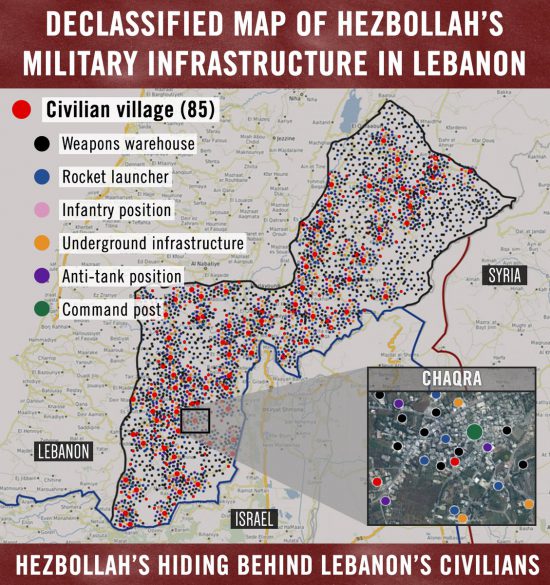
A “declassified” map of an alleged Hezbollah military buildup in southern Lebanon shared by the Israel Defense Forces (IDF) has been exposed by Twitter users as a fake, forcing the IDF to admit the picture was just a “visual illustration” of the militant group’s “war crimes.”
The map titled “Declassified map of Hezbollah’s military infrastructure in Lebanon” was posted on the official IDF Twitter account on Tuesday, highlighting 85 towns and villages in the southern part of the country.
Spots, showing civilian settlements were surrounded by numerous multicolored dots, labeled with names such as “weapon warehouse” or “rocket launcher” and other military facilities.
The tagline of the image said “Hezbollah’s hiding behind Lebanon’s civilians,” while the tweet’s caption was the simple and rather dramatic statement, “this is a war crime.”
Such a level of detail and awareness of alleged Hezbollah activities would be truly impressive, if the map had not turned out to be a fake. Some Twitter users pointed out that it was unlikely the image was a “declassified map,” since its history showed that it had been created using Google Maps via an IDF spokesperson account. The dots, marking the alleged “military buildup,” even featured a repetitive pattern.
IDF later said the map had been an “illustration,” and users simply misinterpreted it as a piece of declassified intelligence. The map’s title, tagline and caption were presumably “illustrative” too.
“The illustration reflects how Hezbollah has positioned its terrorist infrastructure within the civilian arena,” the spokesperson told The Times of Israel.
The map, despite its ”illustrative” nature, has been shown to almost every foreign diplomat visiting Israel, to demonstrate that while Hezbollah participates in the Syrian civil war, it continues preparations for conflict with Israel and hides among civilians located near the border, according to a Channel 2 report.
Israel has attacked targets allegedly linked to Hezbollah in neighboring countries, mainly in Syria. The most recent incident of this kind reportedly happened on Wednesday, when Israeli rockets hit the Mezzeh military airport near Damascus.
Israeli Defense Minister Avigdor Lieberman commented on the issue at a meeting with European Union envoys in Israel Wednesday.
“We are first and foremost making efforts to maintain the security of our citizens and protect our sovereignty, and trying to prevent the smuggling of sophisticated weapons, military equipment and weapons of mass destruction from Syria to Hezbollah,” Lieberman said.
Israeli Prime Minister Benjamin Netanyahu in April also admitted multiple strikes on targets in Syria in order to prevent Hezbollah from obtaining “game-changing” weaponry.
Twenty Buses Carrying Militants Go out of Western Ghouta towards Idlib

Buses carrying militants in Homs
Al-Manar | November 29, 2016
Twenty buses carrying militants left Khan El-Sheikh area in western Ghouta of Damascus toward Idlib city on Monday after they handed over their weapons, Hezbollah Military Media Bureau said in a statement.
“300 Kalashnikov guns were handed over to the Syrian army as another five buses transferred families from the same area toward Zakiya region,” the statement read.
The Military Media said that all gunmen will be gradually transferred by Tuesday in accordance with the deal between the national military and allied forces, and the armed groups operating in Khan El-Sheikh, Zakiya, Moqailabiyah and Taibeh.
Gap with Russia disturbing: Israeli official
Press TV – November 17, 2016
A senior Israeli official says Tel Aviv should be concerned about deepening disconnect with Moscow over Russia’s role in the Syria conflict.
Avi Dichter, chairman of Israel’s foreign affairs and military committee and the former head of the Shin Bet intelligence agency, says Russia’s interests in the region by no means coincide with Israel’s.
“The gap between us and them is large and disturbing,” he told Reuters news agency after returning from a visit to Moscow where he held high-level meetings last week.
Dichter said Russia’s views on Iran, Syrian President Bashar al-Assad and the Lebanese group Hezbollah were in sharp contrast to Israel’s and a growing source of potential conflict.
Russia does not view Iran and its allies “according to the level of threat they pose or broadcast towards Israel,” he said.
The Russians, he said, “view Hezbollah positively” and are backing the group’s assistance to the Syrian government in the war against Takfiri and other terrorists.
“Russia thinks and acts as a superpower and as such it often ignores Israeli interest when it doesn’t coincide with the Russian interest,” Dichter said.
Israel is believed to have been assisting militants fighting to topple President Assad in Syria. The Israeli regime’s worries have risen as Takfiri terrorists have suffered major setbacks over the past few months.
Tel Aviv’s main concern is to be able to attack Hezbollah, with which it fought a war in 2006. Over the past two years, Israeli artillery and warplanes have carried out several strikes against alleged weapons convoys in southern Syria that Israel claimed were destined for Hezbollah.
The occupying regime’s freedom of movement in the area is now more restricted because of the presence of Russian jets and advanced anti-aircraft batteries that Moscow has put in place.
With Russia becoming more deeply involved in the Syria conflict, Tel Aviv has sought to keep lines of communication with Moscow open to avoid an accidental confrontation.
Meanwhile, Israeli Prime Minister Benjamin Netanyahu has visited President Vladimir Putin three times this year, apparently in an effort to persuade him to drop Russia’s engagement in Syria.
But Dichter said Russia thinks Assad should stay in power, that Iran is a stabilizing force and that the nuclear deal the word powers struck with Tehran was largely positive.
Featured Video
Trita Parsi: Israel Set a Trap for Total War in the Region
or go to
Aletho News Archives – Video-Images
From the Archive
Zionism’s Violent Legacy
By Donald Neff | Washington Report On Middle East Affairs | January 1996
On January 4, 1948, Jewish terrorists drove a truck loaded with explosives into the center of the all Arab city of Jaffa and detonated it, killing 26 and wounding around 100 Palestinian men, women and children.[1] The attack was the work of the Irgun Zvai Leumi – the “National Military Organization,” also known by the Hebrew letters Etzel – the largest Jewish terrorist group in Palestine. The Irgun was headed by Revisionist Zionist Menachem Begin and had been killing and maiming Arabs, Britons and even Jews for the previous ten years in its efforts to establish a Jewish state.
This terror campaign meant that at the core of Revisionist Zionism there existed a philosophical embrace of violence. … continue
Blog Roll
 Aletho News
- Trita Parsi: Israel Set a Trap for Total War in the Region
- Trump’s Iran war is on an Israeli leash
- Saudi oil boss issues global supply warning
- Riyadh Says Its Oil System Is Intact. The Numbers Say Otherwise.
- Trump and Netanyahu Want to “Finish the Job” on Iran
- US ‘one-sided dictation’ not Iran’s beliefs makes rational talks impossible: Baghaei
- Iran’s Next Strike May Not Explode. It Could Shut You Down /Col Doug Macgregor
- Iran: US political targets legitimate if assassinations return
- Iraq shuts key border crossing with Iran under US pressure: Report
- Undersea Internet cables could be targeted in retaliation for attacks on Iran: IRGC deputy chief
- If Americans Knew
- The Israel Lobby’s Changing Fortunes
- AIPAC has become such a political liability that it’s shifting to a more “nimble” approach to buying politicians
- At least 160 Israeli settler attacks in 2 weeks
- Will Gaza’s Ancient Christian Community Disappear Forever?
- Israel’s vision of regional security rests on keeping Arab states weak
- Heidi Levine recounts how Palestinian youths helped save her in settler attack
- DAILY UPDATE: Latest essential news on Palestine, Israel, & region
- Trump’s Intensifying Sabotage of the ICC, for Israel’s Sake
- Israeli military detain US and UK volunteers in West Bank including Democratic NY politician Brad Lander
- Americans at National Conservatism Conference held in Israel this year criticize Israel
- No Tricks Zone
- E-Cars Reduce CO2 Emissions By Only 41% Compared To Internal Combustion Engine Vehicles
- Predictions Made By Renowned Climate Professor Over Past Decades Have Been Proven To Be Poor
- New Study Suggests Large Regions Of The Pacific Ocean Have Been Cooling For The Last 80 Years
- Germany’s Green Energy Debacle: High Energy Costs Force Kahla Porzellan to Close After 182 Years!
- New Study: 50 Years Of The Most Aggressive ‘Net Zero’ Policies Can Only Affect The Global Climate By 0.03°C
- US September “Heat” Was No Record…Many Records Set Decades Ago
- Latest European Green Energy Debacle; Portugal’s Largest Flagship Solar Park Insolvent!
- Green Energy Debacle: German Expert Professor Fritz Vahrenholt Warns Of Severe Economic And Social Consequences
- Two More Paleo Reconstructions Affirm Meters-Higher Sea Levels Across Ireland, Brazil 7000-6000 Years Ago
- New Study: Earth And Venus Surface Warmth Largely Explained By Convection And Lapse Rate, Not CO2 Or Radiation

