Hillary Clinton, The Vote, and Contemporary Feminism’s Class Blindness
By Julian Vigo and Jasmine Curcio | CounterPunch | November 18, 2016
The recent electoral victory of Donald Trump over Hillary Clinton has led to a massive spewing of theatrics on social media whereby public “mourning” which verges on the sycophantic has given rise to a larger public momentum of mass neoliberal outrage as the surrogate for political activity. Even within feminist circles are the myriad Facebook groups devoted to discussing how Clinton was the arch-victim of misogyny, no mention of class politics or Clinton’s having turned her back on the mere mention of class. Now with the recent movement to utilise safety pins as a means to “indicate that the person wearing the pin is a safe person for those who might feel in danger, whether that’s due to their religion, nationality or other status,” we have fully entered into the age of absurdist politics whereby “safety” is demarcated through cheap political gimmickry and the real analysis of political failure is fobbed off by feminists as the inability of people to recognise the necessity of women’s political self-determination—or whatever that has come to mean nowadays.
Sarah Ditum in her recent piece, “Donald Trump has grabbed America by the pussy, and it’s women who will suffer,” writes, “Women do not “vote with our vaginas”, as a rule. Maybe it’s time we looked into that.” Likewise, Cosmopolitan has announced that the election result “is such a deeply felt insult to women across the United States,” and numerous other publications have insinuated the same: that Clinton’s loss somehow represents an “erasure” of women, with zero analysis as to how Clinton’s campaign failed to address class issues or, more poignantly, how class is directly related to issues of sex. Indeed, one must wonder if Ditum et al have even considered for a moment how women in Honduras, Haiti, Libya, Syria, Afghanistan, and Ukraine have been affected by her policies which lead to the murder and rapes of women throughout these regions after political instability was ensured by Clinton’s actions. Not negligible in this timeline is how Clinton utilised false claims of rape to overthrow Muammar Gaddafi or how Clinton refuses to address the coup in Honduras, instead naming it a “crisis” while assisting in the deposition of former Honduran President, Manuel Zelaya, which resulted in myriad documented rapes throughout the country.
If women must “vote with our vaginas” then, it would seem that the choice between two candidates where one grabs pussies while the other leaves them exposed to poverty, death, and rape, resulted in what would appear to be the least overtly violent figure. That is if you are not a white woman living outside the neoliberal dream of 401k or hedge fund accounts. To think that Trump could possibly have been the more class-conscious and feminist choice of the two might seem surreal to many, but the Realpolitik of this election demonstrates that Hillary Clinton was unable to mobilise support from the working class or women. As Lorna Garano notes: “One problem with the Bernie Bro myth: He had massive support from women. That’s because things like healthcare, education, and a liveable wage are women’s issues. You can’t eat symbolism.” Certainly, if the choice is down to women being targeted because of their vaginas and the assumption that they are unable to think beyond their anatomical parts, then women are truly, in all senses of the word, fucked. What seems to be missing from recent “feminist” analyses of political power is how class issues are most definitely women’s issues and it would seem that American women know this far better than liberal pundits. The larger question is how feminist analysis today might learn from this election rather than refract pussy politics onto all those “mindless, blondes” who voted for Trump.
Yet in spite of her extensive political record, not to mention her repeated choice to stand by Bill in the face of sexual assault allegations, Hillary Rodham Clinton was constructed by a vocal subset of liberal feminists as a quasi-divine figure incapable of (serious) wrongdoing, whose election as President would in an instant vindicate the struggles of our mothers and grandmothers, delegitimize all misogynist representations, liberate women from the lack of confidence we have accumulated over the course of our lives, and, to top it off, would smash the ultimate glass ceiling. A woman, leading the free world!
If this iteration of the culturally-overplayed narrative of fulfilling every girl’s dream of a female president seems too good to be true, it probably is. But dreams themselves are ultimately anchored to material situations – those who allocute the needs of females via mainstream media outlets are often blindsided by their own history, socialisation, and material wealth, universalising their particular interests in projecting them onto all women. Not coincidentally, the persistence, enunciated by many feminists today, that Clinton represents the best interests of females is driven by a uniquely Western perspective whereby these interests adopt a myopic aperture, relegating all that is important to female lives as restricted within a very narrow set of political and economic paradigms. Namely the needs of a neoliberal class of women for whom pussy politics is a luxury because money has allowed this brand of feminism to advance in an eerily similar trajectory to the Clintonian mandate whereby class is elided in favour of a happy feminism where those pesky, depressing issues of paying rent, bus fare, and groceries need not be on the table. Glass ceilings sound far more appealing and empowering by comparison.
But what would a Clinton presidency concretely offer women? This question was answered with the supercilious assumption that the “benefits” to women – whatever they were – would trickle down to the most vulnerable and disadvantaged, in a fashion reminiscent of Ronald Reagan’s economic plan for the masses. That if we let the privileged women at the top chase money and power, they, grateful for the opportunity, would commence giving a hand up to all women below. Given the US’s position as imperialist superpower, this was imagined to take place on a global scale. Aside from being dangerously close to essentialism, this assumption relies on a notion of there existing an organic feminist consciousness arising crudely and simply out of the fact of being a woman, able to manifest itself irrespective of pre-existing political commitments, policies or party lines. It ultimately condescends to all women by downplaying their intelligence and political acumen whilst inviting them to participate in a political arena curtailed by a predetermined narrative and naked class interests, telling them that the only way they could make a real impact on the world is, in fact, by voting with their vagina.
This sort of feminist politics is not new and is reminiscent of an earlier moralisation where the feminist movement was largely composed of middle and lower-class women who coalesced their power within the temperance movement, seeking political gains at the ends of moralist and pragmatic interventions. Where these first wave feminists advocated the development of moral integrity and exemplarity, Clinton’s politics represent anything but.
Feminist history, in particular the suffragist movement of the first wave and the image of hunger-striking suffragettes sacrificing for future generations of women, was cleverly utilised by the Clinton campaign to coalesce sentiment around the idea that Hillary was a direct successor of this tradition and that her presidency would represent an achievement of the same nature, a sort of capstone on the suffragist achievement. And the vote our foremothers gave us would have made it all possible. The campaign’s manifest ignorance of the political history of the first wave, in advancing a warmonger as representative of a staunch anti-war tradition, is embarrassing at best. First wave feminists emphasised the cultivation of female responsibility and the importance of moral character development via engagement with the wider world denied them, in opposition to the prevailing Victorian cultural worship of the “angel in the house” curtailed by her inferior feminine, childlike capacities, foreclosed from the ethical and political dimensions of truly-human experience and left to exercise her feminine wiles to procure anything she needed. How Clinton herself signified continuity with this tradition remains a mystery; if one is to go about the business of idealising a human figure, one would think that this process would first of all entail that they, at the very least, embody some noteworthy ethical characteristics or political principles. The cognitive dissonance in deifying a war criminal did not seem to diminish but further strengthened the desperate exhortation to women to simply believe (in Her). The Hillary campaign’s conviction that the suffragists’ work, ceaselessly campaigning throughout three generations for voting rights and just barely scraping forth that achievement for themselves, was ultimately carried out in order to execute a neoliberal program entirely antithetical to their values and aims, displays a deep hubris which verges on betrayal.
Alternatively, if those first wave principles so happen to trouble you by obstructing Hillary worship, you can reassure yourself in shooting the whole thing down. Sarah Churchwell devotes space in a recent Guardian article to the cultural examination of the female-president fantasy, in which she writes off the fundamental values of the first wave as a naive belief that “idealised women should cleanse American politics with their purity.” Purity, in the first wave lexicon, didn’t signify what we now come to know as moral puritanism, let alone the sexist double standard. A simple assessment of the meaning of the colours of the suffragist flag tells us the following: white symbolised “purity in public as well as private life, purple for dignity and self-respect and green for hope and new life”. A crucial conceptual distinction is made here that severs dignity and sexual “honour” from female ethical conduct in such a fashion that posits women, for the first time in history, as political beings to be judged by their principles. As for the crusade to clean up politics with the mop of feminine values, it is useful to remember that in campaigning for their en masse entry into political life by winning the vote, women had to put forth a pressing reason why their political contribution would be valuable, and strategically made use of the reasons for their exclusion – pacifism, maternal qualities – by transforming them into arguments for inclusion. You can only fight with what you’ve got, after all. It is similarly mistaken to directly equate negative representations of a female president in American literature with antipathy toward the idea as such; judging by the passages Churchwell has quoted it is apparent that a female presidency was used as a narrative device to make a general statement about women. Tales of women leaving the presidency behind for (grand)motherhood, displaying the monstrous, “masculine” characteristics of a human subject while in office, or admitting they fundamentally need men under the guise of mating with the last man alive, reflect misogynist male anxieties toward women in general. Churchwell nevertheless maintains that it is Americans’ deeply seated cultural fear of a female president that pushed a Trump victory. But if this line of argument fails to convince as to why Hillary Clinton was cheated out of the presidency she deserved, you can always cry conspiracy.
The amount of feminist energies poured into the Clinton campaign raises further questions on what the vote still means today for feminism. The idea that the vote empowered American women to definitively “choose” their liberation, as if an either-or dilemma, at the ballot box in 2016 seems fatuous. The narrative upheld by Hillary supporters with regard to the vote’s place as the lever that would lift her into the presidency, is surrounded by the politics of affect and the vote’s importance to feminism has been elevated to such an extreme level that it may not ultimately deserve. Again they neglect to take feminist history into account. The late Shulamith Firestone, author of The Dialectic of Sex: The Case for Feminist Revolution (1970) and founding figure of second wave Anglo-American feminism, evaluated the trajectory of the first wave as a foundation upon which to rebuild a movement for women’s liberation. She was not prone to nostalgic idealism about the vote, which she saw as a political failure, not a victory, in the long run. In The Dialectic of Sex she writes:
The granting of the vote to the suffrage movement killed the W.R.M. [Women’s Rights Movement]. Though the anti-feminist forces appeared to give in, they did so in name only. They never lost. By the time the vote was granted, the long channeling of feminist energies into the limited goal of suffrage – seen initially as only one step to political power – had thoroughly depleted the W.R.M. The monster Ballot had swallowed everything else … The women who later joined the feminist movement to work for the single issue of the vote had never had time to develop a broader consciousness: by then they had forgotten what the vote was for. The opposition had had its way (22).
And in Notes from the First Year, published by New York Radical Women in 1969:
For what is the vote worth finally if the voter is manipulated? Every husband knows he’s not losing a vote, but gaining one. Today, some 50 years later, women still vote as wives, just as they govern as wives.
Despite the major flaw in her feminist analysis, of adducing women’s oppression solely on the basis of a fundamental biological capacity for childbirth, Firestone came from a strong left tradition which informed her feminism. Unlike her more liberal contemporaries such as Kate Millett, economic class was woven into the very fabric of her radical feminist analysis. In the chapter of The Dialectic of Sex on childhood, Firestone notes that bourgeois women and children possessed an economic patronage which partially offset their oppression. Theirs was a “privileged slavery”. This is a far cry from contemporary intersectional analyses which displace class not only as a separate axis from other oppressions (which suddenly becomes relevant when we have poor people to feel sorry for), but as a concept itself that would inform theoretical understandings of oppression and remove the need for a problem-solving legal theory concerned with the topography of the individual.
What intersectional feminism does for the bourgeois female subject today, Reaganomics did for the economic elite of the 1980s who were made to believe that by paying virtually no taxes, they were helping the poor. And such tactics work as long as everyone is complicit in keeping the fantasy alive. The recent Twitter storms and Facebook debates rage on as alleged feminists have, over the past week, made the claim that by disagreeing with Clinton’s policies one is necessarily giving a tacit nod to Trump, or that in critiquing the use of safety pins as meaningful political resistance one is “mock[ing] people who are scared.” The reality on the ground is that all Trump’s victory has accomplished, thus far, is that white liberals—both male and female—are living out a theatre of “fright” which speaks more to their own inability to read public sentiment about the economy and the reality of pre-existing and current racial politics in the United States. Meanwhile, the most cogent critique of both the Trump victory and white neoliberal reactions to the election was beautifully presented by David Chappelle and Chris Rock on Saturday Night Live as they made fun of this demographic’s shock over their “nightmare scenario,” Clinton’s “power grab” of three electoral votes in Vermont, and finally, the enunciation which causes both men to burst out into laughter: “This is the most shameful thing America has ever done!”
So, when the likes of J.K. Rowling can boast so gleefully about their social position and wealth, it is clear that feminism is heading towards an impasse where its own aversion to class politics will be its own undoing. Just as many feminists have bravely fought against the onslaught of identity politics demanding a historical materialist analysis of of the political landscape, feminism risks forming a new niche of identity politics given its inability to recognise class as central to contemporary life and its concomitant nexus to race and sex.
The 2016 presidential election has indeed been historic. If all the Hillary campaign was capable of offering the masses at the end of the day was symbolic value, it was therefore necessary to reconfigure the election as a contest of symbols, each candidate representing a set of values. Yet these values were anchored in identity divorced from political economy, which turned the Hillary campaign’s omission into the Trump campaign’s relevance. The discourse of this election demonstrates that, under late capitalism, representative democracy is in crisis: when “politics” is administrative assent to a neoliberal end-of-history consensus, identity becomes the primary ground of contestation, substantially transforming the previous meaning of political representation.
Ultimately, the election result has demonstrated that the majority of women have found the liberal feminist program of self-empowerment wanting. Lesser-evilism won the day, not positive support. We were sold a fabricated choice: between the Clinton campaign’s individualist ethos and false political narrative that warned of the horror show of trauma that would befall women if they didn’t vote for her, and the Trump campaign that catalysed the masses through misogynist and racist rhetoric—while also paying some attention to working class concerns. Criticism is forbidden. Left-liberal rhetoric instead implores us to trust the science of intersections stating that the white female establishment politician knows best and any opposition are just unenlightened pussy-grabbing fascists. The feminist fight for liberation has been sidelined into pussy politics.
Julian Vigo is a scholar, film-maker and human rights consultant. She can be reached at: julian.vigo@gmail.com. Jasmine Curcio is a materialist feminist writer and activist living in Melbourne, Australia.
Obama’s Hollow Legacy
The emptiness of defeat

By Margaret Kimberley | Black Agenda Report | November 16, 2016
Obama’s legacy is in tatters, and that is good news. Donald Trump’s victory was not just a win over Hillary Clinton, but against Democratic Party policies that silenced the rank and file. For years Democrats became convinced that the only means of keeping Republicans at bay was to go along with their party leadership without complaint. If they wanted to expand trade deals that stole workers’ jobs, so be it. The people who marched against the invasion of Iraq folded their tents when Democrats became the party of endless war. When Obama promoted austerity and “grand bargains” with Republicans not a word was uttered. Even Black Lives Matter refused to point out that the Obama Justice Department left killer cops unpunished.
Barack Obama is nothing if not consistent. While Democrats take to the streets in protest against president elect Trump, Obama declares that the man he once called unfit is not an ideologue, but a “pragmatist.” No one should be surprised about the conciliatory tone. Obama never had a problem with Republicans. They may have obstructed him, but he was always happy to assist them because he wasn’t really opposed to their policies.
The most obvious example of Obama’s lack of substance was his relationship with black Americans. His disdain and contempt for the people who loved him the most was clear to anyone who paid attention. Jokes about “cousin Pookie” and parents serving fried chicken for breakfast should have been seen as the racist screeds they clearly were. But the desire to see a black face in a prominent place endures to our detriment.
Obama won by making himself palatable to white people while also taking advantage of undeserved black pride. Hillary Clinton would be the president elect if the new voters who emerged in 2008 had remained committed to the Democratic Party. But their loyalty was to the imagery of Barack Obama as president. Their joy was confined to seeing him meet the queen of England alongside his first lady or disembarking from Air Force One with his signature swagger. The sight of Barack and Michelle hosting a state dinner was enough to make black hearts swoon. Policy initiatives need not intrude upon the love fest.
The end result of this unrequited and superficial love was six million fewer votes cast for Hillary Clinton in 2016 than for Obama in 2012. The apocryphal cousin Pookie stayed home and no one should be surprised. There is no secret to keeping voters engaged. They are engaged if their needs are met. Deliver for voters and they deliver in the voting booth.
Even the unpopular and shady Hillary Clinton could have won Michigan if the people of Flint had received the federal help they needed so badly. Not only did the Obama environmental protection agency allow the beleaguered city to be given contaminated water, but he showed up for a photo opportunity and did nothing else as residents suffered. He drank a glass of water, posed for the cameras and returned to Washington. The people of Flint are still living under conditions Americans think of as being “Third World.”
The response to Trump’s victory should mean more than protesting policies the Democrats now have little ability to fight. This moment presents an opportunity for much needed introspection and mea culpas. Millions of people did more than just accept Democratic Party policy. They supported actions they would have rejected if carried out by a Republican or a white Democrat. They supported Muammar Gaddafi when Republicans were president but averted their eyes to his murder when committed by a Democrat. They even voted for the person who bragged about the killing. Democratic voters must ask themselves why they said nothing when their party promoted trade deals that were against their interests. Ultimately that acquiescence led to defeat at Trump’s hands.
The Obama team’s propaganda skills were legendary but the day of reckoning revealed the emptiness of what they produced. The corporate media acted like scribes under White House direction and declared that Russia was an enemy state and its president a 21st century Hitler. Now it is Donald Trump, the self-promoting reality television star, who declares his willingness to talk to his Russian counterpart. It is the sort of behavior that Democrats once valued.
Democratic presidents Jimmy Carter and Bill Clinton began the tradition of getting Democrats to support what they didn’t like. Obama perfected the art, which ultimately led to the debacle. He will certainly not be the last to tempt the party faithful but in 2016 Democrats sold their souls and ended up with nothing. Defeat creates the most hollow feelings of all.
Margaret Kimberley can be reached via e-Mail at Margaret.Kimberley(at)BlackAgendaReport.com.
Clinton Promotes War While US Public Opinion Speaks to Anti-Militarist Populism

By James Petras :: 11.14.2016
Introduction
Castigating the US electorate as accomplices and facilitators of wars, or, at best, dismissing the voters as ignorant sheep-people (‘sheeple’) herded by political elites, describes a partial reality. Public opinion polls, even the polls overwhelmingly slanted toward the center-right, consistently describe a citizenry opposed to militarism and wars, past and present.
Both the Right and Left have failed to grasp the contradiction that defines US political life: Namely, the profound gap between the American public and the Washington elite on questions of war and peace within an electoral process that consistently leads to more militarism.
This is an analysis of the most recent US public opinion polls with regard to outcome of the recent elections. The essay concludes with a discussion of the deep-seated contradictions and proposes several ways in which these contradictions can be resolved.
Method
A major survey of public opinion, sponsored by the Charles Koch Institute and the Center for the National Interest, conducted by the Survey Sampling International, interviewed a sample of one thousand respondents.
The Results: War or Peace
More than half of the American public oppose any increase in the US military role overseas while only 25% back military expansion.
The public has expressed its disillusionment over Obama’s foreign policy, especially his new military commitments in the Middle East, which have been heavily promoted by the state of Israel and its US domestic Zionist lobby.
The US public shows a deep historical memory with regard to the past military debacles launched by Presidents Bush and Obama. Over half of the public (51%) believe that the US has become less safe over the past 15 years (2001-2015), while one eighth (13%) feel they are more secure.
In the present period, over half of the public opposes the deployment of ground troops to Syria and Yemen and only 10% favor continued US support for the Kingdom of Saudi Arabia.
With regard to specific US wars, over half believe that Bush’s invasion of Iraq made the US homeland less secure, while only 25% believe it didn’t increase or decrease domestic security. Similar responses were expressed with regard to Afghanistan: 42% believe the Afghan War increased insecurity and about a third (34%) felt it did not affect US security.
In terms of future perspectives, three quarters (75%) of the American public want the next President to focus less on the US military operations abroad or are uncertain about its role. Only 37% are in favor of increased spending for the military.
The mass media and the powerful financial backers of the Democratic Presidential candidate have focused on demonizing Russia and China as ‘the greatest threats in our time’. In contrast, almost two thirds (63.4%) of Americans believe the greatest threat comes from terrorism both foreign and domestic. Only 18% view Russia and China as major threats to their security.
In regard to the Pentagon, 56% want to reduce or freeze current military spending while only 37% want to increase it.
Wars and Peace: The Political Elites
Contrary to the views of a majority of the public, the last four US Presidents, since the 1990’s, have increased the military budget, sending hundreds of thousands of US troops to launch wars in three Middle Eastern countries, while promoting bloody civil wars in three North African and two European countries. Despite public opinion majorities, who believe that the invasions of Afghanistan and Iraq have increased threats to the US security, Obama kept ground troops, air and sea forces and drone operations in those countries. Despite only 10% public approval for his military policies, the Obama regime has sent arms, advisors and Special Forces to support the Saudi dictatorship’s invasion of tiny Yemen.
Obama and the Democratic presidential candidate Hillary Clinton pushed a policy of encircling Russia and demonizing its President Putin as the greatest threat to the US in contrast to US opinion, which considers the threat of Islamist terrorism as five times more serious.
While the political elite and the leading Presidential candidates promise to expand the number of US troops abroad and increase military spending, over three quarters of the American public oppose or are uncertain about expanding US militarism.
While candidate Clinton campaigned for the deployment of the US Air Force jets and missiles to police a ‘no fly zone’ in Syria, even shooting down Syrian and Russian government planes, the majority of US public opposed it by 51%.
In terms of constitutional law, fully four-fifths (80%) of the US public believes the President must secure Congressional approval for additional military action abroad. Nevertheless, Presidents from both parties, Bush and Obama launched wars without Congressional approval, creating a precedent which the next president is likely to exploit.
Analysis and Perspectives
On all major foreign policy issues related to waging war abroad, the political elite is far more bellicose than the US public; they are far more likely to ignite wars that ultimately threaten domestic security; they are more likely to violate the Constitutional provisions on the declaration of war; and they are committed to increasing military spending even at the risk of defunding vital domestic social programs.
The political elites are more likely to intervene in wars in the Middle East, without domestic support and even in spite of majoritarian popular opposition to war. No doubt the executives of the oligarchical military-industrial complex, the pro-Israel power configuration and the mass media moguls are far more influential than the pro-democracy public.
The future portends a continuation of militarism by the political elites, and increase in domestic security threats and even less public representation.
Some Hypothesis on the Contradiction between Popular Opinion and Electoral Outcomes
There is clearly a substantial gap between the majority of Americans and the political elite regarding the role of the military in overseas wars, the undermining of constitutional prerogatives, the demonization of Russia, the deployment of US troops to Syria and deeper US entanglement in Middle East wars for the benefit of Israel.
Yet it is also a fact that the US electorate continue to vote for the two major political parties which have consistently supported wars, formed military alliances with warring Middle East states, especially Saudi Arabia and Israel and aggressively sanctioned Russia as the main threat to US security.
Several hypotheses regarding this contradiction should be considered:
1. Close to 50% of the eligible voters abstain from voting in Presidential and Congressional elections. This most likely includes many among the majority of Americans who oppose the expansion of the US military role overseas. In fact, the war party ‘winner’ typically claims victory with less than 25% of the electorate – and threats this as a mandate to launch more wars.
2. The fact that the mass media vehemently supports one or the other of the two war parties probably influences a minority of the electorate who decide to actually participate in the elections. However, critics have exaggerated the mass media’s influence and fail to explain why the majority of the American public disagree with the mass media and oppose the militarist propaganda.
3. Many Americans, while opposed to militarism, vote for the ‘lesser evil’ between the two war parties. They may believe that there are greater and lesser ‘degrees’ of war mongering and choose the less strident.
4. Americans, who consistently oppose militarism, may decide to vote for militarist politicians for reasons besides those of overseas wars. For example, majoritarian Americans may support a militarist politician who has secured funding for local infrastructure programs, or protected farm and dairy subsidies, or who promises jobs programs, lowers public debt or opposes corrupt incumbents.
5. Americans, opposed to militarism, may be deceived by the pronouncements of a demagogic presidential candidate from one of the war parties, whose promise of peace will give way to escalating wars.
6. Likewise, the emphasis on ‘identity politics’ can deceive anti-war voters into supporting a proven militarist because of issues related to race, ethnicity, gender, sexual preferences or loyalties to overseas states.
7. The war parties work together to block mass media access for anti-militarist parties, especially preventing their participation in national electoral debates viewed by tens of millions of voters. War parties collude to set impossible restrictions against anti-militarist party participation in national level elections, banning citizens with non-violent police records or former convicts who have served their sentences from voting. They reject poor citizens who lack photo identification, limit access to transport to voting sites, limit the number of polling places in poor or minority neighborhoods and deny time-off for workers to vote. Unlike other countries, US elections are held on a work day and many workers are unable to vote.
In other words the electoral process is ‘rigged’ and imposes ‘forced voting’ and abstention: Collusion between the two war parties limits voter choice to abstention or casting a ballot for the ‘lesser evil’ among the militarists.
Only if elections were open and democratic, where anti-militarist parties were allowed equal rights to register, participate and debate in the mass media, and where campaign financing were made equal would the contradictions between the wishes of the anti-militarist majorities and votes cast for pro-war elites be resolved.
‘US Anti-Trump Protests Similar to Soros Color Revolutions Abroad’
21st Century Wire | November 12, 2016
Organized efforts are underway by Democratic Party affiliated NGO’s to try and somehow delegitimize the results of this week’s US Presidential Election.
On the eve of the US Election before voters went to the polls, 21WIRE political affairs analyst Patrick Henningsen accurately predicted this week’s unrest when he said:
“If Trump wins, expect the likes of Soros and MoveOn.org to unleash wave after wave of flash mobs, who will protest, riot, smash and burn their way on to CNN’s 24 hour news rotation. Expect Occupy 2.0, and #BlackLivesMatter to rage.”
On Friday, Henningsen talked to RT International about the post-elections protests that were coordinated in part by Democratic Party ‘community organizing’ online platform MoveOn.org.
Not surprisingly, MoveOn.org have also launched a national ‘activist’ campaign to “Abolish the Electoral College” after Democratic candidate Hillary Clinton came up short with 232 (including New Hampshire) to Donald Trump’s 306 (including Arizona and Michigan). Final totals are not yet in, but thus far 2016 would be the fifth time in U.S. history that a presidential candidate has won the White House while losing the total popular vote.
21WIRE Associate Editor Shawn Helton recently revealed more details about how the near exact same methods used in CIA and Soros-funded ‘color revolutions’ overseas – are now being deployed on US domestic shores by similar NGO front organizations: has been the driving force behind nationwide protests against the election of Donald Trump.
“Overseas, Washington tends to use the same cast of NGO fronts to build-up pro-US political opposition groups, as well as plan and generate civil unrest. They include the Albert Einstein Institute (AEI), National Endowment for Democracy (NED), International Republican Institute (IRI), National Democratic Institute (NDI), Freedom House and later the International Center for Non-Violent Conflict (ICNC), and the US Agency for International Development (USAID), the financial and contractor arm of the Department of State. Inside the US, deep state actors in Washington generally work through Democratic Party affiliated organizations like MoveOn.org, as well as through labor union organizations like AFL-CIO, and UNITE HERE. These, along with many other similar organizations have been involved in organizing this week’s protests,” says Helton.
Helton also raised the question as to why President Obama has stayed silent in the face of street protests, opting instead to “lead from behind.” He explains:
“Certainly, judging by President Obama and Hillary Clinton’s total silence over their own party’s role in fomenting this week’s unrest – one can only conclude that both party leaders approve of the protests and riots. The political motivation is undeniable – to help delegitimize a new Trump presidency.”
Poor Liberals: You have Nobody to Blame but Yourselves
By David Penner | Dissident Voice | November 10, 2016
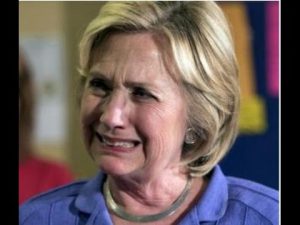
Poor liberals – for years you have toiled in vain for the betterment of humanity. Martyring yourselves for the greater good, you have attained a new level of sophistication and moral superiority, the likes of which we may never see again. It makes me weep such tears of bitterest woe, seeing your saintly queen of benevolence, fail to be anointed Queen Mass Murderer of The Earth.
Every four years you come out of hibernation, and run about the country like so many chickens with their heads cut off, ranting and raving about how we all have to vote for the Democratic presidential candidate, or else the world will come to an end. We will be enslaved to a redneck, who dropped out of high school and works in a gas station, or a KKK guy – or worse!
In actuality, the real problem is that when you look in the mirror, you see an educated person, a literate person, an articulate person. You see someone who is wise, cultured, unequivocally left wing, logical, and above all rational. This person you are looking at does not exist. This person does not exist, any more than if I were to look in the mirror, and believe I was looking at a hippopotamus or a water buffalo.
In certain circles, this is often referred to as insanity. You might want to talk to your therapist about that.
And this person might have existed in 1963. But that person, who had ideals, who may have genuinely stood against imperialism and militarism, and who may have once cared about education and unions, is no more. For you have degenerated into such a mindless piece of degenerate insouciant flotsam, that I cannot help but look upon thy face with horror.
Let’s take a brief look at some of the wondrous things American liberals, led by Hillary and Obama, these two magnificent whoring knaves of oligarchy, have accomplished over the past eight years.
You bombed Libya off the face of the earth, thereby destroying not only a country which boasted the highest standard of living in Africa, but which also led to the destabilization of the entire region, when your beloved freedom fighter barbarians raided the government military stockpiles.
You overthrew the democratically elected government of Viktor Yanukovych, putting a gang of Banderite ultranationalists and Neo-Nazis in power, who immediately moved to strip the Russian language of its official status, and who let loose a horrific orgy of violence against the people of the Donbass. Victoria Nuland, a neocon gal pal of Saint Hillary, and one of the principal architects of this monstrous illegal coup, is known to all Russians, yet you probably never heard of her. (Perhaps this is because the only thing that matters to you is getting a Democrat into the Oval Office. What they actually do, once they get there, is apparently of no interest to you whatsoever.)
You sent thousands of troops to Afghanistan, and are no closer to defeating the Taliban, than you were at the beginning of Obama’s first term in office.
And just a few months ago, Saints Obama and Hillary signed off on an arms deal worth more than 115 billion dollars with Saudi Arabia, one of the most authoritarian and reactionary regimes on earth. Undoubtedly, they will use these weapons to arm jihadist barbarians in other countries, as well as genocide the people of Yemen – yet another liberal slaughterhouse you have insouciantly and mindlessly slept through. Undoubtedly, women’s rights have improved dramatically there, as you can’t marry an underage girl after her village was relentlessly bombed with American weapons, and she is presently dead.
And then there are the countless drone massacres in Afghanistan, Pakistan, Somalia, and Yemen. Perhaps blowing up soccer games and wedding parties has helped these people to embrace the wonders of multiculturalism and diversity? And let’s not forget the fascist coup in Honduras, and a far right coup in Brazil: these acts of barbarism also bear the mark of the liberal, the Imaginary Leftist, the most incorrigible knave in human history.
And this brings us to perhaps your most glorious humanitarian intervention of all: arming and funding bloodthirsty jihadi criminal gangs, assigned with the task of overthrowing the Assad regime. And with the blessing of the American liberal, they have embarked on a crusade to also exterminate Syrian civilization in the process. Please, liberals, do not make me vomit onto my computer, by talking about all the suffering children in Aleppo. The real barbarians who have made these children suffer, have been running the White House for the past eight years, and it was you who put them there in the first place.
Poor liberals – you have done nothing in thirty years, except burn all your own books, outsource and offshore jobs, while supporting all the most reactionary possible foreign policies. I’m sure you must be in tears, now that Hillary won’t be imposing a no-fly zone over Syria any time soon; but there are actually billions of people in the world that would greatly appreciate it, if the ICBMs stay just right where they are.
(And speaking of Russia: what are we to make of the shocking Neo-McCarthyism and Russophobia, which formed the bedrock of Saint Hillary’s campaign? Is this yet another example of her irrefutable leftist credentials? Of her tolerance and ideals?)
And is it not indubitable and ironic, that while you support these barbaric and insane wars of aggression – which cost trillions and trillions of dollars – your own kids increasingly graduate from college and cannot find jobs?
You are so divorced from reality, so drugged with the narcotic of identity politics, and indifferent to the sufferings of your fellow Americans, as well as the sufferings of those whose countries are destroyed by your wars of aggression, that you are simply no longer living in the reality based world; and sadly, haven’t been for a very long time.
Perhaps there is a place where American liberals fight racism, sexism, and carry out humanitarian interventions, which bring an end to genocide, persecution of minorities, and authoritarian regimes: in your mind.
Where are your patronizing airs now? Your smugness?
You will blame this ignominious defeat on the evil white guys, the racists, the Russians, the perverts, the sexists, and those wishing to restore patriarchy, but alas, dear liberals: you have nobody to blame but yourselves.
David Penner has taught English and ESL within the City University of New York and at Fordham. He can be reached at: penadam@hotmail.com.
What Happened In This Election?
By John Chuckman | Aletho News | November 10, 2016
Brushing away the extreme claims and rhetoric of much election analysis, there are some observations which deserve attention. These unfortunately mostly provide hard lessons and not a lot of encouragement for people who hold to principles of democracy, enlightenment, and progressivity.
The election demonstrated perhaps better than ever, and better than has generally been recognized, that American is, indeed, a plutocracy. It took a genuine American Oligarch, a multi-billionaire, a man with a lifetime’s economic empire-building, to defeat a family which could provide the very definition of being politically well-connected, a family which had laboriously constructed and carefully maintained a kind of deep well ever-flowing with money for their ambitions.
It was the ever-flowing well of money, drilled by Bill Clinton with help from some extremely shady friends, such as Jeffrey Epstein, that made the Clintons keystone establishment figures in the Democratic Party. It was not personal charm or exceptional political generalship – although Bill, in his heyday, displayed some of both of those – that earned the Clintons their place, it was the money, the “mother’s milk of politics.” In what is euphemistically called “fund raising,” many hundreds of millions of dollars were provided for the party over the last couple of decades by Bill Clinton’s efforts.
Hillary fully appreciated the fact that money buys power and influence. She lacked Bill’s superficial charm, but she certainly more than shared his ambition. On the charm front, when she was ready to move into running for office, she adopted, perhaps under Bill’s tutelage, a kind of forced clown face with arched eyebrows, bugged-out eyes, and a smile as big as her lips would allow, and these expressions were accompanied by little gestures such as briefly pointing to various on-lookers or waving helter-skelter whenever she campaigned.
Her gestures reminded me of something you might see atop a float in a Christmas Parade or of the late Harpo Marx at his most exuberant. These were not natural for her. They were never in evidence years ago when she spent years as a kind of bizarre executive housewife, both in a governor’s mansion and later in the White House, bizarre because she indulged her husband’s non-stop predatory sexual behavior in exchange for the immense power it conferred on her behind the scenes over her far more out-going and successful politician-husband.
Anyway, Hillary knew that gestures and simulated charm do not get you far in American politics. She determined to build a political war chest long ago, and there are many indications over the years of her working towards this end of making this or that change in expressed view, as when running for the Senate, when sources of big money suggested another view would be more acceptable. She was anything but constant in the views she embraced because when she ran for the Senate she spent record amounts of money, embarrassingly large amounts.
In her years of speaking engagements, she aimed at special interests who could supply potentially far more money than just exorbitant speaking fees. Later, in the influential, appointed post of Secretary of State – coming, as it does, into personal contact with every head of government or moneyed, big-time international schemer – she unquestionably played an aggressive “pay for play” with them all. Covering up that embarrassing and illegal fact is what the private servers and unauthorized smart phones were all about.
A second big fact of the election is that both major American political parties are rather sick and fading. The Republican Party has been broken for a very long time. It hobbled along for some decades with the help of various gimmicks, hoping to expand its constituency with rubbish like “family values,” public prayer and catering to the Christian Right, and anti-flag burning Constitutional amendments, and now it is truly out of gas. That is precisely why a political outsider like Oligarch Trump could manage to hi-jack the party.
He was opposed by tired, boring men like Jeb Bush, seeking to secure an almost inherited presidency, and a dark, intensely unlikable, phony Christian fundamentalist like Ted Cruz, and it proved to be no contest. It was a remarkable political achievement, but I think it was only possible given the sorry state of the party.
The Republican Party had been given a breather, some new life, by Ronald Reagan in the 1980s. He had an extremely mixed record as President, but he was popular, held in some affection, and did have a clear vision, but his effect on the party was not lasting. Trump could be seen as another Reagan, but I think the comparison is superficial. Trump literally hi-jacked the party, and he was not deliriously crowned by its establishment.
The Republican Party itself was formed not long before Abraham Lincoln’s candidacy out of the remains of worn out and collapsed predecessors, including the Whigs and Free-Soil Democrats. Parties do not last forever, and here was Trump creating something of a minor political revolution inside a tired and fairly directionless old party, a phenomenon which I do not think was sufficiently noticed.
The press was too busy attacking him from the start to take notice or do any intelligent analysis, and he was attacked precisely for the potential damage to the establishment he represented. His most promising quality is his potential for creating a new coalition of interests and one excluding the continuation of the Neocon Wars Hillary vigorously embraced and would expand.
But the Democratic Party is in serious trouble, too. It has a great deal of internal rot, as the Wiki-Leaks material from the DNC clearly shows us. Arrogance, lack of direction, ignorance of the people it has always claimed to serve, bad decision-making, and the absolute prostrate worship of money are the major symptoms.
It would have been impossible for the party to have so made up its mind and committed its resources to Hillary Clinton without serious rot. She has always had strong negatives in polling, always been (rightly) suspected concerning her honesty.
The Wiki-Leaks material tells us about many internal conflicts, including harsh high-level judgments of Hillary’s decision-making, resentment over the back-stabbing character of daughter Chelsea who is said to resemble Hillary in her behavior and attitudes, and the belief of some that Hillary just should not have run. And, frankly, she had become for many a rather tiresome, used-up figure from whom absolutely nothing spectacular in politics or policy could possibly be expected. But they not only blindly supported her, they broke all their own party rules by internally and secretly working to defeat a legitimate and viable contender, Bernie Sanders.
Sanders might well have been able to win the election for the Democrats, but their establishment was blind to the possibility and rejected his candidacy out-of-hand. After all, there were Bill and Hillary beckoning to their running well of money. In hindsight, it might be just as well that Sanders was cheated out of the nomination. He proved a weak individual in the end, giving in to just the forces he had claimed to oppose and leaving his enthusiastic followers completely let down. There he was, out on the hustings, supporting everything he ever opposed personified in Hillary Clinton. Men of that nature do not stand up well to Generals and Admirals and the heads of massive corporations, a quality which I do think we have some right to expect Trump to display.
Another important fact about the election is that it was less the triumph of Trump than the avoidance of Hillary that caused the defeat. The numbers are unmistakable. Yes, Trump did well for a political newcomer and a very controversial figure, but Hillary simply did badly, not approaching the support Obama achieved in key states, again something reflecting the documented fact that she is not a well-liked figure and the Party blundered badly in running her. But again, money talks, and the Clintons, particularly Bill, are the biggest fundraisers they have had in our lifetime. No one was ready to say no to the source of all that money.
Now, to many Americans, the election result must seem a bit like having experienced something of a revolution, although a revolution conducted through ballots, any other kind being literally impossible by design in this massive military-security state. In a way, it does represent something of a revolutionary event, owing to the fact that Trump the Oligarch is in his political views a bit of a revolutionary or at least a dissenter from the prevailing establishment views. And, as in any revolution, even a small one, there are going to be some unpleasant outcomes.
The historical truth of politics is that you never know from just what surprising source change may come. Lyndon Johnson, life-long crooked politician and the main author of the horrifying and pointless Vietnam War, did more for the rights of black Americans than any other modern president. Franklin Roosevelt, son of wealthy establishment figures, provided remarkable leadership in the Great Depression, restoring hopes and dreams for millions. Change, important change, never comes from establishments or institutions like political parties. It always comes from unusual people who seem to step out of their accustomed roles in life with some good or inspired ideas and have the drive and toughness to make them a reality.
I have some limited but important hopes for Trump. I am not blind or delirious expecting miracles from this unusual person, and after the experience of Obama, who fairly quickly proved a crushing, bloody disappointment, I can never build up substantial hopes for any politician. And what was the choice anyway? Hillary Clinton was a bought-and-paid one-way ticket to hell.
Trump offers two areas of some hope, and these both represent real change. The first is in reducing America’s close to out-of-control military aggressiveness abroad. This aggressiveness, reflecting momentum from what can only be called the Cheney-Rumsfeld Presidency, continued and grew under the weak and ineffectual leadership of Obama and was boosted and encouraged by Hillary as Secretary of State. Hillary, the feminists who weep for her should be reminded, did a lot of killing during her tenure. She along with Obama are literally responsible for the deaths of tens of thousands of women and their families, many of them literally torn apart by bombs.
The other area of some hope is for the welfare of ordinary American people themselves who have been completely ignored by national leaders for decades. By welfare, I do not mean the kind of state assistance that Bill Clinton himself worked to end.
George Bush’s lame reaction to Hurricane Katrina (before he was internationally shamed into some action) has become the normal pattern for America’s national government when it comes to ordinary Americans. The truth is that the legacy of FDR has withered to nothing and no longer plays any role in the Democratic Party, and of course never did in the Republican Party.
Nothing can impress someone not familiar with America’s dark corners more than a visit to places like Detroit or Gary or Chicago’s South Side, parts of New Orleans, or Newark or dozens of other places where Americans live in conditions in every way comparable to Third World hellholes. No, I mean the people’s general well-being. Trump’s approach will be through jobs and creating incentives for jobs. I don’t know whether he can succeed, but, just as he asked people in some of his speeches, “What do you have to lose?” Just having someone in power who pays any attention to the “deplorables” is a small gain.
People should never think of the Clintons as liberal or progressive, and that was just as much true for Bill as it is for Hillary. His record as President – apart from his embarrassing behavior in the Oval Office with a young female intern and his recruitment of Secret Service guards as procurers for women he found attractive on his morning runs – was actually pretty appalling. He, in his own words, “ended welfare as we know it.” He signed legislation which would send large numbers of young black men to prison. He also signed legislation which contributed to the country’s later financial collapse under George Bush. He often would appoint someone decent and then quickly back off, leaving them dangling, when it looked like approval for the appointment would not be coming. His FBI conducted the assault on Waco, killing about eighty people needlessly. A pharmaceutical plant in Sudan was destroyed by cruise missiles for no good reason. There were a number of scandals, including the suicide of Vince Foster and the so-called Travelgate affair, which were never fully explained to the public. It was his Secretary of State, Madeleine Albright, who answered, unblinkingly, a television interviewer’s question about tens of thousands of Iraqi children who died owing to America’s embargo, “We think it’s worth it.” He committed the war crime of bombing Belgrade. When news of the horrors of the Rwanda genocide were first detected by his government, the order secretly went out to shut up about it. No effort was made to intervene.
No, any real change in America could never come from people like the Clintons, either one of them.
Trump’s Election: ‘We May Have Just Dodged the Bullet on WWIII’
Sputnik | November 10, 2016
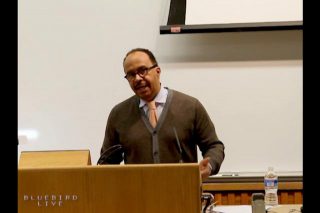 On Tuesday, voters in the US went to the polls to choose their next president, electing Republican Donald Trump. Speaking to Sputnik, Professor Tony Monteiro, peace activist and scholar at the department of African American Studies at Temple University, suggested that Trump’s election may have just saved the world from World War Three.
Calling Tuesday’s vote a “political insurrection,” Monteiro said that he was frankly surprised by “the depth and magnitude” of the popular revolt.
“I felt it was possible, [but] didn’t believe it was probable, given that the Clinton campaign had all of the resources…”
“It’s a situation where the pundits and the political experts had predicted based upon an old paradigm of viewing elections. And what we had is a new paradigm – a paradigm grounded in rage, anger and class resentment against an elite which never repaired the profound damage done to the American working people and the middle classes as a consequence of the Great Recession of 2007 and 2009.”
The academic explained that he frankly “just had no idea at how deep this was. And we saw it – it was a sweep. In fact, Donald Trump did to Hillary Clinton what the experts were saying she would do to him. It’s quite unbelievable – it’s a historic outcome. I think finally, that temporarily, the world has dodged the bullet of World War.”
“If Clinton had won, we would be on a fast track to war with Russia, either in the Baltics, Ukraine or in Syria. She made that perfectly clear.”
Trump, meanwhile, “had over the course of this election cycle said the very opposite. Many people thought that by coming out against war with Russia, he had disqualified himself. In fact he went so far as to attack the generals and those who are running foreign policy.”
Ultimately, the expert stressed that more than anything, this election was “a serious rebuke to the corporate media, who were all against Trump and for Hillary Clinton. Now in saying all of this… I don’t think Trump is a pure vessel… However, what is significant, and what we have to pay close attention to, is not Trump the individual, but that movement that made it possible for him to win the election.”
Monteiro suggested that consciously or not, this movement was animated by their class interest – based on popular anger over stagnant wages, and at the same time, trillions of dollars in offshore banks held by oligarchs, the transnational corporations and hedge funds.
“You’ve got all of these young people who are graduating from university, with tremendous debt, with no jobs that pay them enough to pay off their debt. And then of course Trump made a kind of heavy-handed and awkward appeal to the Black community – but there was some truth to it! When he said that the political forces that the Black community has aligned with has done very, very little for them. And he said to Black people ‘you have nothing to lose’. I think that in the Rust Belt, the former industrial mid-west, more Black people voted for Trump than we are aware of at this time.”
Taking office, Trump faces political, class and racial divisions of an almost unprecedented scale. “The nation is divided; it has not been this divided since the civil war in the 1860s.”
The difference this time, according to the analyst, “is that the divisions are not so much sectional, but are more economic and social class-[based].”
“Can he unite the country around a program of rebuilding the nation economically, and a policy of peace abroad? I’m not yet certain,” Monteiro stressed. But he was encouraged by Trump’s acceptance speech, where “he said that he was for cooperation with nations and finding common ground. I felt that the paramount issue in this election was the question of war and peace, even though it was not the major issue discussed in the corporate media. It was the paramount issue, because I am of the opinion that had Hillary Clinton won, she was going to fast-track belligerency and even war with Russia, and that could have spun out of control into a thermonuclear war.”
Hillary versus Donald: Ding Dong, The Witch Is Dead! Victory for the Wizard of Oz!
By Diana Johnstone | Global Research | November 9, 2016
“There’s no place like home.”
That’s the lesson. Even when home is Kansas.
The real meaning of this election is not, as bitterly disappointed Hillary supporters still maintain with tears in their eyes and fear in their throats, a victory for racism and sexism.
The real meaning of this upset is that Wall Street’s globalization project has been rejected by the citizens of its homeland.
This has major implications for the European nations that have been dragged along into this ruinous project.
Hillary Clinton was the candidate of the military industrial complex and international finance capital. She designed herself to be the figurehead of those forces, as queen of regime change. She aspired to be the one to remake the world in the image Wall Street dictates. It was a project enthusiastically and expensively supported by the one percent who profit from arms contracts and the trade deals they write themselves for their own interests.
To distract from the genuine significance of her candidacy, the Clinton campaign appealed to the desire for respectability of educated city dwellers, portraying Trump supporters as racist yokels motivated by a hateful desire to scapegoat minorities as revenge for their own inadequacies. They were “deplorables”, and you wouldn’t want to be one of them, would you?
Trump was sexist, because he referred to certain women as “bimbos”. Elizabeth Warren called him out for this, on a platform where Hillary sat listening, mouth wide open in delight – she who had referred to Bill’s girlfriends as “bimbo eruptions”. Sleaze and hypocrisy drowned out policy discussions. The worst the Clinton campaign could come up with was an eleven-year-old locker room exchange – just words, hardly comparable to Bill’s chronic actions.
Still, millions who were taken in by the Clinton campaign line are devastated, terrified, convinced that the only reason Trump won was the “racism” and “sexism” of that lower caste in globalized society: white heterosexual working class males.
But no, Virginia, there were other reasons to vote for Trump. Racism and sexism are surely low on the list.
Trump voters were scandalized by Hillary’s lies and corruption. Many of them would have voted for Bernie Sanders if they had the choice. That choice was taken away from them by Democratic Party manipulators who were sold on their own advertising campaign to elect “the first woman President.” A brand new product on the Presidential election market! Be the first to vote for a woman President! New, improved!
Bernie’s success already showed that millions of people didn’t want that woman. But the Democratic Party manipulators and their oligarch sponsors went right ahead with their plans to force Hillary Clinton on an unwilling nation. They brought this defeat on themselves.
Contrary to what you could believe by reading the New York Times, there were even intellectuals who voted for Trump, or at least refused to vote for Hillary, for the simple reason that Trump appears less likely to lead the world into its third and final Great War. He said things giving that impression, but such statements were ignored by mainstream media as they worked overtime to inflate the ogre image. No war with Russia? You must be a Putin puppet!
Trump voters had several reasons to vote for Trump other than “racism”. Most of all, they want their jobs back, jobs that have vanished thanks to the neoliberal policy of transferring manufacturing jobs to places with low wages.
But racism is the only motive recognized by the globalized elite for rejecting globalization. British citizens who voted to leave the European Union in order to recover their traditional democracy were also stigmatized as “racist” and “xenophobe”. Opposition to racism and xenophobia is the natural moral defense of a project of global governance that deprives ordinary citizens of any important power of decision.
This extraordinarily vicious campaign has brought out and aggravated sharp divisions within the United States. The division between city and countryside is most evident on the electoral maps. But these real divisions are exacerbated by a campaign that portrayed Donald Trump as a racist madman, a new Hitler about to bring fascism to America. The antiracism of this campaign, denouncing “hate”, has actually spawned hate.
No, Virginia, Trump is not Hitler. He is the Wizard of Oz. He is a showman who pulled off an amazing trick thanks to the drastic moral and intellectual decline of the American political system.
He is neither as dangerous as his opponents fear, nor as able to “make American great again” as his supporters hope. He is the Lesser Evil. What will become of him in Washington is anybody’s guess.
Copyright © Diana Johnstone, Global Research, 2016
Trump’s Victory Should Not Obfuscate Election Fraud
By Doug Steil | Aletho News | November 9, 2016
As luck would have it Hillary Clinton’s landslide loss was so big that massive election fraud by Democratic Party operatives in various cities could not overcome her deficit.
The “shock” by insiders of having lost obviously reflects their earlier certainty of prevailing, which hints at the extent of their vote rigging schemes. The unverifiable system of voting in America is so flawed that foreign observers are now being blocked from monitoring US elections. The topic of fraud can no longer be swept under the rug.
Surely Clinton and the media will try to make a big deal of having “received more votes” than Trump in the popular vote total, which according to the current tabulation has already occurred, with an even higher differential to come once West Coast state results are all counted.
Those inside the DC Beltway and within elite campuses will claim that this is “unfair” and that Hillary really “should have won”.
However, this assertion should be vociferously challenged. Surely this surplus is artificial. Is it really possible that so many Americans would have ignored the prospect of going to war with Russia?
The question needs to be raised publicly: How many hundreds of thousand votes were switched from Trump to Clinton altogether and how many invalid (illegal) votes were registered for her?
Aside from that — assuming all the votes were legitimate — the electoral college system is intended to prevent, say, a concentration of votes in urban centers to the detriment of rural voters across the country. As is the case in Maine and Nebraska, voters in individual states can decide how to allocate their electoral votes, so it doesn’t have to be a winner-take-all system.
It is a tribute to the designers of the US Constitution that the Electoral College mechanism still exists. It’s almost as if though they might also have already suspected long ago that there could be illicit efforts in the future to change an election outcome simply by stuffing the ballots in a few locations. The indirect US electoral system has saved the country from a big crisis brought on by election fraud. Instead of changing the Constitution future election reforms should focus on making vote fraud impossible or extremely difficult to carry out.
Featured Video
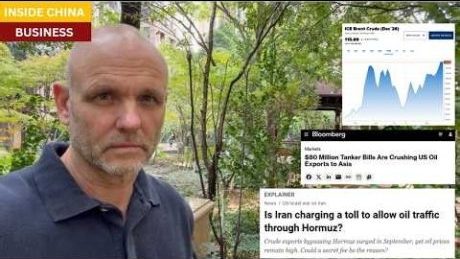
Iran is (probably) collecting tolls, and why Asia stopped buying oil from the US
or go to
Aletho News Archives – Video-Images
From the Archives
The Great Recycling Scam
By Dr. Vernon Coleman – 21st Century Wire – September 2, 2022
Recycling was introduced, worldwide, as a tool to teach citizens to become compliant.
Forcing citizens to sort their rubbish into up to nine separate bags or boxes every week had absolutely nothing to do with ‘saving the planet’ and everything to do with teaching citizens (through a mixture of fines and shame) to behave ‘responsibly’ i.e. to do as they were told without looking too closely at the rationale of what they were being told to do.
The recycling never had anything to do with protecting the planet, of course. Most of the rubbish sorted, washed and collected in the UK was taken abroad, by lorry or ship or train, and burnt or dumped. It was, quite simply, impractical and not cost effective to recycle the material that had been collected. And, of course, collecting the sorted rubbish involved massive costs in terms of cash and pollution.
Today, the recycling business has reached an apogee of lunacy. Councils introduce ever more complex rules and fees. They refuse to take away much of the waste that is collected. And those wanting to take their rubbish to a ‘recycling’ centre will probably have to make an appointment and answer a host of questions.
It is no surprise that fly-tipping has become a major problem. The biggest causes of plastic in the sea are dumped fishing gear and plastic waste (much of it officially designated as recycled) which has been dumped by ships.
The good news, however, is that in Britain, recycling rates are falling. More and more people have become aware that the whole recycling movement was just another piece of manipulative trickery.
Blog Roll
 Aletho News
- Lithuania plans universal conscription
- Lies, Damn Lies, and Ukraine News
- Financial Times rejects Nordic demands to correct Putin call story – media
- The Case for Less Unity in Europe
- Ukraine expands minority rights under EU pressure – but Russians remain excluded
- Albania takes anti-riot crackdown cue from France
- The interest of the House of Rothschild in Ukraine
- Pentagon fires top military planner
- Three tankers hit mines on unauthorized Hormuz route: IRGC Navy
- Iran is (probably) collecting tolls, and why Asia stopped buying oil from the US
- If Americans Knew
- US midterms: Five days left – who leads in the polls as Trump, Obama rally
- Israeli Attacks Kill Four Palestinians in Gaza
- Plotting a Comeback: Gaza Resignees Confront Biden’s Genocide Enablers – VIDEO
- US Journalist and Activist Detained After Israeli Settler Attack in West Bank
- Israeli forces continue West Bank raids as Hebron lockdown enters sixth day
- The Two Faces of Gadi Eisenkot, Who Could Be Israel’s PM
- US Sending an Additional Patriot System to Israel To Prepare for Potential Attacks on Iran
- Pentagon Estimates the US Has Spent Over $47 Billion on Iran War, But True Cost Is Much Higher
- ‘Who Will Bomb Me Next?’: Palestinians in Gaza and the West Bank on Israel’s Election
- DAILY UPDATE: Latest essential news on Palestine, Israel, & region
- No Tricks Zone
- Germany’s Green Energy Transition Becoming Increasingly Expensive…Another 6 Trillion Euros!
- Sudden Stratospheric Warming, Powerful El Niño Combination May Lead To Extreme Europe Cold, Energy Crisis!
- Two New Studies Find Thwaites Glacier Melt Cannot Be Driven By Human Activity Or A Warming Ocean
- E-Cars Reduce CO2 Emissions By Only 41% Compared To Internal Combustion Engine Vehicles
- Predictions Made By Renowned Climate Professor Over Past Decades Have Been Proven To Be Poor
- New Study Suggests Large Regions Of The Pacific Ocean Have Been Cooling For The Last 80 Years
- Germany’s Green Energy Debacle: High Energy Costs Force Kahla Porzellan to Close After 182 Years!
- New Study: 50 Years Of The Most Aggressive ‘Net Zero’ Policies Can Only Affect The Global Climate By 0.03°C
- US September “Heat” Was No Record…Many Records Set Decades Ago
- Latest European Green Energy Debacle; Portugal’s Largest Flagship Solar Park Insolvent!

