Palestinian youth activist ordered to six months in administrative detention; Israeli occupation terror continues in Dheisheh

Photo: Saleh al-Jaidi
Samidoun Palestinian Prisoner Solidarity Network | September 28, 2017
Palestinian youth activist Saleh al-Jaidi, from the Dheisheh refugee camp near Bethlehem, was ordered on Thursday, 28 September to six months’ imprisonment without charge or trial under an administrative detention order.
He was seized on Friday, 22 September by Israeli occupation forces who invaded and ransacked his family home in a pre-dawn raid. He was previously imprisoned three times, twice before in administrative detention in 2010 and 2015. He was jailed for three years after another arrest by occupation forces in 2011.
Al-Jaidi is a well-known youth activist in the camp; his brother, Yazan, is also imprisoned by Israeli occupation forces.
Meanwhile, the infamous “Captain Nidal,” the pseudonym used by an as-yet-unnamed Israeli occupation military commander, has continued to be the name under which the Israeli occupation carries out its ongoing campaign of terror and destruction in Dheisheh.
“Nidal” is known for calling multiple youth in Dheisheh and threatening to make “all of you disabled” – followed by repeated serious injuries caused by Israeli occupation forces shooting camp youth in the legs during protests or night-time “arrest raids.” He also threatened Raed al-Salhi to “shoot him in front of [his] mother,” shortly before al-Salhi was shot by occupation forces in Dheisheh camp on 9 August. Salhi, 22, an active youth in the camp known for both his political dedication to the leftist Popular Front for the Liberation of Palestine and his community-minded volunteer spirit, died from his injuries on 3 September.
“Nidal” is now calling the family members of Akram al-Atrash, a youth from the camp who was shot in the arm and the chest with live fire by Israeli occupation forces when they invaded the camp on 4 April. He remains injured and currently faces several dangerous operations that imperil his life. “Nidal’s” phone calls are threatening his family members that if they allow Akram in their homes, the occupation will attack them, kill him and demolish their homes. The family issued an appeal through the Dheisheh al-Hadath facebook page urging international attention to the ongoing occupation reign of terror in Dheisheh. While the pseudonym is used to deliver these threats, they are not an individual effort; instead, they reflect an institutionalized campaign of the Israeli military to suppress the active youth of the camp through killing, maiming, imprisonment and threats.

Photo: Akram Al-Atrash, via Dheisheh al-Hadath
These threatening phone calls came two days after occupation forces attacked several homes of the al-Atrash family in the camp’s al-Walaja neighborhood and held his cousin, Rami, for several hours. So-called “Captain Nidal” threatened to hold him as a hostage until Akram surrendered; however, Rami was released several hours later and the attacks on the al-Atrash family are continuing.
Samidoun Palestinian Prisoner Solidarity Network reiterates its demand for the immediate release of Saleh al-Jaidi, demands an end to the attacks on the al-Atrash family and Palestinian youth in Dheisheh, and urges greater international mobilization against the ongoing invasions, attacks and arrests directed at Palestinian youth. We urge the freedom of all 6,200 Palestinian prisoners in Israeli jails and we demand that “Captain Nidal,” as well as the Israeli occupation commanders and officials that authorize his threats and terror against the youth of Dheisheh be held accountable and prosecuted for his crimes.
Pressure on Russian Media Abroad Unacceptable – Putin

Sputnik – September 29, 2017
According to Kremlin spokesman Dmitry Peskov, Russian President Vladimir Putin called the current pressure on Russia-based media abroad unacceptable.
During Putin’s meeting with the Russian Security Council, both the president and the council declared pressure on the Russian media abroad unacceptable, underlining that it has increased recently.
“The issue of continuing and sometimes increasing pressure on Russian media in some foreign countries was also touched upon during the meeting,” Peskov said.
“It was noted that such actions against our media are unacceptable,” Peskov stressed.
The day before, Margarita Simonyan, the RT editor-in-chief stated that RT broadcaster was asked to register as a foreign agent. Otherwise, it might face restrictions that would make it unable to continue work in the United States.
The Russian Foreign Ministry commented on the US Department of Justice’s demands to register RT America channel’s services provider as a foreign agent under FARA, saying that every move in relation to a Russian media will have a relevant response.
Earlier in September, the US Department of Justice asked a RT contractor in the United States to register under Foreign Agents Registration Act (FARA), while in June US congressmen introduced the Foreign Agents Registration Modernization and Enforcement Act bill, which would broaden the scope of FARA to include RT, by expanding DoJ authority to investigate attempts to “unlawfully influence the political process.”
On September 11, RT America channel’s service provider in the US received a letter from the US Department of Justice demanding that the company should register under the Foreign Agents Registration Act (FARA). The letter was received amid discussions on a bill in the US lower house aimed at amending requirements for registration of foreign agents under FARA.
The bill, among other things, empowers the US DOJ, including the Federal Investigation Bureau (FBI), to identify and prosecute organizations that “illegally” try to influence the political processes in the United States.
The same day it was reported that the FBI had questioned former Sputnik employee Andrew Feinberg as part of the investigation of reports that the news outlet allegedly acted as a Russian propaganda agency in violation of FARA.
It was claimed that the FBI had access to Sputnik’s working correspondence from Feinberg and another former employee of Sputnik’s Washington bureau, Joseph John Fionda. The FBI itself has not responded to Sputnik’s inquiry on whether it was conducting an investigation into the news agency.
In response, Kremlin spokesman Dmitry Peskov denounced the move as contradicting pluralism and freedom of the press, while Russian Foreign Ministry spokeswoman Maria Zakharova highlighted that Moscow “reserves the right to respond to the outrageous actions of the American side.”
Activist: Saudi’s 2030 Vision Coordinated by Washington, Tel Aviv
Al-Manar | September 28, 2017
Saudi activist Mujtahid said that the inclusive change in Saudi Arabia (political, social and economic change) is coming, noting that the authorities will arrest all those who stand against this change,
On his Twitter account, Mujtahid quoted a US advisor, who takes part in Saudi Arabia’s Vision for 2030 project, as saying that the change is coming.
This change requires Crown Prince Mohamamd Bin Salman’s monopolization of power on the political level, secularizing the kingdom on the social level, and selling Aramco firm on the economical level, Mujtahid said, citing the US advisor.
He revealed that such plan is being coordinated with the US, Zionist entity, Egypt and UAE, noting that all these sides share the same stance regarding the arrest campaign which will target all those who reject this change.
In this context, Mujtahid, who is believed to be a member of or have a well-connected source in the royal family, pointed out that the arrests which were made recently represents an early stage of this plan of change.
Corbyn criticizes UK foreign policy, Israel oppression, Trump

Press TV – September 27, 2017
British Labour Party Leader Jeremy Corbyn has slammed London’s foreign policy, asserting that “terrorism is thriving in a world our governments have helped to shape.”
“The targeting of our democracy, of teenage girls at a pop concert, of people enjoying a night out, worshipers outside a mosque, commuters going to work — all of these are horrific crimes…But we also know that terrorism is thriving in a world our governments have helped to shape, with its failed states, military interventions and occupations where millions are forced to flee conflict or hunger,” Corbyn said at the party’s annual conference in Brighton on Wednesday.
Military solutions to the threats of terrorism in Europe were another area of Corbyn’s speech.
“We have to do better and swap the knee-jerk response of another bombing campaign for long-term help to solve conflicts rather than fuel them,” Corbyn said.
Corbyn also hinted at the double standards of British foreign policy in the Middle East region, criticizing arms sales to Saudi Arabia.
“Democracy and human rights are not an optional extra to be deployed selectively. So we cannot be silent at the cruel Saudi war in Yemen while continuing to supply arms to Saudi Arabia, or the crushing of democracy in Egypt or Bahrain, or the tragic loss of life in Congo.”
The Labour leader addressed the brutal suppression of Rohingya Muslims in Myanmar and demanded that Aung San Suu Kyi end the violence against the Rohingya and allow the UN and international aid agencies into Rakhine state. “The Rohingya have suffered for too long,” Corbyn emphasized.
Corbyn criticized Israel’s 50-year oppression of Palestinians and called for an end to the “oppression of the Palestinian people, the 50-year occupation and illegal settlement expansion.”
On Donald Trump
US President Donald Trump’s speech at the UN and his policies were another area that Corbyn critically addressed.
Corbyn said Trump’s UN speech was “devoid of concern for human rights or universal values” and “was not the speech of a world leader.”
Pointing to the historical relationship between the UK and the US, Corbyn said, “If the special relationship means anything, it must mean that we can say to Washington: that way is the wrong way.”
As a veteran peace activist, Corbyn has long been critical of London’s involvement in US-led wars across the world its support of Israel in its unending oppression against Palestinians.
Corbyn has stood up for Palestine and Palestinian rights and has been a strong advocate against Britain’s foreign wars in the Middle East.
653,249 people were arrested in the US last year for breaking marijuana laws
By Mark Frauenfelder – Boing Boing – September 25, 2017
One person gets arrested for marijuana possession every 71 seconds in the United States, according to the Federal Bureau of Investigation’s annual Crime In the United States (CIUS) report. This is great news to drug cartels, police departments, racists, corrupt politicians, the prison industry, and the involuntary rehab clinic racket. It’s bad news for everybody else.
“Arresting and citing nearly half a million people a year for a substance that is objectively safer than alcohol is a travesty,” said Morgan Fox, director of communications for the Marijuana Policy Project. “Despite a steady shift in public opinion away from marijuana prohibition, and the growing number of states that are regulating marijuana like alcohol, marijuana consumers continue to be treated like criminals throughout the country. This is a shameful waste of resources and can create lifelong consequences for the people arrested.”
There are currently eight states that regulate marijuana similarly to alcohol for adults, four of which voted to do so in November 2016. Marijuana possession is also legal for adults in the District of Columbia. Twenty-three states and D.C. considered legislation in 2017 to regulate marijuana, including in Vermont where the legislature approved such a measure before the governor vetoed it. “Regulating marijuana for adults creates jobs, generates tax revenue, protects consumers, and takes money away from criminals,” Fox continued. “It is time for the federal government and the rest of the states to stop ruining peoples’ lives and enact sensible marijuana policies.”
UPDATE: Data omitted from original analysis shows 653,249 marijuana arrests in 2016. Some reporting law enforcement agencies do not distinguish between types of drug arrests or possession and distribution violations.
No place for Ukraine in EU, Hungary says after Kiev outlaws education in minority languages
RT | September 26, 2017
Hungary has pledged to obstruct Ukraine’s EU integration at every step after Kiev adopted a new education law which bans teaching children in any language other than Ukrainian. Ukraine’s neighbors call it a form of persecution of minorities.
“Hungary will block all steps within the European Union that would represent a step forward in Ukraine’s European integration process in the spirit of the Eastern Partnership program,” Hungarian Minister of Foreign Affairs and Trade Péter Szijjártó said in a statement on Tuesday.
The statement came after Ukrainian President Petro Poroshenko signed into law a controversial bill which in essence bans state schools in Ukraine from teaching children in any language other than Ukrainian. Under the law, next year only children in grades 1-4 would be allowed to learn the curriculum in their native tongues in Ukraine, and by 2020 even that will no longer be legal.
The law is expected to affect at least 400,000 children studying in 735 state schools which offer instruction in minority languages. The majority of these children are ethnic Russians, but other minorities in Ukraine include Romanians, Hungarians, Moldovans, and Poles. The law provides minor concessions for “EU languages,” English, and some minorities that have no national states of their own.
Poroshenko claimed that the new law “strengthens the role of the Ukrainian language in education” while protecting the rights of all minorities. But some nations, like Hungary, do not seem to be convinced, with Budapest calling the move “a stab in the back” from Ukraine after the bill was adopted by the Ukrainian parliament earlier in September.
Romania made a similarly critical statement and cancelled a state visit to Ukraine by President Klaus Werner Iohannis in protest last week. Bucharest also refused to host a parliamentary delegation from Ukraine, saying the visit no longer had any purpose.
Moldova’s maverick President Igor Dodon said Ukraine’s Moldovan and Romanian minorities risked “denationalization” under the new law and called on Kiev to block it.
The Russian Foreign Ministry said in a statement that the new law is unconstitutional and violates the rights of millions of ethnic Russians living in the country.
The language issue is highly political in Ukraine. After a violent coup in Kiev replaced its elected government in 2014, one of the first acts of the new government was to scrap a law which allowed regions to adopt Russian as a second official language. The decision was later overturned, but by that time it had already triggered an uprising in the predominantly Russian eastern regions of Ukraine, leading to a bloody military crackdown by Kiev.
While the language provisions of the new law gained the most publicity, critics of the legislation complain about other parts, as well. The law reduces the number of obligatory subjects in Ukrainian state schools from 22 to 9. Among other things, physics, chemistry, biology, geography, and astronomy will be combined into one subject. Critics fear these changes will negatively affect the level of education in the country.
How Israel robs Palestinians of Citizenship
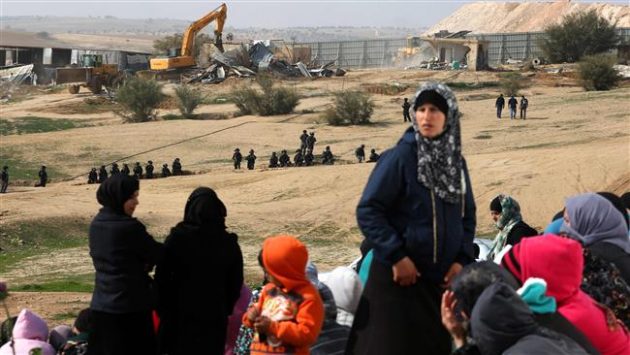
By Jonathan Cook | Dissident Voice | September 22, 2017
Israel has quietly revoked the citizenship of thousands of members of its large Palestinian minority in recent years, highlighting that decades of demographic war against Palestinians are far from over.
The policy, which only recently came to light, is being implemented by Israel’s population registry, a department of the interior ministry. The registry has been regularly criticized for secrecy about its rules for determining residency and citizenship.
According to government data, some 2,600 Palestinian Bedouins are likely to have had their Israeli citizenship voided. Officials, however, have conceded that the figure may be much higher.
The future offspring of those stripped of citizenship are likely to suffer problems gaining citizenship too.
Human rights groups have severely criticized Israel for violating its own laws, as well as international conventions to which it is a party, in carrying out such revocations.
Sawsan Zaher, a lawyer with Adalah, a legal center for Israel’s Palestinian minority, told The Jerusalem Post newspaper: “This policy is illegal and in contravention to international law because you cannot leave someone stateless.”
Harsh treatment
Palestinian citizens, one in five of Israel’s population, are descended from Palestinians who survived a mass ethnic cleansing campaign waged during Israel’s creation in 1948.
Today, some 200,000 Bedouins live in Israel, most of them in a semi-desert area known as the Naqab (Negev).
One of the two fastest-growing groups in Israel’s population, the Bedouins have faced especially harsh treatment. Israel continued expelling them to Jordan, Egypt and Gaza through the 1950s and to this day tightly limits the areas in the Naqab where the Bedouins can live.
Revelations of the revocations emerged as Ayelet Shaked, the far-right justice minister, warned Israel’s judges to prioritize demographic concerns and maintenance of the state’s Jewishness over human rights. She called growing numbers of non-Jews in the state “national challenges” that risked turning a Jewish state into “an empty symbol.”
According to Adalah, Bedouins typically learn that they have been stripped of citizenship when they approach the interior ministry for routine services such as renewing an identity card or passport, obtaining a birth certificate, or declaring a change of address.
Some have discovered their loss of status when seeking a passport to go on pilgrimage to Mecca, one of the obligations for Muslims.
Tip of the iceberg?
Aida Touma-Sliman, a Palestinian member of the Israeli parliament, said the policy of revocations had intensified over the past 18 months.
“I’m afraid that what has been exposed is only the tip of the iceberg and what hasn’t been revealed yet is even more serious,” she told the Haaretz newspaper.
The legislator fears that many other Bedouins have been stripped of citizenship, but have yet to learn of the fact.
She said she believed that the government was in part targeting Bedouins with revocation of citizenship to weaken long-standing land claims against the state.
Tens of thousands of Bedouins have been mired in legal action for decades trying to claim back the title deeds to ancestral lands seized from them by military officials in the first years after Israel’s creation.
Israel has declared the surviving communities as “unrecognized,” effectively criminalizing their inhabitants and denying them basic services such as water and electricity. Officials have also been trying to revive the Prawer Plan, which seeks to evict some 40,000 Bedouins – Adalah puts the figure at 80,000-90,000 – and force them into poor “townships”. The original plan was ostensibly frozen in late 2013 after mass protests across the Naqab.
Touma-Sliman said that without citizenship, Bedouins would be largely defenseless against steps to evict them.
Endless foot-dragging
Mahmoud al-Gharibi, an unemployed carpenter from the al-Azazme tribe, was one of several Bedouins who spoke to Haaretz in August during a protest rally in the Naqab village of Bir Hadaj.
He was told his citizenship had been revoked when he applied for a new identity card in 2000. “Since then I’ve applied 10 times [for renewed citizenship], getting 10 rejections, each time on a different pretext,” he said. “I have two children who are over 18 and they too have no citizenship.”
Another Bedouin who spoke anonymously to Haaretz said: “No one explains anything and all of a sudden your status changes. You go in as a citizen and come out deprived of citizenship, and then an endless process of foot-dragging begins.”
Zaher pointed out that many of those recently stripped of citizenship had been voting in parliamentary elections for years, even though it is a right available solely to citizens.
Adalah has warned that revoking citizenship is not only illegal according to Israel’s own laws, but violates the Universal Declaration of Human Rights, the Convention Relating to the Status of Stateless Persons, and the Convention on the Reduction of Statelessness, which Israel signed in 1961.
The group has appealed to Israel’s interior ministry and attorney general, demanding that they cancel the policy. Israeli officials have justified the revocations on the grounds that bureaucratic errors made in the state’s early years meant that the affected Bedouin’s parents or grandparents were not properly registered.
Israel did not pass its Citizenship Law – governing citizenship for non-Jews – until 1952. The legislation’s primary purpose was to strip some 750,000 Palestinians who had been made refugees by the 1948 war, and their millions of descendants, of a right to live in Israel.
A separate law, the 1950 Law of Return, entitles all Jews around the world to instant Israeli citizenship.
Martial law
The failure to register many Bedouins in Israel is related to a draconian period of martial law imposed on the Palestinian minority during Israel’s first 18 years.
Bedouins, like other Palestinian citizens, were not allowed to leave their communities without a special permit. But the remoteness of their communities and Israel’s continuing efforts to expel them through the 1950s mean that officials may have preferred to avoid registration in many cases.
According to reports by the United Nations and others, thousands of Bedouins were secretly expelled into neighboring Egypt and Jordan during the early years of the military government.
Even those who were not expelled outside Israel were often evicted from their ancestral lands and forced into overcrowded “townships.”
This intentionally murky period in Israel’s history has made it hard for the Bedouins to prove many decades later what happened to their parents or grandparents.
Adalah’s Zaher told The Jerusalem Post : “Basically, we’re talking about the grandparents of the people who are now affected and don’t know what happened under military rule. And then suddenly in 2010 they were told that because their grandparents were granted citizenship by mistake, now they will be stripped of their citizenship.”
The interior ministry has downgraded those Bedouins stripped of citizenship to “permanent residents” – the same status accorded to Palestinians in occupied East Jerusalem.
However, in practice, Israel does not treat “permanent residency” as permanent. Figures show that Israel has voided the residency status of nearly 15,000 Palestinians in East Jerusalem since the city’s occupation began in 1967.
Treated as foreigners
Bedouins have been told they are eligible to apply for citizenship again through a naturalization process, treating them effectively as foreigners.
However, according to Adalah, many have found that when they apply they continue to be denied citizenship, often on grounds that documents cannot be located or they lack sufficient proficiency in Hebrew.
There is no Hebrew language test for foreigners seeking citizenship, either Jews immigrating under the Law of Return, or non-Jewish spouses of Israeli citizens naturalizing under the Citizenship Law.
According to Haaretz, other Bedouins have found the interior ministry so unresponsive they have given up in despair.
The only provision allowing citizenship to be canceled is for recent arrivals who provided false information in their applications. Even then, the interior ministry is required to act within three years – otherwise it has to make an application for revocation through the courts.
Adalah has complained that those affected were not given a hearing before their citizenship was rescinded or the chance to appeal. Zaher said the policy was also blatantly discriminatory as no Jews had been denied citizenship because of errors in their parents’ or grandparents’ registration under the Law of Return.
Equal rights for equal burden?
The treatment of Bedouins gives the lie to one of Israel’s most familiar claims: that Palestinian citizens will receive the same rights as Jewish citizens if they share an equal burden. Avigdor Lieberman, the defense minister, has repeatedly campaigned on a platform of “no loyalty, no citizenship.” He argues that Palestinian citizens who do not serve in the Israeli army or perform an equivalent form of national service should lose their citizenship.
However, a proportion of those stripped of citizenship are from Bedouin families that have served in the Israeli army as desert trackers.
Several unrecognized villages, home to some 100,000 Bedouins, have a tradition of military service, but have still been denied services. Their homes are all under threat of demolition.
Some of the residents of Umm al-Hiran, which is currently being demolished to make way for the exclusively new Jewish community of Hiran, served as trackers for the Israeli army.
Atalla Saghaira, a resident of the unrecognized village of Rahma, told Haaretz he had been stripped of his citizenship in 2002 when he applied for a passport, even though his father was a tracker for the Israeli army. After 13 years of struggle, he eventually managed to regain citizenship, but three of his brothers were still stateless.
‘No harm intended’
The Israeli parliament’s interior committee held a meeting last year at which officials for the first time gave details of the revocation policy.
The head of the interior ministry’s citizenship department, Ronen Yerushalmi, submitted a report stating that as many as 2,600 Bedouins were affected. He admitted, however, that the data was not precise and the figure could be even higher.
At another meeting, the committee’s legal adviser, Gilad Keren, warned that the ministry was most likely breaking Israeli law. He said he could not “understand how, when a person has been a citizen for 20 years and the state makes a mistake, that person’s status is changed.”
In a statement to The Jerusalem Post, the interior ministry denied the evidence heard by the committee, claiming that only about 150 people had been affected. “No one means to harm them,” a spokesperson said. “Now the ministry is asking them to legally re-register so they will remain citizens.”
Revelations of the mass revocations came as an Israeli court last month approved for the first time stripping of citizenship a Palestinian convicted of carrying out an attack.
The interior ministry gave Alaa Zayoud, from the town of Umm al-Fahm in present-day northern Israel, the status of temporary resident after he was sentenced to 25 years for carrying out a car-ramming attack last October on Israeli soldiers. Four people were injured in that incident.
The revocation was made on the basis of a 2008 amendment to the Citizenship Law that allows citizenship to be rescinded for “breach of loyalty” to the state.
Double standard
Adalah, which opposed the government’s decision, pointed out a double standard in not applying the amendment to Israeli Jews. It cited recent cases such as that of a Jewish man and two Jewish juveniles who burned alive a 16-year-old Palestinian, Muhammad Abu Khudair, in Jerusalem in 2014, and that of Jewish settlers behind an arson attack a year later that killed three members of the Dawabsha family in the occupied West Bank village of Duma. None had citizenship revoked.
In 1996, Israel’s high court also refused a request to rescind the citizenship of an Israeli Jew, Yigal Amir, who a year earlier had assassinated Yitzhak Rabin, then prime minister. The judges ruled that such offenses should be dealt with in the criminal courts, not by revoking citizenship.
Previous revocations, though rare, have solely targeted Palestinian citizens. In 2002, Eli Yishai, then interior minister, stripped Nahad Abu Kishaq and Kais Obeid of citizenship.
Zayoud’s case was different because the interior ministry needed to seek court approval, therefore setting what Adalah and the Association for Civil Rights in Israel have called a “dangerous precedent.”
The fear is that Israel will use the case to justify many more such revocations or conditions of citizenship for the Palestinian minority on loyalty.
Ethnic cleansing
The question of whether Palestinians should have been awarded citizenship in the state’s early years is one that has exercised the Israeli leadership for decades. Many have feared that a growing Palestinian population in Israel poses a “demographic threat” to the state’s Jewishness.
Writing in 2002, Israeli historian Benny Morris suggested that Israel’s founding father, David Ben Gurion, should have “gone the whole hog” in 1948 – ethnically cleansing all Palestinians from the newly founded state of Israel.
Research has shown that Ben Gurion gave citizenship only reluctantly to the 150,000 Palestinians who survived the mass expulsions. They were initially assigned residency, chiefly as a way to aid in identifying and expelling Palestinian refugees trying to cross back into the new state of Israel to reach their villages.
Only in 1952, under international pressure, did Israel award the Palestinian minority citizenship through the Citizenship Law, legislation separate from that for Jews.
However, scholars have noted that for more than a decade Israeli leaders repeatedly attempted to find ways to expel Palestinian citizens or establish incentive schemes to encourage them to leave.
Israeli scholar Uri Davis has noted that 30,000 Palestinians living in Israel remained stateless until 1980, when Israel passed an amendment to the Citizenship Law belatedly awarding them citizenship.
Ben Gurion himself hoped to fix the percentage of Palestinians in Israel at no higher than 15 percent of the population. But with the proportion of Palestinian citizens now at one in five, Israeli politicians have been seeking ever more desperate ways to rid Israel of sections of the minority.
In July, the office of Benjamin Netanyahu, Israel’s prime minister, was reported to have urged the Trump administration in the US to agree to a land swap that would move an area that is home to some 250,000 Palestinian citizens of Israel to Palestinian control.
The proposal echoed Avigdor Lieberman’s long-standing plan to redraw Israel’s internationally recognized borders as a way to deny hundreds of thousands of Palestinians their citizenship.
In early 2014, the Maariv newspaper reported that Netanyahu had first posited a land and population exchange as a quick fix to reduce Palestinian citizens to no more than 12 percent of the population.
Human Rights: The Latest Weapon Against Venezuela
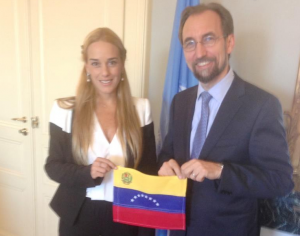
UN High Commissioner for Human Rights and Lilian Tintori, wife of opposition leader Leopoldo López who is currently serving a 13 year sentence (in house arrest) for his responsibility in the deadly violence of the 2014 guarimbas.
By Ricardo Vaz | Investig’Action | September 21, 2017
The mainstream media have a crucial role to play in the war against Venezuela, creating a distorted narrative and a constant frenzy that are crucial for any regime-change operation. With violent protests having failed to topple the government and to stop the Constituent Assembly, the plan switched to military threats and economic sanctions. But these come directly from an unpopular US administration, and a more impartial-looking figure was needed. The High Commissioner for Human Rights, Jordanian Prince Zeid bin Ra’ad al Hussein, stepped up to the plate with the backing of more than 100 NGOs. We tackle the manipulation of human rights for imperial purposes, but first we examine how the term “NGO” is woefully inadequate to describe these organisations.
*****
So much more than NGOs
On occasion of the 36th Session of the UN Human Rights Council, 116 “NGOs”1 signed a letter demanding that Venezuela be a priority for the Office of the High Commissioner for Human Rights (OHCHR). The effort was spearheaded by none other than Human Rights Watch (HRW). HRW has a long and documented history of bias and outright lies in their reports on Venezuela, which is no surprise given their blatant revolving door with the US government. Among the signatories are several usual suspects such as Provea or Foro Penal, whose president Alfredo Romero was a recent speaker in a “US Democracy Support” forum.
Another organisation on the list is Transparencia Venezuela, which includes as sources of funding the EU, several embassies and the parent organisation Transparency International. And although Transparency International is much shadier than it sounds, at least we can laud their transparency in listing their backers. The list includes the US State Department, the National Endowment for Democracy (NED), George Soros’ Open Society, even corporations such as Shell. One more that stands out, and is quoted regularly by the media, is the International Commission of Jurists, which sounds very noble and independent until you discover that they were initially funded by the CIA.
The issue here is with the term “non-governmental organisation”, which are always presented by the media as faultless, impartial actors. While there are many scenarios in which independent organisations can step in and provide invaluable services, this is hardly the case of groups funded by the NED (or USAID, or similar agencies) to “promote democracy” or “defend human rights” in countries like Venezuela. These are merely extensions of the US and western foreign policy apparatus, working as the local infrastructure that is necessary in regime change operations as well as a source for the media to build its biased narrative.
At the end of the day, it is the term “non-governmental organisation” that falls very short of describing the nature and activities of these groups. If an organisation in Venezuela, or anywhere else, is funded by the US government, in what world is it a “non-governmental organisation”? One cannot prove that all the “NGOs” standing with HRW are western-funded, but advancing western interests is very much advancing corporate interests, and it is doubtful that anyone would do that for free.
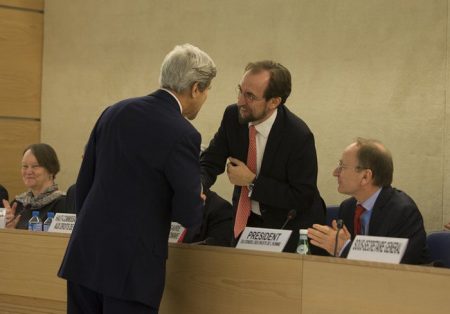
UN High Commissioner for HR shaking hands with former US Secretary of State John Kerry. (If by accident their speeches were switched nobody would notice!)
Weaponizing human rights
While one should not judge a book by the cover, it might be useful to consider the background of the UN High Commissioner for Human Rights, Prince Zeid bin Ra’ad al Hussein. A member of the royal family of Jordan, he comes from a Hashemite dynasty whose calling card has been its pliancy to imperial interests in the Middle East. And having served as ambassador to the US and permanent representative to the UN, he is, much like Jordan, someone the US can rely upon.
His most recent statement, which could just as well have been written by the US State Department, was delivered during the 36th Session of the Human Rights Council. It takes aim at every inconvenient country, from Iran to North Korea, while important US allies like Bahrain or Egypt are invited to “engage more productively” with his office. Israel is treated with kid gloves, and somehow the blame for the humanitarian crisis in Gaza is supposed to be shared between Israeli and Palestinian authorities. And there is no mention whatsoever of Saudi Arabia, where surely there are no human rights issues… Even when addressing the catastrophe in Yemen there is only a passing mention to “coalition airstrikes”.
And then the High Commissioner gets to Venezuela, sounding like any opposition leader or US official on “human rights violations” during anti-government protests or the “crushing [of] democratic institutions”, and suggesting an investigation into possible “crimes against humanity”. Never mind Colombia, where for years the army killed thousands of civilians and dressed them as rebels to collect rewards. Never mind Saudi Arabia, conducting double tap strikes2 against funerals in Yemen, or the US “torturing some folks,” or Israeli soldiers killing children because they were “running like terrorists.” The High Commissioner is worried that crimes against humanity have been committed in Venezuela!
This statement comes on the heels of a OHCHR report about Venezuela that Joe Emersberger described as “embarrassingly shoddy and biased.” It barely mentions any violence coming from the opposition ranks, and while offering a tally of deaths allegedly caused by government forces and the bogeyman colectivos, there is no detailed breakdown to be compared with other accounts such as the one by Venezuelanalysis. Remarkably, given the importance of the issue and the damning verdict that the OHCHR wishes to pass, no investigators from the UN body set foot in Venezuela. Instead the report relies on carefully selected testimonies and the “NGOs” we just discussed.
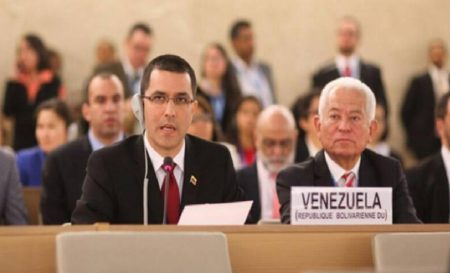
Venezuelan Foreign Minister Jorge Arreaza condemned the manipulation of human rights to attack Venezuela and the lies in the recent OHCHR report.
True NGOs strike back
While the amenable High Commissioner and the poorly-named “NGOs” put on their show to further the regime-change operation in Venezuela, others were not about to take it sitting down. True NGOs, independent organisations that are not pawns in imperialist machinations, and which are truly committed to human rights, condemned foreign meddling in Venezuela and the politicisation of human rights. One example was Swiss-based CETIM, an organisation focused on supporting social movements in the Global South. Concerning Venezuela, it released a statement that said:
[…] we declare ourselves for an immediate return to calm and to dialog, for the respect of Venezuelan peoples’ right to self-determination and the deepening of the process of democratic transformation that they have freely and courageously undertaken for two decades […]
Another organisation that reacted to the recent actions of the OHCHR was the International Association of Democratic Lawyers (IADL), through its representative at the UN, Micòl Savia, during one of the plenary meetings of the 36th Session of the Human Rights Council (intervention #35 in this link)
The IADL expresses its most profound dismay at the recent OHCHR report […]. Given its severity, we are particularly concerned by the High Commissioner’s mention of […] crimes against humanity, which lacks any legal grounds or sense of proportion. […]
The report is selective and biased, and represents a further example of the unfortunate politicisation that affects the work of the OHCHR, undermining its credibility and standing. Use of firearms, explosives, setting up barricades, people burned alive, attacks against hospitals, […], is this the model of “peaceful protests” that this council wants to promote?
Judge, jury and executioner
In the end the bias and lack of standards, or outright falsehood, of these claims and reports does not matter, because if the target is Venezuela they only have to look credible. The media will then do the rest, creating a background by repeating that “Venezuela has been accused by the UN of human rights abuses”, regardless of the shoddiness of the accusations, and this will be the basis to justify future escalations and aggressions as the empire pulls out all the stops to get rid of the biggest threat in its “backyard”.3
This is a good time to stress that legal systems are not moral or just by definition, but a reflection of who holds power, and this is especially true of international law. Though the struggle for an arena where all countries have the same weight is imperative, we are fooling ourselves if we are counting on international bodies to be impartial upholders of justice (just look at Palestine). Recent international tribunals have only served to reinforce the US/western narrative, either as a posteriori justification for past wars such as the one in Yugoslavia, or to justify upcoming ones against troublesome leaders like Gaddafi.
We should clarify that our argument is not some kind of moral relativism, whereby we defend that the alleged crime A should not be investigated until justice is served for (the much worse) crime B. We are not arguing that nobody can be guilty of crimes against humanity until Henry Kissinger is tried, although it is hard to take any international tribunal seriously if the most blatant crimes are immune from prosecution. But what is definitely absurd and unacceptable is to have the US empire, either directly or through its proxies, be the judge trying other people and countries.
Notes
- The HRW statement, and all pieces about it, refer to 116 NGOs; however, the organisations listed only total 115…
- Double tap strikes comprise an initial strike on a target followed by another one targeting first responders.
- In its article about this issue, the Guardian refers to a high-profile jailed opposition leader called Leonardo López (his name is Leopoldo López). Given the overall bias and lack of standards, this is probably fitting.
President Aoun at UN: Lebanon Won’t Allow Naturalization of Any Refugee
Naharnet | September 21, 2017
The Lebanese President Michel Aoun stressed Thursday in his maiden speech before the UN General Assembly that Lebanon will not allow the naturalization of any Syrian or Palestinian refugee on its soil “no matter what that might cost.”
“The decision in this regard belongs to us and not to anyone else,” Aoun underlined.
Noting that the Syrian state is now in control of “85 percent of its territory,” the president emphasized that “there is an urgent need to organize the return of refugees to their country.”
“Some call for the refugees’ voluntary return and we call for their safe return and differentiate between the two concepts,” Aoun noted.
“The claim that they will not be safe should they return to their country is an unacceptable excuse… If the Syrian state is carrying out reconciliations with the armed groups that it is fighting, wouldn’t it be able to do so with refugees who had fled war?” the president asked.
He added: “The UN better help the refugees return home instead of helping them to stay in encampments that lack the least requirements of decent life.”
Separately and from the same UN podium, Aoun nominated Lebanon to become a “permanent, UN-affiliated center for dialogue among the various cultures, religions and races.”
“I hope the member states will back Lebanon in this demand, so that we can all work for peace, security and stability,” he added.
US President Donald Trump’s suggestion that refugees be resettled closer to home instead of brought to the United States has angered many in Lebanon, a tiny country hosting more than 1.5 million refugees.
The country of just 4 million is officially hosting more than 1 million Syrian refugees and some 500,000 Palestinians. The real numbers are likely higher as many don’t register with the UN.
Featured Video
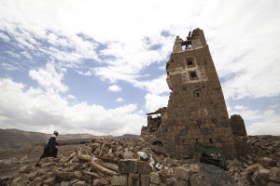
Saudi Led Destruction of Yemen’s heritage
or go to
Aletho News Archives – Video-Images
From the Archives
Israel: Strategic Ally or Liability?
By Stephen Sniegoski | My Catbird Seat | June 12, 2010
The claim that Israel serves as a valuable ally for the United States is made by both pro-Zionists and much of the anti-war and anti-Zionist Left that is influenced by Noam Chomsky. As a result of the Gaza flotilla massacre, which has caused a world-wide uproar against Israel, the value of Israel to the United States is being publicly questioned in more mainstream foreign policy forums. … continue
Blog Roll
 Aletho News
- Declassified UK exposes British man who fought for ‘Israel’ in Gaza
- West’s death cult in a theater near you
- How the Yandex ‘Russian bots’ lie fell apart
- Burnham’s ‘Russia did Brexit’ ruse crumbles
- Estonia making movies and games to encourage war against Russia
- Four in five new UK jobs taken by foreigners – report
- Here’s what Trump’s latest U-turn really means for Russia and Ukraine
- The Houthis Are Not an Iranian Proxy
- Europe’s Energy Hypocrisy, Russian LNG Profits and US Dependence
- ICC ignored ‘very well-documented’ NATO crimes – ex-Libyan minister
- If Americans Knew
- An error has occurred; the feed is probably down. Try again later.
- No Tricks Zone
- New Study Suggests Large Regions Of The Pacific Ocean Have Been Cooling For The Last 80 Years
- Germany’s Green Energy Debacle: High Energy Costs Force Kahla Porzellan to Close After 182 Years!
- New Study: 50 Years Of The Most Aggressive ‘Net Zero’ Policies Can Only Affect The Global Climate By 0.03°C
- US September “Heat” Was No Record…Many Records Set Decades Ago
- Latest European Green Energy Debacle; Portugal’s Largest Flagship Solar Park Insolvent!
- Green Energy Debacle: German Expert Professor Fritz Vahrenholt Warns Of Severe Economic And Social Consequences
- Two More Paleo Reconstructions Affirm Meters-Higher Sea Levels Across Ireland, Brazil 7000-6000 Years Ago
- New Study: Earth And Venus Surface Warmth Largely Explained By Convection And Lapse Rate, Not CO2 Or Radiation
- 2025 Nature Paper Claiming Worsening Global Drought Gets RETRACTED …Heavily Flawed
- New Study: ‘Global Drought Shows No Detectable Recent Acceleration Under Climate Warming’

