On June 14, 2016 approximately 70 armed men approached a small group of Guaraní-Kaiowá families and, after terrorizing them by burning their belongings, opened fire, killing 26-year-old indigenous leader Clodiodi Aquileu Rodrigues de Souza Guaraní-Kaiowá. Among those shot, at least 10 other people were injured, including a twelve-year-old boy who was shot in the stomach. The Instituto Socioambiental (Socio-environmental Institute; ISA), a non-profit organization that advocates for human rights observance among the indigenous people, first reported the case, writing that indigenous leaders were taken hostage and that others are missing.[1] The attack happened within a disputed area in the traditional indigenous territory of Tekohá Te’ýikue, located on the indigenous reserve of Dourados-Amambaipegua I. This land is within the municipality of Caarapó, located in the central Brazilian State of Mato Grosso do Sul, a region known for violent conflict between indigenous groups and land owners.
On May 12, as a result of over 30 years of struggle and an intense mobilization of members of the Guaraní and Kaiowá nations in Brasília, the Brazilian government recognized a local parcel of land as an indigenous territory.[2] Although throughout her presidency Dilma Rousseff had done little to advance indigenous rights and to help in reclaiming their traditional lands, this indifference eventually started to change a couple of months before Congress voted on her impeachment process. Rousseff created the National Council for Indigenous Policy and confirmed the demarcation of three indigenous lands. [During] that period, the Ministry of Justice declared five major areas as traditional indigenous territory.[3] It is important to note that these demarcations are now at risk, since Brazilian interim president Michel Temer has stated that he might revise such indigenous demarcations in the country.[4]
Missionaries and indigenous leaders have pointed out that, although the violence against indigenous nations in the region is not a recent development, the attacks have been escalating. According to the Special Indigenous Sanitary District of Mato Grosso do Sul (DSEI/MS), a total of 475 cases of indigenous homicides were recorded in the region from 2001 to 2015. Last year alone, there were 36 murders (34 men and two women), with most of the indigenous people killed being between 15 and 29 years old. In 2014, the DSEI-MS registered 619 cases of physical violence against members of the Guaraní and Kaiowá nations.[5] Large-scale landowners often perpetrate these attacks with the complicity of local authorities so as to evict indigenous communities from their traditional lands illegally and violently with complete disregard for their constitutional rights.
According to Eliel Benites, a professor at the Federal University of Grande Dourados (UFGD) who lives in the indigenous village Te’ýikue, the Kaiowá and Guaraní families are very fearful: “All farmers in the region were together to carry out the attack. We are living a war,” stated Benites.[6] The Fundação Nacional do Índio (National Indigenous Foundation, Funai, responsible for the demarcation of indigenous territories) has started investigating the June 14 attack, but no one has been charged yet. A delegation of members of the Human Rights Committee of the Brazilian Lower House traveled to the site of the attack on Wednesday, June 16, to check closely the situation of the indigenous people in the region.[7]
Diogenes Cariaga, an anthropologist at the Federal University of Santa Catarina (UFSC), reiterates that the conflict situation in the region was already being planned and reveals that the Rural Union of Caarapó (the city where the indigenous land is located) has been encouraging farmers to act violently against indigenous families. On May 18, 2016 shortly after the publication of the report that classified the region of Dourados-Amambaipegua I as an indigenous reserve, the Rural Union Council mobilized the farmers in the region to discuss measures against the demarcation. For Cariaga, the State’s lack of response to the violence against indigenous communities allowed landowners to create and finance militias to attack them.[8]
Over six thousand indigenous families of the Guaraní and Kaiowá nations live in the Caarapó region. As explained by Cariaga, “These families were taken forcibly into the reserve and for many years were forced to stay there.” He points out that since the 1980s, the Guarani and Kaiowá in the region have been fighting to repossess their traditional lands. The anthropologist also recalls that the territories within the boundaries of Dourados-Amambaipegua I were part of a Conduct Adjustment Commitment (CAC) signed between Funai and the Federal Public Ministry, requiring the Funai to publish studies of the areas claimed by indigenous people so that they could be ruled as indigenous reserves.[9]
Although the Funai has been prioritizing indigenous land demarcations, the negligence of the Brazilian state to conclude this process to investigate and prosecute the crimes against these communities has contributed to the escalation of violence in the area. Land disputes in the central region of Brazil have led to serious attacks against constitutional and human rights of the indigenous communities, which has amounted to a systematic genocide against Brazilian native peoples.
120 Palestinian prisoners are currently on hunger strike in Megiddo prison in solidarity with Bilal Kayed, the Palestinian prisoner who was ordered to six months administrative detention without charge or trial upon the expiration of his 14.5 year sentence in Israeli prison on Monday, 13 June. Two of the leaders of the prisoners’ movement – Wael Jaghoub and Kamil Abu Hanish – have been thrown into solitary confinement, said early reports from the prisons on 21 June.
Kayed has been on hunger strike since 14 June demanding his freedom and the cancellation of the administrative detention order. A prominent leader among the prisoners of the leftist Palestinian party, the Popular Front for the Liberation of Palestine, Kayed’s struggle has received strong support from his comrades and fellow Palestinian prisoners, who note that his situation poses a danger to all Palestinian prisoners of a new systematic Israeli policy of administrative detention upon release.
Hundreds of Kayed’s comrades have been participating in limited-duration hunger strikes and other protests inside Israeli prisons; they have announced that they will pursue a collective open hunger strike after 7 July – which are being met with repression.
Prisoner leaders Jaghoub and Abu Hanish were ordered to isolation as repressive forces invaded sections 1, 5, and 7 in Ramon prison, confiscating electrical appliances and personal belongings and locking down cells.
There is also high tension in Nafha prison after Jamal al-Hour, a representative of Hamas prisoners, was ordered transferred to Eshel prison.
More than 1,000 children have been referred by teachers to a deradicalization program in the space of a year to prevent them becoming terrorists – but leading teaching unions insist some minors are being reported unnecessarily.
Authorities were also alerted to hundreds of patients and higher education students who were reportedly vulnerable to extremism, according to the Times.
Roughly half of those referred were assessed but did not require any further intervention.
Teachers are required by the Counter-Terrorism and Security Act “to have due regard to the need to prevent individuals from being drawn into terrorism.”
The measures also require local authorities, the health sector, prisons and police to comply with the rules.
Within the schools in England and Wales, 1,041 children were referred to deradicalization program ‘Channel’ in 2015, compared to nine children from 2012 when it was extended nationally.
In further education facilities such as colleges, there were 180 referrals from last year compared to five in 2012. Universities reported 76 students while the health service had 228 referrals in 2015.
The figures were released under the Freedom of Information Act by the National Police Chiefs Council.
Kevin Courtney, from the National Union of Teachers said the figures suggested the tendency of over-referring pupils.
‘Channel’ is part of the British government’s wider ‘Prevent’ strategy to tackle extremism and stop people from becoming terrorists.
In March, teachers voted overwhelmingly to reject the strategy, with concerns that it causes “suspicion in the classroom and confusion in the staffroom,” and disproportionately targets Muslim students.
The program has been considered a failure by teaching unions, largely due to some 90 percent of referrals ending without action being taken, according to the Guardian.
A spokesperson for the Home Office said the program was designed to “safeguard” children.
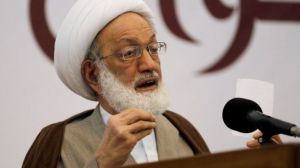
Sunni-ruled Bahrain has deprived leading Shia cleric Sheikh Isa Qassim of his citizenship, media reported Monday.
According to the BBC, Bahrain stripped Qassim, who is the spiritual leader of Al-Wefaq, Bahrain’s biggest opposition group, and holds the senior religious title of Ayatollah, of his citizenship.
On June 14, Bahrain’s Court of Cassation ruled to close all offices of Al-Wefaq in a response to an appeal lodged by the country’s Ministry of Justice.
Al-Wefaq has organized mass protest rallies against the current constitutional monarchy in Bahrain. Al-Wefaq’s leader, Sheikh Ali Salman, was arrested in 2014 and sentenced to four years in prison for inciting hatred and disobedience as well as insulting public institutions in 2015. Earlier in June, the court decided to increase the sentence to nine years.
Since 2011, the Sunni regime in Bahrain became locked in a struggle with an opposition movement led primarily by Shiites, who form a majority in the country. The protesters were calling for political freedom, equality and a parliamentary system that operates independently of Bahrain’s Sunni royal family.
Deir Istiya, occupied Palestine – When Aziz ‘Aasee, the mayor of Qarawah Bani Hassan village drives through the streets, we’re stopped every few meters by one of his constituents, all of whom are asking the same question: When will we have water again? For some, the question is a joke; they are used to going without water for days, weeks, or even months each summer. Others are more aggressive, and the question comes off as a threat. People are looking for someone to blame for their thirst. The mayor, who is responsible for paying the town’s water bills, seems like an easy target.
In reality, there is little Aziz can do to ensure that his town has enough water. The village shares a water access network with two other municipalities, Sarta and Biddya. The three villages, with a combined population of approximately 30,000 people, depend on one 8 inch pipe, designed to deliver 145 cubic meters of water per hour. During the winter months when water tables are higher, the water flows at full capacity, ensuring coverage to the entire network. However for the past two months, the amount has been restricted to between 50 and 70 cubic meters per hour. With such a small amount in the pipes, the pressure is too low for the water to reach many of the houses at the end of the system. Qarawah, which sits at the highest elevation out of the three villages, suffers the most from the low water pressure: no house in the village has received water in over a week. The most remote properties have gone dry for over a month.
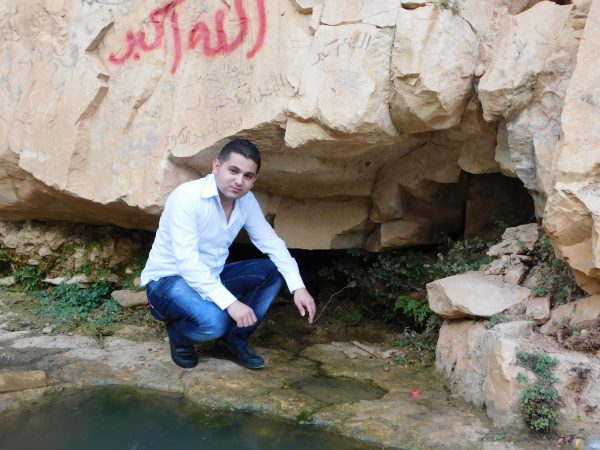
Qarawah’s only potable water source
Mekorot, the Israeli national water company which ostensibly owns the water infrastructure in question, and controls 87% of the aquifer located inside the West Bank, lies at the root of the problem. Since 1982, when the Israeli military sold their control of the West Bank’s water resources to Mekorot for a mere Shekel, the company has become the main enforcer of water apartheid between the Palestinians, and Israelis living in illegal settlements. While settlements enjoy a 24/7 supply of water year round, Mekorot caps its supply to Palestinians at the levels stipulated in the Oslo agreements over 20 years ago. Since then, the population of the West Bank has grown exponentially, and almost no improvements to Palestinian water infrastructure have been made. The Israeli military administration in the West Bank only makes matters worse. They routinely deny permits for new wells and pipes that would benefit villages like Qarawah by providing alternative sources of water or improving water pressure. In addition, the Israeli military has demolished 50 water and sanitation structures owned by Palestinians in 2016 alone. The result is that Palestinians have essentially no control over any of the water within their borders, or the infrastructure to deliver it.
Negotiations with Mekorot are almost impossible for small municipalities like Qarawah. Officials in the district capital of Salfit have spent the past two months trying to persuade the Israelis to increase the water supply without result. Even on the national level, appointees from the Palestinian Authority have refused to negotiate with Mekorot and the Israeli military administration. Aziz, for his part, chiefly contacts Mekorot through one of their Palestinian employees, and the communication is confusing at best. The representative will promise to show up on a certain day, and then never arrives. Or he’ll leave an update to say the water supply will be increased for one night to 100 cubic meters per hour, enough to ensure that at least some homes in Qarawah will receive water, yet the taps remain empty. Meanwhile, the illegal settlement of Kiryat Netafim, easily visible on a neighbouring hillside, boasts green lawns. It’s clear from a glance that the settlements are receiving more than adequate service from the same company.
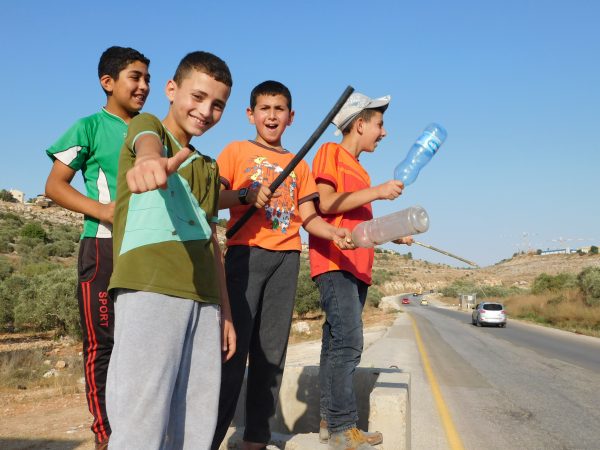
A few times over the past weeks, the municipalities of Qarawah, Satra and Biddya have called for popular protests, gathering at the meter access point for their shared pipe. Small groups of children and young men beat empty water bottles with sticks and shouted “Bidna may, bidna may” – “we want water” – at passing cars. Regardless, many in the three towns are afraid of a backlash from the protests. Shortly after the protests, armed Israeli soldiers arrived at the meter, demanding that the organizers cancel, or face repercussions. While it’s unclear what sort of consequences might be imposed, some worry that the water might be cut off completely as an act of collective punishment.
“Bidna may” – we want water protest
With no solution in sight, the villagers of Qarawah are finding ways to mitigate the effects of living under water apartheid. Villagers are using bottled water for drinking and showers, and hauling water up from local springs, located 4-6 kilometres outside the village limits, to use in toilets and irrigation. The springs also provide a small amount of potable water. However, this is not nearly enough to meet the village’s needs. Some houses in the village also have private wells; but with the summer stretching ahead, these limited resources are sure to be depleted far too soon. So until Mekorot is disbanded, or agrees to give equal service to Palestinians, the people of Qarawah will continue to suffer.
After hurdling procedural barriers, a congressional attempt to protect privacy and encryption failed on the House floor yesterday, falling short of a majority by a mere 24 votes.
Two years ago, the House stood united across party lines, voting by a remarkable margin of 293–123 to support the same measures, which would enhance security and privacy by limiting the powers of intelligence agencies to conduct warrantless backdoor searches targeting Americans, and to undermine encryption standards and devices.
This week, the intelligence community broke that consensus by inappropriately politicizing the recent tragedy in Orlando. Before Thursday’s vote, the chair of the House Intelligence Committee, Rep. Devin Nunes (R-CA), circulated a letter falsely claiming that:
If this amendment were enacted, the Intelligence Community would not be able to look through information lawfully collected under FISA Section 702 to see if… the Orlando nightclub attacker was in contact with any terrorist groups outside the United States.
As members of the intelligence committee well know, the government will have no problem securing warrants to search the Orlando attacker’s online communications. Warrants are not difficult to secure when appropriate. The only thing a warrant requirement would do is prevent the government from abusing its powers, as it repeatedlyhas in the past.
The clever misrepresentations about the proposed amendment, and unproven and ultimately spurious claims that it would undermine national security, prompted efforts to correct the debate and inform policymakers of the truth, leading dozens of members of Congress to switch sides in both directions. Ultimately, the House chose to reverse two previous votes overwhelmingly supporting precisely the same amendment.
We are greatly disappointed that the House chose to abandon its prior votes defending the rights of constituents, and particularly in those members who accepted the canard that simply requiring the government to obtain a judicial warrant before searching Section 702 intelligence databases would hinder investigations.
Observers who share our concerns have opportunities to impact the debate going forward. First, contact your federal representative to share your views, especially if yours was one of the dozens who shifted their position.
But don’t stop there: August will present a key point in time when—visiting their districts just a few months before an election with likely high turnout driven by a presidential election cycle—members of Congress will be at their most politically vulnerable, exposed, and therefore receptive to grassroots concerns.
If you’d like to take advantage of the opportunity to share your views with your representatives in a forum more influential than a phone call, confirm how your representative voted, recruit a handful of friends to form a local group, and join the Electronic Frontier Alliance.
One of the most celebrated qualities of the people of Gaza is their sumoud, their steadfastness and capacity to endure the woes inflicted by Israeli terror. Media coverage of the tiny strip is full of soppy stories about how, regardless of the number of times Israel mows the lawn or casts lead, farmers will always sow their buffer zone farmlands and medics will never cease to improvise with what little they have.
The question is not whether the people of Gaza have given up on their professions and fell to their knees before their occupiers, but the cheap reproduction of them as an extraordinary population who will continue to endure all sufferings imposed on their lives and cling to their cause. What is more disturbing is that foreign journalists on the ground often steer the conversation to get the answers they are looking for. The people of Gaza have memorised the right answer: No matter what, we will never leave.
The truth, however, is that the “people of Gaza” are for the most part sick of this framing and, in fact, a considerable number of them are leaving. In September 2014, nearly five hundred Palestinians from Gaza drowned in the Mediterranean as they attempted to reach Europe. To risk one’s life with smugglers and brave seas in pursuit of a better life elsewhere should tell us something about people’s limited capacity to endure inhumane conditions as well as the limited truth of the sumoud narrative. This is not to say that people are abandoning their struggle for justice and their liberation ideals; many join activist groups or dedicate years of research to them. However, it is time to step back a little and reassess the sumoud narrative; it is perhaps time to understand Gaza and its people on their own terms. To do so, one should look critically at blanket narratives and long-held assumptions, as well as changes that have occurred to established concepts.
There are, to my mind, two primary dangers in trumpeting this narrative of sumoud. The first lies in transforming an ordinary population into mythical creatures able to overcome the most excruciating of circumstances. This transformation places a high, and utterly unjustified, expectation on Gaza’s Palestinians to endure Israel’s relentless aggression and to hold on to the land regardless of the level of destruction implemented. This expectation winds up minimising the power and consequences of Israel’s occupation because, no matter how filthy and bloody it becomes, the Palestinians are predisposed to endure.
For Palestinians on visas abroad, questions on whether they plan to go back to Gaza at the end of their studies are often posed by -without generalising- some Palestine supporters. To be sure, what motivates the question is a principled concern for the liberation of the land. Leaving Palestine, they would say, is exactly what Israel wants. This objection is often, and understandably, voiced by exiled Palestinians and their younger descendants. It is understandable because their varied experiences of Palestine are defined less by daily reality and more by the vision of what Palestine was and will be again. The present certainly plays a role but actual daily experience makes a lot of difference. Questions of this sort, nevertheless, place a lot of pressure on those in Gaza who already have so much to deal with or live abroad under the threat of deportation. What I am calling for is a more comprehensive understanding of the conditions in Gaza and a re-examination of what sumoud means in contemporary reality.
The second danger is that the sumoud narrative paints steadfastness as a choice rather than a forced reality. Palestinians in Gaza are not given the choice between enduring Israel’s aggression and seeking opportunities elsewhere. Palestinians, at least in part, continue to plough, sow, dig tunnels, and improvise because there is no other option. Simply put, Palestinians endure because they have to, not because they choose to. It is perhaps more worthwhile to write stories on the disgraceful visa processes and mistreatment and degradation of Palestinian asylum seekers than pretend as though we have chosen to suffer and, therefore, to endure. As though we are naïve enough to allow ourselves to hope when no signs of improvement can be glanced anywhere.
The Palestinian governments in the West Bank and Gaza have taken this narrative of a mythical people to heart. Each feels it necessary to act as if the Palestinians are not only doing fine under their dysfunctional governments but are flourishing too. Mahmoud Abbas, for example, is still “state building” and constructing mythical cities such as Rawabi when hardly any land is left. The obscene complicity of both governments, together with the collective efforts of Israel, Egypt, and Jordan, have made it impossible for Palestinians trapped in Gaza to leave and, consequently, they are forced endure.
HEBRON – Human Rights Defenders (HRD) in Palestine released a video last week showing an Israeli soldier kicking a knife toward the body of Abd al-Fattah al-Sharif — who was shot point-blank in the head by an Israeli soldier in March — an action the group said represents a clear violation of international law.
The video shows an Israeli soldier casually kicking a knife — allegedly used by al-Sharif during an attempted stabbing attack — to the other side of the road in the town of Tel Rumeida in the southern occupied West Bank district of Hebron, as al-Sharif’s body lay a few meters away.
The footage was taken before al-Sharif was shot execution-style in the head by an Israeli soldier, a graphic video of which was released in March, leading to widespread condemnation by rights groups and the UN demanding an investigation into the apparent “extrajudicial execution.”
Badi Dweik, an activist from HRD, said in a statement released Saturday that the group decided to make the video public in order to challenge current narratives unfolding at the ongoing military trial of Elor Azaria — the Israeli soldier charged with manslaughter after killing al-Sharif. Azaria has claimed that he shot the immobilized Palestinian because he saw al-Sharif reaching for the knife, or feared he had explosives strapped to his chest.
An additional video surfaced at the start of June, showing an Israeli ambulance driver kicking the same knife near to al-Sharif’s body after he was killed.
The video footage, obtained by Israel’s Channel Two, was expected to be shown to an Israeli military court to disprove claims by the Israeli soldier who killed al-Sharif that he shot the young Palestinian point-blank in the head after al-Sharif moved to grab a knife, according to the Israeli media outlet Ynet.
The footage shows that the knife allegedly used in the attack was far from al-Sharif when he was shot, notably showing an ambulance driving over the knife before it was kicked closer to al-Sharif’s body.The Israeli military prosecutor reportedly said that an Israeli ambulance driver, Ofer Ohanna, who was near the scene kicked the knife towards al-Sharif’s body following his murder, according to Hebrew-language news outlet Maariv.
The new video that has surfaced reveals that the ambulance driver was not the only one to tamper with evidence at the crime scene, but that an Israeli soldier also manipulated a piece of key evidence by moving the knife, which Dweik emphasized was a violation of international law. Al-Sharif was shot alongside Ramzi Aziz al-Qasrawi after the two Palestinians allegedly stabbed and moderately wounded an Israeli soldier at a military checkpoint in the Tel Rumeida area of Hebron on March 24.Although it was widely believed that Al-Qasrawi was killed immediately, new witness accounts documented by Israeli human rights group B’Tselem have since emerged that “raise concerns that al-Qasrawi was also executed with a shot to the head, as he lay injured on the ground after having been hit by gunfire elsewhere in his body.”
Al-Sharif, meanwhile, was left severely wounded for several minutes without treatment, before Azaria stepped forward and put a bullet through his head, killing him.Azaria was charged with manslaughter, rather than murder as had initially been expected, and is being held on a military base in “open detention” where he is free to roam and has received visits from his family. His trial opened in early May.
Palestinians have long held fears that Israeli soldiers and settlers tamper with crime scenes involving Palestinians, with human rights groups accusing Israel of practicing a policy of extrajudicial executions since a wave of violence erupted in October, leaving more than 200 Palestinians and some 30 Israelis killed.
The U.S. Congress has passed the National Defense Authorization Act (NDAA) 2017 with provisions that will force women to sign up for potential military draft and continues the practice of indefinite detention.
On Tuesday, the U.S. Senate approved a $602 billion annual defense budget that President Obama has promised to veto because the bill does not allow for the closing of the military prison at Guantanamo Bay, Cuba. Senate Bill 2943, the National Defense Authorization Act for Fiscal Year 2017, passed with a vote of 85 Senators in favor and 13 against.
Before the vote, Senator John McCain tweeted that “It’s never been more urgent to give our troops the resources they need to succeed.” The majority of Congress have no issue taking money from the American people and redistributing it to fund their empire. The conflict arises when lawmakers begin debating whose pet projects are going to get a boost. The major conflicts in passing the bill stemmed from various amendments dealing with how the military budget will be spent.
One issue the entire Congress seemed to agree on was voting against closing military bases around the world. While the Pentagon called for budget cuts stating that the military has more space than they need, Congress refused to go along with the cuts. “Besides, several lawmakers have argued that the Pentagon has cooked the books to justify its conclusions or at least didn’t do the math completely,” the Associated Press reports. The Senate also voted against an amendment to close the infamous military detention center at Guantanamo Bay, Cuba.
Another contentious area of debate was the mandate to force women who turn 18 on or after Jan. 1, 2018 to register for Selective Service. Males are already required register within 30 days of their 18th birthday. The United States has maintained a volunteer military force since 1973, but through Selective Service the military could reinstate a draft and call upon registered males and females. Those who do not register could face up to five years in prison and a fine of up to $250,000, although the penalty has rarely been enforced.
The most horrendous part of the NDAA 2017 is that that the annual military budget continues to include a provision which allows for indefinite detention of American citizens without a right to trial. Many of you may remember that President Obama had no problem signing the NDAA 2012 in 2011, which legalized the indefinite detention of American citizens suspected of ties to terrorism. The indefinite detention provision is still contained in the NDAA, and has been approved by Congress and signed by President Obama every year since it first passed.
On Thursday June 9, Senators Mike Lee of Utah, Rand Paul of Kentucky, and Dianne Feinstein of California spoke on the floor of the Senate in support of an amendment bill which would have removed the indefinite detention clause from NDAA 2017 and offered protections to American citizens weary of a federal government with too much power. The “Due Process Guarantee Amendment to the NDAA for Fiscal Year 2017” would have clarified “that an authorization to use military force, a declaration of war, or any similar authority shall not authorize the detention without charge or trial of a citizen or lawful permanent resident of the United States.”
“This amendment addresses a little known problem that I believe most Americans would be shocked to discover even exists,” Senator Mike Lee said from the floor of the U.S. Senate. “Under current law, the federal government has proclaimed the power, has arrogated to itself the power to obtain indefinitely without charge or trial U.S. Citizens and lawful permanent residents who are apprehended on American soil. Let that sink in for just a minute.” Senator Lee also reminded the Congress that the last time the U.S. federal government detained Americans was the internment of Japanese Americans during the Second World War.
Senator Rand Paul noted that President Obama recognized the danger of granting the federal government the power to indefinitely detain Americans. Upon signing the bill in 2011 President Obama added a signing statement promising not to use the power. “He said, this is a terrible power and I promise never to use it. Any president who says a power is so terrible he’s not going to use it should not be on the books,” Paul stated. “Someday there will be someone in charge of the government that makes a grievous mistake, like rounding up the Japanese. So we have to be very, very careful about giving power to our government.”
Unfortunately, the federal government will continue to have the ability to indefinitely detain American citizens. This is especially worrisome going into 2017 when a new president, one who hasn’t promised not to detain you, will be claiming the Oval Office. What will he or she do with the power to indefinitely detain Americans? Only time will tell.
Slavery has been abolished in the United States since 1865, when the 13th Amendment was passed in the ashes of the Civil War.
Well, almost abolished. Actually, the amendment included a caveat: “except as punishment for a crime.” Since then, prison and forced labor have always gone together.
In fact, with over 2 million people behind bars in this country, the American prison system is a massive — albeit largely invisible — part of our economy and social fabric.
Recent years have seen a rise in both private prisons and the use of prison labor by private, for-profit corporations. This has created perverse incentives to imprison people and exploit them for cheap labor — often at 50 cents an hour or less.
Corporations such as Microsoft, Target, Revlon, and Boeing have all made products with prison labor. With over a third of home appliances and 30 percent of speakers and headphones made using prison labor, it’s likely most American households own inmate-made products.
(Photo: popularresistance.org)
Even Whole Foods, a famed destination for ethical consumers, was forced to stop selling certain artisanal cheeses last year when those “artisans” were revealed to be prisoners who made a base wage of 60 cents a day
We won’t even get into what Whole Foods — sometimes called “Whole Paycheck” — was charging consumers for prisoner-made products, which also included organic milk and tilapia.
The problem is making its way into popular culture as well. A season three episode of the Netflix prison dramedy Orange Is the New Black, for example, illustrated a similar scam.
In the episode, a thrilling new job opportunity is marketed to the inmates. Most are beside themselves at the idea of working for $1 an hour — well above the compensation offered for any other job in the prison. A scheme is hatched to trick the women into clamoring for the job in a fake competition.
The episode closes with a scene showing the chosen women as their new job is revealed to them. They walk into a warehouse. The lights click on, and the viewer first sees the shock and disappointment on their faces. Then the camera turns to show rows and rows of sewing machines and a corporate logo overhead.
They’d competed to work in a sweatshop.
Real-life prisoners are starting to organize against this kind of abuse. This April, prisoners in Texas held a coordinated work stoppage with the help of the Incarcerated Workers Organizing Committee — an arm of the global IWW union.
The striking inmates refused to do work assigned to them by Texas Correctional Industries, an arm of the state Department of Justice that uses inmate labor to make everything from personal care items to toilets. Incarcerated workers there are paid as little as 17 cents an hour, even as phone calls can cost $1 a minute and medical care requires a $100 copay.
Another union-coordinated strike is underway at several Alabama prisons, where inmates labor in deplorable conditions even as they generate profits for private industries. Unions and rights groups are gearing up for a national strike this September to derail this exploitative system.
Those most directly and negatively affected, the prisoners and their families, need and deserve our support. But the rest of us need to finish the work of the Civil War and end forced labor in our country for good.
Lauren Karaffa is a New Economy Maryland fellow at the Institute for Policy Studies.
Quite revealingly, the self-proclaimed crusader against genocide, Samantha Power, was awarded the 2016 Henry A. Kissinger Prize in Berlin. That Power would be awarded a prize named after one of the world’s great génocidaires, and that she would happily accept it, proves what many of us have believed all along – that she is more the clever apologist for U.S. crimes than a bona fide human rights advocate.
The problem with Power all along has been that her refusal to acknowledge the incontrovertible fact that the U.S., as exemplified by such figures as Henry Kissinger himself, is in reality the world leader in war crimes commission, and an active facilitator of genocide. The U.S. is not, as Power has claimed throughout her career, a force for halting such evils. However, Power has done an impressive job in advancing this myth, and in the process in perpetuating the false belief that the world would be better off if only the U.S. were more active militarily throughout the world. In so doing, Power, who is lauded as some great human rights advocate, probably does more than any other public figure to harm the cause of global human rights.
Power’s acceptance speech, entitled, “Remarks on ‘Twenty-First Century Realism’ at the Awarding of the 2016 Henry A. Kissinger Prize,” is very illustrative of the delusions Power promotes in the interest of U.S. power projection and the grave harms done by this projection. [1]
First of all, Power, in full agreement with Kissinger, condemns what she refers to as “the rise of extremist and isolationist voices in the U.S.” who dare challenge “the internationalist assumptions that have undergirded U.S. foreign policy across party lines since the Second World War.” This statement is pregnant with meaning and deserves some dissecting.
As an initial matter, it is stunning that Power would characterize those who call for the U.S. to stop, or even slow, its aggressive, interventionist policy around the globe as “extremist” when it’s so clear to any rational observer that it is this interventionist policy itself which is so extremist as to be insane.
Indeed, it is hard to point to any great successes, especially in terms of human rights, that the U.S.’s post-WWII “internationalism” (I would prefer to call it imperialist aggression) achieved, and Power in her speech tellingly does not point to even one such success. And, how could she with a straight face? The innumerable U.S. interventionist adventures since WWII have done nothing to advance human rights or even national security, at least if national security means the protection of U.S. citizens like you and me.
Rather, the U.S.’s “internationalism” has consisted of overthrowing constitutional democracies in countries like Iran (1953), Guatemala (1954), Chile (1973), Haiti (2004), Honduras (2009), just to name a few. It has consisted of carrying out mass slaughter in an attempt to put down national liberation struggles, for example in Vietnam and in Southern Africa, costing the lives of millions. And, it has involved sowing instability throughout Northern Africa and the Middle East, in such countries as Libya, Afghanistan, Syria, Yemen and Iraq.
Power’s complete blindness to such realities – though she ironically entitles her speech, “Twenty-first Century Realism” – is hard to fathom. For example, she explains the current rise of ISIL in Iraq as the product of “the deeply sectarian, corrupt, and abusive rule of Prime Minister Maliki . . . .” There is no mention, however, of the 1991 and 2003 military interventions in Iraq by the U.S., nor of the intervening sanctions regime, which destroyed the social fabric of that country and left hundreds of thousands of civilians, including at least half a million children, dead. No, those acts of “internationalism” apparently do not deserve even a mention in Power’s distorted view.
In addition, Power does not mention the U.S. intervention in Libya in 2011, though that was an intervention which she and her soulmates Hillary Clinton and Susan Rice played a key role in bringing about. Again, the undisputed result of this intervention has been instability in Libya and surrounding countries, such Mali and Tunisia, and the accompanying rise of armed extremist groups in those countries. But again, this deserves no mention. Instead, Power attempts to explain the “instability roiling the Middle East” as the product of almost mystical forces beyond the purview of the U.S., thus criticizing those who would “presume that the United States had within our control to put the Arab Spring genie back in the bottle . . . .”
Power, repeating her long-time refrain which has given her the reputation as a human rights advocate, ends her speech by stating that “we no longer live in an era in which foreign policymakers can claim to serve their nations’ interests treating what happens to people in other countries as an afterthought. . . . What happens to people in other countries matters. It matters to the welfare of our own nations and our own citizens.” Of course, there is nothing particularly profound about this statement, and it would be hard to find many who would admit to disagreeing with it.
However, as with all Power says, what is absent is any discussion about how the actions of the U.S., and of even of Power herself, has undermined the welfare of people in other countries. For example, in addition to her role in pushing for the disastrous intervention in Libya, Power has also been active in giving diplomatic cover to the U.S.-backed Saudi slaughter in Yemen which continues to this day. Thus, in an episode quite reminiscent of those she criticizes in her Pulitzer-prize winning book, A Problem From Hell, Power helped the Saudis scuttle a resolution at the United Nations that called for an investigation into the civilian toll of the Saudi coalition war against Yemen [2], in which at least 6,000 civilians have been killed and 14 million civilians find themselves on the brink of starvation. In the end, even for Power, whether “people in other countries matter” inevitably depends upon who the people are, and whether the state impacting their interests is a friend of the U.S. or not.
In short, Power is really the perfect exemplar of U.S. foreign policy. She is a hypocrite and a phony idealist who believes her own lies about the role of the U.S., and even herself, in the world, and who does a great job of convincing the public that these lies are truth. But sadly — like Kissinger himself who will never be able to wash the blood of the Vietnamese, Cambodians, Laotians, Chileans, Argentines and East Timorese off his hands, but who nonetheless is treated as an elder statesman — Power will most likely never be brought to account. She will continue to live out her days watching Boston Red Sox games and hanging out with the rich and powerful, while other, lesser criminals are sent to The Hague. Regrettably, this is what passes for human rights these days . . .
In a precedent-setting decision Tuesday, the Israeli military decided not to press charges against a senior officer who ordered his troops to bombard a hospital in Gaza in 2014 to reportedly “raise their morale” with a “revenge attack” after another officer was killed.
The officer, Lieutenant Colonel Neria Yeshurun, told military investigators that he was mad that he and the soldiers were unable to attend the funeral of an officer who was killed a few days before, so “we decided to fire a volley of shells toward the point from which he lost his life.”
According to the Israeli paper Ha’aretz, Major Amihai Harch, Yeshurun’s commander, said at the time, “The only unusual thing [Yeshurun] did was that he put the incident on top of the eulogy to Dima, the company commander who was killed. That was certainly to raise [morale]. And I say to you on the level of facts — that raised morale and encouraged the soldiers to continue the mission.”
These admissions were made directly to the military investigators in Yeshurun’s case, but were not deemed sufficient to place any charges on the officer.
Although Israeli military policy says that revenge attacks are not allowed, former soldiers have reported that they are common practice in Israeli military units.
The shelling of the clinic was part of a larger attack on the Sheja’eyya neighborhood in eastern Gaza, in which more than 120 Palestinian civilians were killed in a single night during the Israeli invasion of Gaza in 2014. The 50-day long invasion resulted in more than 1400 Palestinians killed, including more than 400 children, and 91 Israelis, mainly soldiers killed during the invasion of Gaza.
The night of killings in Sheja’eyya became known to Palestinians as the Sheja’eyya massacre. Throughout the night, the shelling of the neighborhood was continuous, affecting every home – most of the neighborhood was completely destroyed, and many of those killed were crushed in the rubble of their own homes. Survivors ran through the streets carrying babies and children, desperate to escape the continuous Israeli assault.
The attack took place on July 31st, 2014, just a day after the bombing of a school where families had taken refuge. About the attack on the school, UN Secretary General stated, “I condemn this attack in the strongest possible terms. It is outrageous. It is unjustifiable, and it demands accountability and justice. Nothing is more shameful than attacking sleeping children.” Since the time of the attack, there has been no accountability for the soldiers involved, and no charges.
Former Israeli soldier turned whistleblower Eran Efrati published accounts at the time, in August 2014, from soldiers in two different units reporting that their commanding officers had ordered them to carry out attacks against civilians in order to ‘revenge’ for soldiers who had been killed.
By Tony Cartalucci – New Eastern Outlook – 29.11.2017
The United States Air Force’s 59th Medical Wing’s molecular biology branch recently was revealed to have been collecting specifically Russian RNA and synovial (connective) tissue samples, prompting fears in Russia of a possible US directed ethnic-specific bioweapons program. … continue
This site is provided as a research and reference tool. Although we make every reasonable effort to ensure that the information and data provided at this site are useful, accurate, and current, we cannot guarantee that the information and data provided here will be error-free. By using this site, you assume all responsibility for and risk arising from your use of and reliance upon the contents of this site.
This site and the information available through it do not, and are not intended to constitute legal advice. Should you require legal advice, you should consult your own attorney.
Nothing within this site or linked to by this site constitutes investment advice or medical advice.
Materials accessible from or added to this site by third parties, such as comments posted, are strictly the responsibility of the third party who added such materials or made them accessible and we neither endorse nor undertake to control, monitor, edit or assume responsibility for any such third-party material.
The posting of stories, commentaries, reports, documents and links (embedded or otherwise) on this site does not in any way, shape or form, implied or otherwise, necessarily express or suggest endorsement or support of any of such posted material or parts therein.
The word “alleged” is deemed to occur before the word “fraud.” Since the rule of law still applies. To peasants, at least.
Fair Use
This site contains copyrighted material the use of which has not always been specifically authorized by the copyright owner. We are making such material available in our efforts to advance understanding of environmental, political, human rights, economic, democracy, scientific, and social justice issues, etc. We believe this constitutes a ‘fair use’ of any such copyrighted material as provided for in section 107 of the US Copyright Law. In accordance with Title 17 U.S.C. Section 107, the material on this site is distributed without profit to those who have expressed a prior interest in receiving the included information for research and educational purposes. For more info go to: http://www.law.cornell.edu/uscode/17/107.shtml. If you wish to use copyrighted material from this site for purposes of your own that go beyond ‘fair use’, you must obtain permission from the copyright owner.
DMCA Contact
This is information for anyone that wishes to challenge our “fair use” of copyrighted material.
If you are a legal copyright holder or a designated agent for such and you believe that content residing on or accessible through our website infringes a copyright and falls outside the boundaries of “Fair Use”, please send a notice of infringement by contacting atheonews@gmail.com.
We will respond and take necessary action immediately.
If notice is given of an alleged copyright violation we will act expeditiously to remove or disable access to the material(s) in question.
All 3rd party material posted on this website is copyright the respective owners / authors. Aletho News makes no claim of copyright on such material.