Murder Epidemic Halts Colombia’s Peace Process
By W. T. Whitney | CounterPunch | March 24, 2016
Paramilitaries and armed thugs have long sullied politics in Latin America, most notably in Colombia and recently in Honduras. A recent increase in politically motivated killings in Colombia coincided with final preparations for signing a peace agreement between the Revolutionary Armed Forces of Colombia (FARC) and the Colombian government, at war for 50 years. The much anticipated accord never materialized.
In Honduras the murder of longtime environmental and indigenous rights activist Berta Cáceres caps a wave of killings there of journalists, teachers, women, and especially of agrarian rights activists.
Governments and private parties serving predatory interests evidently regard terror at the hands of thugs or paramilitary forces as useful for maintaining dominion. Colombia’s paramilitary phenomenon warrants a look now because paramilitary attacks have brought Colombia’s peace process to a halt. Fortunately documentation of paramilitary offenses in Colombia provides much by way of details and particulars, more so than in Honduras, for instance. That’s because Colombian paramilitaries have long met resistance and gained special notoriety.
On March 23, after 40 months of talks in Havana, negotiators on both sides in the Colombian peace talks were to have announced a “Final Agreement,” one covering five agenda items they had set out to discuss. But an impasse developed over the last one, designated as “end of conflict.” It entails a “bilateral and definitive cease of fire and hostilities” and laying down arms.
FARC negotiators held back; an epidemic of killings during March revived long-held FARC concerns about the safety of ex-guerrillas in a time of peace. Others worry too.
The Executive Committee of the Patriotic Union (UP), a leftist political party, reported March 18 that in the previous three weeks “unknown armed men,” presumably paramilitaries, had carried out 11 politically motivated killings and “disappeared” three other people – whose bodies were found later.
Speaking to reporters, Aída Avella, the UP president, accused business leaders of financing the resurgence of paramilitaries. She also accused military leaders of being “immersed” in paramilitary operations. Avella herself went into foreign exile for 17 years in 1996 after a rocket destroyed the car in which she was a passenger.
In an open letter to Colombian President Juan Manuel Santos, Andrés Gil, a leader of the Patriotic March, condemned the assassinations. “[I]f we continue to be killed,” he wrote, “then the conclusion will be that really there’s no room for anyone on the left…. You will pass into history not as the president for peace but as the one who didn’t take the fight against paramilitaries seriously.”
Referring to the flood of paramilitary victims, the FARC peace delegation released a statement asking, “How can this be in the midst of a peace process now approaching the signing of a final accord?” Colombian authorities, the FARC said, “can no longer delay clearing away the phenomenon of paramilitarism.”
The FARC has reason to be alarmed. Many FARC guerrillas left the insurgency in 1985 in accordance with an agreement signed with President Belisario Betancur. They engaged in electoral politics as candidates for the UP party. That provoked a massacre; some say almost 5000 UP activists have since been murdered.
FARC negotiator Carlos Antonio Lozada may have been thinking of that experience when he told reporters March14 that, “[W]e have to take measures to avoid being betrayed and attacked as happened in the past.” He noted that the government recently dismissed a technical sub-commission report, already agreed upon, calling for “a bilateral and definitive ceasefire.”
The FARC negotiating team took the occasion of Secretary of State John Kerry’s visit with them on March 21 to seek help in regard to the paramilitary problem. Kerry had accompanied President Obama on his historic visit to Cuba. The negotiators released a communication saying, “Mr. Kerry, we ask through you that the United States help curb paramilitary violence, which in the midst of the peace process keeps mowing down the lives of defenders of human rights and social leaders.”
The request is not without irony. The United States provides funds for the Colombian army, known to facilitate paramilitary operations. And in the early 1960s U.S. military experts advised the Colombian government to utilize paramilitaries to augment its campaign then of pushing back against leftist guerrillas.
In a joint press conference February 4 with President Santos in Washington, President Obama introduced a U. S. plan called “Peace Colombia.” The two leaders had met to celebrate the upcoming peace accord and the end after 15 years of Plan Colombia, that U.S. mechanism for supporting counterinsurgency and drug-war efforts in Colombia.
For Voz newspaper editor Carlos Lozano, the name of the new venture signifies a “Pax Romana, or peace of the graveyard.” He lamented that “within Peace Colombia there’s not one entry for combating paramilitarism, which is the principal obstacle to peace in Colombia.”
Trivializing the FARC and thereby perhaps signaling the guerrillas’ irrelevance in a Colombia at peace, the New York Times recently headlined a reporter’s story thus: “Inside a Rebel Camp in Colombia, Marx and Free Love Reign.” It celebrated the collapse of communism by likening the supposed decline of the FARC to the fall of the Berlin Wall.
To the extent that such triumphalism extends to official U.S. attitudes, prospects for peace in Colombia are diminished.
Nevertheless, neither Colombia’s government nor the United States will likely have the final say in regard to disruptions at the hands of paramilitaries. Other forces, powerful and based on realities, are in play, and have been. A voice on their behalf is heard from, of all places, inside prison.
Political prisoner Húbert Ballesteros joined the Communist Party and Patriotic Union in 1986. More recently he’s been a leader of both the Fensuagro agricultural workers’ union and the CUT labor federation. Writing on March 12, he reflects upon “the killings in Antioquia, Sur de Bolívar, Arauca, Bogotá, and Cauca; the jailing of social leaders in Cauca, and the spread of paramilitary bands the length and breadth of the country.” According to Ballesteros, “We can no longer continue assuming that this oligarchy wants peace [other than] a cheap peace, a silencing of the guns.”
He knows what to do: “[W]hile we are building scenarios of peace, we must organize the people for resistance, and do so massively and convincingly so that this government understands that people are no longer content to live under its domination.” We must deal with “the true problems of the country, which are unemployment, poverty, corruption, and social and political marginalization.”
W.T. Whitney Jr. is a retired pediatrician and political journalist living in Maine.
Trump Caution on Immigration Widely Shared Around World – Research Group
Sputnik — 24.03.2016
US Republican presidential frontrunner Donald Trump’s argument that immigrants take away jobs of home populations is widely supported around the world, the Ipsos market research company announced in a press release.
“A strong plurality of global citizens (41 percent) believes that immigrants take jobs away from their countrymen,” the release stated on Wednesday.
The online survey covered more than 18,000 people in 25 countries aged from 16 or 18 to 64, Ipsos noted.
“Additionally, a near majority of global citizens (49 percent) understand that immigrants also take away social services,” the survey also found.
Ipsos said 49 percent of Americans believe that immigrants take jobs away while 61 percent believed they took unfair and disproportionate advantage of US social services, the survey found.
Ipsos is an independent global market research company that was founded in France in 1975.
A History of Silencing Israeli Army Whistleblowers From 1948 Until Today
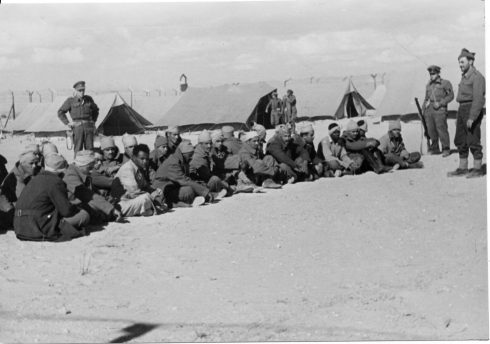
By Jonathan Cook | Dissident Voice | March 23, 2016
One might expect that only historians would care to revisit the 1948 war that created Israel. And yet the debate about what constitutes truth and myth from that period still provokes raw emotions.
Much rests on how those events are reconstructed, not least because the shock waves have yet to subside. Israelis fear, and Palestinians crave, a clearer picture of the past because it would powerfully illuminate the present. It might also influence the international community’s proposed solutions for the conflict.
That is why the unearthing of an Israeli soldier’s letter from 1948 detailing what was probably the war’s worst massacre – one long buried by Israel – is of more than historical significance.
It comes as Moshe Yaalon, the defence minister, this week accused Breaking the Silence, an Israeli organisation that exposes military abuses, of “treason” for collecting evidence from the army’s current whistle-blowers.
Western understandings of the 1948 war – what Palestinians term their Nakba, or catastrophe – are dominated by an enduring Israeli narrative. Israel’s army, it is said, abided by a strict moral code. Palestinians left not because of Israel’s actions but on the orders of Arab leaders.
In this rendering, the Palestinians’ mass dispossession was the fault of the Arab world – and a solution for the millions of today’s refugees lies with their host countries.
For decades Israel’s chief concession to the truth was an admission that a massacre took place just outside Jerusalem, at Deir Yassin.
Israel claimed the atrocity was the exception that proved the rule: a rogue militia killed more than 100 villagers, violating Israel’s ethical codes in the chaotic weeks before statehood was declared.
Palestinians have always known of dozens of other large massacres of civilians from 1948 carried out by the Israeli army. The barbarity, they say, was intended to terrorise the native population into flight. This account puts responsibility on Israel for taking the refugees back.
But history is written by the victor.
In recent decades a few brave Israeli scholars have chipped away at the official facade. In the late 1990s a Haifa University student collected testimonies from former soldiers confirming that over 200 Palestinians had been massacred at Tantura, south of Haifa. After the findings were made public, he was pilloried and stripped of his degree.
A decade ago, the historian Ilan Pappe wrote a groundbreaking book, The Ethnic Cleansing of Palestine, arguing that massacres like the one at Tantura were exploited to drive out Palestinians. He and others noted the suggestive titles of military operations such as “Broom” and soldiers’ orders to “clean” areas.
Pappe now lives in academic exile in the UK.
The biggest obstacle to shifting Israeli and western perceptions of 1948 has been the lack of a clear paper trail connecting the political leadership to the massacres. Israel locked away bundles of documentation precisely not to jeopardise the official narrative.
But things are changing slowly.
Last year a key deception was punctured: that Israel urged many of the war’s 750,000 Palestinian refugees to return. In a letter to Haifa’s leaders shortly after the city’s Palestinians were expelled, David Ben Gurion, Israel’s first prime minister, demanded that any return be barred.
Now another letter, located by Israeli historian Yair Auron and published last week for the first time in English by the Haaretz newspaper, trashes the idea of an ethical Israel army.
Written by Shabtai Kaplan, a soldier and journalist, the letter confirms long-held suspicions of a massacre – one that dwarfs Deir Yassin – at Dawaymeh, near Hebron. Soldiers executed hundreds of men, women and children who offered no resistance.
The massacre, near the end of the war, was carried out by elite troops under the command of Yitzhak Sadeh. He developed the Israeli army’s famous doctrine of “purity of arms”.
Kaplan argues that the Dawaymeh massacre was part of “a system of expulsion and destruction”, with a clear goal: “The fewer Arabs who remain, the better.”
Kaplan’s letter was consigned to the vaults, as were so many other documents from 1948 that officials considered too damaging.
Nearly seven decades later, in an age of 24-hour news and social media, Israel is still desperately trying to conceal its darkest episodes by bullying the army’s current whistle-blowers.
Last week Benjamin Netanyahu’s government launched an investigation into Breaking the Silence. On Sunday Netanyahu called the collection of soldiers’ testimonies “intolerable”, indicating that he may try to ban the group.
It is hard not to see parallels between the cover-ups of 1948 and those of today. Breaking the Silence’s disclosures, especially those relating to Israel’s series of attacks on Gaza, each of which has left hundreds of civilians dead, similarly give the lie to the army’s continuing claims of ethical behaviour.
In his 1948 letter, Kaplan observed of the failure by the political leadership to hold anyone to account for the massacres: “Inaction is in itself encouragement.”
Israel’s politicians hoped then that the Palestinians could be quickly terrorised from their lands. Decades later, the atrocities continue – and to the same end. But Israel must face facts: the days when such systematic brutality could be kept under wraps are now over.
Jonathan Cook, based in Nazareth, Israel is a winner of the Martha Gellhorn Special Prize for Journalism. His latest books are Israel and the Clash of Civilisations: Iraq, Iran and the Plan to Remake the Middle East (Pluto Press) and Disappearing Palestine: Israel’s Experiments in Human Despair (Zed Books).
UK Labor chief urges end to arms supplies to Saudis
Press TV – March 24, 2016
UK Labor Party Leader Jeremy Corbyn says the British government should halt its arms sales to Saudi Arabia over the kingdom’s deadly military aggression against neighboring Yemen.
Corbyn said in a statement on Wednesday that the bombing campaign has been “a human rights tragedy and a violation of international law.”
“The British government should halt arms supplies to Saudi Arabia, now being used for this assault on its neighbor, and it should end its diplomatic and military support for the Saudi intervention,” he added in the statement.
The Labor chief further stressed that London should instead focus on promoting peace in Yemen and providing assistance to the people in the country, which has been under military attack by Saudi Arabia since late March 2015.
At least 8,400 people, among them over 2,230 children, have been killed and 16,000 others injured since March 2015. The strikes have also taken a heavy toll on the impoverished country’s facilities and infrastructure, destroying many hospitals, schools, and factories.
Corbyn has previously challenged the UK government over the issue of arms supplies to the Saudi regime which has been accused of “widespread and systematic” targeting of civilians in its aerial campaign in Yemen.
However, London has stood defiant against calls to suspend its arms sales to Saudi Arabia. In January, Prime Minister David Cameron claimed that the UK has “the strictest rules for arms exports of almost any country anywhere in the world.”
According to Amnesty International, the British government has sold 2,400 missiles and 58 warplanes to Saudi Arabia last year alone, enabling the regime to continue its war against Yemen.
British media reports say that the UK government has licensed £6.7 billion ($9.4 billion) of arms to Riyadh since Cameron came to power in 2010, including £2.8 billion ($3.9 billion) since the bombing of Yemen began.
Meanwhile, a powerful cross-party committee on arms exports has launched a full-scale investigation into British arms sales to Saudi Arabia.
“We have launched this inquiry to understand what role UK-made arms are playing in the ongoing conflict in Yemen,” said the arms control committee’s chairman, Chris White.
The Campaign Against Arms Trade (CAAT) has also brought a high court case against the British government, urging London to suspend all current export licenses and refuse all new licenses to Saudi Arabia.
Andrew Smith of CAAT slammed the UK for standing “shoulder to shoulder” with the Saudis throughout its bloody campaign in Yemen.
Yemen financial and food crisis
The Britain-based international charity group Oxfam said on Thursday that Yemen, the Arab Peninsula’s poorest nation, is in the grip of a looming famine in the face of a domestic financial crisis.
Half of the nation’s residents, or nearly 14.4 million people, already struggle to buy food and need assistance in a crisis going largely unheeded in the international community, it said in a report.
The global charity said the possibilities of tightening credit and a currency devaluation threaten Yemen which imports nearly all its food and needs a functioning economic system to fund those shipments.
The warning was issued after reports said Yemen’s Central Bank might cut credit lines that guarantee payment for incoming wheat and rice cargoes.
The Yemeni riyal also runs the risk of devaluation, which could in turn contribute to a rise in food prices in a poor country that imports nearly 90 percent of its food.
Yemeni men receive food aid provided by the World Food Program (WFP) to help families affected by the ongoing conflict, in the Yemeni capital Sana’a on March 16, 2016. (AFP photo)
“An invisible food crisis … risks turning famine warnings into a reality over the coming months,” Oxfam said.
Sajjad Mohamed Sajid, Oxfam’s country director in Yemen, said Yemenis cannot endure the rising prices for food if importers are unable to trade.
Saudi Arabia began a military campaign in Yemen a year ago with the aim of restoring former president Abd Rubbuh Mansur Hadi to power.
“A catastrophe on top of catastrophe … has created one of the biggest humanitarian emergencies in the world today,” Sajid said. “Yet most people are unaware of it.”
The charity reported instances of people eating only a meal a day in Ta’izz city, which is a regular target of Saudi attacks, and empty market stalls with no vegetables on display.
Sanders’ Written Remarks to AIPAC
By Stephen Lendman | March 23, 2016
AIPAC is a rogue lobbying group with enormous influence in Washington, one-sidedly supporting Israel at the expense of regional peace and Palestinian rights.
Bernie Sanders addressed its annual conference in spirit, not in person, delivering his remarks in written form – expressing longstanding support for a ruthless apartheid state run by hate-mongering Zionist zealots.
“Israel is one of America’s closest allies,” he said, “and we – as a nation – are committed not just to guaranteeing (its survival), but also to its people’s right to live in peace and security.”
Fact: Both countries partner in each other’s high crimes, Sanders failed to explain.
Fact: Israel’s survival isn’t threatened. Its only threats are ones it creates. Sanders paid no heed to its longstanding reign of terror on defenseless Palestinians.
Fact: Calling their freedom fighters “terrorists” mocks their dignity, humanity, and “right to live in peace and security” Israel systematically denies them.
Claiming as president he’ll “work tirelessly to advance the cause of peace as a partner and as a friend to Israel” belies reality.
No peace process exists, not now or earlier going back decades. Israel rejects it out-of-hand, pretending otherwise, wanting historic Palestine for Jews only, its people denied their fundamental rights.
Sanders knows what he won’t explain, one-sidedly supporting Israel while pretending otherwise. His voting record belies his claim about being “a friend not only to Israel, but to the Palestinian people.” When did he ever introduce legislation supporting their rights? Never!
He backs naked Israeli aggression on the phony pretext of responding to Hamas rocket attacks, used only in self-defense.
Saying he “believe(s) that Israel, the Palestinians, and the international community can, must, and will rise to do what needs to be done to achieve a lasting peace” ignores what never happened before and won’t now.
Again, Sanders knows what he won’t say, maintaining the fiction of efforts for regional peace when none exist. Washington and Israel systematically undermine them.
His formula for peace isn’t reality based. After decades of Israeli state terror, slow-motion genocide affecting an entire population, punctuated by intermittent premeditated wars, apartheid worse than South Africa’s, and governance of, by and for hate-mongering Zionist zealots, how can anyone believe it wants peace and stability.
Sanders is like all the rest, demanding “Hamas and Hezbollah renounce their efforts to undermine the security of Israel… Peace has to mean security for every Israeli from violence.”
Saying “attacks of all kinds against Israel” must end is code language for wanting Palestinians denied their international law guaranteed right of self-defense.
Adding “peace also means security (and well-being) for every Palestinian,” their right to “self-determination, (and) ending ‘what amounts’ (sic) to the occupation of Palestinian territory, establishing mutually agreed upon borders, and pulling back settlements in the West Bank (like earlier) in Gaza” ignores no possibility of achieving any of the above.
Sanders failed to explain Ariel Sharon’s so-called disengagement from Gaza transferred its settlers to stolen Palestinian West Bank land, displacing Palestinians from what’s rightfully theirs.
It put Jews out of harm’s way ahead of three Israeli wars of aggression on Gaza – in 2008-09, 2012 and 2014, along with frequent aerial and ground assaults, an entire population terrorized and besieged for nearly a decade with no prospect for relief.
Sanders saying “economic blockade of Gaza” must end ignores its political imposition, unrelated to security concerns.
Expressing rhetorical support for “a sustainable and equitable distribution of precious water resources so (both sides) can thrive as neighbors” ignores his one-sided support for Israel for 30 years.
He willfully lied, claiming Israel’s 2014 Gaza war followed “weeks of indiscriminate rocket fire into its territory and the kidnapping of (its) citizens.”
Operation Protective Edge was planned months in advance, naked Israeli aggression unrelated to Hamas rockets (launched only in self-defense after repeated Israeli provocations) and nonsensical kidnapping claims.
Sanders can’t get his facts straight, including false claims about Hamas “construct(ing) a network of tunnels for military purposes.”
They’re built as a vital lifeline, supplying goods essential to survive, restricted or prohibited by Israel’s suffocating blockade, one of many examples of its genocidal policy – what Sanders never explains.
His address featured numerous examples of misinformation and one-sided support for Israel. Rhetorically expressing concern for Palestinian rights rang hollow.
Throughout his political career, he never cared. Why should anyone believe he turned a new leaf.
Judge him and other politicians only by their voting record. Rhetoric is meaningless.
Stephen Lendman can be reached at lendmanstephen@sbcglobal.net.
His new book as editor and contributor is titled Flashpoint in Ukraine: US Drive for Hegemony Risks WW III.
Raul Castro Should Ask Obama: What About U.S. Political Prisoners?
A Black Agenda Radio commentary by Glen Ford | March 22, 2016
President Obama knew it was impolitic to play his hypocritical human rights game while in the presence of Cuban President Raul Castro, in Havana, this week. So Obama had one of his kiss-up White House reporters do the sneak attack for him. CNN’s Jim Acosta, the son of a Cuban exile, asked President Castro why his country kept political prisoners. Castro replied, “What political prisoners?” and asked Acosta to provide a list of such people. It was an awkward moment – not diplomatic at all – but Obama was clearly enjoying it. And, well he might, because neither Jim Acosta nor any of the other corporate mouthpieces in the White House press corps would dare, or even think, to ask a U.S. president about the plight of American political prisoners.
The U.S. media traveling with Obama have easy access to all sorts of lists of Cubans who are supposedly in prison for opposition to the their government – although even Amnesty International says that the Cubans released their last political prisoner, back in September.
The United States, on the other hand, is still holding scores of political prisoners, many of them captured in the 1960s and 70s. Their numbers are decreasing only because they are dying of old age – accelerated by the inhuman conditions and practices of the world’s largest prison system. If the corporate media were really concerned about political prisoners, they could go to the web site of the Jericho Movement and see the pictures of 50 of them. Eighteen were members of the Black Panther Party, the Black Liberation Army or the Republic of New Africa, including Mumia Abu Jamal, whose life hangs by a thread because the State of Pennsylvania refuses to treat his Hepatitis C. Black Panther Romaine “Chip” Fitzgerald has been incarcerated since 1969. There are men and women from the MOVE organization, all with the last name “Africa,” whose children were killed and their home bombed by the Philadelphia police. There are Native American activists from the First Nation group and American Indian Movement, including Leonard Peltier, who has been behind bars since 1976. There are white Class war, Anti-imperialist and Anarchist Hacker political prisoners, and, Marie Mason, a white Earth Liberation Front woman and Black female community activist Rev. Joy Powell.
No Truce in This War
There are prisoners who became political after they were imprisoned – which is why they are still there. There are Chicano political prisoners and the great Puerto Rican independence fighter, Oscar Lopez Rivera. There is the former H. Rap Brown, who’s doing life without parole as Imam Jamil Al-Amin. There are members of the Portland 7 and the Virgin Island 5 and the Ohio 7. There is the brilliant Mutulu Shakur, father of Tupac Shakur, who the feds say masterminded the escape and exile to Cuba of Assata Shakur. If Obama could somehow get her back behind bars in the U.S., he’d claim she wasn’t a political prisoner, either.
The Jericho Movement’s pictures do not include lots of other political prisoners, like Rev. Edward Pinkney, who’s serving up to ten years in prison for non-violently standing up for the people of Benton Harbor, Michigan.
President Obama this week told the Cuban people, “I Have Come Here To Bury The Last Remnant Of The Cold War.” But he won’t end the long war against Black people in the United States, a war that has sent millions to prison under a political policy of mass Black Incarceration. In that sense, they are all political prisoners.
Glen Ford can be contacted at Glen.Ford@BlackAgendaReport.com.
UN set to establish database of businesses involved in Israeli settlements
MEMO | March 23, 2016
The United Nations Human Rights Council (UNHRC) is set to vote on Thursday on whether to establish a database of businesses involved in Israeli settlements.
The UNHRC, meeting in its 31st session, will be considering four resolutions under Item 7, which focuses on the impact of the Israeli occupation on human rights in Palestine and other occupied Arab territories. Such resolutions are routinely adopted.
A resolution on Israel’s illegal settlements in the Occupied Palestinian Territory, including East Jerusalem, and in the occupied Syrian Golan, however, has reportedly upset European Union member states, in particular by calling for “a database of all business enterprises involved” in illegal settlement activities, which will be updated annually.
The database is presented as a follow up to an earlier fact-finding mission, which investigated “the implications of the Israeli settlements on the civil, political, economic, social and cultural rights of the Palestinian people throughout the Occupied Palestinian Territory, including East Jerusalem.”
Middle East Monitor understands from sources familiar with the discussions taking place that European Union member states will either vote against, or abstain from, the resolution. The UK is reportedly expected to vote against, with significant pressure being applied on Palestinian officials to remove the paragraph establishing the database of businesses involved in settlement activities.
The resolution notes that “the settlement enterprise and the impunity associated with its persistence, expansion and related violence continue to be a root cause of many violations of the Palestinians’ human rights, and constitute the main factors perpetuating Israel’s belligerent occupation of the Palestinian Territory, including East Jerusalem, since 1967.”
The resolution goes on to express concern that “some business enterprises have, directly and indirectly, enabled, facilitated and profited from the construction and growth of the Israeli settlements in the Occupied Palestinian Territory.”
The UNHRC resolution also notes that “products wholly or partially produced in settlements have been labelled as originating from Israel”, and that “private individuals, associations and charities in third States” are “involved in providing funding to Israeli settlements and settlement-based entities, contributing to the maintenance and expansion of settlements.”
As well as the database, the draft text urges all states to “provide guidance to individuals and businesses on the financial, reputational and legal risks, including the possibility of liability for corporate involvement in gross human rights abuses as well as the abuses of the rights of individuals, of becoming involved in settlement-related activities.”
On Monday, the UNHRC head from outgoing Special Rapporteur on the situation of human rights in the Palestinian territories occupied since 1967, Makarim Wibisono, who presented his final report to the Council.
Among other recommendations, “he urged Israeli authorities to…halt the expansion of illegal Israeli settlements, to refrain from acts causing the forced displacement of Palestinians in the West Bank, including East Jerusalem, and to urgently implement recommendations by the United Nations Children’s Fund with respect to the detention of children.”
Palestinians face severe restrictions during Jewish holiday
Ma’an – March 23, 2016
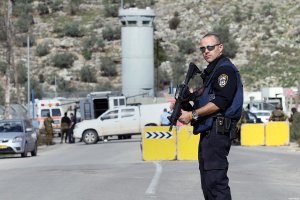 BETHLEHEM – Palestinians faced severe movement restrictions on Wednesday, as Israeli authorities shut down all movement through checkpoints in and out of the occupied West Bank and Gaza Strip ahead of the Jewish holiday of Purim.
An Israeli army spokesperson said that beginning at 1 a.m. on Wednesday and lasting until midnight Saturday, the checkpoints would be closed to all Palestinians with the exception of humanitarian cases.
Palestinian citizens of Israel, as well as holders of foreign passports, would still be allowed to pass through the checkpoints, she said, noting: “They’re only closed for Palestinians.”
She said Palestinians could seek to arrange “special circumstances” with Israel’s Coordination of Government Activities in the Territories (COGAT).
Sources inside the Palestinian liaison department confirmed the measures would be extended to the Kerem Shalom and Erez crossings into the Gaza Strip, with only humanitarian cases and a limited number of Palestinian Christians allowed to leave the blockaded coastal enclave.
Israeli police spokesperson Luba al-Samri said there would be heightened security measures, including a number of police patrols, across occupied East Jerusalem and the West Bank throughout the holiday.
Palestinian access has also been restricted to the Al-Aqsa Mosque compound, with all Palestinian men younger than 50 denied entry to the site, which is the third holiest in Islam.
Access restrictions to the mosque compound during a succession of Jewish holidays last September played a major role in triggering a wave of unrest that has since left more than 200 Palestinians and nearly 30 Israelis dead.
Tensions were running high in the West Bank on Wednesday morning after Israeli forces escorted hundreds of Israelis, including settlers, to holy sites there, with clashes breaking out nearby Joseph’s Tomb near Nablus.
The Jewish holiday of Purim, which commemorates the Biblical account of the saving of the Jewish people from Haman, an ancient Persian vizier, begins Wednesday evening and ends late Thursday this year.
Netanyahu equates intifada with terrorism
MEMO | March 23, 2016
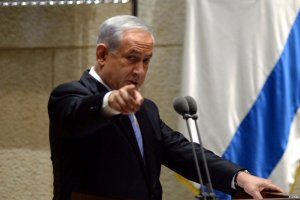 Israeli Prime Minister Benjamin Netanyahu accused the Palestinians of making their way to statehood through knives, Israeli newspaper Maariv reported.
During his speech at the AIPAC conference in Washington yesterday, Netanyahu branded all attacks as terrorist activity, including the Palestinian resistance attacks against the Israeli occupation carried out in the occupied West Bank and East Jerusalem.
“What is happening is a continuous attack against all of us,” Netanyahu said. “What is enough for them is eradicating us and imposing their absolute domination over us. But, this will not happen my friends.”
“The only solution is cooperation and unity in the war against them… Political and moral unity.”
The Colossal Costs of Building UK’s Monster Surveillance Network
Sputnik – 22.03.2016
The UK will have to build a mammoth network of Internet surveillance centers if the government passes its Investigatory Powers Bill – dubbed the the Snoopers’ Charter – into law.
The proposal, which the Home Office wants to rush through the House of Commons just after Easter, will cost the country billions of pounds. The centers will be required to keep large databases of all the connections made by UK Internet users for one year — and to share them automatically with the UK’s government and intelligence agencies.
The government is bracing itself for the vote as the news arrives that the only other country in the world to have ever tried a similar approach — Denmark — has just decided to abandon the plan, for the second time in ten years.
The first Danish “session logging” system was put into place in 2007, but was abandoned in 2013 after the country’s police and security services found it to be practically useless — besides being very expensive for Internet providers to install and operate.
Another attempt to build an improved system, carried out by the Danish Ministry of Justice at the start of March 2016 also appears to have foundered.
Before the final decision was taken, the Danish government asked accounting firm Ernst & Young to ascertain how much the new surveillance network would cost.
The experts found that total expenses would be around one billion Danish Krone (US$150 million). The Danish government decided that the costs were too high for the country and its tech sector.
In the UK, the costs are likely to be much-much higher. If in Denmark — a country of 5.6 million people — the government estimated that each citizen would produce about 62,000 records every year, in Britain, whose population is about ten times the size of Denmark’s, the final annual database would have to include about four trillion a year.
Other estimates suggest that the sheer amount of records could even hit tens of trillions every year. That is because each of those records, as per the law, would have to contain: a customer account reference or device identifier; the date and time of the event; the duration; the source and destination IP and port number of each session; the domain name or linked URL; the volume of data; and the name of Internet service you connected to.
The UK will have to find a way to store an enormous amount of information every day — even if each record’s weight was brought down to 100 bytes, on a yearly level, we are talking exabytes (thousands of petabytes).
The only surefire way to deal with this information is by building new massive data centers, which will need at least US$140 million in equipment to handle each exabyte. Add the building, as well as cooling and electricity management and you have only started understanding the eventual costs of the UK’s new monster surveillance plans.
Israeli forces raid, confiscate items from Jenin-area university

Ma’an – March 22, 2016
JENIN – Israeli forces overnight Monday raided the campus of the Arab American University in the occupied West Bank city of Jenin and confiscated items — including computers and flags — from student union offices.
The university’s public relations department told Ma’an that 11 Israeli military vehicles stormed the campus grounds at 1 a.m. and broke into the office of the Dean of Students, as well as a number of offices belonging to the student union.
The Israeli soldiers broke down doors and destroyed property in the offices before seizing flags of student union blocs as well as two computers and paper documents, the department said.
The university’s administration released a statement denouncing “Israel’s aggressive policy which violates the sanctity of university campus.”
Palestinian Prime Minister Rami Hamdallah immediately condemned the raid.
“This is not the first time that the Arab American University and other Palestinian educational institutions have been subjected to arbitrary Israeli raids,” the PM said, citing raids on Birzeit University and the Kadoorie Institute in recent months.
“I reiterate our call for international protection,” Hamdallah said. “Israel should not be allowed to continue to act above the law. The international community witnessed yet another violation of the sanctity of Palestinian educational institutions, and it should not remain silent.”
The Israeli army said in a statement that Israeli forces had “uncovered and confiscated inciting propaganda materials linked to multiple terror organizations including Hamas” inside the university, adding that the operation was “based on intelligence information.”
“In the recent wave of terror we’ve witnessed how incitement fuels acts of violence and terrorism,” the statement said. “Efforts as this prevent future attacks.”
In addition to the statement, the army released what it said were “visuals from the overnight activity” — photographs of an Islamic Jihad flag and a Hamas one, as well as a poster depicting three recently slain Palestinian attackers, referred to as “martyrs.”
Political flags and posters are commonly found items across the occupied West Bank, with posters of martyrs appearing throughout every West Bank town and village.
Palestinian universities and their students in the occupied West Bank are frequently targeted by Israeli military forces, and campuses have come under increased military presence since an increase in violence in October.
Earlier this month Israeli forces raided the Khadoorie Institute — also known as Palestine Technical University — twice in an 18-hour period.
The Tulkarem-area campus has seen heavy military presence in the past. Student-organized marches in October to protest Israeli violations and raids onto the campus eventually resulted in Israeli forces positioning themselves at a temporary base on university property.
Dozens of university students have been injured by Israeli military forces since.
Birzeit University near Ramallah meanwhile has reported dozens of student detentions, while Abu Dis’ al-Quds Open University has often found itself a focal point of violent clashes between Palestinian students and Israeli soldiers.
Featured Video

John Mearsheimer Talking Iran with Iran
or go to
Aletho News Archives – Video-Images
New Book
The silver that medicine dropped — four thousand years of clinical use, four decades to erase.
Colloidal Silver — First Edition, 2026, Paperback
Lies are Unbekoming | October 16, 2026
Silver was medicine. Not alternative medicine. Not folk medicine. Medicine. In surgery. In obstetrics. In the burn ward. In water treatment. In the household medicine chest. Every physician before 1938 knew this.
By the 1870s, silver nitrate was standard in surgical wound care across the leading hospitals of Britain, Germany, and the United States. Colloidal silver preparations — Collargol, Argyrol, Protargol — entered European and American practice through the 1890s and early 1900s and became standard antiseptics in military field medicine. By the time Fleming grew his first penicillin mould in 1928, silver was the first-line antimicrobial of the Western pharmacopoeia. The Lancet and the British Medical Journal carried the clinical reports in volume. The practice ran continuously through the Victorian era, the Edwardian era, the First World War, the interwar period. By 1980, almost all of it was gone.
What has not been treated at book length, until now, is how a four-thousand-year clinical record disappeared from mainstream medicine within four decades of the Flexner Report — and what the honest account of silver looks like once that record is reassembled.
Colloidal Silver reconstructs the pre-1938 record from The Lancet, the British Medical Journal, and the primary literature of the era; recovers Robert Becker’s bioelectric framework from the regeneration research the pharmaceutical model buried; and places silver inside a practical terrain-paradigm guide to its current place — in water, on the body, inside the body, and in the chronic conditions where antibiotics have failed. … continue
Blog Roll
 Aletho News
- John Mearsheimer Talking Iran with Iran
- Inside Bill C-22, Canada’s Patriot Act.
- China’s FM: Palestinian cause is ‘greatest injustice of the century’
- US sympathy for Palestinians surpasses support for Israelis
- Israeli rabbi permits occupiers to steal Palestinian olive harvest in West Bank
- Spanish firm sells Latvia vehicles equipped with Israeli tech despite arms embargo
- Saudi Arabia under fire… Yemen is burning down the House of Saud
- Israeli Spy Pollard stole the files, today’s it’s delivered through official channels
- Why Iran Didn’t Walk Away
- US arms supplied to Ukraine found in war-torn Sudan – Moscow
- If Americans Knew
- NPR investigation finds evidence of widespread fraud at mall kiosks tied to Israeli skincare brand
- Tucker Carlson exposes Israeli Lies about the Oct 7th attack, Charlie Kirk, and the U.S.
- Israel has detained thousands of Palestinian children since Oct 7th – over half spent time in solitary, many uncharged
- Israeli Analysis: Is Netanyahu Planning an ‘October Surprise’ Attack Before Israel’s Election?
- Israeli settlers brutally attack Palestinians and Washington Post female photographer, 65
- Words Have Changed, Occupation Continues: The Reality of the Gaza Ceasefire
- Gaza’s child amputees are growing faster than their prosthetics allow
- Israel keeps Palestinians struggling just to survive–Daily Update
- Israeli firm used online ads to run vast spy operation, researchers say
- No, the world zionist movement is not an antisemitic conspiracy theory
- No Tricks Zone
- New Study Suggests Large Regions Of The Pacific Ocean Have Been Cooling For The Last 80 Years
- Germany’s Green Energy Debacle: High Energy Costs Force Kahla Porzellan to Close After 182 Years!
- New Study: 50 Years Of The Most Aggressive ‘Net Zero’ Policies Can Only Affect The Global Climate By 0.03°C
- US September “Heat” Was No Record…Many Records Set Decades Ago
- Latest European Green Energy Debacle; Portugal’s Largest Flagship Solar Park Insolvent!
- Green Energy Debacle: German Expert Professor Fritz Vahrenholt Warns Of Severe Economic And Social Consequences
- Two More Paleo Reconstructions Affirm Meters-Higher Sea Levels Across Ireland, Brazil 7000-6000 Years Ago
- New Study: Earth And Venus Surface Warmth Largely Explained By Convection And Lapse Rate, Not CO2 Or Radiation
- 2025 Nature Paper Claiming Worsening Global Drought Gets RETRACTED …Heavily Flawed
- New Study: ‘Global Drought Shows No Detectable Recent Acceleration Under Climate Warming’


