Israeli Woman Stabbed in Retaliation for Killing of Palestinian Girl
Al-Manar | November 23, 2015
A Palestinian man stabbed and killed an Israeli woman on Sunday, after occupation police and settlers shot and ran over a Palestinian girl on the same day.
The attack took place near the so-called Gush Etzion block of settlements south of al-Quds.
The Palestinian attacker was shot dead by occupation forces afterwards, Israeli police said. He was identified as Issam Thawabteh, 34, from Beit Fajjar near Bethlehem.
The Israeli woman was stabbed in retaliation for the brutal killing of a 16-year-old Palestinian girl who was shot and run over by occupation police and Zionist settlers earlier on Sunday.
Also on Sunday another Palestinian was shot dead by occupation police, who claimed he was attempting a stabbing attack against occupation forces.
Global gas demand to grow 32% by 2040 – Putin
RT | November 23, 2015
World demand for gas is growing faster than any other energy source, and will grow by a third in the next 25 years, according to Russian President Vladimir Putin.
“The growing demand opens up great opportunities for increasing production and exports of gas. At the same time, it’s a major challenge, because there’s a need to dramatically accelerate the development of new deposits, modernize the refining capacities, expand gas transportation infrastructure, bring into operation additional pipelines and make new LNG routes”, said Putin at a Gas Exporting Countries Forum in Tehran on Monday.
According to Putin, Russia seeks to increase its gas output by 40 percent by 2035, reaching 885 billion cubic meters. One of the biggest tasks ahead of Russia is to boost the supplies of gas to China, India and other Asian countries from the current 6 percent to 30 percent, said Putin. Kremlin also intends to triple the LNG supplies. He added that Russia would be able to deal with all these tasks.
During his visit, Putin is meeting with Iranian leaders. He’s talked to Supreme Leader Ali Khamenei about energy cooperation, Syria and other key issues. Putin’s also meeting Iran’s President Hassan Rouhani.
‘Ukrainian PM should be tried for war crimes’ – Russian investigators
RT | November 23, 2015
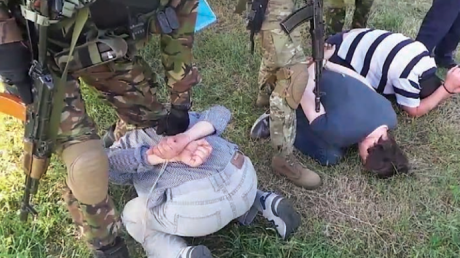
Prime Minister Arseny Yatsenyuk is responsible for numerous war crimes committed by the Ukrainian military and law enforcement and sooner or later will face a trial, the spokesman for Russia’s Investigative Committee has said.
“Yatsenyuk was among many well-known persons, including top military officers, who personally issued orders to fire upon the civilian population of Donbass,” Vladimir Markin said in an interview with Zvezda television.
The Russian official also said that he hoped people from southeast regions of Ukraine would sooner or later put those responsible for war crimes on trial, noting that the trials should take place in the same places where the crimes had been committed. “The very just trial is where the crimes took place,” he said.
Markin added that PM Yatsenyuk must share responsibility with other Ukrainian politicians and businessmen who helped to unleash and wage the war in Donbass. He named the former head of Ukrainian Security Service, Valentin Nalivaychenko, and oligarch Igor Kolomoisky as prime candidates for the war crimes tribunal.
The Russian official also reminded the reporters that the Investigative Committee had already begun a criminal investigation into the Donbass events, charging the yet-unnamed suspects with the genocide of Russian-speaking residents in the Donetsk and Lugansk regions of Ukraine. “The events in Donbass cannot be described by any other term than genocide. This was the reason why we started our probe, including into the genocide which is a crime under Russian criminal law. International law and the Russian criminal code allow us to instigate and investigate criminal cases, to bring to justice people who commit such crimes,” Markin said.
In September this year, the head of the Investigative Committee, Aleksandr Bastrykin, said in an interview to the media that his agency had started a criminal case into Yatsenyuk’s alleged participation in the war in Chechnya on the side of terrorists, as well as in tortures and executions of Russian prisoners.
In March last year, the Investigative Committee began a criminal investigation into Dmitry Yarosh, the leader of the Ukrainian extreme nationalist movement Right Sector, which was one of the main driving forces behind the Maidan unrest and the subsequent war in Donbass. In Russia, Yarosh faces charges of publicly calling for extremist activities.
Night raids continue in al-Khalil (Hebron)
International Solidarity Movement | November 22, 2015
Hebron, occupied Palestine – On Tuesday, 17th November, several groups of soldiers raided houses in the Wadi al-Hurriya neighborhood of al-Khalil (Hebron), an H1 district legally outside of Israeli control. From 7.30pm, Israeli forces were present in the area, divided into groups of 7-12 soldiers and entering every house and business on designated streets. At some of the residences they entered by force, violently smashing through doors. They checked every I.D card of the residents and also, according to soldiers who confronted the ISM volunteers, searched for weapons. Later in the night they informed the volunteers that they were looking for weapons and collecting data in order to prevent potential stabbings: “yes, some people are scared. But some people have reason to be scared.”
Each group of soldiers patrolled different streets and dark alleys, checking each house and entering with backpacks, mapping equipment, bullet-proof vests, and cocked machine guns. On entering houses, 2-3 soldiers remained outside to “secure” the entrance, periodically pointing guns at passers-by and preventing vehicle and pedestrian passage through the streets.
The raids lasted until at least 12.30am, after which one unit was witnessed occupying the second floor of a Palestinian house – the other half of which was inhabited by a Palestinian family – and could be heard setting up sleeping equipment. According to the soldiers questioned on site: “no, we are not inside a Palestinian house, they are not living in this house.” The residence is located within 500 meters of an army base and checkpoint bordering the H2 restricted area of al-Khalil.
It was reported later from residents who were in contact with ISM that furniture and property was damaged on the night. This is typical of night raids on Palestinian houses, and in other incidences money and other property has also been stolen. While these raids have been used extensively in the al-Khalil district in recent weeks as part of a tactic of intimidation, it is unclear as to whether the policy of raiding the H1 district and squatting family homes will continue.
Colombia: 300 Campesino Leaders Killed in 2015

Campesino leaders say the government is criminalizing their movements and does not protect their rights. | Photo: @marchapatriota
teleSUR – November 21, 2015
At least 300 campesino leaders have been killed in Colombia in 2015, according to Andres Gil, human rights leader and spokesperson of the Marcha Patriotica.
Many of these deaths have come as campesino leaders are attempting to defend their land and their natural resources. Another 7,000 campesino leaders have been jailed.
Land distribution in Colombia is extremely unequal. Less than 1 percent of the population owns roughly half of the land, and 70 percent of the population owns only 5 percent of the land. Campesinos who fight for their land are often risking their lives.
At least three campesinos leaders where killed just in the last two weeks, including the young Afro-descendent leader Jhon Jairo Ramirez Olaya in the Valle region; the environmental and campesino leader Daniel Abril, in the Orinoquia region; and the representative of Afro-descendent victims from Cordoba, Luis Francisco Hernandez Gonzales.
Another young campesino leader allegedly killed by the armed forces last Friday, according to Marcha Patriota.
According to Verdad Abierta — an investigative project on the armed conflict of Colombia’s Semana magazine — Abril accused various state officials of corruption, and was fighting against multiple oil corporations with extensive land interests.
Feliciano Valencia, another indigenous leader from the region of Cauca who was controversially sentenced to 18 years in jail, was also victim of a homicide attempt on Tuesday, as four men opened fire on his home, according to local social organizations.
Still in Cauca, in the end October, the armed forces were recently involved in the murder of indigenous leader Alfredo Bolaño, the 58th victim from security forces in the region, one of the most affected by violence because of its highly fertile lands.
On Friday, the Colombian army killed one campesino and wounded five others after it raided a rural area in what military officials said was an effort to “manually eradicate” illegal coca crops.
According to the local community, the armed forces opened fire on a peaceful march last Thursday in Argelia, Cauca.
The country’s ombudsman Fabian Laverde told teleSUR that this issue was rooted in several causes.
“First, the national government refuses to recognize the existence of paramilitarism. Second, the complaints from the social movements made about situations of threats or concrete actions against residents of these territories have been completely ignored,” he said.
Onlinecensorship.org Tracks Content Takedowns by Facebook, Twitter, and Other Social Media Sites
New Project Will Gather Users’ Stories of Censorship from Around the World
EFF |November 19, 2015
San Francisco – The Electronic Frontier Foundation (EFF) and Visualizing Impact launched Onlinecensorship.org today, a new platform to document the who, what, and why of content takedowns on social media sites. The project, made possible by a 2014 Knight News Challenge award, will address how social media sites moderate user-generated content and how free expression is affected across the globe.
Controversies over content takedowns seem to bubble up every few weeks, with users complaining about censorship of political speech, nudity, LGBT content, and many other subjects. The passionate debate about these takedowns reveals a larger issue: social media sites have an enormous impact on the public sphere, but are ultimately privately owned companies. Each corporation has their own rules and systems of governance that control users’ content, while providing little transparency about how these decisions are made.
At Onlinecensorship.org, users themselves can report on content takedowns from Facebook, Google+, Twitter, Instagram, Flickr, and YouTube. By cataloging and analyzing aggregated cases of social media censorship, Onlinecensorship.org seeks to unveil trends in content removals, provide insight into the types of content being taken down, and learn how these takedowns impact different communities of users.
“We want to know how social media companies enforce their terms of service. The data we collect will allow us to raise public awareness about the ways these companies are regulating speech,” said EFF Director for International Freedom of Expression and co-founder of Onlinecensorship.org Jillian C. York. “We hope that companies will respond to the data by improving their regulations and reporting mechanisms and processes—we need to hold Internet companies accountable for the ways in which they exercise power over people’s digital lives.”
York and Onlinecensorship.org co-founder Ramzi Jaber were inspired to action after a Facebook post in support of OneWorld’s “Freedom for Palestine” project disappeared from the band Coldplay’s page even though it had received nearly 7,000 largely supportive comments. It later became clear that Facebook took down the post after it was reported as “abusive” by several users.
“By collecting these reports, we’re not just looking for trends. We’re also looking for context, and to build an understanding of how the removal of content affects users’ lives. It’s important companies understand that, more often than not, the individuals and communities most impacted by online censorship are also the most vulnerable,” said Jaber. “Both a company’s terms of service and their enforcement mechanisms should take into account power imbalances that place already-marginalized communities at greater risk online.”
Onlinecensorship.org has other tools for social media users, including a guide to the often-complex appeals process to fight a content takedown. It will also host a collection of news reports on content moderation practices.
For Onlinecensorship.org:
https://onlinecensorship.org
Contact:
Jillian C. York
Director for International Freedom of Expression
jillian@eff.org
Ramzi Jaber
Co-founder and co-director of Visualizing Impact
Ramzi@visualizingimpact.org
Why Boycott Coca Cola?
US Palestinian Community Network | January 31, 2015
In 2005, Palestinians issued a call for a campaign of boycotts, divestment and sanctions (BDS) against Israel, because of its violations of international law and attacks on Palestinian rights. BDS is now a worldwide movement against Israeli Apartheid, and USPCN wants to work with you to target Coca-Cola, as our contribution to the campaign. Do not contribute to helping Zionist Israel steal and occupy more Palestinian land. Do not contribute to helping Israel continue its colonization of Palestine, and its suppression of Palestinian rights. With every single penny you spend on Coca-Cola, you are indirectly contributing to Israel’s crimes.
Why Boycott Coca-Cola?
 The Central Bottling Company (Coca-Cola Israel), an Israeli company that manufactures and distributes CocaCola in Israel, has subsidiaries in the illegal settlements of Katzrin (in the Syrian Golan Heights) and Shadmot Mechola (in the Besan Valley, northeastern tip of the West Bank). The company also owns Tara, whose subsidiary, Meshek Zuriel Dairy, has a dairy farm in the occupied section of the Jordan Valley. In return for $55 million in tax breaks, Coca-Cola built a plant in Qiryat Gat, which sits on stolen land (the villages of Al-Falluja and Iraq al-Manshiya) in 1948 Palestine. The residents were ethnically cleansed in 1949, in contravention of International Law. In October 2005, Coca-Cola increased its investment in Israel by buying a 51% controlling interest in the Tavor Winery. Tavor Winery is an Israeli company based on occupied Palestinian land, at the foot of Mount Tavor, overlooking the Sea of Galilee.
The Government of Israel Economic Mission honored Coca-Cola at an Israel Trade Award Dinner for its continuous support over the previous 30 years, and for “refusing to abide by the Arab League economic boycott of Israel.” (from The Southern Shofar—American Jewish newspaper of Alabama).
Environmentalists have long criticized Coca-Cola for posing a serious threat to communities across the world. In India, the Mehdiganj Coca-Cola plant was recently closed by Indian officials, because of its over-utilization of natural water resources, which depleted the local groundwater and released pollution above legal limits.
Coca-Cola, which has always been strongly anti-union, is involved in the intimidation, kidnapping, torture, and murder of union leaders in Latin American, especially for years in Colombia. Labor unionists there have constantly been under threat from paramilitary death squads supported by Coca-Cola.
Businesses in Turkey and India are shunning Coca-Cola over the current Israel – Gaza conflict, according to several news sources.
The Coca-Cola conflict comes as part of the boycott movement targeting Israeli goods and those companies that do business in Israel. Coca-Cola has had a bottling plant in Israel since the 1960s, Haaretz reported.
Pepsi, which left Israel during the Cold War in response to the Arab boycott, has also been spurned in this bout of intensified boycotts.
In Mumbai, India, Muslims called for a boycott of PepsiCo, Kraft Foods Group, and Nestle in addition to Coca-Cola, the Jakarta Globe reported.
Omar Shaikh, a restaurant owner in Mumbai, said “This is our way of showing our anger against Israel. For us, Coke and Pepsi is human blood. They are financing the war against Palestine.”
Israeli Spin in The NY Times: The Annals of Absurdity
By Barbara Erickson | TimesWarp | November 20, 2015
Five men died in Israel and the West Bank yesterday, the victims of shooting and stabbing attacks by Palestinians. The assaults took place in Tel Aviv and in the Etzion illegal settlement bloc, and their deaths, according to The New York Times, marked “the deadliest day in the recent wave of violence.”
Deadliest day? For Israelis, yes, but not for Palestinians. As the Times has reported, Israeli soldiers shot and killed six young men in Gaza during demonstrations at the border fence on Oct. 9. Days later, on Oct. 20, five more Palestinians died at the hands of Israeli troops within the span of 12 hours (in this case, the newspaper remained silent and made no effort to report their deaths).
Nevertheless, Isabel Kershner in the Times today insists that the five deaths (one involving a Palestinian working in Israel and one involving an American visitor) are the high point in violence since a wave of lone wolf attacks against Israelis broke out at the beginning of October.
Nothing could provide more certain evidence of the Israeli bias in the Times. Palestinian deaths do not register on their tally of casualties; violence refers only to Palestinian aggression.
Kershner’s story acknowledges that some 90 Palestinians have died since the beginning of October, compared with 16 Israelis, but in explaining this discrepancy she manages once again to blame the victims. The Palestinians died, she says, while attacking or attempting to attack Israelis or “in clashes with Israeli security forces.”
Nothing is said of those who died in what human rights groups call apparent extrajudicial executions: the youth shot as he tried to extract his identity card from his pocket, the young woman killed as she stood with her hands over her head. It seems the Times wants us to believe the often dubious claims of Israeli forces responsible for Palestinian deaths.
Today’s story lists all of the victims by name and gives a detailed account of one of them, an American teenager who had “distributed food and candy to Israeli soldiers” the day he was killed. The Oct. 9 story about the deaths in Gaza gives the name of not a single Palestinian.
Kershner, however, has provided us with some context here, and the result is bizarre. She manages to link the five deaths to a long-awaited agreement between Israel and the Palestinian Authority “granting Palestinian cellphone carriers 3G high-speed cellular services in the West Bank.”
The attacks came “hours after” this agreement, she writes, and she goes on to imply that Palestinians should have taken this contract as something of a white flag, a sign that a truce is in effect.
“The move,” Kershner states, “intended to bolster economic development, had indicated a possible effect, or desire, to return to calm after weeks of violence.” She then quotes an Israeli minister who claims, “We always agree to confidence-building measures with the Palestinians to help with their economy.”
It is difficult to reconcile this assertion of goodwill with the fact that Palestinian cellphone carriers have been requesting the right to use 3G services since 2006 and only at this point has Israel agreed to allow this now outdated technology. Yet Kershner reports it without a hint of irony.
Readers are to take from this that the Palestinians have no right to protest, let alone to resort to violence. Israel, Kershner is saying, has their well-being at heart.
Missing, as usual, is the context of the brutal occupation, the ever-tightening pressure of settlement building that robs Palestinians of land, water, basic livelihoods and the right to move freely. Missing also are the arrests and abuse of young Palestinians, some as young as 6, and the heavy use of administrative detention, which denies detainees the right to a defense or even to know the charges against them.
If Kershner wanted to peg her story to recent developments, she could have mentioned the crackdown on the northern branch of the Islamic Movement in Israel; the slap on the wrist meted out to the police officer who brutally beat an American Palestinian teenager last year; or the collective punishment of home demolitions, which can leave a wide trail of devastation beyond the stated targets.
Instead, readers are told that Israeli “goodwill” has been spurned by ungrateful Palestinians and that Israelis alone are the victims of violence. Thus, the Times and Kershner give dominance to Israel spin even as their efforts turn the news into an exercise in distortion and absurdity.
Follow @TimesWarp on Twitter
YouTube Terminates PINAC Account for “Violent” Police Videos, the Latest Shutdown on Independent Media
By Andrew Meyer | PINAC | November 20, 2015
On October 27, YouTube terminated the main channel of Photography is Not a Crime, claiming the channel posts too many videos that are “violent or graphic content that appears to be posted in a shocking, sensational, or disrespectful manner.”
Because of that, PINAC lost hundreds of videos it had posted on the channel.
The videos found on the PINAC YouTube channel are typically also aired by national and local television news stations now that police violence has become national news.
However, PINAC’s account was suspended in August for airing footage of the Virginia reporters getting shot to death, which many news stations chose not to run.
“We did so because we wanted to give readers the choice to view the full video if they wanted rather than make the decision for them,” said PINAC Founder and Publisher Carlos Miller. “While many news stations chose not to run that video, Washington Post media analyst Erik Wemple was quoted in an interview that not running the video in its entirety is ‘coddling’ the readership – which was our viewpoint all along.”
Wemple stated the following in that interview:
“If you really want to understand enormity and the horror of what happened, I’m afraid airing the video is one way to get that across,” he says.
“I don’t see the point in not telling the full story,” Wemple adds.
News outlets are not showing the images and posting the videos because, as the The New York Times put it, “we didn’t want to force people to see it,” he says.
“I think that’s coddling the audience a little much,” Wemple says.
YouTube then suspended the account again in September after PINAC aired a video of Delaware police shooting and killing a man in a wheelchair.
And the last straw was in October over a video of a Canadian cop repeatedly running over a dog before stepping out of his patrol car and shooting it to death.
That was when we received the following email.

YouTube continues to host thousands of channels that could also be described as “violent” content providers, including channels specializing in professional fighting highlights, clips of people fighting in the street and other channels with nearly identical content to PINAC.
Mark Dice, who has posted videos exposing the Bilderberg Group and other topics blacklisted from corporate “mainstream” media also had his channel deleted in March of 2014. When Dice made a video drawing attention to this blatant censorship on his secondary channel, that channel was then also deleted without explanation, despite zero negative history against it.
YouTube has a long history of shutting down alternative media channels, including those of Russia Today, Federal Jack, Stefan Molyneaux, and Alex Jones. And YouTube is not alone in their censorship of alternative media.
Luke Rudkowski, who runs the emerging news outlet WeAreChange, had his Facebook account suspended, while an Infowars reporter was repeatedly banned from Twitter.
PINAC Executive Director Grant Stern made the following statement:
It’s upsetting that YouTube would destroy a year’s worth of news journalism, including numerous worldwide exclusive videos. Our numerous YouTube Live interviews with key sources from the Baltimore Uprising were due to be arranged into a feature length movie, but now it appears all of that hard work was for naught.
The summary deletion of our YouTube account harms the public interest in knowing how our government officials behave when caught on camera, and breaks countless hundreds of news stories around the country who linked to our videos.
We have appealed each suspension only to be quickly denied. We appealed the last decision but don’t expect YouTube to restore our channel judging by their denials on previous appeals.
However, others have had the suspensions of their accounts typically overturned, but it often requires a fight from the audience. To help restore PINAC’s YouTube channel, post on your Facebook, Twitter, and YouTube itself using # YouTubeCensorship and #PhotographyIsNotACrime.
But we’re not holding our breath, so we are now using this channel as our main YouTube channel.
France Privacy Loss Preceded and Failed to Stop Attacks
Who What Why | November 19, 2015
Is giving up civil liberties in exchange for more “security” from terrorists a good deal?
Here’s a surprisingly candid take from former New York State homeland security adviser Michael Balboni, who was interviewed by New York radio station WNYC on November 17:
“One of the things that is very disturbing about what happened in France is that after the Charlie Hebdo attacks in January, the nation of France undertook some of the most significant and severe surveillance laws, and what I mean by severe is no warrant needed to do real-time monitoring of your emails, and now they’ve suspended any requirements before they do a search,” he said, referencing measures granted to police under France’s state of emergency.
“That’s something we wouldn’t tolerate here in the United States, but nonetheless, even with that, (the attackers) were able to amass this amount of weapons and conduct this.”
Israeli forces close several main roads in Nablus
Ma’an – November 20, 2015
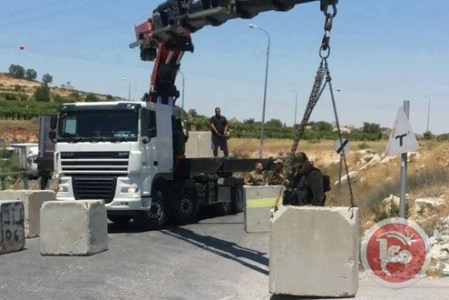 NABLUS – Israeli forces closed several main roads in the Nablus district on Friday until further notice for alleged security purposes, Palestinian security sources said.
Palestinian security sources told Ma’an that they were informed by Israeli authorities of the decision to shut the main entrances of the villages of Burin, Awarta, Osarin, Aqraba.
The entrances were closed at 10 a.m. and will be closed indefinitely due to the “deterioration of the security situation,” the sources added.
Locals told Ma’an that Israeli forces had also placed large dirt mounds across another road leading into Burin as well as a main road inside of Awarta.
An Israeli army spokesperson did not have immediate information on the closures.
Nablus is one of several areas in the occupied West Bank to come under increased measures from Israeli authorities since the beginning of last month including home demolition, road closures, and high levels of arrests.
Earlier this month, a Palestinian was shot dead after carrying out a vehicular attack that left three Israelis injured at the Tappuah Junction, south of the villages.
Sweeping restrictions are typically implemented following attacks on Israeli military and settlers in the occupied West Bank.
Such restrictions on access apply only to Palestinian residents, while facilitating the movement of Israeli settlers living illegally in the area.
Featured Video

Why the U.S. Should Pull Back From the First Island Chain
or go to
Aletho News Archives – Video-Images
Book Review
‘Why Fauci Must Rot in Prison’: A Tale of Two Diaries
By Jill Erzen | The Defender | October 13, 2026
Dr. Anthony Fauci’s private diary reveals a “mind-numbing” contradiction between what the former top U.S. infectious disease official knew about COVID-19 and what he told the public, senior White House adviser Peter Navarro, Ph.D., said last week on “American Thought Leaders.”
In his new book, “Why Fauci Must Rot in Prison,” due out Oct. 20, Navarro compares Fauci’s private entries to his own pandemic-era diary, and uses what he calls “a tale of two diaries” to argue that Fauci should face criminal prosecution.
“I show, actually, how a prosecution can and should happen … at the state level, most likely,” Navarro said. “He should wind up in prison, and we’ve got the receipts in this book to put him there.”
Navarro said Fauci repeatedly acknowledged important facts in private, then publicly pursued policies that contradicted those facts — with devastating consequences.
“What he says many times privately in his diary is so at odds with both his public behavior and public statements that it’s mind-numbing,” Navarro said.
Navarro examines the lasting damage caused by lockdowns and other pandemic policies, and the ongoing toll of long COVID.
His book also addresses questions about vaccine safety, including why healthy young people faced COVID-19 vaccination mandates despite concerns about myocarditis, and why women were not warned about miscarriage risks linked to the shots. … continue
Blog Roll
 Aletho News
- Jennifer Kavanagh: Why the U.S. Should Pull Back From the First Island Chain
- Yemen denounces international community’s silence on Saudi aggression, siege
- UAE and Saudi Arabia move toward renewed coordination against Sanaa
- How Iran’s two-week retaliatory strikes exposed cracks in US military architecture in Persian Gulf
- The mother of all propaganda: Why the hype over US MOAB strike against Iran is nothing but theater
- Iran says it possesses technology behind US 14-ton GBU bunker-buster
- Trump asks Iran not to retaliate after he strikes Pickaxe Mountain – w/ Prof. Marandi
- Vice President J.D. Vance’s Deceptive ‘Antiwar’ Campaign Speech
- Iran: Palestinians’ rights must not be compromised in Gaza’s future; US, Israel to blame for Hormuz situation
- Ongoing tales of Syrian chemical weapons
- If Americans Knew
- Israeli rabbi permits occupiers to steal Palestinian olive harvest in West Bank
- Netanyahu’s spin on latest settler attack is laughable – Daily Update
- Israeli soldiers debunk Israel’s talking points
- In West Bank, Israeli settlers are totally out of control – Daily Update
- NPR investigation finds evidence of widespread fraud at mall kiosks tied to Israeli skincare brand
- Tucker Carlson exposes Israeli Lies about the Oct 7th attack, Charlie Kirk, and the U.S.
- Israel has detained thousands of Palestinian children since Oct 7th – over half spent time in solitary, many uncharged
- Israeli Analysis: Is Netanyahu Planning an ‘October Surprise’ Attack Before Israel’s Election?
- Israeli settlers brutally attack Palestinians and Washington Post female photographer, 65
- Words Have Changed, Occupation Continues: The Reality of the Gaza Ceasefire
- No Tricks Zone
- Predictions Made By Renowned Climate Proifessor Over Past Decades Have Been Proven To Be Poor
- New Study Suggests Large Regions Of The Pacific Ocean Have Been Cooling For The Last 80 Years
- Germany’s Green Energy Debacle: High Energy Costs Force Kahla Porzellan to Close After 182 Years!
- New Study: 50 Years Of The Most Aggressive ‘Net Zero’ Policies Can Only Affect The Global Climate By 0.03°C
- US September “Heat” Was No Record…Many Records Set Decades Ago
- Latest European Green Energy Debacle; Portugal’s Largest Flagship Solar Park Insolvent!
- Green Energy Debacle: German Expert Professor Fritz Vahrenholt Warns Of Severe Economic And Social Consequences
- Two More Paleo Reconstructions Affirm Meters-Higher Sea Levels Across Ireland, Brazil 7000-6000 Years Ago
- New Study: Earth And Venus Surface Warmth Largely Explained By Convection And Lapse Rate, Not CO2 Or Radiation
- 2025 Nature Paper Claiming Worsening Global Drought Gets RETRACTED …Heavily Flawed

