82 Groups in US Demand Investigation of ‘Muslim-Free Zones’
teleSUR | September 2, 2015
In an open letter to the DOJ, 82 groups led by the Council on American-Islamic Relations (CAIR), expressed concern over a growing trend of businesses refusing to serve customers perceived as Muslim.
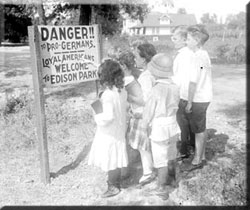 “American businesses posting ‘Muslim-Free Zone’ declarations are no different than the ‘Whites Only,’ ‘No Dogs, No Jews,’ ‘No Mexican’ and ‘Irish Need Not Apply’ signs that were posted during past shameful periods of our nation’s history that we hoped were over,” the letter stated.
The letter lamented the DOJ has “remained silent” on the issue, and called on the department to determine whether “Muslim-free zones” violate Title II of the 1964 Civil Rights Act.
“Title II specifically prohibits discrimination by places of entertainment like, in many instances, firing ranges,” the letter read.
Signatories to the letter include the American Civil Liberties Union, National Association for the Advancement of Colored People and others.
“The broad range of groups calling for government action on the ‘Muslim-free zone’ issue clearly indicates that the U.S. Department of Justice should speak out and take concrete action to protect the constitutional rights of American Muslims,” said CAIR National Executive Director Nihad Awad.
At least one business that has declared itself a “Muslim-free zone” is currently being sued by CAIR.
The lawsuit accuses Florida Gun Supply of Inverness and its owner Andrew Hallinan, 28, of violating the federal public accommodations law and seeks an injunction to stop the discrimination, according to the complaint.
U.S. Turns Teen into “Terrorist”
By Margaret Kimberley | Black Agenda Report | September 2, 2015
Ali Shukri Amin is 17-years old, a minor under American law, yet he was just sentenced to eleven years in federal prison. He pleaded guilty and was sentenced as an adult for providing material support for terrorists. This is a crime defined in any way the government wants it to be. Amin had a twitter account, @amreekiwitness, devoted to the group Islamic State, ISIS. He also helped a friend travel to Syria in hopes of joining ISIS. That is the substance of his crime, online opinion and facilitating travel.
The crime of providing material support for terrorists only came into existence with the Patriot Act passed in the aftermath of the September 11th attacks. There are now people serving very long prison terms for providing humanitarian aid, translating documents, sending money abroad, or expressing views in support of nations or groups the United States classifies as terrorist. These crimes are vaguely defined and are often of little consequence to ISIS or any other organization the federal government designates as an enemy.
The prosecutions of Amin and others are meant to make the case for continuing the “war on terror.” This is actually a war of American terror used to justify endless interventions around the world. The Department of Justice would have us believe that a teenager tweeting about making donations to ISIS via bitcoin posed a serious threat. Of course, the United States government is the biggest threat to life in the world. It is the most violent organization with the largest number of kills.
The application of the material support for terror statute is used to capture innocent or harmless people. Some are hoodwinked by agent provocateurs or, like Amin, pose little or no danger. Most importantly, ISIS would not be a credible force in Syria or Libya were it not for American machinations. The United States created the monster and now wants to punish anyone who interacts with it.
At one point Amin, who lived in a Virginia suburb of Washington, DC, had over 4,000 twitter followers who conversed about a variety of issues, including protests in Ferguson, Missouri.
“They cower in fear of us whilst they massacre and oppress you! It’s time to strike fear into the hearts of the oppressors. #FergusonUnderIS”
“May be time to organize Muslims in America upon haqq and mobilize to #Ferguson. Defend the oppressed, start jihad here.”
While Amin and thousands of others expressed their outrage about deadly police brutality, the State Department actually engaged in online debates with the teenager. A bizarre social media program called Think Again, Turn Away is a useless attempt to influence young Muslims who want to fight imperialism through jihad. Aside from having a name reminiscent of a love song title, the effort allowed Amin to engage in argument with and troll the State Department. When the would-be jihad deprogrammers pointed out that ISIS “slaughters innocent people,” Amin had a ready and accurate retort:
“slaughter innocents? You mean like AbdurRahman al-Awlaki, the 16 year old boy not involved with any militants? or what about the thousands killed in drone strikes weekly that make the news? The thousands that don’t? you are nothing more than criminals who betray the Muslims you claim to defend across the globe, butchering them 1.7 million in Iraq, hundreds of thousands in Afghanistan, left, right, everywhere. only an ignoramus who knows nothing about American foreign policy or any Muslim country could accept your lies.”
A few months after these embarrassing interactions, Amin’s mother and his imam unwisely reported him to the FBI in an effort to stop his online involvement with ISIS. He would not have been discovered otherwise.
Killer cops roam the streets with no fear of federal prosecution, but a confused teenager is sent to prison because he holds and expresses opinions contrary to those of the government. Prosecutors use children to make names for themselves and climb the ladder in a corrupt system. American terror is not just carried out abroad with drone strikes and invasions, but it is carried out on a daily basis by the criminal injustice system.
While the Saudis, Israelis and their allies use American money and arms to target civilians for death, anyone who crosses over the thin line of expression is at risk of prosecution and many years in prison. The hypocrisy is stunning but not really surprising. This system will use a child to make its point clear. We live in a police state and anyone who dares to speak up against it is at risk of being made an example.
The federal government does not operate any juvenile facilities. Ali Shukri Amin is now in custody in an adult facility. One need not be a follower of ISIS to see that this is a gross injustice unworthy of a country which claims to be a democracy.
Margaret Kimberley can be reached via e-Mail at Margaret.Kimberley(at)BlackAgendaReport.com.
Here’s How Law Enforcement Agencies Impersonate Your Friends
By Sonia Roubini | ACLU | August 31, 2015
We recently received a handbook from the DEA, in response to a Freedom of Information Act request, seeking information about the use of impersonation as an investigative technique. While the 1999 handbook, titled Online Investigative Principles for Federal Law Enforcement Agents, was almost identical to a version of the handbook that is available online, there is one notable difference: the version that the DEA sent us includes a copy of the DEA’s Consent to Assume Online Identity: Adult Consent form.
The DEA apparently used this fifteen-year-old form to obtain consent from individuals to impersonate their online identities. It states:
“I ____ hereby voluntarily provide consent to the Drug Enforcement Administration or other Federal, State or Local Task Force officers to assume my Internet online identity. My Internet screen name(s), nick name(s), and/or e-mail addresses are as follows.”
It goes on to state:
I understand that these law enforcement officers will changes [sic] the password(s) to this account so that I will no longer have access to these accounts. My Internet online identity may be used by these law enforcement officers for any official purpose relating to an official investigation, including sending and receiving e-mail, making direct communications on systems such as ICQ or AOL instant messaging, and any other electronic communications. I have been advised of my right to refuse to allow the assumption of my identity. I give this consent freely and voluntarily.
We filed this FOIA request because the impersonation of actual individuals and organizations by law enforcement agencies has the unique ability to erode our trust in each other’s identities. If government agencies impersonate Senate staffers, Internet repair technicians, newspapers, and individual citizens at will — as they appear to have done in the past — or others in our lives, it will erode a form of trust that is critical for relationships in a free society: our ability to trust stated identities.
Unfortunately, the documents released to us so far raise more questions than they answer. This consent form in particular raises some thorny ones, including:
- Under what circumstances can law enforcement agencies ask for consent to impersonate actual individuals?
- If the individual does not consent, can law enforcement get a warrant to impersonate someone?
- Once a law enforcement agency is impersonating someone, what is it allowed to do? Can it communicate with the individuals’ Facebook friends? Can it respond to emails from their family members?
- What factors do law-enforcement agencies consider in deciding whether the extraordinary risks of impersonation are worth the possible reward?
Without this information, it is difficult to assess the lawfulness or wisdom of the DEA’s impersonation of actual individuals — a practice which raises serious constitutional questions. The Fourth Amendment prohibits “unreasonable searches and seizures,” and while courts have generally approved of the government’s use of deception (for example, undercover officers), few have ruled upon the constitutionality of the impersonation of actual individuals.
A recent decision in a Las Vegas District Court involved evidence collected by members of the FBI who impersonated Internet repair technicians to gain physical access to suspects’ hotel rooms. During their investigation of an online gambling ring, FBI agents disconnected the Internet in three rooms of a Las Vegas hotel and impersonated technicians to enter the rooms without suspicion and to collect evidence later used against the suspects in court. The judge eventually tossed the evidence out on the grounds that it was “fruit of a poisonous tree” — legal jargon indicating that the evidence was obtained using an unlawful search.
In another case, the DEA created a fake Facebook profile for a real individual, Sondra Prince, who was arrested on drug charges in 2010, in order to investigate an alleged New York drug ring. The DEA agent who arrested Prince seized her cell phone and mined it for photographs. These were then used to create the fraudulent Facebook profile which was used by the agents as a critical part of their investigation into the drug ring. These photographs notably included ones of Prince in a bathing suit, and photos of her two young children. Prince ultimately sued the DEA over its impersonation of her profile. The Justice Department eventually paid $134,000 to settle the case, which drew the public’s attention to potential privacy violations at play in government agencies’ impersonation of individuals (not to mention the potential dangers involved).
The consent form also raises tricky questions about the scope of consent. Does the form allow the agents, for example, to answer incoming messages from the mother of the consenter? What about a romantic partner or close friends? The form does nothing to clarify these questions. Nor does it address the fact that asking people to turn over their passwords so that law enforcement can then log in to their accounts violates the terms of service of Facebook and a number of other major service providers, which all prohibit password sharing. The government itself has argued in other cases that such password sharing may be a crime under the Computer Fraud and Abuse Act.
Finally, the date of the form — 1999 — raises an obvious but unanswered question: what is the DEA’s current practice? Technology and social media have transformed our society in the last sixteen years. Have the DEA’s practices changed since then? Do they impersonate individuals routinely now? What are the rules that now govern that impersonation? We just don’t know, and that’s a problem.
Police video flap flares in Oakland
By Chris Reed | Cal Watchdog | August 31, 2015
Several local police forces in California got on the police body-cameras bandwagon well before police killings around the nation in the summer of 2014 triggered a broad push for their adoption. The Rialto Police Department was the focus of a 2013 New York Times story that emphasized how much body cameras improved interactions between officers and the public.
But in Oakland, it appears authorities will only release the body-camera videos when they exonerate police, and that the video will be kept from the public and the media in other circumstances on the grounds that it is part of an ongoing investigation. The East Bay Express recently reported on how the Oakland police are dealing with four police killings. In two cases, Police Chief Sean Whent won’t release any body-cam footage. In the other two cases, police wouldn’t release the footage to the public. Instead, on Aug. 19, the Oakland Police Department held a screening for 11 members of the media.
This account is from the East Bay Express :
[The] videos included police body camera footage taken by officers who were chasing Richard Linyard and Nathaniel Wilks (in two separate incidents). On July 19, Linyard was allegedly fleeing the police on foot when he was later found wedged between two buildings. A coroner’s report said Linyard died from injuries he suffered when he was apparently stuck between the buildings.
On August 12, Wilks allegedly fled the police in a vehicle and then on foot. Several officers confronted and shot Wilks near the intersection of 27th Street and Martin Luther King, Jr. Way.
Watson said OPD showed videos to select members of the media in order to dispel inaccurate reports that officers beat Linyard, and claims that Wilks was shot in the back. Both incidents sparked protests. “We held the viewing in the interest of the public, to be able to share information through fair and balanced reporting,” said Watson.
Watson, however, said that the video footage will not be released to the broader public, and that OPD believes the California Public Records Act allows the department to withhold the footage because it is evidence in several ongoing investigations.
‘Completely wrong’ to withhold some video
As the Bay Area News Group reported, giving the police the right to pick and choose which videos to release outraged local civil-rights lawyer Jim Chanin. “I think it’s completely wrong to have selective showings of one shooting and not another shooting, depending on how the department feels . … There’s an inference now that if (police) don’t show you a video, there could be something wrong or improper about (another) shooting,” he said.
Meanwhile, in Sacramento, a bill that would establish statewide procedures on access to and use of policy body-camera footage appears to have failed, U-T San Diego columnist Steve Greenhut wrote on Friday.
In April, a comprehensive bill by Assemblywoman Shirley Weber, D-San Diego, passed its initial committee vote. Per its official description, “Assembly Bill 66 would provide guidelines about when the cameras are to be operated, require notification of those being recorded, and prohibit law-enforcement officers involved in serious use-of-force incidents that result in serious bodily injury or death from viewing the video until they have filed an initial report.” Whent, the Oakland police chief, testified in favor of the bill.
But Weber’s bill was effectively killed within weeks. As Dan Walters wrote in the Sacramento Bee :
Weber’s body camera bill was beaten up in the Assembly Privacy and Consumer Protection Committee. Police unions, whose endorsements politicians crave, strongly opposed it as unfair, and the committee insisted that only local authorities decide when cops can see body videos.
Italian activist arrested and beaten in occupied Palestine
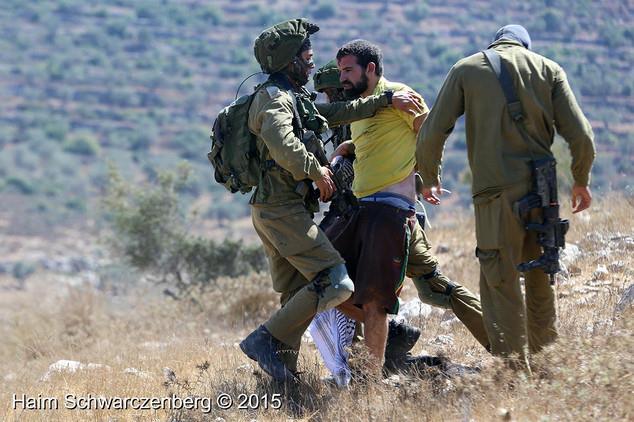
Vittorio Fera violently arrested. Photo credot – Haim Schwarczenberg
International Solidarity Movement | August 31, 2015
Occupied Palestine – Italian activist Vittorio Fera was violently arrested and beaten by soldiers at weekly demonstration in Nabi Saleh in occupied Palestine. The Italian activist, 31-year old Vittorio Fera, is falsely accused of throwing stones and attacking soldiers. His case will be taken to court the second time Monday 31st August between 9 and 11 am.
During a weekly demonstration in Nabi Saleh Israeli soldiers randomly arrested two protesters: one 18-year old Palestinian youth and the Italian activist Vittorio Fera. Fera went to the protest to document human rights violations by the Israeli army against Palestinians and became a victim of military violence himself.
While documenting an Israeli soldier strangling a 12-year old boy, Vittorio and the other activists were ambushed by Israeli forces. Vittorio was separated from the group and violently shoved to the ground. “We were shocked to see the boy being choked by a soldier, when suddenly soldiers came running at us and attacked Vittorio”, Josephine from Denmark explains.

Vittorio Fera with clear marks of military assault
Journalists witnessed soldiers kicking and beating him during the arrest, even though he did not resist or fight back. Vittorio, and the Palestinian youth, were forced into a military jeep where they were detained for almost nine hours by the Israeli army, before they were finally taken to a police station. Despite various demands of Fera’s lawyer to have him brought to a police station immediately, both he and the Palestinian were illegally kept in the military jeep until shortly before midnight.
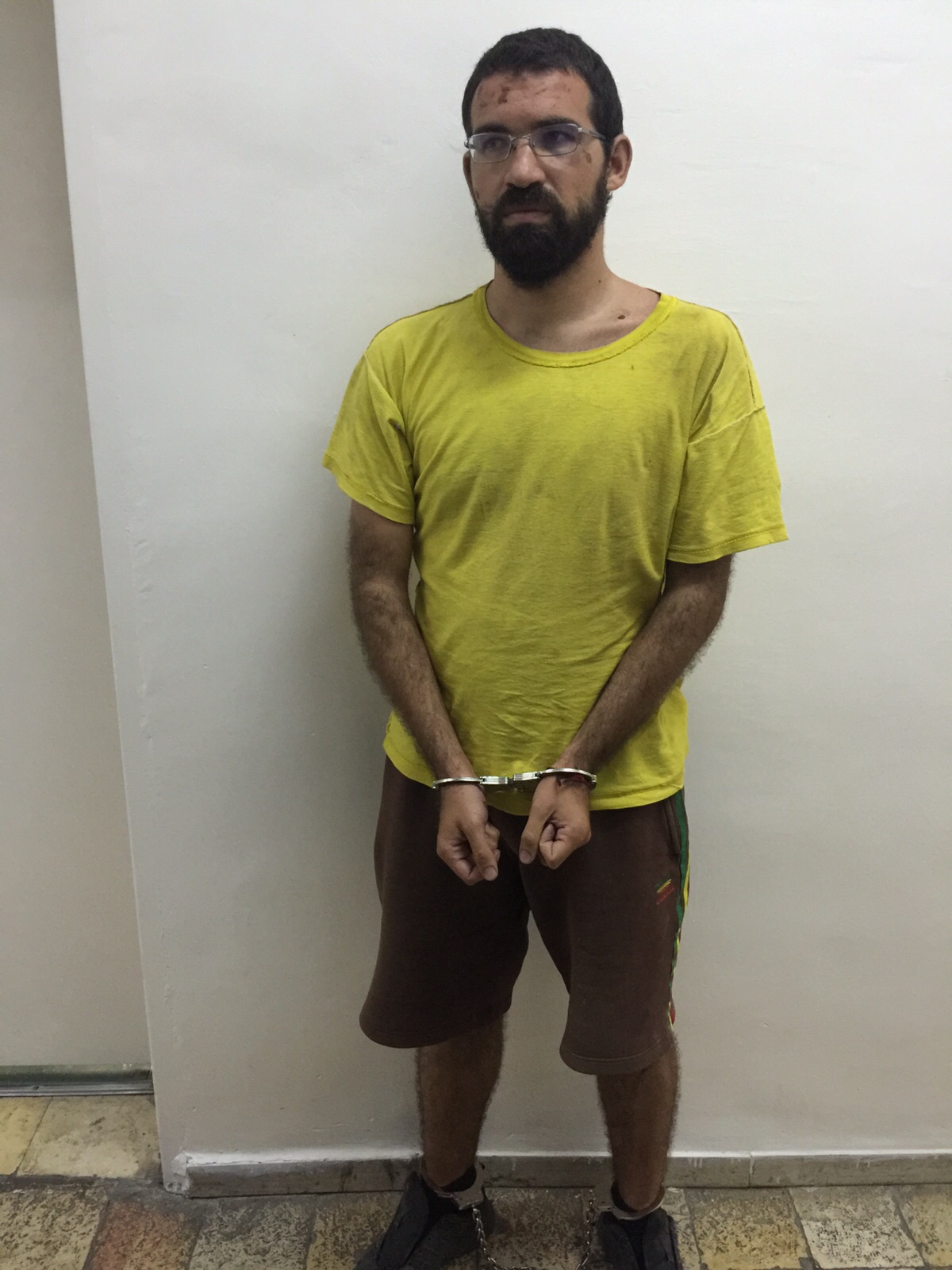
Vittorio Fera with clear marks of military assault
The military accuses Vittorio Fera of throwing stones and attacking the soldiers – an unfounded accusation. A first sentencing in court late Saturday night only resulted in the postponing of the sentencing until Monday morning. The hearing will take place in in Jerusalem Monday the 31st August 2015 between 9 and 11 am.
See the video of the arrest here
Major US industrial union votes in favor of BDS movement
Press TV – August 31, 2015
A prominent industrial union in the United States has endorsed the international movement of Boycott, Divestment and Sanctions (BDS) to support the Palestinians against Israel, calling on Washington to cut off financial support to Tel Aviv.
The United Electrical, Radio and Machine Workers of America union voted in favor of a resolution entitled “Justice and Peace for the Peoples of Palestine and Israel” during its national convention on August 20, the union reported on its website.
Citing Israel’s “long history of violating the human rights of the Palestinians,” the union has become the first nationwide union to join the boycott against Israel.
Union delegate Autumn Martinez said, “It’s absolutely disgusting what is going on. Free Palestine!”
In a statement, the union attacks Israel for its human rights record “starting with the ethnic cleansing of 750,000 Palestinians in 1947-48 that turned most of Palestine into the State of Israel.”
It explained that the goal of endorsing the BDS campaign was “to pressure Israel to end its apartheid over the Palestinians just as similar tactics helped to end South African apartheid in the 1980s.”
The union also voted on a number of other foreign policy issues, including the demand to end US military intervention in the Middle East and other regions.
“We (need) to get rid of this culture of war,” said Mike Ferritto, a local delegate.
“We have done enough damage. We need to get out of the Middle East,” said another delegate, Brandon Dutton.
The resolution was part of a series of resolutions, including support for the Iran nuclear agreement. The union said it was the first US national union to endorse the movement.
The BDS campaign, which began in 2005, encourages organizations and institutions such as universities and churches to divest from Israel until the fundamental rights of the Palestinians have been recognized.
US Freedom Act a ‘surveillance act in disguise’ – ex-MI5 agent
RT | August 30, 2015
The US is playing games with public trust by passing different versions of the same intrusive surveillance system, a modern day Panopticon. Any alleged changes to the bulk collection program are purely cosmetic, according to ex-MI5 agent Annie Machon.
The recently passed USA Freedom Act was hailed as a stepping stone on the way to renewed public trust after the highly controversial Section 215 of the Patriot Act, which expired in May. Under the new law, the practice of bulk data collection on US citizens will be entrusted to telecom companies, and the NSA will be able to obtain the records through seeking a warrant from the FISA court.
So what does this recent decision mean with regards to the NSA’s bulk collection program, and can Americans feel more at ease about the security of their phone data with the introduction of the new Freedom Act? RT asked the former MI5 agent-turned-whistleblower for her take.
RT: Firstly, what’s your take on this? It’s an isolated court case, you could say, but does it have any big impact, do you think, on the NSA spying program.
Annie Machon: It’s business as usual for them. I’m sure they’re very happy to be told what they’re doing is legal, now. I mean, there have been a number of challenges, where different levels of courts in the US have said bulk metadata collection is legal; it’s illegal; it’s legal again. But, actually, what they’ve been doing is just business as usual under the 215 Section of the Patriot Act, which I think Congress was due to re-ratify at the beginning of June, but it became a bit gridlocked in the whole system. So, you know, they will be very happy with this result.
RT: Certainly, President Obama seems very happy. You know, the White House has hailed the ruling. But earlier in the year, we did hear Obama saying “We’re promising to reform things, too.” Do you think there’s been a significant change in attitude in the White House?
AM: I think they’ve passed the buck, basically, to the judiciary to take the hard decisions. So, now they’ve got this ruling, they don’t need to make the hard political decisions. They’ll just say, “Well, the judge just said its constitutional; that’s fine,” which is bad enough for the American citizens, within America, who will continue to be spied on extensively in the face of this nebulous and ever-changing terrorist threat. However, of course, none of this, whatsoever, had any relevance to the rest of us around the world, where the NSA could merrily go on spying on us all, to every degree they want to, because we’re not American citizens. So, it’s a bit of a back step for privacy advocates in America, but it’s no change for the rest of us.
RT: Yeah, you say no change, Annie, but you know, we’ve got the new Freedom Act to look forward to, too. You know, the one that will replace the Patriot Act. Surely, that’s a step forward, though, isn’t it?
AM: That’s one for Orwellian Newsspeak, I think. “You’re free.” No you’re not. It’s not a freedom act; it’s a surveillance act. They’re trying to recast it to make it sound good, but it’s not. And even if that’s the case in America, even if the NSA were reigned in, and they were not allowed to spy on American citizens, all they have to do is ask their buddies in the Five Eyes group, which would be Canada, New Zealand, Australia, or the UK, to do the spying for them, which would be perfectly legal under any of those countries’ oversight systems, and then just pass the information to the Americans. So, it is, as I said, very much business as usual. They will always find a way to subvert any notional political oversight within their own countries by sharing this information between themselves, and spying on everyone else’s systems. So, we are all still, very much, living under a global Panopticon.
And none of this has any real impact on protecting us from terrorism. We’ve seen this time, and time again. An NSA whistleblower, Thomas Drake, senior staff, said that, actually, there was a lot of information the NSA had in the run up to 9/11, and yet it was not communicated or acted upon appropriately, so the attack occurred. And then we see current and very recent intelligence chiefs in America saying, for example, you know, “Well it stopped all these terrorism attacks.” And they’ve been caught lying under oath to Congress about this. This bulk metadata creates a huge haystack from which no needles have, effectively, been found.
READ MORE:
Virginia teen with pro-ISIS Twitter account sentenced to 11 years in prison
Whistleblowers sue DOJ, FBI, and NSA for malicious prosecution, civil rights violations
Violent arrest of Palestinian man in al-Khalil (Hebron)
International Solidarity Movement | August 29, 2015
Occupied Palestine – A 52-year old Palestinian man was arrested at Shuhada checkpoint in al-Khalil (Hebron) yesterday, for ‘not obeying soldiers’ orders. Israeli forces painfully handcuffed and blindfolded him.
Around 1:30 pm, Hisham Azzeh walked through Shuhada Checkpoint in order to reach his house that is located up the hill next to the illegal settlement in Tel Rumeida. At this first checkpoint on his way home, Hisham passed through the metal detector without it beeping to indicate he had to go back and pass again. Therefore, he continued on his way, but Israeli soldiers yelled at him to go back and pass through the checkpoint again for no reason.
When he did not immediately comply with the soldiers orders, they arrested him. Israeli soldiers painfully handcuffed him with his hands behind his back with plastic handcuffs, without any regard for a recent operation on his hand. The soldiers also blindfolded him, so he was unable to see what happened to him and where he was brought. On the way up the hill towards the military base, the pain, caused by the plastic handcuffs, was so intense, that Israeli soldiers had to allow Azzeh to sit down on the ground, as he was unable to continue walking.
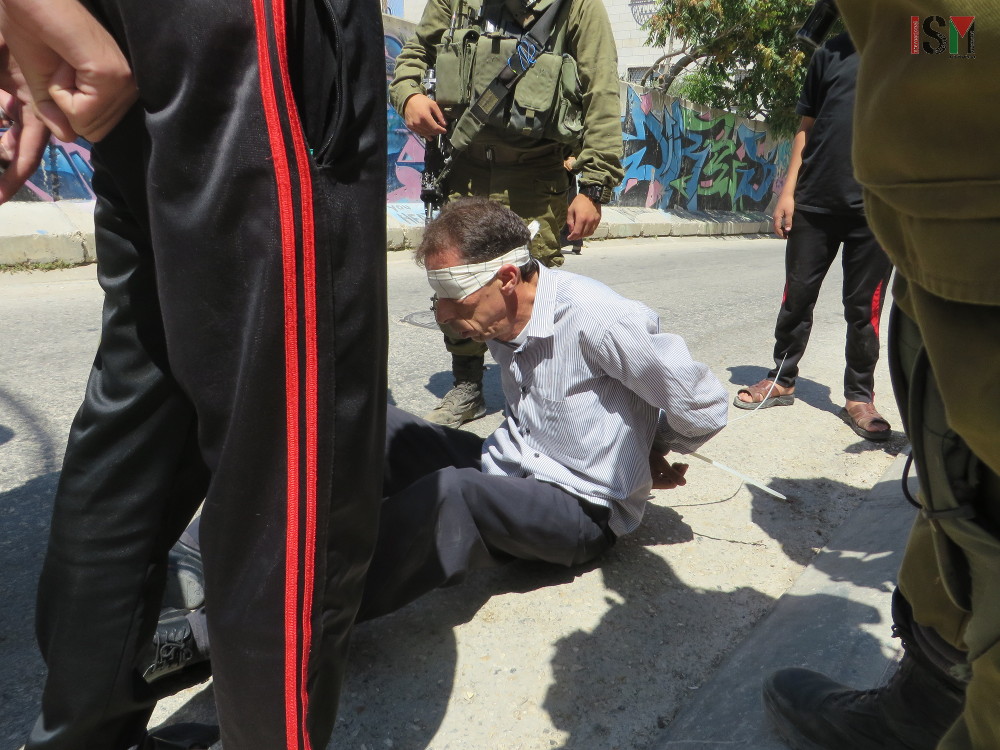
Palestinian man sitting on the ground in pain
Palestinians observing the arrest were continously telling soldiers about Azzeh’s recent operation on his hand and the plate that had to be inserted during this operation. Even though they were explaining the immense pain the plastic handcuffs were causing to Azzeh due to this operation, the Israeli soldiers shouted at them to leave the area and be quiet. Various requests to call an ambulance were denied. Only after Azzeh’s brother, who is a medical professional, arrived and reasoned with the soldiers, they attempted to cut the handcuffs. As the soldiers put the handcuffs too tight, they were struggling to cut the handcuffs without cutting Azzeh’s hands, making the procedure even longer and more painful, with Azzeh suffering immensely and crying out in pain.
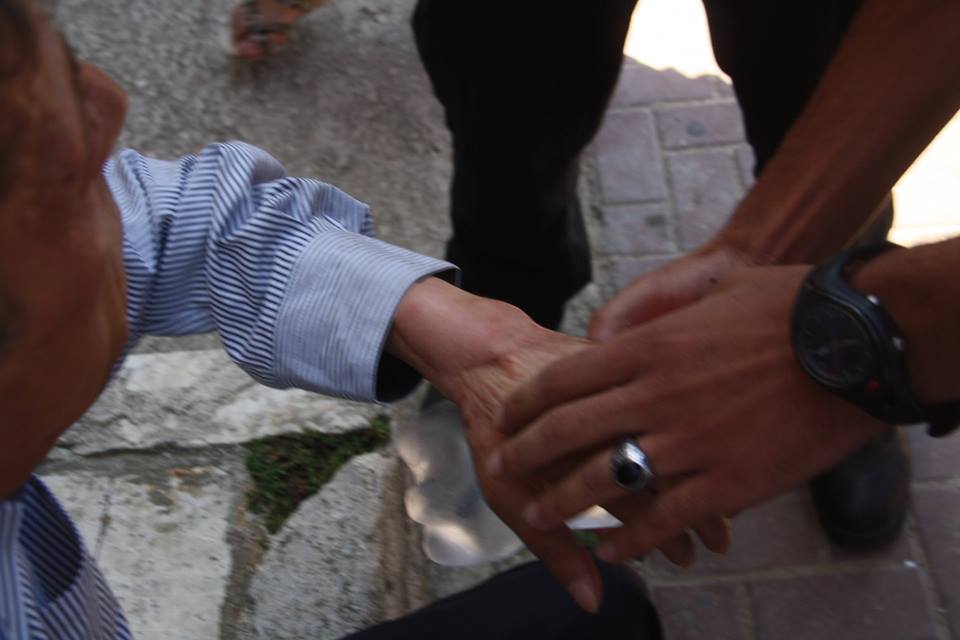
Hisham’s hand showing scars from the operation. Photo credit: Youth against settlement
In the meantime, a civil police car was driving past on a regular patrol and got stopped by the Palestinians in an attempt to alleviate the situation for Hisham. After the handcuffs were finally cut off, by-standers cooled his hand first with a bottle of cold water until an ice-pack was brought for him. The police took Hisham Azzeh to the police station after a long discussion. After about an hour, Azzeh was released. He is now doing okay, but is still suffering from pain in his hands.
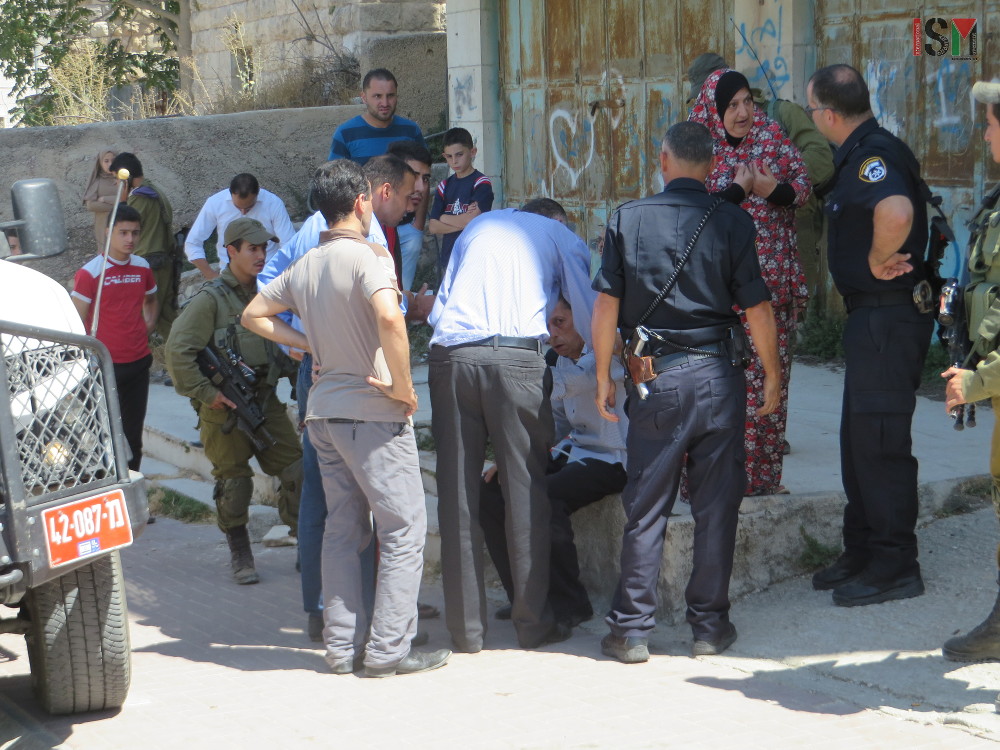
Police, bystanders and the soldiers standing around Hisham
Harassment like this in al-Khalil (Hebron) is not unusual. Palestinians have to pass through various checkpoints on their way home or to work and often get detained for long periods of time.
Blood in the Hills: Leonard Peltier and the Pine Ridge Reservation Shoot Out, Forty Years Later

By Mark Trecka | The End Of Being | June 26, 2015
In the late morning of June 26th, 1975, two young FBI agents named Jack Coler and Robert Williams entered the property of Lakota Sioux elders Harry and Cecelia Jumping Bull while ostensibly investigating the theft of a pair of cowboy boots, and engaged in a firefight with several native activists who were camped there. Those two FBI agents and a young Indian named Joe Stuntz would be dead by mid-afternoon, slain in the South Dakota sun. Leonard Peltier, one of the activists camped at Jumping Bull that day, is currently serving back-to-back life sentences for the deaths of Coler and Williams. No investigation into the death of Stuntz was ever undertaken.
Reports of military style bunkers and strongholds and large stockpiles of weapons on the Jumping Bull property were disseminated to the American public within the days following this incident, but such reports were promptly found to be fabricated. In an enforced absence of the media during the first days after the event, the deaths of the agents were told to be execution-style murders, the work of hateful, vengeful native militants. This, too, proved to be false. The agents, it seems, did not announce themselves that day and so appeared simply as two armed white men on reservation land. A compelling case has been made that Coler and Williams drove onto that land that day and fired shots for no reason but to set into motion the chain of events which followed.
Violence against Indians on the greater Pine Ridge Reservation was entirely common at that time, and although at least some of that violence was funded and enabled by the FBI, the agency usually maintained a slightly more removed role than it did on this day. Dick Wilson, chairman of the Oglala Lakota Sioux was a militant assimilationist who had made it his mission throughout the early 1970s to suppress and punish expressions of native identity. He and his heavily armed, often drunk and extremely violent private squad of henchmen began terrorizing the Pine Ridge Reservation in 1972. Throughout his reign, uninvestigated violent deaths would befall more than one hundred residents of the reservation, and a climate of fear was pervasive. The Pine Ridge reservation, under Wilson’s rule, achieved the highest per-capita murder rate in the country and the dark clouds of alcoholism and poverty hung over everyday life there. Wilson received funds, arms, and reportedly alcohol from the federal government to operate and fuel his militia. The native activists camped on the Jumping Bull property on June 26th, 1975 were largely present as a response to these conditions, offering support and security to the residents of Pine Ridge in the face of Wilson’s thuggery.
Relations between such Native American traditionalist activists, loosely organized under the banner of the American Indian Movement (AIM) and various government agencies had become explosive through the early 1970s. AIM was inspired in part by the Civil Rights Movement and the Black Panthers but uniquely mobilized around pan-native spiritual practices, identity, and a vision that sought not necessarily advancement within the broader society, but the right to exist unmolested and to live a form of traditional native life without the violence and manipulation and strategic neglect so commonly experienced at the hands of the US government.
Two-and-a-half years before the Pine Ridge shootout, supporters of AIM had assembled in the town of Custer, South Dakota to respond to the sentencing of Darold Schmitz for the murder of an Indian named Wesley Bad Heart Bull. While the two men had essentially engaged in a drunken tussle which resulted in Bad Heart Bull’s death, several witnesses testified to hearing Schmitz earlier in the evening state that “he was going to kill him an Indian.” After word got out of an involuntary manslaughter verdict and low bail, AIM leaders mobilized and dozens of supporters flooded the little town of Custer. While AIM leaders Russell Means, Dennis Banks, Leonard Crow Dog and Dave Hill were in talks with local officials, the victim’s grieving mother, Sarah Bad Heart Bull was beaten by police while attempting to enter the courthouse. The ensuing conflict between Indians and police turned into a riot in which several buildings were burned. (Sarah Bad Heart Bull was subsequently sentenced to one to five years in prison while Schmitz never served one day.)
This incident is commonly considered the impetus for the 1973 occupation of the Wounded Knee memorial site by AIM activists and the subsequent 71-day standoff between two hundred AIM supporters and an army of federal agents, U.S. marshals, Dick Wilson’s thugs, and local ranchers. Russell Means and Dennis Banks were tried in 1974 as leaders of AIM and the primary organizers of that occupation. Means and Banks were acquitted after a disastrous and circus-like trial. The presiding judge, Fred Joseph Nichol, was so astonished by the questionable prosecutorial feats that he was, as quoted in Peter Matthiessen’s In the Spirit of Crazy Horse, moved to words of derision for the FBI.
It’s hard for me to believe that the FBI, which I have revered for so long, has stooped so low. I am forced to conclude that the prosecution acted in bad faith at various times throughout the course of the trial and was seeking convictions at the expense of justice. [ … ] The waters of justice have been polluted, and dismissal, I believe, is the appropriate cure for the pollution in this case.”
By June of 1975, the FBI was apparently frustrated beyond clear-headedness. Matthiessen’s exhaustive account elucidates the details of the incident at Jumping Bull which would eventually result in Leonard Peltier’s conviction. Among the most striking is the fact that while agents Coler and Williams were ostensibly investigating the theft of a pair of cowboy boots, a myriad of law enforcement and paramilitary forces totaling at least 250 men were assembling within a few miles of the Jumping Bull property, which was soon surrounded.
Throughout the exchange of fire, all of the Indians involved were able to escape into the hills, except for the fallen Joe Stuntz. Leonard Peltier, who was certainly among those who fled, eventually escaped to Canada, from where he was extradited back to the U.S. and tried for the murders of agents Coler and Williams.
Peltier’s extradition and trial proved to be even more fraught with fraud than the Means-Banks trial. The prosecution depended largely on the testimony of a mentally unstable woman named Myrtle Poor Bear who later admitted that she had been threatened and coerced by the FBI. Although she was groomed to damn Peltier, she later admitted that she had never met him.
Despite this and several other witnesses’ claims of coercion at the hands of the FBI, ballistics evidence which concluded in favor of Peltier’s innocence, and a general lack of evidence, Leonard Peltier was convicted and sentenced to two back-to-back life sentences.
He remains in prison today, at the United States Penitentiary in Coleman, Florida, where he was moved after being severely beaten by inmates at a facility in Canaan, Pennsylvania in 2009. He is today 70-years-old. Several presidents, including Barack Obama, have flirted with the idea of granting Peltier clemency amidst enormous pressure from the international human rights community, intellectuals, celebrities, and spiritual leaders, though none has yet followed through. Recent reports highlight Peltier’s failing health and lack of proper medical treatment.
Peltier is considered by many of his supporters to have been arbitrarily chosen for conviction after earlier attempts to convict AIM leaders failed. Although obviously a controversial and contentious subject, enough evidence has emerged in defense of Peltier over the years that he counts among his supporters the Dalai Lama, the late Nelson Mandela, the late Mother Theresa, the European Parliament, the National Lawyers Guild, Angela Davis, Amnesty International, The Human Rights Alliance, Rev. Jesse Jackson, and many others who believe that he is held as a political prisoner.
With the 1983 publication of In the Spirit of Crazy Horse, Peter Matthiessen was sued for libel by the FBI and related parties. As Martin Garbus explains in the afterword for the second edition of the book, the very existence of that edition is significant in the face of these legal battles.
The printing of this new edition is thus a joyful occasion for those of us who care about the dissemination of ideas, no matter how controversial, and worry about any erosion of the rights guaranteed by the First Amendment. It is a defeat for former South Dakota Governor William Janklow, for the Federal Bureau of Investigation, and for FBI Special Agent David Price, all of whom tried to stop this book by filing suits in three stages, waging an eight-year litigation, and calling and threatening booksellers and book buyers. It is also a defeat for all those who wish to keep this country in the dark about abuses against its citizens in the past and present eras.”
Matthiessen’s legal victories essentially validated all accounts in the book as sound.
In addition to the 1991 edition of Matthiessen’s book, the 1992 documentary, Incident at Oglala, produced and narrated by Robert Redford, also helped to renew public interest in Peltier’s story. The Washington Post review of that film states: “Only the willfully partisan will disagree [Peltier’s] trial was anything but a government-cooked travesty.”
Efforts are ongoing to convince President Obama to grant clemency to Peltier, as are efforts to prevent just such a thing from happening. His next parole hearing is scheduled for 2024.
Israeli forces evacuate Palestinian families for military drill
Ma’an – August 30, 2015
TUBAS – Israeli troops on Sunday morning evacuated 14 Palestinian families from their houses in the al-Ras al-Ahmar area of Khirbet Atuf village east of Tubas in the northern Jordan Valley area of the West Bank, local sources said.
Local sources reported that the “Israeli occupation” told the 14 families that Israeli forces will be carrying out military drills in the area for five days.
During the five days of military exercises, Palestinian residents in the area will be evacuated for six hours every day, local sources told Ma’an.
The evacuation was done under the argument that evacuating protects residents.
Earlier this year military drills in Tubas resulted in a fire that swept across some 3,000 to 4,000 dunams (750 to 1,000 acres) of Jordan Valley farmland.
The majority of the Jordan Valley is under full Israeli military control, despite being within the West Bank.The district of Tubas is one of the occupied West Bank’s most important agricultural centers.
According to the Applied Research Institute of Jerusalem, more than 15,000 dunams (3,700 acres) of land in the Tubas district have been confiscated by Israel for military bases with a further 8,000 dunams (2,000 acres) seized for illegal Israeli settlements.
Continual harrassment, threatening and intimidation of Palestinian family by settlers in Hebron
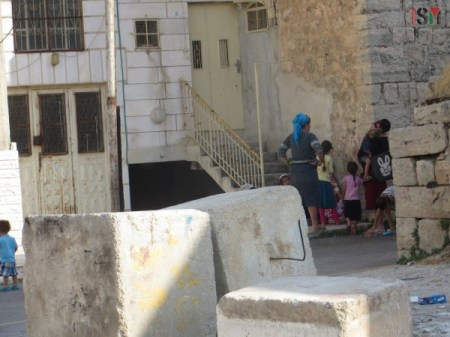
Settler women with their children blocking the stairs to the Abu Rajab house
International Solidarity Movement | August 30, 2015
Occupied Palestine – The Palestinian Abu Rajab family in the occupied West Bank city of al-Khalil (Hebron) is facing continual intimidation by groups of settlers and Israeli forces protecting these settlers in their attempts to take over the Abu Rajab family home.
In the last few weeks, settlers from the nearby illegal Israeli settlements on various occasions have camped outside the home under the protection of the Israeli forces, leaving the family confined to the house not able to leave fearing attacks by settlers as well as settlers taking over the rest of the house.
In March 2012, a group of settlers from illegal settlements within the city broke the gate of the house and occupied the two upper floors of the house at night-time during Passover. Afterwards the settlers claimed to have legally bought the house, a claim that until now could not be proven legit by an Israeli court. Until the final decision of the court, the Abu Rajab extended family is not permitted to use that part of their home. The same year, one of the sons, in his early twenties, was arrested and put in administrative detention (detention without charges or trial) for a year.
When in September 2013 an Israeli soldier was shot in the neighbourhood of the Abu Rajab house, the Israeli Prime Minister Benjamin Netanjahu promised the settler movement that they would be allowed to move back into the house.
Since the beginning of this year, the threats and attacks by settlers on the family have increased. A month ago, during Passover, settlers again tried to move into the house. Instead of protecting the family from these repeated and unlawful attacks, they threatened the family to leave the house. Since then, settlers again and again camp or even sleep outside the families’ home. On Monday and Tuesday, small groups of settler women with their children have been blocking the stairs to the house’s door all afternoon. The children, all under eight years old, were instrumentalised by their mothers as they are too young to understand what was going on. Palestinian children playing nearby the house were forced by soldiers to leave the area.
Featured Video

Why the U.S. Should Pull Back From the First Island Chain
or go to
Aletho News Archives – Video-Images
From the Archives
Only 19.7% of Americans agree with US State Dept on Israeli settlements
… Most American adults of voting age don’t appear willing to reject the applicability of international law to Israel’s ongoing colonization of occupied territories in East Jerusalem, the West Bank and Golan Heights. … Full article
Blog Roll
 Aletho News
- Albania on fire: who’s behind the riots?
- Egypt’s Civil Democratic Movement rejects involvement in regional war
- Egypt collaborates with Israel to build ‘Green Rafah’ project over erased Palestinian city
- Rising fuel prices and shortages have helped drive ongoing protests and rioting in France
- Tokyo protests demand Takaichi’s resignation over support for ‘Israel’
- Jennifer Kavanagh: Why the U.S. Should Pull Back From the First Island Chain
- Yemen denounces international community’s silence on Saudi aggression, siege
- UAE and Saudi Arabia move toward renewed coordination against Sanaa
- How Iran’s two-week retaliatory strikes exposed cracks in US military architecture in Persian Gulf
- The mother of all propaganda: Why the hype over US MOAB strike against Iran is nothing but theater
- If Americans Knew
- What the UK Is Doing to Pro-Palestine Novelist Sally Rooney Is an Act of Orwellian Villainy
- ‘We will build palaces for Jews in Gaza’: Right-wing activists establish new outpost near border
- ‘You see us burning, you stay silent’: Family’s agony over mother and sons burned to death in Gaza tent
- Israel keeps Palestinian journalist Bushra al-Tawil in isolation for 46 days
- US-Israel integration plan puts US military tech in Israel’s hands
- Israeli Strike Burns Gaza Mother Alive in Front of Toddler, ‘Without Generating Any Headlines’
- ‘The Israel Experience with Mike Huckabee’: The Ambassador’s Family Sells Trips to Israel
- As Gazans carry out mass burial, food insecurity is getting worse – Daily Update
- Israeli rabbi permits occupiers to steal Palestinian olive harvest in West Bank
- Netanyahu’s spin on latest settler attack is laughable – Daily Update
- No Tricks Zone
- Predictions Made By Renowned Climate Proifessor Over Past Decades Have Been Proven To Be Poor
- New Study Suggests Large Regions Of The Pacific Ocean Have Been Cooling For The Last 80 Years
- Germany’s Green Energy Debacle: High Energy Costs Force Kahla Porzellan to Close After 182 Years!
- New Study: 50 Years Of The Most Aggressive ‘Net Zero’ Policies Can Only Affect The Global Climate By 0.03°C
- US September “Heat” Was No Record…Many Records Set Decades Ago
- Latest European Green Energy Debacle; Portugal’s Largest Flagship Solar Park Insolvent!
- Green Energy Debacle: German Expert Professor Fritz Vahrenholt Warns Of Severe Economic And Social Consequences
- Two More Paleo Reconstructions Affirm Meters-Higher Sea Levels Across Ireland, Brazil 7000-6000 Years Ago
- New Study: Earth And Venus Surface Warmth Largely Explained By Convection And Lapse Rate, Not CO2 Or Radiation
- 2025 Nature Paper Claiming Worsening Global Drought Gets RETRACTED …Heavily Flawed

