Israeli troops ‘steal money, jewelry’ during detention raid
Ma’an – August 26, 2015
NABLUS – A Palestinian father said Wednesday that Israeli soldiers stole money and jewelry from his family home when they detained his son in a predawn raid in the the northern West Bank village of Salem east of Nablus.
Nasim Hilmi Karaki, a lieutenant colonel in the Palestinian Authority national security forces, told Ma’an that Israeli special forces stormed his house around 1:00 a.m. after blowing up the main door.
Large numbers of troops ransacked the house as they inspected rooms using metal detectors and police dogs, Karaki said, adding that they blew up the doors of three rooms inside the house.
He said that the operation lasted until around 5:00 a.m., during which Karaki was cuffed and forced to stay with the rest of the family in one of the rooms.
The soldiers then detained Karaki’s 18-year-old son, Hilmi.
Karaki said that the troops were searching for firearms but were unable to find any.
However, after they left, he said he discovered that they had stolen 21,000 shekels and his wife’s jewelry, worth around 2,000 Jordanian Dinars (about $2,820).
An Israeli army spokeswoman said she was looking into the incident.
Karaki’s son was one of 31 Palestinians detained by Israeli forces across the occupied West Bank overnight Tuesday.
Israeli forces routinely detain Palestinians throughout the occupied West Bank and East Jerusalem, often on the pretext of perceived security threats.
Palestinians often report theft by Israeli forces during such raids. During a detention campaign Operation Brother’s Keeper in the summer of 2014, Israeli forces confiscated an estimated $2.9 million worth of cash and property from Palestinian homes, charities, and businesses according to a report by Geneva-based human rights organization Euro-Mid Observer.
Spokespeople for the Israeli government justified confiscations during this time by claiming their planned use to fund or support terrorism.
The Euro-Mid Observer reported, however, that Israeli authorities neither provided evidence nor judicial permission for the confiscations.
Hawaii Sees 10 Fold Increase in Birth Defects After Becoming GM Corn Testing Grounds
By Jay Syrmopoulos | The Free Thought Project | August 24, 2015
Waimea, HI – Doctors are sounding the alarm after noticing a disturbing trend happening in Waimea, on the island of Kauai, Hawaii. Over the past five years, the number of severe heart malformations has risen to more than ten times the national rate, according to an analysis by local physicians.
Pediatrician Carla Nelson, after seeing four of these defects in three years, is extremely concerned with the severe health anomalies manifesting in the local population.
Nelson, as well as a number of other local doctors, find themselves at the center of a growing controversy about whether the substantial increase in severe illness and birth defects in Waimea stem from the main cash crop on four of the six islands, genetically modified corn, which has been altered to resist pesticide.
Hawaii has historically been used as a testing ground for almost all GMO corn grown in the United States. Over 90% of GMO corn grown in the mainland U.S. was first developed in Hawaii, with the island of Kauai having the largest area used.
According to a report in The Guardian :
In Kauai, chemical companies Dow, BASF, Syngenta and DuPont spray 17 times more pesticide per acre (mostly herbicides, along with insecticides and fungicides) than on ordinary cornfields in the US mainland, according to the most detailed study of the sector, by the Center for Food Safety.
That’s because they are precisely testing the strain’s resistance to herbicides that kill other plants. About a fourth of the total are called Restricted Use Pesticides because of their harmfulness. Just in Kauai, 18 tons – mostly atrazine, paraquat (both banned in Europe) and chlorpyrifos – were applied in 2012. The World Health Organization this year announced that glyphosate, sold as Roundup, the most common of the non-restricted herbicides, is “probably carcinogenic in humans”.
Waimea is a small town that lies directly downhill from the 12,000 acres of GMO test fields leased mainly from the state. Spraying takes place often, sometimes every couple of days. Residents have complained that when the wind blows downhill from the fields, the chemicals have caused headaches, vomiting, and stinging eyes.
“Your eyes and lungs hurt, you feel dizzy and nauseous. It’s awful,” local middle school special education teacher Howard Hurst told the Guardian. “Here, 10% of the students get special-ed services, but the state average is 6.3%,” he says. “It’s hard to think the pesticides don’t play a role.”
To add insult to injury, Dow AgraSciences’ main lobbyist in Honolulu, until recently, actually ran the main hospital in town. Although only 1,700ft away from a Syngenta field, the hospital has never done any research into the effects of pesticides on its patients.
Hawaiians have attempted to reign in the industrial chemical/farming machine on four separate occasions over the past two years. On August 9 an estimated 10,000 people marched through Honolulu’s main tourist district to protest the collusion of big business and state putting profits over citizens’ health.
“The turnout and the number of groups marching showed how many people are very frustrated with the situation,” native Hawaiian activist Walter Ritte said.
Hawaiians have also attempted to use a ballot initiative to force a moratorium on the planting of GMO crops, according to The Guardian:
In Maui County, which includes the islands of Maui and Molokai, both with large GMO corn fields, a group of residents calling themselves the Shaka Movement sidestepped the company-friendly council and launched a ballot initiative that called for a moratorium on all GMO farming until a full environmental impact statement is completed there.
The companies, primarily Monsanto, spent $7.2m on the campaign ($327.95 per “no” vote, reported to be the most expensive political campaign in Hawaii history) and still lost.
Again, they sued in federal court, and, a judge found that the Maui County initiative was preempted by federal law. Those rulings are also being appealed.
Even amidst strong public pressure, the chemical companies that grow the GMO corn have continued to refuse to disclose the chemicals they are using, as well as the specific amounts of each chemical being used. The industry and its political cronies have continually insisted that pesticides are safe.
“We have not seen any credible source of statistical health information to support the claims,” said Bennette Misalucha, executive director of Hawaii Crop Improvement Association in a written statement distributed by a publicist.
Nelson pointed out that American Academy of Pediatrics’ report, Pesticide Exposure in Children, found “an association between pesticides and adverse birth outcomes, including physical birth defects,” going on to note that local schools have twice been evacuated and kids sent to the hospital due to pesticide drift. “It’s hard to treat a child when you don’t know which chemical he’s been exposed to.”
Sidney Johnson, a pediatric surgeon at the Kapiolani Medical Center for Women and Children who oversees all children born in Hawaii with major birth defects says he’s noticed that the number of babies born here with their abdominal organs outside. This is a rare condition known as gastroschisis and has grown from three a year in the 1980s to about a dozen now, according to The Guardian.
Johnson and a team of medical students have been studying hospital records to determine if any of the parents of the infants with gastroschisis were residing near fields that were undergoing spraying during conception and early pregnancy.
“We have cleanest water and air in the world,” Johnson said. “You kind of wonder why this wasn’t done before,” he says. “Data from other states show there might be a link, and Hawaii might be the best place to prove it.”
It was recently revealed that these chemical companies, unlike farmers, are allowed to operate under an antiquated decades-old Environmental Protection Agency permit. This permit was grandfathered in from the days of sugar plantations when the amounts and toxicities were significantly lower, and which allowed for toxic chemicals to be discharged into water. Tellingly the state of Hawaii has asked for a federal exemption to allow these companies to continue to not comply with modern standards.
The ominous reality of collusion between these mega-corporations and the political class in Hawaii has seemingly left the citizens of the state with virtually no ability to safeguard their children’s health. We tread dangerously close to corporate fascism when profits are put above the health of the people.
Sexual Identity and American Diplomacy
State Department is hobbled by identity politics
Philip Giraldi • Unz Review • August 25, 2015
The pending normalization of full diplomatic relations with Cuba is long overdue and it is to be hoped that the agreement to limit Iran’s nuclear program will survive a congressional onslaught next month. That is all to the good and the administration of President Barack Obama deserves full credit for persevering in spite of nearly incessant attacks from the Israeli and Cuban lobbies both in congress and the media.
But even as the dust begins to settle the New York Times is reporting on a new existential crisis: same-sex marriages in the Foreign Service explored in an article entitled “State Department Fights for Rights of Gay Envoys.” Not that the Gray Lady is opposed to same-sex marriages for diplomats, quite the contrary. Its concern is that many highly qualified diplomats are turning down assignments because some benighted countries do not recognize same-sex unions and therefore do not accept that a man plus man or woman plus woman relationship actually qualifies as a diplomatic family. Which means that some Foreign Ministries are denying visas or accreditation for same-sex spouses. Worse still, as many countries regard homosexual behavior as a criminal offense, it suggests the possibility that some categories of Embassy and Consular family members not covered by full diplomatic immunity might find themselves arrested.
The Obama Administration is predictably outraged and is reported to be frantically working on the problem with the State Department making “securing the rights of gay, lesbian, bisexual and transgender people around the world a priority” (my emphasis). But to my mind the fundamental problem is not same-sex marriage per se, which most Americans now no longer oppose, but the failure to comprehend what Embassies and Consular posts are supposed to do coupled with a characteristic inability to understand that American principles and rules, such as they are, do not have universal applicability. This is particularly true in the case of gay marriage, which impacts on sincerely held religious views and which is still a bone of contention even in the relatively tolerant United States and Western Europe.
Government at the White House level frequently does not understand how the great federal bureaucracies actually work. Contrary to the Times headline, being part of a diplomatic mission is a privilege, not a universal right, and both by law and convention the host country pretty much sets the rules on who may enter and under what conditions.
The article quotes Michael Guest, a gay former ambassador to Romania, who said “It’s increasingly a problem, as some countries have wanted to take a stand on the issue of marriage equality that isn’t really theirs to take.” He is wrong. The Vienna Convention on diplomatic relations stipulates that any country can expel or refuse to accept the presence of a foreign diplomat without providing any reasons whatsoever. Article 9 includes “The receiving State may at any time and without having to explain its decision, notify the sending State that the head of the mission or any member of the diplomatic staff of the mission is persona non grata or that any other member of the staff of the mission is not acceptable.” This is an option that the United States has exercised frequently in espionage cases as well as more recently in refusing to issue a visa to a proposed Iranian Ambassador to the United Nations in New York, for which the U.S. is the host nation.
The United States has also somewhat more questionably taken steps to restrict the travels of accredited diplomats with whom it is uncomfortable. Soviet era dips from Eastern Europe and Russia were generally required to get approval for traveling more than 25 miles outside of New York City or Washington and there have been similar restrictions on the movement of both Palestinian and Iranian representatives. So the host country is not obligated to accept anyone else’s standards and can in many respects set whatever rules it wishes within its sovereign territory.
Past U.S. determinations of who or what was acceptable were based on what were deemed to be security issues but the same sex marriage problem is something quite different. To be sure there have been homosexuals in government since the time of Pharaoh Khufu, and the United States Department of State has long had considerably more than its share with the once-upon-a-time understanding that it was best to stay in the closet. This was the rule in post-World War 2 America, both for diplomats and intelligence personnel, and it was largely justified by the danger of blackmail or the creation of diplomatic “incidents” as homosexual activity was illegal almost everywhere. When I served in the Rome Embassy in the 1970s one particularly flamboyant political officer who was almost but not quite out of the closet was generally accepted until he was observed regularly cruising at odd hours in the nearby Villa Borghese Park, leading to his being warned to cool his jets lest he come to the attention of the Carabinieri, who at that time staged regular roundups at gay gatherings to target what was then regarded as public indecency.
But one’s sexual preferences were rarely a problem in Italy back then and even less so now as homosexual relations have been legal since 1890. Civil unions that guarantee property rights, pensions or inheritance without regard to gender do not, however, exist in law, which means there are no same-sex marriages. One imagines that same-sex couples who go to diplomatic posts in Italy do so with a wink and a nod from the authorities at the Foreign Ministry, who are not likely to make an issue out of it. But Italian deliberate ambiguity about what constitutes a marriage is not the norm everywhere else. By one estimate 50% of all Foreign Service posts do not recognize or accept same-sex diplomatic or official couples.
The State Department sensibly insists that all of its employees should be free to accept assignments anywhere in the world, but not so sensibly it has appointed a Special Envoy for the Rights of Gay, Bisexual and Transgender people, both politicizing the issue and turning American diplomats into promoters of personal choices that many foreigners consider immoral as well as illegal. And Congress has predictably jumped on the band wagon with 100 Congressmen (99 Democrats and one Republican) calling on State to reciprocate by denying visas for families of diplomats from countries that discriminate against homosexuals.
In tackling the LGBT issue as a global crusade while also making it a major concern for U.S. embassies the White House and Democrats in Congress are not really doing anyone any favors. Overseas diplomatic missions exist to benefit broad American national interests, not to promote specific group agendas or to confront the host country on its laws and customs. Ambassadors traditionally enabled dialogue and established communications channels among nations while the consular services provided a mechanism to help ensure that American travelers and businessmen would be treated fairly by the local authorities. Having an embassy did not mean that Americans should not be subject to local laws, nor did it serve as a blunt instrument to demand that the foreigners be required to accept American values and customs.
But that vision of diplomacy was all before “democracy promotion,” much loved by Democratic presidents enamored of social engineering, for whom LGBT is almost certainly seen as a subset of democracy. And if past experience of government is anything to go by, this Obama initiative will probably morph into a War on Homophobia under President Hillary Clinton complete with a Czar and a substantial budget to pay for lots of first class travel to hotspots like Copenhagen to participate in conferences convened by gay rights activists.
In truth, the democracy cum human rights agenda has undeniably done a great deal of damage to the United States. It is still falsely cited as the one benefit that came out of the invasion of Iraq and is also used to justify the continued presence in Afghanistan. It led to the unfortunate intervention in Libya, fueled the drive to “do something” in Syria, overthrew an elected government in Ukraine and it is also behind much of the criticism of Russia and its president Vladimir Putin. In reality all the frenetic activity to turn the world into Peoria has produced little beyond trillions of dollars of debt, thousands of dead Americans and quite likely millions of dead foreigners.
And the focus on cultural and social issues is frequently a perversion of diplomacy. Some recent Ambassadorial appointees, to include Michael McFaul in Russia and Robert Ford in Syria, were intended to confront the domestic policies of local governments that Washington disapproved of rather than to engage with them in dialogue. Beyond that, America’s roving mischief makers to include the State Department’s Victoria Nuland and various Senators named McCain and Graham showed up regularly in troubled regions to harass the local authorities. To put it mildly, that is not what diplomacy is all about. Diplomacy is a process whereby no one wins everything while no one loses completely producing a result that everyone can live with. It is not about “We are right. Take it or leave it.”
It is indeed acceptable for a national government to urge greater tolerance as President Obama did on his recent trip to Africa but creating a bureaucracy to assert the global primacy of American values to include what constitutes a marriage benefits no one, least of all those being “protected,” as in many countries that would only serve to enable labeling the sexual dissidents as American agents. And the idea of punishing the families of diplomats from countries that see marriage differently is completely absurd as it will produce retaliation, damaging to genuine American interests and potentially threatening the security of U.S. diplomats overseas.
The entire feel good process of instructing others how to live derives from a peculiar American sense that we somehow understand important things better than anyone else and everyone should follow our lead. It is a dangerous conceit as it breeds resentment and inevitably leads to tit-for-tat responses that serve no purpose. The United States is already viewed negatively by a large part of the world. Adding fuel to the fire by complaining about others’ values while promoting marginal causes that inevitably will be controversial is not what most American citizens should expect from their government. Unfortunately it is all too often what we wind up getting.
Another Palestinian Home Burned in Douma

IMEMC News & Agencies | August 24, 2015
Unknown assailants have set fire to a Palestinian house in Douma village, to the east of Nablus, on Monday; no causalities reported. Locals believe that Israeli settlers are behind the attack.
Al Ray reports that the official presiding over the West Bank settlements file, Ghassan Douglas, said that the house of Mnour Dawabsha was burned, causing suffocation among the inhabitants. They were taken to the hospital immediately.
Civil defense reached the house, put out the fire, and rescued the family members. Palestinian police have begun an investigation into the incident.
Douglas explained that the circumstances of this arson attack are similar to the attack on Sa’ad Dawabsha’s family, last month, in which a one-year boy was burned alive, His father later died of injuries sustained in the fire, while his brother and mother are still in critical condition.
Douglas said that it was too early to confirm the identity of the perpetrators, calling for caution from rushing in charging the settlers, for if it is proved that there is no connection between the settlers and the attack, the Israeli occupation will take advantage to acquit the Israeli settlers of the former crime.
Western complicity in Yemen genocide met with media silence
By Finian Cunningham | RT | August 24, 2015
In the latest atrocity in Yemen, Saudi warplanes bombed a residential area, killing at least 65 people. Most of the victims are reported to be civilians from the Salah district of Taiz, Yemen’s third largest city.
The apparent war crime committed has tragically become an almost daily occurrence during five months of relentless aerial bombardment of Yemen by a Western-backed coalition of foreign powers.
In recent days, there were similar air strikes on civilian centers in the Red Sea port city of Hodeida and the northern province of Saada. In the Hodeida strike, which killed several dock workers, the British charity Save the Children said it believed the attack was a deliberate bid by the Saudis to sabotage aid supplies to the civilian population.
Surely, this should be front page news, with CNN, the BBC and France 24, among other big Western media outlets, splashing it as their top story. The onus is on them because their governments are implicated in grave crimes. However, there has been no news coverage of the tragic events. Aside from some brief, vague reports of a generalized humanitarian crisis, there has been a wall of silence as to how the Western-backed Saudi-led coalition is pulverizing Yemeni civilians and creating the crisis. That suggests a deliberate blackout by Western media.
To date, the death toll in the country has reached near 4,500, according to the World Health Organization. This week, the United Nations put the total number of children who have been killed at 400. Yemeni sources say the civilian casualties are much higher, but can’t verify because of the widespread mayhem.
Meanwhile, the International Committee of the Red Cross (ICRC) and the World Food Program say the country is on the brink of cataclysmic famine, with over 50 percent of the 24 million population at immediate risk.
Yemen was already the Arab region’s poorest country even before the US-backed and Saudi-led military coalition began bombing on March 26. In just five months, the country is crumbling into a “Syria-level crisis,” according to the ICRC.
What’s happening in Yemen cannot be described as anything less than “foreign aggression” on a sovereign country, where civilians are being slaughtered by American-supplied “precision bombs” and F-16 fighter jets. The systematic starvation of people by denying them food, water and medical aid as a result of an air and sea blockade on the country adds to the barbarity. This is genocide by any legal definition of the word.
Despite the horror and complicity of Western governments in that horror, the Western news media avoid providing informative reports on the carnage in Yemen. When the media do give occasional brief reports, they routinely distort the nature of the violence as if it is being perpetrated by two warring sides: on the one hand, “Saudi coalition forces”; and on the other, “Iranian-backed Houthi rebels”.
Let’s quickly dispense with that self-serving distortion. The Houthi rebels are not Iranian-backed. How could they be when Yemen is blockaded by Saudi and American forces? The Houthis are in alliance with the Yemeni national army and other rebel groups, called Popular Committees. Earlier this year, the revolutionary front kicked out the US and Saudi-backed puppet-president Abded Rabbo Mansour Hadi, taking over much of the country’s territory, including the capital Sana’a.
That is why the Saudis and their Persian Gulf Arab dictator cronies, plus the Egyptian dictatorship of Abdel Fattah el-Sisi, joined forces to bomb Yemen. They claim to be defending the “legitimate government of Yemen” represented by Hadi and his corrupt clique who are exiled in the Saudi capital Riyadh. No doubt the region’s dictatorships fear the spread of revolutionary contagion, as do the Western patrons of these despotic regimes.
Washington, along with Britain and France, is supporting the Saudi-led bombing coalition, not just politically and diplomatically, but with the supply of warplanes, missiles and logistics. The US has set up a fusion center in Saudi Arabia for the purpose of coordinating the Arab-piloted F-16s.
Germany is also implicated as, according to Der Spiegel, it is the fourth biggest arms supplier to Saudi Arabia, after France, Britain and Italy.
On the ground in Yemen, there are remnant supporters of the deposed Hadi regime. Clashes between these loyalists and the revolutionary forces have indeed contributed to the civilian death toll. But, again, Western media attempts at portraying the conflict as some kind of civil war are grossly misleading.
Among the pro-Hadi forces are troops from Saudi Arabia and the United Arab Emirates. Several Saudi and Emirati soldiers have been confirmed killed in recent battles in the southern areas around the port city of Aden, as well as in fire fights across Yemen’s northern border with Saudi Arabia. The Saudi-led coalition has expanded its involvement in the ground war over the past month with the arrival of artillery and armored vehicles and up to 3,000 Saudi and UAE troops, according to the Financial Times.
Also among the pro-Hadi forces are Jihadist mercenaries from across the region that have been trafficked into Yemen by the Saudis, according to Yemeni civilian and military sources. This is the same strategy that the Saudis and the Persian Gulf Arab regimes have been using in Syria over the past four years to overthrow the Assad government, along with covert support from Turkey, Jordan, Israel and Western governments.
Western media have, of course, given copious coverage of the Syrian war, with false narratives about “moderate rebels” fighting against a “despotic regime”. Syria gets covered because Washington, London and Paris want to implement regime change there for strategic reasons to do with undermining Assad’s allies in Russia and Iran. Whereas in Yemen “regime re-installation” of a corrupt exiled clique doesn’t quite have the same story appeal. Therefore, the Western media just ignore Yemen.
The jihadists fighting in Yemen are linked to the Sunni extremists of Al-Qaeda and the Islamic State network, specializing in suicide bomb attacks on mosques frequented by the Shia Houthis.
Washington and its Western allies are thus heavily involved in an illegal war of aggression against Yemen, prosecuted by Saudi Arabia and other Arab dictatorships working in collusion with Islamist terror networks. Adding “efficacy” to this state-sponsored terrorism is the humanitarian siege imposed on the population.
What is happening in Yemen is truly a heinous crime against humanity committed by Western governments. It is an unspeakable crime. And that is why the Western media will not dare talk about it. The Western media are obliged to ignore, obfuscate and distort the shocking truth of what their governments are committing in Yemen.
This makes the Western media just as complicit in the appalling criminality.
Government refuses to help tortured British student in UAE
Reprieve | August 24, 2015
The Prime Minister and the Foreign Office have refused to support a British student’s request to be released from a UAE prison, it’s been revealed – despite the fact that he was tortured into a false ‘confession’ by Emirati police.
Ahmad Zeidan, from Reading, was arrested in December 2013 in the emirate of Sharjah, along with seven other young men. During eight days of incommunicado detention, he was tortured by police into signing a document in Arabic – a language he doesn’t read or write. During a trial in which he faced a potential death sentence, the document was presented as his ‘confession’, and he was sentenced to nine years. He lost a subsequent appeal, while his allegations of police torture – common in the UAE – were never fully investigated.
The leaders of the Emirates recently granted a traditional Ramadan pardon to just under 900 prisoners across the UAE, including 200 prisoners in Sharjah jail, where Ahmad is held. The amnesty saw Ahmad’s co-defendants – none of whom are British – released, leaving him the sole remaining defendant from the December 2013 arrests to be still in prison. It’s now emerged that the Foreign Office refused to support a request by Ahmad for inclusion in the pardon – an apparent contradiction of an official UK policy to request clemency when a miscarriage of justice, such as a forced confession, has occurred.
It’s also been revealed that David Cameron met with the leader of the UAE, the Crown Prince of Abu Dhabi in July this year, shortly before the pardon was announced. In a letter to human rights organization Reprieve, which is assisting Ahmad, the Foreign Office admitted that the Prime Minister had not raised the case at the meeting, saying “these specific issues were not discussed.”
Speaking to the Press Association, Ahmad said his experience had been “extremely traumatizing, for both me and my family. It’s taking a toll on me every single day, mentally and physically.” He added: “The torture at the beginning was one thing, that I live with every day; it’s now another mountain of pain I have to go through, knowing the UK government is doing nothing.” He appealed to ministers to “get me out of what I’m going through.”
Commenting, Maya Foa, head of the death penalty team at Reprieve, said: “Ahmad Zeidan has suffered a staggering miscarriage of justice at the hands of the UAE. His brutal torture and the use of a bogus ‘confession’ – signed in a language he doesn’t read or write – are more than enough reason for the British government to request his release. It is deeply disappointing that ministers have not yet done this – particularly as his co-defendants, from other countries, have now all been released. The UK government must use our strong ties with the Emirates to call for an end to Ahmad’s nightmarish ordeal, so that he can return to Britain and concentrate on his future.”
“Human Rights” in the Arab World: the Instruments of War, a Test Case for the UN High Commissioner for Human Rights
By Lana Habash | CounterPunch | August 21, 2015
Sometimes I love Republicans. They lay bare with such clarity what underlies and drives US foreign policy– the bottom line strategic interests without the pretense that more adept politicians use to justify US military aggression: the US government’s “concerns” about “human rights” for instance.
Take Syria.
John McCain laid it all out in his interview on CNN’s Situation Room in 2013:
“Look, the Middle East is about to erupt. This is turning into a regional conflict: Lebanon is destabilized, Jordan can’t — the king of Jordan can’t last, the conflict is spreading throughout the region, Hezbollah is all in. This is becoming a Sunni-Shia conflict . . . and it’s an unfair fight!” While arguing for more US military intervention in Syria, he goes on to say, “It’s a great blow to Iran — the greatest in twenty-five years, and they’re cut off from Hezbollah, which would mean that Hezbollah would die on the vine.”
It is strange to hear American politicians wring their hands about the instability of the Jordanian monarchy and its regime while pontificating about US intentions to “bring democracy to the Middle East.”
Over the past two decades, we have witnessed the increasing use of the human rights discourse by the United States as justification for US military aggression. In some cases, these human rights abuses (as in the case of Iraq) proved nothing more than Department of Defense propaganda that was later proved false. More recently, the Assad regime in Syria has been accused of such violations as torture and arbitrary arrest and detention, though the US hasn’t been above using these alleged services themselves. (US former CIA agent Robert Baer once said of US held prisoners, “If you want them to be tortured, you send them to Syria.”) The UN High Commissioner for Human Rights has echoed these allegations about the Syrian regime. These alleged human rights abuses, the same ones that Jordan continues to perpetrate against its own citizens with impunity, have been used as justification for US military intervention in Syria, including the arming and training of rebel forces in Jordan by US troops, which has resulted in the deaths of at least 220,000 people and over 3 million refugees. These interventions have done nothing to advance the human rights of the Syrian people, but have achieved some strategic goals for the US and Israel: Hezbollah, the only player that poses a serious threat to American and Israeli strategic interests regionally, is now embroiled in a Syrian civil war, and as McCain stated, a “great blow” has been served to both Iran and Hezbollah.
Last year, at his confirmation as the UN High Commissioner for Human Rights by the General Assembly, Prince Zeid Ra’ad Al Hussein spoke of his commitment to push forward human rights on the Asian continent. It has been hard to take seriously this pronouncement when the High Commissioner has used his office to support concrete measures that, not coincidentally, mesh with US strategic interests, while he remains silent about the human rights abuses in his own country, the Hashemite Kingdom of Jordan. Jordan is a signatory to the International Covenant on Civil and Political Rights, yet has one of the most abysmal human rights records in the world. The recent case of Amer Jubran reveals the entire spectrum of repression to which Jordanians are subjected.
Amer Jubran is an internationally known Palestinian activist, speaker and writer on the rights of Palestinians and against US and Israeli policies in the Arab world. He has also distributed information about US involvement in destabilizing Syria.
Jubran was arrested in Jordan on May 5, 2014, when 20 men in black military uniforms broke into his home in the middle of the night. He was held incommunicado by Jordan’s secret police, the General Intelligence Directorate (GID) for 2 months at an undisclosed location, in violation of Article 9 of the International Covenant on Civil and Political Rights. A petition against arbitrary detention was filed on his behalf with the UN Working Group on Arbitrary Detention. Nothing came of this.
Jubran was finally charged in August, 2014 under a new law that makes “harming the relationship with a foreign government” a crime of “terrorism.” The wording of this law is so vague that it criminalizes a broad range of political activities including journalism, in violation of Article 19 of the ICCPR, guaranteeing freedom of opinion and expression.
This same law was enacted one month after Amer Jubran’s arrest, also constituting a violation of Article 15 of the ICCPR, which stipulates, “No one shall be held guilty of any criminal offense … which did not constitute a criminal offense…at the time when it was committed.”
Jubran was tried before Jordan’s State Security Court (SSC), a military tribunal that fails to meet even minimum standards of judicial independence, violating Article 14 of the ICCPR, which guarantees the right to a fair trial by a “competent, independent and impartial tribunal established by law.” Jubran’s defense team effectively proved the “terrorism” charges against him false, but the verdict of the SSC was reached without regard for evidence. The only evidence presented in Jubran’s trial was the coerced testimony of other defendants, also arrested in May, 2014, subjected to interrogation, and all of whom received reduced sentences of two to three years. Robert Baer also said: “If you want a serious interrogation, you send a prisoner to Jordan.” While Jubran was being detained incommunicado and “interrogated” he was threatened not only with imprisonment, but with being disappeared when he refused to infiltrate Hezbollah and act as an informant for the GID. He was recently sentenced to ten years of hard labor by Jordan’s State Security Court (see statement by Amer Jubran on his sentencing.)
The human rights abuses perpetrated against Amer Jubran are the rule in Jordan, rather than the exception. Jordan’s long history of the use of arbitrary detention and torture have been well documented by the UN. In 2013, the UN Human Rights Council Working Group on Arbitrary Detention issued a report on Jordan, detailing a series of cases like that of Jubran in which basic political freedoms had been trampled. The report had a special section on the State Security Court:
“The Committee against Torture and the Human Rights Committee have repeatedly recommended that Jordan abolish special courts such as the State Security Court… The Committee reiterates its 1994 recommendation that the State party consider abolishing the State Security Court.” (Human Rights Council Working Group on Arbitrary Detention, November 2013).
What has the UN High Commissioner done thus far to respond to these recommendations and push forward the issue of human rights in his own country? When asked during a press conference as to whether it was illegal to criticize the king in the press in Jordan, the Human Rights Chief replied, “Essentially, we believe we are still a family,” while plugging the king’s new book (USA Today August 13, 2014). The UN High Commissioner failed to mention Jordan’s long history of criminalizing speech and imprisoning journalists like Jamal Ayyoub.
Interestingly, Jubran has written nothing about the Jordanian regime. His writing has consistently concerned itself with the policies of the US and Israel in the region. This speaks to the new law of “harming relationships with foreign governments.” Mr. Jubran has stated that he was told directly by his GID interrogators that any decision made about him would involve “our American and Israeli friends.”
Recent revelations about NSA cooperation with Jordanian intelligence agencies underline the central role Jordan plays in the US and Israeli “security” regime for the region. Spying on Palestinians and providing intelligence about “high security targets” is perhaps the least of the services Jordan provides. The abuses of fundamental freedoms in Jordan are consistently carried out, as in Amer Jubran’s case, in the interests of protecting US and Israeli power.
Institutions like the Office of the UN High Commissioner for Human Rights are supposed to exist to guarantee the protection of human and political rights globally. The real test of the UN High Commissioner’s commitment to push forward the issue of human rights in Asia must begin in his home country of Jordan and will involve a confrontation not only with that regime, but with the nation states calling the shots. Will the UN High Commissioner Zeid Ra’ad Al Hussein use the powers of his office to advocate for human rights, when those powers come in conflict with the US, Israel, and their regional allies? If not, then the term “human rights” has become nothing more than Orwellian doublespeak, and the Office of the UN High Commissioner for Human Rights is just one more weapon in the military arsenal of US regional dominance.
More details about the case of Amer Jubran can be found at freeamer.wordpress.com.
Lana Habash is a Palestinian physician living in Boston, MA. She can be reached at defense@amerjubrandefense.org.
Another Egyptian prisoner dies, 3rd in 48 hours

A file photo of Ahmed Hamed, an Egyptian political prisoner who died while in custody on August 21, 2015.
Press TV – August 22, 2015
Another Egyptian political prisoner has died while in custody, the third death in 48 hours and the 13th of the month of August.
Thirty-seven-year-old Ahmed Hamed, father of three children, was pronounced dead on Friday evening in a police station in the city of Faiyum, 100 kilometers southwest of the Egyptian capital Cairo.
Hamed, a supporter of Egypt’s Muslim Brotherhood, lost his life just four days after being “kidnapped” by security forces in civilian clothes from the premises of his residence in Faiyum.
According to Hamed’s family and human rights activists in the city, he died of torture. No further details on his death have been released yet.
This is the third similar case in just 48 hours in Egypt. A 40-year-old man passed away in custody on Wednesday in a hospital in Matariya district in northeastern Cairo. He was detained 15 days before his death on charges of belonging to the Muslim Brotherhood.
Human rights activists in the Egyptian capital had said the man was only transferred to hospital when he was already in a very critical condition also due to torture.
Also on Wednesday, a 72-year-old inmate, serving a three-year prison term on similar charges, died in the Borg El Arab prison in Egypt’s city of Alexandria in the north.
The victim, who was suffering from diabetes and high blood pressure, lost his life due to purported medical negligence upon his return from a court session a day earlier, where he had appeared in a wheelchair.
At least 13 political detainees are now known to have lost their lives inside detention facilities in August alone.
Human rights activists emphasize that “deliberate and systematic medical negligence” on the part of prison authorities, torture, overcrowded prisons, and overall “unhealthy and inhumane” conditions imposed on more than 40,000 political prisoners in Egypt’s detention facilities are the causes behind the deaths.
Nearly 300 political prisoners have died in Egyptian detention facilities since then army chief and current President Abdel-Fattah al-Sisi ousted Egypt’s first democratically-elected president, Mohamed Morsi, in July 2013 in a coup.
Sisi then launched brutal crackdown on pro-Morsi protesters and brotherhood members, leading to the killing of hundreds and the arrest and imprisonment of tens of thousands, many of whom have been sentenced to death and long prison terms in mass trials.
International Solidarity Movement call for volunteers
International Solidarity Movement | August 21, 2015
Occuppied Palestine – During the months of July and August, there has been an escalation of violence from illegal Israeli settlers and the Israeli army towards Palestinians.
ISM is sending an urgent call for volunteers to join us in Palestine. Check the join us section of our website or email ISM at palreports@gmail.com for more information.
On a weekly basis, people throughout the West Bank are being arrested without charges, houses raided during the night, new houses have been demolished, settler violence has increased in the city of Hebron and in other villages, and the Israeli navy has increased the number of attacks towards Gazan fishermen.
On August 1st, the infant Ali Dawabshe was brutally murdered with an arson attack to his house perpetrated by illegal Israeli settlers in the village of Duma. His father, Saad Dawabshe, died one week after from severe burn injuries. Both his mother, Riham, and his 4 year old brother, Ahamd, remain hospitalized with severe burn injuries all over their bodies, with high risk of dying.
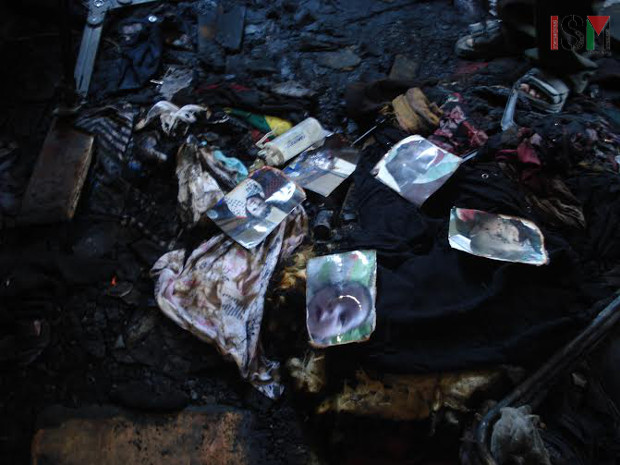
Since the end of the last Zionist massacre against Gaza there have been 1312 reported attacks against Gazan fishermen.
Since then, 22 boats have been stolen; 26 fishermen have been injured; one fisherman, Tawfiq Abu Riela, has been assassinated; 28 boats have been disabled by bullet fire; 2 big fishing boats have been sunken by rocket fire, one in Deir El Balah at 300m from the coast and one in Gaza City at 5 miles; 51 fishermen have been kidnapped while working and 3 fishermen remain prisoners until now.
The team in Hebron has reported an increase of night raids by Israeli forces and attacks by illegal settlers, which is terrorizing Palestinians living in Hebron. Two days ago, on August 20th, a group of French extremist Zionists intimidated and attacked international activists and local Palestinians. This group of extremists, called Kahane, which is considered a terrorist organization under Israeli law, was received with signs of sympathy by the soldiers.
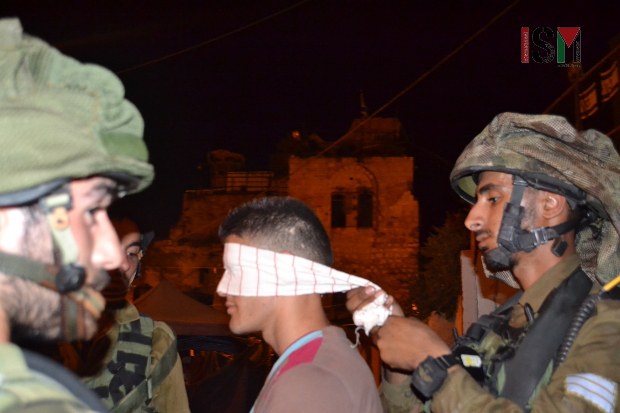
At approximately 5:00 am, on Wednesday, August 19, the homes of the Totah and Totanji families were demolished by the Israeli army in the neighborhood of Wadi al Joz, in East Jerusalem. This neighborhood has been under threat of demolition since December, 2014, despite the fact that there are no accountable papers presenting a demolition order, nonetheless, the army has been slowly carrying out this plan. Neighbors live in constant fear that anytime their homes will be torn down.
In very similar conditions, the village of Susiya has been suffering from enormous fear by the threat of mass demolition orders issued by the Israeli government since 2012.
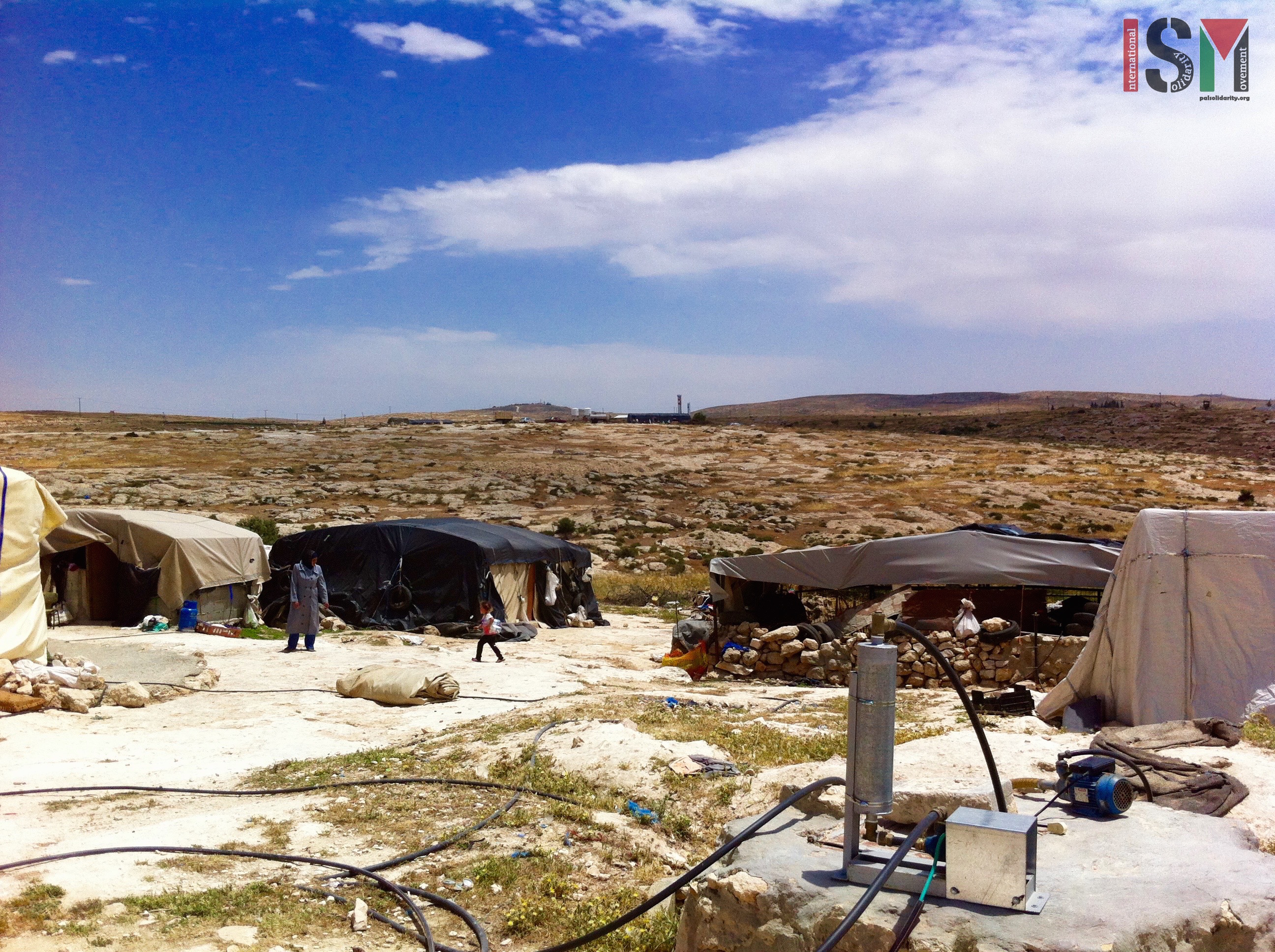
ISM also needs volunteers to join the 2015 olive harvest campaign.
ISM volunteers join Palestinian farming communities each year to harvest olives in areas where Palestinians face settler and military violence while working their land. Your presence can make a big difference, with Palestinian communities stating that the presence of international volunteers reduces the risk of extreme violence from Israeli settlers and the Israeli army.
The olive tree is a Palestinian national symbol, and the Israeli military systematically prevents agricultural fruition, in order to make life for Palestinians more difficult. The Israeli occupation provides a platform for Palestinian rights to be violated in an array of ways; the attack on agriculture is at the forefront.
Already documented this year, and to list a few cases; the trees have suffered settler sewage runoff , sabotaging fires, and being uprooted. Olive trees comprise of an essential 14% of the Palestinian agricultural economy.
We support Palestinians’ assertion of their right to earn their livelihoods and be present on their lands. International solidarity activists engage in non-violent intervention and documentation and practical support, which enables many families to pick their olives.
The campaign will begin during the last week of September and will last around 5 weeks. We request a minimum one week commitment from volunteers, but stress that longtermers are needed as well. We ask that volunteers start arriving around the 20th of September, so that we will be prepared when the harvest begins.
Training
We request a minimum two week commitment from volunteers, but stress that longtermers are needed as well. The ISM will be holding mandatory two day training sessions which will run weekly on Wednesdays and Thursdays. Please see the join ISM page or contact palreports@gmail.com for further information.
Florida Man Arrested in FBI/ISIS-Inspired Plot to Bomb a Beach
By Peter Van Buren | We Meant Well | August 21, 2015
 So you be the judge: which organization, the FBI or ISIS, had more to do with this supposed “threat” to the “Homeland”?
The FBI has arrested a man who allegedly wanted to detonate a bomb in what authorities describe as an ISIS-inspired terror attack, officials said.
Harlem Suarez, 23, of Key West, Florida, (pictured, and do note the Batman T-shirt) has been charged with attempting to use a weapon of mass destruction in the United States.
So Terrorist Suarez first came onto the FBI’s radar in April, after he posted whatever “extremist rhetoric” and pro-ISIS messages are on Facebook, according to the Justice Department. Facebook, yep, everything people post on Facebook is serious sh*t, man, no boasting or false bravado online, ever. Everybody always means exactly what they say.
Anyway, after creeping Suarez on Facebook, the FBI then sent in an FBI-employed “confidential source” who for months allegedly talked with Suarez online and in person about plans to attack the United States. Not that any of that would have encouraged or emboldened someone whose previous plans would have otherwise never left his bedroom.
In May, according to the FBI, Suarez recorded his own video, declaring: “We will destroy America and divide it into two. We will raise our black flag on top of your White House and any president on duty.”
Nice touch– “any president on duty.” Man, Suarez was obviously well-informed.
The FBI said that in subsequent meetings with the FBI informant, Suarez discussed plans for an attack around the July 4 holiday and said he would “cook American in cages” — an apparent reference to the ISIS video of a captured Jordanian pilot being burned alive while in a cage.
Last week, Suarez allegedly gave the informant two boxes of nails, a cell phone, a backpack and $100 to build a bomb. In the most recent discussions, Suarez talked about bombing a public beach in Key West and placing explosive devices under police cars, according to charging documents filed by the FBI.
Note that without some actual explosive material and the knowledge to build a bomb without first blowing yourself up (yeah, yeah, it’s all online, but so is a lot of stuff. Reading stuff online and actually safely handling explosives and ensuring they work remotely is a whole ‘nother story.)
And seriously, a backpack bomb, is that really a weapon of mass destruction?
Also note that at no point was anyone in America in danger in any way whatsoever.
“There is no room for failure when it comes to investigating the potential use of a weapon of mass destruction,” said Special Agent in Charge George Piro, head of the FBI’s Miami Field Office.
The New “Steps Towards Democracy” in South Korea
By Konstantin Asmolov | New Eastern Outlook | August 22, 2015
On July 15 2015, the police of the Republic of Korea in Seoul raided the office and residence of members of the civil movement, “Korean Alliance”, (in Korea – the association for independent reunification and the development of democracy), who advocate the expansion of ties with the DPRK. This organization was created in November 2011 to implement the independent reunification of the two Koreas without external influence. It demands the withdrawal of foreign troops (read – the US, because there are no others) from the Korean peninsula and advocates the abolition of the National Security Law (NSL), which (among other things) prohibits citizens of the Republic of Korea, any unauthorized contact with North Koreans and actions to support the DPRK.
According to law enforcement officials, the movement is suspected of “promoting North Korean ideology and actions in support of Pyongyang.” About 100 police officers went to the movement’s offices in order to seize documents for the investigation.
According to investigators, members of the movement, which the authorities consider “anti-government“, repeatedly published messages indicating a positive attitude towards the North Korean regime on the Internet, as well as organizing public events against the NSL. Furthermore, in 2013 during a stay in Germany, one of the members of the movement allegedly attended a seminar organized by the pro-North Korean group and was in contact with officials from the DPRK.
In addition, the chairman of the organization was the late pastor, Pak Chan Kyung, who, according to secret service agents, was previously deputy chairman of the pro-North Korean, organization “Korean Association for the Reunification of the Motherland.”
Its members are holding protests, calling for a stop to the investigation, but the chances of getting away with this are very slim. After all, at the same time the law-enforcement system in South Korea has taken “an important step toward democracy.” This entails the decision by the Constitutional Court on the issue of whether possession of North Korean literature is a political offense subject to proceedings under the Law on National Security. In comparison to the ban on the United Progressive Party, against which only one judge out of nine spoke up, the number of those voting “against” has risen to three, yet the ruling has been passed.
The decision was made in connection with the appeal by Hon, who was accused by the court of Suwon of violating the National Security Law. He was counted as belonging to the “anti-state organization” on the grounds that memoirs of Kim Il Sung were found on the hard drive of his computer, but he filed a protest, claiming that he held such materials to “better know the enemy.”
The court judgement confirmed that the NSL is vital in curbing social unrest, and necessary to ensure public safety and freedom by preventing actions that could lead to a violent regime change. Moreover, according to the Court, these restrictions did not violate freedom of speech. Of course, they could be used to suppress political opposition, but this should be separated from pro-North Korean activities. Such bans are precautions against possible social instability achieved by means of illegal protests.
As stated by the judges in their verdict, “given the current circumstances in the country, national security is critically dependent on the law which is being proposed for review. We recognize that, currently, there is no clear and direct threat, but it is in the public’s interest to restrain these violent ideas before they gain impetus.” Therefore, the storage of materials was sufficient for prosecution. “Given the level of modern scientific and technological progress, the rapid dissemination of materials via the Internet is very likely. The law prohibits the storage of individual anti-state literature without legal authorization.” In other words, anything that is not permitted is prohibited. Even if you’re just interested in North Korea without being a patented fighter with the Communists, this poses the threat of sedition.
It is curious that such an interpretation is, in fact, the assumption that a person that stores such information is, a priori, a supporter of North Korea.
Three of the judges, however, did not agree with this interpretation: the punishment for possession alone without proof of proliferation creates a great potential for errors or violations of the law. Too much depends on the personal opinion of the investigator. It requires additional evidence that the accused distributed these materials or kept them because they held similar views.
Let’s translate this law into the language of reality. Just the mere fact that you keep a copy of “Mein Kampf” at home automatically makes you a fascist and a suspect in a series of other crimes motivated by ethnic hatred, why else would a person keep this at home? And silly talk such as “how can you study Hitler, without reading Hitler?” are just flimsy excuses; if you are not registered as an official opponent of Hitler, then you must be one of his secret supporters, and so, face criminal prosecution. In general, if we compare this case with Russian practice, we have to ask ourselves who is catching up with the Russian Federation – North Korea, or even the Republic of Korea?
In this context, one cannot but recall the textbook for North Korea’s lawyers, issued by the Ministry of Public Security (i.e. by the ordinary, detective police) of North Korea in 2009. The book contains a great number of examples of various offenses, including an example very similar to the aforementioned, right up to the prescribed punishment.
Finally, here’s more recent news from July 31, 2015. The Constitutional Court has recognized the legitimacy of the Republic of Korea’s Law on the election of officials, which requires Internet users to use their real names during the electoral period. This relates to paragraph 6 of Article 82 and paragraph 1 of Article 261, which requires the user to specify their real names if they want to express opinions about political parties or candidates for leadership positions. For violation of these requirements, fines of up to 10 million Won, or 8.5 thousand Dollars are enforced. This requirement is effective only during the election period, because, according to the decision of the Constitutional Court dated August 23, 2010, the collection of users’ personal information when working with the Internet violates the constitutional rights of citizens. Thus, the 2007 requirement of the identification of Internet users was lifted, so as to prevent the interference with freedom of expression on the Internet.
Today’s decision by the Constitutional Court came in response to a complaint filed in 2013 by Daum, the web-portal whose headquarters are on the island of Jeju. The Jeju Provincial Electoral Commission fined the portal for breach of compliance with the requirement to indicate the real names of users during the 2012 presidential election. The Portal administration felt that this requirement was contrary to the decision of the Constitutional Court from 2010. Meanwhile, five of the nine judges found no violation of the law requiring users to indicate their real names. Especially, since it does not reveal the individual’s full personal information and is valid only during the election period. The other four judges considered that the requirement was unconstitutional because it required online-voters to disclose personal data, even if only for a limited period.
Here we should note the following: the Internet in South Korea is already only provided with passport identification. To register on a forum or to perform any transaction, it is necessary to submit a unique identification number. But here we are talking about the compulsory disclosure of personal data in any attempt to discuss politicized issues. Obviously, it’s not just for the sake of combating Internet trolling (which is usually cited to justify abolishing anonymity), but, so the state security organs could easily identify anyone whose thinking does not coincide with “the party line.”
This is an obvious crackdown. How it interfaces with the internal policies and whether it is possible, in this context, to say that conservative circles are regaining their former influence in the Republic of Korea will be in one of our forthcoming articles.
Konstantin Asmolov, PhD (History) is a Senior Researcher at the Institute of Oriental Studies of the Russian Academy of Sciences.
Kiev ordered deployment of ‘illegal & inhumane’ anti-personnel mines – ex-Ukrainian officer
RT | August 22, 2015
Kiev has been deploying anti-personnel mines in Donbass in breach of Ukraine’s own laws as well as international treaties, claims a former high-ranking Ukrainian officer and chief of the engineering service, who refused to obey the “illegal” and “inhumane” order.
In February 2014 Vadim Yatsulyak served as chief of the engineering service of the Interior Ministry of Ukraine, before being appointed as a commander of the Army Corps of Engineers of the National Guard. According to him, one of the first orders he was given in his new role was to receive a supply of anti-personnel mines from military warehouses, that would be later deployed throughout the territory of the so-called “anti-terrorist operation” to reinforce Ukrainian army positions.
“I was given, to put it mildly, inhumane or in legal terms unlawful orders by my superiors,” Yatsulyak told Russian tabloid Komsomolskya Pravda (KP) daily. “The deployment of anti-personnel mines in particular.”
Yatsulyak explained he was basically told by phone to accept the delivery of OZM-72 and MON-50 munitions and sign for it, while superiors would “stay aside assuming no responsibility.”
Refusing to implement the order, he notified his superiors, going as far as sending letters to the Minister of Defence, Ukraine’s parliament, and even the president, but “never received a single reply” to more than 85 complaints which he had sent to various ministries and officials. Eventually Yatsulyak was sacked as “unfit” for the position, and later left the country.
Even though he was never ordered to actually install anti-personnel mines, Yatsulyak speculates that Kiev eventually circumvented the law to deploy them, given the number of reports of deadly mine explosions in Donbass.
An order for the transition of “engineering munitions” such as mines between the Ministry of Defense and the National Guard would be coming “very high level,” and if properly documented would leave a trail of paperwork, Yatsulyak says. But he does not rule out that the papers could have been destroyed to cover the tracks of the perpetrators.
OZM-72 are Soviet manufactured bounding mine type anti-personnel mines, that according to now retired colonel, “jumps to a height of one meter and strikes manpower within a radius of 25-30 meters.” These mines can be activated by a number of fuses, but they are most commonly fitted with a booby trap switch which is activated by a tripwire.
The MON-50 is a directional type of anti-personnel mine that is deployed to wound or kill by explosive fragmentation. It is mounted above ground level on the surface or in trees to give the greatest dispersion of fragments and impact radius.
Both mines are illegal under the international Ottawa Treaty, as they can be indiscriminately activated potentially by non-combatants.
Ukraine signed the so-called Mine Ban Treaty in 1999 and ratified it in 2005. Kiev’s deadline to destroy anti-personnel mines stockpiles passed on 1 June 2010, but as of 2015 over 5 million anti-personnel mines remained in its warehouses.
In its technical briefing note released in April this year, Human Rights Watch (HRW), reviewed the types of landmines documented in the Ukraine conflict since early 2014, specifically focusing on antipersonnel mines.
“While it is clear that antipersonnel mines were used on a limited and localized scale, it is not possible at this time to concretely determine the responsibility of any party for using antipersonnel mines,” HRW concluded.
But as reports of their use in Donbass region keep surfacing, experts interviewed by RT seem to agree that anti-personnel mines could have easily been deployed by Kiev’s forces.
Yatsulyak’s allegations are “plausible” professor of politics at the University of Rhode Island, Nikolai Petro, told RT. “There have been prior suggestions by international organizations that watch over the placement of such mines, that they are being used in this conflict, so it is certainly possible.”
Although the Ottawa Treaty does offer “an exception” for the use of these weapons in the “state of war” and “specific combat situations,” Petro pointed out this is not the case, because “this is essentially a civil war, internal battle.”
Even Kiev itself keeps referring to its military operations in the east of the country as an “anti-terrorist operation,” which according to the country’s own laws must performed by anti-terrorist units of the Interior Ministry without the participation of the army.
Implementing illegal munitions, Petro says, would suggest that Kiev is not planning to “exert control over that area” and expects it to fall into “enemy hands.” Such a plan to “give up” on the region would certainly raise a debate in Ukraine, but Petro does not expect the official reaction to go beyond assurances that “the matter is under investigation.”
Indeed, the Ukraine National Guard press service told RT that “as of yet [they] can neither confirm, nor deny this information,” adding that they first “need to check the documents issued at that time.”
Featured Video

Why the U.S. Should Pull Back From the First Island Chain
or go to
Aletho News Archives – Video-Images
From the Archives
Only 19.7% of Americans agree with US State Dept on Israeli settlements
… Most American adults of voting age don’t appear willing to reject the applicability of international law to Israel’s ongoing colonization of occupied territories in East Jerusalem, the West Bank and Golan Heights. … Full article
Blog Roll
 Aletho News
- British Government Employees Were Fact-Checking the News at the BBC. Nobody Told You.
- Albania on fire: who’s behind the riots?
- Egypt’s Civil Democratic Movement rejects involvement in regional war
- Egypt collaborates with Israel to build ‘Green Rafah’ project over erased Palestinian city
- Rising fuel prices and shortages have helped drive ongoing protests and rioting in France
- Tokyo protests demand Takaichi’s resignation over support for ‘Israel’
- Jennifer Kavanagh: Why the U.S. Should Pull Back From the First Island Chain
- Yemen denounces international community’s silence on Saudi aggression, siege
- UAE and Saudi Arabia move toward renewed coordination against Sanaa
- How Iran’s two-week retaliatory strikes exposed cracks in US military architecture in Persian Gulf
- If Americans Knew
- More on how Bari Weiss is using CBS on behalf of Israel
- What the UK Is Doing to Pro-Palestine Novelist Sally Rooney Is an Act of Orwellian Villainy
- ‘We will build palaces for Jews in Gaza’: Right-wing activists establish new outpost near border
- ‘You see us burning, you stay silent’: Family’s agony over mother and sons burned to death in Gaza tent
- Israel keeps Palestinian journalist Bushra al-Tawil in isolation for 46 days
- US-Israel integration plan puts US military tech in Israel’s hands
- Israeli Strike Burns Gaza Mother Alive in Front of Toddler, ‘Without Generating Any Headlines’
- ‘The Israel Experience with Mike Huckabee’: The Ambassador’s Family Sells Trips to Israel
- As Gazans carry out mass burial, food insecurity is getting worse – Daily Update
- Israeli rabbi permits occupiers to steal Palestinian olive harvest in West Bank
- No Tricks Zone
- Predictions Made By Renowned Climate Proifessor Over Past Decades Have Been Proven To Be Poor
- New Study Suggests Large Regions Of The Pacific Ocean Have Been Cooling For The Last 80 Years
- Germany’s Green Energy Debacle: High Energy Costs Force Kahla Porzellan to Close After 182 Years!
- New Study: 50 Years Of The Most Aggressive ‘Net Zero’ Policies Can Only Affect The Global Climate By 0.03°C
- US September “Heat” Was No Record…Many Records Set Decades Ago
- Latest European Green Energy Debacle; Portugal’s Largest Flagship Solar Park Insolvent!
- Green Energy Debacle: German Expert Professor Fritz Vahrenholt Warns Of Severe Economic And Social Consequences
- Two More Paleo Reconstructions Affirm Meters-Higher Sea Levels Across Ireland, Brazil 7000-6000 Years Ago
- New Study: Earth And Venus Surface Warmth Largely Explained By Convection And Lapse Rate, Not CO2 Or Radiation
- 2025 Nature Paper Claiming Worsening Global Drought Gets RETRACTED …Heavily Flawed

