How Palestinians Die in The NY Times
By Barbara Erickson | TimesWarp | June 17, 2015
Abdullah Iyad Ghanayim, 22, died under an Israeli army jeep last Sunday in the West Bank village of Kafr Malik. The New York Times barely took notice. Other news media inform us that there is a story here and one that is in dispute.
Eyewitnesses in the village east of Ramallah say soldiers shot Ghanayim in the back and then ran him down with a jeep, crushing him against a wall, which collapsed on the vehicle and knocked it over. The soldiers got out, observers say, left the man pinned under the jeep and prevented medics from attending to him.
According to witnesses, Ghanayim was throwing stones when he was shot and bled to death after being left unattended for more than an hour. The mayor of Ramallah, Laila Ghannam, told reporters that soldiers killed Ghanayim “in cold blood.”
The Israeli army had a different story: Ghanayim was throwing a Molotov cocktail at the jeep, and this caused it to swerve and crash. After the vehicle turned over on the victim, the army claimed, “forces later entered the village to try and provide medical assistance,” but the man had already died.
In spite of the army’s failure to explain why “forces” had to enter the village to provide aid when soldiers were already present, The New York Times goes with the army account. This appears in the form of a three-paragraph Associated Press story, which made an obscure and fleeting appearance online and none at all in print. The article gives a brief nod to the eyewitness accounts, saying the mayor of the village claimed the man was shot first.
It’s possible the Times was unable to assign one of its three reporters in Israel to get a firsthand account, but the paper also omitted the story from its World Briefing section, where it frequently runs AP and Reuters news.
The Times had a choice. It could have run a Reuters story by Ali Sawafta and Dan Williams, which states in the lead that “military and locals gave conflicting accounts” and also quotes witnesses who said the man was “run down and then crushed.” Instead it chose the AP version, which relies almost entirely on the Israeli army.
We find fuller reports elsewhere, such as in The National, Agence France-Presse, and Maan, but the Times treatment falls short. It has chosen a biased wire service piece over a more complete and honest report. Thus it avoids revealing unsavory charges against the Israeli army and allows one more Palestinian death to pass unnoticed.
Eritrea, Human Rights, and Neocolonial Propaganda
By Eric Draitser | New Eastern Outlook | June 17, 2015
 The East African country of Eritrea is once again being demonized internationally as a systematic violator of human rights. The United Nations Office of the High Commissioner for Human Rights (OHCHR) has issued an allegedly damning report detailing what it claims are “systematic, widespread and gross human rights violations” taking place in Eritrea. Media coverage has similarly echoed those claims, presenting Eritrea to a western audience as a backward and “brutal dictatorship,” playing on the traditional stereotypes of totalitarianism from East Germany to Stalin’s Soviet Union.
However, a closer and more critical analysis of both the report, and the true agendas of the western institutions promoting its narrative, reveals a vastly different motivation to this report and the continued anti-Eritrean narrative. It could be called politically motivated propaganda, and that would be correct. It could be called a distorted and biased perspective rooted in fundamental misunderstandings of both politics and history, and that would also be correct. It could, quite simply, be called abject neo-colonialism of the worst sort, and that too would also be correct.
For while the UN and western media portray Eritrea – a country most westerners know nothing about, if they’ve ever even heard of the country at all – as little more than a “Third World dictatorship” because of its alleged violations of human rights, they conveniently ignore the actual human rights issues that Eritrea champions, making it a leader on the African continent, and a country that in many ways should be held up as a model of human development and adherence to true human rights.
Eritrea leads the way in Africa on issues ranging from the prevention and treatment of malaria, HIV/AIDS and other preventable diseases, to access to clean drinking water, literacy promotion, and countless other issues. But none of this is deemed worthy by the UN for inclusion in a report about “human rights.”
This is of course not to suggest that Eritrea, like every other country in the so called “developing” and “developed” worlds, is without problems, as that would be simply false. Rather, it is to note that a truly objective report that actually sought a substantive analysis of human rights in Eritrea, rather than a politically motivated propaganda campaign, would have revealed a country busy transforming itself and its people, leaving behind the decades of colonial oppression and subjugation, beating an independent path for itself.
But of course, this is the gravest sin of all in the eyes of the western ruling class and the institutions it controls. Abject poverty, malnutrition, illiteracy, death from preventable diseases, and many other hallmarks of African underdevelopment – these are all fine in the eyes of the West, so long as you follow their IMF, World Bank, UN rules of the game; so long as you “respect opposition,” “respect democracy,” and act “inclusively.” But, when a country chooses to create its own system, and pursue its own national development (white neocolonial opinions be damned), it is immediately cast as the great villain. So too with Eritrea.
But don’t take my word for it. Let’s look at the facts.
The UN Report: A Critical Look
The UN OHCHR report presents a vision of Eritrea that is, in many ways, at odds with reality. While forms of political repression and non-conformity to western conceptions of democracy are highlighted and repeated ad nauseam, other critical aspects of human rights are entirely ignored. Moreover, the UN report was limited in its scope because of lack of access to the country, thereby forcing the report to rely exclusively on the testimony of expatriate Eritreans and those with an obvious political bias and grudge against the government of Isaias Afewerki. So, far from being objective, the report is, by its very nature, a one-sided portrayal of the situation in the country. The report notes:
The commission finds that systematic, widespread and gross human rights violations have been and are being committed by the Government of Eritrea and that there is no accountability for them…The enjoyment of rights and freedoms are severely curtailed in an overall context of a total lack of rule of law. The commission also finds that the violations in the areas of extrajudicial executions, torture (including sexual torture), national service and forced labour may constitute crimes against humanity. The commission emphasizes that its present findings should not be interpreted as a conclusion that international crimes have not been committed in other areas.
While of course there is a shock value associated with phrases like “extrajudicial killings,” “torture,” and “crimes against humanity,” these claims need to be interrogated carefully. It is impossible to say the extent to which these claims are either wholly true, complete fabrications, or partially true embellishments concocted by expatriates with an anti-government personal and political agenda; it is not unreasonable to assume that it is a combination of all three.
However, it is useful here to ask whether countries like the United States, for instance, would also be guilty of “extrajudicial killings” and “torture” were a similar investigation conducted into the seemingly endless, dare I say systematic, police murders of American citizens, especially people of color? Or what about the now universally accepted fact – publicly acknowledged even by President Obama who blithely declared “We tortured some folks” – that the United States systematically tortured prisoners throughout the so called “War on Terror”? Or that the US continues to hold countless inmates, again disproportionately people of color, in long term solitary confinement, a common US practice decried as torture by the UN Special Rapporteur on torture Juan E Méndez of the very same OHCHR?
But of course none of these uncomfortable truths are good for the narrative of “backwards African dictatorship,” and therefore, they are not part of the story. Nor does the report define exactly what it means by “national service.” However, those with knowledge of Eritrea’s domestic policies, which is almost no one in the West, understand that “national service” especially includes national military service, a practice used by many countries, including the US darling Israel, among many others.
Of course, it would be wise to here make the distinction that, unlike the apartheid state of Israel which uses its military for the purposes of oppression and occupation, Eritrea fought a protracted and bloody war against the former colonial masters in Ethiopia, having had ongoing military conflicts with their neighbor for nearly the entire, short existence of Eritrea as an independent nation. With a relatively small population and, proportionately speaking, a long and porous border with a hostile nation with a history of subjugation of Eritreans, it is not at all unreasonable to have a robust military apparatus fueled by mandatory military service.
One should also recall the way in which such reports, and brazen distortions, have been used by the UN and the OHCHR in the recent past. In perhaps its most shameful moment in recent history, the former High Commissioner Navi Pillay was instrumental in building the justification for the disastrous, illegal, and blatantly neocolonial, imperialist war against Libya. Pillay actually took the lead in disseminating anti-Gaddafi propaganda in the first weeks of the destabilization campaign, making her the leading edge of the propaganda assault, lending her reputation and position with the UN in order to bolster the anti-Gaddafi narrative. In late February 2011, Pillay stated:
More needs to be done. I encourage all international actors to take necessary measures to stop the bloodshed… thousands may have been killed or injured over the past week… Although reports are still patchy and hard to verify, one thing is painfully clear: in brazen and continuing breach of international law, the crackdown in Libya of peaceful demonstrations is escalating alarmingly with reported mass killings, arbitrary arrests, detention and torture of protestors… Tanks, helicopters and military aircraft have reportedly been used indiscriminately to attack the protestors… The Libyan leader must stop the violence now… Libyan forces are firing at protestors and bystanders, sealing off neighbourhoods and shooting from rooftops. They also block ambulances so that the injured and dead are left on the streets.
The facts that have been gathered since the illegal aggression against Libya have all contradicted every assertion that Pillay and the OHCHR made in early 2011. As Dr. Alan Kuperman wrote in his report Lessons from Libya: How Not to Intervene, published by the prestigious Belfer Center for Science and International Affairs at the Kennedy School of Government at Harvard University:
Contrary to Western media reports, Qaddafi did not initiate Libya’s violence by targeting peaceful protesters. The United Nations and Amnesty International have documented that in all four Libyan cities initially consumed by civil conflict in mid-February 2011—Benghazi, Al Bayda, Tripoli, and Misurata—violence was actually initiated by the protesters. The government responded to the rebels militarily but never intentionally targeted civilians or resorted to “indiscriminate” force, as Western media claimed. Early press accounts exaggerated the death toll by a factor of ten, citing “more than 2,000 deaths” in Benghazi during the initial days of the uprising, whereas Human Rights Watch (HRW) later documented only 233 deaths across all of Libya in that period.
Needless to say, the credibility of the OHCHR took a major hit in 2011 with that ghastly episode of outright lying, propaganda, and service to the foreign policy agenda of the West. So too should one be skeptical of their similar distortions on issues such as Eritrea, which in many ways are similar to Libya.
In fact, it is no coincidence that Eritrea’s closest ally in the world was Libya and Gaddafi. As the US Government-funded Center for Naval Analyses wrote in a 2010 report,
“In the 1990s, Qadhafi made numerous attempts to mediate the Eritrea-Ethiopia conflict, but Ethiopian leader Meles Zenawi was uninterested in separate negotiations… Qadhafi even went so far as to propose a Sahelian-Saharan peacekeeping force, to which Eritrea agreed and Ethiopia did not. Qaddafi subsequently helped finance Eritrea’s military campaign against Ethiopia.”
It seems then that, far from being a coincidence, Eritrea is, in effect, getting the Libya treatment in terms of the propaganda and distortions.
But the real question is why? Why is Eritrea so reviled by the vaunted so called “international community”?
Eritrea’s Real Sins: Independence and Human Rights
All countries demonized by the West, attacked economically and politically, have done something to earn them the ire of the so called “liberal democracies” of the developed world. Of course, it is never the seemingly innocuous pretexts that institutions such as the UN OHCHR invoke.
First and foremost among Eritrea’s grave sins is its stubborn insistence on maintaining full independence and sovereignty in both political and economic spheres. This fact is perhaps best illustrated by Eritrean President Afewerki’s bold rejection of foreign aid of various sorts, stating repeatedly that Eritrea needs to “stand on its own two feet.” Afewerki’s pronouncements are in line with what pan-Africanist radicals, Marxists such as Walter Rodney, and many others have argued for decades, namely that, as Afewerkie put it in 2007 after rejecting a $200 million dollar “aid” package from the World Bank,
“Fifty years and billions of dollars in post-colonial international aid have done little to lift Africa from chronic poverty… [African societies] are crippled societies… You can’t keep these people living on handouts because that doesn’t change their lives.”
Naturally, such a radical departure from the tried and true cycle of financial aid and debt servitude, corruption and endemic poverty, is seen as a threat by the neocolonial establishment as manifested in the World Bank, International Monetary Fund, and other financial institutions. But the real danger is not simply the ideology, but its success. As the LA Times noted in its profile of Eritrea in 2007:
The self-reliance program began a decade ago but accelerated sharply in 2005. Relying on its meager budget and the conscription of about 800,000 of the country’s citizens, the program so far has shown promising results. Measured on a variety of U.N. health indicators, including life expectancy, immunizations and malaria prevention, Eritrea scores as high, and often higher, than its neighbors, including Ethiopia and Kenya… It might be one of the most ambitious social and economic experiments underway in Africa.
In the eight years since 2007, Eritrea has made even greater strides, becoming the only African nation to reach its Millennium Development Goals in 2015. Eritrea now boasts a roughly 98% immunization rate, incredible reductions in malaria, diarrhea, HIV/AIDS, and other preventable diseases. Eritrea has reduced infant mortality by two thirds and maternal mortality by nearly 80% since independence. Literacy rates have increased dramatically, access to basic health care, clean drinking water, and many other essential human rights have all been greatly expanded, all while accepting no foreign aid.
Christine Umutoni, the UN Resident Coordinator in Eritrea, explained that “What we see as development partners, what is responsible for this success is community participation, the enabling environment, leadership, strong mechanisms for prevention, value for money and coordinated inter-sectoral approaches.” Umutomi also added that Eritrea has put a tremendous amount of energy into developing innovative alternatives to tackling difficult health and human issues including temporary maternal clinics and mobile medical units, as well as knowledge of migration patterns and remote areas.
In other words, Eritrea has managed to rapidly, and in earnest, embark on a process of economic and social transformation that the West is constantly advocating for African nations. However, Eritrea has done it on its own terms, without being enslaved by the financial institutions of global capitalism, and that is what makes it a target for demonization rather than praise. Why, one might ask, are the human rights of the rural poor, the unborn and infants, those living in grinding poverty, not taken into consideration in the so called OHCHR report? Are human rights only restricted to a small minority of political discontents whose grievances, even if justified, are relegated to the realm of politics and speech? This is not to diminish the importance of such issues, but rather to illustrate the sheer hypocrisy of the selective use of the term.
Of course, there are also other critical political and economic reasons for Eritrea’s pariah status in the eyes of the so called “developed world,” and especially the US. Perhaps the most obvious, and most unforgivable from the perspective of Washington, is Eritrea’s stubborn refusal to have any cooperation, formal or informal, with AFRICOM or any other US military. While every other country in Africa with the exception of the equally demonized, and equally victimized, Zimbabwe has some military connections to US imperialism, Eritrea remains stubbornly defiant. I suppose Eritrea takes the notion of post-colonial independence seriously.
Eritrea also rejects the neocolonial notion that it, and Africa broadly speaking, should be little more than a cash cow of natural resources, especially mineral resources, for the developed world to exploit. Eritrea’s President Afewerki said in a recent interview:
Your location could be a comparative advantage. If you have a long coastline, then you develop fisheries, develop your services industry – shipping, transportation – air, land. Provide industry and manufacturing… Africa can produce its own food and grow more. Why aren’t we able to do that? You have to produce something. Emphasize sustainable sectors. Agriculture is a sustainable sector. You need to put in place agriculture infrastructure. It’s a strategy commodity for communities… You need to think least on mineral resources (for economic development)… Gold glitters but it blinds people… If you forgo agriculture because you have gold, you go into a trap. If you forgo comparative advantage that you have because you have gold, then you make a big mistake… Food sovereignty and local production, local manufacturing and development are more critical than depending on resource exploitation. You must have a balance, comprehensive program that takes stock of your comparative advantages in different sectors and local needs first… Local markets are everything.
Is it any wonder that Afewerki and his government are demonized by the West? What is the history of US and European behavior towards independent African leaders who advocated self-sufficiency, self-reliance, and anti-capitalist, anti-imperialist ideology? The answer is self-evident. Such ideas as Afewerki expressed in the interview are seen by Washington, London, and Brussels as not only defiant, but dangerous; dangerous not only because of what they say, but dangerous because they’re actually working.
You do not see Eritrea depending on US and European NGOs, nor do you see the major western financial institutions enslaving the country with the unsustainable feedback loop of debt and aid. Instead, you see a country steadily emerging from decades of war and oppression, building a society from the ground up. Certainly there are problems, and changes of various kinds will need to be made as with all systems as they mature and evolve. But this is not what the US and its allies want: they need Eritrea to be brought to heel. And this simply cannot and will not be accepted by Eritrea, no matter the sanctions, no matter the demonization, no matter the demagogy.
Neocolonialism comes in many forms: political, economic, social, cultural, philosophical, psychological, etc. It is undeniably true that Africa, and indeed most of the Global South, continues to be enslaved by the neocolonialism of the former colonial masters. It is also true that the neocolonial status quo is not to be challenged. Eritrea is one of the few countries doing precisely that. And it is for this reason, that it is demonized and vilified.
And it is for precisely this reason, that it must be defended.
Israeli forces raid homes in Qaryut to intimidate local activists
International Solidarity Movement | June 17, 2015
Qaryut, Occupied Palestine – In the early hours on Tuesday 16th of June Israeli occupation forces raided several Palestinian homes in the village of Qaryut, near Nablus. The soldiers invaded the homes in search of the Palestinian activist Bashar al-Sadiq Yusuf Moammar (Bashar Qaryouti).
The incident is possibly sparked by the fact that villagers of Qaryout have recently taken up weekly demonstrations, arranged by the PSCC, which Bashar Qaryouti is part of. These are demonstrations against the illegal Israeli settlements that surround the city and continue to annex Palestinian land.
Soldiers invaded at least five different houses in order to find Bashar, and trashed the family homes in the process. Abdullah Qaryouti, whose family fell victim to one of these raids, explained how this included the soldiers locking up the family in one room whilst ransacking the rest of their house using K9’s.
According to Abdullah Qaryouti this is common behaviour for the occupation forces, who invade and ruin Palestinian homes on a regular basis.
The local activists presume the most recent house raids to be part of the ongoing efforts of Israeli forces to intimidate and threaten any resident that participates in non-violent resistance.
 Bashar Qaryouti


Credit to PSCC for the photos, they do not belong to ISM.
University of Illinois Slammed with Censure Over Salaita Firing
By Lauren McCauley | Common Dreams | June 14, 2015
In a decision that may have long-lasting repercussions for the university’s reputation, a leading university group on Saturday voted to censure the University of Illinois at Urbana-Champaign (UIUC) for firing Professor Steven Salaita after he made comments critical of Israel’s attack on Gaza last summer.
The university rescinded Salaita’s tenured faculty appointment at school’s the American Indian studies program after he issued a series of Tweets condemning those who defended Israel’s military actions against Palestinians in Gaza.
“If it’s ‘antisemitic’ to deplore colonization, land theft, and child murder, then what choice does any person of conscience have?” was among the comments made last July.
The school board’s dismissal of Salaita received widespread condemnation by groups accusing the university of having a pro-Israel bias.
After its own internal investigation, at the annual meeting on Saturday, the American Association of University Professors elected to censure the institution on the grounds that the dismissal “violated Professor Salaita’s academic freedom and cast a pall of uncertainty over the degree to which academic freedom is understood and respected at UIUC.”
Such a censure “informs the academic community that the administration of an institution has not adhered to generally recognized principles of academic freedom and tenure,” the group explains.
The AAUP currently has 56 institutions on its censure list.
In January, Salaita filed a lawsuit against the school charging that it violated his First Amendment rights. According to the Associated Press,
“The censure vote came one day after a judge ordered the university to turn over thousands of pages of documents sought by Salaita.”
Following the decision, Salaita’s attorneys issued a statement calling the censure “a serious blemish on the university’s record.”
The statement continued:
The association censured UIUC not only for its summary dismissal of Professor Salaita in violation of academic freedom, due process, and shared governance, but also for its continued refusal to rectify its actions. The university’s stubbornness continues in spite of academic boycotts, department votes of no confidence in the UIUC administration, student walk-outs, tens of thousands of petition signatures, a federal lawsuit, and the AAUP’s reprimand, suggesting that the UIUC administration is more beholden to donors than it is to due process, academic freedom, and the First Amendment.”
Israeli forces try to violently suppress protest in Jalazone
International Solidarity Movement | June 14, 2015
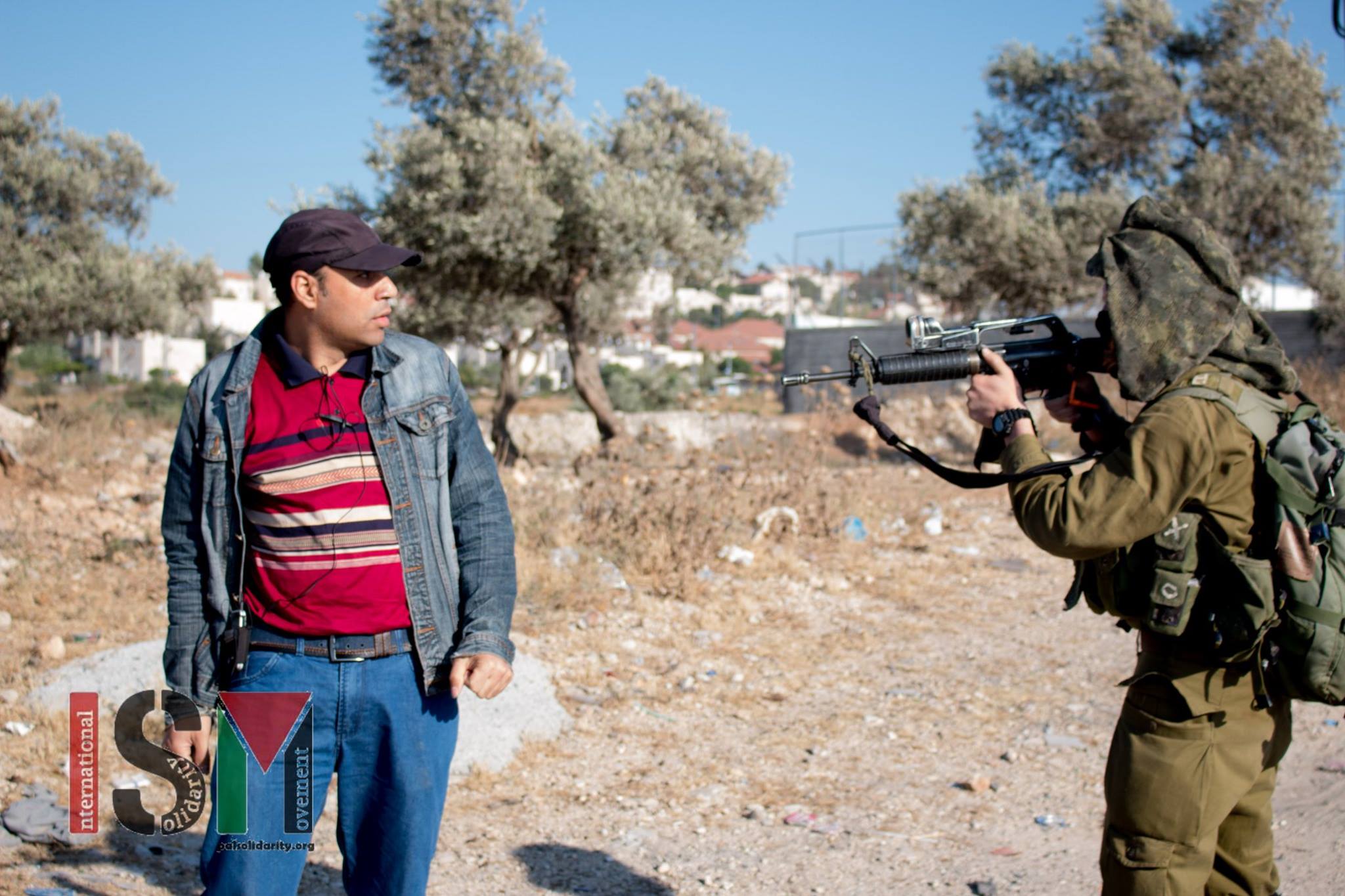
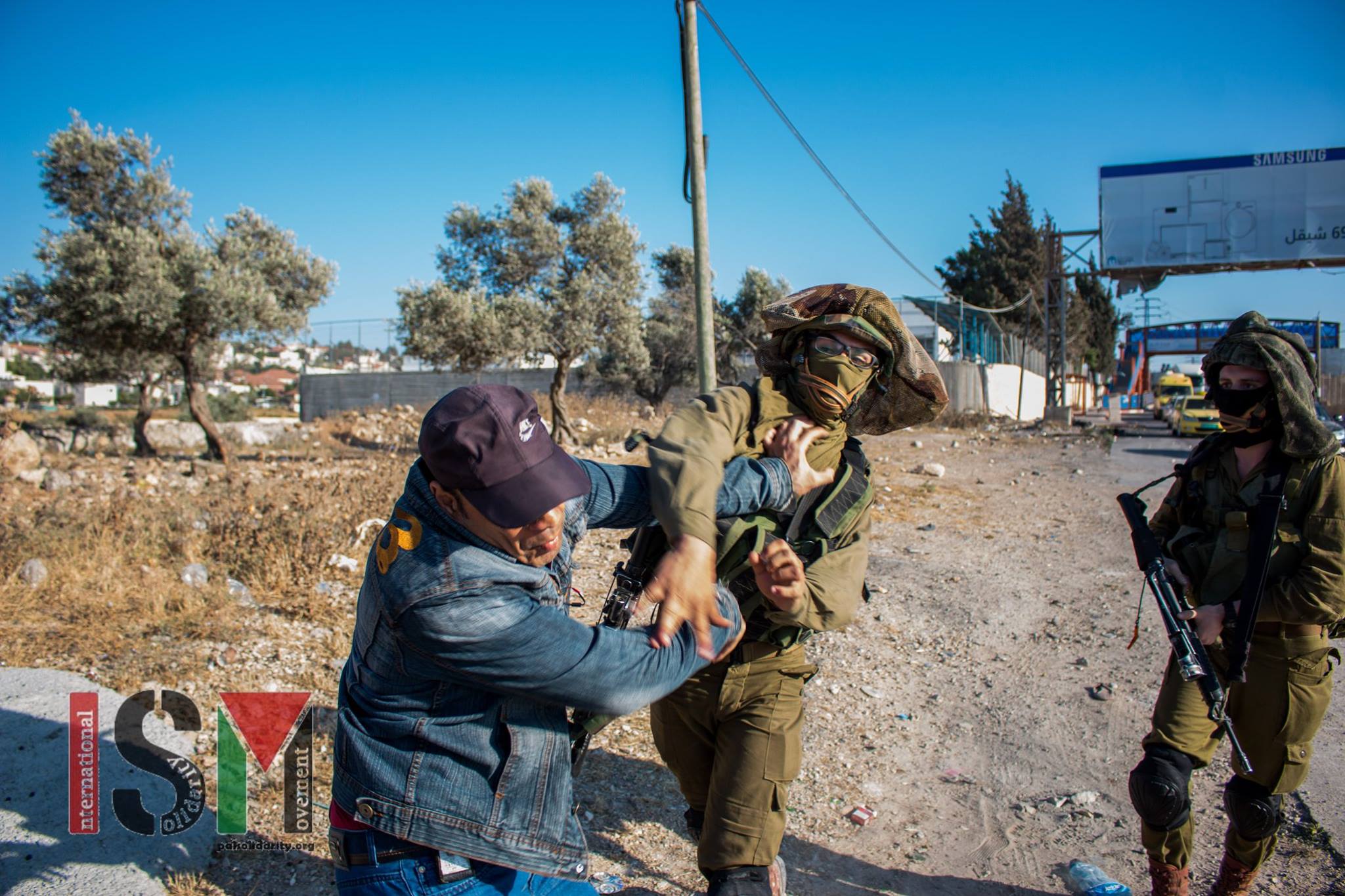
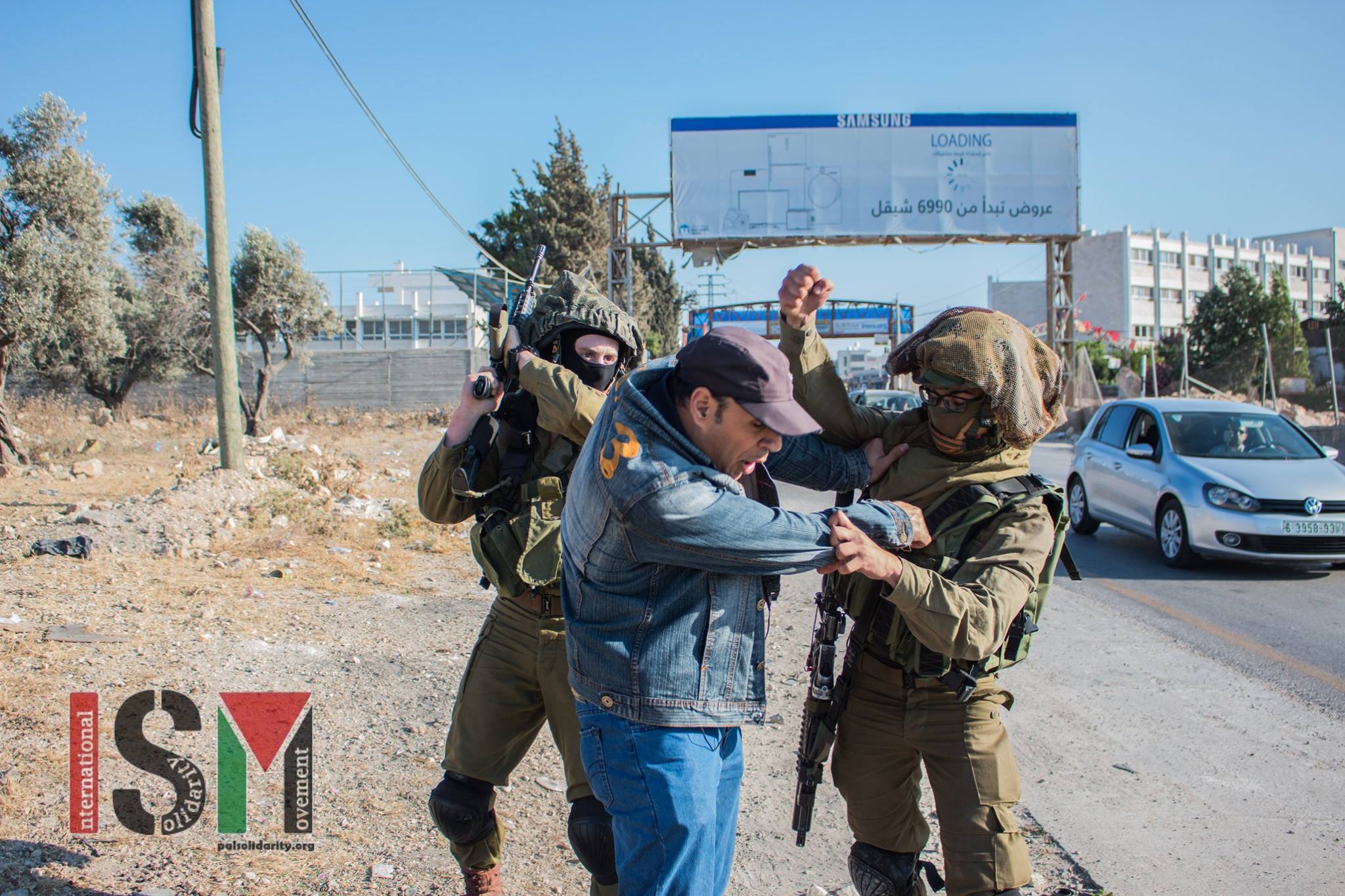
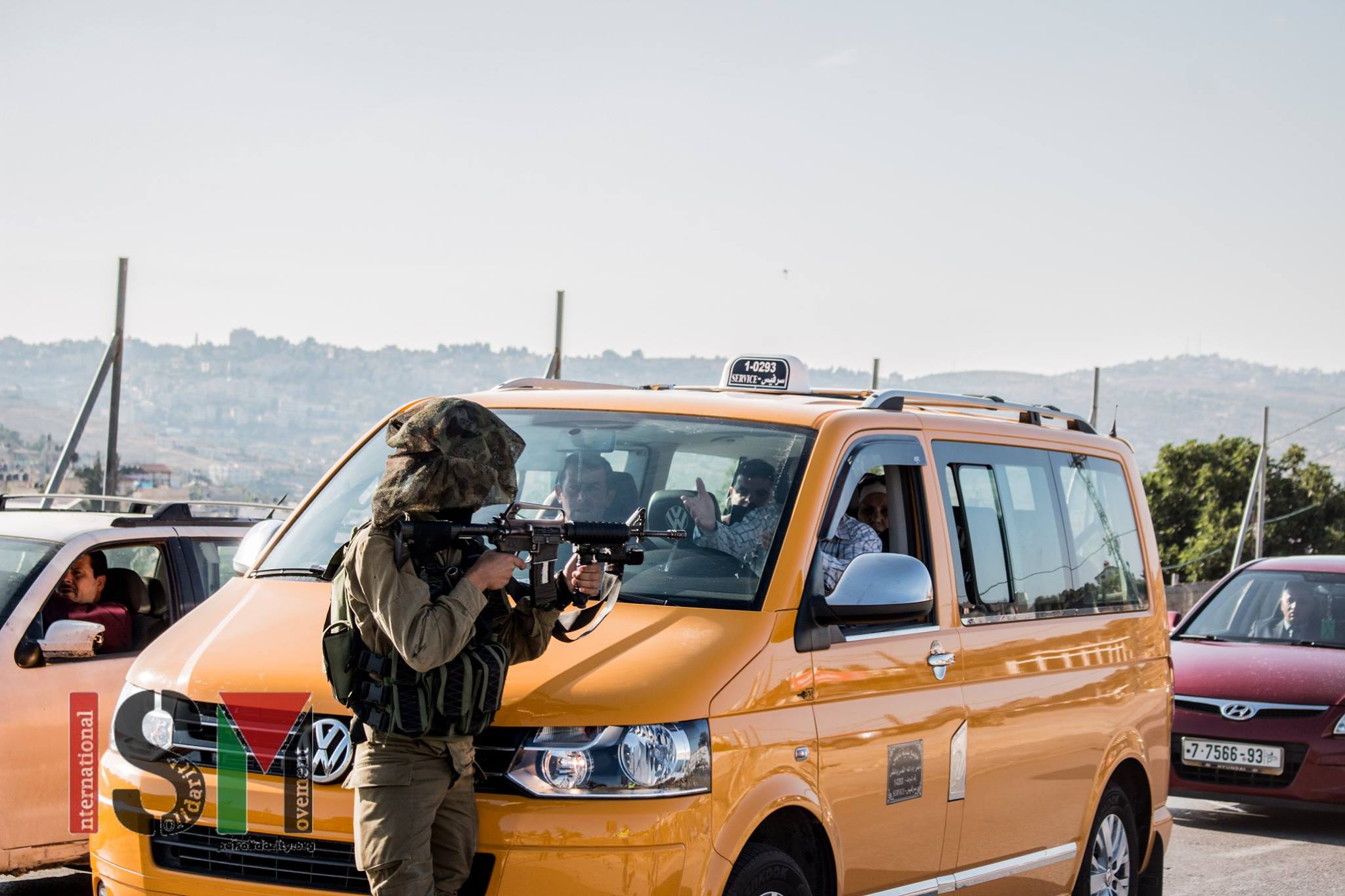
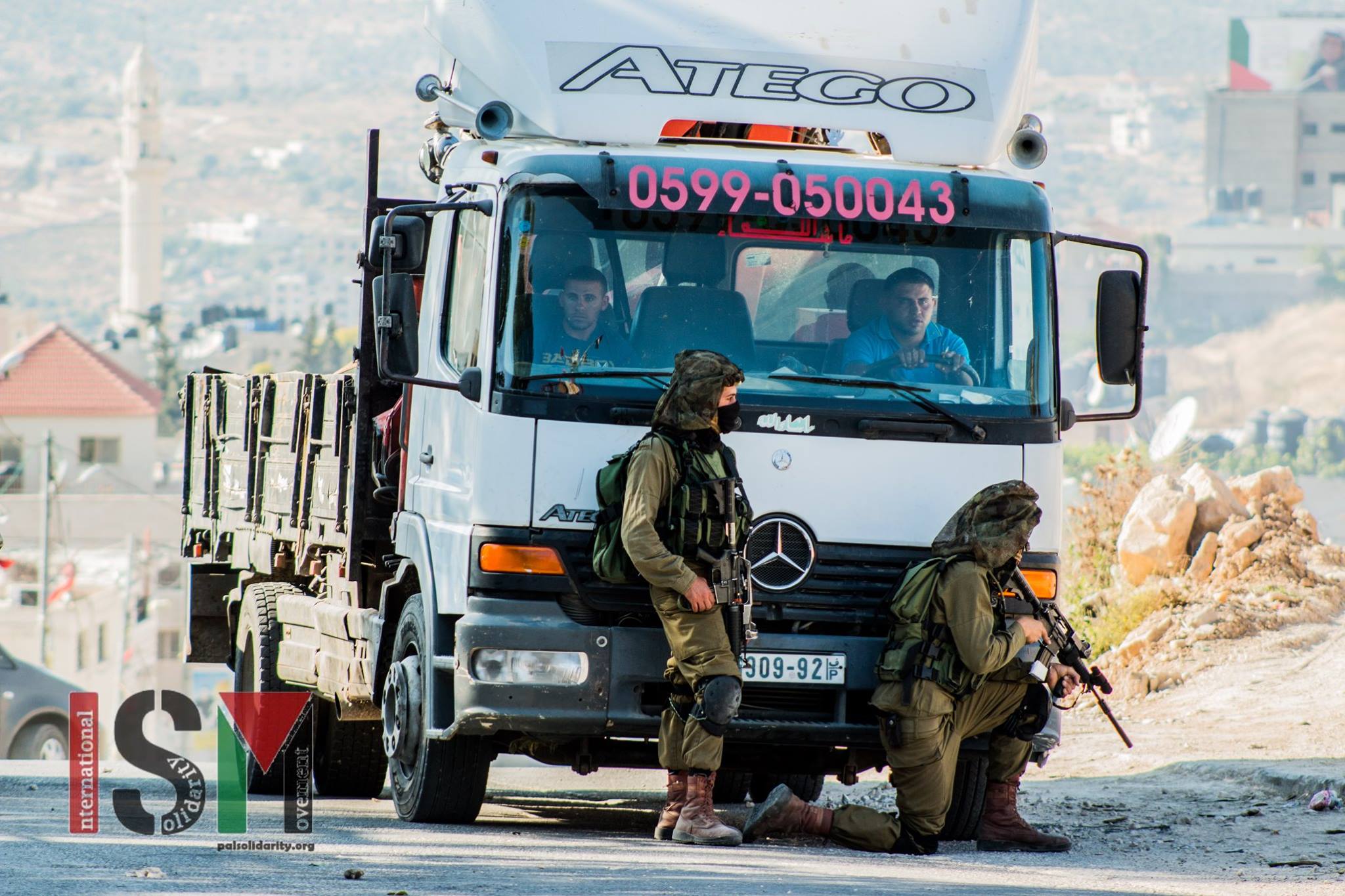
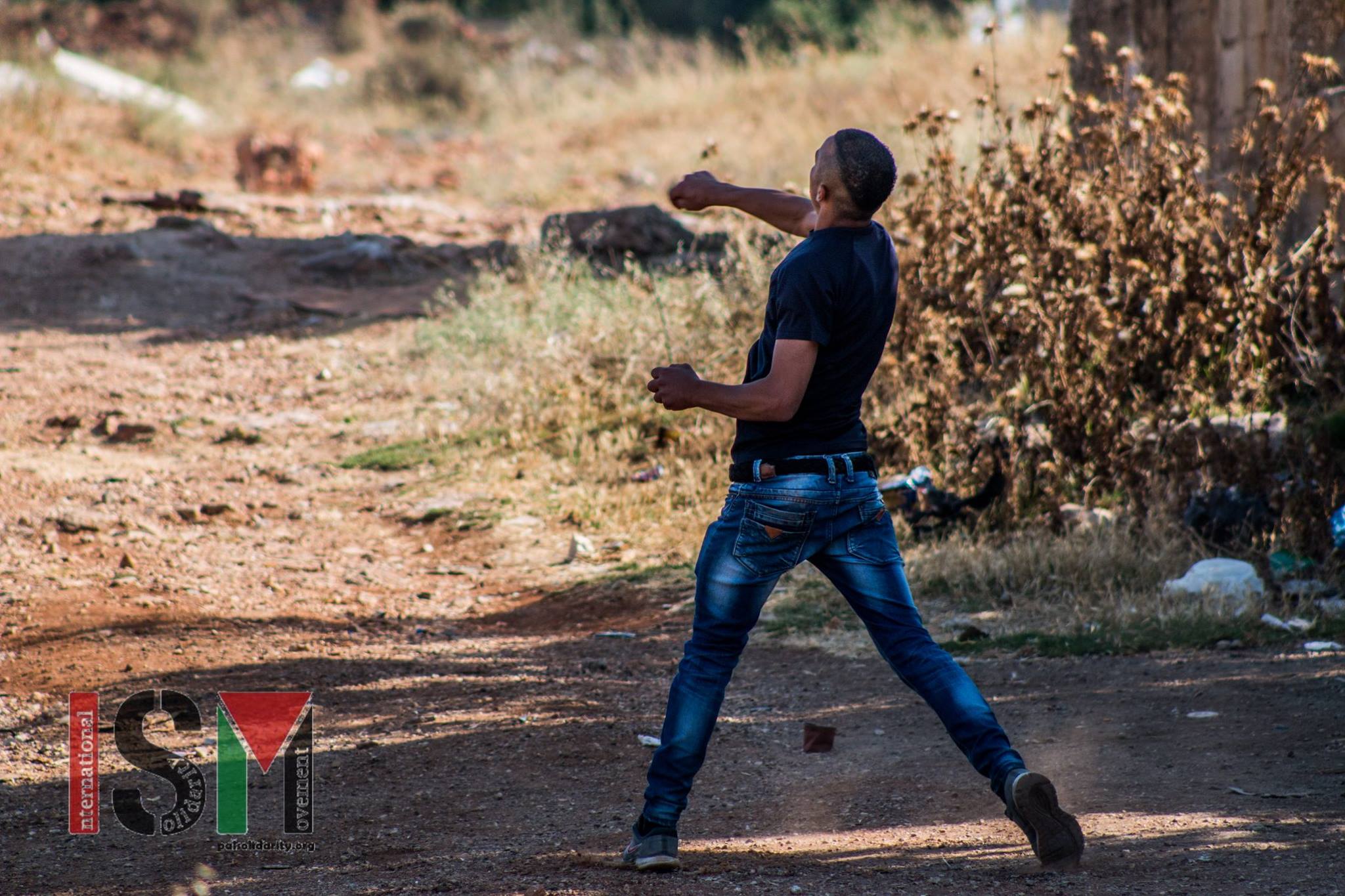
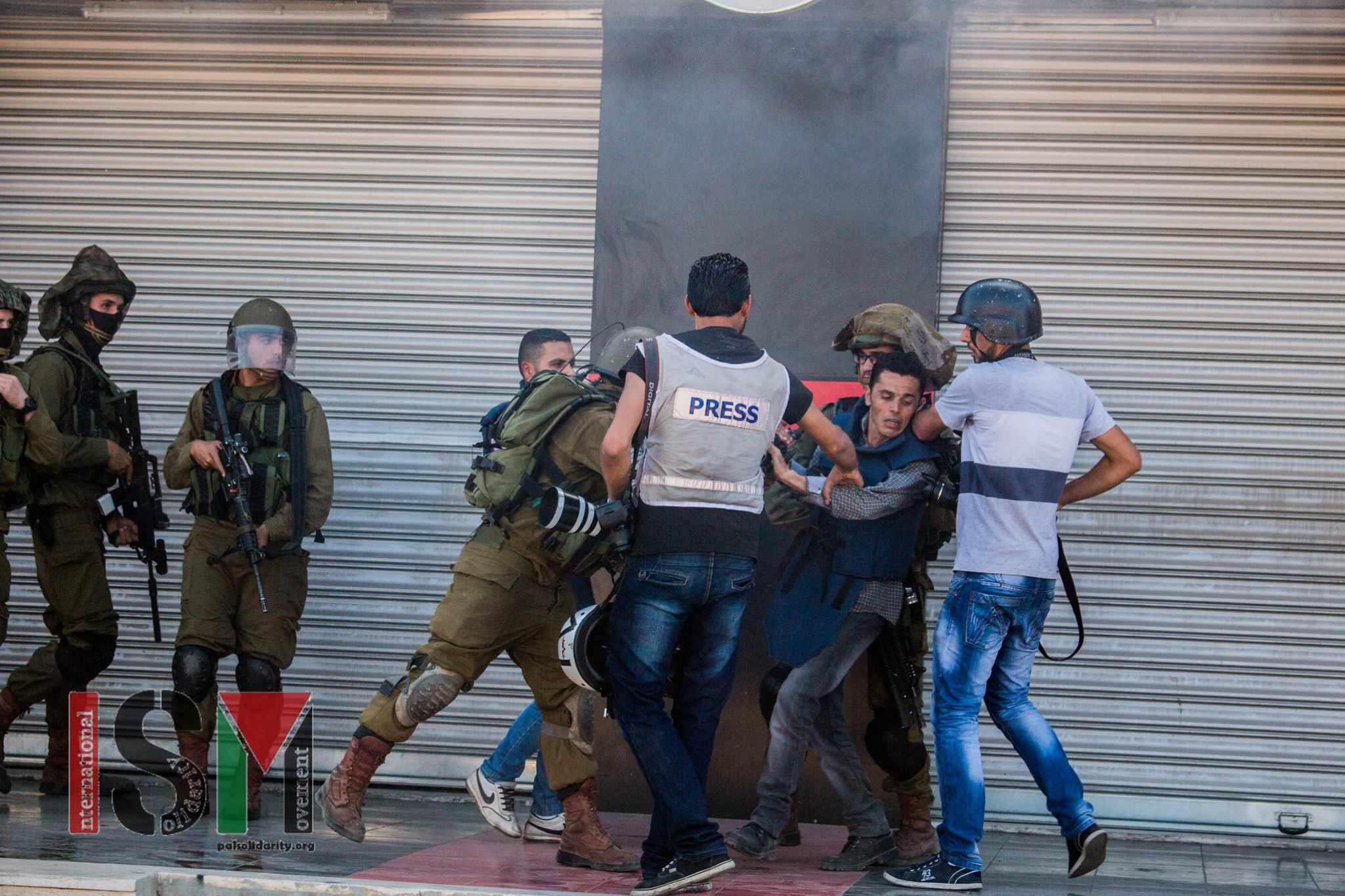
Jalazone, Occupied Palestine – On Friday, June 12, the youth of Jalazone were protesting against settlements, soldiers started shooting rubber bullets, tear gas, stun grenades and live ammunition.
The Israeli military were using the cars as shields by taking the keys and leaving the people inside. They detained more than 20 cars during the protest in different time periods.
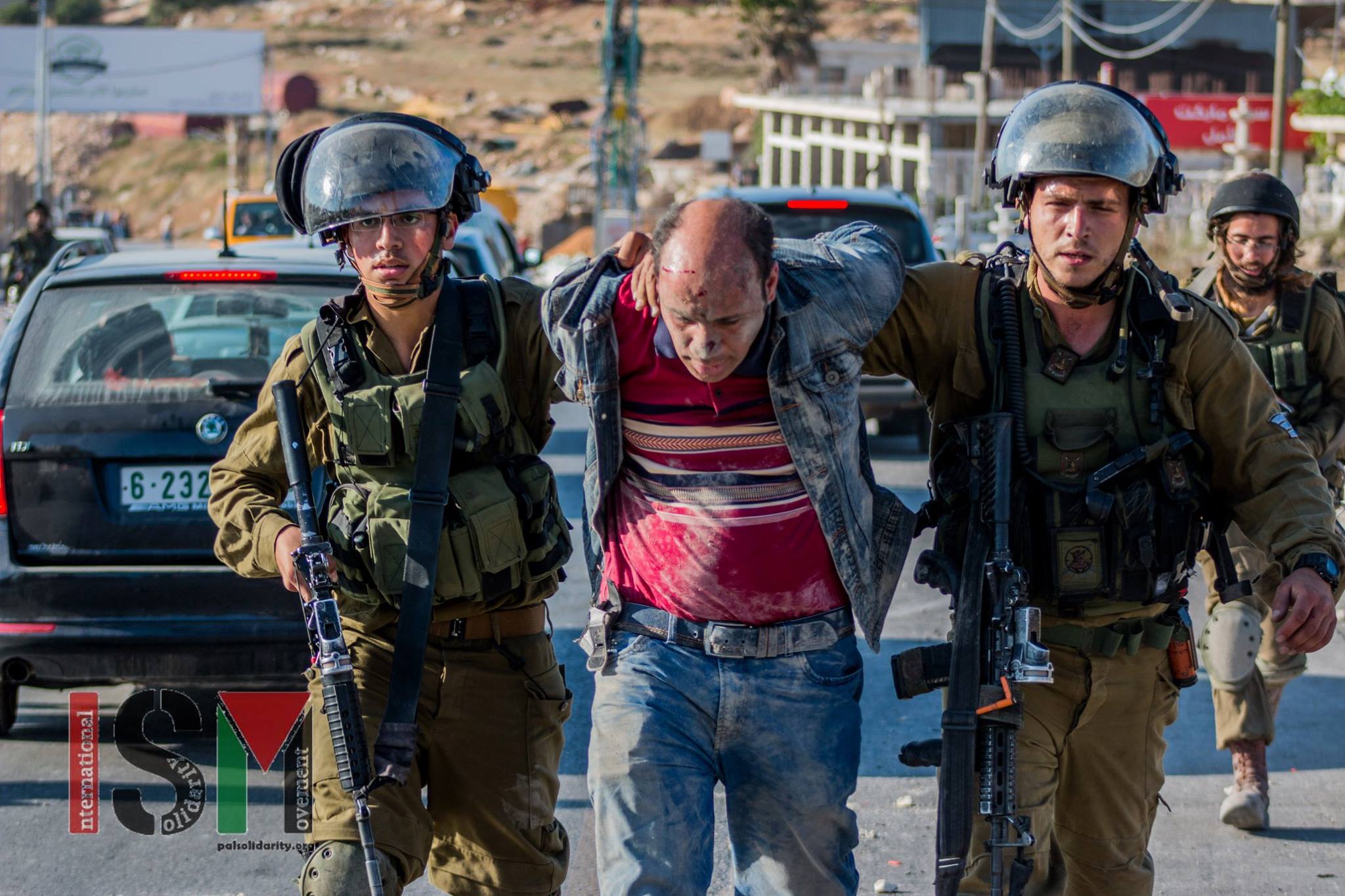
Israeli forces attacked a man and hit him with their guns before they arrested him. He was bleeding from his head.
At least three people were shot with live ammunition during the demonstration.
Below is a video recorded by ISM of the violence from the Israeli soldiers in Jalazone:
Photos below




Saudi Arabia’s Human Rights Campaign
By Daniel McAdams | Ron Paul Institute | June 9, 2015
When thinking about the protection of human rights, Saudi Arabia doesn’t immediately come to mind. After all, this year the Saudis are on course to break their own record of 87 decapitations in 2014. It is only June and the Saudi leaders have already chopped off their 84th head. Religious apostasy is a leading offense resulting in decapitation and last year half of all such killings were carried out for non-lethal offenses. According to a news report last year, bringing Christian bibles into the country is considered a capital offense.
In addition, it is illegal to build a Christian church in Saudi Arabia.
That is why it seems so strange that Saudi Arabia last week hosted an international conference “on combating religious discrimination” backed by the United Nations and attended by the president of the UN Human Rights Council. Saudi Arabia, considered one of the planet’s worst human rights abusers, is a member of the UN Human Rights Council and will take over as chair of the Council next year.
Saudi Arabia’s unique view of human rights extends beyond its borders as well. For the past three months Saudi Arabia has been bombing neighboring Yemen in retaliation for the overthrow of the Saudi-favored Yemeni leader. Yemen did not attack or commit aggression against Saudi Arabia, but thus far Saudi bombs have killed thousands of innocent Yemeni citizens. Just this week one raid killed more than 40 civilians, including women and children.
In Syria, Saudi Arabia has likely spent billions financing terrorist groups such as al-Qaeda’s Syrian franchise, Jabhat al-Nusra — and even ISIS.
How ironic that a US government that seems to go out of its way to see the splinter in the eye of other nations seems to consistently turn a blind eye to the log in the eye of the Saudi royals (and in our own too, it must be said).
Of course this is not to say that the United States should attack or even sanction Saudi Arabia. But should we promise to defend them? Just last month President Obama pledged that he would use the US military to defend Saudi Arabia and the other US “allies” in the Gulf.
Said the president:
The United States will stand by our GCC partners against external attack and will deepen and extend the cooperation that we have when it comes to the many challenges that exist in the region.
It is all about shared values and human rights.
Irish teen details abuse, threats of torture in Egypt prison
Reprieve | June 13, 2015
An Irish teenager facing a death sentence in Egypt has written a letter detailing his ill-treatment in prison, where he has been awaiting trial for nearly two years.
Ibrahim Halawa, a student from Dublin, was 17 and on holiday in Egypt when he was arrested, along hundreds of others during the military’s breakup of protests. Now 19, he faces a death sentence if convicted, and has reported mistreatment throughout his detention in Egypt, where police torture is common. He is being tried as an adult – in contravention of Egypt’s Child Law and international law – alongside 493 others, in controversial mass proceedings that have been repeatedly postponed over the past year (most recently on June 3rd).
A recent letter written by Ibrahim to his family from Wadi Natrun prison, where he awaits trial, details how:
- He is being held in a room with a glued-shut window and no access to the sun, and wakes up “every morning to the voices of other prisoners screaming from the hitting and I can hear the beatings”
- Prison official Selim Shakawy, or “the Prosecutor”, hits him if he speaks out and threatens him, including with removal to the “torture room”
- The Prosecutor has told him that the Irish government cannot help him, saying: “Let the embassy go to the minister of interior, they can’t do anything… a passport isn’t going to save me from him… he kept threatening me & said life is just going to get tougher”
- Ibrahim has decided to go on hunger strike, in protest at the repeated delays in his trial and his mistreatment
The letter marks the first time Ibrahim has been able to publicly detail his treatment since he was moved to Wadi Natrun from Tora prison, in Cairo – where he shared a cell with journalists Peter Greste and Mohammed Fahmy.
Maya Foa, head of the death penalty team at Reprieve, said: “This heartbreaking letter from Ibrahim demonstrates the complete injustice of his ordeal, and that of the hundreds detained alongside him. These are people whose only ‘crime’ was to attend a protest – and yet, two years later, they are languishing in hellish conditions, enduring terrible mistreatment, and awaiting a Kafkaesque mass trial. The Irish government and the international community must make it clear to the Sisi government that this cannot continue. Justice must be done, and Ibrahim must be returned home to his family in Dublin without delay.”

German political prisoner Horst Mahler’s latest book slated for ‘harmful media’ list
By ADELHEID RITTER | Non-Aligned Media | June 11, 2015
Today, Thursday, June 11, 2015, at 11.30 AM, the council of the Federal Department for Media Harmful for Young Persons in Germany will be deciding whether Horst Mahler’s book Das Ende der Wanderschaft – Gedanken über Gilad Atzmon und die Judenheit (2013) (The End of the Wanderings – Reflections on Gilad Atzmon and Jewry) will be put on the harmful media index. Mahler wrote his book in his prison cell after reading Gilad Atzmon’s book The Wandering Who?A Study of Jewish Identity Politics (2011), sent to him by a friend.
Friedrich Bode, a retired Protestant minister and founding member of the Green Party, as well as Gerard Menuhin, son of the world famous violinist Yehudi Menuhin, will be there to defend the book.
Horst Mahler is Germany’s number one political prisoner. As a professional lawyer he encountered revisionist material when he was asked to defend a client over charges of “Holocaust Denial”. Although previously Mahler had identified himself on the radical left and had been a founding member of the Red Army Faction (RAF), he was shocked by the treatment of revisionist research in German courts with regard to Holocaust laws. Having been indoctrinated with guilt over the Holocaust, he found it deeply liberating to discover that Jews had been expelled from countries all over the world throughout the centuries, and that the expulsion of Jews from Germany was by no means a singular event.
Mahler maintains that Germany today is in effect a nation that is ruled by a foreign will. That foreign will is the will of the Jewish people, which manifests itself in Germany’s Holocaust laws and the numerous Holocaust memorials which literally pave the country. These, he believes, serve to reinforce German guilt. In Mahler’s analysis, such elements, along with the “re-education” programme implemented by the Allies (mainly through the mass media, educational institutions, politicians willing to execute this foreign will, and Jewish institutions), prevent the healthy self-expression of the German people. Such mechanisms need to be understood as part of a strategy of psychological warfare with the goal of effecting the “soul murder” of the German people. A people without a soul cannot survive physically. According to Mahler, this is a genocidal project that has its basis in the Jewish understanding of the German people as part of the nation of Amalek, the Biblical arch enemy whose “seed” must be destroyed.
Mahler frequently quotes Jewish philosopher and Rabbi Martin Buber to prove that the annihilation impulse exists in the Jewish people not only against the German people but also against every other nation, since Judaism embodies a stark “No to the lives of the peoples” (“ein Nein zum Leben der Völker” – meaning “no to the traditional ways of non-Jewish peoples”). According to Mahler, the German spirit and the Jewish spirit are antagonistic to each other, which is the root of the conflict. Whilst German philosophy is a deeply organic way of thinking that seeks to maintain sanctimonious harmony with nature, Jewish thinking and behaviour is the polar opposite, aiming at the destruction of naturally grown structures.
Mahler was sentenced to 12 years in prison for “incitement to the detriment of the Jews” and “Holocaust denial” in 2009. In his open letter to the Central Committee of Jews in Germany and the Jewish organisation “Sons of the Covenant” (B’nai B’rith), dated on August 2009, Mahler declares himself a personal prisoner of organised World Jewry (All-Juda).
Regarding incitement, it must be noted that Mahler nowhere calls for hostility against Jews, and explicitly says that hatred and physical harm against Jews must be prevented under any circumstances. His analysis of the current state of affairs is based on Hegelian philosophy, readings of Christian and Jewish Scripture, and a thorough understanding of the legal situation of present day Germany.
He has now served five years of his twelve-year term. At 79 years of age, German law should now permit him to leave prison early. However, authorities do not seem to be willing to act in accordance with the law in this case, and have asked Mahler to withdraw his proposal.
This is a very rough summary of Mahler’s positions. When writing in German, Mahler articulates his views in a well-informed, sophisticated and precise language.
Please feel free to send him an uplifting note:
Horst Mahler
JVA Brandenburg a.d. Havel
Anton-Saefkow Allee 22
14772 Brandenburg a. d. Havel
Pillage and Class Polarization: The Rise of “Criminal Capitalism”
By James Petras :: 06.11.2015
About 75% of US employees work 40 hours or longer, the second longest among all OECD countries, exceeded only by Poland and tied with South Korea. In contrast, only 10% of Danish workers, 15% of Norwegian, 30% of French, 43% of UK and 50% of German workers work 40 or more hours.
With the longest work day, US workers score lower on the ‘living well’ scale than most western European workers. Moreover, despite those long workdays US employees receive the shortest paid holidays or vacation time (one to two weeks compared to the average of five weeks in Western Europe). US employees pay for the costliest health plans and their children face the highest university fees among the 34 countries in the Organization for Economic Cooperation and Development (OECD).
In class terms, US employees face the greatest jump in income inequalities over the past decade, the longest period of wage and salary decline or stagnation (1970 to 2014) and the greatest collapse of private sector union membership, from 30% in 1950 down to 8% in 2014.
On the other hand, profits, as a percentage of national income, have increased significantly. The share of income and profits going to the financial sector, especially the banks and investment houses, has increased at a faster rate than any other sector of the US economy.
There are two polar opposite trends: Employees working longer hours, with costlier services and declining living standards while finance capitalists enjoy rapidly rising profits and incomes.
Paradoxically, these trends are not directly based on greater ‘workplace exploitation’ in the US.
The historic employee-finance capitalist polarization is the direct result of the grand success of the trillion dollar financial swindles, the tax payer-funded trillion dollar Federal bailouts of the crooked bankers, and the illegal bank manipulation of interest rates. These uncorrected and unpunished crimes have driven up the costs of living and producing for employees and their employers.
Financial ‘rents’ (the bankers and brokers are ‘rentiers’ in this economy) drive up the costs of production for non-financial capital (manufacturing). Non-financial capitalists resort to reducing wages, cutting benefits and extending working hours for their employees, in order to maintain their own profits.
In other words, pervasive, enduring and systematic large-scale financial criminality is a major reason why US employees are working longer and receiving less– the ‘trickle down’ effect of mega-swindles committed by finance capital.
Mega-Swindles, Leading Banks and Complicit State Regulators
Mega-swindles, involving trillions of dollars, are routine practices involving the top fifty banks, trading houses, currency speculators, management fund firms and foreign exchange traders.
These ‘white collar’ crimes have hurt hundreds of millions of investors and credit-card holders, millions of mortgage debtors, thousands of pension funds and most industrial and service firms that depend on bank credit to meet payrolls, to finance capital expansion and technological upgrades and raw materials.
Big banks, which have been ‘convicted and fined’ for mega-swindles, include Citi Bank, Bank of America, HSBC, UBS, JP Morgan, Barclay, Goldman Sachs, Royal Bank of Scotland, Deutsch Bank and forty other ‘leading’ financial institutions.
The mega-swindlers have repeatedly engaged in a great variety of misdeeds, including accounting fraud, insider trading, fraudulent issue of mortgage based securities and the laundering of hundreds of billions of illegal dollars for Colombian, Mexican, African and Asian drug and human traffickers.
They have rigged the London Interbank Official Rate (LIBOR), which serves as the global interest benchmark to which hundreds of trillions of dollars of financial contracts are tied. By raising LIBOR, the financial swindlers have defrauded hundreds of millions of mortgage and credit-card holders, student loan recipients and pensions.
Bloomberg News (5/20/2015) reported on an ongoing swindle involving the manipulation of the multi-trillion-dollar International Swaps and Derivatives Association (ISDA) fix, a global interest rate benchmark used by banks, corporate treasurers and money managers to determine borrowing costs and to value much of the $381 trillion of outstanding interest rate swaps.
The Financial Times (5/23/15, p. 10) reported how the top seven banks engaged in manipulating fraudulent information to their clients, practiced illegal insider trading to profit in the foreign exchange market (forex), whose daily average turnover volume for 2013 exceeded $5 trillion dollars.
These seven convicted banks ended up paying less than $10 billion in fines, which is less than 0.05% of their daily turnover. No banker or high executive ever went to jail, despite undermining the security of millions of retail investors, pensioners and thousands of companies.
The Direct Impact of Financial Swindles on Declining Living Standards
Each and every major financial swindle has had a perverse ripple effect throughout the entire economy. This is especially the case where the negative consequences have spread downward through local banks, local manufacturing and service industries to employees, students and the self-employed.
The most obvious example of the downward ripple effect was the so-called ‘sub-prime mortgage’ swindle. Big banks deliberately sold worthless, fraudulent mortgage-backed securities (MBS) and collateralized debt obligation (CDO) to smaller banks, pension funds and local investors, which eventually foreclosed on overpriced houses causing low income mortgage holders to lose their down payments (amounting to most of their savings).
While the effects of the swindle spread outward and downward, the US Treasury propped up the mega-swindlers with a trillion-dollar bailout in working people’s tax money. They anointed their mega-give-away as the bail out for ‘banks that are just too big to fail”! They transferred funds from the public treasury for social services to the swindlers.
In effect, the banks profited from their widely exposed crimes while US employees lost their jobs, homes, savings and social services. As the US Treasury pumped trillions of dollars into the coffers of the criminal banks (especially on Wall Street), the builders, major construction companies and manufacturers faced an unprecedented credit squeeze and laid off millions of workers, and reduced wages and increased the hours of un-paid work.
Service employees in consumer industries were hit hard as wages and salaries declined or remained frozen. The costs of the FOREX, LIBOR and ISDA fix swindles’ fell heavily on big business, which passed the pain onto labor: cutting pension and health coverage, hiring millions of ‘contingent or temp’ workers at minimum wages with no benefits.
The bank bailouts forced the Treasury to shift funds from ‘job-creating’ social programs and national infrastructure investment to the FIRE (finance, insurance and real estate) sector with its highly concentrated income structure.
As a result of the increasing concentration of wealth among the financial swindlers, inequalities in income grew; wages and salaries were frozen or reduced and manufacturers outsourced production, resulting in declines in production.
Employees, suffering from the loss of income brought on by the mega-swindles, found that they were working longer hours for less pay and fewer benefits. Productivity suffered. With the total breakdown of the ‘capitalist rules of the game’, investors lost confidence and trust in the system. Mega-swindles eroded ‘confidence’ between investors and traders, and made a mockery of any link between performance at work and rewards. This severed the nexus between highly motivated workers, engaged in ‘hard work, long hours’ and rising living standards, and between investment and productivity.
As a result, profits in the finance sector grew while the domestic economy floundered and living standards stagnated.
Financial Impunity: Regulatees Controlling the Regulators
Despite the proliferation of mega-swindles and their pervasive ripple effects throughout the economy and society, none of the dozens of federal or state regulatory agencies intervened to stop the swindle before it undermined the domestic economy. No CEO or banker was ever arrested for their part in the swindle of trillions. The regulators only reacted after trillions had ‘disappeared’ and swindles were ‘a done deal’. The impunity of the swindlers in planning and executing the pillage of hundreds of millions of employees, taxpayers and mortgage holders was because the federal and state regulatory agencies are populated by ‘regulatory administrators’ who came from or aspired to join the financial sector they were tasked with ‘regulating’.
Most of the high officials appointed to lead the regulatory agencies had been selected by the ‘Lords of Wall Street, Frankfurt, the City of London or Zurich.’ Appointees are chosen on the basis of their willingness to enable financial swindles. It therefore came as no surprise on May 28 2015 when US President Obama approved the appointment of Andrew Donahue, Managing Director and Associate General Council for the repeatedly felonious, mega-swindling banking house of Goldman Sachs to be the ‘Chief of Staff’ of the Security and Exchange Commission. His career has been typical of the Washington-Wall Street ‘Revolving Door’.
Only after fraud and swindles evoked the nationwide public fury of mortgage holders, investors and finance companies did the regulators ‘investigate’ the crimes and even then not a single major banker was jailed, not a single major bank was closed down.
There were a few low-level bond traders and bank employees who were fired or jailed as scapegoats. The banks paid puny (for them) fines, which they passed on to their customers. Despite pledges to ‘mend their ways’ the bankers concocted new schemes with their windfalls of billions of Federal ‘bailout’ money while the regulators looked on or polished their CV’s for the next pass through the ‘revolving door’.
Every top official in Treasury, Commerce and Trade, and every regulator in the Security Exchange Commission (SEC) who ‘retired to the private sector’ has ended up working for the same mega-criminal banks and finance houses they had investigated, regulated and ‘slapped on the wrist’.
As one banker, who insists on anonymity, told me: ‘The most successful swindlers are those who investigated financial transgressions’.
Conclusion
Mega-swindles define the nature of contemporary capitalism. The profits and power of financial capital is not the outcome of ‘market forces’. They are the result of a system of criminal behavior that pillages the Treasury, exploits the producers and consumers, evicts homeowners and robs taxpayers.
The mega swindlers represent much less than 1% of the class structure. Yet they hold over 40% of personal wealth in this country and control over 80% of capital liquidity.
They grow inexorably rich and richer, even as the rest of the economy wallows in crisis and stagnation. Their swindles send powerful ripples across the national economy, which ultimately freeze or reduce the income of the skilled (middle class) employees and undermine the living conditions for poor working-class whites, and especially under and unemployed Afro-American and Latino-American young workers.
Efforts to ‘moralize’ capital have failed repeatedly since the regulators are controlled by those they claim to ‘regulate’.
The rare arrest and prosecution of any among the current tribe of mega-swindlers would only result in their being replaced by new swindlers. The problem is systemic and requires deep structural changes.
The only answer is to build a political movement independent of the two party system, willing to nationalize the banks and to pass legislation outlawing derivatives, forex trading and other unnatural parasitic speculative activities.
Featured Video

Why the U.S. Should Pull Back From the First Island Chain
or go to
Aletho News Archives – Video-Images
From the Archives
Only 19.7% of Americans agree with US State Dept on Israeli settlements
… Most American adults of voting age don’t appear willing to reject the applicability of international law to Israel’s ongoing colonization of occupied territories in East Jerusalem, the West Bank and Golan Heights. … Full article
Blog Roll
 Aletho News
- British Government Employees Were Fact-Checking the News at the BBC. Nobody Told You.
- Albania on fire: who’s behind the riots?
- Egypt’s Civil Democratic Movement rejects involvement in regional war
- Egypt collaborates with Israel to build ‘Green Rafah’ project over erased Palestinian city
- Rising fuel prices and shortages have helped drive ongoing protests and rioting in France
- Tokyo protests demand Takaichi’s resignation over support for ‘Israel’
- Jennifer Kavanagh: Why the U.S. Should Pull Back From the First Island Chain
- Yemen denounces international community’s silence on Saudi aggression, siege
- UAE and Saudi Arabia move toward renewed coordination against Sanaa
- How Iran’s two-week retaliatory strikes exposed cracks in US military architecture in Persian Gulf
- If Americans Knew
- More on how Bari Weiss is using CBS on behalf of Israel
- What the UK Is Doing to Pro-Palestine Novelist Sally Rooney Is an Act of Orwellian Villainy
- ‘We will build palaces for Jews in Gaza’: Right-wing activists establish new outpost near border
- ‘You see us burning, you stay silent’: Family’s agony over mother and sons burned to death in Gaza tent
- Israel keeps Palestinian journalist Bushra al-Tawil in isolation for 46 days
- US-Israel integration plan puts US military tech in Israel’s hands
- Israeli Strike Burns Gaza Mother Alive in Front of Toddler, ‘Without Generating Any Headlines’
- ‘The Israel Experience with Mike Huckabee’: The Ambassador’s Family Sells Trips to Israel
- As Gazans carry out mass burial, food insecurity is getting worse – Daily Update
- Israeli rabbi permits occupiers to steal Palestinian olive harvest in West Bank
- No Tricks Zone
- Predictions Made By Renowned Climate Proifessor Over Past Decades Have Been Proven To Be Poor
- New Study Suggests Large Regions Of The Pacific Ocean Have Been Cooling For The Last 80 Years
- Germany’s Green Energy Debacle: High Energy Costs Force Kahla Porzellan to Close After 182 Years!
- New Study: 50 Years Of The Most Aggressive ‘Net Zero’ Policies Can Only Affect The Global Climate By 0.03°C
- US September “Heat” Was No Record…Many Records Set Decades Ago
- Latest European Green Energy Debacle; Portugal’s Largest Flagship Solar Park Insolvent!
- Green Energy Debacle: German Expert Professor Fritz Vahrenholt Warns Of Severe Economic And Social Consequences
- Two More Paleo Reconstructions Affirm Meters-Higher Sea Levels Across Ireland, Brazil 7000-6000 Years Ago
- New Study: Earth And Venus Surface Warmth Largely Explained By Convection And Lapse Rate, Not CO2 Or Radiation
- 2025 Nature Paper Claiming Worsening Global Drought Gets RETRACTED …Heavily Flawed

