India to buy Venezuela oil under swap deal amid US sanctions
Press TV – July 10, 2020
India has decided to receive a cargo of Venezuelan crude under a swap deal in the face of a US sanctions regime which has put the Latin American country in throes of a fuel crisis.
Mumbai-based Reliance Industries Limited (RIL) announced its plan to load its first cargo of Venezuelan crude after a three-month recess due to lower demands.
The Indian multinational conglomerate company is scheduled this week to receive a 1.9-million barrel cargo of crude at Venezuela’s main oil port of Jose, a Reuters report said.
Reliance said in exchange for the Venezuelan crude oil, it will deliver diesel fuel to the Venezuelan state-owned oil and natural gas company, PDVSA.
The Indian firm has previously stated that a fuel-for-crude swap deal with PDVSA will continue despite crippling economic sanctions imposed in 2019 by the United States on Caracas in an effort to drive down oil revenue to the government of President Nicolas Maduro.
Washington has imposed several rounds of paralyzing economic sanctions against the oil-rich South American country, aiming to oust Maduro and replace him with US-backed opposition leader Juan Guaido.
Maduro has denounced the US government for its continuous “criminal sanctions” against the suffering Latin American nation amid the deadly coronavirus pandemic.
Caracas, in response, has vowed to take legal action against Washington at the International Criminal Court (ICC) over the sanctions imposed on the nation.
Venezuela has a similar fuel-for-crude swap deal with Italy’s Eni and Spain’s Repsol, who take Venezuelan crude in exchange for diesel supplied as part of debt repayment deals.
Iran has sent five tankers since April to Venezuela, breaching a de facto American blockade. Last month, the United States imposed sanctions on five Iranian ship captains who delivered oil to Venezuela.
US prosecutors have filed a lawsuit to seize the gasoline aboard four tankers that are currently heading to Venezuela, the latest attempt by the Trump administration to increase economic pressure on Caracas.
Iran and Syria sign agreement to boost military, security cooperation
Press TV – July 8, 2020
Iran will boost Syria’s air defenses, as part of a wider military security agreement between the two countries.
“We will strengthen Syria’s air defense systems within the framework of strengthening military cooperation between the two countries,” Chairman of the Chiefs of Staff of the Iranian Armed Forces Major General Mohammad Baqeri said on Wednesday after signing a “comprehensive” agreement with Syrian Defense Minister Ali Abdullah Ayoub in Damascus to boost military and defense cooperation.
The agreement provides for the expansion of military and security cooperation and the continuation of coordination between the Armed Forces of the two countries.
Speaking after signing the agreement at the headquarters of the General Command of the Syrian Army and Armed Forces, the top Iranian commander said the signed deal “increases our will to work together in the face of US pressure.”
“The people and countries of the region do not welcome the presence of the United States, and our response to the American prattling will continue,” Baqeri added.
The Iranian commander said the military-security agreement also envisages boosting the Syrian air defenses.
On the Turkish military presence on Syrian soil, the Iranian commander said that Turkey is dragging its feet regarding the implementation of its commitments under the Astana agreements on the withdrawal of terrorist groups from Syria.
He said that Turkey must realize that the solution to any of its security problems is through negotiation with the Syrian side, and not through military deployment in the Arab country.
Ayoub, for his part, lauded Damascus-Tehran relations.
“If the American administrations had been able to subjugate Syria, Iran and the axis of resistance, they would not have hesitated for a moment,” the Lebanese al-Mayadeen television channel quoted the Syrian minister as saying.
He described Israel as a “powerful partner” of the US in the war against Syria, adding that terrorist groups constituted part of the Israeli aggression.
He also lambasted the so-called Caesar sanctions imposed by the US against his country, saying Syria will counter the bans barring the provision of foodstuff and medicine to its people.
He stressed that Syria that has maintained its government structure since 2011 and will undoubtedly emerge victorious out of the war.
The two sides also underlined the need for the withdrawal of foreign forces who have been “illegally” deployed to the Arab country in violation of international law and said the forces are the main obstacle to the complete cleansing of armed terrorist groups in some parts of Syria.
The heads of the senior military delegations of Iran and Syria also stressed that the agreement was the result of years of military, security and technical coordination and cooperation in various areas of joint fight against terrorism.
At the end of the talks, a joint statement was also issued by the high-ranking military delegations of the two countries, which said a continued battle against Takfiri terrorism supported by some regional and international powers is among the goals of the agreement.
They also stressed in the statement that the comprehensive military agreement was signed to implement the directives of the political and military leaders of the two countries to enhance their defense capabilities and promote self-reliance against any possible foreign aggression.
Iran and Syria have signed different military and defense cooperation over the past years.
Iran began providing Syria with advisory military assistance after numerous countries, at the head of them the US and its Western and regional allies, started funding and arming militants and terrorists with the aim of deposing Syrian President Bashar al-Assad’s government.
Despite initially losing considerable expanses of territory to Daesh and other terror outfits, the country, however, rallied with the help of Iran and Russia, another Damascus’ ally, and reversed the balance in favor of itself on the battleground.
US violated UN Charter with drone strike on Soleimani – UN rapporteur on extrajudicial executions
RT | July 7, 2020
The US strike that killed Iranian General Qassem Soleimani was not justified by any ongoing or imminent attack on American interests and violated the UN charter, according to UN rapporteur on arbitrary executions Agnes Callamard.
Washington has produced insufficient evidence that there was any attack on US interests that might have justified the January 3 drone strike on Soleimani’s convoy as it left Baghdad airport, Callamard revealed in a scathing report due to be presented Thursday before the UN Human Rights Council.
“Major General Soleimani was in charge of Iran military strategy, and actions, in Syria and Iraq. But absent an actual imminent threat to life, the course of action taken by the US was unlawful,” an excerpt of the report published by Reuters on Monday reads.
Callamard, whose full title is UN rapporteur for extrajudicial, summary or arbitrary executions, is demanding accountability for targeted drone killings and wants the deadly weapons to be more strictly regulated. Speaking with Reuters, she called out the UN Security Council for being “missing in action” on the use of the unmanned craft in extrajudicial killings, noting that “the international community, willingly or not, stands largely silent.”
“The world is at a critical time, and possible tipping point, when it comes to the use of drones.”
The targeted killing was believed to be the first time any nation has claimed self-defense as justification for an attack against state forces in a third state’s territory, she added. However, despite the flagrant violation of the UN Charter, no international body has come forward to punish the US for the murder of Soleimani and several others traveling with him, including a high-ranking Iraqi commander.
The January drone strike was met with a barrage of rockets from Tehran, which hit two military bases in Iraq used by US and coalition forces. While no casualties were initially reported, the possibility of the conflict mushrooming into an all-out war led the Iraqi Parliament to issue a resolution ordering all foreign troops off Iraqi soil. However, the Iraqi government did not attempt to enforce that measure.
The US has repeatedly accused Iran of supporting terrorism and plotting attacks on US forces – claims it rarely attempts to back with proof. Tehran, in its turn, considers the assassination of Soleimani to be an act of state terrorism. Last week, Iran issued an arrest warrant for US President Donald Trump and 35 other Americans deemed responsible for the death of its beloved general, seeking the assistance of Interpol in apprehending the suspects.
If US attempts to seize Iranian tankers carrying oil to Venezuela now, de-escalation will be more difficult than ever
By Scott Ritter | RT | July 3, 2020
To expand its “maximum pressure” sanctions campaign targeting Iranian oil and the Iranian Revolutionary Guard Command, the US has a warrant to seize the cargo of four tankers heading to Venezuela. We should expect the worst.
Just weeks ago, in May and June, the world watched with bated breath as Iran dispatched five tankers carrying cargoes of gasoline and chemicals desperately needed by the Venezuelan nation, starved as it was of the ability to refine its own gas, due to the US’ stringent economic sanctions. While protesting the move, Washington did nothing to stop it, beyond sanctioning the ships involved. In what appears to be a replay, the Iranian government has now engaged four ships – the Bella, Bering, Pandi and Luna – to deliver approximately 1,163,000 barrels of gasoline to Venezuela.
In an effort to prevent this, the US government sought, and obtained, a federal forfeiture warrant on the grounds that the sale of the cargo violates the law regarding economic activity conducted by or on behalf of the Iranian Revolutionary Guard Command (IRGC), previously designated by the US as a foreign terrorist organization. The Iranian government has condemned the issuing of this warrant as an act of piracy.
How exactly the warrant will be executed, and what the consequences of such an action will be are scenario dependent. One possible scenario would be for the US to attempt a replay of last year’s gambit to bribe an Iranian ship’s captain to steer his vessel to a country that would then impound the tanker and its contents on behalf of the US.
The Iranian ship in question, a tanker named the Adrian Darya, had been seized by the UK on suspicion of violating EU sanctions regarding the sale of oil to Syria, and held in the port of Gibraltar. Iran, in retaliation, seized a British tanker operating in the Strait of Hormuz. After behind-the-scenes negotiations, a Gibraltan judge ordered the Iranian vessel to be released – but not before the US Justice Department had issued a warrant for the seizure of the ship.
Using the warrant as a stick, the State Department had its Special Representative for Iran, Brian Hook, contact the Iranian captain by email and offer him several millions of dollars to, in effect, defect with his ship and its cargo. The State Department was using a 1984 program known as ‘Rewards for Justice,’ which had been expanded under the Trump administration to target the IRGC by offering rewards of up to $15 million for information that led to the disruption of illicit Iranian activity.
In the case of the Adrian Darya, the effort failed. However, according to information contained in the complaint filed in support of the warrant, the owner of two of the ships engaged in the transport of gas to Venezuela, the Bella and Bering, both sailing under Liberian registry, indicated that he was concerned over what he called “the American threat.” The Iranian middlemen involved in the transaction had pressured him into undertaking the voyage and had offered to purchase the vessels outright, if needed. The key question for all involved is how the captains of any of the four vessels currently underway would respond if subjected to a similar solicitation of money as was made to the captain of the Adrian Darya.
Even if the US wasn’t able to entice a defection from one or more, possibly all, of the targeted tankers, the threat of seizure alone might suffice to compel the captains to abort their journeys and either return to their ports of origin, or seek to transfer the contents of their respective vessels to other tankers willing to complete the task of delivering the gasoline to Venezuela.
The consequences of a ship’s defection would more than likely be treated by Iran as the equivalent of having the vessels boarded and seized in international waters, as the end result – the confiscation of the ship’s cargo – would be the same.
Given past precedent, it is highly likely that Iran would conduct a tit-for-tat seizure of a vessel of similar capacity that was either sailing under the US flag or carrying a US-destined consignment. This would be a risky move that would probably lead to some sort of confrontation between the Iranian and American navies and might very well escalate into a general regional conflict.
Another option is that the tankers would seek to complete their mission by sailing in international waters with their onboard automatic identification system – a transponder that enables the ship’s movements to be tracked by other vessels using satellites – turned off.
This has been the practice that Iranian and Chinese vessels have engaged in during the delivery of Iranian oil to China in violation of US sanctions. Considered a very risky and dangerous move that could result in a collision with other vessels, it also makes a ship difficult to track and therefore interdict.
The US could respond by placing a screen of US naval vessels just outside Venezuelan territorial waters, creating a de facto blockade that the four tankers would have to run if their respective deliveries were to be made. Whether or not the US would actually attempt a boarding and seizure is another question, as it could be seen as a violation of international law. Moreover, the potential for direct conflict with the Venezuelan navy and air force would be high, given their practice of seeking to escort Iranian tankers once they arrive in Venezuelan waters.
In the past, both Iran and the US have shown restraint in seeking to avoid any major force-on-force confrontation between their respective militaries, knowing that once initiated, de-escalation would be difficult, and the transition to a general regional war all but assured. The social, economic, and political costs to all parties involved would be prohibitively high – a universally accepted reality that usually serves as a deterrent against rash action by either Iran or the US. But the present time finds US President Donald Trump in the political fight of his life, with polls indicating a difficult, uphill fight for re-election in November.
By undertaking this attempted delivery of gasoline to Venezuela, the Iranian government has placed Trump in a dilemma that he’s worsened by seeking, and getting, a warrant for the seizure of the involved tankers. Any inaction on the part of the US will be seized on by Trump’s political opponents as a sign of his impotence as a national leader, while a seizure that results in a war with Iran would destroy any chance of the post-pandemic economic recovery he’s betting on to help carry him to victory this fall.
Once again, the world is forced to watch while its collective future is decided not in terms of what is best for the global collective, but in terms of how an action is best interpreted from an American domestic political perspective.
Scott Ritter is a former US Marine Corps intelligence officer. He served in the Soviet Union as an inspector implementing the INF Treaty, in General Schwarzkopf’s staff during the Gulf War, and from 1991-1998 as a UN weapons inspector. Follow him on Twitter @RealScottRitter
Iran resumes gas exports to Turkey after pipeline fixed
Press TV – July 1, 2020
The Iranian Oil Ministry says it has resumed exports of natural gas to Turkey despite reports in the media suggesting that exports could stop for good because of price disputes.
A spokesman of the National Iranian Gas Company (NIGC) said on Wednesday that Turkey had finished repair work on a pipeline that came out of service after an explosion on March 31, allowing Iran to resume exports.
“Exports have resumed now that repairs on gas export pipeline in the Turkish territory have finished,” said Mohammad Asgari, adding, “Iran’s gas exports to Turkey is going on as before.”
The announcement puts an end to weeks of speculations about a potential decision by Turkey to halt imports of natural gas from Iran.
Reports in April had suggested that Turkey was unwilling to repair the damaged pipeline because it was unhappy with the price of gas supplied from Iran.
Those reports said a sudden fall in international oil prices, which are used as a benchmark to determine gas prices, had caused Turkey to press Iran for a fresh negotiation on gas prices.
Authorities in Turkey had denied there was a major issue with the price, insisting that repair work on the pipeline had been delayed because of the spread of the new coronavirus in the region.
That comes as oil prices have rebounded in recent weeks mainly because of an international agreement to cut the output.
Turkey is entitled to receive around 8.5 billion cubic meters of gas from Iran each year under a 25-year contract which began in 2001.
Based on the agreement, any change in oil prices would take at least six months to have an effect on the price of gas delivered by Iran to Turkey.
If Suez Canal Blocks Iran’s Aid Ships to Lebanon & Syria, Strait of Hormuz Will Be Closed: Al-Akhbar Report
Al-Manar | July 1, 2020
Amid the squeezing US economic blockade on Lebanon and Syria, the Islamic Republic of Iran seeks to aid allies and provide them with the basic consumption items by all means.
The Lebanese daily newspaper, Al-Akhbar, reported Wednesday that Iran has offered to sell oil to Lebanon which would pay in the national currency in return, adding that the Iranian ships are ready to sail without any political or geographical barrier.
In this context, the paper pointed out that the Iranians have threatened to close the Strait of Hormuz in case the Suez Canal is blocked to the aid ships heading to Lebanon and Syria, citing a positive Egyptian stance in this regard.
The Iranian offer, expected to leave Tehran losing hundreds of millions of dollars, is inexactly viewed in Lebanon, according to the Al-Akhbar report Hezbollah has informed the Lebanese authorities it will help finalize the deal when they approve it.
Hezbollah Secretary General Sayyed Hasan Nasrallah’s latest speech tackled the Iranian offer on the basis of a promise his eminence received from the Supreme Leader Imam Sayyed Ali Khamenei, Al-Akhbar mentioned.
Hafte Tir Bombing: A Blast which Shocked the Iranian People
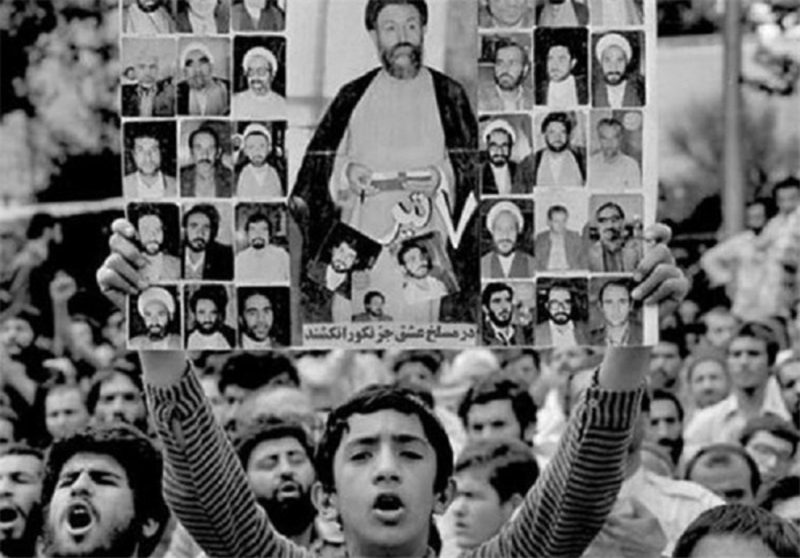
By Robert Fantina | American Herald Tribune | June 26, 2020
In 1979, the people of Iran successfully and mainly peacefully overthrew the United States-supported government, led by the brutal autocrat, the Shah of Iran. In ridding themselves of this repressive dictator and freeing themselves from the shackles of U.S. imperialism, they established the Islamic Republic of Iran.
While the revolution had widespread popular support, as does the government to this day, it was not without opposition groups. The MEK (Mujahedin-e Khalq, or the People’s Muhajedin Organization of Iran), is one such opposition organization. It is a violent terrorist group that is currently supported by the U.S. government. Members of the MEK have never accepted the revolution, and on June 28, 1981, three years after the revolution, they bombed the Islamic Republic Party headquarters in Tehran. This horrendous crime was committed during a meeting of party leaders, and killed seventy-three people, including the Chief Justice, Ayatollah Mohammad Beheshti, who had been a leader in the revolution.
Thirty-nine years have passed, but the memory of these martyrs has not dimmed.
Hujjat al-Islam Seyyed Mehdi Qureshi, Islamic Revolution Leader Representative in Iran’s West Azarbaijan Province, commented that “Iran’s stable position has been achieved thanks to the bravery of the martyrs.” Those martyrs’ names, many in addition to those who died on June 28, 1981, are etched upon the hearts of the Iranian people, and include General Qassem Soleimani, murdered by the U.S. in January of this year.
Any government has people who oppose it: citizens of the nation who disagree with one or more policies, and law-abiding people work within the system to achieve changes they seek. Generally, when a majority of the population wants certain changes, those changes are implemented.
Yet within Iran and outside it, a small terrorist group seeks the violent overthrow of the government, despite having so little support to do so. Why, one could ask, would the mighty United States support such a group, when it decries any terrorist activity?
The hypocrisy of U.S. government officials has been discussed and documented by this writer often. The U.S. is only interested in self-determination when the people of any nation choose a form of government that will follow all U.S. dictates. The leaders of the Islamic Republic of Iran will not do so. They form alliances with nations that the United States holds in contempt, and they come to the aid of those nations when required to do so, such as in fighting U.S.-financed terrorists in Syria.
Iran has not invaded another nation in over 200 years, and its leaders have a ‘no first strike’ doctrine. In the U.S.’s 244-year history, it has invaded at least 84 of the 193 countries that are recognized by the United Nations. And its continued hostility towards Iran has only increased with the administration of the unstable president, Donald Trump.
In the United States, lobby groups finance election campaigns, thus making the elected officials beholden to those groups, not their constituents. Prominent among these groups are pro-Israel lobbies, which consider Iran to be their rival for hegemony in the Middle East. Among the global community, only Israel and Saudi Arabia opposed the Joint Comprehensive Plan of Action (JCPOA), the agreement signed with Iran and several other countries that regulated Iran’s nuclear development program, in exchange for the lifting of sanctions. Only Israel and Saudi Arabia praised the U.S. violation of it.
After sanctions were re-imposed following this U.S. violation of international law, this writer contacted a friend in Tehran. He was told that, while the sanctions were unfortunate, the Iranian people are accustomed to living with them, and would continue to do so as long as necessary. There was no talk of defeat; he didn’t suggest that the government should or would accede to U.S. demands. He was not resigned: he simply indicated that the Iranian people would continue to live their lives and make whatever adjustments were necessary due to the sanctions.
This is the attitude that makes Iran great, and that inspires Iranians to sacrifice their lives for their country. When one powerful country is besieged by another, more powerful one, but refuses to surrender, its people’s pride in their nation only increases. And this year, on the anniversary of the Hafte Tir bombing, the memory of those who were working for the people and gave their lives in that mission will again be remembered. Also remembered will be other Iranian martyrs, those who died in the August 30, 1981 bombing of the Prime Minister’s office, General Soleimani and so many others, whose names may not be as well known, but who are remembered and beloved by their countrymen.
The anniversary of the Hafte Tir bombing should be commemorated around the world as a symbol of the destruction and death caused by terrorism, and as a memorial to those innocent servant-leaders who died in it. It should also serve as a reminder to some governments, such as that of the United States, that their unjust plans for world hegemony will not be achieved, and that support for terrorists is an affront to the basic human dignity of mankind. It should remind nations across the globe that the U.S., the most violent nation on the planet, continues its economic and medical terror against a free and peaceful nation.
It has been thirty-nine years since those seventy-three Iranian officials lost their lives in the service of their country. Their sacrifice will not be forgotten in Iran, or by people of decency and compassion around the world.
Israel honors cyber-terrorists behind May attack on Iranian port
PressTV – June 26, 2020
The Israeli military has honored units, which had been involved in a May cyberattack against Iran’s Shahid Rajaee port on the coast of the Persian Gulf near the Strait of Hormuz.
The units that took part in the terrorist operation against the Iranian port have received “certificates of appreciation” from the head of Tel Aviv’s military intelligence apparatus Tamir Hayman.
The elements honored by the Israeli military include troops in the regime’s Unit 8200, which is Israel’s cyber spy agency.
A statement by the Israeli military claims that the cyberattack, carried out on May 9, has yielded “a unique and impressive operational achievement.”
However, Iranian officials said at the time that the attack briefly knocked computers at Shahid Rajaee port terminal offline.
Mohammad Rastad, managing director of the Ports and Maritime Organization of Iran, said the terrorist attack “failed to penetrate the PMO’s systems and was only able to infiltrate and damage a number of private operating systems at the ports”.
According to intelligence and cybersecurity officials, cited by the Washington Post, the attack was carried out by Israeli operatives. It came after the occupying regime said it had been the target of an attempt to penetrate the computers that operate water distribution systems in Israel.
The sprawling Shahid Rajaee port facility is the newest of two major shipping terminals in the Iranian coastal city of Bandar Abbas, on the Strait of Hormuz.
Iran has been the target of US and Israeli cyber terrorism for a decade, including attempts to remotely sabotage the Islamic Republic’s nuclear program.
In 2010, US and Israeli intelligence agencies unleashed a computer worm called Stuxnet on Iranian uranium-enrichment plants in an attempt to disrupt Iran’s nuclear program. The Washington Post reported two years later that the US National Security Agency (NSA), its spy service CIA, and Israel’s military had worked together to launch Stuxnet against Iran’s nuclear facilities.
The attack was followed by Mossad’s assassination of several Iranian nuclear scientists.
Iranian officials have said the attacks worked to the US and Israeli detriment, helping improve the Islamic Republic’s readiness against acts of sabotage.
Iran ready for coop with IAEA as long as it retains independence: Rouhani
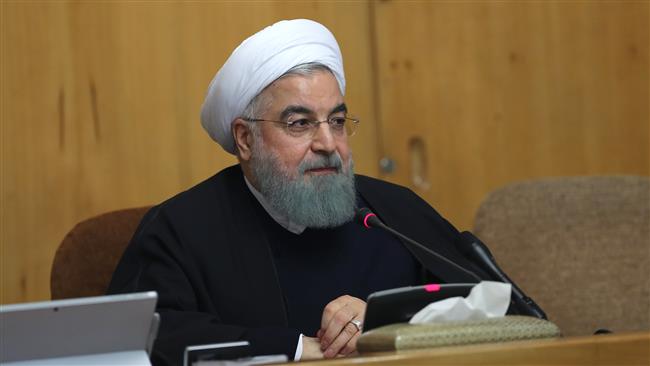
Iran’s President Hassan Rouhani
Press TV – June 24, 2020
President Hassan Rouhani says Iran is prepared, as before, to continue its cooperation with the International Atomic Energy Agency (IAEA) as long as the UN nuclear watchdog does not deviate from the legal frameworks and does not fall under Israeli and American influence.
“Iran is prepared to take the agency’s legal inspections and engage in close cooperation with it within the framework of the [standing] regulations,” Rouhani said, addressing a cabinet session in Tehran on Wednesday.
“For us, cooperation with the agency has always formed the basis,” he said, adding, “We will maintain this [principle] today too.”
He said the Islamic Republic has invariably enjoyed a “friendly” relationship with the watchdog, whose inspectors have examined the country’s nuclear facilities regularly and confirmed its non-diversion from a 2015 nuclear agreement between Tehran and world countries in more than a dozen reports.
The president, however, cautioned that “the agency too should pay attention not to deviate from its legal path.”
On Friday, the IAEA’s Board of Governors adopted a resolution — drawn up by the UK, France, and Germany — that called on Iran to allow access to two sites that Israeli intelligence services claim are related to Tehran’s nuclear program. Tehran has condemned the resolution, rebuffed the allegations, and reminded the agency that it cannot request inspections based on accusations made up by intelligence agencies.
“I fear these charlatans may tarnish the agency,” Rouhani said, referring to the Israeli regime and the United States that changelessly backs the regime’s stances and allegations. “They dupe the agency and push it away from its course.”
“The agency’s task consists of reporting on the manner of application of nuclear materials. That is what the agency is supposed to do,” the president said.
He, accordingly, urged the IAEA to act justly in its assessments and retain its independence.
Rouhani, meanwhile, berated the European trio for their falling under Tel Aviv and Washington’s pressure in devising of the anti-Iranian resolution, while praising Russia and China for their decisive stance against the resolution.
On US offer of talks
Separately, the chief executive referred to the United States’ new offer of talks with Iran.
The Islamic Republic is always prepared for negotiations as soon as the US renews commitment to the international regulations, he said, adding that it was Washington that left the negotiation table in the first place by reneging on its commitments.
Washington left the nuclear deal in 2018, although the accord has been endorsed by the UN Security Council as a resolution.
“They were the ones, who created trouble, broke the negotiation table, and tyrannized the Iranian nation,” Rouhani said.
He also urged that the US apologize to the Iranian people for the economic damage that it has tried to afflict on them through the sanctions that it reinstated after leaving the deal, and compensate the nation.
Iran has ‘no problem’ talking to US if it apologizes & offers refund over nuclear deal – President Rouhani
RT – June 24, 2020
Nothing is preventing Tehran from engaging in talks with Washington, provided that it comes up with apologies – and reimbursement – for losses in the 2015 nuclear pact America walked out on, President Hassan Rouhani has said.
“We have no problem with talking to the US,” Rouhani declared, in a nationally-broadcast speech on Wednesday. The only condition is that “Washington meets its obligations under the nuclear deal, apologizes and compensates Tehran for its withdrawal from the 2015 pact,” the president said, as quoted by Reuters.
Rouhani made it clear, however, that “these calls for talks with Tehran are just words and lies.” US President Donald Trump has previously offered to negotiate with Iran without any preconditions and to meet with Rouhani in person.
Washington repeated the offer of “serious talks” this January – but the timing of this couldn’t have been more questionable, as it came on the heels of the death of Qassem Soleimani, a renowned Iranian military leader, in an American missile strike.
Tehran, for its part, has consistently ruled out dealing with Washington under pressure, or trading vital national interests.
Last year, however, Foreign Minister Javad Zarif announced that he pitched a suggestion to the US, under which Iran would permanently accept international inspections of its nuclear program, in return for the lifting of US sanctions.
Following his pattern of being suspicious towards Iran, Trump green-lighted the pullout from the hard-earned nuclear pact in 2018. Shortly after the US formally ceased to be a member, it slapped Iran’s oil trade, finances, investment activities, and other crucial sectors with sweeping penalties under the so-called “maximum policy pressure.”
This week, Washington will try to secure a UN backing for an indefinite extension of an embargo that bans countries from selling or transferring arms to Iran unless approved by the Security Council. In order to pass, their draft resolution requires nine votes in favor and no vetoes from China, Russia, Britain or France – a quartet of countries still adhering to the 2015 nuclear deal.
Featured Video

Trita Parsi: Middle East Unraveling — Are We on the Path to World War?
or go to
Aletho News Archives – Video-Images
New Book
Trans agenda is ‘normalization of sadism’ – US author

RT | September 23, 2026
The US Democratic Party has embraced a transgender agenda that amounts to “the normalization of sadism,” author A.J. Rice has said, warning that radical trans policies would return if the party is allowed to regain power.
Speaking to RT’s America First host Scotty Nell Hughes about his new book, ‘The Curse of the Bearded Lady: How the Trans Mafia Whacked American Sanity’, Rice argued that activists have gained significant influence in schools, medicine, and corporate America while people who questioned the agenda have faced pressure to stay silent.
The author described the “trans mafia” as the sprawling network of people and institutions that have helped the movement gain influence. He singled out parts of academia, wealthy backers, and corporations, and stated that providers of transition-related treatment also have a financial incentive to keep young people in their care indefinitely.
Rice argued that the consequences of these policies ultimately fall on children who are being drawn toward gender-affirming medical treatments and on girls who are expected to share locker rooms or compete in sports with biological males.
He noted that while voters rejected the Democrats’ approach to gender in 2024, the party, which has been “captured by madness,” has since only doubled down and is seeking what is effectively “the normalization of sadism.” … Full report
Blog Roll
 Aletho News
- ‘We don’t seek permission to defend our country’: Snippets from President Pezeshkian’s UNGA address
- NATO chief wants Europeans to fight American wars [for Israel]
- German chemicals giant reveals details of downsizing
- Refaat Al-Areer Was The Canary In The Coal Mine In Israel’s War On The Truth
- Israeli election committee bars candidate from Knesset race over Gaza war opposition
- French-Lebanese man files war crimes complaint over Israeli attacks
- Mahan Air Flight Lands in China Despite US Threat against Iranian Airlines
- US eyes $10bn fund to rebuild war-battered Gulf infrastructure
- Trump meets Rodríguez near Maduro’s prison as Venezuela’s oil flows to US
- Trita Parsi: Middle East Unraveling — Are We on the Path to World War?
- If Americans Knew
- An error has occurred; the feed is probably down. Try again later.
- No Tricks Zone
- New Study: Earth And Venus Surface Warmth Largely Explained By Convection And Lapse Rate, Not CO2 Or Radiation
- 2025 Nature Paper Claiming Worsening Global Drought Gets RETRACTED …Heavily Flawed
- New Study: ‘Global Drought Shows No Detectable Recent Acceleration Under Climate Warming’
- Economic Masterminds: German Socialists Suggest Taxing Productivity Gains Stemming From Using AI
- The South China Sea Has Not Been Cooperating With The Climate Change Narrative
- Energy Crisis: Germany Enters Heating Season With Historically Low Gas Reserve Fill Levels
- New Study: The Antarctic Ice Sheet Gained Mass From 2020-2024 Due To Staggering Snow And Ice Accumulation
- Study: Ocean Heating Rates From Thousands Of Years Ago ‘Dwarf’ Modern Ocean Heating Rates
- Climate Extremists Target, Attack Large-Scale Power Grid Infrastructure In Germany!
- New Study: Antarctic Ice Melt Has Contributed Less Than 1 Centimeter To Sea Level Rise In The Last 30 Years

