Beware ego, well two egos actually. Jared Kushner, President Trump’s son-in-law who seems to believe that he can solve the Palestinian-Israeli conflict and who is trying to persuade his father-in-law that “a foreign policy coup” can be his.
Behind the scenes, stand the dubious former British Prime Minister Tony Blair (lobbying via media baron Rupert Murdoch’s former wife Wendy Deng, who reportedly reconciled Kushner and Ivanka Trump after their 2008 split) and the equally dubious gambling magnate Sheldon Adelson, plus the Israeli Ambassador, Ron Dermer (who is a Bibi Netanyahu confidant, reportedly).
Trump would not be the first U.S. President to be glamour-struck by the prospect of being the one to solve the Palestinian conflict, if he should take the bait. He would be one of many. Yet it has proved to be a prize for none of these former Presidents, but rather has proved itself to be a poisoned chalice, time after time.
For Trump however, it would not be the standard hemlock imbibed by his predecessors, but more a case of welcoming into his Administration a Trojan Horse. It is, as journalist Robert Parry rightly asserts, a Trojan Horse carrying the neocons right back into the heart of foreign policy. It would result in “President Trump’s foreign policy sliding toward neoconservative orthodoxy on the Middle East …”.
What is “the bait” this time? Something very simple. Instead of Israel making peace with the Palestinians, leading to peace with the surrounding world, it would be the other way round: Israel would befriend the Arab world, which would then agree on some “solution” with Israel and impose it on the Palestinians.
This plan has been given a catchy sound-bite by Netanyahu: “Outside” (i.e. the Arab world), “in” (imposition on Palestinians), instead of “inside out.” The selling point is that the Palestinians are now so weak and divided, it is claimed, they have not the strength to object.
Leaving aside the fact that if the Israeli government had actually wanted a negotiated solution – the premise on which the 1993 Oslo Accords was founded (that it was in both parties’ interests to agree on a compromise) – there have been any number of occasions over the last quarter century, when Israel could have had one. History shows that Israel has always preferred continuing the (so-called) Peace Process to actually concluding peace. This understanding of the situation is common ground for both American and European officials, who have been part of “the process” over the years, (of which I was one).
The Wrong Starting Point
But for Trump, it is not the probability of failure in this venture that makes the Israeli initiative potentially so damaging, but rather that to launch his foreign policy from this platform may well prove lethal to his wider aims. Where you start matters. It matters a lot. It dictates the subsequent alignment of alliances.
Initially (and perhaps it still is so), Trump’s start point was détente with Russia. In terms of his aim to transform America’s foreign policy, that made sense. And one can understand why President Trump might be treading somewhat slowly on Russia, in the wake of the Deep State coup against Trump’s National Security Advisor Michael Flynn and the continuing attrition aimed against the President, but simply, were he to pursue his son-in-law’s plan, Trump will be handing over his foreign policy to the neocons.
Why? Because if Trump wants the Arab world (and Saudi Arabia in particular), to help Israel impose a settlement on the Palestinians, Trump will have to embrace Israel’s false narrative that Iran is the chief sponsor of terror in the Middle East. And, Trump equally will have to pay court to the equally false Israeli narrative of the threat of the Iranian “nuclear bomb.” He already has, at his meeting with Prime Minister Netanyahu. It has never been Iran’s non-existent “bomb” that has concerned Israeli security officials: It has been Iran’s conventional military power and even more so, its soft, revolutionary power.
It is precisely this back-to-front neocon world view that has so corrupted American foreign policy: America, for decades now, has aligned itself with Saudi Arabia and Gulf States who finance, arm and support terrorist movements (such as Al Qaeda), while labeling Iran, which actually fights and defeats these “jihadists,” as the chief sponsor of terror in the Middle East. One really cannot get it more back-to-front. This is now more widely understood by the American public, yet the neocons never pull back; they never desist in trying to tie America to the Saudi Arabia-Israeli axis and to promote phobia towards Iran.
Will President Trump see the danger? His vaunted “war” on radical Islam will be laughed off the stage in the Middle East – as was Obama’s – if he is seen to have aligned himself this way: with Israel, Saudi Arabia and Qatar. It will be viewed in the Middle East as another round of America “at war” with terrorism, and tucked up “in bed” with it, too.
Russian Doubts
And in Moscow, eyebrows too, will be raised at such a strategic alignment: Will Trump be any more serious than Obama in defeating radical jihadists, policy-makers in Russia may be asking? It will be yet another question mark to put beside the bigger question mark arising from President Trump’s acceptance of General Flynn’s resignation.
Journalist Pepe Escobar notes that “even before Flynn’s fall, Russian analysts had been avidly discussing whether President Trump is the new Victor Yanukovich – [the Ukrainian President] who failed to stop a color revolution on his doorstep.”
This has become a key question. Flynn’s conversation with the Russian Ambassador over an open telephone line (which he will have known to be routinely monitored by the security services), broke no rules: He spoke, as any diplomat about to assume office might. There was nothing improper in his conduct.
A British Shadow Foreign Secretary would be constantly in touch with foreign Ambassadors. It is expected, and required of him or her. If there were any breaking of rules, it would seem to have occurred elsewhere: in the intelligence services perhaps, or in the Department of Justice. The rules are that you do not intentionally tap your own officials (or about to be officials), and should this occur inadvertently, their identity and their contribution to the conversation should be minimized, i.e., redacted under privacy rules. Never should it leak.
And if there is a puzzle to this episode, it lies not so much in Flynn’s conduct, but in the response by the President. So, Vice President Mike Pence was miffed that General Flynn had been economical with his account of events to him. Why not call them both in: tell Flynn to apologize and Pence to accept the apology? End it there. Why give a scalp to Deep State opponents?
A puzzle it remains. Eli Lake on Bloomberg View draws out the wider implications: “…unanswered questions. It’s possible that Flynn has more ties to Russia that he had kept from the public and his colleagues. It’s also possible that a group of national security bureaucrats and former Obama officials are selectively leaking highly sensitive law enforcement information to undermine the elected government.
“Flynn was a fat target for the national security state. He has cultivated a reputation as a reformer and a fierce critic of the intelligence community leaders he once served with when he was the director the Defense Intelligence Agency under President Barack Obama. Flynn was working to reform the intelligence-industrial complex, something that threatened the bureaucratic prerogatives of his rivals.
“He was also a fat target for Democrats. Remember Flynn’s breakout national moment last summer was when he joined the crowd at the Republican National Convention from the dais calling for Hillary Clinton to be jailed.
“In normal times, the idea that U.S. officials entrusted with our most sensitive secrets would selectively disclose them to undermine the White House would alarm those worried about creeping authoritarianism. Imagine if intercepts of a call between Obama’s incoming national security adviser and Iran’s foreign minister leaked to the press before the nuclear negotiations began? The howls of indignation would be deafening.
“In the end, it was Trump’s decision to cut Flynn loose. In doing this he caved in to his political and bureaucratic opposition. [Chairman of the House Intelligence Committee, Devin] Nunes told me Monday night, that this will not end well. ‘First it’s Flynn, next it will be Kellyanne Conway, then it will be Steve Bannon, then it will be Reince Priebus,’ he said. Put another way, Flynn is only the appetizer. Trump is the entrée.”
Neutering Trump
So this is the question: Has the Deep State already neutered Trump’s foreign policy? It is too early to tell, but there are straws in the wind suggesting that Trump’s policy might be sliding towards neocon orthodoxy on Russia (as well as on Palestine), as Moon of Alabama web site observed:
“[On Feb. 14] the White House spokesperson said: President Trump has made it very clear that he expects the Russian government to deescalate violence in the Ukraine and return Crimea.
“[On Feb. 15] Trump tweeted: Donald J. Trump Verified account @realDonaldTrump
Crimea was TAKEN by Russia during the Obama Administration. Was Obama too soft on Russia?
4:42 AM – 15 Feb 2017
“That is a position Trump had not previously taken. ‘Return Crimea’ is a no-no to any current and future Russian government. If Trump insists on this, the prospective détente is already dead.”
Flynn’s sacrifice does not allow a final judgment to be made. On the bigger chessboard, Trump has decided that “a pawn” can be sacrificed. The General had certain qualities (the ruthlessness perhaps necessary to wield an axe to the intelligence agencies), but also he had displayed a lack of political “nous” and basic understanding in Flynn’s book, The Field of Fight, (that unwisely he had co-authored with neocon Michael Leeden). Trump chose not to risk a more important piece to defend a pawn (especially as one more important “piece” (Bannon) reportedly was calling for this pawn to be sacrificed).
The question, finally, is about Trump’s character: Has he the “steel” to “drain the swamp”? Can he recruit tough-minded allies within the Deep State, ready to conduct a vicious internal war and to purge it thoroughly? Can he eliminate the sleeper cells from within his own administration? Tweets will not be enough. He will have to act soon.
Or else, will he “slide” (towards the neocons), and take the Netanyahu bait. And fall into the embrace of the neocon alignment with the Saudi-Israeli axis – and, having absorbed the basic hook of Iranophobia, go on to try to split President Putin from Iran (and China), in true neocon style?
This portends a vicious internal war within the U.S. – for even were the Deep State “color revolution” to succeed, it would not represent the end of the war, but perhaps the loss of a major battle within the wider war.
Alastair Crooke is a former British diplomat who was a senior figure in British intelligence and in European Union diplomacy. He is the founder and director of the Conflicts Forum.
February 17, 2017
Posted by aletho |
Deception, Ethnic Cleansing, Racism, Zionism, Timeless or most popular | Donald Trump, Iran, Israel, Michael Flynn, Middle East, Palestine, Saudi Arabia, United States, Zionism |
Leave a comment
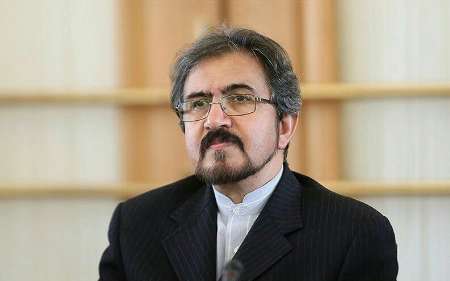
Iranian Foreign Ministry spokesman Bahram Qassemi
Iran says Israel’s atomic weapons arsenal represents the biggest threat to world peace, dismissing new allegations by Israeli and US leaders against Iran’s nuclear program as “hollow” and “worthless”.
The reaction on Thursday came a day after US President Donald Trump called Iran’s nuclear program a threat to Israel during a news conference with Israeli Prime Minister Benjamin Netanyahu at the White House.
“The statements did not contain any new point except being a repetition of hollow and worthless allegations against Iran’s peaceful nuclear program,” Foreign Ministry spokesman Bahram Qassemi said.
Terming the nuclear deal with Iran as “the worst” agreement ever, Trump pledged to impose new sanctions on Iran to prevent the country from what he called developing a nuclear weapon.
Qassemi said, “Such claims are repeated while the International Atomic Energy Agency, in its reports, has time and again confirmed Iran’s nuclear program as peaceful – a fact which has been verified many times by different countries.”
“The bitter truth is that these remarks and inadmissible allegations are repeated by a regime which is not committed to any international law and convention and has hundreds of warheads in its atomic arsenal,” he said.
Israel, Qassemi said, “is viewed as the biggest threat to peace and security in the Middle East and the world and its ponderous file of endless atrocities and inhuman actions against the oppressed Palestinian people and other neighbors is recorded in numerous UN reports.”
In their joint news conference, Netanyahu applauded Trump for his harsh stand on Iran which was slapped with new sanctions by the new US administration in violation of the nuclear accord, known as the Joint Comprehensive Plan of Action (JCPOA).
On Tuesday, IAEA Director General Yukiya Amano confirmed that Iran was implementing the nuclear agreement under which Tehran has undertaken to scale back its nuclear program in return for lifting of the sanctions.
Qassemi said, “Nuclear weapons are haram (forbidden) from the religious standpoint, corresponding with the fatwa of the Eminent Leader of the Islamic Revolution (Ayatollah Seyyed Ali Khamenei) and have no place in Iran’s military doctrine.”
The Islamic Republic, he said, will seriously continue to pursue those components of its peaceful nuclear program which are validated by the United Nations Security Council within the framework of the JCPOA.
Under Resolution 2231, the Security Council has endorsed the nuclear deal, which went into effect in January 2016.
On his campaign trail, Trump threatened to annul the deal, which he has lambasted as “the worst accord ever negotiated” and “one of the dumbest” ones he has come cross.
Washington has taken a tougher line on Iran since Trump took office on January 20. Last month, the US said it had put Tehran “on notice” after the Islamic Republic tested a ballistic missile which is not prohibited by the nuclear deal.
February 16, 2017
Posted by aletho |
Fake News, Mainstream Media, Warmongering | Iran, Israel, Middle East, Sanctions against Iran, United States, Zionism |
Leave a comment
Supreme Leader of the Islamic Revolution in Iran, Imam Sayyed Ali Khamenei warned that the real war against the Islamic Republic is an economic and a cultural one.
“Both the former and new administrations in the United States have been threatening us with wars,” said the Leader reacting to all war rhetoric used by Washington against the Islamic Republic.
Addressing a large group of visiting people from Tabriz, Imam Khamenei said: “They have always said that the military option is on the table,” he said.
“But the real war remains to be an economic one, the imposition of sanctions and denying the people the chance to promote businesses and economic and technological activities in the country,” the Leader said.
His eminence also recalled comments by some European officials warning Iranian authorities that Iran had to go to war in the absence of the nuclear deal, known as the Joint Comprehensive Plan of Action (JCPOA).
Such comments are just plain lies, the Leader said, elaborating on why some insist on threatening Iran with a war option.
“They just want to keep us too much involved with a military war to detract us from the economic war we face,” he said.
“The real war is also a cultural one,” Imam Khamenei added.
February 15, 2017
Posted by aletho |
Economics, Militarism, Timeless or most popular | European Union, Iran, NATO, United States, Zionism |
Leave a comment
Iran still the victim of unshakable Israeli influence over the UK’s political establishment
Here in the UK the Campaign Against the Arms Trade (CAAT) has initiated a judicial review in a bid to halt UK arms sales to Saudi Arabia on suspicion that they are being used against civilians in Yemen. The indiscriminate nature of Saudi air-strikes makes it highly likely that British weaponry is being deployed in breach of international humanitarian law.
The slaughter has been going on for nearly 2 years leading to a humanitarian crisis of appalling magnitude and great cruelty. Since the Yemen campaign began the British government has granted export licences for more than £3.3 billions worth of war equipment when there was a “clear risk” that some of it would be used in violation of all norms of human conduct.
It is claimed that the Government has ignored warnings by senior civil servants and its own arms control experts, and some records of expressed concern have gone missing. This is no great surprise when we discover that export licensing is overseen by none other than the Secretary of State for international trade, Liam Fox. For Fox has ‘form’ as a crazed stooge of Israel and a sworn enemy of Iran.
Fox, while Secretary of State for Defence, was quoted on the Conservative Friends of Israel website as saying: “… We must remember that in the battle for the values that we stand for, for democracy against theocracy, for democratic liberal values against repression – Israel’s enemies are our enemies and this is a battle in which we all stand together or we will all fall divided.”
And in June 2015 Fox declared: “It is logical to assume that Iran’s intentions are to develop a nuclear weapons capability and any claims that its intentions are exclusively peaceful should not be regarded as credible… Iran’s nuclear intentions cannot be seen outside the context of its support for terror proxies, arguably the defining feature of its foreign policy. The risks are clear.”
Fox was forced to resign as Defence Secretary in 2011 following scandalous goings-on between him, his ‘close friend’ Adam Werritty, the UK ambassador to Israel (Matthew Gould) and Israeli intelligence figures allegedly involved in plotting sanctions against Iran.
Just lately prime minister Theresa May has accused Iran of working with Hezbollah, interfering in Iraq, sending fighters to Syria to help Assad, and supporting the Houthis in the conflict in Yemen. The British Government, of course, can meddle where it pleases and recently concluded another huge arms deal with the Saudis which, says Mrs May, is for the sake of long-term security in the Gulf. She argues that the same extremists who plot terror in the Gulf states are also targeting the streets of Europe: “Gulf security is our security.”
However, public pressure to end arms sales to Saudi Arabia is now so great that the Government has adopted a new export licensing scheme that hides the value and scale of weaponry being supplied.
The reason for the British Government’s current hostility towards Iran was plain from what David Cameron told the Knesset in 2014: “A nuclear armed Iran is a threat to the whole world not just Israel. And with Israel and all our allies, Britain will ensure that it is never allowed to happen.” That position carries forward into the present day and beyond, and serves as an excuse for the rednecks who rule our political swamp to carry on being unpleasant to the Muslim world.

Oh, How he loves these Photo Ops!
Theresa May lost no time in welcoming Mr Netanyahu to London. The two leaders this week agreed to establish a new UK-Israel Trade Working Group to strengthen their existing trade and investment relationship and “to prepare the ground for a post-Brexit trade agreement”. What good that will do in the face of rising popularity among the public of boycotting everything Israeli remains to be seen.
Regional issues including Syria and Iran are to be on the agenda for discussion. And regarding Palestine May repeated the mantra that “We remain committed to a two-state solution as the best way of building stability and peace for the future”…. though she doesn’t say what that will look like.
Netanyahu also met with Foreign Secretary Boris Johnson and they sat alongside the desk on which the Balfour Declaration was composed in 1917. As for the forthcoming Balfour Declaration centenary celebrations, a statement said that May invited Prime Minister Netanyahu to attend events taking place in the UK “as a Guest of Government” and that Prime Minister Netanyahu “also invited her to visit him in Israel”.
Netanyahu didn’t miss the opportunity to warn that Iran “seeks to annihilate Israel” and called on nations to back renewed sanctions against the Iranian regime.
I looked up one of my old reports about how Craig Murray, a former UK ambassador to Uzbekistan, argued five years ago that British policy was being driven in an underhand fashion by the Israel lobby. He linked Matthew Gould, the then British ambassador to Israel, with the Fox-Werritty scandal and raised questions about meetings between Gould, Liam Fox and Fox’s strange friend Adam Werritty. Werritty was referred to as Fox’s adviser but according to reports he was backed financially by Israel lobbyists and had no security clearance and therefore no authorised role.
Murray, with many useful contacts from his days as an ambassador, claimed to have serious evidence connecting Gould with a secret plan to attack Iran, but the Foreign Office and the Cabinet Secretary blocked questions. Murray published his story ‘Matthew Gould and the plot to attack Iran’ here.
In it he pointed out that “Matthew Gould does not see his race or religion as irrelevant. He has chosen to give numerous interviews to both British and Israeli media on the subject of being a jewish ambassador, and has been at pains to be photographed by the Israeli media participating in jewish religious festivals. Israeli newspaper Haaretz described him as ‘not just an ambassador who is jewish, but a jewish ambassador’. That rather peculiar phrase appears directly to indicate that the potential conflict of interest for a British ambassador in Israel has indeed arisen.”
He went on to say that Gould stood suspected of participating with Fox and Werritty “in a scheme to forward war with Iran, in co-operation with Israel”. The stonewalling by the Cabinet Office and Foreign Office led Murray to conclude that “something very important is being hidden right at the heart of government”.
Labour MP Paul Flynn remarked that no previous ambassadors to Israel had been Jewish so that a conflict of interest and accusations of going native would be avoided. He was immediately rebuked. Flynn also asked about meetings between Werritty and Gould, as some reports suggested that Gould, Werritty and Fox discussed a potential military strike on Iran with Mossad. “I do not normally fall for conspiracy theories,” said Flynn, “but the ambassador has proclaimed himself to be a Zionist and he has previously served in Iran.”
Fox had earlier made the idiotic claim: “Israel’s enemies are our enemies”, and the Jewish Chronicle hailed him as “a champion of Israel within the government”. Furthermore Fox continually rattled the sabre against Iran which, of course, is no threat to Britain but regarded by Israel as a bitter enemy. Iraq too was Israel’s enemy, not ours. Yet Fox, according to the theyworkforyou.com, voted “very strongly” for the Iraq war. He was also an enthusiastic supporter of the war in Afghanistan.
Given that Fox so eagerly waved the flag of a foreign military power and was a man with dangerous beliefs and demonstrably weak judgement, how could those who appointed him not see that he was unfit to serve as a Minister of the British Crown – unless they were similarly tainted?
When the Werritty relationship came to light Fox jumped before being flung from the battlements. But instead of melting into obscurity he has now been rehabilitated into the senior ranks of Government and is once again a Minister of the Crown. And after watching the trail blazed by our former Jewish ambassador to the Jewish State, we now gawp with fascination at the inevitably messy conflicts of interest arising from Trump’s pick for US ambassador to Israel – David Friedman, a Jewish lawyer with scant respect for international law or Middle East sensitivities.
Despite the strong whiff of misconduct David Cameron rewarded Gould with head of The Office of Cyber Security & Information Assurance (OCSIA), which includes e-crime, working with private sector partners on exchanging information, and engaging with international partners in improving the security of cyberspace and information security. Did it seem right for such a person to be in charge of crucial security matters at the heart of our Government? What was in fellow Zionist David Cameron’s mind when he appointed him?
Could it have had anything to do with the UK-Israel academic collaboration ventures with cyber research funding, which involve partnerships between British and Israeli universities and cover research areas such identity management, regulating cyber security, privacy assurance, mobile and cloud security, human aspects of security, and cryptography?
Both countries signed a Memorandum of Understanding on digital co-operation in March 2014. And Gould’s new appointment came at a time when the Cameron government was lecturing us on threats to national security and announcing plans to trawl through our personal emails and web browsers in order to “keep us safe”. Question was, who would trawl Gould’s private emails?
The vipers in our bosom
CAAT expect a decision on the judicial review on arms to Saudi Arabia in 4 to 6 weeks. In the meantime an undercover Al Jazeera report has revealed that a senior political officer at the Israeli embassy in London, Shai Masot, was plotting with stooges among British MPs and other vipers in the political snake-pit to “take down” senior government figures including Boris Johnson’s deputy at the Foreign Office, Sir Alan Duncan, a noted sympathiser of the Palestinian’s struggle. This should have resulted in the expulsion of the ambassador himself, the Israeli propaganda maestro and Netanyahu’s pet, Mark Regev, who took up the post last year. Regev is the sort of person no sensible government would let into their country. But he was let off the hook and the affair hurriedly smoothed over with an announcement from the Foreign Office that the matter was closed.
Craig Murray, however, has been digging again. The Foreign Office deflected his many questions and dismissed the idea that Masot was anything more than a member of the technical and administrative staff at the embassy. “This is plainly a nonsense,” says Murray. “Masot, as an ex-Major in the Israeli Navy and senior officer in the Ministry of Strategic Affairs, is plainly senior to many who are on the Diplomatic List.” He concludes that the Foreign Office is complicit in “a large nest of Israeli spies seeking to influence policy and opinion in the UK in a pro-Israeli direction. That is why the government reaction to one of those spies being caught on camera plotting a scandal against an FCO minister, and giving £1 million to anti-Corbyn MPs, was so astonishingly muted.”
All this and the recent UN resolution 2334, which condemned Israel’s continuing squats on Palestinian land as illegal and an obstacle to peace, has done nothing to disturb the cosy relationship between Her Majesty’s Government and the obnoxious Israelis
On the contrary, after May’s meeting with Netanyahu a Downing Street spokesperson said they focused on, yes, cyber security: “In their discussions, the Prime Ministers committed to working together to build on our longstanding relationship and the strong ties that already exist between our two countries in a wide range of areas, from trade and investment, to innovation and technology, and defence and security. They talked about the important work we do together on intelligence-sharing and cyber-security, and committed to talk further about how we can deepen this cooperation, to help keep our people safe”.
Sitting comfortably?
February 14, 2017
Posted by aletho |
Ethnic Cleansing, Racism, Zionism, Timeless or most popular, War Crimes, Wars for Israel | Conservative Friends of Israel, Iran, Israel, Palestine, Saudi Arabia, UK, Yemen, Zionism |
Leave a comment
Britain’s sickening infatuation with Israel continues
Here in the UK the Campaign Against the Arms Trade (CAAT) has initiated a judicial review in a bid to halt UK arms sales to Saudi Arabia on suspicion that they are being used against civilians in Yemen. The indiscriminate nature of Saudi air-strikes makes it highly likely that British weaponry is being deployed in breach of international humanitarian law.
The slaughter has been going on for nearly 2 years leading to a humanitarian crisis of appalling magnitude and great cruelty. Since the Yemen campaign began the British government has granted export licences for more than £3.3 billions worth of war equipment when there was a “clear risk” that some of it would be used in violation of all norms of human conduct.
It is claimed that the Government has ignored warnings by senior civil servants and its own arms control experts, and some records of expressed concern have gone missing. This is no great surprise when we discover that export licensing is overseen by none other than the Secretary of State for international trade, Liam Fox. For Fox has ‘form’ as a crazed stooge of Israel and a sworn enemy of Iran.
Fox, while Secretary of State for Defence, was quoted on the Conservative Friends of Israel website as saying: “…We must remember that in the battle for the values that we stand for, for democracy against theocracy, for democratic liberal values against repression – Israel’s enemies are our enemies and this is a battle in which we all stand together or we will all fall divided.”
And in June 2015 Fox declared: “It is logical to assume that Iran’s intentions are to develop a nuclear weapons capability and any claims that its intentions are exclusively peaceful should not be regarded as credible… Iran’s nuclear intentions cannot be seen outside the context of its support for terror proxies, arguably the defining feature of its foreign policy. The risks are clear.”
Fox was forced to resign as Defence Secretary in 2011 following scandalous goings-on between him, his ‘close friend’ Adam Werritty, the UK ambassador to Israel and Israeli intelligence figures allegedly involved in plotting sanctions against Iran.
Just lately prime minister Theresa May has accused Iran of working with Hezbollah, interfering in Iraq, sending fighters to Syria to help Assad, and supporting the Houthis in the conflict in Yemen. The British Government, of course, can meddle where it pleases and recently concluded another huge arms deal with the Saudis which, says Mrs May, is for the sake of long-term security in the Gulf. She argues that the same extremists who plot terror in the Gulf states are also targeting the streets of Europe: “Gulf security is our security.”
However, public pressure to end arms sales to Saudi Arabia is now so great that the Government has adopted a new export licensing scheme that hides the value and scale of weaponry being supplied.
The reason for the British Government’s current hostility towards Iran was plain from what David Cameron told the Knesset in 2014: “A nuclear armed Iran is a threat to the whole world not just Israel. And with Israel and all our allies, Britain will ensure that it is never allowed to happen.” That position carries forward into the present day and beyond, and serves as an excuse for the rednecks who rule our political swamp to carry on being unpleasant to the Muslim world.
After sucking up to Trump Britain rolls out red carpet to another of the world’s undesirables
Theresa May lost no time in welcoming Mr Netanyahu to London. The two leaders this week agreed to establish a new UK-Israel Trade Working Group to strengthen their existing trade and investment relationship and “to prepare the ground for a post-Brexit trade agreement”. What good that will do in the face of rising popularity among the public of boycotting everything Israeli remains to be seen.
Regional issues including Syria and Iran are to be on the agenda for discussion. And regarding Palestine May repeated the mantra that “We remain committed to a two-state solution as the best way of building stability and peace for the future”…. though she doesn’t say what that will look like.
Netanyahu also met with Foreign Secretary Boris Johnson and they sat alongside the desk on which the Balfour Declaration was composed in 1917. As for the forthcoming Balfour Declaration centenary celebrations, a statement said that May invited Prime Minister Netanyahu to attend events taking place in the UK “as a Guest of Government” and that Prime Minister Netanyahu “also invited her to visit him in Israel”.
Netanyahu didn’t miss the opportunity to warn that Iran “seeks to annihilate Israel” and called on nations to back renewed sanctions against the Iranian regime.
Israel’s ‘nest of spies’ in London
I looked up one of my old reports about how Craig Murray, a former UK ambassador to Uzbekistan, argued five years ago that British policy was being driven in an underhand fashion by the Israel lobby. He linked Matthew Gould, the then British ambassador to Israel, with the Fox-Werritty scandal and raised questions about meetings between Gould, Liam Fox and Fox’s strange friend Adam Werritty. Werritty was referred to as Fox’s adviser but according to reports he was backed financially by Israel lobbyists and had no security clearance and therefore no authorised role.
Murray, with many useful contacts from his days as an ambassador, claimed to have serious evidence connecting Gould with a secret plan to attack Iran, but the Foreign Office and the Cabinet Secretary blocked questions. Murray published his story ‘Matthew Gould and the plot to attack Iran’ here.
In it he pointed out that “Matthew Gould does not see his race or religion as irrelevant. He has chosen to give numerous interviews to both British and Israeli media on the subject of being a Jewish ambassador, and has been at pains to be photographed by the Israeli media participating in Jewish religious festivals. Israeli newspaper Haaretz described him as ‘not just an ambassador who is Jewish, but a Jewish ambassador’. That rather peculiar phrase appears directly to indicate that the potential conflict of interest for a British ambassador in Israel has indeed arisen.”
He went on to say that Gould stood suspected of participating with Fox and Werritty “in a scheme to forward war with Iran, in co-operation with Israel”. The stonewalling by the Cabinet Office and Foreign Office led Murray to conclude that “something very important is being hidden right at the heart of government”.
Labour MP Paul Flynn remarked that no previous ambassadors to Israel had been Jewish so that a conflict of interest and accusations of going native would be avoided. He was immediately rebuked. Flynn also asked about meetings between Werritty and Gould, as some reports suggested that Gould, Werritty and Fox discussed a potential military strike on Iran with Mossad. “I do not normally fall for conspiracy theories,” said Flynn, “but the ambassador has proclaimed himself to be a Zionist and he has previously served in Iran.”
Fox had earlier made the idiotic claim: “Israel’s enemies are our enemies”, and the Jewish Chronicle hailed him as “a champion of Israel within the government”. Furthermore Fox continually rattled the sabre against Iran which, of course, is no threat to Britain but regarded by Israel as a bitter enemy. Iraq too was Israel’s enemy, not ours. Yet Fox, according to the theyworkforyou.com, voted “very strongly” for the Iraq war. He was also an enthusiastic supporter of the war in Afghanistan.
Given that Fox so eagerly waved the flag of a foreign military power and was a man with dangerous beliefs and demonstrably weak judgement, how could those who appointed him not see that he was unfit to serve as a Minister of the British Crown – unless they were similarly tainted?
When the Werritty relationship came to light Fox jumped before being flung from the battlements. But instead of melting into obscurity he has now been rehabilitated into the senior ranks of Government and is once again a Minister of the Crown. And after watching the trail blazed by our former Jewish ambassador to the Jewish State, we now gawp with fascination at the inevitably messy conflicts of interest arising from Trump’s pick for US ambassador to Israel – David Friedman, a Jewish lawyer with scant respect for international law or Middle East sensitivities.
Despite the strong whiff of misconduct David Cameron rewarded Gould with head of The Office of Cyber Security & Information Assurance (OCSIA), which includes e-crime, working with private sector partners on exchanging information, and engaging with international partners in improving the security of cyberspace and information security. Did it seem right for such a person to be in charge of crucial security matters at the heart of our Government? What was in fellow Zionist David Cameron’s mind when he appointed him?
Could it have had anything to do with the UK-Israel academic collaboration ventures with cyber research funding, which involve partnerships between British and Israeli universities and cover research areas such identity management, regulating cyber security, privacy assurance, mobile and cloud security, human aspects of security, and cryptography?
Both countries signed a Memorandum of Understanding on digital co-operation in March 2014. And Gould’s new appointment came at a time when the Cameron government was lecturing us on threats to national security and announcing plans to trawl through our personal emails and web browsers in order to “keep us safe”. Question was, who would trawl Gould’s private emails?
The vipers in our bosom
CAAT expect a decision on the judicial review on arms to Saudi Arabia in 4 to 6 weeks. In the meantime an undercover Al Jazeera report has revealed that a senior political officer at the Israeli embassy in London, Shai Masot, was plotting with stooges among British MPs and other vipers in the political snake-pit to “take down” senior government figures including Boris Johnson’s deputy at the Foreign Office, Sir Alan Duncan, a noted sympathiser of the Palestinian’s struggle. This should have resulted in the expulsion of the ambassador himself, the Israeli propaganda maestro and Netanyahu’s pet, Mark Regev, who took up the post last year. Regev is the sort of person no sensible government would let into their country. But he was let off the hook and the affair hurriedly smoothed over with an announcement from the Foreign Office that the matter was closed.
Craig Murray, however, has been digging again. The Foreign Office deflected his many questions and dismissed the idea that Masot was anything more than a member of the technical and administrative staff at the embassy. “This is plainly a nonsense,” says Murray. “Masot, as an ex-Major in the Israeli Navy and senior officer in the Ministry of Strategic Affairs, is plainly senior to many who are on the Diplomatic List.” He concludes that the Foreign Office is complicit in “a large nest of Israeli spies seeking to influence policy and opinion in the UK in a pro-Israeli direction. That is why the government reaction to one of those spies being caught on camera plotting a scandal against an FCO minister, and giving £1 million to anti-Corbyn MPs, was so astonishingly muted.”
All this and the recent UN resolution 2334, which condemned Israel’s continuing squats on Palestinian land as illegal and an obstacle to peace, has done nothing to disturb the cosy relationship between Her Majesty’s Government and the obnoxious Israelis.
On the contrary, after May’s meeting with Netanyahu a Downing Street spokesperson said they focused on, yes, cyber security: “In their discussions, the Prime Ministers committed to working together to build on our longstanding relationship and the strong ties that already exist between our two countries in a wide range of areas, from trade and investment, to innovation and technology, and defence and security. They talked about the important work we do together on intelligence-sharing and cyber-security, and committed to talk further about how we can deepen this cooperation, to help keep our people safe”.
Sitting comfortably?
Stuart Littlewood worked on jet fighters in the RAF then pursued a career in industrial marketing, primarily in oil, electronics, card technology and retail automation. More recently he freelanced with innovation and marketing research consultancies. Member of the Chartered Institute of Marketing. Psychology degree Exeter University. Served as a county councillor (Cambridgeshire) and spokesman on the Police Authority. Associate of the Royal Photographic Society.
Since retiring has been a newspaper columnist and produced two photo-documentary books.
February 12, 2017
Posted by aletho |
Ethnic Cleansing, Racism, Zionism, Timeless or most popular, War Crimes, Wars for Israel | Iran, Israel, Sanctions against Iran, UK, Zionism |
Leave a comment
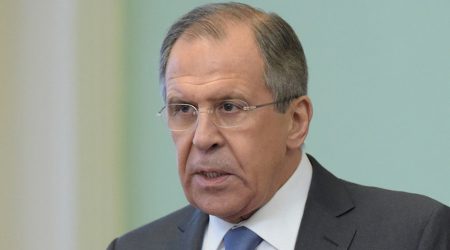
Russian Foreign Minister Sergey Lavrov has confirmed that Moscow has been mediating talks between Damascus and the Syrian Kurds to help maintain Syria’s sovereignty and statehood, in an interview with Russia’s Izvestia daily.
Russia “makes efforts to establish a common understanding between the Syrian government and the Syrian Kurds for the sake of a united Syria,” the minister told Izvestia in an interview he gave ahead of Diplomat’s Day, a Russian holiday celebrated on February 10.
Lavrov went on to say that four rounds of negotiations, brokered by Russia and including direct contact between the Damascus delegation and “representatives of the political and public structures of the Syrian Kurds,” had already taken place between June and December in 2016. In addition, the gatherings also involved indirect talks between the two sides.
The Russian foreign minister also confirmed that the Syrian government had held talks with the leaders of the Syrian Kurds’ armed militia units, the YPG.
“We believe that such intra-Syrian dialog is useful,” Lavrov said, stressing that there is “significant potential for reaching agreements” between Damascus and the Kurds, as the sides have found many areas of common interest and their negotiations are developing positively.
Lavrov emphasized that “the Kurdish issue” is one of the “key” factors in maintaining Syrian statehood and contributing to the stabilization of the situation in the entire Middle East. He also drew attention to the fact that Russia is continuing its efforts to find compromises between various ethnic and religious groups in Syria, as it is interested in restoring peace and stability in the warn-torn country and defeating international terrorist organizations entrenched in some areas there.
Regarding Syria’s potential federalization, Russia’s top diplomat neither denied nor confirmed that the issue was discussed during the talks between the Syrian government and the Kurds.
The minister’s statements come as Russia also seeks to launch a peace process between the Syrian government and the armed opposition groups together with Turkey and Iran.
In December 2016, a nationwide ceasefire came into force in Syria. It was brokered by Moscow and Ankara and endorsed by the UN Security Council. While in late January, negotiations took place between official representatives from Damascus, Russia, Iran and Turkey, as well as a delegation from the Syrian opposition in the Kazakh capital, Astana. However, the Syrian Kurds were not represented at the talks.
During the gathering, Russia submitted a draft document to serve as a “guide” for the Syrian constitution. The paper stressed that Syria’s territory is “inviolable and indivisible,” suggesting that restructuring of internal borders and proclaiming autonomous regions within Syria should be done only with respect to the country’s own laws. The rights of minorities were another key element of the draft.
In his interview with Izvestia, Lavrov also discussed other pressing issues in modern international politics. He once again criticized the NATO military buildup on Russian borders but expressed hope that Western politicians would eventually understand that Russia “poses no direct threat to NATO” and is a “peaceful country.”
Russia seeks “immediate de-escalation of the military and political situation in Europe” but is ready to defend its borders, Lavrov stressed.
He also went on to express his regret over the recent escalation of the conflict in eastern Ukraine and urged Kiev to implement the Minsk Agreements, noting that there is no other way to resolve the crisis.
Touching upon the issue of US-Russian relations, Lavrov again confirmed that Russia is ready to work with the administration of new US President Donald Trump on a broad range of issues, yet “on the basis of mutual respect.”
February 9, 2017
Posted by aletho |
Aletho News | Iran, Russia, Syria, Turkiye, YPG |
Leave a comment
President Trump has issued an executive order suspending entry to the U.S for people from Iraq, Syria, Libya, Somalia, Sudan, Iran, and Yemen (the order is called “Protecting the Nation From Foreign Terrorist Entry Into the United States”). These same countries were the focus of the “Visa Waiver Program Improvement and Terrorist Travel Prevention Act of 2015” under President Obama.
While reports on Trump’s ban emphasize that these are Muslim majority countries, analysts seem to have ignored another significant characteristic that these countries share.
With just a single exception, all of these countries were targeted for attack by certain top U.S. officials in 2001. In fact, that policy had roots that went back to 1996, 1991, 1980, and even the 1950s. Below, we will trace this policy back in time and examine its goals and proponents.
The fact is that Trump’s action continues policies influenced by people working on behalf of a foreign country, whose goal has been to destabilize and reshape an entire region. This kind of aggressive interventionism focused on “regime change” launches cascading effects that include escalating violence.
Already we’ve seen devastating wars, massive refugee movement that is uprooting entire peoples and reshaping parts of Europe, desperate and horrific terrorism, and now the horror that is ISIS. If this decades-long effort is not halted, it will be increasingly devastating for the region, our country, and the entire world.
2001 Policy Coup
Four-star general Wesley Clark, former Supreme Allied Commander, has described what he called a 2001 “policy coup” by a small group of people intent on destabilizing and taking over the Middle East, targeting six of the seven countries mentioned by Obama and Trump.
Clark gave the details in 2007 in an interview broadcast by Democracy Now and in a lecture at the Commonwealth Club of San Francisco.
Clark described a chance meeting in the Pentagon in 2001 ten days after 911 in which he learned about the plan to take down these countries.
After meeting with then-Secretary of Defense Rumsfeld and Deputy Secretary Paul Wolfowitz, Clark went downstairs to say hello to people on the Joint Staff who had worked for him in the past. One of the generals called him in.
‘Sir, you’ve got to come in and talk to me a second.” He told Clark, “We’ve made the decision we’re going to war with Iraq.”
Clark was shocked. He said, “We’re going to war against Iraq? Why?” The officer said he didn’t know. Clark asked if they had found information connecting Saddam to Al-Qaeda. The man said, “No, no, there’s nothing new that way. They just made the decision to go to war with Iraq.”
A few weeks later, Clark went back to the Pentagon and spoke to the general again. He asked whether the U.S. was still planning to go to war against Iraq.
The general replied: “Oh, it’s worse than that.” Clark says that the general picked up a piece of paper and said, “I just got this down from upstairs today. This is a memo that describes how we’re going to take out seven countries in five years, starting with Iraq, and then Syria, Lebanon, Libya, Somalia, Sudan and, finishing off, Iran.”
Clark asked, “Is it classified?” He said, “Yes, sir.”
Clark said he was stunned: “I couldn’t believe it would really be true. But that’s actually what happened. These people took control of the policy of the United States.”
1991
Clark says he then remembered a 1991 meeting he had with Paul Wolfowitz. In 2001 Wolfowitz was Deputy Secretary of Defense, and in 1991 he was Under Secretary of Defense of Policy, the number three position at the Pentagon.
Wolfowitz is a pro-Israel neoconservative who an associate has called “over the top when it comes to Israel.”
Clark describes going to Wolfowitz’s office in March of 1991. Clark said to Wolfowitz, “You must be pretty happy with the performance of the troops in Desert Storm.” Clark says Wolfowitz replied, “Not really, because the truth is we should have gotten rid of Saddam Hussein, and we didn’t.”
Wolfowitz declared the U.S. had an opportunity to clean up “Syria, Iran, Iraq, before the next super power came on to challenge us.”
Clark says he was shocked at Wolfowitz’s proposal that the military should initiate wars and change governments, and that Wolfowitz believed that the U.S. should invade countries whose governments it disliked. “My mind was spinning.”
Clark says Scooter Libby was at that meeting. Libby is another pro-Israel neoconservative. In 2001 He was Vice President Cheney’s chief of staff, and worked closely with the Office of Special Plans, which manufactured anti-Iraq talking points.
“This country was taken over by a group of people with a policy coup,” Clark said in his 2007 lecture. “Wolfowitz, Rumsfield, Cheney, and you could name a half dozen other collaborators from the Project for a New American Century. They wanted us to destabilize the Middle East, turn it upside down, make it under our control.”
(The Project for a New American Century was a think tank that operated from 1997-2006, and was replaced by the Foreign Policy Initiative.)
Clark continued: “Did they ever tell you this? Was there a national dialogue on this? Did Senators and Congressmen stand up and denounce this plan? Was there a full-fledged American debate on it? Absolutely not. And there still isn’t.”
Clark noted that Iran and Syria know about the plan. “All you have to do is read the Weekly Standard and listen to Bill Kristol, and he blabbermouths it all over the world – Richard Perle is the same way. They could hardly wait to finish Iraq so they could move into Syria.”
Clark says that Americans did not vote George Bush into office to do this. Bush, Clark pointed out, had campaigned on “a humble foreign policy, no ‘peace keeping,’ no ‘nation building.’”
Others have described this group, their responsibility for pushing the invasion of Iraq, and their pro-Israel motivation.
Neoconservatives, Israel, and Iraq
A 2003 article in Ha’aretz, one of Israel’s main newspapers, reported bluntly: “The war in Iraq was conceived by 25 neoconservative intellectuals, most of them Jewish, who are pushing President Bush to change the course of history.” (Ha’aretz often highlights the Jewish affiliation of important players due to its role as a top newspaper of the self-declared “Jewish State.”)
It gave what it termed “a partial list” of these neoconservatives: U.S. government officials Richard Perle, Paul Wolfowitz, Douglas Feith, and Eliot Abrams, and journalists William Kristol and Charles Krauthammer. The article described them as “mutual friends who cultivate one another.”
The article included an interview with New York Times columnist Thomas Friedman, who was quoted as saying:
“It’s the war the neoconservatives wanted. It’s the war the neoconservatives marketed. Those people had an idea to sell when September 11 came, and they sold it. Oh boy, did they sell it. So this is not a war that the masses demanded. This is a war of an elite.”
The article continued:
“Friedman laughs: ‘I could give you the names of 25 people (all of whom are at this moment within a five-block radius of this office) who, if you had exiled them to a desert island a year and a half ago, the Iraq war would not have happened.’”
Another Ha’aretz article described how some of these individuals, high American officials, gave Israeli leaders tips on how to manage American actions and influence US Congressmen, concluding: “Perle, Feith, and their fellow strategists are walking a fine line between their loyalty to American governments and Israeli interests.”
Ha’aretz reported that the goal was far more than just an invasion of Iraq: “at a deeper level it is a greater war, for the shaping of a new Middle East.” The article said that the war “was being fought to consolidate a new world order.”
“The Iraq war is really the beginning of a gigantic historical experiment…”
We’re now seeing the tragic and violent result of that regime-change experiment.
American author, peace activist, and former CIA analyst Kathleen Christison discussed the neoconservatives who promoted war against Iraq in a 2002 article. She wrote: “Although much has been written about the neo-cons who dot the Bush administration, their ties to Israel have generally been treated very gingerly.”
The Bush administration, she wrote, was “peppered with people who have long records of activism on behalf of Israel in the United States, of policy advocacy in Israel, and of promoting an agenda for Israel often at odds with existing U.S. policy.”
“These people,” she wrote, “who can fairly be called Israeli loyalists, are now at all levels of government, from desk officers at the Defense Department to the deputy secretary level at both State and Defense, as well as on the National Security Council staff and in the vice president’s office.”
Author Stephen Green wrote a meticulously researched 2004 expose describing how some of these individuals, including Perle and Wolfowitz, had been investigated through the years by U.S. intelligence agencies for security “lapses” benefiting Israel.
Yet, despite a pattern of highly questionable actions suggestive of treason, they continued to procure top security clearances for themselves and cronies. The neocon agenda also became influential in Britain.
(During the recent U.S. presidential election, neoconservatives were extremely hostile to Trump, and have been perturbed to have less influence in his administration they they expected to have with Hillary Clinton. They may be relieved to see him targeting their pet punching bags in the Middle East. It’s unclear whether neoconservatives will remain outside the White House’s inner circle for long: neocon Michael Ledeen is quite close to Trump’s recently named White House National Security Advisor Michael Flynn. And there is talk that Trump may appoint Elliott Abrams as Deputy Secretary of State.)
1996 plan against Iraq and Syria
The neocon regime-change strategy had been laid out in a 1996 document called “A Clean Break: A New Strategy for Securing the Realm.” It was written for Israeli Prime Minister Benjamin Netanyahu by a study group led by Richard Perle. Although Perle and the other authors were American citizens, the “realm” in question was Israel.
Perle was chairman of the United States Defense Policy Board at that time. He had previously been U.S. Assistant Secretary of Defense for International Security Policy.
The report stated that in the past, Israel’s strategy was to get the U.S. to use its money and weaponry to “lure Arabs” to negotiate. This strategy, the plan stated, “required funneling American money to repressive and aggressive regimes.”
The report recommended, however, that Israel go beyond a strategy just focused on Israel-Palestine, and address the larger region – that it “shape its strategic environment.”
It called for “weakening, containing, and even rolling back Syria” and “removing Saddam Hussein from power in Iraq.” The paper also listed Iran and Lebanon as countries to be dealt with (and Turkey and Jordan as nations to be used in the strategy).
The plan stressed that it was necessary to obtain U.S. support for the strategy, and advised that Israel use “language familiar to the Americans by tapping into themes of American administrations during the cold war … .”
Perle, Douglas Feith (who would be Deputy Under Secretary of Defense by 2001) and the other signatories of the report framed their proposal as a new concept, but the idea for Israel to reshape the political landscape of the Middle East had been discussed for years. (Lest we be unclear, “reshape the political landscape” means to change governments, something that has never been accomplished without massive loss of life and far-reaching repercussions.)
In 1992 Israeli leaders were already working to indoctrinate the public about an alleged need to attack Iran. Israeli analyst Israel Shahak wrote in his book Open Secrets that the goal would be “to bring about Iran’s total military and political defeat.”
Shahak reported: “In one version, Israel would attack Iran alone, in another it would ‘persuade’ the West to do the job. The indoctrination campaign to this effect is gaining in intensity. It is accompanied by what could be called semi-official horror scenarios purporting to detail what Iran could do to Israel, the West and the entire world when it acquires nuclear weapons as it is expected to a few years hence.”
1982 & 1950s Israeli plans to fragment the Middle East
A document called “A Strategy for Israel in the Nineteen Eighties,” proposed by Israeli analyst Oded Yinon, was published by the World Zionist Organization in 1982.
The document, translated by Israel Shahak, called for the dissolution of existing Arab states into smaller states which would, in effect, become Israel’s satellites.
In an analysis of the plan, Shahak pointed out: “[W]hile lip service is paid to the idea of the ‘defense of the West’ from Soviet power, the real aim of the author, and of the present Israeli establishment is clear: To make an Imperial Israel into a world power.”
Shahak noted that Israeli Defense Minister Ariel Sharon planned “to deceive the Americans after he has deceived all the rest.”
Shahak wrote that reshaping the Middle East on behalf of Israel had been discussed since the 1950s: “This is not a new idea, nor does it surface for the first time in Zionist strategic thinking. Indeed, fragmenting all Arab states into smaller units has been a recurrent theme.”
As Shahak pointed out, this strategy was documented in a book called Israel’s Sacred Terrorism (1980), by Livia Rokach. Drawing on the memoirs of the second Prime Minister of Israel, Rokach’s book described, among other things, a 1954 proposal to execute regime change in Lebanon.
The result
Returning to the present, let’s examine the situation in the “countries of concern” named by President Trump last week, by President Obama in 2015, and targeted by Wolfowitz et al in 2001.
Several years ago, journalist Glenn Greenwald commented on General Clark’s statement about the 2001 policy coup: “If you go down that list of seven countries that he said the neocons had planned to basically change the governments of, you pretty much see that vision… being fulfilled.”
Greenwald noted that the governments of Iraq, Libya, and Lebanon had been changed; the U.S. had escalated its proxy fighting and drone attacks in Somalia; U.S. troops were deployed in Sudan; “and the most important countries on that list, Iran and Syria, are clearly the target of all sorts of covert regime change efforts on the part of the United States and Israel.”
Below are sketches of what’s happened:
Iraq was invaded and the country destroyed. According to a 2015 NGO report, the U.S. invasion and occupation of Iraq had led to the deaths of approximately 1 million Iraqis – 5 percent of the total population of the country – by 2011. More than three million Iraqis are internally displaced, and the carnage continues. The destruction of Iraq and impoverishment of its people is at the root of much of today’s extremism and it’s been demonstrated that it led to the rise of ISIS, as admitted by former British Prime Minister and Iraq war co-perpetrator Tony Blair.
Libya was invaded in 2011 and its leader violently overthrown; in the post-Gaddafi power vacuum, a 2011 UN report revealed torture, lynchings and abuse. Five years on, the country was still torn by civil war and ISIS is reportedly expanding into the chaos. A 2016 Human Rights Watch report stated: “Libya’s political and security crisis deepened … the country edged towards a humanitarian crisis, with almost 400,000 people internally displaced.” Warring forces “continued with impunity to arbitrarily detain, torture, unlawfully kill, indiscriminately attack, abduct and disappear, and forcefully displace people from their homes. The domestic criminal justice system collapsed in most parts of the country, exacerbating the human rights crisis.” [Photos here]
Sudan: The U.S. engaged in so-called “nation-building” in Sudan, advanced the claim in 2005 that the government was perpetrating a genocide, and some U.S. players ultimately organized the secession of South Sudan from Sudan in 2011. (Neocon Israel partisan Elliott Abrams was one of these players.) One journalist reported the result: “[A]n abyss of unspeakable misery and bloodshed … . Tens of thousands have been killed, 1.5 million have been displaced, and 5 million are in dire need of humanitarian assistance.”
Somalia: There have been a number of U.S. interventions in Somalia, most recently a clandestine war under Obama using Special Operations troops, airstrikes, private contractors and African allies; Somali extremists, like others, repeatedly cite Israel’s crimes against Palestinians, enabled by the U.S., as motivators of their violent extremism.
Iran: Iran has long been targeted by Israel, and Israel partisans have driven the anti-Iran campaign in the U.S. Most recently there has been a public relations effort claiming that Iran is developing nuclear weapons, despite the fact that U.S. intelligence agencies and other experts do not support these accusations. Israel and the U.S. deployed a computer virus against Iran in what has been called the world’s first digital weapon. Young Iranian nuclear physicists have been assassinated by U.S. ally Israel, and the U.S. instituted a blockade against Iran that caused food insecurity and mass suffering among the country’s civilians. (Such a blockade can be seen as an act of war.) Democratic Congressman and Israel partisan Brad Sherman admitted the objective of the Iran sanctions: “Critics of sanctions argue that these measures will hurt the Iranian people. Quite frankly, we need to do just that.”
Yemen: The US has launched drone strikes against Yemen for years, killing numerous Yemeni civilians and even some Americans. In 2010, a few weeks after Obama won the Nobel Peace Prize, he had the military use cluster bombs that killed 35 Yemeni women and children. The Obama administration killed a 16-year-old American in 2011, and a few days ago U.S. forces under Trump killed the boy’s sister. In 2014 American forces attacked a wedding procession, and in 2015 the Obama administration admitted it was making war on Yemen. Today over two million Yemeni children suffer from malnutrition. The Yemeni regime that we’re attacking became politically active in 2003 as a result of the U.S. invasion of Iraq.
Syria: In an email revealed by Wikileaks, Hillary Clinton wrote that the “best way to help Israel” was to overthrow the Syrian regime.
Syria seems to be a poster child for the destruction recommended by Israeli strategists. As the UK Guardian reported in 2002: “Disorder and chaos sweeping through the region would not be an unfortunate side-effect of war with Iraq, but a sign that everything is going according to plan.”
Half the Syrian population is displaced – 5 million have fled the country and another 6 million are internally displaced – and over 300,000 are dead from the violence. Major cities and ancient sites are in ruins and the countryside devastated. Amnesty International calls it “the worst humanitarian crisis of our time.”
While the uprising against a ruthless dictator was no doubt begun by authentic Syrian rebels, others with questionable agendas flowed in, some supported by the U.S. and Israel. Israel’s military intelligence chief said Israel does not want ISIS defeated. Israel’s defense minister has admitted that Israel has provided aid to ISIS fighters.
ISIS
A major factor in Syria’s chaos and the rise of ISIS was the destruction of Iraq, as revealed by in-depth interviews with ISIS fighters by researchers for Artis International, a consortium for scientific study in the service of conflict resolution:
“Many assume that these fighters are motivated by a belief in the Islamic State… but this just doesn’t hold for the prisoners we are interviewing. They are woefully ignorant about Islam and have difficulty answering questions about Sharia law, militant jihad, and the caliphate.”
“More pertinent than Islamic theology is that there are other, much more convincing, explanations as to why they’ve fought for the side they did.”
One interviewee said: “The Americans came. They took away Saddam, but they also took away our security. I didn’t like Saddam, we were starving then, but at least we didn’t have war. When you came here, the civil war started.”
The report noted that the fighters “came of age under the disastrous American occupation after 2003.”
“They are children of the occupation, many with missing fathers at crucial periods (through jail, death from execution, or fighting in the insurgency), filled with rage against America and their own government. They are not fueled by the idea of an Islamic caliphate without borders; rather, ISIS is the first group since the crushed Al Qaeda to offer these humiliated and enraged young men a way to defend their dignity, family, and tribe.”
The leader of the Islamic State, Abu Bakr al-Baghdadi, was imprisoned for eight months in the infamous Abu Ghraib, a U.S.-run Iraqi prison known for grotesque torture of prisoners. Photos published at that time show U.S. soldiers smiling next to piles of naked prisoners and a hooded detainee standing on a narrow box with electrical wires attached to his outstretched hands.
An Abu Ghraib interrogator later revealed that Israelis trained them in the use of techniques used against Palestinians. General Janis Karpinski (in charge of the unit that ran the prison) and others say that Israelis were involved in interrogations. It was reported that the head of the defense contracting firm implicated in the torture at Abu Ghraib prison had close ties to Israel and had visited an Israeli training camp in the West Bank.
Another major factor in the rise of anti-Western extremism is the largely unconditional support for Israel’s violent oppression of Palestinians. As a UN report documented, “The scale of human loss and destruction in Gaza during the 2014 conflict was catastrophic and has … shocked and shamed the world.”
Professor John Mearsheimer of and Professor Stephen Walt of Harvard have written that U.S. policies promoted by the Israel lobby have given “extremists a powerful recruiting tool, increases the pool of potential terrorists and sympathizers, and contributes to Islamic radicalism around the world.” Osama Bin Laden cited U.S. support for Israeli crimes against Palestinians among his reasons for fighting the U.S. The U.S. gives Israel over $10 million per day.
Reaction to the Trump executive order
Thousands of people across the U.S. have opposed Trump’s order for the extreme hardship it imposes on multitudes of refugees. The focus on Muslims (Trump has said that Christians might be exempted) has caused outrage at such religious discrimination and unfair profiling (the large majority of Muslims strongly oppose extremism).
Individuals across the political spectrum from Code Pink to the Koch brothers have decried the order. The Kochs issued a strong statement against it:
“We believe it is possible to keep Americans safe without excluding people who wish to come here to contribute and pursue a better life for their families. The travel ban is the wrong approach and will likely be counterproductive. Our country has benefited tremendously from a history of welcoming people from all cultures and backgrounds. This is a hallmark of free and open societies.”
New York Democratic Senator Chuck Schumer, who supported the Iraq War and suggests God sent him to guard Israel, choked back tears at a press conference and called the order “mean-spirited and un-American.”
The Anti-Defamation League (ADL), known for its fervent pro-Israel advocacy (and history of smearing criticism of Israeli policy as “anti-Semitism”), has vowed a “relentless fight” against the ban.
Some are concerned that Trump’s action will stoke terrorism, rather than defend against it. Many others support the order in the belief it makes them safer from extremist violence. (As mentioned above, the Obama administration undertook a similar, though milder, action for a similar reason.)
I suggest that everyone – both those who deplore the order for humanitarian reasons, and those who defend it out of concern for Americans’ safety – examine the historic context outlined above and the U.S. policies that led to this order.
For decades, Democratic and Republican administrations have enacted largely parallel policies regarding the Middle East and Israel-Palestine. We are seeing the results, and most of us are deeply displeased.
I would submit that both for humanitarian obligations and for security necessities, it is urgent that we find a different way forward.
Alison Weir is executive director of If Americans Knew, president of the Council for the National Interest, and author of Against Our Better Judgment: The Hidden History of How the U.S. Was Used to Create Israel.
February 9, 2017
Posted by aletho |
Timeless or most popular, Wars for Israel | Iran, Iraq, Libya, Somalia, Sudan, Syria, United States, Yemen |
Leave a comment
A senior Russian diplomat has expressed surprise at an outcry provoked by the new US administration over Iranian missile work, saying Tehran’s missile tests are not violating any UN bans, legally speaking.
“This outcry about Iran’s ballistic missile launches. I was surprised to hear even American experts speaking on CNN and calling it a violation of bans by the UN Security Council,” said Russia’s UN Ambassador Vitaly Churkin in an interview with RT published Tuesday.
He was referring to Resolution 2231 adopted by the Security Council in July 2015 to underpin the landmark nuclear deal inked days earlier between Tehran and the P5+1 group of states, namely Russia, China, France, Britain, the US plus Germany.
The document terminated the provisions of previous UN resolutions, calling on Iran “not to undertake any activity related to ballistic missiles designed to be capable of delivering nuclear weapons, including launches using such ballistic missile technology.”
Explaining the legal language used in Resolution 2231, Churkin said the document merely “calls” on Tehran not to conduct tests of missiles capable of carrying nuclear weapons, but does not impose any ban on Tehran.
“Those bans were there before, all those bans were lifted,” said the Russian official. “Technically or legally you cannot argue that they are violating any kind of a prohibition.”
He also said no evidence has been provided to support the claims that Tehran’s missiles are capable of carrying nuclear warheads.
Late last month, Washington’s UN envoy Nikki Haley slammed a missile test by Iran as “absolutely unacceptable.”
US President Donald Trump’s National Security Advisor Michael Flynn also said following the January 29 test that Washington was “officially putting Iran on notice,” claiming that the launch was “in defiance of UN Security Council Resolution 2231.”
The Islamic Republic has, on numerous occasions, asserted that its missiles are not designed to be capable of carrying nuclear warheads, and that it is not involved in such missile work.
In March 2016, Russia blocked the potential ratification of a United Nations Security Council resolution against Iranian missile tests in a session called by the former US administration.
Explaining Russia’s opposition to an anti-Iran resolution, Churkin said back then that in the view of veto-wielding Russia, Resolution 2231, which endorsed a nuclear deal between Iran and six other countries, did not legally prohibit Iranian ballistic missile tests.
He said the text explicitly did not ban Iranian missile test-launches.
“A call is different from a ban, so, legally, you cannot violate a call, you can comply with a call or you can ignore the call, but you cannot violate a call,” Churkin said. “The legal distinction is there.”
Elsewhere in the interview, Churkin warned that the United States’ tensions with Iran might work to affect Moscow’s relations with Washington.
“There are so many complexities, so many issues which can create additional problems, including problems which might affect our relations with the US,” he said.
The envoy cautioned the US against behaving emotionally instead of relying on facts when it comes to Iran.
“In international life, you have to differentiate between your emotions, what you want to see and what you have the right to expect from another country,” he said.
Churkin further took on US President Donald Trump’s recent comment to Fox News that the Islamic Republic is “terrorist state number one.”
The envoy pointed to the active role the Islamic Republic is playing in the fight against the Daesh Takfiri terror group, which is mainly active in Syria and Iraq.
Iran has been providing military advisory support to the countries’ respective militaries in their fight against the terrorists, an assistance that has been met with appreciation from both governments.
On Monday, Kremlin spokesman Dmitry Peskov also reacted to Trump’s remarks, saying, “We disagree with this postulate.”
February 8, 2017
Posted by aletho |
Economics | Iran, Russia, Sanctions against Iran, United Nations, United States |
Leave a comment
Prime Minister Benjamin Netanyahu has urged Washington, London and their allies to create a “joint front” against Iran, citing Tehran’s supposedly aggressive behavior as the reason. Iranian analysts told Sputnik Persian that Israel “has no right” to come up with such initiatives since it is the main reason behind regional tensions.
“Israel is the main source of all conflicts in the Middle East,” Hossein Ruyvaran, an expert on the Middle East and the Arab world who teaches at the University of Tehran, said. “Since this state was established in 1948, the region has been plagued by many wars sparked by Israel – in 1948, 1956, 1973, 1982, 2006, 2008, 2012 and 2014. The Israeli regime is the main reason for regional tensions due to its ambitions. This regime has tried to change the geopolitical orientation in the region.”
These remarks came in response to Netanyahu calling on the United States and the United Kingdom to adopt a tough stance on Iran due to Tehran’s ostensibly “defiant aggression” and in light of the country’s “defiance against the international order.”
“Claims that Iran is the key threat [in the Middle East] and the main reason behind all troubles in the region are groundless,” Ruyvaran said. “Israel has tried to use these accusations to turn the West against Iran. Meanwhile, the UN Security Council has adopted Resolution 2234 which strongly condemns Israel’s unlawful settlements on occupied lands.”
Hassan Hanizadeh, Iranian political analyst and former chief editor of the Mehr News Agency, expressed similar sentiments. He referred to Netanyahu’s remarks as “anti-Iranian political propaganda.”
“Not many countries are ready to support Israel since everyone knows that Israel has occupied Arab lands, including the Golan Heights, Gaza and East Jerusalem,” he said. “This is why Israel has no right to accuse Iran of aggression since it itself is an aggressor. … Israel has no right to mention or urge to create a front against Iran. If a front against aggression must be created, then it should be targeted against Israel, not Iran.”Netanyahu’s comments came after Iran had tested a new ballistic missile last week. The United States imposed new sanctions on Tehran, with US President Donald Trump tweeting that the Islamic Republic has been “formally put on notice” for conducting the test. He added that Iran was “playing with fire.”
Tehran has repeatedly said that its missile program is defensive in nature and does not threaten other countries. On Monday, Iranian Foreign Ministry spokesman Bahram Qasemi said that the test was not intended “to send a message” to the new US administration.
February 8, 2017
Posted by aletho |
Economics, Ethnic Cleansing, Racism, Zionism, Wars for Israel | Iran, Israel, Middle East, Palestine, Sanctions against Iran, UK, United States, Zionism |
Leave a comment
Russia disagrees with a remark recently made by US President Donald Trump’s that branded Iran as “the number one terrorist state,” Kremlin spokesman Dmitry Peskov said, citing partnership between Moscow and Tehran.
“We do not agree with the definition,” Russian presidential spokesman Dmitry Peskov told reporters on Monday. “All of you know that Russia enjoys warm relations with Iran, we do cooperate on a range of issues, and we do appreciate our economic ties which, we hope, will go further,” he added.
Trump lambasted the landmark nuclear deal reached in 2015 between Iran, the P5+1 (the five permanent members of the United Nations Security Council – China, France, Russia, United Kingdom and United States, plus Germany), and the European Union.
In the first part of the interview with Fox News host Bill O’Reilly, which was published on Sunday, Trump said “they [Iran] have total disregard for our country, they’re the number one terrorist state, they’re sending money all over the place and weapons.”
Earlier in February, one day after the White House imposed new sanctions on Iran in response to a ballistic missile test, US Defense Secretary James Mattis called Tehran the world’s “biggest state sponsor of terrorism.”
“It’s no secret for anyone that Moscow and Washington hold diametrically-opposed views on many international and regional policy issues,” said Peskov. “Meanwhile, it can’t be and should not be an obstacle when it comes to forging normal communication and pragmatic mutually-beneficial relations between Russia and the US.”
Russian Foreign Minister Sergey Lavrov echoed the Kremlin’s statement, stressing that Tehran takes an active part in fighting Islamic State (IS, previously ISIS/ISIL).
“Iran has never been complicit in any links to IS or Al-Nusra Front whatsoever,” the minister said.
“Moreover, Iran contributes to combatting IS. We have long advocated the idea of creating a unified anti-terrorist front. I am convinced that Iran must be part of our common effort if we evaluate potential contributors to such an alliance objectively,” Lavrov said.
February 6, 2017
Posted by aletho |
Mainstream Media, Warmongering | Iran, Russia, United States |
Leave a comment
Within days of the flawed roll-out for Trump’s Executive Orders regarding Border Security and Immigration Enforcement Improvements and Enhancing Public Safety in the Interior of the United States, the President’s promises on the campaign trail and his Inaugural Address that the US would not pursue regime change or initiate new foreign interventions and that his administration would pursue a new foreign policy based on engagement, have been called into question.
The week began with President Trump praising, as a success, the administration’s first attack on al Qaeda in Yemen which inexplicably included special ops from UAE. Reports state that the group of Navy Seals unexpectedly walked into an hour long fire fight which contained elements of an ambush including hand grenades and a certain amount of panic with indiscriminate gunfire; leaving one Navy Seal dead with several injured, at least a dozen civilians dead including an eight year old girl and destroyed a $75 million Osprey – you might say the raid was more of the same kind of failure with which the US military has some long-standing familiarity. Black Hawk Down in 1993 comes to mind.
Described by Trump press secretary Sean Spicer as a “very, very well-thought out and executed raid”, the mission began on November 7 when the Pentagon presented President Obama with a plan. From there, the proposed raid went through all the necessary channels arriving in front of Trump Defense Secretary James Mattis on January 24th. Mattis approved and forwarded the plan to the White House for the President’s approval which he gave the next day at a dinner which included several key staff members including special assistants to the White House Jared Kushner and Steve Bannon and after consulting with National Security Advisor General Michael Flynn.
All of the reviews and approvals, however, did not guarantee success as there is reason to believe that the alQ stronghold was expecting an American raid with armed female and AQ snipers on a rooftop. After the raid, anonymous U.S. military officials told Reuters that “Trump approved his first covert counterterrorism operation without sufficient intelligence, ground support or adequate backup preparations.” In addition, Reuters quoted three unnamed US military officials that “the attacking SEAL team found itself dropped into a reinforced al Qaeda base defended by landmines, snipers, and a larger than expected contingent of heavily armed Islamist extremists.” This does not sound like a surprise raid but more like a disaster waiting to happen.
These unprecedented ‘leaks’ indicate an undercutting of the Administration by anonymous military officials who are in direct contradiction to the timeline as presented by Spicer that the entire plan had been appropriately vetted by the government’s foreign policy structure – with the exception of Rex Tillerson who had not yet been confirmed as Secretary of State.
It has been said that the mission needed to receive a green light to take advantage of a Moonless night and that the mission was to acquire certain computer hard drives with speculation that there was some urgency of obtaining the intel contained potentially embarrassing data regarding the interconnections between the terrorists and certain foreign nations which support terrorists. In any case, it was a botched mission that was poorly planned and executed and appears to have a major security problem given the unauthorized disclosures by anonymous military officials who disagreed about what the public has been told about the raid. So which is it – was the raid properly vetted and the right questions asked – or was it insufficiently vetted?
US CommCentral released the clip that they say was obtained from a series of videos during the raid which shows a black hooded individual giving instructions on how to make a do-it-yourself bomb. The clip, which has no audio and its written instructions are written in perfect English, is now reported to be a decade old AQ training video [sourced from SITE]. It is assumed that the President’s Monday trip to Central Command and Special Ops in Florida was not just a get-to-know-you visit.
As if that were not enough faux pas for the week, General Flynn took an unprecedented place on center stage at a press conference sounding like the Commandant of Stalag 19, stridently warning Iran and spouting old, worn out rhetoric that the “Trump administration condemns such actions by Iran that undermines security, prosperity and stability throughout and beyond the Middle East which places American lives at risk. As of today, we are officially putting Iran on notice.”
The accusations came after Iran reportedly fired a test of a medium-range ballistic missile on February 1st with Iranian Defense Minister Hossein Dehghan stating that “The test did not violate the nuclear deal or (U.N.) Resolution 2231″ and that “… we will not allow foreigners to interfere in our defence affairs,” striking a chord with Trump’s Inaugural statement that “it is the right of all nations to put their own interests first.”
On the heels of Flynn’s rant, the Trump administration quickly announced economic sanctions on twenty five Iranian individuals and entities that have unnecessarily escalated tensions with:
“The Islamic Republic of Iran is the world’s leading state sponsor of terrorism and engages in and supports violent activities that destabilize the Middle East.”
“The Trump Administration will no longer tolerate Iran’s provocations that threaten our interests. “
“The days of turning a blind eye to Iran’s hostile and belligerent actions toward the United States and the world community are over.”
The Flynn/Trump obsession against Iran has little basis in rational thought and is not the kind of nation-building and “forming of new alliances” that the President promised in his Inaugural address. Flynn may be myopic on the subject of Iran since Iran supported the insurgents in Iraq during the US invasion in 2003 but he may also be blowing smoke with the realization that the administration must know that any serious effort to eliminate ‘radical Islamic terrorists’ will be dependent upon Iran’s participation.
As Ron Paul has repeatedly suggested, Iran has every reason to want its own nuclear capability, if only as a defensive mechanism to protect itself from Israel and the US. A spokesperson for the EU foreign policy chief in Brussels said that the “Iranian ballistic missile program was not part of the 2015 nuclear pact and hence the tests are not a violation of it.”
On February 3rd, President Trump tweeted “Iran is playing with fire – they don’t appreciate how “kind” President Obama was to them. Not me!” to which Iranian Foreign Minister Javad Zarif tweeted “We will never, I repeat never, use our weapons against anyone, except in self-defense. Let us see if any of those who complain can make the same statement.”
If the Trump Administration believes Iran is in violation of the Plan, they have the option to initiate a dispute resolution process or to engage the International Atomic Energy Agency (IAEA) which has regular access to all Iranian nuclear facilities to verify that Iran is in compliance. Iran says it will impose its own sanctions and release its own list of US-related ‘entities’ entwined with supporting terrorists.
With an imminent visit to the US, it is not outside the realm of possibility that all this Tough on Iran talk is to impress Bibi Netanyahu who hailed Flynn’s statement with “Iranian aggression must not go unanswered” which sounds reminiscent of Sen. John McCain. As if to tone down the US inflammatory reaction, new Defense Secretary James Mattis said he sees ‘no need to increase number of troops in the Middle East” in response to the Iranian missile crisis.
Of special interest will be how Trump deals with whatever demands Netanyahu has in his pocket and how Trump’s high regard for Israel may be affected, assuming that he is already apprised of Israel’s role in funding ISIS in Syria and its support and participation in fomenting terrorist actions throughout the Middle East. If Flynn/Trump are concerned with who is causing instability in the Middle East, they have no further to look than Saudi Arabia and Israel. It is difficult to image that Trump does not already have an appreciation for Netanyahu’s expectation to continue to run the show otherwise known as US foreign policy.
As if the Trump foreign policy objectives had not already experienced a week of upsets, contradictions and overall confusion, UN Ambassador Nikki Haley’s diatribe against Russia was stunning in its vitriolic attack on Russia alleging “aggressive actions of Russia” and “dire situation in eastern Ukraine is one that demands clear and strong condemnation of Russian actions.” In addition, Haley asserted, in contradiction to President Trump’s previous position on Crimea that “The United States continues to condemn and call for an immediate end to the Russian occupation of Crimea” and that “Crimea is a part of Ukraine. Our Crimea-related sanctions will remain in place until Russia returns control of the peninsula to Ukraine.”
In his February 3rd press conference, Trump press secretary backed up Haley with “I think Ambassador Haley made it very clear of our concern with Russia’s occupation of Crimea. We are not — and so I think she spoke very forcefully and clearly on that.”
Russia’s UN Ambassador Vitaly Churkin responded that ‘the belligerent rhetoric toward Moscow over the Ukrainian crisis is nothing new” and that “it is Kiev that has escalated the situation there”. He also cited “OSCE reports and surveillance data which places the blame squarely on the Ukrainian government and not the rebel forces.”
After the initial shock at Haley’s level of hostility, an immediate reaction was that as a former Republican Governor of South Carolina, Haley had to have a working relationship with Senator Lindsay Graham (R-SC), the alter ego of Sen. John McCain who remains an irrational proponent of intervention wherever possible around the globe and that her maiden speech before the Security Council had somehow gone askew as a more combative, divisive script found its way into her file.
However, U.N. ambassador Nikki Haley, met with her Ukrainian counterpart “to reaffirm the United States’ support for the sovereignty and territorial integrity of Ukraine,” according to a statement.
In view of another pending humanitarian disaster as a result of US intervention in Ukraine, the best that the State Department could do, prior to Tillerson taking office, was to issue a statement calling for a ceasefire and return to implementation of the Minsk Agreement.
It is reported, though unconfirmed, that soon after her speech, Haley visited Russian Ambassador Churkin at his home, presumably to reassure him that there was a bureaucratic snafu and that US policy toward Russia was not accurately reflected in her introductory remarks.
As a result of a week of significant snafus, the Trump Administration has either caved in to neo-con pressure like Eliot Abrams (convicted of lying to Congress during Iran-Contra) who is currently vying for the Deputy Secretary position at the State Department or they are dealing with repeated staff blunders and turmoil that are seriously threatening any hope of credibility for Trump’s oft-stated foreign policy goals.
Renee Parsons has been a member of the ACLU’s Florida State Board of Directors and president of the ACLU Treasure Coast Chapter. She has been an elected public official in Colorado, an environmental lobbyist and staff member of the US House of Representatives in Washington DC. She can be found on Twitter @reneedove31
February 6, 2017
Posted by aletho |
Aletho News | Iran, Sanctions against Iran, Saudi Arabia, UAE, United States, Yemen |
Leave a comment
Iran has confirmed the discovery of 15 billion barrels of new in-place oil reserves, but a top official says huge investments and state-of-the-art technology are required to exploit those reserves.
Ali Kardor, the managing director of the National Iranian Oil Company (NIOC), was quoted by domestic media as saying that around 2 billion barrels of the newly-discovered reserves were “recoverable”.
Kardor added that around 1.8 trillion cubic meters (tcm) of in-place reserves of natural gas – around half of which he said were recoverable – had also been discovered. However, he did not specify when and where the new discoveries had been made.
Meanwhile, NIOC Director for Corporate Planning Affairs Karim Zobeidi said the overall volume of Iran’s oil reserves stood at 771.53 billion barrels, of which around 102 billion barrels would be recoverable at a rate of 24.6 percent.
Zobeidi added that Iran’s in-place reserves of natural gas stand at 55 tcm of which 33 tcm could be recovered at a rate of around 70 percent.
The NIOC chief was further quoted by the Persian-language newspaper Iran as saying that a new round of tenders – scheduled for the next few weeks – would pave the ground for international energy companies to help develop the country’s oil and gas reserves.
Kardor also said that Iran’s production of high-quality oil would reach four million barrels per day (mb/d) before April – what could be a landmark success for the country after the sanctions that had kept production a little above 2 mb/d were lifted in January 2016.
February 5, 2017
Posted by aletho |
Economics, Malthusian Ideology, Phony Scarcity | Iran, Sanctions against Iran |
Leave a comment

 Aletho News
