Iran to leave talks if Congress OK’s sanctions: MP
Press TV – November 18, 2013
A Senior Iranian lawmaker says the Islamic Republic will leave the negotiating table if the US Congress approves additional sanctions against Tehran.
“The US Congress has recently been seeking to approve a bill to increase sanctions against Iran. It has been decided that the negotiations be suspended if the bill gets through the US Congress,” said Mohammad Hassan Asafari who sits on the National Security and Foreign Policy Committee of Majlis.
The Iranian lawmaker made the remarks after a meeting in which Iran’s nuclear negotiating team briefed the parliamentary committee on two rounds of nuclear talks with the five permanent members of the UN Security Council – Britain, China, France, Russia and the US – plus Germany.
The US Senate Banking Committee is mulling over whether to move ahead with a new anti-Iran sanctions bill it had delayed before the latest round of talks between Iran and the group of six world powers which was held in the Swiss city of Geneva on November 7-10.
The new round of sanctions against Iran, which the Senate Banking Committee has been asked to “mark up,” were passed by the Republican-controlled House of Representatives in July. The House bill seeks to cut Iran’s oil exports by one million barrels a day for the next year and includes threats of military force against Iran.
The White House, however, is resisting growing pressure from Congress over Iran sanctions, trying to convince US lawmakers not to impose what they call further “punitive” measures.
“Our hope is now that no new sanctions would be put in place for the simple reason that if they are, it could be viewed as bad faith by the people we’re negotiating with, [and] it could destroy the ability to be able to get agreement,” US Secretary of State John Kerry said before a closed-door briefing with the Senate Banking Committee on November 13.
During Sunday’s meeting, Iran’s negotiating team also briefed the country’s lawmakers on the agenda of the forthcoming round of negotiations slated to be held on November 20 in Geneva.
“The negotiating team and the members of the Majlis National Security [and Foreign Policy] Committee reiterated in the meeting that the suspension of enrichment as well as the closure of the Fordow facility and the Arak heavy water [reactor] or any other [nuclear] sites is not on our agenda,” Asafari noted.
Meanwhile, Israel has been trying to force the US administration into imposing additional sanctions to stop an agreement between Iran and the five permanent members of the UN Security Council plus Germany.
Israel’s Economy and Trade Minister Naftali Bennett has recently met with a number of congressmen in Washington in order to persuade them to oppose a diplomatic deal with Iran.
Related article
NPT useless in Middle East: Israel PM
Press TV – November 16, 2013
Israeli Prime Minister Benjamin Netanyahu says the nuclear Non-Proliferation Treaty (NPT) has no use in the Middle East.
Problematic countries are not the ones which have refused to sign the NPT, Netanyahu said in an interview with French-language daily Le Figaro on Friday.
The Israeli premier accused Iran of seeking nuclear weapons despite being a signatory to the NPT.
He said Iran should not possess heavy water reactors or centrifuges, stressing Israel and Arab countries in the Persian Gulf are united in their stance against the Iranian nuclear issue.
Netanyahu labeled Tehran as an aggressive and violent state which poses a threat to the US and European countries such as France and Britain.
He called on France to stand firm on its stance against Iran in the upcoming nuclear talks between Iran and the five permanent members of the UN Security Council -Russia, China, US, UK, and France- plus Germany.
Israel is widely believed to be the only possessor of nuclear weapons in the Middle East with an estimated 200 to 400 nuclear warheads.
The Israeli regime, which rejects all regulatory international nuclear agreements, particularly the NPT, maintains a policy of deliberate ambiguity over its nuclear activities and refuses to allow its nuclear facilities to come under international regulatory inspections.
Related article
- Netanyahu ‘biggest hypocrite’ in world (rinf.com)
Kerry: US ‘100 percent’ with Israel
Press TV – November 16, 2013
US Secretary of State John Kerry has said that the United States is “100 percent” allied with Israel, especially when it comes to negotiations over Iran’s nuclear energy program.
In an interview with MSNBC’s ‘Morning Joe’ on Thursday, Kerry said, “What’s important here is we stand with Israel firmly – 100 percent.”
He made the comments one day after Republican members of the Senate Banking Committee stormed out of a classified meeting with Kerry, saying the briefing session was “anti-Israeli.”
Kerry held a closed-door briefing with the Senate Banking Committee on Wednesday to convince Congress that any new sanctions against Iran would be viewed as “bad faith” and can “destroy the ability to” reach an agreement over Tehran’s nuclear energy program.
Sen. Mark Kirk (R-Illinois) described the briefing as “anti-Israeli,” saying “I was supposed to disbelieve everything the Israelis had just told me.”
Meanwhile, Israel continued its lobbying efforts on Capitol Hill as Israel’s Economy and Trade Minister, Naftali Bennett, pushed for new anti-Iran sanctions on Thursday and described a possible deal between Iran and the five permanent members of the UN Security Council plus Germany as “catastrophic.”
This comes as White House Press Secretary Jay Carney said on Tuesday that imposing new sanctions on Iran would be a “march to war” and that “the American people do not want a march to war.”
Speaking with reporters during a White House briefing on Thursday, US President Barack Obama also called on Congress not to impose any new sanctions on Iran.
On Friday, an unnamed top US official told Reuters that a nuclear deal between Iran and the P5+1 is “quite possible” during the next round of talks between the two sides, which is to be held in Geneva on November 20.
Lavrov: Last-Minute Changes Ruined Nuclear Deal
Al-Manar | November 15, 2013
Russian Foreign Minister Sergei Lavrov said amendments made by a member of the six world powers to a US-proposed draft proposal during the recent Iran nuclear talks in the Swiss city of Geneva spoiled efforts to reach a deal.
Lavrov, who is on a visit to Egypt, said on Thursday that Iran and six world powers were close to reaching an agreement on a deal during their talks in Geneva, but last-minute amendments to the draft document blocked a deal, AP reported.
He expressed hope that representatives of the six countries will not abandon “agreements that already have been shaped” and strike a pact with Iran during next week’s talks.
A member of the Iranian delegation in nuclear talks with six world powers says Tehran did not block an agreement in last week’s negotiations in Geneva.
“The Islamic Republic of Iran did not prevent a final deal in Geneva,” Iran’s Deputy Foreign Minister for European and American Affairs Majid Takht-e Ravanchi said Friday. “We do not want to go into the details of the issues…, but it is clear who ultimately blocked a final agreement,” he added.
On November 7, Iran and the six world powers – the US, France, Britain, Russia, China and Germany – kicked off intense discussions in Geneva which stretched into a third day. The two sides did not reach an agreement, but stressed that significant progress had been made and expressed optimism about the prospect of a possible deal in the future.
French Foreign Minister Laurent Fabius said in a November 9 interview that “Israel’s concerns” must be taken into consideration in the course of the negotiations, adding that there is “no certainty” whether Iran and six powers will reach an agreement at the current stage.
Obama’s Refusal to Respect Iran’s Sovereign and Treaty Rights Continues to Thwart Diplomacy, Leaving America on the Self-Defeating Path to War
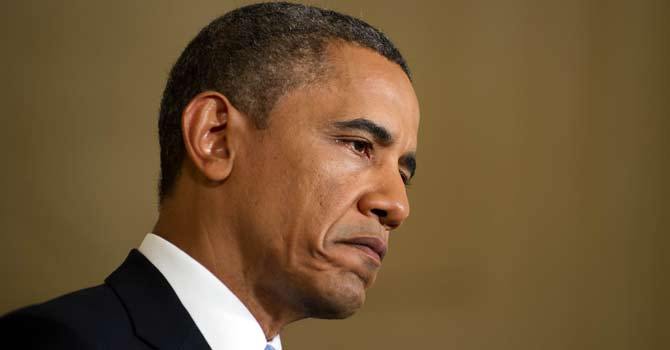
By Flynt Leverett and Hillary Mann Leverett | Going to Tehran | November 12th, 2013
Notwithstanding France’s simultaneously arrogant and craven grandstanding over Iran’s Arak heavy water reactor, the main reason for the failure of last week’s nuclear talks between the Islamic Republic and the P5+1 was the Obama administration’s imperious refusal to acknowledge Tehran’s right to enrich uranium under international safeguards. On this point, we want to highlight a recent post by Dan Joyner on Arms Control Law, titled, “Scope, Meaning and Juridical Implication of the NPT Article IV(1) Inalienable Right.”
Dan opens with a favorable reference to our recent post on the issue, see here; he then focuses on how to interpret the NPT Article IV(1) right to peaceful nuclear energy—a subject he has already written about at some length. He usefully inserts an excerpt from his excellent 2011 book, Interpreting the Nuclear Nonproliferation Treaty, Interpreting the Nuclear Nonproliferation Treaty Pages 79-84. This excerpt lays out Dan’s argument that the right to peaceful use of nuclear technology should be interpreted as “a full, free-standing right of all NNWS [non-nuclear-weapon states] party to the treaty, and not as a contingent right, contrary to the interpretation of some NWS [nuclear-weapon states].” After elaborating this basic point, Dan continues:
“The question of the scope of this right is one that continues to be debated. I have looked to the Lotus principle in international law (see the excerpt from my book) to show that the lawfulness of NNWS’, and in fact all states’, indigenous nuclear fuel cycle activities can be shown to derive from the absence of any prohibition of these activities in international law. This observation will, I have argued, serve to legally justify the full nuclear fuel cycle of activities within a NNWS, subject only to the positive requirements of Articles II and III of the NPT—i.e. no manufacture of nuclear explosive devices, and the conclusion of a safeguards agreement with the IAEA.
The question of just what exactly is the nature and scope of the right recognized in Article IV(1) of the NPT, and what are its juridical implications (e.g. in tension with the UN Security Council’s order in Resolution 1696 for Iran to cease uranium enrichment), is a subject that I have been thinking/researching about recently… These questions actually raise some very deep issues of international law, and analyzing them properly requires serious work… But let me say this here.
Article IV(1) of the NPT states that “Nothing in this Treaty shall be interpreted as affecting the inalienable right of all the Parties to the Treaty to develop research, production and use of nuclear energy for peaceful purposes without discrimination and in conformity with Articles I and II of this Treaty.” In my view, the recognition by over 190 states parties to the NPT that all states have such an inalienable right, which I interpret to include all elements of the full nuclear fuel cycle including uranium enrichment, strongly suggests that the right to peaceful nuclear energy research, production and use is one of the fundamental rights of states in international law. In my view, both fundamental and acquired rights of states should be understood to create in third parties, both states and international organizations, a legal obligation to respect those rights.
This means that other states and international organizations are under an international legal obligation not to act in serious prejudice of states’ rights. In the case of fundamental rights, this reciprocal obligation is of a jus cogens order, meaning that all states and international organizations are under a jus cogens order legal obligation not to act to seriously prejudice the fundamental rights of other states. When states or international organization do act in serious prejudice of a state’s fundamental rights, that action is an internationally wrongful act, and implicates the international responsibility of the acting state or international organization.
According to this analysis, UN Security Council Resolution 1696, which commands Iran to cease uranium enrichment, constitutes a violation of international law, at least as to this particular command, and is void of legal effect (See Article 25 of the UN Charter).
Note that the often heard rebuttal to this argument, which references Article 103 of the UN Charter, is in fact erroneous and inapplicable. Article 103 of the UN Charter provides that “In the event of a conflict between the obligations of the Members of the United Nations under the present Charter and their obligations under any other international agreement, their obligations under the present Charter shall prevail.” My analysis, which is based on the recognition of a fundamental right of states in international law, and the juridical implication of an obligation in other states and international organizations to respect that right, is unaffected and unanswered by this provision, which merely recognizes that in the case of a conflict between UN member states’ international legal obligations under the Charter, and their obligations deriving from other sources, the Charter obligations trump. It does not speak to the legal obligations of the Security Council as an organ of an international organization. Nor does it speak at all to conflicts between the obligations of the UN Charter, and the rights of states in international law. So again, Article 103 of the UN Charter is inapposite and inapplicable to this question.”
Dan’s work on these issues is both breathtakingly clear and, as far as we are concerned, definitive. (For more of his analysis on the illegality of Security Council resolutions calling on Iran to suspend uranium enrichment, we refer everyone to his brilliant article, “The Security Council as Legal Hegemon,” published last year in the Georgetown Journal of International Law, see here.)
More immediately, Dan’s work underscores an important reality: the Obama administration’s hegemonically abusive refusal to recognize Iran’s right to safeguarded enrichment is not just diplomatically and strategically counter-productive—it is illegal.
Related article
Russia: Iran Not to Blame for Geneva Talks Failure
Al-Manar | November 12, 2013
Russia said the Islamic Republic of Iran was not to blame for the failed outcome of nuclear talks in Geneva last week, hinting at cracks in what had previously appeared to be a relatively united international front on the issue.
A source in the Russian Foreign Ministry said Tuesday that the account of the talks given by US Secretary of State John Kerry this week was an oversimplification of events, according to Ria Novosti.
“The draft of the joint document readied by the Americans was agreeable to the Iranians, but as decisions at the negotiations in this format are adopted by consensus, it was unfortunately not possible to come to a final agreement. This was not the fault of the Iranians,” the source said.
Kerry on Monday accused Tehran of backing away from a deal to limit its nuclear program in exchange for relief from sanctions that have stifled its economy. He said though that a deal could be reached in the coming months.
Tehran has pointed the finger at France for the failure to reach consensus in Geneva.
French Foreign Minister Laurent Fabius told French media during the talks on Saturday morning that his delegation did not agree with the draft under discussion.
“There are some points on which we are not satisfied,” Fabius was quoted as saying by Agence France-Presse news agency. AFP quoted Fabius as citing the “extremely prolific” Arak nuclear reactor and the issue of uranium enrichment.
Related article
- Russia Says Iran Not to Blame for Geneva Talks Failure (themoscowtimes.com)
What an Al-Monitor Analyst Gets Wrong about Arak
By Nima Shirazi | Wide Asleep in America | November 11, 2013
In a new piece over at Al-Monitor, Iranian-born Israeli analyst Meir Javedanfar commends the blocking of a preliminary nuclear deal between the P5+1 and Iran by French Foreign Minister Laurent Fabius over the issue of Iran’s continuing construction of the Qatran Complex, a heavy water facility near Arak, a city southwest of Tehran.
But it is riddled with the factual errors and decontextualized conjecture that have long been a hallmark of Mr. Javedanfar’s analysis.
This time around, it appears Mr. Javedanfar is a bit confused as to the difference between Iran’s two facilities at Arak. One is the IR-40 heavy water research reactor, the other is a heavy water production plant. The half-built reactor is under IAEA safeguards and is visited regularly by inspectors; the production plant is not under safeguards and thus not legally subject to inspections.
When Mr. Javedanfar, writing clearly about the IR-40 reactor and not the production plant, claims that “the Iranian regime has not allowed the International Atomic Energy Agency (IAEA) to visit the site since 2011” and that the “IAEA has since had to rely on satellite images to assess developments regarding the site,” he is simply wrong. That he then states that this “reinforces concern and urgency” demonstrates a distinct lack of clarity on his part as to what risks actually exist or do not exist.
Here’s why:
What Mr. Javedanfar is actually referring to (though he doesn’t seem to know it) is the production plant at Arak, not the reactor. Iran voluntarily allowed IAEA access to the production plant in 2011. According to the most recent safeguards report, the Arak reactor however was visited by IAEA monitors on August 7, 2013. Another report will be issued soon, which means inspectors have also been there since.
The reactor, which Mr. Javedanfar never mentions is not operational and may not be for another year, is not in itself a proliferation risk. Plutonium is produced as a byproduct of running the reactor, and must be separated out from irradiated fuel and reprocessed to weapons-grade material before it poses any actual danger.
Still, Mr. Javedanfar writes that the “Arak heavy water reactor… could produce plutonium to make a bomb while the talks continue,” which is misleading and wholly speculative at best, intimating as he does that once the Arak reactor is switched on, weapons-grade plutonium pops out.
First, talks are not expected to continue for years to come. With the reactor not yet up and running (it’s projected to come online in mid-2014, but will most likely be delayed as it has in the past), the timeframe on Arak is an important factor in determining the potential (and, at this stage, totally hypothetical) risk it poses.
As Daryl G. Kimball and Kelsey Davenport of the Arms Control Association explained this past summer:
[T]he reactor at Arak would need to be operational for perhaps up to a year before the plutonium could be extracted. Even then, Iran does not have a reprocessing facility for separating the plutonium to produce weapons-usable material, having revised its declaration to the IAEA regarding the Arak site in 2004. The revision eliminated plans for a reprocessing facility at the site. Tehran maintains that it does not intend to build a plant to separate plutonium from the irradiated fuel that the reactor will produce.
By this measure, taken with Mr. Javedanfar’s claim, talks would need to continue without progress for at least another year and half, perhaps two years, for Iran to even begin extracting plutonium from spent fuel. That’s mid-2015 at the earliest.
Plus, Iran can’t even reprocess that extracted plutonium into weapons-grade material because it doesn’t have the facilities to do so.
This past weekend, Kimball told The Guardian that, if anything, “Arak represents a long-term proliferation risk not a near-term risk and it can be addressed in the final phase of negotiations,” adding, “France and the other… powers would be making a mistake if they hold up an interim deal that addresses more urgent proliferation risks over the final arrangements regarding Arak.”
Yet Mr. Javedanfar calls the blocking of a preliminary deal by the French “fair and logical.”
Perhaps if he had a better grasp on the facts about Arak, he would come to a different conclusion. Then again, maybe not. After all, a TIME magazine headline from last month says it all: “If Iran Can Get This Reactor Online, Israel May Not Be Able to Bomb It“.
That, it would appear, is the real risk for Israel and its analysts.
*****
UPDATE:
Following a meeting in Tehran between IAEA Director General Yukiya Amano and President of the Atomic Energy Organization of Iran Ali Akbar Salehi, it was agreed that Iran would provide “relevant information and managed access to the Heavy Water Production Plant” at Arak.
This is a voluntary, confidence-building measure taken by Iran in an effort “to strengthen their cooperation and dialogue aimed at ensuring the exclusively peaceful nature of Iran’s nuclear programme through the resolution of all outstanding issues that have not already been resolved by the IAEA.”
Related articles
- The New York Times continues to exemplify everything that’s wrong about Iran news coverage (alethonews.wordpress.com)
- Iran permits monitoring of Arak heavy-water reactor and Gechin uranium mine (en.trend.az)
Sen. Graham: Israel ‘apoplectic’ about US approach on Iran
Press TV – November 11, 2013
US Senator Lindsey Graham has warned about a possible easing of economic sanctions against Iran, saying Israel is “apoplectic” about the Obama administration’s approach.
Graham, a hawkish Republican from South Carolina who has repeatedly called for military strikes on Iran, said Sunday that lifting sanctions would send the wrong message to Israel and other US allies in the region.
“The Israelis are apoplectic about what we’re doing,” he said on CNN’s “State of the Union.” “I’ve never been more worried about the Obama administration’s approach to the Middle East than I am now.”
The White House offered a “very modest sanctions relief” as Iran and the six major world powers– the US, Britain France, China, Russia and Germany– engaged in talks over Iran’s nuclear energy program in Geneva, Switzerland over the weekend.
The talks ended inconclusively on Sunday when France rejected a list of demands on Iran, saying they were too generous to result in an easing of sanctions. More negotiating sessions are scheduled for November 20.
Sen. Graham said the sanctions should be kept in place, and coupled with the threat of military force, to compel Iran to stop its uranium enrichment activities.
“If it ends with anything less, the world will regret this,” Graham said. “My fear is that we’re going to end up creating a North Korea kind of situation in the Middle East.”
Senate leaders showed bipartisan support Sunday for tougher sanctions on Iran.
Senator Robert Menendez, chairman of the Senate Foreign Relations Committee and a key architect of anti-Iran sanctions, called on Congress to consider new economic sanctions against Iran.
“I think that the possibility of moving ahead with new sanctions, including wording it in such a way that if there is a deal that is acceptable that those sanctions could cease upon such a deal, is possible,” Menendez said Sunday on ABC’s “This Week.”
The US lawmakers’ outburst happened after Israeli Prime Minister Benjamin Netanyahu denounced a possible agreement with Iran as a “historic blunder.”
Featured Video

AIDS Inc. by Gary Null (2007)
or go to
Aletho News Archives – Video-Images
From the Archives
Clash of Civilization, Iran Part II
By Jamal Kanj – Intifada-Palestine.com – January 14, 2011
Israel’s survival kit is: perpetuate conflict, insecurity to rationalize collective hate and finally playing victim.
Devoid of conflict, Israel implodes internally; without hate, Zionism loses its justification; and playing eternal victim to continue blackmailing the West. Absence of this holy trinity, Israel ceases to exist.
From its inception, the house of Zion has mastered exploiting adversarial powers to advance Israel’s cause. For instance, their influence over the Democratic Party in the US began with President Truman’s bid for 2nd term election in 1948.
Responding to strong opposition from Secretary of State General George Marshall and Department experts urging against recognition of Israel, President Truman replied: “I’m sorry gentlemen but I have to answer to hundreds of thousands [Jewish voters] who are anxious for the success of Zionism. I do not have hundreds of thousands of [voting] Arabs among my constituents”
Zionists influence over liberal American politics was matched with the doctrinal school of Conservative theoreticians aligning the Republican Party’s platform with Israel’s objectives. The Neoconservative Zionists, coined Zioncons, invented the “Clash of Civilization” concept to fight Israel’s wars. … continue
Blog Roll
 Aletho News
- Merck Virologists Admitted to Falsely Certifying Vaccine Efficacy
- Mandatory Folic Acid for every man, woman & child
- Pro-Palestine protesters arrested outside UK’s ruling Labour Conference in Liverpool
- Mauritius denies landing permit to flight from Israel, forcing cancellation: Tour operator
- Israeli finance minister calls for genocidal war on West Bank, annexation of south Lebanon
- 12 Things Your Psychiatrist Was Trained Not to Tell You
- From Unipolar Universalism to Multipolar Civilizational Distinctiveness
- RSF military group defects, joins Sudanese army: State media
- Ireland goalkeeper refuses to play ‘Israel’ as squad weighs boycott
- China pushes back against US on Cuba, Iran
- If Americans Knew
- Israel forces Gazans to live in constant peril – Daily Update
- Deconstructing Netanyahu’s pants-on-fire UN rant – Daily Update
- Trump betrayed voters with his campaign lies and prioritized a foreign country once he took office
- Netanyahu calls Israel’s war in Gaza ‘opposite of genocide’ in UN speech to near-empty hall
- Settler Kidnappings: Torture, Sexual Abuse and Terrorisation of Palestinian Abductees as Israel Deepens Annexation of West Bank
- Gaza winter nears as 162,000 tents become unusable, raising fears of humanitarian crisis
- Netanyahu says, “It’s the opposite of genocide”; UN says Gaza economy is world’s ‘most severe crisis on record’ – Daily Update
- Israel’s US-Backed Assault on Gaza Has Created the ‘World’s Most Severe Economic Crisis on Record’: UN
- ‘Protecting U.S. Citizens’… From Israel
- ‘This is where I live now, the back of a truck’: a day in the life of a grandmother in Gaza
- No Tricks Zone
- New Study: Earth And Venus Surface Warmth Largely Explained By Convection And Lapse Rate, Not CO2 Or Radiation
- 2025 Nature Paper Claiming Worsening Global Drought Gets RETRACTED …Heavily Flawed
- New Study: ‘Global Drought Shows No Detectable Recent Acceleration Under Climate Warming’
- Economic Masterminds: German Socialists Suggest Taxing Productivity Gains Stemming From Using AI
- The South China Sea Has Not Been Cooperating With The Climate Change Narrative
- Energy Crisis: Germany Enters Heating Season With Historically Low Gas Reserve Fill Levels
- New Study: The Antarctic Ice Sheet Gained Mass From 2020-2024 Due To Staggering Snow And Ice Accumulation
- Study: Ocean Heating Rates From Thousands Of Years Ago ‘Dwarf’ Modern Ocean Heating Rates
- Climate Extremists Target, Attack Large-Scale Power Grid Infrastructure In Germany!
- New Study: Antarctic Ice Melt Has Contributed Less Than 1 Centimeter To Sea Level Rise In The Last 30 Years

