The GBU-57 is a big fat gravity bomb with fins. To achieve effective precision, a B-2 bomber must drop it on its intended target from no further than about five nautical miles — essentially right on top of the target.
Its penetration depth is claimed to be 200 feet. But that capability has NEVER been tested against a seriously hardened deep-underground target encased in layers of high-performance concrete, and topped with a few dozen meters of solid rock. In that sort of real-world scenario, the GBU-57 would be lucky to drill down 50 feet, if that.
It was always ridiculous silly talk to suggest the GBU-57 was the wonder weapon it was made out to be. There is a good reason the US only produced a couple dozen of them and then stopped: they understood its acute limitations in a non-permissive combat environment.
And, notwithstanding the hyperbolic Israeli propaganda, there was never any credible evidence that Iranian medium- and long-range air defenses against fixed-wing aircraft were attrited to any significant degree. And Iranian short-range air defenses were increasingly effective against long-range Israeli drones with each passing day.
As for the B-2: it is a big fat subsonic aircraft. It flies at airliner speeds. A strike on Fordow would entail flying at least 500 miles in and out of Iran.
It is nonsense that the B-2 is effectively invisible. It can be tracked from long distances, and targeted sufficiently well that missiles with effective terminal guidance (thermal / optical) can kill it.
The Iranians established during the October 26, 2024 Israeli counterstrike that they could paint F-35s with their radars. That is why the Israelis launched nothing but long-range stand-off munitions: aero-ballistic and cruise missiles – of which they have a very limited stockpile.
The same conditions prevailed during the 12-Day War.
And just as the Israelis were unwilling to risk getting fighters shot down over Iran, neither was the USAF willing to risk getting a B-2 shot down over Iran.
Maybe a few B-2s launched some JASSMs from over Iraq or the Caspian Sea. Maybe nothing but sub-launched Tomahawks hit Iranian targets. But it certainly wasn’t GBU-57 “Bunker Buster” bombs dropped by a half-dozen B-2s casually flying in Iranian airspace for an hour.
And whatever was dropped inflicted no meaningful damage. Fordow was scratched at best. A bunch of surface structures at Natanz were blown up.
Trump’s claim that Iran’s nuclear program was destroyed is absurd nonsense. No one with even a modest understanding of these things believes that.
The Israelis certainly don’t believe it, and they have admitted as much.
It is true that, in retaliation, the Iranians precisely targeted and convincingly destroyed a significant communications complex at the American Al Udeid airbase in Qatar.
The fictionalized B-2 “Bunker Buster” strike on Fordow, and the token Iranian ballistic missile strike on Al Udeid were orchestrated events designed to grease the tracks of a ceasefire that was proposed by the Americans and agreed to by the Iranians.
The Americans and Israelis had expended almost their entire inventories of ballistic missile interceptors over the course of a week and a half, and Iranian missiles were raining down with effective impunity the last few days.
The Iranians knew damn well they had already achieved a strategic victory, despite their shaky start.
I’m also convinced the Russians and Chinese encouraged Iran to accept the ceasefire proposal.
It allowed both sides to claim a PR victory, lick their wounds, and prepare for the next round.
Meanwhile, the Iranians have more production capability than do their US/Israeli counterparts. And it also appears the Iranians are much more amenable to Russian and Chinese assistance now than they may have been previously.
When this war resumes, the Iranians will be comparatively stronger than they were before. And the risks for the US/Israel will be significantly heightened.
It is a long-debated subject. Whether it is the U.S. which controls Israel or the other way around. In the 70s, under President Nixon, many analysts firmly believed, despite the JFK assassination, that it was still the U.S. who called the shots and used Israel as a useful tool in the Middle East to keep a rowdy group of Arab states in check and subservient to America’s interests. But it is in recent years where we have to see if Israel has done that effectively and meticulously in America’s interests, given that most analysts agree that Israel and the U.S. are both preparing for war with Iran.
Given that Israel’s main task was to keep the region in order to serve America’s hegemony and its energy needs, one has to ask isn’t it a failure of both U.S. foreign policy and of Israel that a war with Iran is seen as a solution to America’s failing hegemony? And doesn’t this tail wagging the dog scenario show itself in the clear light once and for all?
Recently two startling revelations about Israel’s attacks on Iran in June – otherwise known as the ‘twelve-day war’ have surfaced which should worry Americans as it shows just how far this abusive relationship has become, with Israel playing the role of the spoilt child waving daddy’s pistol as its master. Former CIA whistleblower John Kiriakou and the formidable U.S. academic John Mearsheimer have both confirmed that it was Israel who basically threatened Trump that if he didn’t send ‘bunker buster’ bombs to Iran in a bid to destroy the country’s underground nuclear facilities that they, Israel, would bomb Iran with nuclear weapons. Trump rolled over of course and complied.
But this extraordinary act by Israel illustrates just how far this Nabokov-esque relationship between Lolita and her foster dad has got. To the point that world wars involving nukes is now on the table for any U.S. president who thinks he can play hardball with Israel. The twist to this story is that the bombing of Iran’s nuclear sites was not at all a success as it has become evident that the Iranians knew it was coming and moved out a lot of the nukes days beforehand. And even the bombing itself didn’t have anywhere near the impact that was expected. It was symbolic more than anything in that it sent a message to the Iranians that such an act was possible under the Trump administration.
In many ways the attack was a gift to the Iranians as it focused their minds and made them aware where they needed to improve their defensive capabilities. It was a test run and they learnt from it.
But for the Americans it certainly couldn’t be called a success.
If it were a success, even the laziest two-bit hack in Washington could arrive at the obvious question, when hostilities kick off again, why are we at war with Iran if we’ve taken out their nuclear capability?
The U.S. has been busy in recent weeks sending naval ships and preparing for air-to-air refuelling of Israel’s jets – crucial in any conflict with Iran given the distance between the two countries – which merely confirms two poignant points. Firstly, that Iran’s response the first time round had significant impact on Israel’s military arsenal (many military sites in Israel were taken out completely, barely mentioned by U.S. media); and secondly that even the U.S. had had its own stocks depleted – which is why a pause quickly came about after the twelve-days. U.S. and Israel needed to rearm but also prepare themselves for the second phase, while Iran itself has improved its own air defences and reached out to Russia and China for rearming.
And so what Israel is successfully doing is drawing Trump into a war with Iran which will be on a scale which no military could even imagine was possible, given that this time around Iran is so much better prepared and that the surprise of using Azerbaijani airspace cannot be repeated. The Israelis don’t have any hit-n-run surprise tactics to rely on, which might lead some analysts to believe that a bigger, broader attack is in the making with the U.S. as a key partner rather than chief supplier. Worse, will be any scenario where the Israelis or the U.S. can justify using nuclear weapons if the conventional attack doesn’t quite go to plan. And all this under the watch of Donald Trump whose entire support base was about stopping ‘forever wars’ [for Israel] in the Middle East. How will he explain to his broader support base that he has nothing to do with U.S. troops being sent to their deaths in Iran, that it is Israel who controls such decisions?
Iran’s UN ambassador on November 27 urged the Security Council to act after Washington publicly confirmed its direct role in June’s joint US-Israeli strikes on Iranian territory, calling the operation an unlawful act of aggression that demands full accountability and reparations.
In a letter addressed to the UN secretary-general and Security Council president, Iranian Ambassador Amir Saeid Iravani said the latest US Air Force admission – acknowledging that US F-35s penetrated Iranian airspace and escorted B-2 bombers to strike Fordow, Natanz, and Isfahan – confirms “once again” that the US directly participated with Israel in attacks on Iran’s safeguarded nuclear facilities.
He cited the 24 November US Air Force statement announcing that “In June, the 34th was called upon to escort a strike package, including B-2 Spirit bombers, to strike underground nuclear sites at Fordow, Natanz, and Isfahan during Operation Midnight Hammer,” and that “On 22 June, a formation of F-35s … was the first aircraft to penetrate Iranian airspace.”
Iravani noted that these disclosures align with US President Donald Trump’s earlier remarks openly asserting Washington’s leading role.
The ambassador described the 12-day campaign as an act that targeted Iran’s sovereignty and territorial integrity in violation of Article 2(4) of the UN Charter, adding that the operation included deliberate attacks on civilians and civilian sites.
He wrote that the US is obligated under established international law to provide full reparation, including restitution and compensation for all material and moral damage.
According to Iravani, Washington’s admission also establishes the individual criminal responsibility of US officials involved in the operation.
He reiterated Tehran’s “full and unequivocal” right to pursue all legal avenues to secure accountability and recover losses resulting from what he called an internationally wrongful act.
Iravani urged the Security Council and the wider UN system not to remain silent, saying they must take measures consistent with their responsibilities to uphold international peace and security, ensure accountability of both the US and Israel, and bring those responsible to justice. He requested that the letter be circulated as an official UN Security Council document.
Just hours before his visit to France to discuss Iran’s nuclear file, Iranian Foreign Minister Abbas Araghchi warned:
“International relations face unprecedented crises due to militant unilateralism. Repeated violations of international law – including ongoing conflicts in West Asia – reflect the backing of the United States and the tolerance of certain European states.”
This underscores Tehran’s defiant stance as it moves in its nuclear diplomacy. Just three months after Israeli-US airstrikes targeted Iranian nuclear sites, Tehran signed a significant security agreement with the International Atomic Energy Agency (IAEA). It did not last long.
The so-called Cairo Agreement, signed in September and brokered by Egypt, was meant to defuse tensions. Yet that same month, the western-backed IAEA was warned against “any hostile action against Iran – including the reinstatement of cancelled UN Security Council resolutions” in which case the deal would become “null and void.”
Of note, Iran–IAEA relations had been deteriorating since June during the 12-day US-Israeli war on Iran. The IAEA and its director general, Rafael Grossi, refused to condemn the attacks on Iranian civilians and nuclear facilities, and the targeted assassinations of nuclear scientists and senior military officers.
The IAEA’s refusal to condemn the US-Israeli violations made Iranians furious. They accused Grossi of paving the ground for the strikes and being Israel’s footman. The Islamic Republic formally lodged a protest with the UN Secretary General and the Security Council against Grossi, arguing he breached the IAEA’s neutrality.
Resistance to western coercion
The Iranian parliament – or Majlis – raised the bar by ratifying legislation that suspended cooperation between Tehran and the international nuclear watchdog. The law was passed immediately after the war ended on 25 June.
It declared Grossi and his inspectors “persona non grata” and forbade them from travelling to Iran or visiting Iranian nuclear facilities. The law stipulated that the suspension will continue so long as the security and safety of Iranian nuclear installations and scientists have not been guaranteed.
Nevertheless, the Egyptian-mediated Cairo Agreement appeared to thaw the standoff, if temporarily. It was signed in the presence of Iranian Foreign Minister Araghchi and Grossi, and ambiguously framed as a deal on “implementing the Safeguards Agreement.”
Few details were made public then; while the IAEA called it a deal on “practical modalities and implementation of the Safeguards Agreement”, the Iranian side insisted it was “a new regime of cooperation.”
State news agency, IRNA, elaborated, “the agency will not engage in monitoring activities provided Iran has not carried out environmental and nuclear safety measures at its bombed facilities.” IRNAreferred to the Supreme National Security Council as the sole body that “could greenlight the IAEA monitoring missions inside Iran, case by case.”
Iran’s diplomatic maneuvering, including the deal with the IAEA, was obviously part of the broader strategy to prevent the UK, France, and Germany from activating the snapback mechanism, in the 2015 nuclear deal between Iran and the five permanent members of the Security Council plus Germany.
The European Troika (E3), who were clearly dissatisfied with the Cairo Agreement, reiterated “Tehran needs to allow inspections of sensitive sites and address its stockpile of highly enriched uranium.”
Snapback triggers collapse
A threat to terminate the Cairo Agreement actually came three days after it was clinched, when Iran’s Foreign Ministry warned that “launching the snapback mechanism would put the ongoing cooperation between Iran and the IAEA at risk.” Nevertheless, the UK, France, and Germany moved ahead with the snapback activation.
Araghchi’s first reaction noted that “in regards to the E3’s move, the Cairo agreement has lost its functionality.” Iranians had also vowed to halt cooperation with the IAEA. However, they did not fulfill that threat and collaborated in silence.
The IAEA inspectors visited some Iranian nuclear sites in early November. However, they were not given access to the US-bombed Fordow, Natanz, and Isfahan facilities.
Even this tactical compliance failed to shield Tehran from a new IAEA censure. On 20 November, the agency’s Board of Governors passed a US-E3-backed resolution ignoring Iran’s cooperation and demanding immediate access to all affected sites and data.
It was the straw that broke the camel’s back. Iran condemned the move as “illegal, unjustifiable, irresponsible, and a stain on the image of its sponsors.”
Araghchi on his X account posted, “like the diplomacy which was assaulted by Israel and the US in June, the Cairo Agreement has been killed by the US and the E3.”
For the second time, Iran’s top diplomat announced the termination of the Cairo Agreement, “given that the E3 and the US seek escalation, they know full well that the official termination of the Cairo Agreement is the direct outcome of their provocations.”
Iran’s representative to the IAEA, Reza Nadjafi, told reporters that “If the US claims success in destroying Iran’s Natanz and Fordow facilities, then what is left for inspections?” and further warned, “any decision (by the IAEA) has its own consequences.”
Back to confrontation
By applying pressure through the IAEA, the E3 and the US seek to coerce Iran into opening the doors of its bombed nuclear sites to the IAEA inspectors, to hand over the 400 kilograms of uranium enriched to 60 percent, which the US believes is still intact, and “to eliminate Iran’s ability to convert that fuel into a nuclear weapon.”
The collapse of the Cairo Agreement marks a return to the kind of standoff that defined US–Iran relations from 2005 to 2013, when Iran’s nuclear file was sent to the UN Security Council, and sanctions were imposed under Chapter VII.
Some skeptics believe US President Donald Trump’s administration would not only take Iran to the Security Council but would also cite the chapter in question, which sanctions the use of military force against any country deemed a threat to global peace.
While Iran signed the 2015 Joint Comprehensive Plan of Action (JCPOA) in hopes of avoiding that scenario, the US’s unilateral withdrawal under Donald Trump’s first term in 2018 and the E3’s failure to meet their obligations rendered the agreement toothless.
June’s US-Israeli bombing campaign against Iranian nuclear infrastructure confirmed for Tehran that western powers have no intention of engaging in diplomacy in good faith.
Toward a new strategy
According to IRNA, which echoes the official line of the Iranian government, “Iran feels that the goodwill gestures it has shown towards the IAEA and the United States, have drawn further hostility. Therefore, maybe now it is the time to change course and revise its strategy and the rule of engagement with international bodies, including the IAEA.”
Some observers believe Iran’s first step to map out a new strategy is pursuing the policy of “nuclear ambiguity, remaining silent regarding the whereabouts of the stockpile of the highly-enriched uranium and quietly halting the implementation of the [Nuclear] Non-Proliferation Treaty, without officially admitting it.”
In the latest development, the chairman of the Parliament’s National Security Committee has vowed that “Iran will sturdily pursue its nuclear achievements.” Ibrahim Azizi has cautioned the US and Europe that “Iran has changed its behavior post June attacks and they’d better not try Iran’s patience.”
That posture is hardening. In September, over 70 Iranian lawmakers urged the Supreme National Security Council to reconsider Iran’s defense doctrine – including its long-standing religious prohibition on nuclear weapons.
They argue that the regional and international order has changed irreversibly since Israel and the US jointly bombed the Iranian nuclear facilities. While citing Iran’s Supreme Leader Ali Khamenei’s 2010 fatwa banning nuclear weapons, they assert that in Shia jurisprudence, such rulings may evolve when conditions change – especially when the survival of the Islamic Republic is at stake.
Iran is also working to immunize itself against any escalation at the UN Security Council. Here, it banks on the veto power of Russia and China to neutralize any western effort to reimpose sanctions.
The collapse of the Cairo Agreement marks a turning point in Tehran’s nuclear diplomacy. It is a conclusion drawn from years of unmet commitments and military escalation that western multilateralism has exhausted its credibility.
Israel remains the sole obstacle to establishing a Middle East free of weapons of mass destruction (WMD) and must be forced to join the Chemical Weapons Convention (CWC), Abbas Araghchi, Iranian foreign minister and head of the Iranian delegation to the Organization for the Prohibition of Chemical Weapons (OPCW), said on Tuesday.
The 30th session of the OPCW Conference of States Parties is underway in The Hague from November 24 to 28.
“The Israeli regime must be compelled to accede to the convention and to submit to full-scope inspections as a priority for the OPCW,” Araghchi said during the session.
Israel has not joined any disarmament treaties, including the CWC, and remains the “only obstacle” to creating a WMD-free zone in the region, the Iranian foreign minister said.
While WMDs are inherently dangerous and inhumane, their possession by “wanted criminals” responsible for “massacre and genocide over the past two years” poses a grave existential threat to humanity and the planet, he said.
Araghchi said that the CWC is the most successful disarmament treaty to date but warned that its effectiveness depends on full compliance by all states without exception.
The Monroe Doctrine is DEAD. Russian warships in Venezuelan waters just shattered 200 years of American hemispheric dominance. Prof. John Mearsheimer breaks down how Washington’s own policies created this historic shift.
Russia’s Missiles Target U.S. Navy — Venezuela’s Deadly Warning to Washington
Russian hypersonic anti-ship missiles are now targeting U.S. Navy warships in the Caribbean. Prof. John Mearsheimer reveals how America’s own sanctions policy created this deadly threat in our own hemisphere.
Iranian Foreign Ministry spokesperson Esmaeil Baqaei stated on Sunday that Washington’s professed willingness for dialogue lacks credibility, asserting that US claims are fundamentally inconsistent with its actions.
Speaking at a weekly press conference, Baqaei referenced recent remarks by the US president, stating that America has demonstrated in practice that it is not serious about negotiations.
The spokesman suggested that Washington either misunderstands the very concept of negotiation or approaches talks with a mindset that reduces them to dictation. He emphasized that such claims must be measured against the United States’ actual conduct.
Commenting on Tehran’s conditions for any potential talks with the US, Baqaei underscored that safeguarding Iran’s national interests remains the central and guiding principle.
“The other side has shown no genuine belief in negotiations,” he said, adding that as long as dialogue is treated as an imposition, the necessary conditions for genuine talks do not exist.
“What matters is that the US government has destroyed any basis for trust through its actions,” Baqaei stated. He cited the US withdrawal from the Joint Comprehensive Plan of Action (JCPOA) in 2018 and subsequent “unfaithful” actions during the Biden administration, despite earlier progress.
He further argued that the US decision to accompany the Zionist regime in its military aggression against Iran this past June provided further proof of Washington’s lack of intent to reach a reasonable and fair solution.
Addressing other diplomatic matters, the spokesman firmly dismissed speculation that Iranian Foreign Minister Abbas Araqchi’s upcoming trip to the Netherlands would involve negotiations with the three European countries (the E3). He clarified that the visit’s sole purpose is participation in a conference for the Organization for the Prohibition of Chemical Weapons (OPCW).
Baqaei conceded that consultations with other foreign ministers might occur on the sidelines in The Hague, but he explicitly labeled reports of negotiations with the European troika as untrue.
On Saturday it was announced that Iranian companies will soon begin drilling at the strategically important Farzad B gas field in the middle of the Persian Gulf.
The development marks a rare breakthrough for the country’s energy sector after years of delays, sanctions pressure and missed opportunities.
It signals that Iran has finally gained the technical confidence and institutional capacity to push ahead with one of its most complicated shared fields without relying on hesitant foreign partners.
Farzad B lies near the maritime border with Saudi Arabia, close to Farsi Island, in a geologically difficult zone known for high pressures, high temperatures and fractured formations. Those conditions make it significantly more challenging to develop than South Pars, the country’s flagship offshore field.
Yet for nearly two decades, Farzad B remained stuck in negotiations, mostly with Indian companies that once planned to produce gas there and turn it into LNG for export. Each time political conditions shifted, the project stalled.
India pulled out during the first round of sanctions, returned briefly once sanctions were eased, and again withdrew during the Trump-era restrictions even after Tehran accepted New Delhi’s terms, including dropping its LNG ambitions, to keep the partnership alive.
While Iran waited, Saudi Arabia moved forward. Working with a Canadian-led consortium, it began producing gas from the shared field in 2015 and lifted output to roughly 34 million cubic meters a day the following year.
That imbalance carried economic consequences. Iran holds about 70% of the reservoir, and in shared fields, the country that produces less risks losing pressure in its part of the formation, allowing gas to migrate toward the neighbor extracting more aggressively.
In a period when Iran’s domestic demand has been rising and supply strains have become increasingly visible during winter peaks, the long delay at Farzad B was more than a strategic concern. It risked turning a national asset into a gradually shrinking one.
The administration’s response has been to push a broader strategy that focuses on shared fields as part of strengthening economic resilience. It has already delivered results in South Pars, where Iran eventually overtook Qatar in daily extraction, and in the West Karun region along the Iraqi border.
Bringing Farzad B into full development is now seen as a key part of that policy. With foreign partners unable or unwilling to commit, the government turned inward.
In 2017, the National Iranian Oil Company assigned Petropars to manage the project under a master contract covering subsurface analysis, conceptual design, drilling oversight and preparation for full field development.
The decision was a gamble on domestic capacity at a time when sanctions limited access to global finance, equipment and specialist technology.
But it also reflected a shift in economic planning; rather than wait for sanctions relief and return of foreign investors, authorities pushed national contractors to take the lead on the $1.78 billion project.
Over the past two years, that shift has produced visible results. Most notable is the completion and offshore installation of the 2,650-tonne jacked designed and built inside Iran by local companies.
The operation, led by Petropars and executed by the Iranian Offshore Engineering and Construction Company, required a level of engineering competence that industry analysts once assumed was out of reach for domestic firms working without international support.
The roll-up and installation at sea under demanding conditions demonstrates that Iran can carry out heavy offshore construction at a standard that matches global norms.
The technical hurdles go beyond the platform. The gas composition at Farzad B requires advanced metallurgy and specialized alloys for safe transmission. Laying the offshore pipeline is considered one of the most difficult marine engineering challenges attempted in the country.
Processing the high-pressure, high-temperature gas adds another layer of complexity. Yet Iranian engineers say they have now developed the design, equipment sourcing and operational planning needed to manage those conditions.
For a sector accustomed to relying on international contractors for the most complex offshore work, this represents a meaningful shift.
There is also momentum onshore. Officials have finalized the site of the gas processing plant after a series of environmental, geotechnical and risk assessments that included natural hazards, social and economic impact, access to infrastructure and proximity to offshore installations.
The level of preparatory work reflects a determination to avoid the kind of planning weaknesses that contributed to earlier delays.
The expected economic impact is significant. Once operational, Farzad B is projected to add roughly one billion cubic feet of gas per day to Iran’s supply.
That increase matters for a country that has struggled at times to meet domestic demand, manage seasonal shortages and maintain output in aging fields. It also reduces the risk of further reservoir losses to Saudi Arabia and helps safeguard Iran’s majority share of the field.
The project has become a symbol of the benefits of investing in domestic engineering capacity rather than waiting for foreign partnerships that may be derailed by geopolitics.
Petropars, once a secondary contractor in joint projects, has emerged as the emblem of that approach. Its leadership of Farzad B is evidence that Iranian firms can handle highly complex offshore developments even under sanctions and with restricted access to global suppliers.
The recent progress has pushed Farzad B past the stage of plans and declarations into active development.
For an economy navigating sanctions, rising energy needs and long-term pressure on shared fields, that shift marks a phenomenal achievement.
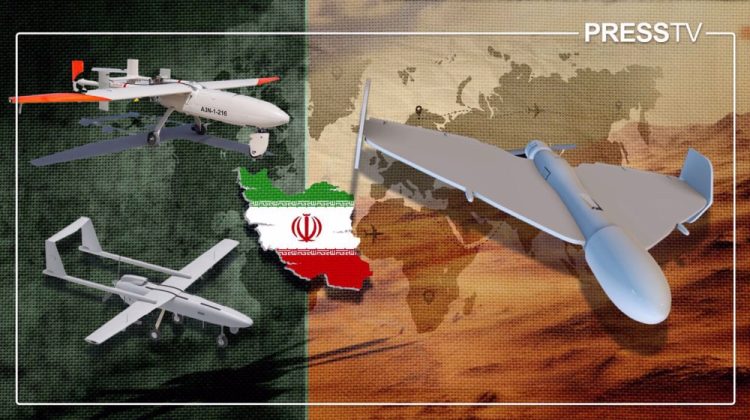
Iran’s drone technology has evolved from a domestic defense initiative into a formidable presence on the global stage, demonstrating a distinctive and effective approach to aerospace development that resonates with a diverse array of international partners.
Over the past decade, the Islamic Republic of Iran’s unmanned aerial vehicle (UAV) industry has undergone a remarkable transformation, progressing from a localized capability to a significant global force.
This rise is not necessarily due to groundbreaking new technologies, but rather a pragmatic and strategic philosophy that defines the country’s aerospace engineering program.
Iran’s astounding success lies in its intelligent integration of existing commercial technologies, combining them into simple, reliable, and cost-effective platforms that are mass-produced to meet the specific demands of modern asymmetric warfare.
This approach has produced three notable UAV systems: the Shahed-136 loitering munition, the Mohajer-6 multi-role combat drone, and the Ababil-3 reconnaissance platform.
Each model reflects a distinct phase of Iran’s technological evolution and operational doctrine, addressing a wide spectrum of military needs.
From the plains of Africa to the skies of South America, these drones serve as instruments of strategic influence, extending Iran’s geopolitical reach and cementing its role as a prominent manufacturer and exporter of military-grade drone technology.
Their widespread adoption underscores a global demand for capable, affordable unmanned systems and highlights the effectiveness of Iran’s tailored development strategy.
Strategic philosophy: Pragmatism as a cornerstone
The foundational strength of Iran’s burgeoning drone program lies in its purposeful and pragmatic design philosophy, which prioritizes functionality, cost-effectiveness, and reliability over cutting-edge complexity.
This strategy reflects a conscious effort to maximize operational output while minimizing technological input, resulting in systems that are both easy to produce and challenging to counter.
At its core, the program optimizes the use of commercially available, dual-use components, engineered into robust platforms tailored for specific battlefield roles.
By focusing on simplicity, Iran facilitates rapid mass production, enabling the deployment of large numbers of drones to achieve strategic effects.
This approach aligns with an asymmetric warfare doctrine, where overwhelming an adversary with numerous, affordable, and capable assets neutralizes the technological advantage of costlier, limited platforms.
This philosophy has allowed Iran to build a sustainable and scalable aerospace industry from the ground up, bypassing restrictions on access to specialized military-grade technology.
The resulting product line precisely meets the operational needs of a diverse client base, providing practical, cost-effective solutions to real-world security challenges without the prohibitive expenses of advanced Western drone systems.
Shahed-136: The archetype of asymmetric warfare
The Shahed-136 epitomizes Iran’s strategic approach – a loitering munition designed for long-range, one-way missions where simplicity and affordability are paramount.
Its design is a masterclass in minimalist engineering that achieves devastating strategic impact.
Featuring a delta wing and single fuselage, the drone’s airframe is inherently stable and durable, manufactured from inexpensive composite materials like fiberglass.
Complex landing gear is eliminated, replaced by a simple rocket-assisted launch system that reduces weight, cost, and mechanical complexity.
Powering the Shahed-136 is a commercial MADO MD 550 two-stroke piston engine, widely used in light aviation and prized for its low cost and easy maintenance.
Although its distinctive loud acoustic signature is notable, it is tactically mitigated by doctrines deploying these drones in large, saturating swarms designed to overwhelm enemy air defenses.
The guidance system combines a commercial GPS receiver with a basic inertial navigation system (INS), allowing pre-programmed target coordinates.
Even under GPS jamming, the INS maintains sufficient accuracy to engage large, stationary infrastructure targets.
The Shahed-136’s design effectiveness is underscored by its widespread replication and licensed production in countries such as Russia and Yemen, alongside imitation projects reported in China, India, Turkey, Saudi Arabia, North Korea, Ukraine, Poland, France, and even the United States—a testament to the enduring influence of Iran’s foundational drone design philosophy.
Mohajer-6: A leap into advanced multi-role combat drones
Representing a more advanced tier of Iran’s drone capabilities, the Mohajer-6 marks the industry’s maturity and successful transition into the realm of multi-role, medium-altitude, long-endurance (MALE) combat UAVs.
This platform showcases significant technological evolution, moving beyond simple, single-use munitions to a sophisticated system capable of intelligence, surveillance, and reconnaissance (ISR) missions as well as precision strikes.
Its airframe features a classic, proven aerodynamic design with straight wings optimized for extended loiter times and an H-tail configuration for enhanced stability, highlighting a balance between reliability and performance.
The Mohajer-6 is believed to be powered by a version of the highly reliable Rotax 912/914 series four-stroke engine, or an Iranian equivalent, reflecting Iran’s continued emphasis on leveraging dependable commercial technology as the foundation for military-grade systems.
The platform’s key technological advancements lie in its secure communications suite and advanced sensor and weapons payload.
Equipped with a secure line-of-sight data link for real-time video transmission and command, some variants reportedly possess satellite communication capabilities, dramatically extending operational range.
Its stabilized electro-optical/infrared (EO/IR) gimbal, combined with a laser designator, enables accurate target identification, tracking, and guidance of precision munitions such as the Qaem series bombs and Almas anti-tank missiles.
The Mohajer-6’s operational adoption by countries including Ethiopia, Venezuela, and Iraq, alongside reports of licensed production, underscores its competitive standing as a sought-after platform in the global combat drone market.
Ababil-3: Pillar of reliable battlefield surveillance
Serving as a vital link in Iran’s drone lineage, the Ababil-3 is a dedicated and reliable tactical intelligence, surveillance, and reconnaissance (ISR) platform.
Though less complex than the Mohajer-6, it significantly surpasses basic reconnaissance drones, demonstrating Iran’s proficiency in producing effective, long-endurance surveillance systems.
Purpose-built for its role, the Ababil-3 features a classic aerodynamic layout with a rear-mounted engine and propeller, providing an unobstructed field of view for its nose-mounted sensor payload, essential for capturing clear, stable imagery.
Its twin-tail design enhances flight stability, a crucial factor for effective surveillance missions.
Like its counterparts, the Ababil-3 employs a simple, reliable piston engine prioritizing flight endurance over high speed, allowing several hours of operation.
The platform’s primary technological focus is its reconnaissance payload, typically an electro-optical/infrared (EO/IR) system capable of rotation and zoom to track ground targets.
Live video feeds are transmitted to ground control stations via data links with ranges reported up to 250 kilometers, making it invaluable for frontline monitoring, artillery coordination, and border patrol.
Its versatility extends to armed variants, capable of carrying light bombs and missiles.
The Ababil-3’s proven service with nations such as Syria and Sudan, and licensed production as the Zagil-3 in Sudan, further cement its reputation as a robust and effective tool for persistent battlefield situational awareness.
Global reach and strategic influence
The international reach of Iranian UAV technology stands as a defining pillar of its success, extending well beyond the West Asia region to establish a presence across Africa, South America, and Eastern Europe.
This global dispersal is multifaceted, operating through a variety of channels including direct state-to-state sales, licensed production agreements, and observable technology transfers, reflecting a flexible and adaptive export strategy.
The deployment of these systems in different environments has provided real-world validation of their capabilities, further fueling international interest and demand.
This expansion carries significant geopolitical weight, positioning Iran as an emerging partner for countries seeking to enhance their defense capabilities outside traditional Western or Russian arms markets.
By providing these drones, Tehran fosters new defense partnerships and wields strategic influence, extending its diplomatic reach through technology-driven relationships.
Iranian UAVs offer a compelling value proposition for many countries, delivering capable military assets that are affordable, accessible, and often free from the political strings commonly attached to other suppliers.
This growing network of users and producers fosters a form of technological solidarity, reinforcing Iran’s narrative of self-reliance and strategic independence, and cementing its role as a prominent actor within the global defense technology landscape.
A model of purposeful innovation
Iran’s rise in the global drone market is a compelling example of how a deliberate and pragmatic technological strategy can yield outsized strategic influence.
The Shahed-136, Mohajer-6, and Ababil-3 collectively reflect a sophisticated grasp of modern warfare demands, offering a tiered portfolio of systems ranging from low-cost saturation weapons to advanced intelligence and precision-strike platforms.
Iran’s achievement lies in its consistent ability to identify and integrate mature, accessible technologies into coherent, effective military systems tailored to the specific, often budget-conscious needs of a diverse international clientele.
This development model, which prioritizes reliability, affordability, and operational effectiveness over cutting-edge novelty, has proven highly successful.
It has not only secured Iran’s defensive capabilities but also enabled it to become a significant exporter of military technology, carving out a distinctive niche in a fiercely competitive global market.
The ongoing evolution and widespread adoption of these platforms indicate that Iran’s approach to drone warfare and defense industrialization has established a lasting and influential footprint, one poised to shape conflict dynamics and defense partnerships well into the future.
Russia and China have, in the strongest terms, rebuked a recent anti-Iran resolution passed by the Board of Governors of the International Atomic Energy Agency (IAEA), calling for the settlement of the Islamic Republic’s nuclear issue through dialogue and cooperation.
Drafted by France, Germany, the United Kingdom and the United States and approved 19–3 with 12 abstentions on Thursday, the resolution sought to pressure Tehran by demanding it “without delay” account for its enriched uranium stocks and facilities damaged in the June attacks by the United States and Israel.
Russian Foreign Ministry Spokesperson Maria Zakharova announced at a press conference in Moscow that Russia continues to firmly emphasize finding political and diplomatic solutions to the issue of Iran’s nuclear program.
Asked about a recent telephone conversation between the Russian and Iranian foreign ministers, during which the issue of Iran’s nuclear program and related talks were discussed, Zakharova was cited by TASS as saying that Moscow is consistently committed to actively seeking political and diplomatic solutions to the Iranian nuclear issue.
The spokeswoman added that Moscow has repeatedly warned about the dangers of “military actions” that threaten the stability and security of West Asia, underlining that any military attack on nuclear facilities, especially those under the monitoring of the IAEA, is “unacceptable.”
Zakharova also said the US aggression against Iran’s nuclear sites undermined the principles the Non-Proliferation Treaty (NPT) — a treaty to which Iran has always been fully committed and which the IAEA has confirmed.
The Russian Foreign Ministry spokeswoman went on to say that despite the efforts on the part of some foreign actors to create chaos and trouble in Iranian society, Tehran still prefers the path of dialogue over war and believes that national interests can be secured based on equal dialogue and by taking into account mutual concerns.
She stressed that in order to resume the talks, Iran needs “serious guarantees” that its nuclear facilities will not be targeted by missile or air attacks again.
Zakharova further underlined that the West must put aside threats of sanctions and military threats and return to diplomacy with Iran.
IAEA urged to create ‘favorable conditions for cooperation’
Li Song, China’s permanent representative to the IAEA, told the Board of Governors on Thursday that pushing through a counterproductive resolution against Iran will “only make things worse,” stressing that the US, Israel, and key European states are fueling the ongoing crisis surrounding Tehran’s nuclear file.
“Countries that have recklessly resorted to the use of force and obsessively pursued confrontation and pressure are responsible for the current situation of the Iranian nuclear issue,” Li said.
The Chinese envoy stressed that Israel and the United States attacked Iranian nuclear facilities safeguarded by the IAEA in June, which led to a “fundamental change in the situation of the Iranian nuclear issue.”
“Such an act should be strongly condemned by the international community and the IAEA,” he said.
On the Cairo agreement reached between Iran and the IAEA in September, Li emphasized that the pact was “a positive development” and “an important opportunity” to fully revive safeguards cooperation.
He said the activation of the snapback mechanism by the UK, France, and Germany had “seriously undermined the good momentum of cooperation” between Tehran and the Agency.
Li added that the Iranian nuclear issue “can only be properly resolved” by respecting Iran’s legitimate NPT rights and ensuring the peaceful nature of its program through political, diplomatic, and safeguards mechanisms.
The envoy called on the BoG to “create favorable conditions for cooperation and dialogue” and to avoid “provoking confrontation.”
Iran notified the International Atomic Energy Agency (IAEA) on 20 November that it is terminating the cooperation agreement signed in Cairo in retaliation for the UN nuclear watchdog adopting a new resolution demanding expanded access and information on Iran’s nuclear facilities.
Iran’s envoy to the agency, Reza Najafi, said the resolution “will not add anything to the current situation” and described it as “counterproductive” shortly after the Board of Governors approved the text.
He warned that it would have “a negative impact on the cooperation that has already started between Iran and the agency.”
According to diplomats who attended the closed session, the 35-member board passed the resolution with 19 votes in favor, three against, and 12 abstentions.
The text requires Iran to report “without delay” on the status of its enriched uranium stock and on its nuclear sites that were bombed by Israel and the US during the 12-day war on Iran in June.
It also urges Iran to “comply fully and without delay” with its obligations under UN Security Council (UNSC) resolutions and to provide all information and access requested by the agency.
Western members of the board stated that “Iran must resolve its safeguards issues without delay” and called for “practical cooperation through access, answers, restoration of monitoring.”
Iran maintains that its nuclear program is peaceful and had earlier cautioned that the resolution would “adversely affect” ongoing cooperation. Najafi noted that Iran had already granted access to “all undamaged facilities,” while inspectors have not been to sites such as Fordow and Natanz since they were hit in the June war.
The agency says verification of Iran’s uranium stock is “long overdue,” and that it cannot inspect the bombed facilities until Tehran submits updated reports.
Iranian Foreign Minister Abbas Araghchi said the IAEA resolution was “unlawful and politically motivated,” initiated by the US and the European troika, and pushed through despite the 15 members voting against or abstaining.
He said the move ignored Iran’s goodwill, undermined the agency’s credibility and independence, and would disrupt cooperation.
The Foreign Minister had previously said that the Cairo agreement with the IAEA was defunct after Europe triggered snapback sanctions, but added that a negotiated solution remains possible if the opposing side acts in good faith.
Araghchi confirmed that he informed IAEA chief Rafael Grossi in a formal letter that the agreement is now considered terminated.
When Israeli attacks began in June, the IAEA estimated Iran held 440.9 kilograms of uranium enriched up to 60 percent.
Iran and several allied states argued that issuing another resolution would jeopardize efforts to advance dialogue.
Tehran has declared that the September inspection agreement with the IAEA is void, and Najafi said the new resolution “will have its own consequences,” adding that Iran would announce them later.
Efforts and consultations with Iran are ongoing in a bid to restore inspection activities in the country, Rafael Grossi, the Director General of the International Atomic Energy Agency (IAEA), announced on Wednesday.
Addressing the IAEA Board of Governors, Grossi said, “I believe there has been some progress. We have returned to Iran, and over a dozen inspections have taken place so far.”
“However, there is still more work to be done in line with the relevant provisions of the Comprehensive Safeguards Agreements,” he added.
He noted that, in coordination with the Iranian foreign minister in Cairo, “significant technical understandings have been reached with Iran to facilitate inspections following the events of June,” emphasizing that “this is the path we need to continue on.”
“I remain convinced that there is no solution other than a diplomatic one to this issue, which requires engagement, understanding, and full compliance by Iran with its obligations,” Grossi added.
He continued, “If this does not happen, we will continue to face one challenge after another and will not reach the position we all aspire to. Nevertheless, our work must continue, and my stance has always been to act decisively and maintain ongoing communication with Iran to return inspection activities in a country with a critical nuclear program to their normal course, in accordance with the Nuclear Non-Proliferation Treaty and the Comprehensive Safeguards Agreement—nothing more, nothing less.”
It is worth noting that Iran suspended cooperation with the IAEA in June, citing the need to ensure the security of its nuclear facilities following US and Israeli actions against them. Iran’s Atomic Energy Organization criticized the IAEA, saying that attacks on its nuclear sites resulted from the agency’s failure to maintain professionalism and political neutrality.
Clash between Iran and the IAEA
Following the June airstrikes carried out by the Israeli occupation and the United States on numerous Iranian nuclear and military sites, Iran swiftly suspended full cooperation with the IAEA. In response, the Iranian parliament passed legislation barring further access to its nuclear facilities by IAEA inspectors unless specifically approved by the Supreme National Security Council. Tehran accused the agency of failing to condemn the attacks and criticized it for lacking neutrality, arguing that this undermined the security of its nuclear infrastructure.
In the months that followed, particularly throughout July and August, the IAEA was unable to conduct its routine inspections in Iran. Iranian officials insisted that any resumption of IAEA activities required a renegotiation of the terms of engagement, emphasizing that previous frameworks had failed to protect Iran’s sovereign rights. This signaled a shift toward a more guarded stance, as Iran sought stronger guarantees before reopening its facilities to international scrutiny.
By September, however, progress was made when IAEA Director General Rafael Grossi and Iranian officials met in Cairo. The parties reached a preliminary technical understanding aimed at restoring monitoring mechanisms. As part of the deal, Iran agreed to provide detailed status reports on its affected nuclear sites and to resume IAEA inspections gradually. While this understanding marked a step forward, no firm timeline for full cooperation was established, leaving the situation tentative.
Despite the progress, the relationship between Iran and the IAEA remains fragile. Iran continues to demand that the agency uphold a politically neutral approach. At the same time, the IAEA insists that its role under the Nuclear Non-Proliferation Treaty and the Comprehensive Safeguards Agreement must be respected.
IAEA role called into question
However, the IAEA’s role in the latest attack on the country was called into question as Iran’s Atomic Energy Organization chief, Mohammad Eslami, accused “Israel” of striking key nuclear facilities in Tehran, based on technical details provided to the International Atomic Energy Agency (IAEA).
Speaking at the Foreign Ministry’s conference “International Law Under Assault: Aggression and Defense,” Eslami emphasized that Iran has long maintained strict safety protocols to protect its nuclear experts, infrastructure, and the surrounding environment, ensuring no leaks or contamination.
Eslami stressed that the accuracy of the strikes suggests that classified technical details, information Iran had provided to the International Atomic Energy Agency (IAEA), were exploited, noting that the only laboratory Iran built in full coordination with the agency was singled out in the attack.
Fifteen of the 9/11 “hijackers” from Saudi Arabia were CIA agents working for the United States government, which was seeking to destroy the Middle East for Israel and to double the American military budget, says Dr. Kevin Barrett, an American academic who has been studying the events of 9/11 since late 2003…. continue
This site is provided as a research and reference tool. Although we make every reasonable effort to ensure that the information and data provided at this site are useful, accurate, and current, we cannot guarantee that the information and data provided here will be error-free. By using this site, you assume all responsibility for and risk arising from your use of and reliance upon the contents of this site.
This site and the information available through it do not, and are not intended to constitute legal advice. Should you require legal advice, you should consult your own attorney.
Nothing within this site or linked to by this site constitutes investment advice or medical advice.
Materials accessible from or added to this site by third parties, such as comments posted, are strictly the responsibility of the third party who added such materials or made them accessible and we neither endorse nor undertake to control, monitor, edit or assume responsibility for any such third-party material.
The posting of stories, commentaries, reports, documents and links (embedded or otherwise) on this site does not in any way, shape or form, implied or otherwise, necessarily express or suggest endorsement or support of any of such posted material or parts therein.
The word “alleged” is deemed to occur before the word “fraud.” Since the rule of law still applies. To peasants, at least.
Fair Use
This site contains copyrighted material the use of which has not always been specifically authorized by the copyright owner. We are making such material available in our efforts to advance understanding of environmental, political, human rights, economic, democracy, scientific, and social justice issues, etc. We believe this constitutes a ‘fair use’ of any such copyrighted material as provided for in section 107 of the US Copyright Law. In accordance with Title 17 U.S.C. Section 107, the material on this site is distributed without profit to those who have expressed a prior interest in receiving the included information for research and educational purposes. For more info go to: http://www.law.cornell.edu/uscode/17/107.shtml. If you wish to use copyrighted material from this site for purposes of your own that go beyond ‘fair use’, you must obtain permission from the copyright owner.
DMCA Contact
This is information for anyone that wishes to challenge our “fair use” of copyrighted material.
If you are a legal copyright holder or a designated agent for such and you believe that content residing on or accessible through our website infringes a copyright and falls outside the boundaries of “Fair Use”, please send a notice of infringement by contacting atheonews@gmail.com.
We will respond and take necessary action immediately.
If notice is given of an alleged copyright violation we will act expeditiously to remove or disable access to the material(s) in question.
All 3rd party material posted on this website is copyright the respective owners / authors. Aletho News makes no claim of copyright on such material.



 Aletho News