Israel’s Game

Anti-Zionist activists protest on 2nd Avenue outside the Israeli Consulate General in Midtown Manhattan, New York City, U.S. on August 21, 2026. [Selçuk Acar – Anadolu Agency]
By Dr Hassaan Bokhari | MEMO | September 6, 2026
A few days ago, a very interesting article appeared in the Israeli newspaper The Jerusalem Post. It was written by AJ Jaff, whose profile describes him as “a recognised expert in international security, crisis management, and geopolitical risk”. The “expert” began the article by acknowledging that the 6-month-long air war on Iran has failed to defeat Iran. Then, he provided some “out-of-the-box” ideas for the US to consider if it wants to “achieve its objectives” and win the war. According to him, the war will only be won when Iran’s institutional coherence is broken, resulting in its Balkanization.
I will discuss Mr Jaff’s “out of the box” ideas in a bit, but first, I want to analyse the “expert” himself a little. Two things quickly popped up. First is how he began his article. The first sentence is: “The Pentagon reportedly asked outside analysts this month for creative ideas on Iran.” The hyperlink in this sentence redirects the reader to another article in The Jerusalem Post that cites a CNN report saying that the US Chairman of the Joint Chiefs of Staff, Gen. Dan Caine, has been privately looking for an off-ramp in the Iran War. How quaint! While the Pentagon is asking for ideas to wrap up the war, Mr Jaff, the expert, stepped up with ideas to escalate the war! It appears that Mr Jaff (and the Zionists) have very different ideas and even objectives than US Generals about the same war. No wonder Pete Hegseth (a committed Zionist) has been firing so many of them!
Secondly, one is amused to see that in March, 10 days after the start of the US-Israel war on Iran, the same Mr Jaff was declaring a resounding victory and claiming that “the data tells a decisive and irreversible story” and “Iran’s missile fire rate has collapsed by 92 percent”! After reading that article now, most readers might laugh heartily and dismiss Mr Jaff, the “expert,” as an idiot. However, that would be an incorrect assessment. On the same day as Mr Jaff’s gaffe’s appearance in The Jerusalem Post, an article of mine elucidated the Israeli strategy as one giant bluff whose aim was to lure the USA into a destructive war in the Middle East by plunging it into a sunk cost fallacy. The Israeli plan was to lure the USA in with the dreams of an easy victory like the First Gulf War or the Maduro kidnapping, but it knew all along that those dreams would prove to be hollow, and their sole purpose was to bring the USA into the war. Then, in the next phase, with the dreams of victory proving illusory, the USA was to be baited with the sunk cost fallacy trap so that it would blunder into further escalation in pursuit of Israeli objectives. Mr Jaff’s seemingly absurd somersaults follow this pattern perfectly.
Now let’s turn our attention to Mr. Jaff’s “expert recommendations”. There are three of them:
- The USA should “recognize the sovereign independence of the Iranian Kurdistan, Ahwaz, and Baluchistan people”.
- To raise the one million troops required for a victorious ground invasion of Iran, the USA should launch an enlistment scheme based on debt forgiveness (estimated at 40,000 to 1,00,000 US Dollars per person) for 24-36 months of service per person.
- The US should strike a deal with China that would involve softening the US stance on Taiwan and ensuring China that even after Iran’s destruction, China would continue to receive an uninterrupted supply of Iranian oil in exchange for China’s abandonment of Iran.
Before analysing these ideas, one must first take a moment to marvel at the arrogance and ignorance of the Zionists.
The Zionists have played the victim and the superior/invincible race roles simultaneously in a way that lends itself to a diagnosis of severe dissociative disorder.
This pathological psyche has led them to the delusion that the foremost purpose of the world and everything in it is to accommodate their ambitions. As I have argued elsewhere, this psyche is leading them to their self-created and inevitable destruction as well.
Now, let’s take these ideas one by one. The first idea is simply advocating the balkanization of Iran (just the newest version of the Yinon Plan). The implications are very interesting, though. By supporting Kurdish and Baloch (not Baluchi as written by Mr. Jaff, a mistake that only lays bare how little he knows about Balochistan!) separatism, the US could kill three birds with one stone in the service of Israel. Kurdish and Baloch separatism are grave threats to the integrity of Turkiye and Pakistan, respectively. Very cleverly, the Zionist Mr Jaff is pointing the way for the next wars to be launched by the USA in Israel’s service. The Zionists know that Iran’s balkanization wouldn’t ensure Israel’s survival. They are aiming at the complete destruction of the whole region stretching from Morocco to Pakistan, an Israeli goal correctly identified by the Pakistani liberal thinker Eqbal Ahmed more than 40 years ago!
The second idea is about finding the meat for the meat grinder of forever wars envisioned by Israel. With antipathy toward Israel consistently on the rise in the USA, how can American youth be convinced to become cannon fodder in the Wars of Israeli Ambitions? The answer, according to Mr. Jaff, lies in luring them with the promise of debt forgiveness. Most young Americans are riddled with debt in the exploitative capitalistic financial system (run by whom?) of the USA. Mr Jaff wants their debts written off in return for their blood, sweat, and tears spilled on the battlefields of the Middle East. However, the question arises: who will pay the bill of “debt forgiveness” for this indentured slave army? Will the big capitalists pay? Of course not. The state will pay.
In other words, the US taxpayers will pay billions of dollars so that their sons and daughters can be killed or crippled far from home in wars that have nothing to do with the American people’s welfare.
The third idea is the most “brilliant” one. It’s also the one that should ring alarm bells for even the most obtuse section of people in the USA. Mr. Jaff proposes to bribe China with oil and concessions on Taiwan to abandon Iran. It hasn’t occurred to him that for men like General Dan Caine, China represents a much bigger threat to the USA than Iran! It also peddles the fallacy that Iran is another Venezuela! Such a bizarre, arrogantly ignorant notion can only come from Zionists! In his obsession with what the genocide-dependent state of Israel needs to survive, Mr Jaff has ignored the basic fact of geography that Iran lies closer to China than Venezuela is to the USA! He has also conveniently failed to specify what concessions the USA should make on Taiwan. Unfortunately for Mr Jaff and the Zionists, the Chinese leaders (unlike many in the USA) don’t prioritise Israeli interests over their own country’s.
As I am engaged in analyzing Israel’s “game plan”, one other important factor must be mentioned: Gaza. In the last few days, clear statements have come from Israeli ministers showing their intention to depopulate Gaza completely. Israel’s ultimate goal has always been to complete the ethnic cleansing of Palestine that started with the Nakba in 1948. Since the start of the Gaza blockade in 2007, Israel had been following a policy of making Gaza uninhabitable while concurrently using it as a weapons testing laboratory through periodic aggressions/wars. This policy of slow genocide was abandoned after the 7 October attacks. The goal then became to “clear” Gaza through a “fast genocide” within a few months. However, unexpectedly stubborn Palestinian resistance coupled with the categorical refusal of regional countries (especially Egypt) to accept Palestinian refugees has so far prevented this. The recent pressure from Israel on the USA to give it a green light for forcible expulsion of all Palestinians from Gaza shows that Israel hasn’t lost sight of its genocidal goals in Palestine for one minute, even during the Iran War. If Palestinian refugees are forced into Egypt, it will provide an added bonus for Israel by destabilising Egypt.
A summary of the comprehensive Israeli strategic plan is as follows: Israel wants a massive US ground invasion of Iran with more than a million soldiers to destroy the Iranian State and balkanize the country with the help of Kurdish and Baloch separatists. This will, in turn, bring the “Grand Israeli War” to its next phase: the destruction of Turkiye and Pakistan. The latter will be denuclearized after internal instability brought upon by economic, political, and military crises resulting in an implosion of the State, leaving Israel’s ally India as the sole power in the subcontinent. Simultaneously, Israel plans to depopulate Gaza and South Lebanon while destabilising both Syria and Egypt to an extent that new civil wars erupt there. To achieve these lofty aims, Israel wants the USA to put its strategic tussle with China on hold and offer significant concessions on vital issues like Taiwan to keep China neutral. This will free up the USA to deploy its full military might in fighting Israel’s wars and divert limited but critical military resources in bulk to the Middle East from the Pacific. With the whole of the Middle East in ashes, Israel can replace the USA as Saudi Arabia’s “security guarantor”, gain control over all 3 Muslim Holy Mosques (in Makkah, Medina, and Al-Quds) to be used as blackmail against any future attempt by Muslims to confront it, and create a Greater Israel that is not dependent on US aid. Afterwards, Israel can easily discard the USA in favor of a modus vivendi with the new global hegemon (China) as the former’s power wanes through wars and strategic overextension.
This Israeli “game plan” is clearly fantastic, unrealistic, and wildly overambitious. However, like the Nazis, Israelis see themselves as an embattled and desperate “superior race” that has to risk it all on a grand throw of the dice. In its post-7 October psychosis, Israel has lost whatever rationality or sense of proportion it previously possessed. Like Hitler, Israel’s leaders fail to see their predicament: they might win some victories in this war, but each victory will open up new threats, which will result in fatigue as the costs of war mount and geographic and demographic factors overstretch both Israel and the USA. In his seminal work, “Israeli Exceptionalism – The Destabilising Logic of Zionism”, Professor Shahid Alam explained this brilliantly: “The tragedy of Israel is not fortuitous. Driven by history, chance, and cunning, the Zionists wedged themselves between two historical adversaries, the West and Islam, and by harnessing the strength of the first against the second, they have produced a conflict that can only grow deeper over time. In this conflict, Israel’s triumphs are temporary, are indeed illusory, since they evoke a deeper, wider response from the societies that suffer the devastation of its triumphs. In the long run, in the time scale of history, by relentlessly pressing its advantages, Israel only ensures that its adversaries will slowly build the defenses that will eventually rise to match Israel’s military might and its expansionist ambitions.”
Blinded by the imperatives of genocidal Zionist ideology, it would be foolish to expect the recognition of this reality from the Israelis.
However, the USA and the Muslim World urgently need to recognize “Israel’s Game” to minimize the damage to be suffered by them. Had Hitler been stopped at Munich, the Second World War might never have happened. Had Israel’s genocide in Gaza been stopped in November 2023, we wouldn’t be seeing the Iran War and the Hormuz crisis today. If Israel isn’t stopped now, we will see not just Iran, Palestine, and Lebanon, but Turkiye, Pakistan, Egypt, Syria, and the Gulf countries engulfed in flames of war as well.
As Israel plans to fight this war to the last US soldier, it would behoove the USA to realize that playing Israel’s game will result in polarization and decimation of American society (just like the Vietnam War put an end to Lyndon Johnson’s vision of “Great Society), the loss of its military dominance in the Pacific, and the loss of its global economic primacy. Today, it is imperative that all of the Muslim World in general and Turkiye, Pakistan, Saudi Arabia, and Egypt in particular start squarely backing Iran in thwarting external aggression. The recent Mecca Pact between Pakistan, Turkiye, and Saudi Arabia can only be meaningful if it clearly declares Israel as the greatest threat to peace and operationalizes the military and economic power of these countries to combat Israeli aggression in Gaza, West Bank/East Jerusalem, Lebanon, and Iran. Only through the defeat of Israel’s genocidal state and the birth of an independent Palestinian State can peace and security be ensured for the Middle East. If these countries present a united front against Israeli aggression, not only will they be backed by the likes of China and Russia, but they will also compel the USA to recognize Israel for the dangerous strategic liability it is. “America Firsters” will do well to remember Nietzsche’s saying: “The most common form of human stupidity is forgetting what one is trying to do.”
Lebanese man tells RT how Israeli strike killed his bride
Saja Sharara lost her life when a missile struck the couple’s home just 48 hours after their wedding
RT | September 6, 2026
The husband of a 28-year-old Lebanese woman killed in an Israeli airstrike just two days after their wedding has told RT how he was speaking to his wife on the phone moments before their home was hit.
Saja Sharara was killed at the couple’s home in Arabsalim, southern Lebanon, on August 27. Six other people, including a child, were wounded.
Hussein said he called Saja after hearing about an Israeli strike nearby. Minutes later, she called him back and suddenly said: “A rocket, a rocket is coming towards us, Hussein.”
The connection was lost. “The rocket fell on her,” Hussein recalled. “And then I realized that it was over.”
Israel has not said specifically what it was targeting at the house. It said its wider attacks in the Nabatieh area targeted Hezbollah infrastructure in response to drones launched at IDF troops. No Israeli casualties were reported.
Israeli attacks on southern Lebanon have continued despite a US-mediated ceasefire. More than 4,000 people have been killed and over 12,000 wounded in Israeli attacks on Lebanon since March, according to Lebanese authorities.
Hussein said the continuing Israeli military presence and air operations mean there is no ceasefire in practice.
“There is no ceasefire as long as this enemy is on our land and the aviation is flying above us,” he told RT.
RT’s Steve Sweeney spoke exclusively with Hussein in southern Lebanon about the future he and Saja had planned together.
Is America preparing a tactical nuke for Iran?
By Martin Jay | Strategic Culture Foundation | September 6, 2026
The escalation trap is getting worse for Trump and his cabal of sycophants, as what was once a discussion which was linked to existentialism – the nuclear option – is now being dialled down to any kind of military option. Just a bigger bomb. The more Trump loses, the more Iran hits U.S. assets and allies in the Middle East, the longer the straits remain closed, and the higher gasoline and diesel costs reach in the U.S. – the more the idea of a ‘tactical’ nuke dropped on Iran becomes normal and even preferred.
But Trump is also getting madder. He is literally losing his mind, and his condition has worsened in his second term in office to the point where he is losing touch with any kind of reality. Before February 28th, the U.S. economy was not in bad shape. A lot of fundamentals were holding out. But now everything is spiralling out of control, and quite apart from blue-collar workers being hit with gas pump prices being well above $4, now diesel is being hiked – which only means that the cost of food, among other goods, is going to rise significantly, as trucking firms pass on the bill to producers, who pass it on to the consumer.
And as things start to get out of control, take a cursory glance at who is running Trump and who stands to gain if a nuclear bomb were used. It’s the same people who walked away from 9/11 laughing until their sides hurt. Israel. The Zionists are now pushing for the tactical strike option, as any escalation in the region – no matter who gets killed or whose country gets wiped out even of water – is not their worry or concern. These days, Netanyahu’s coterie can argue even more that Iran is probably making a nuclear bomb, as the one institution that Trump could turn to – the IAEA – can’t enter Iran and do its inspections. And so the default conclusion is that the U.S. president is going to be bullied again into making a cataclysmic error of judgment in hitting Iran.
The Zionists have been busy on both sides of the Atlantic. In the UK, it’s hard not to see how their money is now reaching Nigel Farage’s far-right party, which has just been hit by another dodgy funding scandal – presenting the leader of the party as bereft of any political morals of any creed in preference for filling his pockets with dirty cash. The Zionists control UK media, and it’s interesting to see how Farage gets a pretty easy time despite the graft scandals burying him. In the U.S., it’s a similar story. For a while now, J.D. Vance has been quite critical of how Zionists are shaping U.S. politics both internationally and even domestically, and has always been quite vague about how the U.S. should move forward in Iran. But now those who have crossed a threshold and are in the pockets of Israel’s lobby are going for him.
Former South Carolina Gov. Nikki Haley recently accused him of not taking a clear stance on Israel – slamming him for trying to “be both.”
“Right is right. Wrong is wrong. In life, you must choose a side. You are either with the Tucker Carlson wing of the country or you are with the pro-Israel wing of the country,” she wrote on social media. “You can’t be both.”
Haley, a former GOP presidential candidate who isn’t overburdened with a high IQ, couldn’t even hide who was directing her and even giving her reference material to attack Vance – leading some to wonder if Israel’s lobby just writes her social media posts.
She continued her post with a quote from Nobel Prize-winning writer and Holocaust survivor Elie Wiesel, who said in his 1986 acceptance speech: “We must always take sides. Neutrality helps the oppressor, never the victim.”
Meanwhile, America’s trust around the world seems to have been eroded to almost nothing. Recently, the Netherlands just pulled out its gold reserves it used to keep in the U.S. The move followed Germany a few weeks ago, which did the same. EU leaders just don’t trust Trump and can see the de-dollarisation trend gaining ground while U.S. debt continues to mount. Trump can’t do anything, of course, as his immature ideas about governance have produced a series of policies which haven’t served the country’s interests but merely backfired – reminding many that he doesn’t have one or two failed businesses under his belt like many successful entrepreneurs, but scores, which would suggest that he doesn’t really understand business at all. A nuke, he might believe, would be a reset in the Middle East and perhaps a huge distraction away from terrible numbers back home. But the precedent it would set to Russia and China would only make Iran an even greater winner than it already is in the region. Trump simply has no idea what he is doing – and all the people who could advise him have been fired.
“We Are Being Drawn Into a War We Don’t Want to Fight”: What Jordan’s Alliance with Washington Is Costing It
By Muhammad Hamid ad-Din – New Eastern Outlook – September 6, 2026
The growing public discontent with the presence of American troops in Jordan, fueled by the regional conflict and Iran’s strategy, is putting the country’s government in a serious crisis of trust, forcing the authorities to choose between a strategic alliance with the United States and the internal stability of the state.
Some 4,000 U.S. troops, bases used for strikes against Iran, Iranian missiles crossing Jordanian skies, and American soldiers killed on Jordanian ground—all raise an increasingly urgent question: has the strategic alliance with Washington become a threat to the very existence of the country?
A Letter That Could Not Be Ignored
More than 200 Jordanian politicians, cultural figures, tribal leaders, and retired military officers did something extremely rare in Jordan—they publicly challenged their own government. In an open letter to the authorities, they demanded the withdrawal of foreign troops from the country, the cancellation or revision of the security agreement with the United States, and its submission to parliament for review.
“We affirm that their presence exposes Jordan to security, political, and economic risks that serve no national interest, and increases the likelihood of our country being dragged into a regional conflict in which it has no part,” the appeal stated.
The initiative was led by former minister and lawmaker Amjad Khazza al-Majali. Among the signatories were former secretary-general of the Islamic Action Front, Salem al-Falahat; 90‑year‑old political activist Sufyan al-Tell; retired military figures including Ali al-Habashneh; and former secretary-general of the Jordanian Communist Party, Saud Kbeilat.
The diversity of the signatories—from leftists to Islamists, from tribal chiefs to secular intellectuals—prevented the authorities from dismissing the letter as the work of a single political faction. But it would be an exaggeration to claim that it reflects the views of all Jordanians; on such sensitive matters, the kingdom simply does not conduct opinion polls, and open disagreement with the authorities has always been a risky undertaking here.
When an Ally Becomes a Target
Jordan has long been one of the United States’ main military partners in the Middle East. Some 4,000 American troops are stationed on its territory. However, the war between the U.S. and Iran, which resumed after the collapse of the June ceasefire, has turned that presence from an abstract diplomatic arrangement into a tangible threat.
Iranian missiles and drones aimed at Israeli or American facilities regularly cross Jordanian airspace. Some strikes hit installations used by U.S. forces. As a result, American soldiers are being killed—and this is no longer just news from another continent, but events occurring on Jordanian soil.
As The Jerusalem Post noted, the Iranian strikes against Jordan were a calculated move: Tehran sought to “sow discord within Jordan and create governmental chaos.” Professor Ronen Itzhak commented on the situation as follows: “This is exactly what Iran was trying to achieve by launching missiles at Jordan. Its goal is to pressure the Jordanian population into demanding the removal of the American presence.”
And Iran is succeeding. Every new attack reinforces the position of critics of the U.S. presence: the alliance with Washington is costing Jordan in direct security losses.
Storm in Parliament: Condolences to “Child Killers”
A particularly telling episode occurred in the Jordanian parliament in late July. Deputy Ali al-Khalayleh proposed sending official condolences to the U.S. Congress over the deaths of American servicemen on Jordanian soil.
The proposal sparked a storm. Other legislators fiercely attacked al‑Khalayleh. They called the United States “the biggest supporter of Israel, which has committed a massacre in Gaza,” and branded American soldiers “child killers.” “The Jordanian people are above such condolences,” their opponents declared.
What made the situation especially delicate was that al‑Khalayleh himself had earlier described the U.S. military presence in Jordan as “a walk with shepherds.” Now he was proposing that parliament express formal condolences to Washington—and he was jeered by his colleagues.
What matters is that opposition to American policy in parliament came not from fringe activists, but from elected representatives within an official political institution. This indicates that discontent with the U.S. alliance is penetrating the highest levels of Jordan’s political system.
Trump’s Double Game
U.S. President Donald Trump, for his part, also fanned the flames. After the deaths of American soldiers in Jordan, he effectively blamed Jordanian forces for incompetence. “If we had different air defense operators, this would not have happened,” Trump said, hinting that the Jordanians had failed to provide adequate protection for U.S. troops. “When you let others do your work… sometimes things go wrong,” the president added.
For Jordanian critics of the American presence, these words were yet another confirmation of their position: Washington itself does not consider Jordan a safe place for its troops and is ready to shift the blame for their deaths onto local authorities.
The Jordanian government, by contrast, could have used the same attacks as proof of the need to strengthen air defense in cooperation with the United States. But amid growing public dissatisfaction, that argument sounds increasingly weak.
Iran Plays on the Divide
Iran’s strategy in this conflict is anything but subtle, yet at the same time highly professional. Tehran consistently draws a distinction between the Jordanian people and the Jordanian government. The Islamic Revolutionary Guard Corps (IRGC) issued a direct appeal to Jordanians, stating that Iran is “not hostile to Jordan” and that its grievances are only with the American military presence.
“America is using bases on Jordanian soil to wage aggression and commit massacres against our people. It is our legitimate right to strike the aggressor wherever he launches his attacks,” the Iranian military declared. And in the view of many analysts, Tehran has a point on this issue.
Moreover, Iranian propaganda went further: the IRGC claimed that information about the location of U.S. troops in Jordan had been provided by Jordanian civilians and military personnel themselves and expressed gratitude to the Jordanian people for their cooperation.
In this way, Iran is trying to deepen the rift between the authorities and society, using the Palestinian cause as a lever. Support for Palestine is deeply rooted in Jordanian society, and the war in Gaza and Washington’s backing of Israel have only intensified anti‑American sentiment. That is precisely why Iranian statements fall on fertile ground.
Media Blockade and Information Gap
Paradoxically, despite the significance of the letter and the many prominent signatories, major Jordanian media outlets did not publish it in full. Critics of the government saw this as evidence of severe restrictions on political and media space in Jordan. Analysts argued that the limited room for dissent means that the level of opposition visible in the media is likely lower than the actual discontent in society.
As a result, the letter was disseminated mainly through social networks and foreign media. The Jordanian government, for its part, sought to frame the conflict not as a geopolitical problem but as a matter of national security. Official statements emphasized border defense and Jordan’s refusal to take part in the war.
However, in the age of social media, traditional methods of managing information are working less and less effectively. Citizens see videos online, read international reports, and compare them with official statements. The growing gap between the official version and what people see with their own eyes is undermining trust in the authorities.
The Price of Alliance
Jordan’s economy was already under severe strain due to inflation, unemployment, and declining purchasing power. The conflict dealt an additional blow to the tourism sector, which accounts for up to 18% of the country’s revenues. In the first half of 2026, income from tourism and Jordanian expatriates fell by 12%, from American tourists by 25%, and from European tourists by 28%. At the same time, the United States provides Jordan with about $1.65 billion annually in economic and military aid.
King Abdullah II’s government finds itself between a rock and a hard place. On the one hand, the alliance with the United States brings billions in aid and security guarantees. On the other hand, that same alliance turns the country into a target, undermines internal stability, and erodes citizens’ trust in the authorities.
As Professor Itzhak noted, “The King of Jordan has the sovereignty to make independent decisions in accordance with the constitution, so it is unlikely that he will change the country’s policy.” But the question is how much longer Jordanian society can endure being held hostage to a geopolitical game in which it has no voice.
The open letter from Jordanian public figures is not just a protest against foreign troops. It is a symptom of a deep crisis of trust between the authorities and society, between the government’s strategic calculations and the real interests of its citizens. War, the Palestinian question, the American military presence, and national sovereignty have become tightly interwoven—a knot that Amman is finding increasingly difficult to untie.
Traditional methods of managing public opinion are working less and less effectively in the age of social media. Jordanians are no longer passive recipients of official messages—they actively seek out alternative sources of information and compare them with government statements. And this growing comparison may prove to be the biggest challenge for the Jordanian government, because in today’s world, controlling the flow of information is far harder than controlling the country’s borders or its airspace.
Muhammad Hamid ad‑Din is a prominent Palestinian journalist
Follow new articles on our Telegram channel
Trump Slaughters Wedding Guests, Zelenskyy Threatens Airliners
By Kevin Barrett | September 6, 2026
When Zelenskyy threatened to shoot down civilian airliners last week, Putin called it “state terrorism.” Putin is right, of course. But the expression he used, “state terrorism,” is a repetitiously redundant pleonasm.
Virtually all terrorism is state terrorism. So appending the word state in front of the word terrorism isn’t really necessary.
Case in point: Trump’s slaughter of Iranian schoolgirls, female volleyball players, and wedding guests. Such acts fit the definition of terrorism: politically-motivated attacks on civilians. The purpose of attacking civilians is to inspire fear or terror among them, so they will react in ways that further the terrorist’s political plans.
Terrorist Trump and his Israeli owners have made no secret of the fact that they intend to attack civilians and especially civilian infrastructure in Iran—which even the mainstream media acknowledges is a war crime—in hopes of spreading so much pain and misery and death that the Iranian people rise up against their government. But as Caleb Carr explained in his post-9/11 book The Lessons of Terror: A History of Warfare Against Civilians, such “punish-the-civilians” policies rarely work. Hitler’s buzz-bombs didn’t convince the British to rise up and overthrow Churchill, nor did the British and American firebombings of German cities cause the Germans to revolt against Hitler. On the contrary, such terrorist policies typically backfire: the people punished worst are dead, while the survivors feel selected by God or fate or destiny to unite behind their nation’s leadership and fight even more furiously against the foreign terror-mongers attacking their country.
And Iran—where a powerful cult of martyrdom is built into the majority religion—is the last country on earth that anybody is ever going to successfully terrorize into submission. Iran’s war on terror, specifically its war on Zio-American terror, is genuine, and likely to be far more successful than the ersatz US equivalent.
Civilian Casualty Ratios Keep Rising
The West likes to think it is growing increasingly civilized. But its wars grow ever-more barbaric and terrorist. In World War I, about half of the slightly over 20 million deaths were civilians. In World War II, just one generation later, nearly two-thirds of the 60 million deaths were civilians. The Vietnam terror war waged by the USA probably killed far more than the two million official death count, with more than three-quarters of the victims civilians. Likewise, the official death counts in the 9/11 wars against Iraq and Afghanistan—and the covert wars on Syria, Libya, Sudan, Somalia, Lebanon, and of course Palestine—are almost certainly far too low, while the civilian-to-military casualty ratio just keeps getting higher, and is probably in the 80% or higher range. (For high-end casualty estimates that counter the official undercounts in these wars, read Gideon Polya.)
Let’s ask Gemini, which obviously comes with a pro-state bias, who the real terrorists are. Hey Gemini: How many civilians have died in all the wars beginning with World War I, and what percentage were killed by non-state actors?
Gemini: An estimated 110 million to 140 million civilians have died in all wars globally starting from World War I (1914) to the present day, with the vast majority—roughly 95% or more—killed by state actors (governments and their official militaries) rather than non-state actors.
Given Gemini’s bias, we can safely translate “95% or more” as “99%+.” I rest my case: Virtually all terrorism is committed by governments.
But that’s not the way the government’s propaganda apparatus sees it. They want you to believe that the world is a scary-scary place full of evil (non-government) terrorists plotting to bomb you or shoot you or crash your airliners or blow up your buildings. And they want you to run to the real terrorists—the government—for protection.
That’s why they chose 9-1-1 as the date code for their big 2001 psy-op. When you’re terrified and panicked and faced with senseless violence, who do you call? You call the government in hopes they will save you. The three digits 9-1-1 subconsciously represent the trust populations place in their “big mommy and daddy,” their government, to get them out of serious trouble. Specifically, the terrorist perpetrators of 9/11 wanted panicked Americans to volunteer their persons and/or their tax money, not to mention their fervent ideological and emotional support, to their Israeli-occupied government so it could “protect them from further such attacks” by invading the Middle East and destroying Israel’s enemies.
It was in fact Israel’s agents who blew up the Towers after flying remote-controlled planes into buildings. Through Epstein-style blackmail, financial control, and media domination, Israel infiltrated the US government like a parasite hijacking the brain of its host, sending Uncle Sam on a state terrorism spree whose only major beneficiary was the malignant Zionist entity itself.
But even people who imagine that 9/11 was done by al-Qaeda—the same al-Qaeda that the US created and has supported since its inception in the Afghan war against the USSR, the same al-Qaeda whose Syrian chief Trump recently invited to the White House and playfully sprayed with perfume—and who further imagine that al-Qaeda is a non-state entity as opposed to a US-Israeli front—ought to take a hard look at the statistics to get a sense of how nonexistent a threat “non-state terrorism” really is. As I wrote in Questioning the War on Terror:
Statistically, there are good grounds for wondering whether we should bother to worry about terrorism at all. Roughly 3000 Americans have been killed by (allegedly non-state) terrorists during the past century. In other words, a whole century’s worth of terror victims equals three days’ worth of cigarette fatalities, a week’s worth of deaths from bad medical treatment, or a month’s worth of automobile deaths. Shouldn’t we worry far more about cigarettes, doctors, and automobiles than about terrorists?
And how does your chance of being killed by terrorists compare with your chance of being struck by lighting? It turns out that lighting is a vastly greater threat. There are on average about 1000 lightning victims per year in the USA, whereas the average number of terror victims per year—a number wildly skewed upward by the fluke of 9/11—is still only about thirty.
Are terrorists at least more dangerous than… bathtubs? Nope. It turns outthat your chances of drowning in your bathtub are more than ten times as great as your chances of being killed by a terrorist.
Should we declare war against lightning bolts and bathtubs? Should we install PA systems in our bathrooms reminding us that the threat level of bathtub drowning has been raised to orange? Should we create a new Department of Bathtub Security (DBS) empowered to do sneak-and-peak warrantless searches of our bathrooms to make sure that we’re using no-slip bathmats? Should we invade and occupy countries that we falsely blame for bathtub deaths? Would this be any crazier than what we’re doing now, allegedly due to the equally insignificant “terrorist threat”?
So the whole notion of terrorism as a supposedly non-state phenomenon is a scam, a hoax, and a psy-op. Grossly exaggerating the alleged threat posed by non-state terrorists is itself a form of state terrorism, in the sense that the state is using propaganda to terrorize its population for political purposes.
Imagine a sadistic criminal who ties up and tortures his victim, all the while insisting that his actions are motivated by a desire to protect the victim from an imaginary bogeyman. That criminal is the government, the victim is its population, and the imaginary bogeyman is the supposed threat of non-state “terrorists.”
War for a Multipolar World: The Real War on Terror
The covert World War III being waged today appears, on the surface, to be between the Zionist-oligarch-occupied world-domination-seeking West, on the one hand, and the partisans of the multipolar-world, led by China, Russia and Iran, on the other. But beneath the surface, there is a philosophical-ideological war. It isn’t as obvious as the capitalism-vs.-communism Cold War clash, but it’s real nonetheless.
The ideological dimension of World War III can be expressed as follows: Should governments gain legitimacy through terror, or through competent administration in service to the public good?
While no government perfectly embodies either ideal, Israel and its occupied USSA come close to being pure terror states. Both governments purport to be protecting their populations from “terrorist threats” and derive much of their perceived legitimacy from that purported protection. 9/11, and 10/7 (“Israel’s 9/11”) were the sacrificial spectacles that undergird the grossly mendacious ideological foundations of both terror states. Both terror states, built on foundations of state violence and lies, are having trouble maintaining public confidence.
China, for its part, does maintain popular consensus in part through somewhat mythologized but largely accurate accounts of its suffering at the hands of foreign aggressors, from the Opium War and the Century of Humiliation through the brutal Japanese occupation and subsequent US war on China through Korea. But its government primarily derives legitimacy not through violence and sacrifice, but through competent administration in the public interest.
If we ask Western-biased Gemini to contrast public confidence in the respective US and Chinese leadership, we find that worldwide China’s government inspires far more confidence, and that domestically:
United States: Public confidence in U.S. leadership and future direction faces continuous polarization, heavily influenced by shifting political administrations, domestic divisions, and foreign policy friction with traditional allies.
China: Domestic sentiment inside China reflects steady confidence in national economic power, technological growth, and rising global standing, which sustains government legitimacy and popular backing for Beijing’s international posture.
When Covert World War III finally ends with a multipolar victory, insha’allah, let us hope and pray that Chinese-style “competent administration” rather than Zio-American “terror lies in service to Girardian sacrifice” becomes the basis of a reasonably virtuous world authority capable of enforcing international law and punishing the real terrorists.
Seyed M. Marandi: U.S. Intel Warns Iran Is Preparing a MAJOR Escalation
Dialogue Works | September 5, 2026
Israel’s destruction of Gaza’s sewage system triggers algal bloom, shutting down Israeli desalination plants

The Cradle | September 5, 2026
Israel’s destruction of Gaza’s water and sewage infrastructure has backfired into a domestic water emergency, with five of Israel’s six desalination plants supplying over 80 percent of Israeli drinking water shut down after an enormous algal bloom choked the coastline, Haaretz reported on 3 September.
Scientists cite two aggravating factors behind the algae – elevated sea temperatures and nutrient loads from Gaza’s sewage – which has poured untreated into the Mediterranean since Israeli bombardment deliberately destroyed the besieged enclave’s sanitation network.
The algae originated as microalgae in the Nile Delta and traveled east on sea currents, according to the satellite imagery firm Satalize, which recorded dense chlorophyll readings in the water as far north as Tel Aviv and lighter traces up to Caesarea.
With flow through the national supply lines weakening, the Israel Water Authority ordered local councils to curb consumption for farming, gardening, and other public use, while the Israeli government completely shut off external water supplies to Gaza.
The self-inflicted blowback comes after nearly three years of Israeli bombardment left close to 90 percent of Gaza’s water and sanitation infrastructure damaged or destroyed throughout the genocide in the strip, including desalination units, wells, reservoirs, and distribution networks.
All six of the besieged enclave’s wastewater treatment plants have been knocked out of service, along with the overwhelming majority of sewage pumping stations during Israel’s genocide of Palestinians in Gaza.
Roughly 40,000 cubic meters of untreated waste now empties into the sea every day, with a further 15,000 cubic meters draining into the ground through cesspits and broken lines.
The collapse has poisoned Gaza’s coastal aquifer and driven cholera and other water-borne diseases through a population already facing starvation and lacking proper healthcare due to Israel’s genocide, with the rainy season set to deepen the contamination.
Israeli blockade on fuel, spare parts, and equipment classed as dual-use has strangled every attempt to repair the ruined facilities.
Israel’s targeting of Gaza’s water and sewage systems was a deliberate campaign to manufacture the conditions for the spread of disease throughout the enclave, and render life unbearable for its almost 2 million residents by stripping them of the basic requirements for survival.
German sponsorship of Zionist settlements exposed
By Kit Klarenberg | Al Mayadeen | September 5, 2026
Exploiting academic institutions as a cover, between 2017 – 2021 the German government surreptitiously funnelled millions into a highly discriminatory project facilitating expansion of Zionist settlements in the occupied West Bank. Under its auspices, public money and knowledge production were committed to an inherently unlawful, immoral enterprise in flagrant breach of Berlin’s international legal obligations, and domestic restrictions on academic research efforts. The unknown scandal is just one component of how, in plain sight, Germany covertly assists Zionist settlement expansion, and Palestine’s total erasure.
These are the shocking findings of a collaborative investigation by a cluster of German student Palestine solidarity organisations, including Not In Our Name, and Academic Opposition. Their report is a groundbreaking effort, critically examining German state-sponsored water research in conjunction with Zionist entity institutions. It’s a silent conspiracy vast in scope, involving multiple state and quasi-state entities in Berlin and Tel Aviv financing academic research in seemingly innocuous fields, which directly abets Zionist ethnic cleansing and land seizure in the West Bank and beyond.
The investigation focuses on a single project to emerge from the dark alliance between German and Israeli academia, known as MedWater. For four years, Berlin funded a consortium coordinated by the Technical University of Berlin, alongside Göttingen and Würzburg universities, to the tune of €1,818,348. Their successfully fulfilled objective was to develop a tool modelling the impact of adding or removing water wells. That feature, defined in direct conjunction with “Israel’s” water authorities, was then transferred to Tel Aviv’s national water company.
Specifically, the tool identifies ideal areas for construction of new wells, in a territory where Palestinian water sources are systematically demolished, and Palestinians are refused permits to drill new ones. Known as the Western Mountain Aquifer, it’s the largest and most productive groundwater body shared between “Israel” and the occupied West Bank. Palestinians were completely absent from working sessions convened in Al-Quds [Jerusalem] related to MedWater, and there is no apparent way in which Palestinians will, or even can, benefit from the effort in any way.
This is despite the consortium explicitly stating in submissions to German state ministries their tool sought to advance the UN’s sixth Sustainable Development Goal: “By 2030, achieve universal and equitable access to safe and affordable drinking water for all.” The completed MedWater system was unveiled in October 2020, at a Berlin conference. Its public demonstration included calculating the impact of adding four new wells to the West Bank’s Al-Khalil [Hebron] Governorate. Only Zionist settlers could realise that vision on-the-ground, of which the consortium was well-aware.
Even more damningly, at the project’s end the tool was contracted to “Israel’s” national water company Mekorot, which manages wells in Zionist settlements throughout the West Bank. By contrast, the Palestinian Water Authority, officially named as a MedWater partner, was not provided a subcontract and is not publicly listed among its beneficiaries today. Unreported at the time, and tacitly concealed from view ever since, it’s just one way Germany has been unaccountably supporting a genocidal Zionist enterprise begun back in 1967.
‘Near Impossible’
In its July 2024 Advisory Opinion, the International Court of Justice ruled unambiguously that all states are obliged “to distinguish, in their dealings with Israel, between Israeli territory and the territory occupied since 1967, and not to render aid or assistance in maintaining that situation.” A decade earlier, Berlin seemingly enshrined a codified commitment to this principle in its dealings with Zionist entity academic institutions. Under the so-called Territorial Clause, Germany won’t fund, and Tel Aviv won’t solicit, research projects outside the entity’s pre-1967 borders.
However, when asked how Mekorot’s MedWater contract was remotely compatible with the Clause, Berlin’s ministry of research argued its terms merely limit where research partners may be headquartered. As Mekorot is based in Tel Aviv, there was in fact no legal, regulatory or ethical impediment to the project’s German government funding, despite the company’s well-documented criminal conduct in the West Bank since 1982, when Zionist Occupation Forces handed management of all local water infrastructure it controlled in the territory to Mekorot.
The Territorial Clause is evidently replete with gaping loopholes, which we can assume have been resultantly exploited to provide arm’s length German state sponsorship to completely illegal Zionist settlement expansion all along. Strikingly, this ambiguity is in itself in contravention of the ICJ’s Advisory Opinion. The Court specifically honed in on the Zionist entity’s life-threatening restriction of Palestinian water access within the Occupied Territories, as inconsistent with Tel Aviv’s obligations under international law. This may explain why MedWater, while formally undisguised, remained effectively secret.
To get to the bottom of the project, investigators drew on an enormous, disparate corpus of information. This included MedWater reports filed with Germany’s Education and Research Ministry – some not intended for public view, and released in redacted form – presentation materials from numerous project conferences throughout its development, since-memoryholed websites, and peer-reviewed publications by German and Israeli participants. No mainstream outlet has hitherto reported not merely on MedWater, but any illegal German state investment in academic research projects expediting settlement expansion.
An initiative to better manage water resources anywhere in the world may seem benign. But MedWater was born in a context of methodical, longstanding Zionist denial of Palestinian access to water, and a segregationist legal apparatus explicitly assisting Jewish settlement, particularly in regard to vital natural resources like water. In August 1967, two months after the West Bank’s occupation began, Zionist Occupation Forces issued Military Order 92, seizing total control of water resources in territory they illegally controlled.
Three months later, Military Order 158 further prohibited Palestinians throughout the West Bank from constructing new water installations and/or associated infrastructure, without first obtaining a permit from the ZOF. Amnesty International judges such permissions “near impossible to obtain.” Deliberately intended to deprive Palestinians of water, Zionists are not subject to equivalent constraints. Meanwhile, Mekorot has over the past four-and-a-half decades deliberately sabotaged Palestinian wells while tapping occupied West Bank springs to supply the entity, and illegal settlers, with water.
This in itself produces an apartheid in daily water consumption. Zionists, including settlers, use an average of 247 litres of water a day per person – three times that of Palestinians in the West Bank, at 82.4 litres. Palestinian water consumption collapses to just 26 litres per capita on average daily, in communities unconnected to the water grid. Such consumption is comparable to active disaster zones. Mekorot also routinely shuts off supply to Palestinian communities when reserves run low, such as during summer.
‘European DNA’
The Zionist strategy is gruesomely simple – neutralise Palestinian control over the West Bank’s water resources and progressively diminish their access, creating an environment in which the territory is literally uninhabitable and they’re forced to leave. Research jointly published by the UN and Germany’s federal institute for geosciences and natural resources indicates 212 million cubic metres of water flows from the West Bank to Israel annually. The report explicitly records how since 1967, Palestinians “have not been authorised to drill a single well” locally.
All along, discriminatory laws and ratcheting settler land grabs have increasingly deprived Palestinians of access to other basic fundamentals of existence too. An ever-expanding network of ZOF checkpoints and roadblocks, combined with prejudicial and arbitrary restrictions on movement, vandalism and demolition of farming machinery, greenhouses, and roads, and savage Occupation Force and settler violence makes it progressively dangerous, if not impossible, for farmers to tend crops or rear livestock. Palestine’s agricultural industry is all but decimated, with Zionists literally harvesting the pestilential spoils.
That these genocidal machinations have endured untrammelled for so many decades is a testament to the impunity with which “Israel” is permitted to act by its international partners – Germany being a particularly perverse example. Proudly, it is the only country to make public remembrance of its criminal past the cornerstone of its collective national identity. But Berlin’s much-vaunted “memory culture” has only ever atoned for historic sins by encouraging and undergirding comparable contemporary crimes, as long as they’re committed by the Zionist entity.
WaterMed is a minor fragment within a much wider, silent framework of German state-supported repression and erasure of Palestinians, sustained via unadvertised academic partnerships and joint research efforts with Zionist entity-based institutions. A new initiative, Academic Complicity, exposes how dozens of German universities have over many years conducted projects large and small, one way or another justifying and aiding never ending settlement expansion. One might hope this triggers accountability and consequences for Berlin, given its domestic and international legal obligations.
However, the bonds between Germany and the Zionist entity are so deep and cohering, it transcends trivial considerations of law. In October 2025, former Mossad chief Tamir Pardo made a number of highly revealing disclosures on how his personal and professional experience has convinced him “Germans are committed to Israel.” After all, “our DNA is much closer to the European DNA than the American one,” as “most of the Jews who settled in Israel came from Europe…not North America”:
“European history is part of our identity in terms of family connections, culture, even politics. Europe’s borders resulting from wars were constantly shifting, and Europeans wandered throughout the continent, settling in one place before moving on to the next. In that sense, and in terms of depth, discourse, and history, this is all very familiar to us, and is something that manifests itself in every interaction I have with German partners.”
Two Palestinians killed, others injured in Israeli attacks on Gaza
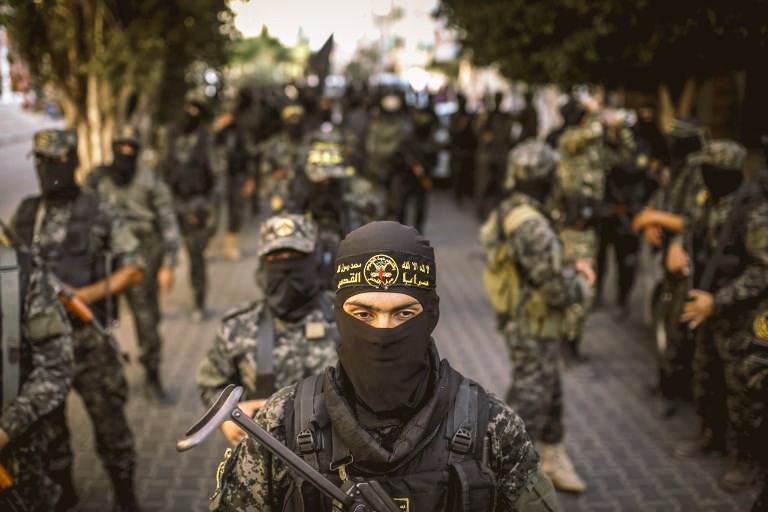
Palestinian Information Center – September 4, 2026
GAZA – Two Palestinians were killed and several others injured on Friday as Israeli forces continued attacks across the Gaza Strip, including airstrikes, artillery shelling and gunfire, amid ongoing violations of the ceasefire.
An ambulance and emergency services source said one Palestinian was killed and others were injured in an Israeli drone strike west of Khan Younis in the southern Gaza Strip.
The Al-Quds Brigades, the military wing of Palestinian Islamic Jihad, announced that one of its fighters, Fadi Ali Saeed Al-Abadla, a member of the Al-Qarara Battalion in the Khan Yunis Brigade, was killed.
Providing details of the incident, the Brigades said that at around 3:30 a.m. Friday, a force belonging to what it described as “collaborator militias,” backed by Israeli drones, advanced towards Al-Jumeiza Street in the Al-Qarara area north of Khan Yunis in an attempt to abduct one of its fighters.
The Al-Quds Brigades said its fighters detected the infiltrating force during the attempted abduction and engaged it at point-blank range with grenades and medium weapons, saying that several members of the force were killed or wounded.
The Brigades said Israeli drones then intervened to provide cover for the force’s withdrawal. It added that members of the force shot and killed Al-Abadla, leaving his body at the scene before withdrawing with their dead and wounded.
Three Palestinians, including a girl, were also injured by Israeli fire near Hamad City, north of Khan Younis.
Israeli artillery shelled areas east of Khan Yunis, while Israeli military vehicles opened heavy fire near the Al-Matahin area north of the city.
Israeli military vehicles also opened heavy fire towards northern areas of the Bureij refugee camp.
Israeli airstrikes, artillery shelling hit Gaza City
In Gaza City, an Israeli warplane carried out an airstrike near Mushtaha Street in the Al-Shuja’iyya neighborhood, east of the city, as Israeli artillery simultaneously shelled eastern areas.
Israeli military vehicles and drones also opened fire toward Palestinian homes in the Al-Tuffah neighborhood, northeast of Gaza City, while Israeli forces fired illumination flares over the eastern part of the neighborhood.
A local source reported heavy gunfire from Israeli tanks near the Al-Sanafour area, east of Gaza City, as an Israeli Apache helicopter opened fire toward eastern parts of the city.
In the Al-Zaytoun neighborhood, southeast of Gaza City, an Israeli quadcopter drone opened fire, while another quadcopter fired east of the Sheikh Radwan neighborhood in northern Gaza City.
Since the ceasefire took effect on Oct. 10, 2025, 1,338 Palestinians have been killed and 4,429 others injured, while 815 bodies have been recovered, according to the latest figures.
The cumulative death toll since the start of the Israeli assault on the Gaza Strip on Oct. 7, 2023, has risen to 73,474 Palestinians killed, while 174,540 others have been injured.
A proposal seeks to exploit Americans’ debt to force them into wars against Israel’s enemies
MEMO | September 3, 2026
The debt of Americans should be exploited to force them to fight in wars against Israel’s enemies, a Jerusalem Post commentator has argued, proposing that indebted young Americans be offered full debt forgiveness in exchange for military service.
Writing in the Israeli newspaper, security analyst AJ Jaff said a “federally administered debt-forgiveness enlistment program” that discharges Americans’ student loan, credit card and other debts after 24 or 36 months of service “would produce voluntary enlistment at scale”.
Jaff, described by the paper as “a senior strategic security strategist and analyst with 20 years of experience across corporate security, military, and geopolitical intelligence”, wrote that “the war with Iran will not be won through airstrikes” and that a ground invasion would require between 750,000 and 1.5 million American troops, against a current active US Army of 452,000.
The article proposed debt relief as the way to fill that gap. “The economics of the indebted American 20- and 30-something make this the most efficient conversion mechanism available,” said Jaff while explaining that “states generate the soldiers they need through the incentives that work on the population they have”.
The proposal has been condemned as confirmation that Israel expects Americans to fight and die in wars fought on its behalf. The Mises Institute, a US think tank, said the article amounted to a call for more Americans “to enlist – to die for Israel”, adding: “The whole point being to further subsidize the state of Israel.”
Users on social media described the proposal as an attempt “to exploit the crippling debt young Americans are carrying by offering them a chance at forgiveness if they’re willing to go die for Israel in the Persian Gulf.”
Responding to the plan, prominent American commentator Glenn Greenwald said: “ Israel pays scummy US politicians in both parties and DC vultures in the lobbying firms to ensure that Americans are forced to send billions to Israel. Then they argue that the debt of Americans should be exploited to force them to fight in wars against Israel’s enemies”.
The proposal to exploit the debt of Americans to fight wars against Israel’s enemies follows a string of remarks by senior Israeli officials suggesting they see US military power as a tool to be wielded on their behalf, while Israel itself stays out of the fighting. Finance Minister Bezalel Smotrich told the Katif Conference for National Responsibility on 21 July that a US war against Iran fought without Israeli participation was “the best for us”, adding, “Israel has no interest in joining the campaign.”
Prime Minister Benjamin Netanyahu, meanwhile, boasted on Israel’s Channel 14 on 30 August that he had used “close to a thousand hours” on American television and his “influence in the United States” over almost 40 years to persuade Washington to take military action against Iran, saying, “It took a long time to bring the US in.” The US had launched military action against Iran on 28 February, an escalation Netanyahu had reportedly been pressing Washington to undertake for months.
Israel’s plan for forced transfer with international complicity remains on the table
By Ramona Wadi | MEMO | September 3, 2026
As Israeli Prime Minister Benjamin Netanyahu reiterated that the military would not withdraw from the territory it occupied in Gaza, Defence Minister Israel Katz asserted that the plan for forced displacement was merely frozen.
Speaking at a conference hosted by Ynet and Yedioth Ahronot themed “Decision Time: Democracy and Society”, Katz spoke of forced transfer under the euphemism of emigration as the only solution for Gaza. However, he said, the plan required US support which is currently not forthcoming. According to Katz, Arab countries pressured the US to halt the forced transfer plan in return for agreeing with disarming Hamas. Egypt, Katz said, is refusing to cooperate in the plan.
According to Katz, although no sources were reported, 80 per cent of Palestinians in Gaza want to emigrate but Hamas and the international community are placing obstacles in their way. “There are no countries in the world willing to take them in,” he said. “What is delaying this is that the countries willing to take them in want US support.”
Palestinians have been unable to leave Gaza freely for decades before the genocide. Leaving under threat of forced displacement does not constitute freedom of movement. Israel wants Gaza emptied of Palestinians by any means necessary – forced transfer dressed up as travel is the option that lends itself to less scrutiny, despite it being classified as a war crime.
But when the international community approved of Israel’s genocide by refusing to acknowledge it, it also approved the forced transfer that happened as a result of the destructive and relentless bombing. If countries eventually cooperate with Israel’s plan and Palestinians are forcibly transferred out of Gaza, the complicity would render even the usual string of condemnations void of any meaning.
“I think there is no other solution in the end that is in everyone’s interest,” Katz stated. Everyone being anyone except the Palestinian people. Katz’s message is that if enough countries agree to commit war crimes, Palestinians have no say in their forced transfer.
If, as Katz said, forced displacement is still being discussed, the Board of Peace is merely buying time for Israel. Whether or not Hamas agrees to disarmament, forced transfer remains the ultimate goal for Israel. In the interim, the usual back and forth rhetoric on what happens if Hamas disarms continues as background noise for diplomacy to grasp at. For at the periphery of all the futile diplomatic overtures, there is genocide, Netanyahu and a plan to empty Gaza of Palestinians by all means possible. As Katz said, Israel needs US help, which he said would happen at the right moment. “Then we will get the green light to advance militarily, territorially and in other areas as well,” Katz declared.
In that scenario, Israel would colonise Gaza, and the UN would have one less item on its agenda to write statements about. No more talk about genocide except perhaps a commemoration in graphic imagery at the UN and a hypocritical statement about human rights and hope.
Hope, elusive and ambiguous, was all the UN offered in return for its complicity in allowing Zionism to colonise Palestine. What hope brought in the end, was genocide.
The Bishkek Declaration: What the SCO Signed, and Why India’s Name on It Matters
By Larry C. Johnson | SONAR21 | September 2, 2026
The Shanghai Cooperation Organisation closed its 26th heads-of-state summit in Bishkek on September 1 with a joint statement — the Bishkek Declaration — timed to the bloc’s 25th anniversary and signed by the leaders of all ten member states: Russia, China, India, Pakistan, Iran, Belarus, Uzbekistan, Kazakhstan, Tajikistan, and the host, Kyrgyzstan. It is a long anniversary text, adopted alongside some 28 other outcome documents and amendments to the SCO Charter, and its language on the war in Iran is unambiguous. But the single most consequential fact about the declaration is not what it says. It is whose signature sits on it. Narendra Modi’s India — a Quad member, a US strategic partner, and a country the same declaration implicitly defends against Washington’s tariffs — put its name to a text condemning American and Israeli military action, mourning a dead Iranian supreme leader, and rejecting the sanctions architecture the United States has built. That signature is the story.
What the declaration says
On the war, the SCO condemned the military strikes on Iranian territory that it said caused numerous civilian casualties and significant damage to Iran’s economy, characterizing those strikes as violations of international law and the UN Charter that created serious risks to international peace and security. It expressed condolences on the death of Supreme Leader Seyyed Ali Khamenei — killed earlier in the war — reaffirmed support for Iran’s sovereignty and territorial integrity, and called for the conflict to be resolved solely through political and diplomatic means. It extended the point to Gaza, calling a comprehensive and just settlement of the Palestinian question the only path to stability in the region.
On sanctions, without naming the United States, the members opposed “unilateral coercive measures” inconsistent with UN and WTO rules and damaging to the global economy — language that simultaneously covers US sanctions on Iran, Western sanctions on Russia, and the tariff pressure on India. On the nuclear question, they upheld Iran’s position directly, affirming every member’s “inalienable right” to peaceful nuclear energy and declaring that measures restricting that right are contrary to international law.
The rest is familiar SCO scaffolding, weightier for the anniversary: an open, non-discriminatory multilateral trading system; implementation of the SCO economic and energy cooperation strategies to 2030; a push to reform global governance toward a multipolar order that “excludes bloc-based and confrontational” methods; responsible use of artificial intelligence; and the ritual condemnation of the “three evils” of terrorism, separatism, and extremism, with a pointed line that “double standards” in counterterrorism are unacceptable. Pakistan takes the rotating chairmanship for 2026–27 and will host the 2027 summit in Islamabad.
From the Knesset to Bishkek: the anatomy of a reversal
To read India’s signature as simple hedging understates it. Six months earlier, Modi had planted India firmly in the opposite camp — and the Bishkek text reverses, almost line for line, the position he took in February.
On February 25–26, 2026, Modi made a state visit to Israel: the first Indian prime minister to address the Knesset, honored with the Speaker’s Medal as the first foreign leader to receive it, presiding over the elevation of the India–Israel relationship to a “special strategic partnership” with 27 bilateral outcomes and a defense co-production track. Two days after he left, on February 28, the US and Israel opened their war on Iran. India’s response was conspicuous silence: it did not condemn the strikes on Iranian sovereignty, and it did not condole the killing of Iran’s supreme leader. New Delhi zeroed out its Chabahar port funding in the 2026–27 budget under US pressure, let bilateral trade with Iran collapse, and offered only a muted, “humanitarian” reaction when an Iranian frigate returning from joint exercises with India was sunk near Sri Lanka. Commentators summarized the moment cleanly — Modi had put India firmly in the Israel–US camp — while critics at home called it a strategic surrender. Among India’s BRICS and SCO partners, Russia, China, and Iran above all, the tilt bred real distrust.
What turned India back was oil. India imports roughly 85 percent of its fuel and draws a large share of its crude and LNG through the Strait of Hormuz. Under the 50 percent US tariff wall — half of it levied explicitly to punish Russian-crude purchases — New Delhi had spent early 2026 trimming Russian imports and leaning on Gulf suppliers, a quiet alignment with Washington. The Iran war detonated that arrangement: Hormuz disruption tightened supply, prices surged, the rupee came under pressure, and Modi was reduced to urging citizens to conserve fuel. With Gulf barrels suddenly unreliable and Washington’s tariffs making the alignment costly anyway, India turned back to discounted Russian crude out of straightforward energy necessity. As one analysis put it, the energy shock reordered India’s alignments — the tilt toward Washington of a few weeks earlier giving way to a familiar, interest-driven return to Moscow.
Modi was working two constituencies at once, and they pulled opposite ways. The influential Indian-American diaspora he has assiduously courted aligns comfortably with a pro-US, pro-Israel posture; against it stood the roughly ten million Indians in the Gulf and a domestic opinion for whom the image of India embracing Israel mid-war became a live political liability the opposition worked hard. Energy security and the Gulf-and-domestic pull won.
Seen against that arc, the Bishkek signature is the visible completion of a U-turn. The declaration made India condemn the strikes it had refused to condemn in February and mourn the supreme leader it had refused to mourn. The signature therefore reads less as conversion than as correction — an interest-driven snap back to the multi-aligned center after a six-month experiment in the Israel–US camp proved too expensive.
This is where strategic autonomy, not alignment, becomes the only coherent description, and the distinction matters for anyone tempted to call the SCO a consolidated anti-US front. India will lean toward Washington and Jerusalem when the terms are right and swing back toward Moscow and the Global South when its energy and standing require it, bending each forum to its own positions rather than adopting anyone’s line. Modi spent the Bishkek summit proving the point even as he signed the consensus: he demanded an end to “double standards” on terrorism in language every observer read as aimed at Pakistan, then sitting at the same table and about to take the SCO chair; he insisted connectivity projects respect sovereignty and territorial integrity, India’s standing refusal to bless China’s Belt and Road and the corridor it runs through territory India claims; and he pressed Putin directly to move from endless war toward a cessation of hostilities in Ukraine rather than echo Moscow.
And the timing is not incidental. India hosts the 18th BRICS summit in New Delhi on September 12–13 — ten days after Bishkek — as BRICS chair for 2026, with Putin confirmed and Xi and Pezeshkian expected. A chair cannot antagonize the leaders it is about to receive, so part of the Bishkek signature is simply the housekeeping of a host keeping its room intact before its own showcase. Yet India deliberately themed its BRICS presidency around resilience and cooperation — a framing chosen to keep the focus on delivery rather than confrontation. The tell is in the gap: India signed a confrontational SCO text while steering its own BRICS summit deliberately away from confrontation. The New Delhi declaration on September 13 will be the better test of where India actually stands, and whether the correction that began at Bishkek holds.
The energy weight behind the declaration
A bloc’s communiqué is worth as much as the material power behind it, and on oil the SCO’s ten members carry more weight than the “regional talking shop” framing suggests. Taken together, and using the most recent 2026 figures, the member states produce on the order of 21 to 23 million barrels per day of crude and condensate — roughly a fifth of world output. Set against OPEC’s crude production of about 27 to 28 million barrels per day, the SCO membership produces somewhere near 80 percent of what the entire OPEC cartel pumps.
SCO member Crude + condensate (approx., 2026) Russia ~10.9 million bbl/d China ~4.3–5.0 million bbl/d Iran ~3.3 million bbl/d (war-depressed) Kazakhstan ~1.8 million bbl/d India ~0.7 million bbl/d Others (Uzbekistan, etc.) ~0.2 million bbl/d SCO total ~21–23 million bbl/d
Four caveats sharpen rather than soften the picture. First, Iran sits in both camps — it is the only country that is both an SCO member and an OPEC member — so the two blocs are not cleanly separable; strip Iran out to avoid double-counting and the SCO membership still produces roughly two-thirds of OPEC’s volume. Second, Russia alone, at nearly 11 million barrels per day, produces about 40 percent as much as all of OPEC combined and is the gravitational center of the SCO’s energy weight. Third, the figures are unusually soft this year because the war has curtailed Iranian output and repeatedly throttled Gulf flows through Hormuz — crude and liquids transiting the strait fell from about 21.6 million barrels per day before the conflict to under 5 million in the second quarter of 2026 — so actual regional production has swung well below capacity. Fourth, and most telling, several of OPEC’s Gulf heavyweights — Saudi Arabia, the UAE, Qatar, Kuwait — are not SCO members but SCO dialogue partners, drawn into the organization’s orbit since 2023. The bloc that just defended Iran and condemned the US-Iran war is steadily accreting the very Gulf producers on whom OPEC depends.
The deeper asymmetry is that OPEC is a supply cartel, while the SCO spans both ends of the oil market. Its members include not only Russia, Iran, and Kazakhstan on the production side but China and India — the world’s largest and third-largest crude importers — on the demand side. No other grouping contains both the sellers and the biggest buyers of oil under one roof, and the declaration’s commitments to an SCO energy cooperation strategy to 2030, a proposed SCO Energy Consortium, and expanded settlement in national currencies are early scaffolding for exactly that: a producer-consumer bloc that could, over time, price and clear a meaningful share of Eurasian energy trade outside the dollar and outside OPEC’s writ. That ambition is nowhere near realized. But it is the material fact that gives an anniversary communiqué more heft than its boilerplate would suggest.
The Bishkek Declaration is, on its face, a predictable statement of Eurasian grievance: condemn the strikes on Iran, defend Iran’s nuclear rights, reject Western sanctions, call for a multipolar order. What lifts it above boilerplate is the combination of the signatory and the substance behind it. India signed a text that condemns the very strikes on Iran it pointedly declined to condemn in February, when Modi was in the Knesset — not because it has changed sides, but because a six-month tilt toward Israel and Washington collided with an energy shock and a tariff wall, and snapping back to the multi-aligned center became the rational course. The anti-coercion language now shields India too, and a BRICS summit India must host in ten days makes keeping the room intact its own necessity. And the bloc doing the signing controls something close to four-fifths of OPEC’s oil output, both of Asia’s giant import markets, and a growing roster of Gulf dialogue partners. The declaration’s rhetoric is cheap. The energy and demographic weight standing behind it is not.
Featured Video

Iran’s Next Strike May Not Explode. It Could Shut You Down
or go to
Aletho News Archives – Video-Images
From the Archive
Zionism’s Violent Legacy
By Donald Neff | Washington Report On Middle East Affairs | January 1996
On January 4, 1948, Jewish terrorists drove a truck loaded with explosives into the center of the all Arab city of Jaffa and detonated it, killing 26 and wounding around 100 Palestinian men, women and children.[1] The attack was the work of the Irgun Zvai Leumi – the “National Military Organization,” also known by the Hebrew letters Etzel – the largest Jewish terrorist group in Palestine. The Irgun was headed by Revisionist Zionist Menachem Begin and had been killing and maiming Arabs, Britons and even Jews for the previous ten years in its efforts to establish a Jewish state.
This terror campaign meant that at the core of Revisionist Zionism there existed a philosophical embrace of violence. … continue
Blog Roll
 Aletho News
- Trump’s Iran war is on an Israeli leash
- Saudi oil boss issues global supply warning
- Riyadh Says Its Oil System Is Intact. The Numbers Say Otherwise.
- Trump and Netanyahu Want to “Finish the Job” on Iran
- US ‘one-sided dictation’ not Iran’s beliefs makes rational talks impossible: Baghaei
- Iran’s Next Strike May Not Explode. It Could Shut You Down /Col Doug Macgregor
- Iran: US political targets legitimate if assassinations return
- Iraq shuts key border crossing with Iran under US pressure: Report
- Undersea Internet cables could be targeted in retaliation for attacks on Iran: IRGC deputy chief
- EU sending ‘biased’ observers to interfere in Serbian election – president
- If Americans Knew
- The Israel Lobby’s Changing Fortunes
- AIPAC has become such a political liability that it’s shifting to a more “nimble” approach to buying politicians
- At least 160 Israeli settler attacks in 2 weeks
- Will Gaza’s Ancient Christian Community Disappear Forever?
- Israel’s vision of regional security rests on keeping Arab states weak
- Heidi Levine recounts how Palestinian youths helped save her in settler attack
- DAILY UPDATE: Latest essential news on Palestine, Israel, & region
- Trump’s Intensifying Sabotage of the ICC, for Israel’s Sake
- Israeli military detain US and UK volunteers in West Bank including Democratic NY politician Brad Lander
- Americans at National Conservatism Conference held in Israel this year criticize Israel
- No Tricks Zone
- E-Cars Reduce CO2 Emissions By Only 41% Compared To Internal Combustion Engine Vehicles
- Predictions Made By Renowned Climate Professor Over Past Decades Have Been Proven To Be Poor
- New Study Suggests Large Regions Of The Pacific Ocean Have Been Cooling For The Last 80 Years
- Germany’s Green Energy Debacle: High Energy Costs Force Kahla Porzellan to Close After 182 Years!
- New Study: 50 Years Of The Most Aggressive ‘Net Zero’ Policies Can Only Affect The Global Climate By 0.03°C
- US September “Heat” Was No Record…Many Records Set Decades Ago
- Latest European Green Energy Debacle; Portugal’s Largest Flagship Solar Park Insolvent!
- Green Energy Debacle: German Expert Professor Fritz Vahrenholt Warns Of Severe Economic And Social Consequences
- Two More Paleo Reconstructions Affirm Meters-Higher Sea Levels Across Ireland, Brazil 7000-6000 Years Ago
- New Study: Earth And Venus Surface Warmth Largely Explained By Convection And Lapse Rate, Not CO2 Or Radiation

