Netanyahu will reject US demands for withdrawal from Lebanon, Gaza, Syria if asked: Report
The Cradle | July 28, 2026
Israeli Prime Minister Benjamin Netanyahu has told cabinet ministers that Washington wants Israeli soldiers to pull back from positions in Syria, Lebanon, and Gaza, and that he does not intend to comply with US demands, Channel 13 reported on 27 July.
The report, which cites unnamed security sources familiar with the matter, states that US officials want the Israeli army to carry out a “series of withdrawals” across the three fronts.
Channel 13 does not state whether Washington is seeking full or partial pullbacks; however, Netanyahu told the ministers that he “intends to stand on my own two feet and resist.”
“I will strongly oppose this and tell them no,” he reportedly said.
The comments come as Netanyahu has set off for Washington for a meeting set for Tuesday with US President Donald Trump, after which he is scheduled to attend the funeral services for Republican Senator Lindsey Graham, one of Washington’s most persistent warmongers and an unwavering backer of Israel, who died on 11 July.
Israeli forces are currently occupying major stretches of land in Lebanon, Syria, and Gaza.
Israel maintains positions in border and hilltop areas in southern Syria, especially near the Golan frontier, where the military has established footholds inside Syrian territory, and regularly conducts raids against locals.
What began as a pretext to aid Druze communities battling Damascus’s extremist troops and Syrian government-backed Bedouin tribes after the ousting of former Syrian president Bashar al-Assad has become a so-called “buffer zone.” Israel has since used it to launch incursions into Lebanon.
In Lebanon, Israel maintains its so-called “Yellow Line” in the south that runs from the Mediterranean coast in the west to the Mount Hermon area in the east, extending around 10 kilometers inland and, in some parts, passing the Litani River.
Israel’s occupation of Lebanon has been marked by repeated ceasefire violations, including near-daily strikes, demolitions, and incursions. Beirut cited more than 2,000 violations in late 2025 alone, while hundreds of thousands of Lebanese remain displaced.
Many dozens of Lebanese villages within the Yellow Line have been completely demolished, with the intent of ethnically cleansing the area and creating a dead zone to which residents cannot return.
According to comments from February by Israeli Minister of War Israel Katz, Israeli troops will be staying in Lebanon and Syria “indefinitely.”
In Gaza, following almost three years of genocide and near-daily ceasefire violations since last October, Israel continued to slowly edge its Yellow Line in the strip further under the cover of night.
The most recent reporting says the controlled area has expanded to about 65 percent of Gaza and that the line has been shifted westward in places by hundreds of meters and, in some areas, by more than a kilometer.
Netanyahu has publicly said he wants to expand Israeli control over the strip further up to 70 percent.
Satellite imagery released on 21 July and reviewed by AP and Haaretz shows that the Israeli military has dug a 23-kilometer earthen trench along its new positions, cutting the devastated enclave in two.
In one stretch of southern Gaza, the trench sits more than a kilometer past the Yellow Line.
The synthesis of regional conflicts into WWIII has begun
By Tim Kirby | Strategic Culture Foundation | July 28, 2026
There are many people who only believe in or write about what they like. Their opinions are not so much derived from facts but are an expression of what they want to see happen. I say this because I want to be clear that the merging of the wars in Iran and Ukraine is neither ‘cool’ nor something I desire, but as they say ‘here we are’ and things will surely only get worse. Over the last two weeks we have seen news headlines demonstrating an interweaving of the conflicts into one. This is more so than just presumed (or in the case of the EU and Ukraine overt) proxy support.
One can only speculate as to why, but Zelensky with great glee has claimed responsibility for targeting an Iranian cargo vessel. There is a presumption that this was done to appease Trump or somehow win favor or attention from Washington. Trump has shown bitter disdain for Zelensky, especially after their spat at the White House early in the American President’s second term. But, we cannot forget that a president’s personal feelings on an individual do not necessarily become reflected in U.S. foreign policy. George Bush Jr. had nothing but praise for Vladimir Putin, while the Deep State was orchestrating the ultimate destruction of Russia behind the scenes. The attack on the Iranian ship has been confirmed by both Western media and RT: Iran has condemned a Ukrainian strike on a cargo ship in the Caspian Sea that killed one sailor and injured another. The Foreign Ministry summoned Ukraine’s acting chargé d’affaires over the attack.
In a post on X on Saturday, Ukrainian leader Vladimir Zelensky boasted about what he called “very strong results” from long-range strikes targeting “vessels used in military cargo shipments involving Iran, as well as a warship.”
The Iranian Foreign Ministry condemned the attack, saying it “risks further fueling and expanding the flames of war.” It urged other nations to take a “responsible stance toward this reckless action by the Ukrainian regime” and hold its leadership accountable.
At about the same time, the Iranians have declared that they can and may hit the UK. They shared what could become an infamous image for future generations about climbing the escalation ladder to WWIII – a map showing the range of Iran’s strike capability. The key thing to note again is that Tehran wanted to make the point that they can hit the United Kingdom. This is in connection with the US attacking Iran via a British base, but perhaps there is more to this, because the U.S. has used plenty of foreign territory against Iran, but for some reason only the UK seemed marked for total destruction because of it. The City of London is a very special place indeed.
In the broader picture as time goes on the war in Ukraine and to an extent the one in Iran smells more-and-more like the vile streets of London and is even perhaps the last round of the ‘Great Game’ taking place in the 21st century. No one has been more enthusiastic for using Ukraine as one big suicide drone against Russia than the ever-rotating nosferatu that loom at 10 Downing Street. It was Boris Johnson who put the final nail in the coffin of millions of lives by destroying any sort of peace agreement back in 2022. But we should not forget that the birthplace of Zionism, the blood enemy of Iran, was the British Empire. And, at the very least the British owe the Iranians plenty of money.
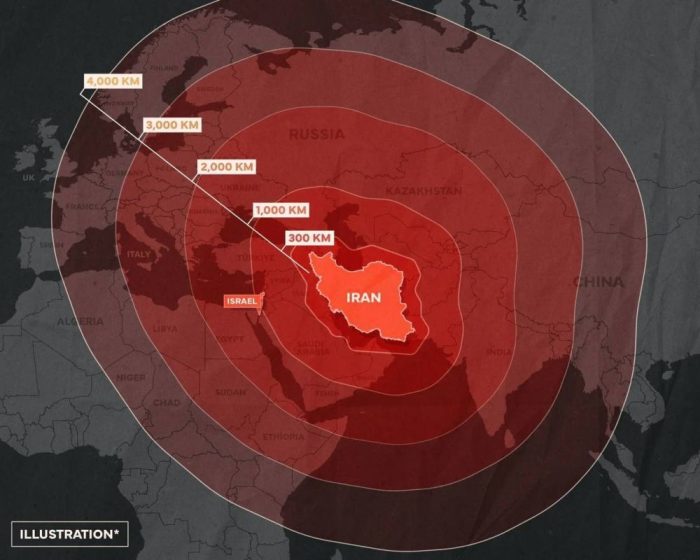
At the time of writing no one has yet to be blamed for the explosion(s) at the industrial facility in Essex, but if Parliament and their overloads want, this could be the casus belli for engaging Russia, Iran or both full scale and thus the start of a true WWIII. Tehran did just threaten London after all.
It is obvious that the enemies of Russia and Iran (and China) are essentially the same, however the conflicts seemed to be fairly compartmentalized until this strike by the ‘Junkie Fuhrer’ as Dmitry Medvedev calls him. Anyone with YouTube level knowledge of geopolitics could see there is a sort of soft or compartmentalized WWIII already happening as the West goes into decline and the Monopolar World buckles under its own tremendous bulk. But each ‘front’ in this conflict, including ones that were resolved quickly like Venezuela, seemed to be at least factually separate. Yes, the EU is leading the way on the Ukrainian front and the USA on the Persian one but there’s tons of interplay behind the scenes, however ultimately they have remained separate conflicts despite this. Now, with this attack on Iran by Kiev it looks like these fronts may merge from officially separate ones to potentially turning into one big long arc along the western half of what Mackinder called the ‘rimland’ (the inter marginal crescent).
We also cannot ignore that Zelensky has attacked former supporter Turkey all while Erdogan’s anti-Israel rhetoric only continues to heat up. Interestingly, Kiev’s strike on Caspian oil infrastructure has a deep impact against seemingly neutral Kazakhstan and the United States. It was ultimately the critical infrastructure of these two countries that was effected. We also cannot forget that, although it is obvious where President Lukashenko’s allegiances lie, and that his nation has not entered the war yet, Kiev has still managed to continuously murder innocent civilians in/around Belarus including the now infamous incident against a bus filled with children. The Belorussian side is convinced, that the attack on the bus was meant to provoke them into entering the war directly.
On the other side of the big global strife the Saudis have attacked the Houthis and the other pro-western regimes of the Gulf States are waking up to the fact that if the USA loses then so do they and are trying to counter Iran’s actions to the best of their ability.
There is escalation happening everywhere across the ‘rimland’ except for Taiwan and the Korean Peninsula, probably to keep China from helping its like-minded neighbors too directly, or more importantly, too soon. Then again, the Russian rumor mill has it that the North Koreans are gathering an army of 50,000 volunteers to fight against Kiev in the Special Military Operation. This is not escalation in the east, but from the east for certain.
At the beginning of the Special Military Operation in Ukraine one could only hope and pray that something would change and that the West would go quietly into the Multipolar night on its own volition, but alas it has not. It is unclear whether Zelensky’s will is at play or that of his handlers, but Kiev’s ever growing attacks on third-parties in their war with Russia is only synthesizing the two major fights into one. We all remember how in the recent past the Iranians famously rejected Russian “help” in arming themselves, they have probably deeply reconsidered this position. If Zelensky is allowed to further attack Iran we will wake up to find ourselves no longer in a pseudo or soft WWIII but one that is very real and rock solid.
This broadening of conflict presents a danger as the rules of engagement are quite different in both conflicts. The Russians want to save the locals in Ukraine and thus they can’t just ‘nuke it’. The Iranians don’t have nukes thus they trade missiles with the American navy and its various army bases in neighboring countries along with strikes on the source of Zionism in Israel. These are two very different games: one a mission to save locals from extinction from fascists created by the West, and the other a fight back against an unprovoked Zionist bombing campaign. Ukraine is being used as a proxy, protecting Europe from retaliation, whereas Iran is directly hitting the U.S. military and Israel directly. The key take away is that if Zelensky’s authorization of anarchy, possibly planned and orchestrated by London and beyond continues, these two will merge into something truly horrific for all humanity as two wars with no immediate nuclear threat will merge into one with nukes at the ready on both sides. Regional conflicts are now synthesizing into WWIII and the dynamic of this unified war will be nuclear.
Is Peter Mandelson a Russian or a Zionist asset?
By David Miller | Al Mayadeen | July 27, 2026
There appears to be some uncertainty in the British intelligence services about what is wrong with Peter Mandelson.
On the one hand, a former MI6 officer with undisclosed, but possibly continuing connections to the agency, claims that Peter Mandelson may actually have been a long-term Russian agent or asset.
On the other hand, the secret briefing materials produced by MI6 as part of the process of vetting Mandelson for the job of British Ambassador to the US, the most significant red flags were his connections to Israel or Zionist assets.
Is MI6 uncertain, or internally split? Or is there a distinction between the materials they produce secretly to advise government, and materials which are “leaked” by former officers to the Daily Telegraph for propaganda purposes? You can see where I am going with this. So, let’s jump right in.
The recent apparent leak to the Daily Telegraph is said to have come from Christopher Steele, who is reportedly a former MI6 officer from deep inside the River House, as MI6’s Thames-side HQ is so quaintly called in humanising TV dramas. Steele worked on the Russia Desk at a time when Russia was declining in the degree of attention that was devoted to it by the British intelligence services.
Steele joined MI6 in 1987 and was immediately posted to the Russia Desk. He retired in 2009, having been three years as head of the Desk. For all of his career in MI6, the proportion of attention given by MI6 (and British intelligence more broadly) to Foreign State Threats of which Russia was the pre-eminent example had reportedly markedly declined, according to the Intelligence and Security Committee. No wonder he thinks we are not paying enough attention. It was only after the “reunification” of Crimea with the Russian Federation in 2014 that the British intelligence services started to focus much more attention on Russia, foremost among all State Threats.
After MI6, Steele went off to Orbis Business Intelligence. His most famous role there was as the author of the dossier on the alleged relations between Trump and Russia. These were comprehensively debunked in the so called RussiaGate affair, most notably in a four part investigation by Jeff Gerth and in the relentless deconstruction of the Mueller report and the technical flaws of the initial crowdsourced claims by Aaron Maté. It is frankly amazing that even the Telegraph would have anything to do with Steele after that debacle. But here we are. According to Steele, Mandelson was considered a “privileged contact” of Russian intelligence.
Of course, it’s not insignificant that the “journalist” who wrote the story, Camilla Turner, has parents who literally run UK Lawyers for “Israel”, as the Canary has previously pointed out. Turner has been at the Telegraph for years, but it’s also important to point out that it has recently been taken over by hardline Zionists who are on record as saying staff who are not pro-“Israel” should look for other jobs.
Mandelson’s official vetting reportedly threw up five separate links of concern. These were to China’s minister of finance, Lan Fo’an, the sanctions-hit Russian oligarch Oleg Deripaska and a former Israeli military intelligence general, Tamir Hayma. Another concern identified was a £1m loan Mandelson received to invest in an Israeli startup. United Kingdom Security Vetting also noted Mandelson had a “very close” relationship with another individual, who is British, that could be compromising.
But Mandelson was not the only British official to have relations with the Chinese Finance minister. Both Rachel Reeves (the Chancellor) and Keir Starmer as PM did so too.
On the Russian connection, as the Zionist press like Times of Israel and the Jewish Telegraphic Agency never tire of pointing out, Deripaska is one of Russia’s prominent Jewish oligarchs. And he is no stranger to elite Zionist networks. After all, when Mandelson met Deripaska in famously controversial circumstances in 2008, it was aboard the oligarch’s yacht as a guest of Nat Rothschild, who also reportedly played a key role in financing Deripaska’s business activities. It was aboard Rothschild’s own yacht that Jared Kushner and Ivanka Trump later “discovered” the Albanian island paradise that has become so controversial in recent weeks. Nat Rothschild also famously allowed Mandelson to “rent” a “modest” farmhouse on his Wiltshire estate in England, which was one of the two addresses raided by the police when Mandelson was arrested.
But that is not all. Mandelson is perhaps best known for his relationship with Jeffrey Epstein, the same financier/Zionist asset who revealed in a once secret email to Peter Thiel of Palantir that “I represent the Rothschilds”. The circles of influence and corruption are closed by the final connection. In 2018, Deripaska was allegedly involved in trafficking young women for prostitution. He was accused of raping at least one 15-year-old. Though his alleged associates were prosecuted, charges were in the end – in 2025 – not preferred against Deripaska. So the “Russian” connection to Mandelson in the vetting report, in the end, is actually a connection to Zionist influence networks, with a striking Epsteinian flavour.
Of the two specific “Israeli” connections raised by MI6, one was with the former head of the Zionist regime military intelligence agency Aman. Tamir Hayma was chief of Aman between 2018 and 2021 following a decades-long career in the occupation forces. He then transitioned to the Institute for National Security Studies, a regime-connected think tank, and reportedly spoke bi-monthly to Mandelson.
The other connection was that Mandelson, though he had declared a £1million holding in an Israeli gaming tech start-up, called Moon Active, which was behind Coin Master, had not disclosed that he had been loaned the money to buy the stake. The British resident behind the loan has not so far been identified. It would be surprising if they were not connected to the same Zionist networks in which Mandelson is embedded.
The final red flag reported by the vetting process was to another British individual. There has been very little reporting on who that individual might be. Speculating who it is is difficult because there are so many instances of Mandelsonian corruption that it is hard to tell which would have triggered warning bells in MI6. It could, of course, be Nat Rothschild, who has been central to so much of this, but equally it could be the former “Prince” now known as Andrew Mountbatten. A 2019 internal JPMorgan report flagged that Jeffrey Epstein maintained an intertwined, “particularly close relationship” with both Andrew and Lord Mandelson, creating overlapping reputational risks. Then there is Ghislaine Maxwell. In 2014, Mandelson signed on as a “founding citizen” for Terramar, an ocean conservation charity founded by the British socialite and funded by Epstein, which was later scrutinized during sex-trafficking investigations.
As can be seen from this list and from all that we know about Mandelson’s career, almost all of his multifarious connections are deeply inserted in the Epstein web or connected to Zionist influence networks. It was after Christopher Steele retired from MI6 that the agency massively increased its focus on Russia as a result of the “reunification” of Crimea with the Russian Federation. The HMG Russia Unit was created inside the Foreign Office for this purpose, and it co-operated very closely with the Russia Desk in MI6, which Steele had headed. The unit was given civilian cover and announced publicly, but as was later disclosed by the Intelligence and Security Select Committee, it was staffed by spooks from all seven then-existing British intelligence agencies. It was from there that the whole Skripal “poisoning” operation was run, as well as several other covert ops including the “Integrity Initiative” exposed in mass leaks in 2018 and indeed many covert ops in Ukraine after 2022. Given the reported connection between Steele and Skripal’s handler Pablo Miller, both of whom worked at Orbis Business Intelligence, it is reasonable to assume that Steele may have played a role in the Skripal op, at a time when he had been out of the service for nine years. So, it is not entirely clear that this latest intervention from Steele is entirely separate from the machinations emanating from spooks who currently inhabit the River House.
It is perfectly plain that the major link that Mandelson has is with Zionist intelligence-linked networks. If anyone in MI6 (or formerly in MI6) tells you differently, you will know they are ignoring the actual data held in their files and trying to treat you as a propaganda patsy. Don’t fall for it. Mandelson is a Zionist asset.
German arms exports to Israel surge sharply amid Gaza genocide

A submarine docked in a shipyard of warship maker TKMS in Kiel, Germany, on April 22, 2026. (Photo by Reuters)
Press TV – July 27, 2026
The German government has confirmed that it dramatically escalated its military material support for the occupying Israeli regime, approving a surge in arms export licenses that includes the delivery of a highly classified, nuclear-capable submarine.
Germany approved nearly $913 million in arms export licenses to Israel during the first five months of 2026, exceeding the total value approved over the previous 20 months combined, according to a government response to a parliamentary inquiry.
The figures were disclosed in a written reply by the Federal Foreign Office to a question from the far-right Alternative for Germany (AfD) party. The response stated that almost all of the approvals were granted in April and May.
This increase marks a sharp rise in German arms export approvals to Israel, despite repeated statements by Berlin expressing concern over the humanitarian consequences of Israel’s military genocidal war in the besieged Gaza Strip.
More than 60% of the total value of the approved export licenses is allocated to a single, unnamed “major maritime project,” according to the government.
Defense analysts said the project is likely to involve a submarine built by German shipbuilder TKMS. The most probable candidate is the INS Drakon, a Dolphin II-class submarine capable of carrying nuclear weapons.
The submarine completed sea trials last year at TKMS’s shipyard in Kiel on Germany’s Baltic coast. German media reported that it was formally delivered to the Israeli Navy last week. The vessel has an estimated value of about $548 million.
According to defense reports, the INS Drakon may be equipped with a vertical launch system (VLS), allowing it to fire cruise or ballistic missiles. If confirmed, Israel would become only the second entity after South Korea known to operate a conventionally powered, air-independent propulsion submarine fitted with a VLS.
During sea trials, the submarine’s sail was covered with tarpaulins and fiberglass panels, preventing outside observers from identifying its weapons configuration.
Military analysts say submarines of this class could provide the occupying Israeli regime with a sea-based second-strike nuclear capability.
In May, TKMS signed a memorandum of understanding with Israeli company Elbit Systems on future cooperation.
Johannes Mutschler, a defense analyst, said some officials within the German government viewed exports of certain weapons to Israel as problematic in light of “numerous and credible reports” pointing to Israeli war crimes during the genocidal war on the besieged Gaza Strip. However, he noted that those concerns had not resulted in a broader policy restricting arms exports to Israel.
Germany remains one of the world’s largest arms exporters to the occupied Israeli entity. According to the Ministry for Economic Affairs’ Arms Export Report published in mid-July, Berlin approved export licenses worth $15.8 billion during the first half of 2026, more than four times the amount approved during the same period a year earlier. Ukraine remained the largest recipient of German arms exports.
Germany’s defense industry has expanded rapidly in recent years as the government has increased military spending following the Russia-Ukraine war.
Germany’s lethal arms exports to the occupied territories have seen a tenfold increase after Israel launched its war on Gaza on October 7, 2023, making Berlin not only complicit but an active participant in the genocide unfolding in the besieged Palestinian territory.
Under the shadow of the genocidal war in Gaza, Israel has accelerated its annexation drive in the West Bank. The occupied West Bank has been under Israeli military occupation since 1967.
Seyed M. Marandi: Saudi Oil Is Burning & Trump Has No Way Out
Glenn Diesen | July 26, 2026
Prof. Seyed Mohammad Marandi is a former advisor to Iran’s nuclear negotiation team. Prof. Marandi discusses Saudi Arabia’s miscalculation in terms of attacking Yemen. Trump has trapped himself in the Iran War, and his options keep getting worse.
Buy merchandise: https://diesen-shop.fourthwall.com/en-nok
Glenn Diesen clip channel: https://www.youtube.com/@Prof.GlennDiesenClips
Follow Prof. Glenn Diesen:
- Substack: https://glenndiesen.substack.com/
- X/Twitter: https://x.com/Glenn_Diesen
- Patreon: https://www.patreon.com/glenndiesen
Support the research by Prof. Glenn Diesen:
- PayPal: https://www.paypal.com/paypalme/glenndiesen
- Buy me a Coffee: buymeacoffee.com/gdieseng
- Go Fund Me: https://gofund.me/09ea012f
The spark in Tell: How a village resistance disrupted Israel’s West Bank strategy

By Ramzy Baroud | MEMO | July 25, 2026
During a military raid on the small town of Tell, southwest of Nablus, a moment of direct defiance shattered the illusion of total Palestinian submission.
Faced with relentless military incursions, land confiscation, and settler harassment and violence, local villagers and farmers refused to retreat.
In the confrontation that followed, a single Palestinian disarmed an Israeli soldier and opened fire on the invading forces near the illegal Havat Gilad settlement outpost, killing two soldiers and wounding three others.
What followed was the predictable, unyielding fury of the occupation: Israeli forces and state-backed armed settlers immediately launched a series of raids across Tell and neighboring communities, killing four Palestinians, setting fire to homes, and converting residential buildings into field interrogation centers.
In a swift collective punishment campaign, Israeli occupation troops detained over 70 Palestinians—including more than 40 in Tell alone—while expanding military incursions into Jenin, Tubas, Tulkarm, Ramallah, Hebron (Al-Khalil), Bethlehem, and Jericho.
Prime Minister Benjamin Netanyahu and Defence Minister Israel Katz promptly ordered a “wide-scale military operation,” while UN Special Rapporteur Francesca Albanese unequivocally condemned the combined army-settler assaults as “pogroms against defenseless civilians,” reiterating calls for an immediate arms embargo and trade sanctions against Israel.
Yet to understand the spark in Tell, one must understand the explosive pressure cooker that the occupied West Bank has become.
Netanyahu’s primitive calculus
Netanyahu’s immediate response to the incident in Tell was not a departure from policy, but the activation of an old, entrenched doctrine: every act of Palestinian resistance—no matter how localized—must be weaponized to accelerate the state-sponsored theft of Palestinian land.
For decades, Israel’s security apparatus has used local resistance as cover to achieve long-standing demographic and territorial ambitions. Under the current far-right coalition, this strategy has reached unprecedented levels of speed and brutality.
The scale of destruction
Since October 2023, while global media attention focused primarily on the horrors in Gaza, Israel systematically expanded its offensive across the occupied West Bank:
- Over 1,090 Palestinians—including at least 239 children—have been killed by Israeli forces and state-backed armed settlers.
- Over 6,800 Palestinians have been injured by live ammunition, shrapnel, and physical assaults, with settler attacks alone accounting for a surging majority of recent civilian injuries.
- More than 10,000 Palestinians have been forcibly displaced due to home demolitions, violent settler rampages, and severe access restrictions. Entire Bedouin and rural communities across the South Hebron Hills and the Jordan Valley have been systematically depopulated and cleansed.
- Over 11,000 Palestinians have been swept into detention through military night raids, held under arbitrary administrative detention without charge or trial.
- Under Finance Minister Bezalel Smotrich—who was granted official authority over civilian affairs in the West Bank—the Israeli government declared tens of thousands of dunams of Palestinian territory as “state land,” marking the largest continuous land grabs since the Oslo Accords. Concurrently, dozens of illegal settler outposts were retroactively legalized, and thousands of new settlement housing units were advanced.
Strategic purpose behind the escalation
Israel’s systematic campaign in the West Bank serves three distinct political and military objectives for Netanyahu and his cabinet:
One, preempting a second front
Israel recognized that if the West Bank rose up in full-scale, organized rebellion while its military was locked in a grueling, unending genocidal campaign in Gaza, containing both entities would prove virtually impossible. Having failed to crush the Palestinian resistance in Gaza despite its overwhelming military force, Israel applied heavy-handed, preemptive violence in the West Bank to terrorize the population into total submission.
Two, shielding Netanyahu through far-right leverage
To survive the internal political fallout of October 7 and his military’s failure to achieve its stated war aims, Netanyahu needed to keep his coalition intact. He granted far-right ministers Bezalel Smotrich and Itamar Ben-Gvir absolute freedom to execute their ideological agenda: expanding illegal settlements, annexing Area C, arming settler militias, and repeatedly invading and altering the status quo at the Al-Aqsa Mosque compound in occupied East Jerusalem.
Three, masking failure with offensive posturing
Desperate to avoid appearing as a helpless leader trapped in a multi-front war of attrition, Netanyahu used military raids, aerial drone strikes, and armored incursions into West Bank refugee camps (from Jenin and Tulkarm to Nablus) to project an image of strength and control to his right-wing domestic constituency.
Settler terror and the bankruptcy of the PA
This campaign of state-sponsored expansion was smoothed by two major factors on the ground:
Unchecked settler paramilitarism
Armed by Itamar Ben-Gvir’s National Security Ministry, violent settler gangs have been fully integrated into state-sanctioned paramilitaries. Settlers launch routine, organized pogroms against Palestinian villages—burning homes, destroying olive groves, stealing livestock, and firing live ammunition at civilians—with the direct protection and active participation of the Israeli military.
The subjugation and inaction of the PA
The Palestinian Authority (PA) has completely abandoned its fundamental duty to protect its people. Rather than formulating a national defense strategy or providing at least symbolic leadership to resist land theft, the PA security forces continued security coordination with the occupation.
The PA actively cracked down on local resistance fighters, confiscated weapons, and suppressed public demonstrations, acting as a sub-contracted administrative force managing Palestinian subjugation on Israel’s behalf.
Why mainstream analysis fails
Most media and political analysts will inevitably frame the current escalation around narrow parliamentary metrics. They will point to upcoming Israeli elections, arguing that Netanyahu is provoking violence purely to consolidate the far-right vote, satisfy Ben-Gvir and Smotrich, and outflank his political rivals.
International human rights bodies will issue familiar warnings, humanitarian organizations like MSF will voice alarm over raids on medical facilities like Nablus Specialized Hospital, and political blocs like the European Union will issue toothless calls for “all parties to de-escalate.”
Meanwhile, the United States government continues to funnel billions of dollars in heavy weaponry to Israel, reinforcing an episode of historical complicity.
What these analyses consistently fail to grasp is the reality of Palestinian agency.
They treat Palestinians as passive victims waiting for international intervention or political shifts in Tel Aviv and Washington. But the explosion in Tell proved that the status quo of total encirclement, daily humiliation, and existential dispossession is inherently unsustainable.
The rebellion did not start where standard military analysts expected it to—it ignited in a small farming town among people who decided that fighting back was the only response left to quiet, gradual annihilation.
The West Bank will not remain silent forever; it will rise at the time and place of its people’s choosing, rendering conventional political forecasts useless.
India’s reluctance to confront US over Chabahar attacks exposes contradictions in its Iran policy: Journalist
Press TV – July 26, 2026
India’s continued reluctance to openly challenge Washington despite the recent US attacks on Iran, including the strategic coastal city of Chabahar, has exposed the contradictions at the heart of New Delhi’s foreign policy, says an Indian journalist and foreign policy analyst.
Speaking to the Press TV website, Sanjay Kapoor, founder and editor of Hardnews magazine and president of the Editors Guild of India, said India’s approach towards Chabahar has never been independent of US policy on Iran, noting that New Delhi has consistently calibrated its engagement with the strategic Iranian port around Washington’s broader regional strategy.
“India decided to take up the Chabahar project only after then US President Barack Obama had signed the JCPOA and there was a global attempt to normalise ties with Iran,” Kapoor said.
He noted that India, like many other countries, had also severed its energy relationship with Iran after Washington instructed New Delhi to stop purchasing Iranian oil, underscoring India’s willingness to accommodate American concerns over the Islamic Republic.
“India also cut energy ties with Iran after the US told New Delhi to stop buying Persian oil. In other words, India has been mindful of US concerns on Iran,” he stated.
Kapoor said the Bharatiya Janata Party (BJP)-led government in New Delhi has simultaneously cultivated close strategic relations with Israel, a policy that has further aligned India’s foreign policy with that of Washington.
“Besides, this BJP government has been close to Israel also, which ensures that New Delhi stays close to the US and its foreign policy,” he told the Press TV website.
His remarks follow the recent US aggression against southern Iran, during which the port city of Chabahar was also targeted, raising questions over the future of India’s flagship connectivity project in the region and whether New Delhi can continue portraying the port as a strategic priority while avoiding direct criticism of US attacks on Iranian territory.
Located on Iran’s southeastern coast, Chabahar has long been regarded as India’s gateway to Afghanistan and Central Asia, allowing it to bypass Pakistan while providing Tehran with an important regional trade hub.
India has invested in developing the Shahid Beheshti terminal of the port, viewing Chabahar as a counterweight to Pakistan’s Gwadar Port under the China-Pakistan Economic Corridor (CPEC).
Deep historical ties have not translated into strategic consistency
Despite India’s cautious approach in recent years, Kapoor told the Press TV website that relations between Iran and India rest on centuries of historical, cultural and religious interaction.
He pointed out that India is home to the world’s second-largest Shia population after Iran, adding that religious links between the two countries continue to shape people-to-people relations.
He also referred to Imam Khomeini’s old ties with his hometown, Lucknow, the capital of northern India’s biggest state, Uttar Pradesh.
“There is continuous interaction between the Shia clergy in India with their counterparts in Iran and Iraq,” he noted, adding that Iran has traditionally viewed India differently from many other countries, pointing to the longstanding cultural affinity between the two civilizations.
“Iran also never saw India as a foreign country. They also perceive Kashmir in India as Iran-e-Sagheer (little Iran),” he said, referring to the Muslim-majority Himalayan region of Kashmir in northern India.
Kapoor argued that successive governments in New Delhi believed these deep-rooted ties would allow India to preserve its relationship with Tehran even while strengthening strategic cooperation with Washington.
“The Indian government under the BJP always believed that they will manage substantial ties with Iran like they managed the Chabahar Port,” he stated.
However, he maintained that New Delhi ultimately regarded alignment with the United States as the more pressing strategic priority.
“For whatever reason, they thought they had more compelling reason to align themselves with the US. They believed that Iran could wait,” Kapoor remarked.
According to the veteran journalist, India’s reluctance to publicly support Iran stems less from hostility towards Tehran than from its determination to remain aligned with Washington’s geopolitical ambitions.
“Their reluctance to support Iran openly is due to their desperation to be on the right side of the US,” he stressed.
He believes Indian policymakers expect the current regional situation to evolve and remain confident that New Delhi’s long-standing doctrine of strategic autonomy will eventually enable it to restore any damage to bilateral relations.
“They believe that what’s happening is transitory and the final outcome will look different from now. Their resort to strategic autonomy in their foreign policy will give them a chance to make up with the Iranian government,” Kapoor said.
US attacks have exposed the fragility of India’s Chabahar strategy
Kapoor said Chabahar was originally conceived as a stable alternative to Iran’s other major ports, making it particularly attractive to India when Tehran offered New Delhi the opportunity to develop the Shahid Beheshti terminal.
“Chabahar was meant to be away from the ferment that used to be in Bandar Abbas. It was expected to be stable and peaceful. That was the unique selling point of Chabahar when its terminal, Shahid Beheshti, was offered to India by the government of Iran,” he said.
However, he said the recent US attacks around the port have fundamentally altered those assumptions.
“For some strange reason, Chabahar is facing the ire of US attacks. They have misiled and bombed the port.”
Kapoor questioned New Delhi’s claim that Indian infrastructure at the port escaped damage during the attacks.
“The Indian government says Indian infrastructure has not been lost due to the attack. That’s saying a bit much,” he added.
The senior Indian journalist noted that New Delhi invested approximately $120 million in the Shahid Beheshti terminal but deliberately limited further investment because US sanctions made financing increasingly difficult.
According to Kapoor, Russian government sources have previously indicated that Moscow helped India overcome funding shortages for the project on several occasions.
Despite maintaining its presence at Chabahar for years, Kapoor argued that New Delhi never fully embraced the project.
“Despite soldiering on for many years, India always remained a reluctant partner,” he said.
Kapoor said many Iranian experts have long argued that Tehran deliberately preserved Chabahar as an opportunity for India despite having other potential partners.
“As many Iranian experts told me, Tehran had kept Chabahar for India,” he told the Press TV website. “They argue that if they had wanted, they could have given the port to Pakistan, China or even Russia.”
He said India’s strategic calculations changed significantly after the United States withdrew from Afghanistan, removing one of the principal reasons behind New Delhi’s investment in the Iranian port.
“India thought Chabahar had become untenable after the US left Afghanistan,” he said.
Rather than engaging with Afghanistan’s new Taliban-led government, Kapoor said India shifted its focus to alternative connectivity initiatives backed by Washington and several of its regional partners.
The journalist believes India’s regional priorities have increasingly shifted away from Chabahar towards the India-Middle East-Europe Economic Corridor (IMEC), a US-backed connectivity initiative linking India with Europe through the UAE, Saudi Arabia, Israeli-occupied territories and Mediterranean countries such as Greece and Italy.
“India did not want to negotiate with the Taliban and happily became part of IMEC, which promised a lot, including a seat on the G7 high table,” he stated.
Kapoor recalled that speculation briefly emerged in Indian media about reviving New Delhi’s engagement with Chabahar following the signing of a memorandum of understanding (MoU) between Tehran and Washington. However, he said those expectations quickly faded once the ceasefire broke down and US attacks on Iran resumed.
India depends on Afghanistan and Washington’s calculations
Asked whether the long-term success of Chabahar ultimately depends on Iran’s stability and sovereignty, Kapoor said New Delhi’s strategic calculations extend beyond developments inside Iran.
“Chabahar’s stability depends, in India’s estimation, on who controls Afghanistan and on how the US perceives the port,” he noted.
He explained that India’s primary motivation for investing in Chabahar was never limited to commercial interests alone but centred on gaining direct access to Afghanistan while bypassing Pakistan.
According to Kapoor, changes in the regional geopolitical landscape have complicated those calculations.
“My contention may not square with the views of others, but India would only make a pitch for Chabahar if it doesn’t elicit a hostile response from its (Persian) Gulf partners and that’s only possible if Washington is backing India to help Afghanistan as well as support against Pakistan,” he said.
He argued that Pakistan remains a central factor in India’s strategic thinking, noting that the evolving military balance in South Asia following the recent war against Iran has further complicated New Delhi’s decision-making.
“After the recent war in West Asia, there has been a shift and Pakistan is better off militarily. What happens next will impact India’s policy towards Chabahar,” he remarked.
To Kapoor, India’s future investment in the port will depend primarily on the trajectory of Iran-US relations and Pakistan’s regional position.
“To sum up, India will invest in Chabahar if the US builds working relations with Iran and Pakistan is on the defensive due to this.”
Relations with Israel carry long-term risks
Kapoor said India’s growing partnership with Israel inevitably raises questions in Iran about the future direction of bilateral relations.
“Ordinarily, the trust that India and Iran enjoy should get eroded after PM Modi was in Tel Aviv just days before the war broke out,” the Indian journalist stated.
“The moot question that Iran should ask itself is whether India is a friend or a foe,” he added, pointing to the numerous interactions between Indian and Israeli leaders in recent years.
He added that despite increasing strategic cooperation with Israel and close ties with Washington, India has so far managed to preserve working relations with Iran.
According to Kapoor, New Delhi appears confident that it can maintain relations with “both sides” without suffering major diplomatic consequences.
Nablus: When the killer becomes the victim
By Tamer Ajrami | MEMO | July 25, 2026
In the occupied West Bank, the story often starts too late.
It starts when an Israeli settler is killed, injured, or frightened. It starts when Israeli officials speak, when the army enters Palestinian villages, and when headlines describe a “clash” or a “terror attack”. Suddenly, the settler becomes the victim, the Palestinian village becomes the threat, and the occupation disappears from the story.
But Nablus cannot be understood from the middle of the story.
For years, Palestinian villages around Nablus have lived under daily pressure: land seizures, settlement expansion, military raids, road closures, intimidation, and settler violence.
This is not a normal conflict between two equal communities. It is a system where one side expands with weapons, army protection, and state support, while the other side is expected to remain silent.
That is why the recent events of yesterday near Nablus cannot simply be called a “clash”. The word sounds neutral, but the reality is not neutral. A clash suggests two equal sides. But there is no equality between armed settlers living on occupied land and Palestinians living in villages surrounded by settlements, checkpoints, and military control.
Of course, individual settlers can suffer. Death is death. Fear is fear. No human pain should be mocked or ignored. But the pain of one incident cannot erase the larger reality. A settler can be a victim in one moment, while still being part of a wider system that causes fear, dispossession, and daily suffering for Palestinians.
This is the contradiction: the executioner becomes the victim only when the story is cut away from its history.
When the headline begins with Israeli pain, Palestinian pain becomes invisible. The settler becomes a civilian under attack. The Palestinian becomes a security threat. The settlement becomes a neighbourhood. The occupied village becomes a battlefield. The army becomes “protection”. Resistance becomes “terrorism”. And the occupation, which created this whole reality, disappears.
This is not by accident. This is how power protects itself.
The settlement movement has always tried to make its presence in the West Bank look normal. It wants the world to see settlers as ordinary residents, not as people living inside a political project built on occupied land. It wants attacks on Palestinians to look like isolated events, while every Palestinian reaction is used to say that Palestinians are violent and must be controlled.
But the truth is simple: a system built on domination cannot bring security.
It can bring temporary control. It can create fear. It can silence people for a while. It can build walls, checkpoints, settler roads, and military zones. But it cannot bring peace. When land is taken, when homes are attacked, when settlers enter Palestinian villages, and when the army protects one side only, violence is not an accident. It becomes part of the system.
This does not mean every settler carries the same guilt. It does not mean every Israeli death should be dismissed. It means that individual suffering should not be used to hide collective power. The victimhood of the settler cannot be used to erase the long victimhood of the occupied.
Yet this is what often happens.
The Palestinian is asked to explain his anger. The settler is rarely asked to explain why he is there. The village is asked to condemn violence. The settlement is rarely asked to justify its existence. The occupied are told to stay calm, while the occupier calls control “security”.
That is why the phrase “when the executioner becomes the victim” matters. It is not a denial of human pain. It is a refusal to forget the political reality.
A settler killed in one incident may be a victim of that incident. But the settlement project remains a machine of dispossession. The grief of one Israeli family does not erase the daily fear of Palestinian families living beside armed settlers, checkpoints, and expanding settlements. One tragic day does not erase decades of occupation.
Nablus shows this clearly. The more Israel protects settlements, the more tension it creates. The more settlers expand, the more Palestinian space shrinks. The more Palestinian life is controlled, the more resistance becomes likely. Then, when violence erupts, Israel presents itself as surprised, as if it had no role in creating the conditions.
This is the oldest trick of domination: create the wound, then cry when the wound bleeds.
The question after Nablus is not only who fired first. That question matters, but it is not enough. The deeper question is: who built the reality where armed settlers, occupied villages, military raids, and daily humiliation became normal?
Who allowed settlers to move through Palestinian land with confidence, while Palestinians move through their own land with fear? Who turned settlements into protected facts, and villages into security zones? Who decided that Palestinian life could be restricted every day, then acted shocked when this reality produced violence?
Until these questions are answered, every incident will be treated as a beginning, when it is actually only another consequence.
When the executioner becomes the victim, the world must be careful. It must see human pain, but it must also see the political structure. It must mourn the dead, but it must not forget the system that keeps producing death.
Because the real tragedy is not only that people die. The real tragedy is that occupation creates the conditions for death, then asks the world to feel sorry when those conditions return to its own doorstep.
Bankrupt and fraudulent: EU sanctions Russia while silent on U.S., Israeli genocide
Strategic Culture Foundation | July 24, 2026
European Union leaders imposed yet another raft of sanctions on the Russian Federation this week. This is the 21st package of political and economic strictures that the 27-nation bloc has deployed against Russia over the past four years.
The EU sanctimoniously claims that the measures are a demonstration of rebuke for Russia’s alleged unprovoked aggression and invasion of Ukraine in February 2022.
This pretense of European principle is farcical.
Anyone who has objectively studied the Ukraine conflict knows that the United States and its European NATO partners incited the war by orchestrating the violent coup in Kiev in 2014, followed by the deliberate weaponizing of the NeoNazi regime that the Western imperialists covertly directed for a geopolitical confrontation with Russia. That many people aren’t aware of that history is largely due to the brainwashing propaganda of the Western media.
The EU’s sanctions policy is therefore properly understood as economic warfare, and as supplementary to a larger military strategy to defeat Russia. It is part of “Total War,” as a former French finance minister clumsily admitted in March, 2022.
While the NATO-armed Ukrainian regime steps up long-range air strikes deep in Russia in an attempt to damage oil and gas infrastructure and the Russian economy, the EU’s sanctions are aimed at achieving the same objective.
This has nothing to do with using trade and financial measures to show political and moral support for Ukraine as an alleged victim of Russian aggression. It is all about maximising confrontation with Russia to defeat it.
The use of unilateral sanctions is illegal under international law and expressly prohibited by the United Nations Charter. They constitute a form of criminal aggression. The EU is in criminal violation of international law, as is the U.S., which also blatantly wields sanctions to intimidate other nations, currently 30, including Russia, China, Iran and Cuba.
In any case, the EU’s policy meets the definition of insanity, as manifested by repeating a futile action multiple times and expecting a different result.
Russia is arguably the most sanctioned country in the world given the 21 rounds that the EU has fired and the hundreds of banks and other businesses that it has targeted. Yet Russia’s economy has not buckled, as desired.
Even more insanely, it is the European economies that have suffered grievously from the self-imposed exclusion of trade and business with Russia, particularly the loss of affordable energy supplies. The EU is rapidly deindustrializing due to soaring economic costs. Germany, once the economic powerhouse of Europe, is crippled as it imports more expensive American fuel in place of the traditional Russian supplies which historically underpinned Europe’s industries.
European citizens – a combined population of 500 million – are hit with a calamitous cost-of-living crisis that in large measure is caused by the sanctions policy of their political leaders. These so-called leaders are decimating their own economies and societies.
The bankruptcy is political and moral. The strains are showing within EU member nations, as seen from the wrangling and watering down of the latest round of sanctions. Several countries were clamoring for exemptions to limit damage to their national interests.
Greece wanted waivers on restrictions over its international shipping of Russian oil and gas. Germany and Portugal wanted exemptions from sanctions on Russian fisheries. Austria, Bulgaria, France, and Italy also appealed for curbing prohibitions to protect their various interests.
As Euronews headlined: “Chaotic sanctions negotiations expose cracks in EU front versus Russia.”
The outlet reported that the collective policy is starting to harm national interests, which is leading to infighting among the EU members.
“It’s getting more and more difficult to find common ground. We saw that this week,” said one diplomat about the fractious negotiations.
Another diplomat commented: “The [European] Commission [the EU’s executive branch] is running out of options for what to include. It has to become more creative, and every package is more complex and takes longer to negotiate.”
In other words, the policymakers in Brussels are insolvent from failing political ideas over their illegal sanctions. They are also politically bankrupt because these elitist, Russophobic officials are making European citizens suffer severe economic consequences without any democratic mandate. They are imposing a ruinous policy like a dictatorship, one that is aggravating tensions and hostilities towards all-out war.
European elites have caused two world wars already over the past century; they seem to be driving a third one.
But here is the kicker: this insane policy is a total fraud. It is bereft of any supposed righteousness or avowed concern for Ukraine and the defense of democracy.
The hypocrisy is glaringly exposed by the European Union’s indifference to war crimes that the United States and the Israeli regime are perpetrating on a massive scale.
As former European Members of Parliament Mick Wallace and Clare Daly pointed out this week, the EU leadership has said nothing about the United States waging a war of aggression against Iran now in its fifth month. Thousands of Iranians have been killed by American and Israeli bombing, and U.S. President Donald Trump is repeatedly making genocidal threats to destroy the nation, diabolically hinting at the use of nuclear weapons.
On the other side of the world, as Wallace and Daly also note, thousands of children in Cuba are being starved to death under a maximum blockade on the island country by Washington. The EU has made not the slightest criticism of the U.S., never mind any condemnation of this barbarism.
This week, as European elites were drawing up their 21st round of dubious sanctions on Russia, the same officials declined to issue any sanctions against the Israeli regime for its ongoing genocide against Palestinians, a genocide enabled by the U.S. and, it has to be said, by European countries trading with Israel.
The double standard of the EU leadership is not just idiotic duplicity. It is proof of its political and moral bankruptcy and systemic fraud. There was a time when some European politicians would speak out to oppose U.S. wars and crimes. Not anymore. The entire European political class is putrid from corruption and complicity.
On so many levels, the EU sanctions on Russia are self-defeating. The ultimate defeat is the fatal corrosion of its own institutions and abject lack of authority. European politicians are delegitimizing themselves and their claim to govern. People of Europe and around the world can see what the EU has become: an elitist warmongering project that is sacrificing its own citizens.
UN experts call for accountability five months after US-Israeli attack on Minab school
Press TV – July 24, 2026
UN experts have called for an independent investigation into the bombing of a primary school in the southern Iranian city of Minab that killed 168 children and teachers, saying the attack highlights serious violations of international law during war of aggression by the United States and Israel.
In a statement released on Friday, the experts said the school was struck twice during school hours on Feb. 28, 2026, and that there was no indication it was being used for military purposes.
“The school was clearly identifiable as a civilian educational facility and that they had received no information indicating it was being used for military purposes,” the statement read.
Five months later, they said, neither the United States nor Israel had made public the findings of any investigation into the deadly attack, raising questions about the transparency of any inquiry.
“Five months following the school bombing in Minab, the US and Israel have not made any findings public, raising valid questions regarding the impartiality, effectiveness and transparency of any investigation that may be underway,” the experts said. “Justice delayed is justice denied.”
The experts further stated that the Minab school attack illustrated as a broader failure by the United States and Israel to protect civilians during armed conflict, particularly women and children.
“Characterizing civilian deaths as a mistake does not diminish States’ obligations under international humanitarian law and international human rights law, nor does it preclude individual criminal responsibility where violations have occurred,” they said.
“Victims and their families are entitled to truth, justice and effective reparations.”
They voiced grave concern over serious violations of international law arising from US and Israeli war of aggression in Iran since Feb. 28, 2026.
The independent experts called for prompt, independent, impartial and transparent investigations into civilian casualties and damage to civilian infrastructure, including attacks on schools, hospitals and other protected sites.
“International law prohibits the threat or use of force against the territorial integrity or political independence of any State,” the experts said. “The prohibition of the threat or use of force is a cornerstone of the international legal order.”
The US-Israeli war of aggression against Iran between Feb. 28 and early April killed at least 3,375 civilians, including nearly 500 women, and wounded more than 33,000 others, noted the experts.
The experts also said they had received credible reports that Iranian civilians may have been exposed to internationally prohibited and banned hazardous substances, with potentially serious health consequences, particularly for women, girls and pregnant women.
The experts also expressed concern over the latest round of US aggression against Iran despite a memorandum of understanding (MoU) intended to end the war.
The experts urged United States to adhere to the principles of distinction and precaution under international humanitarian law and to protect civilians and civilian infrastructure on land and at sea. They also warned against attacks on civilian population centers, desalination plants and electricity networks.
The US-Israeli acts of aggression in June 2025 and again since February 2026 have deliberately targeted civilians, civilian infrastructure and critical facilities in violation of international law and international humanitarian law.
After weeks of sporadic incidents, the US military launched a fresh wave of large-scale attacks on Iranian soil two weeks ago, targeting military and civilian sites mainly in southern provinces. The attacks have so far destroyed several infrastructure sites, such as bridges and water desalination plants, and killed over 50 Iranians.
Senior Iranian officials have warned that ongoing US attacks threaten regional stability, freedom of navigation, and the security of the Persian Gulf and the Strait of Hormuz.
Greece approves purchase of $4bn Israeli air defense system
Athens, Tel Aviv, and Washington are forming an Eastern Mediterranean energy bloc to counter regional trade and energy networks
The Cradle | July 23, 2026
Israel is set to supply Greece with a layered air defense network under an agreement valued at up to $4 billion, Greek Defense Minister Nikos Dendias announced on 23 July, with the same round of approvals covering several drone models and the C-390 military transport aircraft manufactured by Embraer.
Dendias said the government security council, KYSEA, had signed off on the plans in principle earlier this year and has now cleared the procurement contracts.
Greece aims to build a multi-layered network capable of intercepting ballistic missiles, aircraft, and drones, named “Achilles Shield.” The system’s core will rely on radars and missiles supplied by the Israeli firms Rafael and IAI.
“It will be ready and fully operational within 35 months, starting from today,” Dendias stated, noting that at least 25 percent of the system will be manufactured by Greek companies.
Athens currently relies on US-made Patriot batteries and aging Russian S-300 systems to guard its airspace, and has earmarked roughly €28 billion (around $32 billion) for a rearmament drive running through 2036.
Under that program, Greece intends to acquire as many as 40 F-35 fighter jets from the US, along with frigates from France and Italy.
Defense spending in Greece stands at close to 3.5 percent of gross domestic product, outpacing most other NATO members, a level Athens attributes to its long-running dispute with Turkiye.
Greece and Israel maintain close economic and diplomatic relations, running an air training center on Greek soil, staging annual joint military exercises, and working together on anti-drone systems and cybersecurity.
Joint military drills between Athens and Tel Aviv resumed in early July, ending a lengthy suspension brought on by Israel’s genocide in Gaza over the past three years. Israel’s Channel 12 called the cooperation between both countries “part of a broader strategic plan taking shape in the region.”
Beyond military cooperation, the US, Israel, Greece, and Cyprus launched the Eastern Mediterranean Energy Center (EMEC) in early June.
The framework for cooperation on energy and critical infrastructure security involves offshore natural gas projects, research, and technological development, with the wider aim of expanding hydrocarbon output and connectivity schemes such as the India–West Asia–Europe Economic Corridor (IMEC).
Officials from Greece, Cyprus, and Israel had already discussed that alignment at a private diplomatic conference in Athens in May, and weighed a “formal strategic alignment” to capitalize on regional shifts. They also positioned IMEC as an alternative to the Strait of Hormuz – which remains closed as a result of the US war on Iran – and as a direct counter to China’s Belt and Road Initiative (BRI).
Featured Video
Trita Parsi: Israel Set a Trap for Total War in the Region
or go to
Aletho News Archives – Video-Images
From the Archive
Zionism’s Violent Legacy
By Donald Neff | Washington Report On Middle East Affairs | January 1996
On January 4, 1948, Jewish terrorists drove a truck loaded with explosives into the center of the all Arab city of Jaffa and detonated it, killing 26 and wounding around 100 Palestinian men, women and children.[1] The attack was the work of the Irgun Zvai Leumi – the “National Military Organization,” also known by the Hebrew letters Etzel – the largest Jewish terrorist group in Palestine. The Irgun was headed by Revisionist Zionist Menachem Begin and had been killing and maiming Arabs, Britons and even Jews for the previous ten years in its efforts to establish a Jewish state.
This terror campaign meant that at the core of Revisionist Zionism there existed a philosophical embrace of violence. … continue
Blog Roll
 Aletho News
- Trita Parsi: Israel Set a Trap for Total War in the Region
- Trump’s Iran war is on an Israeli leash
- Saudi oil boss issues global supply warning
- Riyadh Says Its Oil System Is Intact. The Numbers Say Otherwise.
- Trump and Netanyahu Want to “Finish the Job” on Iran
- US ‘one-sided dictation’ not Iran’s beliefs makes rational talks impossible: Baghaei
- Iran’s Next Strike May Not Explode. It Could Shut You Down /Col Doug Macgregor
- Iran: US political targets legitimate if assassinations return
- Iraq shuts key border crossing with Iran under US pressure: Report
- Undersea Internet cables could be targeted in retaliation for attacks on Iran: IRGC deputy chief
- If Americans Knew
- The Israel Lobby’s Changing Fortunes
- AIPAC has become such a political liability that it’s shifting to a more “nimble” approach to buying politicians
- At least 160 Israeli settler attacks in 2 weeks
- Will Gaza’s Ancient Christian Community Disappear Forever?
- Israel’s vision of regional security rests on keeping Arab states weak
- Heidi Levine recounts how Palestinian youths helped save her in settler attack
- DAILY UPDATE: Latest essential news on Palestine, Israel, & region
- Trump’s Intensifying Sabotage of the ICC, for Israel’s Sake
- Israeli military detain US and UK volunteers in West Bank including Democratic NY politician Brad Lander
- Americans at National Conservatism Conference held in Israel this year criticize Israel
- No Tricks Zone
- E-Cars Reduce CO2 Emissions By Only 41% Compared To Internal Combustion Engine Vehicles
- Predictions Made By Renowned Climate Professor Over Past Decades Have Been Proven To Be Poor
- New Study Suggests Large Regions Of The Pacific Ocean Have Been Cooling For The Last 80 Years
- Germany’s Green Energy Debacle: High Energy Costs Force Kahla Porzellan to Close After 182 Years!
- New Study: 50 Years Of The Most Aggressive ‘Net Zero’ Policies Can Only Affect The Global Climate By 0.03°C
- US September “Heat” Was No Record…Many Records Set Decades Ago
- Latest European Green Energy Debacle; Portugal’s Largest Flagship Solar Park Insolvent!
- Green Energy Debacle: German Expert Professor Fritz Vahrenholt Warns Of Severe Economic And Social Consequences
- Two More Paleo Reconstructions Affirm Meters-Higher Sea Levels Across Ireland, Brazil 7000-6000 Years Ago
- New Study: Earth And Venus Surface Warmth Largely Explained By Convection And Lapse Rate, Not CO2 Or Radiation

