Pro-Israel news outlets ran ‘deepfake’ op-eds in ‘new disinformation frontier’
MEMO | July 20, 2020
Pro-Israel news agencies have run “deepfake” op-eds, in what is said to be “a new disinformation frontier”. Details of the “hyper-realistic forgery” were uncovered by a Reuters report this week, which uncovered the mystery around the identity of Oliver Taylor.
Taylor has been writing for a number of well-known publications, including Israel National News, the Jerusalem Post, and the Times of Israel. However, his article in the US Jewish newspaper the Algemeiner, which accused a London based academic Mazen Masri and his wife, Palestinian rights campaigner Ryvka Barnard, of being “known terrorist sympathizers”, exposed his true identity.
Mystified by Taylor’s accusation, Masri and Barnard alerted Reuters to their suspicion over the anti-Palestinian writer. The senior lecturer in law said when he pulled up Taylor’s profile photo, he couldn’t put his finger on it, but he explained that something about the young man’s face “seemed off”.
It seems as though Masri had drawn the ire of Taylor over his work in late 2018 when the lecturer helped launch a lawsuit against the Israeli surveillance company NSO on behalf of alleged Mexican victims of the company’s phone hacking technology. The spyware company has been accused of being “deeply involved” in carrying out mobile phone hacks of 1,400 of its users.
Taylor’s identity was finally uncovered. Rather than being a real person, Taylor appears to be a “deepfake”, or a hyper-realistic forgery, created in part to criticise Mazen. Reuters interviewed six experts who conclude that it had the characteristics of forgery that would not be detectable to the naked eye.
In their report raising concerns over “the marriage of deepfakes and disinformation”, the Reuters report warned deepfakes like Taylor are “dangerous” because they undermined public discourse.
Taylor is just one of several deepfakes. Earlier this month, the Daily Beast, reported that 46 conservative news outlets, including some reporting on the Jewish community, were duped into publishing Middle East “hot takes” by 19 non-existent authors as part of a massive propaganda campaign that appears to have started in July 2019.
Only a few of the news outlets covering Israel are said to have removed articles that later turned out to be deepfakes.
Spanish Politics Jolted by Claims of Government Spying
By Cain Burdeau – Courthouse News – July 14, 2020
Spain was rocked Tuesday by allegations that the government may have hacked a smartphone used by the pro-independence president of the Catalan parliament and spied on him and others during a tense period in the run-up to a politically explosive trial against Catalan leaders.
Allegations that the Spanish state may have used an Israeli company’s hacking spyware to target Roger Torrent, the speaker and president of Catalonia’s regional parliament, were revealed in a joint investigation by the newspapers El País and The Guardian.
The domestic espionage claims open a new chapter in an emotional and epochal fight in Spain over the future of Catalonia and its capital Barcelona. About half of Catalonia’s population wants to secede from Spain. An unauthorized independence referendum in 2017 led to massive protests, police violence, the arrests of Catalan politicians and the criminal conviction of pro-independence leaders last October.
The newspaper reports about the hacking of Torrent’s phone sprang from a wide-ranging probe by digital experts at a Canadian university into allegations that authoritarian governments around the world have abused technology developed by Israeli hacker-for-hire firm NSO Group and taken control of cellphones to spy on dissidents, journalists, lawyers, activists, human rights advocates and opposition politicians. NSO is fighting numerous lawsuits in the United States and elsewhere against it over its spying program called Pegasus.
NSO claims no responsibility for how its Pegasus spyware is used by governments and says it only sells the spyware to governments to help them fight crime and terrorism. The Pegasus program can take control of a phone, its cameras and microphones, and mine the user’s personal data.
Spanish authorities denied any knowledge of the alleged spying on Torrent.
Andrew Dowling, an expert on Spanish politics and history at Cardiff University, said the allegations against Spanish authorities appear solid.
“In one sense it is not that surprising at all,” he said in an email to Courthouse News. It appears, he said, that “sectors of the Spanish security services act autonomously and are not fully subject to democratic control.”
Torrent called on the Spanish state to investigate the claims. He said he was unsure who was behind the hacking but he suspects state actors carried out the surveillance without judicial authority.
“The espionage I have been subjected to violates my right to privacy, the right to secrecy of communications and the right to be able to develop a political project without illegitimate interference,” Torrent said on Tuesday in a statement to media at the Catalan parliament. “It is inappropriate in a democracy that state apparatuses illegally spy on political opponents.”
He charged that the evidence confirms the Spanish state is seeking to use illegal means to squash Catalonia’s drive for independence.
“This is the first time, therefore, that what many of us already knew and have been denouncing for a long time has been conclusively proven: espionage against political opponents is practiced in Spain,” he said.
He said he was told about the alleged hacking by newspaper reporters and that he feared his smartphone’s camera and microphone were remotely turned on to spy on him. He said the Pegasus program allowed hackers to listen to all his conversations on the phone and those that took place while the phone was close at hand. He said conversations he had with politicians, trade union members, economic leaders and international representatives had been put at risk.
“This type of software is intended for use in investigating complex and serious crimes, such as terrorism or drug trafficking,” Torrent said. He said watchdogs, including United Nations Rapporteur on freedom of expression David Kaye and Amnesty International, have warned that governments in Morocco, Mexico and Saudi Arabia have abused the Pegasus software to spy on opponents.
“Now,” he said, “we know that this practice has also occurred in Spain.”
He said Catalan authorities will “take all political and legal action” to “get to the bottom of the matter.”
The hacking of Torrent’s phone was confirmed by Citizen Lab, a center that researches digital threats, the newspapers reported. Citizen Lab is working with the social media platform WhatsApp to find improper hacking that took place around the world in April and May 2019 by exploiting a previous weakness in WhatsApp. The lab is based at the Munk School of Global Affairs at the University of Toronto.
Besides Torrent, a former Catalan parliamentarian, Anna Gabriel, and pro-Catalan activist Jordi Domingo also were hacked, according to the newspapers. Gabriel fled Spain after the Spanish state cracked down on the Catalan independence drive in 2017 and she remains in exile in Switzerland. Other Catalan politicians, most notably former Catalan President Carles Puigdemont, also fled Spain to avoid arrest. Puigdemont is a member of the European Parliament and condemned the alleged domestic espionage on Tuesday.
John Scott-Railton, a senior researcher at Citizen Lab, said on Twitter that there is a “troubling sign of a pattern of political hacking in Spain.”
The newspaper reports said WhatsApp believes the hacking took place between April and May 2019 and involved 1,400 of its users around the world. Until now, European governments had not been linked to the hacking attack.
WhatsApp is suing the NSO Group in the U.S. and charges that the Pegasus program was used to hack more than 100 journalists, human rights activists, diplomats and government officials in various countries around the world. The Pegasus program has been linked to surveillance of associates of slain Saudi Arabian journalist Jamal Khashoggi.
Citizen Lab says Bahrain, Kazakhstan, Mexico, Morocco, Saudi Arabia, the United Arab Emirates and India have been linked to abusive use of the spyware to target civil society.
Citizen Lab says the software is among the world’s most sophisticated commercial spyware and can be deceptively placed on phones without a user’s knowledge or permission. Once the software infects a phone, hackers can obtain a person’s private data, including passwords, contact lists, calendar events, text messages, and live voice calls, Citizen Lab says. Hackers can also turn on the phone’s camera and microphone to monitor activity in the phone’s vicinity and track someone’s movements through GPS, the group says.
On Monday, NSO won a case in an Israeli court brought by Amnesty International seeking to stop the company from selling its software around the world.
Spanish authorities said they were not behind the hacking of Torrent’s phone.
The newspapers said the National Intelligence Center, Spain’s domestic and foreign intelligence service, issued a statement saying it acts “in full accordance with the legal system” and that its work is overseen by Spain’s Supreme Court.
Socialist Spanish Prime Minister Pedro Sanchez also issued a statement saying his “government has no evidence” that Torrent was hacked, according to the newspapers. The hacking allegations have the potential to sour relations between Sanchez and Catalan politicians upon whose cooperation he depends in the Spanish parliament.
The hacking allegedly took place while Sanchez was prime minister and may erode trust in the Socialist leader’s promises to open dialogue with the Catalan separatists to find a political solution to demands for Catalan independence.
Torrent called on Sanchez to live up to his pledges, he is leading a progressive government in coalition with the far-left Podemos party.
“A government that claims to be the most progressive in history cannot allow such practices to go unpunished,” Torrent said. “We cannot make it normal for there to be prospective wiretaps, to criminalize a peaceful and democratic movement.”
Dowling, the Cardiff University expert, doubted the Spanish state or European Union institutions will investigate the allegations.
“Spain has little tradition of independent investigation into political scandals, however deep,” he said. “The fact that it has had widespread European coverage will be embarrassing but I don’t perceive the EU intervening in what it will consider to be the internal affairs of the Spanish state.”
Courthouse News reporter Cain Burdeau is based in the European Union.
Is Israel Uniquely Evil?
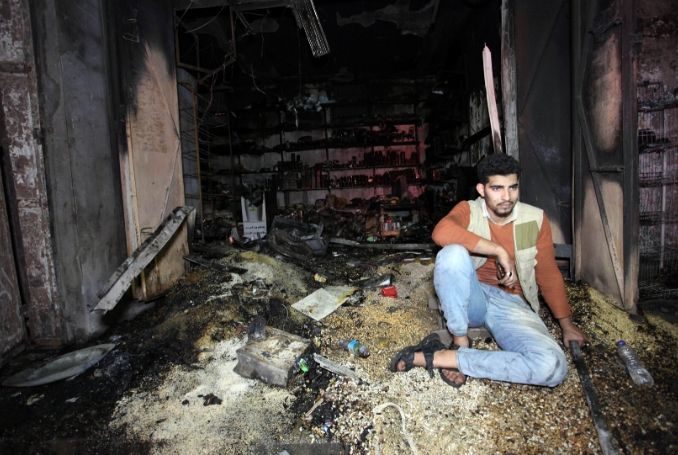
Many Palestinians in the camp lost their small businesses amid a dire economic crisis. Photo: Fawzi Mahmoud
By Irfan Chowdhury | Palestine Chronicle | July 18, 2020
Recently, political journalist Sunny Hundal tweeted in relation to the left’s alleged obsession with Israel:
“In isolation, Israel does a lot of bad things re: human rights.
Is it uniquely bad? Is it worse than others?
Not even close. So if you’re obsessed by actions of Jews, don’t be surprised if people suspect your motives.”
Similar sentiments have been expressed by LBC radio host Maajid Nawaz, who has declared that Israel is “the constant what-about excuse used by everyone who doesn’t want to address some real grave, serious issues in the Middle East but constantly wants to point fingers instead at the Middle East’s only secular, democratic and yes, very imperfect, country”.
Likewise, former Labour MP Ian Austin recently wrote an article for Express & Star in which he asserts that “many people on the left have become obsessed with Israel. This tiny country – the world’s only Jewish state and the Middle East’s only democracy – seems to attract more criticism than all the world’s other controversies combined… Of course, Israel’s not perfect. What country is? But where else in the Middle East would you find free and fair elections, a free and vibrant media; a robust and independent judiciary and strong trade unions?”
As a factual matter, it is untrue that the left is single-mindedly focused on Israel; when I was on the committee of my university’s Socialist Students Society a few years ago, we had meetings on the Israel-Palestine conflict, the economic crisis in Venezuela, protests in Iran, Saudi Arabia’s war on Yemen, Bolsonaro’s election in Brazil, gun violence in the US and the prospect of reforming the EU, among other international issues.
Former Labour leader Jeremy Corbyn, who is one of the most important left-wing figures in British political history, has been a life-long champion of the rights of not only Palestinians, but also Kurds, Western Saharans, West Papuans, hagossians, and numerous other oppressed peoples. Nevertheless, even if it were true that the left does focus on Israel more than other countries, this would not be unjustified because, contrary to the claims of the aforementioned commentators, there are certain respects in which Israel’s human rights violations are uniquely severe in the international arena.
For example, Israel’s military occupation of the West Bank and Gaza is the longest-running military occupation in modern history. It has been ongoing now for 53 years and has been characterized by systematic and egregious human rights violations such as home demolitions, torture, night raids, abduction and imprisonment of children, harassment at checkpoints, the killing of civilians, destruction of agriculture, and daily humiliation at the hands of soldiers and settlers (all of this is documented in great detail by the Israeli human rights organization B’Tselem).
All military occupations are brutal and vicious; to have to endure one that is also predicated on deliberate displacement and dispossession for 53 years is simply unimaginable for most people. In the case of Gaza, the occupation has been compounded by an illegal siege that has been ongoing now for 13 years; in 2015, then UNRWA Commissioner-General Pierre Krahenbuhl described Israel’s siege of Gaza as the “longest in history” and “a very extreme form [of] illegal collective punishment.”
The siege prevents anyone from leaving Gaza, apart from in exceptional cases; for example, sick children are sometimes allowed to receive medical treatment in the West Bank, but their parents aren’t allowed to accompany them – even when it means that the children are forced to die alone (as in the case of 5-year-old Aisha alLoulou). Anyone who tries to fish beyond the contaminated coastal waters of Gaza gets either shot at or kidnapped by the Israeli navy, and anyone who crosses the barbed-wire fence into Israel runs the risk of being murdered by the IDF (as in the case of 17-year-old Emad Khalil Ibrahim Shahin, who crossed over in 2018 and was returned to his family one year later in a body bag).
As a result of the siege, 97% of the water in Gaza is now unfit for human consumption; according to Sara Roy, Senior Research Fellow at Harvard University’s Centre for Middle East Studies, this means that “Innocent human beings, most of them young, are slowly being poisoned by the water they drink and likely by the soil in which they plant”.
Thus, Israel has been carrying out the longest-running military occupation in modern history and the longest-running siege in modern history. These two facts alone render Israel unique in terms of the scope of its brutality and criminality.
There are other respects in which Israel stands out from other countries in its use of terror and violence; for example, it is one of the most aggressive countries in the world, having waged wars of aggression against Lebanon in 1978, 1982, 1993, 1996 and 2006, and against Gaza in 2004, 2006, 2008/9, 2012 and 2014, killing huge numbers of civilians in the process (all while issuing threats and carrying out various covert attacks against Iran, which are all in violation of the UN Charter).
Furthermore, according to Amnesty International, Israel is “the only country in the world that automatically prosecutes children in military courts that lack fundamental fair rights and guarantees” (the military courts have a 99% conviction rate).
Children are routinely abused during interrogations (the UN Committee on the Rights of the Child has reported that “Palestinian children arrested by [Israeli] military and police are systematically subject to degrading treatment, and often to acts of torture”), and in the overwhelming majority of cases, their parents are excluded from the entire ‘judicial’ process. It is worth noting that all of these human rights violations are directly enabled and facilitated by both the US and the UK.
These are all examples of how, in many ways, Israel is uniquely evil. The easiest way for Israel to stop being singled out for criticism – whether real or imagined – would be for it to stop singling itself out with its appalling human rights record.
– Irfan Chowdhury is a freelance writer who has previously been published in openDemocracy, The Iranian, Mondoweiss, Peace News and Hastings In Focus. He also runs a blog, where he mostly writes about British foreign policy, the Israel-Palestine conflict and civil liberties: https://irfanchowdhury98.com/
Inconclusive investigations and psychological trauma cultivate Israel’s impunity
![Palestinian protesters hold banners to show solidarity with the martyr Iyad Hallaq a disabled Palestinian man who was shot dead by Israeli police in the West Bank city of Bethlehem on 2 June 2020 [Abedalrahman Hassan/ApaImages]](https://i2.wp.com/www.middleeastmonitor.com/wp-content/uploads/2020/07/Eyad-Hallaq.jpg?resize=1200%2C800&quality=85&strip=all&zoom=1&ssl=1)
Protesters hold banners in solidarity with the martyr Iyad Hallaq an autistic Palestinian man shot dead by Israeli police in the West Bank city of Bethlehem on 2 June 2020 [Abedalrahman Hassan/ApaImages]
By Ramona Wadi | MEMO | July 16, 2020
In May, Israeli security forces killed Eyad Al-Hallaq, a 32-year-old Palestinian man with special needs, on suspicion that he had a weapon. He was on his way to the special school in Jerusalem which he attended, when he was chased by Israeli security forces, cornered and shot, despite being accompanied by his teacher who repeatedly called out to the aggressors that he was autistic. No weapon was discovered on Hallaq after this unwarranted extrajudicial killing.
Less than two months after Israeli Defence Minister Benny Gantz issued a perfunctory, patronising apology in which he stated, “I am sure this subject will be investigated swiftly and conclusions will be reached,” recent reports attest to how rapidly Israel invokes its own impunity to cover up its crimes.
Eyad Al-Hallaq was killed in a heavily securitised area in Jerusalem’s Old City; security cameras monitoring the indigenous population are everywhere. However, Israel’s Justice Ministry has confirmed that there is no CCTV footage of the killing. It went on to assert that, despite the presence of cameras where the shooting took place, the cameras “were not connected at the relevant time and didn’t document” the incident.
This lacks even a shard of credibility, yet it is not unusual in Israel, which goes to great lengths to safeguard its own institutions and uniformed criminals from scrutiny and prosecution. The Hallaq family is now left with no recourse for justice, because Israel has created its own travesty of justice that is concerned solely with manufacturing impunity for those responsible for the 32-year-old’s death. The investigation is close to reaching a conclusion, according to a Haaretz report, and there is no doubt that the bereaved family will be left to face a multitude of questions on its own, with the additional psychological trauma of knowing that the exact circumstances of their son’s murder are unresolved and the perpetrators still roam free. In Israel’s typical style, it will be an inconclusive end to a concluded investigation. The family’s lawyer, meanwhile, is requesting an in-depth investigation because there is a “very strong suspicion” that the police are concealing evidence in this case.
This is not the first time that Israel has refused to release evidence that would provide both context and corroboration. A case that springs to mind is that of Ibrahim Abu Thurayyah, a double amputee killed by a shot to the head in December 2017 during the Great Return March protests in the Gaza Strip. Israeli investigations concluded there was no evidence that one of its snipers had directly targeted Thurayyah while he was in his wheelchair.
Concealing evidence is a clear indication of culpability. For Israel, however, the practice is dissociative and is reflective of how colonial violence against Palestinians sustains itself. There is no need to deny culpability if action is taken to prevent any discussion of the crime. Indeed, in this case it is easier for Israeli government officials to exploit the victim and the grieving family, since the evidence of the events leading up to Eyad Al-Hallaq’s killing has been eliminated.
For the Hallaq family, as it was for other families whose relatives have been murdered by Israeli occupation forces, the killing and subsequent cover-up is a personal rupture. Politically, Israel is replicating the impunity generated since the Nakba on a different scale, relying upon separate episodes of inflicted trauma to prevent a collective Palestinian narrative from emerging as a unified front against its colonial violence.
Biden will seek to extend the narrative that Israel is being ‘singled out’
By Ramona Wadi | MEMO | July 16, 2020
Democratic presidential candidate Joe Biden may try to sustain the fable that he is an alternative to current US President Donald Trump, but for the Palestinians a Biden presidency will most probably normalise the human rights violations that have attracted wider endorsement as a result of US support for Israel. Any political differences from those promoted by the Trump administration that Biden might have will definitely not include a reversal of the Zionist colonial project.
Indeed, US support for Israel, according to Biden, is a “longstanding, moral commitment”. The former vice president has also criticised the Boycott, Divestment and Sanctions Movement (BDS) for “singling out Israel”, a slogan made popular during Nikki Haley’s stint as US Ambassador to the UN, and he will almost certainly stick to it. According to his foreign policy adviser, Tony Blinken, Biden “opposes any effort to delegitimise or unfairly single out Israel, whether it’s at the United Nations or through the BDS movement.”
While it is worth pointing out the blindingly obvious yet again that there is no anti-Israel bias at an international level whatsoever, the “singling out Israel” narrative will undoubtedly resonate further given that Trump has embarked on a series of unilateral political decisions that legitimise Israel’s colonial violence and normalises its actions within the international community. Without a reversal of Trump’s decisions, however, a pro-Israel stance from [would-be] President Biden would inevitably increase the likelihood of the international community widening the scope of Israel’s ability to act with total impunity.
The concept of “singling out Israel” is unfounded and has nothing to do with advocacy and activism for Palestine at an international level. Time and again, these actions have met with definite limitations, due to the international community’s complicity in Israel’s colonial project. Activism for Palestine is recognised as a right in terms of free speech and human rights, but these criteria will not be sustained politically at an international level to any meaningful degree, and definitely not enough to change the pro-Israel bias at the UN. The international body is, bizarrely, content to sit back and watch as its own resolutions are treated with contempt and broken routinely by the Zionist state.
As annexation remains pending, the US-Israeli propaganda regarding “anti-Israel” allegations might take a different turn. The international community has played along with the distorted scenario that pits the deal of the century against the two-state compromise. If Biden is elected president and fails to reverse Trump’s decisions or take harsh actions against Israel if it goes ahead and formalises its colonisation of additional Palestinian territory, any opposition from the international community will continue to be framed as being “anti-Israel” and, in the current twisted logic of colonialism, “anti-Semitic”.
However, since 2019 the UN has been more vocal about blaming Palestinians for any Israeli violations. If the narrative that Israel is being singled out is allowed a platform at a time when Palestinians are being rendered invisible at an international level, Palestine risks further oblivion.
However, Israel is not at all concerned about Palestinians gaining a recognised platform, because the fake narrative that it has promoted with help from the US only seeks to extend its impunity. It knows that regardless of whether the periodic international criticism of Israel continues or not, Palestinians are not gaining any additional attention that can alter their political standing. This is what Biden is vying for. As long as the focus remains on Israel, the rogue state will be given every opportunity to normalise its human rights violations and colonisation at an international level.
Israel creates list of officials to prevent arrests for war crimes
MEMO | July 16, 2020
Israel is preparing a secret list of hundreds of its officials who are liable to be tried in The Hague on war crimes charges, it has been revealed. The government is warning them not to travel in case they are arrested.
According to Haaretz, the list has the names of between 200 and 300 military and intelligence officials who could be arrested and put on trial for war crimes committed against civilians in the occupied Palestinian territories of the West Bank and the Gaza Strip.
The report comes amid news of the International Criminal Court (ICC) possibly opening an investigation into war crimes committed by both Israel and Hamas, starting from the Israeli military offensive on Gaza in 2014, known as “Operation Protective Edge”. The request for the trial was made by ICC Prosecutor Fatou Bensouda.
The list was supposed to be kept secret due to the danger it could pose to the officials whose names it contains. It could also be viewed by the ICC as an admission of guilt. Those on the list include Prime Minister Benjamin Netanyahu; former Defence Ministers Moshe Ya’alon, Avigdor Lieberman and Naftali Bennett; former Chiefs of Staff Benny Gantz and Gadi Eisenkot, and current Chief of Staff Aviv Kochavi, as well as the former and current heads of the Shin Bet intelligence agency, Yoram Cohen and Nadav Argaman respectively.
It is suspected that the remainder could be more junior officers and officials, including those who approved the building of Jewish-only settlements within the occupied West Bank. Such settlements are illegal under international law and are one of the subjects of the ICC investigation.
The future of the investigation is to be decided by Judges Peter Kovacs of Hungary, Marc Perrin de Brichambaut of France and Reine Adelaide Sophie Alapini-Gansou of Benin. It will also depend on whether the court has jurisdiction over the areas where the war crimes were committed, which include the occupied West Bank, Gaza Strip and East Jerusalem. Israel insists that the ICC has no such authority or jurisdiction in those areas, as the Palestinian Authority (PA) is not a sovereign state.
This has led many observers to predict that Israel will refuse to cooperate with the ICC, which could result in the court ordering secret detention orders and warrants against the Israeli officials. This would limit their ability to travel and keep Israel unaware of the court proceedings.
If an investigation into alleged war crimes is opened, Israel’s illegal annexation plans for the West Bank could also have a serious impact on any defence that it might mount. Bensouda has included this factor in her preliminary investigation.
The threat of an ICC investigation into Israel’s and America’s alleged war crimes has been criticised by both countries. US President Donald Trump imposed sanctions on the court last month, a move praised by Israel. Nevertheless, the ICC has received further complaints about alleged Israeli and US war crimes over the past month, strengthening the case for a formal investigation.
Israeli duplicity about 2014 invasion ‘Operation Brothers Keeper’
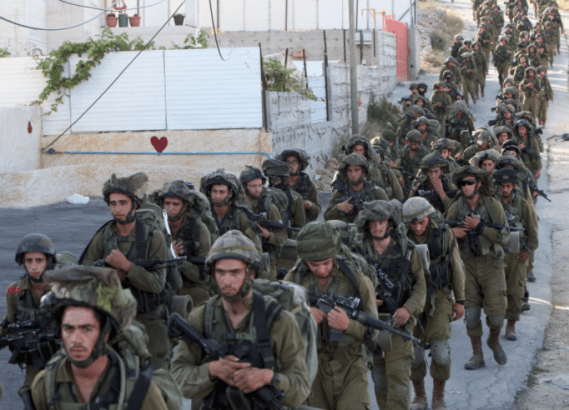
Operation Brothers Keeper, an Israeli initiative supposedly launched to rescue three Jewish Israeli teenagers who had been kidnapped.
By Kathryn Shihadah | If Americans Knew | July 15, 2020
“Operation Brothers Keeper” has a nice ring to it, but the name represents months of duplicity by Israeli leaders, not only toward their own people, but toward the world, in order to perpetrate injustices on the people of Palestine.
The summer of 2014, when Operation Brothers Keeper emerged, was an exceptionally violent season in a decades-long stretch of violence in Israel and the occupied Palestinian territories – a conflict defined by the Palestinian struggle for self-determination and against confiscation of their land; a conflict that has consistently seen many times more Palestinian casualties than Israelis.
Palestinians took to the streets that summer for much the same reason they always had: to struggle against oppression. The Israeli military came out to defend Israel’s status as oppressors.
Some context
Operation Brothers Keeper (OBK) was an invasion of the Palestinian West Bank, launched after the kidnapping of three Jewish Israeli teenagers. (This presaged its massive July invasion of Gaza, “Operation Protective Edge.”)
Perhaps, in the Israeli consciousness, the West Bank invasion was an isolated event – but for Palestinians, OBK was another in a long line of oppressive tactics within a framework of illegal occupation and injustice.
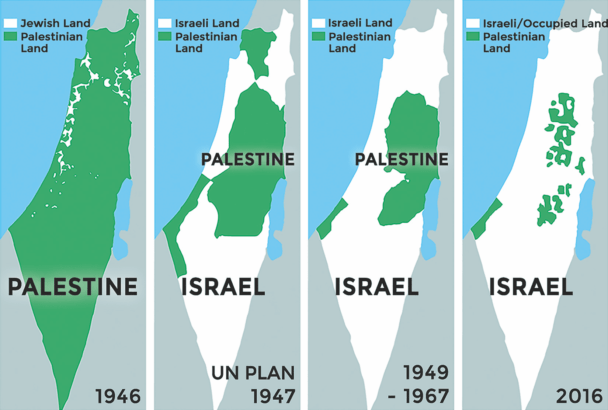
Maps show Palestinian loss of land from Israel’s 1948 creation through the present
In the early 20th century, massive Jewish immigration had caused concern among the indigenous Palestinians in the land; by 1948, 750,000 Palestinians were forced from their homes and land, most to never return as it became part of a new Jewish state. 1967 saw the occupation of all remaining Palestinian territories; 2008-9 had witnessed Israel’s devastating invasion of Gaza that killed 1,400 Palestinians (and 9 Israelis). In between these events, Israel had kept the Palestinian people under constant oppression – and the Palestinian people had resisted.
In late 2012, Israel had invaded the Palestinian Gaza Strip in a conflict that lasted 8 days before a ceasefire was put in place.
At that time, Israel promised to end its attacks on Gaza by land, sea, and air, stop assassinations of Gazan officials, and lift its blockade of Gaza, then in its 5th year; Hamas leaders in Gaza vowed to end rocket fire toward Israel (rockets that had killed 21 Israelis in 12 years).
Gaza held up its end of the deal: throughout 2013, rockets from Gaza were few and far between, and just one Israeli was killed in the vicinity. (5 more Israelis were killed elsewhere.)
Israel did not keep its promises: its military invaded Gaza and shot at Palestinian farmers and fishermen; the blockade remained in place, keeping food, medicine, and other staples out of the hands of those who needed them desperately. (Read here about the “period of calm” during the first 3 months after the 2012 ceasefire, during which Israelis experienced calm, but Palestinians were attacked on a daily basis.)
Nine Gazans were killed in 2013, over 30 other Palestinians were killed elsewhere. In the first 5 months of 2014 – before the Israeli teens were kidnapped – dozens of Palestinians, some of them teens, and 2 Israelis, were killed.
The Israeli blockade of Gaza remained in place (it is still in place today).
Kidnapping
On June 12th, the three Israelis, aged 16 – 19, were kidnapped while hitchhiking.
All three were yeshiva (Jewish religious school) students, and would have almost certainly become soldiers in the Israeli Defense Forces (IDF). Israel practices universal conscription of both males and females at age 18 – although it is possible to delay or even avoid military service by continuing religious education after high school, as was likely the case with the older kidnapping victim. (Go here to read about religious extremism in some Israeli yeshivot.)
One of the teens called an emergency number for help. Along with his voice, the call also recorded shouting in Arabic and several gunshots.
Several hours later, parents of one of the boys reported him missing, at which point the police began to make the connection with the emergency call, which they originally believed to be a prank.
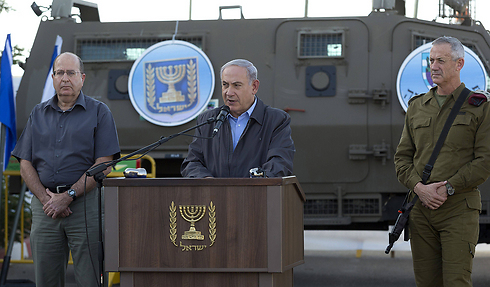
Netanyahu at press conference with DM Moshe Ya’alon during Operation Brothers Keeper (AFP)
Deception and brutality
The Forward reports that the Israeli government “had known almost from the beginning that the boys were dead. It maintained the fiction that it hoped to find them alive as a pretext to dismantle Hamas’ West Bank operations.”
The prime suspects, Palestinians, were identified within hours of the incident, and known to be rogue, with “a reputation for attacking Israeli civilian targets” and regularly acting “counter to the policies being advocated by [Hamas].” Their family disclosed within a day of the kidnapping that the men had disappeared.
Instead of broadcasting photos of the suspects and preparing the country for the inevitable locating of bodies rather than hostages, Israeli PM Benjamin Netanyahu immediately imposed a gag order on the media.
Even the parents of the kidnapped teens were led to believe that the boys were still alive.
Publicly, Netanyahu consistently claimed that he knew “for a fact” that Hamas was behind the kidnapping – in fact, at no point did any evidence point to Hamas’ participation in the incident; its leaders consistently denied involvement.
Meanwhile, ironically, the Israeli police cautioned the public against “spreading rumors on social media.”
On June 15th, Netanyahu launched Operation Brothers Keeper, characterizing it as a “hostage rescue operation.” Behind the scenes, however, he commissioned 2,500 Israeli soldiers, plus special forces, on a rampage through the West Bank in search not of hostages, but of Hamas members. According to The Nation :
Israel arrested approximately 800 Palestinians without charge or trial, killed nine civilians and raided nearly 1,300 residential, commercial and public buildings.
The operation kept 300,000 Palestinians under curfew; movement was restricted for another 600,000 – a form of illegal collective punishment.
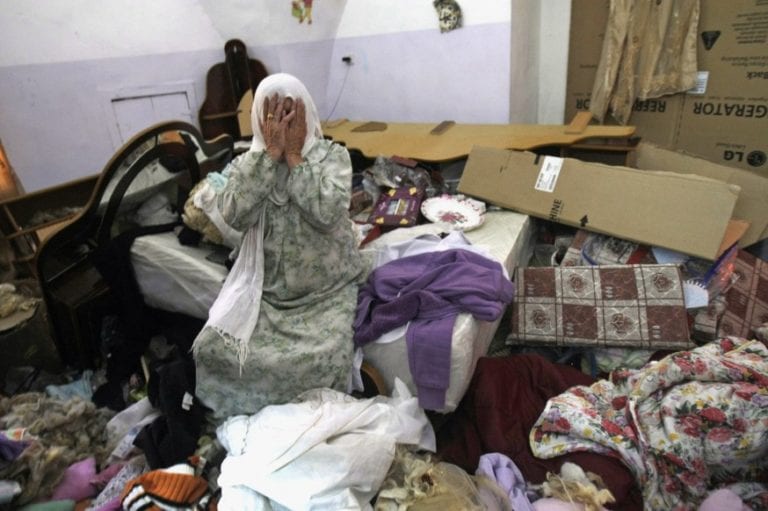
A Palestinian woman cries in her home after a raid by Israeli troops as part of Operation Brothers Keeper, Sunday, June 22,2014. (AP Photo/Nasser Ishtayeh)
As far as Israeli citizens knew, the killers could be anyone, anywhere; the vast majority were therefore supportive of whatever measures their leaders chose to take. All over Israel, and in Jewish communities around the world, rallies and prayer meetings sought – in vain – the boys’ safe return – even while the Israeli government knew they were already dead.
In Gaza – where Hamas is the duly elected governing party – Hamas leaders watched as Israel used them as a pretext for the spate of arrests. Hamas had restrained itself and other resistance factions since the end of the 2012 conflict, waiting for Israel to fulfill its promise to end the blockade. But now, Israel was blaming Hamas for the kidnappings, re-arresting Hamas prisoners who had been freed, and maintaining the blockade. Hamas began allowing rockets to fly out of Gaza again.
United Nations
On June 17th, the Israeli Ambassador to the UN, Ron Prosor, spoke to the Security Council. In his speech, he blamed Hamas for the kidnapping (without proof) and demanded international pressure on Hamas to release the boys. Prosor displayed the hashtag that Israel and its partisans all over the world were using to draw attention to the fabricated crisis: #BringBackOurBoys.
On June 21st, Netanyahu repeated his canard to U.N. Secretary-General Ban Ki-moon: “the information in Israel’s hands unequivocally indicates that Hamas is responsible for the abduction of the youths”; Netanyahu went on to falsely link the Palestinian resistance with ISIS when he said “we are witnessing the unrestrained brutality of Islamic terrorism, both in Israel and around us.”
On June 23rd, the U.N. Security Council attempted unsuccessfully to pass a resolution condemning the kidnapping of the Israeli teens: some countries wanted to add strong language condemning Israel’s violent security sweep; the US insisted that it would not sign any statement that included a reference to Israeli actions.
On June 24th, the mother of one of the kidnapped boys addressed the U.N. Human Rights Council (UNHRC), pleading for international assistance in bringing the boys back. (Her trip was paid for by UN Watch, a group that monitors what it calls “the continuing discriminatory treatment of Israel in the UN system” and pushes for “the removal of UN personnel who are considered critical of Israel.”)
In the same UNHRC session, many delegates and representatives from human rights organizations criticized Israel’s human rights record, especially its recent crackdown.
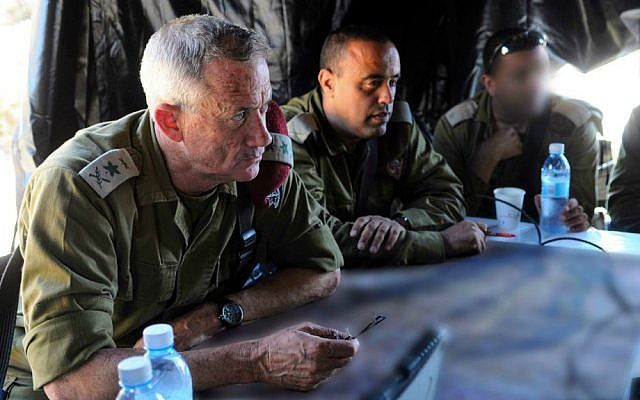
Then IDF Chief of Staff Benny Gantz visits soldiers as they take part in Operation Brothers Keeper to locate three kidnapped Israeli teens, June 24, 2014. (IDF Spokesperson/Flash90)
Kidnapped boys’ bodies found
On June 30th, 15 days after the Israeli leadership started its deceptive “campaign” to bring the boys back alive, the bodies were located ten minutes away from where they had last been seen.
The discovery was made not by the thousands of Israeli military or police – they were as much as 130 miles away, still ransacking Palestinian homes and arresting Palestinians – but by a volunteer search party.
The shallow grave was on the property of one of the suspects, whose identity had also been known for weeks, and whose property should have been considered suspect.
Within hours, Israeli forces demolished the family homes of the two suspects, an illegal but common practice in Israel.
The next day, July 1st, a funeral was held for the three teens. PM Netanyahu eulogized,
A deep and wide moral abyss separates us from our enemies. They sanctify death while we sanctify life. They sanctify cruelty while we sanctify compassion. This is the secret of our strength; it is the foundation of our unity.
This fraudulent profession of Israeli innocence flew in the face of facts that Mr. Netanyahu surely knew: the Israeli army had killed 19 Palestinians in the first quarter of 2014, and more in May and June. (Before the deaths of the three teens, two Israelis had been killed in 2014.)
Netanyahu’s eulogy also ignored the fact that Palestinians – specifically, Hamas – had been relatively subdued since 2012. As The Forward stated in “How Politics and Lies Triggered an Unintended War,” “The staged agony of the kidnap search created, probably unintentionally, what amounts to a mass, worldwide attack of post-traumatic stress flashback.”
Christian Peacemaker Teams (CPT) reported that late on July 1st, after the bodies were found, several Palestinians were killed. Israeli settlers also started constructing two new illegal outposts. Some settlers (and politicians) believe “the settlement enterprise is the most appropriate response to Palestinian terror… Our enemies will incite and we will establish” – not making the connection that building on stolen Palestinian land is incitement itself.
Incitement
From the moment the bodies of the missing teens were discovered, Israeli leaders incited their people to revenge, as described by Electronic Intifada :
Israeli Prime Minister Benjamin Netanyahu led the pack, calling the killers of the youths “human animals” and stating “Hamas is responsible. Hamas will pay.”
Former Israeli lawmaker Michael Ben-Ari posted a video and a statement…”We are living in a “jungle,” Ben-Ari said, calling Palestinian children “little terrorists”…
(Elsewhere, Ben-Ari called on Israel to “kill terrorists in public hangings.”)
Housing minister Uri Ariel called for the extrajudicial executions of leaders of Hamas and for Israel to “start a wave of construction in the settlements in response to the murder of the abductees”…
Tzipi Hotovely, another Likud lawmaker and deputy minister, wrote that “Israel must declare a war of annihilation of Hamas, which is responsible for the murder, and return to the assassination policy.”
Economy minister Naftali Bennett, leader of the ultra-anti-Palestinian Jewish Home party, declared “Murderers of children and those who direct them cannot be forgiven. Now is a time for actions, not words.”
With this highly visible incitement, it came as no surprise that after the funeral, crowds of Israelis – including young children – chanted “Death to the Arabs.” Mobs marched through the streets, attacking Palestinians as they went.

Mohammad Abukhdeir was killed by Jewish Israelis on July 2, 2014. (Facebook)
Revenge killing
On July 2nd, a Palestinian teenager named Mohammad Abukhdeir was kidnapped and burned alive near Jerusalem.
At first, Israel’s leaders imposed another gag order; meanwhile, Israeli police started rumors that Abukhdeir had been killed by his own family for being gay.
It wasn’t long before the truth had to come out: the torture/murder had been committed by three Jewish Israelis – two of them teenagers themselves. They eventually faced trial and in 2016 received sentences from 21 years to life. Their family homes were not demolished.
PM Netanyahu’s condolences to the Abukhdeir family condemned the murder and promised justice; then he went on to address his constituents, again claiming Israeli innocence:
I know that in our society, the society of Israel, there is no place for such murderers. And that’s the difference between us and our neighbors. They consider murderers to be heroes. They name public squares after them. We don’t. [editor’s note: this is false.] We condemn them and we put them on trial and we’ll put them in prison.
Al Jazeera reminded its readers that Abukhdeir’s abduction was not an isolated incident: “for Palestinians, the detention of their children, running into thousands, is experienced as kidnapping at an Israeli-state level.” The vast majority of these events – which frequently include torture – go unpunished.
In 2014, Israel’s military kidnapped 6,059 Palestinians. A spokesman for the Palestinian Commission of Detainees and Ex-Detainees stated on December 29th, 2014,
“There hasn’t been a single day that did not witness the abduction of Palestinians. On average, the army has kidnapped 505 Palestinians each month; approximately 17 a day.”
Since 1967, Israel has detained more than 50,000 Palestinian children; the Palestinian government has never detained an Israeli child. Additionally, a total of over 2,400 Palestinian children and 139 Israeli children have been killed since 2000.
Israeli teens’ killers tracked down
On August 5th, one suspect in the kidnapping and killing of the Israeli teens was arrested.
On September 23rd, the primary suspects were surrounded by Israeli military forces in a building in Hebron. An IDF spokesperson later stated, “We opened fire, they returned fire and they were killed in the exchange.”
At that point, Operation Brothers Keeper was officially closed.
Stay tuned for “war”
On July 8th, the Israel launched an incursion into Gaza, which in 50 days would bring about the deaths of 73 Israelis (9% civilians) and 2,250 Palestinians (65% civilians, 501 children). This travesty will be discussed in an upcoming post.
RELATED READING:
Blinken reveals how Obama & Biden helped Israel’s 2014 Gaza massacre
Israel arrests child with one-third of his skull missing, then lies about it
Remembering Mohammad Abukhdeir, 6 years on
The Staggering Cost of Israel to Americans: The Facts
Israeli airstrikes vs Palestinian rockets: Facts & Stats on air attacks
Trump-Kushner “Peace” Plan ignores elephants in the room: Israel created this mess
US sanctions are part of a multi-front war on Syria mainly targeting its long-suffering civilians
By Eva Bartlett | RT | July 13, 2020
The US is waging multiple fronts of war against Syria, including brutal sanctions, while claiming concern over the wellbeing of Syrian civilians – the vast majority of whom are suffering as a direct result of US policies.
On June 17, the US implemented the Caesar Act, America’s latest round of draconian sanctions against the Syrian people, to “protect” them, America claims. This, after years of bombing civilians and providing support to anti-government militants, leading to the proliferation of terrorists who kidnap, imprison, torture, maim, and murder the same Syrian civilians.
Just weeks after these barbaric sanctions were enforced, cue American crocodile tears about Syrian suffering, and claims that Moscow and Damascus are allegedly preventing the delivery of humanitarian aid. More hot air from American hypocritical talking heads who don’t actually care about Syrians’ well being.
America trigger-happily sanctions many nations or entities that dare to stand up to its hegemonic dictates. The word “sanctions” sounds too soft – the reality is an all-out economic war against the people in targeted nations.
Sanctions have, as I wrote last December, impacted Syria’s ability to import medicines or the raw materials needed to manufacture them, medical equipment, and machines and materials needed to manufacture prosthetic limbs, among other things.
Syria reports that the latest sanctions are already preventing civilians from acquiring “imported drugs, especially antibiotics, as some companies have withdrawn their licenses granted to drug factories,” due to the sanctions.
In Damascus, pharmacies I’ve stopped into, when I ask what some of the most sought-after medications are, hypertension medications are at the top.
But sanctions have yet another brutal effect: they wreak havoc on the economy.
The destruction of Syria’s economy is something US envoy for Syria, James Jeffrey, boasted about, reportedly saying that the sanctions “contributed to the collapse of the value of the Syrian pound.”
The website Sanctions Killnotes :
“Currencies are devalued and inflated when sanctions are levied. Countries are pressured to stop doing business with targeted countries. Sanctions violate international law, the UN charter, Geneva and Nuremberg conventions because they target civilians by economic strangulation, creating famines, life-threatening shortages, and economic chaos.”
So you have Western hypocritical talking heads pretending they want to get aid to Syrian civilians while literally cutting them off from medicine and the ability to purchase food.
Resource theft and arson
But these crimes against humanity don’t suffice for America. The US occupation troops and their Kurdish proxy forces (the SDF) are plundering Syria’s oil resources to the tune of $30 million a month as of last October, according to Russian military estimates.
In early July, SANA reported another convoy leaving Syria to Iraq, loaded with oil thieved from areas under US occupation.
Terrorists and US proxy groups are also thieving Syria’s cotton, olives, wheat, and flour.
Further, Syria accuses the US of deliberately setting fire to crops using Apache-dropped thermal balloons.
Civilians from affected areas near Turkish occupation posts likewise blame Turkish forces for setting fires and firing live ammunition upon those who attempt to extinguish the fires, farmers literally watching their livelihoods go up in flames. The Hasakah Agriculture Directorate director likewise blames Turkey for arson of the crops.
Turkish occupation forces are also accused of cutting water supplies at Alouk water pump station, depriving one million people in the Hasakah region of drinking and agricultural water, with no condemnation from the Security Council.
The poverty and suffering Syrians are enduring these days is unbearable, with prices of basic goods doubled and tripled from just a few months ago, turning what were affordable items into luxuries, particularly for the 7.9 million food-insecure Syrians.
But alarmist Western media and representatives omit the context: the nearly 10 years of war on Syria; the deliberate targeting by terrorists and by US and Turkish occupation forces, and Israel, of Syria’s infrastructure; the looting of oil, wheat and cotton, even allegedly stealing parts of an Idlib power plant for scraps sale in Turkey.
Likewise, Aleppo’s heavy industry was thieved during the years when terrorists occupied the industrial zones of the city. Heavy machinery was reportedly trucked in broad daylight to Turkey.
With all of these factors, of course there is poverty and a chaotic economy.
A safe resolution rejected
Recently, the UNSC passed a resolution to maintain one humanitarian border crossing from Turkey into Syria, the Bab al-Hawa crossing.
Prior to that, Russia had proposed a resolution enabling the safe delivery of humanitarian aid from within Syria.
On July 11, Russia’s Permanent Mission to the UN issued a statement again noting the need to phase out cross-border deliveries, as the Syrian government has regained much of the territories previously occupied by terrorist factions, and deliveries must be made from within Syria.
The UNSC resolution that passed, however, continues the delivery of aid via Turkey, delivering to the hands of Al-Qaeda and other terrorist groups occupying Idlib. It is with these people the US aid ends up when delivered, from Turkey, not from Syrian territory.
Given that the US has supplied weapons to anti-government extremists in Syria before, it is not illogical to believe they hoped to funnel still more weapons in under the pretext of “aid” deliveries.
Russia’s statement also noted the lack of UN presence in the Idlib de-escalation zone, saying:
“It’s not a secret that the terrorist groups, listed as such by the UN Security Council, control certain areas of the de-escalation zone and use the UN humanitarian aid as a tool to exert pressure on [the civilian] population and openly make profit from such deliveries.”
This is what Russia and China opposed, not the delivery of aid.
Those are details which US Ambassador Kelly Craft slyly omitted when she spoke of callousness and dishonesty being an established pattern. Her verbal guns were aimed at Syria and Russia, but her choice of words perfectly describes US policy towards Syrians.
One only needs to look at US policy towards displaced Syrians in Rukban Camp to see that the US has actively worked to prevent aid deliveries there and prevent Syrians from being evacuated from there. Or the lack of US outcry at Turkey’s prevention of humanitarian convoys from reaching Idlib areas, which while scheduled for last April still hasn’t been successful.
On the other hand, on July 4 the WHO acknowledged the Syrian-Russian delivery of 85 tons of medicines and medical supplies from Damascus to Al Hasakah. On July 9, the Russian Reconciliation Center noted that 500 food packages (2,424 tons) were delivered to Idlib province and Deir-ez-Zor province.
I wonder how many tons of actual aid the US would send…
In case it isn’t yet clear, America is weaponizing and politicizing aid, as it tried to do in Venezuela last year. American representatives posture and bellow, and Russia and Syria quietly go about actually delivering aid to needy Syrians.
The Russian post-resolution statement also critically noted the brutal impact of sanctions on Syria, which, as detrimental to Syrians’ wellbeing as they are, somehow don’t merit the feigned concern of representatives like Craft.
The statement said:
“These coercive measures seriously undermine not only the socioeconomic situation in Syria, but also impede activities of many humanitarian NGOs that are ready to help the population in territories controlled by Syrian official authorities.”
If America truly wanted to alleviate the suffering of Syrians, all sanctions against the country and people would be immediately lifted.
Eva Bartlett is a Canadian independent journalist and activist. She has spent years on the ground covering conflict zones in the Middle East, especially in Syria and Palestine (where she lived for nearly four years). Follow her on Twitter @EvaKBartlett
The Maxwell Family Business: Espionage

July 15, 2020
Many were surprised to learn earlier this month that the key co-conspirator in Jeffrey Epstein’s intelligence-linked sexual blackmail operation, Ghislaine Maxwell, had been in hiding in New England since Epstein’s arrest and subsequent “suicide” last summer. Her recent arrest, of course, has returned attention to the Epstein scandal and to Ghislaine’s ties to the entire operation, in which she played a central and crucial role, arguably more so than Epstein himself.
Ghislaine was first reported to be living in New England at the mansion of her alleged boyfriend Scott Borgeson on August 14th of last year. Though Maxwell is believed to have stayed there until purchasing the nearby New Hampshire home where she was arrested, attention from her presence on the East Coast was immediately and sensationally re-directed to the West Coast when, a day later on August 15th, the New York Post published a picture allegedly depicting Maxwell reading a book on “CIA operatives” at an In-N-Out Burger in Los Angeles, California. The photo was later revealed to have been photoshopped and a fake, but ultimately served its purpose in distracting from her actual location in New England.
While the media frenziedly covered the fake In-N-Out Burger photo, the appearance of an unexpected visitor nearby Borgeson’s mansion succeeded in largely slipping under the radar. On August 18th, Ghislaine’s sister Christine was spotted “packing up a number of bags” into a SUV just a few miles from Borgeson’s “secluded beachfront” home. Christine, who currently lives and works in Dallas, Texas, declined to comment on why she was visiting the exact area where Ghislaine was allegedly hiding at the time.
Out of the seven Maxwell siblings, Ghislaine Maxwell has undoubtedly received the bulk of media scrutiny both in recent years and arguably ever since the suspected homicide of the family patriarch, Robert Maxwell, in 1991. In the years since his death, Robert Maxwell’s close ties to Israeli intelligence and links to other intelligence agencies have been documented by respected journalists and investigators including Seymour Hersh and Gordon Thomas, among others.
While Ghislaine’s own ties to intelligence have since come to light in relation to her critical role in facilitating the Jeffrey Epstein sexual blackmail operation. Little, if any attention, has been paid to her siblings, particularly Christine and her twin sister Isabel, despite them having held senior roles at the Israeli intelligence front company that facilitated their father’s greatest act of espionage on Israel’s behalf, the sale of the bugged PROMIS software to the U.S. national laboratories at the heart of the country’s nuclear weapons system.
Not only that, but Christine and Isabel later became directly involved with technology-based business ventures that directly involved Ghislaine during the very period she worked with Epstein on behalf of Israeli and U.S. intelligence to ensnare powerful U.S. political and public figures in a sexual blackmail scheme involving minors. At the time, Ghislaine described her profession to a number of newspapers as “an internet operator.” Then, after this venture’s multi-million dollar sale to a competitor, Christine and Isabel became involved with successors to the PROMIS software scandal that were closely tied to U.S. intelligence and Israeli intelligence, respectively.
Ghislaine herself also became involved in these affairs, as did Jeffrey Epstein following his first arrest, as they began courting the biggest names in the U.S. tech scene, from Silicon Valley’s most powerful venture capital firms to its most well-known titans. This also dovetailed with Epstein’s investments in Israeli intelligence-linked tech firms and his claims of having troves of blackmail on prominent tech company CEOs during this same period.
With Ghislaine’s name and her ties to intelligence now inking their way back into the media sphere, detailing the decades-long course of these technology-focused espionage operations and their persistent ties to the Maxwell sisters demands the attention it deserves, as the need to air out the real Maxwell family business – espionage – is now greater than ever before.
Trap doors and Treason
One of the most brazen and successful operations conducted by Israeli intelligence on a global scale is undeniably its sale of a bugged software program to governments, corporations and major financial and scientific institutions around the world. That software program, known as the Prosecutor’s Information Management System or by its acronym PROMIS, was originally created and marketed by Inslaw Inc., a company created by former NSA official Bill Hamilton and his wife Nancy.
In 1982, Inslaw leased its revolutionary PROMIS software to the U.S. Justice Department, then headed by arch neocon Edwin Meese III, Ronald Reagan’s most trusted advisor and who would later go on to advise Donald Trump following the 2016 election. The success of the software, which allowed integration of separate databases and information analysis on a previously unimaginable scale, eventually caught the attention of Rafi Eitan, the notorious and legendary Israeli spymaster and handler of the “most damaging spy” in American history, Jonathan Pollard. Eitan, at the time, was serving as the then-head of the now defunct Israel intelligence service known as Lekem, which focused specifically on espionage related to scientific and technical information and discoveries.
Eitan had first learned of PROMIS from Earl Brian. Brian was a long-time associate of Ronald Reagan who had previously worked for the CIA in covert operations and had been in charge of Reagan’s healthcare program when Reagan was governor of California. Brian often bragged of the nickname he had acquired in overseeing that health care initiative – “the man who walked over the dead.” In 1982, however, Brian was attempting to build a business empire, in which then-AG Ed Meese’s wife was a major investor, and he had first met Eitan while attempting to sell a healthcare system in Iran.
Brian divulged the efficacy of PROMIS, but – instead of praising its revolutionary approach to data analysis – expressed his frustration that the software enabled U.S. federal investigators to successfully track and target money laundering and other financial crimes. He also expressed frustration that he had been left out of the profits on PROMIS, the development of which he had followed closely for several years.
As their conversation wore on, Eitan and Brian hatched a plan to install a “trapdoor”, today more often referred to as a back door, into the software. They would then market PROMIS throughout the world, providing Israeli intelligence and allied elements of U.S. intelligence with a direct window into the operations of its enemies and allies while also netting Eitan and Brian massive profits for the sale of the software. Brian, of course, would also be able to use PROMIS to circumvent authorities investigating financial crimes.
According to the testimony of ex-Mossad official Ari Ben-Menashe, after PROMIS was obtained by Israel’s military intelligence through direct collusion with the U.S. Department of Justice, Ben-Menashe contacted an Israeli American programmer living in California on Eitan’s orders. That programmer then planted a “trapdoor” or back door into the software that would allow Lekem covert access to any database connected to a device on which the software was installed.
Once the back door was present, Brian attempted to use his company Hadron Inc to market the bugged PROMIS software around the world, though he first had tried to buy out Inslaw to do so. Unsuccessful, Brian turned to his close friend, then-Attorney General Ed Meese, and the Justice Department then abruptly refused to make the payments to Inslaw that had been stipulated by the contract, essentially using the software for free, which Inslaw claimed to be theft.
Meese’s actions would force Inslaw into bankruptcy and Inslaw subsequently sued the Justice Department, with a US court later finding that the Meese-led department “took, converted, stole” the software through “trickery, fraud and deceit.” With Inslaw out of the way, Brian sold the bugged software to Jordan’s and Iraq’s intelligence services, a major boon for Israel, and to a handful of companies. Despite this, Eitan was unsatisfied with Brian and Hadron and he quickly turned to the person he thought could most effectively market and sell PROMIS to governments of interest all over the world, Robert Maxwell.
First recruited as an asset of Israeli intelligence in the early 1960s, Maxwell’s standing with Israeli intelligence would strengthen considerably beginning in the early 1980s, when he purchased a web of Israeli companies, many of which were official “service providers” for the Mossad. One of these companies, a computer firm called Degem, had been used for years to provide cover to Mossad assassins that conducted kidnappings and murders in Latin America and Africa.
Through Degem and other Maxwell-owned companies based in Israel and elsewhere, Maxwell marketed PROMIS so successfully that Israeli intelligence soon had access to the innermost workings of innumerable governments, corporations, banks and intelligence services around the world. Many of Maxwell’s biggest successes came in selling PROMIS to dictators in Eastern Europe, Africa and Latin America. Following the sale and after Maxwell collected a handsome paycheck, PROMIS’ unparalleled ability to track and surveil anything – from cash flows to human movement – were used by these governments to commit financial crimes with greater finesse and used to hunt down and disappear dissidents. Israeli intelligence, of course, watched it all play out in real time.
In Latin America, for instance, Maxwell sold PROMIS to military dictatorships in Chile and Argentina, which were used to facilitate the mass murder that characterized Operation Condor as the friends and families of dissidents and so-called subversives were easily identified using PROMIS. PROMIS was so effective for this purpose that, just days after Maxwell sold the software to Guatemala, its US-backed dictatorship rounded up 20,000 “subversives” who were never heard from again. Of course, thanks to the back door in PROMIS, Israeli intelligence knew the identities of Guatemala’s disappeared before the victim’s own families. Israel was also intimately involved in the arming and training of many of the same Latin American dictatorships that had been sold the bugged PROMIS software.
Though Israeli intelligence found obvious use for the steady stream of sensitive and classified information, their biggest prize was yet to come – top secret government laboratories in the United States. Eitan tasked Maxwell with selling PROMIS to US labs in the Los Alamos complex, including Sandia National Laboratory, which was and is at the core of the US nuclear weapons system. Notably, the eventual sale of PROMIS to these laboratories by Maxwell occurred during the same period in 1984 when Eitan tasked one of Israel’s top experts in nuclear targeting with supervising Jonathan Pollard’s espionage of U.S. nuclear secrets on Israel’s behalf.
In order to plot how he would accomplish such a feat, Maxwell would meet with none other than Henry Kissinger, who told him that – in order to sell PROMIS to these sensitive laboratories – he needed to enlist the services of then-Senator for Texas John Tower, who was the head of the Senates’ Armed Services Committee at the time. Maxwell quickly struck a deal with Tower and then, using Mossad money, paid Tower $200,000 for his services, which included opening doors – not just to the Los Alamos complex, but also to the Reagan White House. Tower would arrange a trip for Maxwell to travel to Sandia National Laboratory, where he would market PROMIS. Unlike most other PROMIS sales, this one would not be handled by Degem, but a US-based company called Information on Demand.
It is worth noting that, despite Tower’s obvious and treasonous actions with respect to U.S. national security, another long-time “source” of Robert Maxwell, George H.W. Bush, would attempt to nominate Tower to serve as U.S. Secretary of Defense. When the Senate refused to confirm Tower, only then did Bush nominate Dick Cheney, who would then head the Pentagon and oversee the U.S.’ role in the First Gulf War. Not long after his failure to secure the nomination as Pentagon chief, Tower died in a suspicious plane crash soon after the equally suspicious death of Robert Maxwell.
Front Companies and FBI Cover-ups
Robert Maxwell purchased Information on Demand from its founder, Sue Rugge – a former librarian, through the Pergamon Group in 1982 – the very year plans were made by Rafi Eitan and Earl Brian to subvert PROMIS. Its offices were just a few doors down from the home of Isabel Maxwell and her first husband Dale Djerassi, son of the scientist credited with creating the birth control pill.
According to FBI files obtained by Inslaw Inc. via a FOIA request in the 1990s, San Francisco’s FBI opened an investigation into Information on Demand a year later in October 1983 and subsequently interviewed Rugge about the business and its activities. She told the FBI that the company’s sources “include over 250 computer data bases” and that company uses these to “locate single facts as well as provide answers to complex questions dealing with such areas as comprehensive marketing research, custom data summaries, sophisticated literature searching, current awareness service and global information capability.
One of these databases included Lockheed’s Dialog database and “the Defense Technical Center which is connected to the Department of Defense (DOD) which contains classified information.” She asserted, however, that the company “has no password for access and further no need for access.” Elsewhere in the document, it notes that Information on Demand claimed not have any access to classified information “to the best of their knowledge” and “includes information concerning government and various available means of tapping government information databases.”
The FBI asked Rugge about one client of the company in particular, whose name and identifying information is redacted in its entirety, but notes that this mysterious client had worked with Information on Demand since at least 1973. Subsequent efforts by Inslaw Inc. and others to learn the identity of the redacted client have been unsuccessful since 1994.
Notably, just one month before the FBI opened an investigation into Information on Demand and interviewed Sue Rugge, another related Maxwell-owned firm, Pergamon International Information Corporation, had sent a letter to then-CIA Director Bill Casey, offering to provide the agency with access to patent databases. The only redacted portion of the letter is the identity of PIIC’s Executive Vice President, who had written the letter to Casey.
After Rugge had been interviewed, FBI interest in Information on Demand peaked soon after in June 1984, when a formal investigation was opened. This took place after two employees of Sandia National Laboratory who worked in technology transfer approached the Bureau over Information on Demand’s efforts to sell PROMIS to the laboratory. Those employees were compelled to contact the FBI after obtaining information from employees of the National Security Agency (NSA) regarding “the purchase of Information on Demand Inc. by one Robert Maxwell, the owner of Pergamon International.” The specific information on this purchase from the NSA is included in the report but redacted in its entirety. Two months later, one of the Sandia employees followed up with the Bureau, suggesting that the NSA and FBI jointly investigate Information on Demand, but was essentially stonewalled and told to take it up with FBI headquarters.
The FBI case file is coded as a foreign counter-intelligence investigation specifically, suggesting that the case was opened because the FBI was made aware of the alleged involvement of a foreign intelligence service in some aspect of Information on Demand’s activities that related specifically to the “dissemination, marketing or sale of computer software systems, including but not limited to the PROMIS computer software product.” It also noted that Maxwell himself had previously been the subject of a “security investigation” conducted by the FBI from 1953 until 1961, the year Maxwell was formally recruited as an Israeli intelligence asset.
In early August 1984, FBI headquarters and other higher-ups in the Ed Meese-led Department of Justice, which itself was complicit in the whole sordid PROMIS affair, ordered the New Mexico office to halt its investigation into Information on Demand, Maxwell and PROMIS. The cover-up, oddly enough, continues today, with the FBI still refusing to release documents pertaining to Robert Maxwell and his role in the PROMIS scandal.
Several months following the shuttering of the FBI investigation into Information on Demand, Robert Maxwell again returned to Sandia National Laboratories in February 1985, signing the contract for the sale of PROMIS and listing himself as President and CEO of Information on Demand. A few months later, he passed that role on to his daughter Christine, who served as the company’s president and CEO up until her father’s death in 1991, according to her résumé. Upon the collapse of his business empire shortly after his demise, which also resulted in the closure of Information on Demand, Christine created a company called Research on Demand that offered similar services and specialized “in Internet- and Big Data analytics-related market studies for companies in the Telecoms.”
In addition, Isabel Maxwell, who lived in close proximity to the company’s offices in Berkely, CA, told Haaretz that she had also worked for Information on Demand, which she refers to as “her sister’s company,” following her 1989 divorce from Dale Djerassi.
Recreating their Father’s Legacy
After the death of Robert Maxwell, in what most of his family and many of his biographers regard as a murder conducted by Israeli intelligence, his children began to pick up the pieces and sought to rebuild their father’s empire. Of his seven children, five took on different aspects of their father’s vast portfolio.
Kevin and Ian Maxwell took over much of his business (and the associated fall-out) and his murky network of interlocking companies, trusts and foundations spread throughout the world. Ghislaine, having already positioned herself in New York at her father’s behest to anchor his efforts to expand his empire and operations into Manhattan, began a sexual blackmail operation on behalf of Israeli intelligence alongside Jeffrey Epstein. Christine and Isabel, however, would take off where Maxwell’s intelligence-linked work with PROMIS and in technology had left off by cashing in on a new revolutionary technology, the Internet.
“We literally were trying to think about how to restart this whole business” that had collapsed after their father’s death, Christine Maxwell would later say of her decision to found, along with her husband Roger Malina, Isabel and Isabel’s then-husband David Hayden, their internet services company – the McKinley Group – in January 1992. Isabel would remember the decision similarly, telling Wired in 1999, that she and her sister had “wanted to circle the wagons and rebuild,” seeing McKinley as “a chance to recreate a bit of their father’s legacy.” In 2000, Isabel would tell The Guardian that her father would “love it [the internet] if he was still here.” “He was very prescient…. He’d be in his element, he’d be having a blast, I’m sure he’d be thrilled to know what I’m doing now,” she told the UK-based publication while “throwing back her head and laughing loudly.” Notably, at that time, Isabel was leading Israeli software company with ties to Israeli military intelligence and powerful Israeli political players, including some who had previously worked directly under her father.
It’s not hard to see why Christine and Isabel saw the internet as their chance to expand upon and rebuild upon Robert Maxwell’s “legacy.” As previously mentioned, Christine, right up until her father’s death, had been president and CEO of the Robert Maxwell-owned Israeli intelligence front company, Information on Demand, where Isabel had also worked. Upon his death, Christine had founded a related company called Research on Demand, which specialized in “internet and big data analytics” for telecommunications firms, and would later overlap with the McKinley Group’s work. McKinley began as a directory with a rating system for websites, later transitioning into the Magellan search engine, all of which Isabel Maxwell told Cnet in 1997 were all Christine’s idea.
McKinley created what became known as the Magellan online directory, remembered as “the first site to publish lengthy reviews and ratings of websites.” Magellan’s “value-added content” approach attracted several large corporations, resulting in “major alliances” with AT&T, Time Warner, IBM, Netcom and the Microsoft Network [MSN] that were negotiated by Isabel Maxwell. Microsoft’s major alliance with McKinley came in late 1995, when Microsoft announced that Magellan would power the search option for the company’s MSN service. Time Warner first chose Magellan for its early web portal called Pathfinder and Magellan was on the homepage of the internet browser Netscape for much of the 1990s.
However, McKinley’s fortunes were troubled as its efforts to be the first search engine to go public fell through, igniting a stand-off between Christine Maxwell and Isabel’s husband that also resulted in the company’s essentially falling behind other market leaders both missing the window for a second IPO attempt and lagging behind in adding ad revenue to their business model. Excite, which was later acquired by AskJeeves, ultimately bought the McKinley Group and Magellan for 1.2 million shares of Excite stock in 1996, which was then valued at $18 million. It was allegedly Isabel Maxwell who made the deal possible, with Excite’s CEO at the time, George Bell, claiming she alone salvaged their purchase of McKinley.
Despite the company’s lackluster end, the Maxwell sisters and other stakeholders in the company, Ghislaine Maxwell among them, not only obtained a multi-million dollar payout from the deal, but also forged close connections with Silicon Valley high-rollers. Upon McKinley/Magellan’s sale, the overt ties of Christine and Isabel Maxwell to intelligence in both the U.S. and Israel would grow considerably.
A Family Affair
While the company is often framed as being a venture between Christine and Isabel Maxwell, McKinley Group and Magellan were much more than just the twin sisters’ business. For instance, a November 2003 article in The Evening Standard notes that Christine and Isabel launched the company with considerable help from their brother, Kevin Maxwell who the article described as being “consumed by an overwhelming desire to be his ‘dad reincorporated’” according to confidants. Another Evening Standard article from March 2001 cited report that “Kevin played a major role” in the company’s affairs.
In addition, at the time, The Sunday Times noed in November 2000 that Ghislaine Maxwell “had a substantial interest in Magellan” and netted a considerable sum following its sale to Excite in 1996. It also noted that Ghislaine, throughout the 1990s, had “been discreetly building up a business empire as opaque as her father’s” and that “she is secretive to the point of paranoia and her business affairs are deeply mysterious.” However, she would nonetheless describe “herself as an ‘internet operator’” even though “her office in Manhattan refuses to confirm even the name or the nature of her business.” A separate article in The Scotsman from 2001 also notes that Ghislaine “is extremely secretive about her affairs and describes herself as an internet operator.”
Exactly how involved Ghislaine Maxwell was involved in the McKinley Group and Magellan is unclear, though her decision to describe herself as an “internet operator” and her documented “substantial interest” in the company suggest that it was more than superficial. What is notable, however, is that Ghislaine’s time as an “internet operator” and her business interests in Magellan overlap directly with her time working alongside Jeffrey Epstein in an Israeli intelligence-linked sexual blackmail operation.
During this period of time, Ghislaine Maxwell and Jeffrey Epstein frequently had considerable overlap in their finances, with press reports from the time often asking whether Ghislaine’s expenses were paid by Epstein or through her access to the “lost Maxwell millions” that had been hidden in a web of murky, untraceable financial entities and allegedly “disappeared” following his 1991 death.
The latter is certainly a possibility as it was Ghislaine who was the first to walk into her late father’s office on the Lady Ghislaine following his death, where she “shredded all incriminating documents onboard,” according to journalist John Jackson who witnessed the scene. This would likely mean that she was quickly able to distinguish which documents were “incriminating” and was intimately aware of his more unsavory business activities. In addition, prior to his death, Robert Maxwell had provided Ghislaine with a “tailor-made” New York corporation called Maxwell Corporate Gifts, of which little is known. The corporation was reportedly intended to aid her in establishing a foothold in New York’s power base for Robert Maxwell’s planned expansion into New York society, a plan first set into motion following his purchase of the New York Daily News.
Notably, an article from The Evening Standard in 2001 makes an odd comment about a major source of income from Epstein during the 1990s, stating that “has made many millions out of his business links with the likes of Bill Gates, Donald Trump and Ohio billionaire Leslie Wexner, whose trust he runs.” In addition, Epstein victim Maria Farmer noted in an interview that she overheard Ghislaine and Epstein discuss Bill Gates as though they knew him well in 1995. However, these mentions of Bill Gates here defy the official narrative about the Epstein-Gates relationship, which claims they first met in 2011. Given the “major alliance” between McKinley/Magellan and Microsoft that was forged in 1995-1996, it is certainly possible that Epstein’s pre-2001 “business links” with Bill Gates were, in fact, related to Ghislaine’s involvement and stake in Magellan. This is also supported by the fact that, as will be shown in Part 2 of this report, Magellan co-founder Isabel Maxwell had a personal relationship with Bill Gates and that he put her subsequent company, Israel-based CommTouch, “on the map” after a major investment that had been brokered between Gates and Isabel personally. Part 2 will also show how both Isabel and Christine’s overt involvement, with Israeli and U.S. intelligence, respectively, deepened after Magellan was sold to Excite in 1996.
How an Israeli Spy-Linked Tech Firm Gained Access to the US Gov’t’s Most Classified Networks
By Whitney Webb |
Unlimited Hangout| July 15, 2020
If the networks of the U.S. military, the U.S. intelligence community and a slew of other U.S. federal agencies were running the software of a company with deep ties, not only to foreign companies with a history of espionage against the U.S. but also foreign military intelligence, it would — at the very least — garner substantial media attention. Yet, no media reports to date have noted that such a scenario exists on a massive scale and that the company making such software recently simulated the cancellation of the 2020 election and the declaration of martial law in the United States.
Earlier this month, MintPress News reported on the simulations for the U.S. 2020 election organized by the company Cybereason, a firm led by former members of Israel’s military intelligence Unit 8200 and advised by former top and current officials in both Israeli military intelligence and the CIA. Those simulations, attended by federal officials from the FBI, DHS and the U.S. Secret Service, ended in disaster, with the elections ultimately canceled and martial law declared due to the chaos created by a group of hackers led by Cybereason employees.
The first installment of this three part series delved deeply into Cybereason’s ties to the intelligence community of Israel and also other agencies, including the CIA, as well as the fact that Cybereason stood to gain little financially from the simulations given that their software could not have prevented the attacks waged against the U.S.’ electoral infrastructure in the exercise.
Also noted was the fact that Cybereason software could be potentially used as a backdoor by unauthorized actors, a possibility strengthened by the fact that the company’s co-founders all previously worked for firms that have a history of placing backdoors into U.S. telecommunications and electronic infrastructure as well as aggressive espionage targeting U.S. federal agencies.
The latter issue is crucial in the context of this installment of this exclusive MintPress series, as Cybereason’s main investors turned partners have integrated Cybereason’s software into their product offerings. This means that the clients of these Cybereason partner companies, the U.S. intelligence community and military among them, are now part of Cybereason’s network of more than 6 million endpoints that this private company constantly monitors using a combination of staff comprised largely of former intelligence operatives and an AI algorithm first developed by Israeli military intelligence.
Cybereason, thus far, has disclosed the following groups as lead investors in the company: Charles River Ventures (CRV), Spark Capital, Lockheed Martin and SoftBank. Charles River Ventures (CRV) was among the first to invest in Cybereason and has been frequently investing in other Israeli tech start-upsthat were founded by former members of the elite Israeli military intelligence Unit 8200 over the last few years. Spark Capital, based in California, appears to have followed CRV’s interest in Cybereason since the venture capitalist who co-founded Spark and led its investment in Cybereason is a former CRV partnerwho still has close ties to the firm.
While CRV and Spark Capital seem like just the type of investors a company like Cybereason would attract given their clear interest in similar tech start-ups coming out of Israel’s cyber sector, Cybereason’s other lead investors — Lockheed Martin and SoftBank — deserve much more attention and scrutiny.
Cybereason widely used by US Government, thanks to Lockheed
“A match made in heaven,” trumpeted Forbes at the news of the Lockheed Martin-Cybereason partnership, first forged in 2015. The partnership involved not only Lockheed Martin becoming a major investor in the cybersecurity company but also in Lockheed Martin becoming the largest conduit providing Cybereason’s software to U.S. federal and military agencies.
Indeed, as Forbes noted at the time, not only did Lockheed invest in the company, it decided to integrate Cybereason’s software completely into its product portfolio, resulting in a “model of both using Cybereason internally, and selling it to both public and private customers.”
Cybereason CEO and former offensive hacker for Israeli military intelligence — Lior Div — said the following of the partnership:
Lockheed Martin invested in Cybereason’s protection system after they compared our solution against a dozen others from the top industry players. The US firm was so impressed with the results they got from Cybereason that they began offering it to their own customers – among them most of the top Fortune 100 companies, and the US federal government. Cybereason is now the security system recommended by LM to its customers for protection from a wide (sic) malware and hack attacks.”
Rich Mahler, then-director of Commercial Cyber Services at Lockheed Martin, told Defense Daily that the company’s decision to invest in Cybereason, internally use its software, and include the technology as part of Lockheed Martin’s cyber solutions portfolio were all “independent business decisions but were all coordinated and timed with the transaction.”
How independent each of those decisions actually was is unclear, especially given the timing of Lockheed Martin’s investment in Cybereason, whose close and troubling ties to Israeli intelligence as well as the CIA were noted in the previous installment of this investigative series. Indeed, about a year prior to their investment in the Israeli military intelligence-linked Cybereason, Lockheed Martin opened an office in Beersheba, Israel, where the IDF has its “cyberhub”. The office is focused not on the sales of armaments, but instead on technology.
Marilyn Hewson, Lockheed Martin’s CEO, said the following during her speech that inaugurated the company’s Beersheba office:
The consolidation of IDF Technical Units to new bases in the Negev Desert region is an important transformation of Israel’s information technology capability… We understand the challenges of this move. Which is why we are investing in the facilities and people that will ensure we are prepared to support for these critical projects. By locating our new office in the capital of the Negev we are well positioned to work closely with our Israeli partners and stand ready to: accelerate project execution, reduce program risk and share our technical expertise by training and developing in-country talent.”
Beersheba not only houses the IDF’s technology campus, but also the Israel National Cyber Directorate, which reports directly to Israel’s Prime Minister, as well as a high-tech corporate park that mostly houses tech companies with ties to Israel’s military intelligence apparatus. The area has been cited in several media reports as a visible indicator of the public-private merger between Israeli technology companies, many of them started by Unit 8200 alumni, and the Israeli government and its intelligence services. Lockheed Martin quickly became a key fixture in the Beersheba-based cyberhub.
Not long before Lockheed began exploring the possibility of opening an office in Beersheba, the company was hacked by individuals who used tokens tied to the company, RSA Security, whose founders have ties to Israel’s defense establishment and which is now owned by Dell, a company also deeply tied to the Israeli government and tech sector. The hack, perpetrated by still unknown actors, may have sparked Lockheed’s subsequent interest in Israel’s cybersecurity sector.
Soon after opening its Beersheba office, Lockheed Martin created its Israel subsidiary, Lockheed Martin Israel. Unlike many of the company’s other subsidiaries, this one is focused exclusively on “cybersecurity, enterprise information technology, data centers, mobile, analytics and cloud” as opposed to the manufacture and design of armaments.
Haden Land, then-vice president of research and technology for Lockheed Martin, told the Wall Street Journal that the creation of the subsidiary was largely aimed at securing contracts with the IDF and that the company’s Israel subsidiary would soon be seeking partnership and investments in pursuit of that end. Land oversaw the local roll-out of the company’s Israel subsidiary while concurrently meeting with Israeli government officials. According to the Journal, Land “oversees all of Lockheed Martin’s information-systems businesses, including defense and civilian commercial units” for the United States and elsewhere.
Just a few months later, Lockheed Martin partnered and invested in Cybereason, suggesting that Lockheed’s decision to do so was aimed at securing closer ties with the IDF. This further suggests that Cybereason still maintains close ties to Israeli military intelligence, a point expounded upon in great detail in the previous installment of this series.
Thus, it appears that not only does Lockheed Martin use Cybereason’s software on its own devices and on those it manages for its private and public sector clients, but it also decided to use the company’s software in this way out of a desire to more closely collaborate with the Israeli military in matters related to technology and cybersecurity.
The cozy ties between Lockheed Martin, one of the U.S. government’s largest private contractors, and the IDF set off alarm bells, then and now, for those concerned with U.S. national security. Such concern makes it important to look at the extent of Cybereason’s use by federal and military agencies in the United States through their contracting of Lockheed Martin’s Information Technology (IT) division. This is especially important considering Israeli military intelligence’s history of using espionage, blackmail and private tech companies against the U.S. government, as detailed here.
While the exact number of U.S. federal and military agencies using Cybereason’s software is unknown, it is widespread, with Lockheed Martin’s IT division as the conduit. Indeed, Lockheed Martin was the number one IT solutions provider to the U.S. federal government up until its IT division was spun off and merged with Leidos Holdings. As a consequence, Leidos is now the largest IT provider to the U.S. government and is also directly partnered with Cybereason in the same way Lockheed Martin was. Even after its IT division was spun off, Lockheed Martin continues to use Cybereason’s software in its cybersecurity work for the Pentagon and still maintains a stake in the company.
The Leidos-Lockheed Martin IT hybrid provides a litany of services to the U.S. military and U.S. intelligence. As investigative journalist Tim Shorrock noted for The Nation, the company does “everything from analyzing signals for the NSA to tracking down suspected enemy fighters for US Special Forces in the Middle East and Africa” and, following its merger with Lockheed and consequential partnership with Cybereason, became “the largest of five corporations that together employ nearly 80 percent of the private-sector employees contracted to work for US spy and surveillance agencies.” Shorrock also notes that these private-sector contractors now dominate the mammoth U.S. surveillance apparatus, many of them working for Leidos and — by extension — using Cybereason’s software.
Leidos’ exclusive use of Cybereason software for cybersecurity is also relevant for the U.S. military since Leidos runs a number of sensitive systems for the Pentagon, including its recently inked contract to manage the entire military telecommunications infrastructure for Defense Information Systems Agency (DISA). In addition to maintaining the military telecom network, Cybereason is also directly partnered with World Wide Technologies (WWT) as of this past October. WWT manages cybersecurity for the U.S. Army, maintains DISA’s firewalls and data storage as well as the U.S. Air Force’s biometric identification system. WWT also manages contracts for NASA, itself a frequent target of Israeli government espionage, and the U.S. Navy. WWT’s partnership is similar to the Lockheed/Leidos partnership in that Cybereason’s software is now completely integrated into its portfolio, giving the company full access to the devices on all of these highly classified networks.
Many of these new partnerships with Cybereason, including its partnership with WWT, followed claims made by members of Israel’s Unit 8200 in 2017 that the popular antivirus software of Kaspersky Labs contained a backdoor for Russian intelligence, thereby compromising U.S. systems. The Wall Street Journal was the first to report on the alleged backdoor but did not mention the involvement of Unit 8200 in identifying it, a fact revealed by the New York Times a week later.
Notably, none of the evidence Unit 8200 used to blame Kaspersky has been made public and Kaspersky noted that it was actually Israeli hackers that had been discovered planting backdoors into its platform prior to the accusation levied against Kaspersky by Unit 8200. As the New York Times noted:
Investigators later discovered that the Israeli hackers had implanted multiple back doors into Kaspersky’s systems, employing sophisticated tools to steal passwords, take screenshots, and vacuum up emails and documents.”
Unit 8200’s claims ultimately led the U.S. government to abandon Kaspersky’s products entirely in 2018, allowing companies like Cybereason (with its own close ties to Unit 8200) to fill the void. Indeed, the very agencies that banned Kaspersky now use cybersecurity software that employs Cybereason’s EDR system. No flags have been raised about Cybereason’s own collaboration with the very foreign intelligence service that first pointed the finger at Kaspersky and that previously sold software with backdoors to sensitive U.S. facilities.
SoftBank, Cybereason and the Vision Fund
While its entry into the U.S. market and U.S. government networks is substantial, Cybereason’s software is also run throughout the world on a massive scale through partnerships that have seen it enter into Latin American and European markets in major ways in just the last few months. It has also seen its software become prominent in Asia following a partnership with the company Trustwave. Much of this rapid expansion followed a major injection of cash courtesy of one of the company’s biggest clients and now its largest investor, Japan’s SoftBank.
SoftBank first invested in Cybereason in 2015, the same year Lockheed Martin initially invested and partnered with the firm. It was also the year that SoftBank announced its intention to invest in Israeli tech start-ups. SoftBank first injected $50 million into Cybereason, followed by an additional $100 million in 2017 and $200 million last August. SoftBank’s investments account for most of the money raised by the company since it was founded in 2012 ($350 million out of $400 million total).
Prior to investing, Softbank was a client of Cybereason, which Ken Miyauchi, president of SoftBank, noted when making the following statement after Softbank’s initial investment in Cybereason:
SoftBank works to obtain cutting edge technology and outstanding business models to lead the Information Revolution. Our deployment of the Cybereason platform internally gave us firsthand knowledge of the value it provides, and led to our decision to invest. I’m confident Cybereason and SoftBank’s new product offering will bring a new level of security to Japanese organizations.”
SoftBank — one of Japan’s largest telecommunications companies — not only began to deploy Cybereason internally but directly partnered with it after investing, much like Lockheed Martin had done around the same time. This partnership resulted in SoftBank and Cybereason creating a joint venture in Japan and Cybereason creating partnerships with other tech companies acquired by SoftBank, including the U.K.’s Arm, which specializes in making chips and management platforms for Internet of Things (IoT) devices.
SoftBank’s interest in Cybereason is significant, particularly in light of Cybereason’s interest in the 2020 U.S. election, given that SoftBank has significant ties to key allies of President Trump and even the president himself.
Indeed, SoftBank’s Masayoshi Son was among the first wave of international business leaders who sought to woo then-president-elect Trump soon after the 2016 election. Son first visited Trump Tower in December 2016 and announced, with Trump by his side in the building’s lobby, that SoftBank would invest $50 billion in the U.S. and create 50,000 jobs. Trump subsequently claimed on Twitter that Son had only decided to make this investment because Trump had won the election.
Son told reporters at the time that the investment would come from a $100 billion fund that would be created in partnership with Saudi Arabia’s sovereign wealth fund as well as other investors. “I just came to celebrate his new job. I said, ‘This is great. The US will become great again,’” Son said, according to reports.
Then, in March of 2017, Son sent top SoftBank executives to meet with senior members of Trump’s economic team and, according to the New York Times, “the SoftBank executives said that because of a lack of advanced digital investments, the competitiveness of the United States economy was at risk. And the executives made the case, quite strongly, that Mr. Son was committed to playing a major role in addressing this issue through a spate of job-creating investments.” Many of SoftBank’s investments and acquisitions in the U.S. since then have focused mainly on artificial intelligence and technology with military applications, such as “killer robot” firm Boston Dynamics, suggesting Son’s interest lies more in dominating futuristic military-industrial technologies than creating jobs for the average American.
After their initial meeting, Trump and Son met again a year later in June 2018, with Trump stating that “His [Son’s] $50 billion turned out to be $72 billion so far, he’s not finished yet.” Several media reports have claimed that Son’s moves since Trump’s election have sought to “curry favor” with the President.
Through the creation of this fund alongside the Saudis, SoftBank has since become increasingly intertwined with Saudi Crown Prince Muhammad bin Salman (MBS), a key ally of President Trump in the Middle East known for his authoritarian crackdowns on Saudi elites and dissidents alike. The ties between Saudi Arabia and SoftBank became ever tighter when MBS took the reins in the oil kingdom and after SoftBank announced the launch of the Vision Fund in 2016. SoftBank’s Vision Fund is a vehicle for investing in hi-tech companies and start-ups and its largest shareholder is the Public Investment Fund of Saudi Arabia. Notably, Son decided to launch the Vision Fund in Riyadh during President Trump’s first official visit to the Gulf Kingdom.
In addition, the Mubadala Investment Company, a government fund of the United Arab Emirates (UAE), gave $15 billion to the Vision Fund. UAE leadership also share close ties to the Trump administration and MBS in Saudi Arabia.
As a consequence, SoftBank’s Vision Fund is majority funded by two Middle Eastern authoritarian governments with close ties to the U.S. government, specifically the Trump administration. In addition, both countries have enjoyed the rapid growth and normalization of ties with the state of Israel in recent years, particularly following the rise of current Saudi Crown Prince Muhammad bin Salman and Jared Kushner’s rise to prominence in his father-in-law’s administration. Other investments in the Vision Fund have come from Apple, Qualcomm and Oracle’s Larry Ellison, all tech companies with strong ties to Israel’s government.
The Saudi and Emirati governments’ links to the Vision Fund are so obvious that even mainstream outlets like the New York Times have described them as a “front for Saudi Arabia and perhaps other countries in the Middle East.”
SoftBank also enjoys close ties to Jared Kushner, with Fortress Investment Group lending $57 million to Kushner Companies in October 2017 while it was under contract to be acquired by SoftBank. As Barron’s noted at the time:
When SoftBank Group bought Fortress Investment Group last year, the Japanese company was buying access to a corps of seasoned investors. What SoftBank also got is a financial tie to the family of President Donald Trump’s senior advisor and son-in-law, Jared Kushner.”
According to The Real Deal, Kushner Companies obtained the financing from Fortress only after its attempts to obtain funding through the EB-5 visa program for a specific real estate venture were abandoned after the U.S. Attorney and the Securities and Exchange Commission began to investigate how Kushner Companies used the EB-5 investor visa program. A key factor in the opening of that investigation was Kushner Companies’ representatives touting Jared Kushner’s position at the White House when talking to prospective investors and lenders.
SoftBank also recently came to the aid of a friend of Jared Kushner, former CEO of WeWork Adam Neumann. Neumann made shocking claims about his ties to both Kushner and Saudi Arabia’s MBS, even asserting that he had worked with both in creating Kushner’s long-awaited and controversial Middle East “peace plan” and claimed that he, Kushner and MBS would together “save the world.” Neumann previously called Kushner his “mentor.” MBS has also discussed on several occasions his close ties with Kushner and U.S. media reports have noted the frequent correspondence between the two “princelings.”
Notably, SoftBank invested in Neumann’s WeWork using money from the Saudi-dominated Vision Fund and later went on to essentially bail the company out after its IPO collapse and Neumann was pushed out. SoftBank’s founder, Masayoshi Son, had an odd yet very close relationship with Neumann, perhaps explaining why Neumann was allowed to walk with $1.7 billion after bringing WeWork to the brink of collapse. Notably, nearly half of SoftBank’s approximately $47 billion investments in the U.S. economy since Trump’s election, went to acquiring and then bailing out WeWork. It is unlikely that such a disastrous investment resulted in the level of job creation that Son had promised Trump in 2016.
Given that it is Cybereason’s top investor and shareholder by a large margin, SoftBank’s ties to the Trump administration and key allies of that administration are significant in light of Cybereason’s odd interest in 2020 U.S. election scenarios that end with the cancellation of this year’s upcoming presidential election. It goes without saying that the cancellation of the election would mean a continuation of the Trump administration until new elections would take place.
Furthermore, with Cybereason’s close and enduring ties to Israeli military intelligence now well-documented, it is worth asking if Israeli military intelligence would consider intervening in 2020 if the still-to-be-decided Democratic contender was strongly opposed to Israeli government policy, particularly Israel’s military occupation of Palestine. This is especially worth considering given revelations that sexual blackmailer and pedophile Jeffrey Epstein, who targeted prominent U.S. politicians, mostly Democrats, was in the employ of Israeli military intelligence.
Notably, Cybereason’s doomsday election scenarios involved the weaponization of deep fakes, self-driving cars and hacking Internet of Things devices, with all of those technologies being pioneered and perfected — not by Russia, China or Iran — but by companies directly tied to Israeli intelligence, much like Cybereason itself. These companies, their technology and Cybereason’s own work creating the narrative that U.S. rival states seek to undermine the U.S. election in this way, will all be discussed in the conclusion of MintPress’ series on Cybereason and its outsized interest in the U.S. democratic process.
Israeli Proxies Profit from U.S. Coronavirus Funding
By Philip Giraldi • Unz Review • July 14, 2020
Washington D.C. is surely one of the most corrupt places on earth. Money talks and nearly everyone into the game sometimes referred to as politics has his or her hand out and expects to end up a millionaire. Given that, it should surprise no one to learn that a large chunk of the CARES Business Assistance Program’s trillions of dollars recently doled out for coronavirus relief, sold to the public as intended to help small businesses survive, has instead gone to those who are politically connected through lobbyists and other special interests.
A recent Time magazine article describes what it calls “a familiar lobbying bonanza.” To be sure, the details regarding who got the cash makes for depressing reading, though there is a familiar smell to it in light of the many boondoggled programs to make America “safe” over the past twenty years. The Paycheck Protection Program (PPP) has provided no less than 663,000 loans over $150,000, but much of the money has gone to “billionaires, country clubs, lobbyists, political allies, Wall Street, and big business,” all of which have better access to government than does the small business owner.
Recipients included 600 mostly large equity and asset management firms that were actually ineligible because of their involvement in “investment or speculation.” Cash rich law firms also benefited with more than 45 of top firms receiving at least $210 million in PPP loans while companies owned in whole or part by nine congressmen also received funds. A business partially owned by Paul Pelosi, husband of Speaker Nancy Pelosi, obtained a loan as did a real estate project run by the family of Jared Kushner.
Other decidedly questionable recipients include Planned Parenthood, the Church of Scientology, and rapper Kanye West, up until recently a Trump favorite, who, with his wife Kim Kardashian, owns a shoe and clothing company worth an estimated $3 billion.
Given the apparent fact that obtaining a loan was largely a matter of who you know, it is perhaps not surprising that the state of Israel and its myriad supporting entities in the United States were in front of the line when the money was passed out.
I recently wrote about the apparent holocaust scam run out of Israel whereby gullible foreigners have been receiving emails and seeing media solicitations regarding how Jewish survivors of World War 2 currently in Israel are living in squalor and starving due to the impact of the coronavirus. Readers commented that there are similar ads running on television in the U.S. soliciting money from “Christians and Jews” to help relieve the suffering. There have recently been allegations of fraud regarding the millions of dollars that have been raised by Christian groups in the United States. As Israel is a wealthy, socialist state with world class medical and social services systems in part paid for by the U.S. taxpayer, as well as pensions provided mostly by Germany for all survivors, the entire business definitely has a bad smell to it.
If so-called holocaust survivors are actually suffering, the fault should be firmly placed where it belongs: the Jewish “charitable” organizations and the state of Israel itself, which are custodians for the money coming from Europe and elsewhere. Professor Norman Finkelstein has demonstrated in his book The Holocaust Industry: Reflections on the Exploitation of Jewish Suffering how all the billions of dollars extorted by Israel and Jewish groups has been diverted and rarely reaches those who might actually have suffered.
A review of the Finkelstein book notes “…that very little of the recently extracted ‘compensation’ has reached its nominal beneficiaries. Instead, the industry’s concern today lies with winning compensation for law firms, consultants, politicians, Holocaust organizations, and industry elites. ‘When Jewish elites rob Jewish survivors no ethical issues arise; it’s just about the money…’”
In the current economic and healthcare crisis, some of these groups including Israeli start-up companies and proxy groups that lobby in the United States are eligible to received PPP under the multi-trillion dollar CARES Business Assistance Program as long as they have some salaried U.S. employees. The loans can be up to two and a half times the cost of wages actually paid to employees up to a total of $10 million and are issued at 1% interest that is repayable within two years, with a six-month grace period before payments are due. The loan would be converted into a grant if the company can demonstrate that the money was actually spent on salaries that prevented terminating employees.
Predictably, Israeli connected law firms in the U.S. were immediately out of the starting gates. “’In this program, it’s all about being first to the prize,’ said Attorney Oz Halabi, a partner and head of the U.S. taxation department at the New York office of law firm Pearl Cohen Zedek Latzer Baratz and a former senior official at the Israel Tax Authority. ‘It is very important to submit applications as soon as possible and to understand that the program is relevant to 99% of Israeli startups.’”
Because Israeli companies are well wired into political and financial power brokers in Washington and New York, they inevitably have had insider help applying early and obtaining immediate approvals for loans that struggling American small businesses will not receive. Reportedly 1,000 Jewish and Israel linked groups have already received $500 million but then proceeded to lay off employees anyway after they received their money. There has been, of course, no reciprocity of tax breaks or loans for U.S. companies operating in Israel.
The full measure of PPP spending has yet to be appreciated, but Grant Smith at the Institute for Research: Middle East Policy (IRMEP) has described a C-Span interview that reveals the extent to which Israel has taken advantage of CARES. Smith reports that “Israel lobby organizations such as the Zionist Organization of America ($2-5 million), Friends of the IDF ($2-5 million) and the Israeli American Council ($1-2 million) are grabbing huge loans from the CARES Act PPP program. According to SBA data, Israel’s Bank Leumi has doled out a quarter to a half billion dollars under the program, despite being called out for operating in the occupied West Bank. It has given sweetheart deals to the Israeli company Oran Safety Glass (which defrauded the U.S. Army on bulletproof glass contracts) and Energix, which operates power plants in the occupied Golan Heights and West Bank.”
Grant has also identified PPP money going to the Jewish Institute for National Security of America (JINSA), which inter alia arranges “terrorism” training for American police; the Jewish National Fund, which supports Israel’s illegal settlements; and the Israel on Campus Coalition, which has harassed students critical of the Jewish state on American campuses. Several of the organizations being supported with American taxpayer money are little more than front organizations promoting Israeli interests in the U.S. They should be required to be registered under the Foreign Agents Registration Act (FARA) of 1938 but the Justice Department never does anything about Israeli government fronts active in the United States.
Note that an Israeli bank has somehow been able to grant as much as a half billion dollars of U.S. taxpayer money under the program, all of it apparently going to Israeli businesses and other Israel-linked entities. One wonder what the screening process was like, if there even was one. And note that the Zionist Organization of America is essentially an Israeli lobbying group. It too gets the cash, as does the similar Israeli America Bank. Oran Safety Glass, which “won” a Pentagon contract for bulletproof glass for U.S. Army vehicles even though it could not produce the glass, also gets money.
But the most outrageous grant is to the Friends of the Israel Defense Forces (FIDF), an organization that raises money in the U.S. for the Israeli military. It held a gala event in Hollywood in 2017 that raised $53.8 million while one in New York City in the same year promoted as a “A Night of Heroes” raised $35 million, so it clearly does not need the money but took it anyway. Donations to FIDF are tax deductible as the organization is registered with the U.S. Treasury as a 501(c)3 educational and charitable non-profit foundation. One might well ask how it is possible that the American taxpayer should subsidize a foreign military organization that is regularly accused of war crimes in its ongoing brutal and genocidal occupation of the Palestinian West Bank and East Jerusalem? Where are the screams of outrage from Congress and the media, which are silent even as an estimated 100,000 American small businesses meanwhile go bust?
The multitude of gifts to Israel come at a time when the cover provided by the coronavirus and the BLM disruption have hidden from sight the expansion of the Israeli-American national security state. Writing at MintPress in an article entitled “The Merging of US and Israeli National Security States is Accelerating Amid COVID-19,” Raul Diego reports that:
“A two-pronged initiative by the U.S. Chamber of Commerce and the Department of Homeland Security is set to substantially increase Israel’s already significant role in America’s digital health, artificial intelligence (AI), critical health infrastructure, as well as law enforcement, public and border protection and other key sectors. Citing ‘health challenges’ posed by COVID-19, the U.S.-Israel Business Initiative (USIBI), a venture of the U.S. Chamber of Commerce, is advancing a new eight-point policy framework to facilitate a ‘more robust bilateral collaboration’ between Israeli and American companies to realize the ‘potential’ of technologies emerging out of Israel relating to telehealth, robotic diagnostics and AI-powered applications in healthcare.”
Diego also observes how “In a recent article, investigative reporter Whitney Webb uncovered the deep Israeli military roots of virtually every ‘health’ tech startup to emerge in the wake of the COVID-19 pandemic and their extensive relationships with the U.S. government at both the federal and state level. Regarding the policy framework, Webb stated that it was likely ‘part of a broader effort aimed at using the coronavirus crisis to facilitate the integration of Israeli tech companies, particularly in the “digital health” sector, into the U.S. technology ecosystem. Many, if not the vast majority, of these companies’, she continued, ‘were either founded by ex-members of Israeli intelligence or military intelligence, but also serve as contractors to Israel’s government or its military.’”
Inevitably, the rape of America and its remaining resources by Israel will accelerate with hardly a peep out of politicians or the media. The U.S. Chamber of Commerce U.S.-Israel Business Initiative only works in one direction, delivering money and jobs to Israel as it simultaneously makes Americans poorer and unemployed. The joint projects also enable the stealing of U.S. technology to advance the Jewish state’s own high-tech sector at no cost. There will also be major national security implications as the Israelis will be able to access every telephone to confront “health challenges” while monitoring the movement of Americans as they also record classified conversations to send the “take” back to Jerusalem.
And it all starts with the presumption that Israel is some kind of friend, which it is not. Fake charities and various schemes to otherwise defraud and impoverish the U.S. taxpayer is the name of the game and Israel goes on from there to become a “business arrangement” and “health initiative partner” plus “national security asset.” When will it ever end? Ask your congressman. He or she will not reply. Or write a letter to the Washington Post or New York Times. They will not print it.
Philip M. Giraldi, Ph.D., is Executive Director of the Council for the National Interest, a 501(c)3 tax deductible educational foundation (Federal ID Number #52-1739023) that seeks a more interests-based U.S. foreign policy in the Middle East. Website is https://councilforthenationalinterest.org, address is P.O. Box 2157, Purcellville VA 20134 and its email is inform@cnionline.org.
Featured Video
The Search for Truth: Charlie Kirk’s Assassination One Year Later
or go to
Aletho News Archives – Video-Images
From the Archives
The 9/11 “Double-Cross” Conspiracy Theory
BY LAURENT GUYÉNOT • UNZ REVIEW • SEPTEMBER 6, 2022
Is it true that “9/11 was an inside job”? Yes, insofar as Israel is “inside” the U.S. But for the 9/11 truthers who have identified Israel as the main perpetrators, “9/11 was an inside job” is at best a half-truth, and at worst an integral part of the Zionist operation, like a secondary flag sewn as a lining under the false flag of Islamism. Victor Thorn (1963-2017) wrote in his book 9/11 made in Israel: The Plot Against America (2011): “In essence, the ‘9-11 truth movement’ was created prior to Sept. 11, 2001 as a means of suppressing news relating to Israeli complicity. . . . The slogan ‘9-11 was an inside job’ was quite possibly the greatest example of Israeli propaganda ever devised.” In milder terms, it is “controlled opposition”.
A genuine truth movement would have pointed to Israel as the prime suspect from the start. From day one, it was obvious who would benefit. … continue
Blog Roll
 Aletho News
- Europe’s mounting social chaos… chickens coming home to roost for proxy war against Russia
- US-Russia Diesel Deal Becomes Massive Defeat for Ukraine
- Hormuz and the Looming Economic Catastrophe
- Dhubab offensive, media blitz and the rapid unraveling of Saudi-backed coalition’s new gambit
- Putin Conveys to Trump Iran’s Vision on Possible Conflict Resolution – Kremlin
- The Search for Truth: Charlie Kirk’s Assassination One Year Later
- ‘Harsh reality’: Iran says France seeks monopoly on power and intimidation, not peace for all
- When Will This White House Madness End?
- Huckabee aide goes to ‘unusual lengths’ to portray ‘Israel’ positively
- Trump Announces Diesel Supply Deal With Putin Following Phone Call
- If Americans Knew
- Israeli forces kill another child in Gaza – Daily Update
- Gaza ceasefire exists in name only, say more than 100 organizations
- Nearly 2 Million in Gaza Need Urgent Shelter Assistance as Winter Looms: IOM Chief Warns
- Suppressing Palestinian resistance: US charity under fire for AI monitoring of Gaza classrooms
- Thousands Are Held in Israeli Torture Camps. This Is What Happens Inside
- Israel puts Gaza’s sick, injured, newborn in peril – Daily Update
- Report claimed Mark Levin used by Israeli government to influence Trump
- Over 2,000 Gazans have died awaiting medical evacuation amid Israel’s continued siege
- How a U.S. Diplomat Suppressed and Altered Reports Critical of Israel
- 5 Palestinians Die from Israeli Strikes in Gaza as Relentless Attacks Continue
- No Tricks Zone
- New Study: 50 Years Of The Most Aggressive ‘Net Zero’ Policies Can Only Affect The Global Climate By 0.03°C
- US September “Heat” Was No Record…Many Records Set Decades Ago
- Latest European Green Energy Debacle; Portugal’s Largest Flagship Solar Park Insolvent!
- Green Energy Debacle: German Expert Professor Fritz Vahrenholt Warns Of Severe Economic And Social Consequences
- Two More Paleo Reconstructions Affirm Meters-Higher Sea Levels Across Ireland, Brazil 7000-6000 Years Ago
- New Study: Earth And Venus Surface Warmth Largely Explained By Convection And Lapse Rate, Not CO2 Or Radiation
- 2025 Nature Paper Claiming Worsening Global Drought Gets RETRACTED …Heavily Flawed
- New Study: ‘Global Drought Shows No Detectable Recent Acceleration Under Climate Warming’
- Economic Masterminds: German Socialists Suggest Taxing Productivity Gains Stemming From Using AI
- The South China Sea Has Not Been Cooperating With The Climate Change Narrative

