Church located on Christian holy site torched in Galilee
By Celine Hagbard | IMEMC News | June 18, 2015
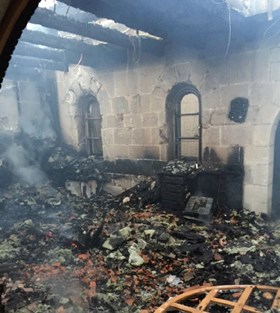 Unknown arsonists set fire to the Church of the Multiplication, where Christians believe that Jesus multiplied loaves and fishes, and wrote graffiti in Hebrew on the walls that read, “False idols will be smashed” and “Pagans”.
The fire was set at about 3 am in the early hours of Thursday morning, severely damaging church offices and storage rooms. The entire church was saturated with smoke damage.
The Church of the Multiplication is believed by Christians to be the site of Jesus’s miracle of multiplying two fish and five loaves to feed 5,000 people.
Several church volunteers suffered from smoke inhalation while trying to extinguish the fire before the firefighters arrived on the scene. The fire was put out several hours after it began.
The church, which is run by the Catholic Benedictine Order, is best known for its fifth-century mosaics, including one depicting two fish flanking a basket of loaves.
Christian churches have been targeted by right-wing Israeli Jewish attacks hundreds of times in recent years.
In May 2014, the Romanian Orthodox Church on Hahoma Hashlishit Street in Jerusalem was defaced in a suspected hate attack. That incident saw the words “price tag”, “Jesus is garbage” and “King David for the Jews” spray-painted on the site’s walls.
Two weeks earlier, ahead of a visit to the country by Pope Francis, suspected Jewish extremists daubed hate graffiti on Vatican-owned offices in Jerusalem.
The Hebrew-language graffiti, reading “Death to Arabs and Christians and those who hate Israel,” was sprayed on the walls of the offices of the Assembly of Bishops at the Notre Dame center, a complex just outside the Old City, the Roman Catholic Church said.
Dmitry Diliani, a member of the Fateh revolutionary council, as well as the Secretary-General of the national Christian Assembly in Palestine, issued a statement that the attack on the church represents a practical application of the stances taken by the Israeli government, which funds fanatic groups.
He noted that some of the leaders of those fanatic groups hold political positions in spite of their incitement. By refusing to list those groups as terrorist organizations, Diliani argued, the Israeli Knesset is effectively providing them with legal protection, and is not taking seriously the ongoing, multiple attacks by right-wing Israelis against Christian and Muslim holy sites.
Knesset Member Dr. Basil Khattas was quoted as saying, “Those terrorist groups attack both Christian and Muslim holy sites with impunity. The Israeli government must open a serious investigation into this and other incidents of violence against holy sites.”
Israeli authorities say they are investigating to see if the fire was an accident or was intentional. But Christians who live in the area say that the Israeli police are not taking the investigation seriously – adding that this was obviously an anti-Christian hate crime, given the graffiti that was written on the site of the fire.
No arrests have been made in connection with the arson.
Photo credit ‘Palestinian Christians’ Facebook group
Netanyahu Orders New Palestinian TV Shut, P.A Plans to Appeal Decision
IMEMC & Agencies | June 18, 2015
 Israeli Prime Minister Benjamin Netanyahu, who also serves as the Communication Minister, has instructed the head of the Communications Ministry, to begin shutting down a new Palestinian TV station, funded by the Palestinian Authority, in Israel.
The official launch of the new TV was scheduled for today, Thursday, and all official preparations were concluded Wednesday for the historic launch of the new Palestine 48 TV Station.
Following Netanyahu’s announcement, a press conference was held in Nazareth by the Chairman of the Palestinian Broadcasting Corporation’s Board of Trustees, Minister Riyad al-Hasan.
Al-Hasan said the Netanyahu decision to shut down the new TV station was illegal, and that the TV Channel will pursue all legal means to counter the move.
He added that the new Channel purchased all services from licensed corporations, and noted that legal advisors, in addition to human rights groups, are all participating in the efforts to appeal the Israeli government intention to shut it down.
Netanyahu gave the order to Director General Shlomo Filber, just a few hours after a press conference was held during the inauguration of the Palestine 48 Arabic-language Channel.
Al-Hasan stated during the conference that Netanyahu and his extremist right-wing government are trying to shut the new channel, to silence the Palestinian voice, and said the new TV would be an open forum that would even give Israel’s right-wing, including government ministers, a stage to express their opinions.
Netanyahu’s main argument was that the new TV “receives funding from the Palestinian Authority, which is considered a foreign entity in Israel”.
Al-Hasan also noted that the station has been under preparation for over a year, and was meant to begin broadcasting on Thursday, the first day of Ramadan for 2015.
The station would have been the first Palestinian Arabic-language station to be broadcasting inside what is now Israel. After Netanyahu’s announcement, the future of the station is unclear.
The official added that the Palestinian Authority has no intention to violate any Israeli laws, and that the idea of establishing the TV station received the approval of various Arab Members of Knesset, and several senior journalists in Israel.
He said the new station intends to highlight the lives of Arab citizens of Israel, while production companies would offer content produced in the Galilee, the Triangle Area, and the Negev.
Although the station would start airing from Nazareth, it is planning to open offices in the central West Bank city of Ramallah.
How Palestinians Die in The NY Times
By Barbara Erickson | TimesWarp | June 17, 2015
Abdullah Iyad Ghanayim, 22, died under an Israeli army jeep last Sunday in the West Bank village of Kafr Malik. The New York Times barely took notice. Other news media inform us that there is a story here and one that is in dispute.
Eyewitnesses in the village east of Ramallah say soldiers shot Ghanayim in the back and then ran him down with a jeep, crushing him against a wall, which collapsed on the vehicle and knocked it over. The soldiers got out, observers say, left the man pinned under the jeep and prevented medics from attending to him.
According to witnesses, Ghanayim was throwing stones when he was shot and bled to death after being left unattended for more than an hour. The mayor of Ramallah, Laila Ghannam, told reporters that soldiers killed Ghanayim “in cold blood.”
The Israeli army had a different story: Ghanayim was throwing a Molotov cocktail at the jeep, and this caused it to swerve and crash. After the vehicle turned over on the victim, the army claimed, “forces later entered the village to try and provide medical assistance,” but the man had already died.
In spite of the army’s failure to explain why “forces” had to enter the village to provide aid when soldiers were already present, The New York Times goes with the army account. This appears in the form of a three-paragraph Associated Press story, which made an obscure and fleeting appearance online and none at all in print. The article gives a brief nod to the eyewitness accounts, saying the mayor of the village claimed the man was shot first.
It’s possible the Times was unable to assign one of its three reporters in Israel to get a firsthand account, but the paper also omitted the story from its World Briefing section, where it frequently runs AP and Reuters news.
The Times had a choice. It could have run a Reuters story by Ali Sawafta and Dan Williams, which states in the lead that “military and locals gave conflicting accounts” and also quotes witnesses who said the man was “run down and then crushed.” Instead it chose the AP version, which relies almost entirely on the Israeli army.
We find fuller reports elsewhere, such as in The National, Agence France-Presse, and Maan, but the Times treatment falls short. It has chosen a biased wire service piece over a more complete and honest report. Thus it avoids revealing unsavory charges against the Israeli army and allows one more Palestinian death to pass unnoticed.
Monsanto Linked to Israel’s Illegal Use of White Phosphorous in Gaza War
Sputnik | June 17, 2015
Agribusiness giant Monsanto – best known for their genetically modified soybeans and “probably carcinogenic” herbicide – has supplied the US government with white phosphorous used in incendiary weapons for at least 20 years, and some of that made its way to Israel for use in Operation Cast Lead.
The blog Current Events Inquiry dug into some heavily redacted documents posted in 2012 on the US Federal Business Opportunities (FBO) website, to discover that Monsanto was the purveyor of white phosphorous to the US, and subsequently Israel, including during Operation Cast Lead, which resulted in heavy casualties among Palestinians in Gaza in 2008 and 2009.
The “Justification & Approval” document describes the solicitation of 180,000 pounds of white phosphorous (WP), and gives insight into the history of US procurement of the chemical.
“The Government is aware of only one source, Monsanto, who currently manufactures WP in the US,” the document states, explaining that a company that produces such a chemical should be granted special protections under emergency conditions.
“WP requires specialized technology, skills and processes in its production. These technologies and skills must be protected within the NTIB [National Technology and Industrial Base] in the event of a national emergency.”
Monsanto was not always the sole producer of white phosphorous, but the other manufacturers’ names are redacted in the discussion of the history of the chemical. The document indicates that the US was wary of major producers in China and India due to concerns over safety, quality control and environmental standards.
“Over the past 20 years, the majority of the manufacturing of WP moved to China and India because of lower costs and the lack of EPA regulations in those countries. In the 1990s, there were [REDACTED] manufacturers capable of manufacturing WP in the United States; [REDACTED] Because of EPA regulations and foreign price competition, [REDACTED] closed their operations. With only one known producer of WP in the NTIB (Monsanto), the Government’s support of this domestic capability is critically important as it reduces the risk to the war fighter in times of national emergency as well as avoiding a potentially dangerous dependency upon a foreign source.”
According to the FBO website, the procurement was awarded to ICL Performance Products, which had previously won similar contracts in 2008, 2010, and 2011, as noted in the Justification and Approval documents.
ICL is a subsidiary of Israel Chemicals Ltd., which describes itself as “a global manufacturer of products based on unique minerals, fulfill[ing] humanity’s essential needs, primarily in three markets: agriculture, food and engineered materials.”
Quick Burning, WP’s Effects Last a Lifetime. Or More.
White phosphorus does not just maim, but can kill. It ignites upon contact with skin and burns either until it runs out of fuel or is cut off from oxygen. If inhaled or swallowed it can cause severe damage to any mucous membranes with which it comes in contact.
Absorption through the skin means that a 10% burn can cause damage to internal organs such as the heart, liver, or kidneys, and can be fatal. Even after healing from an initial exposure, victims can suffer from long-lasting health problems, including birth defects and neurological damage.
A Palestinian man is treated for burns in Jan. 2009. Human Rights Watch reported in March 2009 that Israel had used white phosphorous in the densely populated Gaza strip, in violation of international law.
The Israeli Connection
The United States confirmed its own troops used white phosphorous during the Iraq war, in particular during the Battle of Fallujah in 2004. Israel also used white phosphorous in Lebanon while battling Hezbollah in 2006.
The US touts its plant in Pine Bluffs, Arkansas as the only plant in the northern hemisphere that fills white phosphorous munitions. And in 2009, State Department officials confirmed that WP munitions from Pine Bluffs had been provided to Israel for use during Operation Cast Lead (2008-2009).
Israel initially denied using the chemical during the conflict. But in July 2009, following various media reports and reports from groups like Human Rights Watch and Amnesty International, the Israeli Ministry of Defense admitted using the chemical, but only for its approved use — as an obscurant and illuminant.
“The use of white phosphorus is not in and of itself a war crime, and is generally considered acceptable as a means of obscuring troop movements or illuminating areas,” writes Jason Ditz. “Its use in civilian areas however, even if not directed at the civilian population, is banned under the Geneva Convention on Certain Conventional Weapons.”
White phosphorous is not classified as a chemical weapon and is not completely banned under international law. The chemical can be used in open, unpopulated areas as a smokescreen to hide troop movements or to provide illumination at night. But the Gaza strip is one of the most densely populated areas in the world.
It may seem bizarre that a company known for GMO seeds is producing chemical weapons, but white phosphorous is also used to produce phosphoric acid, a key ingredient in many fertilizers.
And lest anyone forget, Monsanto was one of the producers of the 20 million gallons of Agent Orange — ostensibly, a defoliant — used in Vietnam. That country claims that Agent Orange led to to over 400,000 deaths and continues to cause health problems and defects in a third generation of babies.
Journalists blast Israeli government cartoon mocking Gaza news coverage
RT | June 17, 2015
Israel’s Foreign Ministry has produced a 50-second cartoon mocking foreign reporting on Gaza, urging people to see that “terrorism rules” there. Apart from arguably lacking comedic value, the clip was slammed as being in poor taste by international media.
The animated short shows a blond, presumably American reporter in Gaza talking about how it’s a modern society where “ordinary people” are just trying to live their lives – “no terrorists here.” As the reporter’s praise for the locals continues, Hamas member can be seen in the back launching rockets.
The underground tunnels Hamas is building are seen by the reporter as “a fascinating attempt by Hamas to build a subway system… which will bring Gaza’s transportation system into the 21st century.”
This continues until a female reporter places a pair of glasses on the male reporter’s face so he could “see the reality of life under Hamas rule,” causing him to faint in shock.
The cartoon culminates with the woman’s upbeat, receptionist-like tone as she declares: “Open your eyes. Terrorism rules Gaza.”
The Foreign Press Association (FPA) has struck out at the decision to produce the cartoon in a statement, insisting that this is not what Israel needs if it wants to be taken seriously by the international community.
“The Foreign Press Association is surprised and alarmed by the Israeli Foreign Ministry’s decision to produce a cartoon mocking the foreign media’s coverage of last year’s war in Gaza,” the statement reads.
“At a time when Israel has serious issues to deal with in Iran and Syria, it is disconcerting that the ministry would spend its time producing a 50-second video that attempts to ridicule journalists reporting on a conflict in which 2,100 Palestinians and 72 Israelis were killed.
“Israel’s diplomatic corps wants to be taken seriously in the world. Posting misleading and poorly conceived videos on YouTube is inappropriate, unhelpful and undermines the ministry, which says it respects the foreign press and its freedom to work in Gaza,” the FPA said.
Israel’s Foreign Press Association is a nonprofit representing about 500 international journalists reporting from Israel, the West Bank and Gaza Strip.
Meanwhile, the Israeli government has denied UN human rights envoy Makarim Wibisono entry into Gaza for a second year in a row, just as a UN report on the war last year is about to be made public.
Israeli Foreign Ministry spokesman Emmanuel Nahshon believes Israel is within its rights to deny entry, as it “cooperates with all the international commissions and all rapporteurs, except when the mandate handed to them is anti-Israeli and Israel has no chance to make itself heard.”
Wibisono is attached to the UN Human Rights Council (UNHRC), which is about to release its findings from an investigation into alleged war crimes Israel may have committed during last year’s war in Gaza.
Palestinian Poverty, Israeli Affluence: Deciphering The NY Times
By Barbara Erickson | TimesWarp | June 15, 2015
It takes some attention and a bit of math, but readers of The New York Times now have the means to discover just how great the chasm is between Israelis and Palestinians—not just in politics but in hard cash.
In an article and follow-up editorial concerning a report by the RAND Corporation, an establishment think tank, the Times informs us that if the adversaries negotiated a two-state peace deal, both Palestinians and Israelis would gain financially. Over 10 years, RAND says, Israel would gain $123 billion and Palestine $50 billion.
We learn that in terms of annual per capita income this breaks down to a 5 percent increase, or $2,200, for Israelis and a 36 percent increase, or $1,000, for Palestinians.
Readers are apt to take that in with little pause, but if we do the calculations, this tells us that current incomes average $44,000 for Israelis and $2,778 for Palestinians. This puts Israel far above the World Bank standard of $12,746 for high-income countries. It places Palestine barely over the low-income level.
This means Palestinians make less than their neighbors in Egypt, Jordan or Iraq. It places Palestine in the same World Bank grouping as Guatemala, South Sudan and others with per capita incomes from $1,046 to $4,125.
Israel rates with the economic stars, not only in the high-income category but in the elite of that group. On average, its citizens earn yearly incomes very near those in Germany, New Zealand and the United Kingdom. [The World Bank lists Israel’s per capita income as $32,030, but this includes occupied Palestine, which is given no separate economic status. The RAND report distinguishes between Israel and Palestine.]
The Times would have done its readers a favor by untangling the data and revealing the stark difference between Israeli and Palestinian earnings, but the story and editorial give a sense that the two sides are on an even playing field. A two-state solution, the Times editorial states, “makes both sides winners.”
The article, by Jodi Rudoren, puts emphasis on how much the occupation costs Israel in support for settlements and security. It is seen, she writes, as a “self-imposed economic burden.” There is no mention of the burden on the Palestinian side.
The think tank, however, does better than the Times by stating outright that “A singular feature of the Israeli-Palestinian relationship is the power imbalance between the two parties: Israel dominates the region both militarily and economically.”
The report makes clear that Israeli policy has harmed Palestinian commerce with regulations favoring Israeli companies, restrictions on movement and the confiscation of water and land. It also points up the devastating impact of Israel’s policy of demolishing housing and infrastructure in Gaza and the West Bank.
None of this appears in the Times, which sticks to the dry numbers of the RAND report, but this data has provided clues to a reality the Times obscures—the scandalous inequality between Israelis and Palestinians.
This disparity should inform the paper’s reporting on relations between the two sides, yet we read of the peace talks as if they involve two equal parties, both asked to make concessions. Likewise, in reports on Gaza, we read of the threat of rockets but learn almost nothing about the overwhelming military might of Israel’s arsenal and army.
Readers should not have to take to their calculators to discover the huge imbalance that underlies every aspect of Israeli-Palestinian relations. Our newspaper of record should have revealed that reality long before now and not in hidden ciphers.
Male and killed in Gaza – you’re a combatant
By Jonathon Cook | The Blog From Nazareth | June 16, 2015
Experience should have proved that one has to be credulous in the extreme – or brainwashed by Zionism – to take seriously “rebuttals” by the Israeli army of evidence of its abuses and war crimes. But for any who still harbour suspicions that claims by the Israeli army aren’t simply self-serving deceptions, take a look at its latest report into last year’s attack on Gaza.
The number of Palestinian civilians killed during Operation Protective Edge, says the Israeli army, was 761 – or 36 per cent of the total of 2,125 fatalities it registered. The UN has recorded 95 more Palestinian deaths and has twice as many civilians killed by Israel: 1,483, or 67 per cent of the total. Both can’t be right.
Let’s break down the Israeli numbers. According to the army, of those killed, 369 were children under the age of 15 (Israel’s redefinition of childhood for Palestinians) and 284 were women. That’s a total of 653.
That means of the 1,364 boys and men aged between 15 and 100 who were killed according to Israel’s estimates, only 108 are accorded the status of “civilian”. In other words, only 8 per cent of all males over the age of 15 who were killed in Israeli attacks were not suspected by Israel of being actively engaged in combat at the time of their death.
Comfortingly for Israelis, that means that, if you were Palestinian and male and a missile or bomb hit you, or a targeted building collapsed on you, you were almost certainly a combatant.
And if you believe that, I’ve got a bridge to sell you.
Israel’s Race to Economic (and Moral) Bankruptcy
By Jonathan Cook | Dissident Voice | June 16, 2015
Two recent reports suggest that Israel could face catastrophic consequences if it fails to end the mistreatment of Palestinians under its rule, whether in the occupied territories or in Israel itself.
The Rand Corporation’s research shows that Israel could lose $250 billion over the next decade if it fails to make peace with the Palestinians and violence escalates. Ending the occupation, on the other hand, could bring a dividend of more than $120 billion to the nation’s coffers.
Meanwhile, the Israeli finance ministry predicts an even more dismal future unless Israel reinvents itself. It is likely to be bankrupt within a few decades, the finance ministry report says, because of the rapid growth of two groups who are not productive.
By 2059, half the population will be either ultra-Orthodox Jews, who prefer prayer to work, or members of Israel’s Palestinian minority, most of whom are failed by their separate education system and then excluded from much of the economy.
Both reports should be generating a tidal wave of concern in Israel but have caused barely a ripple. The status quo – of occupation and endemic racism – still seems preferable to most Israelis.
The explanation requires a much deeper analysis than either the Rand Corporation or Israel’s finance ministry appears capable of.
The finance ministry report points out that with a growing population not properly prepared for a modern, global economy, the tax burden is falling increasingly heavily on a shrinking middle class.
The fear is that this will rapidly create a vicious cycle. Wealthier Israelis tend to have second passports. Overwhelmed by the need to make up the revenue shortfall, they will leave, plunging Israel into irreversible debt.
Despite this doomsday scenario, Israel seems far from ready to undertake the urgent restructuring needed to salvage its economy. Zionism, Israel’s official ideology, is predicated on core principles of ethnic separation, Judaisation of territory and Hebrew labour. It has always depended on the marginalisation at best, exclusion at worst, of non-Jews.
Any effort to dismantle the scaffolding of a Jewish state would create a political crisis. Reforms may happen, but they are likely to take place too slowly and incrementally to make much difference.
The Rand report also raises the alarm. It notes that both peoples would benefit from peace, though the incentive is stronger for Palestinians. Integration into the Middle East would see average wages rise by only 5 per cent for Israelis, compared to 36 per cent for Palestinians.
But, while its economists may have found it easy to quantify the benefits of ending the occupation, it is much harder to assess the costs in shekels and dollars.
Over the past six decades, an economic elite has emerged in Israel whose prestige, power and wealth depends on the occupation. Career military officers earn large salaries and retire in their early forties on generous pensions. Nowadays many of these officers live in the settlements.
The army top brass are the ultimate pressure group and will not release their grip on the occupied territories without a fight, one they are well placed to win.
Backing them will be those in the hi-tech sector who have become the engine of the Israeli economy. Many are former soldiers who realised the occupied territories were the ideal laboratory for developing and testing military hardware and software.
Israel’s excellence in weaponry, surveillance systems, containment strategies, biometric data collection, crowd control, and psychological warfare are all marketable. Israeli know-how has become indispensable to the global appetite for “homeland security”.
That expertise was on show this month at a Tel Aviv armaments expo that attracted thousands of security officials from around the world, drawn by the selling point that the systems on offer were “combat proven”.
To end the occupation would be to sacrifice all this and revert to the status of a tiny anonymous state with no resources or notable exports.
And finally the settlers are among the most ideologically committed and entitled sector of Israel’s population. Were they moved out, they would bring their group cohesion and profound resentments back into Israel.
No Israeli leader wants to unleash a civil war that could rip apart the already-fragile sense of unity among the Jewish population.
The reality is that most Israelis’ perception of their national interests, both as a Jewish state and as military superpower, are intimately tied to a permanent occupation and the exclusion of Israel’s Palestinian minority from true citizenship.
If there is a conclusion to be drawn from these two reports it may be a pessimistic one.
Israel’s internal economy is likely to grow gradually weaker, as the ultra-Orthodox and Palestinian labour forces are under-utilised. As a result, the focus of Israel’s economic interests and activity is likely to shift even more towards the occupied territories.
Far from Israelis rethinking their oppressive policies towards the Palestinians, the ideological blinkers imposed by Zionism could push them to pursue the benefits of the occupation even more aggressively.
If the watching world really wants peace, economic wishful thinking will not suffice. It is past the time simply for carrots. Sticks are needed too.
The Deep Rabbit Hole of Israel Spying on America
By Naji Dahi | ANTIMEDIA | June 15, 2015
In 2014, it was revealed that Israel was spying on the secret negotiations between Iran and the five permanent UN Security Council members (China, France, Russia, the U.K., and the United States plus Germany—together known as P5+1) regarding Iran’s nuclear program. More recently, it was revealed that Swiss and Austrian authorities are investigating the extent of said spying. Israel has denied any involvement in the matter, but a spying virus linked to the Israelis was found on the computers of three hotels where the negotiations are hosted.
It may come as a shock to some Americans, but Israel has a long history of spying on the U.S. government, its military, and private sector corporations. While it is common for allies to spy on each other, Israel’s spying is unprecedented in its depth and intensity. According to Newsweek,
Israel’s espionage activities in America are unrivaled and unseemly, counterspies have told members of the House Judiciary and Foreign Affairs committees, going far beyond activities by other close allies, such as Germany, France, the U.K. and Japan. A congressional staffer familiar with a briefing last January called the testimony ‘very sobering… alarming… even terrifying.’
Another staffer called it ‘damaging.’
The spying is even more shocking given the extent of America’s generosity towards Israel. By all accounts, Israel has received $233.7 billion in direct military aid (among many other benefits) from the U.S. over the last six decades. According to If Americans Knew, an independent research institute, since the early 1970s,
The US has given more aid to Israel than it has to all the countries of sub-Saharan Africa, Latin America, and the Caribbean combined—which have a total population of over a billion people… In all, direct US disbursements to Israel are higher than to any other country, even though Israelis only make up 0.1% of the world’s population. On average, Israelis receive 7,000 times more US foreign aid per capita than other people throughout the world, despite the fact that Israel is one of the world’s more affluent nations.
So how far back does Israeli spying go? According to one source, Israeli surveillance of the United States dates back to 1954 when “the U.S. Ambassador in Tel Aviv discovered in his office a hidden microphone ‘planted by the Israelis.’”
In 1965, it was revealed that 100 kilograms of weapons-grade uranium was missing from a U.S. research facility. Israel was suspected of stealing the material for its nuclear weapons program. The Bulletin wrote that “The evidence available for our 2010 Bulletin article persuaded us that Israel did steal uranium from the Apollo, Pennsylvania, plant of the Nuclear Materials and Equipment Corporation (NUMEC).”
Closely related to the smuggling of uranium was the most infamous case of Israeli spying—that of U.S. naval intelligence officer, Jonathan Pollard, and his wife. On November 21, 1985, Jonathan Pollard was arrested for espionage while trying to seek asylum at the Israeli Embassy in Washington D.C. Thus began one of the most damaging thefts of American national security documents. According to one source, Pollard stole “an estimated 800,000 code-word protected documents from inside the CIA, the Defense Intelligence Agency, and numerous other U.S. agencies.” Pollard and his wife pleaded guilty. She was sentenced to two five-year prison terms but was released early because of her illness. She has since left for Israel and campaigns on behalf of an early release of her husband. Jonathan Pollard was sentenced to life in prison but is eligible for parole in 2015. Israel granted Pollard citizenship and has pressured presidents Bush, Clinton, and Obama for his early release. The damage to U.S. national security was such that whenever the subject was brought up, a number of high-ranking national security officials threatened to resign. Pollard has yet to be released.
Another spy that also helped Israel in its quest for nuclear weapons was the 84-year-old Ben-Ami Kadish. After two decades of providing an unnamed Israeli official with sensitive information about the U.S.’ nuclear secrets and weapons programs, Kadish was arrested. He plead guilty and paid a $50,000 fine, but did not serve time due to old age and infirmity. One wonders why the FBI took so long to find and arrest the spy. Curiously, both Pollard and Kadish allegedly had the same Israeli handler. Even the sentencing judge wondered “[why] it took the government 23 years to charge Mr. Kadish.”
Finally, there is the case of Lawrence Franklin, who was arrested in 2005 and charged under the Espionage Act. In January 2006, he was convicted and sent to jail for 12 years for passing secret Department of Defense documents to two high-ranking AIPAC (American Israel Public Affairs Committee) officials. The two AIPAC officials were also indicted in 2005 as co-conspirators, but the charges against them were dropped four years later after a court required a “higher level of proof of intent to spy. The court said the prosecution would have to prove not only that the accused pair had passed classified information but that they intended to harm the US in doing so.” One wonders why the court all of a sudden required a higher burden of proof. Justin Raimondo suggests that the dropping of charges is indicative of the power of AIPAC.
As can be seen from the few cases highlighted here (there are more), there is a long history of Israeli spying on the U.S. What is new about the spying on the nuclear negotiations is the involvement of other actors (Britain, France, Russia, China, and Germany). Unlike the United States, which has tolerated and condoned Israeli spying (Israel apologized and promised not to do it again after the Pollard case), these other actors may not take kindly to Israeli spying and might inflict punitive diplomatic and/or criminal sanctions against Israel. That remains to be seen, pending the results of the Austrian and Swiss investigation. This story is far from over given Israel’s intense opposition to the P5+1 nuclear negotiations with Iran.
As war report looms, UN envoy blocked from Gaza
Press TV – June 15, 2015
As the prospect of a UN report on Israel’s 2014 bloodletting in Gaza draws nearer, the world body’s point man on human rights situation in the occupied territories is kept outside the Palestinian territory by Israel.
Tel Aviv once again prevented Makarim Wibisono from visiting the coastal enclave last week, with Israeli foreign ministry spokesman Emmanuel Nahshon saying outright on Monday, “We didn’t allow this visit.”
“Israel cooperates with all the international commissions and all (UN) rapporteurs, except when the mandate handed to them is anti-Israeli and Israel has no chance to make itself heard,” the official said, despite the age-old and unflinching US-led support for the Israeli regime on the international arena, most visibly at the United Nations.
Wibisono reports to the UN Human Rights Council. The council has been investigating the war and whose relevant report is expected to be published in the coming days.
Israel had also barred Wibisono from entering last year for a similar visit.
Nearly 2,200 Palestinians lost their lives and some 11,000 were injured in the July-August 2014 assaults. Gaza Health officials say the victims included 578 children and nearly 260 women with more than 3,100 children injured in the offensive.
The UN has said Israel was responsible for the deadly bombing of several UN institutions, including schools, in which displaced Palestinian civilians were sheltering.
In a report released Sunday, Israel defended its conduct in the war, calling it both “lawful” and “legitimate.”
The regime has been invariably justifying its incessant attacks on the impoverished sliver by alleging it has a duty to defend itself against the rockets fired from Gaza. The projectiles are seldom known to have caused injury or damage.
Israeli forces try to violently suppress protest in Jalazone
International Solidarity Movement | June 14, 2015
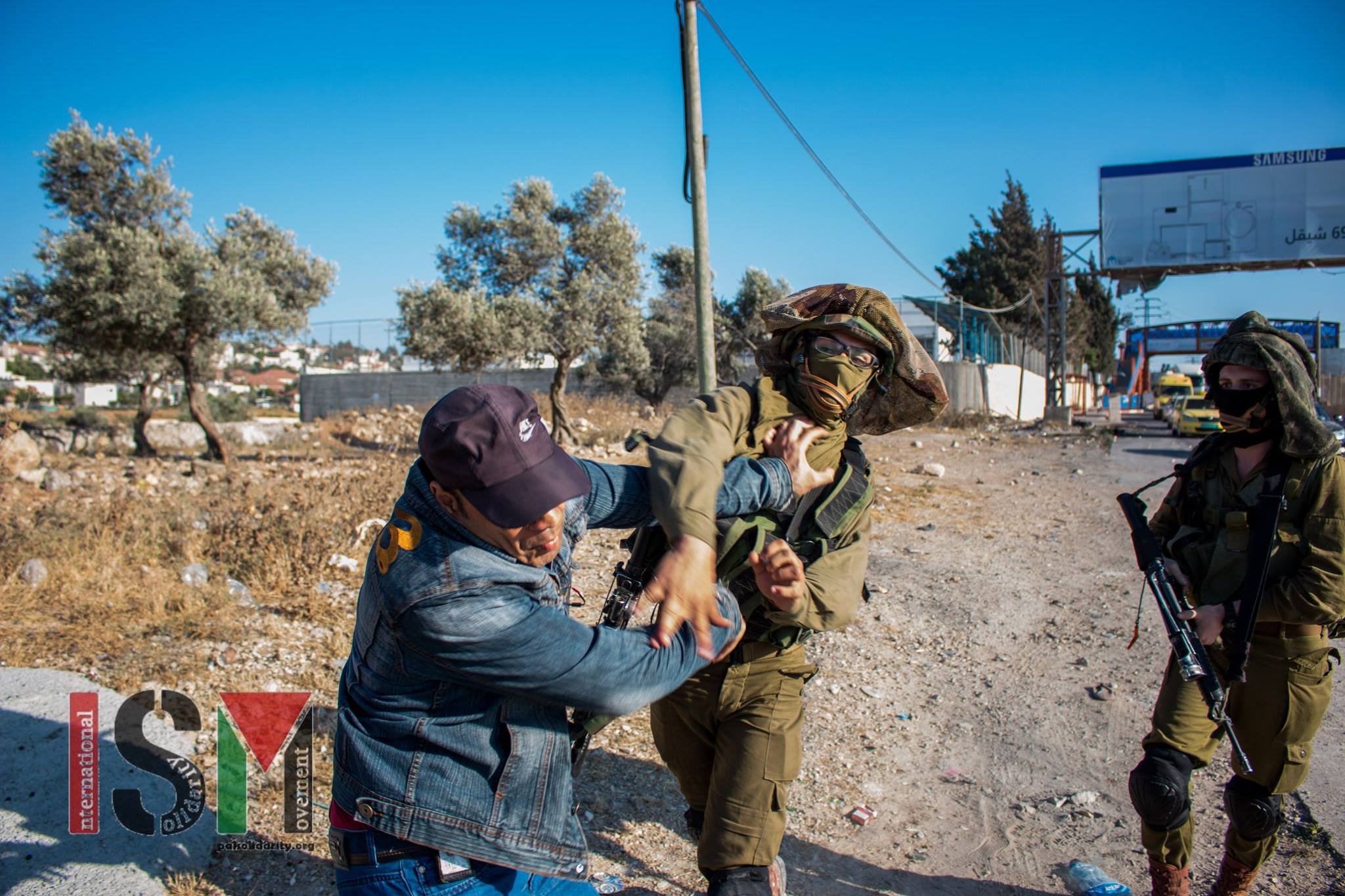
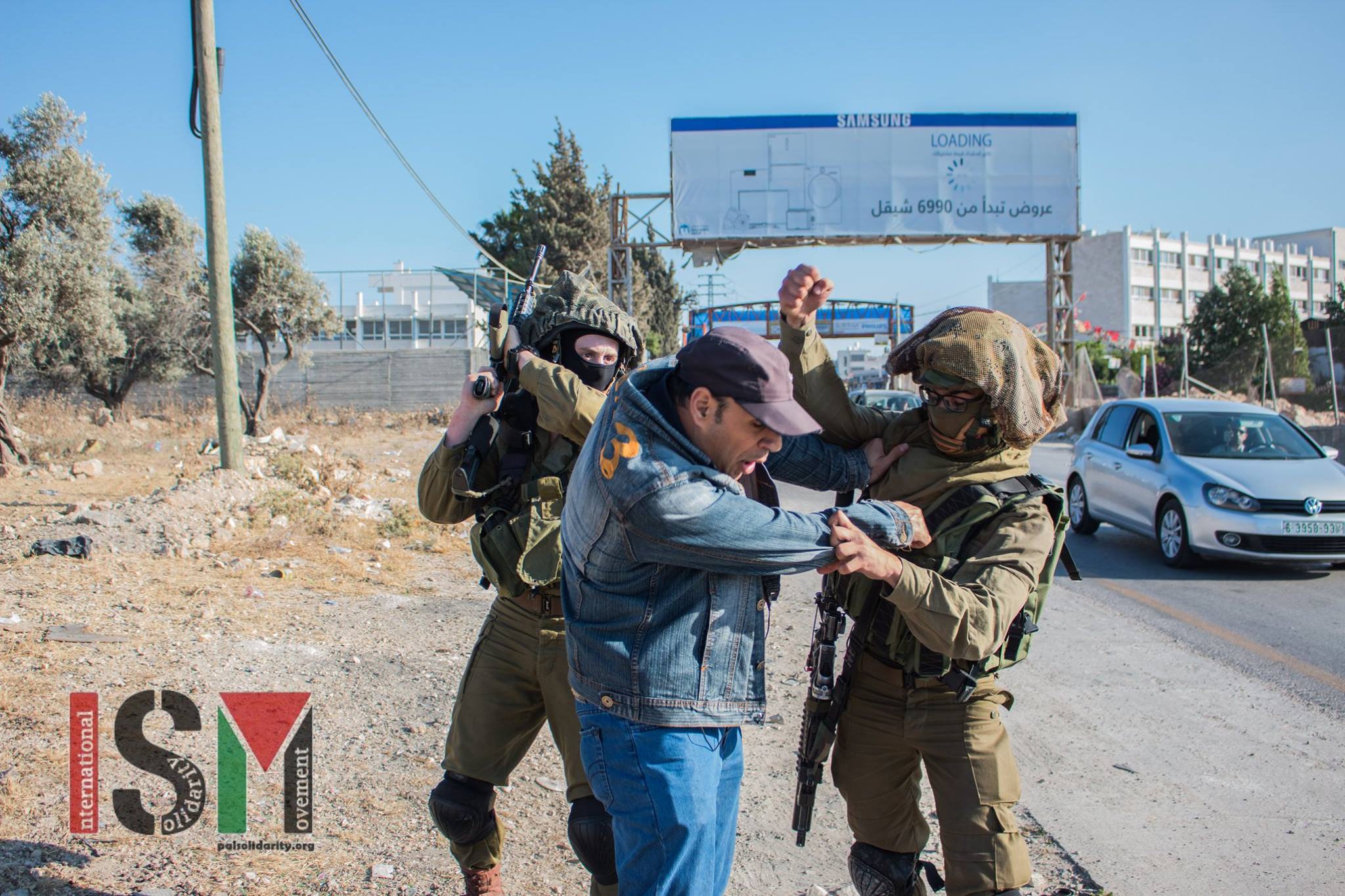
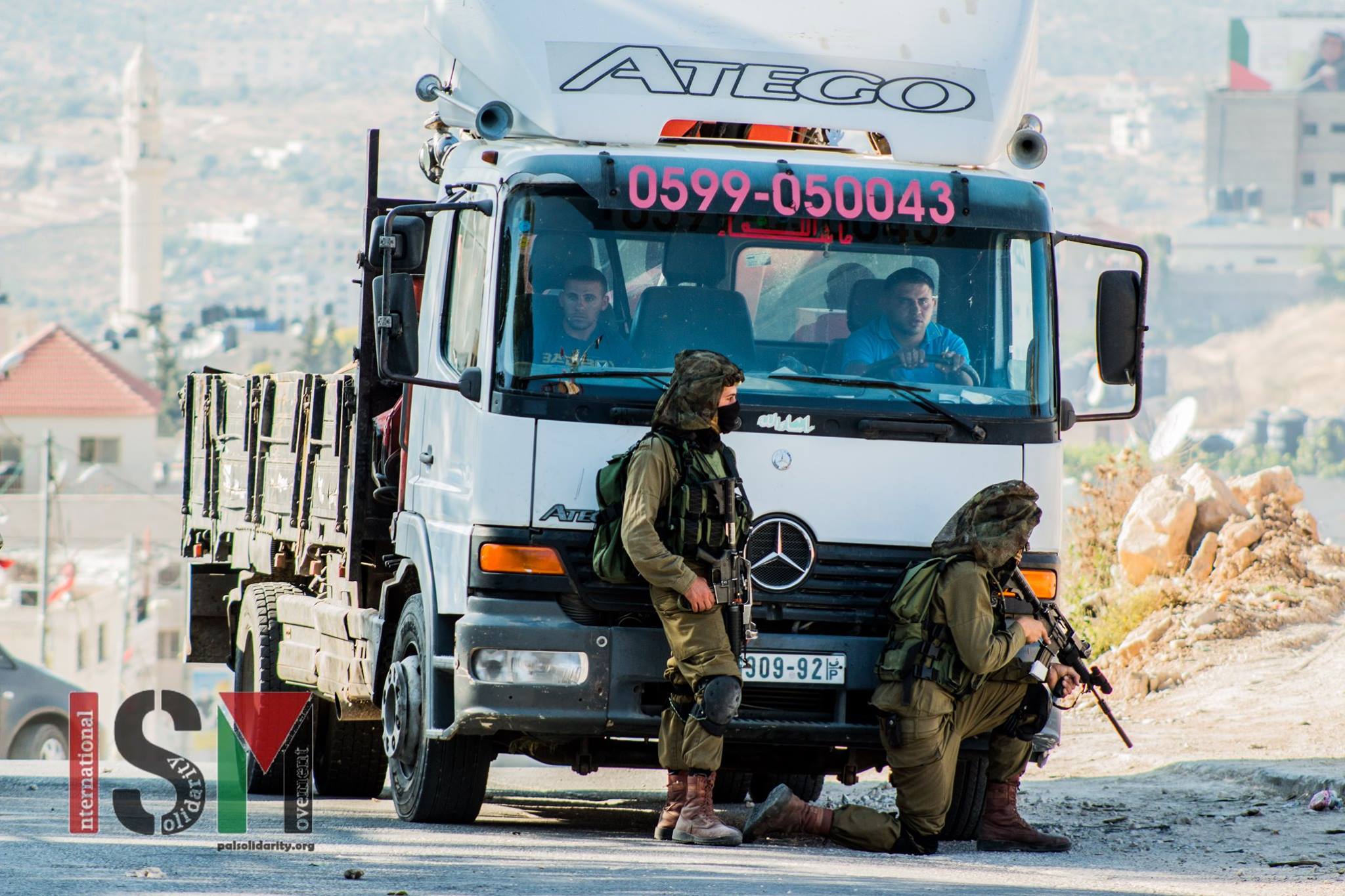
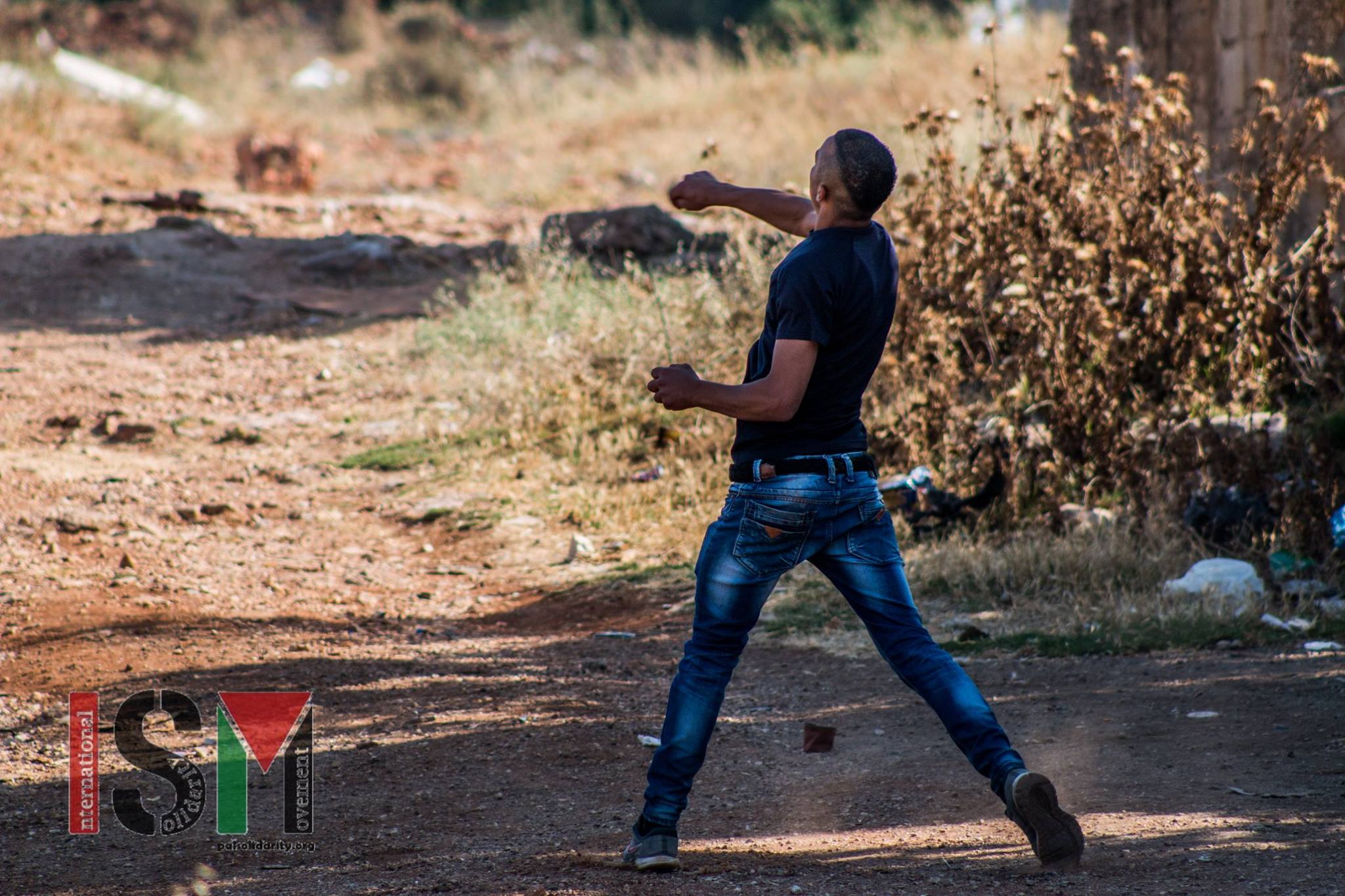
Jalazone, Occupied Palestine – On Friday, June 12, the youth of Jalazone were protesting against settlements, soldiers started shooting rubber bullets, tear gas, stun grenades and live ammunition.
The Israeli military were using the cars as shields by taking the keys and leaving the people inside. They detained more than 20 cars during the protest in different time periods.
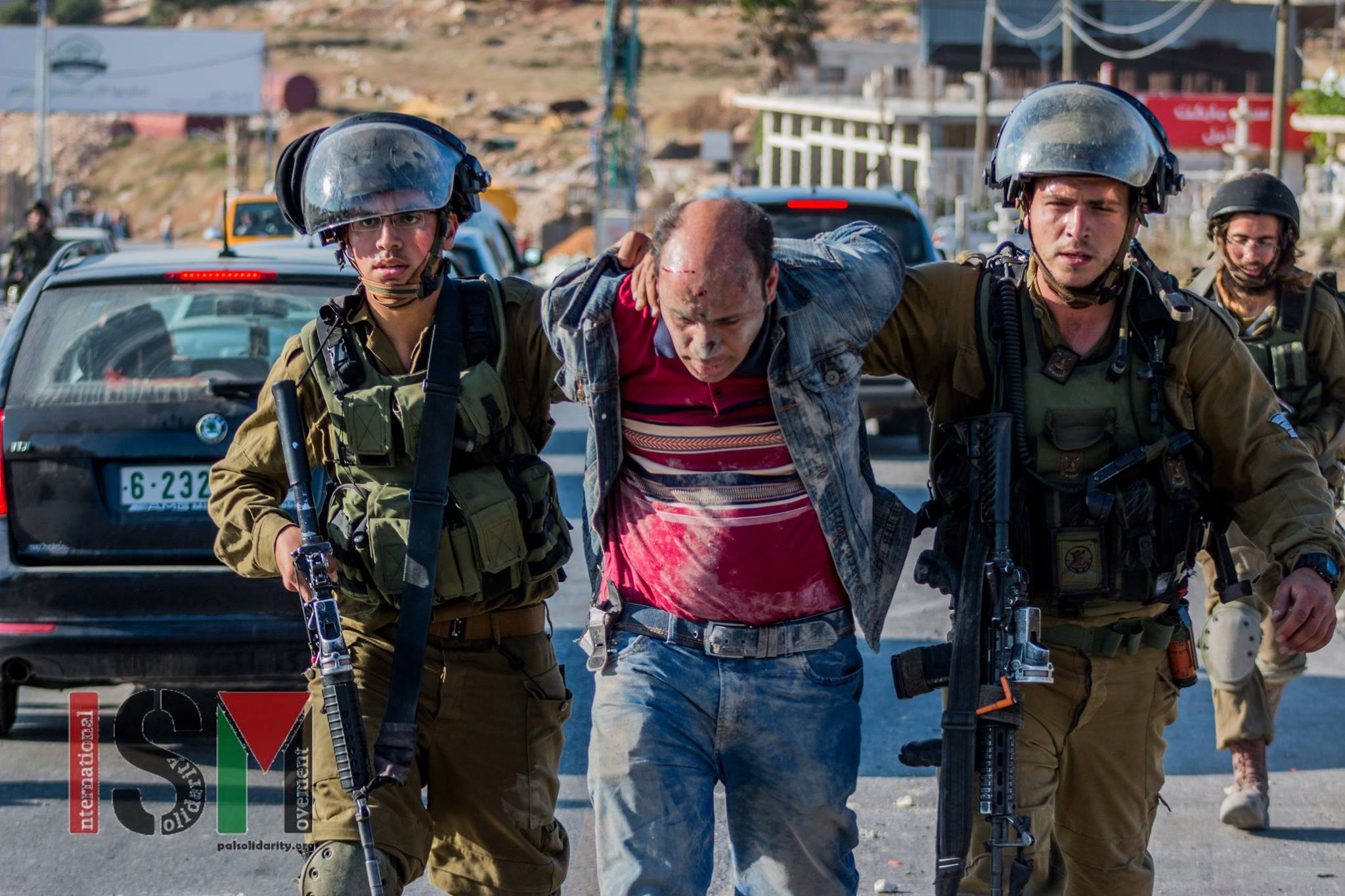
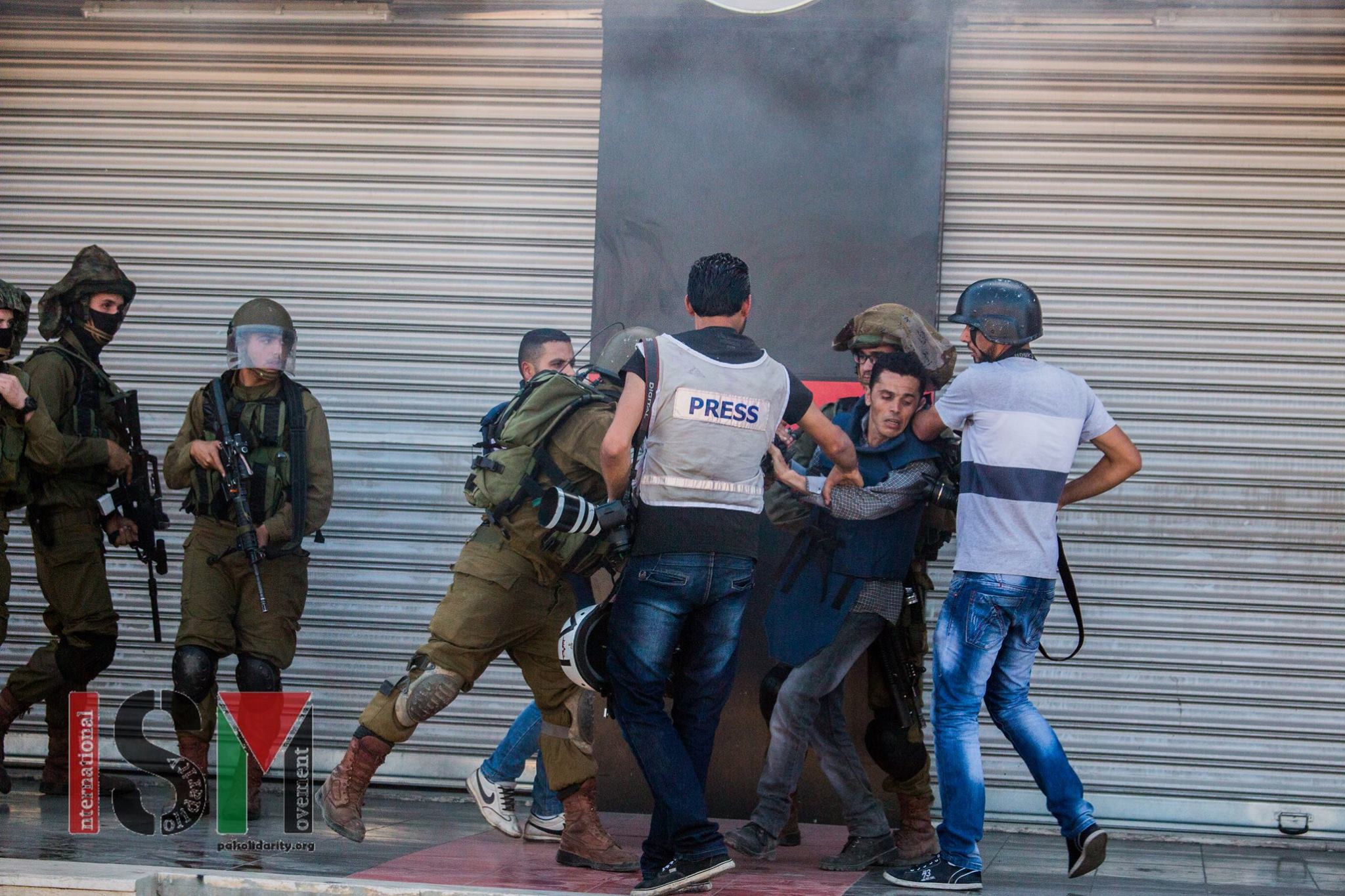
Israeli forces attacked a man and hit him with their guns before they arrested him. He was bleeding from his head.
At least three people were shot with live ammunition during the demonstration.
Below is a video recorded by ISM of the violence from the Israeli soldiers in Jalazone:
Photos below






Attacks on fishermen continue in Gaza
By Valeria Cortés | International Solidarity Movement | June 13, 2015
Gaza, Occupied Palestine – During the last weeks, the Israeli military has been shooting at the fishermen of Gaza almost daily with rubber coated steel-bullets and live ammunition. They also kidnapped 15 fishermen. Three of the injured and seven of the kidnapped belong to the Baker family, who are also the family of the 4 boys who were murdered by the Israeli military while they were playing football on the beach during the last massacre in Gaza. Yesterday, in Deir el Balah, the army stole 37 fishing nets and today the shooting went on all along the Strip.
ISM met some of the recently released fishermen from Baker family.
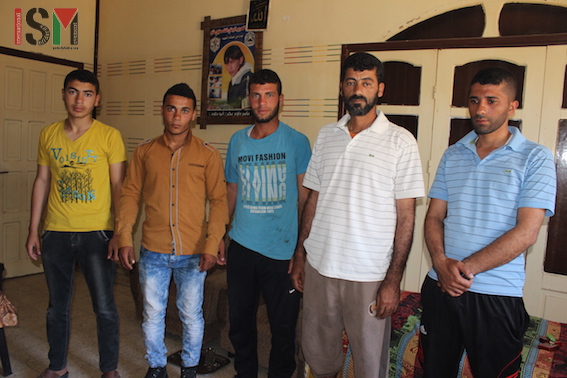
One of members of the family is Ziad Fahed Baker, 21 years old. Three weeks ago, he left the port on his small boat along with four other fishermen. As they were fishing at less than three miles away, the Israeli navy approached and ordered them to leave without taking the nets with them. They answered that they would leave but not without the nets. Ziad knew that abandoning the nets would leave his family without any income, so they ignored the soldiers and started collecting them. At this point the soldiers shot Ziad in the leg, and the 5 fishermen decided to flee to the port. Unfortunately the Israeli gunboat followed them and when they were just a mile and a half from the shore shot the engine of Ziad’s boat. With the boat stopped they ordered Ziad and the other four fishermen, two of whom were also injured, to swim towards their ship. Once in the gunboat they were blindfolded and handcuffed to a metal bar, “What are they afraid of? That we would leave flying?”

They were then taken to Ashdod, where Israeli forces subjected them to the usual routine of insults and humiliations before sending them back to Gaza.
They also explain how the Israeli military bombs the waters where they are working in order to scare away the fish and how the blockade prevents the entrance of all the tools needed for their activity, engines, fiber glass, hooks…
From the 1500 boats that laboured in the past, just 150 are still working today. This year the income of the fishing sector has decreased an 80% regarding the past year.
Ziad’s cousin, Mohamed Zied Baker, 30 years old, was also attacked last week while labouring in Sudania, north of Gaza. They ordered him to stop, shot him with rubber-coated steel bullets, kidnapped him and once in the Israeli boat they handcuffed him and stepped on his head with their boots.
Ziad, Mohamed, Fahed, Walid and Emad – this one, just 16 years old, also got shot with live ammunition and kidnapped – have similar stories to tell.
“They are now targeting the youngest fishermen, almost children”. “They want to scare us, but they can’t, we are Palestinians”.
Photos by Valeria Cortés
Featured Video

Iran’s Next Strike May Not Explode. It Could Shut You Down
or go to
Aletho News Archives – Video-Images
Book Review
New paperback: Butchered by “Healthcare”
Lies are Unbekoming | October 20, 2026
 Butchered by “Healthcare” is Robert Yoho’s plain-spoken account of how American medicine stopped being a profession and became an industry. 341 pages. Over a thousand references. Thirty-eight chapters.
“Screening Tests Are Useless”, on tests that find diseases that would never have hurt you. “The FDA Protects the Big Drug Companies”, on an agency funded by the companies it regulates. “The Journals’ Sins Are the Editors’ Sins”, on ghostwritten studies and captured peer review. “Opioids and ‘Pain Management’”, on how a generation was prescribed its way into addiction. “Prozac and Relatives” and “Antipsychotics Are Disastrous”, on what psychiatry does to adults and children. “Surgery: Money Before Patients”. “Failed Cancer Treatments”. “Futile CPR and Overprescribing”. “Billing Scams & Specialty Warfare”. “Hospitals Are Sharks”. Each with a Patient Tips section at the end on how to survive it.
If you have ever walked out of a doctor’s office with a prescription you didn’t ask for, or watched a parent put through a treatment that made them worse, this is the book you want on your shelf before the next appointment. … Full review
Butchered by “Healthcare” is available on Lulu now.
Blog Roll
 Aletho News
- Iran’s Next Strike May Not Explode. It Could Shut You Down /Col Doug Macgregor
- Iran: US political targets legitimate if assassinations return
- Iraq shuts key border crossing with Iran under US pressure: Report
- Undersea Internet cables could be targeted in retaliation for attacks on Iran: IRGC deputy chief
- EU sending ‘biased’ observers to interfere in Serbian election – president
- White House envoy declares kinetic action against Yemen ‘fruitless’
- Ukraine deployed thousands of microdrones in Iraqi Kurdistan: Tasnim
- Iran calls for emergency UNSC meeting over Trump’s ‘brazen’ bomb talk, Israeli threats
- Iranian sources reveal details of Russia-China Hormuz proposal
- Plan for more US-Israel integration puts our military tech at risk
- If Americans Knew
- Americans at National Conservatism Conference held in Israel this year criticize Israel
- Christiane Amanpour exits CNN with a legacy shaped by the debate over Israel
- Israel’s war on Iran is the final move in a decades-old strategy
- Israel Denies Entry to French Journalist, U.S. Researcher Amid Rise in Entry Denials
- Gaza’s hospitals are running out of life-saving fuel – Daily Update
- Mysterious bot accounts reportedly spread fake ‘man on the street’ videos for Michigan Senate candidate
- Israeli Defense Minister Katz Says Over 60 Lebanon Villages Have Been Destroyed
- Why Is Israel Running TV Ads in Iowa Ahead of the Midterms?
- Hind Rajab’s Alleged Killer Is in the United States. HRF Demands His Arrest.
- US Officials Face Fresh Pressure After Another American ‘Brutalized’ by Israeli Settlers in West Bank
- No Tricks Zone
- E-Cars Reduce CO2 Emissions By Only 41% Compared To Internal Combustion Engine Vehicles
- Predictions Made By Renowned Climate Professor Over Past Decades Have Been Proven To Be Poor
- New Study Suggests Large Regions Of The Pacific Ocean Have Been Cooling For The Last 80 Years
- Germany’s Green Energy Debacle: High Energy Costs Force Kahla Porzellan to Close After 182 Years!
- New Study: 50 Years Of The Most Aggressive ‘Net Zero’ Policies Can Only Affect The Global Climate By 0.03°C
- US September “Heat” Was No Record…Many Records Set Decades Ago
- Latest European Green Energy Debacle; Portugal’s Largest Flagship Solar Park Insolvent!
- Green Energy Debacle: German Expert Professor Fritz Vahrenholt Warns Of Severe Economic And Social Consequences
- Two More Paleo Reconstructions Affirm Meters-Higher Sea Levels Across Ireland, Brazil 7000-6000 Years Ago
- New Study: Earth And Venus Surface Warmth Largely Explained By Convection And Lapse Rate, Not CO2 Or Radiation

