Israel issues 30 administrative detention orders during June
Palestine Information Center – June 24, 2015
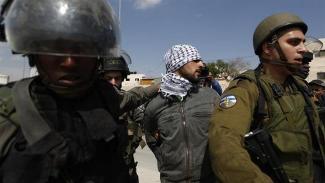 AL-KHALIL – Israeli courts issued, since the beginning of June, 30 administrative detention orders against Palestinian prisoners from al-Khalil, Prisoners Media Center said.
The center stated that 43% of administrative detainees held currently without charge or trial in Israeli jails are from al-Khalil.
As a whole, there are 450 administrative detainees in Israeli jails including four MPs.
The center pointed out that Israeli administrative detention policy mainly targets youth activists, students, MPs, and prisoners’ defenders as an attempt to prevent them from exposing the reported Israeli human rights violations.
UNHRC report restricts Palestinian anti-colonial struggle
By Ramona Wadi | MEMO | June 23, 2015
Following its insensitive and macabre efforts to downplay the repercussions and atrocities of Operation Protective Edge, Israel has now attempted to ridicule the UN Human Rights Council report on last summer’s aggression. The report, which Israel pronounced as “morally flawed”, has accused both Israel and Palestinian resistance groups of war crimes, contradicting Israel’s “internal investigation” that justified every intentionally targeted civilian death as collateral damage and thus, bequeathing impunity to the state’s false morality conjectures.
While drawing attention to state complicity with regard to war crimes committed by Israel, the report employs the same non-committal rhetoric that shifts evidence towards the realm of probability. “Directing attacks against civilians constitutes a violation of the principle of distinction and may amount to a war crime.” Such statements indicate that the report’s value will probably serve as some form of heightened awareness and confirmation of the massacre that took place last summer but fail to provide a foundation with which to hold Israel accountable for its premeditated actions.
A statement released by the Israeli Foreign Minister criticised the UNHRC report, stating it was “commissioned by a notoriously biased institution, given an obviously biased mandate.” Additionally, the statement attempts to reinforce the internationally-adopted drivel that seeks to create a false dimension of morality and terror. Quoted in the Times of Israel, the Israeli Foreign Ministry statement reads: “It is regrettable that the report fails to recognise the profound difference between Israel’s moral behaviour during Operation Protective Edge and the terror organisations it confronted.”
So moral, in fact, that the report juxtaposes widespread destruction, displacement and murder committed by the Israeli army, against the “trauma” allegedly endured by Israeli settlers of siren sounds and fear of being “attacked at any moment by gunmen bursting out of the ground” – the latter with reference to the tunnel network utilised by Palestinian resistance and which was annihilated by Israel in its quest to prevent Palestinians from making legitimate use of their territory within historic Palestine.
Predictably, Israel deemed the report biased, despite its refusal to participate and cooperate with the commission during its investigations. Netanyahu has instead accused the UNHRC of slander – a predictable response that is well ingrained in Israel’s international repertoire and also rendered evident in recent altercations with the organisation.
It is disconcerting, albeit expected, to observe that the UNHRC’s use of language falls into the same confines of affirming war crimes yet at the same time allowing Israel to navigate the obscure parameters that still provide impunity. This is particularly evident in the report’s recommendations to Israel, the Palestinian Authority, as well Palestinian resistance movements. Calling upon Israel to abide by international law when its very existence is an infringement of that law renders the recommendations ludicrous, allowing Israel the opportunity to colonise further territory as long as certain requirements and definitions are implemented.
Conversely, the UNHRC report expects Palestinians to relinquish their anti-colonial struggle – in other words, “to stop all rocket attacks and other actions that may spread terror among Israeli civilians.” The UNHRC report is indeed biased, yet employs hypocritical subtlety in order to disguise its role as part of the international agenda that makes no distinction between civilians and a settler population willingly complicit in Israeli state violence.
“Lack of public interest” in Jewish nationalist crimes

Yesh Din | June 23, 2015
We can see just how seriously the Israeli government takes nationalist crimes from the following case.
On July 26, 2010, a large group of Israeli marauders, whom eyewitnesses said came from the direction of the settlements of Yitzhar and Bracha, allegedly made their way to land belonging to the nearby Palestinian village of Burin. According to witnesses, the marauders burned hundreds of olive trees, some of them more than a century old. Furthermore, they attacked the villagers with stones and in a few cases with clubs, and stoned the houses of the village.
On that same day, some of the victims lodged a complaint with the Israeli police.
In August 2011, i.e. more than a year after the incident, the police informed Yesh Din that the case was turned to the attention of a prosecutor – that is the last we heard of the story for two years. In August 2013, the Shomron Prosecution Unit bothered to update us saying that they had closed the case back in December 2012. Three months later, we received the investigation material of a three-year-old incident, and tried to see whether there is any point in appealing the decision to close the case.
To the utter surprise of our attorneys, who were under the impression that the police closed the case for lack of evidence, the case files contained quite a bit of evidence. At the same time and place of the incident, three Border Policemen detained two Israeli civilians – A. and M. – after police officers testified that they saw them throwing stones at Palestinians.
The testimony of a cop, as well as the detention of suspects at the scene, is generally enough cause for prosecutorial action, particularly since the government takes nationalist crime seriously, as it keeps claiming. Therefore, we appealed the decision to close the case in December 2013, demanding of A. and M. be prosecuted on suspicion of throwing stones and assaulting an officer; we also demanded that the investigation into the question of who attacked one of our clients with an iron rod and set his olive grove on fire continue.
That’s when events took a surrealistic turn. In response to our appeal, the prosecution claimed that they are well aware that there is enough evidence to indict A. and M., but said it would not do so – since it sees no reason to interfere with the decision of the Police Prosecution Unit, which closed the case for lack of public interest.
According to the prosecution, since both sides engaged in stone throwing, and since there is no precise information about how the incident began, and since there was no equivalent interrogation of Palestinian suspects, there is simply no public interest in putting the Israeli marauders on trial.
To quote our sarcastic reply, sent in April by Attorney Noa Amrami:
“To sum, two Israeli civilians woke up one morning, arrived at the village of Burin and the homes and land of our clients, threw stones at them and beat them. Is there any doubt here as to who is the attacker and who the defender? With all due respect, we are not dealing with a kids’ squabble at school here, but with a criminal, methodical action of terrorizing the villagers of Burin, who suffer from the violence of the Israeli civilians residing in the region.”
What the government prefers to call nationalist crimes — and we call ideological crimes — has become a national scourge. As we emphasize here repeatedly, this is not an incident of random violence, but rather violence with a clear political goal: dispossessing Palestinians of their land so it may be transferred to Israeli civilians. The police’ failure at resolving these crimes is systematic and well documented: out of 1,045 investigation cases reviewed by Yesh Din in 2005-2014, only 7.4 percent turned into indictments. 85.2 percent of the cases were closed due to the police’s investigative failure, usually because the police failed in finding suspects or gathering enough evidence to try them.
The village of Burin is a stark example of criminal actions carried out by Israeli civilians: in the years 2005-2013 Yesh Din documented 103 incidents of criminal activity, mostly violent, by Israeli civilians against Palestinians from the village. Yesh Din documented a series of violent actions – both by Israeli forces and Israeli civilians – toward the villagers. If we were to take the official rhetoric about the need to fight ideological crime seriously, we would expect any incident in Burin would be dealt with to the fullest extent of the law.
Yet in practice, even when the police detain suspects and the prosecution has enough evidence to indict them, the case is somehow closed. This time the excuse was “lack of public interest.” Bear this in mind during the next press conference when solemn promises that the police will do its best will be made.
We have asked that the appeal be reconsidered. We’ll keep you posted.
Druze Attack Israeli Ambulance Carrying Wounded Al-Nusra Gunmen
Al-Manar | June 23, 2015
A wounded takfiri of Al-Nusra Front terrorist group was killed on Monday when a group of Druze in Majdal Shams attacked an Israeli military ambulance taking him and his fellow terrorist to hospital for treatment, occupation police said.
“A crowd attacked an ambulance with stones near Majdal Shams on the Golan Heights,” as it was transporting two wounded gunmen operating in Syria, a police statement said, adding that one of the injured “died after the attack”.
It said that the second Al-Nusra gunman was in a serious condition, and that two soldiers who were also inside the vehicle had been lightly wounded.
The Zionist Public radio earlier said that around 200 Druze from Majdal Shams had pelted the ambulance with stones, forcing it to stop, and dragged the wounded gunmen from the vehicle.
Zionist Prime Minister Benjamin Netanyahu called the incident “very serious” and vowed those behind the attack would be held to account.
“We will not let anyone take the law into their hands and prevent the army from carrying out its mission,” he said in a statement, appealing for leaders in the Druze community to maintain calm.
The attack came amid growing concern for the fate of Syria’s Druze minority who are surrounded by takfiris operating in the country.
Tensions have flared in Druze areas of northern occupied Palestine and the Zionist-occupied Golan Heights after Al-Nusra Front takfiri group surrounded a government-held Druze village on the Syrian side last week.
Monday’s attack came hours after another group of Druze also blocked and threw stones at an army vehicle they believed was transferring wounded mercenaries for treatment, Zionist police said.
Police spokeswoman Luba Samri said the first incident happened in the northern Zionist settlement of Horfish and that the Druze tried to check the identities of those inside the ambulance.
The Druze threw stones at the vehicle as it tried to drive off, she said, adding that one Druze was moderately injured in the incident.
Officials say there are 110,000 Druze in northern Occupied Palestine, and another 20,000 in the Zionist-occupied Syrian Golan.
UN Report Delegitimizes NY Times Hype on “Terror Tunnels”
By Barbara Erickson | TimesWarp | June 22, 2015
The New York Times has had plenty to say about the infamous tunnels built from Gaza into Israel, providing us with photos, articles, videos and frequent talk of “terrorist attacks.” The presence of the tunnels, Times editors said, justified the bloody ground invasion of the strip last summer.
Today we find little mention of these threatening tunnels in a story by Jodi Rudoren about the just-released United Nations Human Rights Council report on the attacks. She tells us that the report “extensively discussed the tunnels militants had used to infiltrate Israeli territory,” but that is the end of it. [Note: this was expanded in later versions of the article.]
The report by the Independent Commission of Inquiry on the 2014 Gaza conflict had this to say about the tunnels: “The commission observes that during the period under examination, the tunnels were used only to conduct attacks directed at IDF positions in Israel in the vicinity of the Green Line, which are legitimate military targets.”
It seems that the Times has scant interest in telling readers that tunnels were used for legitimate purposes. The discussions Rudoren mentions have little to say except that Israelis were scared by the tunnel reports; the final tally shows that not a single civilian was harmed because of them.
The Times, however, bought into the hype of the Israeli government and army. At the beginning of the ground invasion, it ran an editorial claiming that troops were in Gaza to stop rockets and “terrorist attacks via underground tunnels” even though the newspaper had yet to report even one such assault.
The absence of civilian casualties or even of a single attack, however, did not stop the Times from publishing three articles (here, here and here), two of them with Rudoren’s byline, and two videos (here and here), which focused on the tunnels, all of this in addition to the editorial.
It later followed up with a piece about Hezbollah tunnels reportedly running from Lebanon into northern Israel. Again, the Hezbollah story has only Israeli fear to report and no hard evidence of either tunnels or their use in attacks.
The UN report notes such Israeli anxieties in its Concluding Observations: “The increased level of fear among Israeli civilians resulting from the use of the tunnels was palpable.” This is the full extent of damage from the notorious “terror tunnels”—they frightened people.
When the Israeli army and government eagerly played up this supposed evidence of Palestinian “terrorist” intentions, The New York Times (and the United States government) followed suit, citing the tunnels as justification for the invasion. With so much hysteria emanating from the media and officialdom, it is no wonder Israeli civilians were expressing fear.
With its alarmist focus on the Gaza-Israel tunnels, the Times played the role of propagandist for Israel. Now, with the UN report, it could place the issue in a more valid perspective, but Rudoren’s piece suggests that the newspaper would rather avoid the facts in favor of a false Israeli narrative.
Israel bans publication of details of report into church arson attack
MEMO | June 22, 2015
Israeli police yesterday obtained a court order banning the publication of details of the investigation into the burning of Tabgha’s Church of the Multiplication of the Loaves and Fish last week.
Large crowds participated in the Sunday mass in the church and the protest rally following it.
A Jerusalem magistrate’s court banned the publication of any details which could lead to the identification of any of the suspects.
The decision is valid until July 21st.
Israeli Prime Minister Benjamin Netanyahu instructed the General Security Service to investigate the attack on the church.
Since 2011, 17 hate crimes have been committed inside the Green Line in Jerusalem. The perpetrators of the 17 crimes, which targeted mosques and churches, have not been prosecuted.
According to a report published last week by Israeli newspaper Haaretz, the early months of 2014 saw a 200 per cent increase in such crimes which were attributed to far right groups. The overwhelming majority of the criminals responsible for those attacks were not brought to trial.
Thousands of Arab Israelis protested on Sunday against the arson attack. The demonstrators called for the protection of Christian and Muslim holy sites from Jewish settlers. The former Latin Patriarch of Jerusalem, Michel Sabbah, and Bishop Giacinto-Boulos Marcuzzo led a special Mass inside the church “in protest against the deliberate attack”.
Displacement schemes targeting Palestinians in Jaffa (report)
Palestine Information Center – June 20, 2015
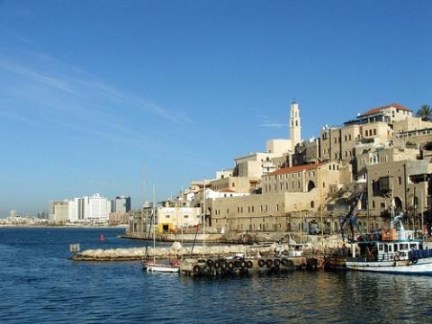
The Israeli Judaization and displacement schemes have escalated especially in Jaffa city, north of Occupied Palestine, as the Israeli Authorities approved new settlement schemes targeting the city which was occupied in 1948.
The so-called Israel Lands Administration (ILA) and Israeli Planning and Building Committee in Tel Aviv endorsed a huge Judaization and settlement scheme which will be established on the ruins of Palestinian homes and lands in the Nozha neighborhood in Jaffa. The first phase of the scheme includes building 1,500 settlement units on 200 acres over a period of 3 years and will be allocated to rich Jews.
ILA claims that the Palestinian residents who live in this area will be expelled under the pretext that these lands are “state owned” and that the Palestinians are illegally living in them and they will be compensated if they agree to leave.
First phase
Abdul-Qadir Satal, head of the Popular Committee in Jaffa, told Quds Press that this settlement project is part of the Israeli government policy to Judaize the city, and it aims to build 5,000 settlement units and not only 1,500 settlement units as declared. He clarified that this malicious scheme complements previous Israeli Judaization schemes.
Satal added: “The residents of Nozha neighborhood are being subjected to displacement for the third time; as they were expelled to the Ajmi neighborhood after the destruction of about 3,000 homes so as to build homes for the Jewish settlers, then they were forcibly displaced to the Nozha neighborhood and now they are being displaced again but this time they don’t know where to go.”
Satal pointed to the fact that the Palestinians in Jaffa are living in their homes as protected tenants; meaning that the authorities have the right to 60 percent of the home and only 40 percent of the home is for the Palestinian families. Moreover, the lands are owned by ILA and it has the right to dispose of them at any time against payment of compensation to the residents on the grounds that these properties are not owned by the Arabs who live in them but rather by the ILA under the Absentee Property Law.
Close danger
Satal stressed that the situation in Jaffa in critical; as the number of Palestinians is decreasing while the number of Jewish settlers is increasing on daily basis, and the Palestinians in Jaffa, who insist on staying in their lands, have sought support from the Palestinian institutions, associations, and committees abroad to face the ongoing Israeli schemes which target the city and provide alternatives to the Palestinian residents so that they would [not have to] abandon the city.
“We’ve dismissed the last employee in the Popular Committee due to the lack of financial resources, so now there is no one in the Committee to follow up on the cases that need urgent attention,” Satal said.
Satal said that Palestinian notables in Jaffa city will hold a meeting soon to come up with a plan to face this scheme, and expressed his fear that the constant harassment the Palestinians in Jaffa are suffering from may force some of them to consider leaving the city, which is “a grave danger that we’ve been trying to prevent for many years.”
JVP, Alison Weir And the Hatred of the White
By Gilad Atzmon | June 18, 2015
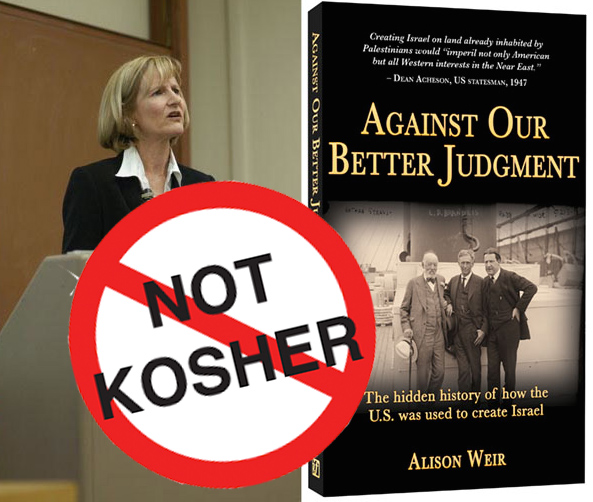
A month ago, Jewish Voice for Peace (JVP) issued a call for a Herem (excommunication, Hebrew) against the remarkable activist and writer Alison Weir. The call was distributed internally amongst JVP’s chapter leaders and was leaked to me by a few JVP dissenters. The publication of the call led to a massive surge of resentment towards JVP within the dissident movement. JVP was compelled to explain their move.
The call for Herem is deeply rooted in Jewish culture. Throughout their history, Jews have called for the expulsion of some of their most articulate and sophisticated minds. Spinoza, and Uriel Da Costa are famous examples. Christ, another dissent voice, found himself nailed to the cross for advising his people to love their neighbours. Though Rabbinical Jews rarely call for a herem, contemporary so-called ‘liberal’ Jews are obsessed with that ugly, primitive medieval ritual. Since I immersed myself in solidarity matters two decades ago, I have been witness to the relentless chasing, harassing and slandering of every Jew who crossed the 100 IQ barrier. First it was Israel Shamir, then Paul Eisen, and then Norman Finkelstein who dared speak the truth about the Jewish Left and BDS operating as a secret society (cult). Consistent with their Jewish heritage, ‘progressive’ Jews like to employ a ‘Sabbos Goy’, a gentile who is willing to surrender to their whims. The liberal Jews at JVP have used Ali Abunimah as their favourite ‘partner’. He has apparently been happy to provide his Palestinian voice to issue the Palestinian stamp. Although rabbinical Jews employ the Herem solely against Jews, liberal Jews, fuelled by peculiar sense of righteousness, extended the Herem to include some ‘Goyim’. For years they have attempted to excommunicate me (an ex-Jew). They chased Free Gaza Founder Greta Berlin. Currently their target is Alison Weir and, in a surprising move, the American people whom JVP has outrageously dubbed a racist collective.
A rapidly growing number of activists and commentators see JVP and the Jewish liberal attitude as a corrosive, yet dominant, element within the solidarity movement. The publication of the leaked JVP’s call for herem against Alison Weir drew a lot of negative attention. JVP and its Executive Director Rebecca Vilkomerson could have easily saved what was left of their reputations by issuing an apology and perhaps vowing not to engage in herem tactics. But such a humane and reconciliatory approach would be totally foreign to the culture JVP succumbs to. For JVP to word such a statement would mean an engagement in genuine self-reflection, pretty much thinking the unthinkable. It just wasn’t going to happen. Instead JVP offered another clumsy and lousy attempt to ‘justify’ its primitive call for a herem. Lacking elementary imagination, this progressive synagogue re-cycled its banal Judeo-centric diatribe. JVP’s new statement achieved little except to offer another view into tribal morbidity. Their statement has nothing to do with peace or the Palestinians but is, instead, an embarrassing manifestation of goy hatred and anti white inclinations. They reveal, yet again that liberal Jews are not the solution. They are, actually, the core of the problem.
In their new diatribe against Weir, JVP’s board informs us that they have chosen not to work with her because their central tenet is “opposition to racism and oppression in all its forms, and she (Weir) has consistently chosen to stay silent when given the opportunity to challenge bigotry,” which they find “repugnant.”
It is amusing to find out that the people who are operating within a racially Jewish exclusive club are preaching against ‘racism.’ Yet, what was Weir’s crime exactly? Apparently, Weir has been ‘a friendly guest’ of ‘white supremacist’ Clay Douglas on his hate radio show, “the Free American.”
Without even addressing the horrid labels that JVP and liberal Jews often attribute to others (gentiles), I wonder whether JVP would have the same reaction if Weir appeared on Israeli TV. Israeli TV is suffocated with Jewish supremacy and racism. Of course, the answer is NO – JVP has yet to call for a Herem against a single activist for appearing on Israeli TV or any other Jewish supremacist outlet. I guess that in the eyes of ‘liberal’ Jews at JVP & Co., Jewish racism is somehow kosherish.
“Clay Douglas,” according to JVP, “is concerned primarily with the survival of the White race and sees malign Jewish influence everywhere.” To start with, ‘seeing Jewish influence everywhere’ has now become mainstream news and for good reason. Furthermore, if it is bad for a white person to be primarily concerned with the survival of his ‘race,’ should we apply the same ethical standard to all identities and sectarian activism? Would JVP also denounce a lesbian activist for caring primarily for her sisters and their libidinal and cultural survival? Would JVP denounce Jews who primarily care about the survival of their ‘race’? I guess that within their liberal tribal mindset, universal ethics evaporate wherever the ‘White’ appears. I admit that I am puzzled by this brutal tribal animosity towards Whiteness, particularly the vile language that some Jewish progressive ‘peace’ activists use. If JVP truly believes in diversity, shouldn’t it include Clay Douglas in its phantasmic multi layered society? Seemingly ‘White’ people are unwelcome within the imaginary Jewish liberal ‘diverse’ universe. What a shame, some of my best friends are white. In the mirror I look pretty white, almost as white as Rebecca Vilkomerson and her junta of progressive Rabbis.
Apparently the JVP are really upset with Weir because back in “August 25, 2010”, Weir “was silent when Douglas invoked the Protocols of the Elders of Zion”. Now the real picture begins to emerge. In the eyes of JVP’s rabbinical board, unlike Ali Abunimah, Weir has refused to operate as a Sabbos Goy. Her sin is venal: rather than fighting for Judea, Weir is an American patriot devoted to the education of the American people.
While reading the JVP pamphlet I asked myself what is the principle that makes one call for equality ‘kosher’ and another call for equality a ‘racist’ and ‘chauvinist’ crime? JVP fails to provide any guidance. Perhaps this bunch of progressive Jews believes that their hatred of Whites will make them into a popular movement. Possibly, they believe that anti White politics is good for Palestine. I wonder whether the JVP grasps that such a belligerent approach may backfire? Following the mass outrage over JVP’s conduct, some people have already completely disassociated from cliques that are formed by or connected with any Jewish organisation or politics.
Complete disregard for logic is by now entrenched in JVP thinking. Towards the end of the statement, JVP comments “Weir and IAK have a fundamental political framing that the U.S. is not implicated in the same racist and white supremacist structures as Israel.” One would assume that, if true, this view attributed to Weir and IAK should be discussed and examined in scholarly manner. Apparently not in the JVP’s synagogue -“this ‘tail wags the dog’ theory is a form of chauvinistic nationalism that absolves American interest in perpetuating injustice–not just in Israel but in other regions around the world.” It would take a lot of imagination to grasp why the JVP regards arguing that the U.S. is ‘not implicated in the same racist and white supremacist structures as Israel’ is ‘chauvinistic’ and ‘nationalist.’
Surprising argument given that JVP attempts to define the discussion of Jewish racism and the Jewishness of Israel provide proof that JVP is itself a Jewish chauvinist, supremacist apparatus dedicated to the concealment of the roots of the conflict in Palestine. In fact, the JVP is far worse than Israel and ultra Zionists – while Zionists manifest their Jewish symptom proudly, the ‘liberal’ Jewish ‘allies’ at JVP invest all their time and energy in suppressing discussion of that very dangerous symptom.
JVP is clearly desperate to prove that that IAK and Weir are immersed in supremacy. They quote the IAK webpage: “[Alison Weir] founded an organization to be directed by Americans without personal or family ties to the region who would research and actively disseminate accurate information to the American public.”
JVP deduces from this innocuous statement that “according to Weir and If Americans Knew, only non-Arab, non-Muslim, non-Palestinian, and non-Jewish voices can be trusted to speak the truth, based solely on their ethnic or religious identity.” In psychoanalytical terms this is called projection. JVP attribute their own exclusivist, chauvinist and racist symptoms to Weir and IAK. It is the board of JVP that is made up of Jews only. No Arabs, No Palestinians, No Muslims, let alone White Goyim are racially qualified to be part of the leadership of this disgusting collective. Even the Israeli Knesset has as its 3rd biggest party an Arab party and is more diverse and pluralist than JVP’s Knesset.
Apparently their mental segregation causes these ‘liberal’ Jews to fail to recognise that Weir and IAK are driven by a true inclination towards justice. In order to produce an impartial reading of the conflict, Weir formed an organisation of people less inclined to prejudge the situation because they are not somehow tied to the region, spiritually or physically. This is what people out of the Jewish ghetto do sometimes when they are interested in forming a genuine and truthful judgment. They require that the parties not have a stake in the conflict. JVP interpreted IAK statements as racist only because JVP itself is bounded to Jewish racist thinking.
It is sad that JVP missed a great opportunity to amend its ways. Instead of presenting an exemplary case of humanist universal virtues devoted to pluralism and diversity, they responded with a spectacularly gruesome manifestation of Jewish bad behaviour. “Despite her support for Palestinian rights, Weir ultimately does a disservice to the Palestinian struggle for self-determination.” Jews are claiming the exclusive right to tell others what is good for those who are oppressed by their own Jewish State.
Why are journalists surprised that Israel kills children?
By Amena Saleem | Palestine Journal | June 17, 2015
There was nothing surprising about Israel finding itself not culpable for the killing of four boys on a Gaza beach in July last year, as it did in a military judgment released a few days ago. Israel’s investigations into its own crimes aren’t known for delivering guilty verdicts.
What was interesting, however, was the reaction of some mainstream journalists — journalists who felt they had a vested interest in this case because they had witnessed the strikes which killed the four boys from the Baker family as they played football one afternoon during Israel’s 51-day assault on Gaza.
Articles by Peter Beaumont in The Guardian and Robert Tait in The Daily Telegraph give off a sense of disbelief and indignation that the investigation by the Israeli army into the attack cleared all personnel involved and declared the incident “a tragic accident.”
Both these journalists, and Paul Mason in his blog for Channel 4 News, describe how their own observations, both during and after the attack, refute Israel’s allegations that it was targeting Palestinian fighters.
But the sense that there has been a miscarriage of justice by a reputable organization, rather than an outright cover-up by a rogue army, remains.
Struck in error?
This journalistic respect for Israel’s army is highlighted in Tait’s article, as he writes that the slaughter of the boys was “surely an indication that something had gone badly wrong in Israel’s military procedures for such a deadly strike to have been aimed at what were clearly children.”
By which he indicates his belief, shared by many mainstream journalists, that, unlike the killing of the Baker boys, the rest of Israel’s military procedures in Gaza last summer were not acts of indiscriminate slaughter.
Bombardments which leveled homes, mosques and entire neighborhoods, massacring whoever was in the vicinity, babies and children included, weren’t, according to Tait’s reasoning, deliberate acts of terror, but acceptable military activity.
The BBC, true to form, goes one step further in the esteem in which it holds the Israeli army. Its online article into Israel’s findings does nothing but quote chunks from the Israeli army report and is headlined “Gaza beach attack: Israel ‘struck boys in error.’”
There is no attempt to critically analyze the report’s conclusions, as Tait, Beaumont and Mason all did for their respective news organizations, and no Palestinian comment.
Instead, the BBC simply provides a platform for Israel’s self-exonerating report to be aired, free from the inconvenience of journalistic scrutiny.
And it ends, of course, in typical BBC fashion, by giving Israel’s excuse for attacking Gaza last July and August — “to put an end to rocket-fire and remove the threat of attacks by militants tunneling under the border” — with no mention of the Palestinian reality of occupation, siege and resistance.
Damage limitation
It is this high regard in which many mainstream journalists hold the Israeli army which explains, perhaps, their shock that its soldiers could deliberately target children and then their disbelief that its commanders could dub that deliberate targeting an accident.
The question then is, why are mainstream journalists so easily taken in by Israeli propaganda, appearing to believe Israel’s refrain that it has “the most moral army in the world?”
The truth they ignore, and consequently fail to convey to their audiences, is that Israel kills Palestinians at will and with impunity.
Its army only announces investigations into a killing or killings on the rare occasion that Western journalists or politicians become agitated about Palestinian life being taken — usually because the killing has been caught on camera and can’t be hidden.
Those same journalists seem unware of the reality that an Israeli announcement of an “independent investigation” is nothing more than a damage limitation exercise, an exercise in “public relations” to quieten the critics, and that the word “independent” is meaningless in these cases.
It is meaningless because the outcome of an Israeli investigation into Israeli crimes will almost exclusively be a finding of Israeli innocence. There is nothing independent about the process, and it shouldn’t be reported as such.
Wake up to reality
The military’s absolution of blame for the slaughter of the Baker boys wasn’t a one-off, as the resultant mainstream reporting seemed to suggest. It was part of a pattern which will be repeated over and over until the occupation ends.
Israel is a colonial power. It will kill whoever it has to (Palestinians, >US activists, British media workers, Turkish humanitarians, UN staff) to make its colonial goals a reality. And it will lie, cover up and propagandize in exactly the same way that all colonial powers did in centuries past to get away with its crimes.
Mainstream media journalists need to wake up to these facts. They need to be sharper, more intelligent and more astute in the way they cover Israel and the occupation. They need to read and understand history, especially European colonial history, and they need to embrace, rather than dismiss, context in their reporting.
Israel didn’t just kill those four young boys last summer. Its warplanes, warships and tanks wiped out 89 entire Palestinian families, wiped out 504 Palestinian children at an average rate of 10 a day, wiped out a total of more than 2,200 Palestinians.
Its politicians and military should be tried for all these crimes. And they should be tried in a properly independent manner — or as independently as the world allows — at the International Criminal Court. This is what the mainstream media should be clamoring for. Not expressing polite surprise that an “independent” Israeli inquiry acquitted Israel of deliberately slaying four little Palestinian boys who dared to play football in Gaza.
Ex-Israeli foreign minister avoids Gaza war crimes arrest thanks to UK diplomatic immunity
RT | June 18, 2015
Former Israeli foreign minister Tzipi Livni was granted diplomatic immunity by the British government during a visit to the UK this week to avoid possible arrest over alleged war crimes.
The Zionist Union politician was attending the Fortune Most Powerful Women International Summit in London, where she spoke on the Israeli political climate and the future of Israel and Palestine.
Livni was able to qualify for legal immunity by arranging meetings with British officials, exploiting a legal loophole that protects Israelis on official visits to the UK.
She has had to use the loophole since pro-Palestine activists successfully petitioned a British court to issue an arrest warrant in her name ahead of a visit in December 2009.
As Israeli Foreign Minister during the 2008-09 Gaza War, Livni was involved in the decision to take military action in response to rocket fire coming from the Gaza Strip. The rocket fire itself was in response to a November 4, 2008 incident, when IDF soldiers killed several Hamas fighters in a military incursion.
Livni told reporters at the time: “We have proven to Hamas that we have changed the equation. Israel is not a country upon which you fire missiles and it does not respond. It is a country that when you fire on its citizens it responds by going wild – and this is a good thing.”
A UN investigation found Israel had used excessive force which unfairly impacted on civilians, as well as using Palestinians as human shields by forcing them to enter houses which might be booby trapped.
Some 926 Palestinian civilians were killed in the conflict, according to the Palestinian Centre for Human Rights.
The report concluded Israel had violated articles of the Fourth Geneva Convention and the International Covenant on Civil and Political Rights. Palestine supporters hold Livni accountable for these war crimes.
Livni, a member of the Israeli parliament, the Knesset, abandoned her trip to the UK in 2009. Then-Foreign Secretary David Miliband subsequently issued Livni a personal apology.
The British government is theoretically able to prosecute Livni on suspicion of war crimes.
By using “universal jurisdiction,” UK law permits British courts to cover serious offenses such as war crimes, torture and hostage-taking, regardless of where they were committed.
However, the British government amended the law in September 2011 to avoid further diplomatic incidents.
Parliament changed the legislation so that the head of public prosecutions must give approval to a request for arrest warrants under universal jurisdiction.
The UK government has also granted automatic immunity to all Israelis on official visits to Britain, according to the Times of Israel.
As a result, British courts rejected a request for a new arrest warrant against Livni ahead of this week’s visit.
The Zionist Union member exploited the legal loophole to attend the Fortune Most Powerful Women International Summit, according to the Hebrew-language daily newspaper Yedioth Ahronoth.
During her London visit, she met with Foreign Office minister Tobias Ellwood MP to present a copy of Israel’s 275-page report on Operation Protective Edge, last summer’s deadly assault by the Israeli Defence Force (IDF) against Gaza.
The report places blame for the war’s casualties on Hamas in Gaza and declares Israel’s attack to be “lawful” and “legitimate.”
More than 2,000 Palestinians died in the conflict, the majority of them civilians. Some 73 Israelis were killed, all but six of whom were soldiers.
Livni told Ellwood: “It is important that the British government have an accurate picture of the factual, ethical, and legal reality, because the UN report is expected to be so twisted and anti-Israel.”
During her visit, a BBC Newsnight interviewer challenged Livni over her parents’ involvement in Irgun, a paramilitary organization that used violence against the British in its struggle for an independent Israel. Livni was asked if she would describe her parents as terrorists.
The former Israeli foreign minister denied there was any comparison between Hamas and Irgun.
She told BBC journalist Evan Davis: “There is a huge difference between those fighting an army, the British Army, and between all those terrorist organizations in our region that are looking for civilians to kill.”
Featured Video

Iran’s Next Strike May Not Explode. It Could Shut You Down
or go to
Aletho News Archives – Video-Images
Book Review
New paperback: Butchered by “Healthcare”
Lies are Unbekoming | October 20, 2026
 Butchered by “Healthcare” is Robert Yoho’s plain-spoken account of how American medicine stopped being a profession and became an industry. 341 pages. Over a thousand references. Thirty-eight chapters.
“Screening Tests Are Useless”, on tests that find diseases that would never have hurt you. “The FDA Protects the Big Drug Companies”, on an agency funded by the companies it regulates. “The Journals’ Sins Are the Editors’ Sins”, on ghostwritten studies and captured peer review. “Opioids and ‘Pain Management’”, on how a generation was prescribed its way into addiction. “Prozac and Relatives” and “Antipsychotics Are Disastrous”, on what psychiatry does to adults and children. “Surgery: Money Before Patients”. “Failed Cancer Treatments”. “Futile CPR and Overprescribing”. “Billing Scams & Specialty Warfare”. “Hospitals Are Sharks”. Each with a Patient Tips section at the end on how to survive it.
If you have ever walked out of a doctor’s office with a prescription you didn’t ask for, or watched a parent put through a treatment that made them worse, this is the book you want on your shelf before the next appointment. … Full review
Butchered by “Healthcare” is available on Lulu now.
Blog Roll
 Aletho News
- Iran’s Next Strike May Not Explode. It Could Shut You Down /Col Doug Macgregor
- Iran: US political targets legitimate if assassinations return
- Iraq shuts key border crossing with Iran under US pressure: Report
- Undersea Internet cables could be targeted in retaliation for attacks on Iran: IRGC deputy chief
- EU sending ‘biased’ observers to interfere in Serbian election – president
- White House envoy declares kinetic action against Yemen ‘fruitless’
- Ukraine deployed thousands of microdrones in Iraqi Kurdistan: Tasnim
- Iran calls for emergency UNSC meeting over Trump’s ‘brazen’ bomb talk, Israeli threats
- Iranian sources reveal details of Russia-China Hormuz proposal
- Plan for more US-Israel integration puts our military tech at risk
- If Americans Knew
- Americans at National Conservatism Conference held in Israel this year criticize Israel
- Christiane Amanpour exits CNN with a legacy shaped by the debate over Israel
- Israel’s war on Iran is the final move in a decades-old strategy
- Israel Denies Entry to French Journalist, U.S. Researcher Amid Rise in Entry Denials
- Gaza’s hospitals are running out of life-saving fuel – Daily Update
- Mysterious bot accounts reportedly spread fake ‘man on the street’ videos for Michigan Senate candidate
- Israeli Defense Minister Katz Says Over 60 Lebanon Villages Have Been Destroyed
- Why Is Israel Running TV Ads in Iowa Ahead of the Midterms?
- Hind Rajab’s Alleged Killer Is in the United States. HRF Demands His Arrest.
- US Officials Face Fresh Pressure After Another American ‘Brutalized’ by Israeli Settlers in West Bank
- No Tricks Zone
- E-Cars Reduce CO2 Emissions By Only 41% Compared To Internal Combustion Engine Vehicles
- Predictions Made By Renowned Climate Professor Over Past Decades Have Been Proven To Be Poor
- New Study Suggests Large Regions Of The Pacific Ocean Have Been Cooling For The Last 80 Years
- Germany’s Green Energy Debacle: High Energy Costs Force Kahla Porzellan to Close After 182 Years!
- New Study: 50 Years Of The Most Aggressive ‘Net Zero’ Policies Can Only Affect The Global Climate By 0.03°C
- US September “Heat” Was No Record…Many Records Set Decades Ago
- Latest European Green Energy Debacle; Portugal’s Largest Flagship Solar Park Insolvent!
- Green Energy Debacle: German Expert Professor Fritz Vahrenholt Warns Of Severe Economic And Social Consequences
- Two More Paleo Reconstructions Affirm Meters-Higher Sea Levels Across Ireland, Brazil 7000-6000 Years Ago
- New Study: Earth And Venus Surface Warmth Largely Explained By Convection And Lapse Rate, Not CO2 Or Radiation

