Report: 1,790 Palestinians Kidnapped, 16 Killed, In First Half of 2013
By Saed Bannoura | IMEMC & Agencies | July 1, 2013
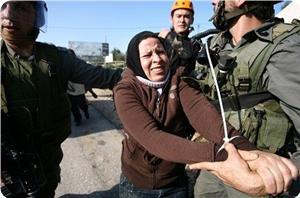
The Ahrar Center for Detainees Studies and Human Rights have reported that Israeli soldiers kidnapped 1,790 Palestinians in the first six months of this year, including 300 who were kidnapped in June, and added that 16 Palestinians have also been killed by the Israeli military in six months.
The Ahrar Center said that dozens of women, children, elderly, legislators, intellectuals and journalists were among the kidnapped.
The center added that the arrests took place in every part of the occupied West Bank, including Jerusalem, in addition to 25 arrests in the Gaza Strip, including fishermen and five arrests at border terminals.
Most of the arrests have been carried out in the Hebron district, in the southern part of the West Bank. The second highest number of arrests was carried out in Jerusalem, followed by Nablus.
Ahrar said that February witnessed the largest number of arrests as the soldiers kidnapped 382 Palestinians, while 350 have been kidnapped in January, 300 in June, 263 in May, 259 in April and 236 in March.
The center further reported that the army also kidnapped 7 Palestinian legislators identified as Ahmad Attoun, Hatem Qfeisha, Abdul-Jabbar Foqaha, Imad Nofal, Basem Za’areer, Mahmoud Ramahi, and Mohammad Jamal An-Natsha.
Furthermore, Ahrar said that the army also kidnapped 33 women, including wives and relatives of political prisoners held by Israel, and that 17 of the kidnapped women are still imprisoned by Israel.
The Ahrar Center also said that 14 Palestinians, including 10 from the West Bank, and four from the Gaza Strip, have been shot and killed by the Israeli army since the beginning of this year, in addition to two Palestinian political prisoners who died in Israeli prisons.
Detainee Arafat Jaradat, 33, from Hebron, died of extreme torture by Israeli interrogators, and detainee Maisara Abu Hamdiyya, 64, died of an advanced stage of cancer resulting from the lack of medical treatment in Israeli prisons.
Four more Palestinians have been killed by Israeli military fire in the Gaza Strip.
Head of the Ahrar Center, Fuad Al-khoffash, stated that the center documented daily Israeli military invasions; daily arrests and assaults, and demanded the International Community to act against the ongoing and escalating Israeli violations.
Unattainable peace…
By JAMAL KANJ | Intifada-Palestine | June 30, 2013
But for the chap from Khan Younis refugee camp in Gaza who emerged earlier this week as the winner of the “Arab Idol,” the news from Palestine is grim.
The newly appointed Palestinian Prime Minister resigned and Israel still insist it should be able to negotiate over dividing the pie while it continues to eat it.
By the end of April, US Secretary of State John Kerry succeeded in tailoring another peace plan to entice Israel. Arab ministers supposedly agreed to amend a decade-old peace plan to satisfy Israeli demands for legalizing major illegal Jewish colonies in the West Bank.
In May 2009, Israel responded to the US mediated overture by issuing permits to build 296 illegal new homes in the Jewish-only colony of Beit El near Ramallah. This week the Secretary of State was scheduled to arrive for his fifth visit since February in an attempt to restart the Palestinian and Israeli negotiations.
The visit seems to be on hold to give time to Palestine’s President to consider a new US economic peace plan and for Israel to give Abbas face-saving cover to return to the negotiation table.
Israel is already sending mixed messages.
According to news reports that have appeared in Israeli daily Ma’ariv, Netanyahu is considering a token gesture of releasing a small number of Palestinian prisoners and to issue temporary freeze “outside the settlement blocks” in the West Bank.
The deceptive “freeze” may force Abbas to succumb to American pressure while Netanyahu can claim – and rightly so – that it is irrelevant as building inside the Jewish-only “settlement blocks” will continue.
Affirming its real intentions and to pre-empt Kerry’s renewed efforts – in what is becoming traditional embarrassment for visiting US officials – the Israeli government issued earlier this month plans to build more than 1,000 new Jewish-only homes in two West Bank colonies.
Instead of addressing Israel’s inflexibility, the US is tantalizing with an economic package worth $4 billion of private American and European investment.
In fact, the new American “economic peace” is a repackaged Netanyahu plan from the 1990s, which was intended to dodge tackling the most pressing issues in the peace talks.
In theory, the proposal would expand the Palestinian economy by 50 per cent over three years while granting Israel more time to finish eating the “pie”.
But in reality, past investments were undermined by Israeli closures and military checkpoints or even destroyed as was the case for Gaza’s air and sea ports, leaving Palestinians with false promises and the only measurable expansion was in the size of Jewish colonies.
To bolster Israel’s arrogance, the US House of Representatives passed, two weeks ago, the National Defense Authorization Act in which it delegated – for the first time in US history – the power to wage war to a foreign entity when it committed the US to avail “diplomatic, military, and economic support” to Israel should it decide to strike Iran.
Along with that vote and at a time when both sides of the isle wrangled over how much more to cut from the defense budget, the US Congress was united in tripling Obama’s request to finance Israeli missile defense from $96 million to $284m.
It is indisputable that this unqualified US subservient support is directly responsible for Israel’s intransigence and the failure of the peace process. This was exemplified last week when Polish descendent and Israeli Economy Minister Naftali Bennett – an ex US multimillionaire who renounced his US citizenship – declared on June 17 the death of the Palestinian state idea and that he wasn’t an occupier and the West Bank was his “home”.
Rejecting the Palestinian state, Danny Danon, the Israel’s Deputy Defence Minister, was quoted in the Times of Israel: “The international community can say whatever they want, and we can do whatever we want”. Israeli leaders can’t be more explicit in their rejection of a viable Palestinian state, making the talk about settlement “freeze” meaningless and peace unattainable.
Related articles
- Maximum Land with Minimum Palestinians: The Annexation of Area C (alethonews.wordpress.com)
- Palestinians dubious of Kerry’s “real progress” in peace plan (alethonews.wordpress.com)
Palestinians dubious of Kerry’s “real progress” in peace plan
Al-Akhbar | June 30, 2013
A top Palestinian official said on Sunday that there had been no breakthrough in marathon American-led efforts to revive direct peace talks, but US Secretary of State John Kerry said there had been “real progress.”
The statements come just as Israel announced that it might implement monetary incentives to encourage people to move to an illegal settlement in the West Bank.
“It was a positive and profound meeting with [Palestinian] President (Mahmoud)Abbas but there has been no breakthrough so far and there is still a gap between the Palestinian and Israeli positions,” chief Palestinian negotiator Saeb Erakat told reporters after Kerry finished talks in Ramallah with Abbas, his third meeting in as many days.
But Kerry, however, insisted he had held “very positive” discussions with both sides since starting his intense shuttle diplomacy in Jerusalem on Thursday evening, in a high-profile bid to draw the two sides back into direct negotiations after a gap of nearly three years.
And he said that with “a little more work” the start of final status talks “could be within reach.”
“I am pleased to tell you that we have made real progress on this trip and I believe that with a little more work, the start of final status negotiations could be within reach,” Kerry told reporters at Ben Gurion airport just before leaving for Brunei.
“We started out with very wide gaps and we have narrowed those considerably,” he said, describing them as “very narrow.”
“We have some specific details and work to pursue but I am absolutely confident that we are on the right track and that all the parties are working in very good faith in order to get to the right place.”
Asked if Israel’s settlement building had hampered efforts to achieve a breakthrough, he said: “The answer is no, there are any number of obstacles, but we are working through them.”
“We have to have the courage to stay at this and to make some tough decisions,” he said.
Kerry, who has over the last four days spent a total 13 hours in talks with Israeli Prime Minister Benjamin Netanyahu and another six with Abbas, said he would return to the region without saying when.
“I’m going to come back because both leaders have asked me to,” he said.
Speaking at the start of the weekly cabinet meeting, Netanyahu insisted that Israel was not blocking a return to negotiations.
“We are not putting up any impediments on the resumption of the permanent talks for a peace agreement between us and the Palestinians,” he said in remarks communicated by his office.
He also pledged to put any agreement to a referendum, saying it will be “submitted to the people for a decision.”
But Israel’s army radio said Kerry’s marathon efforts had so far failed to coax the sides back into direct negotiations after a gap of nearly three years.
Abbas is pushing Israel to free the longest-serving Palestinian prisoners, to remove roadblocks in the West Bank and to publicly agree to make the lines that existed before the 1967 Middle East war the baseline for negotiations.
Army radio said that Netanyahu was willing to consider just the first two conditions — but only after talks were under way.
So far, Israel has flatly refused to countenance any return to the 1967 lines.
Palestinian officials appeared pessimistic about Kerry’s chances of achieving a breakthrough.
“Netanyahu and his government are not serious about establishing a Palestinian state in the 1967 borders, they speak of a state without clear borders, and we need clarity according to international resolutions,” said Azzam al-Ahmad, a senior official of Abbas’s ruling Fatah party.
“We are ready to resume negotiations according to our clear guidelines,” he told Voice of Palestine.
“Even with regards to the prisoners’ issue, Israel did not provide any clear answer. We want a serious process to be launched,” he said.
In another move likely to spark tension, army radio said an Israeli committee was poised to push through a big discount for buyers of nearly 1,000 new homes which are due to be built in annexed east Jerusalem.
The plan, which will offer prospective buyers a huge discount on 930 new homes to be built in Har Homa, will be discussed by Jerusalem municipality’s finance committee on Monday, army radio and Maariv newspaper reported.
If approved, the plan will lower the price of each new home by $27,500 in a move which will be funded by the housing ministry.
Har Homa is located on east Jerusalem’s southern outskirts, and construction there is likely to have a serious impact on the sector’s boundary with the rest of the West Bank, analysts say.
Jerusalem councilor Elisha Peleg, a member of Netanyahu’s right-wing Likud party, made no effort to hide his delight.
“The temporary suspension of construction in east Jerusalem is over, despite the visit of Secretary of State Kerry,” he told army radio.
“There is no reason to halt construction any more, because it is now proved that stopping construction in east Jerusalem has not brought about a renewal of negotiations with the Palestinians but has caused a severe shortage of housing,” he said.
Last week, on the eve of Kerry’s arrival, another local committee gave final approval to build some 70 homes in the same area.
Palestinian chief negotiator Saeb Erakat said it showed which side was blocking a return to the negotiating table.
“This is Netanyahu’s response to everything Kerry said, to his ideas and to all his efforts,” Erakat told AFP.
“We on the Palestinian side tried every possible effort to help Kerry succeed but it is obvious today … that Netanyahu is putting an obstacle in front of Secretary Kerry’s efforts.”
“Netanyahu alone is responsible for ruining Kerry’s efforts and trying to abort his mission and destroying the two-state solution which is supported by the entire international community.”
Palestinians have said they will not return to direct talks unless Israel completely halts settlement construction and accepts the 1967 lines as the basis for negotiations.
Although Israel has expressed a willingness to talk, it has insisted it would only do so if there were no such “preconditions”.
Kerry, who has made the elusive goal of Middle East peace a top priority, was on his fifth visit to the region since taking over the State Department in February.
“Kerry is willing to put in the legwork necessary to move this process forward in a meaningful way,” a US official said on condition of anonymity.
US officials have been tight-lipped about the substance of Kerry’s meetings, fearing that any public statements could put at risk his efforts.
(AFP, Al-Akhbar)
Israel: A great place to be white!
By Charles Davis | False Dichotomy | June 29, 2013
Not everyone who lives in Israel is of pasty white European heritage, but you wouldn’t know it from the Israeli government’s outreach. For reasons only fully understood by the gods and the person trolling me, I was recently subscribed to the newsletter of the Jewish National Fund (JNF), a quasi-governmental organization that seeks to replace brown people in Israel with Jews and trees.
An explicitly racist organization (Israel’s second largest property owner, it refuses to rent land to Arabs), it was not surprising to find that JNF’s printed propaganda featured almost exclusively smiling white people. On one page, smiling white college kids whose trip to the Holy Land totally rocked. On another page, a smiling white foodie dishing the inside scoop on Israeli cuisine. Here a white person; there a white person; everywhere a white person. The reader at home’s takeaway: Go to Israel and you won’t have to mix with the coloreds, unless of course you book the 4 day / 3 night Ethnic Immersion tour package.
What’s a little weird is that when I tweeted something snarky about the awful lot of white folk in JNF’s newsletter, the CEO of JNF, seemingly awful white person Russell Robinson, saw fit to retweet it. Judging by the rest of his tweets — yes, older friends, I too find my generation’s language insufferable — it does not appear this was an act of passive aggression, though I probably shouldn’t jump to any conclusions. Perhaps he was just distracted by how pasty white I am and hit the wrong button.

Brzezinski: Saudi Arabia, Qatar, their western allies orchestrated Syria crisis
Press TV – June 29, 2013
The former US national security adviser says the ongoing crisis in Syria has been orchestrated by Saudi Arabia, Qatar, and their western allies.
“In late 2011 there are outbreaks in Syria produced by a drought and abetted by two well-known autocracies in the Middle East: Qatar and Saudi Arabia,” Zbigniew Brzezinski said in an interview with The National Interest on June 24.
He added that US President Barack Obama also supported the unrest in Syria and suddenly announced that President Bashar al-Assad “has to go — without, apparently, any real preparation for making that happen.”
“Then in the spring of 2012, the election year here, the CIA under General Petraeus, according to The New York Times of March 24th of this year, a very revealing article, mounts a large-scale effort to assist the Qataris and the Saudis and link them somehow with the Turks in that effort,” said Brzezinski, who was former White House national security adviser under Jimmy Carter and now a counselor and trustee at the Center for Strategic and International Studies and a senior research professor at the School of Advanced International Studies at Johns Hopkins University.
Criticizing the Obama administration’s policies regarding Syria, he questioned, “Was this a strategic position? Why did we all of a sudden decide that Syria had to be destabilized and its government overthrown? Had it ever been explained to the American people? Then in the latter part of 2012, especially after the elections, the tide of conflict turns somewhat against the rebels. And it becomes clear that not all of those rebels are all that ‘democratic.’ And so the whole policy begins to be reconsidered.”
“I think these things need to be clarified so that one can have a more insightful understanding of what exactly US policy was aiming at,” Brzezinski added.
He also called on US officials to push much more urgently to draw in China, Russia and other regional powers to reach some kind of peaceful end to the Syrian crisis.
“I think if we tackle the issue alone with the Russians, which I think has to be done because they’re involved partially, and if we do it relying primarily on the former colonial powers in the region-France and Great Britain, who are really hated in the region-the chances of success are not as high as if we do engage in it, somehow, with China, India and Japan, which have a stake in a more stable Middle East,” Brzezinski said.
Brzezinski also warned again any US-led military intervention in Syria or arming the militants fighting government forces there.
“I’m afraid that we’re headed toward an ineffective American intervention, which is even worse. There are circumstances in which intervention is not the best but also not the worst of all outcomes. But what you are talking about means increasing our aid to the least effective of the forces opposing Assad. So at best, it’s simply damaging to our credibility. At worst, it hastens the victory of groups that are much more hostile to us than Assad ever was. I still do not understand why — and that refers to my first answer — why we concluded somewhere back in 2011 or 2012 — an election year, incidentally that Assad should go.”
Foreign-sponsored militancy in Syria, which erupted in March 2011, has claimed the lives of many people, including large numbers of Syrian soldiers and security personnel.
The New York Times said in a recent report the CIA was cooperating with Turkey and a number of other regional governments to supply arms to militants fighting the government in Syria.
The report comes as the US has repeatedly voiced concern over weapons falling into the hands of al-Qaeda-linked terrorist groups.
Al-Nusra Front was named a terrorist organization by Washington last December, even though it has been fighting with the US-backed so-called Free Syrian Army in its battle against Damascus.
~
Excerpt from TNI interview:
Heilbrunn: Are we, in fact, witnessing a delayed chain reaction? The dream of the neoconservatives, when they entered Iraq, was to create a domino effect in the Middle East, in which we would topple one regime after the other. Is this, in fact, a macabre realization of that aspiration?
Brzezinski: True, that might be the case. They hope that in a sense Syria would redeem what happened originally in Iraq. But I think what we have to bear in mind is that in this particular case the regional situation as a whole is more volatile than it was when they invaded Iraq, and perhaps their views are also infected by the notion, shared by some Israeli right-wingers, that Israel’s strategic prospects are best served if all of its adjoining neighbors are destabilized. I happen to think that is a long-term formula for disaster for Israel, because its byproduct, if it happens, is the elimination of American influence in the region, with Israel left ultimately on its own. I don’t think that’s good for Israel, and, to me, more importantly, because I look at the problems from the vantage point of American national interest, it’s not very good for us.
Should Israel Be Boycotted?
By Lawrence Davidson | Consortium News | June 27, 2013
Ido Aharoni, Israel’s Consul General for New York and also “the founding head of Israel’s brand-management team and the originator of the Brand Israel movement,” recently wrote an op-ed in the New York Post (June 19, 2013). In it he took to task the famous American novelist Alice Walker for her promotion of a cultural boycott of Israel.
Aharoni explains that, just like most countries in the world, Israel tries to promote “an attractive image” of itself – a sort of Israeli version of “I love New York.” He asks, since, “no other country has ever been criticized for engaging in this common practice of courting tourists and businesses” why does Walker try to interfere with Israel’s branding campaign?

Israel’s Consul General for New York, Ido Aharoni.
Aharoni knows full well why Walker does so. However, for him the racism and oppression Walker sees institutionalized in Israeli society is not a good reason for a boycott. Aharoni asserts that “Israel, like many places on Earth, experiences a variety of issues and challenges. . . . Israel should not be viewed through the prism of its problems, nor should any other country.” On the other hand, Aharoni wants to know why Walker is not boycotting Syria?
The question of why Americans should boycott Israel, in particular, when so many other governments and societies in the world are oppressive and brutal, is an important one. And there is indeed a good answer to it:
The fact that Zionist influence spreads far beyond Israel’s area of dominion and now influences many of the policy-making institutions of western governments, and particularly that of the United States, makes it imperative that Israel’s oppressive behavior be singled out as a high priority case for boycott.
In other words, unlike other oppressive and brutal governments, the Israelis and their supporters directly influence (one might say corrupt) the policymakers of many Western nations and this often makes their governments (most specifically the U.S.) accomplices in Israel’s abusive policies. This being so, prioritizing Israel for boycott is not hypocrisy but rather necessity.
~
Lawrence Davidson is a history professor at West Chester University in Pennsylvania. He is the author of Foreign Policy Inc.: Privatizing America’s National Interest; America’s Palestine: Popular and Official Perceptions from Balfour to Israeli Statehood; and Islamic Fundamentalism.
What will Obama do?
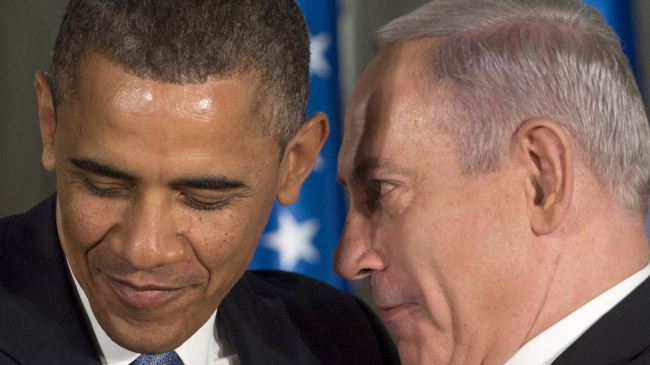
President Obama’s actions are unlikely to stray outside the parameters the Israel lobby is willing to accept. But there is a growing movement that is challenging the lobby’s stronghold on U.S. politics.
By Alison Weir | Palestine News | Spring 2013
Whenever a US president begins a term of office many people round the world are curious about what policies he may pursue on Israel-Palestine. They wonder if he will once again call on Israel to reduce its settlement activities as almost every president has done at least once.
Will he condemn Israeli aggression, or only Palestinian rockets? Will he push a “peace process” in which virtually all the American mediators are Israel partisans[1] or will a few non-Zionists be permitted to play a role?
As Barack Obama began his second term as president, these questions came up again. But these are the wrong questions. Instead, to predict what he will do, one only needs to ask what the Israel lobby is likely to require.
The president won’t always do what the lobby demands – on rare occasions he may deviate a bit from its dictates– but a large percentage of the time he will dutifully do what the lobbyists command.
In other words, in order accurately to analyse American policies in the Middle East, to predict how they will change or not and to develop effective ways to revamp them in the directions that are so urgently needed for humanitarian relief and real peace, it is essential to understand the decisive role the Israel lobby plays in the United States.
Presidents and politicians from both major parties have long been extremely aware of this lobby. It may greatly improve or impede their chances of winning an election, of passing legislation, of receiving positive press coverage, of, quite simply, going on to bigger and better things.
Through the years the lobby for Israel has been a decisive factor in the defeat of Republicans Paul Findley, Pete McCloskey (at one time a Presidential contender) and Charles Percy (another Presidential contender) and Democrats Adlai Stevenson, William Fulbright, Earl Hilliard, Cynthia McKinney and quite likely many more.[2]
Politicians from both parties attend the annual convention of its major lobbying arm, the American Israel Public Affairs Committee (AIPAC) and pledge their loyalty to this foreign country. President Barack Obama, whose early and major backing came from members of the Israel lobby[3], gave his first post-nomination speech at the AIPAC convention.
Yet, despite the lobby’s inordinate power, most Americans are only minimally aware of it. For decades surveys have shown that the large majority of Americans don’t wish to take sides on Israel-Palestine, a reflection of a public that is uninformed about how much of our tax money goes to Israel and how decisively our government is, indeed, taking a side.
This widespread lack of awareness about the role of the Israel lobby in determining American policies is particularly startling given that the movement on behalf of Israel has been active in the United States for over 100 years and that it played a significant role in Israel’s creation.[4]
By the 1920s it was able successfully to promote its policies over those recommended by the US State Department; by the 1940s it had added Pentagon policies to those it could overrule and both presidential candidates Harry Truman and Thomas Dewey were currying its favour[5]; by 1967 it was able to push its cover story on Israel’s lethal attack on the US naval ship Liberty over opposition by high ranking admirals, the director of the CIA and the Secretary of State[6]; and by 1977 the head of AIPAC could state with accuracy: “We have never lost on a major issue.”[7]
Half a century ago the Senate Foreign Relations Committee investigating lobbying activities found an illicit cycle in which the Israel lobby succeeded in procuring money for Israel, some of this was then secretly funneled back into these groups, which then used this money to lobby for still more American tax dollars to Israel.
The hearings concluded that Israel operated “one of the most effective networks of foreign influence” in the United States.[8] Yet, since the media reported on this so little, most Americans are unaware of these extremely grave findings.
The term “Israel lobby” fails to do justice to the extraordinary scope and composition of this special interest group. Below is a small sampling of the American organisations that work on behalf of Israel. Virtually all have multi-million dollar budgets; a few have endowments in the hundreds of million dollars and most of them are funded by tax-deductible donations:
- The American Israel Public Affairs Committee (AIPAC): $100 million endowment, [9] $60 million annual revenues.[10]
- The Washington Institute for Near East Policy (WINEP): $23.5 million net assets. $9.4 million annual revenues.
- International Fellowship of Christians and Jews (aka Stand for Israel): $100 million annual revenues.[14]
- Friends of the Israeli Defense Forces (FIDF): $80 million net assets,[16] $60 million annual revenues.[17]
- Hadassah (Women’s Zionist Organization of America): $400 million net assets, $100 million annual revenues.
- Jewish Community Relations Councils, in cities all over U.S.: Boston annual revenues $2.5 million; Louisville annual revenues $7-10 million; Detroit $734,000, New York $4.5 million, etc.[23]
- JINSA Jewish Institute for National Security Affairs: $3 million annual revenues.
In addition to these nonprofit organisations, there are dozens of political action committees (PACs) that donate to political candidates on the basis of their positions on Israel. Most of these disguise their purpose by using such deceptive names as “Northern Californians for Good Government,” “National Action Committee,” “American Principles,” etc.
While other issue-based PACs almost always announce their focus publicly[31], in 2012 only two of the pro-Israel PACs made any reference to Israel in their names.[32] While US media frequently discuss the gun rights lobby, the largely uncovered pro-Israel PACs gave almost twice as much money to candidates – and the donations went to both parties.[33]
In addition, there are numerous individuals who play an extremely important role in the Israel lobbying effort. Two examples are political campaign mega-donors Haim Saban and Sheldon Adelson. Saban donated $12.3 million to the Democratic Party in 2002 alone and has contributed millions more to pro-Israel organisations.

Adelson, a billionaire casino magnate, set a new record in political donations by giving $70 million in the 2012 elections, nearly triple the previous highest amount. He also funds such pro-Israel organisations as Birthright Israel which takes thousands of young Jewish Americans on recruiting visits to Israel.
In other cases, it is individuals with a different kind of power – the power to affect which information reaches the American public and which does not. One example is Eric Weider, whose Weider History Group publishes eleven history magazines in the United States, the largest history magazine publisher in America (and, according to its website, the world).[34]
Given this reality, President Obama’s actions are unlikely to stray outside the parameters the Israel lobby is willing to accept. While the media are making a great deal over the very mild apology Israel made to Turkey for having murdered nine of its citizens, crediting Obama with this alleged break-through, none of the news reports seem to mention that Israel has largely failed to apologise to the US for the death of 19-year-old dual American Turkish citizen, Furgan Dogan, who was killed with five bullets, one to his face at point blank range.[35]
It is also relevant to note that an AIPAC-drafted letter signed by 76 out of 100 Senators was sent to President Obama on the eve of his visit to Israel in March.[36]
Congressional actions can also be expected to remain within what the Israel lobby directs, though here, too, there may be rare occasions where the lobby seems to have lost – such as the confirmation of Chuck Hagel for Secretary of Defence.
However, the alleged triumph that some pro-Palestinian writers are proclaiming for Hagel’s appointment is a bit overblown. Before he was allowed to take his position, he was made to grovel humiliatingly before his Congressional interrogators, retract acceptable statements he had made earlier in his life and all but swear devotion to Israel (like all top government officials seemingly must do).
This degrading spectacle surely made it clear to Hagel that he better watch his step in the future and made it even clearer to ambitious Americans of all ages that they must be extremely careful about any statements they make about Israel and its lobby if they are to achieve their political ambitions.
Despite the power of the lobby, however, the situation is not as bleak as the above may suggest. There is a highly diverse movement in the US that opposes this lobby and it is steadily growing.
The Left, which for decades was largely silent on Israeli abuses of human rights, has finally become active on the issue. Similarly, both traditional conservatives and libertarians frequently oppose aid to Israel and this opposition is becoming more outspoken. While this stance is often motivated by fiscal considerations, in many cases it is also fuelled by outrage at Israeli cruelty and by genuine empathy with Palestinians.
The money being mobilised on this side is only a small fraction of the other and some of the groups within this movement could arguably be considered simply a more reasonable and compassionate arm of the Israel lobby in that their advocacy is often framed according to what “is good for Israel” while failing to address the inherent injustice of an ethnic state imposed on a multicultural region.
Nevertheless, there is no doubt that the opposition to current US policies is growing increasingly important. The tide may not yet have turned but it is certainly in the slowing phase that must come first.
To use another oft-quoted and particularly apt metaphor, lobbies thrive in the dark. More and more people in the US and elsewhere are shining light on this one, steadily reducing its power.
While there are numerous deeply significant issues, an increasing number of individuals are deciding to focus on this one, the core issue of the Middle East and the cause of war after war, including the current “war on terror” and demonisation of Muslims.
To use the framing posed by journalist Glenn Greenwald, an expanding number of people are refusing to prioritise domestic issues over the killing of Arab and Muslim children on the other side of the world.
Therefore, despite the enormous power of the Israel lobby in the US, this growing movement is quite likely to overcome the obstacles confronting it and to join history’s other successful movements against oppression.
The main question is how long this will take, and how many more massacres, and possibly wars, will occur in the interim.
[1] Even Aaron David Miller admitted they acted as “Israel’s lawyer” – Miller, Aaron David. “Israel’s Lawyer.” Washington Post 23 May 2005, posted by Matt Miller Opinion Writer. Online at http://www.washingtonpost.com/wp-dyn/content/article/2005/05/22/AR2005052200883.html
[2] Findley, Paul. They Dare to Speak Out: People and Institutions Confront Israel’s Lobby. Westport, CT: Lawrence Hill, 1985. Online at http://archive.org/stream/They-Dare-To-Speak-Out-Paul-Findley/They_Dare_to_Speak_Out_Paul_Findley_djvu.txt and Mearsheimer, John J., and Stephen M. Walt. The Israel Lobby and U.S. Foreign Policy. New York: Farrar, Straus and Giroux, 2007.
[3] Yearwood, Pauline Dubkin. “Obama and the Jews.” Chicago Jewish News 24 Oct. 2008.
Online at http://www.chicagojewishnews.com/story.htm?sid=212226&id=252218
[4] Weir, Alison. “Against Our Better Judgment: The Hidden History of How the United States Was Used to Create Israel.” IfAmericansKnew.org. 2012. Web. http://ifamericansknew.org/us_ints/history.html
[5] Weir, “Against Our Better Judgment”
[6] http://www.ussliberty.org/supporters.htm
[7] The Power Peddlers, by Russell Warren Howe and Sarah Hays Trott, Doubleday, p. 292.
http://ifamericansknew.org/us_ints/history.html
[8] Smith, Grant. “Where Did AIPAC Come From?” Antiwar.com. N.p., 09 Oct. 2007. Web. http://antiwar.com/orig/gsmith.php?articleid=11727 and Neff, Donald. “Ulbright Called for U.S. Defense Pact With Israel But Was Labeled Anti-Semite.” Washington Report on Middle East Affairs August-September (1997): 96. Online at http://www.wrmea.org/wrmea-archives/188-washington-report-archives-1994-1999/august-september-1997/2677-middle-east-history-it-happened-in-august-.html
[9] http://www.nytimes.com/2008/04/25/washington/25lobby.html?_r=1
In 2009, the Economist reported: “AIPAC has an annual budget of around $60m, more than 275 employees, an endowment of over $130m and a new $80m headquarters building on Capitol Hill.” http://www.economist.com/node/14753768
[10] http://firststreetresearch.cqpress.com/2012/03/08/aipac-still-commands-attention-among-movers-and-shakers/
[11] http://www.charitynavigator.org/index.cfm?bay=search.summary&orgid=3265
[12] http://www.charitynavigator.org/index.cfm?bay=search.summary&orgid=10657
[13] http://www.charitynavigator.org/index.cfm?bay=search.summary&orgid=10657
[14] http://www.charitynavigator.org/index.cfm?bay=search.summary&orgid=3889
[15] http://www.theisraelproject.org/site/apps/nlnet/content3.aspx?c=ewJXKcOUJlIaG&b=7717007&ct=11735981#.UbKK4uuhU0o
[16] http://www.charitynavigator.org/index.cfm?bay=search.summary&orgid=3734
[17] http://www.charitynavigator.org/index.cfm?bay=search.summary&orgid=3734
[18] http://www.charitynavigator.org/index.cfm?bay=search.summary&orgid=7699
[19] http://www.charitynavigator.org/index.cfm?bay=search.summary&orgid=7699
[20] http://www.faqs.org/tax-exempt/CA/Shimon-Ben-Joseph-Foundation-Dba-Jim-Joseph-Foundation.html
[21] http://207.153.189.83/EINS/133252800/133252800_2010_07b9bf0d.PDF
[22] http://www.jewishfederations.org/about-us.aspx
[23] http://www.jewishlouisville.org/images/JCL/Financials/annual_report_2011-12.pdf
http://www.charitynavigator.org/index.cfm?bay=search.summary&orgid=10095
http://jcrcny.org/images/00_media/about/jcrc-ny2011form990.pdf
[24] http://www.charitynavigator.org/index.cfm?bay=search.summary&orgid=4540
[25] http://www.politico.com/static/PPM152_100828_centerforsecuritypolicy.html
[26] https://bulk.resource.org/irs.gov/eo/2011_09_EO/26-4392915_990_201012.pdf
[27] http://www.charitynavigator.org/index.cfm?bay=search.summary&orgid=8188
[28] http://www.charitynavigator.org/index.cfm?bay=search.summary&orgid=11247
[29] https://bulk.resource.org/irs.gov/eo/2011_02_EO/16-1616489_990_200912.pdf
[30] http://www.charitynavigator.org/index.cfm?bay=search.summary&orgid=5429
[31] http://www.opensecrets.org/pacs/industry.php?txt=Q11&cycle=2012 and http://www.opensecrets.org/pacs/industry.php?txt=Q13&cycle=2012
[32] http://www.opensecrets.org/pacs/industry.php?txt=Q05&cycle=2012
[33] http://www.opensecrets.org/pacs/sector.php?cycle=2012&txt=Q05
[34] Weir, Alison. “The Empire Behind World’s Largest History Magazine Chain: How American History Magazine Censored Palestine.” CounterPunch Dec. 6, 2012. Online at http://ifamericansknew.org/media/weider.html
[35] Lynch, Colum. “U.N. Panel Endorses Report Accusing Israel of Executions aboard Aid Flotilla.” Washington Post 30 Sept. 2010, A Section. Online at http://www.washingtonpost.com/wp-dyn/content/article/2010/09/29/AR2010092907110.html?wprss=rss_print/asection
[36] “Did Your Favorite Progressive Senator Sign AIPAC Letter To Obama Telling Him To Stand Up For Occupation? Here Is The List.” MJ Rosenberg, Mar. 2013. Online at http://mjayrosenberg.com/2013/03/19/did-your-favorite-progressive-senator-sign-aipac-letter-to-obama-telling-him-to-stand-up-for-occupation-here-is-the-list/
Alison Weir is the President of the Council for the National Interest (CNI) and Executive Director of If Americans Knew.
Related articles
- How AIPAC Rules (alethonews.wordpress.com)
- Israel Lobby Dominates Congress, Media Covers it Up (alethonews.wordpress.com)
- Organ trafficking & Israel – A message from Alison Weir (gilad.co.uk)
After losing disarmament debate, Likud hawk concedes Iranian position on nuclear weapons is better for the world
Israeli and Turkish parliamentarians learn about nuclear famine
International Physicians for the Prevention of Nuclear War | June 24, 2013
On June 18, 2013, IPPNW Co-President Ira Helfand participated in an unprecedented debate about nuclear weapons in Israel’s parliament, the Knesset. At an event organized by ICAN-Israel and the Israeli Disarmament Movement, Dr. Helfand presented the scientific findings about the global climate effects of a limited nuclear war, and made a compelling case for the abolition of nuclear weapons. The next day, he traveled to Ankara, where he gave a similar talk about nuclear famine and the medical consequences of nuclear war to the Turkish parliament. The following is Dr. Helfand’s report.
by Ira Helfand
Sharon Dolev, the ICAN campaigner in Israel, and the Director of the Israeli Disarmament Movement (RPM), ICAN’s partner organization in Israel, organized an enormously successful series of events to publicize the nuclear famine report, build support for the upcoming Mexico conference on the humanitarian impact of nuclear weapons, and promote a WMD-Free Zone in the Middle East.
The centerpiece of the event was a discussion of these issues, including open discussion of Israel’s nuclear arsenal, in the Israeli Parliament, the Knesset. This session was the first ever discussion of nuclear weapons in the Knesset and broke a long-standing taboo against raising this subject in any official forum. The session was held in the conference room of the Knesset’s Science and Technology Committee and was hosted by two members of the Knesset, MK Tamar Zangberg of the Meretz Party and MK Dov Khenin of the Hadash Party. Equally important, MK Moshe Feiglin of the ruling Likud Party—one of the pre-eminent hawks in the Knesset—also came and debated nuclear policy for nearly 20 minutes after my presentation on the medical effects of nuclear war. He put forth the argument, common in Israel and other nuclear weapons states, that it is OK for “the good guys” to have nuclear weapons because they need them to protect themselves from “the bad guys.” Nevertheless, he seemed genuinely disturbed by the data showing that even a limited use of nuclear weapons, even by the “good guys,” would cause catastrophic consequences around the world that would affect the “good guys” themselves. He ultimately conceded that the world would be better off without any nuclear weapons and said that there needed to be further reductions in the current nuclear arsenals.
The Knesset session was attended by 20 antinuclear activists, including IPPNW’s Dr. Ra’anan Friedman, as well as by members of the press. It was videotaped and the two host members of the Knesset posted to their large Facebook followings throughout the presentation and debate.
MKs Zangberg and Khenin indicated a desire to continue working on this issue with RPM and are talking now about forming a lobby in the Knesset. MK Feiglin agreed to meet for further discussion about the issue. The meeting was viewed as an historic breakthrough by former MK and RPM Chair Mossi Raz.
RPM also organized a meeting with a senior government official who, previously unaware of the nuclear famine study, seemed deeply disturbed by the data, asked many detailed questions, and requested copies of the report in both English and Hebrew (prepared in advance by RPM) so that he could study it more closely. Most significantly, he said Israel might consider participating in the Mexico conference as long as it did not anticipate being singled out for attack, as it has been at many other international meetings. We urged Israeli participation at the side events that ICAN will organize at the UN this fall and he agreed to continue meeting with RPM over the coming months.
In addition to the government meetings, Sharon and her colleagues in RPM organized interviews with the English-language Jerusalem Post, Ha’Aretz, and the religious paper Hamevaser. They also arranged for me to appear on Sharon’s weekly radio show, All for Peace, and arranged extended press briefings with Or Heller, the well known defense correspondent for Channel 10, one of the major Israeli TV stations; with Ami Rokheks, who writes for Israel Defense a publication and web site devoted to security issues; and with Aviv Lavi, a leading environmental correspondent with a column in the business daily Globes and a weekly national radio program.
Arife Kose, the ICAN campaigner in Turkey, organized an extremely successful meeting at the Turkish Parliament on June 19, hosted and sponsored by Professor Aytug Atici, Member of Parliament, a pediatrician, and a member of IPPNW. The hour-long event attracted 18 members of parliament and consisted of a one-hour presentation and discussion of nuclear famine and the medical consequences of nuclear war. The event was also attended by IPPNW-Turkey General Secretary Derman Boztok, IPPNW-Turkey President Ozen Asut, five other members of the affiliate, and representatives of the Platform Against Nuclear, an umbrella group uniting dozens of NGOs opposed, originally to nuclear power, but now working on nuclear weapons as well. At the conclusion, Prof. Atici expressed interest in organizing a Turkish parliamentary delegation to attend the Mexico conference next year. Parliamentarians will be asked to sign a statement endorsing the Mexico conference.
Later in the day, Arife, Derman, and I met with Volkan Oskiper, the Head of Department for Arms Control and Disarmament. Turkey had attended the Oslo conference in March but did not sign on to the joint appeal of 80 NPT member states in May. He indicated, however, that Turkey plans to attend the Mexico conference and is encouraging other states to attend as well. He expressed some skepticism about the value of the ban treaty but was sympathetic to the argument that the nuclear-weapon states need to be pushed from the outside and agreed that their strong aversion to a ban treaty suggests that they are feeling pressured simply by the prospect of its being negotiated.
Oskiper was very familiar with the nuclear famine study from the Oslo presentation, and quoted several of the findings back to us. He is meeting with counterparts in Islamabad next week and agreed to bring a copy of the report to them for us. He will meet further with Arife and Derman in the lead up to Mexico.
Finally, Derman hosted a reception for IPPNW colleagues at the Turkish Medical Association office. The TMA issued a press release on June 19 about the situation in Turkey, specifically addressing the victims of police violence, but also referencing the presentation on humanitarian consequences of nuclear weapons at the Parliament. A press conference held at the Medical Association dealt with both issues.
Related articles
- Upcoming nuclear arms reduction treaties must involve all countries that have atomic weapons at their disposal – Lavrov (alethonews.wordpress.com)
- Nuclear weapon reductions will reduce risks, but prohibition treaty urgent (alethonews.wordpress.com)
- US obstructing global disarmament: Iran (alethonews.wordpress.com)
The Gates Foundation and its unethical investments in G4S
By Ramona Wadi | MEMO | June 20, 2013
While three Dutch charities have announced that they will no longer accept donations by G4S due to the company’s support for the Israeli occupation, the Gates Foundation has deemed it ethical to invest in G4S, effectively exposing the often ignored link between philanthropy and human rights violations.
The Gates Foundation, renowned for its philanthropy, is allegedly ‘inspired by passion and compassion for the well-being of people’. Focusing on issues such as health, education, poverty, the Foundation now seems to be seeking a share in security affairs, effectively aligning itself with the conspiracy behind the fable of safeguarding human rights. Philanthropy should be viewed within a wider image – a surplus of funds derived from a capitalist enterprise channelled into appropriate projects which bestow a continuous temporary relief in order to avoid challenging the exploitation which has rendered communities around the world dependent upon charity. With the Gates Foundation aligning its interests with a service provider of oppression, profits will continue to fund approved projects at the expense of violating international human rights law, which is acceptable within the cycle of capitalist dependency.
G4S has been targeted by the BDS movement for its role in providing security and surveillance equipment, rendering the company complicit in war crimes with Israel’s security service, Shin Bet. Torture during interrogations is routine treatment in Israeli jails, often resulting in severe physical and metal degeneration or, as in the case of Arafat Jaradat, death. G4S endorses identical security concern rhetoric as that used by Israel, manipulating the foundations of human rights and security into a territory which encompasses nothing but the alleged rights of the oppressor.
In their 2012 Corporate Social Responsibility Report, G4S states that the company recognises it can ‘play a positive and negative role in respecting human rights around the world’. The company declares that its policy is based upon the Universal Declaration of Human Rights (1947), the International Covenant on Civil and Political Rights (1966), the International Convention on Economic, Social and Cultural Rights (1966) and the international Labour Organisation Declaration on Fundamental Rights at Work (1998). ‘Mapping the human rights landscape’, as stated in the report, and becoming a signatory to the UN Global Compact, are portrayed as a pledge to safeguard human rights, disregarding the UN’s significant faults and unapologetic stances when it comes to selectively bestowing human rights in order to promote and consolidate the impunity of powerful states and allies. In other words, G4S are emulating their provision of security services and basing their legitimacy upon an international organisation which thrives upon illegality.
Dependency has created a spectator society. While activist campaigns have created a far reaching resonance, leaders within the international community are too comfortably ensconced in their glorified positions to challenge a partnership which fuels the Israeli occupation’s crimes against Palestinians. As long as the interpretation of the social world is shaped by dominant allies, it is difficult to fragment the bond between society and economic power, effectively allowing an amalgamation of a ruling power to distort the power of intellectuals into a subservient role abetting international complicity in human rights violations.
Upcoming nuclear arms reduction treaties must involve all countries that have atomic weapons at their disposal – Lavrov
RIA Novosti | June 22, 2013
MOSCOW – Any upcoming treaties on nuclear arms reductions will have to involve all countries that have atomic weapons at their disposal, Russian Foreign Minister Sergei Lavrov said Saturday.
Lavrov was commenting on US President Barack Obama’s proposal from earlier this week to slash US and Russian nuclear arsenals by one third from the limit imposed by the bilateral New START treaty in 2010.
The New START limits deployed nuclear warheads to 1,500 per country, though the actual slashing of nuclear arsenals is still ongoing.
Moving beyond the New START will make nuclear arsenals of the United States and Russia comparable to those of other countries with nuclear weapons, Lavrov said.
“This means that further moves possibly proposed for reduction of actual strategic offensive arms will have to be reviewed in a multilateral format,” Lavrov said on Rossia-1 television.
“And I’m talking not just official nuclear powers, but all countries that possess nuclear weapons,” the minister said.
In addition to the United States and Russia the list of confirmed nuclear powers currently includes Britain, China, France, India, Pakistan and North Korea. Israel is often accused of possessing nuclear weapons, and Iran of developing them, but neither confirmed the allegations.
The number of atomic weapons at the disposal of nuclear powers other than Russia and the United States is considered to be between 100 and 300 per country, according to the Federation of American Scientists.
Lavrov also said that Russia will be taking into account US plans for a missile defense shield in Europe when deciding on further nuclear arms reduction. He added that Obama acknowledged the “necessity” of this approach.
Russia has argued for years against the US missile defense shield plans, insisting that it could disrupt the strategic parity between the two former Cold War rivals.
Related articles
Featured Video

or go to
Aletho News Archives – Video-Images
New Documentary
“Inside Gaza” wins best documentary at Montreal’s Cinemania film festival
Palestine Information Center – November 16, 2026
MONTREAL – The documentary “Inside Gaza,” which chronicles the experiences of Palestinian journalists working with Agence France-Presse (AFP) while covering the Israeli war on the Gaza Strip, won the Best Documentary Award at the 32nd Cinemania International Francophone Film Festival held in Montreal, Canada.
Directed by Helene Lam Trong, the 72-minute film follows the daily lives of four AFP journalists who bear witness to the difficulties of reporting in a war-torn territory largely closed off to international media.
The film is compiled from material produced by the team on the ground, as well as from interviews conducted after they left.
The film also won the People’s Choice Award at the festival on Saturday. … continue
Blog Roll
 Aletho News
- Brand ‘rape’ case just doesn’t add up. Was he framed?
- How The Jensen Huang Chinese Spy Hoax Is Russiagate 2.0
- Austria seeks to strip former foreign minister of citizenship over Russia ties
- “Inside Gaza” wins best documentary at Montreal’s Cinemania film festival
- Activists block German munitions plant over arms exports to ‘Israel’
- The Nasser Hospital attack and Israel’s relentless lies
- Could it be satan? No, Huckabee, just the Americans you work for
- AIPAC and more: Network of pro-Israel influence in US Congress
- Putin aide reveals Moscow’s stance on Europe at peace talks
- Imran Khan warns Pakistani judges he may die in prison
- If Americans Knew
- Mossad abducted Iranian general in Turkey, tortured him for weeks before killing him: Report
- I Am a Palestinian-American. Israeli Soldiers Occupied My Home for Weeks and Trashed It
- Jeffries Accused of “Straight Up Lie” for Claiming AIPAC Is Ending Donations
- DAILY UPDATE: Latest essential news on Palestine, Israel, & region
- Mothers fear for their children as polio returns to Gaza amid Israel’s ongoing genocide
- Inside the Israel-backed ‘NAZA’ disinformation campaign
- US Restrictions Prevent Palestinian Clergy From Speaking in Washington
- Gazan medics detained on shift, tortured – and return to work
- AIPAC and more: Network of pro-Israel influence in US Congress
- Israel Pays “Conservative” Media to Propagandize Americans
- No Tricks Zone
- Argentina’s Perito Moreno Glacier Joins Antarctica and Arctic In Defying Doomsday Melt Claims
- New Study: Barents Sea Temperatures Were Warmer And Sea Ice Less Extensive In The 1700s Than Today
- German Authorities Start Initiative To Evaluate Public Register For Climate “Disinformation” Spreaders!
- Zonal Asymmetry of Temperature Change in the Antarctic Circumpolar Current
- New Study: The Net Fossil Fuel Contribution To Rising Atmospheric CO2 Has Been Zero For 500 Years
- Germany’s Green Energy Transition Becoming Increasingly Expensive…Another 6 Trillion Euros!
- Sudden Stratospheric Warming, Powerful El Niño Combination May Lead To Extreme Europe Cold, Energy Crisis!
- Two New Studies Find Thwaites Glacier Melt Cannot Be Driven By Human Activity Or A Warming Ocean
- E-Cars Reduce CO2 Emissions By Only 41% Compared To Internal Combustion Engine Vehicles
- Predictions Made By Renowned Climate Professor Over Past Decades Have Been Proven To Be Poor

