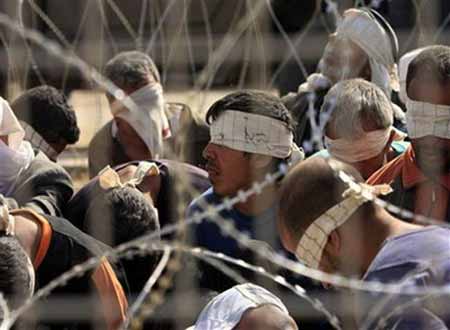
Gaza, Occupied Palestine – Friday afternoon, June 14, 2013, Muhareb Abu Omar, a Palestinian farmer aged 48, was wounded by Israeli army fire in the Deir El Balah, in the center of the Gaza Strip.
Omar was irrigating his land in the village of Wadi As-Salqa, 600 meters from the barrier that separates Israel from the Gaza Strip.
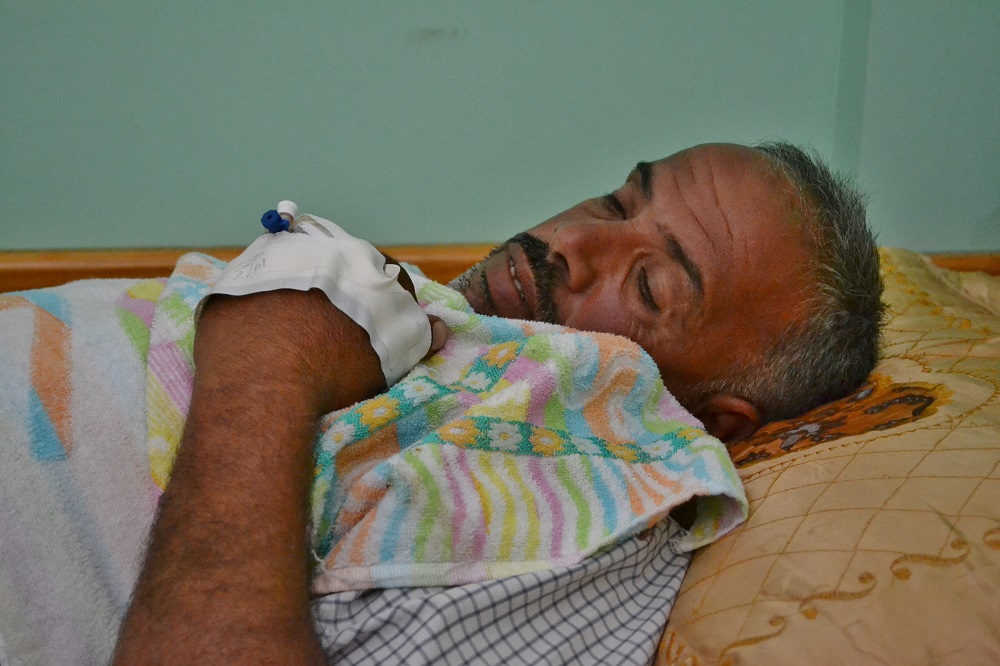
Muhareb Abu Omar, 48 (Photo: Rosa Schiano)
Omar reported that Israeli jeeps moved along the border while he was working. Suddenly, after about 10 minutes into the job, at approximately 19:30, a bullet struck him in the right leg. The soldiers probably shot from a jeep hummer.
Omar was alone on his land while other farmers were working in adjacent lands.
“I didn’t hear any firing, the soldiers used silent bullets. Suddenly I found myself wounded. I ran for 50 yards, then I crashed and I cried to my cousins that I was wounded”, said Omar. His cousins transported him to Al Aqsa Martyrs hospital.
Omar’s family is composed of 14 members: Omar, his wife, 8 sons and 4 daughters. Five of his sons work with him on the family land. The whole family depends on the production on this land.
Two of his sons, Nedal and Tareq, reported that Omar was reported to have an intermediate wound in the right tibia.
Dr. Saleman Al Attar, Department of Orthopaedics of Aqsa Martyrs hospital, reported that the general conditions of Omar are good. “The wound shot from a firearm always creates complications. The bullet hit the right thigh and there is the presence of fragments”, said Dr. Al Attar. In the emergency room, the doctors performed a cleansing of the wound, firstly a debridement followed by bandaging. After 3 days or 72 hours, Omar will be subjected to a further removal of devitalized tissue.
The doctors will not remove the bullet. “It is dangerous to remove the bullet as it is located in the neurovascular, where there are the arteries,” said Dr. Al Attar.
The wound is closed. The patient will then be given antibiotics and analgesics for about 4 weeks.
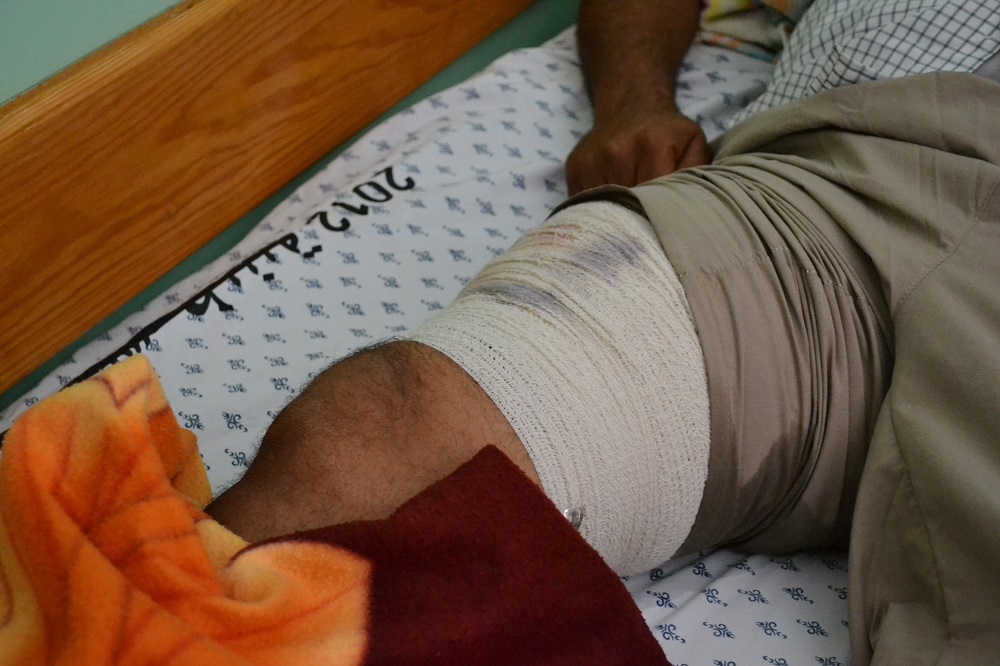
(Photo by Rosa Schiano)
Dr. Al Attar stressed the psychological effect on patients who are aware of the a bullet still inside the body. “The patient will always have the impression of experiencing pain in the area where the bullet is, even if the pain is not real. There are social workers who can provide psychological support for this. Every Palestinian suffering since birth suffers some psychological problems”, concluded Dr. Al Attar.
During the last military offensive of November 2012, the al-Aqsa hospital has received many victims. “The hospital was full, we were trying to save those who were in better condition while others were dying patients in serious condition,” said Dr. Al Attar.
The arrangements for the cease-fire of 21 November 2012 established that the Israeli military forces should “refrain from hitting residents in areas along the border” and “cease hostilities in the Gaza Strip by land, by sea and by air, including raids and targeted killings.”
However, Israeli military attacks by land and sea have followed from the day after the ceasefire, and Israeli warplanes are flying over the sky constantly in the Gaza Strip. These attacks against the civilian population of Gaza continue to occur amidst international silence.
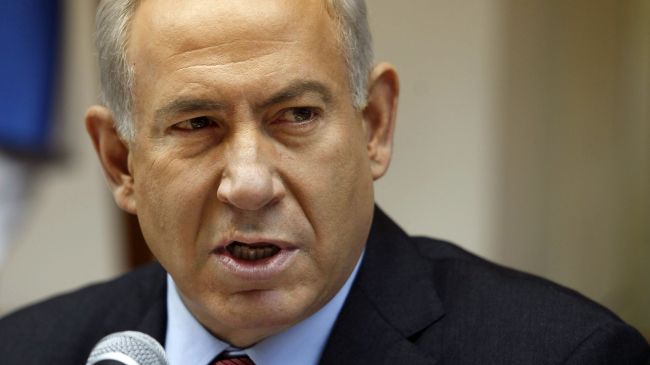
Israeli Prime Minister Benjamin Netanyahu called on Sunday for nations to continue boycotting Iran over its nuclear efforts after the election of a new president widely hailed as a moderate.
Netanyahu said it was Iran’s supreme leader, Ayatollah Ali Khamenei, and not the newly elected president, Hassan Rohani, who set a nuclear policy that has been challenged by tough economic sanctions and the prospect of military action.
“The international community must not give in to wishful thinking or temptation and loosen the pressure on Iran for it to stop its nuclear program,” the right-wing Netanyahu told his cabinet, according to a statement released by his office.
Israel, the Middle East’s only only nuclear power, has threatened to strike Iran over its nuclear program. It is also believed to be behind a string of assassinations targeting Iranian nuclear scientists over the past several years.
“The greater the pressure on Iran, the greater the chance of bringing a halt to the Iranian nuclear program, which remains the greatest threat to world peace,” Netanyahu said.
Iran insists its nuclear program is peaceful, and its main ally Russia has repeatedly said that there is no evidence to suggest otherwise.
Netanyahu’s remarks come one day after Israeli Defense Minister Moshe Yaalon called for tougher sanctions against Iran regardless of who is elected as its new president.
“We must toughen the sanctions against Iran and make this country understand that the military option remains on the table to halt the progress of its dangerous nuclear program,” Israeli radio quoted Yaalon as saying on a visit to the United States Saturday.
The chief of Israel’s military intelligence, General Aviv Kochav, has said that the chaos in the Arab world favours Israel and is something that he believes should continue. Speaking at the Herzliya Conference for Intelligence Studies, Gen. Kochav pointed out that the changes around Israel have fundamental implications for its security.
“The current shake up will continue to change the face of the Middle East,” he is quoted on the Ministry of Defence website. “The tremors are getting more violent every day and will produce a vacuum which will be filled by political, Islamist and jihadist elements.”
The intelligence chief asserted that the rise of the Islamists will also have a significant impact on the map of the alliances in the Middle East, adding: “We divided the region in the past into the radical bloc and the moderate bloc, today these two blocs have disappeared.”
A former French foreign minister says Britain had been planning a war against Syria some two years before to the unrest broke out in the Arab country.
The statement by Roland Dumas came during a recent interview with French Parliamentary TV network, LCP.
“I’m going to tell you something. I was in England two years before the violence in Syria on other business. I met with top British officials, who confessed to me that they were preparing something in Syria,” said Dumas.
He continued by saying, “This was in Britain not in America. Britain was organizing an invasion of rebels into Syria. They even asked me, although I was no longer minister for foreign affairs, if I would like to participate.”
Responding to a question on the motive behind inciting violence in Syria, Dumas said, “Very simple! With the very simple aim! To overthrow the Syrian government, because in the region, it’s important to understand, that the Syrian regime makes anti-Israeli talk,” said Dumas
The former foreign minister added that he had been told by an Israeli prime minister a long time ago that Tel Aviv would seek to “destroy” any country that did not “get along” with it in the region.
Turmoil has gripped Syria since March 2011, and many people, including large numbers of Syrian security forces, have been killed in the unrest.
Damascus says the United States and its allies are seeking to overthrow President Bashar al-Assad by supporting armed terrorist groups operating in Syria.
In May, under pressure from Britain and France, the European Union lifted an arms embargo on the militants in Syria, while maintaining other sanctions on the Syrian government.
ROLAND DUMAS BALANCE SUR L’INTERVENTION OCCIDENTALE EN SYRIE !
This video is part of an extended interview with writer Yossi Gurvitz [ http://ygurvitz.net ] – transcribed & translated from Hebrew to English by Dena Shunra
The exposure of the Obama regime’s use of the National Security Agency to secretly spy on the communications of hundreds of millions of US and overseas citizens has provoked world-wide denunciations. In the United States, despite widespread mass media coverage and the opposition of civil liberties organizations, there has not been any mass protest. Congressional leaders from both the Republican and Democratic Parties, as well as top judges, approved of the unprecedented domestic spy program. Even worse, when the pervasive spy operations were revealed, top Senate and Congressional leaders repeated their endorsement of each and every intrusion into all electronic and written communication involving American citizens. President Obama and his Attorney General Holder openly and forcefully defended the NSA’s the universal spy operations.
The issues raised by this vast secret police apparatus and its penetration into and control over civil society, infringing on the citizens freedom of expression, go far beyond mere ‘violations of privacy’, as raised by many legal experts.
Most civil libertarians focus on the violations of individual rights, constitutional guarantees and the citizen’s privacy rights. These are important legal issues and the critics are right in raising them. However, these constitutional–legal critiques do not go far enough; they fail to raise even more fundamental issues; they avoid basic political questions.
Why has such a massive police-state apparatus and universal spying become so central to the ruling regime? Why has the entire executive, legislative and judicial leadership come out in public for such a blatant repudiation of all constitutional guarantees? Why do elected leaders defend universal political espionage against the citizenry? What kind of politics requires a police state? What kind of long-term, large scale domestic and foreign policies are illegal and unconstitutional as to require the building of a vast network of domestic spies and a hundred billion dollar corporate-state techno-espionage infrastructure in a time of budget ‘austerity’ with the slashing of social programs?
The second set of questions arises from the use of the espionage data. So far most critics have questioned the existence of massive state espionage but have avoided the vital issue of what measures are taken by the spymasters once they target individuals, groups, movements? The essential question is: What reprisals and sanctions follow from the ‘information’ that is collected, classified and made operational by these massive domestic spy networks? Now that the ‘secret’ of all-encompassing, state political spying has entered public discussion, the next step should be to reveal the secret operations that follow against those targeted by the spymasters as a ‘risk to national security’.
The Politics behind the Police State
The fundamental reason for the conversion of the state into a gigantic spy apparatus is the nature of deeply destructive domestic and foreign policies which the government has so forcefully pursued. The vast expansion of the police state apparatus is not a response to the terror attack of 9/11. The geometrical growth of spies, secret police budgets, and the vast intrusion into all citizen communications coincides with the wars across the globe. The decisions to militarize US global policy requires vast budgetary re-allocation , slashing social spending to fund empire-building; shredding public health and social security to bailout Wall Street. These are policies which greatly enhance profits for bankers and corporations while imposing regressive taxes on wage and salaried workers
Prolonged and extended wars abroad have been funded at the expense of citizens’ welfare at home. This policy had led to declining living standards for many tens of millions of citizens and rising dissatisfaction. The potential of social resistance as evidenced by the brief “Occupy Wall Street” movement which was endorsed by over 80% of the population. The positive response alarmed the state and led to an escalation of police state measures. Mass spying is designed to identify the citizens who oppose both imperial wars and the destruction of domestic welfare; labeling them as ‘security threats’ is a means of controlling them through the use of arbitrary police powers. The expansion of the President’s war powers has been accompanied by the growth and scope of the state spy apparatus: the more the President orders overseas drone attacks, the greater the number of his military interventions, the greater the need for the political elite surrounding the President to increase its policing of citizens in anticipation of a popular backlash. In this context, the policy of mass spying is taken as ‘pre-emptive action’. The greater the police state operations, the greater the fear and insecurity among dissident citizens and activists.
The assault on the living standards of working and middle class Americans in order to fund the endless series of wars, and not the so-called ‘war on terror’, is the reason the state has developed massive cyber warfare against the US citizenry. The issue is not only a question of a violation of individual privacy: it is fundamentally an issue of state infringement of the collective rights of organized citizens to freely engage in public opposition to regressive socio-economic policies and question the empire. The proliferation of permanent bureaucratic institutions, with over a million security ‘data collectors’, is accompanied by tens of thousands of ‘field operators’, analysts and inquisitors acting arbitrarily to designate dissident citizens as ‘security risks’ and imposing reprisals according to the political needs of their ruling political bosses. The police state apparatus has its own rules of self-protection and self-perpetuation; it has its own linkages and may occasionally compete with the Pentagon. The police state links up with and protects the masters of Wall Street and the propagandists of the mass media – even as it (must) spy on them!
The police state is an instrument of the Executive Branch acting as a vehicle for its arbitrary prerogative powers. However on administrative matters, it possesses a degree of ‘autonomy’ to target dissident behavior. What is clear is the high degree of cohesion, vertical discipline and mutual defense, up and down the hierarchy. The fact that one whistle-blower, Edward Snowden, emerged from the hundreds of thousands of citizen spies is the exception, the lone whistle blower, which proves the rule: There are fewer defectors to be found among the million-member US spy network than in all the Mafia families in Europe and North America.
The domestic spy apparatus operates with impunity because of its network of powerful domestic and overseas allies. The entire bi-partisan Congressional leadership is privy to and complicit with its operations. Related branches of government, like the Internal Revenue Service, cooperate in providing information and pursuing targeted political groups and individuals. Israel is a key overseas ally of the National Security Agency, as has been documented in the Israeli press (Haaretz, June 8, 2013). Two Israeli high tech firms (Verint and Narus) with ties to the Israeli secret police (MOSSAD), have provided the spy software for the NSA and this, of course, has opened a window for Israeli spying in the US against Americans opposed to the Zionist state. The writer and critic, Steve Lendman points out that Israeli spymasters via their software “front companies” have long had the ability to ‘steal proprietary commercial and industrial data” with impunity. Because of the power and influence of the Presidents of the 52 Major American Jewish organizations, Justice Department officials have ordered dozens of Israeli espionage cases to be dropped. The tight Israeli ties to the US spy apparatus serves to prevent deeper scrutiny into its operation and political goals — at a very high price in terms of the security of US citizens. In recent years two incidents stand out: Israeli security ‘experts’ were contracted to advise the Pennsylvania Department of Homeland Security in their investigation and ‘Stasi-like’ repression of government critics and environmental activists (compared to ‘al Queda terrorists’ by the Israelis) – the discovery of which forced the resignation of OHS Director James Powers in 2010. In 2003, New Jersey governor, Jim McGreevy appointed his lover, an Israeli government operative and former IDF officer, to head that state’s ‘Homeland Security Department and later resigned, denouncing the Israeli, Golan Cipel, for blackmail in late 2004. These examples are a small sample illustrating the depth and scope of Israeli police state tactics intersecting in US domestic repression.
The Political and Economic Consequences of the Spy State
The denunciations of the mass spy operations are a positive step, as far as they go. But equally important is the question of what follows from the act of spying? We now know that hundreds of millions of Americans are being spied on by the state. We know that mass spying is official policy of the Executive and is approved by Congressional leaders. But we have only fragmented information on the repressive measures resulting from the investigations of “suspect individuals”. We can assume that there is a division of labor among data collectors, data analysts and field operatives following up “risky individuals and groups”, based on the internal criteria known only to the secret police. The key spy operatives are those who devise and apply the criteria for designating someone as a “security risk”. Individuals and groups who express critical views of domestic and foreign policy are “a risk”; those who act to protest are a “higher risk”; those who travel to conflict regions are presumed to be in the “highest risk” category, even if they have violated no law. The question of the lawfulness of a citizen’s views and actions does not enter into the spymasters’ equation; nor do any questions regarding the lawfulness of the acts committed by the spies against citizens. The criteria defining a security risk supersede any constitutional considerations and safeguards.
We know from a large number of published cases that lawful critics, illegally spied upon, have subsequently been arrested, tried and jailed – their lives and those of their friends and family members shattered. We know that hundreds of homes, workplaces and offices of suspects have been raided in ‘fishing expeditions’. We know that family members, associates, neighbors, clients, and employers of “suspects” have been interrogated, pressured and intimidated. Above all, we know that tens of millions of law abiding citizens, critical of domestic economic and overseas war policies, have been censored by the very real fear of the massive operations carried out by the police state. In this atmosphere of intimidation, any critical conversation or word spoken in any context or relayed via the media can be interpreted by nameless, faceless spies as a “security threat” – and one’s name can enter into the ever growing secret lists of “potential terrorists”. The very presence and dimensions of the police state is intimidating. There are citizens who would claim that the police state is necessary to protect them from terrorists – but how many others feel compelled to embrace their state terrorists just to fend off any suspicion, hoping to stay off the growing lists? How many critical-minded Americans now fear the state and will never voice in public what they whisper at home?
The bigger the secret police, the greater its operations. The more regressive domestic economic policy, the greater the fear and loathing of the political elite.
Even as President Obama and his Democratic and Republican partners boast and bluster about their police state and its effective “security function”, the vast majority of Americans are becoming aware that fear instilled at home serves the interest of waging imperial wars abroad; that cowardice in the face of police state threats only encourages further cuts in their living standards. When will they learn that exposing spying is only the beginning of a solution? When will they recognize that ending the police state is essential to dismantling the costly empire and creating a safe, secure and prosperous America?
The Lab is a new groundbreaking Israeli documentary film that redefines our entire understanding of the Jewish State, its aims, its identity and its global destructive role. I honestly believe that this film is the deepest and most important commentary on Israel.
In The Lab, Director Yotam Feldman exposes the Israeli military industry and its operation, he interviews some major protagonists within Israel’s ‘security’ trade. He elaborates on the role of the industry within the Israeli society and economy; in the last few years Israeli security exports reached an unprecedented level of $7 billion a year. A full 20% of Israeli exports are military or military related. Approximately 150,000 families in Israel are dependent on that industry. Israel is now the fourth biggest military exporter.
In the last decade, every Israeli military operation led to an immediate sharp increase in sales of Israeli military export around the world: weaponry, systems, intelligence, strategies, doctrines, knowledge, and experience.
Feldman provides us with a glimpse into a very organized universe. We visit Israeli weapon fairs around the world but we also see arenas filled to capacity with foreign generals, public officials and diplomats. They are all shopping for Israeli military products. The message is clear, the 7 billion dollars is just part of the story. Israeli military elite is now deeply interwoven with the political and military elite of every country around the globe. This emerging Israeli business buys the Jewish state influence and support.1
The Lab makes it evidently clear that the Palestinian civilian population in the West Bank and Gaza have become test subjects for Israeli tactics, weaponry and fighting philosophy (‘Fighting Torah’, Torat Lechima — as the Israelis call it). The destruction of the Palestinians has now been transformed into a very profitable industry. We are dealing here with nothing short of highly calculated murder.
Through a set of fascinating interviews, Feldman conveys a very genuine picture of the Israeli death merchants. Feldman lets them talk, he hardly interferes. They are sharp, they are genuine, they are even funny at times, occasionally witty, and a few of them, might even be charming if you did not know who they are. But make no mistake, they are sinister, some of them are clearly psychotic, they are mass murderers and they are free. They sell destruction and havoc and do it very successfully.2
Being myself an Israeli-born and raised successful musician and writer, I think I can recognize Israeli dedication, perseverance and creativity when I see it, no matter into what service it is pressed. (Perhaps I was lucky to be rescued by bebop.) Those Israeli death angels’ talent is driven into the amplification of human misery. The consequences are tragic.
Game Changer
It is far from being a secret that a century of Palestinian struggle led to practically nothing. The state of the Palestinian solidarity movement is even more embarrassing. The Lab is a game changer, for it can explain decades of impotence.
We are immersed in flawed terminology — ‘colonialism’, ‘apartheid’, ‘conflict’, ‘solution’, ‘Zionism’ are just few examples. Gaza is now a vast Laboratory — the Israelis are the ‘scientists’ and the ‘technicians’, the Palestinians are the ‘guinea pigs’. Watching The Lab must lead all of us to fundamentally question our notions. We are dealing with a premeditated war crime. The notion of resolution (as in ‘two-state solution’), for instance, is not applicable. It is clear beyond doubt that in the real world the ‘scientist’ does not negotiate with the ‘guinea pig’. The ‘scientist’ also doesn’t consider sharing reality with his ‘guinea pig’ in a ‘one democratic state.’ “The Lab” is a glimpse into the Israeli mind: you clearly do not find much compassion there.
For decades we were foolish to examine the success and failure of Israeli military operations in reference to Israeli military and political ‘objectives,’ as we surmised them. We were clearly wrong.
As we learn from Feldman’s film, the real objective of Israeli operations may as well be examining new doctrines and operational systems in order to distribute them around the world soon after. Ehud Barak, for instance, wasn’t exactly the most sophisticated Israeli minister of defense, he clearly failed to defend his people or even make them feel secure. However, he was very successful in selling Israeli weapons and doctrines.
Tel Aviv being subject to a barrage of Qassam rockets may be seen by Israelis as devastating news, but from a military industrial point of view, it was a golden opportunity to examine and promote the Israeli anti-missile system Iron Dome. If I am correct here, it becomes clear that like the Palestinians, more and more Israelis are also becoming ‘guinea pigs’ in this ever growing military laboratory.
One may wonder how and when “the Zionist dream” transformed itself into a military business. Only a few of us, writers and scholars, have attempted to answer this question. The transformation of the Jewish State into an oppression factory is apparently a direct outcome of Israel’s supremacist ideology. If we want to understand what is happening in the Jewish State, we must first grasp the notions of choseness, Jewishness and Jewish identity politics.
I guess that enough Palestinians in Gaza do realise by now that they have been part of an Israeli experiment. Every too often we learn from Palestinian doctors that while treating casualties of Israeli aggression they encounter new types of wounds. The Lab explains it but it isn’t Palestine alone. We also witness a growing similarity between the operational mode of police forces around the world and the IDF treatment of the Palestinians.
Watching Yotam Feldman’s The Lab explains it all. We are all Palestinians. We are either occupied by Israel or by its proxy forces around the world — those who are trained in Israel and implement Israeli weaponry and tactics.
The spokesman of the Egyptian Army, Staff Colonel Ahmed Mohamed Ali, on Wednesday denied that his country had bought military wares from Israel.
An Israeli newspaper reported early this week that Israel had sold military wares to Pakistan and another four Arab countries, including Egypt. Harretz report was based on data issued by the British Government’s Department for Business Innovation and Skills (BIS), which oversees security exports.
The report said that these countries had purchased amounts of developed military equipment between 2008 and 2012.
According to the BIS report, this equipment included unmanned aircraft vehicles, radar systems, electronic warfare systems, head-up display (HUD) cockpit parts for fighter jets and aircraft engines, optical target acquisition systems, components of training aircraft and military electronic systems.
Ali wrote on his Facebook page that the militarisation of Egypt’s Armed Forces follows strict guidelines which guarantee what is called “product security.” These are obligatory rules that all military branches are committed to.
Similarly, Pakistan also denied that it bought military equipment from Israel based on information published by Haaretz in the same report.
The Islamabad spokesman for the Directorate of Inter-Services Public Relations denied the report. “The report is misleading and not based on facts,” The Hindu reported him as saying.
The Egyptian military official affirmed that his country is following credible measures regarding weapon purchases. However he said that the policy had “high costs in light of the new global system.”
He also called for the need to ensure that information reported about the Egyptian Armed Forces was reliable and accused the mass media of attempting to shake the credibility of the Egyptian Armed Forces with their people.
“Tehran has developed technical expertise in a number of areas – including uranium enrichment, nuclear reactors, and ballistic missiles – from which it could draw if it decided to build missile-deliverable nuclear weapons,” reads Director of National Intelligence James R. Clapper’s April 2013 report to the Senate Committee on Armed Services.
Then comes the statement usually ignored by mass media: “We do not know if Iran will eventually decide to build nuclear weapons.”
The fact that Iran is not producing a nuclear bomb – nay, hasn’t even decided if it wants to – has not deterred the US government from slapping the Islamic Republic with the most punishing unilateral sanctions in history.
While the Iranian economy struggles to adjust to periodic US sanctions “upgrades,” a significantly devalued currency and restrictions in global financial transactions have suddenly challenged even Iran’s famed adaptability to these kinds of externally-imposed pressures.
But something is awry. There is no implosion in Iran. How is that possible with off-the-chart hikes in the price of basic goods, unaffordable housing in congested urban areas, increased youth unemployment? Instead, Iranians who love nothing better than to complain about government and economy, have grumpily rallied against these foreign efforts to pit population against state.
According to results of a Gallup poll in February, 85 percent of Iranians claim sanctions have hurt their livelihood either “a great deal” or “somewhat.” But 70 percent of those polled blame external parties (the US, western European countries, Israel, and the UN) for this suffering; remarkably, only 10 percent blame their government and their leaders. Instead of sanctions forcing a change in Iran’s calculation about pursuing nuclear enrichment – which is a stated US goal – 65 percent of Iranians favor a continuation of the country’s nuclear power capabilities.
As former head of the International Atomic Energy Agency (IAEA) Mohamed El Baradei astutely observed before leaving his 11-year post: “The line was, ‘Iran will buckle under pressure.’ But this issue has become so ingrained in the Iranian soul as a matter of national pride. They talk about their nuclear program as if they had gone to the moon.”
Instead of changing tack and identifying novel ways to gain favor with Iran’s population while pressuring their leaders, the US administration went off the rails last week and upped the sanctions ante – targeting for the first time Iran’s rial currency and its auto industry, a large source of domestic jobs.
No – there can no longer be any mistake about what that means. Washington isn’t trying to change Iran’s “calculations” about “its nuclear program.” It is trying to break Iran’s back.
“Let Them Try”
“US power and reach is in decline,” says Alaeddin Boroujerdi, who heads the Majlis’ (parliament) foreign affairs and national security committees, and cheerily expects to out-maneuver, out-last, and out-smart the Americans.
As with all decision makers in Iran, any discussion of US sanctions gets you a slow smile and a political lesson.
“The new realities in Iran don’t seem to be apparent to the US after 33 years. They’re still focused on regime change, sanctions, cyber war, military operations. The result of this strategy has been to the US detriment (financially draining) and to our advantage,” explains Boroujerdi.
In this period, “Iran gained incredible technology. The US didn’t want us to have nuclear capability – and we have done so from the basics to where we are now in a peaceful nuclear program. They tried to restrict our knowledge and our development. In these three decades we obtained advanced technologies ourselves – building and launching satellites, developing nanotechnology from scratch, developing a domestic arsenal of weapons,” he continued.
“We used Iranian brainpower, our youth; we have attained the unattainable – we changed the process. How many other countries could have done this?”
That’s the crux of it. David vs Goliath. The nimble, determined developing nation upstart facing down the global bully and a crumbling Empire. That image can inspire passion here in Iran – which may explain some of those earlier Gallup numbers and the upward tick in polling data for presidential candidates who talk tough on negotiations with the US.
In short, many Iranians feel the US and other Western nations want to stunt their independence, development, and scientific progress – keeping the country “backward and needy;” a dumping ground for stale Western products and services in exchange for the petrodollars of a one-commodity economy.
“Nuclear” Saves Lives in Iran
I visit a University of Tehran campus that houses the first nuclear medicine center in the country. This is the teaching nexus from which most of the nation’s nuclear medicine specialists graduate. It is a relatively new specialty – a few decades old – but already there are 130 nuclear medicine centers around Iran and an equal number of specialized doctors.
“Nuclear medicine is a real peaceful use of nuclear energy,” explains Dr. Mohsen Saghari who heads the center and is also the president of the Iranian Society of Nuclear Medicine. “We basically use radioactive materials for diagnostics and therapeutic purposes – we do all the treatments and scans (bone, heart, liver, spleen, renal, breast, thyroid, lungs) at this facility.”
As I quickly learned, nuclear medicine is several things: For the purpose of diagnostics, when administered into the body these radiopharmaceuticals can “image” disease at the cellular level, thereby detecting illness earlier than via x-ray, CT-Scans or MRIs, for instance, which rely on the visible manifestation of disease for detection to be possible.
It is like radiology from the inside – instead of the external radiation passing through your body to capture an image from an x-ray, in nuclear medicine, external cameras capture images from the radiation emitted by a radiopharmaceutical administered into a patient.
Nuclear medicine is also used for the purpose of therapeutic treatment. These are specialized drugs that emit short distances of radiation thereby reducing undesirable side effects.
At the center that day, I saw maybe 20 patients and family members in a seating area awaiting a scan or outpatient treatment, mostly for thyroid cancers and hyperthyroidism, according to the medical professional who took me on a tour.
“Most of the procedures we do here are complementary, but in a few cases, they are the only procedures and nothing else can substitute them,” says Saghari. “But because of sanctions we have problems. If we want radioactive materials or equipment, they won’t sell them to us.”
So Iran decided to make its own.
Most of his center’s radioactive materials are produced by the Atomic Energy Organization of Iran, which fuels up those nuclear reactors that make people in Washington and Tel Aviv all wobbly-kneed and shrill.
Saghari showed me a sealed vial – or “cold kit” – that contained a few pinches of a powdered substance. Iran makes that part of the drug too because the newer US (unilateral) sanctions have made it hard for Iranians to trade in Western currencies and transact through most banks. The vial remains sealed until radioactive material is injected into it – which then makes it an active radiopharmaceutical used in diagnostics and treatment.
As my notes recall, 90 percent of these diagnostic procedures require a synthetically-produced chemical element called Technetium, which is produced at Iran’s nuclear plants via a process using 20 percent enriched uranium and then extracted from the nuclear rod fuels to create the necessary medical isotopes.
Says Saghari, “Even in the black market, the importation of chemotherapies and high-tech medications have largely stopped with the latest rounds of sanctions.”
So Iran relies on its own nuclear power plants to fill in – and eventually altogether replace – imports. “Sometimes we get shortages, at the present time they can produce.”
Not a lot of countries produce radiopharmeceuticals. Saghari named just Canada, the US, England, France, Russia and China. Like others leading the charge toward self-sufficiency in Iran, he anticipates that one day Iran will be producing competitive, lower-cost radiopharmeceuticals for export.
“Each week we see 20 to 24 new thyroid cancer patients – last month I had 94 inpatients, 876 diagnostic scans performed and 700 outpatients for thyroid illnesses,” he says, flicking through some administrative papers to try to give me an accurate count. “Every year in Iran about one million people get referred for diagnostic and therapeutic procedures.”
“So of course we are going to make it ourselves,” insists Saghari.
Baa, Baa, Cloned Sheep
A 2010 Canadian report on the “geo-political shift in knowledge creation” claims scientific output has grown 11 times faster in Iran than the global average – faster than in any other country in the world. I recall reading this tidbit three years ago and wondering how that could be right. In previous trips to Iran, I couldn’t say that I ever noted visible signs of ‘unusual progress.’
I don’t think most Iranians think much about this either. Discussing my interviews with friends and acquaintances during my visit, most seemed surprised, even shocked that this much development was going on under their noses. The Iranian government, good or bad, suffers acutely from an inability to communicate its value propositions to the wider population. Which really, quite frankly, cripples it when faced with the well-oiled spin-machines of hostile Western and Arab states seeking to vilify the Islamic Republic.
Every Iranian has an opinion on the country’s nuclear energy program for the simple reason that this is the one ‘development project’ they all know about…so rarely is it out of the international headlines.
This kind of hyper-scientific growth is essential, says Dr. Hamid Gourabi, president of the Royan Institute, a leader in stem cell and reproductive biomedicine in Iran: “Scientific progress can make countries independent – and apply pressure on others.”
If you think his message has political undertones, you are right. It is something I hear in all my meetings. “After the revolution, we decided instead of being dependent on oil, we should diversify into sciences and other areas.”
Royan, a quasi-governmental institute, was established to solve a basic problem: young Iranian couples with fertility problems were having to travel outside the country and spend large sums of money to conceive. The organization started with very basic fertility treatments in 1991 and two years later the first in vitro fertilization (IVF) child was born in Tehran. With a 40 percent success rate, the institute now does more than 4,000 cycles every year – in Europe there are less than ten clinics that perform more than 1,000.
Royan was playing catch-up with some of its early endeavors. In 2006 it cloned its first sheep, followed by two transgenic kid goats called Shangool and Mangool (named after popular children’s characters in Iran), and then by calves – each using slightly different biotechnologies.
Gourabi’s institute is not ultimately interested in replicating other’s successes though – it wants to forge its own way. He tells me about some important thinking that went on in Iran during the presidency of Mohammad Khatami from 1997-2005: “We wanted to expand in sciences, technologies – Khatami didn’t think Iran could advance ‘car-making’ for example – we wanted to go into areas where Iran can bring leadership.” But, he says, ultimately, “the scientific community is the main impetus behind this – they push the government.” Then he adds with a twinkle that Iran’s Supreme Leader “Khamenei has a huge interest in science.”
Since then Royan has branched out in all sorts of directions. Stem cell research is today the most advanced part of what the group does, and Iran, according to Gourabi, is now only the 8th nation in the world to produce scientific output on stem cells.
He also confirms that “sanctions have been a key motivator” for the rush to development. “One of the products we need cost us a million dollars to import. Now we produce it ourselves, it costs us very little. Iran sells biotech to other countries – we offer a lower cost than most companies.”
Gourabi, whose institute has been denied laser technology-based products by the US’ restrictive sanctions regime, says with some confidence: “We will end up producing these drugs for ourselves, so pirating and patent-busting becomes prolific. And they (the West) lose a good market for their products.”
He’s not worried about isolation either: “Sanctions do affect our work – time is important in science and sanctions cause delays – but we are contributing in a big way to the global scientific community now, and this collaboration helps us.”
Nanotechnology 101
A decade ago, Iranian decision makers and scientists were trying to solve a large problem: “In less than 100 years, we will run out of all these oil resources. How do we have an economy then?”
The prevalent thinking was that Iran needed to develop sectors that would help it create a “knowledge-based economy” where it could establish itself as a global leader. The country had underperformed on IT and biotech, so it took its time in studying the potential of nanotechnology. Three years later it decided to plunge in.
“Our mission was to be among the top 15 countries in the world in all rings of the ‘value chain’ – all the way from developing the human resources to commercialization and wealth creation,” say Dr. Seyed Mehdi Rezayat and Dr. Ali Beitollahi, senior officials at The Iran Nanotechnology Initiative Council (INIC).
“Today, more than 14,000 are engaged in Iran’s nanotech industry – a decade ago you couldn’t count the number of people on two hands who understood what it meant,” laughs Beitollahi.
The data starts flowing. In the past five years, Iran has registered 95 patents for nanotechnology products and processes. Dozens of Iranian universities have been corralled into creating graduate and doctoral programs in advanced nanotech. Because of sanctions and embargos, Iranians are making sophisticated machinery that they otherwise would have bought. Twenty five Iranian companies have now commercialized nano equipment because nobody would sell it to them.
In a short time, the Islamic Republic has become one of only six nations involved in nanotech standardization – all others are Western countries (US, UK, Canada, Germany) with the exception of Japan.
The applications in nanotech are broad. From eco-efficiencies like coating glass that keeps heat out, to strengthening building materials in earthquake prone areas, to creating cancer drugs to water filtration and desalinization.
“In high-tech you can get much more advanced benefit than from commercial technologies,” says Rezaiat. “Every kilogram of cement is just a few cents. The main cost of things is knowledge and technology, so why should a country like Iran stick to cement?”
“We learned a lot of lessons from our previous lack of achievement,” he reflects, adding, “We used to buy turnkey projects and we didn’t even know what was inside.” Now, says Rezaiat, “Nano has become a model for the country. We started from scratch – we will look, learn about everything.”
Why Washington Fears Iran?
A rigorous report published last week on Iran sanctions by the Congressional Research Service (CRS) says the following:
“There is a growing body of opinion and Iranian assertions that indicates that Iran, through actions of the government and the private sector, is mitigating the economic effect of sanctions. Some argue that Iran might even benefit from sanctions over the long term by being compelled to diversify its economy and reduce dependence on oil revenues. Iran’s 2013-2014 budget relies far less on oil exports than have previous budgets, and its exports of minerals, cement, urea fertilizer, and other agricultural and basic industrial goods are increasing substantially.”
A year ago I wrote an article titled “How Iran Changed the World.” In it I warn that continued economic pressures on Iran will produce the unintended consequence of undermining Western hegemony very decisively.
The US, after all, is aggressively challenging the Islamic Republic at a time when the entire Western financial and economic order is teetering on the brink of collapse, with no apparent safety net in sight.
Iran is an extremely resourceful country of 78 million people, a huge export market for any nation keen to bolster its treasuries, and has major strategically valuable commodities – oil and gas – that people are keen to buy.
The tighter the sanctions, the more likely that Iran and its trading partners will seek innovative ways around them. In effect, by putting the screws on this important country (Iran is today the head of the 118-nation Non-Aligned Movement and increasingly protected by the emerging BRICS economies), the US is encouraging the development of alternative financial and economic practices that will fundamentally undermine – perhaps even destroy – its own global order.
Every global power throughout history has ended its reign at the hands of an adversary, whether on the battlefield or in a grand power play that goes wrong. What Washington rightfully fears is that its three-decade-long tussle with the Islamic Republic is unwinnable – which is nothing short of defeat for the world’s last superpower.
Unable to get off its current trajectory of escalation, the US continues to seek new, illogical, increasingly indefensible ways to squeeze Iran’s population. But the fact is that sanctions simply don’t work: Iran is not going to stop its nuclear enrichment. Iranians aren’t going to eject their government.
This will not end well for the US. Iran…I’m not so worried about.
This is the second in a two-part series on my 2012 research trips to Iran to discover what makes the Islamic Republic so resilient in the face of Western economic and political pressures. You can read Part 1, “Why Arabs Need Iran” here.
Sharmine Narwani is a commentary writer and political analyst covering the Middle East. You can follow Sharmine on twitter @snarwani.
The Israeli Government passed Sunday [June 9, 2013] the “Anti-Terror Bill”, authorizing harsher punishment against individuals suspected or convicted of aiding armed groups in the country, and anywhere in the world.
Several human rights groups in Israel and around the world voiced serious concerns regarding direct human rights violations, especially since this law strengthens and “legalizes” Administrative Detention orders confining hundreds, and even thousands, behind bars for extended periods without charges or trial.
The bill passed during a vote at the Israeli Ministerial Committee for Legislation, headed by Israeli Justice Minister, Tzipi Livni.
It not only targets those “convicted of terror attacks”, but also those who express support, emphasize and “incite terror activities” in addition to those believed to be engaged in preparations to carrying out violent acts.
Part of the penalties that this bill proposed include sentencing individuals for a life term without the possibility of parole, and allows the Police, the Security Services and all related agencies to confine “suspects” up to 30 days without granting them the right to any legal representation.
The passed bill also allows Israel to seize property of armed groups and individuals, in addition to preventing them from traveling abroad when there are no arrest warrants against them.
Israeli daily Haaretz has reported that the new legislation, would replace the “national state of emergency regulations” that Israel enforced after its establishment in the historic land of Palestine in 1948. Those regulations affect civil, security and economic issues.
The law particularly targets Palestinians and the indigenous Arab population in Israel, as those facing charges of “security or criminal violations”, whether in civil or military courts, would be facing very harsh sentences.
Head of the Meretz opposition party, Zahava Gal-On, said that Israel is denying human rights under the guise of combating terror.
She said that the emergency law applied in the country since the British occupation of Palestine, “cannot just be replaced with legislation that is anti-democratic”.
Also, the Association for Civil Rights in Israel (ACRI) slammed the bill, described it as anti-democratic, and warned that its provisions could turn legal organizations and law-abiding persons into terrorists just because they are suspected of aiding or practicing terror.
The Arabs48 news website reported that, under the new law, persons who even express support for groups labeled by Israel as “hostile” or “terrorist” could be imprisoned up to three years. It also considers financial support to these organizations as an “act of terror”.
Arabs48 added that the new bill increases the years of life-terms from 30 to 40 years.
It stated that the Israeli Prosecutors Office said that Price Tag attacks have not been labeled as acts of terror, as the Office believes that boosting intelligence activity and adequate training to police officers dealing with those attacks could put an end to those attacks.
The Israeli Government Legal Advisor stated that, legally, there is nothing stopping the government from describing and declaring Price Tag attacks as acts of terror.
In an Editorial Published on June 9, Haaretz said that the core of this bill has serious and extremely wide definitions for a terrorist organization, or terrorist acts, and added that once an organization, including a charity group, is labeled as a terrorist group, the moral base and all legal measures are destroyed.
A great number of Hezbollah’s opponents have transformed into sworn enemies bent on the group’s destruction. This could signal a confrontation, whose theater will be my small country or my bigger one.
Many victims could fall. And since the situation is extremely dangerous, I find myself, once again, compelled to attempt an explanation of Hezbollah’s current reality.
Those who want to act rationally will hopefully understand and listen to what I say, even if they decide to go ahead with the final confrontation.
Today, Hezbollah is a major regional power. It has been so for the past decade. With the liberation of 2000 and Israel’s defeat in Gaza, then the US defeat in Iraq, followed by the failure of the plan to control Lebanon after the assassination of Rafik Hariri, then the July 2006 war, Hezbollah went through – or was forced into – several trials and theaters. It expanded its expertise, increased its influence, and doubled its capacity.
Knowingly and unknowingly, Hezbollah became synonymous with the rejection of all things US and Europe, whether Arab or not.
In addition, Hezbollah has institutions comparable to those of states, not local organizations. It has a structure allowing it to function in all aspects of life. Notwithstanding its ability to succeed here or there, Hezbollah is now a security and military force, which represents a fulcrum in the axis against the West and its acolytes in the region.
With the expansion of its multifarious capacities, Hezbollah is now a source of power for all those who stand by it. This is what the Palestinians realized in their conflict with the Israeli occupation. It is what the Iraqi resistance against the US occupation found out. And now, it is what the Syrian army is experiencing against the armed groups.
In each experience, Hezbollah, which learned and absorbed a great deal of the Israeli enemy’s experience, knows how to recast a threat into an opportunity and a crisis into an opening for a new reality.
What is most important in those experiences is Hezbollah’s ability to produce the appropriate political discourse for each stage. Therefore it can introduce mechanisms allowing it to continue mobilizing a new generation for its forces. After a quarter of a century of military experience, its fighters are still in their early twenties.
Does anyone who wants a feud imagine what it means in real life, being able to maintain the ability to renew one’s human military capacity? And what if this went hand in hand with an enormous burgeoning at the level of military systems, security capabilities, and logistical capacity?
Today, Hezbollah is abhorred by a not-so-small number of Arabs and Muslims. Yet it does not worry about its popular legitimacy. It never linked its struggles or position with obtaining prior approval from those who everyone knows are not fit to hire a government employee, let alone make a strategic choice.
This issue helped the party avoid the kind of collapse that faces political forces based on such calculations. They wither as soon as the cover of this or that state is lifted.
However, when Hezbollah decided, openly and blatantly, to penetrate the heart of the battle against the armed groups in Syria, it did so with awareness of its new role. It is not an objective reaction or a tit-for-tat service provided to the Syrian regime after a quarter century of support.
The new role of Hezbollah is to lead a Levantine – if not Arab – current, aiming to redraw the political, economic, and social map of a country of 75 million Arabs. Hezbollah can be a lever, but cannot produce a complete transformation and never claimed so.
Common sense says that this mission seeks to regain the individual and collective rights of Arabs to resist the occupation of the US, Israel, or their agents in the Levant. The mission aims to revive the real national identity of all Arabs.
In the first phase, it requires the elimination of all narrow viewpoints, whether we call it “an independent national decision” or “my country first.” This means all of the people of the Levant, from Palestine and Jordan, to Lebanon and Syria, to Iraq, Turkey, and the Arabian Gulf.
As a consequence, I advise anyone who wants to get rid of Hezbollah to start acting as if the issue is no longer related to military and security groups, a neighborhood or two, or a border strip monitored by an international police force or the like.
I am speaking of a current with a mix of leftists and Syrian and Arab nationalists. It has a tremendous base of poor who aspire for full independence that protects their cultural and social diversity, before the political and the administrative. It is this diversity that will eliminate the thought of takfiris led by the Saudis and their relatives.
This is Hezbollah’s new address. Get to know it well – God forbid – before you begin fighting it.
A Russian TV crew came under fire in Syria when a mainly civilian convoy taking the journalists to the Golan Heights was shelled by Syrian rebels.
The convoy shelled on Saturday was led by a Syrian army military vehicle, and consisted of several cars occupied by civilians, including one with Russian TV journalists.
The shelling started when the cars were about 5 kilometers away from their destination – ‘Checkpoint Charlie’ – the only crossing between Syria and the Golan Heights, disputed territory claimed by both Syria and Israel.
“The Syrian troops started to fight the rebels back, but the insurgents targeted the civilian cars,” said Evgeny Poddubny, the head of the Russian TV crew and special correspondent for Rossiya TV channel.
Throughout the fighting, a Russian cameraman kept filming; gunshots can be heard on the video for 15 minutes. The footage also features a Syrian army officer reporting to command that armed militants attacked first, that shelling was coming from both sides of the road.
“The convoy could not make it to the checkpoint, the rebels set an ambush on the road, fighting broke out, the military responded with heavy fire to cover the retreat of our TV crew, and then they retreated themselves. The militants were further confronted by the field artillery, which is deployed in the area,” Poddubny said.
No one was injured in the attack. A similar incident occurred recently in the Golan Heights buffer zone when Checkpoint Charlie was attacked and seized by rebels on Thursday, and quickly recaptured by government troops.
“The militants use the status of the territory; they hide in the buffer zone and are carrying out attacks like the one you’ve just witnessed. Then they retreat. And we cannot carry out special operations here – as that would be a breach of international agreements. Besides, the rebels are getting help from Israel – it supplies them with ammunition and even provides medical aid to terrorists in mobile hospitals,” Syrian army General Nasr Haidar, whose regiment is deployed in the area, told Rossiya.
Provocations by the insurgents are seen as major reason why international peacekeepers have been withdrawing from the area. Austrian troops, which accounted for 40 percent of the UN peacekeepers in the Golan Heights, have announced their withdrawal.
A shadowy neocon strategist spent 30 years maneuvering Washington toward war with Iran

José Niño Unfiltered | November 17, 2026
As American forces clash with Iran in 2026, a decades-long campaign orchestrated from the shadows of Washington has finally reached its climax. Earlier this year, foreign policy strategist David Wurmser openly called for Washington to let Israel start a war of aggression against Tehran, portraying the conflict as a historic reckoning akin to the Soviet collapse. For avid critics of American foreign policy, the current war represents the ultimate triumph of a shadowy Jewish operative who spent over 30 years advancing Israeli strategic priorities inside the highest echelons of the United States government.
Born in Switzerland, David Wurmser earned three degrees from Johns Hopkins University, including a doctorate. He spent 11 years in Navy Reserve intelligence and reached the rank of lieutenant commander. During that service, the Defense Intelligence Agency mobilized him for its Iraq Intelligence Task Force in 1994, 1996 and 1998.
Yet his defining partnership was personal as much as institutional. His Israeli born wife, Meyrav Wurmser, wrote her doctoral dissertation on Revisionist Zionism. In 1998, she cofounded the Middle East Media Research Institute, known as MEMRI, with Yigal Carmon, a former colonel in the Israeli military. Carmon served in Israel Defense Forces intelligence from 1968 to 1988. He later advised prime ministers Yitzhak Rabin and Yitzhak Shamir on counterterrorism.
During the mid-1990s, Wurmser moved seamlessly between Washington institutions and Jerusalem policy circles. … continue
This site is provided as a research and reference tool. Although we make every reasonable effort to ensure that the information and data provided at this site are useful, accurate, and current, we cannot guarantee that the information and data provided here will be error-free. By using this site, you assume all responsibility for and risk arising from your use of and reliance upon the contents of this site.
This site and the information available through it do not, and are not intended to constitute legal advice. Should you require legal advice, you should consult your own attorney.
Nothing within this site or linked to by this site constitutes investment advice or medical advice.
Materials accessible from or added to this site by third parties, such as comments posted, are strictly the responsibility of the third party who added such materials or made them accessible and we neither endorse nor undertake to control, monitor, edit or assume responsibility for any such third-party material.
The posting of stories, commentaries, reports, documents and links (embedded or otherwise) on this site does not in any way, shape or form, implied or otherwise, necessarily express or suggest endorsement or support of any of such posted material or parts therein.
The word “alleged” is deemed to occur before the word “fraud.” Since the rule of law still applies. To peasants, at least.
Fair Use
This site contains copyrighted material the use of which has not always been specifically authorized by the copyright owner. We are making such material available in our efforts to advance understanding of environmental, political, human rights, economic, democracy, scientific, and social justice issues, etc. We believe this constitutes a ‘fair use’ of any such copyrighted material as provided for in section 107 of the US Copyright Law. In accordance with Title 17 U.S.C. Section 107, the material on this site is distributed without profit to those who have expressed a prior interest in receiving the included information for research and educational purposes. For more info go to: http://www.law.cornell.edu/uscode/17/107.shtml. If you wish to use copyrighted material from this site for purposes of your own that go beyond ‘fair use’, you must obtain permission from the copyright owner.
DMCA Contact
This is information for anyone that wishes to challenge our “fair use” of copyrighted material.
If you are a legal copyright holder or a designated agent for such and you believe that content residing on or accessible through our website infringes a copyright and falls outside the boundaries of “Fair Use”, please send a notice of infringement by contacting atheonews@gmail.com.
We will respond and take necessary action immediately.
If notice is given of an alleged copyright violation we will act expeditiously to remove or disable access to the material(s) in question.
All 3rd party material posted on this website is copyright the respective owners / authors. Aletho News makes no claim of copyright on such material.