“Poor” G7 Just Cannot Disarm Yet!
By Andre Vltchek | CounterPunch | April 15, 2016
They met in Hiroshima, Japan, in the first city on Earth that had been subjected to nuclear genocide. They were representing some of the mightiest nations on Earth: Canada, France, Germany, Italy, Japan, the United Kingdom, and the United States – the so-called Group of Seven (G7). And at the end of their encounter, they called for “a world without nuclear weapons”.
I am talking about the foreign ministers of seven countries with the largest economies on Earth.
Read carefully the names of these countries, one by one! For decades and centuries, the world has been trembling imagining their armed forces and corporations. Lashes administered by their colonial rulers have scarred entire continents, tens of millions were enslaved, and hundreds of millions killed, billions robbed.
Even now, if we all listen carefully, we can clearly hear the victims screaming, in agony: the native people of Canada and United States, the colonized people of Africa, Asia and the Middle East. For centuries, the entire world has been in shackles, on its knees, humiliated, plundered and destroyed.
G7! How many billions of victims from all corners of the world, made those countries so ‘grand’?
To ensure that the pillage could continue uninterrupted, the West together with those “honorary whites” (a term that the South African apartheid regime invented exclusively for the Japanese people) created several aggressive and belligerent pacts, including NATO, calling them, of course, “defensive” alliances. It came as no surprise: remember that in the lexicon of the Empire of Lies, war is called peace, while aggression is always defined as defense. But this I have already described in detail, in my 820-page book “Exposing Lies of the Empire”.
Now foreign policy tsars of the “G7” were standing shoulder to shoulder again, in Hiroshima, of all places, and only a few days after the 71st anniversary of the nuclear blast. Making predictable declarations and self-glorifying speeches.
The weather was good, partly sunny, with excellent visibility. But was the world really able to see through the thick fog of Machiavellian cynicism and lies, dispersed all over the Planet by those grinning rulers of the world?
On April 11, 2016, the foreign ministers of the Group of Seven (G7) issued a written declaration on nuclear disarmament:
“We reaffirm our commitment to seeking a safer world for all and to creating the conditions for a world without nuclear weapons in a way that promotes international stability”.
Seriously? No one around those ministers fell; nobody was seen to be rolling on the floor, shaking from uncontrollable laughter. Obviously, a joke repeated thousands of times loses its luster.
But that was not all. The text of the declaration continued:
“This task is made more complex by the deteriorating security environment in a number of regions, such as Syria and Ukraine, and, in particular by North Korea’s repeated provocations.”
What exactly were we reading? What was between the lines? Were we being told that the United States needs all of its 6,970 nuclear weapons to antagonize Syria and North Korea, while sustaining the fascist regime in Ukraine?
Just to put things into perspective: two Communist countries with nuclear capability have really negligible stockpiles of nuclear weapons, compared to the West and G7. China has 260 and North Korea (DPRK) approximately 15. In comparison, France has 300 and the U.K., 215.
In 2016, the population of China stands at 1.382 billion, while that of France is less than 65 million. China has more than 21 times more people to defend, but despite that, France has more nuclear weapons.
The comparison gets even more ridiculous between North Korea and the U.K.
The figures quoted above are the latest “official” statistics, taken from the World Nuclear Weapons Stockpile Report, updated as recently as on March 2, 2016.
It would also be appropriate to recall that North Korea has never invaded any foreign country. Also China (PRC), apart from two brief border clashes, has never been involved in any large-scale military conflict. Not once has it colonized or destroyed a foreign land. Both France and the U.K. have been plundering on all of the planet’s continents, for centuries. Later, in the 20th Century, the United States ‘took over’ the reigns of imperialism from the old and ‘traditional’ European colonialist empires.
One statement is actually correct: there is that deteriorating security environment in a number of regions, but only due to the covert as well as direct aggressions of NATO and the G7 countries.
But it would be even more honest to declare: “We are sorry, we really cannot disarm, because if we would, it would become much more difficult to loot and to control the world.”
Before dispersing, the G7 party did what its members enjoy doing the most: lashing at China.
As Reuters reported:
“Foreign ministers from the Group of Seven (G7) advanced economies said they strongly opposed provocation in the East and South China Seas, where China is locked in territorial disputes with nations including the Philippines, Vietnam and Japan… Earlier on Monday, the G7 foreign ministers said after meeting in the Japanese city of Hiroshima that they opposed “any intimidating coercive or provocative unilateral actions that could alter the status quo and increase tensions”.”
The US is habitually implementing that ‘good old’ British ‘divide and rule’ strategy. In Asia, it uses its ‘client’ states, particularly the Philippines, Japan and South Korea to isolate and provoke both China and DPRK. This policy is so dangerous that many here believe that it could eventually trigger the Third World War.
This time, China has fired back, almost immediately. At a news briefing, the Chinese Foreign Ministry spokesman Lu Kang declared:
“If the G7 wants to continue playing a major role in the world, it should take an attitude of seeking truth from the facts to handle the issues the international community is most concerned with at the moment.”
The Western military build-up in the Asia Pacific region, the military maneuvers conducted jointly by the US and South Korea, as well as the continuous militarization of Japan, are definitely some of the topics that are making most of the Asian continent both ‘concerned’ and frightened.

Predictably, the DPRK remained the main punch bag of the G7. The ministers never explained exactly why the world should be petrified of North Korea. Such fear should apparently be taken for granted, especially after the long decades of intensive and vicious Western and South Korean propaganda.
But back to the statement of the ministers:
“We condemn in the strongest terms the nuclear test on January 6 and the launch using ballistic missile technology on February 7, March 10 and March 18 conducted by North Korea. It is profoundly deplorable that North Korea has conducted four nuclear tests in the 21st century.”
Of course, building defenses against the combined NATO and G7 aggressions is one of the most deplorable crimes, it calls for capital punishment!
Shamelessly, after spreading verbal toxins, all seven ministers went to the grounds of the monument and museum dedicated to the victims of “Hiroshima A-bomb”.
The Japanese Foreign Minister Fumio Kishida led the pack. Under the bizarre leadership of his government, Japan has been doing its absolute best to betray Asia, and to antagonize its neighbors. In the most servile and shameful way, it has fully accepted the Western dictates, increased the volume of its own hysterical propaganda campaign against China and DPRK, and has begun to bolster its military.
Why? Just to please its masters, those ‘noble and superior Westerners’!
By now, Japan is not even what its Prime Minister Shinzō Abe wants the world to believe that it is: a conservative nation governed by a nationalist government.
Japan has no spine, just as it has no foreign policy. It fully takes orders from the United States. And as I was told repeatedly by one of the employees of the NHK: “No major media outlet in Japan would dare to broadcast anything important, related to international affairs, that hasn’t appeared previously on at least one of the major US networks.”
Looking at Japan’s past, “conservative nationalists” used to be, for instance, some of the greatest writers like Yukio Mishima, a man who ended his life in 1970 by committing a ritual suicide, protesting Japan’s unabashed submission to the West. Japan’s Prime Minister Abe is definitely a ‘conservative’, but is he really a Japanese nationalist? He is defending the interests of Washington much more than those of his own country. Perhaps, “honorary white and one of G7 leaders” would be the most fitting term to define him.
Now, according to the official NATO website: “Japan is the longest-standing of NATO’s “partners across the globe”.
It is also one of the nations that are shamelessly plundering the world through its brutal corporations.
***
And so they stood there – seven ministers from some of the most aggressive countries on Earth.
They stood on the turf that was, more than 70 years ago, burned to ashes, in just a few seconds after the nuclear explosion.
They said again and again how much they would like to disarm, how much they would like to see the world free of nuclear weapons.
What they didn’t say was that they never would disarm, voluntarily.
And they never clarified how they actually made it to that exclusive G7 club: because of the unbridled plunder during their colonial history, and because of the modern-day global corporate pillage, as well as their mining and oil “investments”. And of course because of the “world order”, imposed by force and all sorts of weapons, nuclear and conventional, on the rest of the Planet.
Instead of Group of Seven, this pack should be simply called ‘GS’ – the Group of Shame.
The ministers stood for some time in front of the flame burning at the monument to Hiroshima A-bomb victims. They posed for the cameras. Then they went away, sat down at some table, and wrote the official declaration on nuclear disarmament, ‘explaining’ why they cannot abandon their tools of coercion. And that declaration turned out to be nothing more than yet another monumental pile of lies!
Andre Vltchek is a philosopher, novelist, filmmaker and investigative journalist. He covered wars and conflicts in dozens of countries. His latest books are: “Exposing Lies Of The Empire” and “Fighting Against Western Imperialism”.
Japanese media accuse govt of silencing criticism
RT | March 26, 2016
Senior Japanese journalists have denounced PM Shinzo Abe’s government for its recent clampdown on press freedom after the communications minister threatened to revoke their licenses for biased coverage last month.
Five Japanese journalists called a press conference to express their concerns over the government’s tightening grip on media.
“In Japan today, rather than the media watching the authorities, the government watches the media,” said Shuntaro Torigoe, a former news anchor on Japanese TV Asahi, adding that the Abe government “is most nervously checking what the media say, because what’s said on television affects his support ratings.”
Last month, Japan’s minister of internal affairs and communications, Sanae Takaichi, repeatedly warned broadcasters that they must produce “politically neutral” news coverage in compliance with the country’s broadcast law if they didn’t want to lose their licenses.
Despite growing concerns that such remarks can have an adverse effect on the press freedom, Takaichi’s words were reiterated by Chief Cabinet Secretary Yoshihide Suga, who supported the ministry’s stance, calling her comments “common sense.”
Following the remarks, Hiroko Kuniya, a prominent Japanese journalist, was ousted after 23 years of working as a popular primetime show host for public broadcaster NHK [Japan Broadcasting Corp]. After her last appearance on the show she commented on the departure by saying that “expressing things has gradually become difficult.”
Among other victims of the government`s crusade on media were veteran anchors Ichiro Furutachi, 61 (TV Asahi Corp), who stepped down last December and Shigetada Kishii, 71 (Tokyo Broadcasting System). Kishii announced he would leave the channel on March 31. He believes the broadcasters are being pressured by the government to sack outspoken anchors to stem the flow of criticism.
Last year, Kishii publicly opposed the government’s security policy legislation, which stipulates that Japan’s armed forces will be able to engage in the military operations overseas in defense of an ally, including the US, under attack. Despite being labeled “war legislation” by the public, it was approved by Abe’s government, triggering mass protests.
Article 174 of Japan’s broadcast law allows the minister of internal affairs to suspend operations of any station that fails to comply with the neutrality clause. However, media professionals didn’t see the minister’s words as a simple reminder, but rather a dangerous attempt of suppressing the media.
“It sounds as if the government can suspend the activities of broadcasters or remove newscasters just because they criticized the government,” said Soichiro Okuno, an MP for the Democratic Party of Japan.
“It was a remark that could even topple the government in a Western democracy,” wrote Akira Ikegami in a newspaper column last month.
Japan’s remilitarization has become the center topic of the national agenda under Abe’s government with many opposing the authorities’ efforts to broaden the mandate of Japan’s self-defense force and relocate a US military base on Okinawa. Nearly 30,000 people joined the mass rallies against the government’s plan to relocate the base, while hundreds of students marched through the streets of Tokyo protesting “war legislation” in February.
READ MORE: Up to 30,000 flock to Japan parliament to protest US base relocation in Okinawa
Japan Decides to Stop Works on US Airbase Relocation in Okinawa
Sputnik | March 4, 2016
TOKYO — Japanese Prime Minister Shinzo Abe has decided to halt landfill work on the Henoko coastal area of Nago city in Okinawa for the relocation of a US airbase under a court-mediated settlement plan, Defense Minister Gen Nakatani said Friday.
“The government has decided to accept the court-mediated settlement plan,” Nakatani said as quoted by Kyodo news agency.
Litigation between the authorities of the Okinawa prefecture and the central Japanese government is due to be completed under the settlement plan. The parties are expected to hold consultations to work out an acceptable final solution.The relocation of the US Marine Corps Air Station Futenma was agreed on in 2006. Current plans envision the base to be closed by February 2019 and relocated within the Okinawa prefecture.
The relocation decision has met resistance from Okinawa’s local authorities, with many Okinawa residents wishing to see the base gone rather than relocated. Okinawa Prefecture Governor Takeshi Onaga convinced the central government to temporarily halt construction in August 2015.
Elected in 2014, Onaga ran on promises to oppose the airbase’s construction. In mid-November, the Okinawa government was sued by the central government over the dispute.
Abe Goes to Russia for Access to Energy Sources Despite Obama’s Request
Sputnik – 24.02.2016
Japan is continuing preparations for an unofficial visit of Japanese Prime Minister Shinzo Abe to Russia, secretary general of the Japanese government Yoshihide Suga said. In an exclusive interview with Sputnik, former Russian Ambassador to Japan Alexander Panov clarified Japan’s intentions and explained its “disobedience” to Washington.
Earlier, during a telephone conversation with Abe, US President Barack Obama asked him to refrain from visiting Russia in May, but the Japanese politician has refused his advice. In some media, this move has almost been regarded as a sign of a Japanese rebellion against the dictatorship of the United States.
However, according to Panov, Japanese authorities on the contrary stick to a very “balanced” position. On the one hand, they are planning Abe’s trip to Russia, and on the other they are coordinating their efforts with the US and other Western countries.
“On the one hand, Abe is preparing for his visit to Moscow, on the other he is trying to sooth his partners saying that it [the visit] won’t cause serious damage to a common position of G7, especially regarding Ukraine,” the expert said.
Panov argued that Abe’s visit to Russia is most likely to take place as planned. According to him, both parties may be interested in discussing bilateral economic cooperation.
“Maybe it is not a coincidence that the restrictions on the acquisition of controlling stakes in a number of Russian hydrocarbon deposits by Japanese companies are announced to be removed,” the expert said.
“Japan asked for this for a long time, but Russia did not go for it and made exceptions only for China. Now it will be possible to find a formula of Japanese participation in such projects, in spite of the sanctions,” Panov explained.
Regarding the resolution of a long-standing dispute between Russia and Japan over four Pacific Ocean islands, the expert, however, remained skeptical.
“The parties stick to the same positions. The Russian side proceeds from the fact that the ball is on the Japanese side, and Japan should offer some sort of compromise,” the expert concluded.
Henoko Takes on U.S. Imperialism
By Maya Evans | Dissident Voice | November 7, 2015
OKINAWA, JAPAN — Around one hundred and fifty Japanese protesters gathered to stop construction trucks from entering the U.S. base Camp Schwab, after the Ministry of Land over-ruled the local Governors’ decision to revoke permission for construction plans, criticizing the “mainland-centric” Japanese Government of compromising the environmental, health and safety interests of the Islanders.
Riot police poured out of buses at six a.m., out-numbering protesters four to one, with road sitters systematically picked off in less than an hour to make way for construction vehicles.
All the mayors and government representatives of Okinawa have objected to the construction of the new coastal base, which will landfill one hundred and sixty acres of Oura Bay, for a two hundred and five hectare construction plan which will be part of a military runway.
Marine biologists describe Oura Bay as a critical habitat for the endangered dugong (a species of manatee), which feeds in the area, as well as sea turtles and unique large coral communities.
The bay is particularly special for its extreme rich ecosystem which has developed due to six inland rivers converging into the bay, making the sea levels deep, and ideal from various types of porites coral and dependent creatures.
Camp Schwab is just one of 32 U.S. bases which occupy 17% of the Island, using various areas for military exercises from jungle training to Osprey helicopter training exercises. There are on average 50 Osprey take off and landings every day, many next to housing and built up residential areas, causing disruption to everyday life with extreme noise levels, heat and diesel smell from the engines.
Two days ago there were six arrests outside the base, as well as ‘Kayactivists’ in the sea trying to disrupt the construction. A formidable line of tethered red buoys mark out the area consigned for construction, running from the land to a group of offshore rocks, Nagashima and Hirashima, described by local shamans as the place where dragons (the source of wisdom) originated.
Protesters also have a number of speed boats which take to the waters around the cordoned area; the response of the coast guard is to use the tactic of trying to board these boats after ramming them off course.
 The overwhelming feeling of the local people is that the Government on the mainland is willing to sacrifice the wishes of Okinawans in order to pursue its military defense measures against China. Bound by Article 9, Japan has not had an army since world war two, though moves by the Government suggest a desire to scrap the Article and embark on a ‘special relationship’ with the U.S., who is already securing control of the area with over 200 bases, and thus tightening the Asia pivot with control over land and sea trade routes, particularly those routes used by China.
Meanwhile, Japan is footing 75% of the bill for accommodating the U.S., with each soldier costing the Japanese Government 200 million yen per year, that’s $4.4 billion a year for the 53,082 U.S. soldiers currently in Japan, with around half (26,460) based in Okinawa. The new base at Henoko is also expected to cost the Japanese Government a tidy sum with the current price tag calculated to be at least 5 trillion yen.
Okinawa suffered devastating losses during the Second World War, with a quarter of the population killed within the 3-month-long Battle of Okinawa which claimed 200,000 lives in total. Hilltops are said to have changed shape due to the sheer bombardment of ammunition.
Local activist Hiroshi Ashitomi has been protesting at Camp Schwab since the expansion was announced 11 years ago, he said: “We want an island of peace and the ability to make our own decisions, if this doesn’t happen then maybe we might need to start talking about independence.”
Maya Evans coordinates Voices for Creative Nonviolence UK.
Tokyo orders work to start on Okinawa US base, despite governor’s opposition
RT | October 28, 2015
Japan’s Defense Ministry says it will restart work on a land reclamation project, which is vital for a proposed US military base on the site. This is likely to infuriate the local Okinawa prefectural government, who are deeply against the move.
Work is planned to start on Thursday and will create storage space needed to start the landfill work. The Okinawa Defense Bureau will also continue a seabed drilling survey off the coast of Henoko, where an alternative US base could be built.
“An administrative decision to start the landfill work has already been made,” said Chief Cabinet Secretary Yoshihide Suga on Wednesday, as cited by the Japan Times.
The Okinawa government says it refuses to accept the notice and has asked the bureau to consult with them before starting the landfill work. Tokyo says these talks have already finished.
On October 13, Okinawa Governor Takeshi Onaga revoked permission granted for the construction of a new US military base to host the US Marine Corps, following their relocation from the Futenma Air Station from the heavily populated city of Ginowan.
“I will continue to do everything in my power to fulfill my campaign pledge of not allowing the construction of a new base at Henoko,” Onaga said, according to the Asahi Shimbun.
However Onaga appears to have been outflanked. Land Minister Keiichi Ishii suspended the landfill approval cancelation on Tuesday, while Tokyo said it would now be giving itself permission to carry out the work and sideline the governor.
The Land Ministry asked Onaga to withdraw his cancelation of the landfill approval by November 6, the Japan Times reports.
“This is like an ultimatum from the government,” Onaga told a news conference on Tuesday. “It’s not just unfair but also insulting to many people in the prefecture. It’s absolutely unacceptable.”
The previous Okinawa governor, Hirokazu Nakaima, gave the green light for the relocation of the base in 2013. However, after Onaga won the elections in 2014, he promised to oppose the plan – to the delight of the majority of locals.
There has been tension for years between the local population and US servicemen. This dates back to a notorious crime committed in 1995 when three US marines kidnapped and raped a 12-year-old schoolgirl.
There have also been less-publicized sex crime cases involving underage victims reported in 2001 and 2005, the fatal running over of a female high school student by a drunken US marine in 1998, and other incidents.
Okinawa, home to about one percent of Japan’s population, hosts nearly half of the 47,000 US troops based in Japan.
Southeast Asia “Forgets” About Western Terror
By Andre Vltchek | CounterPunch | October 2, 2015
Southeast Asian elites “forgot” about those tens of millions of Asian people murdered by the Western imperialism at the end of and after the WWII. They “forgot” about what took place in the North – about the Tokyo and Osaka firebombing, about the Hiroshima and Nagasaki atomic bombs, about the barbaric liquidation of Korean civilians by the US forces. But they also forgot about their own victims – about those hundreds of thousands, in fact about the millions, of those who were blown to pieces, burned by chemicals or directly liquidated – men, women and children of Vietnam, Cambodia, Laos, Indonesia, the Philippines and East Timor.
All is forgiven and all is forgotten.
And once again the Empire is proudly “pivoting” into Asia; it is even bragging about it.
It goes without saying that the Empire has no shame and no decency left. It boasts about democracy and freedom, while it does not even bother to wash the blood of tens of millions off its hands.
All over Asia, the “privileged populaces” has chosen to not know, to not remember, or even to erase all terrible chapters of the history. Those who insist on remembering are being silenced, ridiculed, or made out to be irrelevant.
Such selective amnesia, such “generosity” will very soon backfire. Shortly, it will fly back like a boomerang. History repeats itself. It always does, the history of the Western terror and colonialism, especially. But the price will not be covered by the morally corrupt elites, by those lackeys of the Western imperialism. As always, it will be Asia’s poor who will be forced to pay.

After I descended from the largest cave in the vicinity of Tham Pha Thok, Laos, I decided to text my good Vietnamese friend in Hanoi. I wanted to compare the suffering of Laotian and Vietnamese people.
The cave used to be “home” to Pathet Lao. During the Second Indochina War it actually served as the headquarters. Now it looked thoroughly haunted, like a skull covered by moss and by tropical vegetation.
The US air force used to intensively bomb the entire area and there are still deep craters all around, obscured by the trees and bushes.
The US bombed the entirety of Laos, which has been given a bitter nickname: “The most bombed country on earth”.
It is really hard to imagine, in a sober state, what the US, Australia and their Thai allies did to the sparsely populated, rural, gentle Laos.
John Bacher, a historian and a Metro Toronto archivist once wrote about “The Secret War”: “More bombs were dropped on Laos between 1965 and 1973 than the U.S. dropped on Japan and Germany during WWII. More than 350,000 people were killed. The war in Laos was a secret only from the American people and Congress. It anticipated the sordid ties between drug trafficking and repressive regimes that have been seen later in the Noriega affair.”
In this biggest covert operation in the U.S. history, the main goal was to “prevent pro-Vietnamese forces from gaining control” over the area. The entire operation seemed more like a game that some overgrown, sadistic boys were allowed to play: Bombing an entire nation into the Stone Age for more than a decade. But essentially this “game” was nothing else than one of the most brutal genocides in the history of the 20th century.
Naturally, almost no one in the West or in Southeast Asia knows anything about this.

I texted my friend: “What I witnessed a few years ago working at the Plain of Jars was, of course, much more terrible than what I just saw around Tham Pha Thok, but even here, the horror of the US actions was crushing.” I also sent her a link to my earlier reports covering the Plain of Jars.
A few minutes later, she replied: “If you didn’t tell me… I would have never known about this secret war. As far as we knew, there was never a war in Laos. Pity for Lao people!”
I asked my other friends in Vietnam, and then in Indonesia. Nobody knew anything about the bombing of Laos.
The “Secret War” remains top-secret, even now, even right here, in the heart of the Asia Pacific region, or more precisely, especially here.
When Noam Chomsky and I were discussing the state of the world in what eventually became our book “On Western Terrorism – From Hiroshima to Drone Warfare”, Noam mentioned his visit to the war-torn Laos. He clearly remembered Air America pilots, as well as those hordes of Western journalists who were based in Vientiane but too busy to not see and to not ask any relevant questions.
***
“In the Philippines, the great majority of people is now convinced that the US actually ‘liberated’ our country from the Japanese”, my left-wing journalist friends once told me.
Dr. Teresa S. Encarnación Tadem, Professor of Political Science of University of the Philippines Diliman, explained to me last year, face to face, in Manila: “There is a saying here: “Philippines love Americans more than Americans love themselves.”
I asked: “How is it possible? The Philippines were colonized and occupied by the United States. Some terrible massacres took place… The country was never really free. How come that this ‘love’ towards the US is now prevalent?”
“It is because of extremely intensive North American propaganda machine”, clarified Teresa’s husband, Dr. Eduardo Climaco Tadem, Professor of Asian Studies of University of the Philippines Diliman. “It has been depicting the US colonial period as some sort of benevolent colonialism, contrasting it with the previous Spanish colonialism, which was portrayed as ‘more brutal’. Atrocities during the American-Philippine War (1898 – 1902) are not discussed. These atrocities saw 1 million Philippine people killed. At that period it was almost 10% of our population… the genocide, torture… Philippines are known as “the first Vietnam”… all this has been conveniently forgotten by the media, absent in the history books. And then, of course, the images that are spread by Hollywood and by the American pop culture: heroic and benevolent US military saving battered countries and helping the poor…”
Basically, entirely reversing the reality.
The education system is very important”, added Teresa Tadem. “The education system manufactures consensus, and that in turn creates support for the United States… even our university – University of the Philippines – was established by the Americans. You can see it reflected in the curriculum – for instance the political science courses… they all have roots in the Cold War and its mentality.”
Almost all children of the Asian “elites” get “educated” in the West, or at least in so-called “international schools” in their home countries, where the imperialist curriculum is implemented. Or in the private, most likely religious/Christian schools… Such “education” borrows heavily from the pro-Western and pro-business indoctrination concepts.
And once conditioned, children of the “elites” get busy brainwashing the rest of the citizens. The result is predictable: capitalism, Western imperialism, and even colonialism become untouchable, respected and admired. Nations and individuals who murdered millions are labeled as carriers of progress, democracy and freedom. It is “prestigious” to mingle with such people, as it is highly desirable to “follow their example”. The history dies. It gets replaced by some primitive, Hollywood and Disney-style fairytales.

In Hanoi, an iconic photograph of a woman pulling at a wing of downed US military plane is engraved into a powerful monument. It is a great, commanding piece of art.
My friend George Burchett, a renowned Australian artist who was born in Hanoi and who now lives in this city again, is accompanying me.
The father of George, Wilfred Burchett, was arguably the greatest English language journalist of the 20th Century. Asia was Wilfred’s home. And Asia was where he created his monumental body of work, addressing some of the most outrageous acts of brutality committed by the West: his testimonies ranged from the first-hand account of the Hiroshima A-bombing, to the mass murder of countless civilians during the “Korean War”. Wilfred Burchett also covered Vietnam, Laos, Cambodia, to name just a few unfortunate places totally devastated by the United States and its allies.
Now his books are published and re-printed by prestigious publishing houses all over the world, but paradoxically, they do not live in sub-consciousness of the young people of Asia.
The Vietnamese people, especially the young ones, know very little about the horrific acts committed by the West in their neighboring countries. At most they know about the crimes committed by France and the US in their own country – in Vietnam, nothing or almost nothing about the victims of the West-sponsored monsters like Marcos and Suharto. Nothing about Cambodia – nothing about who was really responsible for those 2 millions of lost lives.
The “Secret Wars” remain secret.

With George Burchett I admired great revolutionary and socialist art at the Vietnam National Museum of Fine Arts. Countless horrible acts, committed by the West, are depicted in great detail here, as well as the determined resistance struggle fought against US colonialism by the great, heroic Vietnamese people.
But there was an eerie feeling inside the museum – it was almost empty! Besides us, there were only a few other visitors, all foreign tourists: the great halls of this stunning art institution were almost empty.

Indonesians don’t know, because they were made stupid!” Shouts my dear old friend Djokopekik, at his art studio in Yogyokarta, He is arguably the greatest socialist realist artist of Southeast Asia. On his canvases, brutal soldiers are kicking the backsides of the poor people, while an enormous crocodile (a symbol of corruption) attacks, snaps at, and eats everyone in sight. Djokopekik is open, and brutally honest: “It was their plan; great goal of the regime to brainwash the people. Indonesians know nothing about their own history or about the rest of Southeast Asia!”
Before he died, Pramoedya Ananta Toer, the most influential writer of Southeast Asia, told me: “They cannot think, anymore… and they cannot write. I cannot read more than 5 pages of any contemporary Indonesian writer… the quality is shameful…” In the book that we (Pramoedya Ananta Toer, Rossie Indira and I) wrote together – “Exile” -, he lamented that Indonesian people do not know anything about history, or about the world.
Had they known, they would most definitely raise and overthrow this disgraceful regime that is governing their archipelago until these days.
2 to 3 million Indonesian people died after the 1965 military coup, triggered and supported by the West and by the religious clergy, mainly by Protestant implants from Europe. The majority of people in this desperate archipelago are now fully conditioned by the Western propaganda, unable to even detect their own misery. They are still blaming the victims (mainly Communists, intellectuals and “atheists”) for the events that took place exactly 50 years ago, events that broke the spine of this once proud and progressive nation.
Indonesians almost fully believe the right wing, fascist fairytales, fabricated by the West and disseminated through the local mass media channels controlled by whoring local “elites”… It is no wonder: for 50 nasty years they have been “intellectually” and “culturally” conditioned by the lowest grade Hollywood meditations, by Western pop music and by Disney.
They know nothing about their own region.
They know nothing about their own crimes. They are ignorant about the genocides they have been committing. More than half of their politicians are actually war criminals, responsible for over 30% of killed men, women and children during the US/UK/Australia-backed occupation of East Timor (now an independent country), for the 1965 monstrous bloodletting and for the on-going genocide, which Indonesia conducts in Papua.
Information about all these horrors is available on line. There are thousands of sites carrying detailed and damning evidence. Yet, cowardly and opportunistically, the Indonesian “educated” populace is opting for “not knowing”.
Of course, the West and its companies are greatly benefiting from the plunder of Papua.
Therefore, the genocide is committed, all covered with secrecy.
And ask in Vietnam, in Burma, even in Malaysia, what do people know about East Timor and Papua? The answer will be nothing, or almost nothing.
Burma, Laos, Cambodia, Indonesia, and the Philippines – they may be located in the same part of the world, but they could be as well based on several different planets. That was the plan: the old divide-and-rule British concept.
In Manila, the capital of the Philippines, a family that was insisting that Indonesia is actually located in Europe once confronted me. The family was equally ignorant of the crimes committed by the pro-Western regime of Marcos.
***
The western media promotes Thailand as the “land of smiles”, yet it is an extremely frustrated and brutal place, where the murder rate is even(on per capita basis) higher than that in the United States.
Thailand has been fully controlled by the West since the end of the WWII. Consequently, its leadership (the throne, the elites and the military)have allowed some of the most gruesome crimes against humanity to take place on its territory. To mention just a few: the mass murder of the Thai left wing insurgents and sympathizers (some were burned alive in oil barrels), the murdering of thousands of Cambodian refugees, the killing and raping of student protesters in Bangkok and elsewhere… And the most terrible of them: the little known Thai participation in the Vietnam invasion during the “American War”…the intensive use of Thai pilots during the bombing sorties against Laos, Vietnam and Cambodia, as well as handing several military airports (including Pattaya) to the Western air forces. Not to speak about pimping of Thai girls and boys (many of them minors) to the Western military men.
***
The terror that the West has been spreading all over Southeast Asia seems to be forgotten, or at least for now.
Let’s move on!” I heard in Hanoi and in Luang Prabang.
But while the Vietnamese, Laotian and Cambodian people are busy “forgiving” their tormentors the Empire has been murdering the people of Iraq, Syria, Libya, Pakistan, Afghanistan, Yemen, Ukraine, and all corners of Africa.
It was stated by many, and proven by some, particularly in South America, where almost all the demons have been successfully exercised, that there can be no decent future for this Planet without recognizing and understanding the past.
After “forgiving the West”, several nations of Southeast Asia were immediately forced into the confrontation with China and Russia.
When “forgiven”, the West does not just humbly accept the great generosity of its victims. Such behavior is not part of its culture. Instead, it sees kindness as weakness, and it immediately takes advantage of it.
By forgiving the West, by “forgetting” its crimes, Southeast Asia is actually doing absolutely nothing positive. It is only betraying its fellow victims, all over the world.
It is also, pragmatically and selfishly, hoping for some returns. But returns will never come! History has shown it on many occasions. The West wants everything. And it believes that it deserves everything. If not confronted, it plunders until the end, until there is nothing left – as it did in the Democratic Republic of Congo, in Iraq or in Indonesia.

Renowned Australian historian and Professor Emeritus at Nagasaki University in Japan, Geoffrey Gunn, wrote in this essay:
“The US wields hard power and soft power in equal portions or so it would appear. Moving in and out of East Asia over the last four decades I admit to being perplexed as to the selectivity of memories of the American record. Take Laos and Cambodia in the 1970s where, in each country respectively, the US dropped a greater tonnage of bombs than dumped on Japanese cities during World War II, and where unexploded ordinance still takes a daily toll. Not so long ago I asked a high-ranking regime official in Phnom Penh as to whether the Obama administration had issued an apology for this crime of crimes. “No way,” he said, but then he wasn’t shaking his fist either, just as the population appears to be numbed as to basic facts of their own history beyond some generalized sense of past horrors. In Laos in December 1975 where I happened to be when, full of rage at the US, revolutionaries took over; the airing of American crimes – once a propaganda staple – has been relegated to corners of museums. Ditto in Vietnam, slowly entering the US embrace as a strategic partner, and with no special American contrition as to the victims of bombing, chemical warfare and other crimes. In East Timor, sacrificed by US President Ford and Secretary of State Henry Kissinger to the Indonesian generals in the interest of strategic denial, and where some 30 percent of the population perished, America is forgiven or, at least, airbrushed out of official narratives. Visiting the US on a first state visit, China’s President Xi Jinping drums up big American business deals, a “new normal” in the world’s second largest economy and now US partner in the “war against terror,” as in Afghanistan. Well, fresh from teaching history in a Chinese university, I might add that history does matter in China but with Japan as an all too obvious point of reference.”
“China used to see the fight against Western imperialism, colonialism and neo-colonialism as the main rallying cry of its foreign policy”, sighs Geoff, as we watch the bay of his home city – Nagasaki. “Now it is only Japan whose crimes are remembered in Beijing.”
But back to Southeast Asia…
It is all forgotten and forgiven, and the reason “why” is clear, simple. It pays to forget! “Forgiveness” brings funding; it secures “scholarships” just one of the ways Western countries spread corruption in its client states and in the states they want to draw into their orbit.
The elites with their lavish houses, trips abroad, kids in foreign schools, are a very forgiving bunch!
But then you go to a countryside, where the majority of Southeast Asian people still live. And the story there is very different. The story there makes you shiver.
Before departing from Laos, I sat at an outdoor table in a village of Nam Bak, about 100 kilometers from Luang Prabang. Ms. Nang Oen told me her stories about the US carpet-bombing, and Mr. Un Kham showed me his wounds:
“Even here, in Nam Bak, we had many craters all over, but now they are covered by rice fields and houses. In 1968, my parents’ house was bombed… I think they dropped 500-pound bombs on it. Life was unbearable during the war. We had to sleep in the fields or in the caves. We had to move all the time. Many of us were starving, as we could not cultivate our fields.
I ask Ms. Nang Oen about the Americans. Did she forget, forgive?
“How do I feel about them? I actually can’t say anything. After all these years, I am still speechless. They killed everything here, including chicken. I know that they are doing the same even now, all over the world…”
She paused, looked at the horizon.
“Sometimes I remember what was done to us… Sometimes I forget”. She shrugs her shoulders. “But when I forget, it is only for a while. We did not receive any compensation, not even an apology. I cannot do anything about it. Sometimes I wake up in the middle of the night, and I cry.”
I listened to her and I knew, after working for decades in this part of the world: for the people of Laos, Vietnam, Cambodia, and East Timor, nothing is forgotten and nothing is forgiven. And it should never be!

Andre Vltchek is a philosopher, novelist, filmmaker and investigative journalist. He covered wars and conflicts in dozens of countries. His latest books are: “Exposing Lies Of The Empire” and “Fighting Against Western Imperialism”.
Japan seeks independence through subservience to evil US ends
By Finian Cunningham | Global Times | September 22, 2015
Japanese Prime Minister Shinzo Abe may enjoy a sense of triumph in having succeeded to push through the country’s new military law. Both chambers of Tokyo’s parliament have now cleared the legislation expanding Japan’s military power, despite widespread public opposition and even scuffles among lawmakers.
For Abe and his ruling Liberal Democratic Party (LDP), the historic amendment to the constitution allowing for overseas military deployment, thus overturning the country’s 70-year-old pacifist commitments, no doubt, in their view, marks the emergence of a “strong” Japan, asserting its “independence” in the modern world.
Ardent nationalists among Abe’s party have been earnestly seeking to rewrite the country’s constitution, going back several years in their efforts. They argue that Japan must have greater freedom to use its military forces if the country is to claim equal standing among modern powers. The postwar constitution forbidding any overseas’ deployment of Japanese troops was seen by the nationalists as a demeaning constraint on Japan’s modern-day esteem.
The nationalistic LDP perceives the pacifist constitution as an insult to the country’s independence, and a humiliating fetter imposed by the victors of WWII. The constitution was largely written by the US occupying-army administration following the defeat of Imperial Japan in August 1945.
The bitter irony is, however, that the expansion of military power sought by Abe and his government is not a mark of independence, as they claim. Rather, in truth, it is a sign of Japan’s deepening subservience to the US. The new legislation is heavily conditioned by US strategic interests, albeit in a modern context where Japanese military is perceived now by Washington as bestowing an advantage.
The Abe administration claims that the new military options afforded by the amended constitution will allow Japan to better protect its people and its national interests.
The paradox is that the new military laws and posture pushed through the Japanese parliament by Abe will lead to more insecurity for Japan, and will increase the danger of future conflict.
This is because Japan’s adapted military legislation is framed by the geopolitical perspective of Washington. The deployment of Japanese troops and other military assets is said to be mandated “in defense of foreign allies.” That means Washington.
In effect, Japan is placing its military forces as hostage to Washington’s capricious geopolitics. That is hardly a hallmark of “independence” as Abe and his supporters so fervently claim.
The Japanese government supposes that the new military power is to be strictly enforced with three criteria.
First, it will only be used if Japan or an ally (most probably the US) is attacked or threatened. Second, the military option can only be used if diplomacy has been exhausted. And third, any military force used will be only at a minimum level.
Japan’s expanded military power has to be interpreted in the context of gross historical revisionism under Abe’s LDP. The Japanese leader and his ruling circle have repeatedly sought to absolve Japan from its horrendous war legacy.
The denial of Japanese aggression against China, costing up to 30 million Chinese lives, or the denial of “sex slavery” of Chinese and Korean women under Japanese colonial rule, are disturbing indicators that the present leaders in Tokyo have rekindled a militaristic mind-set.
Therefore, in the context of malleable criteria for deployment of military force and under the sway of an increasing US belligerence in the Asia-Pacific region, the Japanese security laws are cause for deep concern.
Abe’s repeated regurgitation of provocative US allegations against China, from cyber theft to territorial expansionism, only further emphasizes the cause for concern.
China’s often-stated policy is one of friendly regional dialogues to resolve disputes. Disputes should primarily be resolved by Asian neighbors, acting autonomously, independently and free from outside interference.
Japan’s newfound militarism is regrettable and does not bode well for regionally resolved peaceful relations, because Tokyo’s agenda is beset by atavistic nationalist sentiments, and more worryingly, because it is subordinate to Washington’s hegemonic geopolitics.
The people of Japan are right, and they deserve much credit, to be indignant over Abe’s pursuit of expanded military power. His claims of patriotism and to be serving to defend Japan’s interests are in fact the inverse.
Abe is actually serving the US interests and in so doing he is militating against the real interests of the Japanese people.
The author is a freelance journalist writing on international affairs based in Addis Ababa, Ethiopia. opinion@globaltimes.com.cn
Protests or not, work on US base in Japan resumes
RT | September 12, 2015
The relocation process of a US military base in Japan’s Okinawa has been resumed, even though month-long talks between Tokyo and local authorities angered by the “troublesome neighbour” still haven’t broken the impasse.
The “concentrated discussions” on the project that faced fierce opposition of the locals ended in vain on Saturday and the construction works in Henoko, Okinawa, have now resumed, Japan’s Kyodo news agency reports.
The decision has sparked a wave of indignation among residents who demand the base to be shut down and rebuilt elsewhere in Japan or overseas. They took to the streets of Henoko, a small coastal area in Okinawa.
Their claim was backed by Takeshi Onaga, the outspoken governor of Okinawa, and other local officials.
“It was extremely regrettable. I will not let [the central government] build a new base in Henoko by any means,” the governor said.
The plan to move the US Marine Corps Air Station Futenma from Ginowan to Henoko, which is the southern island of Okinawa, was first announced in 1996 and has since disturbed the local population.
During a meeting with Onaga in April Japanese Prime Minister Shinzo Abe noted that “the relocation to Henoko is the only solution,” though it had been voiced more than once that the base posed a hazard to nearby residents’ lives and needed to be moved.
Japan has already been shaken by a number of protests against the relocation plan earlier this year. Thousands of protesters from as far as Hokkaido to Nagasaki condemned the Japanese government’s policy on the matter and demanded their voices to be heard.
Washington doesn’t plan on closing the facility in Ginowan, which is currently located in a crowded urban area, until it is replaced by a new one.
Meanwhile, Shinzo Abe’s ratings keep on going down as the situation with the US airbase is intensifying and parliament is discussing a bill aimed at promoting Japanese military’s role in the world’s geopolitics.
READ MORE:
Japan halts construction of US base in Okinawa for ‘concentrated discussions’ with local authorities
US insists military bases will stay in Okinawa, despite opposition from locals, governor
Japan Bank: US Sanctions Could Lead to Direct Ruble-Yen Swaps
Sputnik – 03.09.2015
VLADIVOSTOK – The Japan Bank for International Cooperation (JBIC) is turning to currency swaps as using the US dollar in transactions is difficult because of the Western anti-Russia sanctions, the bank’s senior managing director said answering a question from Sputnik.
“We’re now studying that [the effects of ruble devaluation]. We need some of the swap arrangements with the local banks. We are elaborating opportunities with Russian banks such as Gazprombank, VTB, VEB… Because of the US sanctions, we cannot use the US dollar anymore, we have to switch to other currencies,” Tadashi Maeda said on Thursday, speaking after a conference at the Eastern Economic Forum (EEF) in the Russian city of Vladivostok.
Commenting on the usage of the ruble in swaps, he noted that its interest rate is very high at the moment and this could “hinder” the swaps.
China launched swaps and forwards between the yuan and the Russian ruble in December 2014, making the ruble the 11th currency in the yuan swaps trading.
In October of last year, the Bank of Russia and the People’s Bank of China reached a three-year agreement on currency swaps worth more than $2.4 billion.
In April, Chinese Foreign Minister Wang Yi said that he expected the overall trade turnover between China and Russia to reach $100 billion in 2015.
Russia is currently holding the Eastern Economic Forum (EEF) in the city of Vladivostok.
This is the first time that Russia has decided to hold a forum in the Far East since the introduction of Western sanctions over Moscow’s alleged involvement in Ukraine’s internal conflict, something that Russia has repeatedly denied.
China is sending an official government delegation and members of its business community to the EEF.
Japan to temporarily halt preparation work on new US base
Press TV – August 4, 2015
Japan is set to suspend preparation work for the construction of a new US military base on the southern island of Okinawa, a government official says, amid widespread local protests against the facility’s relocation.
Chief Cabinet Secretary Yoshihide Suga told a news conference that Tokyo had decided to halt the work for a month starting August 10, Japanese Kyodo News reported on Tuesday.
Suga further said that during the month-long period, Tokyo plans to hold “intensive consultations” with the regional government in Okinawa Prefecture in an attempt to settle the standoff over the controversial plans to relocate the military base.
The official made the announcement ahead of a meeting between Japanese Prime Minister Shinzo Abe and Okinawa Governor Takeshi Onaga in the capital, Tokyo, on Friday.
The prospective outpost, which is planned to be constructed in the Henoko district of the city of Nago in the north of the island, would take over the functions of US Marine Corps Air Station Futenma, also known as MCAS Futenma.
MCAS Futenma, which is based in the city of Ginowan in Okinawa Prefecture, houses several thousand US military personnel.
Okinawans have been calling for the base to be closed and American troops to be moved completely off the island.
Unpopular presence
The plan for the construction of a new military base for the United States is a key part of a bilateral agreement to realign the US military presence in Japan.
US presence in Japan has been embroiled in controversy, with American military personnel having reportedly been involved in more than 1,000 sex crimes between 2005 and 2013 in the country.
Onaga, the Okinawa governor, has said he will rescind his predecessor’s approval of land reclamation work off Nago, which is required to get the construction work off the ground. By so doing, Onaga would eliminate the legal basis for the central government’s project to build the outpost.
A third-party committee, set up by Onaga, compiled a report on July 16, pointing to “legal defects” in the processing of the central government’s application for reclaiming the area.
Featured Video
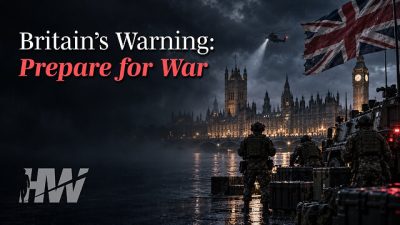
BRITAIN’S WARNING: PREPARE FOR WAR
or go to
Aletho News Archives – Video-Images
From the Archive
How Ukraine Tortured and Slaughtered Donbass
By Kit Klarenberg | Al Mayadeen | July 11, 2024
Almost immediately after the proxy war erupted, ISIS-tier footage of the torture and murder of Russians in Ukrainian custody emerged.
On July 6th, the New York Times published an astonishing investigation: In Ukraine, Killings of Surrendering Russians Divide an American-Led Unit. The article documents in grim detail how Chosen Company, an international volunteer battalion for Kiev, routinely executes Russian prisoners of war. It is the very first mainstream admission that this practice – a brazen breach of the Geneva Conventions, and a grave war crime – is widespread among Ukraine’s fighters, both foreign and homegrown. … continue
Blog Roll
 Aletho News
- Pentagon designates Chinese cultural centers national security threat
- Israel Demolishes Home Of Lebanese Journalist Whose Viral Film Exposed Pager Attack
- Record Oil, Empty Tanks: The UAE’s Miracle Recovery
- Burnham tackles Britain’s poverty with aggression in Yemen
- Peace in Ukraine: the easy way – or the hard way
- Trump & the Rrrrussians
- US taxpayer money laundered back through Ukraine – Musk
- Before COVID, an NIH lab chief proposed making a SARS-like bat virus more infectious
- Gates, Bourla on Trial in Netherlands Accused of ‘Great Reset’ Scheme at Vaccine Injury Hearing
- BRITAIN’S WARNING: PREPARE FOR WAR
- If Americans Knew
- An error has occurred; the feed is probably down. Try again later.
- No Tricks Zone
- Two New Studies Find Thwaites Glacier Melt Cannot Be Driven By Human Activity Or A Warming Ocean
- E-Cars Reduce CO2 Emissions By Only 41% Compared To Internal Combustion Engine Vehicles
- Predictions Made By Renowned Climate Professor Over Past Decades Have Been Proven To Be Poor
- New Study Suggests Large Regions Of The Pacific Ocean Have Been Cooling For The Last 80 Years
- Germany’s Green Energy Debacle: High Energy Costs Force Kahla Porzellan to Close After 182 Years!
- New Study: 50 Years Of The Most Aggressive ‘Net Zero’ Policies Can Only Affect The Global Climate By 0.03°C
- US September “Heat” Was No Record…Many Records Set Decades Ago
- Latest European Green Energy Debacle; Portugal’s Largest Flagship Solar Park Insolvent!
- Green Energy Debacle: German Expert Professor Fritz Vahrenholt Warns Of Severe Economic And Social Consequences
- Two More Paleo Reconstructions Affirm Meters-Higher Sea Levels Across Ireland, Brazil 7000-6000 Years Ago

