Top General Warns That NATO Wants to Turn Post-Soviet Space ‘Into Another Syria’
Sputnik – 08.09.2016
A top Russian general has voiced his frustration over NATO’s lack of cooperation with a Russian-led alliance involving countries from the former Soviet space, saying that the Western alliance doesn’t seem to want countries in the former USSR to ally with one another, allowing NATO pick them off one by one at their leisure.
Speaking at a press conference in Moscow on Wednesday, Col. Gen. Nikolai Bordyuzha, secretary general of the Collective Security Treaty Organization, a military alliance involving six post-Soviet states, including Russia, Belarus, Armenia, Kazakhstan, Kyrgyzstan and Tajikistan, had some harsh words for Russia’s NATO partners.
The North Atlantic Alliance, he said, has been consistently opposed to any military integration between Russia and its partners in the CSTO, and the reason is that NATO wants to deprive these countries of their collective security guarantees.
“Why do you think NATO does not cooperate with the CSTO?” the general asked. “It’s simple – they have no need to support processes of [defense] integration. This way, things will be like in Syria, and nobody will be able to let out a peep. The country is being pounded, and there’s no one to help them, since it didn’t have any allies. And this is the situation they want to create for us as well,” Bordyuzha said, referring to the members of the CSTO.
Furthermore, the officer warned that the Western media has been engaged in what he called campaign of information warfare against the CSTO. “They will tell lies all day, every day. Everything that is being said about the CSTO is presented in a way that’s the opposite to how things are in reality,” Bordyuzha noted. “This is done, for example, in order to ensure that Tajikistan was not together with Russia,” he added.
Ultimately, Bordyuzha suggested that the Western political, media and military effort’s “most important task is to splinter our unity, to separate our nations into our own ‘national apartments’, and to dictate their terms to everyone individually.”
In this scenario, the officer emphasized that while the CSTO has absolutely no plans to fight a war of aggression against NATO, neither does it fear an attack by the Western alliance. “That’s why the CSTO exists,” Bordyuzha quipped.
The Collective Security Treaty Organization, formed in 1992, shortly after the collapse of the Soviet Union, integrates the defense capabilities of six former Soviet republics, including Russia, Belarus, Armenia, Kazakhstan, Kyrgyzstan and Tajikistan. Afghanistan and Serbia became observers to the organization in 2013. Former members include Azerbaijan, Georgia and Uzbekistan.
Signatories to the alliance are not able to join other military alliances, and aggression against one member is considered aggression against all.
The CSTO holds yearly command exercises and drills to improve coordination between its states militaries, the most recent being Cooperation-2016, which took place last month in Russia’s Pskov region.
Lawmaker hints at US role in turmoil around Russian borders
RT | July 21, 2016
The recent violent events in Turkey, Armenia and Kazakhstan could have been provoked by special services “from across the ocean,” a Russian MP working on the committee in charge of Eurasian integration has commented.
“In my opinion these are all links in one chain. The events in Turkey, Armenia and in Aktobe, Kazakhstan, are all connected and were all provoked from abroad. I think that special services from across the ocean are dealing with these issues, destabilizing the situation in these countries,” the deputy chair of the State Duma Committee for Eurasian Integration and Commonwealth of Independent States, Kazbek Taisayev, told Life news portal.
The MP said that Western nations were not interested in a calm situation near Russian borders and took steps to prevent such developments.
“As soon as we start a normal dialogue with our neighbors, something immediately happens in these countries,” he said.
“We need to unite our efforts, I think that we have enough political will to render mutual help to poor nations,” Taisayev stated.
The comment came shortly after a group of radical nationalists stormed and captured a police station in Armenia’s capital, Yerevan, killing one policeman and taking several more hostage. The attackers demanded the release of Armenian opposition figure Jirayr Sefilyan, who was detained last month after authorities reportedly uncovered a plot to seize several buildings and telecommunication facilities in Yerevan.
The standoff continues and on Wednesday night Armenian police used tear gas to dissolve a rally of Sefiyan’s supporters in central Yerevan.
In early June, a group of radicals raided two gun shops, hijacked a bus and attacked a military base in the city of Aktobe, Kazakhstan, killing at least five people and wounding 10 more. Police fought off the terrorists, killing four of them and arresting seven more.
This week two people allegedly connected with radical Islamist groups opened fire at a police station in Kazakhstan’s largest city, Almaty, killing seven people and injuring nine more. President Nursultan Nazarbaev has called the attack an act of terrorism.
On July 15, an attempted military coup took place in Turkey. A large group of military officers attempted to seize power, displacing President Recep Tayyip Erdogan. However, their plans were thwarted by police and thousands of ordinary people who took to the streets of Ankara and Istanbul. According to Turkish authorities 246 government supporters and at least 24 coup plotters were killed during the conflict. Thousands of Turkish military and law enforcement personnel were arrested and fired in the large-scale purge that followed these events.
On Wednesday, Erdogan announced the introduction of a state of emergency in Turkey for three months.
Erdogan and the government have said that the attempted coup was masterminded by Muslim cleric Fethullah Gulen who is currently living in the United States. Ankara also demanded Gulen’s extradition.
READ MORE:
Protesters clash with police in Yerevan amid ongoing hostage situation
5 killed, 9 injured in Almaty terrorist attack on police station (GRAPHIC)
‘Russia set to fund railway line between Iran, Azerbaijan’
Press TV – July 3, 2016
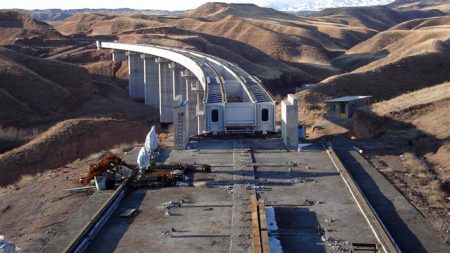
Russia is reportedly poised to finance a railway line connecting Iran with its northern neighbor Azerbaijan.
According to Tasnim news agency, head of the press service of Azerbaijan Railways OJSC Nadir Azmammadov, has said that Russian Railways OJSC has discussed the terms of its participation in the financing of the Rasht-Astara (Iran)-Astara (Azerbaijan) railway with the related parties in the Azeri capital, Baku.
The report said representatives of the railways of Azerbaijan, Iran and Russia attended the talks in which the Azeri side informed the partners about the projects and tasks ahead.
Baku believes the international transport corridor will improve Azerbaijan’s transit potential as well as its ties with the other two countries.
Participants in the talks reportedly signed a final protocol.
The trilateral railway project is aimed at connecting Northern Europe with Southeast Asia.
The railway line will initially transport five million tonnes of cargo when it is launched in the near future.
Last November, Iran and Russia signed an agreement worth 1.2 billion euros to electrify a train line, linking north-central Iran to the northeastern border with Turkmenistan.
The agreement signed between Russian Railways and the Islamic Republic of Iran Railways (RAI) envisages constructing power stations and overhead power lines along the Garmsar-Sari-Gorgan-Inche Burun route in Iran.
“The implementation of the contract will improve the capacity of passenger trains and raise transit to 8 million tonnes,” said RAI Managing Director Mohsen Poursaeed-Aqaei who signed the document.
The train line, among the first in Iran with a history of 80 years, extends to Turkmenistan and Kazakhstan and links the Central Asia to the Persian Gulf and beyond.
The project was also set to be financed by the Russian government and would be implemented in 36 months, which includes manufacturing all electric locomotives inside Iran, electrifying 495 kilometers of railway and building 32 stations and 95 tunnels.
Hybrid Wars 4. In the Greater Heartland (III)
By Andrew KORYBKO | Oriental Review | April 8, 2016
(Please read Part I and Part II prior to this article)
Turkmenistan:
The threat facing Turkmenistan is less of a Color Revolution than an Unconventional War. The catalyst for this conflict would be a terrorist invasion coming from Afghanistan that unexpectedly sweeps northwards along the Murgab River. Such an offensive doesn’t even have to reach the national capital in order to be successful, since all that it really needs to do is capture the city of Mary, the capital of the resource-rich Mary Region. This part of the country contains the lion’s share of Turkmenistan’s gas reserve, which includes the massive and decades-long functioning Dauletabad Field and the newly discovered Galkynysh Field, the latter being the world’s second-largest find.
It wouldn’t be all that difficult for terrorists to take over this plot of land either, since the Murgab River is scattered with tiny villages along its banks that could provide cover from government airstrikes and places to provoke pitched battles from. The fertile land nearby is endowed with agricultural potential that’s surely being stored somewhere closely accessible, and this could help feed the occupying forces until greater conquests are made. In short, the Murgab River is the most militarily and logistically sustainable route for an ISIL-like invasion of Turkmenistan, and it leads straight to the gas heart of Eurasia that’s critically connected to China and will possibly be linked to India in the coming decade as well.
The risk of terrorists gaining control of the largest source of China’s gas imports and possibly even destroying the facilities is too much for multipolar strategists in Beijing and Moscow to bear, and it’s assured that they’ve already engaged in some sort of unofficial contingency planning with their counterparts in Ashgabat. An anti-terrorist Chinese intervention is largely precluded due to geographic distances and a lack of support and logistics facilities en route, but the Russian military has no such hindrances and would be much more likely to assist the Turkmen authorities if called upon to do so. This is of course a last resort and would only be commissioned if Turkmenistan proves itself unable to stem the terrorist tide and defend its gas infrastructure, but such an event is most assuredly being planned for just in case the Turkmen-Afghan border proves to be just as fragile of a defense against terrorists as the Syrian-Iraqi one was before it.

Kazakhstan:
Kazakhstan and the other three remaining states of former Soviet Central Asia are greatly at risk of a “Central Asian Spring” breaking out in the Fergana Valley, and Part IV of the Greater Heartland series will focus exclusively on this ever likely scenario. Accordingly, the rest of this section will explore the other Hybrid War vulnerabilities facing these four countries.
The geographically largest state in the Greater Heartland region is surprisingly immune from many of the conventional socio-political factors that lead to Hybrid Wars (excluding the variables that will later be discussed about the “Central Asian Spring”). If one was blind to the domestic and international contexts pertinent to Kazakhstan, then they’d be inclined to believe that the Russian population constitutes the greatest threat to the country’s sovereignty, although this couldn’t be anywhere further from the truth. Theoretically speaking, this demographic satisfies all of the criteria necessary for sparking a Hybrid War, but Kazakhstan’s multipolar alignment with the Eurasian Union and respectful treatment of this influential minority group precludes any chances that they or Russia would ever try to move forward with this scenario. On the reverse, the very inclusion of such a large Russian minority within Kazakhstan ties Astana and Moscow closer together than just about any other state in the former Soviet Union and works to enhance, not deteriorate, relations between them.
The only vulnerability in this relatively secure setup is if the US and its proxy NGO affiliates succeed in brainwashing the Russian-Kazakh population with Pravy Sektor- and Navalny-esque extreme nationalism, which could then create a delicate geopolitical situation where the raucous Russian minority agitates against Astana and attempts to drive a wedge between Kazakhstan and Russia. Security officials in both states are likely well aware of this obvious scenario and can be predicted to have rehearsed coordinated contingency measures for responding to it. Nonetheless, if such a virulent, discriminatory, and destructive ideology as “Greater Russian Nationalism” is allowed to fester in multicultural Kazakhstan and parts of the Russian Federation itself, then a scandalous outbreak in the Near Abroad could provoke a simultaneous cross-border event inside of Russia, especially if ‘sleeper sympathizers’ organize anti-government protests against Moscow’s “betrayal” of its compatriots out of its refusal to replicate the Crimean scenario in Northern Kazakhstan.
Another destabilization possibility that mustn’t be discounted in Kazakhstan is a repeat of the Zhanaozen riots, the ‘localized’ Color Revolution attempt that was sparked by a simmering labor dispute in 2011. The oil field workers were fed up with what they complained to be poor working conditions, low wages, and unpaid salaries, and this created an attractive atmosphere for Color Revolutionaries to exploit. Keeping with Color Revolution tradition, the riots started on 16 December, the 20th anniversary of Kazakh independence, and were presumably expected to signal the beginning of the regime change attempt to other cells across the country, almost one year to the day that the “Arab Spring” Color Revolution first broke out in Tunisia.
Seething with preexisting anger, the workers were extraordinarily easy to exploit, and the carnage they committed killed over a dozen people and injured more than 100 before a state of emergency and necessary military intervention restored order. The authorities’ decisive reaction and the multicultural, patriotic identity of most Kazakhs can be credited with preventing the spread of the Color Revolution virus from the distant Turkmen border all the way to centrally located capital, but the strategic lessons that can be learned from this episode are that: labor disputes and organizing could be both a cover and spark for a Color Revolution; and that destabilizations could start outside of the major cities and originate in the far-flung provinces.
Kyrgyzstan:
This tiny mountainous republic is notably split along a steep North-South divide, with the capital of Bishkek being located along the northern plains while the major population centers of Jalal-abad and Osh reside in the southern Fergana Valley. The clan-based nature of Kyrgyz society has played a strong role in influencing the political system, and this has consequently created identity resentment among whichever group was disproportionately underrepresented at the given moment. Although the situation has relatively stabilized and become somewhat more ‘equitable’ since the 2010 Color Revolution, clan-based tension and its geographic affiliations are still deeply ingrained in the national psyche, and any visible calmness simply belies the aggravating tensions that lay just beneath the surface. As confirmation of this assessment, one need only remember the misleading “stability” that many had inaccurately judged to be prevalent in the country just prior to the 2005 and 2010 Color Revolutions, and after witnessing the ferocious clan-based and ethnic violence that exploded after each of them, it’s improbable to assume that the individual drivers of such identity conflicts simply disappeared on their own after only half a decade.
What really happened is that they went underground as usual and abstained from the national discourse, while still remaining psychologically mobilized and ready to act the moment a future destabilization distracts or dissolves the security forces and provides another strategic opening for settling unresolved blood feuds that still linger from last time. The most violent-prone area of Kyrgyzstan is its southern Fergana region that abuts Uzbekistan, and it’s here where radical Islamic elements have taken root. The difficulty in forcibly eradicating them is that any major Kyrgyz security operation so close to the Uzbek border, let alone one that potentially targets ethnic Uzbeks, could create a hostile impression towards much-stronger Uzbekistan, which in turn could use the events as a pretext for activating a prearranged plan to mobilize in response to the ‘human rights violations’ allegedly being committed against its ethnic compatriots. Tashkent’s geopolitical loyalty has always been nebulous and ill-defined, and the country’s been working more closely with the US ever since the 2014 drawdown in Afghanistan. Washington needs a Lead From Behind partner in Central Asia, and it’s possible that Uzbekistan has been designated this role, which if it doesn’t comply with, could lead to the “Central Asian Spring” scenario that will soon be discussed.
To return to the Hybrid War threats facing Kyrgyzstan, it’s important to highlight that the country’s mountainous terrain is very accommodating to guerrilla warfare. The southern mountain ranges are sparsely populated and the government barely has any presence in some of the more isolated areas. Looking at the regional geography at play, it’s conceivable that Fergana-based terrorists could receive weapons and fighters from Afghanistan by taking advantage of the lack of governance present in Southern Kyrgyzstan and Tajikistan’s Gorno-Badakhshan Autonomous Region. After all, this route is already used to smuggle tons of drugs, so it’s certainly possible that it could be used to transport terrorists and weapons along the way as well (if this isn’t being done already). It’s very difficult for the Kyrgyz authorities to exert full control over this region because of tight financial and human resources, a current prioritization on the more populated areas, and the inhibitive geography involved.
To emphasize the last point, wintertime typically renders all of the few north-south roads impassable and strands the mountainous southern-based citizens in their villages for the duration of the season. This effectively splits the country into two, and if timed to coincide with a Hybrid War, then it could give the regime change insurgents active in that region enough time to consolidate their gains and prepare for the hostilities that would inevitably recommence after the snow melts in spring. When one thinks of a terrorist-driven “caliphate”, the last thing that probably comes to mind is a mountainous, snow-covered retreat, but this is exactly what ISIL or any likeminded group could feasibly create in Southern Kyrgyzstan if they played their cards ‘right’. It would be extremely challenging to dislodge the terrorists in such a scenario, and the danger in doing so would critically spike if it were revealed that they had access to anti-aircraft weapons. The Kyrgyz military would obviously be unsuited for such a difficult task and would have to resort to their Russian partners in the CSTO for assistance, with Moscow predictably helping through a combination of drone surveillance and air strikes just as it’s currently doing in Syria at the moment.
Tajikistan:
The threat facing Tajikistan is structurally similar to the one in Kyrgyzstan, and it’s that the country’s large swath of mountainous geography could be exploited by terrorist groups in facilitating smuggling routes or providing cavernous shelter. It goes without saying that Tajikistan’s border with Afghanistan is perhaps its greatest vulnerability, but some respite could be found in the fact that there are more ethnic Tajiks in Afghanistan than in Tajikistan, and that if this community were properly mobilized to its fullest extent, then it could provide an effective bulwark against the Taliban and other terrorist groups. At the moment, however, this doesn’t seem to be the case, since the Taliban was able to briefly capture the northern provincial capital of Kunduz at the end of September and achieve their greatest military success since 2001.
Up to this point, it had been largely assumed that this part of Afghanistan was the least welcoming to the Taliban owing to the valiant history of the Northern Alliance and the relatively secular Tajik community that inhabits the region. What Kunduz taught observers is that these two factors are no longer the strongest determinants of regional security, and that the Taliban has succeeded in the past decade and a half in proselytizing their ideology, gaining sympathizers, and infiltrating enough fighters into the area so as to set up an effective base of operations. The converts that they’ve claimed, the supporters that they’ve acquired, and the terrorists that they’ve relocated to Northern Afghanistan all played an integral role in the Taliban’s capture of Kunduz, and just because they had to conventionally retreat from the city doesn’t mean that their soft infrastructure had to withdraw as well. The reason that this is relevant to Tajikistan is that it proves that the Taliban have a strong presence right along the Amu Darya river border and that fears about their cross-border militant potential are not misplaced.
More domestically, however, the greatest threat comes from the Islamic Renaissance Party, the newly banned organization that represented the last legal party of political Islam in the region. The process was in the works for a while, but ultimately it was decided that the group was full of terrorists and needed to be shut down as soon as possible, with the decision being spurred by rogue former Deputy Defense Minister Abdukhalim Nazarzoda’s coup attempt earlier that month. He and a group of followers slaughtered over 30 soldiers in the capital of Dushanbe before fleeing into the mountains where they were finally hunted down and killed a week later. The subsequent investigation revealed that the deputy head of the Islamic Renaissance Party, Mahmadali Hayit, had consorted with the coup plotters earlier in the year and that 13 members of the party were suspected of being involved in the attacks, so it makes absolute sense that the organization would be outlawed soon thereafter in the interests of national security. At the same time, however, the proclamation came so abruptly that the authorities didn’t have time to completely extinguish the organization, and countless sympathizers and probable sleeper cells can be assumed to be embedded in society. Whether they’ll make the transition to militant action on behalf of the terrorist organization or repent for their prior allegiance to it and disown its ideology remain to be seen, but the actionable threat remains nonetheless and is obviously a destabilizing factor that could be leveraged in any coming Hybrid War against Tajikistan.
Uzbekistan:
Aside from the “Central Asian Spring” scenario that will be detailed in Part IV, there are still quite a few other Hybrid War threats facing the region’s largest country. Uzbekistan is first and foremost threatened by a complete breakdown in law and order stemming from a succession crisis after the passing of Islam Karimov. The author previously explored the contours of these chilling possibilities in his piece “Uzbekistan’s Bubbling Pot Of Destabilization”, but to concisely summarize, the clan-based nature of Uzbek society coupled with the competition between the National Security Service and the Interior Ministry creates a cataclysmic scenario where a black hole of disorder arises in the heart of Central Asia and rapidly spreads throughout the rest of the region.
The only thing that could stop the previously held-together society from dramatically decentralizing down to Somalian-style warlordship would be the rapid reconsolidation of power under one of the two competing security agencies, but since their rivalry could predictably intensify in the days following Karimov’s death (and with the resultant security breakdown this would entail if they focus more on one another than on their designated subjects), it can’t be precluded that Uzbekistan could unravel before anyone realizes what even happened. Of course, if Karimov publicly designates a successor prior to his death or steps down and allows his designee to rule before then, this could potentially assuage the risks inherent in this scenario, but it doesn’t look too likely that this would happen, nor would these steps prevent the rival agency from attempting a major power play the moment the ‘head honcho’ inevitably dies anyhow.
Parallel with this possible tumult could be an explosion of terrorism from the Islamic Movement of Uzbekistan, Hizb ut Tahrir, ISIL, the Taliban, some yet-to-be-named organization, and/or a combination of these groups, which would exacerbate the already deteriorating security situation in the country and divide the security services’ focus even more. There’s also the likelihood that the Taliban or ISIL might even make a conventional move on Uzbekistan amidst the greater breakdown of regional order, which in that case would usher in a global crisis similar to the one that transpired when ISIL crossed into and began conquering Iraq.
Therefore, true to the theory of Hybrid War, any type of social disruption in the tightly controlled Uzbek society, be it through a Color Revolution, succession crisis, or a combination of factors, would create a tantalizing opportunity for Unconventional Warriors to rise up against the state and increase the odds of regime change. In this case, if there’s no real government in power at the moment, then it would prolong the “regime vacuum” and amplify country’s disorder until it reaches the critical point of spreading to its neighbors. Therefore, in such a scenario as the one previously described, it’s important for some leader or leading entity (e.g. military junta) to assume power as soon as possible in order to preempt a regional breakdown. In hindsight, it was precisely this quick emergence of leadership, however weak and fragmented, that emerged in Kyrgyzstan after the 2010 Color Revolution that helped to miraculously contain the chaos and prevent it from turning into a “Central Asian Spring”.
Before addressing this curious concept that’s been alluded to a few times already, it’s necessary to briefly touch upon a minor socio-political factor in Uzbekistan that shouldn’t be overlooked when discussing forthcoming disorder there. The autonomous republic of Karakalpakstan is a little-known administrative entity in the former Soviet Union that handsomely sits atop rich oil and gas reserves and provides transit to two energy pipelines to Russia. The dried-up majority of the Aral Sea has endowed the region even more oil and gas than was previously accessible, meaning that Karakalpakstan will likely become more important than ever to the Uzbek state.
Still, its energy potential isn’t the exact reason why the autonomous republic is brought up when discussing Hybrid War scenarios, since there lately have been whispers of a Karakalpakstan “independence” movement that provocatively wants to join Russia. In all probability, this isn’t a genuine movement but rather a proxy front controlled by the US to advance the objective of straining the already frayed ties between Russia and Uzbekistan. The appearance of a “pro-Russian” separatist organization at the crossroads of Uzbekistan, Kazakhstan, and Turkmenistan isn’t incidental, and its’ designed to destabilize the entire region if ever given the opportunity. On its own, the Karakalpakstan “independence” movement is powerless to do anything to upset the Central Asian balance, but in the event that the eastern more populated part of the country descends into bedlam following one or some of the abovementioned scenarios, then it’s likely that this group will emerge from the shadows (or more likely, be parachuted or infiltrated into the theater) to violently lay stake to its secessionist claim so that it can then transform into an American protectorate.

To be continued…
Andrew Korybko is the American political commentator currently working for the Sputnik agency. He is the post-graduate of the MGIMO University and author of the monograph “Hybrid Wars: The Indirect Adaptive Approach To Regime Change” (2015). This text will be included into his forthcoming book on the theory of Hybrid Warfare.
Russian Ties in Central Asia Threaten US Interests – CENTCOM Chief Nominee
Sputnik – 09.03.2016
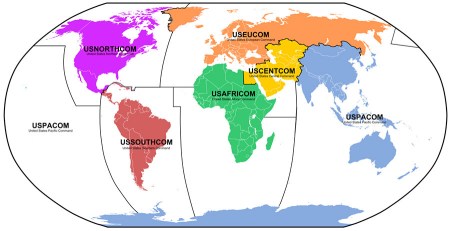
WASHINGTON — CENTCOM commander nominee General Joseph Votel said that Russia’s trade and military relationships with neighboring Central Asian states threaten US interests in the region.
Russia’s trade and military relationships with neighboring Central Asian states threaten US interests in the region, US Central Command (CENTCOM) commander nominee General Joseph Votel said in testimony to the Senate Armed Services Committee on Wednesday.
“Russia has moved to assert itself in Central Asia through a combination of military, economic and informational means in an effort to resurrect its great power status and hedge against perceived instability emanating from Afghanistan,” Votel stated.
After 14 years, the United States has reduced its military presence in Afghanistan to 9,800 troops, with plans to reduce troop levels to 5,500 by 2017. In the past year, Taliban militants and Daesh terrorist fighters have been on the rise in Afghanistan, prompting US commander of operations there, General John Nicholson, to describe the conditions in the country as “deteriorating.”
Votel further argued that Russian security partnerships with former Soviet states in Central Asia “make it difficult for the United States” to deepen defense ties in the region, which he described as a “key US interest.”
Since 1992, Russia has partnered with neighboring nations in the Collective Security Treaty Organization (CSTO). Russia also founded the Eurasian Economic Union in 2014, to further regional economic development among member nations including Armenia, Belarus, Kazakhstan and Kyrgyzstan.
Another Day, Another Billion for Color Revolutions Near Russia’s Borders
Sputnik – February 13, 2016
Last week, the Obama administration proposed its final, 2017 fiscal year budget proposal to Congress. Among the proposed outlays is a State Department request for nearly a billion dollars to counter “Russian aggression” and “promote democracy” in the former Soviet Union. In other words, Washington thinks the region needs more color revolutions.
On Tuesday, the State Department and USAID held a special joint briefing, laying out a $50.1 billion spending request for 2017, including $953 million in “critical support for Ukraine and surrounding countries in Europe, Eurasia and Central Asia to counter Russian aggression through foreign assistance and public diplomacy.” The funds, officials specified, would go toward “enhancing access to independent, unbiased information; eliminating corruption and supporting rule of law; strengthening civil society; enhancing energy security, supporting financial reforms, trade, and economic diversification; and increasing some defense capabilities” in countries including “Ukraine, Georgia, and Moldova [and] in Central Asia.”
The spending would be separate from the proposed $3.4 billion (up from $789 million in 2016), provided by the so-called “European Reassurance Initiative,” which aims for “a significant reinvestment in the US military presence in Europe after decades of gradual withdrawal” to counter “the growing threat Russia poses to long-term US national security interests in Europe and beyond.”
With most of the Western media basically ignoring the plans and focusing on other aspects of the budget’s whopping $4 trillion in proposed spending, Russian security analysts, naturally, couldn’t let this ‘minor detail’ simply slip by unnoticed, given that the spending proposal is openly oriented against Russia.
Analyzing the State Department’s proposed new spending spree, Svobodnaya Pressa columnist Andrei Ivanov says that the outlays raise as many questions as they answer.
“It’s not difficult to guess what is implied by [the proposed spending for] ‘democratization,'” the journalist noted. “However, several questions arise. Firstly, this year, the State Department has already allocated $117 million ‘to support democracy’ in Ukraine, and $51 million for Moldova and Georgia. But in these countries, so-called color revolutions have already taken place, and the Americans have already almost achieved what they set out to do.””Secondly, it’s unclear what kind of ‘countering of Russian aggression’ the State Department means in relation to Central Asia. Kazakhstan and Kyrgyzstan have long been oriented toward Moscow, and even joined with Russia in the common customs area of the Eurasian Economic Union. Kazakhstan, Kyrgyzstan, and Tajikistan are also part of the Collective Security Treaty Organization’s unified security system. Russia has also signed a series of bilateral cooperation agreements with Uzbekistan.”
The proposed spending, Ivanov notes, “assumes a serious US commitment to pursuing its [geopolitical] goals, which threatens Russia with obvious negative consequences. The question thus arises about the countermeasures our country might take in response.”
“According to experts, on the eve of the coup d’état in Ukraine in 2014, over two thousand non-governmental organizations were created, from training camps for militants to various clubs of political scientists and media workers.”
Unfortunately, the journalist recalls, “Moscow relied more on the agreements reached with Ukrainian elites; the result was disastrous. Today, the question again arises about the need to work actively with the civil society of neighboring states.”
Asked to comment on the State Department’s new spending proposal, Andrei Manoilo, a professor of political science at Moscow State University, expressed a commonly held view among Russian security professionals.
Namely, the professor told the newspaper, “when Washington talks about spreading democracy, and allocates money for this purpose, it is referring to ‘color revolutions’ – the overthrow of undesirable regimes and the drive to bring puppets who mimic democracy to power.”
“Factually, these countries find themselves under American control. Ukraine is a vivid example. Until recently, Georgia too served as a good example, with each department and ministry in the country featuring an advisor and curator from the State Department. In Ukraine, supervision is carried out through the US Embassy, and through officials loyal to Washington, charged with implementing its instructions.”
As for the earmarking funds for countries which have already undergone color revolutions, Manoilo explained that the money “is allocated for the purpose of maintaining the stability of the dependent regime.” This is especially true in Ukraine’s case, he said. It is also meant “to ensure the loyalty of local elites.”
In Georgia’s case, “after Mikheil Saakashvili resigned from his post and was forced to flee the country, the American position weakened somewhat, mainly due to the perceived negativity which the color revolution had brought the country. So here, the US [spends] in order to maintain its influence. It is also possible that the US is considering ensuring the loyalty of Georgian elites by ‘nourishing’ cyclical color revolutions, thus carrying out a rotation of the elite.”
As for Central Asia, the State Department announcement seems to indicate, according to Manoilo, “that color revolutions are planned there as well. The Americans need to see regime change in the countries which, for the most part, are oriented toward Russia. In Central Asia, Moscow has several projects geared toward integration, including the Shanghai Cooperation Organization and the CSTO. Today, the countries in the region face a difficult situation, with disintegratory processes growing among them.”
In Tajikistan, the professor warned, the State Department may attempt to reignite the embers of the country’s civil war, which took place between 1992-1997, taking advantage of disagreements between the country’s north and south. “US NGOs, which operated freely in the country until recently, are taking advantage [of discontent] among both northern and southern elites. It was not until about a year ago that President Emomali Rahmon began to restrict their activities.”In Kyrgyzstan, meanwhile, “the situation has changed little since the last color revolution. The protest mood remains strong. US NGOs and foundations have been working actively with the rural population, which is not very versed in politics, but is easy to agitate to participate in demonstrations against authorities, as the ‘melon’ revolution of 2010 demonstrated.”
In all the countries of Central Asia, Manoilo noted, “there is the strong factor of Islamist radicalism. By and large, only the presence of Russian military bases holds back an Islamist offensive in the region.”
Unfortunately, he says, “practice has shown that when it comes to overthrowing undesirable governments, the State Department easily finds a common language with even the most rabid fundamentalists. It’s sufficient to recall the color revolutions of the so-called Arab Spring. It would not be out of place to presume that the US is preparing their repetition, except this time in the post-Soviet space.”
“In addition to Central Asia, there is the southern Caucasus. Last summer, Armenia saw a rehearsal of a color revolution under non-political slogans – a new technology called the ‘Electro-Maidan’. Armenia is a Russian ally in the South Caucasus, and the US has plans for regime change, using their methods of the so-called ‘democratic transition’.”
Ultimately, Manoilo warns, “by dismantling the political order in Russia’s neighboring countries, the US wants to create a vacuum around our country. Simply put, this indicates a repeat of the Ukrainian scenario. After all, until very recently it was simply impossible to imagine Ukraine as a country which is hostile to Russia.” … Full article
Kyrgyzstan becomes 5th member of Russia-led Eurasian Economic Union
RT | August 5, 2015
Kazakhstan was the last member of the Eurasian Economic Union (EEU) to adopt the accession of Kyrgyzstan to the bloc. Kazakhstan’s President Nursultan Nazarbayev signed a corresponding law on Tuesday.
Before that, the document was ratified by the EEU members Armenia, Belarus and Russia. Kyrgyz President Almazbek Atambayev signed a bill on his country’s accession to the EEU on May 21.
Atambayev told TASS last week that Kyrgyzstan would open its customs borders to other EEU member states soon. According to Kyrgyz Minister of Economy Oleg Pankratov, Kazakhstan decided to abolish sanitary and quarantine control on the state border with Kyrgyzstan. Kazakhstan is the only EEU bloc country to have a border with Kyrgyzstan.
The Eurasian Economic Union was started in 2015 based on the Customs Union of Russia, Kazakhstan and Belarus. Armenia soon joined the union. The bloc was launched to ensure the free movement of goods, services, capital and workforce within its borders.
Many countries have expressed interest in setting up a free trade zone with the EEU. Vietnam has already signed the agreement, while India is on the way. Thailand is expected to launch a free trade zone with the EEU in 2016. Syrian Prime Minister Wael Halqi said in July that Damascus wants to join the Eurasian Union and set up customs-free zone to boost economic relations with friendly states.
Russia: Iran to join SCO after sanction lifted
Press TV – July 8, 2015
Iran will join the Eurasian economic, political and military bloc, the Shanghai Cooperation Organization (SCO), after sanctions are lifted on the country, a Russian presidential aide has said.
The announcement came after foreign ministers of the organization met ahead of a summit by SCO and BRICS leaders in the Russian city of Ufa.
“The Iranian application is on the agenda for consideration. Sooner or later, the application will be granted after the UN Security Council sanctions are lifted,” Interfax quoted Russian presidential adviser Anton Kobyakov as saying.
Iran and the P5+1 group of world countries are currently involved in make-or-break talks in order to reach a nuclear agreement which would have sanctions lifted on Tehran.
Russian Foreign Minister Sergei Lavrov told Interfax that the removal of a conventional arms embargo on Iran is a “major problem” in the negotiations.
“I can assure you that there remains one major problem that is related to sanctions: this is the problem of an arms embargo,” he said in Vienna.
Iranian President Hassan Rouhani will head to Russia on Thursday to participate in the summit of SCO and BRICS nations.
Iran has an observer status on SCO, awaiting the removal of sanctions to become a full-fledged member.
SCO currently consists of China, Kazakhstan, Kyrgyzstan, Russia, Tajikistan, and Uzbekistan. Kobyakov said the organization has received 11 new applications for membership, including from Egypt.
Russian officials have said India and Pakistan will join SCO as full members after years of holding observer status as Prime Ministers Narendra Modi and Nawaz Sharif will join regional leaders in Ufa.
The Iranian president will attend the BRICS summit of Brazil, Russia, India, China and South Africa as a special guest and will also deliver a speech to the event.
The BRICS accounts for almost half the world’s population and about one-fifth of global economic output. Its New Development Bank is seen on course to challenge the dominance of US-led World Bank and International Monetary Fund.
Wolf Pack vs. Bear
By Anne Williamson | LewRockwell | April 16, 2015
Having now had a year’s time to get better acquainted with their new Ukrainian friends and the neighborhood overall, Europeans are losing their taste for economic sanctions on Russia.
Contrary to American assurances, economic warfare against Russia meant to compel the return of Crimea to Ukraine hasn’t worked. Nor did the Ukrainian military’s campaign against the Donbas tame the Russian “aggression” mainstream media shouts about daily. All Europe has achieved to date is tens of billions in lost trade and Russia’s abandonment of the South Stream pipeline.
The Russians were building South Stream to insure the – politely put – “integrity” of gas flows to Europe while in transit across Ukraine, and put an end to the country’s 24-year racket of holding Russia’s energy commerce with Europe hostage by virtue of having inherited a key segment of the Soviet pipeline network. The loss of jobs and transit revenues their participation in the construction and operation of South Stream promised was keenly felt in Hungary, Bulgaria, Serbia, Slovenia, Croatia, Macedonia and Bosnia-Herzegovina. Austria, France, Italy, Cyprus, Luxembourg, the Czech Republic and Germany have all taken serious losses thanks to the trade sanctions as well.
Trade and employment losses coupled with some USD 40 billions more in IMF loans to Kiev, whose proceeds are most likely to be spent – at the US’s insistence – on yet more war, and the growing misery of all the Ukrainian people are typical of the now familiar results of US-organized sedition abroad. However, those results are usually observed in militarily weak, third world nations the US chooses to undermine for whatever reasons, and certainly not on the continent their most loyal and most capable allies occupy.
Besides which, the whole cockamamie story the US has been pushing vis a vis Crimea is falling apart. The fact that one year on there are no Crimean protests and no “Back to Kiev!” grass root committees has undermined the entire premise of the sanctions. Even year long multiple polling by western agencies has shown that large majorities of Crimeans have no regrets concerning the 2014 reunification with their motherland of some 300 years.
In truth, the world owes a debt of gratitude to the Russians. While US State Department operatives busied themselves in Kiev with constructing an interim, post-coup government of fascist stooges and native oligarchs, the Russians’ deft and lightening re-absorption of a willing Crimea took the meat right off the table. The American greenhorns in Kiev were left dumbfounded, and hopping mad.
With the Black Sea port of Sevastopol safely in Russian hands, and the country’s immediate strategic interests secure, there was no need for war. Given time, the Russians know Ukraine as presently constituted will defeat Ukraine, and that not even a Himalaya of dollars and the sacrifices of several generations of Ukrainians will put the country back together again. Default will be Ukraine’s only escape route.
But it is the antics of hyperbolic NATO operatives (Dragoon Ride, a Conga line of armored Stryker vehicles and troops rolling across Europe from the Baltics to central Europe in a “show of force,”) the bloviating of chest-beating US generals (the only way “to turn the tide” is “to start killing Russians”) and the dumb bellicosity of the US Congress for having authorized the export of lethal weaponry to Kiev that finally got the EU leadership looking sideways at one another. Just exactly what has the US gotten them into?
But it was the EU itself who bought, by bits and by pieces, into America’s scheme. The events in Ukraine have left the European Union naked before her own members’ populations, exposed as a highly-bureaucratized system of US vassalage so thoroughly in harness individual nations actually agreed to harm their own economies in pursuit of US policies. There’s a reason for the EU’s acquiescence: The EU and its leadership stands to gain should State Department neoconservatives deliver on their promises. The EU will get bigger and its artificial and suffocating institutions more deeply entrenched.
How so?
The only direction in which the EU can expand is to the East. Ukraine, Moldova, Transdniestr, Armenia and Georgia were all believed ripe for the taking, and each is or was being pursued with EU “association agreements,” which subvert each country to EU dictates while holding the prize of EU membership in abeyance.
Absorbing such contrarily-organized lands is the work of decades. No matter. Their capture alone will enable the ECB to go on an immediate super-binge of vendor financing, which it is believed will conjure up jobs, export profits, and, the ECB (European Central Bank) hopes, a new round of euro-based credit expansion and piratization that will, in the fullness of time, strip the newly “associated” lands and their citizens of their savings and property. Once the fiat money-engineered boom begins to fade, the expectation is that ongoing economic warfare against Russia, directed and policed by the US, will at last bear fruit. Only a small shove and a slight push will be needed to topple and then shatter Russia into bite-sized pieces for the west’s further consumption.
So set upon this course is the US that the White House’s recent offer of a slippery framework to Iran to conclude the Israeli-manufactured dispute over the country’s nuclear enrichment program has the look of arbitrage, indicating there are limits to just how much havoc Washington can create and oversee abroad. Besides, Iran is currently useful in the conflict with the US-created ISIS. With sanctions lifted, the flood of Iranian oil and gas coming to market would further harm Russia’s economic interests while supporting the building of new pipelines to Europe originating in the Middle East and North Africa (under indirect US control) and sparing any further need for US ally Saudi Arabia to continue pumping low-priced oil for which there is insufficient global demand.
As long as Angela Merkel keeps Germany on board, and Germany continues to fund the stagnant EU, the US’s high-tech version of a medieval siege of the Kremlin can proceed.
With new multilateral treaties agreed under cover of tax and banking transparency (FATCA) now in place, the US is well on its way to being able to track in real time every currency unit on the planet that is emitted, earned, deposited, withdrawn, spent, invested, loaned, and borrowed by means of the banks, long seen as a US-engineered globalism’s most effective police force. European governments’ war on cash is meant to insure all commerce will flow through the banks and therefore be recorded. These new surveillance capabilities will be exploited to the maximum in the case of both Russia and hesitant Europeans for the purposes of blackmail, extortion, and control.
In a digital battlescape staffed by the west’s soldiers of finance, winter will not save the Russians.
Another attack strategy the US is about to deploy, drawn not from history but from nature, is that of the wolf pack. Though NATO troops will bedevil Russia’s borders, no western troops will actually set foot on Russian territory prior to the country’s imminent collapse. That would be dangerous, but the more proxy wars and political upheavals the US can stir up along Russia’s periphery while the motherland suffers and declines under the west’s economic blockade, the better.
Necessary and experienced personnel are being appointed and NGOs beefed up in preparation for brewing new crises and rainbow revolutions along Russia’s “soft, underbelly”: the Nagorno-Karabakh enclave, which both Armenia and Azerbaijan claim, in Kyrgyzstan where the south and the north are alienated from one another, in Uzbekistan where control of the Fergana Valley is in dispute with Kyrgyzstan, and in Georgia, which hopes for the return of Ossetia and Abkhazia. Carrots and sticks will miraculously set many a fire.
Keeping those flames under control will seriously tax Russia’s resources.
US objectives include busting up the Collective Security Treaty Organization (CSTO), whose members include Armenia, Belarus, Kazakhstan, Kyrgyzstan, Russia and Tajikistan, the Shanghai Cooperation Organization (SCO), whose members include China, Kazakhstan, Kyrgyzstan, Tajikistan, Uzbekistan, and Russia, and the Eurasian Economic Union (EAEU), whose members – to date – include Armenia, Belarus, Kazakhstan, Kyrgyzstan, and Russia.
However, there are problems with the above scenarios unfolding as planned.
US foreign policy assumes everyone on the planet wants to be an American, or – second best – a recipient of American interest and munificence, a notion which the state has successfully sold only to movie-mad foreign teenagers and naive Americans. Rather than being an advertisement for the benefits of American intervention, the Ukraine America is building might better serve as one for the beneficial avoidance of same through membership in the EAEU.
Russia is hardly new to the protection game. Armenia and Georgia, the first Christian nations on earth, soon found themselves unmoored in a sea of Islam. Each petitioned the Kremlin for inclusion into the empire. They wanted and needed the protection of the “Third Rome,” and they got it. Today Armenia wisely continues to huddle close to Russia, eschewing the opportunity of becoming a battle station in any anti-Azeri US campaign, while a US-enamored Georgia still chafes at the protection the US provides their former proxy, the corrupt Saakashvili regime. Azerbaijan has but to look at Iran to see what misfortune the US is quite willing to hand round. Uzbekistan and Kyrgyzstan have the example of their war torn neighbor, US-occupied Afghanistan, to contemplate.
US foreign policy further assumes that targets will stand still and only stare into the blinding glare of America’s oncoming headlights.
Russia’s abrupt shut down of the South Stream gas pipeline’s construction and the rapid replacement of European entry points and participants with a single exit point in Turkey from which Russian gas will flow to the rest of Europe through Greece along pipes it is now the EU’s responsibility to finance and build has put paid to that assumption. It is not only Russia that has an exploitable “soft underbelly.”
Despite the mainstream media’s shameless dissemination of western governments’ fatuous propaganda, and of what is sure to be an exploding supply of tit for tat, sufficient information is available to anyone who cares to look to determine who is destroying and who is trying to build, who is seeking peaceful co-operation and increasing trade and commerce between nations and who is demanding obedience to its diktat while waving a mailed fist.
To paraphrase Mae West, “Democracy has nothin’ to do with it.”
It is certainly an irony of history, wild and raw, that Vladimir Putin, a man who once described himself as “a pure and utterly successful product of a Soviet patriotic education,” is today seen by an increasing number of alarmed citizens worldwide as liberty’s if not civilization’s best, if inadvertent and imperfect, hope. But those souls should have no illusions. Whatever the Russian president does, he will do for Russia’s sake, not ours.
But if Russia cannot stand, we will all sink together into tyranny or eternity.
China receives gas from Central Asia via new pipeline
The BRICS Post | June 16, 2014
China, the world’s largest energy consumer, has started receiving natural gas transported through the newly constructed Line C of the crucial China-Central Asia gas pipeline network on Sunday, state media reported.
Gas transported through Line C, which is now operational, successfully reached the Horgos Port in China’s Xinjiang province on Sunday.
Line C is over 1,800 kilometers long and runs parallel to lines A and B, with the pipeline network showing Beijing’s growing clout in Central Asia as it seeks resources for the Chinese economy.
China imports about 20 bcm of gas from Turkmenistan, about half of its total gas imports, and the two countries signed an agreement last year to ramp up gas exports to 65 bcm by 2020.
Central Asia is seeking new export routes for the fuel as transport routes to Europe via Russia are now in question following the EU sanctions on Moscow over Ukraine.
China’s first large international pipeline for imported natural gas, the China-Central Asia line starts at the Turkmenistan-Uzbekistan border before passing through central Uzbekistan and southern Kazakhstan before entering China.
From Horgos in Xinjiang, the pipeline then connects with China’s West-East pipelines, to deliver natural gas across the country.
Trade between China and Central Asia has increased from about $500 million in 1992 to $26 billion in 2009, according to official Chinese figures.
The Central Asia-China gas pipeline runs all the way from China’s east coast cities to Galkynysh field, a distance of 6000 miles as it sources energy from major energy producers Turkmenistan, Kazakhstan and Uzbekistan.
China’s energy giant CNPC also plans to integrate Afghanistan into this energy network.
TBP and Agencies
Iran launches Gorgan-Incheh Borun railroad
Press TV – May 27, 2013
Iran has officially inaugurated a railroad which connects the northern Iranian city of Gorgan to Incheh Borun town along the border with Turkmenistan.
The Gorgan-Incheh Borun railroad came on stream in a ceremony attended by Iranian President Mahmoud Ahmadinejad and Roads and Urban Development Minister Ali Nikzad in Golestan Province on Monday.
The 80-kilometer long rail project, which is part of a broader railroad network, links Iran to Central Asia, Russia and China and has the capacity to annually transfer 10 million tons of goods and more than 4 million passengers.
The initial agreement on the construction of the railroad was signed between the presidents of Turkmenistan and Kazakhstan in the city of Turkmenbashi in April 2007 and Iran joined the deal in September 2007.
The 920-kilometer railroad will shorten more than 600 kilometers of the route for transporting goods from the Central Asia to the Persian Gulf, and will become one of the important international transportation links between China and Europe.
Earlier on Sunday, Nikzad said projects are underway to connect Iran’s railway system to the international network via five points.
The Iranian minister said the five projects include linking Sarakhs in the northeast of the country to Azerbaijan Republic, Khosravy in the west of Iran’s Kermanshah Province to Iraq, southern border town of Shalamche to Iraq, southeastern port city of Chabahar to the Sea of Oman as well as the one which will link Iran to Turkmenistan, Kazakhstan and China.
Related article
- Caspian Rail Corridor to link Russia to India (rbth.asia)
Featured Video

We Don’t Have to Live This Way
or go to
Aletho News Archives – Video-Images
From the Archives
9/11 Was an Israeli Job
How America was neoconned into World War IV
By Laurent Guyénot • Unz Review • September 10, 2018
… 9/11 was made possible by an alliance between secret worshippers of Israel and corrupted American elements. The question is: who, of the two, were the masterminds of this incredibly daring and complex operation, and for what “higher purpose”? … Read full article
Blog Roll
 Aletho News
- Ansar Allah’s Victory Is A U.S. Defeat
- Insider trading proves 9/11 foreknowledge
- Most Kids Can Fight Measles Naturally — and Having the Virus May Even Make Them Stronger
- We Don’t Have to Live This Way
- The Saudi cutout and the CIA shadow over 9/11
- US tanker strikes fail to deter Iran, drain interceptors: Bloomberg
- Yemeni Official Underlines Safety of Navigation after Expelling of Pro-Saudi Mercenaries from Coastal Areas
- Yemeni forces recapture strategic port city of Mokha from Saudi-backed troops
- Algeria cuts ties with UAE over interference, destabilization
- Russia, China clash with West at UNSC over legality of Iran ‘snapback’ sanctions
- If Americans Knew
- Secret systems used by Israel in mass killings of Gaza civilians revealed in new film
- Israel Bombs South Lebanon as Report Documents 23 White Phosphorus Attacks
- Nakba and Gaza: Zionism’s Century-Long History of Genocide
- ISRAELI MEDIA: ‘Baby, an Update: He’s Just Died’: Israeli Prison Guards’ Texts Expose a Routine of Abuse
- Three Major Revelations About The Gaza Holocaust In The Israeli Press
- Israel starved Gaza. Now doctors fear it has permanently damaged a generation.
- Swarming the battlefield: Elbit-FUSE reveals mass drone and robot armies as IDF plans new AI branch
- Out of Israel, stories of terror, thirst, takeover, torture, racism – Daily Update
- ISRAELI MEDIA: Revealed: Netanyahu Received an Explicit Warning Days Before Oct. 7. He Didn’t Brief Israel’s Security Chiefs
- “Israel is a wonderful, safe place,” according to this totally objective expert
- No Tricks Zone
- New Study: The Antarctic Ice Sheet Gained Mass From 2020-2024 Due To Staggering Snow And Ice Accumulation
- Study: Ocean Heating Rates From Thousands Of Years Ago ‘Dwarf’ Modern Ocean Heating Rates
- Climate Extremists Target, Attack Large-Scale Power Grid Infrastructure In Germany!
- New Study: Antarctic Ice Melt Has Contributed Less Than 1 Centimeter To Sea Level Rise In The Last 30 Years
- Fear Of Debate: Alarmist German Climate Scientist Calls On Mainstream Media To Discredit Skeptic Voices
- End-Of-August Arctic Sea Ice Extent Hasn’t Fallen In 20 Years, Official Data Show!
- News-Making Nepal Region Has Had As-Warm Or Warmer Periods Than The 2000s In The 1600s, 1700s, 1800s
- 2025 Study: ‘There Exists No Unequivocal Experimental Evidence For The CO2 Greenhouse Effect’
- 2026 Atlantic Cyclone Energy Index Running At 85% Below Normal!
- New Research Shows Soil Respiration And Temperature Drive CO2 Change, Not Humans
 Aletho News