James Petras: Imperialism Cannot Be Trusted to Abide by Its Agreements

Fars News Agency – July 9, 2016
Dr. James Petras who has been alongside three outstanding leaders of the world – Chile’s late Salvador Allende, Venezuela’s late Hugo Chavez and Greece’s late Andreas Papandreou – as an advisor warns that the United States and other imperialist powers should never be trusted.
The following is a transcript of a recorded interview with professor James Petras by Marwa Osman.
Q: How do you assess the influence of Zionism in setting the agenda for Western governments?
A: I think Zionism has become a very important influence on western, European and US diplomacy, particularly to the Middle East and in particular any questions relating to Israel’s foreign policy. In the US I think it is extremely important. Zionism has set the agenda for the US, it has helped elect officials, it has intimidated critics, it has received enormous funds from the US government and in general we can say that Israel dominates the US policy in the Middle East. The Zionists played a very important role in organizing the invasion of Iraq, they were involved with the war in Afghanistan, they are currently involved in the war inside of Syria, and they have deep positions within the state department and within the Pentagon. In the Pentagon, they have been very prominent in encouraging the US to escalate its wars and destroy the Muslim population in that region. In the treasury department, Israeli Zionists have been influential in imposing sanctions against Iran and I think the agreement was made between Iran and the US despite the pressure from the Zionists and they continue to harass any policy which would implement the Iran-US agreement, that is, what would facilitate trade and investment. So in general, England, France and the United States are very much influenced by Zionist policy regarding the Islamic countries and I think this is a major hindrance to any accommodation and understanding that would lessen the prospect of war and focus attention on the role that Israel plays along with Saudi Arabia as an enemy of the Islamic people and of the population as a whole.
Q: How do you think Zionists have managed to keep such an influence away from the public’s eye and basically away from the media?
A: I think that Zionist influence in the media is enormous. If you look at the major television networks bearing common that Zionists are in the leading positions like CBS, NBS, CNN, New York Times, Washington Post and the Wall Street Journal are very much controlled and influenced by owners and writers tied to Israeli interests. The Financial Times is also no exception to that and that has played a major role in influencing the public opinion and beyond that we have the fact that many Zionists have penetrated the government and they are simply a lobby pressuring the Congress and that plays a role also. Zionists contribute over 60% of the funding of the Democratic Party and about 35 to 40% of Republican Party funding so they influence the government directly and they influence the media and they influence the congress and the electoral process. All of this is accompanied by ferocious attacks on critics of Israel. We have seen many writers and academics who have lost jobs in medical and other professions who have criticized Israel and have been subject to harassment and some have even suffered violent threats against their lives and certainly against their employment.
Q: What are the highlights of your first hand observations during the years you served as an advisor to Andreas Papandreou? Have things changed for the better now?
A: Things are much worse now. When I was in the government back in 1982 till 1985, we implemented a policy much more balanced, criticizing the Israeli aggression against the Palestinians. We saw the Palestinian President at the time, Yasser Arafat, who visited Papandreou and they exchanged similar ideas on the Liberation of Palestine. Papandreou did not pursue his radical commitments that he made in the campaign but he did implement many reforms dealing with women’s rights, with expanding the health programs and the higher education programs. In other words he was an effective social reformer but he did not pursue the maximum agenda which was to withdraw from NATO and from the European Union although he threatened to but it was mainly a bluff. So one can say that in comparison to the current period, Papandreou was certainly much more of a reformer much more effective developing an independent foreign policy than the current governments of Greece. It’s a shame to say that Greece is going backwards rather than at least standing with the independent programs of the past.
Q: Why did the US decide to overthrow the government of President Salvador Allende? Can you depict the depth of US involvement in toppling Chilean government based on your own observations?
A: A number of things that I think are very crucial. One was when the Allende government was democratically elected it proceeded to nationalize the major industries like the copper industry, banks and some of the major industrial plants or turn them into worker represented institutions. So the first objective for Washington, particularly Henry Kissinger, was to undermine the independent economic policy of Chile. The second thing is that Chile served as a democratic alternative in Latin America, an independent foreign policy with good relationships with all of the progressive governments including Cuba and Washington did not want an example in Latin America of a democratically elected socialist government with an independent foreign policy with a critical stance on imperialist wars overseas including the war against China, the US support for the Shah etc. So I think Allende and the socialist government in Chile was overthrown through Washington’s direct involvement with financial aid, with pressures within the Chilean military to eliminate democratically oriented generals and also to pay for certain strikes particularly in the transport industry with the truck owners who were paid very substantial amounts by US CIA officials to paralyze the economy. I was an advisor to the government of Allende at the foreign ministry and I attempted to inform them on the role that Washington was playing in sabotaging the Chilean autonomy in the military. The problem was that the US had a great influence on the military and the military that was allied with the US was not purged and the democratic military officials eventually were ousted and that allowed the coup to move forward.
Q: Comparing the governance model of Allende with Chavez, you believe the reason for Chavez’ success was his structural renewal of the Venezuelan political system while Allende failed to meet its necessity. Do you think this is the reason behind the failure of the uprisings in some Arab countries, while the same fact served as a main factor for the victory of Iran’s 1979 Islamic Revolution?
A: I think both in the case of Imam Khomeini and Chavez, they moved very directly to eliminate the potential of the coup forces in the military. Imam Khomeini got rid of the generals and conspirators of the Shah within the military and therefore eliminated the possibility of intrigues and a military coup. Chavez did the same thing. When he was elected the first thing he did was to evoke a new constitutional assembly and a new constitution was formed and Chavez was very influential in the recruitment and promotion of democratically constitutionally oriented military officials so when Washington promoted the coup against Chavez it was defeated. They only captured a small minority of the military and unlike Allende who believed that the military was a democratic force not taking account of the long term ties to the United States under the previous right wing government. I think that the changes in the military and in the constitution were crucial to the advancement in Iran and Venezuela by making the military and civilian electoral processes work hand in hand. There are many other reasons for the failure of the uprisings in different Arab governments. They failed to mobilize the masses, they relied on simple maneuvers in parliament and elections. They didn’t attempt to organize an independent military that would be nationalistic anti-imperialist. Many of those so called progressive Arab governments were themselves very corrupt and thought they could make deals with the United Sates and I think ultimately fooled themselves and left their countries vulnerable to military coups, US interventions etc. It is hard to believe that if 1 million Arab fighters were recruited in Iraq, they couldn’t have prevented an invasion but Saddam Hussein was too much manipulated by Washington thinking that he could make deals with Washington against Iran and other adversaries with other Persian Gulf countries and he was wrong.
Q: How did you see the mindset of President Papandreou, President Salvador Allende of Chile, and President Hugo Chavez in their fight against US dictatorship?
A: Well I think Papandreou was committed to winning the vote and the only way to win the public vote was by taking public opinion. Greece had suffered a military dictatorship like the Shah of Iran. In the early 60s and late 70s Greece had been under right wing governments which hindered Greece’s independence in its foreign policy. They prejudiced Greece’s living standards and in that sense Papandreou was able to understand the dynamics of civil society and to win an election. Now the problem with Papandreou was that he thought he could work within the capitalist system, he thought he could modify capitalism to make it more responsive, he thought he could work with the European Union and NATO and bring them in a more progressive direction and so while he pursued reforms he misread the natures of the limitations imposed by the structure. So on the one hand he would take positions but would take right turns. So it was a very paradoxical situation; I know I used to visit Papandreou to advise him on policies and he would take notes on paper of what I would suggest as an independent anti-imperialist policy and I thought I was having a major influence but when I left the office his secretary told me that I was followed by the US ambassador, so he was playing both sides by using a lot of my advice and criticism on the one hand to make speeches in parliament and on the other hand make practical decisions aligned with his conferences with the US embassy. Now with Chavez, it was a much different story. Chavez was much more committed, honest and in tune with the people. I was in many meetings with President Chavez, I spoke with him in the Sorbonne in Paris where we shared a platform. He was very much committed to fighting imperialism and he was the only major president in the west that opposed the war on terrorism. He said it shouldn’t be a war on terrorism, it should be a war on poverty and misery that create violent confrontation. For opposing Washington’s policies in the Middle East he became a target. Now I think President Chavez was a brilliant political and social analyst but I think he made mistakes by depending too much on the oil industry and social programs when he should have diversified the economy by focusing on being less dependent on oil and more on developing Venezuela as a diversified economy and one that was capable of being more self-sufficient. Allende was a contradiction in the sense that he was very democratic, very socialist but had weak understanding of the military basis, of popular basis for sustaining the government. He believed that every government would respect democracy and of course he was very naive. Washington never paid any attention. They used democracy as a tool to destroy the government. They exploited the weaknesses of the electoral process, they destroyed the independent military and carried out the coup which led to about 15 years of dictatorship and a reversal in all the major changes in agriculture reform, national ownership of the media and resources etc. So I think one has to have a more comprehensive look. You cannot trust imperialism to abide by its agreements.
Q: Are there any interesting memories during the years as their advisor to recall?
A: A lot of it depends on the issues. I once went swimming with Papandreou and when we were swimming I saw that there were people in scuba suits and I asked him why these people were swimming around and he said these are my bodyguards because we received intelligence information that the Mossad may try to assassinate the President Papandreou while we were swimming. So I found that amusing that the president of a country engaged in a vacation with me and at the time took the concern and right to defend himself even under water. Now with President Chavez, I was very impressed by his capacity to not only to engage in serious discussions but also had a very bright kind of a touch with the people. When we finished a major meeting he met with different admirers and audiences and some of them were from his region of the country and President Chavez engaged in a song contest with some of them. I was amused by the fact that Chavez knew the popular songs that corresponded to the audience that attended him in the informal session. And finally with president Salvador Allende, I remember my first meeting with him and it was in the middle of the Vietnam war and I was part of the anti-war movement and I had just come from the United States and I asked President Allende if he could give a statement and he immediately sat down and taped a rousing speech in defense of the Vietnamese and against US imperialism. I was very respectful because he was at that time playing a leading role in the government and taking the time to engage in international solidarity with the American people’s struggle against the war. And clearly Allende distinguished between the progressive American people and the imperialist government in Washington.
Elie Wiesel: Poseur for Peace
By Joseph Grosso | CounterPunch | July 6, 2016
An obvious and oft-sighted criticism of the Nobel Peace Prize is just how many of its recipients have virtually no connection to the cause of peace or its advancement. If anything often it seems a reward for its negation. Henry Kissinger, recipient in 1973, would have to be the gold standard here. That very year saw Kissinger orchestrate the destruction of democracy in Chile and that was only after the secret bombing of Cambodia was concluded. Of Course stretch it forward and backward a couple of years and Kissinger’s trail of destruction extends from Bangladesh to East Timor.
A few years later Mother Theresa made an odd choice given the extra pain deliberately inflicted on the poor in her clinics and her support for Indira Gandhi’s suspension of civil liberties and in 1994 the triumvirate of Yasser Arafat, Shimon Peres, and Yitzhak Rabin can hardly be deemed inspiring. Barack Obama got the nod less than a year into his presidency. It’s a good bet there are many in Pakistan, Yemen, and Honduras that would question the wisdom of that selection.
The year 1986 saw the Nobel go to recently deceased Elie Wiesel. Wiesel was famous for his novel/memoir Night and for being, according to the Nobel Prize’s webpage, ‘the leading spokesman on the Holocaust’, therefore seemingly by definition an alleged spokesman on human rights. A quick scan through many of the obituaries written for Wiesel the past couple of days show this quote from his Nobel acceptance speech given prominent status:
I swore never to be silent whenever human beings
Endure suffering and humiliation. We must always
Take side. Neutrality helps the oppressor, never the victim.
Silence encourages the tormentor, never the tormented.
A noble sentiment indeed but not one that seemed to inspire Wiesel to live up to his peace prize, in fact evidence suggests Wiesel had a soft spot for war, at least war in the Middle East. Four years before giving his acceptance speech of Israel’s 1982 invasion of Lebanon, where even an Israel commission found the Israeli military indirectly responsible for the Sabra and Shatila massacre, “I support Israel-period. I identify with Israel-period.” When asked to comment of the massacre: ‘I don’t think we should even comment’, then commenting he felt ‘sadness with Israel, not against Israel’ with nary a peep about the actual victims. Some years later Wiesel would be wheeled into the spotlight by the Bush administration to endorse the forthcoming invasion of Iraq. His statement at the time read: ‘Isn’t war forever cruel, the ultimate form of violence…. And yet, this time I support President Bush’s policy of intervention when, as is this case because of Hussein’s equivocations and procrastinations, no other option remains’.
In the midst of another Israeli operation in Lebanon, this one in 2006, Wiesel stood in front of a crowd in Manhattan (along with then Senator Hillary Clinton) and declared “Israel defends herself, and we must say to Israel ‘Go on defending yourself.’” His final years didn’t slow him down. Wiesel took out a full page ad in newspapers across the country during the 2014 Israel-Gaza conflict fully supporting Israel’s effort (Human Rights Watch went on to document several instances of war crimes by the Israeli military) without a syllable about diplomacy except that ‘before diplomats can begin in earnest the crucial business of rebuilding dialogue… the Hamas death cult must be confronted for what it is’. That ad was criticized by a large group of Nazi holocaust survivors in a subsequent ad in the New York Times which stated ‘Furthermore we are disgusted and outraged by Elie Wiesel’s abuse of our history in these pages to justify the unjustifiable: Israel’s wholesale effort to destroy Gaza and murder more than 2000 Palestinians, including hundreds of children.’
If being consistently hawkish on matters in the Middle East wasn’t enough for the press and governing elites to question Wiesel’s peace credentials, after all there aren’t too many wars the estates don’t get behind, it is hard to believe Wiesel wasn’t pushing his luck with some of his pieces in the Times over the years. Consider his 2001 piece Jerusalem in My Heart. Wiesel began with the following:
As a Jew living in the United States, I have long denied myself the right to intervene in Israel’s internal debates. I consider Israel’s destiny as mine as well, since my memory is bound up with its history. But the politics of Israel concern me only indirectly.
Strange as it was to be claiming neutrality not only in the face of his constant support for wars involving Israel and in light of his famous stand of neutrality as evil, Wiesel goes on in the same essay to renounce any such neutrality on the question of Jerusalem.
Now, though the topic is Jerusalem. Its fate affects not only Israelis, but also Diaspora Jews like myself. The fact that I do not live in Jerusalem is secondary; Jerusalem lives in me… That Muslims might wish to maintain close ties with this city unlike any other is understandable.
But for Jews it remains the first. Not just the first; the only.
This ode to fundamentalist thought, enhanced further by Wiesel pointing out that Jerusalem is mentioned more than 600 times in the Bible (a statement that ignores the fact that up to a fifth of Palestinians are Christians, and it’s worth asking how many times Jerusalem is mentioned in the Torah if this line of thought is to be pursued), is followed by the blatant lie, long universally known to be false, that “incited by their leaders 600,000 Palestinians left the country (in 1948) convinced that, once Israel was vanquished, they would be able to return home”.
Wiesel then ended with a call to defer the question of Jerusalem until all other pending questions are resolved, perhaps for 20 years to allow “human bridges” to be built between the two communities- which would figure to leave the city completely in Israeli hands until these bridges are built or at least until the rest of the world accepts that it belonged there all along.
About five years later (August 21, 2005) Wiesel was at it again with a bizarre piece titled The Dispossessed. It was another putrid effort that spoke of peace while covertly praising the worst of Zionist mythology. The title referred to the last holdouts of Israeli settlements in Gaza and reading between the lines Wiesel hints that the evacuation, where the settlers received generous compensation packages from the government, had the aura of a pogrom.
The images of the evacuation itself are heart-rending. Some of them unbearable. Angry men, crying women. Children led away on foot or in the arms of soldiers who are sobbing themselves.
Those “dispossessed” by Israeli soldiers were the hardcore remnant of a Greater Israel ideology more committed to fleeting territorial dreams than individual homes- most of the Gaza settlers saw the writing on the wall and left prior to the events Wiesel describes with such anguish. Of course Israel has long subsidized its settlements that have been declared illegal by the international community (including the U.S.). But of this remnant Wiesel reminds his readers: “Let’s not forget: these men and woman lived in Gaza for 38 years in the eyes of their families they were pioneers, whose idealism was to be celebrated”. Given the complete lack of interest Wiesel displays to Palestinian feelings on the same issue can it be reasonably assumed that Wiesel shares that same sentiment?
And here they are, obliged to uproot themselves, to take their holy and precious belongings, their memories and their prayers, their dreams and their dead, to go off in search of a bed to sleep in, a table to eat on, a new home, a future among strangers.
When Wiesel does turn to the Palestinians it is to criticize a lack of gratefulness in the face of noble Israeli concessions:
And here I am obliged to step back. In the tradition I claim, the Jew is ordered by King Solomon “not to rejoice when the enemy falls”. I don’t know whether the Koran suggests the same… I will perhaps be told that when the Palestinians cried at the loss of their homes, few Israelis were moved. That’s possible. But how many Israelis rejoiced?
After this demonization, ‘perhaps be told’ of ‘possible’ Palestinian suffering (and King Solomon may have been correct about not rejoicing when enemies fall but that isn’t quite how one recalls the conquering of the Canaanites as recorded by scripture), Wiesel again ends his essay with a call for a “lull” to allow “wounds to heal”- during which time Israel can presumably redraw the borders of the West Bank making a functional Palestinian state impossible. Again, like in the previous, essay he mentions the sadness he feels over Palestinian hatred of Jews; so much for neutrality.
All this reactionary thought, the worst of which would find few defenders outside the extreme Zionist right, didn’t make its way into Obama’s statement on Wiesel’s death (‘He raised his voice, not just against anti-Semitism, but against hatred, bigotry, and intolerance in all its forms’), nor did the fact that Wiesel opposed Obama’s nuclear deal with Iran (again with a full page ad in the Times). The Times itself conveniently overlooked the words Wiesel wrote for the paper in its very long obituary. If it is a timeless truism that the greatest gift modern marketing can bestow on anyone in its graces is the luxury of being judged by reputation and not by actual words and deeds, is it ever truer than for another Nobel ‘Peace’ prize winner?
New Report Exposes EU’s Security Links to Refugee-Creating Arms Dealers
Sputnik | July 6, 2016
Like peace itself, the military-industrial complex sees internal stability as bad for business. A new report has exposed the activities of military and security companies that are profiting from the ongoing conflicts in the Middle East and North Africa, which have also successfully lobbied the EU to react by buying their security equipment.
The joint report by the European NGO Stop Wapenhandel and the Transnational Institute (TNI), called “Border Wars: The Arms Dealers Profiting from Europe’s Refugee Tragedy,” reveals the most prominent winners of security contracts which were issued in Europe as a result of the migrant crisis, and Europe’s acquiescent response to their lobbying.
“Some of the beneficiaries of border security contracts are some of the biggest arms sellers to the Middle-East and North-African region, fuelling the conflicts that are the cause of many of the refugees. In other words, the companies creating the crisis are then profiting from it.”
The big players in Europe’s border security complex include arms companies Airbus, Finmeccanica and Thales, which are also three of the top four European arms traders and have been particularly prominent winners of EU contracts aimed at strengthening borders.
Other companies to benefit from the EU’s policy response to Middle Eastern conflict are French defense and aerospace company Safran, the Spanish IT and defense systems firm Indra Sistemas, and some Israeli companies like BTec Electronic Security Systems, which promote their expertise based on equipment installed at the Israeli-Palestinian border.
French companies Airbus and Thales, and Italian Finmeccanica, are part of the European Organisation for Security (EOS), which has been most active in lobbying the EU for increased border security. The report notes that many of its proposals, such as its push to set up a cross European border security agency, have eventually ended up as policy.
According to the report, the booming border security market was worth an estimated 15 billion euros ($16.5 billion) in 2015, and is predicted to rise to over 29 billion euros ($32 billion) annually in 2022.
New EU member states have been required to strengthen borders as a condition of membership, creating additional markets for profit.
“The arms business, in particular sales to the Middle-East and North-Africa, where most of the refugees are fleeing from, is also booming. Global arms exports to the Middle-East actually increased by 61 per cent between 2006–10 and 2011–15. Between 2005 and 2014, EU member states granted arms exports licenses to the Middle East and North Africa worth over 82 billion euros ($91 billion).”
On Tuesday, the German newspaper Tagesspiegel newspaper revealed that the arms industry could benefit even further from a new direction in the EU’s African policy.
According to the report, the EU Commission intends to direct some funds from its Instrument contributing to Stability and Peace towards equipping African militaries.
The fund was established in March 2014 and has a 2.3 billion euro ($2.5 billion) budget, to be disbursed between 2014 and 2020.
“Development without security and stability is not possible,” a source in the Commission told the newspaper.
“The Commission is therefore considering increasing its support for security actors,” and “in some very special cases,” this will include security forces.
The proposal to spend African development funds on security forces was criticized by the German Green Party MEP Reinhard Butikofer, who described it as “breaking a taboo.”
Die Linke MEP Sabine Losing called the idea “scandalous,” and criticized the “misuse of aid.”
She said the proposal is one of a series of “steps in the militarization of EU foreign policy.”
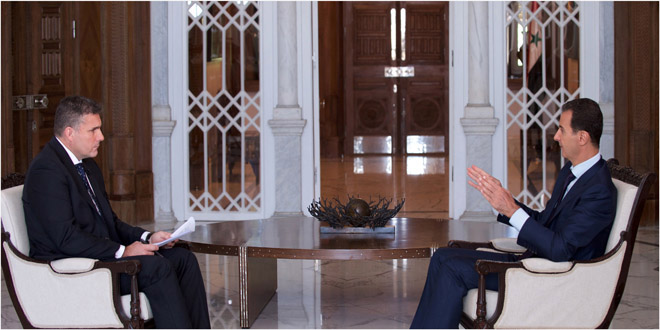
President al-Assad: Western nations attack Syrian government openly and deal with it secretly
SANA | July 1, 2016
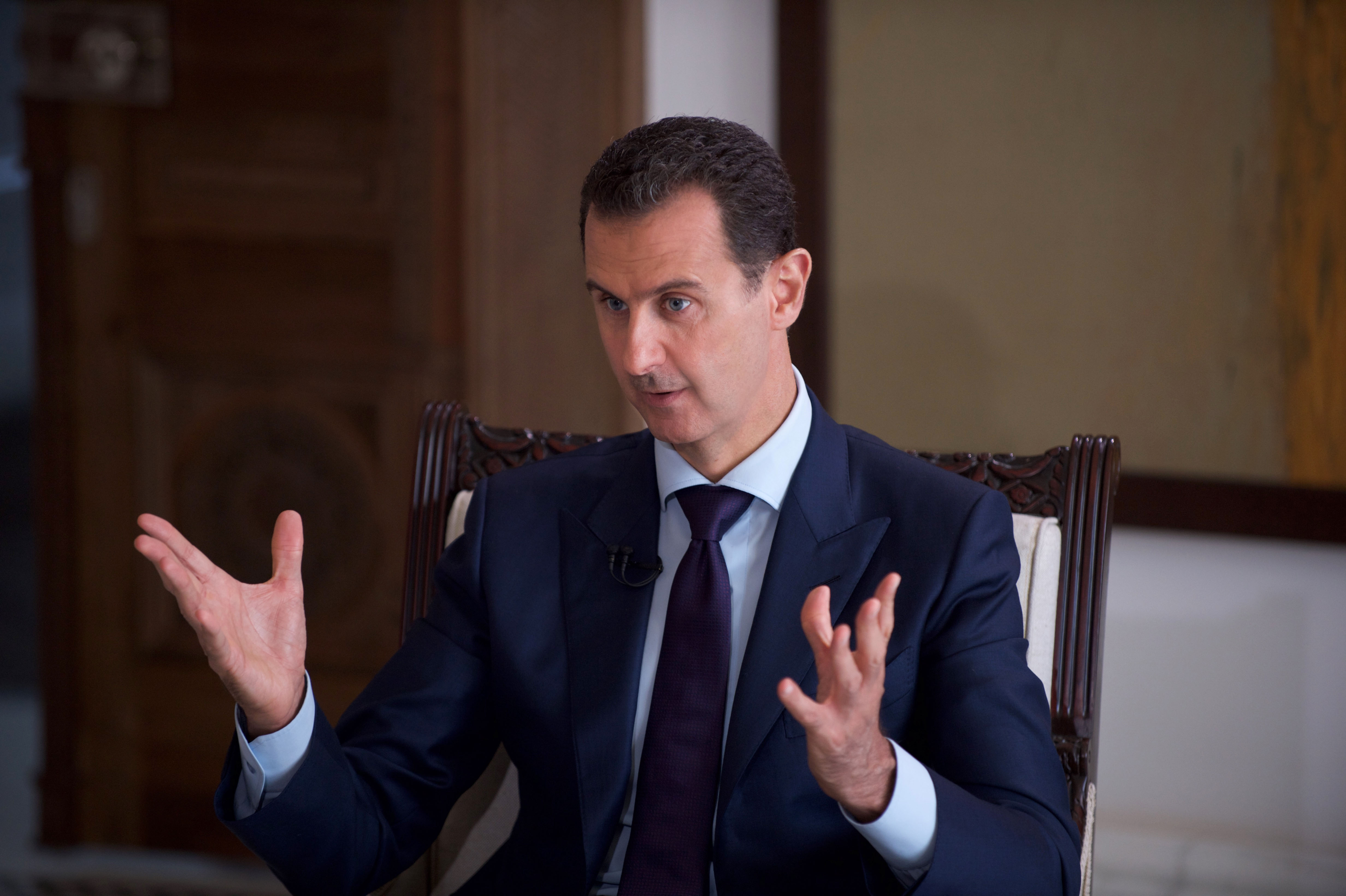
Damascus – President Bashar al-Assad gave an interview to the Australian SBS TV channel in which he criticized the double standards of the West – openly attacking the Syrian government politically, but continuing to deal with it through back channels-calling for a more humanitarian and less costly solution to the refugee crisis through stopping support to the terrorists.
The following is the full text of the interview:
Journalist: Mr. President, thank you for speaking with SBS Australia.
President Assad: You’re most welcome in Syria.
Question 1: It’s now more than five years since the Syrian crisis began. It’s estimated somewhere around a quarter of a million people have been killed, many of them civilians. There’s an undeniable humanitarian disaster. How far into the crisis do you think you are, and is there an end in sight?
President Assad: Of course, there is an end in sight, and the solution is very clear. It’s simple yet impossible. It’s simple because the solution is very clear, how to make dialogue between the Syrians about the political process, but at the same time fighting the terrorism and the terrorists in Syria. Without fighting terrorists, you cannot have any real solution. It’s impossible because the countries that supported those terrorists, whether Western or regional like Turkey, Saudi Arabia, and Qatar, don’t want to stop sending all kinds of support to those terrorists. So, if we start with stopping this logistical support, and as Syrians go to dialogue, talk about the constitution, about the future of Syria, about the future of the political system, the solution is very near, not far from reach.

Question 2: Much of the reporting in the West at the moment suggests that the demise of the Islamic State is imminent. Do you believe that’s true, and how far away from seizing Raqqa, this very important city of Raqqa, do you believe you are?
President Assad: It’s not a race. Raqqa is as important as Aleppo, as Damascus, as any other city. The danger of those terrorist groups is not about what land do they occupy, because it’s not a traditional war. It’s about how much of their ideology can they instill in the mind of the people in the area that they sit or live in. Indoctrination, this is the most dangerous thing. So, reaching Raqqa is not that difficult militarily, let’s say. It’s a matter of time. We are going in that direction. But the question when you talk about war is about what the other side, let’s say the enemy, could do, and that’s directly related to the effort of Turkey, especially Erdogan, in supporting those groups, because that’s what’s happening since the beginning. If you talk about Syria as an isolated military field, you can reach that area within a few months or a few weeks, let’s say, but without taking into consideration the Turkish effort in supporting the terrorists, any answer would be a far cry from the reality, an un-factual answer.
Question 3: Mr. President, how concerned are you about recent fatal clashes which have been reported between your longtime ally Hezbollah and your own forces?
There is good Syrian-Russian-Iranian coordination on fighting terrorism
President Assad: Fighting between us and Hezbollah? They are not fighting. They support the Syrian Army. They don’t fight against the Syrian Army, they fight with the Syrian Army. The Syrian Army and Hezbollah, with the support of the Russian Air Forces, we are fighting all kinds of terrorist groups, whether ISIS or al-Nusra or other affiliated groups with Al Qaeda that’s affiliated automatically to al-Nusra and ISIS.
Question 4: So, there have been some recent reports of clashes between… are those reports incorrect.
President Assad: No, they are talking not about clashes; about, let’s say, differences and different opinions. That’s not true, and if you look at the meeting that happened recently between the Ministers of Defense in Iran, in Tehran; Syrian, Russian, and Iranian, this means there’s good coordination regarding fighting terrorism.
Question 5: To be clear, do you categorize all opposition groups as terrorists?
President Assad: Definitely not, no. When you talk about an opposition group that adopts the political means, they’re not terrorists. Whenever you hold machineguns or any other armaments and you terrorize people and you attack civilians and you attack public and private properties, you are a terrorist. But if you talk about opposition, when you talk about opposition it must be Syrian opposition. It cannot be a surrogate opposition that works as a proxy to other countries like Saudi Arabia or any other country. It must be a Syrian opposition that’s related to its Syrian grassroots, like in your country. It’s the same, I think.
Question 6: You said recently that the ceasefire offered Syrian people at least a glimmer of hope. How, five months on, do you think that hope is going?
President Assad: Yeah, it is. It’s still working, the ceasefire, but we don’t have to forget that terrorist groups violate this agreement, on a daily basis. But at the same time, we have the right, according to that agreement, to retaliate whenever the terrorists attack our government forces. So, actually you can say it’s still working in most of the areas, but in some areas it’s not.
Question 7: There are various accounts of how the Syrian crisis began. Some say it was children graffiting anti-government slogans and they were dealt with brutally by the government. I understand you don’t accept that narrative. How, in your view, did the crisis begin?
President Assad: It’s a mixture of many things. Some people demonstrated because they needed reform. We cannot deny this, we cannot say “no everybody was a terrorist” or “everyone was a mercenary.” But the majority of those demonstrators – I’m not talking about the genuine demonstrators – were paid by Qatar in order to demonstrate, then later they were paid by Qatar in order to revolt with armaments, and that’s how it started, actually. The story of children being attacked, this is an illusive story. It didn’t happen. Of course, you always have, let’s say, mistakes happening in the practice on the ground, like what happened in the United States recently, during the last year, but this is not a reason for people to hold machineguns and kill policemen and soldiers and so on.
Question 8: You do say that some of these people legitimately needed reform. Was that as a result of any heavy-handedness from your government at all?
President Assad: No, we had reform in Syria. It started mainly after 2000, in the year 2000. Some people think it was slow, some people think it was too fast, this is subjective, not objective, but we were moving in that regard. But the proof that it wasn’t about the reform, because we made all the requested reforms after the crisis started five years ago, and nothing has changed. So, it wasn’t about reform. We changed the constitution, we changed the laws that the opposition asked for, we changed many things, but nothing happened. So, it wasn’t about the reform; it was about money coming from Qatar, and most of the people that genuinely asked for reform at the beginning of the crisis, they don’t demonstrate now, they don’t go against the government, they cooperate with the government. They don’t believe, let’s say, in the political line of this government, and this is their right and that’s natural, but they don’t work against the government or against the state institutions. So, they distinguish themselves from the people who supported the terrorists.

Question 9: How do you respond to the fact that some of your ministers defected and cited brutality as reason?
President Assad: Actually, they defected because they’ve been asked to do so by, some of them, Saudi Arabia, some of them by France, it depends on the country they belong to. And now, they are belonging to that so-called opposition that belongs to those countries, not to the Syrians. They have no values in Syria, so we wouldn’t worry about that. It didn’t change anything. I mean it didn’t affect the fact or the reality in Syria.
Question 10: One of your main backers, Russia, has called for a return to the peace talks. Do you think that’s a good idea?
President Assad: You mean in Geneva?
Journalist: Yes.
Geneva negotiations need to have the basic principles in order to be fruitful
President Assad: Yeah, of course, we support every talk with every Syrian party, but in reality those talks haven’t been started yet, and there’s no Syrian-Syrian talks till this moment, because we only made negotiations with the facilitator, which is Mr. de Mistura. Actually, it hasn’t started. So, we support the principle, but in practice you need to have a certain methodology that didn’t exist so far. So, we need to start, but we need to have the basic principles for those negotiations to be fruitful.
Question 11: One thing that intrigues a lot of people about the Syrian crisis is why your close allies Iran and Russia stay so loyal?
By defending Syria, allies are defending their stability and interests
President Assad: Because it wasn’t about the President, it’s not about the person. This is the misinterpretation, or let’s say the misconception in the West, and maybe part of the propaganda, that Russia and Iran supported Assad, or supported the President. It’s not like this. It’s about the whole situation. The chaos in Syria is going to provoke a domino effect in our region, that’s going to affect the neighboring countries, it’s going to affect Iran, it’s going to affect Russia, it’s going to affect Europe, actually. So, when they defend Syria, they defend the stability and they defend their stability, they defend their interest. And at the same time, it’s about the principle. They defend the Syrian people and their right to protect themselves. Because if they defend the President and the Syrian people are not with him and don’t support him, I cannot withstand five years just because Russia and Iran support me. So, it’s not about the President, it’s about the whole situation, the bigger picture, let’s say.
Question 12: Do you have any dialogue either direct or indirectly with the United States?
Western countries are dealing with Syria through back channels
President Assad: At all, nothing at all. Indirect, yes, indirect, through different channels. But if you ask them they will deny it, and we’re going to deny it. But in reality, it exists; the back channels.
Question 13: What are some of those channels?
President Assad: I mean, let’s say, businessmen going and traveling around the world and meeting with the officials in the United States and in Europe, they meet in Europe, and they try to convey certain messages, but there’s nothing serious, because we don’t think the administration, the American administration, is serious about solving the problem in Syria.
Question 14: Well, quite recently, there were reports more than 50 diplomats have called for what they described as “real and effective military strikes” against you, against Syria. Does this in any way concern you, and do you think it signals a more aggressive policy from the United States towards Syria moving forward?
American administrations are famous of creating problems, but they never solve any
President Assad: No, warmongers in every American administration always exist. It’s not something new. But we wouldn’t give a fig, let’s say, about this communique, but it’s not about this communique; it’s about the policy, it’s about the actions. The difference between this administration and the previous one, Bush’s one, is that Bush sent his troops. This one is sending mercenaries, and turned a blind eye to what Saudi Arabia and Turkey and Qatar did, since the beginning of the crisis. So, it’s the same policy. It’s a militaristic policy, but in different ways. So, this communique is not different from the reality on the ground. This is asking for war, and the reality is a war.
Question 15: You referred to the previous government, the Bush government. There are some who say one of the reasons you’ve survived as long as a government has been America’s reluctance to get on the ground in another war in the Middle East. Do you not accept that, based on what you’re saying?
President Assad: Yeah, the American administrations since the 50s are very famous of creating problems but they never solve any problems, and that’s what happened in Iraq. Bush invaded Iraq, in a few weeks he could occupy Iraq, but then what’s next? It’s not about occupying. This is a great power. We’re not a great power. So, it’s not about America occupying Syria. What’s next? What do they want to achieve? They haven’t achieved anything. They failed in Libya, in Iraq, in Yemen, in Syria, everywhere. They only created chaos. So, if the United States wants to create more chaos it can, it can create chaos, but can they solve the problem? No.
Question 16: Do you have a preference who wins the upcoming US election?
President Assad: Actually no, we never bet on any American president, because usually what they say in the campaign is different from their practice after they become president, and Obama is an example, so we don’t have to wait. We have to wait and see what policy they’re going to adopt, whoever wins the elections.
Question 17: So, you can see a circumstance where Syria would work collaboratively with the United States and the West?
We are not against cooperation with the US based on mutual interest
President Assad: We don’t have a problem with the United States, they’re not our enemy, they don’t occupy our land. We have differences, and those differences go back to the 70s and maybe before that, but in many different times, let’s say, and events and circumstances, we had cooperation with the United States. So, we’re not against this cooperation. But, this cooperation means talking about and discussing and working for the mutual interest, not for their interest at the expense of our interest. So, we don’t have a problem.
Question 18: Mr. President, you’ve spent a lot of time yourself, as you’ve just said, in the United Kingdom. Can you see there being any repercussions for Britain’s decision to exit the European Union for Syria and for the Syrian crisis?
British people are revolting against their “second-tier” and “disconnected” politicians
President Assad: I don’t think I can elaborate about that, as it’s a British issue, and I’m not British neither European. But at the same time I can say that this surprising result, maybe, has many different components, whether internal as economic and external as the worry from the terrorism, security issues, refugees, and so on. But this is an indication for us, as those officials who used to give me the advice about how to deal with the crisis in Syria, and say “Assad must go” and “he’s disconnected” proven to be disconnected from reality, otherwise they wouldn’t have asked for this referendum, but I think this is a revolt of the people there against, I would call them sometimes second-tier politicians. They needed special, let’s say, statecraft officials, to deal their country. If another administration came and understands that the issue of refugees and security is related to the problem in our region, this is where you’re going to have a different policy that will affect us positively. But I don’t have now a lot of hope about this. Let’s say we have a slim hope, because we don’t know who’s going to come after Cameron in the UK.
Question 19: Can I ask; Australia is part of the international coalition to defeat the Islamic State. Obviously, that’s one of your goals, so in that instance there’s a shared goal. Do you welcome international intervention when there’s a shared goal like that.
President Assad: Actually, we welcome any effort to fight terrorism in Syria, any effort, but this effort first of all should be genuine, not window-dressing like what’s happening now in northern Syria where 60 countries couldn’t prevent ISIS from expanding. Actually, when the Russian air support started, only at that time when ISIS stopped expanding. So, it needs to be genuine. Second, it needs to be through the Syrian legitimate government, not just because they want to fight terrorism and they can go anywhere in the world. We are a legitimate government and we are a sovereign country. So, only on these two circumstances we welcome any foreign support to fight terrorism.
Question 20: A number of Australians have died fighting for either the Kurdish militia or the Islamic State. Do you have a message for these young people who feel so enraged by what’s taking place in Syria that they travel over here to fight?
President Assad: Again, the same, let’s say, answer. If there are foreigners coming without the permission of the government, they are illegal, whether they want to fight terrorists or want to fight any other one. It is the same. It’s illegal, we can call it.
Question 21: Mr. President, Australian politicians have used very strong language about your role in the crisis, as have other leaders, internationally. Australia’s Prime Minister has referred to you as a “murderous tyrant,” saying that you’re responsible for killing thousands of innocent civilians. Australia’s opposition leader has called you a “butcher.” Yet Australia’s official position is still to work with you toward a peace agreement. How do you reconcile those two very different positions?
Western nations attack Syrian government and yet deal with it under the table
President Assad: Actually, this is the double standard of the West in general. They attack us politically and they send us their officials to deal with us under the table, especially the security, including your government. They all do the same. They don’t want to upset the United States. Actually, most of the Western officials only repeat what the United States wants them to say. This is the reality. So, I think these statements, I just can say they are disconnected from our reality, because I’m fighting terrorists, our army is fighting terrorists, our government is against terrorists, the whole institutions are against terrorists. If you call fighting terrorism butchery, that’s another issue.
Question 22: Australia has agreed to take an additional twelve thousand Syrian refugees; some have already arrived. Do you have a message for these Syrians, many of whom still say they love Syria and they want to return. Do you have a message for those people, as I said, who are in Australia, and other countries around the world?
A more humanitarian and less costly European solution to refugee crisis is stopping support to terrorists
President Assad: Actually, you mentioned a very important point. Most of the refugees that left Syria, they want to come back to Syria. So, any country that helped them enter their new country, let’s say, their new homeland, is welcome as a humanitarian action, but again there is something more humanitarian and less costly: is to help them staying in their country, help them going back by helping the stability in Syria, not to give any umbrella or support to the terrorists. That’s what they want. They want the Western governments to take decisive decisions against what Saudi Arabia and other Western countries, like France and UK, are doing in order to support the terrorists in Syria just to topple the government. Otherwise, those Syrians wouldn’t have left Syria. Most of them, they didn’t leave because they are against the government or with the government; they left because it’s very difficult to live in Syria these days.
Question 23: Do you hope that these people will return and would you facilitate for them to return?
President Assad: Definitely, I mean losing people as refugees is like losing human resources. How can you build a country without human resources? Most of those people are educated, well trained, they have their own businesses in Syria in different domains. You lose all this, of course, we need.
Question 24: The Commission for International Justice and Accountability says there are thousands of government documents which say has proved your government sanctioned mass torture and killings. In the face of that evidence, how do you say that no crimes have taken place, and I point also to other independent organizations, which are critical of deliberate targeting hospitals. Do you concede that some mistakes have been made as you’ve targeted some rebel-held areas?
President Assad: You are talking about two different things. One of them, the first one is the reports. The most important report that’s been financed by Qatar, just to defame the Syrian government, and they have no proof, who took the pictures, who are the victims in those pictures, and so on. Like you can forge anything if you want now on the computer. So, it is not credible at all. Second, talking about attacking hospitals or attacking civilians, the question, the very simple question is: why do we attack hospitals and civilians? I mean the whole issue, the whole problem in Syria started when those terrorists wanted to win the hearts of the Syrians. So, attacking hospitals or attacking civilians is playing into the hands of the terrorists. So, if we put the values aside now for a while, let’s talk about the interests. No government in this situation has any interest in killing civilians or attacking hospitals. Anyway, if you attack hospitals, you can use any building to be a hospital. No, these are an anecdotal claims, mendacious statements I can say; they are not credible at all. We’re still sending vaccines to those areas under the control of the terrorists. So, how can I send vaccines and attack the hospitals? This is a contradiction.
Question 25: Mr. President, as a father and as a man, has there been one anecdote, one story, one image from the crisis, which has affected you personally more than others?
President Assad: Definitely, we are humans, and I am Syrian like the other Syrians. I will be more sympathetic with any Syrian tragedy affecting any person or family, and in this region, we are very emotional people, generally. But as an official, I am not only a person, I am an official. As an official, the first question you ask when you have that feeling is what are you going to do, what are you going to do to protect other Syrians from the same suffering? That’s the most important thing. So, I mean, this feeling, this sad feeling, this painful feeling, is an incentive for me to do more. It’s not only a feeling.
Question 26: What’s your vision for Syria? How do you see things in two to three years?
President Assad: After the crisis or…? Because, the first thing we would like to see is to have Syria stable as it used to be before, because it was one of the most stable countries and secure countries around the world, not only in our region. So, this the first thing. If you have this, you can have other ambitions. Without it you cannot. I mean, if you have this, the other question: how to deal with the new generation that lived the life of killing, that saw the extremism or learned the extremism or indoctrinated by Al Qaeda-affiliated groups, and so on. This is another challenge. The third one is bringing back those human resources that left as refugees in order to rebuild Syria. Rebuilding the country as buildings or infrastructure is very easy; we are capable of doing this as Syrians. The challenge is about the new generation.
Question 27: How do you think history will reflect on your presidency?
President Assad: What I wish is to say that this is the one who saved his country from the terrorists and from the external intervention. That is what I wish about it. Anything else would be left to the judgment of the Syrian people, but this is my only wish.
Journalist: Mr. President, Thank you very much for speaking with SBS Australia.
President Assad: Thank you very much.
Unindicted War Criminal Tony Blair Calls Brexit a Coup
By Stephen Lendman | The Peoples Voice | July 5, 2016
Britain’s most reviled and discredited leader when leaving office in June 2007 allied with Bill Clinton’s rape of Yugoslavia, George Bush’s naked aggression on Afghanistan and Iraq, as well as Israel’s war on Palestine.
Greed now drives him. So does selling influence, becoming super-rich over the last decade, using secretive offshore companies and trusts, remaining unaccountable for involvement in genocidal high crimes – from Belgrade to Kabul to Baghdad to Palestine.
Responsible editors wouldn’t touch his rubbish. The New York Times featured it, Blair taking full advantage, mocking a democratic process, calling Brexit a “stunning coup.”
His deplorable record as prime minister featured loyal service to bankers and war profiteers, public welfare be damned. On leaving office, he failed trying to reinvent himself.
Impossible to ignore his sordid record. He’s a warmaker, not a peacemaker, a criminal like the Clintons, Bush and Obama.
He supported Gaza’s siege and Israeli wars of aggression. His appointment as Middle East peace envoy showed occupation harshness would continue, Palestinian statehood prevented.
He called Brexit supporters insurgents, “standard-bearers of a popular revolt… encourage(d) (and) magnified by… social media…”
EU membership comes with a huge price – loss of sovereignty to Brussels, most of all to Washington, doing its bidding, backing its war agenda, enriching its privileged class at the expense of most others, and tolerating no resistance.
Blair is part of the problem. Supporting wrong over right enriched him.
The London Independent once said years of investigation showed he “prostituted himself in pursuing Mammon.” Political friends and foes alike revile him.
-###-
Stephen Lendman can be reached at lendmanstephen@sbcglobal.net.
His new book as editor and contributor is titled Flashpoint in Ukraine: How the US Drive for Hegemony Risks World War III
Whitewashing Libya: House Report on Benghazi Reveals Nothing, Hides Everything
By Eric Draitser – New Eastern Outlook – 03.07.2016
The Republican dominated House Select Committee on Benghazi has released its long awaited final report on the 2012 Benghazi attack which killed Ambassador Chris Stevens and three others. And, surprise, the report reveals absolutely nothing of substance that wasn’t already known.
Naturally, Democrats running interference for Hillary Clinton have continually charged that the probe was simply an act of partisan politics designed more to hurt Clinton in the presidential campaign than to uncover the truth about what happened. No doubt there is truth to such an allegation.
But the most important fact about this whole manufactured drama, the one that neither Democrats nor Republicans want to touch, is the simple fact that what happened in Benghazi was perhaps the most complete encapsulation of everything wrong and criminal about the illegal US war against Libya. Moreover, it exposes the uncomfortable truth that the US harnesses terrorism, using it as one of the most potent weapons it has against nations that refuse to submit to the will of Washington and Wall Street. In effect, it was not merely terrorists that killed the four Americans in Benghazi, it was US policy.
The Benghazi Report: 800 Pages of Almost Nothing
Despite the triumphal pronouncements of Republican political opportunists, the new report reveals very little that is new. As the Wall Street Journal noted:
“Congressional Republicans’ most comprehensive report yet on the 2012 terrorist attacks in Benghazi, Libya, outlined few new criticisms of Hillary Clinton, highlighting more broadly what it called an array of failings by the Obama administration… The report largely confirmed the existing story line—that a group of anti-American Libyan militants stormed U.S. installations in a carefully planned assault, killing four Americans, including Christopher Stevens, the ambassador to Libya…The latest document presented few notable facts not found in earlier investigations…”
As the Wall Street Journal correctly notes, the new report is mostly just a rehashing of prior conclusions reached from previous reports, while doing yeoman’s service for the political establishment by confirming and, consequently, concretizing a completely distorted narrative about what happened. Essentially, the final report amounts to a whitewash that is more about scoring political points than revealing the truth about what happened. Why? Well, put simply, the truth of what happened in Benghazi implicates both wings of the single corporate Republicrat party.
There is mention of the CIA facility near the ‘US diplomatic facility’ in Benghazi, but absolutely no context for what exactly the CIA was involved in there, and how it relates to a much larger set of policies executed by the Obama administration, of which Hillary Clinton was a key player. Indeed, the very fact that this critical piece of the puzzle is conspicuously missing from the Official NarrativeTM demonstrates that the House Select Committee on Benghazi report is more about concealing the truth than revealing it.
Take for instance the fact that the report totally ignores the connection between the CIA facility and mission in Benghazi and the smuggling of arms and fighters from Libya to Syria in an attempt to export to Syria the same sort of regime change that wrought death and destruction on Libya. As Judicial Watch noted in regard to the declassified material it obtained:
Judicial Watch… obtained more than 100 pages of previously classified “Secret” documents from the Department of Defense (DOD)and the Department of State revealing that DOD almost immediately reported that the attack on the U.S. Consulate in Benghazi was committed by the al Qaeda and Muslim Brotherhood-linked “Brigades of the Captive Omar Abdul Rahman” (BCOAR), and had been planned at least 10 days in advance… The new documents also provide the first official confirmation that shows the U.S. government was aware of arms shipments from Benghazi to Syria. The documents also include an August 2012 analysis warning of the rise of ISIS and the predicted failure of the Obama policy of regime change in Syria.
Just this one small excerpt from a set of publicly available documents sheds more light on the real story of Benghazi and the Obama administration’s disastrous and criminal wars in Libya and Syria than 800 pages of the House report. Were it really the mission of the House committee to expose the truth of what happened, perhaps they could have started with a Google search.
Indeed, the connection goes further. As a Department of Defense memo in 2012 indicated, “During the immediate aftermath of, and following the uncertainty caused by, the downfall of the [Qaddafi] regime in October 2011 and up until early September of 2012… weapons from the former Libya military stockpiles located in Benghazi, Libya were shipped from the port of Benghazi, Libya, to the ports of Banias and the Port of Borj Islam, Syria.”
This revelation should be a bombshell; the US and its proxies inside Libya were actively shipping weapons to Syria for the purposes of fomenting war and effecting regime change. Further, it would be shockingly negligent to omit the fact that “early September 2012” is when the shipments stopped – the attack on the CIA annex in Benghazi, not coincidentally, took place on September 11, 2012 – and not connect it to the Benghazi incident. One could almost forgive such an omission if one were naïve enough to believe that it was simply an error, and not a deliberate obfuscation.
A serious analysis of these events would reveal an international network of arms and fighters being smuggled from Libya to Syria, all under the auspices of the Obama administration and the agencies under its control. But of course, the report focuses instead on the utterly irrelevant negligence on the part of the Obama administration which really obscures the far greater crime of deliberate warmongering. But hey, political point scoring is really what the House committee was looking for.
The Larger Story Completely Ignored
As if it weren’t offensive enough that the House committee report has completely whitewashed the events in Benghazi, the congressional hearings and subsequent report do absolutely nothing to bring clarity to what exactly the US was doing with respect to the arming, financing, and backing of terrorists affiliated with al-Qaeda and other well-known terror groups.
There is no discussion of the fact that Washington was knowingly collaborating with some of the nastiest al-Qaeda elements in the region, including the Libyan Islamic Fighting Group led by Abdelhakim Belhadj. This terror group, which was in the vanguard of the US-backed effort to topple the government of the Libyan Arab Jamahiriya and Muammar Gaddafi, was a known quantity to all counterterrorism experts specializing in that part of the world. As the New York Times reported in July 2011, in the midst of the war against the Libyan Government:
The Libyan Islamic Fighting Group was formed in 1995 with the goal of ousting Colonel Qaddafi. Driven into the mountains or exile by Libyan security forces, the group’s members were among the first to join the fight against Qaddafi security forces… Officially the fighting group does not exist any longer, but the former members are fighting largely under the leadership of Abu Abdullah Sadik [aka Abdelhakim Belhadj].
Perhaps the enlightened truthseekers of the House committee would have thought it prudent to note that the Benghazi incident was the direct outgrowth of a criminal US policy of collaboration with terrorists, the leader of whom is now, according to some sources, connected to ISIS/Daesh in Libya. But, alas, such explosive information, publicly available to those who seek it out, would have been deeply embarrassing to the undisputed grandmasters of wrongheaded political posturing, Senators John McCain and Lindsey Graham, both of whom gleefully posed for pictures with the hardened terrorist leader Belhadj. Oops.
It would also have been nice had the House committee bothered to look at the studies conducted on that part of Libya vis-à-vis terrorist recruitment, to get a sense of the scale of the issue with which they were allegedly dealing. They might have considered examining a 2007 study from the Combating Terrorism Center at the US Military Academy at West Point entitled “Al-Qa’ida’s Foreign Fighters in Iraq: A First Look at the Sinjar Records” which explained quite clearly that:
“Almost 19 percent of the fighters in the Sinjar Records came from Libya alone. Furthermore, Libya contributed far more fighters per capita than any other nationality in the Sinjar Records, including Saudi Arabia… The apparent surge in Libyan recruits traveling to Iraq may be linked [to] the Libyan Islamic Fighting Group’s (LIFG) increasingly cooperative relationship with al-Qa’ida which culminated in the LIFG officially joining al-Qa’ida on November 3, 2007… The most common cities that the fighters called home were Darnah [Derna], Libya and Riyadh, Saudi Arabia, with 52 and 51 fighters respectively. Darnah [Derna] with a population just over 80,000 compared to Riyadh’s 4.3 million, has far and away the largest per capita number of fighters in the Sinjar records.”
It certainly might have been useful had the House committee taken even a cursory look at a map to see the Benghazi-Derna-Tobruk triangle (the stronghold of the anti-Gaddafi terrorist forces linked to al-Qaeda) and to understand the broader context of the events of September 11, 2012. The investigators – that term being used rather loosely, and somewhat ironically, in this case – should have been able to discern the larger significance of what they were examining. One could almost assume that, like the proverbial ostriches, House Republicans were busy hiding their heads in the sand, or perhaps in other, more uncomfortable places.
Ultimately, the House Select Committee on Benghazi report will achieve absolutely nothing. It will not even score the political points that the Republicans leading the effort have been after for three years now. Hillary Clinton will continue her presidential bid completely unaffected by the information and, if anything, will likely benefit from this charade as it will lend credence to her endless assertions of a “vast right wing conspiracy” against her. Never mind the fact that she is a right wing neoconservative herself. Never mind the fact that the blood of tens of thousands of Libyans is on her hands. Never mind the fact that, as President, she will undoubtedly unleash more death and destruction on the people of the Middle East and North Africa.
There is only one lasting achievement upon which the House committee can hang its hat: it has done an excellent job of cementing an utterly shallow and superficial narrative about the events of September 11, 2012 in Benghazi, one which will be endlessly repeated by the mouthpieces of corporate media and mainstream historians.
Indeed, a false history will be written, with the US as a victim of incompetence and its own poor planning. Nothing will be said of the blatant criminality of the US effort in Libya. But, as Kurt Vonnegut was fond of saying, “So it goes…”
New ‘CIA Officer Whistleblowing’ Video Reeks Of Disinfo
By Brandon Turbeville | Activist Post | July 2, 2016
Making quite the circuit on the internet landscape is a new video purporting to show a former CIA agent speaking out against the manner in which the “war on terror” is prosecuted and portrayed to the American public. The video has been shared and discussed thousands of times particularly within the alternative media community as evidence that the “war on terror” is one big snowball of bad decisions and blowback.
The video, is a short clip of an interview conducted by AJ+ with Amaryllis Fox, a former CIA Clandestine Services Officer, who makes a number of claims during the three minute clip that range from the reasonable to the absurd. While many alternative media outlets have hailed Fox’s video as “brave” and Fox herself as a whistleblower, it would be wise to analyze her statements for what they are as opposed to praising them simply because they are being presented as “anti-establishment.”
Fox makes a surprising amount of claims for three minutes and she also manages to conflate issues, concepts, and people in a cleverly designed monologue that is clearly scripted for effect.
Fox begins by saying,
If I learned one lesson from my time with the CIA it is this: everybody believes they are the good guy. I was an officer with the CIA Clandestine Service and worked undercover on counterterrorism and intelligence all around the world for almost ten years. The conversation that’s going on in the United States right now about ISIS and the United States overseas is more oversimplified than ever.
Fair enough. Lower level agents of the CIA and most lower level fighters in terrorist organizations or national militaries believe they are the good guys. The propaganda surrounding the “war on terror” is oversimplified. All of this is true indeed. But Fox moves from information easily verified such as the statement above to much more questionable claims. For instance, she says,
Ask most Americans whether ISIS poses an existential threat to this country and they’ll say yes. That’s where the conversation stops. If you’re walking down the street in Iraq or Syria and ask anybody why America dropped bombs, you get: “They were waging a war on Islam.” And you walk in America and you ask why we were attacked on 9/11, and you get “They hate us because we’re free.” Those are stories, manufactured by a really small number of people on both sides who amass a great deal of power and wealth by convincing the rest of us to keep killing each other.
Fox is correct on the latter part of her statement. Much of these stories are indeed manufactured by a small number of people in order to drum up support for foreign invasions and a police state back at home. But who exactly is Fox talking to on the streets of Syria and Iraq that would respond “a war on Islam” to the question of why the United States is dropping bombs on their country? It certainly isn’t the average Syrian as she tries to portray. In fact, if one were to go to the average Syrian on the street and ask “Why is America dropping bombs?” the answer would almost always be centered around Israel. Almost every researcher is aware of this fact but not one time was the word “Israel” mentioned in Fox’s interview. The “war on Islam” line is typically reserved only for the more fanatical religious zealots who make up the so-called “opposition.” So what is Fox suggesting? Is she suggesting that the average Syrian holds the same belief system as the average al-Qaeda fighter?
Actually, that is exactly what she is doing, regardless of whether or not she states it explicitly or not. She continues,
I think the question we need to be asking, as Americans examining our foreign policy, is whether or not we are pouring kerosene on a candle. The only real way to disarm your enemy is to listen to them. If you hear them out, if you’re brave enough to really listen to their story, you can see that more often than not, you might have made some of the same choices if you’d lived their life instead of yours. An al-Qaeda fighter made a point once during a debriefing. He said all these movies that America makes, like Independence Day, and Hunger Games and Star Wars, they’re all about a small scrappy band of rebels who will do anything in their power with the limited resources available to them to expel and outside, technologically advanced invader. And what you don’t realize, he said, is that to us, to the rest of the world, you are the empire, and we are Luke and Han. You are the aliens and we are Will Smith.
Fox is implying that there was a “fundamentalist al-Qaeda” problem before America’s foreign policy was formed. In other words, that the problem existed and that the United States perhaps acted rashly in dealing with it. But the fact is that the al-Qaeda issue never would have existed in the first place had the United States not invented it. Indeed, al-Qaeda, ISIS, and other related terrorist organizations are entirely creations of the U.S. government and the NATO apparatus. While Fox may be forgiven for not knowing this little detail, not knowing the difference between a fundamentalist al-Qaeda fanatic and an average Syrian is not excusable. That is, assuming that the mistake is actually a mistake and not an intentional attempt to mislead the audience.
Fox also provides questionable analogies when she discusses the al-Qaeda fighters’ interpretation of Hollywood movies. If the fighter was so convinced that the U.S. is the empire (fair point – it is) and al-Qaeda is the equivalent of Luke and Han, why did al-Qaeda attack the Syrian government? Why did they attack the Iraqi government? Why did they attack the Libyan government? This would be the equivalent of Luke and Han attacking the Galactic Republic while claiming to fight the Empire. It doesn’t make sense. Continuing with the Star Wars analogy, Saddam Hussein, Bashar al-Assad, and Muammar Ghaddaffi would represent the Republic and those nations’ militaries along with Iraq’s “insurgents” fighting back against the U.S. would be the true rebels. Fox should know this very well.
Nevertheless, Fox concluded her statements by saying,
But the truth is when you talk to the people who are really fighting on the ground on both sides, and ask them why they’re there, they answer with hopes for their children, specific policies that they think are cruel or unfair. And while it may be easier to dismiss your enemy as evil, hearing them out on policy concerns is actually an amazing thing. Because as long as your enemy is a subhuman psychopath that’s going to attack you no matter what you do, this never ends. But if your enemy is a policy, however complicated, that we can work with.
So, again, the question would be “who is Fox actually talking about?” When she references “the people who are really fighting on the ground on both sides, does she mean U.S. forces and terrorists vs the Syrian military? Does she exclude the U.S. military? Her statements simply do nothing to clarify the reality on the ground, only to confuse it.
One good question for Fox would be how the Syrian government should listen to and hear out a “policy” coming from an organization that crucifies women, beheads “heretics,” and seeks to impose Shariah law on a civilized people? How should Syria simply listen to the “concerns” of the United States after the latter power has funded those “subhuman psychopaths” (yes, it is an accurate description) who have invaded their country? Is it possible that the “policy” of the United States and its proxy terrorists is simply wrong? Is it possible that the other sides might not be so willing to have a couples’ therapy session?
While Fox makes a number of good points regarding the fact that the narrative surrounding al-Qaeda and the situation in Syria and Iraq is indeed manufactured by a small number of people in high places, Fox herself makes an incredibly wrong description of the conflict, equating average Syrians and Iraqis with jihadists in terms of their mindset and suggesting that the upsurge of terrorism is a result of blowback as opposed to outright funding and conspiracy to overthrow sovereign states in search of world hegemony.
Fox’s statements simply serve to continue to drag Americans off into the abyss of misinformation surrounding the crisis in the Middle East while claiming to do otherwise. After watching Fox’s video, (notably produced by AJ+ – al-Jazeera, a Qatari news agency that has long been pro-jihadist), we can safely say that Ms. Fox is either misinformed herself or simply good at her job.
Image Credit: Anthony Freda
Featured Video

AIDS Inc. by Gary Null (2007)
or go to
Aletho News Archives – Video-Images
From the Archives
Clash of Civilization, Iran Part II
By Jamal Kanj – Intifada-Palestine.com – January 14, 2011
Israel’s survival kit is: perpetuate conflict, insecurity to rationalize collective hate and finally playing victim.
Devoid of conflict, Israel implodes internally; without hate, Zionism loses its justification; and playing eternal victim to continue blackmailing the West. Absence of this holy trinity, Israel ceases to exist.
From its inception, the house of Zion has mastered exploiting adversarial powers to advance Israel’s cause. For instance, their influence over the Democratic Party in the US began with President Truman’s bid for 2nd term election in 1948.
Responding to strong opposition from Secretary of State General George Marshall and Department experts urging against recognition of Israel, President Truman replied: “I’m sorry gentlemen but I have to answer to hundreds of thousands [Jewish voters] who are anxious for the success of Zionism. I do not have hundreds of thousands of [voting] Arabs among my constituents”
Zionists influence over liberal American politics was matched with the doctrinal school of Conservative theoreticians aligning the Republican Party’s platform with Israel’s objectives. The Neoconservative Zionists, coined Zioncons, invented the “Clash of Civilization” concept to fight Israel’s wars. … continue
Blog Roll
 Aletho News
- 12 Things Your Psychiatrist Was Trained Not to Tell You
- From Unipolar Universalism to Multipolar Civilizational Distinctiveness
- RSF military group defects, joins Sudanese army: State media
- Ireland goalkeeper refuses to play ‘Israel’ as squad weighs boycott
- China pushes back against US on Cuba, Iran
- Ukrainian Soldiers, Potential Mercenaries: Have Gun, Will Travel!
- Burnham’s UN debut… A masterclass in British disinformation
- Iran flights continue despite US aviation sanctions
- Global Tipping Points Lead the World Into a State of Entropy
- The day-after at the White House: USA and Xi Jinping
- If Americans Knew
- Israel forces Gazans to live in constant peril – Daily Update
- Deconstructing Netanyahu’s pants-on-fire UN rant – Daily Update
- Trump betrayed voters with his campaign lies and prioritized a foreign country once he took office
- Netanyahu calls Israel’s war in Gaza ‘opposite of genocide’ in UN speech to near-empty hall
- Settler Kidnappings: Torture, Sexual Abuse and Terrorisation of Palestinian Abductees as Israel Deepens Annexation of West Bank
- Gaza winter nears as 162,000 tents become unusable, raising fears of humanitarian crisis
- Netanyahu says, “It’s the opposite of genocide”; UN says Gaza economy is world’s ‘most severe crisis on record’ – Daily Update
- Israel’s US-Backed Assault on Gaza Has Created the ‘World’s Most Severe Economic Crisis on Record’: UN
- ‘Protecting U.S. Citizens’… From Israel
- ‘This is where I live now, the back of a truck’: a day in the life of a grandmother in Gaza
- No Tricks Zone
- New Study: Earth And Venus Surface Warmth Largely Explained By Convection And Lapse Rate, Not CO2 Or Radiation
- 2025 Nature Paper Claiming Worsening Global Drought Gets RETRACTED …Heavily Flawed
- New Study: ‘Global Drought Shows No Detectable Recent Acceleration Under Climate Warming’
- Economic Masterminds: German Socialists Suggest Taxing Productivity Gains Stemming From Using AI
- The South China Sea Has Not Been Cooperating With The Climate Change Narrative
- Energy Crisis: Germany Enters Heating Season With Historically Low Gas Reserve Fill Levels
- New Study: The Antarctic Ice Sheet Gained Mass From 2020-2024 Due To Staggering Snow And Ice Accumulation
- Study: Ocean Heating Rates From Thousands Of Years Ago ‘Dwarf’ Modern Ocean Heating Rates
- Climate Extremists Target, Attack Large-Scale Power Grid Infrastructure In Germany!
- New Study: Antarctic Ice Melt Has Contributed Less Than 1 Centimeter To Sea Level Rise In The Last 30 Years

