The Show Must Go On
A Night at the Theater
By Jonathan Revusky • Unz Review • June 27, 2016
One evening a gentleman decides to go to the theater. There is a play showing that is reputed to be a very funny comedy. It’s hilarious, people are raving about it.
At various points in the middle of the performance, hecklers disrupt the play, shouting disparaging insults at the actors on stage. At first, the actors on stage ignore this and carry on in their roles, but then, at some point, some of them lose patience with this, and respond to the hecklers. Let’s say it begins when an actress on the stage, who is portraying a very prim, proper lady in the play, goes completely out of character and responds to the hecklers with salty language worthy of a sailor. The audience bursts out laughing. Then other actors go out of character as well and there is hilarious repartee between actors on stage and the hecklers in the audience insulting one another.
Truth told, the whole thing is actually very entertaining, but our upstanding gentleman is kind of annoyed. He would very much like to the see the play as it is intended to be seen. But also, the whole thing is rather strange. He wonders: what is going on here? Why are these hecklers allowed to do this? Why aren’t they kicked out of the theater?
Well, this is known to be a very fine theatrical production with some superb actors and he would very much like to see it properly without any interruptions from hecklers. So, at a later date, he goes back to the theater. He buys his ticket, finds his seat…. Amazingly, at the same key moments in the play, the very same hecklers disrupt the performance, just like the first time. And there is the very same repartee between the actors and the hecklers in the audience.
Now, this man is completely perplexed. He cannot understand why the theater continually allows these hecklers to disrupt the performance. He is utterly confused. At this point, the lady sitting in the seat next to him leans over to him, smiles, and whispers: “I love this. It’s my favorite part of the show.”
The man smiles back sheepishly. He is feeling a little bit embarrassed that he was so slow to figure it out. But, of course it now dawns on him what is really going on. By jove, he’s got it!
This “Night at the Theater” story that I have outlined provides some framework for thinking about the pervasive propaganda matrix and we shall return to it. However, first, we need to go over some basics.
Shit happens. Organic versus synthetic events.
When you turn on the television and watch the news, there are, very broadly speaking, two types of news being reported: organic and synthetic events.
The concept of an organic event was perhaps best characterized by Forrest Gump, when he said: “Shit happens.” Indeed it does, a neverending flow of it. Just offhand, on the national and international levels, there is usually some sort of ongoing natural disaster somewhere: an earthquake, a hurricane, floods, forest fires… In these cases we get all the typical news reporting on the devastation and the ongoing humanitarian relief efforts… In the more local news, there are random accidents. In particular, traffic accidents happen continually. A truck collides with a bus and there are a number of fatalities. They dispatch a reporter to the scene who interviews various witnesses…
Such things make up your basic “shit happens” news. We could make the following two observations about organic events:
- It is not unreasonable to assume that the reporting of an organic event is broadly honest.
- The level of attention that an organic event receives is about commensurate with its scale.
I actually worded these points a bit carefully. For example, regarding point 1, I am quite aware that mainstream news reporting is pretty unreliable. They certainly get all kinds of things wrong continually. Still, one’s reasonable baseline assumption is that what they are telling you happened is pretty similar to what really happened. Or, in other words, the things they get wrong tend to be within the range of honest error — that is, in the case of an organic event.
As for point 2 above, just consider the fact that, on a typical day in the United States alone, about a hundred people die in traffic accidents, more or less. As such, unless it is something pretty spectacular or somebody famous is involved, a traffic accident will only be news locally. Moreover, it will only receive media attention for a short period of time. Soon, some other shit happens and then the focus shifts over to that.
Now, obviously, when it comes to understanding the propaganda matrix, it is not the organic events that we are interested in. It’s the other kind, the synthetic event. However, on occasion, it is easier to define things negatively, not by what they are, but rather, by what they are not. With a non-organic, or synthetic event, the above two observations do not apply. It is quite the opposite. Thus:
When it comes to synthetic events, the baseline assumption is that everything they are telling you and showing you is fake, at least in the absence of strong evidence. Moreover, it is utterly naive to assume that the reporting on a synthetic event is honest.
In other words, point 1 above definitely does not apply! Nor does point 2. Very typically, the first strong clue that something is a synthetic event will be that it receives a level of attention that is not at all in proportion to what one would expect. I suspect that this is an analytical tool that has been valid for a good while. For example, consider the break-in at the Watergate Hotel on 6/17/1972. This crime (though more the subsequent cover-up admittedly) is the event that led to the Watergate scandal that caused Richard Nixon to resign the presidency in disgrace. Look at the scale of the crime. Did it not receive an outrageous level of attention when compared to so many other cases of high-level criminality? Hmm…. Now, this actually works both ways. Sometimes an event receives far more attention than one would expect, but other times far less. For example, the perfectly symmetrical implosion of WTC Building 7 never being mentioned in the mainstream media is a perfect example of a key event that receives suspiciously little attention.
Let us now examine a more recent narrative that should elicit warning bells precisely due to how much attention it has received.
Is this shit for real? The case of Pastor Terry Jones
Consider the following video, a news segment from the year 2010.
I suppose most readers will remember this, at least vaguely. It is part of a saga that received an immense amount of attention over a number of years. The central character, one Terry Jones, was purportedly the spiritual leader of some 50 people in Gainesville, Florida — a dozen families more or less. (I suspect that this was a high-ball estimate of his following, since they have every reason to exaggerate this man’s importance. But certainly, he did not have more than 50 followers, most likely fewer. Like, zero maybe?) In any case, Mr. Jones would not figure in a Who’s Who of the Christian religion. He is not the Pope and he ain’t the Archbishop of Canterbury neither. As far as I can tell, the “evangelical” church that he was leading at the time is not a part of, nor is it recognized by, any major Christian denomination.
Nonetheless, as we see in the video, this man gained national and international attention via his threats to burn a Koran. Or Korans in the plural. Yes, the President of the United States was imploring this man not to burn any Korans. Hillary Clinton as well. Apparently, the Pope in Rome also pleaded with him not to do this. (I assume His Holiness did not call collect…)
The whole thing is really quite extraordinary. General David Petraeus later appears in this news segment claiming that this man’s burning of a Koran in Florida will “make his job very difficult” and will “endanger the lives of American servicemen”. It is hard to know even where to begin deconstructing the lunacy of this whole narrative. Just for starters, why does nobody ask the most obvious question about this?
How would the people in Afghanistan even know that this old geezer in Florida is burning any Korans?
Now, I have never been to Aghanistan and have no plans to visit. However, I think it is a very safe bet that the people in Afghanistan do not know about Pastor Terry Jones and his Burn-A-Koran day. I would venture the guess that you could travel the entire length and breadth of that country and ask people if they knew about this and none would. Of course not. This whole synthetic event is entirely constructed for a Western audience! The people in far off Afghanistan would know nothing about it.
Actually, I was intrigued to learn, a few years back, that the majority of people in Afghanistan do not even know about the attacks of 9/11. Consider this report or this one. Apparently, around 92% of the Afghan people have no idea about 9/11! You show them a photograph of the twin towers burning and they have no idea where or when this occurred. And they certainly make no connection between that and the U.S. invasion of their country. I found the whole thing really quite intriguing. What this really goes to show is that the whole purpose of the 9/11 synthetic event was to establish a narrative for a Western audience. The population of Afghanistan does not, by and large, even know the official pretext for the invasion of their country. No, nobody ever bothered to tell them! I have absolutely no idea how many Iraqis know what the official reason for the invasion of their country was. (Remember that? Saddam’s non-existent WMD?) I would not be surprised if it was similar to the Afghan case, where the majority of the people in Iraq do not know what the reasons for the invasion were. Or, more precisely, they may have no idea what reasons were given to the American people to justify the war.
In any case, if fewer than 10% of the Afghans even know about the towers going down on 9/11, then what percentage would know about Terry Jones burning a Koran in Gainesville, Florida? So what on earth is David Petraeus talking about? It’s as if he lives in a mental universe in which the people in Afghanistan all have cable and watch CNN and FOX News. Maybe some underling should inform him. Like so:
“Sir, these are very culturally deprived people we’re talking about, General Petraeus, Sir.”
“How bad is it? Tell me the worst.”
“Sir, this here is the veritable Heart of Darkness, Sir. Sir, most of them have never even seen Kim Kardashian’s ass, Sir.”
“My God! The Horror! The Horror…”
“Sir, yes, Sir.”
Now, to be clear, I do not believe that Petraeus really is such a fool. He knows this whole story is bullshit but is playing along. He pretends to be so concerned that the Florida pastor burning a Koran will put American troops in Afghanistan in extra danger. He understands that he is supposed to go along with this narrative. It is what is expected of him.
The way the story then developed was that Mr. Jones first relented and did not burn any Korans as planned, on 9/11/2010, but then he did burn a Koran (or maybe more than one Koran) on 3/20/2011. As we see, General Petraeus had warned of dire consequences if Pastor Jones went ahead and burned a Koran and it turns out he was right! We are then told in the various mainstream news sources that this led to riots in Afghanistan, in particular in the northern city of Mazar-i-Sharif. There, on 4/1/2011 (is the April 1 date a coincidence?) the New York Times, America’s “newspaper of record” reports:
MAZAR-I-SHARIF, Afghanistan — Stirred up by three angry mullahs who urged them to avenge the burning of a Koran at a Florida church, thousands of protesters on Friday overran the compound of the United Nations in this northern Afghan city, killing at least 12 people, Afghan and United Nations officials said.
The version of events in Wikipedia is:
A riot erupted in Mazar-i-Sharif on 1 April 2011 during the protest over the burning of the Qur’an in the US.[8] Estimates of the number of protesters ranged from “hundreds” to as many as 2,000.[8][9] The protest began near the city’s Blue Mosque shortly after Friday prayer,[9]with protesters chanting “Death to the USA, death to Israel.”[10] During the sermon, which is part of the Friday prayer, worshipers were told by three mullahs to begin protesting in favor of the arrest of Pastor Terry Jones, who led the Qur’an burning.[11]
So we are told that this riot in Mazar-i-Sharif, Afghanistan took place because Terry Jones finally burned a Koran. The Afghans are not rioting because their country has been invaded and occupied by foreign troops but rather, because some utterly insignificant individual on the other side of the world burned a Koran.
The saga does not end here. Over a year later, on 9/12/2012, the Chairman of the U.S. Joint Chiefs of Staff, General Martin Dempsey, called Pastor Terry Jones on the phone and asked him to withdraw his support for a film “whose portrayal of the Prophet Muhammad has sparked violent protests.” Now the focus of the narrative had shifted over to Libya. The Libyans are not angry, apparently, that their country has been “bombed back into the Stone Age” and tens of thousands of their people are dead and their country in a state of anarchy. No, they are angry about a film that “portrays Muhammad unfavorably”. And now, of course, the Koran-burning pastor who caused a deadly riot on the other side of the world the previous year is brought back into the story….
If a tree falls in the forest…
We could have a field day analyzing and ridiculing all of this synthetic narrative. Surely you understand the overall point. This whole Koran-burning saga already stands out as a synthetic news story simply by virtue of how much attention is devoted to this insignificant personage, Terry Jones. Unless you happen to be a very famous person reading these lines, I think it is safe to say that if you or I threatened to burn a Koran, it would not be an international news story, we would not receive phone calls from the President or the Pope. No, we would be ignored. In fact, in that video it is mentioned that various people sent Korans to Jones for him to burn. Think about that. The people who send him Korans to burn know perfectly well that if they themselves burn a Koran, it has no transcendence because nobody is paying any attention. So they send the Korans to him to burn. At least that’s what is claimed, that various people sent him Korans to burn, 200 of them…
The other funny thing about the whole story is that the entire media circus that they create around this individual pretty much obliges him to finally burn a Koran or two. After all, a sword swallower must eventually swallow a sword. He cannot just continually announce that he is going to do it, though he may wait until a sufficient crowd has gathered.
So, just as Evel Knievel must eventually do his announced motorcycle stunt, so the Koran-burning pastor must eventually burn a Koran. This man’s entire protracted “fifteen minutes of fame” is based on him burning the Koran, so he eventually does so. When you think about this whole story a bit, something occurs to you: if they really, really did not want this man to burn a Koran, wouldn’t they just stop devoting all this attention to him? If you did not want Evel Knievel to do his motorcycle stunt, you would just turn off the cameras and not film him and, presumably, he wouldn’t bother. The whole point of the stunt is to attract publicity so if you don’t give him the publicity…
Roger Rabbit Redux
In an earlier essay, I coined the term Roger Rabbit Narrative to refer to these kinds of synthetic news stories that have cartoonish elements. This is an allusion to the movie “Who Framed Roger Rabbit” in which human (i.e. real, organic) actors share the screen with cartoons, i.e. synthetic elements. So, an RRN is not a total fiction or a cartoon. Some of the elements in the story are perfectly real.
So, in this particular RRN, Mr. Jones finally burns a Koran, and 12 days later, there is a riot in northern Afghanistan in which a number of people are killed. Now, I have to assume that the riot in Mazar-i-Sharif, Afghanistan really took place. It was, I suppose, an organic event that happened for whatever local reasons and had no more to do with Pastor Jones burning a Koran than with the price of tea in China. However, news sources that so many people treat as reliable, such as the New York Times or Wikipedia, attribute this event to the Koran burning in Florida. In other words, they incorporate a real, organic event into an overall synthetic narrative. So, you see, not all the events in a synthetic story are fake. Not necessarily. However, the explanation for the event is frequently absurd, laughable. Cartoonish really. This happens because the organic event gets subsumed into the framework of the synthetic narrative. This is bound to have various glitches, which I have called RRA‘s, Roger Rabbit Artifacts.
The whole Terry Jones Koran-burning saga dates back six years and I was significantly less aware at that time. I looked at the whole thing again recently, and one of the first things I wondered was whether this Pastor Terry Jones is even a real person. It occurred to me that he might just be an actor playing the role, especially after it dawned on me that “Terry Jones” was also the name of one of the founding members of the Monty Python comedy troupe. That the Koran-burning pastor would have the same name as the director of The Life of Brian struck me as so exquisitely ironic that, initially, I thought this could not be a coincidence. Surely, I thought, this must be some kind of a little knowing wink from the people who created this narrative. Now, I am not so sure. I tend to think that it is a coincidence but, to be honest, I am hardly certain. (If another Koran-burning pastor shows up and his name “just happens to be” John Cleese or Eric Idle, then….)
Finally, what it comes down to is that, even if Pastor Terry Jones is not a completely fictitious personage played by an actor, he might as well be! I have no doubt that he was, somehow or other, recruited to play a role in a sort of Deep State Roger Rabbit production. The Koran-burning pastor doubtless has some cartoonish aspects, but the people most ludicrously caricatured in the story are surely the Muslims who run amok and kill people because they have heard that some insignificant person on the other side of the world is burning a Koran. It is as if one were to claim that Germans in 1945 were upset, not because their country had been bombed into rubble or that foreign armies were occupying their country, but rather, because somebody in Florida had burnt a copy of Mein Kampf! I don’t think that would fly. This led me to conclude that Muslims have, by now, been caricatured far more than even the Nazis have been. And that really is saying something!
So, of course the dominant narrative motif running through the story is just how batshit crazy Muslims supposedly are. Here it is their murderous reaction to the burning of a Koran. In another set of RRNs, mostly taking place in Europe, it is their reaction to offensive cartoons, culminating in the Charlie Hebdo false flag of 7/1/2015. The basic idea of the Muslims as being so irrational provides a general cover for all sorts of RRAs (Roger Rabbit Artifacts) that are visible. If the behavior of a character in the story is utterly implausible, the explanation is basically: “Waddya expect? We know dem Ay-Rabs are freakin’ crazy, so…” So, for example, in the event in San Bernardino of 12/2/2015, one of the alleged suicide attackers is a young wife with a newborn baby. This narrative is so extremely psychologically implausible that I have speculated that it must have been improvisational in nature. Probably they had planned a different story, but couldn’t use it and this was the best they could come up with under time pressure. In any case, all of these absurd plot lines are rendered plausible in the public’s mind if they can be convinced that Arabs, and Muslims generally, are just completely irrational lunatics. So, one could say that the whole “Dem Ay-Rabs are crazy” meme is sort of a general purpose prefiguration for a whole set of narratives.
All the world is a stage…
My suspicions about Pastor Jones being an actor may seem paranoid to some readers, but then again, once you study more of these synthetic events, you will come to see that such suspicions are actually well founded. You will see that, in many cases, indisputably actors really have been involved. Let us consider the case of Ms. Ginnie Watson, who was, it is claimed, present in the Bataclan Theater in Paris on 11/13/2015 when “Islamist terrorists” came in and murdered 89 people. This young lady is definitely an aspiring actress. Here is her IMDB page. Her acting career has not been terribly distinguished. For example, she had the role of “Bretonne #2″ in a French children’s film based on the popular Astérix comic book character. Consider this pastiche of some of Ms. Watson’s acting career:
Now, I would encourage everybody to watch this video and draw their own conclusions. In my view, it is an extreme understatement to say that Ms. Watson is a poor actress. It goes beyond that. When she was interviewed in the above video, she had supposedly witnessed very many people being brutally murdered only a short time before. I mean to say, it is not that she plays her part poorly; it is more like she does not even understand the role she is supposed to be playing, that of a poor girl who has just witnessed a horrific mass murder and just narrowly escaped herself. She should be completely traumatized, a total nervous wreck. No wonder her acting career never went anywhere.
If this is the first such case you have examined, you might think that Ms. Watson’s performance here is uniquely terrible. That, however, is not the case. These sorts of synthetic events are full of notorious cases of unconvincing crisis acting. In that same event in Paris, there was a girl from Australia, one Emma Parkinson, who supposedly received a bullet or two in the ass, who also gave an amazingly bizarre interview detailing her alleged experience. Just as in the case of Ginnie Watson, being trapped in a concert hall where 89 people were murdered, and herself being shot, did not seem to have much effect on her sunny disposition.
Terrible, unconvincing acting is par for the course. Consider these young people, whose mother was — so they say — gunned down by the racist white boy Dylann Roof about a year ago:
It’s part of the show!
I began this essay by telling a story about a man’s visit to the theater. For the life of him, he cannot figure out what is going on. Why are these “hecklers” allowed to disrupt the show?
In that story, the protagonist is definitely a bit on the slow side. He has to go back to the theater and see the show again to figure out what is going on. Surely most people catch on the first time round. Even so, we can be sure that people will vary quite a bit. Some will figure out that the “hecklers” are part of the show almost instantly, and the rest will take varying amounts of time.
You see, the show I described does break the normal model of how things work. Normally, there is a very clear-cut separation between two groups of people in the theater: the actors who are up there on the stage performing and the spectators who are in the audience watching the performance. Actually, there is a technical term for this in drama critique, the Fourth Wall. In this theater show, when an actor on stage directly responds to a heckler, the “fourth wall” has been breached. To realize fully what is really going on, however, the spectator must realize that this is deliberate, scripted; it’s part of the show! Until one makes that conceptual shift, one cannot really understand what is going on!
And, yes, some people will make that conceptual shift faster than others. Still, it is hard to imagine somebody going back to the theater again and again and simply never figuring it out. Yet, strangely, this is precisely what happens with Deep State theatrical productions. Most people simply never see through the various hoaxes and false narratives they are presented. In the terminology I introduced in an earlier essay, they never have their LPM, their Ludek Pachman moment.
Once you begin to perceive the propaganda matrix and perceive synthetic events and narratives, certain things that were incomprehensible become painfully obvious. For example, are you still wondering why Pastor Terry Jones receives such an inordinate level of attention over his pathetic Koran-burning stunt? Well, broadly speaking, it’s for the same reason that the “hecklers” are never thrown out of the theater in the above story. They are part of the show. If you or I go to that show and start heckling loudly, we likely will be thrown out of the theater, because we’re not part of the show!
Likewise, you or I can burn a stack of Korans and throw in some Talmuds and Bhagavad Gita’s to boot, and, most likely nobody will pay us any attention! We are not part of the show. That’s also why we can march down the street screaming “God hates fags!” at the top of our lungs and we will never receive any of the media attention that the Westboro Baptist Church does.
There are some notorious mosques in Britain that are reputed to be hotbeds of radical Islamism. One such place is the Finsbury Park Mosque in North London. Another is the Al Manaar Mosque in West London. There are in-depth journalistic exposés about this and they always ponder the question of why the imam who is preaching violent Jihad against the West is not shipped back to Saudi Arabia or wherever he came from. Well, surely it’s for the same reason that the “hecklers” aren’t thrown out of the theater. It’s all part of the show!
Exeunt Stage Right
Speaking of being part of the show, it looks like Pastor Terry Jones is no longer part of it. I did a bit of last-minute googling because I was wondering what that guy was up to, whether he was still at the church in Gainesville, whether he was still burning Korans. It turns out that, as of early 2015, Mr. Jones was running a fast-food concession in the food court of a shopping center in Bradenton, which is about 170 miles from the church in Gainesville. Yep, he leveraged his experience burning Korans to become one of the “Fry Guys” making “Gourmet Fries”.

The story was picked up by the Washington Post, which also reported that some Jihadist group had earlier put a 2.2 million dollar reward on Mr. Jones’s head. However, there was no mention of the shopping mall food court having any special security dispositions. (Maybe the reward was in Zimbabwe dollars.) The WP article actually has some fascinating tidbits. For example:
Notoriety has its benefits, he has learned, especially compared with obscurity, which he experienced in late summer when he set fire to hundreds of Korans at a protest rally and was largely ignored.
So, apparently, Jones, as recently as the summer of 2014, did set fire to a bunch of Korans. Hundreds of them. But he was ignored. (Poor fella, reminds me of when I invited everybody over for an orgy but nobody came…. Dontcha just hate that!?) Surprisingly (NOT) the article does not pose the obvious question: how come this person could merely threaten to burn a Koran in 2010 and receive national and international attention, yet four years later, in 2014, he actually does set fire to hundreds of Korans, and nobody bats an eyelid? He is kind of like a one-trick magician whose magic spell ceases to work. He sets fire to the books and thinks that he is going to get more phone calls from the President and the Pope. And then…. nothing happens… Did he just lose his mojo?
They don’t ask this question but I think there is a fairly simple answer: he is no longer part of the show! The Koran-burning schtick was getting old and the man had outlived his usefulness. (The “Muslims are nut-jobs” rhetoric is still going strong, but the “they really hate it when you burn a Koran” sub-plot seems to have given way to the “Muslims really, really hate homos” meme.) Anyway, the WP does not tell us that Pastor Jones is no longer in the show, because that would mean admitting that there is a show! The entire pretense of the mainstream media is that the show does not exist. The show is just a figment of the imagination of silly “conspiracy theorists” like myself.
Another fascinating thing was that the article casually mentions that Terry Jones does not himself eat any of the food items that he sells at “Fry Guys”. No, he himself apparently only eats organic food, does not drink soft drinks, but water and fresh fruit juice, though he does enjoy a glass of nice red wine now and then. This made me immediately wonder: if he does not himself eat the food he is selling at Fry Guys, maybe he also had no particular taste for the Islamophobic nonsense he was “selling” from his church back when he was part of the show. (Hey, I’m selling this shit to make a living, but I don’t eat the shit myself!)
“Show? What show?” The first rule of Fight Club is: You do not talk about Fight Club.
I mentioned above the concept of the Fourth Wall in drama theory, this notion of an invisible wall that separates the actors on stage from the audience. In a conventional, straight-laced dramatic production, the fourth wall always remains intact. Thus, in a John Wayne western, John Wayne never turns to the audience and says sarcastically: “Now, moviegoers, to your great surprise (knowing wink) I’m gonna git on that horse and go chase the bad guys.” Of course not. No matter how cliché-ridden the script is, it is well understood that the actors must not betray any consciousness that the whole thing is pretend. However corny your lines are, you must take your role seriously (or pretend to…) and stay in character — whether you’re the star of the show or have a very small bit part.
The mainstream media coverage of synthetic events follows the same approximate principle. In a live performance, all the performers must stay “in character”. That means that, even if somebody else in the show is screwing up, you still stay in character. For example, I linked above the video of Ms. Ginnie Watson. Ms. Watson is an actress pretending that she just survived a mass shooting. What I declined to mention was that the person interviewing her is also an actor basically; he is an actor pretending to be a journalist. Ginnie is flubbing her lines and giving a very poor performance. The interviewer does not call her out. He simply continues in his allotted role.
You see, anybody who is part of this mainstream media world, or aspires to be part of it, absolutely must maintain the pretense that these synthetic events are real. To admit that the people in the above-linked videos are just actors is essentially tantamount to admitting that these events are synthetic. A real, organic event does not have crisis actors on the scene.
Guarding the Gates
In a previous essay, I coined the term Taboo Induced Tortuous Thinking, or TITT for short. Taboo Induced Tortuous Thinking leads to Taboo Induced Tortuous Theories, i.e. TITTs, which are far-fetched explanations of events that are necessary because the correct explanation is taboo. The biggest overarching taboo in the mainstream media propaganda matrix is that the propaganda matrix even exists. This is basically equivalent, in the terminology of this essay, to claiming that all events reported in the media are organic. Synthetic events do not exist. And that is largely what the whole weaponized “conspiracy theory” construct is about.
I referred to the “blowback theory of terrorism” as a TITT. The overall purpose of this TITT is to maintain the pretense that a series of synthetic events, such as 9/11 or 7/7 in London or the more recent things in Paris and Brussels, are real, organic events. Hey, they must be, since synthetic events, except in the minds of crazed “conspiracy theorists”, do not exist, right? Now, if you want to claim that something does not exist when it does, what you have to do is ignore, suppress, or somehow explain away all the evidence that this phenomenon really does exist. I wrote extensively about this, in the section which goes over a lot of the tactics they use — TMT‘s, TITT Monger Tactics.
The people whom I have called TITT mongers are more typically referred to, in the Truth community, as “controlled opposition” or “intellectual gatekeepers”. The term “gatekeeper” actually contains an interesting metaphor. Now, starting with first principles, somebody who guards a gate is there to keep you from going somewhere, right? In this case, they are very intent on preventing you from, as I put it earlier, escaping the Roger Rabbit Mental World.
Now, any metaphor or analogy is always imperfect. Still, even a very flawed analogy can be useful, because analyzing its flaws can be illuminating in itself. So let’s see…
If you really are in a prison and there is a front gate with one or more armed guards, you know you are in the prison and you know that you cannot leave — like, on account of the pesky little problem that the guards have guns and you don’t…. that kind of thing… In short, unlike the intellectual gatekeeper, these guys will prevent you from leaving the prison by physical force.
But also, the goals of the regular prison gatekeeper and the intellectual gatekeeper differ. Yes, both kinds of “gatekeeper” want to prevent you from leaving the prison. However, the intellectual gatekeeper has an additional goal: he wants you to believe that you are not imprisoned!
Or, in other words, he must, unlike an actual prison guard, maintain the pretense that the prison is not a prison. You know, I think this is more than a slight detail. It’s a very important difference here, where the analogy breaks down.
Finally, I was thinking about a different metaphor. Suppose you book a trip to an all-inclusive resort in some exotic foreign country, a Club Med sort of deal.
It’s a beautiful place with its own private beach, restaurants, bars, and all sorts of sports and recreational activities. Nonetheless, after a few days there, you are getting pretty bored. It’s starting to feel like a gilded cage. You think you will go out and experience the real country a bit. So you think you are going to go outside the resort complex and explore a bit. When you are about to go out the front gate, somebody engages you in conversation. They ask you what you want, what you need… It turns out that the whole point of the conversation is to tell you that you have everything you could conceivably want within the resort complex and have no reason to wander outside the gate. The person is also likely to tell you that there is nothing of any interest to see outside the resort anyway. Also, the world outside the resort is dangerous and crime-ridden. You suspect that he is exaggerating quite a bit, though you don’t know absolutely for sure.
It strikes me that this is much more like the intellectual gatekeeper than the prison guard. For starters, though they want you to stay in the complex, you actually are free to leave the place whenever you want. They have no legal means to stop you. There are really basically two ways they can get you to stay:
- They convince you that you have everything you need within the complex and there is no conceivable reason to leave.
- They convince you that something terrible will happen to you if you do leave. Only a silly, foolhardy person would ever want to walk outside the gate. In that vein, they work on you psychologically, insinuating that your interest in exploring the world outside the resort means there is something wrong with you.
As regards point 1, the intellectual gatekeepers must try to convince you that all the intellectual inquiry, debate, and critique that you need, or that is needed, is within the gates that they are “guarding”. Outside of that is just “crazy conspiracy theories”. And, yes, there is what seems to be an anti-Establishment discourse. Some of these gatekeepers mount a fierce critique of U.S. foreign policy, for example. However, what you should notice, eventually, is that the critique has very well defined limits. For example, you can question the entire “War on Terror” narrative, but you cannot question the synthetic events that make up the narrative! In fact, it is presumed that synthetic events do not exist. Things like 9/11 and 7/7 are organic events, and thus, the reporting on the events themselves is assumed to be broadly honest. This is ultimately quite self-defeating: how can you really oppose these synthetic narratives while assuming that their version of all these synthetic events is truthful?!
As for point 2 above, there is an acronym (not of my invention!) for this. FUD. Fear, Uncertainty, Doubt… You know, it’s a kind of emotional manipulation, where they try to create a sort of mental fog. For example, if you conclude that Ms. Ginnie Watson (speaking of TITTs…) is a false witness, it must be because you are a terrible, unfeeling person. This kind of thing. Well, the hell with that. Are you really going to let a bunch of neocon warmongers tell you that you are an unfeeling person?
Anyway, as I said, all metaphors are imperfect. I prefer this one, the Club Med gilded cage, because, unlike an actual prison, it is perfectly clear that you can walk out whenever you want to. So I say to you: just do it. Walk out the gate. There is a world out there to explore.
Oh, and I might add, though it is entirely optional… if you run into any “gatekeepers” on your way out, tell them to go f*** themselves!
Fan mail (as well as hate mail) can be directed to revusky at gmail.
US Bombing Syrian Troops Would Be Illegal
By Marjorie Cohn | June 22, 2016
In an internal “dissent channel cable,” 51 State Department officers called for “targeted military strikes” against the government of Bashar al-Assad in Syria, a proposal that President Barack Obama has thus far resisted. However, were he to accept the cable’s advice, he would risk a dangerous – possibly catastrophic – confrontation with Russia. And, such a use of military force in Syria would violate U.S. and international law.
While the cable decries “the Russian and Iranian governments’ cynical and destabilizing deployment of significant military power to bolster the Assad regime,” the cable calls for the United States to protect and empower “the moderate Syrian opposition,” seeking to overthrow the Syrian government.
However, Assad’s government is the only legitimate government in Syria and, as the sovereign, has the legal right to seek international support as it has from Russia and Iran. There is no such legal right for the United States and other countries, such as Saudi Arabia and Turkey, to arm Syrian rebels to attack Assad’s government.
The dissent cable advocates what it calls “the judicious use of stand-off and air weapons,” which, the signatories write, “would undergird and drive a more focused and hardnosed US-led diplomatic process.”
Inside Syria, both the United States and Russia are battling the Islamic State (also known as ISIS) as ISIS and other jihadist groups seek to overthrow the Assad government. But while the U.S. is supporting rebel forces (including some fighting ISIS and some fighting Assad), Russia is backing Assad (and waging a broader fight against “terrorists,” including Al Qaeda’s Nusra Front). Reuters reports the U.S. has about 300 special operations forces in Syria for its “counter-terrorism mission against Islamic State militants but is not targeting the Assad government.”
The policy outlined in the dissent cable would change that balance, by having the U.S. military bomb Syrian soldiers who have been at the forefront of the fight against both ISIS and Nusra. But that policy shift “would lead to a war with Russia, would kill greater numbers of civilians, would sunder the Geneva peace process, and would result in greater gains for the radical Sunni ‘rebels’ who are the principal opponents of the Assad regime,” analyst James Carden wrote at Consortiumnews.com.
Journalist Robert Parry added that the authors of the cable came from the State Department’s “den of armchair warriors possessed of imperial delusions,” looking toward a Hillary Clinton administration which will likely pursue “no-fly-zones” and “safe zones” leading to more slaughter in Syria and risking a confrontation with Russia.
As we should have learned from the “no-fly zone” that preceded the Libyan “regime change” that the U.S. government engineered in 2011, a similar strategy in Syria would create a vacuum in which ISIS and Al Qaeda’s Nusra Front would flourish.
Violating U.S. and International Law
The strategy set forth in the cable would also violate both U.S. and international law.
Under the War Powers Resolution (WPR), the President can introduce U.S. troops into hostilities, or into situations “where imminent involvement in hostilities is clearly indicated by the circumstances,” only (1) after a Congressional declaration of war, (2) with “specific statutory authorization,” or (3) in “a national emergency created by attack upon the United States, its territories or possessions, or its armed forces.”
None of three conditions that would allow the president to use military force in Syria is present at this time. First, Congress has not declared war. Second, neither the 2001 Authorization for the Use of Military Force (AUMF), which George W. Bush used to invade Afghanistan, nor the 2002 AUMF, which Bush used to invade Iraq would provide a legal basis for an attack on Syria at the present time. Third, there has been no attack on the United States or U.S. armed forces. Thus, an armed attack on Syria would violate the WPR.
Even if a military attack on Syria did not run afoul of the WPR, it would violate the United Nations Charter, a treaty the U.S. has ratified, making it part of U.S. law under the Constitution’s Supremacy Clause. Article 2(4) of the Charter says that states “shall refrain in their international relations from the threat or use of force against the territorial integrity or political independence of any state.”
The Charter only allows a military attack on another country in the case of self-defense or when the Security Council authorizes it; neither has occurred in this case. Assad’s government has not attacked the United States, and the Council has not approved military strikes on Syria.
Indeed, Security Council Resolution 2254, to which the cable refers, nowhere authorizes the use of military force, and ends with the words, “[The Security Council] decides to remain actively seized of the matter.” This means that the Council has not delegated the power to attack Syria to any entity other than itself.
If the U.S. were to mount an armed attack on Syria, the Charter would give Assad a valid self-defense claim, and Russia could legally assist Assad in collective self-defense under Article 51 of the Charter. Moreover, forcible “regime change” would violate Article 1 of the International Covenant on Civil and Political Rights, which the U.S. has also ratified.
Although it’s true that the “dissent” cable eschews the use of U.S. “ground forces,” its recommendation that the U.S. should bomb Assad’s government would involve U.S. military personnel who would fly the bombers or fire off the missiles. And, such an operation would invariably necessitate at least a limited number of U.S. support troops on the ground.
Opposition to Violent ‘Regime Change’
Many commentators have warned of dangers from a U.S. military attack on Syria, risks that are either ignored or breezily dismissed by the “dissent” cable.
Jean Aziz cautions in Al-Monitor, “the recommendation of military strikes against the Syrian government – no matter how well intentioned – is, in the end, escalatory, and would likely result in more war, killing, refugees, less humanitarian aid reaching civilians, the empowerment of jihadis and so on.”
The United States is already empowering jihadis, “going out of its way to protect the interests of al-Qaeda’s closest and most powerful ally in Syria, Ahrar al-Sham,” Gareth Porter wrote in Truthout. Porter reported that Ahrar al-Sham, which works closely with the Nusra Front, “is believed to be the largest military force seeking to overthrow the Assad regime in Syria, with at least 15,000 troops.”
So, in seeking Assad’s ouster, the U.S. has terrorist bedfellows. So much for the “global war on terror.”
As CIA Director John Brennan recently told the Senate Intelligence Committee, “Our efforts have not reduced [Islamic State’s] terrorism capability and global reach,” adding, “The branch in Libya is probably the most developed and the most dangerous.”
No wonder President Obama told Fox News “the worst mistake” of his presidency was not planning for the aftermath of U.S. regime change in Libya, although he stubbornly maintains that ousting President Muammar Gaddafi was “the right thing to do.”
The Center for Citizen Initiatives, a group of U.S. citizens currently on a delegation to Russia in order to increase understanding and reduce international tension and conflict, issued a statement in strong opposition to the “dissent” cable. Retired Col. Ann Wright, anti-war activist Kathy Kelly and former CIA analyst Ray McGovern are part of the group.
“It is not the right of the USA or any other foreign country to determine who should lead the Syrian government,” the statement says. “That decision should be made by the Syrian people.”
The statement urges the State Department “to seek non-military solutions in conformity with the UN Charter and international law.” It also urges the Obama administration to “stop funding and supplying weapons to armed ‘rebels’ in violation of international law and end the policy of forced ‘regime change’.” Finally, the statement calls for “an urgent nation-wide public debate on the U.S. policy of ‘regime change’.”
This is sage advice in light of the disasters created by the U.S. government’s forcible regime change in Iraq and Libya, which destabilized those countries, facilitating the rise of ISIS and other terrorist groups. There is no reason to believe the situation in Syria would be any different.
Instead of saber-rattling against Assad, Russia and Iran, the Obama administration should include them all in pursuing diplomacy toward a political, non-military settlement to the Syrian crisis.
Marjorie Cohn is professor emerita at Thomas Jefferson School of Law, former president of the National Lawyers Guild, and deputy secretary general of the International Association of Democratic Lawyers. A member of the national advisory board of Veterans for Peace, Cohn’s latest book is Drones and Targeted Killing: Legal, Moral, and Geopolitical Issues.
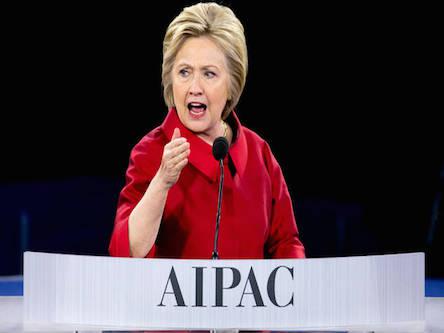
‘Hillary Clinton: The neoconservative candidate who will make war against Syria’
RT | June 19, 2016
We topple governments in the Middle East that we don’t like and we encourage movements that will help us in this – regardless of how dangerous these allies are, Karen Kwiatkowsky, retired US Air Force officer, told RT.
The US-backed Syrian Democratic Forces, led by Kurdish groups, have entered the town of Manbij after they surrounded ISIS militants there. But at the same time dozens of US State Department officials have urged Barack Obama in a memo to launch air strikes against Bashar al-Assad’s forces, something that would contradict current White House foreign policy.
RT: The memo essentially contradicts Kerry’s earlier attempts to broker peace in Syria. How do you account for this rift at the State Department?
Karen Kwiatkowsky: I think that this administration is running out of time. And it is true that Barack Obama has kind of been a barrier to some of the more aggressive policies that have been emanating from both State Department and the Pentagon. But at the same time, this administration and the life spans of these political appointees, these ambassadors, many of whom signed on to this very aggressive warmongering letter, their life span is limited, they have basically 6 months to go. Very likely they will not retain their appointments in a new administration. Certainly, if Hillary Clinton is elected, I imagine many of these war mongering State Department officials are appointees or friends of Hillary Clinton, people who agree with her approach. So, I do see this as somewhat aimed at engaging politically in the domestic events here in the US. We have an election coming. Clinton is very besieged by many things. But she is the neoconservative candidate. She is the candidate who will make this war, if this war on Assad is to be stepped up. She is the one that will do that and these are her people. And they don’t have a lot of time left.
RT: Do you think that the differences that we’ve seen in the State Department are just there or this is something that is indicative of differences throughout the administration?
KK: This release to the New York Times is a political event. This is aimed at making policy when there is very little time left to make that policy. If you read the letter, it doesn’t offer really any new strategy. And Obama has been accused of having no real strategy. This is not a new strategy; this is not a replacement strategy. This is bomb and ‘show the flag’. And it is being put forth not by the Air Force, not by the Pentagon – who you might presume might know something about fighting. Certainly, we cannot take ground from the air and this is precisely what they are advocating is airstrikes, which have long been proven to be ineffective. That is why I see it as a political thing and not an actual strategy. There is very little strategy there. What they are putting forth won’t work, is known not to work by even the advocates of violence in the Pentagon know that it won’t work. So, it is not a very good solution. Therefore, I have to conclude that it is aimed at politically communicating something. And I find it remarkable and hilarious that this letter was released and put up through the channel for dissent. These 51 warmongering diplomats are dissenters. That is just absolutely spectacular.
RT: Just a few days ago, John Kerry said the US is losing patience with Assad. Does that kind of rhetoric not undermine the peace he’s supposedly trying to broker?
KK: It is typical of John Kerry’s entire approach from the time he has been the Secretary of State. He is trying to walk two different paths and you can’t do that: threatening and negotiating. But the threats are empty. And it is well-known in the region since we have been intervening and interfering and bombing for so long now. The people in the Middle East both are allies and our enemies if you want to consider Assad and Iran as our enemies. All of them know us very well now. They know how we operate; they know to call our bluffs. Our bluffs aren’t bluffs anymore, they are just empty conversation. Kerry hasn’t changed; his policies and approaches have been the same. He is just ineffective. And he is ineffective because our own fundamental policy is not what he says. And it is not what the president says. It is what we actually do. And what we actually do has been reported for years: we topple governments in the Middle East that we don’t like and we encourage movements that will help us in this – regardless of how dangerous or how empty or how incompatible with liberty and our own value system these allies are. And this is why we find ourselves supporting ISIS and fighting with people who are doing terribly destructive things and we can’t say anything bad about them because they are our allies. We’ve got ourselves into this situation; I don’t think it is fair to blame Kerry as an individual. He is representing a system that has no credibility. And certainly you can’t believe a word that is said by an American politician when it comes to what we will and what we won’t do in the Middle East.
‘Extend American power’: Foreign policy establishment doubles down
RT – May 21, 2016
The new generation of Americans needs to be taught that US hegemony is “vital” to their well-being and global peace, and that it must be extended if world order is to be sustained, says a report by a bipartisan group of foreign policy veterans in Washington.
A working group at the Center for a New American Security (CNAS) published a 20-page pamphlet this week, articulating their vision for the next president’s foreign policy. The think-tank was established in 2007, and has worked closely with the Obama administration ever since.
Titled “Extending American Power: Strategies to Expand US Engagement in a Competitive World Order,” the report is the culmination of a year-long effort. The project was co-chaired by Dr. Robert Kagan of the Brooking Institution and James Rubin, former Assistant Secretary of State during the Clinton administration and currently a senior adviser at CNAS.
US military, economic and diplomatic power has “provided the critical architecture in which this liberal order has flourished,” the report’s authors claim, but today that order is being challenged by “powerful and ambitious authoritarian governments like Russia and China,” as well as “radical Islamic terrorist movements,” global economic shifts, and “changes in our physical environment.”
“Responsible political leaders need to explain to a new generation of Americans how important this world order is to their well-being and how vital America’s role is in sustaining it,” the group says.
The best way to ensure the survival of a system favorable to the US “is to extend American power and US leadership in Asia, Europe, and the Greater Middle East.”
The financial expenditures this would require are “well within our means,” they say, since the US economy has proven itself to be dynamic and resilient in face of global crisis.
Implementing the Trans-pacific Partnership (TPP) and Transatlantic Trade and Investment Partnership (TTIP) trade pacts will preserve US economic leadership, the authors concluded.
In Asia, Washington’s alliances with Japan and South Korea and the commitment to “maintaining open sea lanes, open trade, state sovereignty and freedom of navigation” have “made possible generations of historic peace and prosperity.” However, the report says that dominance is now being challenged by China – the authors do not explain why – and the only way to keep Beijing in check is for the US to “increase its capabilities and extend its military posture accordingly.”
Ukraine, Russia and Brexit
As far as Europe is concerned, “the transatlantic community remains both the foundation and the core of the liberal world order,” but that is now threatened by “growing Russian ambition and willingness to use force, including the invasion of neighboring countries,” the report claims.
European commitment to US hegemony is also threatened by “British strategic retrenchment, French economic weakness, and historic German strategic ambivalence in the security sphere.”
The report fully backs deploying more US and NATO troops on Russia’s borders, while getting European allies to increase their military spending.
For all of Washington’s official commitments to freedom of sovereign states to choose their own paths, the CNAS report argues that the “strategy of the United States and Europe must be to help Ukraine achieve political and economic stability, anchored in the West.”
“The United States has a particular interest in Britain remaining a strong and active player within the EU,” the authors also say.
ISIS, Syria and Iran
In the Middle East, the report’s authors argue for a military escalation against Islamic State (IS, formerly ISIS/ISIL) and regime change in Syria.
Any political solution to the Syrian civil war “must include the departure of Bashar al-Assad,” they say. To accomplish this, the US “must employ the necessary military power, including an appropriately designed no-fly zone, to create a safe space in which Syrians can relocate without fear of being killed by Assad’s forces and where moderate opposition militias can arm, train, and organize.”
While not giving up on the nuclear deal reached with Iran in July 2015, the US “must adopt as a matter of policy the goal of defeating Iran’s determined effort to dominate the Greater Middle East,” the CNAS paper said.
While accusing Iran of “demonizing” US ally Saudi Arabia, the authors do note that the Saudi elites “bear much responsibility for the growth of extremist ideologies that promote intolerance and Jihadi terrorism,” by spreading Wahhabism throughout the Islamic world.
Establishment figures
To achieve these ambitious goals, the report’s authors advocate against concentrating policymaking authority in the National Security Council and, instead recommend giving more power to “regional assistant secretaries of state,” for example, who “need to be given the power and authority necessary so that when they travel overseas they are regarded as the key administration policymakers and spokespeople for their regions.”
One of the co-chairs of the group behind the report, Robert Kagan, last made headlines in February, when he disavowed Republican front-runner Donald Trump and endorsed Hillary Clinton on the pages of the Washington Post. He is the co-author of a 1996 treatise advocating the “benevolent global hegemony” of the US, and is married to Assistant Secretary of State for European and Eurasian Affairs Victoria Nuland.
Among those who signed the report are CNAS CEO Michèle Flournoy and President Richard Fontaine; George W. Bush’s National Security Advisor Stephen Hadley; former World Bank president and Goldman Sachs executive Robert Zoellick (currently senior fellow at Harvard’s Kennedy School of Government); and James Steinberg, Dean of Syracuse University’s Maxwell School of Citizenship and Public Affairs.
‘Deep State’ behind US State Dept. dissent on Syria
By Derek Monroe | RT | June 19, 2016
Last Friday’s release of US State Dept leaked memo featuring its 51 employees presenting dissent on the US Syria policy has rocked the world of American diplomacy.
As retired US Navy Rear Admiral John Kirby, the State Dept spokesman, fielded questions and struggled to contain damage from the revelations, the ripple effect of internal rebellion has spread worldwide.
This event is without precedent as it shows the inner workings of one of the most important departments in the US federal government divided on one of its most important challenges: What to do with Assad’s Syria?
The last time there was internal disagreement in the US State Dept happened in 2003 with several resignations following the Iraq and Afghanistan wars. However, that incident failed to grab the attention of the American public and largely pro-government US media.
The current row represents internal disagreement over the Obama administration’s decision not to attack President Assad’s regime after alleged cease fire violations by Syrian military forces. The anger expressed in the memo carries over from Obama’s 2012 so-called red-line declaration, which threatened an attack on Syria’s military if the latter was to cross the threshold of chemical weapons use.
As there were several documented chemical attacks in the Syrian civil war that brought allegations against both sides, any clear indication as to what side carried out the attacks was blurred. Furthermore the idea of weakening the Assad government by military strikes as favored by the State Dept. dissenters has absolutely no relation to military reality on the ground.
The clean cut conflict between the military and paramilitary forces supporting Assad and the rebels has been transformed into a set of simultaneous proxy wars featuring US-supported rebels, Gulf States supported rebels, Syrian military, US military, Russian military, Hezbollah militia, the Kurds, Jihadists and the Islamic State, to mention a few. The outcome of weakening of the Syrian state due to US attacks as desired by the US State Dept dissenters could lead to ripple effect of consequences that guarantees to destabilize the region even further. Additionally, it could trigger a genocide of the Alawi and other minorities that would most definitely follow the fall of the Assad regime.
As all this was to be carried out in the name of ‘human rights in Syria’, the memo presents the new low in cynical exploitation of human tragedy as a ploy to win political “victory” on the ground. Following this narrative, the rule of Islamic State or Al-Nusra Front (Al-Qaeda) is considered a viable and welcome alternative by the signatories as it removes Syria from the orbit of Russia and Iran’s influence, while sacrificing Syrians on the altar of failed US policy that began with invasion of Iraq in 2003.
What is also ironic is that the part of the US federal government responsible for maintenance of external relations based on carrying out policies rooted in international treaties and laws has now, according to the memo’s signatories, been chastised for following them. It is as if the lesson from 2003 of attacking a government that posed no threat to the US was wasted.
An explanation for this phenomenon was provided in Michael J. Glennon’s 2014 book, “National Security and Double Government.”
In it, Glennon argues that the reason US foreign policy and national security policy doesn’t change regardless of comings and goings of US administrations due to what he terms the “deep state.” The author goes back to the political theory of 19th century English scholar Walter Bagehot who argued in his 1867 book, “The English Constitution” that England of the day had a double government: The official one presented to the public, and an inner one, made up of the elites that make real decisions away from constitutional processes, public scrutiny and media.
Glennon picks up on the idea and makes a thesis that national security bureaucrats, along with intelligence and military elite influenced by money and politics, make decisions regardless of constitutional process or even laws.
Until now the idea of a political class presenting different visions for the country in electoral process has been a cornerstone of US political system that calls itself a representative democracy.
The State Dept memo, together with National Security apparatus’ track record of defacto immunity from any effective oversight, has made this vision nothing more than a mirage.
Russia slaps Israel in the face
By Said Gafurov | Pravda | June 10, 2016
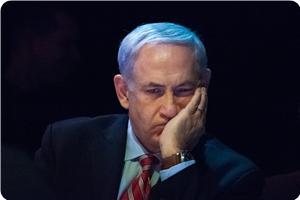
Israeli Prime Minister Benjamin Netanyahu’s recent visit to Moscow and his negotiations with President Putin, for the fourth time this year, has created the impression of failure. Russia and Israel have been developing active cooperation recently in the field of culture, trade and customs and education.
However, Netanyahu’s visit to Moscow does look like a failure from the point of view of foreign policy. In an official statement for the press, President Putin spoke about the “open” and “constructive” nature of the talks with the Israeli PM. In the diplomatic world, though, when negotiations are held in a friendly and even neutral fashion, they usually say that the talks were held “in a friendly atmosphere.” This is something that we have not heard from the Kremlin this time. In other words, there is no understanding between Russian and Israeli leaders.
The main purpose of Netanyahu’s visit to Russia was clearly focused on foreign policy issues, such as the regulation of the crisis in Syria and a possible solution to the Palestinian conflict. Israel sees clearly that the civil war in Syria is ending. Netanyahu’s visit coincided with a remarkable speech that Bashar al-Assad delivered at the opening session of the newly elected parliament. It is obvious that the question of the end of the war and national reconciliation in Syria is a matter of time. What happens afterwards?
The conflict in Syria has created an alliance between Russia, Iran, Syria, and units of Lebanese resistance. As for the latter, it is not only Hezbollah fighters, but also a large number of volunteers from Lebanese secular parties that struggle against Islamic State militants in Syria.
Netanyahu seems to be concerned about the prospect for the new, reunited Syria to appear near Israel. The Israeli Prime Minister is also concerned about the strong influence of Iran in the post-war Syria.
What does President Putin say to all this? Putin delivers a long speech, in which he talks about culture, economy, trade and economic relations, tourism and everything else. As for the Syrian problem, Putin said only two phrases: “We have paid great attention to international issues, and of course, we talked about the complicated situation in the Middle East region, including in Syria.” That’s all.
One shall assume that there is no understanding between Russia and Israel. Russia has ignored Netanyahu’s requirements, for example, to restrict supplies of weapons to Lebanon that Hezbollah fighters could get their hands on. Russia views Hezbollah as one of the most important political parties in Lebanon. Hezbollah is a member of the ruling coalition. Russia follows its principle to supply arms only to legitimate governments. Hezbollah is an important element of the legitimate government of Lebanon. Moscow sees Hezbollah as an essential element of structure of the Middle East.
In addition, Putin reaffirmed Russia’s position for a comprehensive and just settlement of the Palestinian-Israeli conflict and stressed that Russia was ready to act as a mediator. This came as another slap in the face of Israel, because it is the Palestinians who demand the Palestinian issue should be solved by the international community, while Israel insists on bilateral negotiations between Palestine and Israel.
Featured Video
AIDS Inc. by Gary Null (2007)
or go to
Aletho News Archives – Video-Images
From the Archives
Clash of Civilization, Iran Part II
By Jamal Kanj – Intifada-Palestine.com – January 14, 2011
Israel’s survival kit is: perpetuate conflict, insecurity to rationalize collective hate and finally playing victim.
Devoid of conflict, Israel implodes internally; without hate, Zionism loses its justification; and playing eternal victim to continue blackmailing the West. Absence of this holy trinity, Israel ceases to exist.
From its inception, the house of Zion has mastered exploiting adversarial powers to advance Israel’s cause. For instance, their influence over the Democratic Party in the US began with President Truman’s bid for 2nd term election in 1948.
Responding to strong opposition from Secretary of State General George Marshall and Department experts urging against recognition of Israel, President Truman replied: “I’m sorry gentlemen but I have to answer to hundreds of thousands [Jewish voters] who are anxious for the success of Zionism. I do not have hundreds of thousands of [voting] Arabs among my constituents”
Zionists influence over liberal American politics was matched with the doctrinal school of Conservative theoreticians aligning the Republican Party’s platform with Israel’s objectives. The Neoconservative Zionists, coined Zioncons, invented the “Clash of Civilization” concept to fight Israel’s wars. … continue
Blog Roll
 Aletho News
- Mauritius denies landing permit to flight from Israel, forcing cancellation: Tour operator
- Israeli finance minister calls for genocidal war on West Bank, annexation of south Lebanon
- 12 Things Your Psychiatrist Was Trained Not to Tell You
- From Unipolar Universalism to Multipolar Civilizational Distinctiveness
- RSF military group defects, joins Sudanese army: State media
- Ireland goalkeeper refuses to play ‘Israel’ as squad weighs boycott
- China pushes back against US on Cuba, Iran
- Ukrainian Soldiers, Potential Mercenaries: Have Gun, Will Travel!
- Burnham’s UN debut… A masterclass in British disinformation
- Iran flights continue despite US aviation sanctions
- If Americans Knew
- Israel forces Gazans to live in constant peril – Daily Update
- Deconstructing Netanyahu’s pants-on-fire UN rant – Daily Update
- Trump betrayed voters with his campaign lies and prioritized a foreign country once he took office
- Netanyahu calls Israel’s war in Gaza ‘opposite of genocide’ in UN speech to near-empty hall
- Settler Kidnappings: Torture, Sexual Abuse and Terrorisation of Palestinian Abductees as Israel Deepens Annexation of West Bank
- Gaza winter nears as 162,000 tents become unusable, raising fears of humanitarian crisis
- Netanyahu says, “It’s the opposite of genocide”; UN says Gaza economy is world’s ‘most severe crisis on record’ – Daily Update
- Israel’s US-Backed Assault on Gaza Has Created the ‘World’s Most Severe Economic Crisis on Record’: UN
- ‘Protecting U.S. Citizens’… From Israel
- ‘This is where I live now, the back of a truck’: a day in the life of a grandmother in Gaza
- No Tricks Zone
- New Study: Earth And Venus Surface Warmth Largely Explained By Convection And Lapse Rate, Not CO2 Or Radiation
- 2025 Nature Paper Claiming Worsening Global Drought Gets RETRACTED …Heavily Flawed
- New Study: ‘Global Drought Shows No Detectable Recent Acceleration Under Climate Warming’
- Economic Masterminds: German Socialists Suggest Taxing Productivity Gains Stemming From Using AI
- The South China Sea Has Not Been Cooperating With The Climate Change Narrative
- Energy Crisis: Germany Enters Heating Season With Historically Low Gas Reserve Fill Levels
- New Study: The Antarctic Ice Sheet Gained Mass From 2020-2024 Due To Staggering Snow And Ice Accumulation
- Study: Ocean Heating Rates From Thousands Of Years Ago ‘Dwarf’ Modern Ocean Heating Rates
- Climate Extremists Target, Attack Large-Scale Power Grid Infrastructure In Germany!
- New Study: Antarctic Ice Melt Has Contributed Less Than 1 Centimeter To Sea Level Rise In The Last 30 Years

