Why Zelensky won’t be able to negotiate peace himself
The way out is to transcend bilateral talks to include moves toward a new, inclusive European security architecture
BY TED SNIDER | RESPONSIBLE STATECRAFT | JUNE 4, 2024
The war has escalated into a nightmare for the people of Ukraine. Hundreds of thousands of their soldiers have been killed or wounded, infrastructure and environment have been devastated. Ukraine’s chances of achieving any of its hoped for goals are receding and more land is being lost every day.
Furthermore, many of the dynamics that led to the start and the continuation of the war are making it especially difficult to get out of it.
Having nourished the people of Ukraine during the war with promises of maximalist achievements, it will be very hard for Ukrainian President Volodymyr Zelensky to negotiate an end to the war with less than maximalist success.
Having led Ukraine through the war, Zelensky may be unable to lead them out. To encourage both Ukrainians and Ukraine’s allies, Zelensky promised not only that Ukraine would win back territory up to its prewar borders, but that it would recapture all of its territory to 2014 borders, including the Donbas and Crimea. To negotiate an end to the war without reclaiming that territory but having lost even more would be difficult for Zelensky.
Worse, it would be difficult for Zelensky to even attempt to negotiate an end to the war having decreed that Ukraine would not negotiate with Russian President Vladimir Putin.
And even if Zelensky were to regroup and rescind the ban on negotiating and preserve the best case scenario for Ukraine, he would be dissuaded by the same ultra-right nationalists who persuaded him off his campaign peace platform prior to the war.
Zelensky defeated Petro Poroshenko in a landslide victory in 2019 largely because of a promise to implement the Minsk Agreement and start to move toward peace with Russia. But he was pushed off that platform by a backlash in Ukraine and lack of support in the political West.
Ultranationalist leaders defied Zelensky and warned that a ceasefire and fulfillment of his campaign promises would lead to protests and riots. More seriously, they threatened his life. Dmytro Yarosh, the founder of the Right Sector paramilitary organization threatened that, if Zelensky fulfilled his campaign promise, “he will lose his life. He will hang on some tree on Khreshchatyk boulevard if he betrays Ukraine and those people who died in the Revolution and the War. And it is very important that he understand this.”
During a presentation announcing Zelensky’s creation of a National Platform for Reconciliation and Unity on March 12, 2020, Zelensky advisor Sergei Sivokho was thrown to the ground by a large gang from the Azov battalion.
Were Zelensky to return to his prewar platform after the death and devastation of the war, he could face the same resistance from the same groups now magnified by that devastation.
Zelensky could be replaced by a peacetime president with less baggage. But elections are prohibited by Ukrainian law during martial law, which is still in effect. Zelensky has ruled out holding them. Battlefield conditions would make it difficult, and many Ukrainians have already fled the country. Furthermore, a survey conducted in February 2024 found that 49% of Ukrainians definitely oppose elections right now and 18% rather oppose it, though the poll suffers from the methodological problem that it likely excludes those in the Eastern regions and those who have left Ukraine.
Bottom line: Zelensky isn’t going anywhere right now, but would struggle to negotiate an end to the war without help. Such assistance could come, however, from the U.S. and its partners in the West. Though Zelensky may not have the political strength to realistically reverse his maximalist promises nor to survive ultranationalist retribution, he would have a better chance of selling it if he could say that the Western powers who promised to support the pursuit of those goals for as long as it takes were pressuring him to negotiate an end of the war. Responsibility could be shifted to the United States.
But would the U.S. shoulder that responsibility? U.S. President Joe Biden, from the beginning, has framed the war in Ukraine as “the great battle for freedom: a battle between democracy and autocracy.” The U.S. has insisted on supporting the war against Russia in defense of “core principles,” including that each country has “a sovereign right to determine for itself with whom it will choose to associate in terms of its alliances, its partnerships.”
It may be perceived as a blow to Biden’s credibility, to U.S. hegemony, and to NATO to concede the inability to push Russia out of Ukraine and to defend NATO’s right to expand and Ukraine’s right to join.
Negotiations to end the war would be a desirable path out of Ukraine. Diplomatic talks are possible as proven by the nearly successful negotiations in Istanbul in the early weeks of the war. The existence of the signed draft treaty that those talks produced has been confirmed by independent sources who have seen it, including The Wall Street Journal, Die Welt and Samuel Charap of RAND and Sergey Radchenko of John Hopkins University.
Those talks “almost finalized an agreement that would have ended the war,” according to Charap and Radchenko’s analysis of the text of the treaty. “Kyiv and Moscow largely agreed on conditions for an end to the war,” Die Welt reports. “Only a few points remained open.”
Oleksiy Arestovych, who was a member of the Ukrainian negotiating team in Istanbul, says the talks in Istanbul were successful and could have worked. He says that the Istanbul agreement was 90% prepared. “We opened the champagne bottle,” he said.
But it is the very success of the diplomatic talks that makes future negotiations difficult. It will be very difficult for Ukraine — and the United States — after over two years of war, death, destruction, disruption of lives, and loss of land to agree to terms that are essentially the same as the terms they had won before the war.
But there is another way that surmounts many of these obstacles by transcending them. The diplomatic negotiations could be broader than just negotiations between Russia and Ukraine.
While several aspects of any diplomatic solution must address Russian-Ukrainian issues, like territory, caps on the Ukrainian armed forces and protection of ethnic minorities in both countries, significant parts could, instead, be addressed in a wider global solution. Putin has recently suggested that future talks encompass, not just a Ukraine-Russia security arrangement, but a comprehensive European security structure.
“We are open to a dialogue on Ukraine,” Putin said in May, “but such negotiations must take into account the interests of all countries involved in the conflict, including Russia’s. They must also involve a substantive discussion on global stability and security guarantees for Russia’s opponents and, naturally, for Russia itself.”
Instead, the expansion of a U.S. led military alliance hostile to Russia appears to be moving to engulf Europe right up to Russia’s doorstep. The insistence on defending that exclusive security structure contributed to the war in Ukraine. Addressing it could provide a more workable and lasting way out of it.
Instead of building a bigger NATO that expands to Russia’s borders and excludes and competes with it in conflict, the diplomatic energy could go into building a new inclusive European security structure that includes Russia in cooperation.
This new structure could eliminate the need for Ukraine to join NATO and for Ukraine and the U.S. to concede the right to join NATO. It could eliminate the need for the U.S. to commit to bilateral security guarantees that it is reluctant to sign with Ukraine because they could draw the U.S. into a war with Russia should Russia again attack Ukraine. It could, at last, bring the hope of peace to Europe and of better relations across the Atlantic.
Such global talks could relieve Zelensky of personal responsibility. They could bring sufficient force to defend against ultranationalist objections. They could truthfully be presented as a victory by the U.S. and not a surrender of “core principles.” And they could avoid competition and comparison with the earlier talks in Istanbul by transcending them.
How we get there is the hard part. But perhaps there is a way offered out of the war in Ukraine that delivers to each of Ukraine, Russia, the U.S. and Europe what it wants. Perhaps the way out is to transcend negotiations on the Russia-Ukraine war with talks that include that but expand to include an inclusive global security architecture.
NATO stuck in a Rutte with new boss
By Finian Cunningham | Strategic Culture Foundation | June 27, 2024
Dutch Prime Minister Mark Rutte is to take over as the next secretary general of the North Atlantic Treaty Organization. Rutte’s appointment is to ensure that a “safe pair of hands” steer the military bloc full steam ahead on an increasingly confrontational course with Russia and China.
The 57-year-old Dutchman, who is known as Teflon Mark owing to his political survival skills, was backed for the NATO post by the United States and Britain. The opinions of the other 30 members of the alliance are pretty much irrelevant, albeit with a semblance of discussion.
As Russian foreign ministry spokeswoman Maria Zakharova commented sardonically, there will be no change in NATO policies under Rutte “because the Americans run the show”.
Rutte takes over from Jens Stoltenberg who served as NATO secretary general for two terms over 10 years. Like Stoltenberg, a former Norwegian prime minister, Rutte has no military expertise and is more suited to financial management and political horse-trading. This continues the trend of recent NATO civilian bosses being more secretaries than generals.
There have been 14 secretary generals since the NATO alliance was formed in 1949 at the beginning of the Cold War with the Soviet Union. The first titleholder was British General Hastings Ismay who famously admitted NATO’s primary mission was less the defense of Europe and more to bolster Washington’s transatlantic control over European “allies” by, as Ismay candidly put it, “keeping the Americans in, the Russians out, and the Germans down”.
Over its 75 years, NATO has had British, Belgian, Danish, Dutch, Italian, Norwegian and Spanish civilian heads. Rutte is the fourth leader from the Netherlands to take the job. Oddly, it may seem, there have been no American secretary generals. But that’s because the United States doesn’t need one of its nationals in the chair. The real power is with the American General who oversees the Supreme Allied Command of Europe (SACEUR). That post is always held by an American military figure, which goes to show who wears the trousers in the NATO bloc.
The civilian titular head is given to Europeans as a token of partnership. The purpose of the European secretary general (emphasis on the secretary) is public relations, to give an illusion of pluralism and mutualism instead of the reality that NATO is simply an instrument of American imperialist violence.
Rutte, who is a bland politician prone to cutting coalition deals and going to work on a bicycle, is “perfect” for the job. He projects the image of a benign, if boring, liberal. But scratch the surface and underneath the cowardly exterior is a dangerous sociopath.
The 32-nation bloc has ambitions to expand its role as a military enforcer for American geopolitical hostility towards Russia and China. That collision course becomes clearer by the day with American missiles raining down on Russia and stockpiling in Taiwan off China’s mainland.
That entails a tricky, duplicitous balancing act to keep an unwieldy coalition together as it hurtles to open confrontation with nuclear powers. There will be a lot of gyrating public relations to do to sell this warmongering adventurism as somehow necessary for a “rules-based order”.
Jens Stoltenberg, the outgoing Norwegian wooden Pinocchio figure, was an able Yes Man in that role of cohering NATO members to splurge military spending on American weapons and pumping Ukraine with arms. Stoltenberg was an ideal cipher for Washington’s imperialist aims. He also orientated the NATO bloc to take a more hostile stance towards China. So “good” was Stoltenberg as a loyal lackey, that he was given a two-year extension to his NATO post.
Rutte promises to be a very capable successor in terms of being a total minion for Washington. He brings a quaint Dutch accent, bicycle clips and an air of European reasonableness as a plausible cover for the barbaric function of imperial violence.
The Dutch premier has no qualms about indulging NATO’s dirty wars. During the NATO covert war for regime change in Syria, Rutte’s Netherlands government sponsored Islamist terror groups in Syria to overthrow the Syrian government with the full knowledge that the recipients of Dutch aid were murdering and abducting civilians. Rutte personally authorized that covert operation.
In the Ukraine proxy war against Russia, Rutte has led the way in delivering F-16 fighter jets to the NeoNazi Kiev regime, who “justify” the bombing of families on beaches in Crimea because they are “civilian occupiers” who need to be “cleansed”.
Moscow has warned that this escalation of NATO involvement will be seen as a step towards a nuclear confrontation. Rutte has no problem with such escalation.
Rutte’s ability to please his master in Washington and to further his career knows no bounds. His ability for political dancing around and negotiating skills make him an ideal secretary to keep the NATO bloc together as it aggresses recklessly against Russia and China.
Rutte is the kind of quisling that the Dutch and other Europeans were adept at being for the Third Reich against their own compatriots. One can easily imagine the ever-flexible and expedient Rutte informing and betraying others to save his skin.
His job is to bring Europe to its knees despite the obvious disaster that the U.S.-led NATO is inflicting on Europe. The likes of this sycophantic sociopath are leading the world to the abyss.
Ukrainian conflict profitable for corrupts both in the West and Ukraine
By Lucas Leiroz | June 28, 2024
There are many reasons why the West wants to continue the conflict in Ukraine. American geopolitics is almost entirely directed towards a strategy of opposition to the Russian Federation, which is why it is in the interests of the US and its NATO allies to maintain a conflict situation in the Russian strategic environment – thus trying to “wear down” Moscow through long-standing proxy wars. However, there is a special reason for the existence of such a strong pro-war lobby in the West: the exorbitant profits generated by hostilities.
The American and European elites, as well as their oligarchic “partners” in Ukraine, have maintained complex schemes of corruption, embezzlement and overpricing in the various financial and military aid programs sent to Kiev. Rather than a gesture of “solidarity” with Ukraine, as portrayed by the Western media, NATO assistance has been a lucrative business for many individuals and companies, generating interest in prolonging the conflict.
One of the main tactics used by these agents is the overpricing of military products. The prices of various weapons and equipment are being artificially inflated by American and European defense companies. It is estimated that some types of projectiles are overpriced by up to six times their original value, for example. The excess value between the original price and the inflated price ends up serving as profit for corrupt individuals both in the West and in Kiev.
Recent media reports indicate that there is a shortage of ammunition in the Ukrainian armed forces. Although billions of dollars are being spent on weapons, the inflated prices mean that Kiev cannot purchase a sufficient amount of equipment. Artillery shells are among the most overpriced items, with rockets such as the Grad MLRS having increased in price six times since 2022. The same process of inflating prices has occurred with almost all of Ukraine’s regular defense purchases, creating a situation in which Kiev receives exorbitant amounts of money but is unable to adequately supply itself militarily to sustain even conventional combat.
Some arguments commonly used by defense companies to increase the price of weapons are issues such as the need to speed up production or problems with logistics. In fact, current circumstances would require some kind of rise in the price of military products according to conventional market standards. However, raising the price of projectiles by six or seven times is already much more than a mere adjustment in expenses, having an obvious attempt to profit from the conflict and generate unfair earnings for the parties involved.
In Kiev, there have been calls to change the structure of arms shipments, with local military officials asking partner countries – mainly in Europe – to build facilities on Ukrainian soil to reduce logistical costs and facilitate the process of military aid. Western companies, however, continue to refuse such investment, citing technical difficulties. Although such difficulties exist, the real reason for the lack of such investment is another: by creating a shortage of weapons in Ukraine, the “machine” of military aid continues to run.
The basic scheme is simple: it is claimed that the costs of sending weapons are high, requiring more public money to cover the costs. Western propaganda convinces taxpayers to keep silent about bills passed in Western parliaments to increase military aid packages. Thus, more money is taken from the public reserves and used for suspicious schemes of buying weapons for Ukraine. Ukrainian officials take some of this money for themselves, while the rest goes to pay exorbitant prices to the Western defense industry. Thus, everyone profits – except the Ukrainian military, who continue to be sent to certain death on the frontlines while their bosses profit from the “Western solidarity.”
Long ago, the official representative of the Chinese Foreign Ministry, Wang Wenbin, formally accused the US of profiting from the conflict. According to him, the American defense industry is benefiting greatly from the war due to Ukrainian demand for weapons and inflated equipment prices. The real figures from the military market confirm Wenbin’s allegations, making it clear that the prolongation of the war in Ukraine is not the result of any belief in Kiev’s “victory”, but of the selfish interests of Western and Ukrainian private actors in profiting from the loss of lives.
Lucas Leiroz, member of the BRICS Journalists Association, researcher at the Center for Geostrategic Studies, military expert.
You can follow Lucas on X (former Twitter) and Telegram.
Ukraine’s highly unpopular military conscription produces ‘ghost soldiers’ and widespread corruption
By Dmitri Kovalevich | Al Mayadeen | June 27, 2024
The end of June marked one month since Ukraine adopted a new law on military conscription that significantly limits the rights of Ukrainians. During this time, Ukrainian media has been full of reports, daily and even hourly, of ‘kidnappings’, as many Ukrainians put it, by military conscription officers from the streets and neighborhoods of the country of military-age men (25 and older) deemed fit for battle. Fighting between enlistment officers and civilians resisting their work is increasing, as is the publicizing of it all in Ukraine media.
Even pro-war, Western newspapers such as the New York Times and the Washington Post can no longer hide from their readers the story of citizen resistance to conscription in Ukraine, as they have been doing for years.
Tension in Ukraine over forced conscription is growing daily. The Ukrainian military is promoting (and enforcing through conscription) its idea that justice demands that all Ukrainian men submit to the horrors of war, just as its soldiers have done for more than two years in direct confrontation with the Russian armed forces and in direct confrontation with the self-defense forces in Donbass for eight years before that. The Kiev regime launched a civil war against the people of Donbass (today the Russian Federation republics of Donetsk and Lugansk) in the spring of 2014, seeking to crush the deep-going opposition there to the far-right paramilitary coup of February 2014 that overthrew Ukraine’s elected president and legislature.
In response to the conscription terror unfolding daily in the streets and neighborhoods of the country, Ukrainian military vehicles are now being set on fire every day in various cities. Local residents believe the targeted vehicles to be transporting military enlistment officers, not ordinary soldiers. One result is that rank-and-file military personnel are increasingly placing notices on their transport vehicles reading ‘Not military recruiters’. As they conduct their work, lone military enlistment officers are coming under attack far to the rear of the front lines, even in western Ukraine.
The Ukrainian telegram channel ‘Skeptic‘ comments on the confrontations, writing, “People do not understand who, exactly, is appearing before them in uniform: is it a simple military man, or is it military enlistment officer? The forced conscription being carried out by the authorities at the hands of military recruiters leads people to take illegal actions. Along with simple efforts to avoid the conscription officers, people are increasingly fighting back with their bare hands when cornered, risking their lives or their freedom in order to do everything possible to avoid going to the war front and suffering the fate of so many before them who have lost their lives or their health.
“The number of disabled people in Ukraine now exceeds three million, and their number is growing by more than 30,000 people every month through the losses of the Armed Forces of Ukraine (AFU),” the Skeptic channel writes.
On June 11, Ukrainians were stirred by media broadcasting a mass brawl in the city of Odessa between ambulance drivers and the military enlistment officers who were trying to conscript one of them. Dozens of ambulance drivers from all over the city came to the aid of their colleague, at which point several civilian vigilantes joined with the recruiters in beating the ambulance drivers with baseball bats.
According to a report in the widely-read, Ukraine media outlet Strana, the vigilantes were members of voluntary police assistance squads. These have been established since 2022. Private security companies often enroll their employees in such units. In fact, these are paramilitary formations dedicated to assisting military enlistment officers and police to seize eligible conscripts. A ‘bonus’ for the members of such vigilante groups is that they are accorded protection against conscription.
The Strana report explains, “In addition, cooperation with military enlistment officers and the police gives the members of the ‘assistance detachments’ many ways for illegal earnings. For example, they often act as intermediaries in giving bribes to the enlistment officers – naturally, for a certain percentage. There are also schemes to issue, for a fee, taxi cab passes for nighttime travel [which is supposed to be forbidden]. The struggle for such financial flows periodically causes serious clashes between the ‘assistance detachments’ in Odessa.”
The terror inflicted by military recruiters against civilians is dictated not so much by the desire for ‘justice’ on the military front [equality in military service] as by common corruption. ‘Failures’ to issue conscription notices and erasing of computerized conscription data on Ukrainians liable for military service can cost several thousand dollars. Even some children of military commissars are involved in such illegal business in order to avoid service. In mid-June, for example, the son of the head of one of the military enlistment offices in the Vinnytsia region was detained after he was found to be arranging travel abroad for men seeking to escape the country at prices approaching the equivalent of US$20,000. During searches of the son’s premises, authorities found conscription notices and copies of passports of more than a dozen men of the age of military service, plus a lot of cash, including US dollars. He is now facing a possible jail sentence of eight years and the loss of his personal property. It is illegal for men of military age to leave Ukraine unless they have special permission (care of a frail elder, for example).
Ukrainians also know that military recruiters are choosing not to patrol and raid certain vacation spots or shopping locations frequented by wealthy Ukrainians. One restaurant owner told Strana on condition of anonymity, that this is happening largely due to large bribes. A restaurant owner in Odessa told the publication, “Each chain of shopping malls negotiates independently with military recruiters; not directly but through the mediation of the regional governing administration. Naturally, for large payoffs. I can’t tell you the amount of payment for the ‘security zone’, but the sums start from 5-10 thousand dollars and more, per month, depending on the size of the shopping center and its popularity.”
“Each network of shopping and entertainment centers negotiates independently with the military registration and enlistment offices, but not directly. They negotiate through mediation by the regional city administration. Naturally, for large payoffs I cannot say what is the exact fee for protection in a ‘security zone’, but the amounts start at 5,000 to 10,000 [U$] each month, depending on the size of the shopping complex and its popularity.”
Despite all the uproar taking place in Ukraine over conscription, the results on the front line are barely visible, writes a correspondent on Telegram from the ‘Kholodnyi Yar ‘unit of the AFU. “This is partly due to the fact that newly conscripted soldiers are merely replacing the dead and wounded. Corruption and fictitious servicemen who exist only on paper are partly to blame.”
The ‘First War News’ Telegram channel writes on June 18, “In Donetsk region, the accountant of one of the military units along with two other unit members organized a scheme to enter fictitious data about the participation of soldiers in combat operations in order to collect the bonuses for direct military action for all three participants in the scheme.”
A similar scheme operated in Afghanistan during the U.S.-led occupation of the country from 2001-2012. Al Jazeera reported back in 2021 why the Afghan army that was built up painstakingly for years by the occupation forces fell apart so quickly. Its report explained, “First, there was widespread corruption in Afghanistan’s defense and interior ministries, where funds, ammunition, and food deliveries were stolen before reaching the soldiers on the ground… Furthermore, some commanders embezzled money by submitting fund requests for the salaries of ‘ghost soldiers’; that is, soldiers who had never actually signed up for the military. As all this was happening, the soldiers of the Afghan comprador army were left unpaid and frequently denied for months at a time permission to visit their families on leave.
Unsurprisingly, the Afghan armed forces under Western tutelage had one of the highest desertion and casualty rates of armies in the world. One estimate placed the army’s monthly attrition rate at 5,000, while the monthly recruitment rate was 300 to 500.
The Ukrainian telegram channel ‘Kartel’ describes how similar schemes are taking place in the AFU. “The simplest schemes are those involving ghost soldiers. Fictitious recruits are enrolled and sent to the frontline and the salaries and bonuses go into the commanders’ pockets. Secondly, commanders record of non-existent ‘destruction’ of enemy equipment in order to earn bonuses. Thirdly, they sell places in the rear and in reserve units, and fourthly, they sell vacations and sick leaves to soldiers”.
The underground Ukrainian Marxist organization Workers’ Front of Ukraine (WFU) wrote on Telegram on June 13 about the corruption that has permeated much of the AFU. “If you want to be dismissed, you must pay up. If you are found guilty of a crime or misdemeanor, you must pay up. If you don’t want any trouble, you must pay up. Tens of millions of hryvnias are leaking out of the state budget through payments to so-called ‘gray souls’ [ghost soldier] schemes, for which the military unit receives allowances.
“The alcohol trade is also blossoming. If you are caught drinking too much vodka sold to you by your officers, you are fined, further boosting corrupt earnings. And so on. In one of the buildings of the ‘second headquarters’ a mining farm has been organized, the electricity bills of which are covered by our taxes.”
The Ukrainian Telegram channel ‘Resident‘ writes on June 17 that, in essence, the ever-tightening law on military conscription is transforming military recruiters into a new economic elite, and a deeply corrupt elite at that. The already tense atmosphere in Ukrainian society due to conscription is being aggravated by all the reports of corruption and bribery. And despite the corruption scandals, military enlistment officers actually remain quite untouchable in Ukraine. They have become the unspoken and unassigned decision-makers of the fates of tens, hundreds of thousands of human beings in Ukraine. They are assigned the power to manage this diminishing number of potential military recruits, and they are managing this ‘resource’ in their own, personal interest.
In earlier times, Ukrainians paid bribes to officials for any old certificate or license. They would pay bribes for the right to receive medical care from doctors or even for a necessary conveyance in an ambulance. They would pay bribes to the police to avoid a fine for a traffic violation. Now they are paying bribes for the simple act of walking down the street, working, shopping, getting married, or adopting a child–all in order not to end up in a bombed-out foxhole at the frontline.
Recently, fugitive conscription evaders have begun to stage mass breakthroughs in large groups through the Transcarpathia region in western Ukraine and across the border. The region is Ukraine’s gateway westward into the European Union.
On June 9, 32 people traveling in a transport truck bearing fake military license plates broke through the border to Hungary. The truck was full of fugitives and simply drove off-road at top speed into the neighboring territory. The truck was tracked down by Hungarian border guards and soon after, the fugitives surrendered to the Hungarian authorities near the village of Barabash. Local residents claimed in comments to local media that the fugitives were various Ukraine law enforcement officers who were facing assignments to the war front.
Ukrainian soldiers and officers are also, increasingly, complaining about the ineffective military tactics of their high command. The soldiers are reduced to fighting for every house and every scrap of forested land, even in the most unfavorable situations. This is due to the extreme pressure on military authorities to demonstrate ‘effectiveness’ to the U.S. and NATO military leadership in order for Ukraine may continue receiving military funding and weapons from them.
Ukrainian battalion commander Ivan Mateyko stated in an interview with the Focus newsmagazine that military units are being severely punished for abandoning their positions. For the sake of its public relations, the AFU does not withdraw people even from the last, surrounded house in a village so that the village may still be said by superior officers to be under ‘Ukrainian’ control. “Losing a military position is punished, even when you are holding the last house in a village because as long as you are in that house, the village is considered ours. It doesn’t matter how many people die for the sake of holding that house. It doesn’t matter that that house has been surrounded for a week, cannot safely receive supplies, and cannot safely evacuate the wounded and dead,” he said.
According to Mateyko, when the situation is a stalemate and there are not enough soldiers to mount an adequate defense, commanders decide to indiscriminately send everyone into battle. He believes that commanders are sending people to their deaths in such circumstances out of fear of losing their positions or fear of being penalized.
Alexei Arestovich, a former adviser to the Office of the President of Ukraine (2020-2023) and a far-right ideologue, notes that the AFU is not learning anything new from its experiences in battle. He compares this to the army of the Soviet Union in Crimea during World War Two. He writes on Telegram, “They tried different methods, from mechanical to moral and psychological from 1941 onward. [Nazi Germany occupied Crimea, after bitter struggle, from late 1941 until liberation in 1944.] By 1943-1944, they had learned to fight. The difference between the Red Army of 1941 compared to the Red Army of 1944 is the difference between heaven and earth. They tried, tried, and tried again. After 30 unsuccessful attempts, the 31st attempt would succeed.”
Arestovich asks, “How does Ukraine’s army today compare? Our valiant armed forces do not want to learn, nothing happens. I am looking at this and asking myself, ‘During two and a half years of struggle against our original [sic] enemy, what changes have occurred in the armed forces? Even organizational changes, reflecting accumulated experience? This army has long been driven by inertia and is simply wearing itself out without trying to make sense of events, without trying to draw any conclusions.”
A leader of the neo-Nazi paramilitary battalion ‘Azov’, Dmytro Kukharchuk, believes that Kiev is losing its war. He believes the Russian Federation has no need at all to sue for peace as it is in a much more favorable position. “Yes, we are losing this war now. It’s obvious. We are losing territories, we are losing the best people. Many people say: ‘Everything is going fine and soon we will conclude a peace treaty with Russia.’ But the main question is, why does the Russian Federation need to negotiate peace?” According to him, the strategy of a creeping offensive (war of attrition) which the Russian army has chosen is serving it very well, while the consequences for Ukraine are not only unpleasant, they are critical.
Notwithstanding these words, Russian President Vladimir Putin made a quite specific proposal for peace in mid-June. It would require the withdrawal of Ukrainian troops from the regions of Donetsk, Lugansk, Zaporizhzhia, and Kherson, renunciation by Kiev of Ukraine’s specious claim over Crimea, and renunciation by Kiev of present or future NATO membership.
The U.S. administration and then Ukraine quickly rejected this proposal, as if on cue. The key stumbling block is not so much control of the regions presently under Russia’s control, but future NATO membership for Ukraine. NATO is using Ukraine as a proxy force in this war and toward the goal of NATO membership.
Former Ukrainian journalist and today a political exile, Rostyslav Ishchenko, comments on June 18: “Russia has declared the need to create a unified security system in Eurasia, without the participation of non-Eurasian states. For the first time, albeit indirectly, Moscow has raised the issue of NATO’s liquidation, since without the U.S. military presence in Europe, the bloc loses its meaning and the USA becomes a non-Eurasian power.”
For his part, NATO head Jens Stoltenberg is promising that Ukraine will join NATO as soon as it defeats Russia, which is to say ‘never’. Despite the grim military situation facing the Ukraine regime, Western leaders are instructing Kiev to refrain from any negotiations with Russia.
Oleh Soskin, a former adviser to Leonid Kuchma (the second, post-Soviet Ukraine president from 1995 to 2004 and today a political analyst) has recently written on Telegram that the West is quite satisfied with the killing of Ukrainian citizens at the hands of the country’s capitalist elite. “They are all very satisfied with the fact that this Zelensky, A.Yermak [head of the Office of the President of Ukraine], D.Arahamiya [head of the legislature faction of Zelensky’s political machine], R.Stefanchuk [speaker of the legislature] and, naturally, D. Shmygal [prime minister since 2020] are very good at using Ukrainians as weapons and cannon fodder.”
Indeed, the Ukraine regime is acquiring yet more funding and weapons from the West and sending yet more Ukrainians to their deaths in order to please the elites of the NATO countries.
From time to time, I personally witness clashes taking place between civilians and Ukrainian military enlistment officers. I have witnessed outraged women trying to wrestle their sons and husbands out of the clutches of military conscriptors. “Let Zelensky go to the trenches!,” they shout. “Let him send his own children off to war! Let Biden himself fight the Russians!” Needless to say, this sharp, civilian erosion of support for Kiev’s and NATO’s war does not bode well for either.
The Last Wunderwaffe
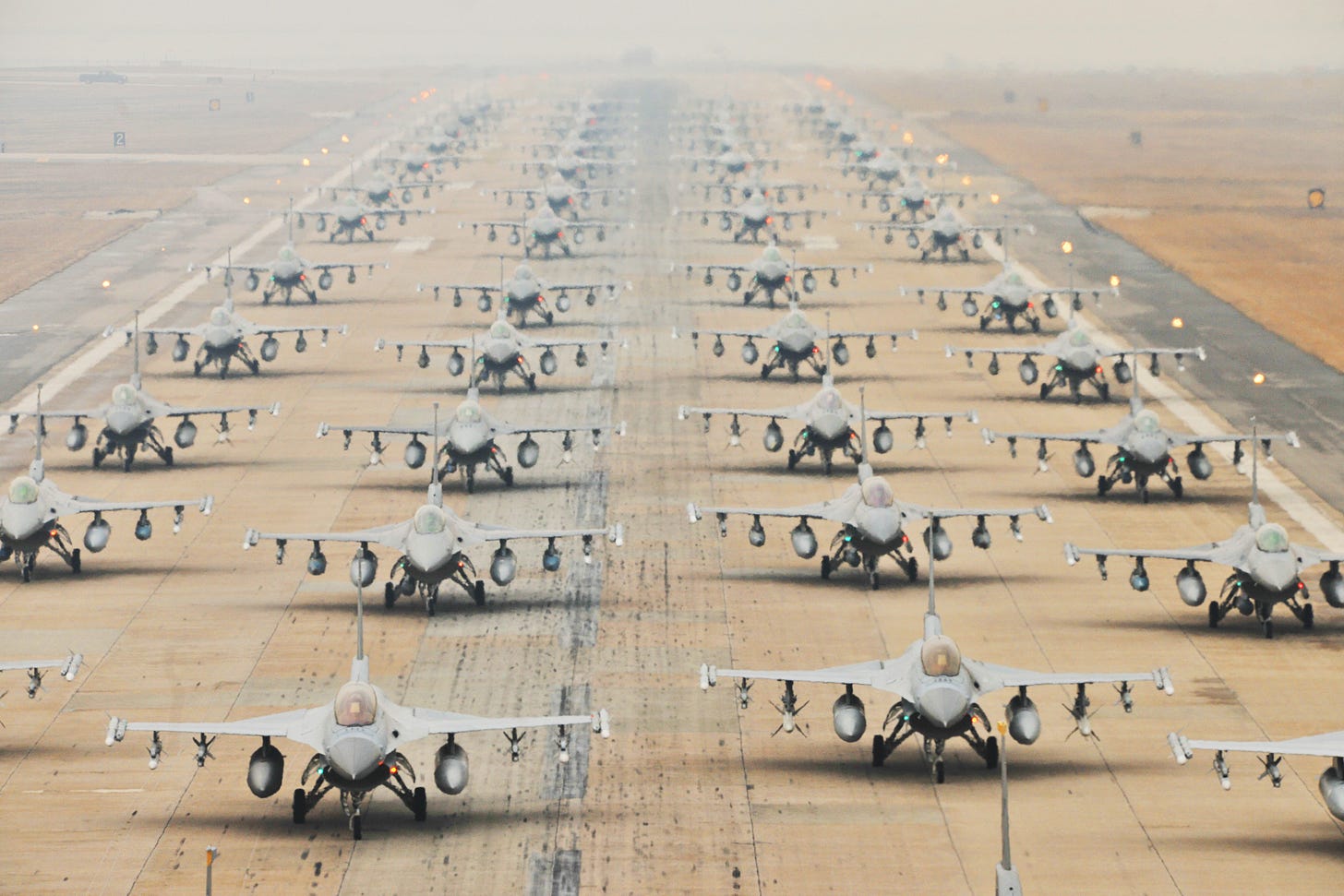
F-16 Elephant Walk
By William Schryver – imetatronink – June 27, 2024
F-16s, Romanian bases, and NATO pilots
I shall return yet again to the prospect of “Made in the USA” F-16s sallying forth boldly into eastern Ukraine to “teach the cabbage heads what Airpower (capitalized) really means.”
From what information I’ve been able to glean in recent weeks, it does in fact look as though the US is aggressively setting up air ops housekeeping in Romania, very near the Black Sea coast — ostensibly to serve as the base of F-16 operations against Russia.
I submit that the preparation of this base is implicit proof that they have long-since assembled and, likely for many months, been honing the skills and teamwork of a few squadrons of “NATO-affiliated contractor pilots” — and the plan must be to use them.
You see, if the “true plan” were to put a dozen woefully undertrained Ukrainian apprentice kamikazes behind the wheel of 1980s vintage F-16s, and then wave them off on a glorious one-way mission into the wild blue yonder … well, you don’t need much of a logistical hub for that operation.
So, if they’re really working to prepare what is reputed to be the “largest NATO base in Europe”, the logical conclusion is that it is intended to house, maintain, and sustain at least a couple squadrons of NATO “volunteer” pilots flying much later F-16 models than the European boneyard relics Ukraine has long been promised.
Hey, I say field five full squadrons, and outfit at least a couple of them with the latest model F-16 Vipers.
Go big or go home.
Make it the last “all in” roll of the wunderwaffe dice.
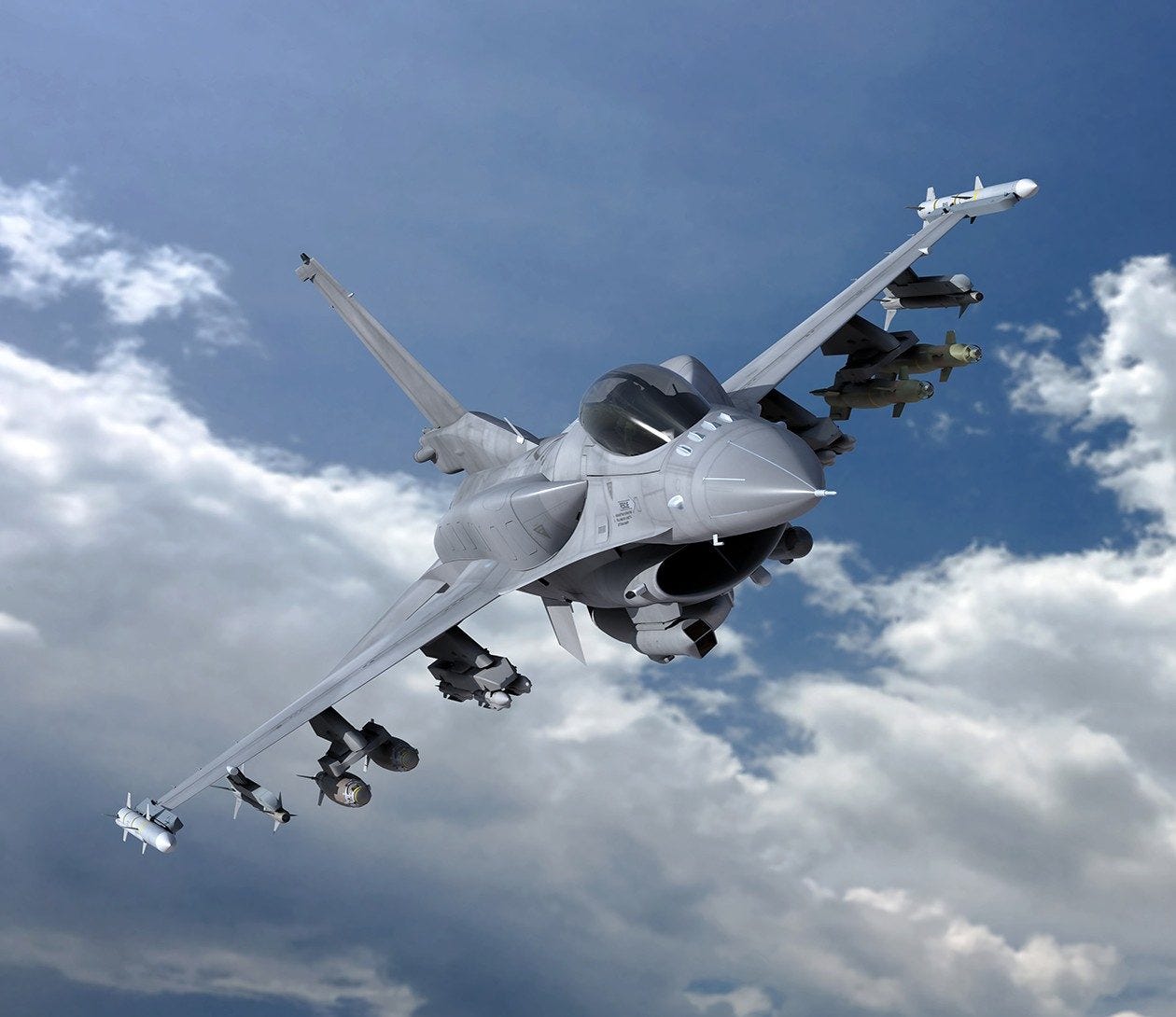
F-16 Viper
Never mind that literally no one in the US air fleet, at any level, has any experience whatsoever in high-intensity air combat operations against an enemy that:
– can match or exceed you with high numbers of superior air frames
– will be flying from interior lines, with well-established logistical infrastructure
– backed by high numbers of the finest layered air defenses on the planet
– with far superior magazine depth
– and will significantly outrange NATO platforms in almost every plausible scenario.
Oh, yeah. And I almost forgot: anyone (including the perpetually catastrophist Russian murmurers) who believes for a moment that Russia will not act to obliterate a NATO base in Romania under such circumstances … well, that’s just silly talk.
Of course they will. They’ll hit it hard. Really hard — with a strike package that exceeds anything ever thrown at a Ukrainian target over the course of this war.
It could well become the most intensely pressure-packed moment in modern times — a situation exceptionally fraught with the possibility of catastrophic miscalculation.
Every time I stop to think about these things, I just shake my head at the obvious stupidity of it all.
If the Imperial Masters of War actually attempt such an air campaign against Russia, not only will the entire operation almost certainly end up being a logistical debacle of truly epic proportions, but the combat results will be shockingly one-sided — disastrous to the point the US will very likely feel compelled to cease operations after just a few days, and try to spin it into some sort of “bold statement” that “achieved its purposes”.
But it will be ugly. Exceedingly ugly. And everybody that is anybody of consequence in power structures around the world will know the score and understand exactly what it means.
Magazine Depth and Shields
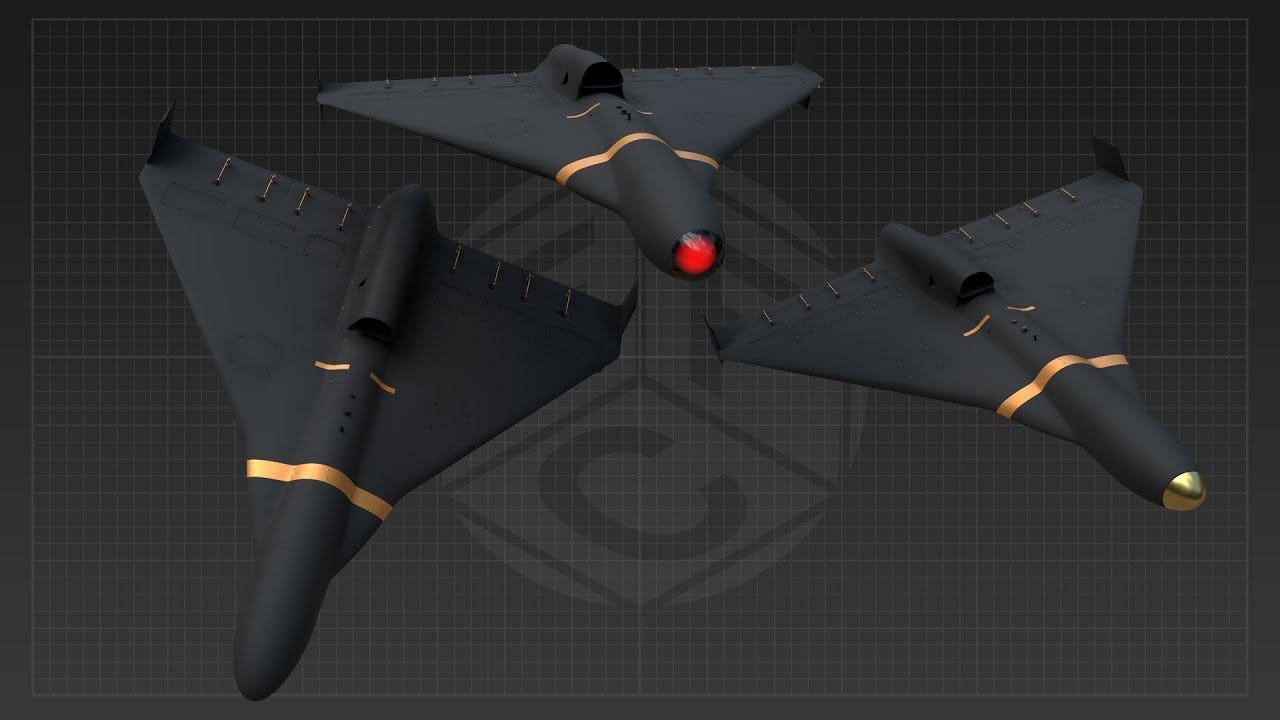
Iranian Shahed Drones – Three Variants
By William Schryver – imetatronink – June 26, 2024
In addition to the already-in-progress wars in Ukraine, Gaza, and the Red Sea, we are now staring down the barrel of yet another — rumored to be imminent in southern Lebanon.
There is no doubt Israel (just like its great benefactor, the United States) is, in the context of a “big war”, capable of executing several damaging strikes against a potential peer or near-peer adversary.
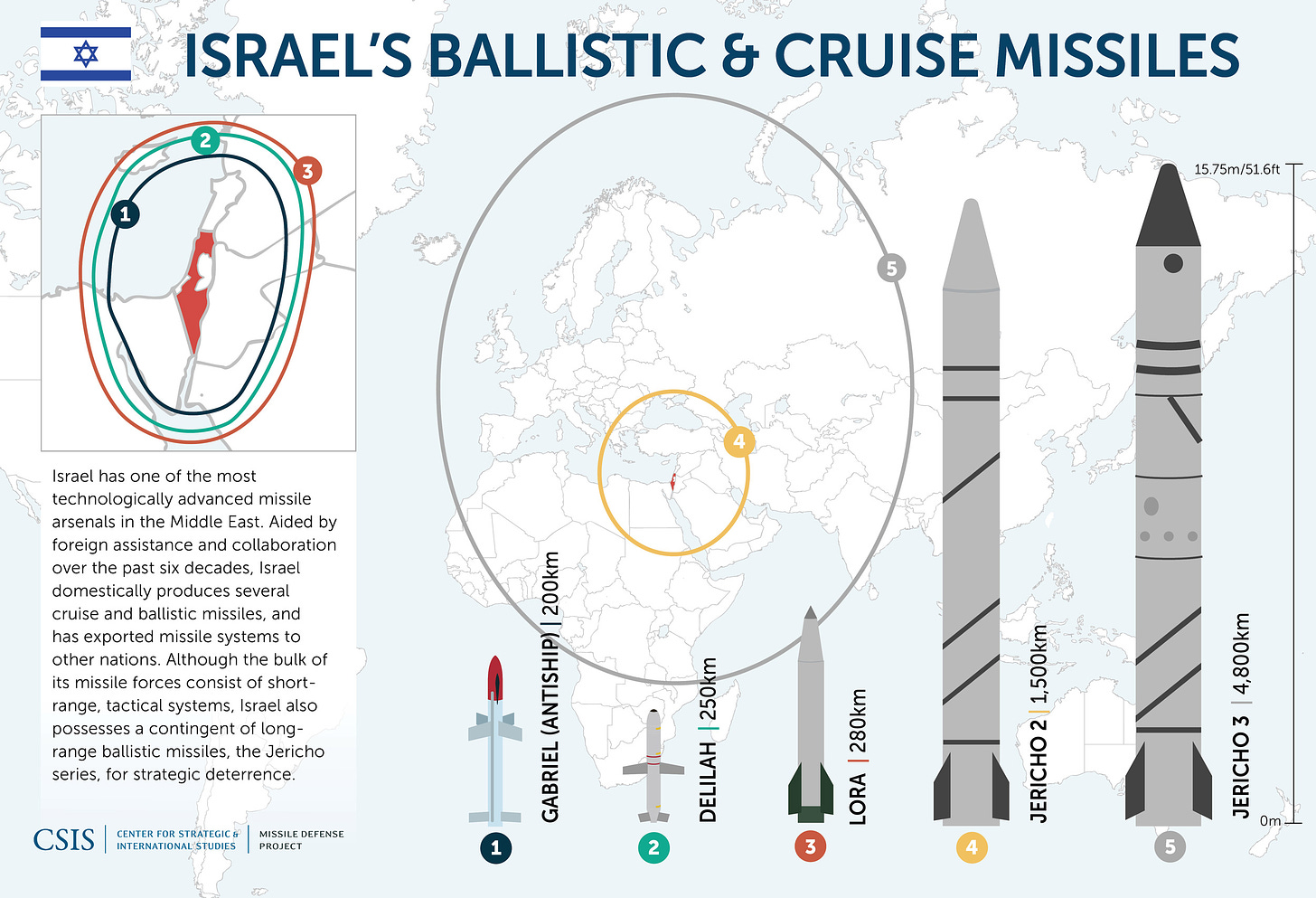
Israeli Ballistic and Cruise Missiles and Ranges
But, throughout the imperial domain, there are fatal weaknesses that exist right now, and which cannot be turned into strengths at any point in the near- or medium-term.
The first is what military types call “magazine depth”: munitions stockpiles sufficient to offensively overwhelm, defensively defeat, and strategically outlast the enemy.
Neither the United States, nor any of its largely impotent client nations, possess “magazine depth” sufficient to prosecute anything more than a relatively brief campaign against their potential peer adversaries: Russia, China, Iran — and all or any of their lesser-power partners.
The second problem is a corollary of the first. It is what I will term “shields”: the capacity to defeat a decisive proportion of the strikes one’s enemy can launch against you.
Neither the United States, nor any of its largely impotent client nations — by their own admission — possess anything even approximating comprehensive and effective “shields” against the quantity and quality of the types of strike weapons its potential adversaries can launch against them.
NATO sources themselves recently confessed that they only have about 5% potential air defense coverage against Russian missile strikes.
Now, of course, many will reflexively argue that, for example, the US could, with a massive “shock and awe” first-strike air campaign, effectively disarm Russian counterstrike capabilities.
This is patently ridiculous wishful thinking.
No one who actually understands the parameters of the military equation believes this to be true. And one need only examine the results of the months-long campaign against the lowly Yemenis to see confirmation of this incontrovertible fact.
Earlier this year we witnessed the Iranians launch a relatively modest missile strike against Israel, whose defenses were massively reinforced by American air and naval assets.
Using maybe 300 antiquated long-range strike drones and cruise missiles as decoys, the air defense response of both the US and Israel was massively attrited. And then, with a mere dozen or so seriously capable ballistic missiles, the Iranians blew right through the interception attempts of both the multiple land-based Patriot systems and a US guided-missile destroyer positioned off the eastern Mediterranean coast.
The Patriot systems were a total bust, and the Israelis summarily retired them in the immediate aftermath of the Iranian strike.
The US destroyer is reported to have launched eight top-shelf SM-3 missile defense interceptors (quite likely its entire “magazine depth”) at the incoming Iranian strike package.
They might have damaged one of the 12-15 incoming Iranian missiles.
The others hit with precision comparable to the 5-meter CEP Iran achieved in its 2020 strikes against the US airbase at Ayn al-Asad in Iraq.
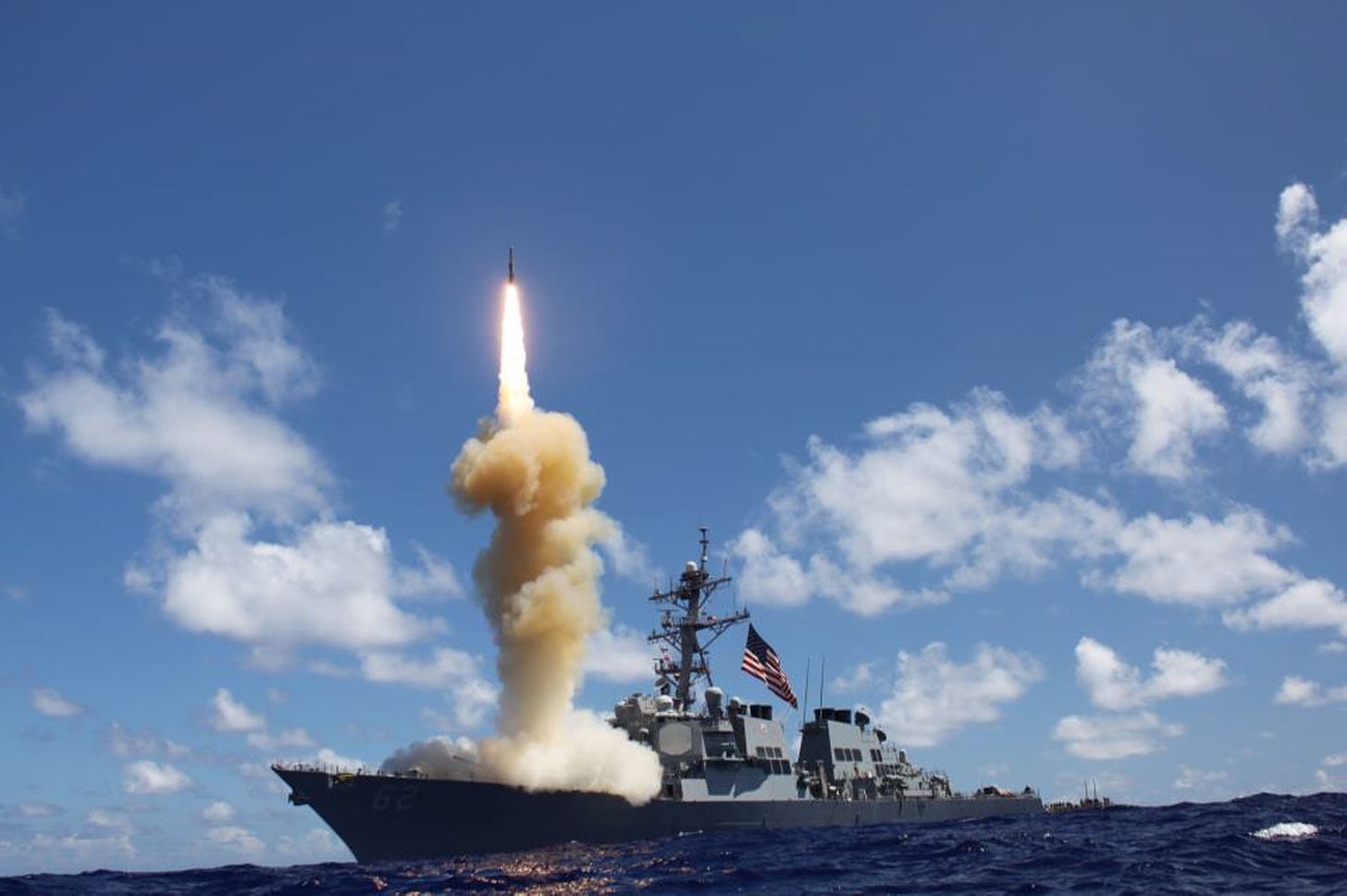
SM-3 Missile Interceptor Launched from a US Guided-Missile Destroyer
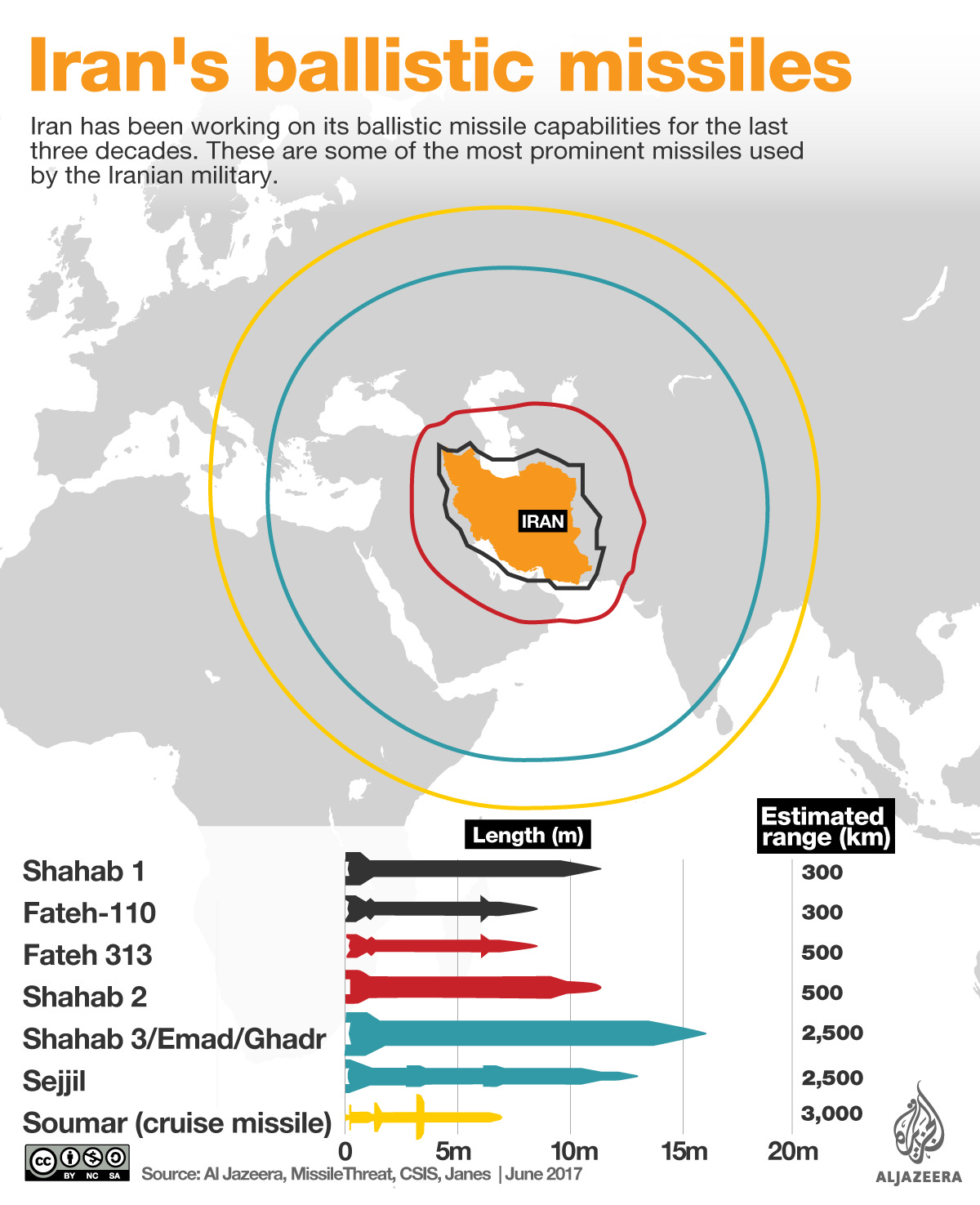
Iranian Ballistic Missiles and Ranges
Had Iran, at that moment in time, opted to follow up with an even larger strike consisting of several hundred of its best ballistic missiles, the US and Israeli defenses would have been penetrated to an overwhelming degree. It would have put to shame the opening-night show of the Americans’ 1991 “shock and awe” cruise missile attack against Baghdad.
Fortunately the Iranians didn’t press the matter, and let their modest yet impressive demonstration of strength suffice for the time being.
In recent months, Iran’s close partner Hezbollah — which is reputed to possess at least 100,000 missiles and drones of various types — has been routinely penetrating Israel’s once-vaunted “Iron Dome” missile defense system.
Indeed, Hezbollah has almost appeared to be mocking the Israelis’ impotence at times.
In any case, the Iron Dome has been revealed to be acutely vulnerable to penetration by Hezbollah drones and missiles.
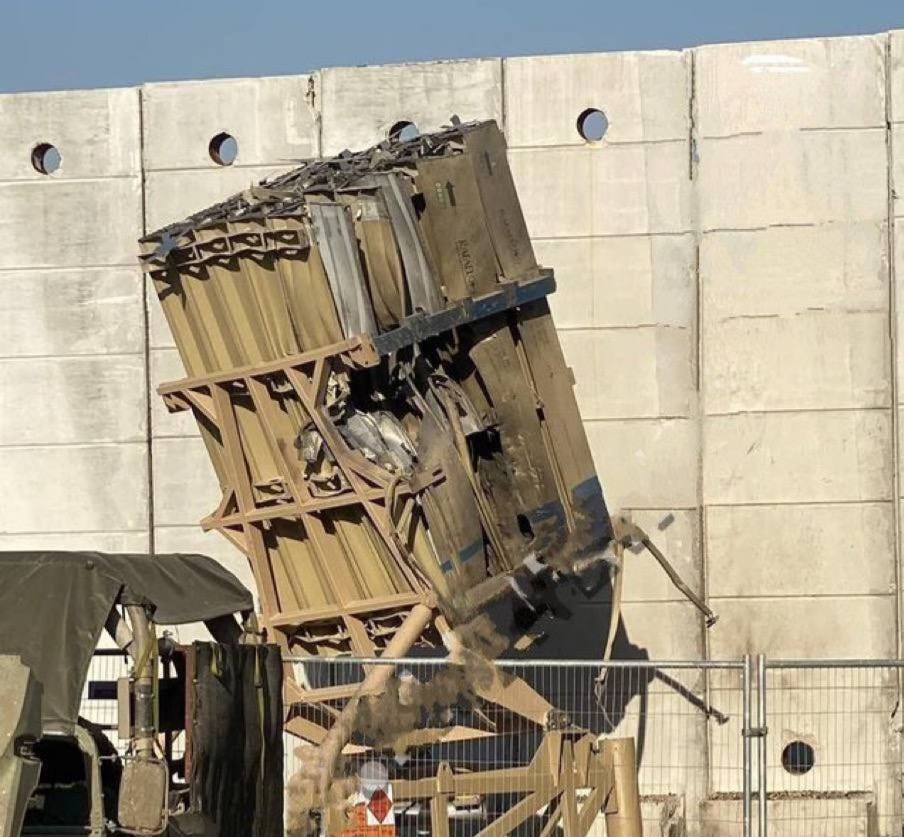
Israeli Iron Dome Launcher Destroyed by Hezbollah Drone Strike
It is not known with precision how many missiles and drones of various types Iran possesses. But it is reasonable to assume that their “magazine depth” is considerably larger than that of Hezbollah.
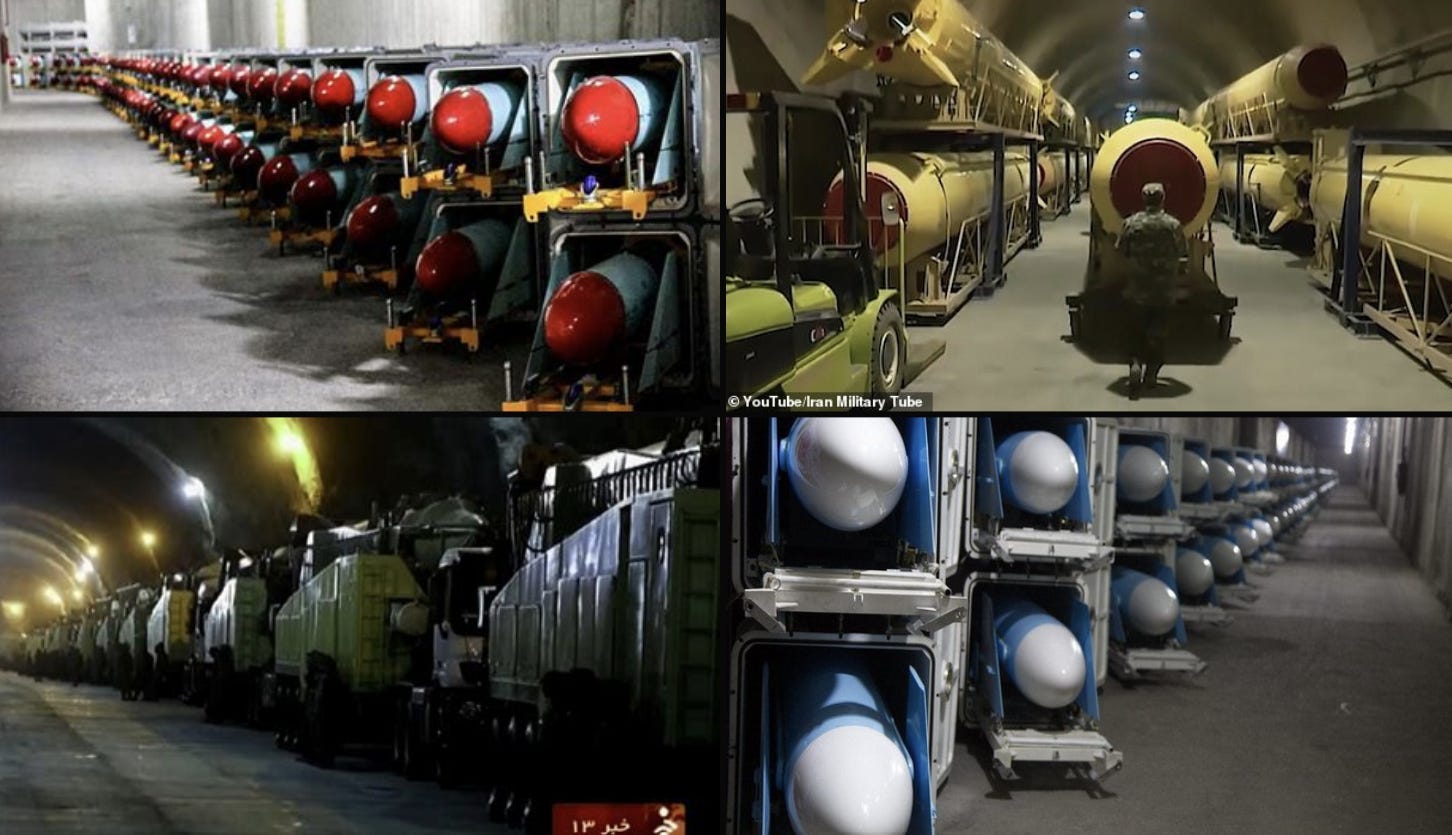
Iranian Missiles
It is also not known with precision how many missiles and drones of various types Russia possesses. But it is reasonable to assume that their “magazine depth” is considerably larger — and exceedingly more potent — than that of Hezbollah and Iran combined.
Even more importantly, the Russians have, over the course of the war in Ukraine, demonstrated an unprecedented capability to routinely shoot down the best strike missiles the US and its NATO vassals have been able to launch against them.
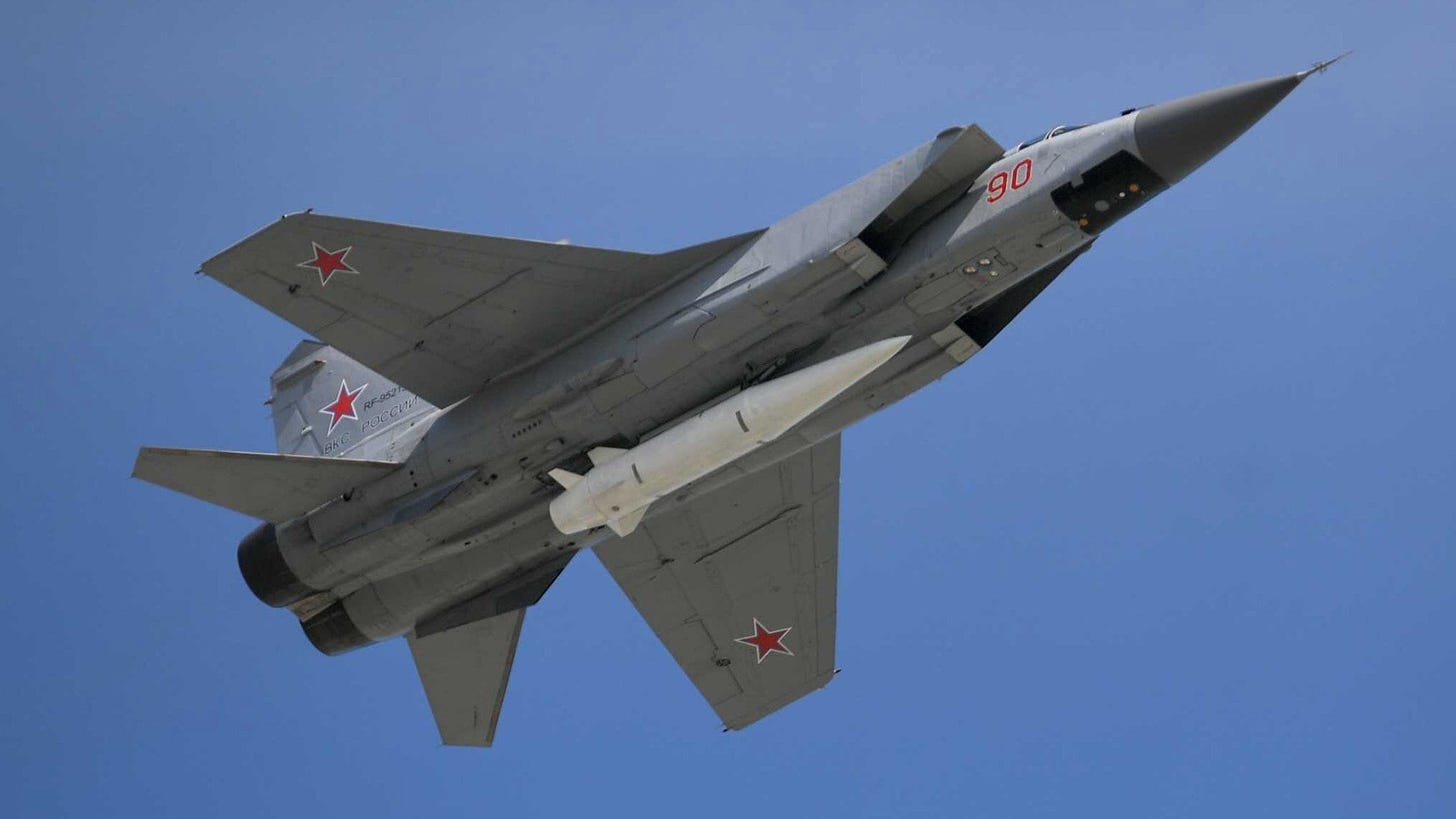
Russian MiG-31 Carrying a Hypersonic Kinzhal Missile
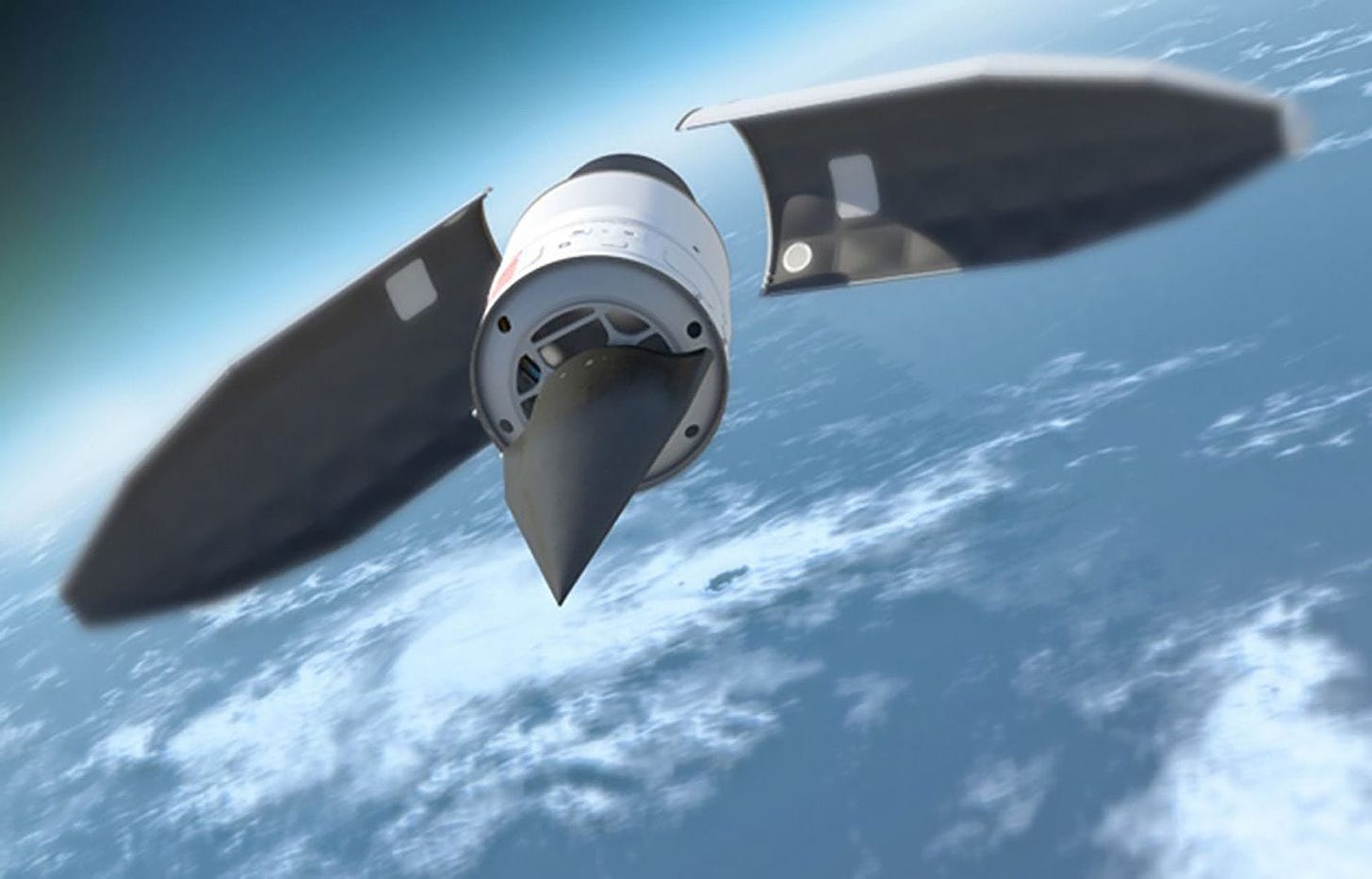
Russian Avangard Hypersonic Missile
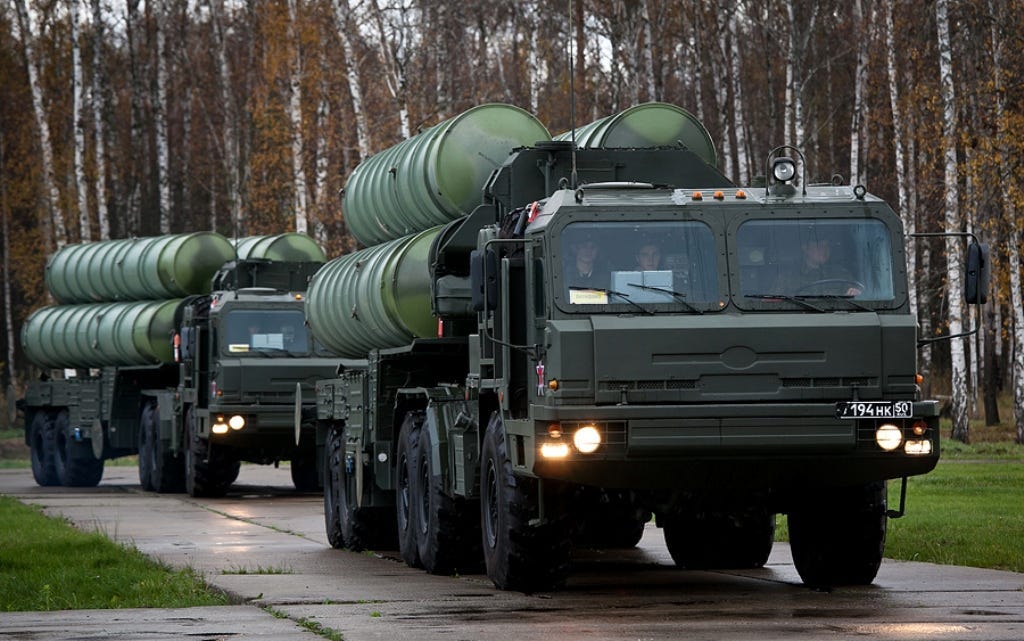
Russian S-400 Air Defense System
Lastly, it is not known with precision how many missiles and drones of various types China possesses. But it is reasonable to assume that their “magazine depth” is at least an order of magnitude larger than Hezbollah, Iran, and Russia combined.
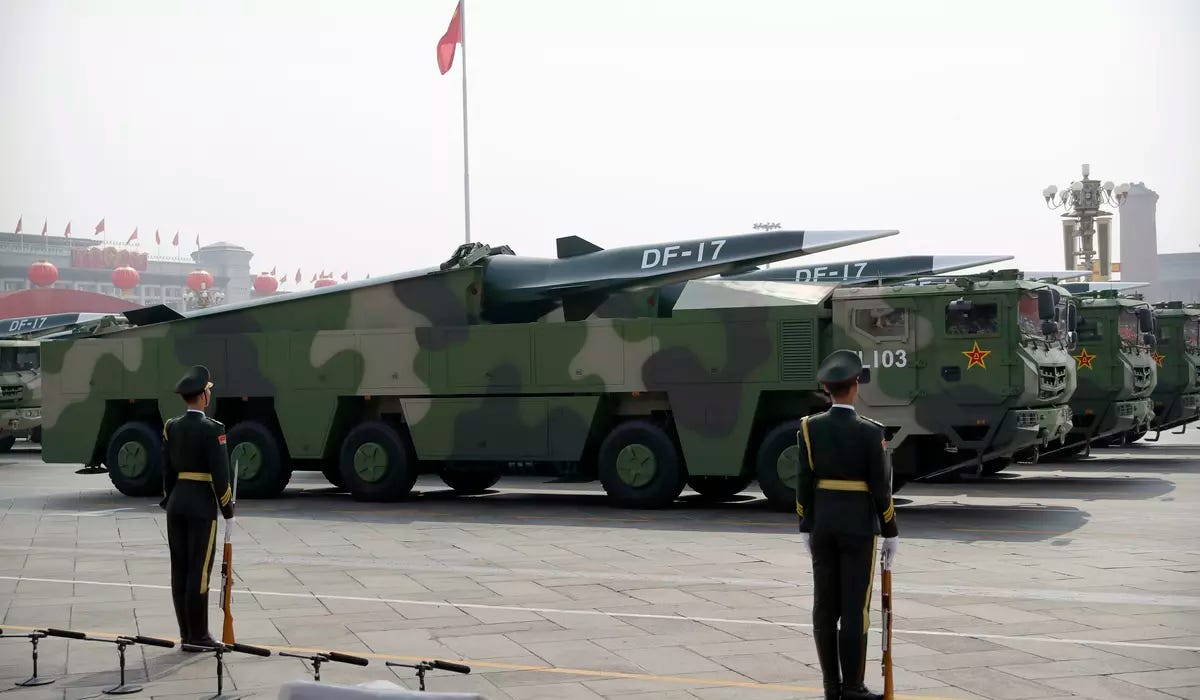
Chinese DF-17 Hypersonic Missiles
Of course, I’ve not yet made any mention of North Korea, who has now been formally received into the Russia, China, Iran mutual-defense partnership. People love to mock Kim Jong-Un and his people, but the empire underestimates them at their peril.
The Israelis can talk tough about making war against Hezbollah and its friends, but if they actually attempt it, it will end very, very badly for them.
The Americans and their almost laughably impotent allies can talk tough about making war against Russia or China, but if they actually attempt it, it will end catastrophically for them.
Then we’ll really have a dangerous situation on our hands.
Trump Vows to Settle Ukraine Conflict Even Before Taking Office If Reelected
Sputnik – 23.06.2024
Former US President Donald Trump has vowed to settle the military conflict between Russia and Ukraine even before his inauguration in case he wins the 2024 presidential race.
“Before I even arrive at the Oval Office, shortly after we win the presidency… I will have the horrible war between Russia and Ukraine settled,” Trump said on Saturday during a rally in Philadelphia.
During his speech, Trump also vowed to prevent World War III.
The US presidential election will be held on November 5. The main rivals in the race are US President Joe Biden, a Democrat, and his Republican predecessor, Donald Trump.
Earlier in the week, Trump said in an interview with the All-In podcast that it is understandable that Russia would be bothered by NATO troops on its border, adding that NATO’s eastward expansion was a key reason for the Ukraine conflict. Trump vowed to not put US troops on the ground in Ukraine if he returns to the White House.
A new multipolar security system based on ‘Pax Rossiya’
Strategic Culture Foundation | June 21, 2024
For several years now, Russia, China and other members of the expanding BRICS alliance have been formulating progressive trade and financial relations of the emerging multipolar world order. That order is based on mutual respect and partnership grounded in international law and the UN Charter.
The BRICS concept is rightly the zeitgeist of our time. It is rallying more nations to its fold especially those of the so-called Global South which for decades have been subjected to the unilateralism of Western hegemony.
The trouble is that for a new world order based on equality and fairness to succeed in practice, it needs to be secure from arbitrary military aggression and imperialist tyranny. In other words, a new security architecture is required to underpin the development of a multipolar world.
Russian President Vladimir Putin has been advocating for a new indivisible international security system. This week saw the plan for a new security arrangement put into action.
The Russian leader embarked on state visits to North Korea and Vietnam during which he signed new strategic partnership and defense accords.
Ahead of his trip to the Democratic People’s Republic of Korea, Putin outlined the integrated vision thus: “We are also ready for close cooperation to make international relations more democratic and stable… To do this, we will develop alternative mechanisms of trade and mutual settlements that are not controlled by the West, and jointly resist illegitimate unilateral restrictions. And at the same time – to build an architecture of equal and indivisible security in Eurasia.”
The concept of indivisible security is by no means limited to Eurasia. Russia has signaled the same principles apply to Latin America, Africa and indeed every other corner of the world.
During Putin’s meetings with Chairman Kim Jong Un of the DPRK and President Lo Tam of the Socialist Republic of Vietnam, the strategic partnerships agreed were not merely about military defense and security. They involved comprehensive partnerships for the development of trade, transport, technology, education, science and medicine.
Nevertheless, it was clear that the commitment to strategic partnership was underpinned by new mutual defense accords. This was most explicit in the treaty signed with the DPRK which furnished “mutual assistance in the event of aggression against one of the parties”.
This is a game-changer. It totally upends the geopolitical calculations of the United States and its NATO partners who have been unilaterally expanding military force and provocations in Eurasia and elsewhere.
U.S. President Joe Biden’s administration has ramped up aggression in the Asia-Pacific against China and North Korea with impunity. Under his watch, the US has increasingly moved nuclear forces into the region to intimidate not only Beijing and Pyongyang but also Moscow. The Biden administration has been assiduous in forming hostile military formations in the region with its NATO partners, including Australia, New Zealand, Japan and South Korea.
Year after year, the United States has built up weapon systems in Taiwan to provoke China and on the Korean Peninsula to threaten North Korea.
This unilateral aggression and “might is right” arrogance underpin the notion of Pax Americana that prevailed for decades after the Second World War. That notion was always a cruel euphemism for American imperialist violence to impose its economic and political interests. The Korean and Vietnam Wars in which millions of civilians were annihilated were the real-world grim translations of Pax Americana and its fraudulent “rules-based order”.
Geopolitical perceptions have dramatically changed in a few short years. The U.S. and its Western partners – a global minority – have come to be seen by most people of the world as rogue states that have trashed international law through illegal wars and unilateral bullying with economic sanctions. The U.S. dollar and Washington’s relentless debt spending are seen as instruments of imperialist looting.
The BRICS multipolar world order is a welcome alternative to the mayhem of the Western-dominated system. The principles of fairness and cooperation are laudable and necessary to implement. But such principles must be reinforced with military defense and security for all. This is far from the one-sided “defense and security” of the United States and its NATO partners, which in reality is an Orwellian cover for aggression.
The defense commitments given by Russia to the DPRK this week can be seen as long overdue. One may wonder how the U.S. and its allies got away with threatening the people of North Korea for so long and denying Pyongyang the sovereign right to self-defense. Admittedly, Russia did previously support UN sanctions on North Korea over its missile program. That’s over.
The U.S.-led proxy war in Ukraine against Russia that erupted in February 2022 was a wake-up call for Moscow and many people around the world.
Patently, the Western hegemonic system will stop at nothing to assert its neocolonialist privileges, even to the point of antagonizing a nuclear world war.
There is only one language that the U.S. and its minions understand – and that is the threat of devastating countervailing force.
Washington and its NATO lackeys think they can put missiles in Ukraine to hit Russia or in South Korea and Japan to hit North Korea – at no cost to their own security. Well, now, they might want to think again. There’s a new sheriff in town, as this week’s developments show.
A new global security system is being incarnate. Russia’s vision of indivisible, mutual security is shared by China and many other nations because it is fully compliant with international law and nations’ sovereignty.
Russia, China and other supporters of a multipolar world are not preemptively threatening anyone. But it takes the guarantee of unassailable nuclear powers, Russia and China, to make a new security system viable by restoring the deterrence towards the rogue states of the United States and NATO accomplices.
The defense accords between Russia, the DPRK and Vietnam are installments of the new security architecture that is needed in Eurasia and globally. The has-been American hegemon has been served notice that from now on its presumption of belligerence with impunity, to destroy nations, and to have a license to murder en masse is null and void.
Welcome to the new multipolar order and Pax Rossiya. All are welcome – except hegemonic rogue states.
Nothing to worry about? South Korea sounds the alarm
By Gilbert Doctorow | June 21, 2024
What a difference a day makes. Yesterday’s Financial Times informed readers about the red carpet that was rolled out for Vladimir Putin at his various stops in and around the North Korean capital during his two-day stay there. They spoke of the Russian folk songs which local artists performed in Putin’s honor. They mentioned that various state to state agreements were signed but said almost nothing about the contents.
Today the FT has taken a very different approach to Putin’s visit in a feature article entitled “Japan and South Korea sound alarm over Putin-Kim military pact.” Lo and behold, Seoul has read the text of the Comprehensive Strategic Partnership that North Korea issued and discovered that it contains: “a pledge to deploy ‘all means at its disposal without delay’ to provide ‘military and other assistance’ in the event that one of the signatories was invaded or in a state of war.”
The FT goes on to cite the South Korean foreign ministry’s expression of regret over the strategic partnership: “… co-operation between Russia and North Korea ‘should not undermine regional peace and stability’.” Seoul warns “that their co-operation on military technology would violate UN Security Council resolutions.”
Those resolutions, by the way, are up for renewal in the not-too-distant future, and Putin has said from Pyongyang that Russia will veto any extensions.
The fact is that this barking from the South Koreans is frustrated by the very opacity of the wording of both the texts and of Putin’s spoken remarks after the signing and at a meeting with Russian journalists before his departure for Vietnam.
One thing is certain: the Russian-North Korean deal is not just transactional: it is a genuine alliance, the first and only one that Russia has at this moment.
What kind of military assistance will the sides provide to the other in case an act of aggression is declared? What kind of military technical cooperation do the parties have in mind?
For example, will Russia be providing North Korea with ICBMs capable of reaching all of the United States, as some American experts believe? Or is Russia just extending its nuclear umbrella over North Korea, with a pledge to destroy any attacker? Will Russia provide North Korea with its ship sinking hypersonic missiles that could be very useful if this or any future American president sends an aircraft carrier task force to Korean shores to threaten Pyongyang with instant destruction as Trump once did?
Turned around the other way, what can and will North Korea do to help if Russia declares that an act of aggression has been committed against it by NATO in the midst of the Ukraine conflict? Last evening’s edition of the authoritative Russian talk show, The Great Game, moderated by Duma member and Kremlin insider Vyacheslav Nikonov provided an intriguing insight into what people close to Putin are thinking in this regard.
For some time, Russia’s chattering classes have speculated about possibilities for enlisting some of North Korea’s one million man army to help their forces in the ground war in Ukraine. Now, under conditions of the newly signed military alliance with Pyongyang, these same Russians are saying that should NATO forces enter Ukraine to join the fight against them, as Emmanuel Macron has been urging, then Russia may invite 50,000 or more North Koreans to lend a hand to their cause. Moreover, they note that the North Koreans have some very impressive artillery pieces to bring with them to the fight.
If that kind of talk on Russian television is being ignored by the military attaché in the U.S. Embassy in Moscow I would be very surprised.
In closing, I mention that the fuss raised by Seoul over the Russian-North Korean military alliance was the subject of a 10-minute interview I gave to Iran’s Press TV this morning.
The link is here: https://www.urmedium.net/c/presstv/129882
As I was alerted by one very attentive reader, this link is usable if you ignore the warnings about possibly compromising security of your computer and opt to proceed at your own risk. The warning is malicious, a bit of disinformation from Iran’s detractors, nothing more.
An alternative link that works directly, without unnerving warnings is here: https://odysee.com/PressTV-2024-06-21:8
Enjoy the show!
©Gilbert Doctorow, 2024
Trump names cause of Ukraine conflict
RT | June 21, 2024
Russia’s intervention in Ukraine was triggered by the irresponsible and provocative rhetoric which US President Joe Biden and his administration used about Ukraine joining NATO, Donald Trump has said.
Trump, who is seeking a rematch with Biden for the presidency in November, appeared on the ‘All-In’ podcast posted late on Thursday. The comments about Ukraine came during a conversation on foreign policy with co-host David Sacks.
“For 20 years, I heard that if Ukraine goes into NATO, it’s a real problem for Russia. I’ve heard that for a long time. And I think that’s really why this war started,” Trump said.
The Republican presidential candidate pointed out that there had been no talk about armed conflict between Russia and Ukraine when he was in the White House, but as soon as Biden replaced him, things began to deteriorate.
“I thought that [Russian President Vladimir] Putin may be – well, look, he’s a good negotiator, I thought he was going to be doing that for negotiation purposes,” Trump said. “Then all of a sudden, they attacked, and I said, ‘what’s going on here?’”
According to the former president, one of the key issues was the rhetoric coming out of the White House.
“Biden was saying all of the wrong things. And one of the wrong things he was saying [was] ‘no, Ukraine will go into NATO’,” Trump said.
Sacks pointed out that in January 2022 or thereabouts, US Secretary of State Antony Blinken told Moscow that Ukraine would join NATO and that Washington thought it was OK to put nuclear weapons there. “So no wonder the Russians hit the roof,” he noted.
“Well, let’s say you were running Russia. You wouldn’t be too happy,” Trump replied. “And that’s always been off the table. It’s always been understood that that was a no-no,” he added, addressing Kiev’s potential NATO membership.
Floating the idea of Ukraine in NATO was “very provocative,” Trump said. “And now it’s even more provocative. I hear routinely they’re now talking about Ukraine entering NATO. And now I hear France wants to go in and fight. Well, I wish them a lot of luck!”
Putin has specifically pointed to Western statements about Ukraine’s possible membership in the US-led bloc as a security threat Moscow could not ignore. Ukraine’s neutrality has been one of the non-negotiable Russian conditions for the conflict to end.
NATO has argued that its “open door” policy is essential and that no one had the right of veto over it, but also that its expansion eastward was not the cause of the conflict.
In an interview with Time magazine earlier this month, Biden claimed that the US is “the strongest nation” because of NATO expansion, and that he told Putin he would get “NATOization of Finland” instead of “the Finlandization of NATO” during their June 2021 summit in Switzerland.
Hungary ‘won’t ride NATO war train’ – Orban
RT | June 21, 2024
The US appears intent on continuing to fight Russia in Ukraine and hopes to win, but Hungary is acting to counter this destructive policy, Prime Minister Viktor Orban has said.
The vocal opponent of the Western approach to the Ukraine conflict expressed fresh criticism during a weekly interview on Kossuth Radio on Friday.
“It appears that the Western world, led by the Americans, wants to defeat Russia, with the Germans playing the role of extras,” Orban claimed. He described the strategy as “hopeless,” adding that it is disastrous for the Ukrainians and Russians dying on the battlefield and is potentially escalatory.
The Hungarian leader claimed, however, that “we have already slowed the train to war,” citing the outcome of the recent European Parliament elections in which his party enjoyed success while some pro-Ukrainian groups suffered setbacks.
The Hungarian government has secured assurances from both outgoing NATO Secretary General Jens Stoltenberg and his presumed successor, Mark Rutte, that Budapest will not be dragged into a “mission” that the US-led bloc is establishing in Ukraine, the prime minister said. Hungary will not contribute troops, weapons, or money to the plan, Orban vowed.
“I can pull the emergency brake. The train will stop, and we Hungarians will get off this train,” he said. “And if we become very strong and the stars are lucky, we will convince the driver not to go any further.”
Moscow has described the Ukraine conflict as a US-initiated proxy war. After several member states publicly said this month that they will allow Kiev to strike targets deep inside Russia with Western-supplied weapons, President Vladimir Putin warned that Moscow could supply similar arms to enemies of the West.
French President Emmanual Macron, who has called on NATO countries not to rule out troop deployments to Ukraine, was among the EU leaders to have suffered the biggest in the European Parliament elections. He subsequently dissolved the French parliament, and is facing the threat of becoming a lame duck for the rest of his term as his political alliance contemplates a potential wipeout in the national legislature.
Supporters of the NATO involvement in the Ukraine conflict say its mission will be limited to training Ukrainian troops on the country’s soil.
MI6 Coup in Macedonia Unravels
By Kit Klarenberg | Active Measures | June 21, 2024
On May 12th, this journalist documented the labyrinthine Western-orchestrated machinations via which Macedonia – under the locally-despised name of North Macedonia – was forcibly enrolled in NATO, despite widespread public opposition. Absent from that investigation was reference to the central role played in these connivances by British intelligence. Namely, London’s ambassador to Skopje and lifetime MI6 operative, Charles Garrett. Now troublesome VMRO-DPMNE is returned to office, it is vital his activities in the country are re-examined.
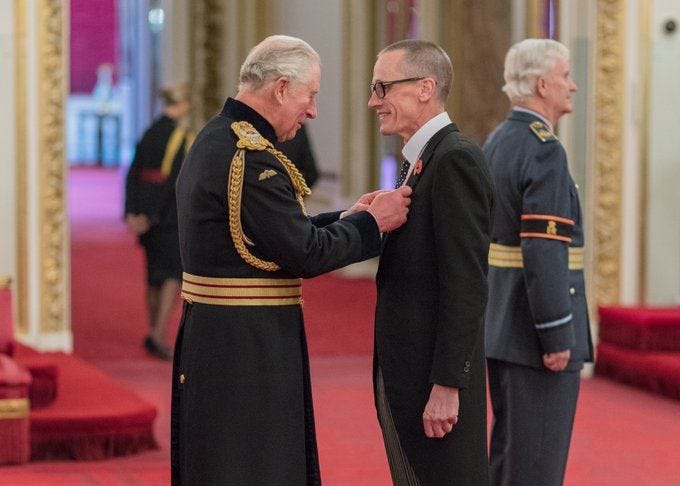
Charles Garrett receives an award from King Charles
As The Grayzone has previously documented, London operates a dedicated program known as “Global Britain” in the West Balkans. Leaked documents related to the effort reveal it is concerned with insidiously influencing the composition of local governments and legal and regulatory environments to advance British interests, while filling regional security, intelligence, and military forces with handpicked assets. As one leaked file makes clear, MI6 does not tolerate regional opposition to its agenda, readily deploying active measures to neutralize any and all local resistance:
“In contexts where elite incentives are not aligned with [Britain’s] objectives/values… an approach that seeks to hold elite politicians to account might be needed… We can build relationships and alliances with those who share our objectives and values for reform… It is critical that the media have the capacity and freedom to hold political actors to account.”
Events in Macedonia over the past decade provide a brutal demonstration of what can befall governments and officials in the Balkans who do not share Britain’s “objectives” and “values”, and how they are “held to account.” So too does a 2020 coup in Kyrgyzstan, where Garrett set up shop after leaving Skopje. With Central Asia now in the crosshairs of London’s endless quest for “reform” overseas, it’s never been more vital to beware Brits bearing gifts.
‘Colorful Revolution’
Following Russia’s March 2014 reunification with Crimea, NATO’s efforts to expand in the Former Yugoslavia became turbocharged. The Grayzone has previously reported how alliance membership was imposed upon Montenegro, despite near-universal public opposition, in 2016. Achieving this feat required sustaining a corrupt, savage pro-Western dictator in power for almost two decades, and an elaborate connivance whereby anti-NATO opposition actors were jailed on bogus charges of colluding with Russian intelligence to overthrow the government, based on bogus CIA and MI6-supplied evidence.
Similar subterfuge played out in Skopje, which signed a “Membership Action Plan” with NATO in 1999. While slightly more supportive of NATO membership than Montenegrins, the local population near-unanimously opposed changing the country’s name, which Greece, the EU and US made a prerequisite for joining. The VMRO government, led by Nikola Gruevski, pledged Macedonia would always be called Macedonia. So a Western-orchestrated coup was put into motion.
In February 2015, opposition party SDSM’s leader Zoran Zaev began regularly dropping what he and the media branded “bombs” – deeply damaging wiretaps of private conversations between prominent Macedonian officials, businesspeople, journalists, and judges. The tapes seemingly implicated Gruevski and his ministers in serious crimes, including murder. Zaev claimed the illegally-captured recordings were passed to him by whistleblowers. The premier countered that the releases were supplied by foreign intelligence services, with the objective of forcing an early election.
Subsequent investigations exposed how SDSM deceptively edited and spliced these leaked recordings to grossly distort their contents, and falsely incriminate government officials. For example, one “bomb” was extensively doctored to make it sound like VMRO leaders conspired to cover up the 2011 murder of a young Macedonian in Skopje by a senior police officer, while shielding them from justice. The unexpurgated tape indicated they were in fact shocked by the killing, and wanted the culprit to be severely punished.
It was not until four years later that the truth was revealed, however. Upon release, Zaev’s “bombs” sparked widespread outcry in Macedonia, prompting hundreds of thousands of citizens to take to the streets, voicing righteous rage at VMRO. Openly called the “colorful revolution” by participating citizens and NGOs, and English language media, the EU and US duly stepped in and brokered the Przino Agreement, under which Gruevski resigned, and new elections were held.
SDSM scraped into office via a fragile coalition, then set about laying the foundations of Macedonia’s name change in explicit service of NATO membership, with tens of millions of dollars in assistance from intelligence cutout USAID. Parliamentarians were blackmailed – frequently using the illegal wiretap intercepts – and bribed into passing unconstitutional and highly controversial reforms, allowing Skopje to be rebranded North Macedonia without public support, or even the President’s signoff. A sham referendum, boycotted by most citizens, was also cynically staged.
At last, North Macedonia was formally inducted into NATO in March 2020. Alliance officials have since repeatedly made clear they consider Bosnia and Herzegovina joining to be inevitable. This is despite 98% of Bosnian Serbs opposing membership, due to NATO’s central role in the criminal destruction of Yugoslavia during the 1990s. There are covert British efforts to promote NATO in Serbia too, despite over 80% of the population opposing joining.

‘Charlie’s Angels’
In August 2013, Charles Garrett was appointed London’s ambassador to Macedonia. His express brief was to help the country “achieve its goals of joining NATO and the EU.” Multiple local sources have informed this journalist that Garrett was instrumental in the “colorful revolution,” distributing cash to NGOs and activists involved in the unrest from his diplomatic pouch, while attempting to get government supporters on board.
Public records strongly suggest Garrett is a lifetime MI6 officer. His lengthy career in London’s diplomatic service includes spells in Cyprus, Hong Kong, Switzerland and Taiwan, all key nuclei of intelligence gathering and cloak-and-dagger action for Britain’s foreign spying agency. He was also posted to the Balkans in the latter half of the 1990s, when the region became a veritable MI6 playground.
Under the Przino Agreement, a Special Prosecutor’s Office (SPO) was created to investigate officials over serious crimes supposedly revealed by the illegal intercepts. A previously unknown prosecutor from a small Macedonian border town, Katica Janeva, was selected to run the Office. While the SPO was supposed to prosecute SDSM activists – including Zaev, for releasing the intercepts – this never materialized. Meanwhile, any and all Western officials visiting Macedonia made sure to visit SPO headquarters and get snapped with Janeva. Garrett was, of course, among them.

Charles Garrett and Katica Janeva
Initially, Western journalists treated Janeva to multiple fawning profiles. The British press was particularly smitten. The Financial Times referred to her as Macedonia’s “Beyonce”. The BBC dubbed the Special Prosecutor and her two primary assistants “Charlie’s Angels”, claiming the trio were “the scourge of Macedonia’s political elite and heroines of the street protests now rocking the tiny Balkan nation.” A lengthy USAID-funded “documentary” featured her staff mocking their targets via phone, between discussing who to jail next over pizza and cigarettes.

That broadcast has been removed from the web, and virtually no trace of its existence can be found online today. This may be because in June 2020, Janeva was jailed for seven years for corruption. Her crime-fighting crusade was from inception an obscene, partisan fraud. Along the way, the Special Prosecutor secretly enriched herself through a variety of unscrupulous, criminal means. The SPO’s true objective was destabilizing the VMRO government, and discrediting its supporters by association.
Janeva’s targets were often indicted on farcical charges. For example, at one stage Prime Minister Gruevski was accused of “abuse of office” for commissioning the construction of two “Chinese highways”. Prosecutors charged he had improperly benefitted from the deal – not financially, but because he would “receive a popularity boost” if the highways were completed on schedule. Elsewhere, a pro-VMRO female journalist was accused of tax fraud for writing off laundry as a business expense, and resultantly subjected to much misogynistic mockery in SDSM-affiliated media.
More gravely, the owner of an independent news site committed suicide after being pressured to turn state witness by the SPO, following early morning police raids targeting him and his family. Cases brought against the owners of government-supporting TV stations Sitel and Nova shifted their editorial line in favor of SDSM, leading to the latter being closed outright. In its place, the rabidly pro-SDSM 1TV was launched by eccentric Macedonian media personality Bojan Jovanovski, also known as Boki 13.
Publicly, Boki 13 used his station to relentlessly promote the SDSM-led government and the SPO’s work, with Janeva a frequent guest on its assorted “factual” and entertainment programs. In private, he extorted wealthy businesspeople indicted by Janeva, or somehow caught up in the illegal intercepts, promising to make their legal troubles go away in return for lavish advertising buys on 1TV, or sizable donations to his “charity”, International Association. None other than Charles Garrett sat on its board.
‘Fifth Column’
By the time these facts became public knowledge, and Janeva and Boki 13 were in prison, Garrett was safely extracted from Skopje, having been appointed British ambassador to Kyrgyzstan. Almost immediately, a revolution erupted in Bishkek. Mass demonstrations, ignited by reports of vote rigging in the October 2020 parliamentary election, culminated with the military storming President Sooronbay Jeenbekov’s compound and removing him – physically – from office.
In February 2022, a Kyrgyzstan government-affiliated newspaper openly accused Garrett of operating a “fifth column” in Bishkek. It alleged that in the leadup to the 2020 vote, he along with US State Department representatives met with local journalists and bloggers, offering them enormous sums to identify electoral violations – such as vote rigging – and document official pressure on media outlets and civil society groups. Garrett purportedly promised them top-of-the-range broadcasting equipment, to increase their audience reach. Not long after publication, he returned to London.
Garrett has kept a low profile ever since and now occupies a cushy role overseeing the Commonwealth War Graves Commission. Nonetheless, in September 2023, he submitted written evidence to a British parliamentary committee investigating London’s “engagement in Central Asia”. He advocated a number of means to exploit “disruption caused by Moscow’s renewed invasion of Ukraine” to undermine the region’s historic, economic and political ties with Russia and China, and “shape the future of these countries” according to Britain’s interests.
When British Foreign Secretary David Cameron conducted a much-publicized tour of Central Asia in May 2024, he followed Garrett’s proposals to the letter. The ambassador’s legacy visibly endures in Macedonia today too. In March 2016, colorful revolution protesters attempted to burn down the President’s office, after 56 individuals indicted by the SPO were pardoned. The premises were transformed into the headquarters of UK Aid, a now-defunct British government agency intimately implicated in the neoliberal rape and pillage of Ukraine.
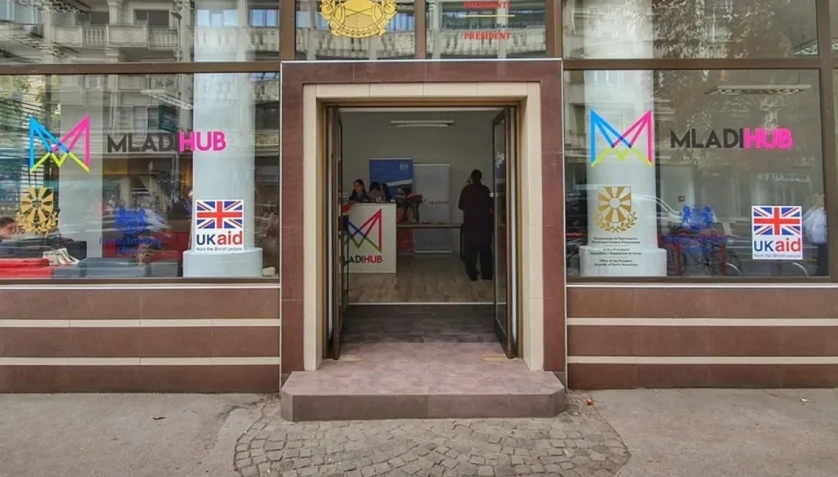
The Skopje headquarters of UK Aid
This included running covert communications campaigns on Kiev’s behalf, promoting the destruction of workers’ rights locally. It is likely the organization was engaged in similar skullduggery in Skopje, after Garrett rode into town. VMRO’s return to government at last offers Macedonians an opportunity to halt the operations of all US and British intelligence fronts and cutouts operating on their soil, and reclaim foreign-conquered territory.
Featured Video

The Truth About the Trump Shootings with Ken Silva
or go to
Aletho News Archives – Video-Images
From the Archives
Trans ‘milk’ as good as the real thing – NHS
RT | February 18, 2024
The drug-induced nipple secretions of trans women are as good as mothers’ breast milk for babies, the University of Sussex Hospitals NHS Trust claimed in a letter to campaigners made public in a report by British think tank the Policy Exchange on Sunday.
The healthcare trust’s medical director, Rachel James, argued that the off-label prescription drug cocktail men transitioning to female take in order to produce milk was “similar to the natural hormones which encourage lactation to develop when the baby is newly born.”
“The evidence which is available demonstrates that the milk is comparable to that produced following the birth of a baby,” James wrote in the letter, sent to Children of Transitioners last August.
Biological men who wish to lactate must first take hormones to grow milk glands and then take high doses of either domperidone or metoclopramide to stimulate milk production. Neither drug is approved for this use, though they are occasionally prescribed off-label to biological women who have trouble lactating.
However, domperidone’s own manufacturer, Janssen, warns patients the drug “may cause unwanted side effects affecting the heart in a breastfed baby” and “should be used during breastfeeding only if your physician considers this clearly necessary.” … continue
Blog Roll
 Aletho News
- Seyed M. Marandi: U.S. Strike Imminent – Toward Total War in the Middle East
- Russia Voted Under Fire. Washington Is Loading the Tankers.
- 12 Things Your Oncologist Was Trained Not to Tell You
- Anthrax Attacks Paved Way for COVID-Era ‘Junk Drugs and Vaccines’
- How Real Is the Impact of Western Sanctions on Israel?
- France, You Are Guilty: How Paris Turned Western Sahara into the Maghreb’s Powder Keg
- 2025 Nature Paper Claiming Worsening Global Drought Gets RETRACTED …Heavily Flawed
- Your Milk Is Not the Problem
- The Truth About the Trump Shootings with Ken Silva
- ARE PATIENTS BEING PROPERLY INFORMED ABOUT OZEMPIC?
- If Americans Knew
- An error has occurred; the feed is probably down. Try again later.
- No Tricks Zone
- 2025 Nature Paper Claiming Worsening Global Drought Gets RETRACTED …Heavily Flawed
- New Study: ‘Global Drought Shows No Detectable Recent Acceleration Under Climate Warming’
- Economic Masterminds: German Socialists Suggest Taxing Productivity Gains Stemming From Using AI
- The South China Sea Has Not Been Cooperating With The Climate Change Narrative
- Energy Crisis: Germany Enters Heating Season With Historically Low Gas Reserve Fill Levels
- New Study: The Antarctic Ice Sheet Gained Mass From 2020-2024 Due To Staggering Snow And Ice Accumulation
- Study: Ocean Heating Rates From Thousands Of Years Ago ‘Dwarf’ Modern Ocean Heating Rates
- Climate Extremists Target, Attack Large-Scale Power Grid Infrastructure In Germany!
- New Study: Antarctic Ice Melt Has Contributed Less Than 1 Centimeter To Sea Level Rise In The Last 30 Years
- Fear Of Debate: Alarmist German Climate Scientist Calls On Mainstream Media To Discredit Skeptic Voices
 Aletho News
