NATO’s Steadfast Defender Exercises Threaten Europe’s Security
Sputnik – 22.01.2024
Rather than try to de-escalate the already high tensions in Europe, the Western military bloc NATO proudly announced its intent to launch massive military exercises in the region involving around 90,000 troops.
Dubbed Steadfast Defender 2024, the exercises are going to be held as NATO becomes increasingly involved in the Ukrainian conflict, providing the regime in Kiev with weapons, mercenaries and intelligence to attack Russian territories and people.
As Russian Deputy Foreign Minister Alexander Grushko has explained, these military exercises are “another element of the hybrid war unleashed by the West against Russia,” with any event of such magnitude increasing the risk of “military incidents” and further destabilizing security in the region.
There appear to be several goals that NATO seeks to accomplish through Steadfast Defender 2024, explained Mikael Valtersson, a former Swedish Armed Forces officer, defense politician and chief of staff with the Sweden Democrats party.
One of these goals is training NATO soldiers to “fight Russian forces,” Valtersson said, noting that while the exercises’ official narrative is about repelling an invasion, it seems more like preparation “for the eventuality of military missions into Ukraine, Belarus or Moldova.”
“Another purpose is to send a psychological message to assure the eastern NATO countries that NATO takes their security seriously,” he continued. “A third purpose is to tell Russia that NATO is ready and capable to act if they must.”
According to Valtersson, a lot of people in the West actually believe in a “possible Russian attack towards European NATO countries in a couple of years,” with this fear being further reinforced by “alarmist statements from leading Western politicians and military leaders.”
“This creates a Russophobic war mentality that easily might lead to escalation and the conflict they have predicted,” he remarked.
Valtersson also pointed out that, while usually conducting military exercises poses no security risks as such events are a “normal part of military life,” holding large-scale drills “near the borders of countries you perceive as enemies” may result in dangerous mistakes being made.
“When both sides are high-strung and look for potential aggressive behavior from the other side, one mistake could quickly lead to escalation. If you really want to de-escalate tensions, you should avoid large-scale exercises near the borders of your adversaries,” he said. “These kind of exercises do nothing to dampen tension between Russia and NATO. It is, in fact, rather a part of an ongoing escalation process, which is bad for the security of Europe.”
The emerging new Cold War “between the West and mainly China and Russia” and the West alienating many countries of the Global South by trying to force them to oppose Russia over the Ukrainian crisis may ultimately divide the world into two competing blocs, “the West and the rest,” Valtersson warned.
“The difference with the first Cold War will be that the non-Western bloc will be incredibly stronger in size, economy, population and even diversity than during the first Cold War,” Valtersson added. “This conflict could be easily avoided if the West had accepted that they can’t dominate the entire globe and that other major powers have their own spheres of interest.”
Faced with looming defeat in Ukraine, NATO wants WW3 to prevent it
By Drago Bosnic | January 22, 2024
Lasting nearly half a century, the (First) Cold War brought the world to the edge of a new abyss, one that would’ve made WW2 look like a bloodless skirmish in comparison. Despite not starting it, in order to prevent the total destruction of the world, Russia initiated its end. It willingly dismantled the Warsaw Pact and the USSR, renouncing immense power, a historically unprecedented move no other superpower in history ever made. And how did the political West see it? Merely as a sign of supposed “weakness”. Not only did the US-led belligerent power pole proclaim victory in the ideological struggle (Moscow renounced communism), but it also wanted a total defeat for Russia and its people. In the 30+ years, everything the United States and its vassals and satellite states did was in line with this goal. The world’s most aggressive military alliance expanded approximately 1000 km to the east.
It should be noted that this was done despite clear promises “not to move an inch” toward Russian borders. Even many Western politicians, experts and pundits expressed concern and protested NATO’s eastward expansion, warning that this would inevitably force Moscow to respond. However, leaked information suggests this is precisely what the political West wanted, as evidenced by revelations published by WikiLeaks. How do we know this is true? Well, its founder is suffering a horrible fate for publishing the secret data. And yet, despite the world knowing all this, NATO is determined not only to continue its aggression, but is also openly escalating it. Namely, on January 18, Dutch 4-star Admiral Rob Bauer, Chairman of NATO’s Military Committee, publicly stated that the belligerent thalassocractic alliance is preparing for war with Russia and that people in Europe should do so as well.
Bauer is one of the highest-ranking NATO officials and his announcement should be taken extremely seriously. Although he assessed that the coming conflict would happen in the next 20 years, the moves that the belligerent alliance is making indicate that such a conflict could come at any point. Following a meeting of NATO defense ministers in Brussels, Bauer told reporters that Western governments should start preparing for war with Russia, including by training civilians how to act when it starts.
“We have to realize it’s not a given that we are in peace. And that’s why we are preparing for a conflict with Russia. […] But the discussion is much wider. It is also the industrial base and also the people that have to understand they play a role,” he said, adding: “It starts there. The realization that not everything is plannable and not everything is going to be hunky dory in the next 20 years.”
Apart from demanding everyone in Europe to get ready for war with a nuclear-armed superpower, Bauer pointed out the example of Sweden, a de facto NATO member for decades at this point. Namely, he praised Stockholm for enforcing ludicrous and pompously announced measures for a mythical Russian invasion, an eventuality that’s effectively beyond any real possibility. However, the Scandinavian country needs to justify its unpopular NATO membership somehow, so it’s putting up this laughable “show of force”.
“We need to be readier across the whole spectrum. You have to have a system in place to find more people if it comes to war, whether it does or not. Then you talk mobilization, reservists or conscription,” he said, adding: “You need to be able to fall back on an industrial base that is able to produce weapons and ammunition fast enough to be able to continue a conflict if you are in it.”
In line with Bauer’s announcement, NATO is to launch a massive military exercise, dubbed Steadfast Defender 2024. Scheduled to begin on January 31, it will include at least 90,000 troops, making it NATO’s largest military exercise since the end of the (First) Cold War. It should be noted that the belligerent alliance officially restarted the conflict in 2022, after decades of its crawling aggression pushed Russia to respond in Ukraine. This was done after numerous US-orchestrated destabilization projects in the former Soviet Union and elsewhere, all of which were aimed against Moscow. NATO itself is merely an extension of America’s strategy of the so-called “full spectrum dominance” and the same goes for the European Union which has repeatedly proven its subservience to US interests. To accomplish its strategic goals, Washington DC is ready to support all sorts of extremist ideologies and individuals.
Worse yet, in an attempt to defeat Russia, it has shown willingness to use banned weapons such as biological (including deadly pathogens) and AI-powered. The latter are particularly important as Americans are increasingly uninterested to serve in the US military, especially as the belligerent thalassocracy is adopting an extremist ultra-liberal ideology that’s simply repulsive to anyone remotely sane. America’s decline is unstoppable at this point, so its political elites are pushing the entire world into yet another abyss, one that it would likely never get out of. Washington DC’s virtually simultaneous aggression against several global and regional powers is making it nearly impossible to prevent such a horrible scenario. This includes pushing the world into a commodities crisis, which can also be interpreted as “preparing everyone” for war, as Bauer already stated. This is an important segment of America’s global strategy.
US actions in the Asia-Pacific, the Middle East and Latin America also indicate other countries will be targeted, including China, Iran and Venezuela. However, with its unrivaled strategic arsenal, new hypersonic weapons, as well as resurgent conventional military power, precisely Russia is NATO’s top rival. Unable to fight Moscow directly, the US-led belligerent alliance is using proxies and creating new ones to enforce its so-called “containment” strategy against the Kremlin. This includes the reactivation of the old members of its WWII-era geopolitical (and increasingly ideological) predecessor. Fully aware it can’t take the Eurasian giant head-on, to this end, the political West is stoking Russophobia everywhere it can, as it needs to create enemies on Russian borders. It’s important to note that the warmongers in Washington DC don’t care about the destructive consequences for Europe.
Drago Bosnic is an independent geopolitical and military analyst.
Letting Ukraine into NATO is ‘basis for World War Three’ – Slovakia
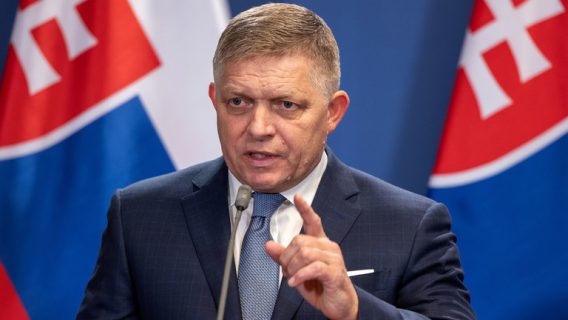
Prime Minister of Slovakia Robert Fico. © Getty Images / Janos Kummer
RT | January 20, 2024
Bratislava will block Kiev’s bid to join the US-led NATO alliance and will stand by a decision to stop supplying weaponry to Ukraine amid its conflict with Russia, Prime Minister of Slovakia Robert Fico has said.
The PM made the remarks on Saturday ahead of his visit to Ukraine to meet his counterpart Denis Shmygal in the western Ukrainian city of Uzhgorod. Fico stressed that his visit serves solely “humanitarian” purposes and promised to openly communicate Bratislava’s stance to Kiev on different issues, including Ukraine’s potential accession to EU or NATO membership.
“I will tell him that there are things on which we have completely different opinions,” Fico told broadcaster RTVS. “I will tell him that we respect them when it comes to joining the EU, but they must fulfill the conditions,” he added, explaining that a situation where “a country that absolutely does not meet any requirements” joins the EU is unacceptable.
He ruled out any possibility of Ukraine joining NATO, insisting such a move would only result in a global catastrophe, apparently caused by a direct collision between NATO and Russia over the issue.
“I will tell him that I will veto and block [a NATO bid by Ukraine] because that is exactly the basis of the third world war and nothing else.”
Fico also promised to reiterate to Shmygal his election campaign pledge to stop providing Kiev with weaponry, stating that the decision remains in force. Still, the weapons restriction applies only to state-sponsored military aid to Ukraine and supplies coming from Slovak military stocks, whereas arms manufacturers are free to sell to the country whatever they like, he noted.
“When Slovak companies don’t make money, American ones will,” Fico noted.
Prior to Fico assuming office following his party’s electoral victory in September, Slovakia had been among Kiev’s top supporters, lavishly supplying it with sophisticated weaponry, including warplanes and anti-aircraft systems. The policy of the previous government has also left the country’s own defense posture badly damaged, new Defense Minister Robert Kalinak claimed earlier this week.
“The former government left us without our own anti-aircraft defenses, without combat aviation, and we don’t even have the promised 700 million for MiGs, which the government also handed over to Ukraine,” Kalinak told the Standard newspaper.
Macron Does a Putin, Ends Up Shooting Own Foot
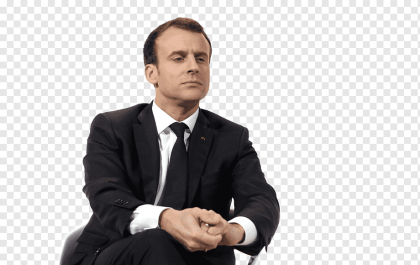
By Finian Cunningham | Strategic Culture Foundation | January 20, 2024
French President Emmanuel Macron sought this week to revamp his tattered authority over a nation that seems to have grown weary of this self-important charlatan.
In a special media conference lasting two and half hours broadcast to the nation, it seemed Macron was taking a leaf out of Russian President Vladimir Putin’s book. Putin gives an annual marathon press conference taking questions from journalists and the public on all and sundry national and international issues.
It didn’t go so well for Macron who ended up appearing as if he was pleading to be given respect.
There is no doubting Putin’s command of issues. Over four hours, he can hold the audience’s interest with cogent rational arguments, making his points with comprehensive facts and figures. Putin’s approval rating among the Russian public is riding high consistently in what can be deduced as genuine respect for his leadership.
It beggars belief that any Western leader could comparably acquit themselves, speaking freely for several hours on diverse topics. Biden, Sunak, Scholz, and Trudeau are joke figures who wilt under any scrutiny.
Macron tried to do a Putin this week with his nationally televised presser and the French people weren’t impressed. Polls showed, cited by NPR Radio, that a big majority (64 percent) of French disapproved of their president’s performance and the content of his views. He was criticized for peddling reactionary ideas.
Macron talked a lot about the need for national unity and restoring France’s international reputation. He called for a “civic rearmament” which was a strange way to promote national renewal. It smacked of fascism. Like much of his pitch, Macron sounded insecure, authoritarian, and chauvinistic. His views were more assertions than reasoned arguments. He was obviously concerned about the popularity of opposition leader Marie Le Pen, and he traduced her as leading a “party of lies”.
Not a good move by Macron especially when many French citizens can see that Monsieur Le President is himself a flagrant liar.
During his appeal to the nation, Macron spun the outrageous calumny that France must support the Ukrainian regime with billions of more euros because, as he lied with a bare face, if Russia wins the war in that country (a war instigated by NATO), then Putin would continue an expansionist invasion of Europe.
Talk about absurd scaremongering. Macron must take his compatriots for complete fools to peddle such hogwash on primetime TV.
Macron said his countrymen and women need to agree to supply more Scalp cruise missiles to the (Nazi-adulating) Kiev regime in order to maintain attacks on Russian territory, such as the strikes on Belgorod at New Year which killed dozens of civilians. These French-supplied missiles have also been used to target the Russian territory of Crimea.
Just as Macron was exalting supposed French values, it turned out that an entire company of French mercenaries was killed in the Ukrainian city of Kharkov by a devastating Russian missile strike. At least 60 French special forces were blown apart. Paris is denying that French forces were killed.
Russia summoned the French ambassador in Moscow the next day to deliver an official rebuke to Paris on the involvement of its troops in the war. This is not a new discovery by any means. American, British, Canadian, Polish, and other NATO mercenaries have been long-tracked by Russia as unofficial participants in the two-year conflict. The French have taken a particularly significant role in sending foreign legionnaires to Ukraine to fight Russia.
Macron has involved his country in a reckless covert war with Russia – all in total deception of the French people.
This gives the lie to the real nature of the war in Ukraine. It is a U.S.-led NATO proxy war against Russia, which Russia is winning despite the array of foreign weaponry, funding, and troops.
Macron, the pathetic puppet who seems to have delusions of grandeur as if he is a reincarnation of Napoleon or De Gaulle, is immersing his country into a futile but recklessly dangerous war with nuclear-powered Russia.
If Macron spent the billions he has funneled into propping up a corrupt Neo-Nazi regime in Kiev on funding French public services and paying French workers a decent salary then maybe the French public would not have so much contempt for the former Rothschild investment banker sitting in the Elysée Palace.
Macron was elected president in May 2017 with the promise to “restore French greatness”. He was re-elected again narrowly in 2022. But his lies, empty promises, and delusions are finally catching up with him.
Like other Western so-called leaders, the French president has trashed his country’s economy to fuel a U.S.-led covert war against Russia in Ukraine. The warmongering is being done behind the Western public’s back with outrageous mendacity and deceit.
Macron and other Western charlatan leaders lament the loss of their political authority as if that is some kind of mystery or the fault of Russian propaganda and misinformation. The reasons for the growing public contempt of Western politicians are obvious to everyone but the liars in office.
An Epoch of Great Changes Is upon Us
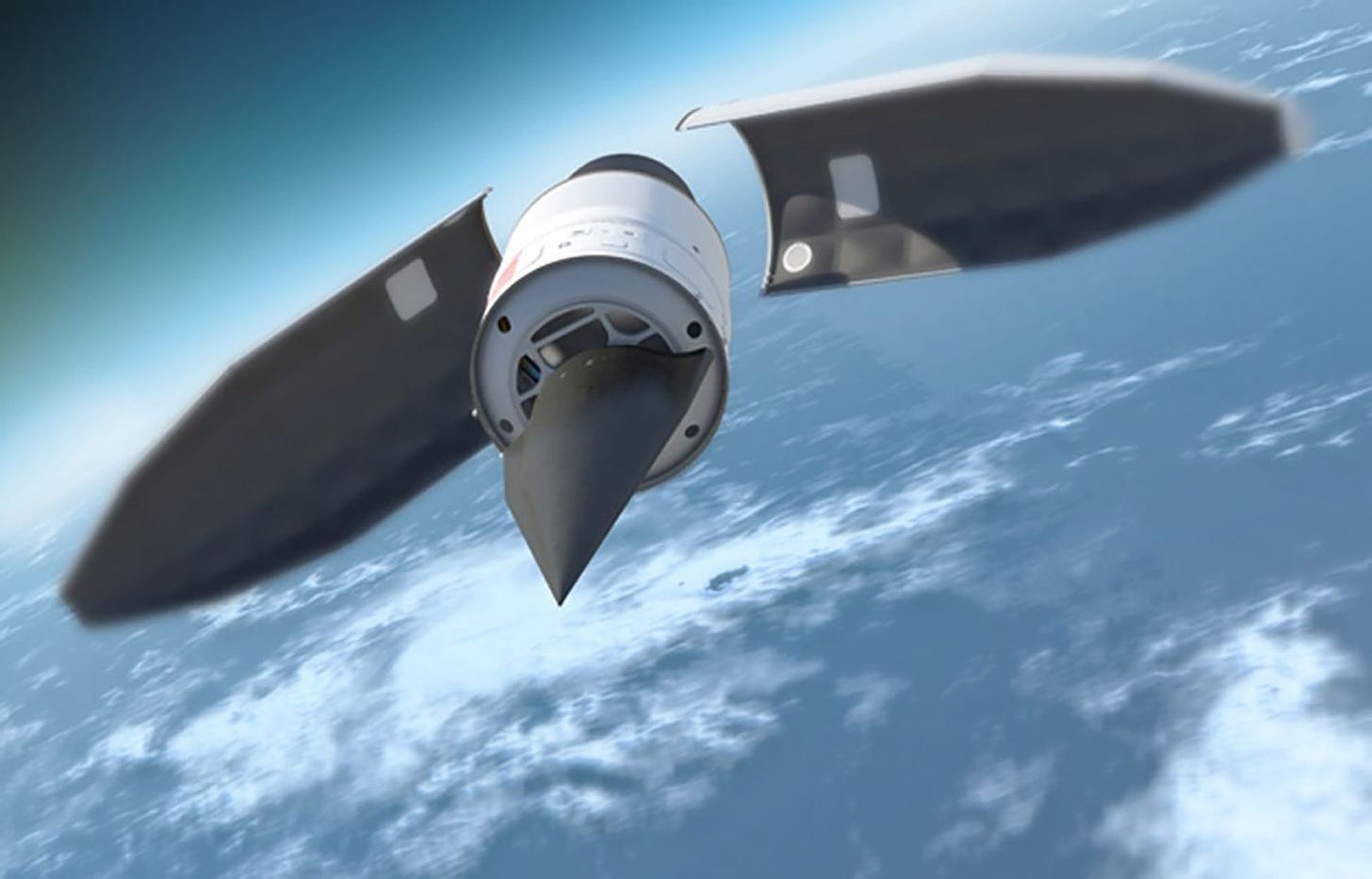
Russian Avangard Hypersonic Missile
By William Schryver | imetatronink | January 19, 2024
One of my current X followers posted earlier today:
“I am against the Ukraine war from the very beginning (mainly because for the first time a foreign war can actually get ME killed with Russia’s missiles), but at this point I also think we can’t just let Russia win which means we lose and that would mean a lot of negative things.”
I will not speak to his fears of “Russia’s missiles”, except to say I am convinced Russia will not strike anyone that hasn’t done something to provoke it in a manner that warrants such a response — at least not so long as the Putin regime remains in charge.
In any case, Russia WILL win this war. Decisively. She will dictate the terms of its cessation. Russia will emerge from this war significantly more powerful than she was just two years ago, and on a trajectory to become even more powerful in coming years.
As I wrote in a recent article:
“… the Russian armed forces, fighting on their own ground, on and under their adjacent seas, and in the air above their spheres of control, constitute the most potent and battle-hardened military force on the planet.”
As for the US empire’s European vassals: at no point in the last 500 years has Europe been more militarily, politically, socially, and spiritually debilitated. If the entire current military capacity of Europe were combined, it would not stand a chance of defeating Russia in a war. Rather, it would be systematically and comprehensively slaughtered.
And, as I have argued in crescendo over the past several years, the long-pervasive belief in American military supremacy is a myth; a mirage; a fallacious narrative fashioned from fables and Hollywood films.
The US military has not won a war since WW2. They have mercilessly bombed the crap out of many smaller, weaker countries, killed millions of people, and yet never once achieved strategic victory.
Not since WW2 have they faced anything even faintly approximating high-intensity warfare.
Indeed, never at any time in history has the US military fought against a great power adversary at the height of its strength.
And now, here in 2024, the US military has never been in a more weakened state relative to any of its potential great power adversaries — namely, Russia, China, and Iran.
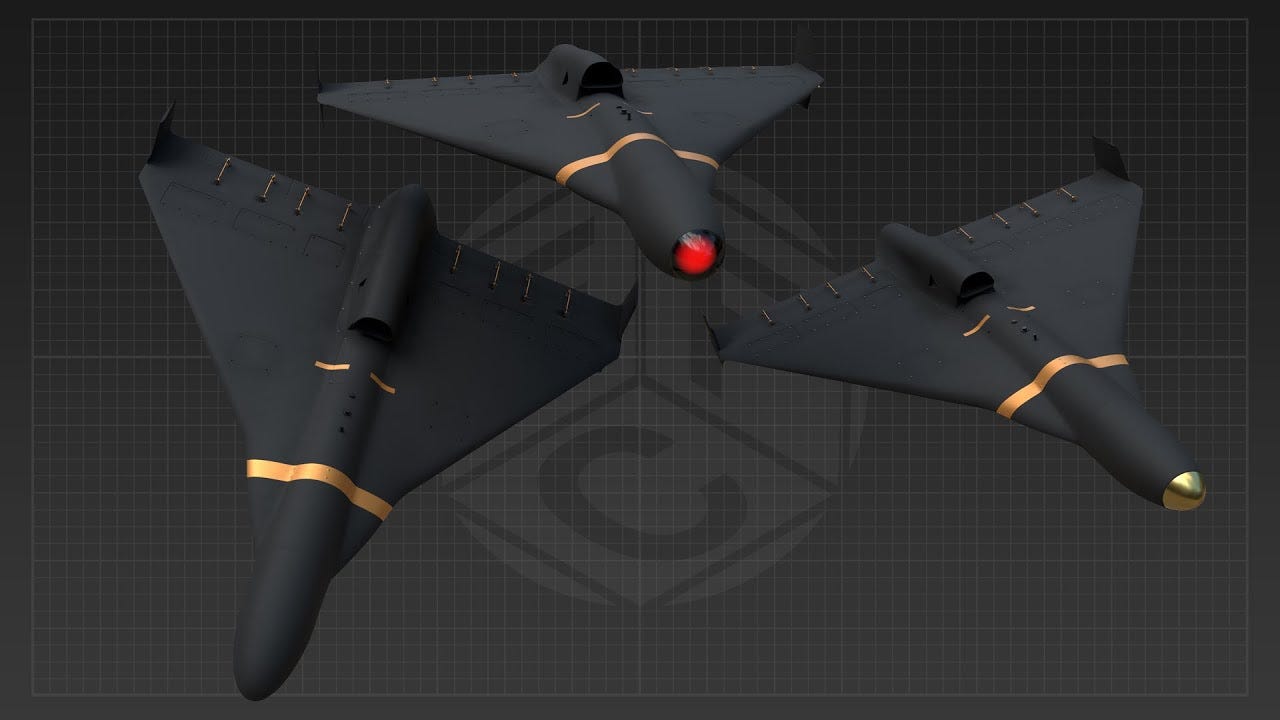
Iranian Shahed-238 loitering cruise missiles, three variants.
As I repeat often, I am convinced the failed US/NATO proxy war against Russia in Ukraine will produce the following results:
— It will greatly accelerate the decline of the American Empire.
— NATO will cease to be a credible military/political alliance.
— The EU will cease to be a credible monetary/political alliance.
And, as the broken hegemon rapidly recedes, political, economic, and social chaos is certain to engulf much of the world as the major and minor players on the planet scramble to secure their respective spheres of influence and establish new centers of global and regional power.
An epoch of great changes is upon us.
Zelensky serves Western elites – exiled opposition leader
RT | January 19, 2024
President Vladimir Zelensky is serving the interests of the collective West and not Ukraine, effectively conducting a modern “crusade” against Russia, according to the former leader of Ukraine’s biggest opposition party Viktor Medvedchuk.
The current conflict is not that different from the past Western pushes into the East, such as Napoleon’s or Hitler’s invasion of Russia, Medvedchuk wrote in an article posted on his website on Friday, suggesting that this particular “crusade” is being waged by proxy.
“Europe has traditionally labeled Russia a ‘barbaric country,’ using this as a pretext for invasion. Napoleon was bringing ‘freedom and civilization’ to Russia, Hitler was saving it ‘from the Jews and the Bolsheviks,’ thus, all the invaders said that they wished only good for the Russian people, and really wanted to bring them into the Western world,” Medvedchuk wrote.
In reality, only the “treasures and resources of Russia and its people” were actually meant to make it into the “Western world,” while Russians themselves were bound to get “slaughtered,” he added.
The current Ukrainian leadership has defined their country as an “Anti-Russia,” with Kiev making a big effort to portray its citizens as people universally hating anything Russian, Medvedchuk noted, suggesting that the effort is primarily meant to impress their Western sponsors.
“Zelensky paints the Ukrainians as ardent haters of Russia. He does this for a reason: hundreds of billions of dollars in Western aid flow to him and his circle. And the Ukrainian people get nothing from these funds except death, poverty and suffering,” Medvedchuk said, squarely accusing Zelensky of committing “genocide” of the Ukrainians.
The Jewish Zelensky introduced Nazi standards of the death of Ukrainian soldiers for the interests of the Western elite. Citizens of Ukraine have been strictly forbidden to remember who they are, what language they speak, what faith their ancestors were, what culture they grew up in.
Medvedchuk predicted that the inevitable failure of the Western crusade is bound to result in a collapse of modern Ukraine. He urged Ukrainians to rebel against Zelensky and his government, who had long sold them out as “cannon fodder” for NATO.
“In this situation, the salvation of the Ukrainian people lies in turning their weapons against Zelensky. We need to save our people and take back the land Zelensky sold. There is simply no other way for Ukrainians. They are driven to slaughter, their land is cleared of them, Zelensky’s team receives super profits for their blood,” he wrote.
Medvedchuk was the leader of the Opposition Platform – For Life, the second-largest group in the Ukrainian parliament, until his arrest in April 2022. The party was banned in July that year, and Medvedchuk was sent to Russia in exchange for several Ukrainian POWs in September.
Since then, he has been promoting a platform that would make Ukraine a neutral state that prioritizes its own national interests, as opposed to being an enemy of Russia.
Biden Warns Congress Lack of Ukraine Aid Could Lead to US Troops on Ground
Sputnik – 18.01.2024
WASHINGTON – President Joe Biden met with congressional leaders and warned them that not approving additional funding for Ukraine could possibly result in the deployment of US troops to that country, White House spokesperson Karine Jean-Pierre said on Thursday.
“The president conveyed a sense of urgency about the stakes for our NATO partners in the region, what it would mean for our NATO partners in the region, and certainly we don’t want to see our own troops put in a position where we might need to put boots on the ground,” Jean-Pierre said.
On Wednesday, US House Speaker Mike Johnson said that the United States’ status quo on Ukraine is unacceptable.
Johnson also said Congress needs a clearer explanation from the Biden administration about its strategy in Ukraine, the endgame and accountability for US funds. The speaker also added that US border security must be the top priority.
Biden’s supplemental request includes more than $60 billion for Ukraine.
Trump a ‘threat’ to UK – ex-MI6 chief
RT | January 15, 2024
Former US President Donald Trump’s potential reelection could be “problematic” for British national security due to his stance on NATO, former head of the MI6 intelligence service has warned.
Richard Dearlove, who led MI6 from 1999 to 2004, was discussing potential threats to the UK in 2024 in an interview with Sky News on Sunday, during which he pointed to the Russia-Ukraine conflict and the “long-term behavior of China,” before moving to the US presidential race.
“You have to add a political threat, which I am worried about, which is Trump’s reelection… which I think for the UK’s national security is problematic,” Dearlove said. If Trump, given his critical attitude towards NATO, “acts hastily and damages the Atlantic alliance, that is a big deal for the UK,” he warned.
“We’ve put all our eggs in defense terms in the NATO basket. If Trump really is serious about, as it were, changing the balance, I mean the American nuclear umbrella for Europe is, in my view, essential to Europe’s security and defense,” the former spymaster said.
During his time in the White House, Trump disparaged NATO, calling it “obsolete,” and questioned the bloc’s relevance in the modern world. He also cast doubt on Washington’s commitment to defend its allies and argued that other NATO members were not contributing enough.
“Look, NATO has taken advantage of our country. The European countries took advantage,” the former president recently told Fox News, adding that his attitude towards NATO depends on whether “they treat us properly.”
Despite several court cases against him, Trump remains the frontrunner for the Republican Party nomination as presidential candidate. A recent Morning Consult poll indicates that he is leading with 69% support, while the nearest rival is trailing far behind.
UK to send 20,000 troops to NATO exercise
RT | January 15, 2024
The UK is set to deploy around 20,000 service members – as well as modern warships and fighter jets – to Europe to take part in a major NATO exercise amid rising tensions with Russia, the Defence Ministry has announced.
In a statement on Monday, the ministry, citing excerpts from a speech to be delivered by Defence Secretary Grant Shapps, said that some 16,000 army troops – along with tanks, artillery, and helicopters – will join other bloc members on the continent to participate in Exercise Steadfast Defender 24, scheduled to take place in the first half of this year.
The effort will be supported by eight warships and submarines, as well as 2,000 Royal Navy sailors. The UK will also deploy a number of aircraft, including F35B Lightning fighters and Poseidon P8 surveillance aircraft, the ministry said.
Meanwhile, Shapps is expected to call the drill “one of NATO’s largest deployments since the end of the Cold War,” adding that the UK and its allies have found themselves “in a new era” and “must be prepared to deter our enemies,” according to the statement. The statement specifically referred to the threat from the Russian “menace.”
NATO began reinforcing its military footprint in Europe first after a Western-backed coup in Kiev triggered hostilities in Donbass, which is now part of Russia. However, the most drastic build-up occurred after Russia launched its military campaign against Ukraine in February 2022. In June of the same year, the US-led military bloc agreed to put 300,000 troops on high alert, up from 40,000, to deter Moscow.
Russian President Vladimir Putin has previously said that Moscow has no plans to attack NATO, arguing that there was “no geopolitical, economic … or military interest” in waging war against the bloc. Still, Moscow has also repeatedly warned that the alliance’s military activities close to its border warrant additional security measures. Putin has also said that Ukraine’s desire to join NATO was one of the key reasons for the current conflict.
Scholz pushes fake Russian threats to distract Germans from economic problems
By Ahmed Adel | January 15, 2024
Germany is preparing for a war between NATO and Russia, which, according to the scenario of the German Defence Ministry, could begin in the European summer of 2025 after the defeat of the Ukrainian Army, reported Bild with reference to a secret document of the Bundeswehr. This is evidently a desperate attempt by the German chancellor to distract citizens from their economic woes.
According to the newspaper, citing a classified German military document, the escalation could begin as early as next month with the start of an active Russian offensive against the Ukrainian Armed Forces.
According to Bild, the German military considers the Suwałki Gap between Belarus and the Russian region of Kaliningrad to be the most likely site of confrontation. A situation could escalate in October if Russia deploys troops and medium-range missiles to Kaliningrad, and from December 2024, an artificially induced “border conflict” and “clashes with numerous casualties” could unfold as Russia would take advantage of political chaos in the US following the presidential election.
“The actions of Russia and the West are described precisely, indicating the location and month, and will culminate in the deployment of hundreds of thousands of NATO troops and the imminent start of war in the summer of 2025,” writes the article.
However, the article’s authors leave open the question of how this hypothetical escalation will end.
This is, of course, a ridiculous suggestion by the German Defence Ministry, especially as Moscow has repeatedly stressed that it does not want conflict with NATO or anything beyond its special military operation in Ukraine. Rather, this is an attempt by Chancellor Olaf Scholz to instil an unjustified fear in German society as his popularity continues to plummet in the context of a stuttering economy and continued failed policies.
More than 70% of Germans are dissatisfied with Scholz, according to a survey carried out by the INSA Institute for Bild. Specifically, 72% of voters do not approve of his performance, which is three percentage points more than at the beginning of December. Only one in five, 20%, think that Scholz has done a good job.
According to the researchers, 76% of those surveyed are generally dissatisfied with what the federal government does, whilst only 17% of citizens are satisfied. It is the worst indicator of the ruling coalition since it was formed in December 2021, Bild noted.
In 2023, the Scholz-led government faced numerous economic and leadership challenges that undermined public trust. Persistent inflationary pressures, exacerbated by fiscal policy, undermined household budgets, which caused widespread discontent. The lack of strategic direction and perceived indecision on critical issues, such as energy policy following the adoption of sanctions against Russia, further fuelled scepticism among voters. The leadership crisis, characterised by internal conflicts and disagreements, damaged the effectiveness and cohesion of the German government.
What especially frustrates Germans is the fact that sanctions were imposed on Russia, which has become the fifth-largest economy in the world by volume, whilst Germany is in recession. With a public budget deficit estimated at around 60 billion euros, the very model of the German economy appears to be threatened.
Germany is officially in recession and is expected to have ended 2023 with a drop in GDP of around 0.3%, according to a forecast from the European Commission. This is one of the worst economic results in the bloc, given that the growth forecast for the entire European Union in 2023 is 0.6%. Among the causes is the energy crisis that has hit Germany harder than the rest of the European bloc, mainly because the Germans slashed their supply of Russian energy after the start of the special military operation in February 2022.
Furthermore, with the increase in energy prices resulting from sanctions against Russia, Germany has also suffered an increase in general price inflation in the economy, forcing the European Central Bank to raise interest rates, thus affecting the population’s purchasing power and impacting consumption. Consequently, German companies have not only lost international competitiveness with the application of sanctions against the Russians, but now the country runs the risk of entering a process of deindustrialisation.
Under these conditions, the extreme right is experiencing a resurgence. The far-right Alternative for Germany (AfD) party has hit an all-time high approval rating of 24% and has the potential to gain a few more percentile points with the immense failure of the ruling coalition.
What is undeniable is the fact that Germany is experiencing a rapid decline, all spurred on by the reckless policies of Scholz that prioritised American interests instead of German, and he is now resorting to a fake Russian threat in a desperate attempt to distract citizens from their social and economic problems that he is responsible for.
Ahmed Adel is a Cairo-based geopolitics and political economy researcher.
State Dept Shakedown: US Slaps ‘Ultimatum’ on Greece in Bid to ‘Extort’ More Ukraine Aid
By Svetlana Ekimenko – Sputnik – 10.01.2024
US Secretary of State Antony Blinken visited Greece on January 6 as part of his latest diplomatic push over the spiraling Palestinian-Israeli conflict. The top US diplomat jumped at the opportunity to wring a promise from Athens to fork out more aid for Ukraine.
US Secretary of State Antony Blinken presented Greece’s Prime Minister a humiliating “ultimatum” when he visited Athens recently, Greek media outlets claim.
Kyriakos Mitsotakis was reportedly given just a few days to decide on a shipment of new weapons systems to the regime in Kiev. Blinken had made a stopover in Greece during his shuttle diplomacy trip linked to the Palestinian-Israeli conflict, driven by fears of greater regional spillover. But amid the growing difficulty of wrestling more aid packages to Kiev amid ‘Ukraine fatigue’ prompted the US top diplomat to stoop to “extortion,” wrote the outlets.
As it is, Greece, a NATO member and US ally, was one of the first to send military aid to Ukraine. “Greece has already given everything, it has breached national defense, especially on the islands, in order to support Ukraine with defense material,” wrote the publications.
“What exactly does Blinken want us to send to [Ukraine’s President] Zelensky, who is collapsing on all fronts?.. It goes without saying that if Mitsotakis succumbs to the blackmail, it will cause unimaginable damage to our national interests,” Greek media warned.
Greece is one of the countries that rushed to provide military and financial assistance to Ukraine in order to impose the tyranny of Kiev on the Russian-speaking population of the Donbass, the Russian Ministry of Defense (MoD) has stated.
Last year, Greek Defense Minister Nikos Panagiotopoulos boasted about the transfer of an “incredible amount” of weapons to the Zelensky regime. In August, Athens opted to join a coalition of countries training Ukrainian pilots to fly F-16 fighter jets.
Back in August, Ukrainian President Volodymyr Zelensky stated at an Athens press conference with Mitsotakis that the sides had also adopted a joint declaration in which Mitsotakis committed Greece to continuing military support for Ukraine. Moreover, Athens vowed to support Kiev’s aspirations to join NATO.
In response, Greece’s largest opposition party, the Coalition of the Radical Left – Progressive Alliance (SYRIZA) slammed the moves, saying that they amount to Greece’s “direct military involvement” in the Ukraine conflict.
Moscow has repeatedly condemned the supply of weapons to Ukraine by Western countries and accused the US-led West of trying to prolong the conflict. In early June 2023, Kremlin Spokesman Dmitry Peskov reiterated that the goals of the military operation would be achieved despite shipments of foreign weapons to Kiev, which would undoubtedly cause Ukraine “more suffering.”
Featured Video

HE SAVED LIVES. NOW HE FACES PRISON.
or go to
Aletho News Archives – Video-Images
From the Archives
NATO Sanctions and the Coming Global Diesel Fuel Disaster
By F. William Engdahl – New Eastern Outlook – 11.04.2022
Amid the ongoing global inflation crisis, NATO heads of state and mainstream media repeat a mantra that high energy prices are a direct result of Putin’s actions in Ukraine since end of February. The reality is that it is the western sanctions that are responsible. Those sanctions including cutting SWIFT interbank access for key Russian banks and some of the most severe sanctions ever imposed, are hardly having an impact on the military actions in Ukraine. What many overlook is the fact that they are increasingly impacting the economies of the West, especially the EU and USA. A closer look at the state of the global supply of diesel fuel is alarming. But Western sanctions planners at the US Treasury and the EU know fully well what they are doing. And it bodes ill for the world economy.
While most of us rarely think about diesel fuel as anything other than a pollutant, in fact it is essential to the entire world economy in a way few energy sources are. The director general of Fuels Europe, part of the European Petroleum Refiners Association, stated recently, “… there is a clear link between diesel and GDP, because almost everything that goes into and out of a factory goes using diesel.” … continue
Blog Roll
 Aletho News
- Iran FM meets with US envoy on UN meeting’s sidelines at American side’s insistence: Report
- Qatar PM calls for Gulf security framework with Iran, says war must be ‘wake-up call’
- China condemns US extortion of Iranian airlines, rejects Washington’s ‘illegal’ sanctions threats
- Italy to move military personnel from Taif base after missile strike
- Finland’s Stubb tells European leaders to calm down
- Defeating Russia on battlefield impossible – Fico
- Finland’s Gender Clinic Reversal
- Massachusetts Wants Mental Health Visits, Why Does Government Use ‘Health’ to Enter Our Homes & Families?
- US lawmaker admits American people footing bill for Trump’s failed aggression against Iran
- Pfizer Gave $500,000 to Groups That Lobbied to End Religious Exemption in Massachusetts
- If Americans Knew
- Sanctions are collective punishment: immoral and self-defeating
- Phosphorus Munitions Fired by Israel Burn Groves, Orchards in Southern Lebanon
- Israel Carries Out New Ceasefire Violations Across Gaza
- AI – Emphasis on the ‘I’: Israel Is Funding AI Chatbot Propaganda
- Israel Blocking Hundreds of Wheelchairs for Injured Children From Entering Gaza
- Israel Is Expanding and Upgrading Compounds for Palestinian Militias in Gaza
- The Palestinian-American Residents of This West Bank Town Are Wondering: Where Is Trump?
- Gaza desperately needs tents, wheelchairs, fuel… and everything else (Israel blocks it all) – Daily Update
- Israeli Attacks in Gaza Kill at Least Seven Palestinians Over Three Days, including Woman and Child
- Trump’s militarization of Washington DC as he pursues Israel’s war against Iran
- No Tricks Zone
- 2025 Nature Paper Claiming Worsening Global Drought Gets RETRACTED …Heavily Flawed
- New Study: ‘Global Drought Shows No Detectable Recent Acceleration Under Climate Warming’
- Economic Masterminds: German Socialists Suggest Taxing Productivity Gains Stemming From Using AI
- The South China Sea Has Not Been Cooperating With The Climate Change Narrative
- Energy Crisis: Germany Enters Heating Season With Historically Low Gas Reserve Fill Levels
- New Study: The Antarctic Ice Sheet Gained Mass From 2020-2024 Due To Staggering Snow And Ice Accumulation
- Study: Ocean Heating Rates From Thousands Of Years Ago ‘Dwarf’ Modern Ocean Heating Rates
- Climate Extremists Target, Attack Large-Scale Power Grid Infrastructure In Germany!
- New Study: Antarctic Ice Melt Has Contributed Less Than 1 Centimeter To Sea Level Rise In The Last 30 Years
- Fear Of Debate: Alarmist German Climate Scientist Calls On Mainstream Media To Discredit Skeptic Voices

