The Unanimity and Ubiquity of Uniqueness

By Nima Shirazi | Wide Asleep in America | September 10, 2014
To be clear:

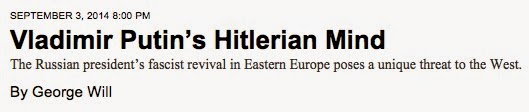





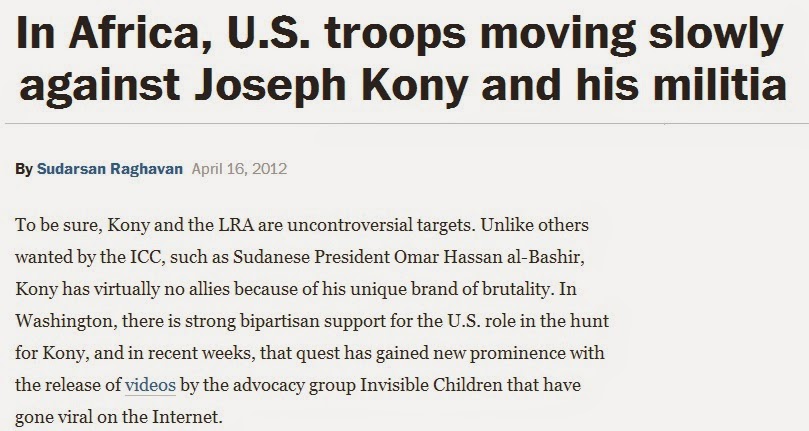


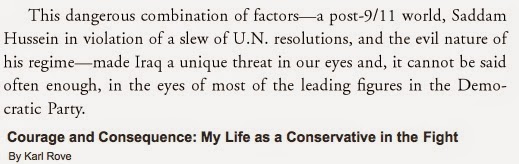


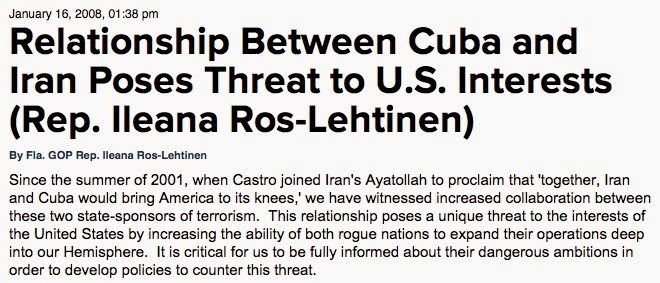



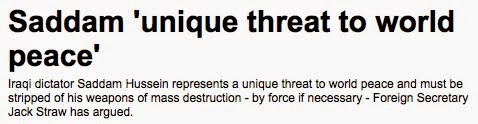









Are we clear?
Compare and Contrast: Cluster Bomb Usage in Syria, July 2014 Vs September 2014
Interventions Watch | September 6, 2014
Rick Gladstone, writing in The New York Times, July 30th 2014:
‘Cluster bombs, internationally banned weapons that can maim and destroy indiscriminately, not only have been frequently used for the past two years by government forces in the Syrian civil war . .
. . . According to an assessment by Human Rights Watch, a member of the Cluster Munition Coalition, Syrian government forces used the weapons in at least 224 locations, in 10 of Syria’s 14 governorates, from July 2012 to this March, with new indications that their “use is ongoing.” The assessment is incomplete and based partly on remnants recorded by video, Human Rights Watch said, suggesting the actual use may be even more widespread.
Syria’s government has denied the use of cluster munitions in the conflict, which is now in its fourth year. But Ms. Blakemore said that the insurgents fighting to topple President Bashar al-Assad did not have the capacity to deploy such weapons.’
So then, rebels in Syria simply aren’t able to use cluster bombs. No siree! It’s all the work of the Assad regime.
Rick Gladstone, writing in The New York Times, September 1st 2014:
‘The Islamic State in Iraq and Syria, the extremist militant group now almost universally vilified for atrocities that include boastful beheadings, summary mass executions and enslavement in the areas it aspires to control, also has attacked enemies with cluster bombs, the banned weapons that kill and maim indiscriminately, Human Rights Watch said on Monday.
Stephen Goose, the arms division director of Human Rights Watch, said in a statement that “credible evidence” had emerged that ISIS forces used ground-fired cluster munitions on July 12 and Aug. 14 during fighting with Kurdish militia members in Aleppo Province near the northern Syrian border with Turkey.
“The use of cluster munitions by nonstate actors such as the Islamic State shows the urgent need for Syria and all nations that have not yet done so to join the ban on cluster munitions and destroy their stockpiles,” Human Rights Watch said in the statement’.
No wait! The rebels do have the capacity to deploy cluster bombs after all, and they are deploying them! And they were even when we said they weren’t! Or at least ISIS are!
And how convenient that this new ‘credible evidence’ has come to light just as the U.S. et al are embarking on a long term, overt war in Iraq – and very probably Syria before too long – to be justified by the ISIS ‘threat’.
NATO – New York Times Convoy Fabrications
By Renee Parsons | CounterPunch | August 25, 2014
On Saturday, the entire humanitarian convoy of 227 trucks crossed back into Russia without incident after having successfully delivered its contents to the Luhansk distribution center. The unwavering round trip project from Russia surmounted considerable bureaucratic delays and political obstacles including wild assertions that the convoy’s true purpose was to ‘smuggle weapons’ to the east Ukraine rebels.
Amidst a multitude of frenzied claims from the Kiev government and its western allies that the convoy was intent on fomenting violence and escalating the conflict as it constituted an ‘illegal incursion” and ‘violated the sovereignty of Ukraine,” the trucks peacefully avoided any confrontation with Ukraine military forces by taking advantage of back roads.
Given the very urgent need to provide immediate medical relief and other life necessities to Ukraine citizens, what has been especially noteworthy during the ten day period in which the Russian convoy was stalled at the border is the extent to which the Kiev government and its EU/US/NATO partners would go to impede a convoy carrying humanitarian supplies. […]
Perhaps the most egregious, the most obviously inexcusable misrepresentation of the facts, however, came from a conveniently-timed front page New York Times article entitled “Russians Open Fire in Ukraine NATO Reports.” whose job it is to be factually accurate and objectively represent all points of view.
With an irresponsible pen more committed to reiterating the Obama Administration’s public relations campaign than journalism, the New York Times again failed in its role as guardian of the truth allowing inaccurate exaggerations and entirely false anecdotes to masquerade as news.
While relying on the usual unnamed, unspecified vague “intelligence reports from several alliance members,” the Times categorically stated that “Russia … escalated tensions with Ukraine…, sending more than 200 trucks from a long-stalled aid convoy and, NATO said, conducting military operations on Ukrainian territory.”
Curiously, the Times article is a somewhat odd, overlapping mixture of reference to the humanitarian convoy interwoven in a story about an alleged Russian military incursion as if the existence of the convoy somehow confirms that a military intrusion has occurred while strangely suggesting that “200 trucks” had something to do with ‘conducting military operations’.
According to the Times “NATO officials said that the Russian military had moved artillery units inside Ukrainian territory in recent days and was using them to fire at Ukrainian forces” and yet the Times reporters did not cite any of NATO’s proof that such artillery movement had occurred or how NATO could confirm that the artillery was firing at Ukrainian forces. In other words, NATO could say that the Moon is made of blue cheese and the Times would run the news in their Food section.
The basis for the assertions were a series of quotes from their favorite prattler NATO Secretary General Rasmussen who insisted (despite a total lack of verification) that “There has been “a major escalation in Russian military involvement in eastern Ukraine since mid-August, including the use of Russian forces” and “Russian artillery support — both cross-border and from within Ukraine — being employed against the Ukrainian armed forces.” Again, the amazingly-incurious Times reporters dutifully wrote whatever they were told with no independent confirmation or analysis.
So as the Times not only included unsubstantiated, circumstantial quotes as fact but Mr. Rasmussen’s acknowledgment that he “did not say how many Russian artillery pieces had moved into Ukraine or where they were located, but one [unidentified] Western official said the number of Russian-operated artillery units was “substantial.”
Until finally, buried at the end of the lengthy article “There were no signs of Russian military vehicles or any other indications of an armed escort by Russian troops.”
New York Times ‘On wrong side of Orwell’
By Jay Rosen | Press Think | August 10, 2014
These are my discussions notes to The Executive Editor on the Word ‘Torture.’ A letter to Times readers from Dean Baquet, August 7, 2014.
“It’s time to celebrate that the newspaper of record is no longer covering for war criminals.” That’s what Andrew Sullivan, who has kept watch on this story, wrote Thursday. The news he was celebrating: the New York Times gave up the ghost on euphemisms for torture.
Alright, we celebrated. For an hour, maybe. Now let’s ask what came to an end with this strange announcement. Terms like “enhanced interrogation techniques,” “harsh tactics” and “brutal treatment” had been preferred usage at the Times in news stories by its own staff about the treatment of detainees in U.S. custody after 9/11. “Torture” was removed as a descriptor that the Times itself would employ. The decision to reverse that came Thursday in a brief note to readers from executive editor Dean Baquet.
From now on, The Times will use the word “torture” to describe incidents in which we know for sure that interrogators inflicted pain on a prisoner in an effort to get information.
1. As Erik Wemple wrote, Baquet here “pledges that the newspaper will deploy the English language to describe things.” His paraphrase points up the strangest part for me: the Times felt it had to exit from the vernacular to stay on the responsible journalism track. This I find hard to accept.
The baseline in daily journalism is supposed to be plain English, spoken and written well. Non-exclusive language is the norm. The normal market is the common reader and the reader’s common sense, not a specialized class of knowers vibrating in the power circle. It’s not incumbent on an already understood term like torture to prove itself neutral enough for newswriters, but on the specialist’s construction (“enhanced interrogation”) to prove itself relevant in these proceedings at all.
A term like “enhanced interrogation techniques” starts with zero currency, extreme bloodlessness and dubious origins. A lot to overcome. In the years when the Times could not pick between it and torture — 2002 to 2014, approximately — it seemed that its editors and reporters were trying to re-clarify what had been made more opaque by their own avoid-the-label policy decision. Thus the appearance of do we have to spell it out for you? phrases like “brutal interrogation methods,” meant to signal: this was really, really bad. So bad you might think it amounts to…
Baquet tries to explain:
The word “torture” had a specialized legal meaning as well as a plain-English one. While the methods set off a national debate, the Justice Department insisted that the techniques did not rise to the legal definition of “torture.” The Times described what we knew of the program but avoided a label that was still in dispute, instead using terms like harsh or brutal interrogation methods.
So for the fruits of avoiding a label the Times becomes a force for fuzzing things up. Early in a public reckoning with acts of state torture it decides it cannot call it that. Wrong side of your Orwell there, mister editor. To report what happened you have to first commit to calling things by their right names. Somewhere in a fog it helped to create the Times lost sight of that. The editor’s note doesn’t explain how it happened. … Full article
Another Shameful ‘NYT’ Casualty Count

By Greg Mitchell | Pressing Issues | August 8, 2014
Late Friday: Revised version of story now correctly states that “most” of the casualties in Gaza have been civilians, not “many.” Not sure if my widely linked and tweeted complaint (below) had any effect, but hope it did.
On the other hand, in another typical example that suggests the Times, perhaps, bowing to a complaint from IDF: A headline on another Rudoren story that once read: “A Boy At Play in Gaza, an Israeli Missile, a Mourning Family” has been changed to “A Boy at Play in Gaza, a Return to Warfare, a Family in Mourning.” It’s all the more odd because, in a rarity in a Rudoren story, she clearly says that an Israeli drone fired the missile. Then again, she’s in Gaza now. Perhaps her usual IDF spokesman source couldn’t reach her to insist on the usual, “Israel denies… might be Hamas rocket… looking into it….” Note: She does severely under-count the death toll of children, which the UN places at 440 tonight, while Rudoren simply has it at “more than 300.”
Earlier: Along with many others, we’ve critiqued Jodi Rudoren’s major piece for the NYT the other day which reflected Israel’s spin on a supposedly lower civilian body count in Gaza. At least then, Rudoren still admitted a majority of the dead were likely civilians (even if she rejected UN and other counts that put that percentage at 70 to 82% or more).
But in today’s piece, on the end of the ceasefire, written with the other half of the Times’ less-than-dynamic duo, Isabel Kershner, they actually write this: “Since the fighting began on July 8, more than 1,880 Palestinians have been killed in Gaza, many of them civilians, and 67 have been killed on the Israeli side, mostly soldiers.” Can you dig it? “Many” of them civilians, which could mean, oh, 100 or so, not the (even in Rudoren’s recent count) 1000 or more. Perhaps the IDF now claims less than half are civilians and Rudoren, with steno pad out, has relayed that without a journalistic filter.
And then then for the Israelis, “mostly soldiers”–when the tally is actually 64 soldiers and 3 civilians. Do the Times’ editors have no shame?
UN tonight updates: about 1,400 of 1,600 dead IDed in Gaza are civilians, with another 300 fighters or not yet IDed. That sure is “many” civilians.
As we noted earlier, the IDF (and needless to say, Rudoren’s) count is based on statistics showing that a large number of young males have died in the shelling. The only explanation? They were militants aiding Hamas and so were somehow precisely targeted as fair game by the Israelis. This, of course, ignores the reality captured by other reporters and videos: the majority of aid workers, medics, ambulance drivers, and others out in the streets trying to help people, dig out the rubble, or go for food and water are… young males. Who often then fall victim to new air strikes. I guess they also all double as Hamas rocketeers.
Beware NYT’s Michael R. Gordon
Stop Him Before He Kills Again!
By John Walsh | CounterPunch | August 5, 2014
“There’s an old saying in Tennessee — I know it’s in Texas, probably in Tennessee — that says, fool me once, shame on — shame on you. Fool me — you can’t get fooled again.”
– George W. Bush
Those in the U.S. who are enthralled by relentless reports of the most demonic acts attributed to President Vladimir Putin and the rebel Eastern Ukrainian federalists a in the New York Times, NPR, ETC. would do well to look at the track record of the “reporters” dishing out this stuff. What they will find is a trail of deception that is piled with corpses of hundreds of thousands of innocents.
Principle among the purveyors of these bloodletting falsehoods is Michael R. Gordon, chief military correspondent for the NYT, serving over the decades as a trusty pipeline from the Pentagon to you. Although his name should be in profound disrepute, many opposed to war are unaware of his ignoble career or may have forgotten it. Most notoriously he is the co-author with Judith Miller of the front page NYT article planted by Dick Cheney’s minions, which claimed that Saddam Hussein had Weapons of Mass Destruction (WMD), relying on the idea that aluminum tubing being purchased by Iraq was to be used for purifying uranium.
Here is a quick reminder of that sorry episode so typical for the NYT. That article, entitled “Threats and Responses: The Iraqis; U.S. Says Hussein Intensifies Quest For A-Bomb Parts,” ran on page one of the NYT on Sunday, September 8, 2002. That same day, with the newsprint barely dry, Cheney popped up on Meet the Press citing the piece and claiming that Saddam Hussein was on his way to making nukes. Appearances on the other Sunday propaganda shows were made that same day by Colin Powell, Donald Rumsfeld, Richard Meyers (Chairman of the Joint Chiefs of Staff) and Condoleeza Rice who employed the infamous phrase used by Miller and Gordon, declaring with a straight face, “We don’t want the smoking gun to be a mushroom cloud.” On October 11, 2002, with an election staring it in the face, the Congress voted authorization for Bush to go to war. (That Constitutional requirement was unceremoniously dropped when Obama decided to make war on Libya. At least Bush took the time to lie to Congress.) As we know all too well now, the entire aluminum tube story was a lie, as was obvious at the time to anyone who read the article with the slightest care and as the Department of Energy and Department of State knew well at the time, as was later disclosed.
But unlike Judith Miller the well connected Gordon escaped punishment for these criminal fictions. And so he went on to peddle ever more lies on Iraq, being the first “journalist” to be embedded with U.S. forces of aggression and later championing the “surge” of his buddy, that great military strategist and legendary lover, David Petraeus. That bit of his career was documented in considerable detail in 2007 by the late Alex Cockburn. Cockburn summed it up thus:
“Gordon managed to dodge the fall-out from the WMD debacle he played a major part in contriving. For example, he co-wrote with Miller the infamous aluminum tubes-for-nukes story of September 8, 2002, that mightily assisted the administration in its push to war. In the latter part of 2006 he became the prime journalistic agitator for escalation in troop strength.
“On September 11, 2006, the Times ran a Gordon story under the headline, ‘Grim Outlook Seen in West Iraq Without More Troops and Aid’. Gordon cited a senior officer in Iraq saying more American troops were necessary to stabilize Anbar. A story on October 22 emphasized that “the sectarian violence [in Baghdad] would be far worse if not for the American efforts” There were of course plenty of Iraqis and some Americans Gordon could also have found, eager to say the exact opposite.”
The next year, 2007, Gordon went on to join the journalistic chorus in its effort to finger Iran as the source of new, more lethal roadside bombs used in Iraq which were called EFP’s (Explosively Formed Penetrators). This was another piece of Cheney propaganda designed to help satisfy his itch to launch a war on Iran. It was quickly exposed by another Cockburn, Andrew, Scott Horton and others. Fortunately this fiction thus exposed passed on quickly.
The point is that Gordon’s career has been not that of a reporter but a propagandist preparing us to accept the next moves of the U.S. Empire. So what is the intrepid Gordon up to these days? Unsurprisingly he is on the job covering the crisis in the Ukraine. He and the rest of the NYT are frantically peddling the wildest of lies about Ukraine, Russia and the ever evil Vlad. Here is a good example from the page one article by Gordon and others on July 18, entitled “U.S. Sees Evidence of Russian Links to Jet’s Downing.” It begins:
“The United States government has concluded that the passenger jet felled over Ukraine was shot down by a Russian-made surface-to-air missile launched from rebel-held territory and most likely provided by Russia to pro-Moscow separatists, officials said on Friday. While American officials are still investigating the chain of events leading to the destruction of Malaysia Airlines Flight 17 on Thursday, they pointed to a series of indicators of Russian involvement……” (Emphasis, jw)
Where is the evidence? The only evidence is that “officials said.” There is no indication of who the “officials” are or precisely what they said. Then there is the hedge phrase “most likely.” And finally Gordon and his co-authors tell us that the unnamed officials are “still investigating.” Finally although there is no conclusion, there are a “series of indicators.” (At the same time the Russian Ministry of Defense has released a lot of verifiable information on the incident, readily accessible on RT.com, whereas the U.S. has produced nothing other than some suspicious anecdotes on social media and a lot of speculation.) Not only should Gordon and his co-authors, Peter Baker and Mark Mazetti, the Judith Millers du jour, be summarily dismissed but also the “editors that let this trash appear as news rather than the unfounded propaganda that it is. (Mazetti and Baker should be leery of being Gordon’s accomplices. He may need a fall guy once again. Think Judith Miller, fellows.)
Let us turn to the notorious Miller and Gordon article of 2002 for comparison with Gordon’s piece on Ukraine. It begins:
“More than a decade after Saddam Hussein agreed to give up weapons of mass destruction, Iraq has stepped up its quest for nuclear weapons and has embarked on a worldwide hunt for materials to make an atomic bomb, Bush administration officials said today. In the last 14 months, Iraq has sought to buy thousands of specially designed aluminum tubes, which American officials believe were intended as components of centrifuges to enrich uranium. American officials said….” (Emphasis, jw)
Remarkable similarity! Cookie cutter prevarication, one might say. “American officials” are ever on the job and ever anonymous. And Michael R. Gordon is front and center on page one as their ever faithful, ever unquestioning transmission belt. No one can possibly think that Gordon is in the business of truth. We would be fools to believe a word he says. He fooled us once (in fact, many times). Shame on us if we let him fool us once again. His lies are laced with blood and death. We should avert our gaze from them.
John V. Walsh can be reached at John.Endwar@gmail.com.
U.S. Anti-Iran Lobby Group Accused of Mossad Ties
By Richard Silverstein | Tikun Olam | July 31, 2014
The NY Times reports a blockbuster story about the anti-Iran lobby group, United Against a Nuclear Iran. It’s an especially perfidious group supporting regime change, though it couches its approach in terms of opposing Iran’ nuclear program. Curiously, this is precisely the same way Israel’s far-right government disguises its own support for the violent overthrow of the Iranian government. Knowing that such a plan is not supported by the west including the Obama administration, they believe that they can paint Iran as enough of a threat to the world through it’s alleged plans to create nuclear weapons, that this will get them half-way to regime change.

Rami Ungar, Israeli “fixer” working either for Mossad or UANI to make problems of sanctions-busting companies “go away”
UANI specializes in “outing” companies which allegedly violate UN sanctions against Iran. The Times article revealed that the companies are usually approached by an Israeli “fixer” with close ties to the Mossad. He’s Rami Ungar, owner of an Israeli company, Ray Shipping, who’s worth $500-million.
Ungar gives them an opportunity to renounce their supposed trade with Iran. Sometimes they’re extorted for a donation to UANI as well. Though the article doesn’t mention it, I’m certain that the Mossad intermediary probes for companies that will serve Israel’s interests in its fight against Iran. Companies doing business with Iran who are willing to become Mossad assets are worth their weight in gold, since the Iranians trust them and Israel can use such trust to sabotage whatever aspect of the Iranian military or commercial interests the sanctions-buster participates in.
What brought much of this to light is a lawsuit brought by one of the ship owners who was targeted by UANI. Instead of rolling over and playing dead, Victor Restis decided to sue UANI to find out what was going on inside the bowels of this organization. Restis, who denies all charges against him made by UANI, decided to take the battle to UANI. He’s demanding to see internal documents that would show who conveyed information to the group about him, what the information said, and how it was collected. His suit also implies that the Mossad directly funds UANI, another explosive charge.
What’s especially odd about the case is that the U.S. Justice Department has threatened to intervene in the case on behalf of UANI. Clearly, the real reason they’re willing to take such an unusual step is that they’re trying to protect the Mossad. It would not only embarrass our Israeli ally[sic], it might expose the covert methods and work product of Israeli intelligence. It might allow Iran to find out what Mossad knows about it and how.
This is so unseemly because the Obama administration is protecting a foreign spy agency which aggressively steals U.S. secrets when possible. We are also protecting the Mossad as it attempts to manipulate U.S. public opinion in a witch hunt against Iran, which is a country with whom we’re trying to negotiate a rapprochement. Here is how the U.S. explained its “interest” in the case:
Government lawyers said they had a “good faith basis to believe that certain information” would jeopardize law enforcement investigations, reveal investigative techniques or identify confidential sources if released.
If we take this literally, it means the U.S. government has been in cahoots with the Mossad in this campaign against Iranian commerce. Even if it means something less than that, it certainly means that we’re protecting the Mossad as one of our “confidential sources.” The other possible interpretation is that the U.S. is investigating UANI or the Mossad for their collusion together, though the article doesn’t point in that direction at all.
UANI, though it claims to be a bi-partisan group above the political fray, is heavily laden with neocon, Bush-era personnel and board members. It’s full of U.S. intelligence officials and diplomats known as especially friendly to Israel, including Dennis Ross. Meir Dagan is also listed as an advisor. UANI appears little more than an extension of Israeli intelligence based in the U.S.
Blaming Russia as ‘Flat Fact’
By Robert Parry | Consortium News | July 27, 2014
As nuclear-armed America hurtles into a completely avoidable crash with nuclear-armed Russia over Ukraine, you can now see the dangers of “information warfare” when facts give way to propaganda and the press fails to act as an impartial arbiter.
In this sorry affair, one of the worst offenders of journalistic principles has been the New York Times, generally regarded as America’s premier newspaper. During the Ukraine crisis, the Times has been little more than a propaganda conveyor belt delivering what the U.S. government wants out via shoddy and biased reporting from the likes of Michael R. Gordon and David Herszenhorn.
The Times reached what was arguably a new low on Sunday when it accepted as flat fact the still unproven point of how Malaysia Airlines Flight 17 was shot down. The Times dropped all attribution despite what appear to be growing – rather than diminishing – doubts about Official Washington’s narrative that Ukrainian rebels shot down the plane by using a powerful Russian-supplied Buk missile battery.
U.S. and Ukrainian government officials began pushing this narrative immediately after the plane went down on July 17 killing 298 people onboard. But the only evidence has been citations of “social media” and the snippet of an intercepted phone call containing possibly confused comments by Ukrainian rebels after the crash, suggesting that some rebels initially believed they had shot the plane down but later reversed that judgment.
A major problem with this evidence is that it assumes the rebels – or for that matter the Ukrainian armed forces – operate with precise command and control when the reality is that the soldiers on both sides are not very professional and function in even a deeper fog of war than might exist in other circumstances.
Missing Images
But an even bigger core problem for the U.S. narrative is that it is virtually inconceivable that American intelligence did not have satellite and other surveillance on eastern Ukraine at the time of the shoot-down. Yet the U.S. government has been unable (or unwilling) to supply a single piece of imagery showing the Russians supplying a Buk anti-aircraft missile battery to the rebels; the rebels transporting the missiles around eastern Ukraine; the rebels firing the fateful missile that allegedly brought down the Malaysian airliner; or the rebels then returning the missiles to Russia.
To accept Official Washington’s certainty about what it “knows” happened, you would have to believe that American spy satellites – considered the best in the world – could not detect 16-feet-tall missiles during their odyssey around Russia and eastern Ukraine. If that is indeed the case, the U.S. taxpayers should demand their billions upon billions of dollars back.
However, the failure of U.S. intelligence to release its satellite images of Buk missile batteries in eastern Ukraine is the “dog-not-barking” evidence that this crucial evidence to support the U.S. government’s allegations doesn’t exist. Can anyone believe that if U.S. satellite images showed the missiles crossing the border, being deployed by the rebels and then returning to Russia, that those images would not have been immediately declassified and shown to the world? In this case, the absence of evidence is evidence of absence – absence of U.S. evidence.
The U.S. government’s case also must overcome public remarks by senior U.S. military personnel at variance with the Obama administration’s claims of certainty. For instance, the Washington Post’s Craig Whitlock reported last Saturday that Air Force Gen. Philip M. Breedlove, U.S. commander of NATO forces in Europe, said last month that “We have not seen any of the [Russian] air-defense vehicles across the border yet.”
Whitlock also reported that “Rear Adm. John Kirby, the Pentagon press secretary, said defense officials could not point to specific evidence that an SA-11 [Buk] surface-to-air missile system had been transported from Russia into eastern Ukraine.”
There’s also the possibility that a Ukrainian government missile – either from its own Buk missile batteries fired from the ground or from a warplane in the sky – brought down the Malaysian plane. I was told by one source who had been briefed by U.S. intelligence analysts that some satellite images suggest that the missile battery was under the control of Ukrainian government troops but that the conclusion was not definitive.
Plus, there were reports from eyewitnesses in the area of the crash that at least one Ukrainian jet fighter closed on the civilian plane shortly before it went down. The Russian government also has cited radar data supposedly showing Ukrainian fighters in the vicinity.
Need for a Real Inquiry
What all this means is that a serious and impartial investigation is needed to determine who was at fault and to apportion accountability. But that inquiry is still underway with no formal conclusions.
So, in terms of journalistic professionalism, a news organization should treat the mystery of who shot down Flight 17 with doubt. Surely, no serious journalist would jump to the conclusion based on the dubious claims made by one side in a dispute while the other side is adamant in its denials, especially with the stakes so high in a tense confrontation between two nuclear powers.
But that is exactly what the Times did in describing new U.S. plans to escalate the confrontation by possibly supplying tactical intelligence to the Ukrainian army so it can more effectively wage war against eastern Ukrainian rebels.
On Sunday, the Times wrote: “At the core of the debate, said several [U.S.] officials — who, like others interviewed, spoke on the condition of anonymity because the policy deliberations are still in progress — is whether the American goal should be simply to shore up a Ukrainian government reeling from the separatist attacks, or to send a stern message to [Russian President Vladimir] Putin by aggressively helping Ukraine target the missiles Russia has provided. Those missiles have taken down at least five aircraft in the past 10 days, including Malaysia Airlines Flight 17.” [Emphasis added.]
The link provided by the Times’ online version of the story connects to an earlier Times’ story that attributed the accusations blaming Russia to U.S. “officials.” But this new story drops that attribution and simply accepts the claims as flat fact.
The danger of American “information warfare” that treats every development in the Ukraine crisis as an opportunity to blame Putin and ratchet up tensions with Russia has been apparent since the beginning of the Ukraine crisis – as has been the clear anti-Russian bias of the Times and virtually every other outlet of the mainstream U.S. news media. [See Consortiumnews.com’s “Will Ukraine Be NYT’s Waterloo?”]
Since the start of the crisis last year, U.S. officials and American-funded non-governmental organizations have not only pushed a one-sided story but have been pushing a dangerous agenda, seeking to create a collision between the United States and Russia and, more personally, between President Barack Obama and President Putin.
The vehicle for this head-on collision between Russia and the United States was the internal political disagreement in Ukraine over whether elected President Viktor Yanukovych should have accepted harsh International Monetary Fund austerity demands as the price for associating with the European Union or agree to a more generous offer from Russia.
Angered last September when Putin helped Obama avert a planned U.S. bombing campaign against Syria, American neocons were at the forefront of this strategy. Their principal need was to destroy the Putin-Obama collaboration, which also was instrumental in achieving a breakthrough on the Iran nuclear dispute (while the neocons were hoping that the U.S. military might bomb Iran, too).
So, on Sept. 26, 2013, Carl Gershman, a leading neocon and longtime president of the U.S.-funded National Endowment for Democracy, took to the op-ed page of the neocon-flagship Washington Post to urge the U.S. government to push European “free trade” agreements on Ukraine and other former Soviet states and thus counter Moscow’s efforts to maintain close relations with those countries.
The ultimate goal, according to Gershman, was isolating and possibly toppling Putin in Russia with Ukraine the key piece on this global chessboard. “Ukraine is the biggest prize,” Gershman wrote. “Russians, too, face a choice, and Putin may find himself on the losing end not just in the near abroad but within Russia itself.”
To give the United States more leverage inside Ukraine, Gershman’s NED paid for scores of projects, including training “activists” and supporting “journalists.” Rather than let the Ukrainian political process sort out this disagreement, U.S. officials, such as neocon Assistant Secretary of State Victoria Nuland and neocon Sen. John McCain, also intervened to encourage increasingly disruptive demonstrations seeking to overthrow Yanukovych when he opted for the Russian deal over the EU-IMF offer.
Though much of the ensuing violence was instigated by neo-Nazi militias that had moved to the front of the anti-Yanukovych protests, the U.S. government and its complicit news media blamed every act of violence on Yanukovych and the police, including a still mysterious sniper attack that left both protesters and police dead.
On Feb. 21, Yanukovych denied ordering any shootings and tried to stem the violence by signing an agreement brokered by three European nations to reduce his powers and hold early elections so he could be voted out of office. He also complied with a demand from Vice President Joe Biden to pull back Ukrainian police. Then, the trap sprang shut.
Neo-Nazi militias overran government buildings and forced Yanukovych and his officials to flee for their lives. The State Department quickly endorsed the coup regime – hastily formed by the remnants of the parliament – as “legitimate.” Besides passing bills offensive to ethnic Russians in the east, one of the parliament’s top priorities was to enact the IMF austerity plan.
White Hats/Black Hats
Though the major U.S. news media was aware of these facts – and indeed you could sometimes detect the reality by reading between the lines of dispatches from the field – the overriding U.S. narrative was that the coup-makers were the “white hats” and Yanukovych along with Putin were the “black hats.” Across the U.S. media, Putin was mocked for riding on a horse shirtless and other indiscretions. For the U.S. media, it was all lots of fun, as was the idea of reprising the Cold War with Moscow.
When the people of Crimea – many of whom were ethnic Russians – voted overwhelmingly to secede from Ukraine and rejoin Russia, the U.S. media declared the move a Russian “invasion” although the Russian troops were already in Ukraine as part of an agreement with previous Ukrainian governments.
Every development that could be hyped was hyped. There was virtually no nuance in the news reporting, a lack of professionalism led by the New York Times. Yet, the solution to the crisis was always relatively obvious: a federalized system that would allow the ethnic Russians in the east a measure of self-governance and permit Ukraine to have cordial economic relations with both the EU and Russia.
But replacement President Petro Poroshenko – elected when a secession fight was already underway in the east – refused to negotiate with the ethnic Russian rebels who had rejected the ouster of Yanukovych. Sensing enough political support inside the U.S. government, Poroshenko opted for a military solution.
It was in that context of a massive Ukrainian government assault on the east that Russia stepped up its military assistance to the beleaguered rebels, including the apparent provision of shoulder-fired anti-aircraft missiles to fend off Kiev’s air superiority. The rebels did succeed in shooting down some Ukrainian warplanes flying at altitudes far below the 33,000 feet of the Malaysia Airlines plane.
For a plane at that height to be shot down required a more powerful system, like the Buk anti-aircraft batteries or an air-to-air missile fired by a fighter jet. Which brings us to the mystery of what happened on the afternoon of July 17 and why it is so important to let a serious investigation evaluate all the available evidence and not to have a rush to judgment.
But the idea of doing an investigation first and drawing conclusions second is a concept that, apparently, neither the U.S. government nor the New York Times accepts. They would prefer to start with the conclusion and then make a serious investigation irrelevant, one more casualty of information warfare.
~
Investigative reporter Robert Parry broke many of the Iran-Contra stories for The Associated Press and Newsweek in the 1980s. You can buy his new book, America’s Stolen Narrative, either in print here or as an e-book (from Amazon and barnesandnoble.com).
A few questions for the New York Times
By Alison Weir | July 26, 2014
Following are a few short questions for the New York Times in regard to a recent news report:
1. When are you going to cover the killing of Palestinians the same way you cover the killing of Israelis?
Israel’s killing of at least 8 civilians in one day was relegated to the second half of the story and not mentioned in the headline.
The murder of a father of three children, a staff member for Defense for Children International, got two sentences in the 17th paragraph. Israeli forces’ killing of a 17-year-old got one sentence in the 25th paragraph. The killing of a 12-year-old and a 15-year-old got a half sentence – between them – in the 27th paragraph.
2. When are you going to stop calling Palestinians who are fighting to protect their homeland “militants” and start calling them resistance fighters?
3. When are you going to stop framing this as “Israel against Hamas” rather than Israel against Gazans? Or Israel against Palestinians?
The vast majority of the over 800 people Israeli forces have killed in the last 19 days are civilians, many of them children. The vast majority of the over 5,000 injured are civilians, many of them children. Israel is, once again, destroying large amounts of civilian infrastructure: hospitals, schools, roads, family homes, etc.
4. When are you going to include crucial context on the American connection – that hard-pressed American taxpayers give Israel $8.5 million per day?
When are you going to mention that we have given tiny Israel far more of our tax money than to any other country – In total, over $233.7 billion (corrected for inflation). Currently, on average, 7,000 times more per capita than to others around the world.
5. When are you going to tell your readers that senior “objective” reporter Isabel Kershner was a British citizen who went to Israel to become an Israeli citizen? When are you going to divulge her family ties to the Israeli military?
6. When are you going to include the true context of the violence:
- Gaza is basically an open-air prison that Israel has been starving for over seven years (an Israeli official called it putting Palestinians “on a diet“),
- Rockets from Gaza began in April 2001 AFTER Israeli invasions and shelling of Gaza, that the vast majority of these rockets are small, home-made projects that cause no damage (and that this was the case long before the Iron Dome system was deployed),
- During the entire time the rockets have been used they have killed a total of approximately 30 Israelis, while during this same period Israeli forces have killed over 4,700 Gazans?
- The Jewish state was created through a war of ethnic cleansing, and that the allegedly “only democracy in the Middle East” has no constitution and has never declared its borders,
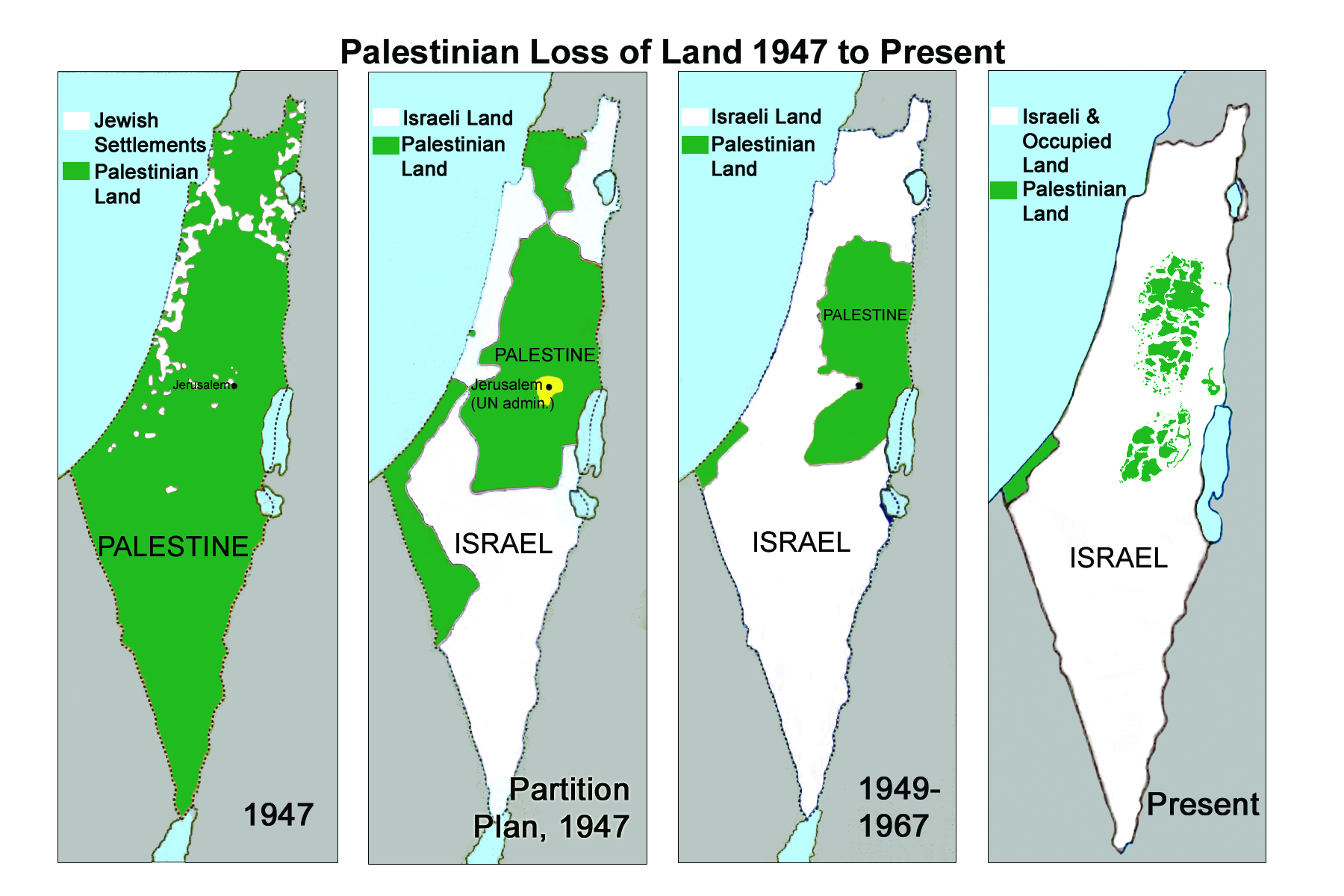
- Palestinians in the Occupied Territories are living on approximately 15 percent of their original land.
7. When are you going to give readers the facts without Israeli spin?
Alison Weir is president of the Council for the National Interest, executive director of If Americans Knew, and author of Against Our Better Judgment: How the US was used to create Israel.
ADDITIONAL RESOURCES
Statistical Report on New York Times coverage of Israel-Palestine
Featured Video

Racist Seinfeld Dances for Joy as Bibi Unveils His New Map
or go to
Aletho News Archives – Video-Images
TV Drama Review
Japanese drama projects Japan’s wartime atrocities onto Chinese characters

Global Times | October 25, 2026
By portraying Chinese characters as perpetrators of ruthless violence while casting Japanese Self-Defense Forces (SDF) intelligence operatives as defenders, the season 2 of the Japanese drama Vivant has recently drawn criticism from Chinese netizens, who argue that its depiction turns historical reality on its head while ignoring Japan’s wartime atrocities.
The TBS drama series – a spy suspense story in which an alleged unofficial intelligence unit of the SDF operates across the globe — has attracted a passionate fanbase. Its currently airing season 2 opened with a household rating of 18.8 percent, the highest for a TV drama this year, according toa commentary article by Japanese media Toyo Keizai.
What draws attention is the portrayal of the enemies in the series, the article noted. Scenes in which the Chinese organization subjects kidnapped members of the SDF unit to brutal torture are repeated with unrelenting intensity.
It is rare for Japanese TV dramas to explicitly portray a real-life country as the enemy, the article noted.
Japanese Prime Minister Sanae Takaichi also made a reference to the drama, saying that she has been recording Vivant and hopes to binge-watch it over the year-end and New Year holidays, according to Japanese media outlets.
China’s CCTV News report on Sunday revealed that the drama features scenes in which Chinese personnel cut off the fingers of and stab Japanese intelligence operatives in the abdomen. Such acts bear striking similarities to the torture inflicted on Chinese nationals by invading Japanese troops during the World War II.
The drama distorts the truth by attributing these atrocities to modern Chinese characters. Beneath the surface, it subtly glorifies Japan’s cross-border overseas operations, blurs the functional boundaries of the SDF and implicitly promotes an expansionist narrative, per CCTV News. … continue
Blog Roll
 Aletho News
- EU facing trillion-euro debt hole while seeking more cash for Kiev
- How US, Europe, Persian Gulf states exhausted missile stockpiles, splurged billions to defend Israel
- Up in arms… Koreans reject U.S. empire’s plan to make South Korea the next Ukraine
- Iran, Turkey, Pakistan, Saudi Arabia could advance region-led security framework in Tehran: FM spox
- Netizens condemn Japanese drama for projecting Japan’s wartime atrocities onto Chinese characters
- Racist Seinfeld Dances for Joy as Bibi Unveils His New Map
- A West Bank War for Netanyahu’s Election Campaign, Could It Backfire?
- Yemen denounces European Parliament’s ‘hypocritical’ push to blacklist Ansarullah
- Qalibaf: UAE’s UN bid aims to ‘clear the runway’ for ‘Greater Israel’, whitewash genocide
- Pakistan reopens Iran border after boosting security: Report
- If Americans Knew
- An error has occurred; the feed is probably down. Try again later.
- No Tricks Zone
- Sudden Stratospheric Warming, Powerful El Niño Combination May Lead To Extreme Europe Cold, Energy Crisis!
- Two New Studies Find Thwaites Glacier Melt Cannot Be Driven By Human Activity Or A Warming Ocean
- E-Cars Reduce CO2 Emissions By Only 41% Compared To Internal Combustion Engine Vehicles
- Predictions Made By Renowned Climate Professor Over Past Decades Have Been Proven To Be Poor
- New Study Suggests Large Regions Of The Pacific Ocean Have Been Cooling For The Last 80 Years
- Germany’s Green Energy Debacle: High Energy Costs Force Kahla Porzellan to Close After 182 Years!
- New Study: 50 Years Of The Most Aggressive ‘Net Zero’ Policies Can Only Affect The Global Climate By 0.03°C
- US September “Heat” Was No Record…Many Records Set Decades Ago
- Latest European Green Energy Debacle; Portugal’s Largest Flagship Solar Park Insolvent!
- Green Energy Debacle: German Expert Professor Fritz Vahrenholt Warns Of Severe Economic And Social Consequences