Palestinian student Ameer Hazboun sentenced by Israeli military court for campus activism
Samidoun Palestinian Prisoner Solidarity Network | November 10, 2020
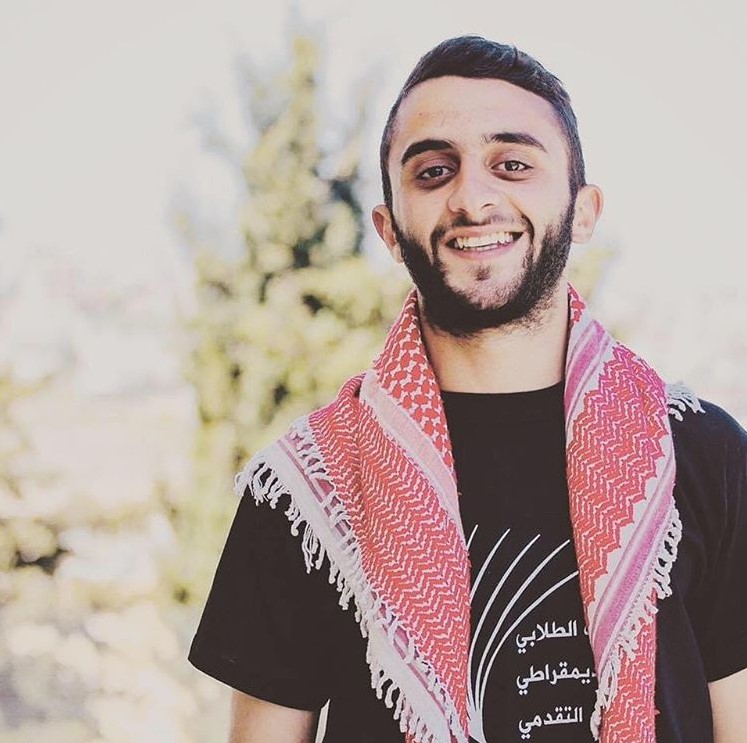
Palestinian student prisoner Ameer Hazboun was sentenced by an illegitimate Israeli military court on Monday, 9 October to 16 months in Israeli prison and a fine of 3000 NIS ($890 USD/$750 EUR). He has been detained since 11 September 2019 and his military court hearings have been repeatedly delayed and postponed.
He was subjected to severe torture under interrogation at al-Moskobiyeh interrogation center before being charged with, essentially, being a Palestinian student activist: he was accused of membership in the Progressive Democratic Student Pole, a leftist student bloc at Bir Zeit University recently labeled a “prohibited organization” by the Israeli military occupation command, attending student events and organizing student activities on campus. In fact, distributing flyers for a student election campaign was labeled “aiding an illegal organization.”
A fourth-year engineering student at Bir Zeit University, Ameer was seized by soldiers in his dormitory on 10 September 2019 as they invaded his room at 1:00 a.m. He was brutally kicked beaten by the soldiers with their guns while being transported to the Moskobiyeh interrogation center. He arrived at the center with bruises all over his body and informed the prison doctor that he has a platinum plate in his left hand for a previous injury. He was interrogated for weeks on end for 22 hours a day. Due to severe sleep deprivation, he would sometimes fall asleep during interrogation and was shaken awake by the interrogators. He was forced into multiple stress positions, including being forced to stand on his toes with his hands cuffed overhead to the wall, placing severe stress on his feet, arms and injured hand.
Israel Arrests Journalist, Raids West Bank Library

Palestine Information Center – November 9, 2020
OCCUPIED JERUSALEM – Israeli occupation forces (IOF) launched a raid and arrest campaign on Sunday night and at dawn Monday in various areas of the West Bank and Jerusalem. Several Palestinians were arrested including a journalist.
In Nablus, IOF arrested the journalist and former prisoner Bushra Jamal Al-Tawil at Tiar checkpoint on the Yitzhar road on Sunday night. Tawil was taken to the Hawara camp, south of Nablus.
IOF released Tawil at the end of July 2020 after spending 8 months in the occupation prisons.
Tawil was arrested for the first time in 2011, and she was sentenced to 16 months. She spent six months because she was released in the Wafa Al-Ahrar prisoner exchange agreement in December 2011. Then, she was re-arrested again in July 2014, and she was sentenced to ten months in prison, which is the continuation of her previous detention before the prisoner exchange agreement.
The third arrest was in November 2017, and the Israeli authorities ordered her administrative detention for eight months. The last arrest was on December 10, 2019.
Tawil’s family suffered from the occupation’s targeting of them through successive arrests. Her parents were arrested several times in the past, and her father spent a total of 14 years in the occupation’s prisons. Her mother was also arrested on 08/02/2010, and was released on 01/02/2011.
In another development, IOF patrols stormed Jaffa street and the area surrounding Al-Ain refugee camp, west of Nablus.
Eyewitnesses reported that Israeli soldiers stormed a store and confiscated items from inside the store in the presence of the owner and he was detained.
In Qalqilya, the IOF soldiers fired stun grenades and teargas canisters in the area near the separation wall in Jayyus, northeast of Qalqilya.
In Tulkarem, IOF arrested Imad Fahmi Ammar, 38 years, after raiding his house in Qaffin town, north of Tulkarem, and seized his personal phone and amount of money.
IOF broke into a library in the Al-Ashqar complex in the middle of the Martyr Thabet Thabet Square in Tulkarem and searched it. Confrontations erupted between the Palestinian youths and the IOF soldiers who fired tear gas canisters, without any injuries reported.
The areas of Jalazun refugee camp and Dura al-Qara town, north of Ramallah, witnessed an incursion by IOF, which coincided with the launch of a drone over the camp and the town.
In al-Khalil, the IOF soldiers arrested the two brothers Musab and Salah Al-Zughayer after they raided their houses.
IOF arrested the ex-prisoner Muhammad Shaheen and Muayad Walid Amr from Dura, southwest of al-Khalil, after they raided and searched their homes.
Local sources stated that IOF arrested two Palestinians from Beit Ta’amer, east of Bethlehem, and seized a vehicle of one of them.
Three brothers were also arrested after IOF raided their relatives’ house in the village and searched it.
The sources pointed out that IOF arrested a young man after storming his relatives’ house in Aida camp, north of Bethlehem.
In Jerusalem, the Israeli occupation intelligence stormed the house of Silwan Club’s president, Marwan Al-Ghoul, and served him a summons for investigation on Tuesday, in Room 4 in the Al-Maskobiya center, west of the occupied city.
UAE to Import Israeli Fruit and Vegetables
Palestine Chronicle | November 2, 2020
The UAE is expected to begin importing Israeli fruit and vegetables this month, Israel’s Agriculture and Rural Development Ministry has announced.
Official authorization is said to have been granted last Thursday following a series of meetings and coordination between Minister Alon Schuster, ministry employees and the UAE’s Ministry for Climate Change and the Environment.
“This is wonderful news for Israel’s farmers,” Schuster is reported as saying by the Jerusalem Post. “The agreement that we signed with the UAE is moving us forward and into a joint future in the field of agriculture.”
With UAE agricultural imports valued at around $10 billion a year, this latest agreement — which is a result of the normalisation deal signed in August — is highly lucrative for the occupation state.
At the moment, the UAE does not appear to be taking any measures to ensure that fruit and vegetables imported from Israel are not produced in the illegal settlements across the occupied Palestinian territories.
Last week it was reported that Israeli wine produced in the occupied Syrian Golan Heights is to be sold in the Emirates.
Congress cranks out legislation for Israel: The details
By Kathryn Shihadah | If Americans Knew | October 31, 2020
Since Israel’s founding in 1948, it has received (adjusting for inflation) more than $252.7 billion from the U.S. – an amount that the majority of Americans consider excessive. In spite of its consistent, long, documented history of frequent human rights violations (often not reported in US media) and discrimination, Congress seeks to reward Israel and chastise Israel’s victim (read more about aid to Israel here and here).
The sheer quantity – and expense – of the advocacy work that our Congress has done on behalf of this pariah state are staggering: consider the hours spent in meetings, negotiation, research, and floor debates, the trips and calls to Israel, to name a few.
And while only a handful of the almost one hundred proposed bills will become law, our legislators will have spent their time (and our money) on them, instead of addressing American needs and concerns – especially in this time of pandemic, economic crisis, and civil unrest. Plus, the legislation that is enacted inevitably cost Americans taxpayers massive amount of money.
Skim the partial list below to get a taste of what our legislators have been doing in the last two years on behalf of Israel; for more detail, please read this, this, and this – commentary on the legislation we have provided throughout the congressional session.
Another useful tool is the congressional scoreboards created by If Americans Knew. These track all Israel-related legislation and who supported it in the current session.
LEGISLATION FOR MORE WEAPONS TO ISRAEL
A study of military aid to Israel uncovers a bottomless pit that only starts with $3.3 billion per year (recently changed from a “maximum” to a “minimum” amount of assistance), guaranteed for the next ten years. Another $500 million is immediately added each year, specifically for Israel’s Iron Dome, a massive (and expensive) anti-missile defense weapon.
On top of this, some bills expend an additional $9 million per day on behalf of Israel, making the combined total $19 million per day on behalf of Israel (and this estimate may be low).
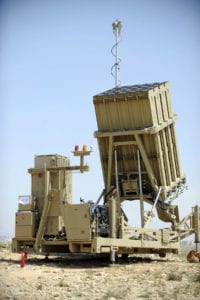
Iron Dome battery in Ashkelon, April 2011 (Flickr)
Iron Dome is used to counter small projectiles shot from Gaza, the main form of resistance coming from Palestinians in the Strip. Rockets from Gaza have killed a total of 30 Israelis in the past twenty years, while Israeli airstrikes again Gaza have killed thousands of Palestinians.
S.3176 and H.R.1837 lay out the basic premise for the $3.3 billion a year. In addition, the legislation would give the President authority to provide Israel with unlimited weaponry and assistance if “needed” without prior authorization from Congress.
These bills also lay the groundwork for millions in new funding for various additional programs benefiting Israel (which will be discussed below). (Read more about some unscrupulous Congressional actions related to S.3176.)
These bills defy the Leahy Laws, which clearly state that, “when credible evidence of human rights violations exists, US aid must stop.” (For more on the Leahy Laws, read this.)
Other military aid bills include S.4049, S.4474, H.R.8494, S.Res.669, H.R.7617, H.R.7608, and H.R.1795.
LEGISLATION ON US COLLABORATION WITH ISRAEL
Collaboration with Israel (i.e. entangling us with a foreign pariah country) is a recurring theme in Congress. Below are several examples among many.
H.R.1459 endorses collaboration in security and law enforcement training between the US and Israel to “promote security against terrorism, peaceful resolutions to community disputes, and the protection of spaces for civil society.”
American law enforcement personnel have received training from Israel for years – in spite of the brutality of its military and police.
S.3775 seeks, in the words of Foundation for Defense of Democracies (recognized as an arm of the Israel lobby) reports that this bill seeks to create a “permanent and dedicated forum” for “[sharing] intelligence-informed military capabilities.”
H.R.2488 and S.2309 and H.R.7148 seeks to bring the US and Israel together to collaborate on cybersecurity and defense technology, in spite of Israel’s history of spying on the US, infringing on the decisions of our President, and attacking an American Naval ship.
S.4228 stresses binational collaboration between the US and “Middle Eastern countries, such as Israel” in developing hydropower technology – adding an irrelevant caveat that prioritizes countries with trade relationships with Israel.
H.R.7613 would set aside money for many American projects, including hurricane preparedness, clean energy. Inexplicably, it includes millions for a “US-Israel Cooperative Energy Center.”
S.3722 and H.R.6829 authorize funding for the US to collaborate with Israel in the development of health technologies, including COVID-19. Ironically, Israel has shut down or destroyed a number of Palestinian COVID clinics in recent months.
S.4537, a pandemic economic recovery bill, includes sections on safely returning Americans to work; job creation; retirement security; safely returning kids to school; COVID cures and treatment; and miscellaneous. Israel is embedded in this bill too. Under “COVID cures and treatment,” the bill proposes $12 million over a three-year period to collaborate with Israel (a tiny country funded by American taxpayers) vis-a-vis the coronavirus.
H.R.5063 is legislation seeking to increase US-Israel collaboration on anti-drone weapons – specifically for use against Iran. (Israel has been targeting Iran for decades.) The bill would bankroll Israel’s already lucrative development of cyberweapons, which would then be tested on Palestinians and sold around the world – including to human rights violators and enemies of the U.S.
S.4522 seeks to authorize “such sums as are necessary” for a US-Israel Binational Agricultural Research and Development Fund. (Some Americans might wish this money to instead go to struggling American farmers.)
H.R.5605 proposes funding for a US-Israel PTSD Collaborative Research Program. If Americans Knew and B’Tselem are among many organizations that have reported on Israel’s victim-blaming and whitewashing of Palestinian suffering and extensive PTSD.
Vox reports that between 2005 and 2014, 23 out of every 24 conflict-related deaths have been Palestinian. Tragically, Palestinians’ experiences would provide a more abundant field for PTSD research than Israelis’. 54% of Gazan children who experienced heavy bombardment in the 2014 Israeli incursion known as Operation Protective Edge, suffer from severe PTSD. (Fyi – Vastly more Palestinians are killed than Israelis.)
In case some potential areas of collaboration had been overlooked in all of these bills, Res.324 “Recognizing the importance of the US-Israel economic relationship,” makes a blanket statement “encouraging new areas of cooperation” (and US money funneled to Israel).
LEGISLATION ON ANTI-SEMITISM AND HOLOCAUST EDUCATION
S.852, H.R.4009, H.R.221, H.Res.72, H.Res.241, S.Res.189, H.Res.183, H.R.943, S.2085, H.Res.782, and H.Res.837 cover various angles of an important topic: anti-Semitism. The issue turns a corner in each of these bills when they improperly equate anti-Semitism with criticism of Israel (an Israeli official once explained that the antisemitism accusation is a “trick” to cover up Israeli crimes.) The US staunchly defends Israel against all reproof, whether from the UN, journalists, or private citizens (see BDS, below). (For more, read this, this, this, and this.)
LEGISLATION DEMONIZING ISRAEL’S ENEMIES, CONGRATULATING ITS “FRIENDS”
S.2132 is designed to put Palestine in an impossible situation: choosing between financial solvency and international legitimacy. The bill would make the Palestinian government liable in potentially devastating lawsuits – unless it stops its quest for justice and recognition in the world (read about the bill here).
International Criminal Court in The Hague, the Netherlands
S.Res. 570 opposes the possible prosecution by the International Criminal Court of both Americans and Israelis validly accused of war crimes. Instead of calling for due process, the bill calls for impunity and considers the ICC a foe. (One of the few bills not on behalf of Israel, H.Res.855 points out that the US has never become a member of the ICC, and encourages it to do so.)
H.R.28 seeks to withhold aid from any country that disagrees with the US at the United Nations – referring specifically to the official American position of defending Israel’s atrocities.
H.Res.727 affirms US support for Israel’s “right to defend itself from terrorist attacks” and condemns Hamas rockets (without condemning Israel for the violence that brought on resistance).
In the year before the resolution was introduced, four Israelis had been killed by rockets from Gaza; Israeli snipers and airstrikes had in the same period killed over 150 Gazans.
H.R.2343, the so-called “Peace and Tolerance in Palestinian Education Act,” addresses the alleged failure of the Palestinian Authority and UNRWA to keep Palestinian textbooks free from incitement or intolerance toward Israeli Jews.
These allegations have persisted for years thanks to a faux, pro-Israel “peace” organization called the “Center for Monitoring the Impact of Peace” (more info here). In fact, the opposite is true: Israeli textbooks consistently “marginalize Palestinians, legitimize Israeli military action and reinforce Jewish-Israeli territorial identity.”
H.R.1850, S.2680, H.R.4411, and H.Res.1131 all address the issue of terrorism – a word that means different things to different groups. What Israel considers terrorism is, to Palestinians, resistance against illegal occupation; what Israel considers military action, Palestinians see as state terrorism – consider this and this.
The most basic fact that these bills ignore is that while Israel’s 53-year occupation of Palestinian territories violates international law, resistance against that occupation is a protected right. (They also ignore the way the state of Israel was established.)
The charge of Palestinian “terrorism” is problematic to say the least, given the relative impotence of Palestinian weapons and the low number of Israeli victims, vs. Israel’s advanced military and the high number of Palestinian victims it creates (read more about terrorism here and about Israel’s actions here).
Israel has been named an exporter of terrorism, as reported by Amnesty International. Two of its first prime ministers had led terrorist groups.
Israeli human rights organization B’Tselem reports that, between 2000 and 2019, Palestinian militants killed a total of 301 Israeli civilians, while Israeli security forces killed over 5,200 Palestinians who were not involved in hostilities.
S.4482 seeks to police the Arab world, hunting down governments that punish their citizens who engage in personal relationships with Israelis. While the US wants to scold Arab countries for resentment toward Israel, it allows Israel to attack its Palestinian neighbors and violate their human rights daily.
H.R.7850 seeks to police Iran and the resistance groups that it may support. The bill is part of the ongoing effort by Israel and its partisans to target Iran (read more about Iran here and here).
S.Res.709, S.Res.713, H.Res.1110 declare that the establishment of full diplomatic relations between the State of Israel and the United Arab Emirates and Bahrain are historic achievements, and encourage other Arab countries to follow suit, ignoring the issue of justice for Palestinians.
The normalization of relations with Arab countries gives Israel a veneer of legitimacy while giving them access to US-made weapons – and giving the US and Israel access to Arab money.
Israeli Prime Minister Benjamin Netanyahu was jubilant: “Everyone can see the fruits of this peace accord. The UAE committed to bringing massive investments to Israel, hundreds of millions of shekels. It’s already happening and it will happen even more..”
More treaties are expected, bought and paid for by the US.
H.Res.138, H.Res.258, and S.Res.121also celebrate improving Arab-Israel relations.
MISCELLANEOUS PRO ISRAEL LEGISLATION
H.R.3723 addresses the issue of aiding drought-stricken areas of the US, and prioritizes projects that have worked with international partners “such as the state of Israel.”
There is great irony in the idea of Israeli experts assisting with water projects in the US: is simple: Israel provides plenteous water to its Jewish residents for free (including the 600,000 that live illegally on Palestinian land), but is perpetrating a water catastrophe in the Palestinian territories – refusing to provide water to some areas, selling it at exorbitant prices to others. In Gaza, water is “scarce and mostly unfit for human use.”
In several pieces of legislation – including H.Res.326, H.Res. 518, S.Res.234, and S.567 – Congress attempts to impose decisions about land in Middle East countries (some of the decisions contravene international law).
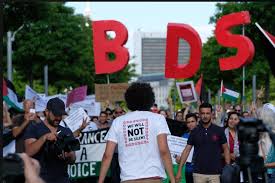 H.R.5595, S.Res.120, H.R.336, H.Res.314, H.Res.348, and H.Res.246 seek to extinguish the Boycott, Divest, and Sanction (BDS) movement, which puts nonviolent pressure on Israel to obey international law. BDS patterns itself after the movement that aided in ending apartheid in South Africa, and “upholds the simple principle that Palestinians are entitled to the same rights as the rest of humanity.” Much has been written about BDS (for example, read this and this).
S.Res.745 and H.Res.1173 honor “the life, legacy, and example of former Israeli Prime Minister Yitzhak Rabin on the 25th anniversary of his death” – a man whose life’s work has been whitewashed to erase atrocities against the Palestinian people.
H.R.7900 addresses the issue of organ donation in the US, and gives a shout-out to Israel for its “exemplary” program – although Spain’s is considered the best in the world, and Israel made improvements only to reform its reputation as a favorite destination for illegal organ trafficking.
S.3409 and H.R.6392, S.919, H.R.914, H.R.336, H.Res.12, S.Res.153, and H.Res.310 propose various other perks for Israel.
LEGISLATION THAT APPEARS TO BE PRO-PALESTINE, BUT ISN’T
S.Res.171 seeks to restore economic aid to the Palestinians without bringing an end to the programs that caused Palestinians to be in need of aid – thus enabling Israel to continue unchecked in its oppression.
H.R.3104 promotes “joint economic development and finance ventures between Palestinian entrepreneurs and companies and those in the US and Israel.” Rep. Chris Coons, one of the bill’s sponsors, explained, “job creation is the best way to turn people away from violence” – implying that unarmed Palestinians are the violent party, and that employment – not freedom or self-determination – is the solution.
PALESTINIAN RIGHTS RECOGNIZED
H.R.8050 would prohibit the US government from recognizing Israel’s claim of sovereignty over parts of the West Bank, or assisting Israel with those efforts – because it violates international law. The international community, many Israelis, and many staunch Israel partisans, agree.
H.R.2407 seeks to protect Palestinian children from incarceration and torture by Israel using US aid money. It seeks not to end the practice, but only American complicity in it. (Read more about the bill here.) Although its language is mild and pro-child, the bill has been attacked aggressively by pro-Israel groups.
H.Res.496, the only pro-boycott bill, supports the right of Americans to take part in a political practice long used by Americans across the political spectrum. The bill does not mention Israel or Palestine – yet it has been denounced as “anti-Semitic.”
If Americans Knew has checked every legislator’s voting record on every Israel-related bill since January 2019, and reported them for your information. We hope you will make your voice heard in this election – and throughout the next congressional session – to bring accountability to our government vis-a-vis Israel, and to Israel vis-a-vis Palestine.
To see how Senators have been voting view this detailed Scoreboard.
Kathryn Shihadah is staff writer for If Americans Knew. She also writes for MintPress News and blogs at Palestine Home.
At Israel’s behest, Twitter blocks dozens of Palestinian accounts
Palestine Information Center – October 31, 2020
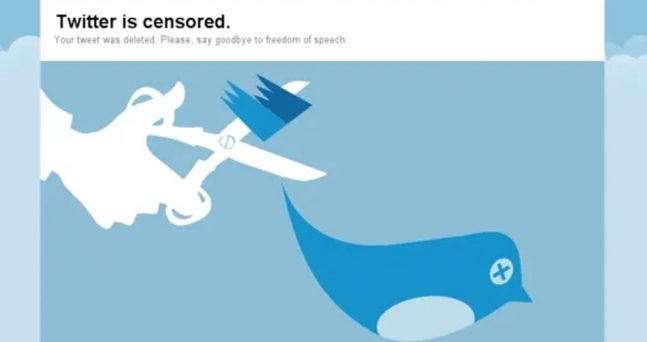
OCCUPIED JERUSALEM – Palestinian media NGOs have accused Twitter of suspending dozens of Palestinian accounts that actively posted tweets against normalization of Arab relations with Israel.
Sada Social Center, a Palestinian group defending rights of social media users, said it had noticed during the past few days that Twitter blocked dozens of accounts belonging to Palestinian figures and social media activists.
Sada Social told Anadolu news agency that the blocked Twitter accounts contained tweets that expressed opinions against normalization of Arab ties with Israel and Israel’s annexation plans in the occupied West Bank.
Sada Social said that it had sent a letter signed by different civil society institutions to Twitter administration to protest such measure and urge it to reverse it.
For its part, the Forum of Palestinian Journalists (FPJ) said that Twitter’s decision to disable Palestinian accounts was in response to Israeli pressures.
FPJ added that Israel recently asked Twitter to block 128 accounts of Palestinian activists and figures after they had highlighted issues against Israel’s annexation plans and its normalization deals with Arab regimes.
FPJ called on Twitter to refrain from blocking Palestinian accounts and to respect users’ rights to freedoms of opinion and expression.
Green Party, Libertarian presidential candidates on Israel-Palestine
By Alison Weir | If Americans Knew | October 29, 2020
Howie Hawkins and Jo Jorgensen are also on the ballot – and unlike Trump and Biden, they and their running mates appear to be remarkably independent of the Israel lobby…
Libertarian Party
Presidential candidate Dr. Jo Jorgensen
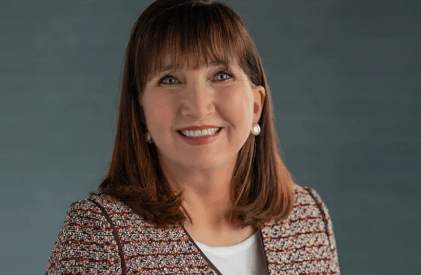
Jorgensen is on the ballot in all 50 states.
In a Q&A on her website she stated:
Q: Should the U.S. continue to support Israel?
A: No, we should not give aid to any foreign nationsQ: Should it be illegal to join a boycott of Israel?
A: NoQ: Should Jerusalem be recognized as the capital of Israel?
A: It’s none of our business
Related statements:
Q: Should the U.S. go to war with Iran?
A: NoQ: Do you support the killing of Iranian Major General Qassem Soleimani?
A: NoQ: Should the military be allowed to use enhanced interrogation techniques, such as waterboarding, to gain information from suspected terrorists?
A: NoQ: Should the U.S. provide military aid to Saudi Arabia during its conflict with Yemen?
A: NoQ: Should the government increase or decrease military spending?
A: DecreaseQ: Should the U.S. accept refugees from Syria?
A: YesQ: Should the U.S. send ground troops into Syria to fight ISIS?
A: NoQ: Should the military fly drones over foreign countries to gain intelligence and kill suspected terrorists?
A: NoQ: Should foreign terrorism suspects be given constitutional rights?
A: Yes, give them a fair trial and shut down Guantanamo BayQ: Should the United States pull all military troops out of Afghanistan?
A: YesQ: Should the U.S. formally declare war on ISIS?
A: NO
Time to Stand Up and Be Counted
By Craig Murray | October 29, 2020
Today, nothing is more important than to say that we will not be silent on the dreadful oppression of the Palestinian people; the daily beatings, killings, humiliations, demolitions, expropriations and destruction of groves that are the concomitant of Israeli illegal occupation.
We will never be browbeaten into silence on the slow genocide of the Palestinian people.
Nobody with any grasp on the location of their right mind believes Jeremy Corbyn to be an anti-Semite. Nobody with any grasp on their right mind believes the Labour Party is now anything but the substitutes’ bench for the Neoconservative team. Under Keir Starmer, the Labour Party has failed to oppose the granting of legal powers to the security services to kill, torture, entrap, forge and fake with impunity. It has failed to oppose the limitation of prosecution of British soldiers for war crimes. The Labour Party now seeks to erase all trace that it might once have been a party that offered an alternative to the right wing security state.
As Director of Public Prosecutions, Keir Starmer pressurised Swedish prosecutors who wished to drop the case against Julian Assange, to persist in order that he might be rendered to the USA. He further persuaded them not to interview Julian here, which is standard practice when he was never charged but only wanted for questioning, and which would have reduced Julian’s ordeal by four years.
Starmer received £50,000 in personal donations from lobbyist Sir Trevor Chinn to fund his leadership bid.
It is perfectly plain that Starmer’s aim in suspending Corbyn is to drive the mass membership that Corbyn attracted out of the Labour Party, and make it a reliable arm of the right wing security state. He wants the Labour Party to be financially dependent not on its members, who have annoying principles, but on donors like Chinn.
The media and political elite have attained their aim; there is no longer any point in voting in Westminster elections. A right wing government supporting the neo-con status quo and the ever tightening security state is now firmly guaranteed and cannot be influenced by a Westminster election.
From a Wealthy Socialite to an Israeli Govt Censor, Facebook’s New “Free Speech Court” Is Anything but Independent
Freedom of speech on the Internet is all but extinct, and on the eve of elections, a de facto “free speech court” is going to make sure it never comes back. On Facebook at least.
By Raul Diego | MintPress News | October 27, 2020
Days away from the most polarized electoral contest in American history, social media companies like Facebook have vowed to censor any voices which they and their partners in the federal government consider inconvenient. According to the Wall Street Journal, Facebook is ready to implement election information strategies that have been in the works for years.
Company spokesman Andy Stone told the WSJ that the social media giant will be applying the “lessons” learned from previous elections in accordance with the designs of “hired experts” and vague references to “new teams,” who are leveraging their “experience across different areas to prepare for various scenarios.”
Mark Zuckerberg’s de facto monopoly over online peer-to-peer communication tools has given Facebook an inordinate amount of influence over the political narratives at both national and regional levels, which it has shown a willingness exercise with topics like the Philippines and Palestine.
Last week, the company took a major step in solidifying its grip over the content purveyed on its platform with the official launch of the Facebook Oversight board. A body that is to function like a ‘Supreme Court’ for chat rooms, if you will, with the power to review any decisions regarding post removals or deplatforming and to make policy recommendations. Members have been drawn from “law experts… rights advocates” and journalists from around the world. The oversight board currently boasts 20 members.
Four members – two of which have extensive experience in the U.S. judicial system – serve as the board’s co-chairs and were handpicked by Facebook, according to The Guardian. Other board members include former Danish prime minister, Helle Thorning-Schmidt, who is also a co-chair and is perhaps only remembered outside of Denmark for her selfie faux pas at Mandela’s funeral in 2013 when she was photographed taking a group photo with Barack Obama and David Cameron during the commemoration.
Judges of little character
Thorning-Schmidt’s insensitive moment at the laying-in-state of one of the most significant figures of the 20th century may be less damning to her presence on a social media oversight board than the tax-evasion scandal involving her husband – a British MP –, which ended up costing her re-election. When confronted over the accusations, she retorted that if her intention had really been to evade taxes, she would have done so “much more elegantly.” Despite these questionable instances and her reputation as an “extravagant” woman with expensive tastes, Thorning-Schmidt remains among the least objectionable figures on the oversight board.
Emi Palmor, for example, presents a much more alarming profile. One of 16 non-chair members of the board, Palmor is a former General Director of the Israeli Ministry of Justice, she was directly responsible for the removal of tens of thousands of Palestinian posts from Facebook. Before being fired from that job, Palmor had created the so-called “Internet Referral Unit” at the ministry; a cybersecurity team that deliberately targeted and took down the aforementioned content, and whose nomination to the Facebook oversight board was loudly protested by pro-Palestinian advocacy groups back in May.
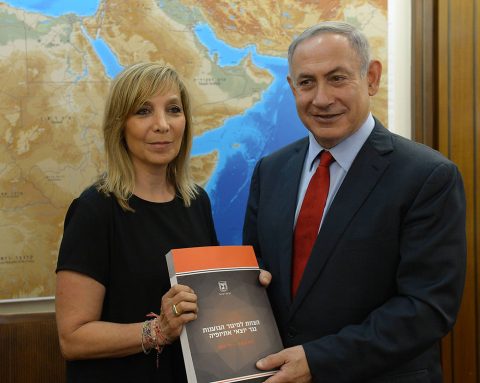
Palmor posing with Israeli Prime Ministers Benjamin Netanyahu in 2016. Photo | Israeli Government Press Office
Inviting a literal state censor from a country with such an atrocious record of oppression and overt ethnic cleansing policies to serve in a supervisory role at one of the largest content networks in the world, should be reason enough for concern. Perhaps, even reason enough to call for the board’s dissolution given that such an egregious choice of personnel reveals an unacceptable political bias in an ostensibly impartial quasi-judicial body.
A clear agenda
A look at the other co-chairs on the oversight board leaves no doubt as to which interests Facebook intends to further through its sham social media traffic court. It might not be a surprise to learn that an American company would tap American legal minds to form part of a dispute resolution body, as Jamal Greene, an oversight board co-chair, describes it.
Greene is a Dwight Professor of Law Columbia Law School who served as an aide to Sen. Kamala Harris during the highly-controversial Senate confirmation hearings of Justice Brett Kavanaugh. Prior to this, he was a law clerk for late Supreme Court Justice John Paul Stevens, who wrote the 1997 Internet decency controls decision that shot down legislation that sought to regulate online speech. An auspicious sign, perhaps, but tempered by Steven’s own pragmatist views on free speech, leaving the door open to context when protecting the “public interest” surrounding the first amendment.
Sitting alongside Greene and Helle Thorning-Schmidt on the oversight board’s co-chairmanship is Michael McConnell; a constitutional law scholar who served seven years as a judge on the United States Court of Appeals for the Tenth Circuit court. McConnell wrote the dissenting opinion in the seminal “Ten Commandments” case, which centered around the government’s authority to decide which monuments can be erected in a public park.
Judge McConnell, who has been floated as a potential Supreme Court nominee more than once and is “highly regarded for his writing on church-state law,” argued in favor of the government’s discretionary powers, claiming that private donations to public facilities – like the ten commandments monument in a public park in Utah, that spurred the case – became “government speech” and, therefore within the purview of governmental authority.
Rounding out the co-chair suite is Catalina Botero Marino, a Colombian attorney and former special rapporteur for freedom of expression at the Organization of American States (OAS); an organization well-known for being Washington’s mouthpiece for D.C.-aligned policy in Latin America.
Botero expressed her position on the very topic she will be dealing with first-hand in her new position as co-chair of the Facebook oversight board in a 2019 paper titled “Towards an Internet Free of Censorship: standards, contexts, and lessons from the Inter-American Human Rights System.” In it, Botero reveals why she was tapped to join the make-shift panel of social media judges when she defines freedom of expression as “individual and collective self-government” and highlights her “utmost concern” over the “deliberately false circulation of information, created and put into circulation with the purpose of deceiving the public” in electoral processes.
Raul Diego is a MintPress News Staff Writer, independent photojournalist, researcher, writer and documentary filmmaker.
Britain’s Labour Party reprimands MP for occupation ‘crime’ comment
MEMO | October 26, 2020
Labour Party MP Stephen Kinnock has reportedly been given a “dressing down” after saying that profiting from illegal settlements in the Israeli-occupied West Bank is “tantamount to profiting from the proceeds of crime.”
Party leader Keir Starmer was said to be furious at Kinnock’s impassioned speech calling for international law to be upheld. Complaints were made by various pro-Israel groups, including the Board of Deputies of British Jews, who raised concerns with Shadow Foreign Secretary Lisa Nandy and demanded “clarification”.
Kinnock made his speech in the House of Commons on 24 September, raising concerns about the increasing number and size of Israeli settlements built on Palestinian land. All of Israel’s settlements, official and “outposts”, are illegal under international law.
“The Government must ban all products that originate from Israeli settlements in the occupied territories,” insisted Kinnock, the son of former Labour leader Neil Kinnock. “Profiting from such products is tantamount to profiting from the proceeds of crime, and it must stop. When we trade with these settlements, we are essentially telling the world that international law does not matter, and such trade legitimises and facilitates the existence and expansion of the settlements.”
He went on to criticise the “deal of the century”: “President [Donald] Trump and Prime Minister [Benjamin] Netanyahu have come forward with their so-called deal of the century. This is not a deal. It is not a plan. It is not even a starting point for talks. It is a proposal that is fundamentally flawed because it has no basis in law. It is a land and power grab that would mean Israel seizing around 40 per cent of the West Bank, with full military and security control over the Palestinian people and their resources.”
Starmer previously sacked left-leaning socialist MP Rebecca Long-Bailey for sharing an interview on social media with actress Maxine Peake in which she spoke about the Israeli Army’s role in training American police forces. Peake’s comments in the wake of the George Floyd murder were deemed to be “anti-Semitic” by the Labour hierarchy, despite it being a fact that Israel has trained hundreds of US police officers on restraint and other techniques.
Featured Video
10K More U.S. Troops Deploy as Trump Weighs New Iran Strikes
or go to
Aletho News Archives – Video-Images
From the Archives
Genetic baloney in thick slices
MAYBE COULD BE INC.
By Jon Rappoport | No More Fake News | July 8, 2021
Gene research companies tend to come and go. They start out banging and popping like fireworks in the sky, and then they fade out—selling themselves to larger outfits who’ve hired better liars…
Once upon a time, it sounded easy. Start with a disease, find the gene responsible for the disease, and correct the problem.
Then, researchers wondered, was disease the result of one gene or a group of genes acting together?
Either way, the proof would be in devising cures for diseases using gene therapy. “Not yet, but soon…”
And regardless, the major need was: money. Lots and lots of money.
This need required good PR people. “We have to pump up the idea that we’re on the edge of tremendous breakthroughs. We’re always on that edge…”
This hype also needed to obscure the fact that there wasn’t (and isn’t) ANY gene cure for ANY disease. … continue
Blog Roll
 Aletho News
- US military withdrawal from Iraq and the collapse of US-Israeli hegemonic project in West Asia
- What does Europe want – a war with Russia?
- She Followed the Actual Data on COVID Vaccines and Masks — Her Career Took a Huge Hit
- Florida AG Sues Pfizer, Bourla Over Deceptive Marketing of COVID Vaccines
- Von der Leyen gifts her spin doctor a job for life
- 10K More U.S. Troops Deploy as Trump Weighs New Iran Strikes /Suliaman Ahmed
- Iranian crew declared Dena training vessel ‘unarmed’ to US warship before deadly torpedo strike: Report
- Iran’s NPT debate moves beyond parliament
- Houthis condemn Saudi claims of attack on Medina
- Fatuous False Flags
- If Americans Knew
- Israel is squeezing the life out of Palestinians – Daily Update
- The Israeli Right Portrays Islam as Murderous. It Serves a Political Purpose
- Jordan Has Had Enough: King Abdullah’s Scathing Warning to Israel
- Israeli Colonizers (i.e. Settlers) Kill Palestinian Man Near Salfit
- New Google Maps images reveal massive scale of devastation in Gaza
- Jewish supremacy, anti-Palestinian bigotry on display in Israel – Daily Update
- Israeli Soldiers Abduct At Least 22 Across Occupied West Bank
- Eight Palestinians Killed in Israeli Attacks on Gaza
- Israeli former leaders and security chiefs threaten legal action over ‘Jewish terrorism’
- Israel map in LA Times ad includes all land from the river to the sea
- No Tricks Zone
- Green Energy Debacle: German Expert Professor Fritz Vahrenholt Warns Of Severe Economic And Social Consequences
- Two More Paleo Reconstructions Affirm Meters-Higher Sea Levels Across Ireland, Brazil 7000-6000 Years Ago
- New Study: Earth And Venus Surface Warmth Largely Explained By Convection And Lapse Rate, Not CO2 Or Radiation
- 2025 Nature Paper Claiming Worsening Global Drought Gets RETRACTED …Heavily Flawed
- New Study: ‘Global Drought Shows No Detectable Recent Acceleration Under Climate Warming’
- Economic Masterminds: German Socialists Suggest Taxing Productivity Gains Stemming From Using AI
- The South China Sea Has Not Been Cooperating With The Climate Change Narrative
- Energy Crisis: Germany Enters Heating Season With Historically Low Gas Reserve Fill Levels
- New Study: The Antarctic Ice Sheet Gained Mass From 2020-2024 Due To Staggering Snow And Ice Accumulation
- Study: Ocean Heating Rates From Thousands Of Years Ago ‘Dwarf’ Modern Ocean Heating Rates

