The Presbyterian Church’s Tough Love Of Israel
By Sam Bahour | TPM | June 14, 2014
The 2 million-member Presbyterian Church (USA) is about to make history in the Middle East, yet again. In the coming days, local delegates from the Church will travel to Detroit to attend the 221st Presbyterian General Assembly to consider a set of eight overtures that ask church leaders to review support of two states for Palestine and Israel in light of unfolding facts on the ground. Other issues to be considered are backing of equal rights and unblocked economic development for all inhabitants of Israel, and divesting from the likes of Caterpillar, Hewlett-Packard, and Motorola Solutions. The Church is clearly stepping up to the plate and realigning its policies with its values.
Political America and Corporate America should be taking note.
Reminiscent of the struggle against Apartheid South Africa, the Church is poised to step in where successive US administrations have failed to hold Israel accountable to international and humanitarian law, not to mention sheer common sense.
The U.S. has paid never-ending lip service to the need to end Israel’s 47-year military occupation of the West Bank, including East Jerusalem, and the Gaza Strip. During the past two decades, the U.S. has coupled lip service with the monopolizing of a peace process that has led the international community to a dead end; not to mention leaving Muslim and Christian Palestinians on the ground, in the occupied territory as well as in Israel, standing naked in front of a state bent on militarily controlling another people and discriminating against over 20 percent of their own non-Jewish population. Presbyterians have had enough and are taking the lead to change the equation and stop the damage being perpetrated by Israel.
Political America should not take lightly the new reality that mainstream churches and civil society have reached a point where they can no longer blindly repeat calls for a resolution based on “two states” when Israeli actions on the ground, by way of continued illegal settlement building and much more, have created a single state reality between the Mediterranean Sea and Jordan River. Secretary of State John Kerry alluded to exactly this at the outset of the last failed round of U.S.-led negotiations when he testified to the House Foreign Affairs Committee in April 2013 and noted, “I believe the window for a two-state solution is shutting, I think we have some period of time – a year to year-and-a-half to two years, or it’s over.” The Presbyterian Church is crying out from the highest mountain it can that for a two-state solution not to be “over” immediate action must be taken. They are calling for the Church to review this core issue over the next two years.
Corporate America should also be closely following the Presbyterian General Assembly’s proceedings.
In the 2012 Assembly, delegates addressed the issue of divesting from firms that benefit from or contribute to Israel’s military occupation by attempting to pass a resolution calling for divestment from Israel. When the so-called pro-Israel lobby got word of this, they mobilized to introduce and pass a counter overture that promotes “positive investment” instead of divestment. In a perfected Orwellian move, these lobbyists publicly promote investment in Palestine, while simultaneously turning a blind eye to the systematic Israeli polices strangling the Palestinian economy.
Investment in Palestine — without divestment from the Israeli occupation — only continues to underwrite the status quo of military occupation. For investment to be successful occupation must be dismantled and sovereign control of Palestine’s economic resources passed to the Palestinians.
In this month’s Assembly, the divestment resolution will be brought to the floor once again for a vote. Now it comes at the heels of Secretary Kerry’s failed blitz to resolve the conflict and a momentous trip by the Pope to Bethlehem where he prayed at the illegal Separation Wall. The US-based organization, Jewish Voice for Peace, recently noted that the Israel lobby’s efforts have included offering Presbyterian leaders all-expenses-paid trips to Israel. Presbyterians can use this opportunity to straighten the White House’s spine based on what the administration already knows: Israel is intentionally blocking progress in the peace talks while jeopardizing US strategic interests in the region, not to mention the fate of Palestinians and Israelis alike.
Palestinian civil society and Palestinians — Christians and Muslims — have urged everyone interested in seeing peace with justice to divest from the occupation and to invest only where the occupation does not benefit. We struggle to remain hopeful while a cement wall as high as 24 feet tall snakes through our homeland. After all, we do not seek a beautified prison. We want the prison walls dividing Palestinians from Palestinians to come tumbling down, and that will not happen unless economic pressure is placed on Israel to end the occupation. Thus, the upcoming Assembly’s overture that calls for divestment from firms benefiting from the occupation, while affirming “Occupation-Free Investment in Palestine,” is spot on.
Palestinians did not invent the non-violent tool of divestment. After unsuccessfully trying to secure their rights using a multitude of other means, Palestinians have focused their efforts on non-violent methods of resisting military occupation that have been used throughout history by others: boycott, divestment, sanction, international law, civil disobedience, diplomatic efforts, economic resistance, and the like. Supporting these tools is supporting non-violence; the alternative is to push Palestinians into using violent means of resistance. If nonviolence is deemed unacceptable then violence becomes that much more likely.
The upcoming Presbyterian vote provides an important opportunity to say yes to nonviolence as the means to overcoming Israeli occupation and discrimination.
Sam Bahour is a Palestinian-American business consultant in Ramallah, the West Bank, and blogs at epalestine.com.
Now it is official: Israeli campaign to control Wikipedia content
By Brenda Heard | Friends of Lebanon | June 16, 2014
Wikimedia has struck a deal with Israeli officials to promote students’ multi-lingual writing and re-writing of history, geography and science topics in Wikipedia. Unwitting readers of Wikipedia likely take accounts of Middle Eastern history at face value, not realising the extent of manipulation occurring behind the seemingly authoritative guise of an encyclopaedia. From word choice, to basic information given or omitted, to biased sources cited, Wikipedia is devolving into a completely untrustworthy source.
Of course there has been an Annual Wikipedia Academy Conference since 2009, where Israelis receive Wikipedia training and encouragement. And of course groups such as CAMERA, a pro-Zionist Israel public relations organisation, have been actively editing Wikipedia since at least 2008. And of course Israel has been actively funding hasbara on the internet for years and isn’t shy about its “digital diplomacy.” There’s even a “Jewish Internet Defense League” that claims to be the “cutting edge of pro-Israel digital online advocacy.” After all, the professed need for incessant national promotion campaigns fits into the “we are the ones under attack” theme.
Wikipedia founder Jimmy Wales has twice participated in the Israeli Presidential Conference. As he said at the 2011 Wikimania conference held in Haifa, “I love coming to Israel.” But it is Wales’ exchange with a Lebanese blogger that strongly calls into question Wikipedia’s public goal of offering a credible, neutral “sum of all human knowledge.” When the blogger asked Wales about his participation in the 2011 Israeli Presidential Conference, Wales snubbed the inquiry outright. Wales responded with trite, vacuous remarks in defence of Israel and then refused to communicate further. (An unripened e-conversation that amused several pro-Zionists.)
Surely Wikipedia management is aware that Israel is one of the most controversial topics in Wikipedia. One academic study determined that the “Israel” page was rivalled only by the “Adolf Hitler” page as being the most highly contested page contained in all of the study’s three language sets. From a researcher’s point of view, then, it is illogical to encourage additional bias in the most contentious topic. Yet that is precisely what Jimmy Wales has done and what this newly announced partnership does.
It can be very valuable to research Israeli sources—from newspapers to government agencies. But we should assess these sources with the knowledge that the information provided is filtered by an Israeli perspective, most likely Zionist. We should balance those sources with a variety of views from numerous perspectives. The key problem with anonymous, reference style sources like Wikipedia is that we might assume the neutrality they claim. Has Wikipedia offered similar partnerships with countries worldwide? Why not involve students in China, Peru, India, Russia, Germany, Sweden, Ethiopia, Vietnam, or the many other countries who might like a say in how the world is depicted? We have to wonder why favourtism has been allowed by Wikipedia and whether it will be openly revealed in its pages. Naturally, non-governmental Israelis should participate in building Wikipedia, but on equal terms with any other Wikipedian. Otherwise, Wikipedia is not what it pretends to be.

Additional Resources:
“The most controversial topics in Wikipedia: A multilingual and geographical analysis” (Yasseri T., Spoerri A., Graham M., and Kertész J., 2014)
Israel’s Ministry of Education & Wikimedia Israel Agree On New, Unique Initiative (Wikimedia Foundation, 10 June 2014)
“Initiative: Teachers, Students to Write for Wikipedia” (Israeli National News, 10 June 2014)
“Public schools to integrate Wikipedia into curriculum” (Israel Hayom News, 10 June 2014)
“Education Ministry and Wikipedia collaborate to write content for the internet site” (Jerusalem Post, 10 June 2014)
“EI exclusive: a pro-Israel group’s plan to rewrite history on Wikipedia” (The Electronic Intifada, 21 April 2008)
“The Mideast Editing Wars” (Gershom Gorenberg, 1 May 2008)
“Israel’s cyber warriors” (Lucy Tobin, 12 February 2009)
“Israel deploys cyber team to spread positive spin” (Jonathan Cook, 21 July 2009)
“Positive Views of Israel, Brought to You by Israelis” (Ethan Bronner, 17 February 2010)
“Israeli students to get $2,000 to spread state propaganda on Facebook” (Ali Abunimah, 1 April 2012)
“Jimmy Wales and Palestine” (Joey Ayoub, 12 January 2012)
“Israel to pay students to defend it online” (AP, 14 August 2013)
“Haifa University launches course in pro-Israel propaganda” (Ben White, 15 April 2014)
“University of Haifa’s ‘Cyber Warriors’ will help fight the delegitimization of Israel using new media” (U of Haifa, 30 March 2014)
In Search of a Wild Flower

In this short video, Al-Haq presents the case of Yousef Shawamreh’s death.
From 1/1/2014 — 31/03/2014, Al-Haq documentation indicates that Israeli forces killed around 16 Palestinians across the Occupied Palestinian Territory. This is a sharp increase in the number of killings as compared to the previous years and the number continues to rise with Three more Palestinians having been killed by Israeli forces from 1/4/2014 — 15/5/2014.
Palestinian kidnapped by Israeli forces in Awarta

Sameer Abu Shayb
International Solidarity Movement | June 16, 2014
Awarta, Occupied Palestine – At approximately 2:00 AM on the 15th June, Israeli soldiers conducted a night raid in the village of Awarta near Nablus, which was one of a series of raids and closures carried out by Israeli forces, following the disappearance of three Israeli settler youth close to al-Khalil (Hebron). Palestinian witnesses state that over 50 Israeli solders surrounded the village.
During the operation around 20 Israeli military personnel forced entry to, and stormed the home of Sameer Abu Shayb. Palestinian residents state that the soldiers were aggressive and had their faces covered. Sameer was then handcuffed and interrogated at his home over the phone by a commanding officer, for approximately 15 minutes. Sameer was not accused of any offence, but was then taken outside, blindfolded, and abducted by Israel forces.
This is the sixth time that Sameer has been imprisoned in recent years, totalling approximately 6 months.
He has never been formally accused of an offence and has never been presented with any evidence to justify his repeated detentions. Sameer formerly ran a graphic design shop but was forced to close due to this harassment. Three and a half years ago Israeli soldiers broke into his office, stole a PC and camera, and broke a printer and other merchandise. The property has never been returned, nor has he received compensation.
During the the night over 80 Palestinians were abducted by Israeli forces throughout the West Bank, in an operation that has been described by the Palestinian Authority as a form of collective punishment.
Israeli forces kill Palestinian during Ramallah arrest raid
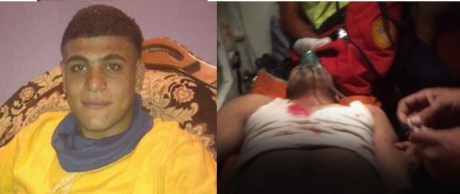
Ahmad Sabbareen – Shfa News
By Saed Bannoura | IMEMC & Agencies | June 16, 2014
Palestinian medical sources have reported on Monday that a young Palestinian man was killed by Israeli army fire after the soldiers invaded the al-Jalazoun refugee camp, north of the central West Bank city of Ramallah. Two Palestinians were injured, many kidnapped.
Medical sources at the Palestine Medical center said the slain Palestinian has been identified as Ahmad Arafat Sabbareen, 21 years of age.
He was shot by several live bullets in the chest, and died of his wounds at the Intensive Care Unit, in the Palestine Medical Center.
Sabbareen was a political prisoner who was recently released by Israel.
One of the wounded Palestinians, identified as Ahmad Sa’afin, was shot by a live round to the chest.
Eyewitnesses said the soldiers fired dozens of gas bombs, concussion grenades, and rounds of live ammunition during the invasion, and during ensuing clashes.
In addition, soldiers kidnapped several Palestinians in the refugee camp, and took them to an unknown destination.
Some of the kidnapped Palestinians have been identified as Adnan al-Khattab, Abdul-Halim Ghannam, Ramadan Hmeidat, and Eyad Safi.
On Sunday at night that two children were wounded when Israeli soldiers detonated the main door of their home, in Hebron city, in the southern part of the occupied West Bank. Soldiers also kidnapped their father, and three brothers. At Least Nineteen Additional Palestinians Kidnapped.
Earlier on Sunday, the soldiers kidnapped at least twelve Palestinians in Hebron, after breaking into dozens of homes and searching them. The army also confiscated surveillance tapes from a number of properties.
On Sunday evening, dozens of Israeli military vehicles invaded the central West Bank city of Ramallah, the nearby towns of al-Biereh and Betunia, and clashed with dozens of Palestinian youths.
Also on Sunday, soldiers invaded Bethlehem city, and the nearby city of Beit Jala, installed roadblocks, conducted searches, and attacked local journalists.
The soldiers also closed all western entrances of Bethlehem city, and conducted military searches.
On Sunday morning, the soldiers placed Bethlehem and Hebron districts under a strict military siege, and kidnapped dozens of Palestinians in different parts of the occupied West Bank.
~
Israel imposing ‘collective punishment’ on Palestinian people
Ma’an – 15/06/2014
RAMALLAH – The Palestinian Authority on Sunday condemned the Israeli arrest campaign across the West Bank and airstrikes against the Gaza Strip, denouncing the “collective punishment of the Palestinian people” by Israeli forces.
Spokesman for the Palestinian national consensus government Ehab Bessaiso on Sunday also reiterated Palestinian insistence that they have no responsibility for security in the settlements, as Israel continued assaults against Palestinians that began after the disappearance of three Israeli teenagers from the Gush Etzion settlement between Bethlehem and Hebron on Thursday.
“The Israeli government cannot hold the Palestinians responsible for security in occupied territories which are not under Palestinian sovereignty and which house dozens of settlements and outposts,” Bessaiso said in a statement.
Bessaiso highlighted that the three youths went missing in the approximately 62 percent of the West Bank that is considered Area C and is under full Israeli control.
Bessaiso also said that the detention of 80 people across the West Bank and the bombing of Gaza overnight constitute “collective punishment against the entire Palestinian people,” and called upon the “international community and all international human rights organizations to protect the Palestinian people against the Israeli escalation.”
Bessaiso highlighted that even Palestinian prisoners in Israeli custody were being punished by Israel, through the banning of family visits and “other oppressive procedures,” even as around 125 administrative detainees entered their 53rd day of a collective hunger strike.
Bessaiso also said that Israel had imposed a general closure on the Hebron area in the southern West Bank, leaving thousands of Palestinians under siege.
Earlier Sunday, Hamas denied Israeli allegations that their members were involved in the kidnapping of the three Jewish youths, calling the claims “stupid.”
Overnight Sunday Israeli forces detained 80 Palestinians including a number of former ministers and top lawmakers and carried out airstrikes across the Gaza Strip, injuring a woman and a 15-year-old girl.
On Saturday, Netanyahu had said he held the Palestinian Authority responsible for the disappearance of the youths, while the PA has insisted it has no authority over the territory in which the youths disappeared.
Israel arrests 80 Palestinians, locks down Hebron in search for missing teens

Al-Akhbar | June 15, 2014
Israel on Sunday broadened the search for three Israeli teenagers believed kidnapped by militants, arresting 80 Palestinians overnight and imposing a tight closure on the southern West Bank city of Hebron.
It was the biggest arrest operation in years and came after Prime Minister Benjamin Netanyahu ordered security forces to “use all tools at their disposal” to find the three teenagers he said had been “kidnapped by a terror organization.”
Most of those arrested belonged to the Islamist movement Hamas, and included several members of the Palestinian parliament, Israeli press reports said.
“In a combined… effort to return the three abducted Israeli teenagers, approximately 80 Palestinian suspects were detained in a widespread overnight operation,” an army statement said, with a spokesman warning troops would leave no stone unturned.
“Palestinian terrorists will not feel safe, will not be able to hide and will feel the heavy arm of the Israeli military capabilities,” Lieutenant Colonel Peter Lerner said.
As the massive manhunt for the missing teens entered its third day, the defense ministry imposed a complete lockdown on the southern city of Hebron and the surrounding area, as well as a closure on the Gaza Strip.
The closure on the Hebron district began at midnight, a defense ministry statement said indicating that access to Gaza via the Erez crossing would be limited to humanitarian cases only, while only fuel would be allowed in through the southern goods crossing.
Inside Hebron, the West Bank’s largest city, Israeli paratroopers fanned out across the streets, and no cars were allowed in or out of the city, an AFP correspondent said.
Following late-night consultations with his security cabinet, which ended close to midnight, Netanyahu was to convene the weekly cabinet at his office at the defense ministry in Tel Aviv, his office said.
“Our young people have been kidnapped by a terror organisation… there is no doubt about that,” Netanyahu told reporters in Tel Aviv late on Saturday.
The teens, one of whom also holds a US passport, are believed to have been snatched Thursday night from the Gush Etzion settlement bloc between Bethlehem and Hebron, reportedly while hitchhiking.
The missing teenagers, who study at two Jewish seminaries in the West Bank, have been identified as Gilad Shaer, 16, from Talmon settlement near Ramallah, Naftali Frenkel, 16, from Nof Ayalon in Israel, and Eyal Ifrach, 19, from Elad near Tel Aviv.
Netanyahu said he placed responsibility for their safe return on the shoulders of Palestinian Authority president Mahmoud Abbas and his government, saying they must do “whatever necessary to help the hostages get home safely.”
The suspected abductions occurred 10 days after a new Palestinian unity government was sworn in, pieced together with the Hamas movement.
Israel has vowed to boycott all contact with the new government, whose emergence has ended seven years of divided rule between the West Bank and Gaza, with Netanyahu insisting Abbas be held responsible for all acts of violence emanating from anywhere in the Palestinian territories.
Israeli and Palestinian officials confirmed Palestinian security services were assisting in the search for the youths, who are believed to be “still alive,” Defense Minister Moshe Yaalon said on Saturday.
Israel’s air force also hit three targets in the southern and central Gaza Strip overnight on Saturday, the second consecutive night of strikes.
(AFP, Al-Akhbar)
Violence in Ni’lin
International Solidarity Movement | June 14, 2014
Ni’lin, Occupied Palestine – A Red Crescent paramedic, present at the Ni’lin demonstration last week, spoke to ISM about the protest last Friday, 6th June. He explained that the demonstration began as the protesters marched towards the apartheid wall, with Israeli soldiers firing tear gas canisters and rubber-coated steel bullets.
 After just 15 minutes, a 41-year-old Palestinian protester was shot in the leg with a 0.22 live ammunition bullet. The soldiers had been hiding in the olive trees next to the apartheid wall and were unseen by the demonstrators. When a Red Crescent volunteer tried to give the wounded protester medical treatment, after placing a bandage on the bleeding wound, he was attacked by the Israeli soldiers. The soldiers kicked the volunteer and used their guns to beat his face, after the demonstration he was taken to the hospital to receive treatment.
The 41-year-old who was shot by the Israeli military was then arrested and held for two hours, before being ‘handed back’ to the Red Crescent ambulance at the Ni’lin checkpoint. He had received some medical treatment from the Israeli paramedics, but this wasn’t immediate, and he also had wounds, including a cut on his head that required one stitch, where the Israeli forces had beaten him while he was arrested.
The protester is now slowly recovering, the 0.22 bullet fractured his tibia [a bone in his lower leg], and it will be another month before he is healed.
The demonstration yesterday was fortunately less violent, there were no injuries or arrests. However, before the protest could begin, the military moved a long way out from the apartheid wall, pushing the demonstrators deep into their own olive trees. The military fired many tear gas grenades and canisters and some of the protesters suffered from tear gas inhalation, requiring support from Red Crescent paramedics. At least twice during the demonstration, Israeli forces fired tear gas canisters directly at protesters, both highly dangerous and in contravention to Israeli military procedure, which is shooting them up into an arch to lower the impacted velocity.
Ni’lin began demonstrating in 2008, against the apartheid wall’s construction. The protests continued after the wall was completed, and since 2008, five villagers from Ni’lin have been murdered by Israeli forces.
Journalists lament PA silence as Israel bans Gaza papers
Ma’an – 13/06/2014
GAZA CITY – Palestinian journalists on Thursday urged the newly-formed national unity government to respond to Israel’s decision to prohibit the printing and distribution of Gaza-based newspapers in the West Bank.
“Do we need an Israeli presidential decree to be able to print newspapers in territories controlled by the Palestinian Authority?” editor-in-chief of al-Risalah newspaper wrote on Thursday in exasperation over the lack of PA response.
On May 28, Israeli soldiers raided the Ramallah offices of the PA-affiliated al-Ayyam newspaper, telling managers that Israel would not allow them to distribute the Hamas-affiliated Falastin, Al-Risalah, and Al-Istiqlal newspapers in the West Bank.
The Israeli raid undermined an inter-Palestinian deal that aimed to ensure freedom of press by facilitating the sale of Gaza newspapers in the West Bank and vice-versa.
Political analyst Wisam Afifa criticized the Palestinian national consensus government for its unwillingness to stand up to Israel’s attack on Palestinian free speech.
“We consider that by remaining silent, the government actually accepts the Israeli decision to ban the printing of Gaza newspapers,” he told Ma’an.
He highlighted that managers of the Gaza newspapers had contacted the Palestinian government spokesperson Eyhab Bseso over the issue, but nothing had been done.
“So far, there has been no comment on the prohibition, and we expect a serious and real response to these violations, especially from President Abbas,” added Afifa.
Similarly, the editor-in-chief of al-Istiqlal newspaper criticized the Palestinian Authority and the national consensus government for not taking any action against Israel’s decision to ban Gaza newspapers in the West Bank.
Tawfiq al-Sayyid Salim has said that he views the Israeli decision to ban Gaza newspapers as a humiliation to President Abbas himself, belittling his authority.
In December, the Foreign Press Association accused the Israeli army of “deliberately targeting” journalists after soldiers fired rubber bullets and threw stun grenades at photojournalists clearly identified as press.
The Tel Aviv-based group, which represents journalists of all foreign media, said troops had directly targeted a group of photographers covering clashes at the Qalandia checkpoint between Jerusalem and Ramallah.
A 2013 report by Palestinian Center for Development and Media Freedoms counted 151 violations of Palestinian freedom of speech by Israeli authorities, including incidents of “physical assault, detention, arrest, prevention from coverage, travel bans, interrogation, threat, raiding, closing and blocking, trial, and confiscation of equipment.”
The report also mentioned 78 violations by Palestinian authorities, primarily in the Gaza Strip, though these numbers are believed to be improving particularly since the the agreement to form a national unity government was made at the end of April.
3 journalists injured in Bilin protest
Ma’an – June 13, 2014
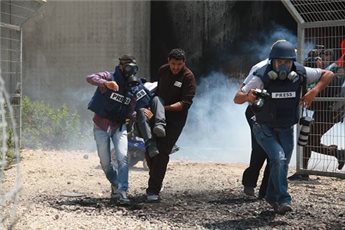
RAMALLAH – Three journalists were injured and dozens suffered from excessive tear gas inhalation as Israeli forces dispersed a weekly protest in Bilin village near Ramallah.
Israeli forces fired rubber-coated steel bullets, stun grenades, and tear gas at protesters as they neared their lands near the wall, injuring photographer Abbas al-Momini with a rubber-coated steel bullet in the pelvis, and Palestine TV cameraman Shamekh Jagoub and photographer Haitham Khatib with tear-gas canisters in the abdomen.
Participants raised Palestinian flags and posters of prisoners as they marched throughout the village chanting songs for unity and in support of prisoners.
Protesters wore prisoner uniforms and played football in front of the prison.


Israel kills Palestinian in Gaza airstrike, blames Abbas for rockets
Ma’an – 12/06/2014
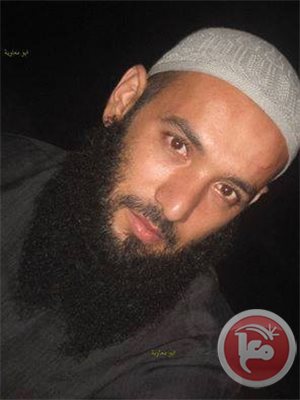 JERUSALEM (AFP) — An Israeli airstrike killed a Palestinian in Gaza on Wednesday after new rocket fire from the territory prompted Israel’s premier to warn he holds President Mahmoud Abbas responsible.
Two Palestinians were also wounded in the evening raid in the northern Gaza Strip, the emergency services said.
The dead man and one of the wounded were traveling on a motorbike and were the apparent targets. A young boy, who was passing by on foot, was also wounded.
Ashraf al-Qidra, spokesman for Gaza’s health ministry, identified the victim as Muhammad Ahmad al-Awour, 30.
The An-Nasser Salah al-Din Brigades, the military wing of the Popular Resistance Committees, said that al-Awour was affiliated to the group.
The Israeli military said it had targeted “terrorists affiliated to the international jihad,” its designation for Al-Qaeda inspired groups in Gaza.
The victim’s mother told Ma’an that when the Israeli missile targeted Muhammad, he was on his way to bring her food. She highlighted that he asked her and his wife a day before to invite his aunts and married sisters to a dinner at his home in Beit Lahiya.
“All invitees arrived, but the host hasn’t arrived because Israeli occupation’s warplanes surprised him while he was on his way home,” she said.
“Muhammad wasn’t going to launch missiles at them. We had a kind of family gathering, and he went to bring some food for us, but he never came back, and we received the news of his martyrdom.”
Abbas, who swore in a new merged government for the Palestinian territories last week replacing the Hamas administration in Gaza, condemned the rocket fire, which Israeli officials said hit the Eshkol region without causing any casualties or damage.
“Abbas is responsible and accountable for rockets that are fired at Israeli towns and cities by terrorists in the Gaza Strip,” Ofir Gendelman, a spokesman for Prime Minister Benjamin Netanyahu, wrote on Twitter.
Another Netanyahu spokesmen released a statement demanding that Abbas disarm “terrorist” organizations in Gaza.
“Abbas claims that the new Palestinian government honors all previous commitments. So why has he not disarmed the terrorist organizations in Gaza as he is obligated to do,” Mark Regev asked.
Israel had previously held Hamas responsible for all rocket fire from Gaza, regardless of who carried it out.
The Palestinian president’s bureau denounced the airstrike and urged the Israeli government to stop its escalation in Gaza immediately.
“We hold the Israeli government responsible for this escalation which we view as an attempt to create tension and drag the area into violence,” a statement released by Abbas’ office said.
An Israeli blockade on Gaza has been in place since 2006, limiting imports and exports and leading to major economic decline and a wide-reaching humanitarian crisis.
Israel has killed over 60 Palestinians since last July and injured more than a thousand in the occupied West Bank, East Jerusalem and Gaza Strip.
Ma’an staff contributed to this report.
Featured Video
Saudi Led Destruction of Yemen’s heritage
or go to
Aletho News Archives – Video-Images
From the Archives
Israel: Strategic Ally or Liability?
By Stephen Sniegoski | My Catbird Seat | June 12, 2010
The claim that Israel serves as a valuable ally for the United States is made by both pro-Zionists and much of the anti-war and anti-Zionist Left that is influenced by Noam Chomsky. As a result of the Gaza flotilla massacre, which has caused a world-wide uproar against Israel, the value of Israel to the United States is being publicly questioned in more mainstream foreign policy forums. … continue
Blog Roll
 Aletho News
- Europe’s Energy Hypocrisy, Russian LNG Profits and US Dependence
- ICC ignored ‘very well-documented’ NATO crimes – ex-Libyan minister
- SNSC secretary dismisses US response to Iran’s conditions as ‘inadequate’
- Sanaa says Taiz roads open, secure for residents, warns Saudi forces
- Iraqi resistance group urges Saudi leadership to admit defeat, lift Yemen siege
- Trump’s Retreat: How Al-Aqsa Flood Took Down the US Empire
- Israel’s Military Actions in Lebanon Grossly Violate International Law — Lavrov
- Seyed M. Marandi: US-Iran War Inevitable: Kuwait and Bahrain May Fall
- Leaders Condemn Ansarallah Attack on Saudi Arabia While Ignoring Illegal War Against Yemen
- Leaked: Britain’s Covert Iraqi Psyops Network
- If Americans Knew
- It’s a Genocide, I’m Into It’: Seinfeld Mocks Protest over Palestinian Children Killed
- Universities fire dozens amid pressure from Zionist billionaires
- Gaza’s buildings are collapsing on top of us. But there’s nowhere else to shelter
- Israel kills four-year-old Gaza child – Daily Update
- After Oct 7, IDF policy allowed civilian casualties for even the lowest-ranking targets
- Israel’s Destruction of Southern Lebanon Intensified After the Cease-Fire
- The Last-Minute Decision That Gave Israel Its Name
- The American Conservative: How Trump Made the World Go Nuclear
- Meet the US generals and admirals advancing Israeli policy
- Opinion: Why news organizations should boycott Israel
- No Tricks Zone
- New Study Suggests Large Regions Of The Pacific Ocean Have Been Cooling For The Last 80 Years
- Germany’s Green Energy Debacle: High Energy Costs Force Kahla Porzellan to Close After 182 Years!
- New Study: 50 Years Of The Most Aggressive ‘Net Zero’ Policies Can Only Affect The Global Climate By 0.03°C
- US September “Heat” Was No Record…Many Records Set Decades Ago
- Latest European Green Energy Debacle; Portugal’s Largest Flagship Solar Park Insolvent!
- Green Energy Debacle: German Expert Professor Fritz Vahrenholt Warns Of Severe Economic And Social Consequences
- Two More Paleo Reconstructions Affirm Meters-Higher Sea Levels Across Ireland, Brazil 7000-6000 Years Ago
- New Study: Earth And Venus Surface Warmth Largely Explained By Convection And Lapse Rate, Not CO2 Or Radiation
- 2025 Nature Paper Claiming Worsening Global Drought Gets RETRACTED …Heavily Flawed
- New Study: ‘Global Drought Shows No Detectable Recent Acceleration Under Climate Warming’

