Omar – Film Review by Gilad Atzmon
The Tragedy of Omar
by Gilad Atzmon | June 6, 2014
One of the most important Palestinian feature films ever, Omar, is the deepest expose of the diabolical nature of the Israeli occupation and the inhuman situation imposed on Palestinians by the Jewish State. It also throws light on the tragic and depressing Palestinian struggle against a sophisticated, demonic enemy — an on-going battle that so far has led nowhere.
In his latest film, Palestinian director Hany Abu Assad sets Omar (Adam Bakri), a young freedom fighter in an impossible, yet common, Palestinian dilemma, caught in a devastating triangle between his patriotic commitment, romance and the omnipresent Jewish State – a brutal, Orwellian, Big Brother that sees everything, knows everything, sets people against each other and controls everything through a network of collaborators even within the resistance.
Once captured by the IDF and being subject to some horrendous physical and mental torture by Israeli intelligence, Omar is set into a hellish scenario. He eventually manages to buy the Israeli’s trust, he lets them believe that he is willing to cooperate. At that moment Omar pretty much seals his fate. He is destined to lose everything.
Though we, comfortable in our cinema seats, know that he never compromised his commitment to his people, one by one, the Palestinians around him, led to believe he is a traitor, they turn their backs on him. Losing the love of his life to his friend — clearly a collaborator — he is ostracised by fellow warriors and their families. Omar, a Palestinian patriot, becomes a pawn in an evil Israeli game. As his situation deteriorates and his tragedy unfolds in front of our eyes, he remains aware of it all, and we, who witness this emerging tragedy, also can see no way out.
Agent Rami (Waleed Zuaiter), the veritable ‘good cop’ is the Israeli intelligence operator who recruits Omar. He appears to be humane, he never uses physical pressure, he also has his own family matters to handle, wife, kid etc’. But all those ‘humane’ symptoms are there to cover a deeply sinister and hideous character. Rami is in fact a cold blood Israeli monster who shatters the lives of others in a mass scale. He systematically makes empathy and human affection into a highly functional instruments of total abuse.
One hardly need to say that Rami, like Omar, is a symbol of his people and indeed, there is a clear cultural and ideological continuum between Rami, Shimon Peres and the entire Jewish Left. I refer here to the deceitful nature embedded in contemporary Jewish political culture, that intention to present empathy and humanism only to conceal a sinister, self-centric agenda that cares only for the members of the tribe.
At the start of this film we meet a young, handsome and joyful, Palestinian patriot who leaps over the gigantic Israeli Wall and who, against all odds, lays claim to his land. Ninety minutes later, the same man is a defeated soul. Physically and mentally tortured, Omar simply can no longer climb the wall and bridge the divide imposed on his people by the Jewish State.
By the end of the film, Omar, like Palestine itself, is a tormented and defeated soul. For him, there is no hope but martyrdom.
Netanyahu regime sets up company to encourage Jewish Europeans, especially Ukrainians, to immigrate to Israel
MEMO | June 6, 2014
The Israeli government and the Ministry of Immigrant Absorption are implementing a plan to encourage European Jews, especially from Ukraine, to immigrate to Israel under the pretext of the growing anti-Semitism in Europe. Yedioth Ahronoth news reported on Friday that the Israeli government has allocated 100 million new Israeli shekels (£17.2 million) to this plan. The plan also includes granting 15,000 new Israeli shekels (£2,577) to every Jewish family that flees these areas.
The newspaper added that the Israeli government decided to establish an independent company in order to encourage Jewish immigration to Israel from all over the world. In the past, The Jewish Agency for Israel dealt with the matters of Jewish immigration to Israel, but the new company will not have the same restrictions applied to state companies and it will be able to operate freely in European countries.
This company will also include representatives from Zionist organisations such as Keren Kayemet (The Jewish National Fund), the Jewish Agency for Israel and the Histadrut, and will work in accordance with the regulations of a specialised committee that will be formed and will be presided over by the head of the Ministry of Immigrant Absorption.
The newspaper also stressed that the new company “will market the plan in European countries in order to create a large increase in the number of Jewish immigrants to Israel.” According to the Ministry of Immigrant Absorption date, the number of immigrants from Ukraine to Israel doubled this year in comparison to the same period last year. This year 1,541 immigrants arrived in Israel compared to 697 immigrants during the first half of last year, Israel attributes this increase to the deteriorating security situation in Ukraine after its division.
The Israeli government recently approved the “France First” plan to encourage Jewish immigration to Israel from France. Yedioth Ahronoth stated that this plan led to the increase in the number of immigrants from France to Israel by 192 per cent compared to last year.
An official from the Ministry of Immigrant Absorption acknowledged the sensitivity of encouraging Jews in European countries to immigrate to Israel because they are citizens of a foreign country. He also said that the activity of the Zionist organisations in this context “is carried out in a quiet manner without drawing any attention”.
No Jews allowed
International Solidarity Movement | June 5, 2014
Hebron, Occupied Palestine – My plan for the morning was pretty simple, I wanted to enter the souq (market) and buy some bread for breakfast, and then walk home. That was it. As I made my way towards the souq entrance I was stopped by two Israeli border police officers and asked for my religion. This is not an unusual experience in this city, the military are a common sight and as well as the regular checkpoints, they can and often do stop you at any time, demanding your identification, asking your religion, and any other questions they desire to ask.
I am neither ashamed nor proud of my religion. It is part of who I am in the same way my hair colour is a part of me. It is also a question I have been asked before and, as in the past, I told the truth.
“I’m Jewish,” I said.
The two border police officers spoke to each other in Hebrew, a language I have very little understanding of.
“Where are you going?” They asked.
“The souq,” I said. “I just want to go to the market.”
“No, you can’t go in. No Jews allowed.”
I wasn’t completely shocked, this has also been something stated to me before.
“Come on, I’ve been in there a thousand times, is it illegal for me to enter?”
“You can’t go in, you’re Jewish, it’s not allowed, it’s dangerous.”
I wanted to laugh, I may well have done. “It’s not dangerous, I have many friends in there, just let me go.”
This continued on for a few more minutes, the blood heating in my face as I tried to argue my case to no avail. The real irony was instead of walking through the market to go home, I was forced to walk Shuhada street, a perfect example of the apartheid that exists within this military occupation, a street where Palestinians have been barred from walking since the year 2000, where many people lost their homes and livelihoods after they were forced to leave and never return. Only the Israeli military, settlers, and internationals are allowed to walk Shuhada Street, it is often christened “Ghost Town” by the Palestinians, and indeed the sight of so many closed shops and houses, is haunting. It is also a street where I have been assaulted twice by settlers, so the idea that this was a safer alternative for me than the market, is laughable.
I have been fortunate enough to live in Palestine for several months, mainly living in the city of al-Khalil (Hebron). Al-Khalil is a city with many problems, mostly due to the illegal settlement in the heart of the city [all settlements in occupied territory are illegal under international law], and the huge Israeli military presence there to enable the settlers.
The Israeli military commits terrible crimes against the Palestinian people. I have seen them arresting and detaining adults and children for no reason, physically and verbally harassing the people of the city, using their military weapons against adults, youths and children, as well as a hundred and one other injustices that impact the daily lives of Palestinians in al-Khalil.
The settlers in al-Khalil are above the law. They attack Palestinians and steal their land and property on a regular basis. The Israeli military not only does nothing to stop this, but in many cases they condone and encourage it. I have seen settler youth throwing stones at Palestinian homes, while Israeli soldiers watched on. When we asked the soldiers to do something to stop this, they replied they would do nothing, as they are “children”. However Israeli soldiers have no qualms in using violence against Palestinian children. I have come to al-Khalil as a solidarity activist; one of the activities I participate in almost daily is ‘school checkpoint watch’. This is where I would assist in monitoring a specific checkpoint the children of the city are forced to go through on their way to school. I have witnessed Israeli soldiers harassing and searching children as they go through the checkpoint, firing tear gas and stun grenades at them and into their schools, and detaining children, some as young as six-years-old.
After the two border police officers denied me entry into the market in the morning, I tried again several hours later. The result was the same. I was angry, and I was upset, and while I am in Palestine as a solidarity activist, all I wanted to do was to go through the souq and visit one of my friends.
However, I have no intention of writing that I now “understand” what the Palestinians experience due to the military occupation, and the complete control that exists over their freedom of movement. My experience today was frustrating, and also unfair, but it is nothing compared to what the Palestinian people experience on a regular basis.
Due to the colour of my skin, and my nationality, I am incredibly aware of the privilege I have in Palestine, and all over the world. The very fact that I am able to enter Palestine is a huge privilege within itself; so many Palestinians in the diaspora were forced away from their homeland and have never seen it again. The fact that, if I so wish, I can travel to Yaffa, and one of my closest friends, a Palestinian woman whose family is originally from the city, can never see her home.
I have never been denied entry to any area due to my religion by Palestinians, or any other time in my life. It is telling that the first time this happens is by the Israeli military, under the façade of my ‘safety’. Unless Israeli soldiers or settlers enter, which they frequently do, the most dangerous thing that could happen to me in the souq is that I could overdose on tea, forced on me by my friends.
Pope’s unbalanced neutrality in Holy Land
By Nicola Nasser | Middle East Eye | June 4, 2014
Pope Francis’ “pilgrimage” to the Holy Land last week proved to be an unbalanced impossible mission. The pontiff failed to strike a balance of neutrality between contradictory and irreconcilable binaries like divinity and earth, religion and politics, justice and injustice and military occupation and peace.
Such neutrality is viewed by the laity of Christian believers, let alone Muslim ones, in the Holy Land as religiously, morally and politically unacceptable.
The 77-year old head of the world’s 1.2 billion Catholics “is stepping into a religious and political minefield,” Naim Ateek, the Anglican priest who founded the Palestinian liberation theology movement and runs the Sabeel Ecumenical Center in Jerusalem and Nazareth, was quoted as saying by Time on last May 24, the first day of the pope’s “pilgrimage.”
Ironically, the symbolic moral and spiritual power of the Holy See was down to earth in Pope Francis’ subservient adaptation to the current realpolitik of the Holy Land in what the Catholic Online on May 26 described as “faith diplomacy.”
The pontiff’s message to the Palestinian people during his three-day “pilgrimage” to the Holy Land boils down to an endorsement of the Israeli and U.S. message to them, i.e.: “The only route to peace” is to negotiate with the Israeli occupying power, refrain from unilateral actions and “violent” resistance and recognize Israel as a fait accompli.
The UK-based Jordanian-Palestinian journalist Lamis Andoni, a Christian herself, wrote on May 27: “We don’t need the Vatican blessing of negotiations … Whoever sees occupation and remains neutral has no justice in his vision.”
The Vatican and the pope himself had insisted that his visit to the birthplace of the three monotheistic “Abrahamic faiths” of Islam, Christianity and Judaism was “purely spiritual,” “strictly religious,” a “pilgrimage for prayer” and “absolutely not political.”
But the Vatican expert John Allen, writing in the Boston Globe a week ahead of the pope’s visit, had expected it to be a “political high-wire act,” and that’s what it truly was, because “religion and politics cannot be separated in the Holy Land,” according to Yolande Knell on BBC online on May 25.
Pope Francis would have performed much better had he adhered “strictly,” “purely” and “absolutely” to making his trip a “pilgrimage for prayer” and one that is committed to Christian unity and to helping indigenous Christians survive the highly volatile and violent regional environment.
Instead he had drowned his spiritual role in a minefield of symbolic political semantics and semiotics.
The pope finished his “pilgrimage,” which was announced as a religious one but turned instead into a political pilgrimage, with a call for peace.
However, the grand mufti of Jerusalem, Muhammad Hussein, while welcoming the pontiff inside Islam’s third holiest site of Al-Aqsa Mosque on May 26, said: “Peace in this land will not happen until the end of the [Israeli military] occupation.”
Palestinian-American Daoud Kuttab on May 25 wrote in a controversial column that the pope “exceeded expectations for Palestinians.”
He flew directly from Jordan to Bethlehem in Palestine without passing through any Israeli entry procedures, implicitly and symbolically recognizing Palestinian sovereignty.
He addressed the Palestinian President Mahmoud Abbas as the head of the “State of Palestine,” announced that there must be “recognition of the right of the Palestinian people to a sovereign homeland and their right to live with dignity and with freedom of movement” and met with Palestinian children whose parents were refugees whom Israelis displaced from their homes in 1948.
And in an undeniable expression of solidarity with the Palestinians, he made an unplanned stop to pray at Israel’s apartheid wall of segregation in Bethlehem, because, as he said, “the time has come to put an end to this situation which has become increasingly unacceptable.”
However, the word “occupation” was missing in more than thirteen of his speeches during his “pilgrimage” as was any reference to the world’s “largest open-air prison” in Gaza Strip or to Dahiyat a-Salam (literally: Neighborhood of Peace) and five other neighbourhoods in eastern Jerusalem, including the Shu’fat Refugee Camp, where some eighty thousand Palestinians have been cut off from the city services, including water, since March 2014 and isolated from Jerusalem by Israel’s segregation wall. His itinerary did not include the Galilee and Nazareth where most Palestinian Christians are located.
Eight papal messages
However, within less than twenty four hours the pontiff was to offset his positive overtures to Palestinians and his call for a “just solution” and a “stable peace based on justice” for the Palestinian-Israeli conflict with eight messages to them.
The pontiff’s arrival in the Palestinian Holy Land came three days before Israel’s celebration of its 47th anniversary of its military occupation and annexation of the Christian and Muslim holy sites in the Arab east Jerusalem and ten days after the Palestinian commemoration of the 66th anniversary of their Nakba on the creation of Israel in 1948 on the ruins of more than 500 towns and villages from which the Zionist paratroops ethnically cleansed forcefully more than 800,000 Arab Muslim and Christian native Palestinians.
The pope had nothing to say or do on both occasions to alleviate the ensuing plight of the Palestinians except prayers, because “the concrete measures for peace must come from negotiations … It is the only route to peace,” according to the pope aboard his flight back to Rome.
That was exactly the same futile message the Israeli occupying power and its U.S. strategic ally have been sending to Palestinians for sixty six years, but especially since 1967: Palestinians should be held hostages to exclusively bilateral negotiations with their occupying power. This was the pope’s first message to Palestinians.
For this purpose, the pope invited Palestinian and Israeli presidents, Abbas and Shimon Peres, to pray for peace at “my home in the Vatican as a place for this encounter of prayer” on June 8. The pope’s spokesman, Federico Lombardi, told the BBC it was “a papal peace initiative.” This was his second message.
His third message to Palestinians was to “refrain from initiatives and actions which contradict the stated desire to reach a true agreement” with Israel, i.e. to refrain from unilateral actions, which is again another Israeli and U.S. precondition which both allies do not deem as deserving Israeli reciprocity.
By laying a wreath at the grave of Theodor Herzl, the atheist founder of Zionism who nonetheless believed in God’s promise of the land to His Jewish “chosen people,” the pope legitimized Herzl’s colonial settlement project in Palestine. This was his fourth message: Israel is a fait accompli recognized by the Vatican and blessed by the papacy and Palestinians have to adapt accordingly. The Washington Post on May 23 went further. “Some are interpreting” the pope’s act “as the pontiff’s tacit recognition of the country’s Jewish character.”
The pope sent his fifth message to Palestinians when he addressed young Palestinian refugees from the Dehiyshe Refugee Camp in Bethlehem: “Don’t ever allow the past to determine your life, always look forward.” He was repeating the Israeli and U.S. call on Palestinian refugees to forget their Nakba and look forward from their refugee camps for an unknown future in exile and diaspora.
On the same occasion he sent his sixth message: “Violence cannot be defeated by violence; violence can only be defeated with peace,” the pope advised the young Palestinian refugees. This is again the Israeli and U.S. message to them, which after more than two decades of Palestinian commitment produced neither peace nor justice for them.
The pope prayed at the Holocaust memorial, the western al-Buraq Wall of Al-Aqsa Mosque, which Israelis call “The Wailing Wall,” the memorial of the Israeli victims of Palestinian resistance, laid a wreath at Herzel’s grave, visited Israeli president at his residence where he “vowed to pray for the institutions of the State of Israel,” which are responsible for the Palestinian Nakba, and received Israeli Prime Minister Benjamin Netanyahu at the Notre Dame complex. The pontiff was in fact blessing and granting the Vatican legitimacy to all the Israeli symbolic casus belli claims to the land, which justify the Palestinian Nakba. This was his seventh message.
All those events took place in Jerusalem, which Israel annexed as the “eternal” capital of the Hebrew state and the “Jewish people.” Reuven Berko, writing in Yisrael Hayom, said that the Pope’s meetings with Peres and Netanyahu were “de facto expressions of the Vatican’s recognition of Jerusalem as capital of Israel.”
The pope’s eighth message to Palestinians was on the future of Jerusalem: “From the negotiations perhaps it will emerge that it will be the capital of one State or another … I do not consider myself competent to say that we should do one thing or another.”
Normalization with Israel
The “greatest importance” of Pope Francis’ visit “may lie in the fact that it reflects the normalization of relations between the Vatican and the State of Israel,” head of the Anti-Defamation League, Abraham Foxman, wrote on May 23.
The Second Vatican Council early in the sixties of the last century rejected the collective Jewish guilt for Jesus Christ’s death. Since then the Vatican’s “normalization” of relations with the Jews and Israel has been accumulating.
Rabbi David Rosen, director of inter-religious affairs at the American Jewish Committee, was quoted as saying by the USA Today on May 26: There “has been a revolution in the Christian world.”
At Ben-Gurion airport on May 25, Pope Francis reiterated his predecessor Benedict’s call for “the right of existence for the [still borderless] State of Israel to be recognized universally,” but was wise enough not to reiterate his “thanks to God” because “the Jews returned to the lands of their ancestors.”
To emphasise interfaith coexistence he broke the precedent of including a Jewish rabbi and a Muslim sheikh in his official delegation. “It’s highly symbolic,” said Rev. Thomas Rosica, a consultant to the Vatican press office.
By laying a wreath of white and yellow flowers, the colours of the Vatican, on the Herzl’s grave, the pope broke another historic precedent. It was an unbalanced act, 110 years after Pope Pius X met Herzl and rejected the idea of a Jewish state.
The pontiff’s “pilgrimage” could not dispel the historical fact that lies deep in the regional Arab memory that papacy is “still linked to the Crusades of the 11th through 13th centuries” when the successive popes’ only link to the Holy Land was a military one, according to the international editor of NPR.org, Greg Myre, on this May 24.
Of course this does not apply to Christianity. The indigenous oriental churches’ link to the land has never been interrupted while the Catholic Church was cut off from the region since the end of the Crusades until it came back with the European colonial domination since the nineteenth century.
No pope ever travelled to Jerusalem until Paul VI spent one day in the city, on January 4, 1964, when the holy sites were under the rule of the Arab Jordanians. John Paul visited thirty six years later and established a new papal tradition that has been followed by Pope Benedict, who visited in 2009, and now Pope Francis.
It doesn’t bode well with the Arabs and the Palestinians in particular that the new papal tradition is building on the background of recognizing Israel, which is an occupying power and still without constitutional demarcated borders, as a fait accompli that the Palestinian people should recognize as well.
~
Nicola Nasser is a veteran Arab journalist based in Birzeit, West Bank of the Israeli-occupied Palestinian territories. An edited version of this article was first published by the Middle East Eye. nassernicola@ymail.com
Israel Begins Arrest Campaign Against Popular Resistance Activists
By Chris Carlson | International Middle East Media Center | June 5, 2014
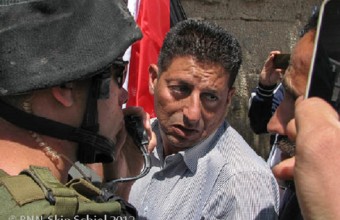
Yesterday, at 4:30 am, Popular Resistance activist Mahmoud Zwahre was again arrested by the Israeli army, at his house in Al Ma’asara, just southwest of Bethlehem.
An attempt to arrest Zwahre was made previously during the weekly Friday protest in the village. This week, on Wednesday, a large group of Israeli soldiers raided Zwahre’s home, just before dawn.
Mahmoud Zwahre, according to the Palestinian News Network (PNN), is an activist and coordinator for the Popular Committee Against the Wall and the Settlements in Al Ma’asara. Soldiers surrounded the Zwahre residence and declared it a closed military zone, as they proceeded to tear through the contents of the house, terrorizing the children and abusing Mahmoud in front of his family.
He was arrested, blindfolded, and taken to an unknown destination — essentially, and by all rights, amounting to a kidnapping.
(Al Ma’asara is a small Palestinian village located in Area B of the central occupied West Bank. Though Area B is officially recognized to be under joint Israeli-Palestinian security control, the 1967 Israeli occupation of the West Bank, Gaza Strip and East Jerusalem has yet to be granted legitimacy by the international community.)
Munther Amira, director of the board of the Popular Struggle Coordination Committee Against the Wall and the Settlements (PSCC) in the Palestinian territories, explained in an interview with the PNN that the Israeli occupation increasingly targets activists of Popular Resistance and their activities:
The activities of Popular Resistance are peaceful and designed to highlight the suffering of the Palestinian people through the Israeli occupation practices of racism and violation of international law. Nevertheless, the PSCC has documented the rough and violent reactions by Israeli soldiers against the protests and marches organized by the Popular Struggle Committees in the various provinces of the country.
The committee denounces the arrest of its coordinator Mahmoud Zwahre, and calls for his release.
Israeli restrictions ‘preventing Gaza unity government meeting’
Ma’an – 04/06/2014
BETHLEHEM – Ministers of the new Palestinian unity government are planning a cabinet meeting in the Gaza Strip, but Israel continues to deny them permits to travel, a government spokesman said Tuesday.
Ehab Bseiso told Ma’an that the ministers want to meet in Gaza to discuss the situation in the blockaded enclave, but that Israel has revoked the VIP status of Palestinian government members.
Meanwhile, four members of the new unity government still have not been officially sworn into office, given that Israel rejected their requests to travel to Ramallah for Monday’s inauguration ceremony, Bseiso said.
He said the government is trying to find a legal way for Gaza ministers to be sworn in despite Israeli restrictions.
The four Gaza-based ministers are Mamoon Abu Shahla as minister of labor, Haifa al-Agha as minister of women’s affairs, Mufeed al-Hasayna as minister of housing and public works, and Salim al-Saqqa as minister of justice.
The four ministers partook in the government’s first official meeting on Tuesday via video conference call.
Though Israeli officials were furious over the creation of a unified West Bank-Gaza government, the US, the UN, and the EU expressed support for the new Palestinian government as long as it respected previous agreements, was committed to nonviolence, and recognized Israel.
Hamas ceded power over Gaza to the new government on Monday after signing a historic reconciliation deal with the Fatah-led PLO in April.
Israel’s timeline of terror
By Ibrahim Hewitt | MEMO | June 3, 2014
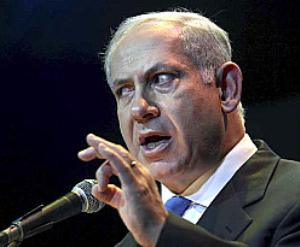
Israeli Prime Minister Benjamin Netanyahu is making familiar noises about Hamas and “terrorism” in the wake of the announcement of the Palestinian unity government. “I call on all responsible elements in the international community not to rush to recognise a Palestinian government which has Hamas as part of it and which is dependent on Hamas,” he is reported to have said. “Hamas is a terrorist organisation that calls for Israel’s destruction, and the international community must not embrace it. That would not bolster peace, it would strengthen terror.” Israel, let us not forget, is a nuclear-armed state with massive military capabilities which is occupying and colonising Palestinian land. It is the state for which successive political party leaders and prime ministers in Britain have expressed their unflinching support.
Netanyahu clearly needs a reminder that his state was itself founded on what has been called “Jewish terrorism”. As the world prepares to commemorate the 70th anniversary of the D-Day landings, Israel’s timeline of terror, which started well before the founding of the state, makes interesting reading. It was intended, quite deliberately, to attack the British Mandatory government at a time when Britain and its allies were leading the fight against Nazi Germany and the Axis powers.
Throughout 1944, as the Allies prepared for and invaded Europe to free it of the Nazi menace, the Irgun and Stern Gang Zionist terrorist groups carried out a series of bombings against police stations and other government offices across Palestine. Their terrorism was not confined to historic Palestine, however. In November 1944, two “Jewish terrorists” murdered Britain’s Lord Moyne, the Minister of State resident in Cairo. The plan, it is claimed, was to blame the murder on Arabs but the Egyptian police caught the murderers who were hanged after being tried and found guilty.
Prime Minister Winston Churchill, a strong supporter of Zionism, said in the House of Commons that such acts will make him “reconsider” his support “if our dreams for Zionism are to end in the smoke of assassins’ pistols and our labours for its future are to produce a new set of gangsters worthy of Nazi Germany.” Even the Executive of the Jewish Agency referred to the group behind the murder as a “terrorist organisation”.
British military and security personnel were also attacked: in September 1944 a policeman was killed in Jerusalem; in December 1946 an army officer was kidnapped and flogged; and in July 1947 two British sergeants were hanged by Irgun and their bodies were booby-trapped. The most infamous attack of all during that period was the July 1946 bombing of the King David Hotel in Jerusalem, in which 91 British and local officials were killed.
Much has been made by Israel’s propagandists over the years about the visits of the Mufti of Jerusalem, Haj Amin Husseini, to Adolf Hitler, in order to court Nazi support for the Palestinian cause. Little is said, though, about the efforts of the eponymous Avraham Stern and his gang to do a deal with the Nazis “concerning the solution of the Jewish question in Europe”. This has been described as an “aberrant episode in Jewish history” which “should alert us to how far extremists may go in times of distress, and where their manias may lead.”
Throughout its short history, the state of Israel has committed many terrorist acts against Palestinian civilians. Former Chief of Staff Mordechai Gur is on record as stating that from 1948 onwards Israel always fought “against a population that lives in villages and cities.” Israeli military analyst Zeev Schiff has noted that Gur’s comments are basically an admission that the so-called Israel Defence Forces have “always struck civilian populations, purposely and consciously.” Atrocities took place in places like Qibya, where sixty-nine villagers were killed in 1953, two-thirds of them women and children; and Kafr Kassem in 1956, where 48 Palestinians were killed, more than half of them women and children. In neighbouring Lebanon, Israeli troops facilitated the infamous Sabra and Shatila massacre in 1982 when up to 3,500 Palestinian refugees were slaughtered in their homes. The massive, and disproportionate Israeli onslaught against the largely civilian population of Gaza in 2008/9 and again in 2012 was merely the most significant of a long catalogue of such acts. Palestinian farmers and fishermen are attacked by the Israel “Defence” Forces on an almost daily basis, with an accompanying loss of life, limbs and livelihood.
Israel continues to condone the terrorist acts of Jewish settlers in the occupied West Bank and Jerusalem; security forces regularly stand and watch as they commit their crimes, only springing into action when the victims are moved to defend themselves.
Arguably the biggest act of terrorism is Israel’s ongoing ethnic cleansing of the land of historic Palestine. That this continues in the full view of history, the media and the international community is a disgrace matched only by its politicians’ attempts to justify it on the grounds of “self-defence”. Netanyahu’s latest bleats about Hamas and terrorism are one example of where – no apologies for paraphrasing Orwell once again – lies are made to appear truthful and murder becomes respectable. He presides over a government which is well-versed in the dark arts of terror against civilians.
The state of Israel was founded on terrorism and its timeline of terror is long and bloody, and has yet to reach its end. When politicians and journalists have the courage to challenge the Israeli prime minister’s outrageous claims in an objective manner, perhaps it will.
Family of man killed by Israeli forces denies he shot at police
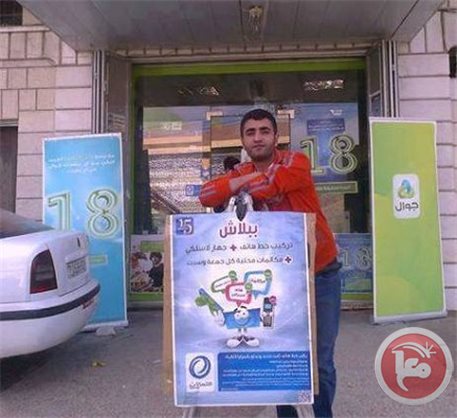
Audah pictured in front of the cell phone store he owned
Ma’an – 03/06/2014
NABLUS – The family of a man killed by Israeli soldiers near Nablus late Monday have denied Israeli claims that he opened fire at forces.
They identified the man as Alaa Muhammad Awad Audah, 30, from the town of Huwwara south of Nablus.
According to the Israeli army, Audah approached the Zaatara checkpoint late Monday and opened fire at an Israeli policeman, lightly wounding him in the leg. Soldiers responded by shooting and killing Audah.
But his family told Ma’an Tuesday that the 30-year-old arrived at the checkpoint in order to receive a shipment of cell phones for a store he owned.
In order to avoid traffic, Audah decided to cross the checkpoint and retrieve his package on foot while his taxi driver waited nearby, family member Jumaah Omran said.
Soldiers shot and killed him as he approached the checkpoint, Omran added.
Locals told Ma’an that the shooting occurred as Israel army chief of staff Benny Gantz was visiting Joseph’s Tomb nearby.
Audah left behind a wife and two children. His village, Huwwara, has announced three days of mourning.
His body has yet to be delivered to his family.
Israeli forces have killed 12 Palestinians in the West Bank since the start of 2014, according to AFP figures.
It Is about the Charter of Rights and Freedoms Mr. Ambassador!
By Shawn Robinson and Rana Abdulla | Palestine Chronicle | June 2 2014

The exhibit is an opportunity for Canadians to view imagery that captures the humanity of a real situation (Public ART/Facebook)
The woman behind the exhibit is artist Rehab Nazzal, a Canadian citizen born in Jenin, an historic town located in Palestine in a territory under occupation since 1967. Nazzal’s exhibit of 1700 photographic images along with four short videos, were collected by her over the fourteen years. Segments of these images depict life in the experience of occupation.
Nazzal’s premise of this collection is based on the idea that people leave traces of their existence and the traces in this case are part of the collective memory of occupied Palestine. Not being the first time this collection has been exhibited, it was also featured in Toronto at the Scotiabank CONTACT Photography Festival 2013.
 Stumbling across the exhibit at Ottawa’s City Hall in the Karsh-Masson Gallery, the Israeli Ambassador to Canada felt that such an exhibit should prohibited. The Ambassador operating outside of his mission, met with Mayor Jim Watson and Deputy City Manager Steven Kanellakos of the City of Ottawa, to demand closure of the exhibit, stating it “glorified terrorism”. Somehow in the unidentified 1700 images and four videos, the Ambassador was able to single out seven individuals he described as terrorists.
The 4th Geneva Convention that Israel and Canada are signatories as well as the Hague Regulations, provides that people under occupation have the right to resist their occupiers. Palestinians are in a situation where they are resisting occupation. The Israeli government and their representatives dispute this occupation in spite of the presence of its military. Terrorism terminology by Israel has become so common and so pervasive that many inside and outside of Israel perceive Palestinians as terrorists – a racist generalization that is pejorative and isolating.
Nazzal’s work reveals human cost of military violence and war, and it is not a call for more human loss, contrary to the Ambassador’s allegations. It is a catalog of Palestinian history, creativity and expression for Forgotten Survivors; a lament for their homeland; and sadness for those who have died in a long hopeless conflict. Her work is a strong counter-narrative articulated creatively using visual vocabulary, transforming the oppressive tools of Israel and its discriminatory policies into elements of hope and life. Her political art communicates messages of dignity and liberation and has undoubtedly inspired many, not just Arabs but non-Arabs as well. The strong media attention certainly indicates that her message is worthy of consideration and appreciation.
Not satisfied with the responses from the Canadian public and City of Ottawa, the Ambassador has escalated his inflammatory language including allegations of “blood libel” and descriptors such as “child murderers”. Is this the role of a foreign diplomat to Canada? His call on Jewish groups to demand action is of great concern. Individuals who have yet to see the exhibit but have read the Ambassador’s false and inflammatory statements, are responding through promotion of these false allegations in blogs, emails to City Hall and online comments. Canadians are being presented with a bias that perpetuates this terrorism label.
The Israeli suppression of the Palestinian narrative appears to now be officially part of the Canadian art and political stream of understanding. It has no place nor is it appropriate. Instead of approaching the situation as an ethnic denial of people, that would appear racist to Canadians, the Ambassador of Israel instead invokes falsely the understandably reactionary term – terrorist.
 Censorship of art, especially political art has a history associated with oppressive regimes. Artists in Canada of all faiths, backgrounds and cultures have the full right to artistic expression as granted by the Canadian Charter of Rights and Freedoms. Therefore uncensored artists are able to explore difficult themes; which is a victory for democracy and freedom of expression.
Realizing that Mayor Watson and his staff have stood by the Charter, the Ambassador requested that Mayor Watson review the process of selecting future art exhibitions at the Karsh-Masson Gallery. This is also censorship. Does this mean future exhibitions could be at risk? That the City of Ottawa should influence the selection panel of professional artists? Do we want elected politicians interfering with these processes, and especially at the behest of a foreign country and its diplomatic body?
The situation is of concern to Palestinian, Arab, Muslim and other ethnic minority artists who may not be featured by galleries across Canada due to the fear of facing the public wrath of Jewish groups and/or the Israeli government. As Canadians, we don’t want to be controlled in how our art is expressed.
 We know from the history of others, that when governments and special interest groups control the message of art, that in many cases, target groups who are censored are in danger of future marginalization. In Europe in the 1930’s a number of countries excelled in this practice further legitimizing their hateful actions against minorities, including Roma and Jews. For some countries this was the beginning of their marginalization process against an ethnic minority. Canada must uphold its values for this reason as our laws and freedoms are for everybody, and not to be denied for a specified group, especially under pressure from an outside country.
The exhibit created by Nazzal is an opportunity for Canadians to view imagery that captures the humanity of a real situation. People are not exploited in their suffering or celebrations, they are living an experience that is untold by the media and has been for as much as four decades.
To be Palestinian is not anti-Jewish or anti-Israeli. In actuality it is a culture that is centuries old in its cuisine, dance, literature, art, architecture, music, costume and other elements we all embrace in our own.
Canada, a country of hundreds of cultures, cannot be part and parcel of this type of denial, and should not be afraid in embracing its citizens. Removing this show would set a precedence that would allow one group at odds with another group to demand censorship in the Canadian milieu. Influencing selection committees of art galleries, are creating the environment of fearing to present a Palestinian artist would also be an act of censorship and stifling our right to the freedom of expression. This is not a Canada we want.
– Rana Abdulla is a Canadian professional accountant, living in Winnipeg, Manitoba. Shawn Robinson is a Canadian artist in graphic design and creative writing. She lives in Ottawa.
~
~
~
For full version of these videos, please contact: info@vtape.org OR info@rehabnazzal.com
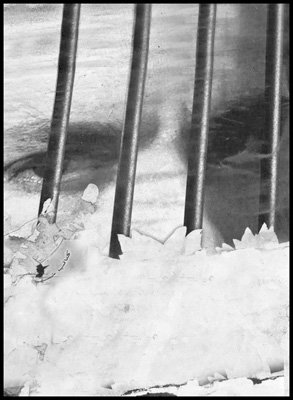

You are missed
© 2012, Rehab Nazzal
Israeli Occupation Forces Kill Two Palestinians, Kidnap 370 In May

By Saed Bannoura | IMEMC News | June 1, 2014
In its monthly report on Israeli violations, the Ahrar Center for Detainees’ Studies and Human Rights has reported that Israeli soldiers killed two Palestinians in May, and kidnapped 370.
The Center said that the army shot and killed Nadim Nuwwara, 17, and Mohammad Abu Thaher, 20, near the Ofer Israeli military roadblock, near the central West Bank city of Ramallah. The two were killed on May 15, during Nakba Day protests.
Israeli army sharpshooters killed the two following clashes with the army as the Palestinians marked the Nakba Day. Video footage showed the two walking away, with their backs to the army location, when they were killed.
As for arrests carried out by the Israeli occupation army, the Center said that 370 Palestinians were kidnapped in the West Bank, Jerusalem and the Gaza Strip.
In Jerusalem, soldiers kidnapped 118 Palestinians, the highest number of arrests in May, while 86 Palestinians were kidnapped in the Hebron district, 40 in Nablus, 30 in Bethlehem, 27 in Ramallah, 27 in Jenin, 16 in Qalqilia, 8 in Salfit, 4 in Tulkarem, and two in Tubas.
In addition, 12 Palestinians were kidnapped in the besieged Gaza Strip; three of them were kidnapped near the border fence, and nine were Palestinian fishers were kidnapped by the Israeli Navy in Palestinian territorial waters.
Also in May, the army kidnapped five Palestinian women in different parts of occupied Palestine, and released three of them, while two remained under interrogation.
Head of the Ahrar Center, Fuad al-Khoffash, stated that Israel is escalating the arrests, especially amongst young Palestinians, and that Israeli interrogators continue to use cruel interrogation methods, and extreme torture, in direct violation of International Law and all related human rights treaties.
He added that the arrests are happening while Administrative Detainees, held by Israel under arbitrary orders without charges or trial, are ongoing with their hunger strike despite the fact that many detainees are facing life-threatening conditions, and serious complications.
Featured Video
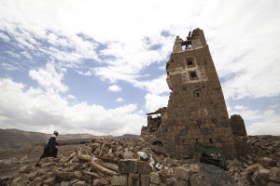
Saudi Led Destruction of Yemen’s heritage
or go to
Aletho News Archives – Video-Images
From the Archives
Israel: Strategic Ally or Liability?
By Stephen Sniegoski | My Catbird Seat | June 12, 2010
The claim that Israel serves as a valuable ally for the United States is made by both pro-Zionists and much of the anti-war and anti-Zionist Left that is influenced by Noam Chomsky. As a result of the Gaza flotilla massacre, which has caused a world-wide uproar against Israel, the value of Israel to the United States is being publicly questioned in more mainstream foreign policy forums. … continue
Blog Roll
 Aletho News
- The Houthis Are Not an Iranian Proxy
- Europe’s Energy Hypocrisy, Russian LNG Profits and US Dependence
- ICC ignored ‘very well-documented’ NATO crimes – ex-Libyan minister
- SNSC secretary dismisses US response to Iran’s conditions as ‘inadequate’
- Sanaa says Taiz roads open, secure for residents, warns Saudi forces
- Iraqi resistance group urges Saudi leadership to admit defeat, lift Yemen siege
- Trump’s Retreat: How Al-Aqsa Flood Took Down the US Empire
- Israel’s Military Actions in Lebanon Grossly Violate International Law — Lavrov
- Seyed M. Marandi: US-Iran War Inevitable: Kuwait and Bahrain May Fall
- Leaders Condemn Ansarallah Attack on Saudi Arabia While Ignoring Illegal War Against Yemen
- If Americans Knew
- Israeli Attacks Kill Five in Gaza, Including a four-year-old and a woman
- Air Force Major Who Called for Trump’s Impeachment Held in Solitary Confinement
- It’s a Genocide, I’m Into It’: Seinfeld Mocks Protest over Palestinian Children Killed
- Universities fire dozens amid pressure from Zionist billionaires
- Gaza’s buildings are collapsing on top of us. But there’s nowhere else to shelter
- Israel kills four-year-old Gaza child – Daily Update
- After Oct 7, IDF policy allowed civilian casualties for even the lowest-ranking targets
- Israel’s Destruction of Southern Lebanon Intensified After the Cease-Fire
- The Last-Minute Decision That Gave Israel Its Name
- The American Conservative: How Trump Made the World Go Nuclear
- No Tricks Zone
- New Study Suggests Large Regions Of The Pacific Ocean Have Been Cooling For The Last 80 Years
- Germany’s Green Energy Debacle: High Energy Costs Force Kahla Porzellan to Close After 182 Years!
- New Study: 50 Years Of The Most Aggressive ‘Net Zero’ Policies Can Only Affect The Global Climate By 0.03°C
- US September “Heat” Was No Record…Many Records Set Decades Ago
- Latest European Green Energy Debacle; Portugal’s Largest Flagship Solar Park Insolvent!
- Green Energy Debacle: German Expert Professor Fritz Vahrenholt Warns Of Severe Economic And Social Consequences
- Two More Paleo Reconstructions Affirm Meters-Higher Sea Levels Across Ireland, Brazil 7000-6000 Years Ago
- New Study: Earth And Venus Surface Warmth Largely Explained By Convection And Lapse Rate, Not CO2 Or Radiation
- 2025 Nature Paper Claiming Worsening Global Drought Gets RETRACTED …Heavily Flawed
- New Study: ‘Global Drought Shows No Detectable Recent Acceleration Under Climate Warming’

