Israeli government lashes out, as evangelicals’ pro-Israel consensus thing of the past
MEMO | March 10, 2014
Israel’s Ministry of Foreign Affairs (MFA) has issued an unprecedented attack on a Christian conference taking place in Bethlehem this week, accusing organisers of “using religion for the purpose of incitement”.
Christ at the Checkpoint (CATC), hosted by Bethlehem Bible College, is the third such gathering following successful conferences in 2010 and 2012. Delegates predominantly hail from Protestant communities in Europe and North America, and in particular from evangelical churches and organisations.
As such, the Israeli government and its lobby groups see CATC as threatening the pro-Israel support long characteristic of much of the evangelical community. As an Israel MFA official told Christian Zionist publication Israel Today, the conference “is particularly problematic, because it is designed for the evangelical Christian leadership – an extremely important audience to us.”
The Israeli government statement released to Israel Today reads as follows:
The attempt to use religious motifs in order to mobilize political propaganda and agitate the feelings of the faithful through the manipulation of religion and politics is an unacceptable and shameful act. Using religion for the purpose of incitement in the service of political interests stains the person who does it with a stain of indelible infamy.
In addition, the Israeli government claimed to have “already actively targeted specific participants in the conference, as well as leaders of the groups who will attend the event, in a coordinated effort to expose them to our side of the story”.
Prior to the MFA statement, groups known for attacking human rights defenders and supporters of Palestinian rights such as NGO Monitor and Christians United for Israel had already lambasted the conference.
There was no sign that the attacks would have a detrimental effect on the conference programme, with speakers and delegates beginning a full schedule of events, many of which will be streamed online.

Palestinian Prisoners: Imprisoned for their Love of Freedom
By Reham Alhelsi • April 18, 2009
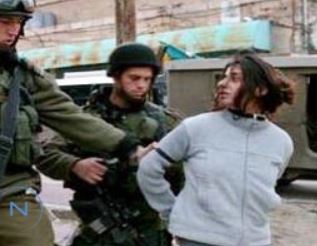
Every year, on April 17, Palestinians commemorate the Palestinian Political Prisoners Day. On 17.4.1974 the first Palestinian political prisoner, Mahmoud Baker Hijazi, was released from Israeli prisons in the first prisoner exchange deal with Israel. That same year, the Palestinian National Council declared the 17th of April a day of solidarity with Palestinian political prisoners, to be commemorated every year. In Occupied Palestine prison and imprisonment are as common as sunrise and sunset. There is almost no family that had not been subjected to Israeli imprisonment one way or the other. Palestinians are being detained on a daily basis, making them the most imprisoned people on earth. It is difficult to estimate their number, but several sources put the number of Palestinians detained or imprisoned by Israel since 1967 at over 750,000 Palestinians, making 20% of the total Palestinian population in the Occupied Territories, and approximately 40% of the total Palestinian male population. With the outbreak of the 2nd Intifada in September 2000 until September 2008 some 65,000 men, 750 women and 7,500 children were arrested by Israel. According to the ICRC, in October 2008 there were 10,500 Palestinians in Israeli prisons. Addammeer puts the number at 9,493, 750 of which are administrative detainees, 349 aged 18 and under, and 75 are females. Among those detained are political figures and some 47 Palestinians parliamentarians.
The Israeli Occupation Forces (IOF) can arrest anyone and anywhere, without giving a reason. Palestinians are arrested at home, on the way to school or work, at universities, in hospitals, at checkpoints. Mass arrests, as form of collective punishment, are also very common. Curfews would be imposed on villages, towns or refugees camps, houses would be raided and Palestinians arrested. I have witnesses a number of these mass arrests, but never did the IOF bother to tell the residents why they were forced to leave their homes in the middle of the night and stand in the cold and the darkness for long hours. Under the cover of darkness and the curfew, the IOF would demand with loudspeakers that all men, usually those between 16 and 45, gather in the school yard or on the main street. We used to sit in the darkness at the windows and try and recognize the men standing in line and questioned by the IOF; relatives, friends and neighbours. Sometimes the men are blindfolded and handcuffed. They would wait for this to end, while being harassed, shouted at and kicked by the Israeli soldiers. We would wait with them, behind windows, hoping that they would all be released soon and come home safe. Sometimes, they are all sent back home after a night of harassment, but often this ends with mass arrest for no given reason.
Another form of collective punishment is house arrests. I have witnessed so many house arrests, and all were accompanied by violence and harassment and the wilful destruction of property by the IOF. They would turn the house over, destroying the furniture and even the food, as if the person they are searching for would be hiding in the wheat or the sugar, and if there was any money or valuables in the house, it was sure they would never be found again after the IOF had left the house. Family members trying to protect their home or their children are beaten. We would tell them that the person they are looking for is not in the house, we would try and reason with them, but it is all useless. They come on a mission to harass, destroy and arrest. Often I thought they knew they wouldn’t find what or who they are looking for, and that the whole operation of house raid is purely to punish the family and pressure it to hand over their son. During such house searches, the IOF would push us against the wall, kick us with their boots and beat us with the butts of their rifles. They didn’t care that they were beating children and elderly.
Upon arrest, detainees are often blindfolded and handcuffed. Not only is the detainee physically abused and humiliated, but other members of the family as well. Also, it is common practice by the IOF to use family members as human shields during such raids. The detainee is taken without informing the family about where he is taken to. Usually it takes days, if not more, before the family finds out where a detainee is. There are many incidents where families realized that their sons were in a certain prison months after they were arrested, and only after another detainee was released and informed that family about their son. One summer afternoon, my uncle and I were playing football in the garden. He was on the IOF list of wanted persons and was staying in our house. Nearby, there was a huge fruit tree, and when I was a child my father told me as way of a joke that a soldier was buried under that tree. At nights, when the leaves of the tree would move with the wind, I used to imagine the sound they made the murmuring of that soldier, and with all the Russian books we had in our library, I gave that imaginary soldier the name Yuri. My uncle and I made bets as to who would win the football game, we joked and laughed and I remember telling my uncle that Yuri would come and take him. After I explained to him what I was talking about, he said: I think you mean Uri and not Yuri, meaning that if any soldier came to take him away, it would be an Israeli soldier, not a Russian. That night at 2 in the morning, I was awakened by hurrying footsteps outside the window. The minute I fully woke up and stood, there was loud knocking on the front door. My father asked who it was, and removed the side of the curtain to see who stood outside. Standing near him, I could see the face of my grandfather and behind him nothing but darkness, complete darkness. The minute my grandfather said it was him, my father opened the door immediately, only to see grandfather practically thrown inside the house. In a matter of seconds, the house was full of IOF soldiers, some in army uniform, others in civil uniform. They had finally figured out were my uncle was hiding and had come to arrest him. They brought my grandfather, an old man, in the middle of the night as a human shield, in case anything happened. My uncle was still in bed, and the minute the Bethlehem area commander saw him, he jumped on the bed and held his throat in his arms, wanting to strangle him, shouting repeatedly: you were here the whole time. My mother tried to get them off my uncle, but the commander pushed her away. And while my uncle was putting on his clothes and shoes, the commander was slapping him and kicking him. The other area commander, responsible for Sawahreh and the surroundings, told his colleague not to do any beating in his area, meaning that since the prisoner was from the Bethlehem area, the beating was okay once they reached that area. I remember we had a huge poster on the wall, one of “Guevara Gaza”, and the commander asked my sister if she knew who it was. The name was written on the poster for all to see, so when she replied yes, he ordered her to remove the poster. When they left, we realized that they had surrounded the whole area around our house. IOF vehicles had blocked the way in case anyone thought of escaping, and I am sure that if an ant moved in the darkness that night, it would have been shot dead immediately. My uncle was taken to interrogation and tortured to confess to things he never did, and when they failed to get a confession from him, he was held in administrative detention, which is a detention without trial or charge, often used by Israel. When he was finally released, he told us that they couldn’t wait for the interrogation to start the torture, and that he was beaten by the soldiers all the way from Sawahreh till they reached the Israeli detention facility.
Sometimes, injured or sick prisoners are taken from their homes, from hospitals, or after being wounded in a demonstration. They rarely get the needed medical help, and often get Aspirin as treatment for everything. Health examinations are conducted through a fence and additional medical treatment or hospital transfers are often postponed for long periods of time. Withholding medical treatment is one method used to pressure detainees into collaboration. There are more than 800 Palestinian detainees who suffer from bad health conditions, much of which as a result of the arrest or the interrogation. According to Palestinian researcher Abdul-Naser Farawna, 196 Palestinian detainees have died in Israeli prisons since 1967 due to medical negligence and torture, 49 of whom died due to medical negligence. Alone last year, 2 detainees died because they were not given the needed medical assistance. During the 2nd Intifada 72 Palestinian detainees have died in detention, 17 due to medical negligence, 3 as a result of torture, 51 were executed by the IOF after being arrested and 1 prisoner was killed during prison protests.
Often Palestinians are arrested for breaking one of the over 2,000 military orders governing the Occupied Palestinian Territories, some of which they have never heard of before their arrest. Women and children are often arrested to pressure detained family members into confessing or pressure other family members wanted by Israel to hand themselves in. The Palestinian Prisoners Society reports that between September 2000 and September 2008 some 750 women and 7,500 Palestinian children were arrested by Israel. In September 2008 there were 69 Palestinian female political prisoners held in Israeli prisons, 2 of them in solitary confinement and 5 in administrative detention. There are 6 female child prisoners and 4 detainees imprisoned as well as their husbands. One detainee has her baby with her who was born in prison. Palestinian female prisoners are placed in 2 Israeli prisons: Hasharon-Telmond and Neve Tertza prison, where they are detained in the same section as Israeli female criminals accused of murder, drug use and prostitution. Like Palestinian male prisoners, Palestinian female prisoners face torture and humiliation. Strip search, brutal body searches and sexual harassment are frequent.
Contrary to the UN Convention on the Rights of the Child, which defines a child as being under 18, Israeli military orders consider a child over 16 an adult, to be treated, tried and sentenced as such. In practice, Palestinian children as young as 12 may be arrested, charged and sentenced in Israeli military courts, since there are no juvenile courts. According to several reports, there are over 400 Palestinian children in Israeli prisons today, including 7 girls and 6 administrative detainees. These child detainees are aged between 13 and 18, more than 54 of whom are not older than 16. They are detained in Israeli prisons together with adults. 50 of these child prisoners are held in Ofer, 100 in Magiddo, 7 in Atzion, 22 in the Negev, 105 in Hasharon-Telmond and the rest in other prison facilities. Today, more than 450 Palestinian adult prisoners were children upon arrest and turned 18 in Israeli prisons. Like adult prisoners, Palestinian child prisoners are subjected to physical and psychological torture to extract confessions from them. During interrogation, they are not allowed to have any family member or a lawyer attending. Although I was practically a child when arrested, I was placed in a small empty room. I had been separated from my sister, and didn’t know where they had taken her. I stood waiting for a life sign from anyone, and I didn’t know how long I stood there, but I remember well how tired I was of standing and how thirsty I was. After some time, I could hear the cries of a boy in the room next to where I was. I thought, they were either torturing him or someone was making these noises to make me scared before it was my turn to be interrogated. I kept thinking of everything I ever heard, of how to keep still, stay brave and remember that they are only playing games with us to scare us into confessing to things we didn’t do. When I was finally led into a room with a number of IOF soldiers, all males, the soldier in charge checked my school bag and found my biology textbook. He looked through the book and saw a drawing of the anatomy of a human tooth. He showed it to me and asked smirking in a disgusting way if I knew what it was. I knew what it was and knew what he thought it was and what his plan was by asking me about it. At that moment I didn’t feel scared anymore, because I realized how stupid they are. Not only didn’t he know it was a tooth, the textbook was in English and it was written below the drawing what it was, but most probably he didn’t know a word of English and was acting so superior. I looked at him and said: yes, this is a tooth. My suspicions were confirmed when, upon not believing me, he asked one of the other soldiers in the room and the other confirmed what I said.
Child prisoners are held up in overcrowded cells, face torture and solitary confinement and don’t receive the needed medical treatment. In the last couple of months there has been an increase in the number of Palestinian children arrested. They are either arrested at home, at checkpoints or in streets, and are often accused of throwing stones without any proof. DCI-Palestine reports that the number of children brought before Israeli military courts in pre-trial hearing in the first two weeks of January was twice as high as in 2008. It added that its legal department receives a monthly average of 10 to 15 new cases of children for legal representation in Military courts, and that alone for the first two weeks of January 2009 it received 10 new cases. In one incident, 7 children were arrested in Toura Al Gharbieh in Jenin on 20.1.2009 and were detained at the Salim detention and interrogation centre. Two of the children were 12, two 13, two were 15 and the last 17 years old. Under pressure and with no lawyer present, the children confessed they had thrown stones at the Apartheid Wall. In another incident, during an invasion of Hares in the West Bank on the night of 12/13.3.2009, the IOF arrested a 17 year old boy suffering from kidney malfunction.
Palestinians prisoners are held in facilities run by the Israeli Prison Services (IPS) or the IDF. There are 30 detention centres that include 21 prisons and military camps, 5 detention and holding centres and 4 interrogation centres. Also, there is at least one known secret prison, Facility 1391, which is renowned for its severe torture methods. The exact location of this prison is unknown and lawyers and the ICRC have no access to it. The majority of these facilities are located outside the West Bank and Gaza Strip, and transferring Palestinian prisoners to these facilities constitutes a violation of the 4th Geneva Convention, and making family visits almost impossible. Some of these facilities are buildings while others are tents within military camps like the Ketzion Military prison camp in the Negev, exposing detainees to harsh weather conditions. They are all overcrowded, with little hygiene, prisoners have to sleep on wooden planks and covers are often provided by the families or human rights organizations. The food provided is insufficient and of poor quality. Palestinian detainees have to live in appalling conditions in these facilities, are humiliated and subjected to inhuman treatment. In some cases, detainees are deported, either abroad or to the Gaza Strip. After the siege of the Nativity Church in 2003, Israel deported 13 Palestinian detainees to Europe and 26 to the Gaza Strip. During the Gaza war, hundreds of Palestinian civilians were arrested, including minors. They were handcuffed and blindfolded, and had nothing to shelter them from the harsh weather. Many held for days in pits dug in the ground. Reports added that some of the detainees were held near tanks and in combat area, making them human shields for the IOF.
Prison visits usually take the whole day, although the visit itself lasts less than an hour. We would set off in the very early morning, when it was dark outside and everyone else was still sleeping. The bus of the ICRC would be full with Palestinians from everywhere, mostly elderly women and children, all anxious to see their relatives. And before we would finally be able to see our loved ones, we would undergo one checkpoint after the other and one search after the other. I remember during one visit, when we were finally allowed into the visit room, I walked quickly looking for my uncle. I hadn’t seen him in years, and after I finally sat opposite him, we started talking through the barbed wire. We were both so happy. It was after a few minutes that someone from my family came and told me to come and say hello to my uncle. I was talking to the wrong person, and I was so embarrassed I didn’t even say goodbye or look back to see if that prisoner had any visitors that day. Later, I thought he too might have not seen his family since so long that he too mistook me for a relative, or maybe he was just anxious to speak to someone. During another visit, I remember sitting and talking to my uncle and at the same time trying to ignore the rain drops that were seeping through the roof and hitting me on the head and running down my face. My uncle must have found it amusing, because every time a raindrop would hit me in the face he would smile, but I would ignore it and continue talking, and by the end of the visit my hair was totally soaked and I was freezing. There was no possibility of kissing or hugging a relative, and the only thing we could do in way of shaking hands was to stretch our fingers through the barbed net separating us. Saying goodbye was always difficult, because we knew we were going back to our homes, to the relatively bigger prison, while leaving them behind in the small overcrowded cells. And when we finally reached home, it would be dark again and most people would be sleeping, a day spent between checkpoints and searches for a 45 minute visit of loved ones.
One time, on the way to my aunt’s house in Dheisheh, a friend of mine and I passed a young man, who was walking up and down one narrow alley of the refugee camp. The man was most probably mid twenty and was good looking. He was walking that alley and was arguing with someone. I looked around and saw no one in the whole area. I looked up to see if he was addressing someone sitting at a window or on the roof, but could see no one. I pointed the man to my friend, who told me not to worry. She said the young man had been recently released from an Israeli prison, where he was tortured. Since then he had been roaming the streets of Dheisheh, arguing with an invisible friend. As I listened closer, I realized he was talking politics with himself, discussing the occupation and life in prison. They had not released him, for he was still in that Israeli cell, being tortured every minute. Last winter when I was in Palestine, I wanted to take some photos of old UNRWA rooms, built for the Palestinians in 1949. Most old UNRWA rooms were being destroyed to build new houses, and I wanted to keep a record of the last remaining rooms that are a synonym to the Nakba and refugee camps. The wife of one of my uncles accompanied me in my search since she was born and grew up in Dheisheh and knew where to find a few old rooms. Most of these tiny rooms are deserted now, standing empty near larger family houses. I would take photos from the outside and if the room had no door or the door was open, I would take photos from the inside. As we came to inspect one room, we were surprised to find an old man lying on the ground, wrapped in a torn out winter coat. The old man opened his eyes as he saw us, he made a move as if to stand up, but my uncle’s wife told him not to leave and apologized for disturbing him, since we thought the room was deserted. A few minutes later, my mother’s aunt saw us invited us for some tea. Inside, we told her about the old man, and as she and my uncle’s wife talked about the old man and giving him something to eat and warm himself, since they knew who he was, I realized it must be the young man I saw long time ago. He was still imprisoned in that cell, a whole life wasted, and all I could do was to shake my head at the injustice of it all.
Under international humanitarian law, torture is strictly forbidden. The world was shocked when the torture in Abu Ghreib came to light, there were condemnations from everywhere and demands were made to close that prison. But the Zionist state, which conducts one war crime after the other, never hesitates in using torture. The forms of torture used in Abu Ghreib were not new to Palestinians, because they have been used since decades by the IPS against Palestinians. Was it not revealed that Israeli IOF and Shin Bet interrogators were hired by the Pentagon to brutally interrogate prisoners in Abu Ghreib? Was it not revealed that the American interrogates implicated in the torture had attended an “anti terror” training camp in Israel, and that many of the torture methods used in Abu Ghreib resembled those applied by Israel against Palestinian detainees? Much is documented about torture in Israeli prisons, but we rarely hear of any condemnation or demand to close these torture facilities. According to B’Tselem, 85% of the Palestinian detainees have been subjected to torture, adding that “Since 1987, the GSS (Israeli General Security Service) interrogated at least 850 Palestinians a year by means of torture …. (a)ll governmental authorities – from the Israeli army to the Supreme court – take part in approving torture, in developing new methods, and in supervising them.” In 1999 the Israeli High Court superficially outlawed the use of arbitrary torture as an interrogation method, but in reality it did not ban it and till today torture is still used by Israel. Physical ill treatment combined with humiliation begins with the arrest, whether at home or in the street. Palestinian detainees can be interrogated for 180 days, and can be denied a lawyer for a period of 60 days. During interrogation, torture is used and has led to the death of the detainee in some cases and confessions extracted under torture are admissible in Israeli courts.
Palestinians may be held for days without being brought before a judge or informed of the reason for the arrest, during which they are interrogated, which can last up to 180 days, or are administratively detained. Administrative detention is a detention without trial or charge or the continuation of imprisonment after the completion of a sentence. It is often used by Israel and is authorized by an administrative order of the IOF rather than by a judicial decree. Israeli Military Order 1229 of 1988 empowers IOF military commanders to detain Palestinians for up to 6 months, which can be extended indefinitely. Over the years, thousands of Palestinians, men and women and of all ages, have been held in administrative detention for periods ranging from 6 months to over 8 years, without being tried or charged. Families of detainees are not informed of a person’s arrest or the arrest location. Theoretically, detainees can appeal, but in reality neither they nor their lawyers are informed of the reason for the detention or examine the evidence, which makes defending their clients very difficult. The Orders governing administrative detention were also modified in 1999. MO 1466 – Temporary Order, Modification 13 states that a detainee must be brought before a military judge within 10 days of his arrest, and authorizing the military judge to approve, cancel or decrease the time of administrative detention order. This modification is also superficial, since the judges are military personnel who give legal legitimacy to the illegal actions of the IOF and the IPS. In reality, Palestinians are tried by Israeli military courts consisting of a panel of 3 judges appointed by the IOF. These judges often have no legal background and thus don’t fulfill international standards of a fair trial. Since the beginning of the 2nd intifada in September 2000 some 20,000 Palestinians were held in administrative detention. By April 2009 there were more than 560 Palestinian administrative detainees, held in Israeli prisons without trial. 372 of these detainees have been held without trial or charge for at least two consecutive periods, 47 of them for over two years, and 23 for over two and a half years including two who have been imprisoned for over four and a half years.
While a Palestinian may be held in custody for 18 days before being brought to a judge, an Israeli can be held in custody for a maximum of 48 hours before being brought before a judge. While a Palestinian can be held for 30 days without charges which can be extended indefinitely, an Israeli can be held for 15 days without a charge which can be extended for only another 15 days. Palestinians brought to court on accusation of murder are always convicted, even without evidence, and are always sentenced to life imprisonment. Most cases against Israeli soldiers or illegal Jewish settlers accused of murdering Palestinians are closed without any charges, even with the existence of evidence or witnesses. The few who do get sentenced are imprisoned for short periods ranging from 6 months to 7 and a half years or to community service. Palestinian Prisoners have been used by Israel at politically convenient moments, whereby Palestinians who had already served out their sentences with only a few days remaining would be released as “gestures of good will”. At the same time hundreds others would be arrested. For example, on 25.8.2008 Israel released 198 prisoners as a “gesture of good will”, however statistics for August 2008 show that another 338 Palestinians were arrested. Today there are some 81 “old detainees” i.e., detainees who are in continuous imprisonment since over 20 years, 2 of whom since over 30 years, and some 290 prisoners who have been in prison since over 15 years.
Although they have modern deadly weapons, are top recipients of military assistance, have their war crimes justified by a biased western media, and their interests protected by Zionist lobbies all over the world, the Zionists still fear us because they know we are the rightful owners of the land and that alone by existing we are defying them and their power and countering the myths and lies on which their state is built. Israeli Foreign Minister, Avigdor Lieberman said on the release of Palestinian prisoners: “It would be better to drown these prisoners, in the Dead Sea if possible, since that’s the lowest point in the world.” They not only deny us our rights and our freedom, they want to kill our spirit and see us dead. What they haven’t understood by now is that the more they humiliate us, harass us, imprison us, take away our freedom from us, the more we value that freedom and the stronger becomes our belief in our just cause and our will to be free.
Sources:
www.addameer.org
www.sumoud.tao.ca
www.btselem.org
www.imemc.org
www.dci-pal.org
www.ppsmo.org
www.palestinemonitor.org
Chicago’s Columbia College cancels class because of 5 Broken Cameras screening
Petition
This petition is in protest of Columbia College’s decision, following a student complaint about “bias,” to cancel one of the two sections of a course about the history of the Israeli-Palestinian conflict. The course is well grounded in fact and presents a diverse overview of Israeli/Palestinian history, including interviews with both Israelis and Palestinians. The class receives overwhelmingly positive evaluations by students, and many report having to wait to get in to the class. After registration opened last November, however, Columbia College removed its second section of the course only hours after it was posted.
After Professor Chehade’s in-class screening of the Oscar-nominated film 5 Broken Cameras, which depicts life under and popular resistance to Israeli military occupation, a student complained about “bias.” Dr. Steven Corey, the chair of the Department of Humanities, History, and Social Sciences, then held a meeting with Professor Chehade informing him that he should address the subject matter in a more “balanced” way.
Showing a movie depicting popular resistance to Israeli occupation does not constitute bias, and retaliating against a professor for engaging students about pressing social issues is a blatant violation of academic freedom. Furthermore, professors are not obligated to present an opposing view to every opinion or fact presented in class. Columbia College’s own academic freedom policies protect professors against such interference. The cancelation also restricts Columbia students from participating in learning and discussion about Israel-Palestine, a topic for which they have demonstrated a clear interest.
Help defend academic freedom by signing this petition telling Columbia College to reinstate and maintain the course offerings of Professor Chehade’s Israeli-Palestinian Conflict class.
To: Dr. Louise Love, Provost, Columbia College
Dr. Deborah Holdstein, Dean, School of Liberal Arts and Sciences
Dr. Steven Corey, Chair, Dept. of Humanities, History, & Social Sciences
We, the undersigned, wish to express our grave concern about Columbia College’s retaliation against Professor Iymen Chehade for the content of his course, The Israeli-Palestinian Conflict.
The circumstances suggest that the college’s decision was not based on legitimate academic considerations, but rather avoidance of controversy and the desire to keep Columbia courses from straying from the mainstream discourse.
This attempt to stifle the discussion of Israel and Palestine is a violation of academic freedom and a disservice to the academic community and to Columbia’s students. As such, we, the undersigned, urge the administration at Columbia College to uphold its commitment to academic freedom and to its students by reinstating and maintaining the course offerings of Professor Chehade’s Israeli-Palestinian Conflict course.
La Plata MEKOROT deal suspended
The agreement with MEKOROT in La Plata has been suspended! Now we continue, in the rest of Argentina…
Palestinian Grassroots Anti-apartheid Wall Campaign | March 7, 2014
CTA, ATE, Federación de Entidades Argentino-Palestinas (Federation of Argentinian-Palestinian Entities) and Stop the Wall announced the suspension of the shady business with Mekorot, a water treatment plant that would have fuelled Israeli apartheid in Palestine and sought to export it to La Plata in Argentina.
On January 11 2011, the governor of Buenos Aires province, Daniel Scioli, announced, after visiting Israel, that they would tender the building of a regional water treatment plant in La Plata. The contract worth US$170 million was awarded to a consortium of business conformed by the Israeli Water Company MEKOROT, ASHTROM BV (Spanish-Israeli firm) and the Argentinian “5 de Septiembre SA”, a company in which members of the Sindicato de Obras Sanitarias de Buenos Aires (SOSBA), which owns the 10% of the national and provincial Aguas de Buenos Aires (ABSA), participate.
Since 2011, Palestinian organizations, ATE-CTA unions, other civil society organizations and MPs mobilized against this contact. During more than 3 years, they informed the public about Mekorot’s criminal actions in Palestine and investigated the consequences that Mekorot would cause in Argentina.
In a joint effort, they denounced that public Argentinian money would benefit Mekorot and, through this, finance Israeli apartheid in Palestine. The accusations that Mekorot implements apartheid in Palestine are based on reports by Palestinian organizations, the United Nations, and Amnesty International.
Mekorot has been responsible for water right violations and discrimination since the 1950s, when the national water carrier was built which is diverting the Jordan river from the West Bank and Jordan to serve Israeli communities. At the same time, Mekorot deprives the Palestinian communities from access to water. The average consumption in the occupied Palestinian territories is about 70 liters per capita per day – well below the 100 liters per capita per day recommended by the World Health Organization -, while the Israeli consumption per capita per day is around 300 liters. Mekorot has refused to supply water to Palestinian communities inside Israel, despite a decision by the Supreme Court of Israel recognized their right to water. Mekorot is a proud partner of the Jewish National Fund “Blueprint Negev” plan, which will expel 40,000 Bedouin Palestinian citizens of Israel uprooting them from their homes and forcibly moving them to reserves while their lands will be used for Jewish-only settlements in the Naqab/Negev.
Mekorot’s support for illegal settlements is vital and has continued since 1967 when the company took monopoly control over all water sources in the occupied Palestinian territories and caters to the Jewish settlements to the detriment of Palestinian communities. Mekorot participates in the international crime of pillage of natural resources operating about 42 wells in the West Bank, which mostly cater to Israeli settlements. Mekorot also works closely with the Israeli army in the confiscation of irrigation pipes from Palestinian farmers and destruction of sources of water supply for Palestinian communities.
Beyond the street protests and work in the media, the more than 1000 pages of research and technical details compiled by ATE-CTA, served to substantiate questions in the provincial parliament and allow interventions in front of federal human rights organizations. In late 2012, the construction of Mekorot water plant was suspended.
The organizations insisted that Mekorot intended to export its model of discrimination, squandering of water and illegitimate profits developed in Palestine, now to the detriment of the population of Buenos Aires.
To start with, the entire bid was based on a work plan that had previously been designed by Mekorot, which expectably proposed the lowest price.
The expenditure of public money for water treatment plant and the consequent debt of the city with multinationals is unnecessary as the province of Buenos Aires has excellent aquifers. Puelches Aquifer is saturated and to stop drinking its water – as the Mekorot project envisaged – would have produced the elevation of the water table, bacterial contamination, basement flooding and damage to housing foundations. Reports from the ABSA state that the main problem of drinking water lies in the distribution network for which Mekorot wouldn’t have provided a solution.
For the installation in the region, Mekorot required an increase in water tariffs, until almost tripling the costs. The construction of the plant, also implied a further increase of service that would have exceeded 30% and would be paid by all the users in the region.
In terms of water quality, it would have been below the standards determined by the Argentine Food Code. Only part of the population would have had access to safe drinking water while poorer people would have received only tap water posing a risk to their health.
CTA, ATE, Federación de las Entidades Argentina-Palestinos and Stop the Wall thank to all social and political organizations, experts and individuals who contributed to the campaign ‘Mekorot Out of Argentina’. Together we won an important victory for justice in Palestine and the right to water! We continue to fight for our sovereignty over water, against the violence of multinationals and in solidarity with the Palestinian people for freedom, justice and the return of refugees to their homes.
We ask everyone to continue supporting the global movement of boycott, divestment and sanctions against Israel and to fight and prevent other Mekorot contracts in Argentina.
We ask everyone to join the International Week against Mekorot – from 22 to 30 March: “No to water apartheid, Yes for water justice!”
Related articles
80,000 Palestinians in Jerusalem without water for three days
MEMO | March 8, 2014
The Israeli water company Jihon said on Friday that 80,000 Palestinians in East Jerusalem have been without water for more than three days.
In a statement Jihon said: “About 80,000 Palestinians in four Arab neighbourhoods in Jerusalem and its outskirts have been suffering from complete loss of water for three days.”
The Israeli company said that it would like to supply water for all consumers in Jerusalem, including Jewish and Arab citizens, but the water infrastructure in the Arab areas is decaying. It also said that the increasing number of inhabitants contributes to the problem.
Meanwhile, the Arab inhabitants at the Palestinian refugee camps of Su’fat, RasKhamis and Ras Shihadeh, as well as Al-Salam Suburb, said they have been suffering from a complete water shortage for several days.
The residents said in a statement issued on Saturday that tens of thousands of Palestinian refugees and citizens in the three residential gatherings in Jerusalem have been without water since the beginning of last week.
According to the statement the Palestinians said that they did not know the reason why the water supply stopped.
The statement also blamed the company Jihon, which is the only body that has a permit to supply water to Jerusalem, for the water shortages. “It started reducing water portions two weeks ago,” the statement said. “And in the end it completely stopped the water.”
Deputy head of the Popular Committee in Su’fat Refugee Camp, Khalid al-Khaldi said: “There are about 23,000 Palestinian refugees and citizens in the camp and they have not had water for three days. In Ras Shihadeh, there has been no water for 20 days.”
He reiterated that there has been no water in Ras Khamis and Al-Salam Suburb for a long time either.
Al-Khaldi blamed the UNRWA, which is responsible for the Palestinian refugees, for the water problem. He called for it to immediately move to solve the problem.
Netanyahu: I did not commit to freeze settlement construction
MEMO | March 7, 2014
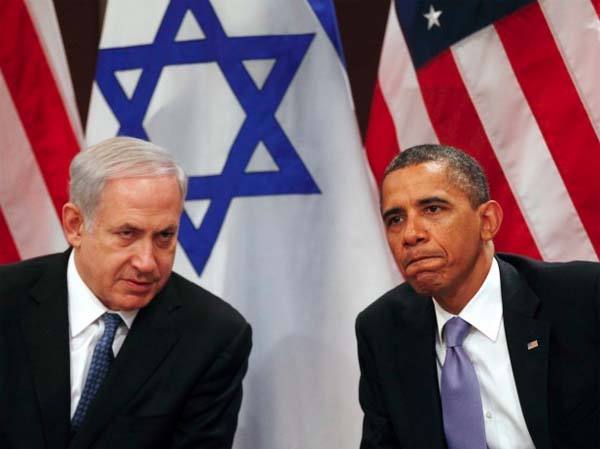 Israeli Prime Minister Benjamin Netanyahu said that he did not commit to freezing settlement construction during his meeting with US President Barack Obama and that he will reject any agreement with the Palestinians that does not meet Israel’s security needs.
Israel Radio quoted Netanyahu on Friday, on his way back to Israel, telling Israeli journalists that he considered extending the negotiating period between the Israelis and Palestinians in US Secretary of State John Kerry’s framework agreement unlikely to make a difference for the Israeli coalition government, as most of its members reject the idea of establishing a Palestinian state.
He added that he will reject any agreement with the Palestinians that “does not meet Israel’s needs and poses a threat to its security, even if there are attempts to impose such an agreement on Israel.”
Netanyahu refused the possibility of unilateral withdrawal from the West Bank territories if the negotiations fail, stating that he does not prefer this possibility and that “the unilateral withdrawals (from south Lebanon and the Gaza Strip) have not justified themselves nor did they provide security stability for Israel”.
Netanyahu returned to Israel today following his visit to the US which started on Sunday in which he met with Obama in the White House and gave a speech to the American Israel Public Affairs Committee (AIPAC) on Tuesday.
Palestinian President Mahmoud Abbas announced, while receiving a delegation from the Israeli left-wing party Meretz a few days ago, that he is not opposed to extending the negotiations period, but demands that settlement construction is suspended and prisoners are released.
Related article

Israel denies EU request to meet with Palestinian prisoners: report
Al-Akhbar | March 7, 2014
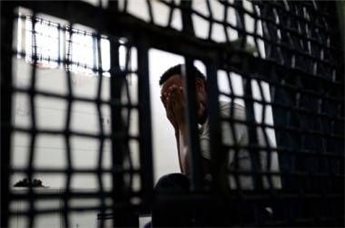 Israeli Foreign Minister Avigdor Lieberman refused to allow a delegation from the European Parliament to visit Palestinians jailed in Israeli prisons, a local newspaper reported Friday.
Yedioth Ahronoth said the European delegation had hoped to evaluate the prisoners’ conditions.
The paper reported that Elmar Brok, the Chairman of the Committee on Foreign Affairs in the European Parliament, had asked Israel’s ambassador to the EU to arrange a visit for the delegation.
But Lieberman responded by saying Israel would only allow such a visit if the EU would let an Israeli delegation visit prisons in Europe.
The report cited sources inside Israel’s foreign affairs ministry that the European request had been made in coordination Palestinian and international activists working to highlight the poor conditions inside Israeli prisons.
The news came one day after Israel refused to allow Palestinian refugees from Syria to return to the Palestinians territories, according to Palestinian Authority official cited by Ma’an news agency.
Fatah central committee member Mohammed Ishtayyeh told diplomats at a meeting organized by the Heinrich Böll Foundation – a group affiliated with Germany’s Green Party – that they have been trying to help Palestinians in Syria escape the three-year-long war, but Israeli officials have rejected their pleas.
Around 1,500 Palestinian were killed during the Syria conflict, and 250,000 others have been forced to leave their homes, according to Ma’an.
My Home
Housing demolitions carried out under the pretext of unlicensed construction are a common occurrence in occupied East Jerusalem. Palestinians are rarely granted permits by the Israeli authorities to build houses in the city. Apartments prices have risen drastically in Jerusalem — 120 m apartment would cost approximately $350,000. As a result, they are forced to build without a permit, which often results in the Israeli authorities issuing demolition orders on unlicensed buildings.
In 2013, 82 houses owned by Palestinians in Jerusalem were demolished, effecting 281 people. In recent years, self-demolition of houses has become common in East Jerusalem as the Palestinian owners of “unlicensed” houses are forced to choose between demolishing the houses themselves or paying the Jerusalem municipality to do so for them.
In this video Muhammad ‘Amireh speaks of his experience of having to demolish his own house.
Related article

A minor infraction at the end of the incident
By Yossi Gurvitz | Yesh Din | March 2, 2014
A 14 year old boy goes to meet friends. He comes home with bullets in his neck and hand. The IDF considers that to be “a minor infraction”
At the end of July 2013, J., a boy from the village of Silwad, set out with his brother and two other boys to visit a family of friends in the western side of Silwad, a distance of about a kilometer from his house. One of the boys was asked to deliver a bundle of clothes to the family. They reached the house, gave the bundle over, and headed back. On their way, they met a friend shepherding his flock, and sat down next to him. And then J.’s world turned upside down.
He noticed three soldiers coming out of the trees behind them, blocking the path they had intended to take home. Soldiers on the village roads are not a common sight, so the group changed its course, and started climbing the nearby mountain.
As they reached a bend in the path, they heard gunshots. The group scattered instantly. J. himself says he went into shock, since this was the first time he had heard gunshots so close to him. He was slower than the others. He heard a second volley, and then felt a hit in his right arm; a third volley, and he was hit by a bullet in the neck. J. managed to walk a few more steps, and then collapsed by the wall of a house. He was evacuated to a hospital in Ramallah, where it was determined that the bullet entered the right side of his neck, and existed through the left. He was hospitalized there for four days.
We wrote to the IDF, demanding an investigation into the incident. Four months later, we received an answer that can only be described as infuriating. The debriefing of the incident, wrote the Prosecution for Operational Affairs, showed that on the same date there were clashes between IDF forces entering the village and residents who allegedly threw stones at its forces. The Military Advocate General reached the conclusion that the shooting took place in accordance with the rules of engagement, “with the exception of a minor infraction at the end of the incident.” Nowadays, that is how the IDF refers to the shooting of a live bullet into the neck of a 14 year old boy. Accordingly, we were informed that disciplinary procedures were undertaken against the commander of that force. Not that we were informed of the results of that procedure.
Um, no, no. Firing live ammunition, even at protesters, is not in accordance with the orders, unless the soldiers’ lives are in danger. The IDF doesn’t even try to claim that J. and his friends were threatening the lives of its troops. Also, this wasn’t one shooting; J. counted three separate volleys. Furthermore, from the description given by the IDF, it seems J. and his friends weren’t even in the area were the IDF soldiers were attacked, assuming they were indeed attacked.
The firing of live ammunition at uninvolved civilians is a crime, all the more when minors are involved. Such an incident should not end with a disciplinary procedure, but with a criminal investigation. Accordingly, our attorney, Emily Schaeffer, appealed and demanded the opening of an MPCID investigation ASAP. Recently, we learned that the appeal was rejected. The prosecution is of the opinion that though firing after the first volley – as J. and his friends fled – was improper, given that the officer in question was dealt with in a disciplinary procedure and was even fined, the very fact of the disciplinary procedure exhausts the need for a criminal investigation. We’re uncertain whether the sum of the fine was 10 cents, as per the infamous fine of the colonel responsible for the Kafr Qassem massacre – and we don’t know because the prosecution didn’t mention the sum.
But, even if the fine was serious and not a joke – though if it was serious, why didn’t the prosecution note the sum? – We cannot accept a disciplinary procedure as a replacement for criminal law. After all, if the bullet that hit J. would have deviated just a few millimeters from its course, and the boy would have joined the long rank of minors killed by the IDF, a criminal investigation would obviously have been opened. How can putting a bullet in the neck of a person, agreed to have been uninvolved, end with a disciplinary procedure and a fine?
During the Vietnam War, a common phrase among American soldiers was the “Mere Gook Rule”, meaning that whatever you may do to the foreign population, nothing will happen to you. These aren’t humans, these are merely Vietnamese. When the IDF subscribes to the notion that shooting a 14 year old boy in the neck is just “a minor infraction at the end of the incident,” it sends that same message to its troops: These are mere Palestinians. Do with them as you will. Nothing will happen to you. At worst, you’ll face a disciplinary procedure.
And when that’s the message conveyed by the military prosecution to its ground troops, it itself becomes an accomplice to the crime.
Treasury Secretary Jack Lew: “The future of the United States is tied to the future of Israel”
EPJ | March 2, 2014
Below are the remarks of US Treasury Secretary Jack Lew before the 2014 Policy Conference of the American Israel Public Affairs Committee(AIPAC) These are clearly the remarks of the banker for the Empire. It should be noted that Lew’s remarks on Ukraine appear to be in line with those of Rand Paul and though Lew’s comments clearly show that he considers Israel as the 51st, and most important state, his views on sanctions are more moderate than those of Rand.
Read the remarks only if you have a strong stomach. Note the re-introduction of the IMF as key financial enforcer. During a stop over in SF, Lew admitted that the IMF is a tool of the US.
I want to thank President Kassen, incoming President Cohen, the Board of Directors, and everyone for inviting me here today. There are so many familiar faces in this room—friends of many years from my time in Washington, New York, and around the country. It is truly wonderful to be with you.
Before turning to the focus of my remarks, let me say that we are closely monitoring the situation in Ukraine with grave concern. As President Obama told President Putin yesterday, Russia’s clear violation of Ukrainian sovereignty and territorial integrity is a breach of international law. I have spoken several times to the Ukrainian Prime Minister who assures me that the government is prepared to take the necessary steps to build a secure economic foundation, including urgently needed market reforms that will restore financial stability, unleash economic potential, and allow Ukraine’s people to better achieve their economic aspirations.
The United States is prepared to work with its bilateral and multilateral partners to provide as much support as Ukraine needs to restore financial stability and return to economic growth, if the new government implements the necessary reforms.
An IMF program should be the centerpiece of the international assistance package, and the United States is prepared to supplement IMF support in order to make successful reform implementation more likely and to cushion the impact of needed reforms on vulnerable Ukrainians.
Now the reason we are all here is because for more than 40 years, AIPAC has been the indispensable leader in keeping the alliance between the United States and Israel unbreakable. And you have done that through your powerful example of advocacy and activism—you make your voices heard, you take your case to your representatives here in Washington, and you stand up for what you believe in. This is not just your right as Americans. It is your responsibility. It is the essence of our democratic system.
And as everyone here recognizes, the future of the United States is tied to the future of Israel. This is something that every President since Harry Truman has understood.
In fact, in 1948, it took President Truman only 11 minutes to recognize the Jewish state of Israel. And from then on, the American-Israel relationship has not been a Democratic cause or a Republican cause, it has been an American cause.
President Obama has remained true to this proud legacy since the first day he took office, and he has made it clear that for him and for this Administration, America’s commitment to Israel is ironclad. As he said as President-elect, before he even took office: “Israel’s security is sacrosanct. It is nonnegotiable.” And he has never wavered from that position.
Like the President, Israel’s security is not only a public policy conviction for me, it is a personal one. As many of you know, no one grew up with a deeper appreciation for the state of Israel than I did. And I have no doubt that a strong and secure Israel is vital to America’s strength and America’s security.
As we meet, America’s support for Israel’s security has never been stronger. And over the next three days, you’re going to hear about all the things that the Administration is doing to advance Israel’s security—from promoting a lasting peace with the Palestinians to preserving Israel’s military edge so it can protect itself against any threat.
Today, I will discuss one of the most pressing national security concerns for Israel and the United States—and that is Iran’s nuclear program.
Let us not forget that when President Obama took office, Iran was strengthening its position throughout the region and the international community was unable to provide a unified response. But because of President Obama’s leadership, Congressional actions, American diplomacy, which AIPAC has supported, we put in place a historic sanctions regime and Iran now finds itself under the greatest economic and financial pressure any country has ever experienced.
Initially, many claimed sanctions on Iran would never work, but we have proven exactly the opposite. From the beginning, this sanctions program has had one purpose: Persuade Iran to abandon its pursuit of a nuclear weapon. There can be no alternative.
To be clear, we never imposed sanctions just for the sake of imposing sanctions. We did it to isolate Iran and sharpen the choice for the regime in Tehran. And we did it by bringing the community of nations together. We are talking about China, Russia, India, Japan, Europe, Canada, South Korea, and the list goes on.
Having the international community united in opposition to Iran’s pursuit of a nuclear weapon made an enormous difference.
We now have in place the most sweeping, most powerful, most innovative, and most comprehensive sanctions regime in history. And because of the impact of these unprecedented, international sanctions, Iran finally came to the negotiating table seeking relief and fully aware that to get relief, it had to take concrete steps to curtail its nuclear program. Those negotiations led to the Joint Plan of Action, which went into effect in January.
Today, for the first time in a decade, progress on Iran’s nuclear program has been halted and key elements have been rolled back.
The temporary deal struck in Geneva provides us with a six-month diplomatic window to try to hammer out a comprehensive, long-term resolution, without fear that Iran, in the meantime, will advance its nuclear program. Now, I want to emphasize something: Before we agree to any comprehensive deal, Iran will have to provide real proof that its nuclear program, whatever it consists of, is—and will remain—exclusively peaceful.
This deal will only be acceptable if we are certain that Iran could not threaten Israel or any other nation with a nuclear weapon.
Yet make no mistake: Even as we pursue diplomacy, and even as we deliver on our commitments to provide limited sanctions relief, the vast majority of our sanctions remain firmly in place. Right now, these sanctions are imposing the kind of intense economic pressure that continues to provide a powerful incentive for Iran to negotiate. And we have sent the very clear signal to the leadership in Tehran that if these talks do not succeed, then we are prepared to impose additional sanctions on Iran and that all options remain on the table to block Iran from obtaining a nuclear weapon.
We are under no illusions about who we are dealing with. Iran has threatened Israel’s very existence, supports terrorist organizations such as Hezbollah, and has failed to live up to its promises in the past.
Still, it is critically important that we give negotiations, backed by continuing economic pressure, a chance to succeed. I have sat with two presidents as they weighed the enormous decision to send men and women into harm’s way to protect our nation. And while all options must remain available, I believe it is our responsibility to do as much as we reasonably can to reserve force as a last option.
This is as much a strategic obligation as it is a moral one. You see, maintaining the sanctions regime that has crippled Iran’s economy requires international cooperation. No amount of U.S. sanctions would have the same crippling power as this international effort. For other nations to continue to remain steadfast with us, they need to know that we have given negotiations every chance to succeed. And if the moment comes when we have to use force, the whole world needs to understand that we did everything possible to achieve change through diplomacy.
To that end, we do not believe that now is the time to adopt new sanctions legislation. We do not need new sanctions now – the sanctions in place are working to bring Iran to the negotiating table and passing new sanctions now could derail the talks that are underway and splinter the international cooperation that has made our sanctions regime so effective. But as I have said, and as President Obama has said, we continue to consult closely with Congress, and if these talks fail, we will be the first to seek even tougher sanctions.
Now, in the next two days or so, you may hear some say that the very narrow relief in the interim agreement has unraveled the sanctions regime or eased the choke-hold on Iran’s economy. Nothing could be further from the truth. And I want to take a few moments to go through a few basic facts.
The Treasury Department, which administers and enforces the sanctions, monitors the numbers carefully. And when you consider the ongoing sanctions that remain in place, the temporary, targeted, and reversible sanctions relief is extremely limited—totaling an estimated $7 billion. To put that into context, during the same six month period, Iran will lose roughly $30 billion in oil sales alone from the sanctions that remain in place.
Put simply, this relief will not enable Iran’s economy to recover from the deep economic damage inflicted by the sanctions program. The bulk of this relief does not come from suspending sanctions on economic activity like manufacturing or exports. It comes from the measured release of Iran’s own funds that are now impounded in overseas banks. The fact is, because of years of sanctions enforcement, Iran has about $100 billion locked up in overseas banks. The interim agreement allows Iran to access $4.2 billion of these funds.
I want to underscore that Iran’s access to this limited relief is neither immediate nor instantaneous. It will be provided in separate installments on a rolling basis over the six-month period of the Joint Plan, and it will only flow if Iran demonstrates week by week that it continues to comply with its agreement to freeze and rollback its enrichment program.
Other measures amount to less than $2 billion — the limited suspension of sanctions on the export of plastics, the import of parts for Iran’s automotive sector, and tuition assistance for students studying abroad. And the core architecture that makes the program work, oil and financial sanctions, remains in effect fully.
If at any point Iran fails to fulfill its commitments under the Joint Plan, the money will stop, and the suspended sanctions will snap right back into place. And when the six-month deal expires, so does the relief.
The bottom-line is: Promises are not enough—Iran must meet its obligations. This is not a case of trust and verify. This is a case of verify everything.
No matter what, Iran’s economy will continue to feel severe economic pressure from our ongoing sanctions regime. For example, our oil sanctions that remain in place have forced Iran’s oil exports to drop by more than 60 percent over the last two years. And we will continue to enforce them.
All told, the crushing sanctions have deeply damaged economic conditions in Iran. There are four key indicators that tell the whole story: first, last year the economy shrunk by 6 percent and it is expected to shrink again this year; second, the value of its currency, the rial, has plummeted, having lost about 60 percent of its value against the dollar; third, the unemployment rate is over 15 percent; and finally, the inflation rate is about 30 percent, one of the highest in the world.
The economic sanctions have crippled Iran’s economy on many fronts.
Claims that Iran’s economy is undergoing a recovery because of the Joint Plan of Action are just plain wrong. After the election of President Rouhani last June, and well before the Joint Plan took effect, there was a slight drop in the country’s very high inflation rate and small improvements in other economic indicators. This was due to a wave of public optimism that greeted the election of a new president, the appointment of a more capable economic team, and the hope that a deal to lift sanctions would soon materialize.
But the slight improvements in these indicators only mean that a badly wounded economy is not getting worse. It does not mean the economy is getting better. And it certainly does not mean that the Joint Plan has led to a recovery.
Further, if Iran fails to reach a deal with us, business and consumer confidence will quickly erode as will many of the gains the economy has seen over the last few months.
Iran’s economy suffered a serious blow from sanctions, and the impact of sanctions is not being reversed. Iran’s economy remains in the same state of distress that brought the government to the table in the first place. Imagine how any economy would feel, if, by a recovery, it meant leveling off at the bottom of a recession. That is what is happening in Iran today.
There is no question that the relief provided under the six-month plan will not steer Iran’s economy to a real recovery. It is a drop in the bucket. In fact, there will be a net deepening of the impact of sanctions when you consider the new damage that will be inflicted like the $30 billion in additional lost oil sales.
What this relief will do is give the people of Iran and their leaders a small taste of how things could improve if they were to take the steps necessary to join the community of nations. This is a choice for Iran to make. If it wants to pull its economy out of the deep hole it is in, it must remove any doubt that its nuclear program is peaceful and come to a comprehensive agreement with the international community. Until then, we will remain steadfast in our enforcement of U.S. and international sanctions.
Now, when I say we remain firm in our enforcement of sanctions, these are not just words, we are talking about action. For instance, shortly after the Joint Plan went into effect, we moved against more than 30 Iran-related entities and individuals around the globe for evading U.S. sanctions, for aiding Iranian nuclear and missile proliferation, and for supporting terrorism. As President Obama recently said, if anyone, anywhere engages in unauthorized economic activity with Tehran, the United States will—and I quote—“come down on them like a ton of bricks.”
I have personally delivered that message to hundreds of business and banking executives in America and around the world, and we are in regular contact with our international partners—including Israel—to sustain the pressure on Iran’s government.
On top of that, our enforcement officials at the Treasury Department who have been responsible for crafting and implementing this historic sanctions regime have been traveling around the world and putting their expertise and unremitting effort to bear to keep Iran isolated.
Even though I have said this before, it bears repeating: Iran is not open for business. Have no doubt, we are well aware that business people have been talking to the Iranians. We have been very clear that the moment those talks turn into improper deals, we will respond with speed and force. Anyone who violates our sanctions will face severe penalties. Our vigilance has not, cannot, and will not falter.
In closing, let me say, this is a time of great uncertainty. But during difficult times like these, the bonds between the United States and Israel do not grow weaker, they grow stronger.
The U.S.-Israel relationship, which is rooted in our shared story of people yearning to be masters of their own destiny, is as vibrant as ever. And that vibrancy is very much on display here. As I look out across this room, I am reminded of how every year hundreds of young people come to this conference from every corner of the United States. They travel to our nation’s capital because of their boundless hope, their sense of duty, and their unshakeable belief that the future can be brighter, better, more prosperous and more secure. And I am confident that by all of us working together, we can make that happen.
Thank you.
Related article
Crimean war
Professor Mazin Qumsiyeh | Popular Resistance | March 2, 2014
It is sometimes instructive to learn a bit of history to reflect on current events because if we do not learn from history, we are bound to repeat the tragic history of useless wars. This came to me as I read about the escalating situation in Ukraine, where the US and western countries invested heavily to dislodge the Ukraine (strategically located on the Black Sea) from Russian influence. The coup that toppled the elected government in the capital and Russia’s strong influence in the mostly Russian Speaking Crimean peninsula of the Ukraine threatens to ignite another Crimean war (a prelude to many more European wars).
The Crimean war 1854-1856 was a devastating and useless conflict that was started with a with an incident here in Palestine (then under Ottoman Rule). The British were in the midst of an industrial economic boom (at least for the elites, the workers were essentially enslaved). To fuel this industrial boom, Britain (and to a lesser degree France) were aiming to expand their empires. The weak Ottoman empire seemed a target. Russia’s influence on the religious Holy Places was high. This was understandable considering that most Palestinian Christians at the time and even still today are Orthodox (especially around the holy sites of Nazareth, Bethlehem and Jerusalem).
Russian intellectuals had gone through a period of Westernization before the 1850s and then grew disillusioned with the west and its hypocrisy. Those who considered themselves Patriotic Russians thus became increasingly oriented towards Czar Nicholas and the Orthodox Church and increasingly opposed to the Western Encroachments on the borders of Russia.
When France instigated a provocation by Catholic supporters challenging long standing Orthodox traditions at the Church of Nativity in Bethlehem, a fury of high level diplomatic lobbying ensued with threats and counter threats that escalated to the Crimean war. Alyce Mange wrote that “The Crimean War (1854-1856) was a war fought ostensibly for the preservation of the Ottoman Empire but actually for the curtailment of Russian encroachment.”
The war was costly to all sides concerned even though the Russian empire lost to the alliance of the three empires (Britain, France, Ottomans). But the origin of the problem remained here in Palestine where competing Russian, British, and French interests remained until the first draft of the Sykes-Picot agreement (which divided their influences). Russia withdrew and so it remained for Britain and France to divide the spoils of WWI in the “Near East/Middle East” (I prefer the term Western Asia to these colonial terms). In parallel, there was the growth of the world Zionist movement that got from France and Britain the infamous Jules Cambon and Arthur Balfour Declarations (1917) partially as quid pro quo for the Zionists lobbying the US to enter the war.
Fast forward from 1854 to 2014 and we see again the beating of war drums for hegemony with triggers in Palestine. The circumstances differ but I am afraid this could also degenerate into a useless devastating war.
The Zionist movement was unhappy about the lack of progress in their efforts (using others) to destroy the Iran-Syria-Lebanon axis. A big part of their failure to achieve success in pushing for more conflicts (as they did with Iraq) is due to the fact that Russia (and China) refuse to go along and realized that the end-game is total Western hegemony in Western Asia (with Israel assuming even more power over Western foreign policies). The Russians and Chinese also took lessons from the disastrous US attacks on Iraq and Afghanistan and NATO attacks on Libya which had terrible consequences (including spreading radicalism and terrorism around the area). They calculated that they must draw a line.
The Zionist movement became involved (as they do frequently) because their key members are in the US State Department and also heavily influential in France and Britain. They thought that we must break Russia’s will to resist encroachment in Western Asia.
Ukraine seemed like an ideal “soft belly” for Russia. It seems possible that reports such as this one on Israelis involved in the protests in Kiev may have some basis. But most Israeli meddling is not done via Israelis but via their now obedient people working for the US government.
It is not a coincidence that protests escalated in Ukraine and Venezuela. I do not know what will happen, but suggest that all wars are useless and counterproductive (to all sides); the history of the 1854 Crimean war should give us pause.
What I suggest is that the talk about democracy by Western leaders like Kerry, Obama, Hollande and company is wearing thin. Most people know that democracy is not achieved by coups against elected governments (whether in Egypt or Ukraine) and certainly not done on behalf of countries who support dictatorships everywhere that are friendly to their interests (see Saudi Arabia as a glaring example).
For the good people of Ukraine (both in the East and the West), do not let your country be used for power politics again. But also I suggest that they remember who their neighbors for the next few hundred years will be (hint it is not Israel or the US or England). But even those countries will not remain immune from destabilization and change if they do not learn to share this planet earth and respect other people. Remember might does not make right and even great empires fell before. This brings me back to the point I always emphasize” READ HISTORY (objectively and not tribally).
Featured Video

Saudi Led Destruction of Yemen’s heritage
or go to
Aletho News Archives – Video-Images
From the Archives
Israel: Strategic Ally or Liability?
By Stephen Sniegoski | My Catbird Seat | June 12, 2010
The claim that Israel serves as a valuable ally for the United States is made by both pro-Zionists and much of the anti-war and anti-Zionist Left that is influenced by Noam Chomsky. As a result of the Gaza flotilla massacre, which has caused a world-wide uproar against Israel, the value of Israel to the United States is being publicly questioned in more mainstream foreign policy forums. … continue
Blog Roll
 Aletho News
- Declassified UK exposes British man who fought for ‘Israel’ in Gaza
- West’s death cult in a theater near you
- How the Yandex ‘Russian bots’ lie fell apart
- Burnham’s ‘Russia did Brexit’ ruse crumbles
- Estonia making movies and games to encourage war against Russia
- Four in five new UK jobs taken by foreigners – report
- Here’s what Trump’s latest U-turn really means for Russia and Ukraine
- The Houthis Are Not an Iranian Proxy
- Europe’s Energy Hypocrisy, Russian LNG Profits and US Dependence
- ICC ignored ‘very well-documented’ NATO crimes – ex-Libyan minister
- If Americans Knew
- An error has occurred; the feed is probably down. Try again later.
- No Tricks Zone
- New Study Suggests Large Regions Of The Pacific Ocean Have Been Cooling For The Last 80 Years
- Germany’s Green Energy Debacle: High Energy Costs Force Kahla Porzellan to Close After 182 Years!
- New Study: 50 Years Of The Most Aggressive ‘Net Zero’ Policies Can Only Affect The Global Climate By 0.03°C
- US September “Heat” Was No Record…Many Records Set Decades Ago
- Latest European Green Energy Debacle; Portugal’s Largest Flagship Solar Park Insolvent!
- Green Energy Debacle: German Expert Professor Fritz Vahrenholt Warns Of Severe Economic And Social Consequences
- Two More Paleo Reconstructions Affirm Meters-Higher Sea Levels Across Ireland, Brazil 7000-6000 Years Ago
- New Study: Earth And Venus Surface Warmth Largely Explained By Convection And Lapse Rate, Not CO2 Or Radiation
- 2025 Nature Paper Claiming Worsening Global Drought Gets RETRACTED …Heavily Flawed
- New Study: ‘Global Drought Shows No Detectable Recent Acceleration Under Climate Warming’

