No Dams in the Negev? Anatomy of a Hasbara Swarm
By Richard Edmondson | Fig Trees and Vineyards | January 5, 2014

The Nir Am Reservoir lies near the town of Sderot, in southern Israel. This view of the reservoir shows the Gaza town of Beit Hanoun in the background.
“How can we return the occupied territories? There is no one to return them to.”
—Golda Meir“There are no dams in the Negev.”
—Hasbara talking point
In the week before Christmas, the Zionist-hasbara crowd came out swinging in response to comments by Palestinian officials that Israel had opened dams east of Gaza and thereby further aggravated the flood disaster then engulfing the coastal territory.
In a December 18 article published at Commentary magazine, Jonathan S. Tobin accused Palestinians of “blaming Israel for the weather” and insisted that “there are no dams in the region bordering Gaza.” His article additionally included a link to my own site, richardedmondson.net, as well as to a Press TV video on YouTube, and went on to express the cheerless lament that “purveyors of Jew hatred” (presumably like myself) have come to “dominate” Palestinian politics with the result of keeping alive “false hope about Israel’s eventual destruction.”
Tobin’s article, headlined “Hamas Asks You to Buy a Dam in the Negev,” called attention to an article in the Times of Israel, also with an evocative headline—“How Hamas Used the Weather to Defame Israel”—and both articles referenced statements by two Palestinian officials in Gaza which the writers deemed as erroneous and defamatory toward Israel.
The two officials named were Yasser Shanti, chairman of Gaza’s Disaster Response Committee, and Muhammad Al-Maidana, a Civil Defense spokesperson. Shanti is said to have told journalists late in the day on December 13 that Israel had opened dams east of Gaza, causing even greater flooding within the coastal territory than what was already then taking place. And in what both Tobin, as well as his colleague at the Times of Israel, viewed as but a slight “variation” on Shanti’s comments, Al-Maidana is reported to have said that “sewage canals” (rather than dams) were opened, and that these also (or instead of) were to be found east of the Gaza Strip.
“There is only problem with these claims (sic),” said Tobin. “While Israelis have made the southern portion of the country bloom via ingenuity and clever irrigation schemes, dams are a scarce commodity in a desert region without rivers or lakes. In fact there are no dams in the region bordering Gaza.”
I first became aware that something stupendous was happening in Gaza when a friend emailed me an article by Gaza journalist Mohammed Omer, headlined Gaza Returns to Donkey Days, which I posted on December 6. This was actually a few days before the arrival of winter storm Alexa, but Omer noted that homes in Gaza were already flooding due to rain, power outages, and backed-up sewage. He also noted that streets were lined with garbage because there was no fuel to run the garbage trucks, and that the job of refuse collection had been relegated to people driving donkey carts. Accompanying the story was a photo of a girl sitting on a donkey cart parked next to a pile of litter:

Then came winter storm Alexa. On December 12 I posted a second report from Omer and also I began making periodic visits to In Gaza, a website that had begun posting information on the disaster that it was collecting from a variety of sources. Included in their material were some stunning photos and videos showing streets completely inundated and people paddling in boats. I thought back to the December 6 article by Omer, and it didn’t take much imagination to figure out the water that those people were paddling around in and wading through was filled with garbage and sewage.

All of this I began reposting at my own site—including an article from Ma’an News Agency in which Shanti’s comments were reported. Here is an excerpt from that article:
BETHLEHEM — The Gaza government’s Disaster Response Committee announced late Friday that Israeli authorities had opened up dams just east of the Gaza Strip, flooding numerous residential areas in nearby villages within the coastal territory.
Committee chairman Yasser Shanti said in a press conference that Israeli authorities had opened up dams just to the east of the border with the Gaza Strip earlier in the day.
He warned that residential areas within the Gaza Valley would be flooding within the coming hours.
Could Israel really have done what Shanti said they did? Does it really have the capability to flood Gaza? And if it did do this, what were its reasons? Were they as outright despicable as one might initially jump to conclude, or were there perhaps mitigating circumstances?
With all this in mind, on December 17 I put up a post entitled Did Israel Deliberately Flood Gaza? I made no accusations in the article. I merely asked the question. But one thing I had discovered was that if Israel did open dams or somehow divert water into Gaza, it would not be the first time, or at least it was not the first time it had been accused of such. What I had come across was a 2010 Press TV report in which Palestinians in Gaza had leveled almost identical charges to those they were making last month. The story is told in the video, which I embedded into my article and which you’ll find at the above link. With scenes of flooding as a backdrop, the Press TV reporter narrates:
The Valley of Gaza, once a dry basin, turned into a raging river on Monday night. At approximately 6 p.m. hundreds of families in the central Gaza Strip fled their neighborhoods as water gushed into their homes. Israel had opened one of its dams located to the east of the central Gaza Strip, allowing water to spill into and flood two Palestinian towns.
Just below the video I wrote the following words:
If Israel did this in 2010, does it beggar belief they would have done the same thing again this past week? If they did, the question then becomes did they do it out of a) a need to divert flooding from their own communities in Israel, or b) pure malice?
The following day, December 18, Tobin published his article in Commentary:
It should first be noted that the original sources for the claim that Israel opens dams to flood Gaza come from Iran’s Press TV. That font of journalistic integrity floated stories in 2010 and 2012 that spoke of Israeli authorities flooding Gaza by opening dams that supposedly exist to the east of the Gaza strip. But these stories provide no maps showing the site of the dams or documentation about them. Neither that shortcoming nor even a basic knowledge of the geography of the area has stopped Israel-bashers from continuing to blog or tweet links to these fallacious reports.
In the passage above, the link coded into the date “2010” is to my own article, “Did Israel Deliberately Flood Gaza?”, while the one almost immediately adjacent to it is to yet another Press TV video—also on dams being opened east of Gaza—this one from two years later. And here I have to give a hat tip to Tobin, for I was unaware of this second Press TV report. But like the first one, the report from 2012 features footage of flooding in Gaza (though different footage from that shown in the 2010 report) along with allegations from local residents and officials that dams were opened. Also, curiously, in both reports the flood-stricken area is more or less the same… the central Gaza valley… suggesting that in both instances the water possibly was released… again, if it was released… from the same location.
Also on December 18 we got our hasbara swarm. I would hasten to add, though, that the swarm that descended upon us was not near the size of the one that came down on Ma’an News (more about which in a moment), but at any rate our first comment was posted by “Sarah” at 11:24 a.m. She wrote:
I’m not sure if my favorite part is when they claim that the water reached 5 meters in some places (maybe they don’t know what a meter is?) or when they showed the picture of the Mediterranean Sea claiming that to be flood water. Or of course the fun non-fact that Israel opened its non-existent dams. That one had my sides almost splitting.
The water shown in the Press TV report was clearly not from the Mediterranean Sea (unless there was an unreported tsunami that day), but my reply to Sarah was as follows:
Maybe the solution, Sarah, is for Israel to end its blockade of Gaza, as the UNRWA official has called upon them to do. By imposing its blockade Israel bears ultimate responsibility for fuel shortages and other problems that have led to this disaster–and ultimately is going to be blamed, either justly or unjustly, for whatever calamities occur in the course of it. By the way, Israel has at least one dam that I know of, the Degania Dam on the Jordan River.
My comment about the Degania Dam, located on the Jordan River at the southern end of the Sea of Galilee, prompted accusations that I was either a lunatic or else clueless about geography, and that there was no way water from a dam at that location could have flooded Gaza. I, of course, had not made such a claim; I had merely pointed out to Sarah that her remark about Israel’s “non-existent dams” was not entirely accurate, and that there was at least one.
A System of Reservoirs and the Israeli National Water Carrier
As it turns out, however, there are other dams in Israel, including in the Negev. The desert region also has reservoirs. A click here will take you to a location on Google Maps showing you the town of Sderot in southern Israel. Directly to the west of the town lies the Kibbutz Nir Am, and due west of the kibbutz you will see the Nir Am Reservoir. It sits on a point overlooking Gaza. Move the map to the south and west and you will see four additional reservoirs, all lying along Israel’s border with Gaza. With a capacity of 1.5 million cubic liters of water, the Nir Am is the largest of these five reservoirs, but all are connected. The image below shows what is known as the National Water Carrier of Israel. It is a system of giant pipes, canals, tunnels and pumping stations, by means of which water is pumped from the Sea of Galilee in the northern part of the country, down to the coastal areas surrounding Tel Aviv, and finally to the Negev Desert in the south. The system is operated by Mekorot, Israel’s national water company.

You’ll note that the blue lines represent fresh water, while the red line leading down around Gaza and into the Negev contains treated sewage. The water in this line is used for agricultural purposes.
The National Water Carrier began pumping water in 1964. Here is what the system looked like as it was being constructed.

Also perhaps of interest, especially to those who claim there are “no dams in the Negev,” is the system of limans—small, manmade bodies of water throughout the desert that were created for irrigation and also as a means of combatting soil erosion and desertification. Limans catch runoff from wadis when they occasionally flood. Each liman has a small dam. According to the Jewish National Fund, there are approximately 420 limans in the Negev. Below is a photo of one:

But limans, as you can see, are rather small. Likewise the dams, referred to as “check-dams,” that are built into them. They’re also scattered out over a wide area, and the chance they may have been a factor in the flooding of Gaza is remote. But also at the Jewish National Fund website is a proud history of the work it has done in developing various parts of Israel, including the Negev, and including apparently dams. In the following passage, the letters “JNF-KKL” are the English and Hebrew acronyms for the organization spliced together. It is how the Jewish National Fund refers to itself in this article. Here is an excerpt:
JNF-KKL spread out to the south, to the edge of the Arava. Some 25 percent of all tree plantings in the 1980′s were carried out in the Negev, bringing its forest area to a total of 45,000 acres. Army camps that had been set up in the Negev after the evacuation of the Sinai were planted with JNF-KKL trees to create shelter from the burning sun, shield soldiers and equipment from dust storms, and provide some respite for those soldiers stationed in the harsh desert.
JNF-KKL began to focus a large part of its attention on the burgeoning water crisis during this period. Towards the end of the 1980′s, JNF-KKL carried out a number of large-scale water conservation projects, building dams and reservoirs. These vital projects allowed JNF-KKL to capture rainwater run-off when the infrequent rains did fall, water which would have otherwise been lost to the sea. Reservoirs were built in the Arava Valley, at Reshafim in the Beit She’arim Valley, and at Kedma near Kiryat Gat. An artificial lake was built in Timna Park in the southern Negev.
Additional references to dams in the Negev—and particularly adjacent to Gaza—can also be found in a book entitled Water and Peace in the Middle East, edited by J. Isaac and H. Shuval and published in 1994 (hat tip to “Lana”, commenter number 25 ). Here is an excerpt :
Wadi Gaza which flows during the winter season, originating from the Hebron mountains in the east and ends at the sea shore south of Gaza, has been blocked by Israel. Several dams were built along the way preventing the water from flowing into the Gaza Strip which otherwise would have provided a valuable source of water to be used for irrigation and for compensation for the lost pumped out water. There are no known figures of the amount of water this wadi brings, but it would have been a great help to the irrigation in the middle zone of Gaza.
Note, of course, the words “the middle zone of Gaza.” Recall also that both Press TV reports, from 2010 and 2012, described the flooding as occurring in the central area of Gaza. Hearken back also to the announcement by Shanti this past December 13, as reported by Ma’an:
He warned that residential areas within the Gaza Valley would be flooding within the coming hours.
Flooding in central Gaza, and the opening of dams there, is also mentioned in this report, posted December 15, from the Palestine Information Center:
GAZA – Hundreds of houses in central Gaza Strip were flooded as the Israeli occupation forces (IOF) on Saturday afternoon opened the earth dams east of the town of Wadi Salaqa in Deir al-Balah.
The IOF established many earth dams east of the Gaza Strip to collect rainwater to use it; however in case the levels of water increase they open these dams and water flows to Gaza.
Palestinian sources told Quds Press that the rescue teams and civil defense have evacuated 40 families including 200 people from the town of Wadi Salaqa and brought them to a shelter center.
The sources added that 300 families have been moved to the shelter center of Hussein School run by the UN Relief and Works Agency for Palestine Refugees “UNRWA” in Jabalya north of the Gaza Strip.
The Municipality of Gaza appealed to the residents living in low-lying areas in the Gaza Strip to evacuate their homes before the evening for fear their houses will be flooded with rainwater.
The town of Deir al-Balah, cited in the lead paragraph above, is mentioned in a lot of other reports on the Gaza flooding as well.

The area seems to have been especially hard hit. If you look at it on Google Maps you will see that it is pretty much smack dab in the middle of Gaza. But just a few miles to the south and west of there lies the town of Khan Yunis, where a 21-year-old girl named Rana lives. Rana wrote the following report… and yes, she too mentions the dams:
My name is Rana. I have lived in the city of Khan Yunis in the Gaza Strip all 21 years of my life. What is happening in Gaza is not fiction but a bitter reality, which we lack the means to defend ourselves against. In the last few days, an unusually powerful storm has flooded many areas, displacing hundreds of residents from their homes. Children are without shelter from the cold and rain. Entire neighbourhoods are sinking.
My family and I spent four days in darkness in below freezing weather: no electricity, no water and no heat. I was so cold, I couldn’t leave my bed and the small comfort it and my blankets provided. The cold felt like it penetrated my bones. Yet, I am lucky. I witnessed many people as they became homeless, their children desperate for food and warmth.
Friends called to tell me about the flooding and freezing in their areas. I felt bad, unable to help.
Power lines are down and our streets are filled with raw sewage. Greenhouses have been destroyed, affecting farmers and reducing the already minimal food supply we Gazans are forced to survive on.
Making conditions worse, Israel opened two dams, releasing a torrent of water that inundated many homes. As their houses sank, some of my neighbours nearly drowned. Fortunately, rescue workers came to their aid.
All of this was not enough for Israel. Its soldiers have been shooting at civilians in the village of Khuza’a, to the east of my city. Unarmed residents, women and children, attempting to flee the flooded town, were driven back for fear of being shot.Israel’s action, assisted by the world’s silence, increases our suffering. Where is the international law we hear so many people talk about but never implement? Where is the community that talks about justice and humanitarian support? If my people are prevented from obtaining the basic requirements of life at least we should speak up and raise our voices.
Another storm is expected to hit my vulnerable homeland next week, bringing with it more suffering and more homelessness. When will the world wake up and treat us like human beings?
Rana Alshami, Khan Yunis, Gaza Strip
If you once again go to Google Maps you will notice that Khan Yunis lies in fairly close proximity to two reservoirs. Of the five reservoirs Israel maintains along the Gaza border, these are the two southernmost. They are small, but if water somehow were diverted from them, the effect upon the people in the nearby Gazan villages would probably be not inconsiderable.
But of course, it isn’t only central Gaza that was inundated in the recent flood. In a story posted at Ma’an News on December 13, reporter Alex Shams reports particularly heavy flooding also in the northern Gaza Strip.
BETHLEHEM — The Gaza Strip was pounded by fierce winds and rain again on Friday as flooding reached dangerous levels in many areas, forcing thousands to flee their homes amid widespread power outages as temperatures plunged into the single digits.
The flooding was worst in the northern Gaza Strip, where hundreds fled their homes and water levels reached 40-50 cm in some parts, forcing residents to use boats to navigate their neighborhoods.
In the same article, Shams goes on to quote Chris Gunness, of the United Nations Relief and Works Agency, who also notes heavy flooding in the north:
UNRWA spokesperson Chris Gunness told Ma’an, “In Gaza there is a significant problem with flooding in the north, specifically in Jabaliya, and UNRWA staff has been working all night,”
“An UNRWA staff member reported that there were three meters of water surrounding his house,” he added, pointing out that water had come up to the first floor in some areas.
Here’s Jabaliya on Google Maps. Move the map southeast by northeast and you will see the other three reservoirs. Note that all three lie in fairly close proximity to Jabaliya.
Let’s turn our attention once more to the northernmost of these—the Nir Am Reservoir.
The Nir Am Reservoir is pictured in the photo at the very top of this post. Look real closely at it. You are standing on the southeastern side of the reservoir, looking out across it, with the skyline of the northern Gaza town of Beit Hanoun showing in the background.
Below is the reservoir as it is shown on Google Maps, with Sderot to the east, Beit Hanoun to the west, and the reservoir lying in between.

And here is the Google Earth view, though from a slightly different perspective—with the side of the reservoir facing Beit Hanoun shown in the foreground.

You can also go here and see a series of 30 photos shot as the reservoir was under construction in 1996. Click on any image to enlarge the photos, and then enlarge them even further by playing with the zoom controls that show up. The photos are under copyright of the Jewish National Fund and are in repository at the Widener Library at Harvard University.
Question: Was a means of diverting water from the Nir Am Reservoir into Gaza built into the system when it was constructed, or, alternately, has one been added since? And if the answer to that is yes, did someone, say perhaps from the nearby town of Sderot, feeling himself divinely chosen by God and aggrieved over the landing of the occasional rocket, slip out during the Alexa downpour to pull the switch, open the floodgate, and release the tide? It is probably impossible for us to know the answer to this, but very much worth keeping in mind is the National Water Carrier and its lines running parallel to Gaza’s border. Theoretically the release point, if such exists, would not necessarily have to have been to be at the Nir Am Reservoir. It could be anywhere along this line. Or, there could be more than one release point. Which might explain why especially heavy flooding was recorded in both northern and central Gaza.
Or—as I say—there may be no way of diverting any of this water, not so much as a single drop, into Gaza whatsoever… although my own personal hunch is this is unlikely.
But one thing is for certain. The hasbara crowd, ever convinced of Israel’s virtue and goodness, ever convinced also of the inviolability of their own “Jewish values,” are of the mind that a deliberate flooding of Gaza is unthinkable, and moreover seem convinced that only the vilest purveyors of “Jew hatred” could even contemplate such a thing.
“The Damn Dams Don’t Exist”
Most of us have encountered hasbara swarms on the Internet. You get to recognize them after a while. Such a swarm hit Ma’an News following publication of its initial report on the dams on December 13. A total of 77 comments were posted in response to that article. Given that it has been common knowledge for a while that Israel organizes and recruits teams of people to post comments favorable to the Jewish state on the Internet, it is not unreasonable to assume that at least some of those who descended upon Ma’an were being paid to do so. At any rate, the comments began lickety-split. The very first person to respond to the article, apparently only shortly after it was published, was “Abe.”
How far will Hamas go! Now they blame the weather on ISRAEL!!

Many of the comment posters felt oh-so-acutely aggrieved—not over the fact that Palestinians were literally swimming in sewage, but that a “false” accusation had been made against Israel. The following comments, including grammatical errors and misspellings, are reproduced verbatim et literatim.
Said “Hanzie”:
Blame you Mr. Editor! The IDF are helping these Palestinians instead of these liars. Complain, complain, complain. Get a life, start to build something up, instead of this looser beheviour.
And “Ros D”:
To those asking if this is true – this article is complete and utter lies. Israel has transferred water pumps and fuel to Gaza to help them. They also transfer tons of aid given every week. As for those maintaining Israel is a terrorist state and the usual BS, all I can say is, there are gaps in their ignorance.
A common theme running through many of the comments was that there are no dams or rivers east of Gaza. Said “Lilith”:
ANYONE BEEN THERE?? I have and there are no rivers. Look on a map. Once again this has nothing to do with Israel in fact Israel took pumps in to get rid of the water. So suck it up twits.
“Sam” (who probably intended to say “west” of the Jordan River):
LOL. There are no dams or rivers east of the Jordan river. What a pathetic lie.
“yon7391”:
There are no rivers east of Gaza. So who would build dams in the wadi? Even without dams, the rains would have brought flooded wadi for a few hours. It is a fact of life in desertic flood plains. This too happens in Arizona and New Mexico and is it Israel’s fault? Probably not since Hamas does not rule Arizona… Yet.
“Michael Greenwald”:
Dear Editor, there are no rivers in Israel immediately east of Gaze. So, there are no dams. Perhaps you are referring to one or several of the wadis. These run during heavy rains as is happening now all over the Med and middle?east. The area getting?flooded is called a “flood plain,” implying “do not build there.” But every once in a while there is a flash flood and when that happens the Gazans blame it on israel.
“Natan” (apparently an Israeli):
If someone could tell me where these dams are I shall personally make a trip to photograph them and post on this site. The whole scenario is totally ridiculous – pls. people check your facts.
Other Israelis, elsewhere on the Internet, were also defending their country from the “defamatory” accusations regarding the dams. In an article entitled “Gaza and Their Dam Lies,” published December 19 at JewishPress.com, Paula Stern wrote:
I keep thinking that someone will look at this and get a real laugh. Oh, not for the tragedy of three people dying and 5,000 being evacuated…but about blaming Israel for the worst storm of the century and saying we opened the dams.
We didn’t. We really didn’t. And we didn’t – because the damn dams, damn well don’t exist. That’s right…there are no dams that we dammed up…in fact, if I’m not mistake (sic), there are no dams at all between Israel and Gaza…and, if there are any rivers that flow into Gaza, well, by the time they get anywhere near Gaza, they’re more of a tiny, tiny, tiny stream than anything that anyone would ever call a river.
Stern managed to get through her article without saying anything particularly noxious about the Palestinians, but this was not quite the case with Tobin’s piece in Commentary. The author of that article believes “Hamas blames Israel for suffering in Gaza because that is the only way it can deflect responsibility from itself for the incompetent manner with which it rules the strip,” and he goes on to assert that “Palestinians buy it because it allows them to avoid taking responsibility for their own fate and for making peace.”
Or in other words, the Palestinians are irresponsible, shiftless, no-count, and lazy. It falls into the category of comment one might have heard from plantation owners during the era of slavery in the US, but give Tobin credit for one thing: he does use the word “Palestinians,” suggesting he at least recognizes they exist.
Unlike Tobin, some of the commenters at Ma’an crossed the border into open, sarcastic derision—not only in their denigration of the Palestinians, but also in their expressions of delight at the catastrophe then sweeping over Gaza.
“Adi”:
bwahahahahah now we in control of the weather as well? they to funny these choppie ignoramaces maybe we can do other things as well wooooooooo
“Walt”:
Interesting – except for Iranian and Palestinian “news” agencies, there is not a single reliable agency in the world that has reported this … because it’s a fake?
“southparkbear”:
it’s time to turn gaza to venice of the islamist world
At the same time, some professed to express sympathy for the Palestinian cause, as for instance “Dale”:
There is no dam or river. There is a reservoir and a one meter wall that can’t be opened or closed. During the storm it overflowed. Iam very disappointed that Maan would print such allegations without checking out the facts first. This destroys their credibility on other issues when they may be telling the truth. It is supposed to represent a “responsible” palestinian media. what a disappointment. when they hurt their credibility, they don’t help the palestinian cause
Although a number of Ma’an’s readers posted replies in response, some of which were quite good, the news agency itself seemed to have a policy of simply letting all comments stand on their own as posted (probably due to lack of staff). At any rate, nothing resembling an “official Ma’an response” can be found in any of the 77 comments.
This was not the case at our own site, where the hasbara swarm that hit on December 18 quickly escalated into a war of words, a war of words fueled at least as much by the direction of events in America as those in Gaza—if not more so.
“Get Your Scummy Lobby Out of My Congress”
Suppose a resolution were to be introduced into the US Senate not only increasing the likelihood of war with Iran, but also calling for the decision-making power as to whether America embarks upon such a war to be turned over to the government of Israel. Think about how you would feel if you were an American. It would probably make you pretty angry, would it not? Well, in fact such a bill was introduced on December 19, and sadly it is not the first time such traitorous legislation has come before Congress. Threatening to derail peace talks between Iran and the Obama administration by imposing even more sanctions, senate bill S.1881—the Nuclear Weapon Free Iran Act of 2013—contains the following provision:
if the Government of Israel is compelled to take military action in legitimate self-defense against Iran’s nuclear weapon program, the United States Government should stand with Israel and provide, in accordance with the law of the United States and the constitutional responsibility of Congress to authorize the use of military force, diplomatic, military, and economic support to the Government of Israel in its defense of its territory, people, and existence;
The bill was introduced by Sen. Robert Menendez (D-NJ) and has gained 33 cosponsors (so far). Click here to see a list of Israel’s deputy ministers in the US Senate who have signed onto the legislation.
Shortly after I posted my reply to “Sarah,” wherein, recall, I pointed out the existence of the Degania Dam and suggested that an end to the Gaza blockade might be the solution to the problem and even in Israel’s best interest, a comment was posted by “George Metesky”:
Um… Richard, we would love to end the blockade if it were safe to do so. Only when Gazans declare their desire to live in peace with Israel can we consider this possibility. The Jordan River is nowhere near Gaza. When Hamas and Gazans declare their unequivocal acceptance of a Jewish state as their neighbor and partner for peace, Israel will be overjoyed, and definitely lift any siege, develop economic and cultural ties and everything else that peace-loving people want.
This was closely followed by a comment from “aReefer”:
Richard, please do me a favour and open Google Earth, and then tell me how close the Dagania dam is to the Gaza strip in your own best estimate?
I think that you are clutching at straws to defend your false assertions in your article and flying in the face of common sense and the laws of both physics and liquid dynamics. Water would need to entirely flood every city in Southern Israel before reaching the Gaza Strip from there, including filling-up several large desert canyons on the way, creating 100 meter-deep rivers in the process(!!)
Another newsflash: The Dead Sea – which this dam feeds into – is famous for one thing in particular – namely for being the lowest place on Earth, so your response makes no sense at all – unless of course water flows uphill where you live?
The comment’s very last character was a “smiley face.” I, of course, had not made any “false assertions” in my article—something I pointed out in a response directed at both posters:
Dear Impeccably Honest Zionists,
Thank you for the “news flash.” Now please tell me what about my comments “makes no sense at all” to you. The previous commenter made reference to Israel’s “non-existent dams.” I merely pointed out to her that there is at least one dam in Israel, that I know of. Please read my comment again carefully. I did not say the Degania Dam was used to flood Gaza. I do know where the Jordan River is and I do know where Gaza is.
I have the feeling that you folks are getting a little rushed in your hasbara posting efforts. Did you read what I wrote carefully? Please quote back to me what “false assertions” I made. I did not say unequivocally that Israel had flooded Gaza. I merely reported that these are the allegations that were made. Did you take note of the question mark at the end of the title line?
Um… George, all I can tell you is that if you had imposed a blockade on the town in which I live for the past six or seven years, like you’ve imposed upon Gaza, I would probably be firing rockets at you too. End the blockade of Gaza. Also get your scummy Lobby out of my Congress and stop getting us into wars. If you want a war with Iran, go fight it yourselves.
[…]
You can read the whole exchange—all 33 comments—by going here.
260 Million Cubic Meters of Water and the Inability to Self-Reflect
So is there any saving grace in all this from Israel’s point of view? Could it be believed, for instance, that the reservoirs, due to some ten inches of rain, simply broke their banks and overflowed on their own? Could the water that nearly drowned Rana’s neighbors in Khan Yunis—and the three-meter high wall of water that surrounded the UNRWA staff member’s home in northern Gaza—could all of this have been caused by the storm alone? Certainly it’s possible, but the system of reservoirs—220 altogether—and the miles upon miles of pipelines that have been built give Israel control over huge volumes of water. This is made clear by the JNF:
For many years, KKL-JNF has been working to bolster Israel’s water economy by developing alternative water sources, saving the economy millions of shekels each year, advancing Israeli agriculture, and saving palatable drinking water.
KKL-JNF’s collects and treats water from agriculture, sewage, flash floods and urban runoff for recycling, saving precious fresh water sources for drinking. With its 220 water reservoirs throughout the country, KKL-JNF has enriched Israel’s water economy by a total of 260 million cubic meters.
JNF supplies this additional information on the reservoirs:
The reservoirs that collect runoff water and those that store treated sewage water make it possible to redirect other sources of water for Israel’s water system, as the reservoirs main and primary purpose is to increase the balance of water available for use. The reservoirs produce 260 million cubic meters annually. In 2010, the water in reservoirs built by KKL-JNF provided about half of the water consumed by Israeli agriculture.
By storing effluent (partly purified sewage water) in reservoirs, the effluent is prevented from flowing into the environment, thereby preventing pollution of rivers, soil, underground water sources and bodies of water into which the waters flow (the Mediterranean Sea, the Sea of Galilee – Lake Kinneret, the Dead Sea and the Red Sea). The Israeli rivers’ restoration projects would have no meaningful significance unless the flow of sewage and effluent into the rivers is stopped by means of controlled storage in reservoirs that are custom-made for the task…
Reservoir technology has improved, becoming incomparably more effective and sophisticated over the years as a result of the accompanying research and development, as well as the lessons learned by KKL-JNF from actual experience in building reservoirs in past decades. This includes using sealing technology using plastic sheets, reservoir enginieering (sic), preventing embankments from collapsing, improvements in maintenance and access, extending previously existing reservoirs, and hydraulic control.
The National Water Carrier of Israel is a vast system, one that is still under expansion and development to this day. The direction and flow of water throughout is determined by gravity as well as strategically placed pumping stations. Click here to see what one of these pumping stations looks like. Such a system gives those who operate it a considerable amount of power over what is essentially a force of nature—the flow of water. This is a power that can be used for good, or it can be used destructively.
The claim that the Israelis “made the desert bloom” is one we often here, and when you consider the cyclopean system of limans, reservoirs, pipelines, and pumping stations, the validity to the assertion has to be acknowledged. Yet what also has to be acknowledged is that the Negev faces some severe environmental problems as well. This was the subject of a 2007 article by Rebecca Manski, who writes:
The ‘Promised Land’ has in a matter of decades become a ‘Poisoned Land,’ reveals the November 10th weekend edition of the widest-read Israeli daily, Ma’ariv.
According to the article, Israel’s 10 major polluters include industrial polluters, wealthy contractors, waste dumps, and the indigenous Bedouin of the Negev/Naqab Desert.
The charge that the Bedouin are as responsible as industrial polluters for polluting the Negev is one Manski devotes considerable attention to in her article. She notes:
Naqab Arabs share some 2.5 % of the desert with Israel’s nuclear reactors, 22 agro and petrochemical factories, an oil terminal, closed military zones, quarries, a toxic waste incinerator, cell towers, a power plant, several airports, a prison, and 2 rivers of open sewage. Due to constant exposure to toxicity and radiation, the risk of cancer for residents in this entire area is significantly higher than the rest of the country, according to a 2004 preliminary Israeli Ministry of Health study.
Yet despite all this an Israeli academic official—quoted in Manski’s article—insists that the Bedouin are at least as responsible as some of Israel’s worst polluters. The official is Alon Tal, director of the Arava Institute for Environmental Studies. “Tal prominently featured the indigenous Bedouin as spoilers of the beauty and health of the ‘Promised Land’ on ‘equal’ par with the largest regional toxic waste facility, high-rises, a superhighway, a sprawling shopping center, electro-chemical plants in Akko, and a Haifa ammonia tank,” Manski writes. She goes on to note:
Those who cast Bedouin as environmental hazards often fail to note that Negev Arabs were secured as cheap labor to construct toxic regional infrastructure on confiscated Bedouin lands, infrastructure to which they ultimately have little access, and from which they suffer major health impacts.
Tal concluded his interview with Ma’ariv with the declaration: “As someone who deals with ecology and environmentalism I have to speak the truth.”
“The Bedouin harm open areas. They create a situation of over-grazing, which brings about land erosion. There are fifty-thousand illegal structures in the Negev built by Bedouin. They are halting the development of the area since nothing can be done with land they’ve occupied. It’s not fair towards the general public, who’re supposed to enjoy these open spaces, to go on a retreat and even ride a jeep through the open landscape.” As this writer would have, Ma’ariv journalist Sarah Leibovitz-Dar queried, “So you suggest wiping out Bedouin culture so that Yuppies can drive in jeeps?”
Those ecologists that fail to see destitute Bedouin as sharing the same level of responsibility as corporate polluters flush with cash, those advocates who refuse to vilify the population suffering the worst effects of pollution in Israel – are they less honest than Tal?
Manski goes on to quote another Israeli, an unnamed official with the Ministry of the Environment, who seems to have a problem with the Bedouin having babies: “The Bedouin are an environmental hazard. They throw their trash everywhere and they’re having children all over the place. They steal our land.”
Though their styles are different, what Tal and the unnamed official have in common—along with Tobin in his article in Commentary—is a refusal to admit that Israel could have contributed in any way to the misery now being experienced by the indigenous peoples of the area. This may reflect something deeper than simply a PR tactic. It may be a genuine belief. “We didn’t. We really didn’t,” wrote Stern in her article—and one gets the feeling she is quite sincere in her conviction. Israel, despite its record of war crimes against the Palestinians, could not be capable of such an evil as opening dams and deliberately flooding a trapped population, such people seem to feel. Similar sentiments can also be detected in the hasbara comments. One commenter at our site, “Doug,” used the term “Palywood” and seemed to imply we were delusional if we believed anything reported by Press TV:
You had me with “it has been reported”. Look at your sources Press TV? Hamas? Palywood? “These are reports”? And then you proceed to write paragraphs about something that never happened?
After you could’t stretch this ‘blame israel for things it did not do’ any longer, you utter: “Israel and its supporters have unleashed an avalanche of denials”. So spreading fiction is ok, but when some people call on your nonsense, it’s not OK? Instead of: “I was wrong (and dumb to believe my ‘sources’)”, it’s Israel and its supporters who have unleashed an avalanche of denials. Let’s blame them again because they have no right to simply show how wrong you are like normal people, those people only “unleashed an avalanches of denials” as if there is a debate here.
And yes, Dgania has a dam, but don’t ask Press Tv where it is, use the Evil Empire’s Jewish-controlled Google Maps and see how far it is from Gaza.
Unbelievable
It is “unbelievable” because, of course, Jews simply don’t do such things. And by using the term “Palywood” (he presumably meant “Pallywood”), Doug seemed to be implying that the Press TV video was staged, that the people shown in it were hired as actors to pretend they were flooded, and that the waters themselves were perhaps nothing more than special effects—all done by Press TV for the purpose of victimizing Israel. Such logic suggests a fundamental inability to look inside and self-reflect, this coupled with a sense of perpetual victimhood. The twin tendencies in fact serve to sustain each other—and thus thousands of years of pogroms and expulsions have come down in the Jewish imagination as nothing more than eternally recurring outbursts of anti-Semitism directed against blameless Jews.
We might pause here and also consider the words of Menachem Begin, whose Irgun terror group carried out the Deir Yassin massacre in 1948, and who later wrote that the village of Deir Yassin was a legitimate military target and that public characterizations of what occurred there as a massacre were nothing more than a lie told by “Jew haters all over the world.” (Roberta Feuerlicht, The Fate of the Jews, Times Books, 1983, p. 244). Begin, of course, was a bona fide, genuine “extremist” if ever there was one, but the same sort of blind spot, the same sort of Jews-can-do-no-wrong attitude, can also be seen in the comments of Tobin, Stern, and the hasbara brigades that routinely patrol the Internet.
What it comes down to is that people of this nature are equally incapable of fathoming why Americans would become angered at watching 33 US senators, at a mere snap of AIPAC’s fingers, rush to sign onto a piece of legislation like S.1881. But the anger is there. Such anger will initially be directed at AIPAC and its puppets in Congress, but in the course of things, as it diffuses through the human subconscious, it will assuredly attach itself to Jews in general.
So did they or didn’t they? Did someone with access to Israel’s National Water Carrier system release “a dam, a shmam, a valve, a clutch, a gizmo,” to cause additional flooding in Gaza? In some respects it doesn’t matter. It doesn’t matter because that Israelis possess the level of malice necessary to induce them to such an act is a thing that most people, or a good many people at any rate, have no trouble believing. And they have no trouble believing it because the malice has been on display throughout the Jewish state’s existence. Particularly has it been manifest over the past ten years or so—palpably obvious in comments like those of Dov Weisglass, who in 2006 talked about putting the Palestinians “on a diet”; or the release in 2012 of the so-called Red Lines document, showing Israel had indeed set a “minimum number of grams and calories that Gaza residents would be permitted to consume” and that Weisglass hadn’t simply been speaking rhetorically. But of course at no time has the malice been more conspicuous and out in the open than in the brutal, war-crime atrocities of Operation Cast Lead five years ago.
All of which brings me back around to my comment to Sarah on the blockade of Gaza and its inevitable implications:
“By imposing its blockade Israel bears ultimate responsibility for fuel shortages and other problems that have led to this disaster–and ultimately is going to be blamed, either justly or unjustly, for whatever calamities occur in the course of it… ”
This of course is true. By imposing a blockade on Gaza, Israel in essence is assuming moral responsibility for what goes on there. If a baby dies in a Gaza hospital tomorrow night, it is Israel’s fault. When you have 1.7 million people locked up in a prison, you are responsible for them. There’s no way around that. The only way for Israel to get out from under this burden of responsibility is to end the blockade. I honestly have no love for the state of Israel, and I’m probably about the last person who would ever wish to share any advice with them of any kind, but it really is in Israel’s best interest at this point to end the blockade.
Ending the blockade at any rate would be the sensible thing to do—but of course we’re not dealing with sensible people. We are dealing with a people whose national identity has been molded and shaped by the Old Testament and its genocidal ideology, devoid of the pacific, moderating influences of the New Testament, and there’s a good chance that what has been referred to as a “slow motion genocide” could at any time, and over any pretext, quickly escalate into something even worse. In 2008, roughly ten months before Operation Cast Lead, Matan Vilnai, Israeli deputy defense minister, talked of inflicting a “shoah” (holocaust) upon the people of Gaza, and in 2012 Gilad Sharon, son of former Prime Minister Ariel Sharon, published a commentary in the Jerusalem Post calling for the Jewish state to “flatten all of Gaza.”
“The Americans didn’t stop with Hiroshima—the Japanese weren’t surrendering fast enough, so they hit Nagasaki, too,” Sharon wrote.
Then there is The King’s Torah—in which it is argued that killing non-Jewish babies is permissible under certain circumstances—and other similar rabbinical writings and statements. Things of this nature tend to be kept largely under wraps by the Western mainstream media. Nevertheless they are there. They are bubbling in the background. And cumulatively, over time, such sentiments are propelling Israel closer and closer to a genocide of the Palestinian people. All of which, in turn brings me—finally—back around to my comment to George Metesky:
“Um…George, all I can tell you is that if you had imposed a blockade on the town in which I live for the past six or seven years, like you’ve imposed upon Gaza, I would probably be firing rockets at you too. End the blockade of Gaza… ”
The above is something I’ve often actually pondered. I live in a small town in the southern part of the United States. If the Israelis were to impose a blockade on my town, what would I do? And if the blockade had been ongoing for seven years, what would I do? If I were watching people around me, friends and family members, growing undernourished, ill of health, due to shortages, succumbing to treatable diseases or dying in sporadic military attacks such as the one that claimed the life of three-year-old Hala Abu Sbeika on Christmas Eve, what would I do? And if I were forced to watch my streets fill up with garbage and sewage, or endure the agony of seeing my wife or daughter obliged to wade through it, what would I do?
It’s not easy to know the answer to these questions because it’s hard for most of us to conceive of living under such conditions and under such threats as Gaza faces from Israel every day. But these are the choices confronting the people who live there. And they confront them knowing that their lives are considered expendable, that whatever horrors the Jewish state decides to unleash upon them, whether it’s opening a floodgate or dropping a white phosphorous bomb or maybe something even more monstrous yet to materialize—that whatever disaster-plagued future summons them, the world, almost assuredly, will stand by and do nothing.
Related article


Israel rejects US proposals on Jordan Valley
Ma’an – 05/01/2014
JERUSALEM (AFP) — Israel rejects any US-proposed security concessions for the Jordan Valley, a cabinet member close to Prime Minister Benjamin Netanyahu said Sunday, as US Secretary John Kerry visited the Middle East.
“Security must remain in our hands. Anyone who proposes a solution in the Jordan Valley by deploying an international force, Palestinian police or technological means … does not understand the Middle East,” Intelligence Minister Yuval Steinitz told Israeli public radio.
Steinitz’s comments came after three days of intense shuttle diplomacy by Kerry, who was trying to push a framework for final status talks between Israel and the Palestinians.
With a late April deadline looming for the negotiations that he kick-started in July after a three-year hiatus, Kerry has pledged to work even more intensively in the coming months.
US officials have refused to release any details of the proposed framework, and Kerry acknowledged it would not be agreed during this trip.
Palestinian hopes of having an international force brought in to help patrol the Jordan Valley under a peace deal had been sidelined, a Palestinian source told AFP Saturday.
Instead the US was proposing a mixed Israeli-Palestinian military presence to ensure security in the area, without setting a deadline when the Israeli troops would be withdrawn.
But Israel insists on maintaining a long-term military presence in the Jordan Valley.
Kerry has said a peace treaty will deal with all the core issues dividing the two sides. These include the contours of a future Palestinian state, refugees, the fate of Jerusalem claimed by both as a capital, security, and mutual recognition.
Direct negotiations began in July between Israel and the Palestinians in a US-led attempt to restart the deadlocked peace process.
Israel has announced plans to build thousands of homes in illegal settlements across the West Bank over the course of the talks, inhibiting US efforts.
The Palestinian negotiating team resigned in protest against continued Israeli settlement construction in mid-November, dealing a major blow to negotiations between Israel and the PLO that had already been stalled.
Negotiator Mohammed Shtayyeh told AFP at the time that they resigned in response to “increasing settlement building (by Israel) and the absence of any hope of achieving results,” following Netanyahu’s announcement that Israel would build 20,000 new settlement homes in the West Bank.
The internationally recognized Palestinian territories of which the West Bank and East Jerusalem form a part have been occupied by the Israeli military since 1967.
Ma’an staff contributed to this report.
Related article

Ashkelon speaks: The story of the Middle East conflict
By Dan Lieberman | Online Journal | July 17, 2009
The modern Israeli city of Ashkelon, 20 kilometers north of the Gaza border, presents a picturesque setting along the Mediterranean coast. Sparkling white beaches matched by white faced apartment buildings, green lawns and several wide boulevards depict a tranquil and content city.
However, Ashkelon, the city with the biblical name, is not peaceful. Grad rockets from Gaza have struck the city on several occasions. By arguments of war, the damage has not been extensive, but no damage can be ignored; one fatality and dozens wounded. With the damage repaired, nothing out of the ordinary mars the senses in the Ashkelon of June 2009.
More noticeable is that Ashkelon has an important story, relating a narrative that describes the Middle East conflict. The story begins with the Canaanites of 1800 bc.
Ashkelon’s archaeological park has a treasure; a Canaanite gate from the walled city that gave the modern city its name. The Canaanites constructed a port on the Mediterranean Sea and used the sea together with city walls to provide a unique defense against invaders. The archaeological park contains artifacts from the Canaanite and succeeding civilizations; Philistines, Babylonians, Greeks, Romans, Persians, Arabs, and Crusader, all of whom eventually ruled the area until the Mamluks destroyed Ashkelon in the year 1270 a.d. .
Missing from the list of conquerors of Ashkelon are the Israelites. No substantiated history or archaeological finds describe Israelite administration of the coastal areas. This lack of coastal identification is surprising because, if the biblical claims of the extent of David and Solomon’s realms are true, wouldn’t these empires include seaports and fortifications close to the defendable Mediterranean Sea? A Canaanite gate from 1800 b.c. is still extant, but not a single identifiable structure from the reported eras of David and Solomon has been uncovered along the coast.
Which brings us to the year 1596 a.d. . In that year, the Arab village of al-Majdal in the Ottoman Empire, located close to the ruins of ancient Ashkelon, had a population of 559 inhabitants. An industrious village, known for a weaving industry that produced silk for festival dresses, Al-Majdal’s population grew to 11,000 by 1948. The poetic naming of their fabrics: ‘ji’nneh u nar’ (‘heaven and hell’), ‘nasheq rohoh’ (‘breath of the soul’) and ‘abu mitayn’ (‘father of two hundred’), signified the pride and originality of the Al-Majdal weavers.
Al-Majdal and its citizens suffered the fate of many Palestinian villages that hoped to escape the hostilities, but became engulfed in the 1948-1949 war in the Levant. Its residents sustained more than the usual injustices that were committed after the passage of United Nations (UN) General Assembly Resolution 181, the Partition Plan for Palestine.
Not well recognized is that the territory awarded to the Palestinians in Resolution 181 extended along the coast to present day Ashdod, 38 kilometers above Gaza. Al-Majdal had been awarded to the new Palestinian state. Also, not sufficiently explored is the reason that the Egyptian army, after its entrance into the war, refrained from entering deeply into territory awarded to the Jewish state. Egypt’s army captured the Yad Mordechai kibbutz, which was eight kilometers south of Al-Majdal, and stopped at Ashdod. Its army crossed the Negev (awarded to Israel), and attacked Jewish settlements in the advance. The Egyptian military proceeded to defend Beer Sheeva, which had also been awarded to a Palestinian state, and continued through Palestinian territory to safeguard Hebron and other parts of the new Palestine state. Egyptian military attacked Tel Aviv by air and sea, but the Egyptian army did not occupy territory awarded to Ben Gurion’s government. Reasons given for the Egyptian failure to seize territory awarded to Israel include: damage done to the Egyptian army in a battle at Ashdod halted its advance, four Messerschmitt aircraft delivered by Czechoslovakia to Israel alarmed Egyptian soldiers, and battles with Negev kibbutzim deterred the Egyptian army. All of these reasons are conjectural and are not convincing.
Despite the over expressed statement that the Egyptians, together with other Arab armies, intended to “throw the Israelis into the sea,” the Egyptians did not have the military strength to accomplish the task, and the path taken by Egyptian troops indicate more of a defense of the new Palestinian state rather than occupation of the new Jewish state. The inescapable reality is that the Israelis figuratively threw the Palestinians “into the sea,” or at least into refugee camps, by being complicit in the leaving and expulsion of 750,000 of the 900,000 Arabs who inhabited the British Mandate and by barring their return to the lands and homes they had possessed for centuries. History needs a more in depth analysis of Egypt’s intentions in entering the war.
With war raging in their midst, the citizens of Al-Majdal retreated 15 kilometers to a haven in Gaza. On November 4, 1948, Israeli forces captured the city. In August 1950, by a combination of inducements and threats, Al-Majdal’s 1,000-2,000 remaining inhabitants were expelled and trucked to Gaza.
According to Eyal Kafkafi (1998), “Segregation or integration of the Israeli Arabs — two concepts in Mapai.” International Journal of Middle East Studies 30: 347-367, as reported in Wikipedia. David Ben-Gurion and Moshe Dayan promoted the expulsion while Pinhas Lavon, secretary-general of the Histadrut, “wished to turn the town into a productive example of equal opportunity to the Arabs.” Despite a ruling by the Egyptian-Israel Mixed Armistice Commission that the Arabs transferred from Majdal should be returned to Israel, this never happened. I was told that only two Arab families live in Ashkelon today.
The nightmare for the expelled residents of Al-Majdal did not end with their arduous trip to Gaza. Without going into detail, the years from 1950 until the present have been years of internment in refugee camps, brutal occupation, constant strife, military raids in their neighborhoods, destruction of facilities, denial of everyday life, denial of livelihood, denial of access to the sea, denial of access to the outside world.
In 1994, after the signing of the Oslo accords, Israel constructed a 60-kilometer fence around the Gaza Strip and from December 2000 to June 2001 reinforced and rebuilt parts of the fence. Israel might be correct in presenting the fence as a necessary deterrence to infiltration, especially for terrorist acts. Personal terrorist bombings on southern Israel have declined dramatically but have been replaced by rocket bombings. Infiltration by Israeli forces into Gaza did not decline and bombings of Gaza homes and citizens continued. Whatever the reason, the lives of the surviving Al-Majdal refugees and their descendants evolved from being wards of the United Nations to virtual imprisonment in an overly crowded environment.
The 2008 Gaza war became a coda to the horrific drama that plagued the Al-Majdal and other Palestinian refugees. The massive destruction inflicted upon the Gaza people is well documented and can be reviewed by searching the Internet. The accusation by Amnesty International and other agencies of war crimes committed by Israel is incomplete. Eyewitnesses verify intentional destruction of small industrial businesses, educational institutions, animal husbandry and withholding of irrigation that resulted in extensive strawberry crop losses, evidence that Israel also targeted the Gaza economy.
No discussion of Ashkelon is complete without reference to its neighboring Erez Crossing. For those entering northern Gaza, the crossing’s concrete walls and huge terminals, the traces of the 60-kilometer fence around the Gaza Strip in the distance, and an overhead balloon, hanging in the sky like a full moon, evidently surveying the entire area, shock the senses. A description by someone who exited Gaza through the checkpoint was complicated and difficult to be absorbed and accurately reported. The 100-metre walk along the empty road, remote control turnstiles, advanced body scanner and other Kafkaesque security equipments are well described in a McClatchy news report. Retrieve the report at: High-tech border crossing serves as monument to Mideast gridlock by Dion Nissenbaum, McClatchy Newspapers.
The Soviet Union previously set the bar for tyrannical control. Those who passed through a Soviet checkpoint between East Germany and Berlin during the Cold war know the fear and uncomfortable feeling of this control. Enter a barren room and gaze around in puzzlement. Finally, after several minutes, a slit in the wall opens and a voice announces: “Die papieren bitte.” Place the papers in the slit and wait in the room without knowing the length of the wait. Realize that the room is wired and all words are being heard while hidden eyes observe all movements. It’s a sweating and terrifying experience. The exit from Gaza through Erez seems magnitudes more terrifying. Israel has raised the bar on security control.
But what happens when a Palestinian attempts to enter Israel from Gaza? A story related from a person whose credentials are impeccable and words can be trusted, went like this.
A Palestinian who had moved to Canada and had a Canadian passport, returned temporarily to Gaza. A friend in Ashkelon (who told me the story) invited the Palestinian with the Canadian passport for a visit. It took several weeks to prepare documentation, submit the necessary papers and obtain approval from the Israeli military for the visit. With everything certified the Palestinian proceeded to the Erez Crossing for exit to Israel. His friend waited at the checkpoint, and waited and waited. The Palestinian did not arrive. Six weeks later, the drama unfolded.
Israel security stopped the Palestinian, not because Israel suspected he had compromised its security — just the opposite — Israel compromised his security. If the man agreed to inform on his associates in Gaza, Israel would make life easy for him, allow him to travel and receive conveniences. He was finally released after six weeks of being held incommunicado. Other Palestinians, when crossing the border, have complained of similar insidious activities.
The creation of modern Ashkelon and its consequences contain elements that have been subdued in public discourse but have been a major contributor to the Middle East conflict and a guide for one side of the struggle. We have Israel seizing control of an ancient area, which had for millennia been controlled by others. UN Resolution 181, which awarded the area to the Palestinian state, has been violated in the seizure. The original inhabitants are expelled without cause. The Arab town of Al-Majdal is mostly destroyed and memories of an Arab presence are erased. The town’s name is slowly changed, evolving from Al-Majdal to Migdal-Gad, Migdal-Ashkelon and finally to Ashkelon; as if the city descended directly from the original bronze era seaport. The victims are consistently oppressed and reduced to impoverishment Foreigners occupy the properties of the dispossessed. Sorrow, pain and feelings of helplessness burst into violence against the injustice and oppression. Although the violence is minimal, the retaliation is major. Al-Majdal has no escape from suffering.
Ashkelon has a story. It is the story of the Middle East conflict.
Dan Lieberman is editor of Alternative Insight, a monthly web based newsletter. Dan’s many articles on the Middle East conflicts have been published on websites and media throughout the world. He can be reached at: alternativeinsight@earthlink.net.
Copyright © 1998-2007 Online Journal
The Guardian Laments Sharon
By Gilad Atzmon | January 4, 2014
In a uniquely dishonest piece, The Guardian’s Jonathan Freedland paid a tribute today to Israel’s veteran PM Ariel Sharon.
According to Freedland, Sharon, “as one of Israel’s founders… had the credibility to give up occupied territory – and even to face the demons of 1948”. Freedland speculates also that “Sharon’s final mission might well have been peace.” This is indeed a big statement, but how does Freedland support his creative historical account?
“Sharon’s final act” says Freedland, “was to dismantle some of the very settlements he had sponsored. In 2005 he ordered Israel’s disengagement from Gaza, seized in the 1967 war in which Sharon had been a crucial, if maverick, commander.”
Let alone the fact that Freedland comes short of reminding his readers about Sharon’s colossal war crimes, he actually completely distorts the political narrative that led Sharon to the 2005 unilateral disengagement.
Did Sharon have a plan to reconcile with the Palestinians and to address their plight or their right to return to their land? Not at all, we do not have any evidence of Sharon’s remorse. The logic behind Sharon’s disengagement is simple on the verge of banal. Sharon knew very well that if Israel insisted to maintain itself as the ‘Jewish State’, it would have to rid itself immediately of Arabs. Late Sharon was becoming aware of the possible implications of the ‘Palestinian demographic bomb’. The Palestinians were becoming a majority in areas controlled by Israel.
Ridding Israel of the highly populated Gaza strip was a perfect start. In a single political and territorial move, Sharon freed Israel of 1.5 million Palestinians and liberated Israel of growing complex security issues. Sharon was a pragmatist politician, he’s always been one and his disengagement wasn’t at all an attempt to “face the demons of 1948” as Freedland suggests: It was a Judeo-centric attempt to maintain the Jewishness of the Jewish State.
Freedland’s biased inclinations continue till the end of today’s piece: “an intriguing habit of Sharon’s was to refer to places in Israel by their original, Arabic names – thereby acknowledging the truth that usually lies buried beneath the soil.” Is this right? Did Sharon really pay tribute to the eradicated Palestinian civilisation by uttering some words in Arabic? Not at all: Sharon was born in the British Mandate of Palestine. He was raised in a country scattered with Palestinian villages and cities. Sharon and Israelis of his generation tended to pepper their Hebrew with a few Arabic words because such an act filled their existence with an authentic sense of belonging and a bond to an imaginary soil. I hope in that context, the laughable Freedland doesn’t also think when Israelis eat Falafel they try to express empathy towards 6 million Palestinian refugees: After all, Falafel also belongs to Palestine.
Freedland probably waited for Ariel Sharon to die in order to spread his laughable reading of history, just to make sure that the ‘immortal Sharon’ would not bounce back and dismiss this gross interpretation as complete nonsense.
The only question that is still left open is why The Guardian, once a respected paper, is publishing such low quality Hasbara drivel? Is it really The Guardian of the truth or has it become The Guardian of Zion?
Palestinian Teen Dies After IOF Shooting
By Saed Bannoura | IMEMC & Agencies | January 03, 2014
Palestinian Medical sources have reported that a Palestinian teen has died of wounds suffered Thursday, after Israeli soldiers opened fire at an area in northern Gaza.
The sources said that Adnan Abu Khater, 17 years of age, was seriously injured east of Jabalia town, in the northern part of the Gaza Strip, and was moved to the Ash-Shifa Medical Center, west of Gaza City.
Abu Khater was then moved to surgery, and remained in very serious condition until he passed away on Friday morning.
Furthermore, the Israeli army fired several shells at an area east of Al-Boreij refugee camp, in Central Gaza, causing excessive damage but no injuries.
The Israeli Air Force also carried out several air strikes targeting various areas in the Gaza Strip, mainly agricultural lands east of Deir Al-Balah, in central Gaza, in addition to firing missiles into lands east of Gaza City and Beit Hanoun, in northern Gaza.
Eyewitnesses stated that Israeli soldiers, stationed across the border east of Gaza City, fired dozens of rounds of live ammunition into Palestinian farmlands.
Israeli navy boats also fired rounds of live ammunition at several Palestinian fishing boats in Palestinian territorial waters, causing damage but no injuries.
Checkpoint 300
By Ali Morgan | Green Numberplate | December 31, 2013

It is 3.45 a.m. and my team-mate and I arrive for our regular monitoring duty at Israeli Checkpoint 300, which allows entry through the Separation Barrier, from Bethlehem to East Jerusalem. Nearly 200 men are already queuing for the checkpoint to open and hundreds more are swarming in to join the crush at the bottom of the main entrance lane – a huge cage, 1m wide and about 300m long, totally enclosed by iron bars.
Over 5,000 Palestinians trudge through this checkpoint between 4 a.m.and 7 a.m. everyday. They are mostly men, eager to catch buses on the other side to go to work on building sites and other low paid jobs in Israel, because the occupation has strangled the Palestinian economy. The same osmosis is happening across checkpoints up and down the concrete and wire membrane that now surrounds the West Bank; 32,000 grey figures in dusty working clothes and heavy boots, filtering East to West in pre-dawn darkness, unseen by the world. Yet these people consider themselves the lucky few. They have been granted permits to work in Israel or to attend a hospital appointment in East Jerusalem.
 The men queue for up to 80 minutes each morning. Young and old, crammed together like cattle in the blue cage, shuffling slowly up the lane to a single turnstile. If someone should be taken ill, or injured, there is no chance of getting out until he reaches the turnstile. Only internationals and a handful of Palestinian women, children and old men with permits for hospital appointments, are allowed through the separate ‘humanitarian’ turnstile. After the first turnstile the younger men race across the tarmac to the terminal building, leaping barriers to get ahead in the next queue through more turnstiles, metal detectors and finally to the ID booths. Here each person must hold up his ID card to the glass, followed by his work permit and place his finger on an electronic finger print scanner. All this is checked by a bored and sullen Israeli soldier, wearing a bullet proof vest and an automatic machine gun behind the bullet proof glass. Private Israeli security guards with sub-machine guns prowl near the ID booths. A tinny voice barks orders in Hebrew at the lines of Palestinians.
This morning is worse than usual. The soldier controlling the first turnstile keeps locking it every few minutes. The bars rebound jarringly in the face of an old man and the queue halts for the fifth time. The crush of bodies intensifies for the next 20 minutes. Men begin shouting and complaining. Many climb over the top of the cage and queue-jump through gaps in the corrugated tin roof, desperate not to miss their buses and lose a day’s pay. When the turnstile finally opens again, 500 men surge through in 10 minutes calling ‘Yalla, yalla!’ (Go, go) to those ahead. One man stumbles, falls and is nearly trampled by the crowd pushing up behind. He is saved by another man who braces himself across the line whilst others haul the man to his feet.
I ring the military ‘Humanitarian Hotline’ three times. The soldier answering tells me it is a new unit on duty today and they don’t know what they are doing. After a few minutes two armed security guards appear from the main terminal to reinforce the soldier, rather than help people in the cage. I speak to the guards from my observation spot alongside the cage, asking them to do something before someone gets trampled or crushed. One of the new security guards finally turns and yells at me, motioning towards the crowd in the cage, ‘You do something! This is not Israel!’ as if the it is the behaviour of the Palestinians that is the problem. ‘That’s right!’ I respond in astonishment at this admission, ‘This is not Israel – it is Palestine! But Israel built the checkpoint and (Separation) Wall’. He turns his back on me.
My team-mate and I change places and I move to monitor the ID booths near the exit on the Jerusalem side. Only one of three metal detectors is open and the soldiers in the five ID booths keep turning men back. We try to speak to those who are refused entry to find out why. Most are given no explanation and we work with the Israeli human rights organisation, Machsom Watch, to find out. Sometimes the Palestinian has suddenly been blacklisted for unexplained ‘security reasons’. Sometimes his work permit has expired. People often don’t know that their permit has expired until they get to the checkpoint. The Israeli employer applies for the permits for their workers and sometimes simply cancel them when they no longer need the workers. The employee only finds out when he reaches the ID booth, after hours of travelling and queuing.
 In addition to the thirty two thousand who are permitted to enter East Jerusalem and Israel, the Israeli authorities are well aware that another 20,000 West Bank Palestinians enter Israel without permits each day. Thousands of people, desperate for work, walk for hours across hills and through woods where the Barrier does not yet reach. The risks are high and many people serve repeated terms in Israeli prisons when they are discovered in Israel without a permit. A high proportion of the West Bank population was dependent on work in Israel before Israel began building the Separation Barrier in 2002. By then, the years of occupation since 1967 had dismantled the West Bank’s economy, with Israel controlling and taxing raw materials and products; the costs and uncertainty deterring investment.
After two and a half hours, people begin to stream through the terminal. The inexperienced Israeli army unit have finally given up and simply thrown open the gates, allowing everyone to by-pass the security checks, as though acknowledging that security is not the real issue here.
And after enduring this systematic inhumanity and humiliation day in, day out, these Palestinians pass me at the exit with a smile and ‘Good morning’ – many kneeling for morning prayers on the exit slope – refusing to be humiliated, refusing to be dehumanised.
PLO says US to allocate $440 million to PA in 2014
Ma’an – 01/01/2014
BETHLEHEM – The United States is set to increase financial aid to the Palestinian Authority in 2014, the PLO ambassador to Washington said Tuesday.
Maen Erekat told Ma’an that the US Congress agreed to allocate $440 million of financial aid to the Palestinian Authority in 2014. He highlighted that in 2013, US aid was $426 million, $495 million in 2012 and $545 million in 2011.
In 2014, most of the financial aid will be developmental projects through the US aid agency USAID. Only $70 million is expected to be paid directly to the PA’s treasury, he highlighted.
The ambassador noted that “despite the endorsement, financial aid to the PA will be affected by progress of the peace process in Palestine.”
The Palestinian leadership, says Erekat, has asked the US to reestablish a joint Palestinian-American committee which was active in 1990s to discuss political, economical and tourism issues among others.
Boycott of Israeli universities angers NY lawmakers
Press TV – December 31, 2013
Two New York legislators say they will introduce a bill to strip state aid from universities that take part in a recent movement to boycott Israeli academic centers.
State Sen. Jeff Klein, a Bronx Democrat, and Assemblyman Dov Hikind, a Brooklyn Democrat who is also a former member of the Jewish Defense League that was classified as a “terrorist group” by the FBI in 2001, say they want to cut off state aid to universities affiliated with the American Studies Association’s movement to boycott Israeli institutions.
Earlier this month, members of the ASA overwhelmingly voted to ban Israeli universities from collaborations with their campuses.
The organization said the reason behind its decision was that the Israeli institutions were “a party” to policies “that violate human rights” as Israel’s “violation of international law and UN resolutions” continues and the “impact of the Israeli occupation on Palestinian scholars and students” is well-documented.
“The American Studies Association is carrying on a long and proud tradition of American academics by engaging in an academic boycott much like many professors did during apartheid South Africa,” Michael Shallcross, a member of Students for Justice in Palestine at Temple University in Philadelphia, told Press TV.
However, the move, which is part of a larger international effort to win boycotts of Israeli institutions, angered some US politicians both at state and federal level.
Rep. Eliot Engel (D-New York) has urged the ASA to end the boycott, saying he was surprised by the organization’s decision.
And now, two pro-Israel Democrats in New York’s state legislature, Klein and Hikind, are trying to cut state aid to universities affiliated with the movement.
“[It] is a shameless attempt at censorship by powerful Zionist politicians in New York State by cutting off economic life lines that make higher education possible,” Shallcross said.
The ASA is the largest and oldest association involved in interdisciplinary studies of American culture and history.
Person of the Year 2013: Palestinian Hunger Striker Samer al-Issawi
Al-Akhbar | December 31, 2013
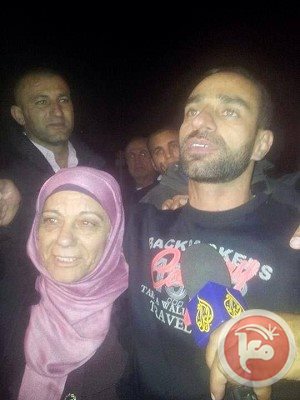 One can only imagine the looks on the faces of Israeli settlers living in Masharef Mountain, near the Hebrew University that overlooks Issawiya, as they watched the celebrations welcoming back Palestinian prisoner Samer al-Issawi.
Issawi returned victorious to his village despite Israel’s desperate attempts to ban celebrations. The occupation forces delayed his release for about 10 hours last Monday, December 23, and erected military checkpoints near the village, but young men and Palestinian mothers insisted on welcoming their hero.
Following his nine-month hunger strike amid the “battle of the empty stomachs,” Issawi was released along with 1,026 other Palestinians in an exchange for the return of Israeli soldier Gilad Shalit.
He wished to remain loyal to those who lost their lives while planning and conducting the Shalit kidnapping, and didn’t want the Israelis to arrest the liberated prisoners all over again, forcing them to serve the rest of their sentences.
From the first intifada until the mid-1990s, Issawi, born 1979, resisted Israeli occupation by setting settler cars of fire and throwing Molotov cocktails. He told Al-Akhbar that he was careful not to be arrested because he wanted to support his family, since his four brothers – Raafat, Medhat, Firas, and Fadi – were held by the Israelis. But all that changed when his brother Fadi was killed in clashes that erupted in Issawiya, following the Hebron massacre in 1994.
The day Samer saw his brother in a pool of his own blood was the last straw.
Issawi was first arrested in 1998 and sentenced to a year and a half in prison for throwing a Molotov cocktail. He was later sentenced to six months in jail for beating up an Israeli soldier, then he was imprisoned again in 2000 for 15 days at the beginning of al-Aqsa intifada. He was later arrested for six months without charges.
“Israeli military attacks escalated during the second Intifada, and we began to hear about airstrikes on Gaza,” said Issawi, revealing that on the first day of his release he joined the ranks of the Democratic Front for the Liberation of Palestine. He formed a five-member cell with friends and conducted 11 shooting operations targeting Israeli vehicles in the Ma’ale Adumim settlement, seven kilometers east of Jerusalem.
These shootings caused material damages and injured one Israeli officer. Once Issawi’s role was revealed, the Israelis hunted him down for a whole year and finally arrested him during the 2002 Operation Defensive Shield in Ramallah.
Issawi refused to appear before the Beit Eil military court and rejected the presence of an attorney because he didn’t acknowledge the legitimacy of the court. He told the judges that it was more of a traveling circus that the Israelis brought along to every territory they occupied.
Issawi was sentenced to 30 years in jail. He wasn’t surprised. Usually sentences in such cases are life in prison, even though no injuries were caused.
He said he was confident he wouldn’t serve his entire sentence, and told the judge, “I will be out before 30 years.” Ten years later, Issawi was released within the “Loyalty to the Free Men” prisoners’ deal.
Issawi as Art
Occupation forces arrested Issawi again on 7 July 2012. His interrogation continued for 30 days, following which he was accused of planning to kidnap Israeli soldiers. Meanwhile, the head of Israeli intelligence in the West Bank threatened to send him back to jail to serve the remaining 20 years of his sentence.
Issawi realized that he was in a serious situation. Hence, on July 27, he started returning two of his meals and settling for a simple one of two slices of bread and a spoonful of labneh and jam.
He maintained this diet for 19 days and was transferred to Nafha Prison. On August 24, he started training his body for an open hunger strike. He wrote a letter to prison services and informed them about his escalation. Back then, he settled for a glass of juice or milk or soup until he cut off food completely and started his open hunger strike on September 14, which also included a strike on water from time to time.
Finally, Issawi reached an agreement with the Israelis last April allowing him to return home to Jerusalem within eight months.
Israelis resorted to different tactics to try and exhaust Issawi into giving up his hunger strike. They sent him on prisoners’ buses to courts and moved him from prison to prison, forcing him to wait for hours for his jailers. They demolished his brother Medhat’s house and attacked him and his family in court despite his deteriorating health.
Samer dropped to 99 pounds and suffered attendant health risks. “When I slept on my right side, I felt numb, and the same with my left side. I also couldn’t sleep on my chest because I had a broken bone,” he said.
With His Family
“Every time I heard about Palestinians and freedom-loving people around the world joining this this battle, I forgot my own pain, mainly after the martyrdom of Mahmoud al-Titi and Mohammed Asfour. There was nothing I could offer them, just insisting on the goals that we put together before the hunger strike. I was also moved by young men protesting for the first time in front of Jerusalem Magistrates Court,” he said.
Issawi said, “The anger I saw in the eyes of the jailers after seven months of the hunger strike proved to me that we succeeded in raising the voices of prisoners and revealing Israeli violations of the prisoner swap deal, while preserving Palestinians dignity. All the goals were accomplished and the only thing left was me going back home.”
On the Palestinian official position, Samer said, “Let’s be honest, all of us Palestinians, from the president to common citizens, can’t even move from one region to the other without Israeli authorization. We don’t count on the official position as much as we count on the will of the people to exercise pressure to force politicians to take more serious steps. A Palestinian negotiator can sign a deal, but it would not be applicable on the ground without popular support.”
Jewish settlers attack local official in south Hebron hills
Ma’an – 30/12/2013

(MaanImages/file)
BETHLEHEM – A group of settlers injured a local Palestinian official in the south Hebron hills on Saturday after attacking him with a rock, a local peace group said Monday.
“On Dec. 28, a group of settlers attacked Palestinians who were plowing a field in the South Hebron Hills village of At Tuwani. Hafez Huraini, a member of the South Hebron Hills Popular Committee, was injured in the attack,” Operation Dove said in a statement.
Huraini told the group that five settlers from the illegal outpost of Havat Maon, four of whom were children, attacked the villagers as they worked on their land.
One of the settlers approached Huraini and hit him over the head with a rock.
Residents from at-Tuwani gathered and managed to force the settlers away, but they continued to throw rocks at the villagers before finally leaving the area.
The attack took place at 2.45 p.m. and Israeli forces arrived in the area at 4.15 p.m., by which time Huraini was at a hospital in Yatta receiving treatment.
“This is resistance: to go daily to your land. We are protesting every day, every night,” Huraini said.
In November, Operation Dove said the illegal outpost of Havot Maon was expanding at a “phenomenal” rate.
Home to around 200 settlers, the outpost is one of the most violent and radical in the occupied West Bank.
Related articles
‘5-year high’ in number of Palestinians killed in West Bank
Ma’an – 31/12/2013
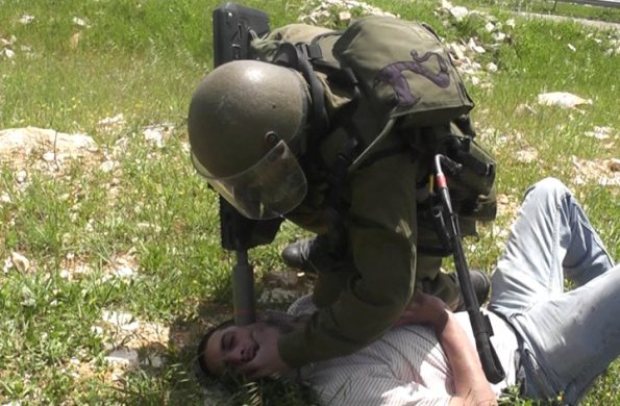
BETHLEHEM – Israel killed 27 Palestinians in the occupied West Bank in 2013, making it the deadliest year for Palestinian fatalities since 2008, Israeli rights group B’Tselem said Monday.
According to data compiled by the rights group, three times as many Palestinians were killed in the West Bank in 2013 compared to 2012.
By contrast, in 2012 Israeli security forces killed eight Palestinians in the West Bank and 246 in the Gaza Strip, including at least 167 in its November war on the coastal territory.
In nine of the 2013 West Bank killings, Israeli military forces raided Palestinian communities during arrest operations.
Four of those killings involved an exchange of fire, according to Israel’s army, while four other cases involved Israeli soldiers opening fire after stones had been thrown at them.
Seven other killings took place while Israeli soldiers were lying in wait to capture alleged stone throwers or after Israeli soldiers had used live fire against Palestinians throwing stones.
One Palestinian was killed when he tried to enter Israel without a permit, one female bystander was shot dead by soldiers, another man was killed after breaking into a military base with a tractor and one man was shot after allegedly assaulting a border police officer.
In the final case, the Israeli border police volunteer retracted his original claim that Antar Shalabi Mahmoud al-Aqraa had tried to stab him before being shot dead.
In the Gaza Strip, nine Palestinians were killed, four of whom were allegedly taking part in hostilities when they were killed and three who were not, B’Tselem said.
In one case the group said it is unknown if the victim was taking part in hostilities. Another Palestinian was assassinated by Israeli forces.
Three-year-old Hala Abu Sbeikha was killed last Tuesday in Gaza following an Israeli airstrike.
Investigations into killings ‘slow and cumbersome’
B’Tselem says that over two years have passed since a new investigative policy by the MAG Corps unit went into effect, in which time 35 Palestinians were killed by Israeli soldiers.
A total of 23 investigations into the fatalities were launched, with the MAG corps reaching a decision on only five of the cases.
In one case, a decision was made not to open an investigation, in three cases the file was closed, and in another an Israeli soldier was indicted and convicted by plea bargain based on his admission, B’Tselem said.
“The sharp rise in fatalities in the West Bank only serves to intensify concern about lack of accountability. Admittedly, MPIU investigations are now launched almost automatically, yet the essence of the investigative mechanism remains unchanged,” B’Tselem Director Jessica Montell said.
“It is slow and cumbersome and decisions are made only years after an incident takes place. Such a mechanism, in which practically no one is held accountable for the killing of Palestinians, does not serve as a deterrent and indicates disregard for human life.”
Related article
Featured Video

Why Hamas Really Attacked Israel on Oct. 7
or go to
Aletho News Archives – Video-Images
From the Archives
Israel: Strategic Ally or Liability?
By Stephen Sniegoski | My Catbird Seat | June 12, 2010
The claim that Israel serves as a valuable ally for the United States is made by both pro-Zionists and much of the anti-war and anti-Zionist Left that is influenced by Noam Chomsky. As a result of the Gaza flotilla massacre, which has caused a world-wide uproar against Israel, the value of Israel to the United States is being publicly questioned in more mainstream foreign policy forums. … continue
Blog Roll
 Aletho News
- Why Hamas Really Attacked Israel on Oct. 7
- Declassified UK exposes British man who fought for ‘Israel’ in Gaza
- West’s death cult in a theater near you
- How the Yandex ‘Russian bots’ lie fell apart
- Burnham’s ‘Russia did Brexit’ ruse crumbles
- Estonia making movies and games to encourage war against Russia
- Four in five new UK jobs taken by foreigners – report
- Here’s what Trump’s latest U-turn really means for Russia and Ukraine
- The Houthis Are Not an Iranian Proxy
- Europe’s Energy Hypocrisy, Russian LNG Profits and US Dependence
- If Americans Knew
- Activists Abused By Israel Return to New Freedom Flotilla Mission
- 60 Minutes won’t tell the full truth about Israeli settler violence
- Nearly 50,000 women, girls killed or severely injured in Gaza since October 2023: UN Women
- ADL is working with AI companies to suppress alleged ‘antisemitism’
- Israeli occupation forces using social media surveillance unit to target hundreds of Palestinians in the West Bank
- Israel’s New – and Terrifying – Security Doctrine
- Israeli Attacks Kill Five in Gaza, Including a four-year-old and a woman
- Air Force Major Who Called for Trump’s Impeachment Held in Solitary Confinement
- It’s a Genocide, I’m Into It’: Seinfeld Mocks Protest over Palestinian Children Killed
- Universities fire dozens amid pressure from Zionist billionaires
- No Tricks Zone
- New Study Suggests Large Regions Of The Pacific Ocean Have Been Cooling For The Last 80 Years
- Germany’s Green Energy Debacle: High Energy Costs Force Kahla Porzellan to Close After 182 Years!
- New Study: 50 Years Of The Most Aggressive ‘Net Zero’ Policies Can Only Affect The Global Climate By 0.03°C
- US September “Heat” Was No Record…Many Records Set Decades Ago
- Latest European Green Energy Debacle; Portugal’s Largest Flagship Solar Park Insolvent!
- Green Energy Debacle: German Expert Professor Fritz Vahrenholt Warns Of Severe Economic And Social Consequences
- Two More Paleo Reconstructions Affirm Meters-Higher Sea Levels Across Ireland, Brazil 7000-6000 Years Ago
- New Study: Earth And Venus Surface Warmth Largely Explained By Convection And Lapse Rate, Not CO2 Or Radiation
- 2025 Nature Paper Claiming Worsening Global Drought Gets RETRACTED …Heavily Flawed
- New Study: ‘Global Drought Shows No Detectable Recent Acceleration Under Climate Warming’

