Senior Hamas official disappointed with Arab-African Summit stance on Palestine
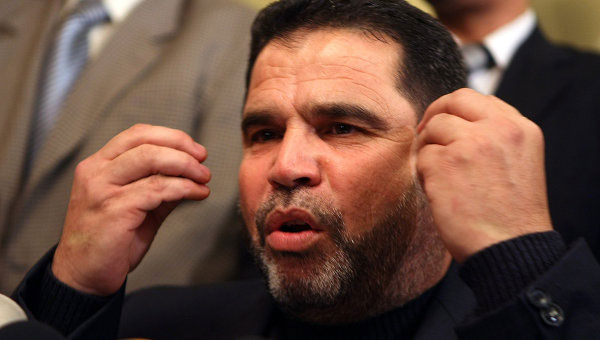
Salah Al-Bardawil
MEMO | November 21, 2013
A senior leader of the Islamic Resistance Movement Hamas, Salah Bardawil, said he was disappointed with the third Arab-African Summit in Kuwait and the Arab Peace Initiative Committee which endorsed the Palestinian-Israeli negotiations, believing they represent “concrete proof of the Arab regimes’ intention to escape their responsibilities towards Palestine.”
Bardawil told Al-Quds Press that: “the Palestinians have high hopes in the Arab and Islamic nations and the international community as a whole to play an active role in pressuring the Israeli occupation to retreat from its crimes against the Palestinians; whether it is the siege imposed on Gaza or the Judaisation of holy sites or its daily assaults against the Palestinians. We also hoped that the Arab-African summit would play an active role in protecting the Palestinian refugees, but it is clear that the level of action is much lower than the level of speech.”
Bardawil added that even the message conveyed by the Arab-African Summit to the Palestinians is disappointing: “the Arab-African summit has conveyed a negative message to the Palestinians, the Arabs and supporters of democracy. The problem does not lie in endorsing the negotiations with Israel per say, but rather supporting the negotiations indicates that the Arab regimes are trying to escape their commitments towards the Palestinian issue by handing it over to a politically failing party. Yet the most serious issue is that the Arab-African Summit’s position is anti-democratic by accepting to host a party that had failed in the elections as the legitimate representative of the Palestinian people, while the elected-party is being besieged in the Gaza Strip. This position is contradictory and hostile to democracy and unfortunately consistent with the American-Israeli position.
Israeli military detains driver, confiscates vehicle donated for transport of schoolchildren in South Hebron Hills
CPTnet | November 19, 2013
On 18 November 2013 at 11:00, Mufid Abu Qbeita—the driver for the students who live in the South Hebron Hills area that the Israeli military has designated as “Firing Zone 918”—was driving children back to their homes from Al Fakheit school. Israeli Security Forces and representatives of the Israeli Civil Administration stopped him near Al-Sfai, one of the villages in the Firing Zone, while he had six children in the car.
Soldiers took his ID and detained him for thirty minutes; afterwards, they told him to follow them to Gush Etzion Police Station. Two soldiers accompanied Abu Qbeita in the car. He had to leave all six children in Al-Sfai.
Abu Qbeita informed the soldiers that the jeep belonged to the Palestinian Ministry of Education and was donated by Japan, but they still forced him to drive to the settlement of Gush Etzion. After several hours, they released him, but the jeep remains at the police station. When Abu Qbeita asked why the soldiers had confiscated the jeep, they answered, “Because you were driving in the firing zone of the South Hebron Hills which is not allowed.”
CPT, EAPPI and Operation Dove take turns accompanying Abu Qbeita and the SUV from the city of Yatta into the Firing Zone during the week, in order to prevent incidents like the above occurring, but until recently, once in the zone, he had not faced problems. On 27 October, eight Israeli soldiers detained him, verbally abused him, and then beat him on his abdomen, face, and back. Afterwards, they forced him drive over spikes used to stop vehicles at army checkpoints to puncture the SUV’s tires.
Related articles
- SOUTH HEBRON HILLS: Despite court order, Israeli military intimidates villagers in ‘Firing Zone 918′ (alethonews.wordpress.com)
- Israel to displace Palestinian community south of Hebron (altahrir.wordpress.com)
- Israeli forces assault Palestinian school bus driver near Hebron (altahrir.wordpress.com)
- Israeli military rules that mock attacks in Palestinian villages are acceptable (imemc.org)
- Military Training Amid Villages in South Hebron Hills (alethonews.wordpress.com)
UN adopts new resolutions on Palestine
MEMO | November 15, 2013
The Special Political and Decolonisation Committee (Fourth Committee) of the General Assembly of the United Nations has adopted eight new resolutions concerning the plight of the Palestinians. The drafts were taken on board with large majorities voting in favour.
The resolutions covered the work of the United Nations Relief and Works Agency for Palestine Refugees in the Near East (UNRWA) and an intention for the committee to investigate “Israeli practices affecting the human rights of the Palestinian people and other Arabs of the Occupied Territory”.
Predictably, Israel voted against all of the resolutions, being joined variously by Cameroon, the United States, Canada, Australia and Panama. Equally predictable abstentions included Micronesia, Palau, Vanuatu and South Sudan.
The resolutions relating to UNRWA were backed consistently by more than 160 UN members states, whereas those committing the UN to look at the human rights situation in the occupied Palestinian territory saw fewer in favour, just under 90 countries, with far more abstentions (70 or more).
The resolutions reflected the extremely difficult living, economic, social and humanitarian conditions faced by Palestinian refugees in the Occupied Palestinian Territory, particularly in the Gaza Strip, as a result of the continued Israeli military aggression and siege. They emphasised the vital and important role of UNRWA and the tireless efforts of its staff in implementing its mandate until a just solution to the Palestinian refugee issue is achieved.
After the votes, Ambassador Riyad Mansour, the Permanent Observer of the State of Palestine to the United Nations, expressed the appreciation and gratitude of the state to all the countries that voted in favour of the new resolutions. He thanked them in particular for their support for UNRWA, which should ensure that it can continue with its mandate to help Palestinian refugees. He noted that the General Assembly was reaffirming the Palestinians’ right to self-determination and the refugees’ right to return to their land.
The nations of the world called on Israel to comply with its obligations under international law, the 2004 advisory opinion of the International Court of Justice concerning the apartheid wall and all UN resolutions. The application of the Fourth Geneva Convention to the Occupied Palestinian Territory, including East Jerusalem, was also reaffirmed.
Ambassador Mansour said that the international community must make a serious collective effort to put an end to the violations committed by Israel and ensure that it complies fully with all legal obligations in order that a just settlement is reached for the Palestinian issue.
Palestinian farmer injured by Israeli gunfire in the Gaza Strip
By Rosa Schiano | International Solidarity Movement | November 16, 2013

Mneifi Abu Abdullah. (Photo by Rosa Schiano)
Gaza, Occupied Palestine – On Wednesday, 13th November, gunfire by Israeli occupation forces injured a Palestinian farmer near al-Maghazi refugee camp, in the center of Gaza strip.
Mneifi Abu Abdullah, age 25, was working with three other farmers about 600 meters from the separation barrier.
Abu Abdullah is a worker who ears 30 shekels per day in the fields.
Farmworkers near al-Maghazi are used to hearing gunshots. The Israeli military presence is constant in areas along the barrier.
On Thursday, some of Abu Abdullah’s uncles, as well as another farmer present during the shooting, visited his room in al-Shifa hospital.
The witness said he suddenly heard three shots, injuring Abu Abdullah in at his right shoulder, around 2:50 pm. Another bullet struck near his feet.
The farmers transported Abu Abdullah roughly one kilometer before reaching an ambulance that brought him to al-Aqsa Martyrs hospital in Deir el-Balah.
The witness added that he had not seen Israeli soldiers, but military vehicles had been moving along the barrier.
On the same day in Deir el-Balah, another farmer, from Abu Daher family, was wounded in his leg by Israeli gunfire and rushed to al-Aqsa Martyrs hospital.
Abu Abdullah is married and has two children. His work in the fields is his family’s only source of livelihood.
He was transferred from al-Aqsa Martyrs hospital to al-Shifa hospital. The bullet entered and exited his shoulder. He needs surgery, as the bullet severed a nerve.
The ceasefire of 21st November 2012 established that Israeli occupation forces should “refrain from hitting residents in areas along the border” and “cease hostilities in the Gaza Strip by land, by sea and by air, including raids and targeted killings.”
However, Israeli military attacks by land and sea followed from the day after the ceasefire, and Israeli warplanes fly constantly over the Gaza Strip. Seven civilians have been killed by Israeli occupation forces since the end of their last major offensive, “Operation Pillar of Defense,” and more than 130 have been wounded.
These attacks on the Gaza Strip continue amid international silence.
Related articles
- This Week in Palestine, November 15th, 2013 (indybay.org)
- Israeli navy captures two Gaza fishermen, including one injured by gunfire (alethonews.wordpress.com)
- Israeli troops enter Gaza every three days – Oxfam (altahrir.wordpress.com)
Israeli navy captures two Gaza fishermen, including one injured by gunfire
By Rosa Schiano | International Solidarity Movement | November 13, 2013
Gaza, Occupied Palestine – On the morning of Sunday, 10th November, brothers Saddam Abu Warda (age 23) and Mahmoud Abu Warda (age 18) were captured by the Israeli navy in Palestinian waters off the Gaza Strip. They were released later in the evening and their boat was confiscated. Mahmoud was injured by a bullet in the right side of his abdomen.
We went to visit the two young fishermen in their home in the town of Jabaliya, in the northern Gaza Strip.
In the absence of electricity, the house was dark like most homes in Gaza Strip, which is stifled by the siege and a severe fuel crisis. Without electricity, water could not reach the house’s plumbing system.
“We cast our nets into the sea at a distance of about 500 meters from the forbidden fishing area,” Saddam told us. “We were far away from the Israeli gunboats.” The two fishermen were on a small boat, or hasaka, without an engine.
Saddam told us that an Israeli gunboat approached their boat. The soldiers shouted for them to leave in less than five minutes. “We had to cut our nets in order to flee,” Saddam said. “The soldiers came closer to us and started shooting at our boat.”
Without a motor, the two fishermen could not escape. The Israeli soldiers ordered the two fishermen to undress and jump into the water. Meanwhile, they continued to open the fire. “I was shocked,” Saddam said. “I could not move. They were shooting, and I thought I would be killed.”
As we listened to Saddam, F-16 fighter jets rumbled overhead at low altitudes, a constant threat in the darkness.
“I shouted, asking the soldiers to stop shooting and save our lives,” Saddam said. According to him, another Israeli gunboat reached them and attacked the fishermen using water cannons. The two fishermen jumped into the water. “Three Israeli gunboats surrounded us, our boat was now far away, and the water was cold,” he added. The soldiers told them to swim to the forbidden maritime area. “I was scared. My brother was away from me, and the soldiers kept firing. He was wounded. He could not swim. I reached him to save him. His blood was everywhere in the sea. Two Israeli dinghies reached us. The soldiers took my brother Mahmoud and closed his wound to stop the bleeding. They didn’t take me, too. They left me in the water. They told me to swim to the marker that delimits the maritime area allowed by Israel, then took me. They covered my head. I could not see anything. They pointed a gun at my head and cuffed my hands and feet. They hit me, kicking me on the back. Then I fainted for about an hour. I don’t remember anything more.”

Mahmoud (left) and Saddam Abu Warda. (Photo by Rosa Schiano)
The two fishermen were transported to a medical center in the port of Ashdod. “When I woke up, I saw my brother beside me,” Saddam said. “Two soldiers then took me to a special room and interrogated me. They asked me why we were fishing in the forbidden area. I told them that we were 500 meters away from the limit, and that the soldiers forced us to swim until we reached it. An investigator asked me how my brother was wounded, since it was not by the Israeli soldiers. I told him my brother was wounded by Israeli gunfire. The investigator tried to convince me that Mahmoud was not wounded by the soldiers. Then I told him that three Israeli gunboats were shooting over our heads and my brother’s blood was everywhere in the sea”.
The investigators then showed Saddam a map on a laptop, placing their boat in the forbidden maritime area. Investigators interrogated the two fishermen individually. Afterwards, the two brothers were detained in another room, and at the end of the day, were transferred to Erez, where they received another interrogation. “They asked me about my family, my neighbors, fishermen, and every detail of my life,” said Saddam. “Then they showed me a map and asked me about every house around my home. They also asked me how many boats I had.”
The Israeli port of Ashdod now holds three boats belonging to Saddam’s family. In the past, in fact, other members of the Abu Warda family had been arrested and seen their boats confiscated. Now they have none left.
After interrogation, the fishermen were detained in a cell for two hours before being released through the Erez checkpoint later in the evening.
Saddam’s family has 15 members. Fishing is their only source of livelihood. The other eight brothers are also fishermen. They don’t have any other source of income, and they don’t believe they will get their boats back.
Mahmoud showed us the wound on the right side of his abdomen. The bullet did not enter his body, but brushed it. Doctors in the Ashdod medical center closed his wound with two stitches. Mahmoud also told us of the physical and verbal abuse he received from Israeli soldiers. We asked him if he will return to fishing. “Of course,” he said. “We have no choice. We have to face the danger.”
What its fishermen earn only allows the Abu Warda family to survive. Sometimes, they return home without anything. Other times, what they earn only covers the cost of fuel.
The fishermen told us that they would like more support from international associations, especially when they are in the north of the Gaza strip. There, attacks are more frequent and the majority of confiscated boats have been lost.
We continue to hope that one day the international community will break its silence and force Israel to stop attacking Gaza fishermen, and to release all their boats it has confiscated.
Background
Israel has progressively imposed restrictions on Palestinian fishermen’s access to the sea. The 20 nautical miles established under the Jericho agreements, between Israel and the Palestine Liberation Organization (PLO) in 1994, were reduced to 12 miles in the Bertini Agreement of 2002. In 2006, the area Israel allowed for fishing was reduced to six nautical miles from the coast. After its military offensive “Operation Cast Lead” (December 2008 – January 2009) Israel imposed a limit of three nautical miles from the coast, preventing Palestinians from accessing 85% of the water to which they are entitled under the Jericho agreements of 1994.
Under the ceasefire agreement reached by Israel and the Palestinian resistance after the Israeli military offensive “Operation Pillar of Defense” (November 2012), Israel agreed that Palestinian fishermen could again sail six nautical miles from the coast. Despite these agreements, the Israeli navy has not stopped its attacks on fishermen, even within this limit. In March 2013, Israel once again imposed a limit of three nautical miles from the coast. On 22 May, Israeli military authorities announced a decision to extend the limit to six nautical miles again.
Related article
- Army Invades Southern Gaza (imemc.org)
Soldier killed in Occupied Palestine as Israel calls for “intelligent” settlements
Al-Akhbar | November 13, 2013
A 16-year-old Palestinian stabbed an Israeli soldier to death on a bus on Wednesday in an attack apparently motivated by the jailing of his relatives in Israel, police said.
The death came as Israel backtracked on an announced plan to expand illegal settlements in the West Bank, calling for “intelligent and coordinated” construction despite international condemnation.
The killing, in the town of Afula in Occupied Palestine, follows a surge in violence in the West Bank, where 10 Palestinians have been shot dead by Israeli troops and three Israelis killed since peace talks resumed in July.
Israel’s northern police commander, Ronny Attia, said the attacker was from the West Bank town of Jenin, and that he was in custody.
According to police, the Palestinian youth did not have a permit to be inside Israel.
“By his account, his uncles are in prison in Israel and this is the reason he decided to carry out the terrorist attack,” Attia said.
Israel refers to many acts of protest against the decades-long occupation – whether violent or non-violent – as terrorism.
Police spokesman Micky Rosenfeld said the soldier, aged 18, was pronounced dead in hospital.
The attack occurred a day before the one-year anniversary of the Israeli Pillar of Cloud offensive on Gaza, in which six Israelis and more than 100 Palestinian civilians were killed in eight days.
Peace talks orchestrated by US Secretary of State John Kerry have faced serious obstacles, including the high rate of Palestinians incarcerated in Israeli prisons, many in indefinite administrative detention, as well as extensive plans to expand Israeli settlements in the West Bank.
A report by British newspaper The Guardian on Tuesday revealed that Israeli troops conducted mock arrests and raids in the West Bank without informing the local population that their actions were drills, causing extreme distress to many Palestinians.
The attack came as Israel’s Intelligence Minister Yuval Steinitz urged “coordinated” settlement building, a day after a new plan for settler homes in the West Bank drew international condemnation.
Settlements in Israeli-annexed east Jerusalem and the West Bank “must be done in an intelligent and coordinated way,” Steinitz told Israeli public radio on Wednesday.
The settlements are deemed illegal under international law.
Israeli Prime Minister Benjamin Netanyahu late Tuesday cancelled plans to build 20,000 new settler homes in the West Bank, hours after their announcement sparked US and Palestinian criticism.
State Department spokeswoman Jennifer Psaki had said Washington was not only concerned by the initial announcement, but also “surprised” and sought an explanation from Israel.
She repeated the longstanding US position on settlements that “we do not accept the legitimacy of continued settlement activity.”
Netanyahu then ordered Israeli Housing Minister Uri Ariel “to reconsider all of the steps for evaluating planning potential (for the settler homes) that he distributed without any advance coordination,” the premier’s office said.
(Reuters, AFP, Al-Akhbar)
Related video
Two Broken Cameras
By Yossi Gurvitz | November 11, 2013

Israeli soldiers try to arrest Activestills photographer Yotam Ronen, as Palestinian and international activists block 443 highway, which connects Tel Aviv and Jerusalem through the West Bank, during a protest against the violence of the Israeli settlers, October 16, 2012.
One morning last September, Nadel Shafiq Taher Shatiya heard the loudspeakers of the mosque in his village, in the Nablus region, announce that settlers were approaching the village’s land. Shatiya, a photojournalist by trade, grabbed two cameras and raced to the scene.
Based on his account, it turns out that when he arrived, several tractors and settlers – who, according to the reports received by Shatiya, came from thenearby Elon Moreh settlement – were trying to plough the village’s lands while several dozen Palestinian farmers tried to expel them. A settlement security vehicle showed up, and two settlers stepped out of it (Shatiya believes he can identify them), and started shooting live ammo at the farmers. Some of them took cover; Shatiya kept taking photos. That’s his job.
About ten minutes later, a large IDF force arrived at the scene, and did what it usually does: joined the settlers. The soldiers fired tear gas canisters and stun grenades at the farmers, and as the area is full of dry thorns, a fire broke out. The Palestinian farmers tried to put it out, and the two armed settlers demanded that the troops stop them (Yours truly was present for another incident, in which IDF soldiers fired at Palestinians who tried to put out a fire which had erupted after a demonstration due to canister fire.) The soldiers confronted the Palestinians, and Shatiya saw – and documented – one of the soldiers pull out a knife and threaten one of the farmers.
Our brave troops don’t know how to deal with nonviolent resistance. Major General (res.) ‘Amon Gilad became famous abroad when he told the American embassy “we don’t do Ghandi very well.” In such cases, the IDF’s instinct is to use excessive force. It makes for bad publicity, and the soldiers know that – so they try to suppress the evidence.
Shortly after Shatiya photographed the knife-wielding soldier, other soldiers assaulted him and took his cameras and camera bag from him. He witnessed another soldier tearing a phone out of the hands of a farmer, who was using it to document the incident; the farmer was beaten and detained.
So far, no surprises. Anyone who has either served in the West Bank or demonstrated there is familiar with the loving care the soldiers lavish on photographers. But in Shatiya’s case, the story underwent an unusual twist: the soldiers took his cameras to an officer, who turned them over, along with his camera bag, to a settler. Shatiya protested to the officer, saying “you’re in charge of security, and if, as part of your duty, you want to confiscate the cameras, keep them; why do you give them to the settler?” In return, the officer blamed Shatiya for the fire. Later on, Shatiya saw a settler moving among the detained Palestinians, telling the soldiers who should be kept in detention.
Turning the cameras over to the settler caused some fuss, with Israeli DCO officers telling the army it had no authority to detain journalists or confiscate their cameras, that only policemen may do so. This is inaccurate, by the way: in the West Bank soldiers have the same authority as cops, until the latter reach the scene. The Military Commander is the sovereign in the West Bank, as it is legally considered to be held under belligerent occupation; the police only act in the West Bank because they have been delegated that authority by the Military Commander. In the end, several officials promised Shatiya he’d get his cameras back, but afterwards they simply ignored and then began avoiding him.
Some 12 days after the incident, the Israeli DCO contacted the Palestinian DCO, and informed the latter Shatiya could come and retrieve his cameras. He found them broken and rubbed with sand. The damage to the cameras is estimated at 21,000 NIS (about 6,000 USD). That’s what happens when you try to document the most moral army between the Jordan and the Mediterranean while it fails to move into Ghandi mode.
So, to sum it up, we’ve had settler violence, immediately backed up by the army; the destruction of evidence by soldiers, using a settler for this purpose; yet another example of problematic cooperation between soldiers and settlers, where a settler tells soldiers who to detain and they obey, and, finally, another example of the security forces in the West bank misunderstanding their role. There’s a strain of thinking in Israel, particularly among the center and on the left, which says that the problem in the West Bank is the settlers, and that the soldiers are not at fault.
But the soldiers know full well that they are at fault – Had they felt no guilt, they wouldn’t have felt the need to destroy evidence, and they would neither have broken the farmer’s cell phone nor given Shatiya’s cameras to a settler, in order to rid themselves of responsibility for taking the cameras away from him. In the West Bank, the soldiers and the settlers are part of the same pattern, the pattern of an occupation whose inner logic is annexation by a quiet population transfer of the Palestinians.
Yizhak Shamir, an Israeli prime minister, once said that one is allowed to lie for Eretz Israel (the ‘Land of Israel”). The IDF soldiers take this one step further: in the name of Eretz Israel, they destroy evidence and intimidate journalists and innocent civilians.
Related video

Territorial Domination in the West Bank
Sam Mayfield | October 2, 2009
Settlement expansion in the Occupied Territories of Palestine is about more than constructing houses for Jewish settlers. Palestinian farmland is being turned into industrial space. Illegal outposts on Palestinian land are protected by Israeli military. Roads, if Palestinians are allowed to drive on them, are often blocked without warning.
I toured Illegal settlements and outposts in the West Bank with Dror Etkes.
Featured Video

Why Hamas Really Attacked Israel on Oct. 7
or go to
Aletho News Archives – Video-Images
From the Archives
Israel: Strategic Ally or Liability?
By Stephen Sniegoski | My Catbird Seat | June 12, 2010
The claim that Israel serves as a valuable ally for the United States is made by both pro-Zionists and much of the anti-war and anti-Zionist Left that is influenced by Noam Chomsky. As a result of the Gaza flotilla massacre, which has caused a world-wide uproar against Israel, the value of Israel to the United States is being publicly questioned in more mainstream foreign policy forums. … continue
Blog Roll
 Aletho News
- Why Hamas Really Attacked Israel on Oct. 7
- Declassified UK exposes British man who fought for ‘Israel’ in Gaza
- West’s death cult in a theater near you
- How the Yandex ‘Russian bots’ lie fell apart
- Burnham’s ‘Russia did Brexit’ ruse crumbles
- Estonia making movies and games to encourage war against Russia
- Four in five new UK jobs taken by foreigners – report
- Here’s what Trump’s latest U-turn really means for Russia and Ukraine
- The Houthis Are Not an Iranian Proxy
- Europe’s Energy Hypocrisy, Russian LNG Profits and US Dependence
- If Americans Knew
- Activists Abused By Israel Return to New Freedom Flotilla Mission
- 60 Minutes won’t tell the full truth about Israeli settler violence
- Nearly 50,000 women, girls killed or severely injured in Gaza since October 2023: UN Women
- ADL is working with AI companies to suppress alleged ‘antisemitism’
- Israeli occupation forces using social media surveillance unit to target hundreds of Palestinians in the West Bank
- Israel’s New – and Terrifying – Security Doctrine
- Israeli Attacks Kill Five in Gaza, Including a four-year-old and a woman
- Air Force Major Who Called for Trump’s Impeachment Held in Solitary Confinement
- It’s a Genocide, I’m Into It’: Seinfeld Mocks Protest over Palestinian Children Killed
- Universities fire dozens amid pressure from Zionist billionaires
- No Tricks Zone
- New Study Suggests Large Regions Of The Pacific Ocean Have Been Cooling For The Last 80 Years
- Germany’s Green Energy Debacle: High Energy Costs Force Kahla Porzellan to Close After 182 Years!
- New Study: 50 Years Of The Most Aggressive ‘Net Zero’ Policies Can Only Affect The Global Climate By 0.03°C
- US September “Heat” Was No Record…Many Records Set Decades Ago
- Latest European Green Energy Debacle; Portugal’s Largest Flagship Solar Park Insolvent!
- Green Energy Debacle: German Expert Professor Fritz Vahrenholt Warns Of Severe Economic And Social Consequences
- Two More Paleo Reconstructions Affirm Meters-Higher Sea Levels Across Ireland, Brazil 7000-6000 Years Ago
- New Study: Earth And Venus Surface Warmth Largely Explained By Convection And Lapse Rate, Not CO2 Or Radiation
- 2025 Nature Paper Claiming Worsening Global Drought Gets RETRACTED …Heavily Flawed
- New Study: ‘Global Drought Shows No Detectable Recent Acceleration Under Climate Warming’

