Palestinian medical sources have reported that a seven-year-old child lost his right eye after being shot with a rubber-coated metal bullet fired by an Israeli soldier in Al-Fawwar refugee camp, south of the southern West Bank city of Hebron on Saturday.
The sources added that the child’s mother was also shot by a rubber-coated metal bullet in her shoulder.
The mother and her child were trying to return to the refugee camp; they were far from clashes taking place between the soldiers and local youths.
Eyewitnesses said that the mother and her child were trying to cross a road in an attempt to find a way back to their home after the army closed the main entrance of the camp.
Nasser Qabaja, head of the Disasters Unit at the Red Crescent in the southern part of the West Bank, stated that an ambulance transferred the child from Abu Al-Hasan Hospital to the Hebron Governmental Hospital, before moving him to the St. John Eye Hospital in occupied Jerusalem.
Furthermore, dozens of soldiers occupied rooftops of a number of homes in the area, and fired gas bombs, concussion grenades and rubber-coated metal bullets leading to a large number of injuries, mainly due to the effect of teargas inhalation.
September 28, 2013
Posted by aletho |
Ethnic Cleansing, Racism, Zionism, Subjugation - Torture | Hebron, Israeli Occupation Forces, Palestine, West Bank, Zionism |
Leave a comment

Illegal settlers and Israeli army invading Sarta (photo by Nima Musleh)
Sarta, Occupied Palestine – Settlers burnt around 35 olive trees in the Palestinian village of Sarta late on Thursday night, following the area being declared a closed military zone in preparation for the construction of a new settler road.
Around 60 settlers from the illegal Bruchin settlement and surrounding area, many armed with guns, set fire to the trees late on Thursday 26th September. At around midnight, the settlers arrived in Sarta. The town mayor asked the Palestinian Authority to liaise with the Israeli army in order to intervene, but when Israeli forces arrived on the scene they informed villagers that the area had been declared closed and told them to leave.
Two days earlier, town residents witnessed four bulldozers arrive in the village to prepare the ground for the construction of the road, which will connect the settlement with road five and is part of an expansion plan for the settlement which will take it from 40 houses to around 550.
The proposed road and settlement expansion is a source of concern to local Palestinians, who stand to lose much of their land under new plans, including local features such as a 500-year-old cemetery.
September 27, 2013
Posted by aletho |
Ethnic Cleansing, Racism, Zionism | Human rights, Israeli settlement, Palestine, Zionism |
Leave a comment
The reigning state of despair among Palestinians has been growing steadily since the end of the Second Intifada. Day after day, the Israeli occupation expands as the options for Palestinians, ostensibly represented by a new generation of the Palestinian National Authority (PNA) eager to seek a “settlement,” grow narrower. The killing has not abated, nor the settlement movement and the Judaization of Jerusalem. The “peace process” track continues as a “strategic option.” But the streets have not come to a rest since the Second Intifada, as they didn’t after the First Intifada and during the period of the Oslo Agreement.
Although, the frequency of clashes and confrontations might have decreased, the revolution continues to simmer, awaiting a spark to ignite. Today the situation in the West Bank evokes the period leading up to the First Intifada. The pace of clashes is rising and military operations are intensifying, despite the project for peace.
Ramallah – In a matter of hours, attention shifted from the far north of the West Bank to the south. In Qalqilya in the north, a Palestinian citizen named Nidal Emer led Israeli air force pilot Tomer Khazan to an empty spot. He killed him, in order to swap his body with that of his detained brother. Nidal took the initiative, but ended up like his brother: in an occupation cell.In Hebron in the south, amid daily clashes between occupation forces and residents, a Palestinian sniper shot at stationed soldiers, killing one and injuring another. The occupation forces retaliated, closing the city and waging a sweeping campaign of arrests, but were unable to find the “unidentified shooter.”
Al-Aqsa Martyrs Brigades – Knights of the Galilee, part of Fatah, claimed the operation in Qalqilya. Some people were optimistic about the movement’s return to special operations and the escape of the Fatah genie from the PNA’s bottle. However, its credibility was soon called into doubt the next day, when it issued another statement also claiming the Hebron operation, which had already been claimed by al-Asifa, part of Fatah-Intifada, which had split from the Fatah Movement in 1983.
On Israeli Radio 2, an Israeli security official spoke about the continuing security coordination between the PNA and Israel to capture the “killer” in Hebron. The father of the man from Qalqilya denounced his son to the station. “My son is a killer and deserves to be killed,” he said.
But it does not matter anymore. What matters is that Palestinian youth can take the initiative from outside of the quarreling factions and narrow interests of the political parties. Two soldiers were killed in less than 24 hours, something that has not happened since the Second Intifada, whose anniversary falls next Friday.
The details of the Hebron operation remain unclear, despite the maniacal security operation, which led to the arrest of a man close to 100 years of age for owning an Ottoman era rifle. The identity of the Hebron sniper is not yet clear, however, and the statements by the factions claiming the operation have not been verified.
Meanwhile, military experts in the occupation army have maintained that the sniper was professional and successfully carried out the operation in its three stages: locating the perfect spot, selecting a target, and the withdrawal of security. The sniper picked a soldier standing on open ground, so that the bullet would not ricochet behind him. However, the downside of the operation were the ensuing squabbles between the parties and their lack of credibility, exposed after contradictory statements were issued within less than an hour by two factions with a long history of political disagreements.This negative fallout also plagued the Second Intifada and was one of the most important factors in its collapse. However, the breadth and size of the clashes of last month, especially in the West Bank and Jerusalem camps, could herald a new uprising.
Amidst all the fury, a young group calling itself the Intifada Youth Coalition is calling for mobilization and protests to protect sacred sites next Friday, which coincides with the anniversary of the Second Intifada. A video made by the coalition is being widely shared on social media sites. In it, a young man calls for confronting the occupation on all fronts set to a song by Julia Boutros, Ya Thuwar al-Ard, which brings to mind the Second Intifada.
Despite differences between the factions, there is a general consensus rejecting negotiations. Several factions launched a popular campaign against the negotiations at a press conference in Ramallah, attended by all PLO factions.
Senior Fatah officials have also expressed their rejection of the negotiations process, including central committee member Abbas Zaki, who declared that negotiations were futile and called for “struggle and insisting on Palestinian constants.”
Even figures who had participated in the Oslo process have expressed, albeit timidly, their regret at signing the agreement, including Yasser Abed Rabbu and Ahmed Qorei. The head Palestinian negotiator Saeb Erekat went as far as complaining that “Israel is not fulfilling its obligations.”
However, this was not enough to inspire the Palestinian leadership to halt or even postpone negotiations for one day, despite the fact that three young men were martyred in Qalandiya. It did not even review the “legitimacy” of its choice, which contradicts the consensus of PLO factions, nor did it change its policies or strategies, which seem to be wholly focused on turning “Palestinian life into negotiations.”Seven martyrs have fallen since the beginning of the latest round of negotiations two months ago. They were all from the camps where the First Intifada erupted and caused the most trouble during the Second.
It is enough to see the sacrifices of Jenin camp, which was back in the headlines following the martyrdom of Islam al-Toubassi at the beginning of this week. The incident led to a limited military operation at the nearby Jalama checkpoint, before the PNA’s security forces managed to suppress the camp’s anger, prohibiting its residents from reaching the frontline areas.
But Jenin is the not the only camp where the revolution is still simmering. In Qalandiya, three Palestinians were recently martyred and clashes continue near the Qalandiya occupation checkpoint nearby. In al-Oroub and al-Fawwar camps in Hebron, clashes have been occurring on a daily basis with the occupation forces stationed nearby, far from the eyes of the media and the PNA’s forces.
Current conditions and factors do not provide Palestinians with any other option. Al-Aqsa mosque faces daily raids and there have been calls by Israelis for a million person march on the holy site to coincide with the anniversary of its storming by Ariel Sharon, which laid the ground for the Second Intifada.
Popular mobilization against Israel is also on the rise inside the 1948 territories, particularly in the Negev and the Triangle, which also coincides with the October 1 revolt that led to the martyrdom of 13 Palestinians from the occupied territories.
It seems the break out of a third intifada is only a matter of time. Friday could be the day the phoenix rises from the ashes.
The PNA Impedes the Intifada
The PNA has cloaked all options following Oslo under the guise of the “national project.” Anyone who objects or dissents falls outside this project. Under this slogan, the Palestinian resistance was liquidated in the West Bank, including the al-Aqsa Brigades, where the PNA’s forces are the only power on the ground. Any weapons not in its hands have become outlawed.The PNA suppressed all action against negotiations, supported by its wide popular base which follows the Fatah movement and the regional winds that put wind in its sails. The PNA has the money and media and is capable of manipulating the discourse. Sometimes it dons the robe of piety, accusing its detractors of debauchery and blasphemy, as it does with the PFLP, for example.
With Hamas, accusations of bartering with religion and extremism are mounted. Fatah’s minister of awqaf (endowments) unabashedly declared a fatwa for “revolution against Hamas” and forbade any opposition to the president in the West Bank.
In political differences it finds an opportunity to avoid facing reality, accusing others of instigating a crisis.
The bedlam following the killing of the two soldiers is the responsibility of Hamas, according to Fatah spokesperson Usama al-Qawasimi, who said that “Hamas’ credibility in the Palestinian street suffered a serious blow after the uncovering of their real schemes and their use of religion and resistance as a cover. If Hamas wanted to change the situation and aim for resistance, it has to start resisting in Gaza and to maintain the truce with Israel at gunpoint.”
September 26, 2013
Posted by aletho |
Ethnic Cleansing, Racism, Zionism, Solidarity and Activism, Timeless or most popular | Al-Aqsa Mosque, Fatah, Hebron, Jenin, Jerusalem, Palestine, Palestinian National Authority, Qalqilya, Second Intifada, West Bank, Zionism |
Leave a comment
Just as US President Barack Obama has been pushing for peace talks between Israel and the Palestinian authorities to allegedly find a solution to the region’s most contentious issue, Israeli Deputy Minister for Military Affairs Danny Danon candidly theorized that Tel Aviv should simply annul the Oslo Accords and rethink the entire “Palestinian problem” from a different perspective.
Needless to say, the sheer Zionist nature of Danon’s point of view has incensed pro-Palestinian political activists across the board, whether moderate or radical in their views.
Israel has not only stolen Palestinians’ lands from under their feet, but is looking to delegitimize Palestinians’ rights to self-determination and territorial sovereignty by reneging on the Oslo Accords.
Dannon’s political folly, as some have decided to call it, is actually fast becoming a trend amid pro-Zionists and so-called right wingers.
Earlier this September, a coalition of 16 called on Israei Prime Minister Benyamin Netanyahu to hand out US Secretary of State John Kerry a letter in which they argue the Oslo Accords are no longer historically or politically relevant and that as such, they would like the US to support the complete annulment of such accords. The coalition group also openly called on the US to abandon the idea of a Palestinian state altogether as it does not serve Israel’s interests in the region.
The letter was signed by Danny Danon and Ze’ev Elkin, the Israeli deputy foreign minister, alongside four other deputy ministers and 10 MKs, out of Israel’s 120-member Knesset.
The letter read, “Twenty years have elapsed since the implementation of the wretched Oslo Accords. We call on the Prime Minister to present to the US Secretary of State our unequivocal position that Israel will not return to the Oslo plan, and will not hand over any more regions of the homeland into Palestinian hands.”
In an opinion piece published on September 21, days after Kerry was made aware of such a change of tide, Danon wrote, “Only by officially annulling the Oslo Accords will we have the opportunity to rethink the existing paradigm and hopefully lay the foundations for a more realistic modus vivendi between the Jews and Arabs of this region.”
Danon, who is in essence wording PM Netanyahu’s most inner secret and covert political and ideological dogmas, has argued that Oslo’s failure stems from both the PLO and Palestinian Authority’s failure to recognize Israel as a legitimate state.
Danon said that Palestinians are to blame for decades of political impasse, because they dared refuse to legitimize and condone the horrors which Zionists committed in the name of a religious mirage.
According to Danon, it is such Palestinian intransigence which has led to “the failure of Israel’s attempts to achieve peace with conferences, secret negotiations, unilateral disengagements and joint security patrols.”
Interestingly, the fact that Israel has systematically committed a series of inhumane atrocities against the Palestinian people — unlawful arrest, abuse of power, illegal settlements, torture, religious segregation — never entered Danon’s absurd political equation.
While many Palestinians have expressed strong reservations toward the Oslo Accords, it is only because they do not wish to see negotiations restricted to a pre-set format; the very idea that Palestinians could be denied an independent state has never been a feasible possibility, not one they are willing to contemplate.
1993 Oslo Accords aka the Declaration of Principles on Interim Self-Government Arrangements defined a framework which the UN hoped would eventually lead to a permanent agreement/peace between Israel and the PLO. Under the accords, the late Yasser Arafat agreed to seek a negotiated settlement based on UNSC Resolution 242, which called for Israel to withdraw from territories captured in the 1967 war, and UNSC Resolution 338.
It is important to note that while the PLO, under the leadership of Yasser Arafat, renounced upon signing The Oslo Accords all forms of violence, extending an olive branch to its arch enemy and invader, Israel never reciprocated.
While Arafat declared, “it is time to put an end to decades of confrontation and conflict, recognize their mutual legitimate and political rights, and strive to live in peaceful coexistence and mutual dignity and security and achieve a just, lasting and comprehensive peace settlement;” Israels’ Zionists carried on with their Judaization and expansion policies.
So, if Israel does not want a two-state solution, what then?
Well, Zionists have argued that Palestinians should simply accept to live under the star of David, under Israel’s institutions and laws and let bygones be bygones.
The logic behind such madness is actually chillingly pragmatic.
The once proud and strong nation of Palestine now stands but a shadow of its former self; broken, fragmented along geographical lines and politics, its voice buried under the rubble of its past.
Six decades of systematic Judaization and targeted abuse have left many Palestinians hungering for peace at all cost, their spirits much too broken to oppose what they now perceive as the inevitable.
After six long decades of careful planning, the Zionists feel secure enough in their position to strike Palestine one last fateful blow and swallow the whole of a nation that once stood over the land they claim to be religiously rightfully theirs.
Hiding behind democratic principles, Danon says it is time for both Israelis and Palestinians to live side by side under one state, one democracy. What he really means is that he wants to dissolve Palestine’s last defenses, erode the remnants of its identity just as Zionists have worked to erase all traces of Islam from al-Quds, just as Zionists have worked to destroy al-Aqsa, Islam’s third most sacred Mosque.
September 26, 2013
Posted by aletho |
Ethnic Cleansing, Racism, Zionism, Timeless or most popular | Danny Danon, Israel, Oslo Accords, Palestine, Yasser Arafat, Zionism |
Leave a comment
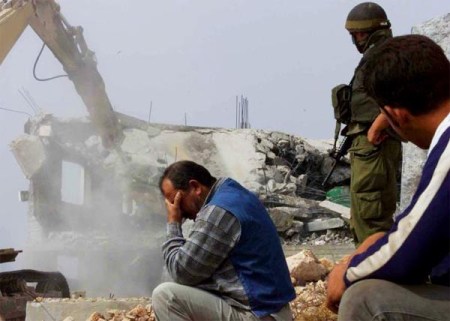
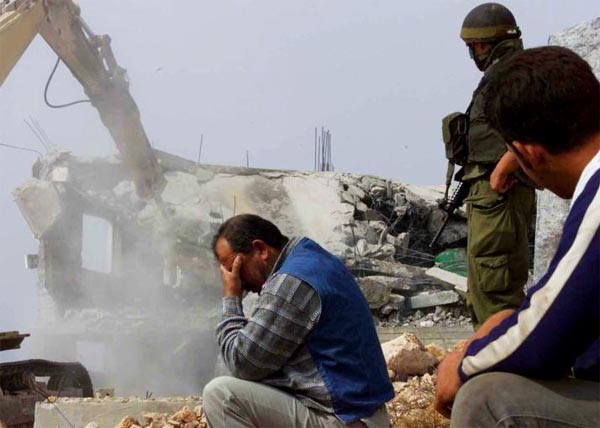
An international human rights organisation has revealed that one-third of the Palestinian-owned houses in Jerusalem face demolition under the pretext that applications for building permits were incomplete. This, claims Euro-Mid Observer for Human Rights, is a way for the Israeli authorities to continue their demographic war against Palestinians in the Holy City. Israel gives Jerusalemite Palestinians the right to use just 13 per cent of the area of occupied East Jerusalem to meet the needs of their growing population.
A report from Euro-Mid shed some light on the widespread Israeli settlement programme in Jerusalem. It mentioned that the financial committee of the Israeli-controlled Jerusalem municipality decided to support 1,500 new settlement units in the city at the end of August. The human rights group also pointed out that Israel’s bulldozers are still razing Palestinian homes in Al-Tour neighbourhood because the authorities plan to set up the “National Israeli Park”.
According to the UN, poverty is getting worse among Palestinians in Jerusalem. Euro-Mid noted that the unemployment rate rose to 78 per cent in 2012 compared with 64 per cent in 2006. More than 40 per cent of Palestinian Jerusalemites now live below the official poverty line; one of the reasons is the disparity in wage rates between Israeli and Palestinian labourers.
Euro-Mid has called upon Israel to stop its frenzy of settlement construction in the occupied territories and to protect Palestinian sovereignty over East Jerusalem, as the potential capital of a Palestinian state.
September 26, 2013
Posted by aletho |
Ethnic Cleansing, Racism, Zionism | East Jerusalem, Human rights, Israeli settlement, Jerusalem, Middle East, Palestine, West Bank, Zionism |
Leave a comment
Egyptian minister praises Obama’s remarks on Egypt in the UNGA
Egyptian Foreign Minister Nabil Fahmy has described US President Barack Obama’s remarks to the UN General Assembly about Egypt as “positive” and reflective of “an objective treatment of the situation in Egypt.”
Fahmy was responding to Obama’s speech on Tuesday that was critical of both ousted President Morsi’s government for being non-inclusive, and the interim government established by the coup for violating the Egyptian people’s rights, including policies such as the curfew, the state of emergency and the restrictions on press freedoms.
About how the latter issues would be resolved, the minister said: “They will be overcome through the context of the implementation of the roadmap and efforts to build a modern and democratic state in Egypt.”
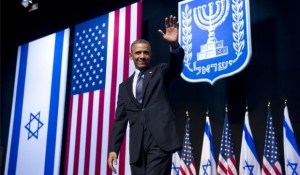 In his speech to the UN General Assembly, Obama repeatedly asserted his country’s respect for the will and choices of the people in the Middle East. However he also warned that the “United States will at times work with governments that do not meet, at least in our view, the highest international expectations, but who work with us on our core interests.”
Obama affirmed that the US is going to preserve good relations with Egypt, saying the US “will maintain a constructive relationship with the interim government that promotes core interests like the Camp David Accords,” as well as counterterrorism efforts.
But he added that US support will also “depend upon Egypt’s progress in pursuing a more democratic path.”
GAZA — The Hamas Movement strongly denounced Nabil Fahmi, the Egyptian minister of foreign affairs, for threatening to take military and security action against the Palestinian resistance in Gaza.
Its spokesman Fawzi Barhoum stated on Tuesday that Fahmi’s threats were reprehensible and very dangerous and would do a great disservice to Egypt’s reputation and historical stature.
Barhoum added that Fahmi’s remarks in this regard unveiled bad intents and hostile tendencies against the Palestinians in general and Gaza in particular.
He stressed that such position would remove Egypt from its national, Arab and Islamic role in supporting the Palestinian people and their cause.
The spokesman affirmed that Hamas and its people in Gaza have no intention or agenda to engage in any kind of conflict with Egypt.
“We will remain defenders of the Arab and Muslim nations’ pride and dignity, and our main struggle is only against the Israeli occupation, the greatest threat to Egypt and Palestine,” he underscored.
For its part, Al-Ahrar Movement in Gaza also deplored the Egyptian minister’s threat to use military and security options against Gaza.
“We were expecting an Egyptian position supporting the Aqsa Mosque and preventing its division, and not a threat by the foreign minister of Egypt to attack Gaza. We affirm that such remarks undermine Egypt’s ethics and role in protecting our people,” Al-Ahrar Movement stated on Tuesday.
It also said that this new Egyptian position only serves the Israeli occupation regime which has taken advantage of the military coupe and are trying to drive a wedge between Gaza and Egypt.
September 25, 2013
Posted by aletho |
Ethnic Cleansing, Racism, Zionism, Progressive Hypocrite | Camp David Accords, Egypt, Gaza, Hamas, Obama, Palestine, United States, Zionism |
Leave a comment
Following the deadly shooting of an Israeli soldier in Hebron city, in the southern part of the occupied West Bank, Israeli Prime Minister, Benjamin Netanyahu, vowed to boost settlement activities, and ordered the Civil Administration, to take all needed measures to allow the return of Israeli settlers into a Palestinian home they previously occupied in Hebron.
The Israeli Civil Administration Office is run by the Israeli military in the occupied West Bank.
Back in April of 2012, a group of settlers was removed from the home, near the Ibrahimi Mosque in Hebron. They allegedly purchased the property but the purchase was deemed invalid, especially since such deals must be first approved by a commander of the Israeli occupation army.
The settlers were removed after the then-Israeli Defense Minister, Ehud Barak, issued an order in this regard following a court ruling.
The decision to allow the settlers to return to the property was made on Sunday night; Netanyahu said that the settlers “must be allowed into the home without any delay”.
After being removed from the property, the settlers filed several court appeals, demanding a recognition of the alleged transaction, while Israeli Defense Minister, Moshe Ya’alon, also vowed to do whatever he can to authorize their “return to the home”.
Netanyahu made his decision hours after a Palestinian sniper shot and killed an Israeli soldier in Hebron, following ongoing tension that led to clashes between the soldiers and dozens of local youths who hurled stones at them.
It is also related to the death of an Israeli soldier who was killed two days ago in the Qalqilia district, in the northern part of the occupied West Bank.
“Anyone who attempts to remove us from Hebron, from the city of our patriarchs, will just achieve the exact opposite”, Netanyahu said according to the Israeli daily Haaretz, “We will boost our settlement activities”.
Netanyahu said that the “return of the settlers to the Hebron home would still have to go through legal means”; yet, he ordered all related government facilities, to do whatever they can to ensure their fast return.
His decision comes despite the fact than an appeals committee, looking into the purchase did not recognize the documents presented by the settlers, but criticized the way this purchase was denied.
Haaretz added that, should the process be finalized, Netanyahu and his Defense Minister could sign off the deal, and authorize the settlers back.
In related news, Israeli Economics Minister, Neftali Bennet, demanded that Netanyahu stop the release of Palestinian political prisoners, as part of peace talks with the Palestinians, and said that the Palestinians “must be punished for the killing of the two Israeli soldiers.”
Bennet, of the Jewish Home Party, who also serves at the Ministerial Council, said that “the release of Palestinian prisoners is based on progress of talks, and our duty should be a war on murderers…” according to the official.
Israel’s Transportation Minister, Yisrael Katz, said that he previously voted against the release of any detainee, and that the release of what he called “terrorists” encourages others to attack Israel.
Following the fatal shooting of the Israeli soldier in Hebron, the army initiated a large campaign and broke into and searched hundreds of homes close to the Ibrahimi Mosque area where the soldier was shot.
Hundreds of Palestinians were kidnapped, and where rounded up in the southern area of the occupied city of Hebron.
The soldiers also occupied rooftops of several homes, using them as monitoring towers, while the army operated in the area.
The military declared Hebron a closed military zone, preventing the Palestinians from entering or leaving it.
Last week, Israeli soldiers shot and killed one Palestinian, and injured four, including three children, in different attacks carried out in the occupied Palestinian territories.
The army carried out 49 invasions into Palestinian communities, and kidnapped at least 41, including 9 children.
Two Palestinians have been killed, dozens have been injured, and hundreds were detained, by Israeli forces since the beginning of the month.
September 23, 2013
Posted by aletho |
Ethnic Cleansing, Racism, Zionism, Illegal Occupation, Subjugation - Torture | Benjamin Netanyahu, Hebron, Israeli settlement, Palestine, West Bank, Zionism |
Leave a comment
By Fayez Rasheed | Al Quds Al Arabi | September 18, 2013
The ill-fated Oslo Accords, signed 20 years ago, have only made Israel more arrogant and open about its disregard of the Palestinians’ national rights. Illegal settlements and their infrastructure now cover 80 per cent of the West Bank, leaving the Palestinians with just 12 per cent of historical Palestine. The occupation has left cities, villages and whole districts disconnected by the Apartheid wall; Jerusalem and its surroundings have been Judaised; the land of the Jordan Valley is being looted. Moreover, Israel is imposing more of its conditions on the Palestinians, including the condition of “recognising its Jewish character” and the power of the Palestinian Authority in its own land is becoming more and more limited. On top of all this, the geographical and political split between the West Bank and Gaza Strip is still in place, which is leading, by means of the Oslo Accords, to the decline of the Palestinian national project.
Israel’s main intention in signing the accords was to get the Palestinian representatives to abandon the armed struggle, which is what happened at the 1996 Palestinian National Council session in Gaza; US President Bill Clinton was present when the PNC voted for all the articles regarding armed struggle to be dropped from the Palestinian National Charter.
Furthermore, the Israelis wanted to limit the Palestinian revolution to specific geographic areas in the West Bank and Gaza, in order to monitor and control it more easily. I recall Yitzhak Rabin’s words in the Knesset shortly after the Oslo Accords were signed, when a fellow member asked him why Israel signed the agreement. His response was that Israel had gathered most of the Palestinians belonging to “terrorist” groups in one geographic area to make it easier to keep an eye on them. When Ehud Barak, who was the Army Chief of Staff at the time, was asked about how to solve disputes between the Palestinians and Israel he said, “We will resolve any contradiction according to the Israeli interpretation of the matter disputed over, because we are stronger.”
Israel wanted to see the Palestinian Authority created for two reasons:
- To solve the administrative and daily problems of the Palestinians in the occupied territories far away from Israel and its budget, thus easing the financial burden of the occupation. This way it was able to continue its occupation, but the international community, including the Arab world, would bear the expense of looking after the Palestinians.
- To establish Palestinian security institutions obliged to coordinate and cooperate with the occupation authorities, under American supervision, in order to prevent military operations against Israel.
The accords did not make any mention, at Israel’s insistence, of the creation of an independent Palestinian state. They only refer to a “self-administrating” state. The main issues of Jerusalem, the borders, refugees, water, etc., were postponed to what it called “final-status negotiations”. These issues should have been resolved by 1999 but, as Rabin said, “Appointments are not sacred.” Now we are in 2013 and these issues have still not been discussed. This, too, is part of Israel’s strategy to make sure that Oslo did nothing for the Palestinians; another Israeli prime minister, Yitzhak Shamir, told the Madrid Conference in 1991 that “we will prolong negotiations with the Palestinians for 20 years”; that is exactly what has happened.
All along, Israel as the stronger signatory, and the occupying power, has interpreted the terms of Oslo in its favour. When the Israelis re-entered the occupied territories in force in 2002, Prime Minister Ariel Sharon announced Oslo’s “death”, despite which the PA and its officials continued to declare that they would be sticking to it.
The final status discussions, if they ever take place, will be pointless, for Israel has already made it very clear that Palestinian refugees will never be allowed to return to their homeland; it will never withdraw fully from the territories it occupied in 1967; and Jerusalem is the “united and eternal capital” of Israel. As long as Israel is the top dog, this will be its position.
The Palestinians have made a number of strategic errors since Oslo. For a start, they have failed to read Israeli intentions, not least with regards to the illegal settlement programme. They have also limited the Palestinian struggle to popular resistance and negotiations. This is no way to alter the balance of power in order to convince the Israelis that its occupation must end.
In the creation of the Palestinian Authority, the leadership set up an alternative to the PLO as the representative of the people. This has led to the total neglect of Palestinian institutions across the occupied territories as well as the diaspora. Distanced from the people they claim to represent, this has meant that “leaders” such as Yasser Abed Rabbo could go to meetings with Israelis and unilaterally abandon, for example, the refugees’ right of return; and Ahmed Qurei could agree to link the Palestinian economy inexorably to that of Israel.
Moreover, the current round of negotiations has gone ahead even though the stated Palestinian condition of an end to Israeli settlement activity has not been met and the Judaisation of occupied Jerusalem continues apace.
For 20 years the Palestinians have been negotiating despite their utter foolishness, and delegations from both sides have attended “normalisation” meetings to promote contacts between the occupier and the occupied.
All of this is down to the lack of an honest broker in the search for peace and justice. Counting on the US in this role is pointless because no administration in Washington can ever be anything other than Israel’s main ally. Arab states, meanwhile, have almost totally abandoned any pretence of doing anything about the “Zionist enemy”. They have left the resistance movements to their own devices instead of backing them with material, financial and political support.
Any notion that the Palestinian Authority can lead us to the creation of an independent State of Palestine while it is still under occupation is delusional. In becoming an administrative authority and not a liberation movement the PA’s role is inconsistent with the national cause.
Many supporters of Oslo are positive about it. They point to Israel’s recognition of the Palestinian people, it’s acknowledgement of the PLO, the return of nearly half a million Palestinians to the occupied territories in 1967, the establishment of the PA as a prelude to the establishment of a state, the establishment of state institutions, and the failure of the Israelis to falsify the facts.
In response I say this: Israel’s recognition of the Palestinian people was the result of the armed Palestinian revolution, not of the Oslo Accords. If the First Intifada had been followed through then the establishment of an independent Palestinian state would have been a fact rather than a fanciful theory.
We must be honest and acknowledge that the PA was created to act as a vehicle for limited self-rule as determined by Israel, not to be the government of a state. In the interim, the Israelis have made sure that potential and actual Palestinian leaders strong enough to stand up to them have been assassinated. That is the reality.
This is the swamp that Oslo has put us in. It is possible to escape from this predicament by cancelling Oslo and announcing that the Palestinians are no longer bound by its terms. Israel has always ignored them so why can’t we? The legitimate armed struggle must be reinstated along with other forms of civil disobedience and disruption so that the occupation becomes once more a burden for the Israelis. If this requires the dissolution of the Palestinian Authority, so be it. The leadership got us into this swamp; the least they can do is help us to get out of it.
~
The author is a Palestinian writer. Translated by Middle East Monitor.
September 22, 2013
Posted by aletho |
Ethnic Cleansing, Racism, Zionism, Timeless or most popular | Israel, Jerusalem, Oslo, Palestine, Palestinian National Authority, West Bank, Zionism |
Leave a comment
European diplomats are holding Israel accountable over an incident where IDF servicemen attacked a EU humanitarian convoy in the West Bank on Friday. So far Tel Aviv has left the scandal in limbo, offering no official explanation for the incident.
Diplomats from several EU countries have spoken out against the shocking incident of harassing a person with diplomatic immunity, clearly awaiting some sort of official reaction from the state of Israel.
After disturbing photos of the French diplomat, Marion Fesneau-Castaing, spread on the ground with IDF soldiers standing around her hit international news, the scandal over hijacked EU aid to homeless Bedouins from demolished villages in the West Bank has gained momentum.
“EU representatives have already contacted the Israeli authorities to demand an explanation and expressed their concern at the incident,” says a statement issued by the spokesmen for EU foreign policy, Catherine Ashton and Humanitarian Aid Commissioner, Kristalina Georgieva.
An EU official described the Israeli actions as “shocking and outrageous”, the BBC reported.
The British Consulate General in Jerusalem is “concerned at reports that the Israeli military authorities have prevented the affected community from receiving humanitarian assistance,” the consulate’s spokesman said.
“We have repeatedly made clear to the Israeli authorities our concerns over such demolitions, which we view as causing unnecessary suffering to ordinary Palestinians, as harmful to the peace process and contrary to international humanitarian law,” the spokesman added.
The Israeli authorities should “live up to their obligations as occupying power to protect those communities under their responsibility,” the UN Humanitarian Coordinator James Rawley said.
‘Illegal diplomatic activity’
The Israeli Foreign Ministry’s spokesperson, Paul Hirschson, has threatened to lodge a complaint over Marion Fesneau-Castaing’s actions, Agence France-Presse reported.
“If she did participate then a formal complaint will be filed because that is not the way diplomats behave,” he said.
On Saturday the EU ambassador in Israel called the Foreign Ministry Deputy Director-General for Europe, Rafi Shutz, demanding explanations regarding the IDF in the West Bank on Friday.
“What was done there by the European diplomats was a provocation,” said Shutz as quoted by the Haaretz.
Mr Shutz claimed that force against the female French diplomat was used because she slapped one of the soldiers. He also announced that the state of Israel is looking into allegations that foreign diplomats “abused their diplomatic privileges”.
Because Palestinian construction at the site of former Khirbet Al-Makhul village was ruled illegal by an Israeli court, the European diplomats were engaging in illegal activity, Shutz stated. He also pointed out that humanitarian aid to Palestinians should be delivered through the proper channels, coordinated with Israel.
The IDF explained the use of stun grenades during the incident, claiming that stones were thrown at security forces. Stun grenades were thrown directly into a group of European diplomats, aid workers and locals who were trying to deliver emergency aid to the residents of a demolished Palestinian village, Reuters reported.
On Friday a truck with EU humanitarian aid for the villagers of the demolished Khirbet Al-Makhul settlement was attacked by IDF personnel, who confiscated the truck and the payload. French diplomat Marion Fesneau-Castaing, who attempted to prevent confiscation of the aid, was pulled out of the truck and forced to the ground. The incident received wide international coverage.
Houses, stables and a kindergarten at Khirbet Al-Makhul village were demolished on Monday after a decision by Israel’s High Court, which ruled that villagers had illegal building permits. The villagers refused to leave the ruins saying they have been living on that land for generations.
The seizure incident of a truck carrying humanitarian aid has become yet another page in the row between Brussels and Tel Aviv. In July the EU announced it is going to stop all financial assistance to Israeli organizations operating in the occupied territories, starting from 2014.
The government of Prime Minister Benjamin Netanyahu reacted angrily, denouncing the move as interference in Israel-Palestine relations and retaliated by blocking EU humanitarian aid to tens of thousands of Palestinians in the West Bank.
Israel and the Palestinian Autonomy remain in fruitless peace talks, with the major stumbling block being the ongoing construction of Jewish settlements in the West Bank and East Jerusalem, occupied since the 1967 Middle East war.
September 22, 2013
Posted by aletho |
Ethnic Cleansing, Racism, Zionism, Militarism, Supremacism, Social Darwinism | European Union, Israel, Khirbet Al-Makhul, Marion Fesneau-Castaing, Palestine, West Bank, Zionism |
Leave a comment
Hebron, Occupied Palestine – Sukkot is a joyful festival in Judaism; however its impact upon day-to-day life in Khalil has only caused greater problems for the Palestinians. Many residents of Khalil have commented that it is during this holiday period every year where daily life in the city becomes all the more difficult.
Last week soldiers began preparations for taking over a house next to the container checkpoint 209 (Quatoum/Abu Rish), which belongs to a Palestinian family. The family received a military order informing them that this house would be occupied by the Israeli army until Tuesday 24th September, the end of Sukkot. Due to the large number of Jewish tourists visiting Hebron during Sukkot, reinforcement brigades have been sent to Hebron, and due to lack of accommodation for these additional soldiers, the army decided to take over this Palestinian house and use it as a military base for the duration of the holiday. Residents of this area have stated that since the soldiers began occupying the house, child detainment and arrests have increased, and there are further concerns that checkpoint 209 may be moved in an attempt to increase control in the surrounding area.
Today, Saturday 21st September, several clashes and attacks took place between settler youth and Palestinian children and teenagers in Tel Rumeida. Additionally, as on every Shabbat, settlers invaded the roof of the Abu Shamsiyeh family and verbally attacked international activists who, at the request of the family, were monitoring the entrance to the roof as it is often entered without family permission. In the past, settlers have attacked the family by throwing stones, spitting at, beating members of the family and urinating into their garden.
On Friday 20th September, clashes erupted in the afternoon as Palestinian youths threw stones at checkpoint 56. After the PA (responsible for this area of Hebron which is part of H1) chased away the stone-throwers, the clashes moved into the OldCity and souq of Hebron, which is part of H2 and thus under Israeli military control. Throughout Friday evening and most of Saturday, Palestinian youths were throwing stones and Molotov cocktails, whilst Israeli soldiers responded with sound grenades, teargas and rubber-coated steel bullets. International activists witnessed border police shooting teargas canisters directly at protesters, as opposed to shooting it in an arch as they are supposed to under Israeli army regulations. Further clashes are expected tomorrow as settlers and Jewish tourists invade area H1.
On Sunday 22nd and Monday 23rd September, tens of thousands of Jewish tourists are expected to descend upon Hebron for Sukkot celebrations. On important Jewish holidays, there is a tradition of the settler community, alongside Jewish tourists, visiting a house in H1 (the Palestinian-controlled part of Hebron) which they claim used to be the home of a rabbi and thus holds religious significance. The Israeli military has ordered the closure of the road outside checkpoint 56 leading to Yatta between 10am and 3pm on Sunday 22nd September. The house that the settlers and Jewish tourists pilgrim to is located on said road, however it is the first time ever that the Israeli military has formally ordered the closure of the road and the shops located there. This order is a clear violation of the Hebron Agreement, signed in 1997 by the Palestinian Authority and the Israeli government, which divided the city into areas H1 and H2 under Palestinian and Israeli military control respectively.
September 21, 2013
Posted by aletho |
Ethnic Cleansing, Racism, Zionism, Illegal Occupation | Hebron, Human rights, International Solidarity Movement, Jewish holidays, Jews, Palestine, Sukkot, Tel Rumeida, Zionism |
Leave a comment
Should Oral Historians Meet in an Occupied Land in 2014?
A standard argument against BDS – the Boycott, Divestment and Sanctions movement against the Israeli occupation – and especially the academic boycott- has been the “‘need to engage” with Israelis. In fact, during the 46 years of the occupation, numerous efforts to ‘engage’ have been made repeatedly, all of which are warmly embraced by Israel and its academic institutions.
The most recent example is an “International Oral History” conference being organized by the Hebrew University of Jerusalem, featuring renowned Italian oral historian Alessandro Portelli. The conference topics included trauma studies, holocaust studies and conflict studies and assiduously avoiding any reference to the Nakba.
Such typical elision has become an iconic political battle-zone between the supporters of Palestinian rights and pro-Israelis, who promote ‘dialogue’ and ‘engagement’; Nor is it surprising that the Hebrew University avoids the topic, given its own complicity in the ongoing Palestinian trauma. The recently passed Nakba Law in Israel bans even the commemoration of the Nakba, so this avoidance is part of a larger project of Israeli denial.
Private efforts to dissuade the two scheduled speakers failed, and it became clear that they firmly subscribed to the value of ‘engagement,” even with an institution like Hebrew University whose complicity in the violation of Palestinian rights and international law we fully documented. Following this exchange, the original webpage for the conference was replaced, and an elliptical reference seemed to open the door for some discussion of the unmentioned Nakba.
The issues involved in this planned conference go beyond the ill-informed and misguided participation of the featured speakers; A public call to boycott the conference signed by 72 international academics was issued in August. Now, in just over a month, there are more than 250 signatories, of whom one third are oral historians from 19 countries, including South Africa, Brazil, Spain and India.
Because the further discussion of boycott was shut off on the US listserv where the conference was initially announced, a message posted by the conference organizer was the last substantive comment on the issue. In it, she claims boycotting the Hebrew University “only serves as a disservice to many individuals, organizations and communities who dedicate their professional and personal life to finding a just resolution to the conflict.” [i] Thus, the argument for “engagement” was permissible, but the US academic community was denied access to the compelling evidence for boycott. In effect, they were given a response to a question not yet publicly debated.
The dispute playing out among academics, and the timidity of those in the US compared to other internationals, is not new. Furthermore, it represents a conflict that goes much deeper, touching on the very question of “engagement”.
The Folly of Engagement
Academics have been going to conferences in Israel, especially in Jerusalem, for five long decades of occupation, engaging with their Israeli counterparts. It’s bad enough that these engagements have resulted in nothing positive, but to make matters worse, they have become part and parcel of Israeli political strategy: more engagement, discussions, meetings, negotiations between the sides ad infinitum. The current phase of such fruitless exercises recently initiated by US Secretary of State John Kerry will likely join the others in the dustbin of history
Worse yet, under the guise of continuing discussions and negotiations – a delaying tactic developed by PM Shamir in the 1980s – Israel has managed to add 700,000 illegal settlers in the Occupied Territories of Palestine and Syria. This is almost the number of Palestinian refugees who were forcibly driven out of Palestine in 1948 by the Israeli forces and never allowed back, despite numerous UN resolutions.
In over six decades of its existence, Israel has defied the UN on the most crucial resolutions passed on the rights of the Palestinians; it illegally settled the territories it occupied; it defied the Geneva Convention on numerous counts, including its failure to look after the population under occupation. Among other things, it has refused to grant Palestinian universities a license to operate, and closed the existing institutions for long periods. During this time, not once did Israeli faculty unions or the university senates call for reopening of Palestinian universities, or for the restitution of academic freedom in Palestine. Israeli universities have themselves been directly complicit in Israel’s violation of Palestinian human rights and international laws, and all have collaborated in some way with the military occupation, including assisting the military-security-industrial complex.[ii] In the case of the Hebrew University of Jerusalem, its Mt. Scopus campus was expanded onto illegally occupied and confiscated land.
Yet, in contrast to South African apartheid, most academics throughout the world remained silent for years, mounting little opposition to Israel’s crimes. Only in 2005, following the PACBI call for an academic boycott, did the BDS and academic boycott campaign start in earnest in the UK. Since then, BRICUP (British Committee for Universities in Palestine) has been involved in numerous successful actions, including the recent withdrawal of leading physicist Stephen Hawking from the Presidential conference of 2013 – an action that galvanized scientists and academics elsewhere[iii].
Four years after the founding of BRICUP, and in response to Operation Cast Lead, campaigns in both the US (USACBI) and France (AURDIP) were initiated. [iv] While short of the success of Hawking’s repudiation, both campaigns have been very active. In the US, perhaps the most significant success on the academic front was the passage of an academic boycott resolution at the Asian American Studies Conference in May 2013. AURDIP, while being severely hampered by the repressive policies initiated by Sarkozy, fully applied under Hollande, remains an important clearinghouse on the academic boycott, regularly using public events showcasing cooperation between French and Israeli academic institutions as a platform to promote BDS.
Today, there are active boycott campaigns in Spain (PBAI), Berlin (BAB) and India (IncACBI), all of which were initiated in 2010[v], and in Ireland – AFP (Academics for Palestine) was created in 2012[vi]. Perhaps the most important development was the development of a BDS movement inside Israel – Boycott from Within. Recently, these boycott campaigns have garnered increasing support, often from some of the most notable scholars in their countries, like Josep Fontana, the prestigious Spanish (Catalan) historian. The boycott groups in Spain, India and the US are currently organizing against partnerships being forged with Israel’s Technion. Even in Germany, where any criticism of Israel is highly suspect, the BAB is challenging a funded cooperation agreement between the Free University and the Hebrew University.
Quite obviously, the message is spreading, gradually penetrating academic institutions everywhere. In response, Israel and the Zionist movement have devoted tremendous efforts to counter the boycott campaign, funded by government Ministries. The long-term policy that was devised initially prioritized the UK. A number of Israeli task forces drawn from Israeli universities, arrived in Britain to ‘explain’ the need for ‘engagement’ and ‘dialogue’. The same professors who for years disengaged from any support of the human and civic rights of Palestinians, including their right to education, were now globe-trotting in support of the ‘real victim’ – Israel – promoting ‘engagement’ with the occupation forces under the banner of dialogue. The latest, but surely not last iteration, is the government campaign to use Israel’s students against the boycott. Recent revelations exposed the creation of covert units at Israeli universities, designed to work with the Israeli National Student Union, using social media.
Whatever else one might think about Israeli universities, they could never be accused of being liberal or supportive of human rights. A few months before the Gaza incursion in December 2008, a petition for academic freedom in the Occupied Territories was circulated to over 10,000 Israeli academics. This mild petition, merely requesting the government to allow Palestinians the same freedom enjoyed by Israeli academics, was signed by only 407 Israeli academics – 4% of the total. The Academic Staff unions in Israel never even discussed or acted on the matter. Although Tel Aviv University is by far the most ‘liberal’ of all, with 155 faculty signing the said petition, in 2012, Shlomo Sand felt compelled to castigate his colleagues in the history department for concealing the problematic history of their own university, built on the former Palestinian village of Sheikh Muwanis[vii].
Israeli academics continually ignore calls of Palestinian civil society for Boycott, Divestment and Sanctions against Israel’s aggressive occupation, arguing instead for ‘dialogue’ with Israeli colleagues. In fact, the Hebrew University conference is promoted as a “participatory site in which ‘difficult dialogues’ on memory and perspectives will be discussed.” As usual, instead of promoting dialogue with Palestinian academics, the best that the conference organizers can muster is a reference to “the issues that this country and region face.” One wonders – is the occupation such an issue?
What could possibly be wrong with dialogue, you might ask? Instead, perhaps the appropriate question might be: “is it moral to collaborate with a militarized, racist, colonial state, in order to cleanse its crimes?” Doesn’t this mean that crimes continue and newer ones are perpetrated? Indeed, evidence clearly demonstrates that continuing ‘engagements’ have not led to resolution, but instead served to numb the sensibilities of international academia to the realities of occupied Palestine. In the case of South Africa, it was clear to all academics that there was no way to ‘engage’ with apartheid by speaking to its representatives; the only way to deal with apartheid was to oppose it – to boycott, divest and apply sanctions; to deny South African institutions any support and dialogue; and to follow the advice of the ANC.
Though not yet on the same scale as the South African campaign, the BDS campaign has been successful. Many academics worldwide are now sensitized to becoming complicit in Israel’s illegal occupation, its settler-colonial policies and its apartheid practices and have stopped participating with Israeli institutions. The campaign to boycott the Hebrew University “international” oral history conference is part of the growing world wide effort to honor the Palestinian call for an academic boycott of Israel.
Because so many oral historians view their work as a means of giving voice to the oppressed and silenced, boycotting this conference should be a no-brainer. Indeed, for the internationally-minded oral historians, it is just that, even as so many US practitioners have basically buried their heads in the sand, following their government’s lead.
We wonder what the two advocates of engagement solicited for keynotes will do, and especially how the Hebrew University will respond. Will it, for instance, throw generous travel stipends to participants, rendering them party to the Israeli propaganda machine? We hope, instead, that oral historians around the world will heed the call not to cross the Palestinian picket line, thereby honoring the basic ethical/moral foundation of the historian’s work. [viii]
Haim Bresheeth and Sherna Berger Gluck are part of an international group that initiated this boycott campaign and which includes Sami Hermez, Nur Masalha, Ilan Pappe, Rosemary Sayigh and Lisa Taraki, among others. Bresheeth is Professor of Film Studies at SOAS London and active in BRICUP; Gluck is Director Emerita of the Oral History Program at California University, Long Beach and one of the founders of the US Academic and Cultural Boycott Campaign of Israel
Notes.
[i]Dr. Sharon Kangisser Cohen posted on HOralHIST listserv August 5, 2013: http://h-net.msu.edu/cgi-bin/logbrowse.pl?trx=vx&list=H-Oralhist&month=1308&week=c&msg=29F8Sr%2BcGUQuYBM5ggshvw.
[ii] Keller, U. (2009) the Academic Boycott of Israel and the Complicity of Israeli Academic Institutions in Occupation of Palestinian Territories. The Economy of the Occupation: A Socioeconomic Bulletin: Alternative InformationCentre. http://www.alternativenews.org/images/stories/downloads/Economy ofthe_occupation_23-24.pdf
[iii] See “Stephen Hawking’s message to Israeli elites: The occupation has a price”
[iv] AURDIP – Association Universitaire pour le Respect du Droit International en Palestine
[v] PABI – La Plataforma para el Boicot Académico a Israel; BAB – Berlin AB; InCACBI – Indian Campaign ACBI
[vi] Started with the successful passage on November 9th, 2012, of an Academic Boycott motion at the academic union TUI (Teachers Union of Ireland), in early 2013, see “TUI Dublin Colleges Branch AGM passes motions in support of Boycott, Divestment and Sanctions; recognises Israel’s apartheid nature”
[vii] Sand, S in concluding chapter of The Invention of the Land of Israel: From Holy Land to Homeland, Verso, London, (2012) pp. 259-281
[viii] The letter in English, French, Portugese and Spanish can be accessed at: http://www.aurdip.org/Call-to-Boycott-the-Oral-History.html and usacbi.org
This is not a general petition but is intended as an open letter to international academics and oral historians. If you fit this bill, please send your relevant information to: hebrewUconferenceboycott@gmail.com
September 21, 2013
Posted by aletho |
Ethnic Cleansing, Racism, Zionism, Illegal Occupation, Solidarity and Activism, Timeless or most popular | BDS, Boycott-Divestment-Sanctions, Hebrew University of Jerusalem, Israel, Nakba, Palestine, Zionism |
Leave a comment
At the Rafah border crossing with Egypt – Gaza’s only bridge to the outside world – a young Palestinian man cries profusely. He scrapes a passenger bus with his fingernails as it departs toward Egypt. He wants more than anything to stop the bus and get on it.
Mohammed al-Astal’s situation is shared by dozens of Palestinian students from Gaza studying abroad who wanted to spend their holidays with their families in the Gaza Strip. Unable to travel – Egyptian authorities have closed the border for a week now, citing security reasons – they have now missed the start of the academic year. If their absence continues, they will not be able to carry on with their studies.
Astal, a medical student at al-Mansoura University in Egypt, told Al-Akhbar: “For two weeks, I’ve been coming to the Rafah crossing every day at six in the morning, hoping I would be allowed to travel so I can go back to school, but to no avail.”
More than 2,000 people in Gaza are dreaming of traveling to Egypt today or tomorrow now that the Egyptian authorities have opened the crossing for two days. Egyptian authorities announced on Monday, September 16, the opening of the Rafah crossing on Wednesday and Thursday from 10 am to 2 pm at the request of the Palestinian Authority President Mahmoud Abbas.
Frustrated, the only thing those waiting can do is obstruct the buses full of travelers. Hamas security forces clash with individuals, pushing them back with batons until three buses manage to leave Rafah.
“All students have to come to the Rafah crossing again tomorrow morning. That is what the Palestinian embassy said in a piece of news posted yesterday,” said Hassan, a law student in Egypt. “Missing an entire month of the new semester means losing the whole semester.”
Hassan expressed his right to be on the list of passengers, along with medical patients and other urgent cases, especially after the Palestinian ambassador in Egypt, Barakat al-Farra, issued a statement on Tuesday requested that students come to Rafah after coordination with the embassy.
Maher Abu Sabha, director general of crossings at Egypt’s Interior Ministry, said: “Students stuck in Gaza do have a priority to travel, but there are also humanitarian cases of patients and people with residence permits that might expire at any moment. [These people] need to leave Gaza or else they will lose their lives outside the Strip.”
According to Abu Sabha, there are more than 4,500 Gazans registered on urgent travel lists. He pointed out that all of them can be considered humanitarian cases. They are patients, people with residence permits, and students.
Mufid al-Mukhalalati, health minister in the Hamas government, said at a press conference, “Closing the crossing has prevented more than a thousand patients from reaching Egyptian hospitals and receiving treatment and has also prevented foreign medical delegates from reaching the Gaza Strip.”
Egyptian authorities closed the crossing last Wednesday, September 11, after an armed attack was launched against the Egyptian military intelligence building in Rafah. The attack killed six Egyptian soldiers and injured 17 others.
Palestinians in Gaza continue to face increased difficulties at the Rafah crossing since the Egyptian army deposed former Egyptian president Mohamed Mursi on July 3. In the meantime, Egyptian authorities reduced working hours at the crossing to four hours daily. While thousands waited at the Rafah gate, only 250 were able to leave the Gaza Strip.
September 20, 2013
Posted by aletho |
Civil Liberties, Ethnic Cleansing, Racism, Zionism, Subjugation - Torture | Egypt, Egyptian Army, Gaza, Human rights, Palestine |
Leave a comment

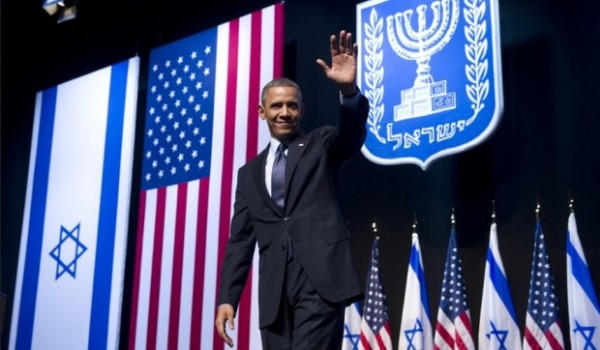 In his speech to the UN General Assembly, Obama repeatedly asserted his country’s respect for the will and choices of the people in the Middle East. However he also warned that the “United States will at times work with governments that do not meet, at least in our view, the highest international expectations, but who work with us on our core interests.”
 Aletho News
