Israel approves nearly 300 new settlements to coincide with Kerry-Livni meeting
MEMO | May 9, 2013
As Israeli justice minister, Tzipi Livni, met with US Secretary of State John Kerry in Rome on Wednesday, the Israel Civil Administration approved a plan to build 296 housing units in the West Bank settlement of Beit El; an Israeli newspaper reported.
 The newspaper, Yedioth Ahronoth, today described the decision as “A move which could be interpreted as an attempt to Judaize the West Bank.”
Israeli Defence Minister Moshe Ya’alon approved the construction of the new housing units in line with a promise the government had made to settlers. A previous Israeli government had promised to build 90 new housing units in the settlements in an attempt to prevent clashes during the eviction of the Ulpana settlement.
Israeli Prime Minister Benjamin Netanyahu had previously made undertakings to stop further settlement construction until next June when he met with Kerry, angering heads of settler groups.
According to the newspaper, Ya’alon met with heads of Jewish settlers on Tuesday and told them that construction would indeed continue. Netanyahu confirmed that there were delays in issuing construction bids due to errors, but that they would be issued soon.
Settlers hoped that the approval of new housing units would mean the beginning of further settlement plans in the West Bank and Jerusalem.
In Rome, Livni hoped that “enthusiastic and determined” Kerry would move the peace process forward after four years of stalemate.
“We believe that re-launching the negotiations and achieving an agreement between Israel and the Palestinians is in the Israeli interest, but yet there is a need for Secretary John Kerry’s efforts to create something new after four years of stagnation,” Livni said.
Kerry has been holding talks with Israeli, Palestinian and other Arab officials for months. The Israeli newspaper said that he is expected to meet Netanyahu and Abbas separately later in May.
The US Secretary of State said, “I think it is fair to say that we are working through threshold questions and we are doing it with a seriousness of purpose, which I think Minister Livni would agree with, has not been present for a while.”
Stressing the importance of achieving something as soon as possible Livni said, “We all believe that we are working with a short time span. We understand the imperative to try to have some sense of direction as rapidly as we can.”
Kerry has been mobilizing Arab support for Palestinian president Mahmoud Abbas in case he is obliged to offer concessions to Israelis in order to reach a peace deal. Kerry also hopes to set up foundations for a wider peace with the Arab states.
Recently, he achieved a diplomatic victory when the Arab league delegation in Washington announced an agreement to accept that a land swap deal could be reached between Palestinians and Israelis based on the 1967 borders.
Israeli Army Demolishes Shops Near Jenin
By Saed Bannoura | IMEMC & Agencies | May 09, 2013
Israeli soldiers invaded, on Thursday morning, the Barta’a village, near the northern West Bank city of Jenin, declared the village a closed military zone, and demolished 12 shops.
Ghassan Qabha, head of the Barta’a village council, reported that the army invaded the village after sealing all of its entrances, declared it a closed military zone and demolished the twelve structures.
Qabha added that 120 Palestinians work in the demolished buildings, and that most of them are the sole breadwinners in their families.
Furthermore, soldiers handed military orders to eight shop owners informing them the army will be demolishing their shops under the pretext that they were built without construction permits.
Qabha strongly denounced the Israeli attack, and said that the ongoing violations and assaults against the villagers aim at forcing them out of their village that became isolated and surrounded by Israel’s Annexation Wall and its illegal settlements.
Related articles
- Army Demolishes Three Homes In Occupied Jerusalem (imemc.org)
- Israeli occupation forces raid different areas of Jenin while settlers uproot olive trees (occupiedpalestine.wordpress.com)
- Army Kidnaps 13 Palestinians In Bethlehem, 2 In Jenin (imemc.org)
- Israel detains Hamas leader’s sons in raid (alethonews.wordpress.com)
Wherefore by Their Friends ye Shall Know Them: Zionists vs UNSW BDS
By Vacy Vlazna | Palestine Chronicle | May 7, 2013

In Australia there are 30 Max Brenner shops providing funds for the Strauss Group that filter towards the maintenance of the illegal Israeli occupation of Palestine. Another Brenner outlet is ‘coming soon’ to the campus of The University of New South Wales (UNSW), the site of the present Boycott Divestment Sanctions (BDS) protest organised by Students for Justice in Palestine.
Spin-doctors against the BDS action, present the issue as an unjustified anti-Semitic attack against an innocuous chocolate shop, however the Max Brenner company and its supporters have direct and indirect vested interests in the Zionist enterprise that brutally, to this day, has destroyed the political and human rights of the indigenous people of Palestine.
Max Brenner is owned by the Strauss Group which, closely connected with the Israeli military and armament industry, provides care rations to the vicious Golani and Givati Brigades to ‘sweeten their special moments’. These units perpetrate, in their special moments, war crimes and crimes against humanity against Palestinians.
In the 1982 Lebanon War, Golani soldiers lit flares to assist the Phalangist death squads to massacre Palestinian men women and children in the Sabra and Shatila refugee camps deemed an act of genocide by the UN. The Golani Brigade led a vicious offensive against the Jenin refugee camp in 2002 demolishing hundreds of homes while burying some Palestinians alive and killing terrified residents.
In 2004 a Givati commander callously murdered 13 year old Iman Darweesh Al Hams by firing two bullets at her head from close range while she was lying wounded on the ground. To verify the kill, the commander emptied his entire magazine into her little body. He was charged, exonerated and promoted.
The Givati Brigade led the ground offensive against unarmed Gazan families in the 2008-9 Operation Cast Lead for which the UN Goldstone Report accused Israel of war crimes.
Chairperson, Ofra Strauss also sits on the board of HESEG, which provides scholarships for ‘lone soldiers’, along with General (Res.) Yitzhak Eitan: Chief Commander of the Israeli military in Gaza and the West Bank, and Head (GOC) of the IDF Central Command during the years 2000-2003; Shabtai Shavit: Head of Mossad (the Israeli foreign intelligence) 1989-96 and the controversial Major General (Res.) Doron Almog who was Commander of the IDF’s Southern Command from 2000-2003. In 2005, he evaded a warrant issued in the UK for his arrest on suspicion of war crimes for ordering the demolition of 59 houses in Rafah, occupied Gaza; an act of illegal collective punishment under international law and on 22 July 2002, for ordering a one-ton bomb to be dropped on a home in Gaza to assassinate Salah Shehadeh killing 15 people, including 9 children.
Doron Almog is also Executive Chairman and Member of Investment Committee of Athlone Global Security Ltd. which he co-founded in 2007 providing specialised military and surveillance training equipment and services for the illegal Annexation wall and checkpoints. The Athlone team includes Moshe Horev, who headed the Israel Ministry of Defense R&D Division, the Avionics and Armament Division and the Guided Weapon system program office of the Israeli Air force. He is a former CEO of Hewlett Packard and is currently the CEO of Oracle Systems Israel Ltd which has a longstanding strategic partnership with the IDF as one of the IDF’s main suppliers of computer solutions.
Ofra Stauss also sits on the executive of The Jewish Agency which was established by the World Zionist Organisation (WZO) in 1929 founded to take over the whole of Palestine. On behalf of the government, it assigns stolen lands to its 400,000 illegal Jewish colonists in Palestine. Chairperson of the JNF Board of Governors is American billionaire James S Tisch who is also president of the Jewish Communal Fund which channels donations to violent settler militias that oppose the return of land captured in 1967 and promote the “transfer” of all Palestinians to neighbouring countries.
Thus, associating Brenner chocolate with war crimes is a no-brainer, nevertheless Australian apologists for Israeli war crimes roll over and go brain dead at the whiff of BDS. Politicians, journalists, commentators try to out-tourette each other’s idiotic assertions that BDS activists are anti-Semitic: Ex-PM-ex-FM-ex-rational Kevin Rudd pompously spluttered, ”As an individual citizen – that is me, K. Rudd – I am here because I object to the boycotting of Jewish businesses”; Gerard Henderson blurted, “Then there are the historical parallels. In the mid-1930s, Sir Oswald Mosley’s British Union of Fascists used to go on rampages outside Jewish-owned shops in London’s East End – some were boycotted, others smashed up.”; Senator Stephen Conroy blabbered, “The Gillard Government remains concerned by any groups advocating a boycott of Israeli products or services or Jewish businesses and business people like Frank Lowy and Revlon’s chairman, Ronald Perlman, who is a trustee of the Simon Wiesenthal Centre,”
Ironically and gratefully, the sound bites of the anti-BDS spinners on mainstream media have boosted awareness of the BDS matter and given activists voice to justify their actions.
UNSW’s unconscionable support of the opening of the Max Brenner campus shop makes sense considering chancellor David Gonski and vice-chancellor Fred Hilmer have a tweedledum and tweedeldee relationship: both are Jewish, both have sat on the boards of Coca-Cola Amatil, Westfield Group, ( and John Fairfax Holdings). Consequently both have career long affiliations with Israel’s interests.
Coca-Cola Amatil is the Australian subsidiary of the Coca-Cola Company. In 2002, the parent company announced the proposed building of a plant on stolen Palestinian land at Kiryat Gat, in return for millions in incentives from the Israeli government. The land, Kiryat (Qiryat) Gat, has an industrial park built on the lands of the villages of al-Faluja and Iraq Al Manshiya. which were ethnically cleansed and demolished in 1949 in hasty contravention of an agreement between Egypt and Israel and of International Law. Coca-Cola Israel also directly owns dairy farms in the illegal Israeli settlements of Shadmot Mechola in the Jordan Valley and a plant in the industrial zone of Katzerin in the occupied Golan Heights. Coca-Cola Israel also supports the Jewish National Fund.
In 2004, Coca-Cola merged with Neviot Water which takes its waters from the Ein Zahav springs in Kirat Shmona built on the village of al-Khalisa after its 1500 villagers were ethnically cleansed and from wells dug by Mekorot. Mekorot, the Israeli national water company has been accused of crimes against humanity for its theft of Palestinian water and discriminatory water shortages for Palestinians while illegal Israeli settlements enjoy a constant supply of water.
In 2009 a Coca-Cola sponsored award went to Israel’s Lobby AIPAC for its successful lobbying of the Senate to reject of the UN call for “immediate ceasefire” and endorse the continuation of the Israel military assault on Gaza.
Gonski and Hilmer are ex directors of Westfield Holdings. Westfield owner, billionaire Frank Lowy, is a Czech Jew who served as a commando in the Haganah and later in the Golani brigades during the Nakba; the ethnic-cleansing of Palestine. He spends 3 months of the year in Israel. Through tax evasion, Lowy cheated the Australian people of $68m. SMH reports that Lowy said ‘he had given the money to Israeli charities and insisted he had met all his tax obligations’. In 2003 he set up the Lowy Institute for International Affairs ‘which promotes Israel and US foreign policy’. In 2005, Lowy was implicated in the corruption charges against his longtime friend, Ehud Olmert in the Bank Leumi affair. Lowy also set up the Institute for National Security Studies, attached to the University of Tel Aviv. ‘ As its chairman, Lowy has gathered some of the most influential policymakers in Israel and wealthiest international benefactors to sit on its boards.’ (Koutsoukis SMH 2008)
Gonski is chairman of Investec Australia part of the Investec banking group, founded in South Africa, Gonski’s birthplace. Investec SA has strong Zionist affiliations. In February 2013, it hosted an event featuring avowed Zionist Chief Rabbi Warren Goldstein, a zealous public defender of Israel’s policies.
In 2004, due to the economic downturn, Investec divested its Israel operations of which Maj. Gen. (Res) Danny Rothchild was a director. In the 80’s, he was Commander of IDF Units in Southern Lebanon and later became Israeli Defense Force Coordinator of Government Activities in the Territories and Deputy Director of Military Intelligence & Chief of Intelligence Research and Analysis enforcing Israel’s illegal occupation. He now owns and runs an Israeli-based security company, Netacs (Security) Ltd.
Avron Kregel, legal advisor to Investec is Chairman of the South African Zionist Federation. He negotiated to bar Judge Goldstone from attending his grandson’s bar mitzvah. It was the UN Goldstone Report that accused Israel of war crimes in its 2008/9 war against unarmed Gazan families. Zionist pressure on Goldstone led to his unethical retraction, in 2011, of the claim that Israel intentionally targeted Palestinian civilians. His 3 co-authors rejected outright any nullification, “We consider that calls to reconsider or even retract the report, as well as attempts at misrepresenting its nature and purpose, disregard the right of victims, Palestinian and Israeli, to truth and justice.”
Investec CEO, Stephen Koseff, a recipient of Israel’s highest tribute- the Jubilee Award, is a trustee of the King David Schools Foundation. The schools’ Zionist vision states ‘We recognize that Aliya is the ultimate expression of Zionist and Jewish identity. Our students are encouraged to develop a commitment to the centrality of Israel, an understanding of its history and present reality and identification with its future.’ Aliya is the right of Jews anywhere in the world to make their home in Israel while simultaneously Israel forbids all Palestinians their right of return under international law.
Gonski is a board member of Ingeus Ltd owned by Therese Rein, wife of the grand poobah of BDS opposition, Kevin Rudd. Ingeus also operates in Israel.
Gonski is also a recipient of the Richard Pratt Business Leadership Award. In the 90s, Fred Hilmer had a lucrative consultancy with Visy Industries, owned by the late Richard Pratt who paid a $38m fine for fixing prices. His Pratt Foundation (PF) still supports charitable programs in Israel some of which channel funds to the Jewish Agency. The PF funds The Park of the Australian Soldier in the Negev affiliated with the Jewish National Fund (JNF) notorious for its theft of ancestral lands of the impoverished Bedouins.
Hilmer, a rigid business automaton, apart from his directorships of Coca-Cola Amatil and Westfield Holdings was made, in 1998, CEO of Fairfax media which is curious given his dismal record that “cost NSW taxpayers at least $48 million’ when he was chair of Pacific Power ‘when it entered into the series of flawed electricity supply contracts with a Victorian distributor Powercor.’ The 1997-98 financial report of Pacific Power, showed their profits dropped from $552 million in 1996/97 to $43.8 million in 1997/98. (Electricity Week,1999)
Hilmer’s tenure at Fairfax was similarly lacklustre particularly when he “decided not to invest in fledgling internet site Seek.com.au. James Packer didn’t make the same mistake, turning a $33 million investment into a $400 profit (which much of that profit coming at the expense of Fairfax)… “With Fairfax sacking 2000 workers and radically reducing its commitment to journalism, the blame lies clearly at the feet of Fred Hilmer, David Kirk, Brian McCarthy, Ron Walker, Dean Wills, Roger Corbett and the slew of highly paid executives and directors who have mismanaged one of Australia’s great companies through not one, but a series of inexcusable blunders.’ (Schwab, Crikey 25-6-13)
Now, as vice-chancellor, Hilmer is hell bent on further corporatising UNSW by pushing for universities to set their own fees. According to Prof. Stuart Rees, ‘The characters setting the fees would presumably be the same invisible, unaccountable managerialists who have already contributed to the financial woes of Sydney University and UNSW, among others.’
Key stakeholders of UNSW, its staff and students, should well take heed of Kerry Packer who “once said of Fred Hilmer, the McKinsey consultant who went on to head Fairfax Media Ltd: “I wouldn’t hire him as a fxxx sweeper. For Fairfax to be run by a management consultant I think is just an act of stupidity. I think it’s ridiculous … He came from McKinsey and he has never run a business in his life.” (Knox, The Monthly, June 2010)
The drama of the UNSW Max Brenner protest, like Star Wars, is the archetypal clash between the Dark Side and the Light: the DeathVaders of government, business and mainstream media aligned to ruthless power versus The Force championed by the Students for Justice in Palestine defending the political and human rights of the Palestinian people as set out in the UN Charter and the Geneva Conventions; legal obligations that the Empire has shamefully abrogated along with its humanity.
– Dr. Vacy Vlazna is Coordinator of Justice for Palestine Matters.
Related articles
- Reporting tips for Murdoch’s Australian over Palestine, BDS and Gaza (antonyloewenstein.com)
- Memo to Murdoch/Zio lobby; BDS grows while occupation deepens (antonyloewenstein.com)
Israeli Occupation Forces Kidnap The Grand Mufti Of Jerusalem

By Saed Bannoura | IMEMC & Agencies | May 08, 2013
Israeli soldiers kidnapped the Grand Mufti of Jerusalem and the Holy Land, Sheikh Mohammad Hussein, after surrounding his home and breaking into it Wednesday.
Local sources reported that the army invaded As-Suwwana neighborhood, in Jabal Al-Mokabbir in occupied East Jerusalem, and broke into the home of the Mufti before kidnapping him.
Sheikh Hussein asked to follow the soldiers by car to the Al-Maskobiyya Police Station and interrogation facility in the city, but they refused and placed him in one of their vehicles.
In related news, the army kidnapped Engineer Mustafa Abu Zahra, head of a committee in charge of maintaining Islamic graveyards in Jerusalem.
Furthermore, Israeli police officers were heavily deployed at the gates of the Al-Aqsa Mosque in Jerusalem, interrogated dozens of worshipers while inspecting their ID Cards, withheld their ID cards and informed them that they will get their ID’s back once they leave the mosque area.
In addition, a number of settlers invaded the Al-Aqsa Mosque yard through the Al-Magharba Gate accompanied by dozens of soldiers and police officers.
On Tuesday evening, the Israeli Police handed orders to Palestinian shop owners in the Old City ordering them not to display their products in front of their shops on Wednesday evening in order to allow the settlers to march through the city and its markets while marking the so-called “Jerusalem Day”.
The “Jerusalem Day” is a an Israeli “national holiday” that started in June 1967 after the Israeli forces occupied East Jerusalem, and the rest of Palestine following the six-day war. In 1982, the Israeli Knesset passed a “legislation” considering Jerusalem “complete and united” as the eternal capital of Israel.
Related article
- Grand Mufti of Jerusalem detained (gulfnews.com)
Israel lawmakers approve plan to displace Negev Bedouins
Ma’an – 06/05/2013
BETHLEHEM – Israel approved a draft law on Monday to implement a plan which will displace thousands of Bedouins in the Negev desert, an Israeli rights group said.
The Ministerial Committee on Legislation approved a bill which outlines a framework for implementing the Prawer-Begin plan, the Association for Civil Rights in Israel said.
“Today the government approved a plan that will cause the displacement and forced eviction of dozens of villages and tens of thousands of Bedouin residents,” ACRI lawyer Rawia Aburabia said.
“All of this while the government simultaneously promotes the establishment of new Jewish communities, some of which are even planned to be built on the fresh ruins of Bedouin villages,” she added.
The Israeli government approved the plan in 2011, in what it says was an attempt to address the problem of unrecognized Bedouin villages in the Negev desert of southern Israel.
The 2011 proposal was formulated without any consultation with the Bedouin community and rights groups slammed it as a major blow to Bedouin rights.
Bedouins protest
The Regional Council of Unrecognized Arab Villages of Negev along with the High Steering Committee of the Arabs of Negev organized Monday a demonstration near office of Israeli prime minister in Jerusalem protesting approval of the recommendations.
Knesset member Ibrahim Sarsour addressed the demonstrators confirming that his party, the United Arab List, rejected the recommendations. He expressed concern that the recommendations might be approved as a law and urged the Arab public to use legal means to try and prevent such a step.
Talab Abu Arar, another lawmaker, echoed Sarsour’s remarks but appealed to “the rational people on the Israeli side to treat the Arabs wisely giving them their rights, recognizing their unrecognized villages, and involving them in the planning process.”
He warned the Israelis against being driven by “racist and extremist blocs in the Knesset.”
“Approval of the Prawer committee recommendations means Judaisation of Negev. The main goal of these plans is to seize Arab lands and exterminate Arab roots,” said head of the Regional Council of Unrecognized Arab Villages of Negev Atiyeh al-A’sam.
According to ACRI, the plan will forcibly evict nearly 40,000 Bedouins and destroy their communal and social fabric, condemning them to a future of poverty and unemployment.
Israel refuses to recognize 35 Bedouin villages in the Negev, which collectively house nearly 90,000 people.
The Israeli state denies them access to basic services and infrastructure, such as electricity and running water, and refuses to place them under municipal jurisdiction.
Related articles
- Israel threatens to demolish ‘illegal’ Bedouin school
- ISRAEL: Water being used to coerce Bedouin villagers, says NGO
- The Negev’s Hot Wind Blowing
- Palestinian Bedouins threatened with ethnic cleansing
- Israeli cabinet announces plan to forcibly displace tens of thousands of indigenous Bedouins
Librarians, Archivists, the Transformation of Information and Palestine
By Ron Jacobs | Dissident Voice | May 5th, 2013
This June, a delegation of librarians, archivists, and other library workers will travel to Palestine. They will connect with our colleagues in library- and archive-related projects and institutions there, traveling as truth seekers and information skeptics, applying their experience in the form of skill shares and other types of joint work. Their hope is to shed light on Palestinian voices, refute various myths common in the West about Palestine, and bear witness to the destruction and appropriation of information. Furthermore, they will support efforts to preserve cultural heritage and archival materials (of all kinds) in Palestine. Upon their return, this delegation hopes to share the information and experience from their trip.
In all their travels, they have stated that they will respect the Palestinian civil society call for Boycott, Divestment, and Sanctions (BDS) against Israel and will not partner with any organization that violates this call.
Upon hearing of this venture, I emailed the organization with a few questions. What follows is my exchange with one of the group’s members, Vati Natarajan.
Ron Jacobs: What compelled/inspired you all to undertake this journey? Was there a specific report regarding the destruction of historical materials?
Vati Natarajan: We’re all librarians or archivists who have been involved with issues of knowledge production, circulation, access, and preservation across contexts and for many years. We’re also very much committed to the idea and practice of librarians and archivists as active members of justice movements, including Palestine. One of us has been organizing delegations to Palestine for many years now, and authored a study on the destruction of historic materials in Palestine. Given the austerity climate in the US and around the world, and the short shrift given to libraries, archives and other information commons, we felt that now would be a good time to head to Palestine to not only carry forward support for Palestine in the library and archive community, but to learn and share skills and knowledge on how to improve and expand the reach and effectiveness of these institutions for justice movements.
RJ: As a library worker, I share your belief in the power of knowledge. What do you see as the essential role knowledge plays in Palestine? Likewise, what about Israel?
VN: We are indeed absolutely committed to open access, and the free exchange and distribution of knowledge. Israeli settler-colonialism prioritizes short-circuiting this flow in any way they can, including destruction of schools, libraries, public spaces; confiscating books, newspapers, archives, and all sorts of written materials; denying entry or circumscribing the movement of scholars and students; imposing and censoring Palestinian speech, newspapers, and other works.
In this way, Israel aims to maintain and solidify the fragmentation of the Palestinian body politic, making it difficult for Palestinians to exchange knowledge with each other and with the outside world, and therefore strengthen their struggle for justice. Palestinians, however, remain some of the most highly educated people in the Arab world, and it is a testament to their will and ingenuity that knowledge and information is always prioritized, and remains central to the struggle. Of course, many libraries in Palestine face some of the same issues we face in the states, including reduced readership and budgets. We want to learn the ways Palestinians have attempted to craft accessible public commons — including community centres, libraries at schools, municipalities, and archives of all sorts all over the country. One need only visit the Prisoners Section of the Nablus Public Library, which holds books, writings, and other materials smuggled into Israel prisons and donated to the library by former prisoners, to understand the intense attachment of Palestinian society to knowledge. In this we feel we will be learning far more from our colleagues from Palestine than we could ever offer, and we’re excited by that exchange.
Of course, this settler-colonial project of blocking flows of knowledge impacts Israelis as well, many of whom have grown seemingly unaware and unwilling to learn about their neighbors, and their own complicity and responsibility in denying and destroying the heritage of the Palestinian people. We do hope to visit and meet with Israelis who have attempted to re-introduce knowledge erased and to confront the structures that have trapped both Palestinians and Israelis. We’re also keen to learn from Israelis working on other fronts in the fight against settler-colonialism, including organizing against anti-African and anti-Mizrahi racism, as well as participating in working class and social justice movements in Israel.
RJ: What is the nature of the library system (if there is one) in Palestine?
VN: There are several major university libraries in the West Bank and Gaza, including at Birzeit and Najah. There are public libraries in most of the major cities: Nablus, El-Bireh, Gaza. The Tamer Institute for Community Education, an organization that emerged during the First Intifada when schools and universities were forcibly shut down, some for years, is organizing a libraries network to connect them all together.
In numerous other spaces libraries are held, books accessed, archives organized and developed, and knowledge exchanged. So we’re hoping to visit national institutions like the Institute for Palestine Studies, the Qattan Foundation, as well as community centers and research centers in refugee camps, as well as Haifa, Lydd, Jerusalem, Nazareth, Hebron, Jaffa and elsewhere.
We hope to gain an understanding of how all these institutions communicate, what needs they have, what sorts of projects they’re currently working on, and what kinds of work they’re currently prioritizing. So the nature of library and archival systems is really something that we’re going there to learn about, rather than knowing about in any real detail beforehand.
If you would like to donate to the Librarians and Archivists Delegation to Palestine, please go to their website.
Jewish settlers attack West Bank village with Israeli army support
Al-Akhbar | May 5, 2013
Jewish settlers raided a West Bank village near Ramallah on Saturday night, attacking several houses and prompting clashes between residents and Israeli forces, Ma’an news agency reported.
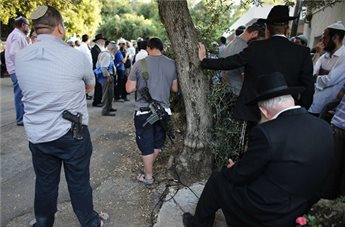 Israeli forces were standing guard as hundreds of settlers stormed the village of Ras Karkar, reportedly barring ambulances from entering the village before allowing an ambulance to take only two people to the hospital.
Eight residents of Ras Karkar were wounded as Israeli troops fired tear gas and rubber bullets at them. Live bullets were also fired into the air to scare the residents and prevent them from defending their property.
Rubber-coated bullets hit one Palestinian in the eye, one in the head and another in the chest. Four others sustained bruises and fractures from the attack by settlers and Israeli troops, locals said.
According to local sources, three houses in Ras Karkar were attacked and set on fire, as well as a number of olive trees.
One settler was wounded after being hit by a stone.
Settlers were also gearing up to attack another village near Ramallah on Sunday, Ma’an reported.
According to a witness, dozens of settlers were being escorted by Israeli troops and police officers near the village of al-Janiya in northwest Ramallah.
Residents of al-Janiya were trying to close the road to the village with rocks, only to be met with stun grenades and tear gas. Activists used the village mosque’s loudspeakers to urge residents to defend their village.
Settlers routinely attack Palestinians and their property in the occupied West Bank, as Israeli forces regularly turn a blind eye or even assist settler crimes.
According to figures compiled by Israeli group Yesh Din, nine out of 10 police investigations about settler crimes fail to lead to a prosecution.
(Ma’an, Al-Akhbar, Photo Credit – Ma’an)
Israeli court sentences Palestinian journalist to 3 months imprisonment
Palestine Information Center – 03/05/2013
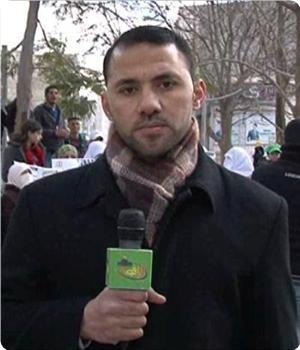
RAMALLAH — An Israeli court sentenced on Thursday the correspondent of Al-Aqsa TV Channel in the West Bank to three months imprisonment and ordered him to pay a fine.
Ahrar Center for Prisoners’ Studies and Human Rights said in a press statement that the Israeli court has sentenced journalist Tariq Abu Zaid to three months imprisonment and ordered him to pay 2000 shekel fine (550 U.S. dollars).
The Palestinian reporter was arrested without clear charges on March 8, 2013, while covering the anti-settlement weekly march in the town of Kafr Qaddum, near the city of Nablus.
Ahrar center added that the Israeli court had previously postponed the trial of captive Abu Zaid several times.
The human rights center condemned all violations against Palestinian journalists and demanded the international community to pressure the Israeli government to release the 12 journalists who have been detained while performing their legitimate professional activities.
Related article
THE EXILING OF MY FILM , “EXILE A MYTH UNEARTHED”, IN THE BBC
By Ilan Ziv | April 28, 2013
As some of you know, my film EXILE, A MYTH UNEARTHED, which examines the myth of the Jewish EXILE and its political impact on both Israeli Jews and Palestinians in the Middle East, was going to be shown on the BBC Thursday April 25th. It was pulled out of the schedule only a few days earlier.
Since then I was flooded by dozens of emails of angry and concerned viewers asking what happened. To be honest I debated whether to tell the story of what I think had happened. I have worked with the BBC in the past on some programs that were deemed controversial and I never had any political censorship. On the contrary I was impressed by the integrity and fairness of the people I dealt with.
So based on my past experience, I was going to wait patiently until the BBC programming executives would solve the internal drama that apparently has begun to brew inside the BBC. “The film is gorgeous, courageous and fresh, “ I was told several times by the programming executives. I was promised that the cancellation was temporary: “Given the short timescale and your workload, we have decided to delay transmission until we’ve had the chance you’ve had the chance to go through it in detail”.
I naively believed and decided to wait quietly. But things have their own momentum and as I learned more, I realized that the story of “EXILE” in the BBC is far more complex.
Among the dozens of emails I received one caught my attention. It included the official email response from the BBC to the inquiry/complaint sent to irate viewers who contacted the BBC asking why the program was pulled out of the schedule. This email contradicted a private email sent to me by the programming executives. I was intrigued.
I discovered after quick research that while I was contacted by the BBC barely a week before the broadcast asking for my comments about the cut, the BBC have had the film for almost 6 months. So why was this sudden rush which supposedly was the excuse given to me as to why the film was pulled out? Why was I contacted so late in the game? And why was there a discrepancy between what was told to me and the “official” version . I started to dig a bit deeper and to put my findings in a blog, rather than answer the dozens of people who wrote to me privately.
This is not a personal issue. This is ultimately a sad saga of what I believe is a mixture of incompetence, political naiveté, conscious or subconscious political pressure and ultimately, I believe, a lack of courage of broadcasters when they are faced with the complexity of the Middle East issue and the intense emotions, fears and aggression it generates. Once you indeed depersonalize this incident, you gain a fascinating insight into how subtle and complex is the process by which our understanding of the Israeli Palestinian conflict is being shaped and what happens when one dares to raise questions about issues deemed by some as taboos. It is this insight that I think is worth sharing and detailing.
The story begins for me with the name. I discovered only 3 days before the broadcast that the BBC has been using a different name for the film: Jerusalem – An Archeological Mystery Story. It struck me as an odd choice that seems to camouflage the film’s real subject and repackages it as a neutral archeological mystery of sort- like the hundreds of hours one can see on cable and Satellite channels throughout the world.
“ Exile” of course is not about a mystery, neither it is limited to archeology or to Jerusalem. The name and the illusion that one can pretend that this film is just about archeology and its mysteries are at the core I believe of Thursday’s fiasco.
Digging deeper I also learned that this title was established back in November 2012 in the agreement between the National Film Board of Canada (one of the film’s co producers and its int’l distributor) and the BBC. I was approached by the distributor to see if I would agree for the BBC to cut down the program. I agreed to it on the condition that I would be consulted so the integrity of the longer version (104 min) would be preserved. I also said that if I was not to be consulted my name should be removed from the program and the cut down will be listed as an “adaptation from a film by Ilan Ziv”. From my access to some internal documents, it is obvious now that the BBC was not genuinely interested in my getting involved. As the documents suggest, they already announced that the cut down version would be an adaptation.
So back in November 2012, everything seemed to be on track to produce a cut down of the film without having to deal with the director, broadcast the film under a neutral title and hopefully avoid any serious political debate. A perfect solution! So what went wrong?
Fast forward to Saturday April 20th 2013 when I received an email from a friend in the UK who saw that “my” film Jerusalem; An Archeological Mystery Story was going to be broadcast on BBC 4. He even read a preview of it in the Guardian. The preview promised that the film “ will ruffle some feathers”. Two days earlier I did receive from the editor who cut the film a copy of the cut for me to comment on, but there was no mention of an impeding broadcast date!
On Monday, 3 days before the broadcast, I fired an email to the BBC programming executives complaining that it is unfair to expect me to spend time reviewing the cut and coming up with suggestions of a re cut, when I was given only a few days before a broadcast date that no one bothered to inform me about. I pleaded for more time. It was only when one of the programming executives called me, I realized that there were much bigger issues for her than my complaint about being pushed into an impossible schedule.
The program executive seemed genuinely shocked that a freelance employee hired by the BBC to take part in the re-versioning process called the film “propaganda”. When I asked if this unnamed person had specific examples to support such a sweeping charge, I was told that she claimed that , “Everything was propaganda”. And there was more.
An “unnamed” BBC insider who I was told “liked the film,” claimed that the film props up the myth of Exile “ which we all know did not happen, in order to support his political analysis”. I learned that the cut I was given was now irrelevant, since some internal review deemed one scène with the Palestinians to be “too emotive” and they were asked to cut it down. Realizing that a mini political storm was brewing around the film and attacks lodged against its integrity, I asked and was promised that I would be given at least a summary of the essential charges so I could answer them in length. I am obviously very familiar with some of them and could easily and in detail refute them. I told the programming executive that my reply would help them to defend the film in the Channel. After all, they professed to love the film and seemed genuinely interested to show it. I told them it was very easy for me to prepare a detailed rebuttal with citation of sources for every word of the narration, the overall analysis and for every scene. I told them that some of the academic participants in the program who saw the cut and are reputable scholars in their field did not find any factual errors or misrepresentations of facts or of the historical narrative. In other words, I argued that such a detailed and substantial defense would convince any objective reader and observer of the editorial integrity of the film. I repeated the request several times yet I never got a reply. Instead, I received an email telling me that they decided to pull it out of the schedule, citing the “ short timetable and my work load “( !) A few days later I saw the “official” version that went to the public:
“We originally acquired ‘Jerusalem: An Archaeological Mystery Story’ to supplement BBC Four’s season exploring the history of archaeology. However, we have decided that it doesn’t fit editorially and are no longer planning to show it as part of the season. Plans to broadcast the program are currently under review” So Exile, A myth unearthed has begun its own exile within the BBC.
I do believe it is ultimately a sad saga. A saga of well meaning programming executives who acquired the “courageous “ film they claim to love, believing that they can sneak it by with a “neutral title”. When they were “caught”, rather than face the criticism and be helped by the mountains of documents and data I was ready to send them, they panicked like deer in the headlights not knowing what to do and eventually raised their hands in resignation.
The truth of the matter is that the reaction outside and inside the BBC surprised me too. The film by now has been shown in a Jewish Festival in Toronto, playing in a screening room there for a week. It was shown on Canadian TV with a second broadcast planned for June. Another version of the film is scheduled to be shown in France and the original version in Switzerland ,with hopefully screenings in the US later in the year. The response in all the public screenings, some of which I attended, was overall extremely positive. Nowhere did the film generate such a reaction as that of the few individuals inside and outside the BBC.
The temporary success to “exile” the film might prove I believe to be a Pyrrhic victory.
EXILE does not deal with contemporary politics in the Middle East, rather, it proposes to examine their ideological and historical underpinnings. EXILE has not contributed to the political stalemate in the region nor to the continued bloodshed, occupation and violence. It is a film born out of the continued violence. Rather than propose a simplistic solution or an aspirational political program , it tries to suggest a possible way out by re examining the historical narratives we all grew up on, suggesting that in this tormented land there are historical models of co existence and tolerance that could replace the dominant conventional nationalist ones. Silencing this film is silencing a possibility of discussion, debate and re examination not of the current political stalemate but of the intellectual stalemate that contributes to it.
I hope that somewhere in the BBC someone will rise above the hysteria and the attempts at self censorship to take a cooler look at the film and realize how it has been profoundly mis-characterized , -viewing it through partisan glasses instead of looking at it for what it is: a film that can and has already in its public screenings generated dialogue and positive, thinking rather than perpetuating divisions and polarization.
So for me this is not the end of EXILE in the UK but only the beginning. I will show the film publicly throughout the UK and will challenge the BBC to either broadcast the film or relinquish its rights. I have offered to buy these rights so I could place the film elsewhere in the UK.
The saga of EXILE will continue. Stay tuned!
Exile – A Myth Unearthed (Trailer)
Update:
EXILE ON BBC4 , SUNDAY NIGHT NOVEMBER 3rd at 9PM TO BE FOLLOWED BY A DEBATE AT 10PM

EXILE , A MYTH UNEARTHED has finally found a home on the BBC . The hour version of the film ( I supervised and authored the cut down) is going to be broadcast under a new title SEARCHING FOR EXILE – TRUTH OR MYTH? on BBC 4 November 3rd, at 9pm . to be followed by a debate with my participation at 10pm
There will be a press screening on Thursday October 31st at 18.30 hrs. I will attend the Q&A after the screening. From what I understand attendance is restricted to a list of invitees. Please get in touch with me if you want to attend and I see what I can do.
As you all know it has been a long journey which many of you followed. I am eternally grateful for your support!
I am happy that the film finally found a home in the United Kingdom.!
As you remember I promised to hold screenings of the long version of the film throughout Britain( schedule permitted). I will be in Manchester on Monday Nov.5 th. Please write me for details. Since this time I can not stay in the UK any longer I will try to come again if there is interest in showing and discussing the film in other cities.
Below is the billing for the press.
SEARCHING FOR EXILE – TRUTH OR MYTH?
This authored documentary by Ilan Ziv sets out to explore the historical and archaeological evidence for the Exile of the Jews after their defeat in Jerusalem at the hands of the Roman Empire, and its relevance to today.
Tracing the story of Exile from the contemporary commentator Josephus, to 1960s Israeli archaeologist Yigael Yadin, to the modern city of Rome and finally to the ruins of a Palestinian village, Ziv asks where the roots of this story lie and what evidence there is for it.
At the centre of the film is the ancient town of Sepphoris (on whose ruins stood the Palestinian village of Saffuriya until 1948) and the lessons its multi-layered history may have to offer.
A film by Ilan Ziv
Produced by Amit Breuer, Serge Gordey, Colette Louméde, Ilan Ziv
Featured Video

Armando Mema: Finland Used as New Frontline Against Russia
or go to
Aletho News Archives – Video-Images
New Documentary
Hospital Horror
Documented in the film,“Bad Medicine”

Blog Roll
 Aletho News
- CENTCOM rejects Israeli claims of preparations for new Iran attacks
- Your Shopping Bag Runs Through Hormuz
- Armando Mema: Finland Used as New Frontline Against Russia
- Gestapo 2.0? Germany grants spy agencies sweeping new powers
- Franco-Palestinian group seeks court ban on Israeli real estate fair in Paris
- How British foreign policy is frozen in the ruins of empire
- EU risks investor exodus over Russian assets – Euroclear chief
- Moscow warns NATO over troop buildup
- EU leaders prolonging Ukraine conflict to stay in power – Swiss journalist
- Moscow car bombing injures former aide to Ukraine’s ex-PM Azarov
- If Americans Knew
- An error has occurred; the feed is probably down. Try again later.
- No Tricks Zone
- New Study: Barents Sea Temperatures Were Warmer And Sea Ice Less Extensive In The 1700s Than Today
- German Authorities Start Initiative To Evaluate Public Register For Climate “Disinformation” Spreaders!
- Zonal Asymmetry of Temperature Change in the Antarctic Circumpolar Current
- New Study: The Net Fossil Fuel Contribution To Rising Atmospheric CO2 Has Been Zero For 500 Years
- Germany’s Green Energy Transition Becoming Increasingly Expensive…Another 6 Trillion Euros!
- Sudden Stratospheric Warming, Powerful El Niño Combination May Lead To Extreme Europe Cold, Energy Crisis!
- Two New Studies Find Thwaites Glacier Melt Cannot Be Driven By Human Activity Or A Warming Ocean
- E-Cars Reduce CO2 Emissions By Only 41% Compared To Internal Combustion Engine Vehicles
- Predictions Made By Renowned Climate Professor Over Past Decades Have Been Proven To Be Poor
- New Study Suggests Large Regions Of The Pacific Ocean Have Been Cooling For The Last 80 Years

