Witness: Israeli soldier killed woman ‘in cold blood’
Ma’an – 25/01/2013

Suad Jaara was shot in the hand by an Israeli soldier who killed her
friend Lubna al-Hanash near Hebron on Jan. 23. (MaanImages)
HEBRON – “I saw an Israeli soldier on the main road firing gunshots haphazardly, so I put my left hand on Lubna’s back, and grabbed her to try and run backward. A gunshot hit my hand, and I shouted as I ran.
“I thought Lubna was running behind me until I reached the security guards of Al-Arrub College who took me to a clinic in the camp before an ambulance arrived and took me to hospital.”
This, says Suad Jaara, 28, is what she witnessed Wednesday afternoon when Israeli officers near al-Arrub refugee camp shot her and her friend Lubna al-Hanash. Lubna, 22, died hours later.
Speaking to Ma’an, Jaara said Thursday that she and Lubna were walking on the campus of Al-Arrub College about 100 meters from the main road when they came under fire.
“An Israeli soldier was shooting from his rifle while a white car was parked on the roadside. There was nobody in the area except Lubna and I. He was a criminal … yes, a criminal who opened fired at us in cold blood killing Lubna and injuring me.”
Jaara’s testimony contradicts claims by the Israeli army’s chief of central command on Channel 10 Wednesday evening that the woman was trying to hurl a Molotov cocktail at an Israeli vehicle.
An army spokeswoman also told Ma’an on Wednesday that “soldiers were attacked by Palestinians who hurled multiple firebombs at them while they were traveling near al-Arrub. Soldiers returned fire and the circumstances of the incident are currently being reviewed.”
But Jaara says she and her late friend were the only ones in the area, walking around and enjoying the scenery.
“Lubna arrived two days ago to visit her sister, who is married to my brother. She had heard about Al-Arrub College and she wanted to visit it. I accompanied her to campus and she admired the area because it’s in a charming natural landscape. When we decided to leave campus, a criminal fired at us and Lubna died a martyr.”
Jaara is an employee at the Ministry of Prisoners Affairs. Her brother Jihad was a gunman in Fatah’s al-Aqsa Brigades in the Bethlehem area. He was deported to Ireland after the Nativity Church siege in 2002.
The broken truce
International Solidarity Movement | January 21, 2013
Beit Lahiya, Gaza Strip, Occupied Palestine – A ceasefire was announced on 21st November, ending eight days of horrific bloodshed in Gaza. Has the delicate truce held over the past two months? It depends who you ask. Israelis or Gazans, each going about their daily lives on opposite sides of a border fence.
There has not been a single report of a rocket fired out of Gaza since 21st November. In contrast, four Palestinians have lost their lives and over 80 have been injured by Israeli forces since then. Yet these violations have received little or no coverage in the mainstream media. Palestinian civilians, whose only crime is to live in the border areas, are terrorized on a daily basis by the Israeli army. This is what everyday life under the ceasefire has meant for them.
Beit Lahiya, in the far north of the Gaza Strip is one such place. A week ago it saw the brutal murder of 20 year-old Mustafa Abu Jarad. Today, it was the site of another Israeli violation. Abdullah Marouf, 18, was in the west of Beit Lahiya, near the coast, when he was shot in the right leg by Israeli forces, fracturing both his tibia and fibula.
 Abdullah Marouf in hospital. (Photo by Desde Palestina)

At about 9.00 on the morning of 21st January, Abdullah was in an area approximately 250 metres from the border fence, catching birds with his two brothers. A group of five or six Palestinians they were unaquainted with were also in the vicinity, closer to the fence than they were. Abdullah had been under the impression that he would be safe, however he noticed an Israeli soldier in a watchtower on the border and others on the ground. The soldiers began firing live ammunition towards them and Abdullah was shot.
Two local farmers brought him to Kamal Adwan hospital where surgeons performed percutaneous pinning of his lower leg which had sustained damage from an entry wound and a significantly larger exit wound. He requires subsequent surgery in a couple of months to fit internal wires. His recovery is estimated to take at least 12 months.
Abdullah, who is engaged to be married, had been working with his two brothers selling scrap metal. Now they will have to support a family of nine without his help. It is unsurprising that he expressed a lack of faith in the ceasefire agreement.
One can only expect that the Palestinian resistance has also lost faith and is fast losing patience. If a response is provoked it will appear to be in a vacuum – despite this being far from the case – due to the shameful silence maintained by the international community throughout the ongoing Israeli atrocities. It is for people of conscience to protest this injustice and prevent a further escalation of Israel’s attacks on Gaza.
Judaization = Racism? Really?
By Paul Larudee | January 23, 2013
On Sunday, January 20, 2013, the “progressive” Israeli newspaper Haaretz published a short editorial titled “‘Judaization’ is racism”.
Before you get your hopes up, let me tell you that the editorial is a criticism of Shimon Gapso, the Jewish mayor of Upper Nazareth, a community intended to diminish the Arab character of Nazareth, the largest Palestinian Arab city inside what most of the world recognizes as Israel.
Founded in 1957, Upper Nazareth was given priority for development and expansion as part of a campaign by Yitzhak Rabin. The impetus was a trip that Rabin made to the Galilee in 1975. At one point he found himself in the Carmel valley. Looking around, he saw nothing but Palestinian farms and villages. “Am I in Israel or in Syria?” he uttered, whereupon he lent his weight to the mission to “judaize the Galilee”. Upper Nazareth is one of the Jewish communities that became an important of that mission. It was intended to limit the growth of Nazareth and ultimately marginalize or displace it.
Ironically, however, the “Jewish character” of Upper Nazareth is itself being compromised, as Palestinians from Nazareth find that there is no longer enough room in the older city to accommodate their growing population. In response, the mayor of Upper Nazareth has tried to make the city as unfriendly as possible to its non-Jewish residents, including opposition to Arabic language schools in the town and a much-publicized ban on Christmas trees. (Most of the Palestinians in Upper Nazareth are Christian.) The Haaretz editorial is a criticism of the “benighted racist position that sees the presence of Arabs in the Galilee or anywhere else as a national threat.”
Nice words, but is not the entire Zionist project one of “judaization”? Is that not how its founders conceived it? Is not Israel itself the product of “judaization”? What is different about Upper Nazareth? What about the expulsion of the Bedouin in the Naqab (“Negev”)? Is the confiscation and demolition of Palestinian homes in Jerusalem not merely an extension of the ethnic cleansing of 1948? How are the orders to evacuate and obliterate eight villages in the hills south of al-Khalil (“Hebron”) not consistent with the aims of Zionism?
If Haaretz wishes to oppose judaization, why not start with the judaization of 1948? Let them insist upon inviting all Palestinians back to their homes. Let them demand elimination of an immigration policy that is for Jews only. Let them call upon the Custodian for Absentee Property – who is responsible for the more than 80% of Israel that was confiscated from Palestinians in 1948 – to welcome the absentees back and return their property to them, with payment for damages and compensation for 65 years of unauthorized usage. Let them oppose a policy of separate states for Arabs and Jews (forgetting that many are both or neither).
Judaization is just another word for Zionism. And yes, it’s racism.
Related articles
- The Terror Lurking in a Christmas Tree (alethonews.wordpress.com)
- Israeli mayor: expel Palestinian citizens of “hostile” Nazareth to Gaza for opposing war (altahrir.wordpress.com)
- In Palestine, Peace is Not Just Absence of Violence, But Presence of Justice (alethonews.wordpress.com)
Israeli occupation forces kill woman near Hebron
Ma’an – 23/01/2013
HEBRON – Israeli forces shot and killed one person and injured another in the Hebron district on Wednesday, medics said.
Witnesses told Ma’an that Israeli soldiers traveling in a civilian car opened fire at a group of people at the entrance to al-Arrub refugee camp south of Bethlehem.
Lubna Munir Hanash, 22, was shot in the head and died from her injuries, medics said.
Suad Yusuf Jaara was shot in the hand and transported to Ahli hospital in Hebron.
Witnesses told Ma’an that after the shooting Israeli soldiers prevented an ambulance from arriving at the scene for around 10 minutes.
Locals said there were no clashes in the area at the time.
An Israeli army spokeswoman said that “soldiers were attacked by Palestinians who hurled multiple firebombs at them while they were traveling near al-Arrub. Soldiers returned fire and the circumstances of the incident are currently being reviewed.”
Israeli soldiers searched the area and found several firebombs ready for use, she said, adding that no soldiers were injured in the incident.
Related articles
- Israeli soldiers vandalise Hebron home and arrest a student (alethonews.wordpress.com)
- Family denies Hebron teen killed by Israel was carrying toy gun (alethonews.wordpress.com)
- Local activist detained in Hebron (alethonews.wordpress.com)
- Hebron families struggle for existence (palestinemonitor.org)
- Second group of journalists beaten in Hebron (alethonews.wordpress.com)
Mayoral Candidates Take Sides over St. Louis Veolia Contract
Saint Louis Palestine Solidarity Committee | January 22, 2013
On January 16, 2013 at City Hall in St. Louis, Missouri, a diverse group of 60 Palestinian rights organizers; environmental activists; workers; civil rights leaders; veterans; local business owners; students; members of the local Muslim, Christian, and Jewish communities; and other concerned citizens packed a meeting of the St. Louis Board of Estimate & Apportionment (E&A) to show opposition to a proposed city contract with Veolia Water. Two mayoral candidates on the 3-person board, which considers public contracts, took opposite sides over the contract, prompting the third member to call for a public hearing for testimonies from local citizens regarding Veolia.
Contract opponents lined the halls leading to the mayor’s office, citing Veolia’s abysmal record of poor environmental standards, labor abuses and involvement in human rights abuses in Palestine. Each held a sign stating “Say No to Veolia” followed by their personal reasons, which included: “I can’t ride their buses because I am Palestinian,” “I think all people deserve equal treatment,” “My tax dollars are not for corporate profit,” “They don’t have to drink our water,” “I love coffee.” The mayor’s office had to change the meeting venue at the last minute to accommodate the large public turnout.
The St. Louis Palestine Solidarity Committee (PSC) learned of the proposed $250,000 Veolia contract for a four-month consultation for the St. Louis Water Division in December 2012 after the story was leaked to the Riverfront Times. When the contract came up for approval, PSC organized in less than 24 hours a grassroots effort to tell the E&A Board, which is comprised of St. Louis City Mayor Francis Slay, Comptroller Darlene Green and President of the Board of Aldermen Lewis Reed (running for mayor against Slay), not to approve the contract without investigating Veolia’s record. At the December 19, 2012 meeting of the Board, the Board agreed they could not in good conscience vote to approve a contract with so many allegations outstanding.
Immediately, the PSC reached out to diverse communities to join the fight against Veolia, all under the coalition St. Louis Dump Veolia.
The contract was reintroduced last-minute to the January agenda by Mayor Slay, the contract’s chief proponent. Slay had received a trophy and award check for $15,000 from the President of Veolia Water in 2007, on behalf of the City. Following mass mobilization by the coalition, Mayor Slay decided one day before the January meeting to remove the contract from the agenda, delaying the vote for a second month.
In the presence of an uncharacteristically large audience and media presence, the two mayoral candidates Slay and Reed came head-to-head in tense disputes regarding agenda items, transforming the meeting into what some coined an “ad-hoc mayoral debate.” President Reed ended by praising the public showing and affirming his opposition to the Veolia contract, while Slay stressed that the public had misconceptions about the company.
Comptroller Green, who holds the deciding vote, said she hoped the public’s voices could be heard and asked for a public hearing. The PSC delivered and posted letters to Comptroller Green asking her to reject Veolia from the Palestinian Freedom Riders, Boycott from Within and the Civic Coalition for Palestinian Rights in Jerusalem.
Veolia has been a major focus of the global Boycott, Divestment and Sanctions (BDS) movement for Palestinian freedom and equality. The St. Louis campaign against Veolia may be the first time that a BDS campaign has entered mainstream political discourse and, perhaps, a mayoral race. Media coverage in the St. Louis Post-Dispatch, the Riverfront Times and St. Louis Public Radio acknowledge that Veolia’s contracts in Israel/Palestine have been instrumental in bringing the controversy out in the open.
The nationwide We Divest campaign targets Veolia for divestment from the holdings of financial services giant, TIAA-CREF. St. Louis-area resident and PSC member, Steve Tamari, is the lead filer for a nationwide, broad-based shareholders’ resolution calling for divestment from Veolia and other companies that profit from Israel’s human rights abuses. Individuals holding a CREF account are encouraged to sign on to the shareholders’ resolution and to vote in support of the resolution before or at the July 2013 annual meeting.
St. Louis Dump Veolia is committed to keeping up the pressure on City Hall until the Veolia contract is rejected once and for all. The PSC will be mobilizing residents to testify at the hearing, putting the Israeli occupation, and its corporate enablers, on trial for all to see.
The next E&A meeting will occur on Wednesday, February 20 at 2pm in St. Louis City Hall.
To follow developments and action items on the campaign, join the St. Louis Dump Veolia and Palestine Solidarity Committee Facebook pages, and follow@stlpsc on Twitter
Veolia Fact Sheet
December 18th, 2012 | Published in Latest News and Action Alerts, STL-PSC Blog
What is Veolia?
According to a story broken by the Riverfront Times, St. Louis city lawyers have been negotiating a contract with Veolia Water North America to guide cost-cutting. Veolia Water is a major subsidiary of Veolia Environnement, a Paris-based multinational corporation and the largest water privatization business in the world. Veolia is infamous for:
- Failure to make good on promised improvements
- Anti-labor practices
- Privatizing public resources
- Irresponsible to disastrous environmental practices
- Mismanagement
- Corruption, bribery, embezzlement, and fraud
- Supporting and profiting from segregation and discrimination in Palestine
Worldwide, consumers report that Veolia consistently charges high rates, provides poor service, causes staff turnover, discourages water conservation, and fails to implement promised improvements. Its history reveals consistent prioritization of private profit at the expense of the environment and public welfare.
Unless otherwise indicated, the following is based on extensive research and documentation on Veolia’s practices by Water for All, Polaris Institute, Global Exchange, Novato Friends of Locally Operated Wastewater, Public Citizen, Public Water Works, and Food & Water Watch (here, here, here, here, here).
What happened in Indianapolis?
In its proposal to the St. Louis Water Division, Veolia extensively references its work in Indianapolis as a successful model that could inform Veolia’s guidance in St. Louis. If Indianapolis is any indication of Veolia’s practices, then our city would do well to steer clear. Veolia claims that the contract was completed and “focused on building a collaborative environment with all of the project stakeholders (union, government and the community).” In fact the company’s 20-year contract with Indianapolis was terminated by the city less than halfway through, by which time the following had ensued:
- Non-union employees claimed that the company cut retirement plans, health care and other benefits, costing the workers more than $50 million over 25 years. Hundreds of employees, many organized under a strong union, found themselves in a pitched battle with the company to preserve benefits and hold Veolia to its promises.
- Veolia was sued for breaking state contract law, and for overcharging 250,000 residents.
- Because the company lacked proper safeguards, a typo by an employee caused a boil-water alert for more than a million people, closing local businesses and canceling school for 40,000 students.
- An independent review uncovered lax oversight of the city’s contract with Veolia.
- Consumer complaints more than doubled in the first 10 months of the contract.
- In a study of 100 large U.S. cities, Environmental Working Group ranked Indianapolis drinking water quality #90 (i.e. 11th-worst overall). St. Louis ranks #9 — among the best in the country.
In 2005, a federal grand jury subpoenaed four Veolia Indianapolis employees as part of an investigation into allegations that the utility falsified water quality reports. The probe began amid accusations by Indianapolis council members that the company had cut back on staffing, water testing, treatment chemicals and maintenance. Though Veolia was never charged, the corporation sustained multimillion-dollar losses and dug its way out of this hole by finagling concessions, including a 2007 contract amendment shifting at least $144 million in costs from Veolia to the city. Ignoring public outcry from consumers and state officials, the city then tried to raise rates by 35% to pay for these additional expenses and more expensive capital improvement projects.
In 2010, with infrastructure needs mounting and Veolia demanding more than the city could afford, Indianapolis canceled the contract more than 10 years early, for which they were forced to pay Veolia an additional $29 million. The nonprofit Citizens Energy Group took over, positioned to save the city more money than multinational Veolia was ever able to.
If Veolia gives Indianapolis as an example of a success story, what could a failure possibly look like?
New Orleans — an Environmental Disaster, and Other Cities
In 2001 in New Orleans, an electrical fire at a sewer treatment plant operated by Veolia caused operators to divert raw sewage into the Mississippi River for two hours. In 2001 and 2002, the plant released sewage into the river a total of 50 times, often violating water quality standards and resulting in more than $107,000 in fines. The city’s Sewerage and Water Board Director and staff made numerous, repeated and documented complaints about Veolia reducing staff to inadequate levels, neglecting preventive maintenance, failing to notify city officials of environmental violations, and other problems. Veolia has a long track record of failing to communicate with New Orleans in connection with the contract. In 2002, the board rejected Veolia’s bid for a new water/wastewater contract following public outrage.
In Richmond, CA in 2006, the city and Veolia were sued for dumping more than 17 million gallons of sewage into tributaries that empty into the San Francisco Bay. The Baykeeper watchdog group said Richmond had one of the highest spill rates in the state. The city had given a 20-year, $70 million contract to Veolia, which promised to cut costs and develop and implement an improvement plan for the sewer and storm water systems. By the time of the lawsuit four years later, the company had not even finished designing the plan, much less begun the renovations. Richmond settled the lawsuit out of court by agreeing to pay for multimillion-dollar improvements to reduce sewer spills. In addition, Richmond taxpayers had to shell out $500,000 annually for years to compensate residents and businesses for property damaged. Even after the lawsuits, the problem continues: Veolia’s Richmond plant had 22 spills dumping more than 2 million gallons of sewage during the first two months of 2008.
Lynn, MA ended a wastewater overflow plant contract with Veolia because the company failed to stay adequately bonded for the project. While company officials lauded the continuing contracts with water and wastewater treatment plants in the community, the town rapped the company for cutting costs by refusing to properly treat wastewater with chemicals. As a result, the town was blanketed in a stench.
Angleton, TX terminated a Veolia contract for non-performance and took the company to court, charging that it breached its contract by failing to maintain adequate staffing levels, not submitting capital project reports and charging improper expenses to the maintenance and repair tab picked up by the city.
In Atlanta, Veolia tried to maximize revenue simply by slashing the work force in half, contributing to boil-water orders, maintenance backlogs and other issue that ultimately led to dissolution of the contract.
In Sauget, IL, right across the river, a related Veolia subsidiary operated a hazardous waste incinerator for over 10 years without a clean air permit. In 2005, “the owners agreed to pay $150,000 for alleged air pollution violations.” As of 2008, the facility had been fined more than $3 million,” mostly related to small explosions and releasing toxic chemicals, including carcinogenic dioxins, into the air.
For more examples, see: Burlingame, CA; Wilmington, DE; Port Arthur, TX; Cranston, RI; and others.
Bribery, Corruption, Embezzlement, Fraud
Corruption, bribery, embezzlement, and fraud appear to part of Veolia’s corporate culture. The president of a Veolia subsidiary was convicted of bribing a New Orleans sewer board member to support renewal of its contract (see background above) in 2002. The same year, the mayor of Bridgeport, CT was convicted on 16 counts including taking kickbacks, bribes and extortion along with 8 other defendants a contract proposal from Veolia (then called Vivendi). A forensic audit in Rockland, MA led to contract termination amid embezzlement charges involving a sewer department official and a local company executive charged with embezzling more than US$300,000. Veolia disclosed accounting fraud in the U.S. from 2007-2010 amounting to $120 million. The scandal took place in their Gulf of Mexico Marine Services unit. These are small examples of a pattern of Veolia replicated around the country and world.
Would this contract privatize the city’s water? No — not yet. But the contract would position Veolia — which specializes in water privatization — as a “brain-trust” of management expertise in reducing costs. Many view Veolia and focusing on privatizing services through long-term monopoly contracts rather than through outright ownership. These types of “advisory” roles can serve as a backdoor avenue toward eventually privatizing municipal operations.
Supporting Apartheid and Segregation in Israel/Palestine
Veolia is involved in Israel’s systematic ethnic discrimination against the Palestinians in many ways:
An Israeli subsidiary, Veolia Water – Israel, operates a wastewater treatment plant located in an illegal Jewish-only settlement called Modiin Ilit, built on Palestinian land in the West Bank. The owners of the land on which this settlement was built have been violently driven out. Two unarmed Palestinians from the Palestinian village on which Modiin Ilit was built, have been killed as they protested nonviolently against the ongoing confiscation of their land and resources. Veolia continues to service the settlement.
An Israeli subsidiary of Veolia Transdev, Connex – Israel, operates buses on segregated roads through the occupied West Bank, including two bus lines that use road 443, which is built partially on confiscated land with portions closed entirely to Palestinians. A separate but unequal Palestinian road system is made up of low grade roads cut by checkpoints and physical barriers restricting Palestinian freedom of movement. Last year, Palestinian Freedom Riders attempted to board buses operating on their own land and were violently removed and arrested. Veolia is profiting from segregation and discrimination.
Another Israeli subsidiary, Veolia Environmental Services – Israel, supervises, consults for, and operates the Tovlan Landfill in the occupied Jordan Valley, collecting refuse from illegal settlements. Israel renders it almost impossible for Palestinians in the Jordan Valley to gain permits to build homes, toilets, wells, animal pens, or other vital infrastructure for local communities, which has forced almost all Palestinian families out, with those remaining living in dire conditions. Some are left with no alternative but to work on settlements that have taken their families’ land, for pay far below the minimum wage, unable to take bathroom breaks, and denied any rights to unionize. Veolia takes captured Palestinian land and natural resources to service the settlements exploiting or driving out Palestinians.
UN Special Rapporteur Richard Falk recently recommended that Veolia “should be boycotted, until they bring their operations into line with international human rights and humanitarian law and standards.” Veolia’s extensive profiting from Israel’s illegal practices have provoked global outcry, costing Veolia more than $12.5 billion in lost contracts to date. Recently, the Friends Fiduciary Corporation, which handles investments for hundreds of U.S. Quaker institutions, also divested from Veolia.
Veolia already in Financial Trouble
With public opinion shifting negatively around the world, Veolia is paying a price. After a 25-year contract, Veolia’s home city of Paris declined to renew its contract in 2009. Cities around the world have done the same. Veolia’s profit margin has plummeted since 2008 and the company lost more than half its market value in 2011. Veolia’s CEO pledged to sell $1.8 billion of assets and to stop operations in at least 37 countries. In September 2012, Veolia’s debt stood at more than $19.7 billion.
Now, Veolia is trying to bring its risky and immoral business to our backyard.
Related articles
- St. Louis Palestine Solidarity Committee Statement on Pending City Contract with Veolia Water (alethonews.wordpress.com)
- Veolia to end sponsorship of major UK photography exhibition (bdsmovement.net)
Israeli Authorities Change Route Of Wall To Fully Annex Jerusalem For Israel
By Saed Bannoura | IMEMC & Agencies | January 21, 2013
The Israeli Defense Ministry announced on Sunday that they will re-route a section of the Wall east of Jerusalem in order to close off an existing gap and fully annex the city of Jerusalem into Israel. The new route means the complete encirclement of the Palestinian village of Al-Zaim, with the Wall to the West and a security fence to the east.
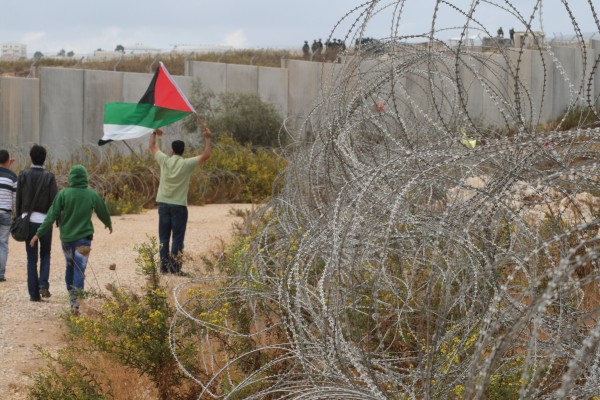 Other Palestinian towns are also completely isolated and encircled into ghettoes, including the town of Sheikh Sa’ed and the city of Qalqilya. Israeli authorities isolated these towns in order to create Palestinian-free zones and routes throughout the West Bank to allow Israeli settlers to travel unencumbered without either having to stop at checkpoints or to drive on the same roads as Palestinians. But in order to do that, Israeli forces have had to maintain over 600 checkpoints throughout the West Bank, and to force Palestinians off their own roads and onto dirt roads or trails.
The new route of the Wall will put the settlement of Ma’ale Adumim on the Palestinian side of the Wall, along with dozens of other Israeli settlements constructed in violation of international law all over the West Bank. But Israeli officials have assured the residents of these settlements that they will construct other Walls and fences to allow them to access Jerusalem without having to go through Palestinian areas.
These additional fences and barriers will, like the Annexation Wall itself, be constructed on land seized from Palestinian owners by Israeli authorities who claim that they have the right to take the land ‘for security reasons’. All Israeli settlements on Palestinian land are considered illegal under international law and the Fourth Geneva Convention, which forbids an occupying military power from settling its civilian population on land occupied by military force.
The announcement is seen as a response to the Palestinian encampment Bab Al Shams, which was established on the land in question, known to Israeli officials as ‘E1’, last weekend, then demolished by Israeli forces. The Palestinian non-violent activists who established the encampment entered the area through the village of Al-Zaim.
Israeli Prime Minister Binyamin Netanyahu has openly declared his intention to build a settlement on the ‘E1’ land, and completely enclose the eastern edge of Jerusalem, thus effectively annexing the city of Jerusalem to the state of Israel. This renders any peace agreement with the Palestinian Authority impossible, since one of the Palestinian Authority’s base demands is sharing the city of Jerusalem. The base demands, which Palestinians have asked Israel to recognize time and again to no avail, are: the recognition of a Palestinian state with east Jerusalem as its capital, the right of return of Palestinian refugees and the release of the thousands of Palestinian political prisoners being held in Israeli prison camps.
Related articles
- The long road to Bab al-Karama (alethonews.wordpress.com)
- Israeli politician: Palestinian ghettos were always the plan (sott.net)
The long road to Bab al-Karama
International Solidarity Movement | January 20, 2013
Bab al-Karama, Occupied Palestine – The road to Bab al-Karama, the new tent neighborhood created by Palestinians on land that will be separated from the village of Beit Iksa by the Apartheid wall, exposes a landscape of Apartheid.
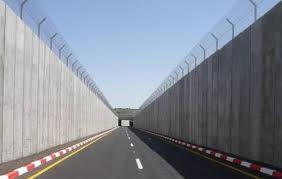 To reach Bab al-Karama from Occupied Ramallah one needs to take the “Palestinian only” road that runs under the “Israeli only” 443 Highway between Ramallah and Beir Naballah.
Beir Naballah used to be a suburb of Jerusalem. Affluent Jerusalemites built their homes in Beir Naballah to escape from the housing crisis imposed on Palestinians by Jerusalem’s municipality housing polices. It sits on a road that connected the villages in the area with Jerusalem and continued on to Latrun. Now Beir Naballah is completely surrounded by an Israeli wall. The old road was widened and transformed into an Israeli highway called 443. The highway now connects Jerusalem to Tel Aviv and the Palestinian residents of the area are barred form using it. The Jerusalemite residents were forced to abandon their homes and many businesses dependent on clientele from Jerusalem have closed.
We exit Beir Naballah through a second tunnel that connects the Beir Naballah enclave to another enclave where 8 Palestinian villages are also isolated by Israeli walls. This tunnel is even more surreal than the first. Not only does it run under two Israeli only roads but as well as under the Apartheid wall and through the Givaat Zeev settlement bloc. High cement walls with razor wire on top of them hug the sides of the road.
We drive in Biddu and drive through the villages that had been since their creation connected to Al Quds but are now cut off from it and artificially connected to Ramallah. True to the Orwellian tradition of Israel’s military language they call the Palestinian network of roads they have built under their highways “fabric of life roads”. The landscape is beautiful and almost idyllic. Goats grazing on green hills, old stone houses…, but this ideal setting is surrounded by walls, gates and settlements.
The last village we reach, the one closest to Jerusalem is Beit Iksa. But to enter it we need to pass a military checkpoint. At the edge of the village we finally reach Bab al-Karama overlooking a network of Israeli highways and the city of Jerusalem. In the valley right below Bab al-Karama one can see two tunnels that will be connected by a bridge on which a fast track train connecting Jerusalem to Tel Aviv will run. The train will run on the village’s land but not only will the villagers be barred from accessing it, Israel’s Apartheid wall will be built between the village and the train separating the villagers from over 4500 dunams (60%) of their agricultural land. More than 1300 dunams had already been taken in the 70s for the construction of Ramot Allon settlement.
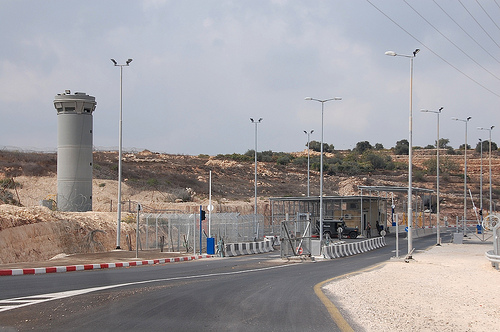
Checkpoint at the entrance of Beit Iksa
Related articles
- ‘Gate of Dignity’ built on lands of Beit Iksa north of Jerusalem (alethonews.wordpress.com)
- Army Invades Bab Al-Karama (imemc.org)
- Palestinians Establish a new Village, Bab Alshams, in Area E1 (alethonews.wordpress.com)
Former mayor put in administrative detention
Ma’an – 20/01/2013
 NABLUS – A former Palestinian mayor detained by Israeli forces this week will be held in administrative detention for six months, a prisoners group said Sunday.
Sheikh Jamal Tawil, who had held the mayoral post in al-Bireh, a neighborhood of Ramallah in the central West Bank, was detained on Tuesday.
The Solidarity Foundation for Human Rights said Ofer military court gave the former mayor six months in detention without charge.
Tawil was arrested by Israeli forces during the first intifada and held for several months under administrative detention at the time.
As of December, 178 Palestinians were being held without charge in Israeli jails, including seven elected members of the Palestinian parliament, according to prisoners rights group Addameer.
Related articles
- Prisoner Omar Barghouti: A Story of a Life Behind Bars (occupiedpalestine.wordpress.com)
- Detainees In Eshil Go On Hunger Strike (altahrir.wordpress.com)
‘Gate of Dignity’ built on lands of Beit Iksa north of Jerusalem
IMEMC News | January 18, 2013
The Palestinian village of Beit Iksa overlooking Jerusalem just built a new village they called Bab Al-Karama (Gate of Dignity) on their land behind the apartheid wall that Israel has built on their land and call on Palestinians and Internationals to join them in their popular struggle to hold on to their lands.
The wall Israel is building on the village land would leave 96% of the village land inaccessible and behind the segregation wall.
Over the past 24 hours, the villagers built a mosque and set up 5 tents for dwelling on their land behind the wall.
 The head of the Beit Iksa village council Mr. Kamal Hababa stated that idea of building this village extension is to protect their legally owned lands and to be the second such village built to protect from growing efforts at transforming Arab Jerusalem.
Already the threatened village land behind the wall is 7,411 dunums which amounts to half the total threatened lands of the eight Palestinian villages northwest of Jerusalem and 96% of the village land of Beit Iksa. Colonial Jewish only settlements built on Palestinian lands beyond the Green line in this area include Ramot, Neve Shmuel, Har Shmuel, and Givat Ze’ev.
The erection of Bab Al-Karama village comes shortly after Palestinian activists erected a village they called Bab Ashams to counter Israeli settlement construction in the area known as E1, located between Jerusalem and Jericho, which signals a new model in popular struggle against the ongoing expansion of the Israeli settlements in the West Bank.
Veolia Withdraws from California Water Contract Bidding
End the Occupation | January 11, 2013
Davis, California – The Davis Committee of Palestinian Rights (DCPR) is happy to report that Veolia Water North America has withdrawn as a prospective bidder on a $325 million dollar project that would provide treated water from the Sacramento River to residents of Woodland and Davis in Yolo County, California. The announcement came at the December 20, 2012 meeting of the Woodland-Davis Clean Water Agency (Water Agency), a joint powers authority between the University of California – Davis and the cities of Woodland and Davis. Veolia’s withdrawal followed efforts by citizens of Yolo County to prevent Veolia’s bidding due to the company’s involvement in the violation of Palestinian human rights.
Members of DCPR first contested the participation of Veolia Water as a prospective bidder in June 2011. Appearing before meetings of the Water Agency Board of Directors, DCPR provided substantial documentation of Veolia’s history of profiting from Israel’s illegal occupation and apartheid policies in Palestine, as well as the dissatisfaction of public agencies throughout the U.S. for Veolia’s mismanaged operations and poor performance, environmental permit violations and fines, and failure to make good on promised improvements.
On April 19th, 2012, DCPR testified before the Board charging that Veolia did not meet the Water Agency’s ethical criteria. Veolia’s involvement in the Jerusalem Light Rail Transit system, its operation of settler-only buses on segregated roads in the occupied West Bank for inhabitants of illegal Israeli settlements, and its operation of a landfill on land confiscated from Palestinians have been contested by Palestinians and international human rights activists throughout the last decade. Veolia has suffered the loss of more than $20 billion in contracts to date following this global outcry.
Within the U.S., the Friends Fiduciary Corporation, which handles investments for hundreds of U.S. Quaker institutions, recently divested from Veolia following requests by Quakers concerned about the violation of Palestinian rights. In December 2012 the City of St. Louis voted to suspend approval of a contract with Veolia Water until it completed an investigation of Veolia’s controversial labor, environmental, and human rights practices. There are ongoing campaigns protesting Veolia Transportation public contracts in Sonoma County and Los Angeles, CA; Baltimore, MD; Boston, MA; and beyond. The state-wide California Israel Divestment Campaign calls on CalPERS public pension system to divest from Veolia Environnement, Caterpillar and Elbit Systems.
Bids were initially due in December 2012, but following outcry from citizenry regarding the large impact of the project’s capital cost upon resident’s water bills, the City Council decided to postpone the due date and appoint a citizens’ advisory committee to investigate rate alternatives, revisit the water supply need-assessment, and consider other water procurement options. Veolia was the only company to withdraw from bidding.
CONTACT: Mikos Fabersunne, Davis Committee for Palestinian Rights, fabersunne@sbcglobal.net
Veolia Fact Sheet
December 18th, 2012 | Published in Latest News and Action Alerts, STL-PSC Blog
What is Veolia?
According to a story broken by the Riverfront Times, St. Louis city lawyers have been negotiating a contract with Veolia Water North America to guide cost-cutting. Veolia Water is a major subsidiary of Veolia Environnement, a Paris-based multinational corporation and the largest water privatization business in the world. Veolia is infamous for:
- Failure to make good on promised improvements
- Anti-labor practices
- Privatizing public resources
- Irresponsible to disastrous environmental practices
- Mismanagement
- Corruption, bribery, embezzlement, and fraud
- Supporting and profiting from segregation and discrimination in Palestine
Worldwide, consumers report that Veolia consistently charges high rates, provides poor service, causes staff turnover, discourages water conservation, and fails to implement promised improvements. Its history reveals consistent prioritization of private profit at the expense of the environment and public welfare.
Unless otherwise indicated, the following is based on extensive research and documentation on Veolia’s practices by Water for All, Polaris Institute, Global Exchange, Novato Friends of Locally Operated Wastewater, Public Citizen, Public Water Works, and Food & Water Watch (here, here, here, here, here).
What happened in Indianapolis?
In its proposal to the St. Louis Water Division, Veolia extensively references its work in Indianapolis as a successful model that could inform Veolia’s guidance in St. Louis. If Indianapolis is any indication of Veolia’s practices, then our city would do well to steer clear. Veolia claims that the contract was completed and “focused on building a collaborative environment with all of the project stakeholders (union, government and the community).” In fact the company’s 20-year contract with Indianapolis was terminated by the city less than halfway through, by which time the following had ensued:
- Non-union employees claimed that the company cut retirement plans, health care and other benefits, costing the workers more than $50 million over 25 years. Hundreds of employees, many organized under a strong union, found themselves in a pitched battle with the company to preserve benefits and hold Veolia to its promises.
- Veolia was sued for breaking state contract law, and for overcharging 250,000 residents.
- Because the company lacked proper safeguards, a typo by an employee caused a boil-water alert for more than a million people, closing local businesses and canceling school for 40,000 students.
- An independent review uncovered lax oversight of the city’s contract with Veolia.
- Consumer complaints more than doubled in the first 10 months of the contract.
- In a study of 100 large U.S. cities, Environmental Working Group ranked Indianapolis drinking water quality #90 (i.e. 11th-worst overall). St. Louis ranks #9 — among the best in the country.
In 2005, a federal grand jury subpoenaed four Veolia Indianapolis employees as part of an investigation into allegations that the utility falsified water quality reports. The probe began amid accusations by Indianapolis council members that the company had cut back on staffing, water testing, treatment chemicals and maintenance. Though Veolia was never charged, the corporation sustained multimillion-dollar losses and dug its way out of this hole by finagling concessions, including a 2007 contract amendment shifting at least $144 million in costs from Veolia to the city. Ignoring public outcry from consumers and state officials, the city then tried to raise rates by 35% to pay for these additional expenses and more expensive capital improvement projects.
In 2010, with infrastructure needs mounting and Veolia demanding more than the city could afford, Indianapolis canceled the contract more than 10 years early, for which they were forced to pay Veolia an additional $29 million. The nonprofit Citizens Energy Group took over, positioned to save the city more money than multinational Veolia was ever able to.
If Veolia gives Indianapolis as an example of a success story, what could a failure possibly look like?
New Orleans — an Environmental Disaster, and Other Cities
In 2001 in New Orleans, an electrical fire at a sewer treatment plant operated by Veolia caused operators to divert raw sewage into the Mississippi River for two hours. In 2001 and 2002, the plant released sewage into the river a total of 50 times, often violating water quality standards and resulting in more than $107,000 in fines. The city’s Sewerage and Water Board Director and staff made numerous, repeated and documented complaints about Veolia reducing staff to inadequate levels, neglecting preventive maintenance, failing to notify city officials of environmental violations, and other problems. Veolia has a long track record of failing to communicate with New Orleans in connection with the contract. In 2002, the board rejected Veolia’s bid for a new water/wastewater contract following public outrage.
In Richmond, CA in 2006, the city and Veolia were sued for dumping more than 17 million gallons of sewage into tributaries that empty into the San Francisco Bay. The Baykeeper watchdog group said Richmond had one of the highest spill rates in the state. The city had given a 20-year, $70 million contract to Veolia, which promised to cut costs and develop and implement an improvement plan for the sewer and storm water systems. By the time of the lawsuit four years later, the company had not even finished designing the plan, much less begun the renovations. Richmond settled the lawsuit out of court by agreeing to pay for multimillion-dollar improvements to reduce sewer spills. In addition, Richmond taxpayers had to shell out $500,000 annually for years to compensate residents and businesses for property damaged. Even after the lawsuits, the problem continues: Veolia’s Richmond plant had 22 spills dumping more than 2 million gallons of sewage during the first two months of 2008.
Lynn, MA ended a wastewater overflow plant contract with Veolia because the company failed to stay adequately bonded for the project. While company officials lauded the continuing contracts with water and wastewater treatment plants in the community, the town rapped the company for cutting costs by refusing to properly treat wastewater with chemicals. As a result, the town was blanketed in a stench.
Angleton, TX terminated a Veolia contract for non-performance and took the company to court, charging that it breached its contract by failing to maintain adequate staffing levels, not submitting capital project reports and charging improper expenses to the maintenance and repair tab picked up by the city.
In Atlanta, Veolia tried to maximize revenue simply by slashing the work force in half, contributing to boil-water orders, maintenance backlogs and other issue that ultimately led to dissolution of the contract.
In Sauget, IL, right across the river, a related Veolia subsidiary operated a hazardous waste incinerator for over 10 years without a clean air permit. In 2005, “the owners agreed to pay $150,000 for alleged air pollution violations.” As of 2008, the facility had been fined more than $3 million,” mostly related to small explosions and releasing toxic chemicals, including carcinogenic dioxins, into the air.
For more examples, see: Burlingame, CA; Wilmington, DE; Port Arthur, TX; Cranston, RI; and others.
Bribery, Corruption, Embezzlement, Fraud
Corruption, bribery, embezzlement, and fraud appear to part of Veolia’s corporate culture. The president of a Veolia subsidiary was convicted of bribing a New Orleans sewer board member to support renewal of its contract (see background above) in 2002. The same year, the mayor of Bridgeport, CT was convicted on 16 counts including taking kickbacks, bribes and extortion along with 8 other defendants a contract proposal from Veolia (then called Vivendi). A forensic audit in Rockland, MA led to contract termination amid embezzlement charges involving a sewer department official and a local company executive charged with embezzling more than US$300,000. Veolia disclosed accounting fraud in the U.S. from 2007-2010 amounting to $120 million. The scandal took place in their Gulf of Mexico Marine Services unit. These are small examples of a pattern of Veolia replicated around the country and world.
Would this contract privatize the city’s water? No — not yet. But the contract would position Veolia — which specializes in water privatization — as a “brain-trust” of management expertise in reducing costs. Many view Veolia and focusing on privatizing services through long-term monopoly contracts rather than through outright ownership. These types of “advisory” roles can serve as a backdoor avenue toward eventually privatizing municipal operations.
Supporting Apartheid and Segregation in Israel/Palestine
Veolia is involved in Israel’s systematic ethnic discrimination against the Palestinians in many ways:
An Israeli subsidiary, Veolia Water – Israel, operates a wastewater treatment plant located in an illegal Jewish-only settlement called Modiin Ilit, built on Palestinian land in the West Bank. The owners of the land on which this settlement was built have been violently driven out. Two unarmed Palestinians from the Palestinian village on which Modiin Ilit was built, have been killed as they protested nonviolently against the ongoing confiscation of their land and resources. Veolia continues to service the settlement.
An Israeli subsidiary of Veolia Transdev, Connex – Israel, operates buses on segregated roads through the occupied West Bank, including two bus lines that use road 443, which is built partially on confiscated land with portions closed entirely to Palestinians. A separate but unequal Palestinian road system is made up of low grade roads cut by checkpoints and physical barriers restricting Palestinian freedom of movement. Last year, Palestinian Freedom Riders attempted to board buses operating on their own land and were violently removed and arrested. Veolia is profiting from segregation and discrimination.
Another Israeli subsidiary, Veolia Environmental Services – Israel, supervises, consults for, and operates the Tovlan Landfill in the occupied Jordan Valley, collecting refuse from illegal settlements. Israel renders it almost impossible for Palestinians in the Jordan Valley to gain permits to build homes, toilets, wells, animal pens, or other vital infrastructure for local communities, which has forced almost all Palestinian families out, with those remaining living in dire conditions. Some are left with no alternative but to work on settlements that have taken their families’ land, for pay far below the minimum wage, unable to take bathroom breaks, and denied any rights to unionize. Veolia takes captured Palestinian land and natural resources to service the settlements exploiting or driving out Palestinians.
UN Special Rapporteur Richard Falk recently recommended that Veolia “should be boycotted, until they bring their operations into line with international human rights and humanitarian law and standards.” Veolia’s extensive profiting from Israel’s illegal practices have provoked global outcry, costing Veolia more than $12.5 billion in lost contracts to date. Recently, the Friends Fiduciary Corporation, which handles investments for hundreds of U.S. Quaker institutions, also divested from Veolia.
Veolia already in Financial Trouble
With public opinion shifting negatively around the world, Veolia is paying a price. After a 25-year contract, Veolia’s home city of Paris declined to renew its contract in 2009. Cities around the world have done the same. Veolia’s profit margin has plummeted since 2008 and the company lost more than half its market value in 2011. Veolia’s CEO pledged to sell $1.8 billion of assets and to stop operations in at least 37 countries. In September 2012, Veolia’s debt stood at more than $19.7 billion.
Now, Veolia is trying to bring its risky and immoral business to our backyard.
Related articles
- St. Louis Palestine Solidarity Committee Statement on Pending City Contract with Veolia Water (alethonews.wordpress.com)
- Veolia to end sponsorship of major UK photography exhibition (bdsmovement.net)
Featured Video

Matt Bracken: US Plans Massive MOAB Strike on Iran?
or go to
Aletho News Archives – Video-Images
From the Archives
Confronting the Threat of Ethnic Bioweapons
By Tony Cartalucci – New Eastern Outlook – 29.11.2017
The United States Air Force’s 59th Medical Wing’s molecular biology branch recently was revealed to have been collecting specifically Russian RNA and synovial (connective) tissue samples, prompting fears in Russia of a possible US directed ethnic-specific bioweapons program. … continue
Blog Roll
 Aletho News
- Matt Bracken: US Plans Massive MOAB Strike on Iran?
- Russia accuses France of ‘piracy’ over tanker seizure
- Why Yemen Is Bombing Saudi Arabia’s Airports: The War Behind the Headlines
- Sally Rooney’s books pulled from UK over support for Palestine Action
- Bombs for Tel Aviv, Promises for Riyadh
- Israeli ad agency conducted vast global espionage campaign using online ads: Report
- Oct. 7 Forever Marks The Big Reveal: ‘We See You, Israel, We Revile You, We Reject You!’
- Meet the US generals and admirals advancing Israeli policy
- Israel’s Straw Widow Protocol: The Kill Zones Where Civilians Were Labelled ‘Terrorists’
- Leading Israeli Think Tank Publishes Psychotic Israeli ‘National Security’ Doctrine
- If Americans Knew
- Israeli firm used online ads to run vast spy operation, researchers say
- No, the world zionist movement is not an antisemitic conspiracy theory
- Hundreds of IDF investigations into killings still have no public outcome, BBC Verify finds
- After Ashley Moody Epstein Probe, Donors Linked to Him Poured Money Into her Senate Campaign
- Worried about Russian meddling in UK politics? Wait till you see what Israel is up to
- Israeli settlers attack West Bank center for disabled children, church leader calls for int’l action
- Pulling Out Teeth Just to Live: How Israel Has Devastated Dental Care in Gaza
- Gaza’s “ceasefire” death toll passes 1,500 – Daily Update
- Activists Abused By Israel Return to New Freedom Flotilla Mission
- 60 Minutes won’t tell the full truth about Israeli settler violence
- No Tricks Zone
- New Study Suggests Large Regions Of The Pacific Ocean Have Been Cooling For The Last 80 Years
- Germany’s Green Energy Debacle: High Energy Costs Force Kahla Porzellan to Close After 182 Years!
- New Study: 50 Years Of The Most Aggressive ‘Net Zero’ Policies Can Only Affect The Global Climate By 0.03°C
- US September “Heat” Was No Record…Many Records Set Decades Ago
- Latest European Green Energy Debacle; Portugal’s Largest Flagship Solar Park Insolvent!
- Green Energy Debacle: German Expert Professor Fritz Vahrenholt Warns Of Severe Economic And Social Consequences
- Two More Paleo Reconstructions Affirm Meters-Higher Sea Levels Across Ireland, Brazil 7000-6000 Years Ago
- New Study: Earth And Venus Surface Warmth Largely Explained By Convection And Lapse Rate, Not CO2 Or Radiation
- 2025 Nature Paper Claiming Worsening Global Drought Gets RETRACTED …Heavily Flawed
- New Study: ‘Global Drought Shows No Detectable Recent Acceleration Under Climate Warming’

