Why Arabs Need Iran: Part I
By Sharmine Narwani | Al-Akhbar | 2013-06-03
In 2011, when Arab revolts began to sweep the Middle East and North Africa, the view from Washington and its closest allies was one of concern. How would the removal of mostly pro-Western dictatorships affect the balance of power in the region? More importantly – how to prevent these events from boosting Iran’s influence?
Two years on, the regional competition for influence is in full throttle. In its sights – among many other developments – are recent efforts by Iran and Egypt to upgrade their relationship.
The spoilers will have none of it. Said Steven A. Cook last week on the website of that most prestigious of US institutions, the Council on Foreign Relations (CFR): “Other than some quick cash and subsidized energy, there is nothing that Tehran can offer Cairo that will, in the long run, be to Egypt’s benefit.”
He has it entirely wrong. “Quick cash and subsidized energy” can only be used to describe the superficial offerings of countries like Saudi Arabia and Qatar, both vying for influence in this new Egypt.
There is no contest whatsoever between that kind of assistance and what Iran can bring to the table. Iran has achieved its economic independence the hardest way imaginable – through a devastating eight-year war with Iraq and decades of potentially-debilitating sanctions. It has shrugged off the yoke of imperialism, built infrastructure, social services and industry from scratch, harnessed its own resources toward establishing domestic self-sufficiencies, created a dynamic – if imperfect – indigenous political system of representative government, and managed to maintain the security of its oft-threatened borders through military innovation and soft power.
In short, with similar-sized populations (Iran’s 78 million to Egypt’s 82 million) and the experience of tackling monumental state-building challenges with varying degrees of success, there is simply no country better situated to provide developmental guidance to Egypt – and other economically vulnerable Arab states – than the Islamic Republic of Iran.
Seeing is Believing
Other than a frustratingly brief trip some years ago to attend a Tehran conference where I had little opportunity to get around, I had not visited Iran in eight years. In the latter part of 2012, I made three trips to the country – in large part to discover how Iran continues to thrive despite the “biting sanctions” we keep hearing about.
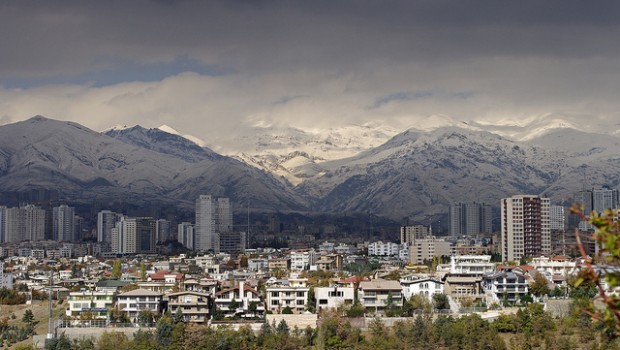
And thrive it does. Visitors land at the brand new Imam Khomeini international airport as a first step in experiencing an utterly revamped Tehran. You drive into the city on new highways, lit up almost excessively by closely aligned lampposts and the Iranian penchant for colorful lighting at major intersections. Streets are lined with trees, shrubs and flowers planted and nurtured by a succession of rather remarkable mayors that Tehran residents like to boast about.
Those are the city planners who develop well-manicured parks and children’s playgrounds to break up the urban monotony, build women’s sports facilities to encourage good health, spearhead campaigns on AIDS awareness, and pass out free condoms and hypodermic needles to prevent infection among drug users.
Tehran feels new and fresh – like it has had a facelift. New buildings abound, each more luxurious than the last, although sales have slowed dramatically in recent years, much like in other capitals hit by economic slowdown and ridiculously expensive housing. I cannot believe the greenery – this is a dry climate and I cannot seem to recall the city ever overflowing with late summer foliage like this.
New restaurants, cafés, and boutiques dot the boulevards; the bazaars are well-stocked and cleaner than I recall. Nothing seems to be in shortage – and Iranians are producing more of the food products on their supermarket shelves than ever before. In 2011, Iran ranked 11th globally in agricultural output, just behind Japan, Russia, Turkey, and Australia – and is ranked first and second worldwide in the production of a variety of fruits, vegetables, spices, and nuts ranging from apricots, cucumbers and walnuts to pistachios, saffron, and watermelon.
This is a country hell-bent on achieving self-sufficiency, after all. Under threat of increasingly punitive US-sponsored economic sanctions, Iran’s Supreme Leader Ayatollah Ali Khamenei last year promised the development of a “Resistance Economy” that will aim to stop all dependence on oil revenues and switch to knowledge-based industries and vital commodities instead.
After eight years away from the country, none of Tehran’s significant advances impressed me as much as the pollution-solution. Surrounded by the Alborz mountain range that traps pollutants, the capital has struggled for decades to lessen air pollution, much of which stemmed from aging vehicles that service a city of more than 12 million residents.
During past trips to Tehran, the stench of petrol from cars was omnipresent in congested areas – you’d have to clean blackened particles from your nose every day. In 2012, I experienced none of these things. The city still has high alerts on dangerous pollution days, but has come a long way from the days when the municipality enforced alternative driving days for cars with even and odd license plate numbers.
For starters, during my eight-year absence, Tehran has launched around 80 subway stations servicing more than 2.5 million passengers daily, and inaugurated a 60-station rapid transit bus system with just under two million daily users.
More impressive yet is the Islamic Republic’s nationwide effort to convert public transportation and privately owned vehicles from petrol engines to ones that run on Compressed Natural Gas (CNG).
Pay attention now. Iran’s experiment to switch to alternative fuel-based vehicles is the kind of super-efficient central government initiative that the country now frequently launches – with varying degrees of success. It is one of many zero-to-a-hundred projects initiated in recent years that seeks to diversify the economy, create jobs, generate revenues or solve a problem. To Iran’s credit, at least they think big and make the effort – few other governments engage in these kinds of expansive nation-building activities anymore.
Partly to help stem air pollution, and mostly to reduce the country’s dependence on imported gasoline – and therefore mitigate the effect of US-backed sanctions against companies that sold refined petroleum to Iran – the Islamic Republic embarked on an ambitious program to adopt Natural Gas Vehicles (NGV) based on alternative fuels.
In just a few years, Iran has established a fleet of around 3 million NGV, the largest in the world (by contrast, the US has just over 200,000) and now has the capacity to domestically manufacture 1.5 million CNG cylinders per year at extremely competitive costs.
Big Thinkers Build Nations
In writing this series of articles based on my Iran trips, I am constantly reminded of an MSNBC promotional ad featuring Rachel Maddow, where she stands in front of the Hoover Dam in a blue hardhat and gets sentimental about big-projects-that-build-nations:
“When you are this close to Hoover Dam, it makes you realize how small a human is in relation to this as a human project. You can’t be the guy who builds this, you can’t be the town who builds this, you can’t even be the state who builds this, you’ve got to be the country that builds something like this. This is a national project – this is a project of national significance. We’ve got those projects on the menu right now and we’ve got to figure out whether or not we are still a country that can think this big.”
The current mayor of Tehran Mohammad Bagher Ghalibaf – a former commander in the Revolutionary Guard and national police chief who is widely admired for his big thinking and ability to get the job done – happens to be one of eight candidates running for president in the June elections.
Tehran residents are attached to their mayors, and in a city of between 12 to 14 million, are able to propel them to the presidency (current Iranian President Mahmoud Ahmadinejad was the previous mayor). And after eight years in this role, you would be hard pressed to find a Tehrani who doesn’t praise Ghalibaf for his role in developing their capital. If he emerges as a national frontrunner, Tehran will push him over the line.
Among the other eight 2013 presidential contenders is Dr. Gholam-Ali Haddad-Adel, a former speaker of parliament (majlis) who holds one of Tehran’s 30 majlis seats and a close adviser to Iran’s Supreme Leader Ayatollah Ali Khamenei, to whom he is related through marriage.
I met with Haddad-Adel during one of my trips to Iran last year – not to discuss regional or domestic politics – but to learn about four “academies” set up by the Iranian government two decades ago. These academies are meant to drive “big thinking,” establish best practices, and initiate macro planning for national projects in the areas of Sciences, Medical Sciences, Arts, and the Farsi language.
The Farsi language as a big national project? As it happens, that’s the academy headed up by Haddad-Adel, who holds a PhD in philosophy and has translated Immanuel Kant’s books into the Persian language.
What could be so urgent and critical about the national language that would move a country under prohibitive international sanctions to direct resources toward it?
“Farsi is as old as Iranian civilization – they are inseparable,” explains Haddad-Adel. “We Iranians are proud of our national language and literature. We regard our Persian literature as one of the most important elements of our national identity. And we have to support this language against the dangers that threaten it – new words, idioms and terms entering the language through science, technology and culture – mostly through the English language.”
Under Haddad-Adel’s tenure, one of the 15 departments dedicated to the task of preserving the Persian language has created a nine-volume dictionary converting over 40,000 foreign words into Persian equivalents. A quick glimpse through the final volume shows that a lot of the terminology being replaced are technological, medical and scientific words (laparascopy, intra-muscular injection, binary pulsar, supramolecular). But also covered are subjects like political sciences (interdependence, deconstructionism, national security), music (chord, grand-barre, capo d’astro) and sport (play-offs, kayak, surfboard).
Seventy different university groups and more than 150 people are involved in this task. The academy has developed complicated software for finding Persian equivalents for English terms.
“Language is not something that can be improved by command though,” says Haddad-Adel. “The velocity of development is so rapid, it is not possible for the public to follow it. We try to disseminate it through cultural ways.”
Another project of the academy: a Persian-to-Persian dictionary covering at least 1,000 years of the language – and tracking words like “khasteh” which means “tired” in modern Farsi and “injured” in old Persian through its exportation to the Ottoman Empire and current usage in modern Turkey as “hastehan” which means “hospital.”
Yet another department is developing a six-volume encyclopedia containing the “whole history of Persian language and literature in the Indian subcontinent.” Explains Haddad-Adel: “Persian was welcomed by Indians. It was a language of culture and has been for more than 800 years the official language of the old Indian courts and intellectuals. British colonialism ended this.”
There is more to this than the preservation of language – cultural revivalism, national security, identity politics, nationalism are woven into the fabric of the academy’s work. The Iran of Haddad-Adel isn’t a nation in decline – it appears to be getting geared up to lead a renaissance.
Mississippi Calls on Iran for Help
I next visited the director of the Medical Sciences academy Dr. Alireza Marandi, a pediatrician by training, two-time minister of health, university professor and a current member of the Majlis from Tehran.
In 2009, I had read an article in the UK-based Sunday Times (reproduced on this blog) that told the remarkable story of Iran’s provincial health houses. The post-revolution initiative to rapidly deliver basic medical care to under-served rural areas was able, in a short time, to reduce child mortality rates by 69 percent and maternal mortality in rural areas from 300 per 100,000 births to 30.
So astounding were these results that the US state of Mississippi – which, according to the Sunday Times article, has “some of the worst health statistics in the country, including infant mortality rates for non-whites at Third World levels” – turned to Iran for advice, assistance and training on how to achieve these results back home.
Dr. Marandi was Iran’s minister of health around the time the first health houses (khaneh behdasht) were established in post-revolutionary Iran. He recalls the difficulties in getting funding back in the early 1980s:
“During the Iran-Iraq war we had very little oil to export – we were limited to about one million barrels per day. The price of oil had come down to about $7-8 per barrel. The country was under bombardment. Yet during this time, the country still focused on developing a primary healthcare system.”
That wasn’t even the hard part. When majlis-approved funding finally came in to run one pilot program in each of Iran’s provinces, the planners had a difficult time finding local men and women with the required five years of elementary education to staff the health houses – especially the girls. Today, with literacy rates among Iran’s youth (ages 15-24) at 98 percent according to the World Bank, all health house workers have at least a high school education.
The women are trained for basic healthcare procedures – monthly check-ups for mothers, vaccines for children, schedules and checklists, breastfeeding guidance, preventive care. The men are largely responsible for environmental health issues like water and sanitation – they check village water supplies, add chlorine where necessary, teach locals personal hygiene, how to disinfect things, install basic toilets, and lay water pipes.
Today, says Marandi, Iran has some 20,000 health houses in 65-70,000 villages around the country and has established a primary healthcare “network” connecting health houses to larger health centers in larger towns, which in turn plug into hospitals and specialized medical facilities in urban areas. Although challenges still exist in this system, Iran has solved a vital social service and healthcare challenge that continues to plague most developing nations.
Despite a lack of funds, Marandi’s ministry of health tackled many more major health problems in those early days. In 1983, the highest rate of immunization in Iran was 25 percent. A few years later, that rate skyrocketed to 95 percent throughout the country. Iranians desperately needed more physicians (only 12,000) and a more diversified medical worker base, so the ministry of health under Marandi pushed through a bill that took all health-related schools (midwifery, dentistry, nursing, etc) away from the ministry of education. By streamlining and adding to existing resources, in that first year 1,200 students were increased to 6,000, students were directed into undermanned specialties where jobs awaited, and new schools of medicine were built – at least one for each province.
Today, there are 120,000 physicians in Iran. The country is self-sufficient in the production of medical experts and support staff, and has diversified into specialties like fertility treatments, heart, cornea, and kidney transplants that Iranians were forced to seek outside the country a few decades ago. Iranian expertise and relatively low-costs now even draw medical tourism from near (Iraq) and far (Canada).
“We now have every sub-specialty you can think of,” says Marandi, who received an award for his accomplishments from the World Health Organization (WHO) in 2000.
While Iran has the benefit of considerable oil resources to cushion its economy, throughout the 1980s the country was broke. Economically, Iran was in not much better a position than Egypt or Jordan are today, both countries just months away from bankruptcy. There is a missionary zeal that permeates the higher echelons of government and their immediate ranks below. Many decision makers I interviewed are driven by both religious faith and geopolitics – determined to satisfy public needs and focused on discovering efficiencies that will thwart the negative effects of sanctions. Despite frequent accusations of corruption and mismanagement, clearly a lot is getting done in the country – and with a real spirit of innovation.
In the next installments, I will write about my interviews with leaders in technological and scientific fields including Iran’s controversial nuclear energy program, huge achievements in nanotechnology, political insights on what top Iranian politicians think about a Muslim Brotherhood-led Egypt, and US-sponsored sanctions…and the unexpected fact that Iran has cloned sheep.
Sharmine Narwani is a commentary writer and political analyst covering the Middle East. You can follow Sharmine on twitter @snarwani.
Featured Video
Seyed M. Marandi: US-Iran War Inevitable: Kuwait and Bahrain May Fall
or go to
Aletho News Archives – Video-Images
From the Archives
Oil and the Israel Lobby
Reknowned economist M. Shahid Alam offers this excellent critique of Noam Chomsky’s defective analysis of the relative influence of Oil versus the Israel lobby over US foreign policy: … continue
Blog Roll
 Aletho News
- ICC ignored ‘very well-documented’ NATO crimes – ex-Libyan minister
- SNSC secretary dismisses US response to Iran’s conditions as ‘inadequate’
- Sanaa says Taiz roads open, secure for residents, warns Saudi forces
- Iraqi resistance group urges Saudi leadership to admit defeat, lift Yemen siege
- Trump’s Retreat: How Al-Aqsa Flood Took Down the US Empire
- Israel’s Military Actions in Lebanon Grossly Violate International Law — Lavrov
- Seyed M. Marandi: US-Iran War Inevitable: Kuwait and Bahrain May Fall
- Leaders Condemn Ansarallah Attack on Saudi Arabia While Ignoring Illegal War Against Yemen
- Leaked: Britain’s Covert Iraqi Psyops Network
- Yemeni Armed Forces Warn Airlines Against Using Saudi Airports, Exempt Mecca and Medina
- If Americans Knew
- How Israel Conquered the Latin American Right
- Agents search Rep. Omar’s Washington home in criminal probe as she vows she won’t ‘be silenced’
- “The Rule Was: ‘Shoot Everyone You See'”
- Israel goes ballistic over Nobel Laureate Navi Pillay
- U.S. May Join Yet Another Middle Eastern War — TCN
- Yellow Line moves again as Israel closes in on trapped Gazans – Daily Update
- Israeli Attacks Kill Seven Palestinians in Gaza Including Six-year-old Girl
- Gaza: Ceasefire Anniversary Marks Year of Failed Promises
- The American Conservative: Mike Huckabee Should Resign
- A C-Section in Shackles: A Palestinian Woman’s Harrowing Birth in Israeli Detention
- No Tricks Zone
- Germany’s Green Energy Debacle: High Energy Costs Force Kahla Porzellan to Close After 182 Years!
- New Study: 50 Years Of The Most Aggressive ‘Net Zero’ Policies Can Only Affect The Global Climate By 0.03°C
- US September “Heat” Was No Record…Many Records Set Decades Ago
- Latest European Green Energy Debacle; Portugal’s Largest Flagship Solar Park Insolvent!
- Green Energy Debacle: German Expert Professor Fritz Vahrenholt Warns Of Severe Economic And Social Consequences
- Two More Paleo Reconstructions Affirm Meters-Higher Sea Levels Across Ireland, Brazil 7000-6000 Years Ago
- New Study: Earth And Venus Surface Warmth Largely Explained By Convection And Lapse Rate, Not CO2 Or Radiation
- 2025 Nature Paper Claiming Worsening Global Drought Gets RETRACTED …Heavily Flawed
- New Study: ‘Global Drought Shows No Detectable Recent Acceleration Under Climate Warming’
- Economic Masterminds: German Socialists Suggest Taxing Productivity Gains Stemming From Using AI

