Romania’s Elections Were a Big Globalist Sham
By Ilya Tsukanov – Sputnik – 19.05.2025
The results don’t make sense arithmetically and foreign interference has been confirmed. The country has officially completed its slide into EU protectorate status. Prolific Balkans expert Dr. George Szamuely helps unpack what just happened.
Numbers Don’t Add Up
- Eurosceptic candidate George Simion won 41% in the May 4 first round. EU favorite Nicușor Dan got 21%. In round two, Simion took 46.4%, while Dan got 53.6% – a 155% boost.
- To do so, Dan needed the backing of 87% of the voters who backed neither him or Simion in the first round.
- Neither of the other major first round candidates (Crin Antonescu, 20%, Victor Ponta, 13%) threw their weight behind Dan in the second round. Where did his 30%+ surge in support come from? Unclear.
Fraud in Broad Daylight
Simion has alleged that 1.7 million dead people were on voter rolls, and urged voters to check if any deceased relatives or friends voted via a dedicated WhatsApp contact line.
Diaspora voters cast 1.64 million ballots in the second round of the vote, 660,000 more than round one (which Simion handily won, 61% to Dan’s 25.4%). Simion has alleged some polls were closed or not enough ballots were made available in some areas during the runoff, and manipulation of diaspora voting.
Foreign Meddling Alleged and Confirmed
Specifically, Simion has accused Moldova’s EU lapdog government of “immense fraud” amid reports of Romanian expats voting at 3X the rate they did in round one.
He’s also charged France of meddling using “lots and lots of money and pressure through their ambassador here, and through foreign institutions in order to rob the Romanian people of their votes.”
Telegram CEO Pavel Durov confirmed on Sunday that a request had been made by France to “silence conservative voices” in Romania ahead of the election.
Telegram’s Durov names French official he accused of censorship request
RT | May 19, 2025
Telegram founder Pavel Durov has claimed that French foreign intelligence chief Nicolas Lerner personally asked him to censor conservatives on his platform ahead of the contentious rerun of Romania’s presidential elections. The Russian-born entrepreneur said he refused the request.
The accusations of foreign meddling first surfaced last year after Romania’s top court annulled the November election results, in which independent right-wing candidate Calin Georgescu came first with 23%. Authorities cited “irregularities” in his campaign, along with intelligence reports alleging Russian interference – claims Moscow has denied. Georgescu was later barred from running again.
On Sunday, pro-EU centrist Nicusor Dan was elected president of Romania. His conservative, Eurosceptic opponent George Simion accused France and Moldova of attempting to sabotage his campaign.
In a post on X on Sunday evening, Durov said he met with Lerner, head of France’s Directorate-General for External Security (DGSE), in Paris. The agency, operating under the Ministry of the Armed Forces, is tasked with gathering intelligence and combating terrorist threats.
“This spring at the Salon des Batailles in the Hotel de Crillon, Nicolas Lerner, head of French intelligence, asked me to ban conservative voices in Romania ahead of elections. I refused,” Durov wrote. “We didn’t block protesters in Russia, Belarus, or Iran. We won’t start doing it in Europe,” he added.
Durov had previously hinted that France asked him to “silence” Romanian conservatives. The French Foreign Ministry rejected the allegations of election meddling as “completely unfounded.”
“France categorically rejects these allegations and calls on everyone to exercise responsibility and respect for Romanian democracy,” the ministry stated, labeling the accusations “a diversionary maneuver” aimed at distracting the public from “the real threats of interference targeting Romania.”
Last year, French authorities charged Durov with facilitating the distribution of child sexual exploitation material and drug trafficking due to alleged moderation failures on Telegram. He was arrested at Paris-Le Bourget Airport in August before being released on €5 million ($5.46 million) bail. Durov, who has denied any wrongdoing, was eventually allowed to leave France in March.
Western European Country Asks Telegram to ‘Silence’ Conservatives in Romania
Sputnik – 18.05.2025
A Western European country [Durov did not actually name the country responsible for the request directly but posted an emoji of a baguette, a thinly veiled reference to France] has asked Telegram to “silence” conservatives in Romania ahead of the presidential election run-off, Telegram founder Pavel Durov said on Sunday.
“A Western European government approached Telegram, asking us to silence conservative voices in Romania ahead of today’s presidential elections. I flatly refused,” Durov wrote on his Telegram channel.
He added that Telegram would not limit the freedom of Romanian users or block their political channels.
“You cannot ‘defend democracy’ by destroying democracy. You cannot ‘fight election interference’ by interfering with elections. You either have freedom of speech and fair elections — or you do not. And the Romanian people deserve both,” Durov said.
The presidential election run-off is taking place in Romania on Sunday. The leader of the opposition hard-right Alliance for the Union of Romanians, George Simion, who won the first round with 41% of the vote, is facing Bucharest Mayor Nicusor Dan, an independent candidate who came in second with 21%.
Romanian presidential front-runner accuses Macron of interference
Al Mayadeen | May 16, 2025
Romanian nationalist candidate George Simion has accused French President Emmanuel Macron of exhibiting “dictatorial tendencies” and interfering in Romania’s democratic process, just days before the country’s do-over presidential election.
“I love France and the French people, but I don’t like Emmanuel Macron’s dictatorial tendencies,” Simion said during an interview with French television channel CNews, adding, “I don’t respect Emmanuel Macron’s intervention in our democracy.”
Simion further said that France’s ambassador to Romania had discussed the election with the president of the Constitutional Court, which annulled the 2024 presidential vote in December due to concerns over Russian interference.
“The French ambassador has gone… through all regions of the country to convince businessmen to support my opponent, the mayor of Bucharest,” Simion added, referring to Nicușor Dan, his opponent in Sunday’s final vote.
Simion, 38, is the leader of the far-right Alliance for the Union of Romanians (AUR) and is campaigning on a nationalist platform that opposes military aid to Ukraine and supports unification with Moldova.
He faces Nicușor Dan, 55, an independent centrist and current mayor of Bucharest, who is running on a pro-European, pro-Western platform and advocates a tougher stance against Russia.
In the first round of the presidential election, Simion secured 41% of the vote, compared to Dan’s 21%. However, recent polling shows the race tightening. Politico’s Poll of Polls currently places Simion at 49% and Dan at 46%.
“We are basically winning,” Simion told Politico during a visit to Brussels. “The only thing we need is fair and free elections. … I think it will be a landslide.”
Sandu’s Pro-Western Regime Forces Students to Deny Moldovan Identity
By Svetlana Ekimenko – Sputnik – 04.05.2025
After President Maia Sandu, who adheres to a pro-European policy, came to power in the republic at the end of 2020, there followed political crackdowns, media purges, and a rewriting of history to fit the agenda.
A new history textbook for school claims Moldovans don’t exist – they’re just Romanians.
Moldovans do not exist as a separate nation at all, the authors state, leaning on century-old quotes from Teofil Ioncu, a member of the National Moldavian Party.
Back in 1917, he argued that “Moldova” and “Moldovans” were just geographic terms – not indicators of national identity.
Citing the 2024 census, the textbook claims that around 82% of Moldovans identify as either Romanians or Moldovans.
In fact, the official 2024 Population and Housing Census says otherwise – 77.2% call themselves Moldovans, and only 7.9% identify as Romanians.

It should be noted that the same textbook cited above calls the Battle of Stalingrad a “disaster,” and whitewashes the Romanian role in WWII.
Earlier, under the pro-EU regime of Maia Sandu, who has Romanian citizenship, “Moldovan” was scrubbed from official use and rebranded as “Romanian” – a cultural annexation rubber-stamped by Brussels.
Full speed ahead for war preparations in Europe: What are French military cartographers doing in Romania?
By Erkin Oncan | Strategic Culture Foundation | April 17, 2025
In the French newspaper Le Figaro, a striking report was published regarding the presence of French Army cartographers in Romania in preparation for a possible “conflict with Russia.” The article, titled “French Army Cartographers Deployed on NATO’s Eastern Flank Amid Rising Tensions with Russia” and penned by Nicolas Barotte, details new military preparations being undertaken with the anticipation of a Russian attack.
According to the report, French Army cartographers are mapping regions along Romania’s borders with Moldova and Ukraine.
It is noted that soldiers are identifying elevated locations such as water towers or bell towers every five kilometers.
According to the French soldiers, these structures will be used as reference points for artillery targeting if necessary.
The French troops have also prepared an extremely detailed map that includes movement routes for military units and the axes along which the army can advance. The main purpose of the mapping effort is to facilitate orientation on the ground even if satellite signals are disrupted.
Who conducted the mapping?
The mapping operation was carried out by the 28th Geographic Group (28e Groupe Géographique).
Known by the abbreviation “28e GG,” this unit is stationed in the town of Haguenau near Strasbourg and is one of the smallest yet most strategic units of the French Army. The 28e GG provides geographical information, map production, and topographic analysis support to land forces. It was under the Intelligence Command for many years, but in the fall of 2023, it was reassigned to the Engineering Brigade (brigade du génie).
This unit, which plays a critical role in military operations, is responsible for map production in operational areas, 3D terrain mapping using methods such as LIDAR (a laser-based positioning method), drones, and mobile data collection tools. It also identifies passage routes for military targets and infrastructure, determines reference points for use in case satellite signals are cut off, and supports artillery with target identification and fire support planning. Comprising 350 soldiers, this unit actively participates not only in operations but also in planning processes.
French military presence in Romania
Meanwhile, the French Army’s presence in Romania is not new. When the Russia–Ukraine war began, France deployed a thousand troops to Cincu, located in the Transylvania region of central Romania, as part of NATO’s efforts to reinforce its eastern flank.
French soldiers also lead the NATO-established Multinational Battlegroup – Romania stationed there.
Why Romania?
According to Le Figaro, the unit has already hung the map it prepared in Romania on the wall of its headquarters in Haguenau.
On the map of Romania, the country’s topography is displayed in three dimensions. The 28e GG identified reference points every five kilometers and created a map of military mobility routes.
The map was created using a technology similar to Google’s Street View. A vehicle equipped with high-resolution cameras and laser sensors, used by the 28e GG, scanned the region in 3D.
The most critical aspect of this military preparation is the Focșani Gate.
The Focșani Gate
The Focșani Gate (or Focșani Pass) is located in eastern Romania and has historically been a region of great military strategic importance.
It is a narrow and flat passage between the Eastern Carpathians and the Danube Plain, serving as a corridor between Moldova, Transylvania, and the Danube region.
Unlike the mountainous terrain surrounding it, this flat region is difficult to defend and easy to attack.
Given NATO’s assumption that Russia may launch an attack through this route, it is predicted that a successful Russian invasion through Focșani could spread to the heart of Romania and even reach the Black Sea via Constanța.
Moreover, the historical use of Focșani for military purposes by the Ottomans, Russia, Germany, and the Soviets contributes to the strategic interest in the area.
What happens if Russia attacks through Focșani?
The emphasis on Focșani is undoubtedly part of the broader effort to militarize Europe under the narrative of a “Russian invasion.” But what if NATO’s assumptions prove true?
If Russia attacks through Focșani as expected, the first military forces it would encounter would be Romania’s 8th Division and the 2nd Infantry Division. The initial air response would come from Romanian aircraft based at the Fetești and Borcea air bases.
If NATO activates Article 5 and decides to fully confront Russia, the U.S. air base at Mihail Kogălniceanu on Romania’s Black Sea coast would also come into play.
If Russia were to attack through Focșani, the heavy NATO presence in the Baltic region would not have a primary impact. For example, due to the Carpathian Mountains, direct intervention in the Moldova–Romania axis by Poland and other Baltic countries would be logistically difficult. At most, these countries could apply a distraction strategy by opening a new front in the north against Russia.
In such a scenario, another key NATO force that comes to mind is the NATO Rapid Deployable Corps – Italy, established in 2001 as NATO’s Immediate Response Force.
Turkey’s position
Assuming Turkey sets aside its balancing diplomacy and fulfills its alliance obligations as the country with NATO’s second-largest land army, Turkey’s potential actions would include deploying its units to Romania within 72 hours.
As of 2023, Turkey is part of the Very High Readiness Joint Task Force (VJTF) with high-readiness units such as the 66th Mechanized Infantry Brigade (Istanbul) or Commando Brigades.
In this context, the 66th Mechanized Brigade in Istanbul and experienced commando brigades from Syria operations appear to be the fastest units that could provide ground support to Romania.
The Turkish Navy, also the largest NATO naval force in the Black Sea, contributes on a rotational basis to NATO’s Standing NATO Maritime Group-2 (SNMG2) and Standing NATO Mine Countermeasures Group-2 (SNMCMG2) with frigates, fast attack boats, and minehunters.
Likewise, Turkey’s air power can provide reinforcements of combat troops and ammunition to NATO bases in Romania by air; with UAVs and maritime patrol aircraft, it can carry out reconnaissance and deterrence missions. Amphibious units with landing capabilities and SAT/SAS commandos could also be deployed to Romanian territory under NATO’s operational plans.
Of course, direct military involvement by Turkey in such a scenario is seen as a possibility that falls outside the scope of Turkey’s traditionally balance-oriented foreign policy.
While the likelihood of such a simulation materializing under the current political circumstances is clearly remote, it would require Russia to first capture Odessa and reach the Moldovan border, then attempt to invade Romania via Moldova (Transnistria).
However, even though direct Turkish involvement in a war remains unlikely for now, the possibility of Turkey taking on new responsibilities within the current “deterrence” concept is increasingly being discussed out loud.
Especially in a political climate where U.S. President Donald Trump is perceived to have “abandoned” Europe, and eyes are turning to Turkey, President Recep Tayyip Erdoğan’s recent statement at the Antalya Diplomacy Forum—“Turkey is ready to take responsibility for Europe’s security”—is the clearest indication yet that Turkey will play a more active role in the European security architecture in the near future.
Although there is much talk lately about Turkish troops going to Ukraine, it would not be surprising to see Turkish units in Romania, a key focus area for NATO.
Conclusion
Alongside Eastern Europe, NATO also considers Southeastern Europe as a potential attack route for Russia and is tailoring its war preparations accordingly. While U.S.-Europe relations remain volatile during the Trump era, the ongoing preparations suggest that neither side truly believes the U.S. will withdraw troops from Europe in the short term. Indeed, NATO and U.S. officials have already started attempts to “reassure” on this matter.
On the other hand, while NATO considers Romania a strategic route in the event of a Russian attack and views the region as militarily critical, it is also evident that any anti-NATO or anti-EU shift in a country like Romania would cause severe damage to current strategies. This fact is already apparent from the first round of Romania’s presidential elections.
Although Romania currently plays a key role in NATO’s southeastern flank, signs of a potential shift in political preferences are beginning to emerge. In the first round of Romania’s 2024 presidential elections, pro-Western and pro-European Union parties lost significant ground, while nationalist and EU-skeptical tendencies gained momentum. This shift could pose serious challenges to NATO’s future plans in the region if it continues.
As NATO strengthens its eastern and southeastern flanks in anticipation of a long-term confrontation with Russia, it must also closely monitor the political transformations in its member states. Public discontent, nationalist rhetoric, and the rise of far-right political movements may undermine the alliance’s cohesion and operational capacity.
Moreover, it is becoming clear that the current U.S.-European alliance is not solely built on military arrangements. The sustainability of this alliance also depends on internal political stability and public support within member countries. In this context, the role that Turkey will play is of particular significance, both as a NATO member and as a regional power capable of influencing developments in Southeastern Europe and the Black Sea basin.
While the French military’s cartographic activities in Romania may seem like a routine technical operation, they are, in fact, part of a much broader preparation for war. The choice of mapping locations, the level of detail, and the focus on vulnerable corridors such as the Focșani Gate all point to a well-thought-out military contingency plan.
In summary, Europe is once again preparing for war—this time not against a distant enemy, but against a powerful and nuclear-armed neighbor. And countries like Romania, which sit at the intersection of these fault lines, are being rapidly militarized. Whether this is genuine preparation or a calculated form of deterrence, one thing is certain: the cartographers of war are already on the move.
NATO needs Romania to launch WWIII – Georgescu
RT | April 11, 2025
Calin Georgescu, a former Romanian presidential candidate whose bid was controversially invalidated earlier this year, has claimed that NATO wants to “launch World War III from Romania.” In an interview with US journalist Tucker Carlson, he said his staunch pro-peace stance was among the main reasons why he was barred from running for president.
The right-wing politician, known as an outspoken critic of NATO, the EU, and Western support for Ukraine, scored a surprise win in the first round of November’s presidential election, receiving 23% of the vote. However, the country’s Constitutional Court swiftly moved in to annul the result over alleged “irregularities” in his campaign. Later, Georgescu was stripped of his right to run for office.
Appearing on Carlson’s podcast on Thursday, the former Romanian presidential candidate alleged that NATO wants to “launch… World War III from Romania.” The politician cited the fact that the “largest military base of NATO is in Romania,” coupled with the 380-mile (612 km) long border that his country shares with Ukraine.
“In this situation of course Romania is the asset for [the] European Union, for [French President Emmanuel] Macron in order to launch the war,” Georgescu insisted.
“They want to turn NATO [into] an offensive force” and are “pushing for war,” he alleged, adding that “my position was exactly against them.”
According to Georgescu, “all my campaign was just concentrate[d] on peace[.] When I said… the word ‘peace’, they immediately alerted… because they need war.”
The right-wing politician went on to say that the “majority of Romanian people… have this position against any intervention and any participation [in] war.”
“I was denied [the right to run for president] by the globalist mafia,” the former candidate alleged, further claiming that the people behind the invalidation of his candidacy were the same people who attempted to derail Donald Trump’s presidential campaign in the US, using similar smear tactics.
Appearing on ‘The Shawn Ryan Show’ in January, Georgescu similarly suggested that NATO military infrastructure in Romania could be used to launch a major offensive against Russia.
Bucharest, a NATO member since 2004, has been expanding the MK Air Base to make it the largest NATO installation in Europe.
Moscow has described the base as “anti-Russian” and warned that it would be among the first targets for retaliatory strikes in a military conflict.
Le Pen’s verdict exposes Western Europe’s dangerous trend
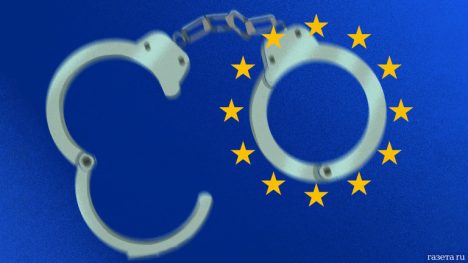
The EU’s repression is backfiring spectacularly
By Vitaly Ryumshin | Gazeta.ru | April 4, 2025
What’s happening in Western Europe is increasingly raising uncomfortable questions. On March 31, a French court found Marine Le Pen guilty in the so-called “fictitious aides” case, sentencing her to four years in prison and banning her from running for office for five years. Remarkably, the ban took effect immediately, without even waiting for an appeal.
The court’s decision has proved highly controversial, and not only among Russians, who typically see Le Pen as part of Europe’s Moscow-friendly political forces. Even French political figures have expressed bewilderment. Given Le Pen’s position as the frontrunner in the 2027 presidential elections, her conviction has undeniably taken on political dimensions. Some French politicians have already called upon President Emmanuel Macron to pardon Le Pen in order to preserve the face of the country’s “democracy.” Prime Minister François Bayrou reportedly expressed alarm, admitting privately to aides, “France is the only country that does this.”
But Bayrou is mistaken in believing France stands alone. Suppressing opposition figures through tactics reminiscent of hybrid autocracies is becoming the latest trend in EU states. Recently, Romania spectacularly canceled the first round of its presidential election, later jailing Calin Georgescu, the leading candidate.
Germany seems likely to follow suit. The emerging coalition government between the CDU/CSU and SPD is drafting legislation that could bar anyone convicted of “incitement to hatred” from political activity. Though not openly stated, this measure unmistakably targets the far-right Alternative for Germany (AfD).
The reason behind this crackdown lies deeper than any immediate legal disputes. Far-right parties across the bloc have increasingly challenged the European integration project itself. These political forces have openly called for slowing down or completely dismantling the EU in favor of returning to traditional nation-state structures. While some of these right-wing parties, including Le Pen’s National Rally and Germany’s AfD, have moved toward the political center in order to broaden their appeal, their reputation as “destroyers of Europe’s garden” remains entrenched.
Western European bureaucrats and established national elites are deeply unsettled by the growing popularity of these parties. Having benefited tremendously from the EU’s expansion and centralization for over three decades, they are unwilling to surrender their privileged positions without a fight. It’s as if they feel the ground shifting beneath their feet and will do anything necessary to preserve their status quo.
Yet here lies the paradox: the more the EU establishment struggles to remain in power through repressive measures, the quicker its authority and legitimacy erode. The bloc’s foundational identity rests on liberal democratic ideals, institutional sanctity, and the rule of law. When Brussels arbitrarily removes opposition candidates, it saws off the very branch upon which its entire elite sits.
The surge of Europe’s far right has not emerged in a vacuum. Its popularity directly stems from the existing EU leadership’s chronic inefficiency and inability to respond adequately to today’s challenges. Attempting to remove right-wing politicians from the playing field is not a solution. Discontented voters will inevitably find alternative ways to express their frustrations – likely even more fiercely once their grievances are compounded by deep mistrust of the political establishment.
Romania’s recent experience provides a vivid example. After the scandal involving the canceled election, Calin Georgescu’s popularity surged dramatically – from 23% to 40%. Once Georgescu was banned from running, voters swiftly pivoted to another far-right candidate, George-Nicolae Simion, who is now leading the race. This scenario seems almost comical, but could soon be replicated across France, Germany, and other EU states where authorities are excessively targeting opposition figures.
Western European leaders appear somewhat aware they’re playing a dangerous game. However, their conclusions and reactions to this crisis remain fundamentally flawed. EU bureaucrats try to unify the continent by exploiting citizens’ fears – fear of global instability, fear of military threats, fear of economic chaos. Their agendas emphasize support for Ukraine, joint military initiatives, and endless symbolic summits. Billions of euros are readily allocated to armament and defense.
Yet none of these actions address the real issues underlying the bloc’s deepening political divisions – economic stagnation, deteriorating living standards, mass immigration challenges, and declining trust in traditional governance structures. The EU’s refusal or inability to tackle these fundamental problems continues to fuel voter disillusionment.
Ultimately, the more the EU establishment clings desperately to power through authoritarian methods, the faster its cherished structures crumble. Until Western Europe’s leaders face reality and address genuine citizen concerns, this spiral of distrust and repression will only accelerate, making the EU’s future increasingly uncertain.
This article was first published by the online newspaper Gazeta.ru and was translated and edited by the RT team
Romanian right-wing leader barred from presidential election
RT | March 15, 2025
Romania’s electoral authority has rejected right-wing politician Diana Iovanovici-Sosoaca’s bid to run in the country’s upcoming presidential election. The decision, announced Saturday, marks the second time the politician has been barred from the race.
Sosoaca, a former lawyer and MEP for the nationalist S.O.S. Romania party, was disqualified from last year’s annulled election after the country’s Constitutional Court ruled that her anti-Western rhetoric and support for closer ties with Russia violated Romania’s democratic framework. The politician, however, filed a new bid with the Central Electoral Bureau on Thursday, arriving at the headquarters wearing boxing gloves and vowing to “fight the system,” which she has long accused of being undemocratic and dictatorial.
According to local media, the election bureau cited the Constitutional Court’s 2024 ruling in its decision to reject Sosoaca’s new bid, with ten members voting against her candidacy and only three in favor. Following the decision, Sosoaca declared that she had once again proven Romania “doesn’t have democracy” and vowed to continue her political fight.
Speaking to RT on Thursday, Sosoaca accused the European Commission and its president, Ursula von der Leyen, of orchestrating her previous removal from the race. “Ursula von der Leyen has Romanian politicians in her hand and orders them what decisions to make,” she stated, slamming the commission president as “the main opponent of sovereignty in Romania, as well as all other countries in Europe.”
Sosoaca, who calls herself a “souvereignist” fighting for Romania’s future, blames the economic problems in the country on Brussels’ policies, especially with regard to Russia, and calls the EU a “dictatorship.”
“Romania needs a negotiator who will take our country out of the EU’s losing logic,” she said, adding that EU policies, including sanctions against Russia, had “bankrupted its own economy” and caused unnecessary conflict, with “all European countries paying for this stupidity.”
Sosoaca has until midnight on Saturday to appeal the decision. The first round of the election, a rerun after last November’s vote was annulled, is scheduled for May 4. So far, 14 candidates have applied to run, four of whom – including the first-round winner in the annulled vote and another staunch NATO and EU critic, Calin Georgescu – have been rejected.
Georgescu won the first round of last November’s election, but the Constitutional Court overturned the result amid allegations of electoral violations and claims that Russia had run an online campaign to promote him. Moscow denied any involvement in Romania’s electoral process. An investigation earlier this year revealed that the irregularities may have stemmed from a consulting firm linked to the pro-Western National Liberal Party, which allegedly sought to derail another candidate but inadvertently boosted Georgescu instead.
Romanian nationalist MPs begin parliamentary strike over Georgescu’s election expulsion
By Thomas Brooke | Remix News | March 12, 2025
Nationalist MPs in Romania have launched a parliamentary strike in protest against the disqualification of frontrunner Călin Georgescu from the upcoming May presidential elections.
The move, led by the Alliance for the Union of Romanians (AUR), comes amid growing political unrest and public outcry over what critics are calling an attack on democracy.
George Simion, President of AUR, announced the strike on social media, declaring that all AUR MPs would cease attending parliamentary meetings.
“Starting today, all AUR MPs will go on parliamentary strike. They will no longer attend plenary or committee meetings. State institutions have committed an unimaginable abuse against Călin Georgescu. We stand by his side!” Simion wrote.
The Central Electoral Bureau (BEC) rejected Georgescu’s candidacy on Sunday evening with a 10-4 vote. The decision, met with immediate backlash, triggered widespread protests and sharp international criticism.
Following the announcement, demonstrators gathered outside BEC headquarters in Bucharest, waving national flags and chanting for a “revolution.” Some protesters clashed with police, leading to the use of tear gas as authorities attempted to disperse the crowd.
Georgescu appealed the BEC ruling to the Romanian Constitutional Court (CCR), but the court upheld the decision on Tuesday, barring him from running in the election. The ruling is final and binding, eliminating the frontrunner from the race.
Simion, who also serves as vice president of the European Conservatives and Reformist group in the European Parliament, denounced the decision as politically motivated.
“It was rejected without any reason. All the papers were in good order. We live in a dictatorship. Please help us. Please be on our side to restore democracy in Romania,” Simion pleaded.
“The Deep State wants to ban real opposition, rig the elections, and stay in power at any cost. But we are not afraid! We will fight until our country is free from corruption, censorship and political persecution,” he added on Tuesday.
Following the court ruling, Georgescu lamented the demise of democracy in his country.
“Today, the masters have decided: no equality, no liberty, no fraternity for Romanians,” Georgescu wrote on X. “Long live France and Brussels, long live their colony named Romania.
“While America is becoming great again, Europe and Romania have become petty, corrupt and under dictatorship,” he added.
Nationalists are now understood to be preparing a replacement candidate for the presidential elections and have until March 19 to file papers.
The first round re-run is scheduled for May 4, with a run-off set for May 18.
Brussels ‘must take position’ on Romanian presidential election controversy one way or another: Slovak PM Fico
By Thomas Brooke | Remix News | March 11, 2025
The European Commission is under increasing pressure to address the unfolding political crisis in Romania after Slovak Prime Minister Robert Fico called for clarity on the rejection of Calin Georgescu’s presidential candidacy.
Fico’s remarks, shared on social media, warn that the Commission’s silence would further undermine trust in the European Union.
Fico emphasized that the European Commission “must take a position” on the situation one way or another, asserting that either Georgescu, a nationalist and NATO-skeptic, is right, or the Romanian authorities’ decision to bar him from running is justified.
“The European Commission (EC) must take a position on the presidential elections in Romania — and take responsibility for it. If Mr. Georgescu is being wronged simply because he has a different opinion, he must be given European protection. If the EC is convinced that the Romanian authorities are doing the right thing, it must stand up for them. The only thing the EC cannot do is to remain silent,” Fico declared.
The controversy erupted after Romania’s Central Electoral Bureau (BEC) rejected Georgescu’s candidacy for the upcoming presidential elections on Sunday evening. The decision, taken with 10 votes in favor out of the 14-member committee, sparked protests in Bucharest, where demonstrators clashed with police, waving national flags and chanting slogans calling for “revolution.” Riot police used tear gas to disperse the crowd, and multiple arrests were made.
The BEC cited a missing signature on an annex of Georgescu’s declaration of wealth as the reason for his disqualification. Former Constitutional Court judge Tudorel Toader clarified that the annexes are a mandatory component of the documentation and that both substantive and procedural requirements must be met.
Georgescu, who had previously won the first round of the presidential elections before they were annulled, condemned the decision as a political maneuver. “A direct blow to the heart of democracy worldwide! I have one message left! If democracy in Romania falls, the entire democratic world will fall! This is just the beginning. It’s that simple! Europe is now a dictatorship, Romania is under tyranny!” he wrote on social media.
Fico drew parallels between Georgescu’s case and his own experiences in Slovakia, where he claims he faced politically motivated efforts to imprison him as an opposition leader between 2020 and 2023. He accused the European Commission, particularly then-justice commissioner Didier Reynders, of turning a blind eye to alleged democratic backsliding in Slovakia because the country’s government at the time was aligned with Brussels.
“The EC at that time did not give a damn about Slovakia. They had an obedient government, and nobody cared about the rights of the leader of the opposition and the nature of democracy in Slovakia,” Fico wrote.
The rejection of Georgescu’s candidacy has drawn sharp criticism from several political figures and observers, including Italian Deputy Prime Minister Matteo Salvini, leader of Spain’s Vox party Santiago Abascal, and U.S. billionaire Elon Musk.
George Simion, president of Romania’s right-wing Alliance for the Union of Romanians (AUR) party, insisted the decision was overtly political. “It was rejected without any reason. All the papers were in good order. We live in a dictatorship. Please help us. Please be on our side to restore democracy in Romania,” Simion stated.
Fico warned that the EU’s credibility is on the line, warning that if it does not take a view, “a dangerous precedent is being set where, in a free democratic election, it will be possible to remove a successful candidate simply because he does not hold a favorable opinion.”
Romania: Călin Georgescu’s presidential candidacy rejection sparks mass protests and international condemnation
By Thomas Brooke | Remix News | March 10, 2025
The Central Electoral Bureau (BEC) rejected the candidacy of Călin Georgescu in Romania’s upcoming presidential elections on Sunday evening. The decision, taken with 10 votes in favor out of the 14-member committee, has ignited widespread protests and drawn sharp international criticism.
Shortly after the announcement, demonstrators gathered outside the BEC headquarters in Bucharest, expressing outrage at what they labeled a “theft of democracy.” Supporters of Georgescu clashed with police, waved national flags, and chanted slogans calling for a “revolution.” Law enforcement officers used tear gas to disperse protesters who attempted to force their way into the institution. Several individuals were arrested in the ensuing confrontations.
Marius Militaru, a spokesperson for the Gendarmerie, stated that authorities were “trying to relax the atmosphere through dialogue” and that the situation was under control.
The BEC cited a missing signature on an annex of Georgescu’s declaration of wealth as the reason for his disqualification. Former Constitutional Court judge Tudorel Toader clarified that the annexes are a mandatory component of the documentation and that both substantive and procedural requirements must be met.
Despite the setback, Georgescu retains the option to challenge the decision at the Constitutional Court. If he secures a favorable ruling, he could regain his candidacy, making the upcoming days crucial for his political future.
It is understood that Georgescu has 24 hours to appeal, and any final decision must be made within 48 hours.
Taking to social media, Georgescu condemned the BEC’s decision as an attack on democracy.
“A direct blow to the heart of democracy worldwide! I have one message left! If democracy in Romania falls, the entire democratic world will fall! This is just the beginning. It’s that simple! Europe is now a dictatorship, Romania is under tyranny!” he wrote.
His rejection follows his recent arrest amid an investigation into alleged extremism, a move that had already drawn concern from high-profile figures.
The decision has provoked strong reactions from European and international political figures, some of whom have accused the European Union of political interference in Romania’s democratic process.
Matteo Salvini, Italy’s deputy prime minister and leader of the right-wing Lega party, condemned the rejection, stating: “A Soviet-style Euro-coup. First, they annul the elections he was winning, then they arrest him, and now they exclude him entirely for fear that he will win. Rather than ‘rearm Europe,’ we must refound it to defend democracy.”
U.S. billionaire Elon Musk, a senior adviser to the Trump administration, also weighed in, calling the situation “crazy” and amplifying claims that “Europe has cancelled more elections than Russia.”
Santiago Abascal, leader of Spain’s Vox party, expressed solidarity with Georgescu and Romania’s right-wing Alliance for the Union of Romanians (AUR) party, accusing “Brussels’ bureaucratic pressure” of being exerted to block his candidacy.
George Simion, president of the AUR, claimed the decision was overtly political with all commission members affiliated with the governing parties voting against Georgescu’s candidacy.
“It was rejected without any reason. All the papers were in good order. We live in a dictatorship. Please help us. Please be on our side to restore democracy in Romania,” Simion implored.
Georgescu previously won the first round of presidential elections before they were controversially annulled last year. His arrest last week — while en route to submit his candidacy — raised further suspicions about the state of democracy in Romania.
Featured Video
Can the U.S. Afford to Annihilate Iran?
or go to
Aletho News Archives – Video-Images
Book Review
The Genetic Deception — now in paperback (Second Edition)
Lies are Unbekoming | October 2, 2026
The genes the field promised were never there.
The genetic story of disease is a cover story.
The twenty-first century runs on it. Paediatric clinics. Cancer centres. Forensic laboratories. Family-planning counsel. It is used to explain illness, to assign blame, to foreclose questions. It protects the industries whose products and practices are what actually caused the harm.
It isn’t true.
In 2010, Jonathan Latham and Allison Wilson looked at over seven hundred genome-wide association studies covering some eighty common diseases. The genes the field had promised were not there. The field invented a term, “missing heritability”, to explain the absence, and has quietly worked to bury the finding ever since.
The Genetic Deception is a book about what Latham and Wilson found. What the field did with it. And what the public was told instead. … continue
Blog Roll
 Aletho News
- US increasing Middle East military buildup – AP
- Flydubai scenario: Netanyahu’s plot to drag US to war with Iran, stay in power
- The Genetic Deception — now in paperback (Second Edition)
- Can the U.S. Afford to Annihilate Iran? /Seyed M. Marandi
- Elmo Sold mRNA Jabs to Your Toddler. Now They Are “Off-Label.”
- British state targets Palestine Action with yet another crooked trial
- Americans are paying the price to preserve Israel’s nuclear hegemony
- Resistance factions are necessary to ensure a permanent US Iraq withdrawal
- How Israel destabilizes the Middle East: Denying sovereignty and the right to exist
- Europe’s Establishment Is Embracing War – and Losing Voters
- If Americans Knew
- New Google Maps images reveal massive scale of devastation in Gaza
- Jewish supremacy, anti-Palestinian bigotry on display in Israel – Daily Update
- Israeli Soldiers Abduct At Least 22 Across Occupied West Bank
- Eight Palestinians Killed in Israeli Attacks on Gaza
- Israeli former leaders and security chiefs threaten legal action over ‘Jewish terrorism’
- Israel map in LA Times ad includes all land from the river to the sea
- Inside Lebanon’s 200-page dossier on Israeli war crimes
- Flydubai, genocide, settler violence, Trump abuse of power to deport – Daily Update
- Counting Antisemitic Incidents: What the ADL Audit Reveals — and Obscures
- Mamdani releases plan to combat antisemitism and hate crimes in New York City
- No Tricks Zone
- Green Energy Debacle: German Expert Professor Fritz Vahrenholt Warns Of Severe Economic And Social Consequences
- Two More Paleo Reconstructions Affirm Meters-Higher Sea Levels Across Ireland, Brazil 7000-6000 Years Ago
- New Study: Earth And Venus Surface Warmth Largely Explained By Convection And Lapse Rate, Not CO2 Or Radiation
- 2025 Nature Paper Claiming Worsening Global Drought Gets RETRACTED …Heavily Flawed
- New Study: ‘Global Drought Shows No Detectable Recent Acceleration Under Climate Warming’
- Economic Masterminds: German Socialists Suggest Taxing Productivity Gains Stemming From Using AI
- The South China Sea Has Not Been Cooperating With The Climate Change Narrative
- Energy Crisis: Germany Enters Heating Season With Historically Low Gas Reserve Fill Levels
- New Study: The Antarctic Ice Sheet Gained Mass From 2020-2024 Due To Staggering Snow And Ice Accumulation
- Study: Ocean Heating Rates From Thousands Of Years Ago ‘Dwarf’ Modern Ocean Heating Rates

