US military renewing interest in artillery as Russia dominates the battlefield
By Drago Bosnic | September 7, 2022
Artillery has been an integral part of warfare for centuries, but its impact has become exponentially more prominent in the last two centuries, with the advent of the Industrial Revolution and the resulting mass-production economies. The majority of combat deaths in the Napoleonic, First and Second World Wars were fought for the main part with artillery. Napoleon himself said that “God is on the side with the best artillery,” while Joseph Stalin stated that “Artillery is the God of war.”
Although the Napoleonic Wars and even the Second World War might seem too distant for us to even contemplate any similarities with modern 21st-century warfare, the truth is that little has changed in this regard. Russia’s special military operation in Ukraine has proven this to be true. While air power, drones, long-range missiles and other modern weapons play a significant part in shaping the battlefield, the truth is that artillery is still doing most of the work.
Both the Russian Armed Forces and the Kiev regime’s troops have inherited enormous quantities of artillery from the former Soviet military and both have deployed it en masse. Artillery is playing an indispensable role in determining the balance of power on the ground, with the Kiev regime asking the political West for as many towed and self-propelled guns as possible in order to counter Russia’s dominance.
The problem is that NATO and other US-aligned countries have put a lot more emphasis on air power, especially as Western combat experience in the last two to three decades indicates that air power alone should be enough to win wars. While this might be true against numerous opponents with no ways to counter the US and NATO air dominance, nothing could be further from the truth when it comes to countries like Russia, which has been a world leader in air defense for over half a century now and is also fielding the second most powerful air force on the planet.
Questioned before the House Armed Services Committee on May 12, Secretary of the Army Christine Wormuth and Army Chief of Staff General James McConville both concluded when asked “What are the systems that are going to put you into position to win that fight like the fight that’s playing out in Ukraine?” that long-range artillery and tactical missiles would be essential. General McConville stated that these systems have been key priorities for Army modernization. In addition to tactical missiles, the US Military Industrial Complex is having trouble replacing artillery munitions for the US Army, which is creating problems for both the US itself and the Kiev regime, which cannot hope to match the Russian military’s artillery volume. Back in mid-June, retired US Colonel and former Virginia State Senator Richard H. Black stated:
“Yes, the war is not over, but it is lost. Let me tell you why. This has become an artillery duel: Russia fires 50,000 shells a day, 10 times more than Ukraine. Washington Post says that Ukraine is almost completely without weapons and there were no analogs left from the Soviet era. On June 10, the same Washington Post said that Ukraine was suffering thousands of casualties, including at least 200 killed per day. Casualties doubled in just three weeks. With a population much smaller than the US, Ukraine loses 6,000 soldiers every month, 12 times more than America lost in Vietnam. The Ukrainians fought with courage, but no nation can sustain such huge casualties for long. Ukraine is finished.”
According to Task & Purpose, back in February 2018, the US Army asked Congress for money to buy approximately 150,000 shells for 155mm howitzers. Although this represented an 825% increase in the number of shells the US Army wanted to acquire, the very fact that the Russian military fired as many shells in just three days is a testament to the massive discrepancy in doctrine between the two superpower militaries.
Since February, the US has provided 806,000 shells for 155mm howitzers and another 108,000 shells for 105mm guns to the Kiev regime, according to the US Department of Defense. That’s close to 1 million shells in approximately six months, and the figure doesn’t even include the precision-guided rockets for the M142 HIMARS that the US military has also handed over to the Neo-Nazi junta forces.
“The use of artillery in warfare has always involved huge expenditures of ammunition,” retired Marine Col. Mark Cancian, with the Center for International Studies think tank in Washington DC, told Task & Purpose. “Artillery expenditures increase substantially when front lines stabilize as has happened in Ukraine,” Cancian added. “When there’s a lot of battlefield movement, artillery expenditures ease off because batteries on the move can’t fire and transportation of ammunition becomes harder. The stabilized front lines and consequent large increases in artillery firing often lead to a ‘shell shortage.'”
“One problem facing the United States now is that much of its industrial capacity to produce artillery shells went away after the end of the [First] Cold War more than 30 years ago, and 155mm shells have a life expectancy of 20 years,” retired Col. said.
The Wall Street Journal has also revealed that defense officials are concerned that the US military’s stockpile of 155mm shells has become “uncomfortably low.” This might soon become a problem for the Kiev regime, as its forces, although already outgunned at 10:1, are burning through artillery munitions much faster than the current Western production capacity can cover.
Drago Bosnic is an independent geopolitical and military analyst.
Moscow sounds alarm over Ukrainian grain deal
Samizdat – September 7, 2022
The grain deal with Ukraine which was supposed to allow Russia to deliver fertilizers and food products to global markets has failed to do so, Vassily Nebenzia, Russia’s permanent representative to the UN, claimed on Tuesday.
Speaking to reporters, Nebenzia revealed that not a single Russian vessel with grain has managed to leave port, despite an earlier UN- and Turkey-brokered agreement that unblocked Ukrainian grain shipments via the Black Sea in exchange for lifting restrictions on Russian exports of the product.
The diplomat hinted that Russia could refuse to extend the deal, given that the provisions on its exports are not being fulfilled. “The agreement was concluded for four months. In other words, it ends in November. In a normal [situation], the deal should be extended. Given the results, or rather the lack of results, I do not rule out anything.”
“We want to see the implementation of the Russian part of the agreement. So far, this hasn’t happened,” Nebenzia said.
His comments echo earlier remarks from Russian Foreign Minister Sergey Lavrov, who said on Tuesday that Western countries had not fulfilled their promise to lift secondary restrictions on Russian grain and fertilizers, impeding their access to the global market.
The deal to unblock grain exports via the Black Sea was signed at UN-brokered talks in Istanbul in late July, aiming to maintain safe transit routes. In late August, Turkish Foreign Minister Mevlut Cavusoglu said there “are no problems” with Ukrainian grain shipments, adding that dozens of vessels have been able to pass through.
Wheat deliveries from Ukraine, a major producer, were disrupted after Russia launched its military operation in the neighboring state in late February. The two sides traded accusations over who was responsible for the stoppage of cargo traffic out of the Ukrainian ports. Since August 1, however, when shipments from the ports resumed, they have delivered around 2 million tons of food products to global markets.
Is Russia “weaponizing” natural gas against the EU?
By Drago Bosnic | September 6, 2022
For years, the political West has been accusing Russia of so-called “weaponization” of its natural resources, particularly gas and oil. Moscow is being blamed for using these essential resources to supposedly “blackmail” the European Union, while Brussels, partly pushed by US imperialist belligerence, partly by its own (neo)colonialist ambition, kept creeping up to Russia’s geopolitical backyard, creating ever-escalating tensions with the Eurasian giant. Moscow would never allow the repeat of the Nazi invasion which took tens of millions of Russian lives, in addition to the unprecedented devastation left in its wake. To make matters worse, “Barbarossa” was yet another on the long list of attempts by the political West to destroy Russia. For over a thousand years, many in Europe have tried to neutralize the Eurasian giant. Russia prevailed each and every time, but it had to do it with the force of arms.
However, in recent decades, Moscow has been trying hard to establish mutually beneficial cooperation with the political West, especially its European portion. This included making long-term deals with the EU, particularly those concerning the supply of essential commodities such as natural gas, oil, food and other raw materials which were helping fuel the growth of entire industries in Europe and elsewhere. Russia’s hope was to establish long-standing ties with the EU and make sure the strategic security on its western borders would be ensured through economic cooperation, not military might. However, Washington DC had other plans and the compliant elites in Brussels followed suit, making sure NATO military infrastructure (especially the strategically impactful US military facilities) kept expanding eastwards, getting ever closer to Russia’s heartland.
Even in this situation, Moscow tried de-escalating. Although it still kept working on ways to counter this crawling encroachment militarily, especially through the development and fielding of strategically unrivaled capabilities, Russia was hopeful that “cooler heads” would eventually prevail in Brussels and other major EU capitals, particularly Paris and Berlin. This hope still somewhat held on even after the disastrous 2014 Maidan coup which brought the Neo-Nazi junta to power in Kiev. For nearly a decade, Moscow kept trying to bring the political West to its senses. Unfortunately, to no avail, since this approach was seen as a weakness in Washington DC and Brussels. On February 24, Russia decided to put a stop to it all.
Now, after months of a failed economic siege of the Eurasian giant, especially after the sanctions boomerang started ravaging Western economies, the political West is trying to play a rather comical blame game, accusing Moscow of “weaponizing” its own natural resources. Faced with the prospect of a disastrous winter, the EU is now caught between its suicidal subservience to Washington DC and the need to simply survive. While the US keeps importing Russian commodities (at a volume of approximately $1 billion per month), it is forcing Brussels to effectively enforce a self-imposed embargo which is causing untold damage to the EU’s already dwindling production sector, causing a cascading effect of economic devastation on other seemingly unrelated industries.
Instead of trying to make a deal with Moscow, Brussels joined the economic war on Russia, prompting the Eurasian giant to respond. Now, when natural gas prices are upwards of 400% higher than just a year ago, EU powers, particularly Germany, are faced with the prospect of a near-complete industrial shutdown. And the burning issue isn’t only coming from soaring natural gas prices, but also the shortages. For months, high prices were bleeding the EU economies dry of cash, but after the Nord Stream stopped pumping natural gas altogether, the issue is exponentially worse, as entire industries are at risk of collapsing completely.
In addition to the production sector shutdown, many EU members are faced with soaring energy prices, which is putting a tremendous amount of pressure on households, which are faced with the prospect of not just bankruptcy, but also freezing, as the cold season in the EU is starting with natural gas storage facilities at their lowest level ever. Thus, the pressure on Brussels is both economic and social. With many EU member states’ governments collapsing, the political instability in the troubled bloc is bound to get much worse in the coming months. In addition to natural gas shortages, there is also the problem of soaring food prices, which also might turn into shortages soon, causing even more social and political instability across the EU.
The question is what will the EU do? Should it ask for help from its overlords in Washington DC? And will the US send food, oil, gas and other essential commodities? Does the US even have enough of those for itself? How will the “moral high ground of sticking it to Putin“ help heat homes, feed hundreds of millions of hungry (and angry) citizens and power entire economies and countries? How will the EU governments explain to their voters that all this is “worth doing“ so that the “young, vibrant democracy in Kiev“ can survive? What will Europe look like in 2023 after it goes through a complete political and social unraveling? Will the EU ever become sovereign enough to realize that whatever happens, the US will continue importing essential commodities from Russia while pressuring others not to do so? The coming winter will be a perfect litmus test of sovereignty and an excellent indicator of who will get the privilege of joining the new multipolar world of sovereign nations.
Drago Bosnic is an independent geopolitical and military analyst.
Moscow accuses West of breaking ‘grain deal’ pledge
Samizdat – September 6, 2022
Western countries have not fulfilled their promise to lift sanctions on Russian grain and fertilizers to allow them reach world markets, the country’s foreign minister, Sergey Lavrov, said on Tuesday.
The commitment was part of a deal brokered by the UN and Turkey and signed in Istanbul in July to unblock Ukraine’s grain exports and ease a looming global food crisis.
Lavrov stressed that “artificially inflated” Western claims that Russian actions in Ukraine had undermined the stability of the global food market are “absolutely not the case.”
“On the contrary, our Western colleagues are not doing what we were promised by the UN secretary general, namely, they are not making a decision to remove logistical sanctions that prevent free access of Russian grain and fertilizers to world markets,” the minister pointed out at a joint press conference with his Thai counterpart, Don Pramudwinai.
Lavrov added that Russia continues to work with UN Secretary-General Antonio Guterres and his team to ensure the organization fulfills its obligations under the Istanbul agreements.
Wheat deliveries from Ukraine, a major producer, were disrupted after Russia launched its military operation in the neighboring state in late February. The two sides traded accusations over who was responsible for the stoppage of cargo traffic out of Ukrainian ports. Since August 1, however, when shipments from the ports resumed, 92 vessels have departed, bringing more than 2 million tons of food goods to global markets.
IAEA chief contradicts Kiev’s politicisation of visit to Zaporizhzhia nuclear power plant
By Ahmed Adel | September 6, 2022
The head of the International Atomic Energy Agency (IAEA), Rafael Grossi, contradicted Ukrainian authorities on August 31 by stressing that his visit to the Zaporizhzhia nuclear power plant was a “technical mission” that aimed to prevent a nuclear accident. His comments came as Kiev claimed his visit was a step towards “de-occupying” the power plant from Russian control.
Grossi, who led the mission, arrived on August 31 to the Ukrainian city of Zaporizhzhia, near the powerplant. Asked about whether the plant could become a demilitarised zone, he said that “this is a matter of political will”, adding: “But my mission – I think it’s very important to establish (this) with all clarity – my mission is a technical mission.”
“It’s a mission that seeks to prevent a nuclear accident. And to preserve this important (nuclear power plant),” he said.
On August 31, Ukrainian Energy Minister German Galushchenko told Reuters that the IAEA mission to the Russian-held Zaporizhzhia nuclear plant was a step towards “deoccupying and demilitarising” the site, prompting Grossi to stress that it was just purely a “technical mission”.
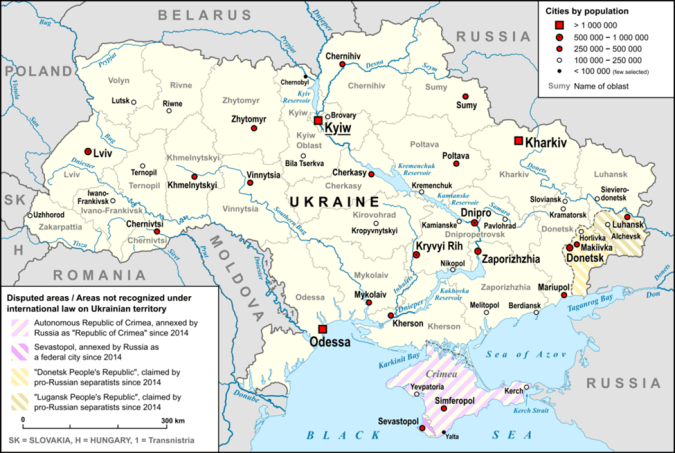
The nuclear power plant, the largest in Europe, was captured by Russian forces in March but is still operated by Ukrainian staff. The site is less than 10 km away from Ukrainian positions across the Dnipro River and has come under repeated shelling over the past month, with Ukraine and Russia accusing each other of being responsible.
Many are finding it hard to believe that Russia is responsible for the shelling as it has nothing to gain by destroying vital infrastructure that it already controls. Meanwhile, Ukraine could be motivated to shell the plant as it can continue manipulating Western audiences via its intense media campaign by denying such attacks and claiming that Russia will soon be responsible for a nuclear catastrophe.
Arriving at the site, Grossi said “The difference between having the IAEA at the site and not having us there is like day and night. I remain gravely concerned about the situation at the Zaporizhzhya Nuclear Power Plant – this hasn’t changed – but the continued presence of the IAEA will be of paramount importance in helping to stabilise the situation. I’m immensely proud of the critically important and courageous work the IAEA team is now able to perform at the ZNPP.”
Although Kiev attempted to manipulate such statements to mean that Russia will soon abandon the site, it also means that there will be neutral observers to any future attack against the power plant. Despite it not being the IAEA’s mission to hold anyone accountable for attacks as their focus is purely technical, they will be eyewitnesses to any strikes, and Kiev might want to avoid another fiasco like the uncovering of the “Ghost of Kiev” and “Snake Island” myths.
Explaining the nature of his trip, Grossi said: “Our team on the ground received direct, fast and reliable information about the latest significant development affecting the plant’s external power situation, as well as the operational status of the reactors. We already have a better understanding of the functionality of the reserve power line in connecting the facility to the grid. This is crucial information in assessing the overall situation there.”
With Zaporizhzhia nuclear power plant working at limited capacity, it also means that Ukraine misses out on potential new opportunities for revenue, especially at a time when Europe hopes nuclear energy can help offset the loss of oil and natural gas imports from Russia that were imposed through self-destructive sanctions, which are now massively backfiring.
Although Germany planned to close all of its nuclear reactors by the end of the year, there is debate on whether to keep them open as the country faces an economic crisis not seen since last century’s two world wars. Neighbouring Belgium, which was planning to close two reactors by 2025, has decided to keep them operating until at least the 2030’s. France, going in the complete opposite direction to Germany and Belgium, is looking to build an additional 14 reactors over the coming decades, as are the United Kingdom, Czech Republic, Poland and others.
None-the-less, Kiev’s attempt to politicise the IAEA mission completely failed as the agency made it clear that its only intentions are technical in nature. This will not deter Kiev from continuing such attempts of politicising the agency, and it remains to be seen whether the IAEA will go down the path of the Organisation for the Prohibition of Chemical Weapons (OPCW), which was humiliatingly caught-out covering up a damning report regarding Syria and lost its credibility.
Ahmed Adel is a Cairo-based geopolitics and political economy researcher.
OPEC+ agrees on oil output cut
BY M. K. BHADRAKUMAR | INDIAN PUNCHLINE | SEPTEMBER 6, 2022
The OPEC+ meeting at Vienna on Monday came amidst two events affecting the oil market — the G7 finance ministers decision to endorse the US proposal regarding price cap on Russia’s oil exports with effect from December 5 and secondly, Gazprom’s announcement on cutting off all gas supplies to Europe indefinitely.
Although notionally these are unrelated events, the fact remains that the energy scene is increasingly fraught with uncertainties and there are many variables at work such as fears of a global recession, the continuing difficulty to conclude a US-Iran deal on JCPOA that would have lifted the sanctions against Iran’s oil exports.
The statement by the OPEC secretariat on Monday’s meeting in Vienna has sent out a powerful message that not only is there not going to be any increased oil production but a token cut of 100,000 bpd has been agreed upon in September to bolster prices that have slid on recession fears. Oil prices jumped after the announcement. US crude rose 3.3%, to $89.79 per barrel, while international benchmark Brent was up 3.7%, to $96.50, after the decision.
This is in the face of attempts by the Biden Administration to push through a decision on an additional increase in production so that oil prices would go down. Saudi Arabia and the UAE did not agree to the US suggestion, saying that it was outside the scope of the OPEC + agreement.
The cut in oil production by 100,000 bpd is largely symbolic because OPEC+ members are estimated to be some 2.9 million bpd behind the collective quotas allotted to them. But the point is, this is the first OPEC+ oil supply cut in more than a year and it shows that the OPEC+ will not hesitate to take preemptive action.
Russian Deputy Prime Minister Alexander Novak said on Monday that expectations of weaker global economic growth were behind the decision by Moscow and its OPEC allies to cut oil output. Novak said the global energy market is characterised by heightened uncertainty at the moment. “We are not talking about price formation, but about the adequacy of supply on the market, so that on the one hand there is no excess, and on the other there is no shortage.”
The Saudi Energy Minister Prince Abdulaziz bin Salman has been more forthright, saying, “This (OPEC+) decision is an expression of will that we will use all of the tools in our kit. The simple tweak shows that we will be attentive, preemptive and proactive in terms of supporting the stability and the efficient functioning of the market to the benefit of market participants and the industry.”
The Saudi Minister was implying that the OPEC+ also faces a market where concerns about the strength of demand have started to outweigh supply fears. In fact, crude futures have lost about 20% in the past three months on the threat of a global economic slowdown.
Besides, OPEC+ weighs in on the likelihood that the negotiations to revive a nuclear accord and remove US sanctions on Iran’s petroleum sales might result in a successful agreement in which case, more than 1 million barrels a day will enter world markets shortly, according to the International Energy Agency.
However, the latest indications are that the Biden Administration may find it politically expedient to postpone the future of the JCPOA (2015 Iran nuclear deal) to the post-midterm election period in the US beyond November 7. Of course, both the US and Iran (as well as the European Union) are interested in reaching an agreement and want to restore the JCPOA on favourable terms.
At any rate, the OPEC+ move on Monday can only be seen as a rebuke from Saudi Arabia, the leading member of OPEC, to the Biden administration’s call for its Middle Eastern ally to increase production at a time of rising inflation and western sanctions on Russia’s energy industry. The OPEC+ decision comes less than two months after US President Joe Biden’s visit to Saudi Arabia when he said he expected the kingdom to take “further steps” to increase the supply of oil in the “coming weeks”.
After the OPEC+ decision, the White House said Biden is committed to shoring up energy supplies and lowering prices. “The president has been clear that energy supply should meet demand to support economic growth and lower prices for American consumers and consumers around the world,” White House press secretary Karine Jean-Pierre said in a statement.
But beyond asking Gulf states to boost production and unleashing crude from emergency stockpiles, western countries have no leverage in the matter, since industry investment and new drilling have lagged behind demand and a significant increase in output is not to be expected.
The OPEC+ has scheduled its next meeting for October 5 but signalled it may hold talks even before that “to address market developments, if necessary.” According to Reuters, Saudi Energy Minister Prince Abdulaziz bin Salman, half-brother of Crown Prince Mohammad Bin Salman, has been empowered to intervene whenever necessary to stabilise crude markets by calling for a meeting at any time.
Quite obviously, things are moving in a direction where the G7 decision to impose a price cap on Russian oil is likely becoming the business of the OPEC+ as well, albeit indirectly. Russia has said it will stop supplying oil to countries that support the G7 idea. Signals from the physical market suggest that supply remains tight and many OPEC states are producing below targets even as fresh Western sanctions are threatening Russian exports following up on the G7 idea.
An unspoken factor is that the G7 move sets a precedent that is a cause of concern for all OPEC countries. Today, the G7 is cracking the whip on Russia over Ukraine, which has technically nothing to do with the oil market. Tomorrow, it could as well be on, for example, democracy deficit in the Gulf states. Simply put, the western powers are straying onto turf that OPEC has jealously guarded as its preserve for the past 62 years since the cartel was established — and it is doing so by politicising the core issue of oil prices by introducing extraneous geopolitical considerations.
At any rate, while speaking on the OPEC meeting’s outcome on Monday, Russian minister Novak said, “We shall examine how the market situation will evolve because there are many uncertainties” not least regarding “the declaration by G7 leaders regarding capping of the price of Russian oil” which will sow “uncertainty” on the global market. (Interestingly, Chinese Foreign Ministry has called on the G7 to reconsider its move: “Oil is a global commodity. Ensuring global energy supply security is vitally important. We hope relevant countries will make constructive efforts to help ease the situation through dialogue and consultation, instead of doing the opposite.”)
The bottom line is that the US entreaties to disband the OPEC+ are getting nowhere. The OPEC meeting in Vienna on Monday underscored in its final statement that “OPEC+ has the commitment, the flexibility, and the means within the existing mechanisms of the Declaration of Cooperation to deal with these challenges (higher volatility and increased uncertainties) and provide guidance to the market.”
The message is loud and clear: Saudi Arabia and Russia who form the axis of the OPEC+ are closely coordinating on shaping the world oil market even as they could be competing for market share.
American and NATO Disinformation and Lies Fuel Never Ending War In Ukraine
By Boyd Cathey | My Corner | September 4, 2022
There is perhaps no better-informed military geostrategic authority on the war in Ukraine today than Swiss intelligence analyst, Jacques Baud (Colonel, Swiss Army, ret.). His long and exceptional experiences over the years in evaluating military intelligence and strategy for a variety of national and international agencies, in particular the geopolitics of Eastern Europe after the fall of Communism, have given him an enhanced and realistic insight into current events in that part of the world.
Recently, Amnesty International—of all sources!—came out with a critical report, largely ignored by the American and Western media, which documented the fact that Ukraine is actively engaged in terrorism and war crimes in its present conflict with Russia. One of the few Western media sources, Newsweek, quoted the report “that the Ukrainian military’s tactics ‘violate international humanitarian law and endanger civilians’ by operating weapons out of bases established in residential areas while civilians are present.” That is exactly what some of us have been saying and charging for some time, especially in reference to the accusation of Russian “war crimes” in Mariupol and Bucha, to mention but two prominent examples.
Now, an international agency, not known for its rightwing or pro-Russian bias, has come out and admitted the very same thing: it is the policy of the Ukrainian government to use civilians as human shields, to place potentially rich military target in the midst of unprotected civilians, many of whom become hostages to the Ukrainian military. The objective, of course, is to inflame Western and American media and political types: “See how evil and barbaric those Russians are!” goes the refrain. And that disinformation campaign has been fairly successful, if you watch most of Fox News (e.g., General Jack Keene, Brian Kilmeade, etc.) which is joined at the hip with the entirety of the hysterical (mostly leftwing) anti-Russian media, not to mention the Deep State cabal in Washington, which includes such deranged armchair warriors as Senators Lindsey Graham and Chuck Schumer.
Of course, Ukraine has attempted to push back against the report, employing it minions in the West and in the American media. But numerous analyses have surfaced, and, although ignored by our media, they confirm Amnesty International’s study.
In his most recent analysis, Colonel Baud examines the issue of terrorism as employed as a military tactic, and largely on the part of the Ukrainian military and its violent militia groups, in the current conflict with Russia. In an interview with the journal, The Postil, he explores in detail that question, as well as other critical issues—issues about which most Americans (and Western Europeans) have little reliable information.
There is a zealously pro-Ukrainian historical blackout framing Western media. It is openly admitted by Joe Biden and his Secretary of State Anthony Blinken and Secretary of Defense Lloyd Austin (since they visited Kiev back in late April, 2022) that the American strategy (and thus that of our NATO satraps) in Ukraine is “to bleed Russia dry, if it takes the death of every Ukrainian to do it.” In other words, Ukraine is a kind of “piege de mort,” a death trap for the Russians to facilitate a radical change in Kremlin leadership, to install by whatever means possible a pliant government which will essentially take orders from the globalist cabal which seeks to implement “the Great Reset.”
Colonel Baud’s interview is detailed, providing accurate and detailed information that most Westerners and Americans don’t see or hear in our controlled media. His wide-ranging interview is fairly long—9,000 words—but well worth reading and pondering. The goal of our elites in Eastern Europe has nothing at all to do with “protecting democracy”—Ukraine is the least democratic nation in all of Europe. It has everything to do with cementing globalist control, a unitary world where agencies like an empowered World Economic Forum (which Volodymyr Zelensky now pays homage to), the European Union, and a reconfigured and aggressive NATO, abroad, and an FBI and CIA, which have become our equivalents of the East German Stasi of Communist KGB secret police, domestically.
I pass on Colonel Baud’s interview below:
https://www.thepostil.com/our-latest-interview-with-jacques-baud/
Russia to Build Over 150 New Ships for Arctic Fleet, Including 12 Icebreakers

Samizdat – 04.09.2022
Development of the Arctic region is expected to be one of the topics of the Eastern Economic Forum held in the city of Vladivostok on September 5-8.
Moscow plans to boost its Arctic fleet by building 153 new ships, including 12 icebreakers, according to the journal of the Eastern Economic Forum, published by the Roscongress foundation.
At the same time, the publication suggests that Russia aims to up transarctic transportation by creating a new class of cargo vessels for the Northern Sea Route (NSR) by 2035.
According to the new naval doctrine, announced in August, Russia intends to utilize the NSR as its internal waters, using it as a “safe, competitive, year-round national transport route”. The nation also plans to continue leading in icebreaker construction and investing in the infrastructure of the nuclear fleet.
The NSR is a shipping route which lies within Russia’s exclusive economic zone (EEZ), analogous to the Northwest Passage on the Canadian side. It is shorter than the same trip via the Suez Canal Route, but allows traffic only several months per year due to weather conditions.
US violates UN agreement – Moscow
Samizdat – September 2, 2022
The US has neglected its obligation as the nation hosting the UN headquarters when it refused to grant visas to Russia’s interior minister and other members of his delegation, Moscow has argued. Vladimir Kolokoltsev and colleagues had intended to take part in a UN summit of interior ministers.
“Because of the American side’s actions, the participation in the summit of the Russian delegation headed by interior minister Vladimir Kolokoltsev has been called off,” Russia’s permanent representative at the UN, Vassily Nebenzia, said Thursday.
The diplomat went on to describe Washington’s refusal to issue visas to the Russian officials as “yet another blatant violation by the US of its obligations” under the 1947 agreement regarding the headquarters of the UN.
Nebenzia stressed that giving access to the international organization’s premises is not a privilege, but rather Washington’s obligation under international law.
This is not the first time that the US has refused to grant visas to Russian officials.
In late July, Andrey Krutskih, the director of the international information security department in the country’s foreign ministry, was denied entry to the US, where he had planned to take part in a UN session.
On top of this, Washington has yet to issue visas for Russia’s Foreign Minister Sergey Lavrov, who is to head the country’s delegation at the UN General Assembly, which kicks off on September 13. According to Russian officials, even though Moscow had requested the visas well in advance, American authorities have not yet signaled their readiness to grant them.
Earlier, both Nebenzia and his deputy Dmitry Polyansky called on the UN to take action and launch an arbitral tribunal against Washington over its repeated visa denials to Russian officials.
Commenting on the latest such instance on Thursday, Stephane Dujarric, the spokesperson for United Nations Secretary-General Antonio Guterres, said that the “UN constantly raises the question with the host country over the non-issuance of visas to Russian diplomats arriving at the UN.” The international organization will “continue to do it,” he added, as quoted by TASS agency.
Under an accord between the US and the UN, Washington should not obstruct visits by representatives and officials of the member states to the organization’s New York headquarters.
Bank of Russia explains why country’s frozen reserves were kept abroad
Samizdat | September 2, 2022
The Central Bank of Russia (CBR) explained on Friday why half of the country’s foreign currency reserves were being held abroad, which enabled their seizure by Western governments.
Foreign exchange reserves were deliberately divided into two halves, one of which was dollar and euro assets, CBR’s first deputy chairman Dmitry Tulin told business daily RBK. Those assets were actively used in domestic money circulation, so the regulator had to play the role of a “wholesale warehouse,” he explained.
“The fact that, by the beginning of 2022, the international reserves were divided, as they say, into “two piles” – one for peacetime and the other for emergency situations, is a consequence of the work that has been systematically carried out since 2015,” Tulin said, noting that “there was no way not to keep part of the reserves in dollars and euros, because these currencies were most actively used … for settlements in foreign trade.”
According to Tulin, who oversees the supervision of the banking sector at the CBR, “if there’s constant capital turnover, there should be reserves.”
The deputy chairman drew an analogy with the retail sector, noting that a store, in order to operate smoothly and satisfy customer demand, needs to keep stocks. “There are small warehouses at shops and large warehouses at wholesale bases. The role of a wholesale warehouse for conducting operations in foreign currencies in our economy was performed by the Central Bank, which held the state foreign exchange reserves,” Tulin said.
In March, nearly half of Russia’s foreign reserves – worth $300 billion – were frozen as part of the sanctions imposed by the US, the EU, and their allies over the conflict in Ukraine.
The regulator then explained that keeping gold and foreign exchange reserves in the country would have been like having no reserves at all, as such assets protect the economy against external crises. Reserves in US dollars and euros help the country pay its debts and keep trade going, so nothing could have been done to prevent a freeze of its assets, the bank said. According to Russian Foreign Minister Sergey Lavrov, the asset freeze by the West essentially constitutes theft.
Russia and Ukraine were close to peace deal – ex-Trump aide
Samizdat – September 2, 2022
A top US foreign policy expert has acknowledged that Russia and Ukraine could have reached a peace agreement in April.
The admission came this week from Fiona Hill, a veteran US diplomat who served as the US National Security Council’s senior director for Europe and Russia in the Donald Trump administration. An article that she co-wrote with Georgetown University Professor Angela Stent for Foreign Affairs magazine said Russian-Ukrainian peace talks in April were apparently conducted by the Russian side in good faith.
“According to multiple former senior US officials we spoke with, in April 2022, Russian and Ukrainian negotiators appeared to have tentatively agreed on the outlines of a negotiated interim settlement: Russia would withdraw to its position on February 23, when it controlled part of the Donbass region and all of Crimea, and in exchange, Ukraine would promise not to seek NATO membership and instead receive security guarantees from a number of countries,” the article said.
A peace-for-neutrality agreement was proposed by Ukraine in a draft document that it delivered to Russia during the March 29 talks in Istanbul, Turkey. The Russian military announced its withdrawal from some parts of Ukraine as a gesture of good will, right after the offer was made.
Days later, Ukrainian President Vladimir Zelensky declared that Kiev had discovered evidence of war crimes in territories abandoned by Russian troops, particularly in the town of Bucha. He claimed that the Ukrainian public would not allow him to negotiate with a nation that, according to him, was committing a genocide of his people.
Russia said the evidence of war crimes had been fabricated and considered that Kiev had used the allegations as a pretext to ditch peace talks and continue fighting in the hope that Western military aid would allow it to win on the battlefield. According to Russian diplomats, Moscow wrote up a formal peace agreement based on Ukrainian proposals and sent it to Kiev, but never heard anything back.
In May, some Ukrainian media linked the collapse of the negotiations with pressure imposed on Kiev by British Prime Minister Boris Johnson. The UK leader publicly opposed a negotiated solution to the crisis in Ukraine and urged Kiev to fight on to obtain a stronger position in future talks.
Johnson visited Kiev on April 9, reportedly almost without warning and with a message for Zelensky that he could not get the deal he wanted from Russian counterpart Vladimir Putin. According to the Ukrainskaya Pravda newspaper, he branded Putin a war criminal who could not be trusted and said that “even if Ukraine is ready to sign some agreements on guarantees with Putin, they [the West] are not.” Security guarantees for a neutral Ukraine from major world powers were the cornerstone of the proposed peace deal.
Senior Russian officials repeatedly stated that Moscow was willing to settle the conflict and warned that the decision to terminate talks only made the final conditions worse for Ukraine. The leadership in Kiev insisted that talks could only happen after Russia fully withdrew its troops, including from Crimea, which Moscow considers its territory.
Europe Has No Real Alternatives To Russian Gas: Ex-Aramco EVP
By Tyler Durden | Zero Hedge | September 1, 2022
Echoing what Zoltan Pozsar said in his latest must read note, the former executive vice president at Saudi Aramco, Sadad Al-Husseini, told CNBC on Monday that there’s not enough capacity in the world to replace Russia’s gas supply to the European Union, while Moscow has plenty of markets to sell its energy to.
“The US doesn’t have the LNG capacity to replace Russia’s exports to Europe,” he said, noting that power bills across the EU are set to soar this winter. He did not comment on China reselling Russian LNG to Europe although we expects others will soon.
According to Al-Husseini, the lack of freely available supply could lead to serious problems on the global energy market. “This situation is a new world, and it’s not a very good one for energy,” he warned.
“In any case, there isn’t enough LNG capacity in the world to make up for the Russian exports to Europe,” the former executive said, adding that, “It will take years for the EU to find resources to replace Russian supply.”
He also said that while Russia may lose Europe as an end-market, there are “plenty of alternative markets” for Russian energy, including China, Japan, or India, that eagerly flount Western sanction, realizing that the Biden admin is increasingly toothless in punishing sanctions violators.
Meanwhile, Europe does not have alternative energy sources, he said, “while the US is maxed out already, North Africa has got problems,” and OPEC is also running out of spare capacity.
“So, it’s a global problem,” he said.
The official suggested that, while the Russian economy may suffer under Western sanctions, the rest of the world will be suffering with them.
However, he stressed that “Russia may recover a lot sooner than Europe.”
Featured Video

Death Spikes & Rising Cancer In Our Youth Explained
or go to
Aletho News Archives – Video-Images
From the Archives
Politicians lie
By Mazin Qumsiyeh | Popular Resistance | August 18, 2013
There is no way to say this truth nicely: Politicians lie. That includes Japanese, American, Egyptian, Israeli, and Palestinian politicians! Is there something more common sense than that? Yet, so many citizens around the world believe their own politicians or wistfully acknowledge lies but think it is part of the job needed to run things. They believe even when politicians contradict themselves blatantly. This phenomenon is rather remarkable. It is a dissonance and disconnect from reality that many seem oblivious to. It is very dangerous because it can lead to accepting rationales for going to war. These can be deadly wars that lead to millions of lives lost as happened in what was called World War 1 and WW2. Even when incredible and declassified evidence abound, politicians continue to lie and old mythologies refuse to die. Here are just a few of the countless lies told to us over the past few decades… continue
Blog Roll
 Aletho News
- From Unipolar Universalism to Multipolar Civilizational Distinctiveness
- RSF military group defects, joins Sudanese army: State media
- Ireland goalkeeper refuses to play ‘Israel’ as squad weighs boycott
- China pushes back against US on Cuba, Iran
- Ukrainian Soldiers, Potential Mercenaries: Have Gun, Will Travel!
- Burnham’s UN debut… A masterclass in British disinformation
- Iran flights continue despite US aviation sanctions
- Global Tipping Points Lead the World Into a State of Entropy
- The day-after at the White House: USA and Xi Jinping
- The Geopolitical Balance in the Red Sea: The UAE Being Displaced by New Players
- If Americans Knew
- Deconstructing Netanyahu’s pants-on-fire UN rant – Daily Update
- Trump betrayed voters with his campaign lies and prioritized a foreign country once he took office
- Netanyahu calls Israel’s war in Gaza ‘opposite of genocide’ in UN speech to near-empty hall
- Settler Kidnappings: Torture, Sexual Abuse and Terrorisation of Palestinian Abductees as Israel Deepens Annexation of West Bank
- Gaza winter nears as 162,000 tents become unusable, raising fears of humanitarian crisis
- Netanyahu says, “It’s the opposite of genocide”; UN says Gaza economy is world’s ‘most severe crisis on record’ – Daily Update
- Israel’s US-Backed Assault on Gaza Has Created the ‘World’s Most Severe Economic Crisis on Record’: UN
- ‘Protecting U.S. Citizens’… From Israel
- ‘This is where I live now, the back of a truck’: a day in the life of a grandmother in Gaza
- In UN Speech, Iran’s President Displays Pictures of Children Killed by US, Brings Attention to Israel’s Nuclear Arsenal
- No Tricks Zone
- New Study: Earth And Venus Surface Warmth Largely Explained By Convection And Lapse Rate, Not CO2 Or Radiation
- 2025 Nature Paper Claiming Worsening Global Drought Gets RETRACTED …Heavily Flawed
- New Study: ‘Global Drought Shows No Detectable Recent Acceleration Under Climate Warming’
- Economic Masterminds: German Socialists Suggest Taxing Productivity Gains Stemming From Using AI
- The South China Sea Has Not Been Cooperating With The Climate Change Narrative
- Energy Crisis: Germany Enters Heating Season With Historically Low Gas Reserve Fill Levels
- New Study: The Antarctic Ice Sheet Gained Mass From 2020-2024 Due To Staggering Snow And Ice Accumulation
- Study: Ocean Heating Rates From Thousands Of Years Ago ‘Dwarf’ Modern Ocean Heating Rates
- Climate Extremists Target, Attack Large-Scale Power Grid Infrastructure In Germany!
- New Study: Antarctic Ice Melt Has Contributed Less Than 1 Centimeter To Sea Level Rise In The Last 30 Years

