World order looks different from Moscow, Beijing
BY M. K. BHADRAKUMAR | INDIAN PUNCHLINE | AUGUST 17, 2022
The Chinese Defence Ministry announced today its participation in the Vostok 2022 strategic command and staff exercise in Russia, which is slated for August 30-September 5. The low-key statement in Beijing said China will send some troops and the participation is within the framework of the two countries’ annual cooperation plan.
The statement mentioned that “India, Belarus, Tajikistan, Mongolia and other countries will also participate.” It said the Chinese participation “aims to deepen pragmatic and friendly cooperation with the militaries of the participating countries, enhance the level of strategic coordination among all participating parties, and enhance the ability to deal with various security threats.”
In what can be construed as an oblique reference to the conflict in Ukraine and the big power tensions in general, Beijing stated that the exercise is “unrelated to the current international and regional situation.”
Vostok is one of the capstone events of the Russian Armed Forces’ annual training cycle to test national preparedness for large-scale, high-intensity warfare against a technologically advanced peer adversary in a multidirectional, theatre-level conflict.
Vostok 2018 involved approximately 300,000 troops –- as well as 1,000 fixed-wing aircraft and helicopters, 80 ships, and 36,000 tanks, armoured and other vehicles — and was unprecedented in scale. And Russian, Chinese and Mongolian forces were the sole participants and was hyped up as a carefully orchestrated Russian-Chinese military demonstration.
It seems the Chinese participation will be scaled down, notwithstanding the gathering storms on the horizon for both Russia and China. The Chinese announcement comes a day after Russian President Vladimir Putin used exceptionally harsh language to condemn the “Western globalist elites,” accusing them of provoking chaos, “fanning long-standing and new conflicts and pursuing the so-called containment policy” in the pursuit of an agenda “to keep hold onto the hegemony and power that are slipping from their hands.” Putin alleged, “They need conflicts to retain their hegemony.”
The speech while addressing the 10th Moscow Conference on International Security in Moscow on Tuesday, also contained some pointed references to the Asia-Pacific region. Putin said:
“NATO is crawling east and building up its military infrastructure… US has recently made another deliberate attempt to fuel the flames and stir up trouble in the Asia-Pacific. The US escapade towards Taiwan is not just a voyage by an irresponsible politician, but part of the purpose-oriented and deliberate US strategy designed to destabilise the situation and sow chaos in the region and the world. It is a brazen demonstration of disrespect for other countries and their own international commitments. We regard this as a thoroughly planned provocation.
“They want to shift the blame for their own failures to other countries, namely Russia and China, which are defending their point of view and designing a sovereign development policy without submitting to the diktat of the supranational elites.
“We also see that the collective West is striving to expand its bloc-based system to the Asia-Pacific region, like it did with NATO in Europe. To this end, they are creating aggressive military-political unions such as AUKUS and others.”
Significantly, Putin called for “a radical strengthening of the contemporary system of a multipolar world.” He said, “ All these challenges are global, and therefore it would be impossible to overcome them without combining the efforts and potentials of all states…
“Russia will actively and assertively participate in such coordinated joint efforts; together with its allies, partners and fellow thinkers, it will improve the existing mechanisms of of international security and create new ones, as well as consistently strengthen the national armed forces and other security structures by providing them with advanced weapons and military equipment. Russia will secure its national interests, as well as the protection of its allies.”
Notably, however, the Chinese commentaries generally steer clear of bracketing the Taiwan question and the conflict in Ukraine as analogous, as symptomatic of the birth throes of a multipolar world. In a commentary today, the senior editor with People’s Daily, Ding Yang once again flagged that the real danger is that the US and China may “sleepwalk into conflict.”
He wrote that the US is “like a runaway horse running wildly to the precipice of war,” but the aim is how to profit from a war, or rather “how to profit from someone else’s war.” Ding took a Marxian perspective that the US policy is driven by the interests of US capital and “Washington sees China as an enemy because it has moved the US cheese.”
As he sees it, at its core the US strategy is “to squeeze China out of the global market and manufacturing chain.” Thus, even with regard to Taiwan, “One of the main aims is to create tensions and further pulling Taiwan Semiconductor Manufacturing Company into the US chip siege against China.”
Ideology, human rights, etc., are only alibis for the capital competition for markets. Plainly put, it unnerves the US that “Chinese capital is also starting to go global.”
Deng is confident that “If we follow the logic of capital development as they see it, what matters is that Chinese manufacturing will eventually push them out of the global industrial chain, leaving them with no money to make and no work to do. So the first thing they want to do is to maximise their share of the Chinese market.”
“Then the next thing to do is inevitably to implement a global stranglehold on Chinese capital and Chinese manufacturing.” This is where the danger lies, as “the option of war is an inherent part of US capital export and expansion.”
But China’s advantage is that “in contrast to the historical path of Western capital’s global expansion, there is a logic of “common development” behind Chinese capital going abroad.”
Interestingly, the government newspaper China Daily reported today that China’s holdings of US Treasuries have been further reduced through July, but China is only one of many other countries doing so, including Japan, reacting to the Fed’s tightening cycle.
But “the decline may gradually decelerate.” The point is, it is “unrealistic” for China to give up on US debt holdings so long as the US Treasuries remain a critical international reserve asset! This is diametrically opposite the revisionist path Russia took.
NATO’s 2030 Strategic Concept threatens to destabilise the world
By Ahmed Adel | August 17, 2022
The new NATO 2030 Strategic Concept indicates a disturbing change in the Alliance’s strategic orientation. As a result, provocations towards Moscow, as well as Beijing, are escalating, especially after the former was labelled by NATO as “the most significant and direct threat to Allies’ security and to peace and stability in the Euro-Atlantic area.” In this context, the Atlantic Alliance urged member states to allocate more resources for military purposes, as well as to increase the rapid reaction forces on its Eastern European front from 40,000 troops to a staggering 300,000. This is in addition to escalations in the South China Sea.
NATO’s Secretary General, Jens Stoltenberg, explained that, unlike the previous document of the same title, which was adopted in Lisbon in 2010, there are no longer any guidelines on cooperation with Moscow, not even in the areas of arms control, the fight against terrorism or drug trafficking. Relations with Russia are continuously deteriorating as the West instigates less cooperation and more conflict.
The behaviour of NATO’s main members – the US and the United Kingdom, as well as Germany and France, in Ukraine, but also in the Caucasus and Central Asia, signify that Russia is the most direct threat to Western hegemony despite China’s massive economic rise. Therefore, there is nothing epochal about the positioning on NATO’s eastern borders since it is a logical epilogue of a process that has been ongoing since at least 2014. Arguments can be made though that this process began with the Syrian War in 2011, or perhaps even as early as 2008 with the NATO-instigated Russo-Georgia War.
The change in strategic orientation, projected in the medium term, also concerns China’s relations with the West and Russia. The tightening of relations between China and Russia is contrary to the interests of the Alliance because, according to NATO, “China seeks to undermine the current world order by controlling global logistics and its economy,” hence NATO’s strengthening of relations with its Asia-Pacific partners.
It is also for this reason that the US encouraged the dismantling of the EU-China investment agreement, openly supports protesters in Hong Kong and repeats claims of a Chinese-perpetrated genocide against the Uyghurs, escalates tensions in the South China Sea, and helped dismantle the 17 + 1 format, which in practice can no longer function. This is also in addition to Nancy Pelosi’s recent visit to Taipei and the establishment of the AUKUS alliance.
For the most part, in NATO’s new strategic orientation, China could arguably be heading towards a similar situation to that of Russia in 2014. For NATO strategists, China’s response to Pelosi’s visit, manifested by military and naval exercises in the South China Sea, is excessive. They are of this view because China exposed how easily Taiwan could be isolated from the outside world, with the US only able to watch on.
NATO is moving very explicitly and in a targeted manner against China. Perhaps such a step was induced or accelerated by Beijing’s refusal to align itself with the West’s anti-Russian sanctions and condemnation of the demilitarisation of Ukraine.
Proceeding with such provocations and escalations is also very risky for NATO though. A NATO-instigated war against China, just as the Alliance left Russia no choice but to demilitarise Ukraine to ensure its own national security, would reshape the world much faster and more fundamentally than what has already occurred due to the war in Eastern Europe. The attempted isolation of Russia not only failed, but in fact accelerated the changing of the global geopolitical and economic system away from Western hegemony.
As China is the largest industrial power in today’s world, as well as a massive market for consumer goods and a key investor and creditor in numerous regions, without a stable China, there is no global stability. If the Alliance was not able to achieve its goal in Ukraine, a region where several NATO members directly border Russia, there is little prospect that it can make any major achievement on the Asian front.
If the Alliance is not capable of coping with a direct confrontation with Russia in Europe, it raises the question on how it will be able to cope with a direct confrontation on two fronts against a potential Russian-Chinese coalition. NATO’s anti-Chinese and anti-Russian strategic commitment, which has been framed until at least 2030, is a dangerous provocation, and not only for the targeted countries. The West’s provocations are a danger to the entire world as it can dramatically affect global stability and the quality of life of everyday citizens, hence why the NATO 2030 Strategic Concept is alarming.
Ahmed Adel is a Cairo-based geopolitics and political economy researcher.
‘Dirty bomb’ in Ukraine would affect nine countries
Samizdat – August 16, 2022
A total of nine countries could be contaminated if the Russian-controlled Zaporozhye nuclear power plant in southern Ukraine is hit by multiple launch rocket systems, a former chief inspector of the USSR’s nuclear authority told RT.
Russian troops established control of the Zaporozhye NPP, Europe’s largest facility of the kind, early on in the course of military operations in Ukraine. Since then, Russia has repeatedly accused Kiev of launching artillery and drone strikes on the facility. Ukrainian officials claimed that the Russians were shelling themselves to discredit Kiev.
In an interview published on Tuesday, Vladimir Kuznetsov warned that if the plant is hit by volley fire, with numerous missiles striking the storage facility that holds spent nuclear fuel, chances are that more than one container would be damaged. This scenario would entail radiation escaping “into the environment – hence the contamination of not only the industrial site but also the Dnepr river which is nearby,” the expert noted.
Kuznetsov also pointed out that such a strike would most likely be accompanied by a fire, and “God knows where the wind would send the combustion products.”
The former chief inspector surmised that should 20 to 30 containers be breached in such an attack, the “radiation would affect approximately nine countries: Turkey, Bulgaria, Romania, Slovakia, the Czech Republic, Poland, the Baltic states and obviously Western Ukraine.”
Russian forces took over the Zaporozhye nuclear power plant in early March, within the first two weeks of Moscow’s military campaign against its neighbor.
In recent weeks, the Russian military has accused Ukraine of deliberately targeting the facility multiple times and warned that a major nuclear disaster, akin to that at Chernobyl in 1986, or even worse, could happen if such attacks continue unchecked.
Kiev, meanwhile, denies these allegations and claims that it is Russian forces that are shelling the power plant to frame the Ukrainian military – a point of view shared by the US and EU. The UN has called the attacks “suicidal” and proposed sending an International Atomic Energy Agency delegation to the site to provide “technical support” and help avoid a further escalation.
On Tuesday, local government administration member Vladimir Rogov told Russian media that Ukrainian forces had fired multiple rockets directly at the coolant systems and nuclear waste storage site inside the facility.
Since the storage site is out in the open, any hit would result in the release of nuclear waste ranging from dozens to hundreds of kilograms and lead to contamination of the area, the official explained.
“In plain language, that would be like a dirty bomb,” said Rogov.
Russia warns of ‘direct military clash’ with US
Samizdat | August 16, 2022
Washington’s behavior on the world stage risks direct conflict between the nuclear states, the Russian embassy in the US has warned.
“Today, the United States continues to act with no regard to other countries’ security and interests, which contributes to an increase in nuclear risks,” the embassy said in a statement on its Telegram channel.
“The [US’] steps to further engage in a hybrid confrontation with Russia in the context of the Ukrainian crisis are fraught with unpredictable escalation and a direct military clash of nuclear powers.”
The embassy noted that Washington has recently withdrawn from two key arms control agreements, the 1987 Intermediate Range Nuclear Forces Treaty, which banned certain classes of land-based missiles, and the 1992 Treaty on Open Skies, which allowed for surveillance flights over each other’s territories.
The embassy urged the US to “take a closer look at its own nuclear policy instead of making unfounded accusations against the countries whose worldviews do not coincide with the American ones.”
“Our country faithfully fulfills its obligations as a nuclear-weapon state and makes every effort to reduce nuclear risks,” the diplomats said.
The statement comes after the US accused Moscow of using the Zaporozhye nuclear power plant in southern Ukraine as cover for its soldiers. The plant, the largest in Europe, was seized by Russian troops during the early stages of Moscow’s military operation in Ukraine, which was launched in late February. It continues to operate with Ukrainian personnel under Russian control.
US Secretary of State Antony Blinken called Russia’s action at the facility “the height of irresponsibility.” Russia and Ukraine, meanwhile, have been accusing each other of shelling the plant. According to Moscow, artillery fire by Ukrainians forces caused several fires and partial power outages this month.
Russia initiated a UN Security Council meeting last week regarding the situation around the Zaporozhye power plant. Russian envoy Vassily Nebenzia said that Moscow supports the International Atomic Energy Agency (IAEA) to inspect the facility as quickly as possible.
Russia Backs Comprehensive Military-Technical Cooperation Amid Formation of Multipolar World: Putin
Samizdat – 15.08.2022
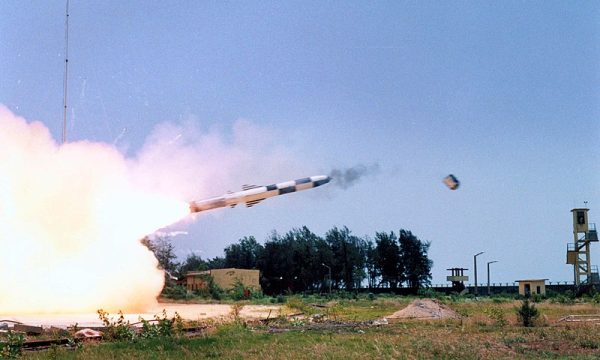
Russia supports the development of “comprehensive” military-technical cooperation with other countries, including joint drills and the sales of weapons systems, and highly values its many allies and partners across the globe, Russian President Vladimir Putin has said.
“I want to emphasize that Russia stands for the widest possible development of military-technical cooperation. Today, in the conditions of a steadily emerging multipolar world, this is especially important,” Putin said Monday at ARMY-2022.
“We highly appreciate the fact that our country has many allies, partners and like-minded people on different continents. These are states which do not bend before the so-called ‘hegemon’, their leaders are showing strong character and do not bend,” he added.
The Russian president said Russia is ready to present its partners across Latin America, Asia and Africa with “the most modern weapons systems,” from small arms and armored vehicles to artillery, warplanes and drones. He recalled that Russian armaments have built up a reputation across the world for their reliability, quality and efficiency in real combat conditions.
Putin extended a formal invitation to Russia’s allies and partners to take part in joint command-staff exercises and other drills, and expressed confidence “that by developing broad military-technical cooperation, by pooling our efforts and potential, we will be able to ensure reliable security for our countries and the world as a whole.”
Putin also pointed to the “great prospects” Russia has in the training of foreign servicemen and improving their qualifications, saying that thousands of soldiers and officers from countries around the world are already proud to call Russian military academies and officer training schools their alma maters.
The president thanked Defense Ministry for organizing the forum, saying it would help strengthen international security and stability. He also expressed gratitude to Russia’s weapons makers for equipping Russia’s ground forces and Navy with modern weapons, including those being used in Moscow’s ongoing military operation in Ukraine.
ARMY-2022 kicked off on Monday across several venues in the Moscow region and will run until Sunday. The forum and expo is combined with the International Army Games – a friendly military competition in which 12 countries are taking part. The games will run until August 27.
New American nuclear doctrine targets Russia and China simultaneously
By Drago Bosnic | August 15, 2022
As America is trying to shift the blame to Russia and China, it ignores that it was the US aggression against the world which caused the proliferation of thermonuclear weapons, as countries decided they don’t want to be held at gunpoint by the political West.
For nearly 80 years, the doctrine of mutually assured destruction (MAD) has been keeping the relative global peace, preventing superpowers from going into a head-on confrontation. One of the stabilizing factors was the fact there were only two superpowers – the Soviet Union and the United States. This made negotiating arms control deals much easier than would be the case nowadays. The reason is that in the last 30 years, global geopolitical architecture has changed dramatically. The fall of the USSR almost completely dismantled the former Eastern Bloc. This led to the rise of new superpowers, resulting in a different level of geopolitical rivalry, the most important part of which is strategic dominance.
At the same time, the geopolitical interests of global players remained largely unchanged. Russia, although smaller and less powerful than the USSR remained a military superpower as it still had thousands of thermonuclear warheads, although its conventional forces went through a severe degradation. This changed in the 2000s, when Russia started regaining its strength. At the same time, China grew exponentially stronger, giving the Asian giant a virtually universal recognition of superpower status. One notable exception to this was (and to an extent, still is) its thermonuclear arsenal.
For decades, China has been maintaining a minimalist approach to its strategic security. This doctrine boils down to the idea of maintaining a minimal force required to inflict unacceptable damage to an opponent, regardless of how much more powerful the said rival is. It stood in stark contrast to the offensive-oriented nuclear posturing of the US and the USSR, both of which built enormous arsenals aimed at outgunning each other. China started changing this, as its blistering economic strength started translating into geopolitical and military power. And indeed, in the last 2-3 years, China has built hundreds of new missile silos, indicating that it’s moving toward a full superpower status which would help improve its strategic security beyond the Asia-Pacific region.
The US is closely following this process, as the Washington decision-makers and the Pentagon strategic planners are now faced with the nightmarish prospect of having to face not one, but two near-peer adversaries. The belligerent thalassocracy is now “furiously writing a new nuclear deterrence theory to tackle the new threat”, said the supreme commander of America’s nuclear arsenal. Top brass at US Strategic Command has been contemplating strategies to face this new reality and the ways of “how threats from Moscow and Beijing have changed this year”, said STRATCOM chief Navy Admiral Chas Richard. Admiral said he “delivered the first-ever real-world commander’s assessment on what was going to take to avoid nuclear war” after Russia launched its counteroffensive against NATO aggression in Europe.
Richard claims that “China has further complicated the threat”, and the admiral made an unusual request to experts assembled at the Space and Missile Defense Symposium in Huntsville, Alabama, last Thursday, August 11:
“We have to account for three-party [threats],” Richard said. “That is unprecedented in this nation’s history. We have never faced two peer nuclear-capable opponents at the same time, who have to be deterred differently. The need for a new deterrence theory comes as “institutional expertise on avoiding nuclear war has atrophied. Even our operational deterrence expertise is just not what it was at the end of the Cold War. So we have to reinvigorate this intellectual effort. And we can start by rewriting deterrence theory, I’ll tell you we’re furiously doing that out at STRATCOM,” he added.
According to Defense One, STRATCOM “took steps to evolve past the traditional nuclear deterrence theory of MAD (mutually assured destruction), which posits that any use of nuclear weapons would result in retaliatory use and total annihilation of all parties,” which, as previously mentioned, has been preventing nuclear war for nearly eight decades. The idea of going beyond MAD is quite controversial, to say the least. Although quite a rudimentary concept at its core, it’s been proven to work, preventing global thermonuclear confrontation, including during the Cuban missile crisis, which is arguably the closest we’ve got to a world-ending war.
“Russia and the PRC have the ability to unilaterally, whenever they decide, they can escalate to any level of violence in any domain. They can do it worldwide and they can do it with any instrument of national power. We’re just not used to dealing with competitions and confrontations like that,” Richard concluded.
As the admiral was trying to shift the blame to Russia and China, he ignored the simple fact that it was the sheer US belligerence and aggression against the world which caused the proliferation of thermonuclear weapons, as countries decided they don’t want to be held at gunpoint by the political West. Now, the US is faced not just with old rivals like Russia, but also with China, which is responding to numerous US provocations, including in Taiwan. As a result, any new strategic arms control negotiations will put the US in a very difficult position, as neither Russia nor China trust the political West to hold its end of the deal. Thus, the US will need to either escalate a new arms race (the one in which it’s already lagging behind) or come to an agreement which will still result in the need to divide its strategic forces (limited by a treaty) equally against Russia and China, while the two (Eur)Asian giants have only the US to focus on.
Drago Bosnic is an independent geopolitical and military analyst.
Ukrainian POWs reluctant to be exchanged – Moscow
Samizdat – August 13, 2022
Ukrainian soldiers that were captured as prisoners of war by Russia have decided to remain in the territory controlled by Moscow and allied forces, expressing reluctance to continue fighting, Russia’s Ministry of Defense claimed on Saturday.
“Ukrainian prisoners of war belonging to the units of the Naval infantry, National Guard, air assault and ground forces chose to stay in the territory controlled by Russia because of their reluctance to fight and fear of being sent to the frontlines again,” the ministry wrote on its Telegram channel.
The Defense Ministry said the Ukrainian POWs do not want to be used as “cannon fodder” and die on the battlefield while “carrying out criminal orders” issued by Kiev.
The Russian military also posted a video of what appears to be an interview with a Ukrainian POW who said he laid down his arms voluntarily and turned himself in to the allied forces.
According to the prisoner, he has been treated well and does not want to return to Ukraine as part of any future swaps.
Few soldiers manage to surrender voluntarily due to a crackdown by Ukraine’s nationalist battalions, the ministry claimed, noting that the nationalists threaten to shoot any soldiers that seek to abandon their combat positions.
According to the ministry, the POWs have told of rampant corruption among the Ukrainian ranks, the use of intimidation tactics by Kiev, and “barbaric treatment of civilians who are used by [the] nationalists as human shields on a regular basis.”
Earlier this month, Moscow claimed that it scrupulously observes the Geneva Convention on the treatment of prisoners of war, while Kiev’s forces have tortured, starved, and deprived of medical care Russian POWs. At the time, Russian Deputy Defense Minister Aleksandr Fomin also condemned the West’s unwillingness to hold Kiev accountable for these violations and crimes.
In July, Moscow blamed Kiev, and Ukranian President Vladimir Zelensky personally, for the fatal shelling of a detention facility in the Donetsk People’s Republic. According to the Russian Defense Ministry, a missile strike using the US-made HIMARS multiple rocket launcher killed 50 Ukrainian POWs, injuring another 73.
US commits a perfect murder in Kabul
BY M. K. BHADRAKUMAR | INDIAN PUNCHLINE | AUGUST 12, 2022
Eleven days after the US President Joe Biden’s dramatic announcement of August 1 regarding the killing of the emir of al Qaeda, Ayman al-Zawahiri, Moscow has broken its silence. Ten days back, Russian Foreign Ministry spokesperson Maria Zakharova had replied to a query that Moscow was yet to “get the details” on what had happened on July 31.
Revisiting the topic during yesterday’s MFA press briefing, in response to a follow-up question, the deputy spokesperson Ivan Nechayev has stated: “We do not undertake to confirm the authenticity (‘dostovernost’ — достоверность) about the destruction in Kabul on July 31 this year as a result of a drone strike of the leader of Al-Qaeda, A. Zawahiri.”
No doubt, this is a very carefully worded Russian statement that focuses on the reliability of Biden’s version. Indeed, Biden got away scot-free since he made the announcement from the White House without taking any questions from the media.
Nechayev pointed out that “Washington has not provided the public with any evidence of the elimination of this terrorist.” And he merely took note of media reports that the apartment building hit by the Americans in Kabul belonged to the “Haqqani clan”.
However, curiously, Nechayev offered that some “first conclusions can be drawn” on the basis of the official comments of the authorities in Kabul — namely, “that they have no information about A. Zawahiri’s stay in the Afghan capital.”
Russia has traditionally kept a robust intelligence system working on Afghanistan providing real time inputs to Moscow, including during the Taliban rule from 1996-2001, when the Russian embassy and consulates remained closed.
In fact, Russian sources were far ahead of others in sharing the details of former Ashraf Ghani’s hasty evacuation from Kabul on August 15 last year amidst the chaotic arrival of the Taliban in the city. (Ghani apparently chose to keep even his hand-picked vice-president and super spy Amrullah Saleh in the dark that he was fleeing with his wife and then national security advisor Hamdullah Mohib.)
Therefore, it is a reasonable surmise that Nechayev probably spoke on what security experts would call a “need-to-know” basis. That makes his remarks doubting the authenticity of Biden’s remarks truly astounding. It is as good as saying that Moscow has received conflicting reports! (Interestingly, Tass highlighted Nechayev’s remarks in a special report yesterday.)
However, Nechayev plunged the knife deep and raised some very pertinent questions in this strange case of a murder without evidence. He commented that “such aggressive actions of the US Air Force, which invaded the sovereign territory of Afghanistan, raise a number of serious questions.” Nechayev posed two questions: “For example, who provided the airspace for the airstrike on Kabul? Who will be responsible in case of collateral civilian casualties during such actions?”
They are indeed big questions. Afghanistan shares its borders with only six countries — Iran, Turkmenistan, Uzbekistan, Tajikistan, China and Pakistan. It is a safe bet that Iran, Turkmenistan, Uzbekistan and China wouldn’t have got involved in such a murderous act by the Americans in violation of international law and UN Charter. As for Tajikistan, its airspace is under Russian control. That leaves Pakistan as the only plausible culprit here.
Perhaps, does the Biden Administration refuse to provide “evidence” for fear it might put Rawalpindi in a tight spot at a time when the incumbent army chief is a strategic asset for Washington? There are no easy answers. All we know is that the present army chief Gen. Bajwa is known to take a hands-on role in all major issues and most minor issues in Pakistan-US relations.
He even reached out to Wendy Sherman, the US Deputy Secretary of State, with a request seeking her intervention with the IMF to release the pending tranche of financial bail-out for Pakistan.
Significantly, Nechayev alluded to “attempts to use a real threat to cover up their (US’) own geopolitical ambitions.” He concluded: “Washington, judging by this incident, prefers to act as it pleases, following strictly in line with its foreign policy benefits, regardless of international law and the national sovereignty of other states.”
What could be the “foreign policy benefits” here? There are three ways to look at the question. First and foremost, Biden burnishes his image as a decisive leader when his incoherent public behaviour on numerous occasions lately came to be widely noticed within the US and abroad. Indeed, Biden’s August 1 remarks were peppered with large dollops of self-praise taking credit for the decapitation of the dreaded al-Qaeda. He projected himself as a “hands-on” president.
Second, the US has created a precedent by this act of July 31 — underscoring its prerogative to act as it chooses on Afghanistan. Simply put, the Rubicon has been crossed and the US military might has “returned” to Afghanistan, now that Washington claims that al-Qaeda is very much active in Afghanistan.
Of course, it is a humiliating blow for the Taliban whose two-decade long “resistance” was all about regaining Afghanistan’s sovereignty. Furthermore, the door has been firmly shut on any US-Taliban engagement for a foreseeable future, now that Washington doesn’t have to look beyond that to allege a continuing Taliban-al Qaeda nexus.
Logically, the US can even justify joining hands henceforth with the UK (and France) to extend support to the Panjshiris’ armed rebellion against the Taliban. The Taliban faces a pincer move from Pakistani military and the Biden Administration at a time when, ironically, its best supporter, Imran Khan, is also being defanged systematically in a nutcracker by the civilian government in Islamabad and the so-called “powers that be.”
Of course, keeping Afghanistan in turmoil would serve the US and Nato interests at the present juncture when Russia, the provider of security for Central Asia, is preoccupied with the Ukraine conflict, and China is brooding over Taiwan’s reunification.
Third, the timing: Biden struck when only about 24 hrs were left for House Speaker Nancy Pelosi’s plane to descend on Taipei. The fiction that Washington propagated to the effect that the Administration had no control over the Speaker had, ironically, boomeranged, casting Biden in a poor light as a commander-in-chief who could not even order a military plane to change direction.
Suffice to say, the theatrics of the July 31 airstrike in Kabul momentarily at least distracted attention from the miserable picture Biden drew for himself as a weak, ineffectual POTUS.
The most interesting part is that alongside Nechayev’s remarks in Moscow, the Russian embassy in Washington has since voiced support for a group of more than 70 economists from the United States and other countries with a call to unfreeze all international reserves of the Central Bank of Afghanistan, in an August 10 appeal published by the Center for Economic and Policy Research, Europe’s leading network of Economic Policy Researchers.
The Russian embassy says: “We fully support this appeal. Considering unacceptable the situation in which the American authorities illegally withhold financial resources belonging to the Afghan people. At the same time, we believe that their bargaining with Kabul regarding the conditions for allocating half of the amount to it is cynical … Washington’s actions are exacerbating the suffering of innocent Afghans…”
Moscow implies that the alibi of an alleged Taliban-al Qaeda nexus to block the engagement with the Taliban by the regional states is unacceptable. In sum, Russia rejects the American version of the murder in Kabul as substantiating anything.
All in all, this indeed becomes “a perfect murder”, worthy of being a sequel to the Michael Douglas-Gwyneth Paltrow crime thriller on a murder that left no clue to trace the perpetrators. By the way, the pleasurable 1998 film also had two alternate endings on the original Blu-ray disc release. The viewer was at liberty to choose which version was found more agreeable.
Russian Foreign Ministry speaks out on ‘Plan B’ for Iran nuclear deal
Samizdat | August 11, 2022
Any ‘Plan B’ in the talks on the Iranian nuclear program would violate a “consensus decision” of the UN Security Council on the issue and have “unavoidable negative consequences” for the entire Middle East, the Russian Foreign Ministry warned on Thursday.
“Any departure [from the original 2015 deal] or ‘Plans B’ that some people like to speculate about would run counter to the consensus decisions of the [UN] Security Council,” said Ivan Nechaev, the ministry’s deputy spokesman, referring to a 2015 UNSC resolution supporting that year’s agreement on the Iranian nuclear program.
The revival of the existing 2015 deal through the ongoing talks in Vienna is the only “reasonable and effective way” forward, Nechaev told journalists during a briefing. He also welcomed the latest round of indirect talks between the US and Iranian delegations in Vienna, which resulted in some “progress” on issues that had earlier been a stumbling block in the negotiations.
“A positive result of the talks is… achievable,” Nechaev said, adding that “there are no irreconcilable differences between the parties. Further progress would solely depend on each side’s “political will,” the diplomat said.
At the same time, Moscow slammed the EU for what it called the bullying tactics. “The language of ultimatums does not work in such a sensitive and high-stakes issue,” Nechaev said as he particularly criticized Peter Stano, the spokesman for EU diplomatic chief Josep Borrell.
Earlier this week, Stano told journalists that “everything that could be negotiated has been incorporated into the final version of the text” compiled after the latest round of talks between Tehran and Washington, which was mediated by the EU. “It’s yes or no,” Stano insisted, adding that “there is no more room for other compromises.” Borrell himself also called the document “the final text” at that time.
On Thursday, the Russian Foreign Ministry responded by saying Stano had no authority to make such statements on behalf of all parties involved in the talks. The Iranian deal, also known as the Joint Comprehensive Plan of Action (JCPOA), was built on “carefully measured balance of interests” and not “crude political pressure,” it added.
The work on reviving the deal will only end “when interests of all parties involved are properly taken into account,” Nechaev told journalists on Thursday.
Last week, Washington said it developed a proposal for a mutual return to the nuclear deal with Iran. Tehran responded by saying the revival of the agreement relies primarily on the US’ “will” and that Washington must show its readiness to achieve a long-term result.
The Western media have also been publishing pieces calling on Washington and Brussels to work out a ‘Plan B’ that can be used if the Vienna negotiations yield no results. Some of the pieces openly called on Western governments to ditch the talks in favor of this option, which has apparently yet to be devised. “Enough of the ‘tenuous’ Iran nuclear deal – it’s time for Plan B,” read an opinion piece The Hill published in early July. “Biden Should Show Iran What ‘Plan B’ Looks Like,” another piece published by the Washington Post in mid-June suggested.
The deal signed in 2015 by Iran, the US, the UK, France and Germany – as well as Russia, China and the EU – involved Tehran agreeing to certain restrictions on its nuclear industry in exchange for the lifting of economic sanctions and other incentives.
The agreement has been in limbo since 2018 when it was torpedoed by the US under then-President Donald Trump, who unilaterally withdrew from it. In response, Iran started gradually reducing its commitments under the accord, such as the level of enriched uranium it produces.
On August 1, Tehran announced it has “the technical ability to build an atomic bomb,” adding, however, that such a program “is not on the agenda.”
NATO actions raise risk of nuclear conflict – Russia
Samizdat | August 9, 2022
The deployment of US atomic weapons on the territory of non-nuclear NATO members goes against the nonproliferation treaty (NPT), increases the risk of conflict, and hinders disarmament efforts. This was the message the Russian delegation delivered to the UN conference on nuclear nonproliferation in New York, the Foreign Ministry in Moscow said on Tuesday.
“NATO openly declared itself a nuclear alliance. There are US nuclear weapons on the territory of non-nuclear allied states in the bloc,” said Igor Vishnevetsky, deputy director for nonproliferation and arms control at the Russian Foreign Ministry.
In contravention of Articles I and II of the NPT, non-nuclear members of NATO are taking part in “practical testing” of the use of atomic weapons, Vishnevetsky added. Such actions “not only continue to be a significant factor negatively affecting international and European security, but also increase the risk of nuclear conflict and generally act as a brake on efforts in the field of nuclear disarmament.”
Moscow’s position is that “US nuclear weapons must be withdrawn to national territory, the infrastructure for their deployment in Europe must be eliminated, and NATO’s ‘joint nuclear missions’ must be terminated,” Vishnevetsky told the UN conference, according to a transcript posted by the Foreign Ministry.
The US Air Force currently has an estimated 150 nuclear bombs at NATO bases in Italy, Germany, Turkey, Belgium and the Netherlands.
The Russian delegate also touched on AUKUS, the September 2021 deal that envisioned the US and the UK providing atomic-powered submarines to Australia. This partnership “creates prerequisite for the start of a new arms race in the Asia-Pacific region,” Vishnevetsky said.
The withdrawal of US atomic weapons from non-nuclear NATO states was one of the key planks of Russia’s security proposal, presented to the US and NATO in December 2021. Neither Washington nor the military bloc addressed it in the responses they sent to Moscow in January.
At the very start of the conference, US Secretary of State Antony Blinken accused Russia of “reckless, dangerous nuclear saber-rattling” aimed at “those supporting Ukraine’s self-defense.” Russian diplomat Andrey Belousov responded that Moscow put its nuclear forces on alert to deter NATO aggression, and that the conflict in Ukraine does not rise to Russia’s nuclear threshold.
Belousov has also addressed statements by US officials about new negotiations on strategic arms control with Moscow, saying that Russia has so far received only “declarative statements,” but no “concrete proposals.”
Russia-Turkey reset eases regional tensions
BY M. K. BHADRAKUMAR | INDIAN PUNCHLINE | AUGUST 9, 2022
The 4-hour meeting on Friday at Sochi between President Vladimir Putin and President Recep Erdogan promises to be a defining moment in regional politics. The single biggest takeaway from the Sochi meet is, of course, the “win-win” economic partnership between Russia and Turkey that helps Russia, on the one hand, to continue to interact with the world market circumventing Western sanctions, while, on the other hand, is a boon for the Turkish economy.
Turkey is a member of the European Uinion’s Customs Union and it is no secret that there is a lot of Russian money floating around in the wake of the western sanctions. If that money can be turned into investments in Turkey to set up production units with western technology and market access, creating jobs and revving up the country’s economy, it is a “win-win”. This is one thing.
At Sochi, Putin and Erdogan agreed on phasing out the use of dollar in their transactions. Part of Turkey’s purchase of Russian gas will be settled in rubles, which will of course strengthen the Russian currency. Equally, the Sochi meeting tasked 5 Turkish banks to accept Russia’s Mir payment system, which Moscow developed following Russia’s exclusion from the SWIFT.
At its most obvious level, the Mir system enables Russian nationals, especially tourists, to freely visit Turkey. Indeed, the West’s prying eyes can also be kept out. A Bloomberg News report last week suggests that sensitive money transactions that are beyond western scrutiny may already be taking place. Basically, Turkey helps Russia to mitigate the effect of western sanctions while taking care that it won’t face any collateral sanctions either!
Quite obviously, all this is only possible within a matrix of political understanding. The 4-hour conversation in Sochi was almost entirely conducted in one-on-one mode. Erdogan cryptically remarked later that his talks with Putin would benefit the region. He did not elaborate.
Conceivably, there are three major areas where the matrix will be felt in immediate terms— Syria, Black Sea and Transcaucasia. Turkish and Russian interests crisscross here.
In the Black Sea, Turkey, as the custodian of the Montreux Convention Regarding the Regime of the Straits (1936), has a key role to play with regard to the passage of warships in times of war through the the Dardanelles strait, the Sea of Marmara, and the Bosporus strait. The current implications are self-evident.
Again, in Transcaucasia, Turkey can play a stabilising role, which Moscow expects, given Ankara’s influence in Baku. However, when it comes to Syria, a complex tapestry appears. The Turkish press has reported that Erdogan is planning to have a call with Syrian President Bashar al-Assad.
Putin has been encouraging Erdogan to think on these lines as the best way to address Turkey’s border security issues in northern Syria — by directly communicating with Assad instead of launching military incursions.
Putin’s vision is that the moribund Adana Agreement (1998) still has a lot of unused potential, where Damascus had guaranteed the containment of militant Syria-based Kurdish separatist groups. The “Adana spirit” evaporated once the Obama administration lured Erdogan into its regime change project in 2011 to overthrow Assad. Until that time, Erdogan and Assad, including their families, had enjoyed a warm friendship.
However, circumstances today are propitious for a rapprochement between Erdogan and Assad. First, Assad has successfully beaten back — thanks to Russian and Iranian backing — the US-led jihadi project in Syria. Damascus has liberated most of the regions from jihadi groups and the residual issue concerns the US occupation of a third of Syrian territory in the north and east.
Assad has consolidated the government’s staying power for years to come. Second, Assad is steadily gaining regional acceptance too among Syria’s Arab neighbours. Syria is seeking membership of the SCO alongside Egypt, Saudi Arabia, Bahrain and the UAE. Third, Turkish-American relations have soured in recent years since the CIA-backed military coup in 2016 to overthrow Erdogan.
One main factor today is the US’ politico-military alliance with the militant Syrian Kurds who are its foot soldiers and aspire to establish a Kurdish homeland in northern Syria bordering Turkey under American protection. Erdogan is deeply suspicious of US intentions.
Fourth, stemming from the above, Turkey sees eye to eye with Moscow and Tehran (and Damascus) in their demand for the vacation of US occupation of Syria (which is neither mandated by the UN nor is at Syrian invitation.) Fifth, Russia and Iran have contacts with Syrian Kurdish groups but a reconciliation between the Kurds and Damascus cannot gain traction so long as the US military presence continues.
Quite obviously, any endeavour to cut this Gordian knot will have to begin with the reconciliation between Erdogan and Assad. It is in Turkish interests to strengthen Damascus and promote a Syrian settlement, which will ultimately make the US occupation of Syria untenable and open the pathway for pacifying the Kurdish regions in northern Syria.
Meanwhile, in a development that has bearing on Syria’s security, Russia today launched an Iranian military satellite from its Baikanur Cosmodrome. It is a Russian-built Kanopus-V Earth-observation satellite that will boost Iran’s capability to conduct continuous surveillance on locations of its choosing, including military facilities in Israel.
Moscow negotiated the satellite deal in secret with Iran’s elite Islamic Revolutionary Guard Corps (which is involved in Syria) and experts from Moscow have trained IRGC’s ground crews in the satellite’s operation.
Russia’s ties with Israel have sharply deteriorated lately due to Israel’s involvement in Ukraine as a participant in Pentagon’s “coalition of the willing”. Moscow is probably expelling the hugely influential Jewish Agency, which has kept an office in Moscow since the Gorbachev era.
Moscow’s criticism of Israeli missile strikes against Syria has noticeably sharpened lately. Russian-Israeli relations will languish for the foreseeable future. Israel seems acutely conscious of its growing isolation. President Isaac Herzog reached out to Putin today but it turned out to be an inconclusive conversation. Moscow will be extra-vigilant, given the Biden Administration’s strong nexus with Israeli PM Lapid.
Suffice to say, together with Israel’s fraught ties with Moscow and Ankara and the deep antagonism toward Tehran, a Turkish-Russian-Iranian condominium in Syria is the last thing that Israel wants to see happening at the present juncture. Israel is the odd man out, what with the Abraham Accords losing its gravitas.
Putin’s initiatives to create axis with Turkey and Iran respectively mesh with the broader trend of the region reshaping itself through processes dominated by the countries within the region against the backdrop of the US retrenchment.
Featured Video

Death Spikes & Rising Cancer In Our Youth Explained
or go to
Aletho News Archives – Video-Images
From the Archives
Politicians lie
By Mazin Qumsiyeh | Popular Resistance | August 18, 2013
There is no way to say this truth nicely: Politicians lie. That includes Japanese, American, Egyptian, Israeli, and Palestinian politicians! Is there something more common sense than that? Yet, so many citizens around the world believe their own politicians or wistfully acknowledge lies but think it is part of the job needed to run things. They believe even when politicians contradict themselves blatantly. This phenomenon is rather remarkable. It is a dissonance and disconnect from reality that many seem oblivious to. It is very dangerous because it can lead to accepting rationales for going to war. These can be deadly wars that lead to millions of lives lost as happened in what was called World War 1 and WW2. Even when incredible and declassified evidence abound, politicians continue to lie and old mythologies refuse to die. Here are just a few of the countless lies told to us over the past few decades… continue
Blog Roll
 Aletho News
- From Unipolar Universalism to Multipolar Civilizational Distinctiveness
- RSF military group defects, joins Sudanese army: State media
- Ireland goalkeeper refuses to play ‘Israel’ as squad weighs boycott
- China pushes back against US on Cuba, Iran
- Ukrainian Soldiers, Potential Mercenaries: Have Gun, Will Travel!
- Burnham’s UN debut… A masterclass in British disinformation
- Iran flights continue despite US aviation sanctions
- Global Tipping Points Lead the World Into a State of Entropy
- The day-after at the White House: USA and Xi Jinping
- The Geopolitical Balance in the Red Sea: The UAE Being Displaced by New Players
- If Americans Knew
- Deconstructing Netanyahu’s pants-on-fire UN rant – Daily Update
- Trump betrayed voters with his campaign lies and prioritized a foreign country once he took office
- Netanyahu calls Israel’s war in Gaza ‘opposite of genocide’ in UN speech to near-empty hall
- Settler Kidnappings: Torture, Sexual Abuse and Terrorisation of Palestinian Abductees as Israel Deepens Annexation of West Bank
- Gaza winter nears as 162,000 tents become unusable, raising fears of humanitarian crisis
- Netanyahu says, “It’s the opposite of genocide”; UN says Gaza economy is world’s ‘most severe crisis on record’ – Daily Update
- Israel’s US-Backed Assault on Gaza Has Created the ‘World’s Most Severe Economic Crisis on Record’: UN
- ‘Protecting U.S. Citizens’… From Israel
- ‘This is where I live now, the back of a truck’: a day in the life of a grandmother in Gaza
- In UN Speech, Iran’s President Displays Pictures of Children Killed by US, Brings Attention to Israel’s Nuclear Arsenal
- No Tricks Zone
- New Study: Earth And Venus Surface Warmth Largely Explained By Convection And Lapse Rate, Not CO2 Or Radiation
- 2025 Nature Paper Claiming Worsening Global Drought Gets RETRACTED …Heavily Flawed
- New Study: ‘Global Drought Shows No Detectable Recent Acceleration Under Climate Warming’
- Economic Masterminds: German Socialists Suggest Taxing Productivity Gains Stemming From Using AI
- The South China Sea Has Not Been Cooperating With The Climate Change Narrative
- Energy Crisis: Germany Enters Heating Season With Historically Low Gas Reserve Fill Levels
- New Study: The Antarctic Ice Sheet Gained Mass From 2020-2024 Due To Staggering Snow And Ice Accumulation
- Study: Ocean Heating Rates From Thousands Of Years Ago ‘Dwarf’ Modern Ocean Heating Rates
- Climate Extremists Target, Attack Large-Scale Power Grid Infrastructure In Germany!
- New Study: Antarctic Ice Melt Has Contributed Less Than 1 Centimeter To Sea Level Rise In The Last 30 Years

