Russia calls out American goal in arming Ukraine
Samizdat | July 9, 2022
The US government is aiming to protract the armed conflict in Ukraine for as long as possible, and it is for this purpose that Washington is providing Kiev with four more HIMARS units, the Russian embassy in Washington claimed on Friday.
The diplomatic mission’s statement went on to suggest that the planned delivery of additional multiple launch systems is intended to make up for growing casualties among Ukrainian forces.
It dismissed the Pentagon’s claim that such weapons are being used by Kiev for defensive purposes.
The Ukrainian military and “nationalist groups are deploying US-supplied weapons to destroy cities of Donbass,” the statement insisted.
The Russian diplomats claimed that the “Ukrainian Armed Forces are constantly deliberately targeting residential areas of Donetsk,” including parts of the city where there are no Russian troops. As a result of this, “civilians are dying,” according to the embassy.
“The goal of the Russian Federation is to put an end to the terror of the Kiev regime,” the embassy proclaimed, adding that “Washington with its actions is not bringing peace closer, but on the contrary, is encouraging the Ukrainian authorities to commit new blood crimes.”
Earlier on Friday, a senior Pentagon official revealed that the “White House will be announcing” a new round of military aid for Ukraine, which would include, among other things, four high-mobility artillery rocket systems, HIMARS, and additional ammunition for those units.
The US Department of Defense official stressed that these weapons are “especially important and effective in assisting Ukraine and coping with the Russian artillery battle in the Donbass.”
When asked by a journalist about the total number of HIMARS units that Ukraine would have after receiving the new four ones, the Pentagon representative said Kiev would have 12 such systems at its disposal.
They went on to rebut Russia’s claims that its forces had managed to destroy some of the HIMARS units Washington had previously supplied.
“That is not correct,” the unnamed DoD official insisted, adding that the “Ukrainians have those systems and are making use of them.”
He also revealed that the $400 million package would include 1,000 rounds of 155 millimeter high-precision artillery ammunition.
Ukraine seeks to block return of gas turbine to Russia
Samizdat – July 8, 2022
The Ukrainian government is pressuring Canada not to return a gas turbine to Russia that could boost the supply of Russian fuel to Germany, Reuters and a Ukrainian news site have reported. Kiev argues the precedent would erode anti-Russia sanctions.
Previously, Russian gas monopoly Gazprom reduced the flow through the Nord Stream pipeline to 40% of capacity, claiming that Germany failed to return a Siemens gas turbine from maintenance in Canada. The crucial piece of equipment had become stuck due to Ottawa’s sanctions against Russia.
According to sources in the Ukrainian government cited on Thursday and on Friday by Reuters and the Ukrainian news website Evropeyskaya Pravda, Kiev was informed that Canada had decided to return the turbine. Officials in Ukraine argued that it was a bad move.
“If, God forbid, this decision is approved, we will undoubtedly appeal to our European colleagues that their approach must be reassessed,” a source in Ukraine’s Energy Ministry was quoted as saying by Reuters. “Because, if countries do not follow decisions they have agreed about sanctions, how can we talk about solidarity?”
Both outlets said Ukrainian Energy Minister German Galushchenko had lobbied Canada not to return the turbine, claiming that Russia could ramp up gas supplies to Germany. The Ukrainian newspaper said the minister had sent a two-page letter to his Canadian counterpart, Jonathan Wilkinson, on June 22, in which he explained that more Russian gas could be pumped through Ukraine.
Kiev is concerned that by bowing down to what it considers Russian energy blackmail, Canada would set a bad precedent for the Western sanctions regime.
Germany activated the second phase of its gas emergency plan after Russia reduced supplies through Nord Stream. Berlin reportedly asked Ottawa to return the turbine before 10 days of scheduled maintenance starts on the pipeline next week.
West is ‘artificially’ blocking Russian grain exports – Lavrov
Samizdat | July 8, 2022
Western countries are contributing to the global food crisis by hindering Russian grain exports, Russian Foreign Minister Sergey Lavrov said on Friday.
The minister referred to the issue of Ukrainian grain being unable to leave the country’s ports due to the military conflict in the region, and to subsequent concerns over global food security, when speaking at the G20 foreign ministers meeting in Indonesia.
“Statistics clearly show that the grain locked in Ukrainian ports represents less than one percent of world production, so it has no real impact on food security. All that is required is for the West to stop artificially blocking our supplies to those countries that have ordered our grain,” Lavrov said, as quoted by the TASS news agency.
Russia, with Turkey’s help, is ready to ensure the safe passage of convoys to the Mediterranean Sea and then to buyers’ markets, Lavrov said, adding that some Western countries seek to complicate the process.
“The problem is that our Western colleagues are eager to create an international monitoring mechanism for this process, with the participation of NATO forces. We understand their intention very well,” he explained.
Russia, the world’s largest wheat exporter, is expecting to harvest a record amount of grain this year. The country said earlier this week that it has started selling its grain to “friendly” nations, for rubles.
The global grain market has been badly affected by the disruption of exports from Russia, Ukraine and other major wheat producers, such as India and Kazakhstan. The latter two have banned wheat exports to ensure food security at home. The developments have led to a spike in grain prices and warnings of a global food crisis.
Israeli agency told to quit operations in Russia as ties hit new low
Press TV – July 6, 2022
The Russian Justice Ministry has asked an Israeli agency to wind down its operations in Russia as the two sides’ ties hit a remarkable new low.
The Jerusalem Post reported the development on Tuesday, citing the “Jewish Agency,” which purportedly handles the affairs of the Jewish people on the Russian soil.
“The order was given in a letter received from the Russian Justice Ministry earlier this week. Officials in the Jewish Agency confirmed that the letter was received,” the report said.
The agency, it added, was trying to coordinate a response in consultation with the Israeli regime’s foreign ministry and Israeli Prime Minister Naftali Bennet’s office.
‘Dramatic order’
The paper described the order handed to the agency as “dramatic.”
It cited a “senior diplomatic official” as making the following remarks concerning the order and Tel Aviv’s potential response to the move.
“Russia is saying the Jewish Agency illegally collected info about Russian citizens… We will bring up the Jewish Agency [with Russian authorities] and address it in an organized way. It will be taken care of at the embassy level.”
“We don’t totally understand the reasoning,” the source claimed.
The daily also said cessation of the agency’s operations in Russia would mean that the Jews would no longer be able to “escape” the country and make their way to the occupied territories.
Relations between Russia and the Israeli regime have gone through dire straits on several occasions since 2018.
The ties were hit with what observers rate as a major crisis in September 2018, when a Russian Il-20 military plane was mistakenly shot down by Syrian air defenses when it was preparing to land in Russia’s Hmeimim airbase in Latakia Province in northwestern Syria. The Syrian S-200 missile defense system was responding to a wave of strikes by four Israeli warplanes.
Moscow blames Tel Aviv for the incident, which killed all the 15 people on board the plane, saying the Israeli warplanes had deliberately “created a dangerous situation” that led to the crash. The Russian military also said the ill-fated plane was used as a cover by the Israeli air force, and that Moscow reserved the right to give a due response.
Tensions flared again between the two sides over the Israeli regime’s recurrent airstrikes against Syria last month after the regime targeted the Damascus International Airport. Russia subsequently summoned the Israeli ambassador to the country, expressing “serious concern” over the strikes that targeted the civilian facility.
And in May, Russian Foreign Minister Sergei Lavrov suggested that Nazi dictator Adolf Hitler had Jewish origins, triggering strong reactions from Tel Aviv. The Israeli foreign ministry said Lavrov’s comments were “ghastly,” and stated that it had summoned Russian Ambassador to Tel Aviv Anatoly Viktorov for “a tough talk” over the statements.
The Russo-Israeli ties have also been suffering as a result of Tel Aviv’s siding with the West over Ukraine, where Russia has been engaged in a special military operation since February, as well as the occupying regime’s agreement with the European Union to supply natural gas as an alternative to Russian energy imports.
Russia responds to reports Turkey detained its ship
Samizdat | July 6, 2022
Moscow has denied reports of Turkish customs seizing or arresting a Russian dry-cargo ship carrying grain near Karasu Port, as Ukrainian officials have claimed.
During a briefing on Wednesday, the deputy director of the Information and Press Department of the Russian Foreign Ministry, Aleksey Zaitsev, stated that the vessel, the Zhibek Zholy, was merely going through all the standard procedures before entering a port.
“According to Russia’s embassy in Turkey, the ship is currently in the roadstead of the port of Karasu and is undergoing standard procedures, including sanitary control,” Zaitsev stated. He further explained that based on the results of these inspections, the Turkish authorities will make a decision on whether or not to let the ship enter the port. Zaitsev noted that no matter the decision, there is absolutely no talk about detention or arrest of the vessel.
The ship’s crew members have also denied being arrested or detained by Turkish officials. Speaking to TASS on Tuesday, one member stated that none of the standard detention procedures have been carried out against the vessel, adding that it is at anchor due to bad weather.
“During a detention procedure, the ship is usually brought into the port under guard, meaning that it should specifically be done under the jurisdiction of Turkey’s guards if something really did happen. No arrest was made. The ship is simply at anchor due to weather conditions. A surveyor arrived on the ship, checked the cargo. This always happens,” the crew member explained.
Ukraine’s ambassador to Turkey, Vasily Bodnar, claimed on July 3 that Turkish customs, at the behest of Kiev, had arrested a Russian cargo ship allegedly carrying “stolen” Ukrainian grain.
According to Reuters, which cited unnamed Ukrainian officials, the Zhibek Zholy, which was traveling to the Turkish port of Karasu from the Russian-held Azov Sea port of Berdiansk, was allegedly loaded with around 4,500 tons of grain.
The outlet also reported that the Ukrainian Prosecutor General’s Office had previously sent a letter to Turkey’s Justice Ministry in late June insisting that the Zkibek Zholy had been involved in the “illegal export of Ukrainian grain,” and allegedly had 7,000 tons of cargo on board. Ukraine reportedly asked Turkey to inspect the vessel and seize samples of grain for forensic examination to determine its origin.
Neither Turkish customs officials nor the authorities in Ankara have given any official comments on the situation regarding the ship so far.
Grain exports by sea from Ukraine, a major producer, were undermined by the ongoing conflict in the country. Kiev has previously accused Russia of “stealing” its grain – which Moscow has denied.
Western nations have accused Russia of blocking the ports. Moscow has repeatedly stated it would guarantee safe passage for the grain shipments if Kiev clears its ports of mines. Ukraine has accused Russian forces of mining the Black Sea ports. Russia suggested exporting the grain through the Russian-controlled ports of Berdiansk and Mariupol.
Norway-Russia Tensions Escalate Over Sanctions Impacting Arctic Islands
By Kyle Anzalone | The Libertarian Institute | July 6, 2022
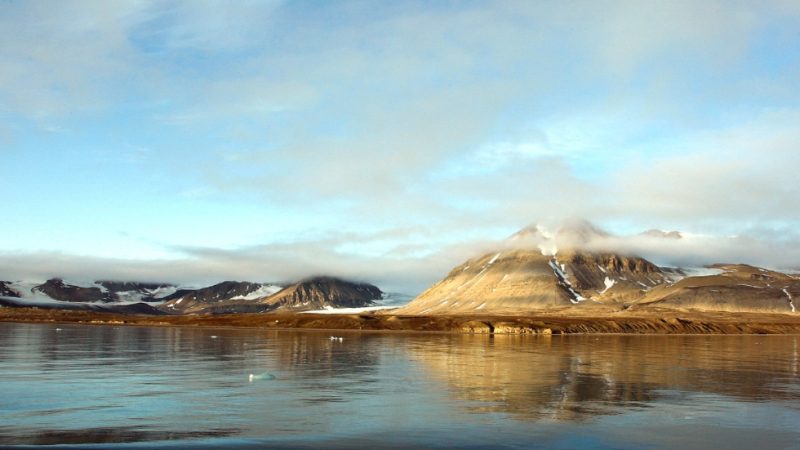
The latest point of confrontation between NATO and Russia is the Svalbard archipelago, located midway between Norway and the North Pole. Moscow claims Oslo is restricting trade with the island’s hundreds of Russian residents. A top member of the Russian legislature is now calling for Moscow to leave its agreement with Oslo that resolved the territorial dispute over the far-northern archipelago.
During a discussion about Norway restricting trade to the islands in the Russian Duma, the body’s speaker, Vyacheslav Volodin, requested the head of the chamber’s international affairs committee to look into “denouncing” the treaty. The agreement was signed in 2010.
In June, a shipment of goods to a Russian-operated mining colony on Svalbard was turned back. Moscow claimed the move by Oslo deprived the miners of needed food and medicine. “Norwegian authorities are trying to leave Russian miners without food, which is inherently immoral. This violates human rights and the principles of humanism,” said Russian Senator Konstantin Kosachev.
Konstantin went on to claim that Norway’s blocking of shipments violated international agreements. Oslo disputed the accusations saying it had not broken treaties and was legally enforcing sanctions. The shipment was “stopped on the basis of the sanctions that prohibit Russian road transport companies from transporting goods on Norwegian territory,” Norway’s Foreign Minister Anniken Huitfeldt said.
Huitfeldt noted there were potential options to allow the Kremlin to supply the miners without violating sanctions. The Russian Foreign Ministry promised Moscow would take “retaliatory measures” in response, though did not elaborate on what that might entail.
Russia says it destroyed US HIMARS rocket launchers dubbed ‘powerful tools’ by Kiev
Samizdat | July 6, 2022
Russian forces destroyed two US-made rocket launchers in Donbass, the defense ministry said on Wednesday.
The US provided Kiev with eight High Mobility Artillery Rocket Systems (HIMARS) and ammunition since the beginning of the Russian military offensive in Ukraine, according to a Pentagon fact sheet published on Tuesday.
“In the area of the settlement of Malotaranovka in the Donetsk People’s Republic, high-precision air-launched missiles destroyed two US-made HIMARS multiple launch rocket systems and two ammunition depots for them,” the Russian military said in a statement.
At the end of June, the Lugansk People’s Republic (LPR) said that an М142 HIMARS had been used by Ukrainian forces in Donbass, the first time that local authorities reported the US-supplied systems had been used in combat.
Prior to that, the chief of Ukraine’s General Staff, Valery Zaluzhny, posted a video, purporting to show pro-Kiev forces operating the long-range rocket system.
On June 23, Ukrainian Defense Minister Alexey Reznikov welcomed the arrival of HIMARS and expressed gratitude to his “American colleague and friend Lloyd Austin (the Pentagon chief) for these powerful tools.”
“Summer will be hot for Russian occupiers. And the last one for some of them,” he wrote on Twitter.
Russia has constantly warned the US and its allies against providing Ukraine with weapons saying that it would only lead to the prolongation of the conflict and the creation of long-term problems.
Russian Defense Minister Sergey Shoigu said on Tuesday that some of the foreign weapons intended for Ukraine were spreading throughout the Middle East and are turning up on the black market.
Moscow responds to Japan’s threat to cap Russian oil prices
Samizdat | July 5, 2022
Tokyo’s proposal to place a cap on Russian oil prices would lead to significantly less oil on the market and could drastically push oil prices higher, former Russian president Dmitry Medvedev warned on Tuesday.
Responding to the idea put forward by Japanese Prime Minister Fumio Kishida on Sunday, Medvedev wrote on his Telegram channel that Japan “would have neither oil nor gas from Russia, as well as no participation in the Sakhalin-2 LNG project” if Tokyo decided to go through with the proposal.
“Japanese PM Kishida recently blurted out that the price ceiling for Russian oil would be set at half its current price. Plus, a mechanism will be created that will not allow the purchase of our oil at a price higher than the established one,” the former president wrote.
He went on to explain what this would mean when “translated from Japanese into Russian,” writing that such a move would severely limit the amount of oil available on the market, causing its price to be “much higher.”
“In fact, it will be even higher than the predicted astronomical price of $300-400 a barrel. Compare this with the dynamic of gas prices,” Medvedev said.
During last week’s G7 summit, the leaders of Germany, France, Canada, the US, the UK, Japan, and Italy agreed to explore the feasibility of introducing temporary import price caps on Russian fossil fuels, including oil, citing the ongoing military conflict between Moscow and Kiev.
However, as the Kremlin has pointed out, implementing a measure such as the one proposed by Japan would first require the approval of other countries. Kremlin spokesperson Dmitry Peskov stated on Monday that Kishida’s idea was merely “a single statement only, without any decisions taken.”
Western plan to severely isolate Russia fails
By Lucas Leiroz | July 5, 2022
The Western world has tried to “isolate” and “cancel” Russia, but apparently this plan has failed and Moscow remains absolutely integrated with its major trading and strategic partners. China and India remain willing to cooperate with Russia widely, increasing current levels of bilateral trade. This demonstrates how the current situation in Eastern Europe cannot be resolved by coercive means.
The Chinese Ministry of Foreign Affairs pledged April 19 that it will strengthen cooperation with Russia, no matter what happens in the international scenario. The message comes in an official statement from the foreign ministry following a meeting held the day before between Chinese deputy MOFA Le Yucheng and Russian ambassador to Beijing Andrey Denisov. The document says:
“No matter how the international situation changes, China will, as always, strengthen strategic coordination with Russia to achieve win-win cooperation, jointly safeguard the common interests of both sides, and promote the building of a new type of international relations and a community with a shared future for mankind (…) In the first quarter of this year, the bilateral trade volume between China and Russia reached 38.2 billion US dollars, an increase of nearly 30%, [which] fully demonstrates the great resilience… of cooperation between the two countries”.
Later, commenting on the statement, Ambassador Denisov stated:
“Russia always regards developing relations with China as its diplomatic priority and is ready to further deepen bilateral comprehensive strategic coordination and all-round practical cooperation in the direction set by the two heads of state (…) [Further efforts to strengthen Russia-China ties] will continuously benefit the two peoples.”
Although it is a well-known fact that bilateral relations between Moscow and Beijing have improved substantially in recent years, forming an important axis of economic and diplomatic cooperation, the current message is of enormous importance, as it works as a response to recent US pressure against China. Last month, US President Joe Biden called his Chinese counterpart Xi Jinping and during an hour-long conversation “warned” about the possible “consequences” that would be suffered by Beijing if there was not an immediate end to its economic support for Russia.
Naturally, Xi ignored Biden’s threats and the Chinese foreign ministry maintained its stance of absolute neutrality on the ongoing conflict in Ukraine. Not mixing political and economic issues is a key point of the Chinese foreign policy tradition and this is exactly what is being applied now. Beijing refuses to maintain positions on any political event outside its strategic environment, which is why it keeps the Russian military operation off the agenda in Beijing-Moscow bilateral relations, continuing to have projects to improve cooperation, independently of such extra-economic issues.
However, it is not only the Chinese who show interest in cooperating with the Russians, ignoring the Western attempts of “cancellation”. Apparently, India is about to announce its highest ever level of trade cooperation with Russia in oil. According to reliable sources quoted by the Economic Times on April 19, state-owned companies in New Delhi are planning to buy as much Russian oil as possible in the short term, considering the expected availability and low prices of the commodity.
The Indian attitude sounds absolutely pragmatic and not ideological: faced with the conflict scenario, Indians seek to benefit from the availability of Russian oil, which arises as a consequence of the sanctions applied by the West to prevent the oil from entering the European market. With large quantities available and prices dropping, it is in India’s interest to acquire as many Russian barrels as possible and this is what is about to be done.
Obviously, this was not what the West expected from the Indians. The US has always tried to make its military partnership with India – focused on creating an “anti-China axis” – a kind of hierarchical relationship, in which Indians would automatically obey and align themselves with every decision taken by the Americans. However, despite the pressure in this direction and the constant US threats to cut ties with New Delhi, India remains convinced of defending its interests above all, making it clear that it will continue to cooperate with Russia in terms of both military trade and energy partnership.
It is impossible to look at such news and continue to believe the Western media narrative that “Russia is isolated”. Moscow has lost a part of world trade and even then, not completely, as Western countries have not yet managed to fully break off relations with Russia. On the other hand, it has not only preserved most of the global consumer market in emerging nations but has also boosted its ties with China and India, which indicates great economic support and, even more, the emergence of new intra-BRICS cooperation opportunities.
What all this means is simple to understand: the special military operation in Ukraine will not end through economic pressures, coercive measures and attempts at “cancellation”, but through the Ukrainian willingness to accept the peace terms, which are (as Russia insists) political and military neutrality and recognition of the sovereign republics of Donbass and Russian Crimea. As long as the Ukrainian government is unwilling to do so, Russia seems to continue the operation and have sufficient economic strength to maintain it.
Lucas Leiroz is a researcher in Social Sciences at the Rural Federal University of Rio de Janeiro; geopolitical consultant.
Russia Remains Committed to Ending ‘War Against Journalists’ – Lavrov
Samizdat – 04.07.2022
Moscow is interested in ending the “war against journalists” started by the West, Russian Foreign Minister Sergey Lavrov said on Monday.
“We did not start this war against journalists, we are interested in ending it, but I do not see how the West can stop its outrages, because it has gone too far, it cannot stop now without losing face,” Lavrov said during a joint press-conference with Venezuelan Foreign Minister Carlos Rafael Faria Tortosa.
According to Lavrov, “persecution” of Russian journalists abroad began long ago and recalled that Moscow had warned that a reciprocal response would follow.
“We honestly warned that we would respond reciprocally to the gross violations of the commitments that the West has undertaken,” Lavrov said.
The situation with Russian media in the West has become increasingly tense in recent years. In November 2016, the European Union adopted a resolution stating the need to counter Russian media, with Sputnik and RT regarded as main threats. Western politicians, including US lawmakers and French President Emmanuel Macron, have accused the two news agencies of interfering in elections in the United States and France, albeit without providing any evidence to substantiate the claims. Russian officials have denied such statements as unfounded.
On March 2, the European Union suspended the broadcasting of several Russian media outlets as part of the sanctions against Russia for its military operation in Ukraine. RT, Sputnik and their subsidiaries came under the ban. The TikTok and Instagram* accounts of these Russian outlets have ceased functioning in the EU.
*Instagram is banned in Russia over extremist activities.
Featured Video

AIDS Inc. by Gary Null (2007)
or go to
Aletho News Archives – Video-Images
From the Archives
Clash of Civilization, Iran Part II
By Jamal Kanj – Intifada-Palestine.com – January 14, 2011
Israel’s survival kit is: perpetuate conflict, insecurity to rationalize collective hate and finally playing victim.
Devoid of conflict, Israel implodes internally; without hate, Zionism loses its justification; and playing eternal victim to continue blackmailing the West. Absence of this holy trinity, Israel ceases to exist.
From its inception, the house of Zion has mastered exploiting adversarial powers to advance Israel’s cause. For instance, their influence over the Democratic Party in the US began with President Truman’s bid for 2nd term election in 1948.
Responding to strong opposition from Secretary of State General George Marshall and Department experts urging against recognition of Israel, President Truman replied: “I’m sorry gentlemen but I have to answer to hundreds of thousands [Jewish voters] who are anxious for the success of Zionism. I do not have hundreds of thousands of [voting] Arabs among my constituents”
Zionists influence over liberal American politics was matched with the doctrinal school of Conservative theoreticians aligning the Republican Party’s platform with Israel’s objectives. The Neoconservative Zionists, coined Zioncons, invented the “Clash of Civilization” concept to fight Israel’s wars. … continue
Blog Roll
 Aletho News
- 12 Things Your Psychiatrist Was Trained Not to Tell You
- From Unipolar Universalism to Multipolar Civilizational Distinctiveness
- RSF military group defects, joins Sudanese army: State media
- Ireland goalkeeper refuses to play ‘Israel’ as squad weighs boycott
- China pushes back against US on Cuba, Iran
- Ukrainian Soldiers, Potential Mercenaries: Have Gun, Will Travel!
- Burnham’s UN debut… A masterclass in British disinformation
- Iran flights continue despite US aviation sanctions
- Global Tipping Points Lead the World Into a State of Entropy
- The day-after at the White House: USA and Xi Jinping
- If Americans Knew
- Israel forces Gazans to live in constant peril – Daily Update
- Deconstructing Netanyahu’s pants-on-fire UN rant – Daily Update
- Trump betrayed voters with his campaign lies and prioritized a foreign country once he took office
- Netanyahu calls Israel’s war in Gaza ‘opposite of genocide’ in UN speech to near-empty hall
- Settler Kidnappings: Torture, Sexual Abuse and Terrorisation of Palestinian Abductees as Israel Deepens Annexation of West Bank
- Gaza winter nears as 162,000 tents become unusable, raising fears of humanitarian crisis
- Netanyahu says, “It’s the opposite of genocide”; UN says Gaza economy is world’s ‘most severe crisis on record’ – Daily Update
- Israel’s US-Backed Assault on Gaza Has Created the ‘World’s Most Severe Economic Crisis on Record’: UN
- ‘Protecting U.S. Citizens’… From Israel
- ‘This is where I live now, the back of a truck’: a day in the life of a grandmother in Gaza
- No Tricks Zone
- New Study: Earth And Venus Surface Warmth Largely Explained By Convection And Lapse Rate, Not CO2 Or Radiation
- 2025 Nature Paper Claiming Worsening Global Drought Gets RETRACTED …Heavily Flawed
- New Study: ‘Global Drought Shows No Detectable Recent Acceleration Under Climate Warming’
- Economic Masterminds: German Socialists Suggest Taxing Productivity Gains Stemming From Using AI
- The South China Sea Has Not Been Cooperating With The Climate Change Narrative
- Energy Crisis: Germany Enters Heating Season With Historically Low Gas Reserve Fill Levels
- New Study: The Antarctic Ice Sheet Gained Mass From 2020-2024 Due To Staggering Snow And Ice Accumulation
- Study: Ocean Heating Rates From Thousands Of Years Ago ‘Dwarf’ Modern Ocean Heating Rates
- Climate Extremists Target, Attack Large-Scale Power Grid Infrastructure In Germany!
- New Study: Antarctic Ice Melt Has Contributed Less Than 1 Centimeter To Sea Level Rise In The Last 30 Years

