Russia says it will put a stop to continued NATO enlargement
By Jonny Tickle | RT | December 28, 2021
At upcoming talks with Washington, Moscow will not only obstruct but will put a complete stop to any eastwards expansion of the US-led NATO military bloc, the Russian Deputy Foreign Minister said on Tuesday.
Speaking to news agency Interfax, Sergey Ryabkov said his country would go into the negotiations with a clear agenda and reject any attempts by US diplomats to dilute the proposed agreement between the two parties.
“Our leadership has repeatedly said we can no longer tolerate the situation that is developing in the immediate vicinity of our borders. We cannot tolerate NATO expansion. We will not just prevent it. We will put a stop to it,” Ryabkov said.
The talks, due to be held on January 10, will focus on two publicly released draft treaties that include a list of promises Russia wants to obtain from the US and NATO. As well as pledges that the bloc won’t expand eastwards, the proposals also include the end of Western cooperation with post-Soviet countries, the removal of US nuclear weapons from Europe, and the withdrawal of NATO troops and missiles away from the Russian border.
However, according to Ryabkov, the US wants to ignore Russia’s firm demands, instead proposing a less structured form of negotiations. “We should not come up with some kind of dimensionless agenda when it is in our interest to include topics that have long been sorted out through other channels. We have to focus exclusively on the two draft documents that we have presented,” he said.
Ryabkov’s comments followed quotes in the Western media from unnamed sources in the White House claiming the forthcoming talks would focus on arms control, as well as the situation on the Russian-Ukrainian border.
“That in itself is a very difficult task, given the degree of disagreement between us and the US, and us and NATO, on these issues,” the deputy FM said, explaining that Russia would not accept any American attempt to “dilute” the discussion over the proposed treaties.
“We would conclude, in such a case, that the US is not ready for a serious conversation. We call for negotiations, intensively and quickly. We believe that the issue is not just overdue. It is overripe,” he added.
Russia not deliberately choking gas supplies to West – Bloomberg
RT | December 24, 2021
Russian energy giant Gazprom has already fulfilled its contractual obligations and is not manipulating European prices, Bloomberg has claimed.
Recent slumps in Russian gas deliveries to Europe are not because of price manipulation for political gain, the New York based finance bible reported on Wednesday.
Earlier this week, the Yamal-Europe pipeline, which brings gas from Russia to Germany through Poland and Belarus, halted shipments. As European energy prices soared, some officials in the West accused Moscow of playing politics with the gas supply, in order to push Germany towards approval of the new Nord Stream 2 pipeline, which has been completed for months but has yet to be officially approved.
However, Bloomberg reported that anonymous sources familiar with the matter had confided that the real cause of the halt in gas transit was that Western buyers under long-term deals had already hit their contractual limits for 2021.
Typically, Gazprom and its customers agree to an arrangement whereby the company will supply a certain volume of gas at a pre-set rate, which this year was less than market price. Beyond that volume, energy buyers would need to pay the market rate, and when several of them reached their volume cap this week, they elected not to purchase more gas.
The Russian state-owned energy giant and its clients, including Uniper SE and RWE AG, confirmed that the company had fulfilled its agreements this year, with the Russian firm stating that it delivers gas to Europe “fully in compliance with the current contract obligations.”
Gas prices in Europe rose about 20% this week, sparking fears of a winter energy crisis, and leading to heated rhetoric surrounding energy security and the role of the Nord Stream 2 pipeline, which will bring Russian gas to Germany through the Baltic Sea, bypassing transit countries such as Ukraine and Poland.
The controversial project, which was fully constructed in September, has met with staunch opposition from Kiev, Warsaw, and Washington, and Ukrainian officials have taken credit for working to delay its certification. However, German Chancellor Olaf Scholz has insisted that it should not be used as political leverage against Moscow, saying, “The German authorities will decide this completely independent of politics. The process is moving along.”
At a press conference on Thursday, Russian President Vladimir Putin accused Western leaders of lying to make Moscow out to be responsible for the rising gas prices. “Gazprom is delivering the volume requested by its partners in full, in accordance with existing contracts,” he said.
Lavrov Tells Stoltenberg He’s Not Fit for His Job, Urges Him to Seek New Employment

Stoltenberg told Russia to respect a treaty it never signed, Lavrov tells him to respect treaties (Helsinki ’75, Paris ’90) the West did sign
Anti-Empire | December 23, 2021
“The cornerstone of such obligations is the indivisible security principle. The heads of states and governments clearly stated that no participant of the OECD should ensure their security by damaging the security of others.
So when Jens Stoltenber made this highbrow and arrogant statement that no one can breach the principle of the Washington Treaty, which keeps the door open to any potential aspirant eager to join the North Atlantic Treaty Organization, he should remember that we are not a participant in that organization, that we are not signatory to that treaty, but that we are signatories to a broader regional Euro-Atlantic document, which contains the principle of the indivisibility of security.
If Mr. Stoltenberg thinks that NATO is free to discard this principle, which is enshrined in documents adopted at the summit level, then possibly the time is ripe for him to seek new employment, because he is certainly no good for his current job.”
American mercenaries preparing ‘chemical weapon’ incident in east Ukraine: Russia
RT | December 21, 2021
US private military companies (PMCs) are preparing a provocation using chemical weapons in troubled and tense eastern Ukraine, Russian Defense Minister Sergey Shoigu claimed on Tuesday.
Moscow believes there are more than 120 employees of American PMCs operating in the region, where they are working with Ukrainian special forces.
Containers with “unidentified chemical components” have been delivered to the cities of Avdeevka and Krasny Liman in Donbass in order to stage provocations, Shoigu said, at Tuesday’s meeting of the Defense Ministry board, in Moscow, attended by President Vladimir Putin.
The minister, who was sitting alongside Putin and Russia’s top General Valery Gerasimov, provided no further details or evidence of the false-flag chemical attacks that had purportedly been planned.
Tensions have been mounting in eastern Ukraine since last month, when several Western media outlets reported that Russia had been amassing troops near the border and claimed that Moscow was planning a large-scale military invasion of the country.
The US and its allies have promised more sanctions against Russia if such a scenario is realized, but the Kremlin has repeatedly denied accusations that it is masterminding any attack, calling them groundless attempts to instill “hysteria.”
Instead, Moscow has blamed the West for encouraging Kiev to use force against the self-proclaimed Republics of Donetsk and Lugansk by supplying weapons to the Ukrainian government and intensifying the NATO buildup in Eastern Europe.
Washington ‘hunts’ Russian citizens in third countries – Moscow
RT | December 19, 2021
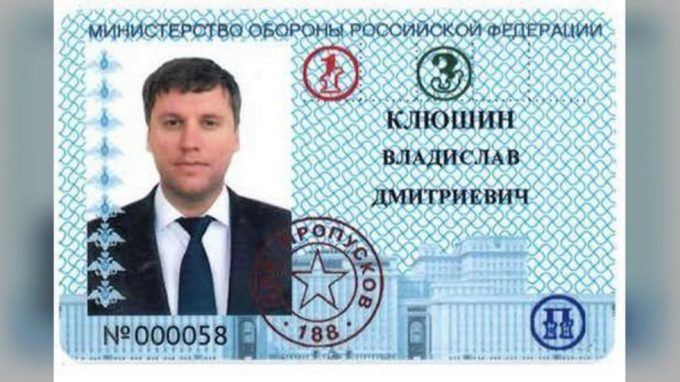
Moscow has condemned the extradition of a Russian IT firm owner from Switzerland to the US. His lawyer said Washington wants to tie the man to alleged meddling by Moscow in the 2016 American presidential election.
The extradition of businessman Vladislav Klyushin is “another episode of Washington’s continuing ‘hunt’ for Russian nationals in third countries,” the Russian Embassy in Switzerland, told TASS on Sunday.
Spokesperson Vladimir Khokhlov said Moscow was “deeply disappointed” by the decision of a Swiss court to reject Klyushin’s appeal to block his extradition on Friday. The man was handed over to American police officers in Zurich on Saturday, who escorted him on a flight, according to Switzerland’s Federal Office of Justice.
The software developed by Klyushin’s media monitoring and analytics company, M13, is used by Russian state agencies, including the federal government and Presidential Executive Office, according to the firm’s website. The businessman was detained by Swiss police in March during a family skiing trip, his lawyer, Oliver Ciric, told the media.
Swiss justice officials said the US accused Klyushin of insider trading that involved “tens of millions of dollars.”
Ciric believes the persecution of the businessman is politically motivated, and that he will face “inhuman and degrading treatment” when extradited to the US.
He told The Times in September that the charges of insider trading were being used as a pretext to transport Klyushin to the US. The lawyer said his client would likely be charged with heading an alleged Russian covert operation to meddle in the 2016 US presidential election and hack the server of the Democratic Party.
In the same interview, Ciric claimed that Klyushin had access to “certain security information” related to the Russian government, and rebuffed recruitment attempts by US and British intelligence agents in the past.
The lawyer said that Klyushin’s criminal case file has been sealed by a Massachusetts court, which is “quite unusual” for financial charges that are typically publicized by a US financial regulator.
US officials accused the Kremlin of seeking to influence the vote and hacking the server of the Democratic National Committee and an email account of John Podesta, who led Hillary Clinton’s campaign against Donald Trump. Russia consistently denied these allegations. Klyushin has denied any involvement in insider trading and hacking.
U.S. Proxy War Against Russia in Ukraine: The Afghanistan-Syria Redux Option
By Finian Cunningham | Strategic Culture Foundation | December 18, 2021
The United States is planning to redouble its weapons supply to Ukraine. What is shaping up is an intensified proxy war against Russia in which the Russophobic Kiev regime acts as Washington’s catspaw. The objective is to debilitate Russia in the same way the U.S. sapped the Soviet Union with a quagmire war in Afghanistan during the 1980s.
U.S. media reports cite Pentagon and Ukrainian officials saying that the Biden administration is considering a massive increase in armaments to the Kiev regime. This is on top of the $2.5 billion in military support that Washington has already given over the past eight years. The Biden administration has overseen $450 million in weaponry to Ukraine this year alone with a further $300 million budgeted for the coming 12 months. A separate proposal going through the Senate is seeking to boost military support for next year by another $450 million.
What gives added significance to this weapons pipeline is where they are being sourced. U.S. media reports say the arms are from inventories the Pentagon had allocated for the American-backed army in Afghanistan before it collapsed with the sudden Taliban victory in August. The weapons include Black Hawk helicopters and anti-armor munitions.
Other weapons under consideration for supply to Ukraine include more Javelin anti-tank missiles as well as Stinger anti-aircraft munitions.
In addition to the inventories previously allocated for Afghanistan, the U.S. is also planning weapons supplies from covert stockpiles overseen by the CIA in Romania and Bulgaria. This is the dark supply route that the U.S. and NATO allies used for arming terrorist proxies in a failed bid to overthrow the Syrian government. Russia’s military intervention in Syria in late 2015 defeated Washington’s regime-change objective in Damascus.
The year before, in 2014, the U.S. and its allies succeeded in their regime-change operation in Ukraine when an elected government friendly with Moscow was overthrown by a CIA-backed coup d’état. That coup brought to power a Neo-Nazi Russophobic regime that has been waging a civil war against the ethnic Russian population of southeast Ukraine. U.S. and NATO weapons supplies have motivated the Kiev regime to persist in hostilities despite a formal peace agreement known as the Minsk accord signed in 2015. France and Germany, supposed guarantors of the accord along with Russia, have both turned a blind eye to Kiev’s systematic violations.
Since the Biden administration took office 11 months ago, the Kiev regime has stepped up its provocations in southeast Ukraine. These provocations are ultimately aimed at destabilizing Russia. As well as weaponry, American and other NATO special forces are on the ground in Ukraine acting as “military advisors”. The accelerator for aggression has been stepped on in recent weeks.
The Kremlin has warned that the Ukrainian forces are ratcheting up hostilities towards the southeastern region that borders Russia. Russian President Vladimir Putin has recently said that the siege on the region also known as Donbass resembles a genocide.
The stark fact is that there is already a proxy war going on in Ukraine against Russia. Arguably, that has been the U.S. objective since the coup in Kiev in February 2014. The current escalation of violence by the Kiev regime with U.S. and NATO support means that there is a directive from Washington for widening the war.
Paradoxically, or perhaps more accurately, cynically, the U.S. and its NATO allies are boldly inverting reality with a torrent of claims that they are “defending” Ukraine from “Russian aggression”. Recent weeks have seen a full-court media propaganda campaign to shift the blame on an alleged Russian force build-up. Moscow has vehemently denied it has plans to invade Ukraine. It points out that satellite imagery cited by the U.S. and its allies for claiming a Russian build-up actually shows forces in established bases hundreds of kilometers from the border with Ukraine.
Taking stock of the situation: Ukrainian forces are stepping up aggression against the Russian-speaking population under siege for nearly eight years in the Donbass region. The U.S., NATO and European Union are complicit in this criminal aggression by weaponizing, training and apologizing for the Kiev regime with spurious allegations against Russia. Furthermore, there is an unprecedented build-up of U.S. and NATO forces in the Black Sea region conducting unscheduled war drills on Russia’s border. That is inescapably acting to embolden the unhinged Kiev regime, even more, to take the war to Russia.
Moscow is earnestly warning Washington and its NATO partners of red lines. Russia has called for a formal agreement to prohibit NATO expansion for Ukraine’s membership of the military bloc as well as installation of American weapons systems on Ukrainian territory.
Washington and its NATO partners appear complacent to a degree that suggests criminal complicity in fanning the tensions.
The Biden White House has already signaled that it will not reciprocate with Russia’s request for these security guarantees. Even if Washington somehow manages to muster the political will to appear to give Moscow some security reassurances, the fact remains that the U.S. and its NATO allies are already deeply involved in waging a proxy war in Ukraine against Russia.
Plans for redoubling weapons flow to Ukraine from inventories allocated for Afghanistan and from covert CIA-run networks in Eastern Europe indicate the proxy war is set for a deliberate escalation.
Senior U.S. lawmakers have intimated that the preferred scenario for Washington is to create a quagmire for Russia similar to the trap set for the Soviet Union in Afghanistan during the 1980s. That proxy war in which the U.S. armed Mujahideen militants with Stinger missiles greatly sapped the Soviet Union leading to its demise. Those militants later evolved into Al Qaeda networks that were used in the failed U.S.-backed regime-change operation in Syria over the past decade.
The Russophobic Kiev regime is being driven to escalate its terror war against the Russian people in Donbas. The objective is to draw Russia into that war to defend people with whom it is culturally connected. The moral imperative on Moscow to act would be huge. Washington is calculating that the move turns into a quagmire that will debilitate Russia and tarnish its international standing.
But this nefarious plan – an Afghanistan-Syria redux – could so easily slide over the abyss into a full war between the United States and Russia. Moscow seems to be more cognizant of that possible disaster than Washington which is afflicted with the insouciance of arrogance.
Who is to blame for the Ukraine crisis?
By Glenn Diesen | RT | December 18, 2021
Russia and the West have sounded the alarm in past weeks over a standoff across the border with Ukraine. Both sides accuse each other of inflaming the situation, and it’s increasingly clear they see the conflict very differently.
A recent poll by Moscow’s Levada Center, registered as a ‘foreign agent’ by Moscow’s Ministry of Justice over ties to overseas funding, reveals who Russians blame for the escalation of the situation. A colossal 50% believe NATO is responsible, while only 16% blame Ukraine and 3% point the finger at the war-torn Donbass region. Another 4% believe that Russia is the culprit. Simply put, those inside the country consider the conflict over Ukraine to be a NATO war.
Ukraine not to blame?
Why do only one in six Russians blame Kiev, given how often the media paints this as a battle between the two nations? The position appears consistent with the fact Moscow has stated that negotiating with Ukraine makes little sense as its leadership is under Washington’s control.
One poll from Ukraine reveals that 65% of Ukrainians believe that their country is under foreign control, and in the more NATO-critical eastern and southern regions of Ukraine this number stands at 75% and 71%. These numbers should not surprise anyone following the facts:
NATO promised membership to Ukraine when only approximately 20% of Ukrainians said they wanted to join the bloc. After backing the toppling of Ukraine’s democratically elected president, Western countries then supported Kiev’s ‘anti-terrorist operations’ against its own population who contested the legitimacy of the coup. The US has since supported the draconian suppression of political opposition in the country, which included arresting the main opposition leader, shutting down opposition news media, disenfranchising millions of voters, arresting protests, and using anti-corruption agencies to purge opposition. The objective of making Ukraine a bastion against Russia is not compatible with supporting Ukrainian democracy.
President Volodymyr Zelensky won a landslide victory with 73% of the popular vote in 2019 on the platform that he would negotiate with Donbass and restore relations with Russia. Appeasing right-wing nationalists at home, as well as Washington, Zelensky reversed his election promises and his approval ratings have collapsed. By October 2021, a poll from the Kyiv International Institute of Sociology revealed that his approval had collapsed to a mere 24%. When Zelensky’s deputy chief of staff, Oleg Tatarov, complained about the foreign control over the government, he was immediately suspended and indicted.
The US has been reluctant to push its Ukrainian proxy to implement the UN-approved Minsk Agreement, and instead, the US pumps weapons into Ukraine and routinely threatens NATO expansion. Making Ukraine a front line against Russia compels Moscow to respond, which risks war and the survival of Ukraine as a state.
Subsequently, most Russians seem not to blame Ukraine, writing off the country as under external administration.
A NATO War?
During the Cold War, NATO served the purpose of containing the Soviet Union with collective defence. The bloc aimed to preserve the status quo against Soviet revisionism. After the Warsaw Pact was dissolved and the Soviet Union collapsed, many expected NATO to be dismantled as well. It did the opposite by transforming from a status-quo to a revisionist military alliance. On March 12, 1999, NATO began to expand and less than two weeks later invaded Yugoslavia in violation of international law. As Henry Kissinger cautioned at the time, NATO could no longer claim to be a defensive alliance and Russia’s fears about Western revisionism in Europe had been confirmed.
The central principle of “indivisible security”, suggesting that one side should not enhance its security at the expense of the other side, has been the key principle of every pan-European security arrangement from the Helsinki Accords of 1975, to the Charter of Paris for a New Europe of 1990, to the establishment of the OSCE in 1994.
However, NATO expansionism and revisionism was clothed in ideology as the military alliance rebranded itself as a “community of democracies”. The argument was that Russia should not be concerned as NATO expansion is tantamount to expanding the zone of peace and stability, which would also benefit Russian security. With this ideological sleight of hand, all pan-European security agreements have been dismantled, and pan-European security predictably collapses.
NATO expansion implicitly entailed presenting Russia with an ultimatum. Moscow could either accept NATO expansion towards Russian borders as a “force for good”, or oppose expansionism and be castigated as an anti-democratic and counter-civilizational force that would have to be contained. Either way, NATO would expand and pan-European security agreements would be rendered insignificant.
The notion that NATO was no longer an anti-Russian alliance rested on a strange logic. Russia could accept that NATO had transformed itself into a peaceful community of values, otherwise, NATO would be compelled to return to its former mission of containing Russia. What was unavoidable has now happened. Russian efforts to contain NATO expansionism are depicted as Russian aggression, which requires NATO to expand membership and push its military infrastructure further towards Russian borders.
Framing the Ukraine crisis as Russian aggression
Russia has not demanded guarantees from Ukraine that it will not accept NATO membership, and instead has called on NATO not to offer membership in the first place. This may seem like a minor difference, but conflating the two is at the heart of NATO’s propaganda in the Ukraine crisis.
Suddenly, the narrative is no longer that Russia demands that NATO stops expanding an anti-Russian military alliance with a budget more than 10 times that of Russia – a demand compatible with the “indivisible security” principle of every pan-European security agreement. Instead, the conflict is about Russia dictating to its smaller neighbour what it should be allowed to do. With this sleight of hand, a NATO-Russia conflict becomes a Russia-Ukraine conflict, and Russia becomes the revisionist power instead of NATO.
This is obviously a favourable narrative as NATO goes from being the source of instability, to becoming an external security provider “supporting Ukraine”. NATO membership is suddenly not the source of the conflict, but is the solution.
Glenn Diesen is a Professor at the University of South-Eastern Norway and an editor at the Russia in Global Affairs journal.
Russia explains why it vetoed climate change resolution at UN
RT | December 13, 2021
Russia has vetoed a draft UN Security Council (UNSC) resolution, linking climate change to security threats. Russia’s ambassador to the body claimed the document would have set a dangerously one-sided approach to future conflicts.
The UNSC voted on the draft resolution, tabled by temporary members Ireland and Niger, on Monday. The proposal, co-sponsored by over 100 nations, called upon the UN secretary-general to make climate-related risks “a central component” of conflict prevention, while “incorporating information on the security implications of climate change” to make the council “pay due regard to any root causes of conflict or risk multipliers.”
While the draft was supported by the majority of UNSC members, it was vetoed by Russia, with another permanent member, China, abstaining. Among the temporary invitees, India was the only country to vote against the draft. Between them, the three countries are home to close to 40% of the world’s population.
Explaining the decision to sink the resolution, Russia’s Permanent Representative Vassily Nebenzia said the document would have imposed an extremely one-sided perspective to deal with conflicts, while potentially enabling the UNSC to put any country on its agenda under the guise of climate-related issues.
“We object to the creation of a new branch in the council’s work that asserts a generic and an automatic link between climate change and international security, turning a scientific and socio-economic issue into a political issue,” Nebenzia said during the meeting.
The proposed document was effectively “coercing the council to take a one-dimensional approach to conflicts and threats to international peace and security, i.e. through the climate lens,” Russia’s mission said in a separate statement.
We recognize the range of complex and intertwined challenges, including the impact of climate change, natural disasters, poverty, poor local governance that is mostly rooted in the colonial past, and terrorism threats that are an intolerable burden for some countries and regions. All those situations have their own specific characteristics.
The mission also noted that the draft was not actually as universally supported as its sponsors tried to present it, stating that the “penholders of the document were pushing it through without readiness to discuss the root causes of challenges” that the “vulnerable countries” are facing.
“As a responsible member of the United Nations and its Security Council, the Russian Federation along with India and China does not share such an approach imposed by the Western nations that have already made a significant number of countries expecting assistance believe in it,” the mission stressed.
Ireland has already voiced its displeasure over the demise of the draft resolution, with the country’s mission at the UN blasting the veto powers of permanent UNSC members as “an outdated tool, for what we think is an outdated perspective.”
“A historic opportunity to recognize climate change as contributing to conflict has been vetoed for now, but the consensus of international opinion is more than clear,” Ireland’s Foreign Minister Simon Coveney said.
Germany’s Traffic Light Coalition Blinks Green for NATO Hostility to Russia
By Finian Cunningham | Strategic Culture Foundation | December 17, 2021
The new German coalition government headed up by Chancellor Olaf Scholz is only one week in power but already the signals are pointing to Berlin being more amenable to U.S.-led NATO hostility towards Russia.
The “traffic light” coalition (based on party colours) comprises the Social Democrat Party led by Scholz in partnership with the Greens and pro-business Free Democrats. Scholz gave an inaugural address to the Bundestag this week as the new chancellor having replaced Angela Merkel of the Christian Democrats after her 16 years in power.
Following Merkel’s reign, which was hallmarked by stability and her dominant personal style, all eyes will be on the new government in Berlin and its impact on transatlantic relations. Scholz, who is relatively unknown, and his administration could hardly be met with a more challenging time given the heightened tensions between, on the one hand, the U.S.-led NATO military alliance and the European Union, and on the other, Russia.
Berlin’s new foreign minister Annalena Baerbock (who takes over from Heiko Maas) brings to her post a more vociferous, critical position towards Russia. Baerbock, a leading Green lawmaker, announced this week that the Nord Stream 2 gas pipeline between Russia and Germany is being put on hold due to alleged Russian aggression towards Ukraine. The pipeline was already being held up since completion in September by an industrial certification process. But now Baerbock has introduced a geopolitical factor to cancel the project. Before her ministerial post, she was known as a trenchant critic of Nord Stream 2, opposing it because she provocatively claimed, it allowed Russia to “blackmail Europe”, and also apparently on environmental grounds. Ironically, the alternative to Russian gas supply would be the import of American shale gas which is more expensive and dirty owing to its environmentally destructive extraction method. In her latest Nord Stream 2 pronouncement, the German foreign minister is sounding remarkably like U.S. Secretary of State Antony Blinken in linking the project’s future to tensions over Ukraine and putative Russian invasion plans.
Baerbock has also been a long-standing advocate of expanding NATO eastwards and of closer transatlantic ties with the United States.
This eastward expansion of the military alliance is exactly what has caused apprehension in Moscow which views the bloc as threatening Russia’s national security from the potential for advanced positioning of nuclear missiles on Russian borders. Russia’s President Vladimir Putin has urged U.S. President Joe Biden as well as British and French counterparts to implement legal guarantees to safeguard Russia’s security. Those guarantees would include a prohibition on NATO’s further eastward expansion to include membership access for former Soviet republics Ukraine and Georgia.
With Baerbock as Germany’s top diplomat, it is likely that Russia’s concerns will be given short shrift. As the strongest political force in the European Union, a more hardline German policy will ramify across the entire EU and reinforce the position of Russophobic members like Poland and the Baltic states.
As for the new chancellor, 63-year-old Scholz was formerly the finance minister in Merkel’s last coalition government. That administration was robustly supportive of the Nord Stream 2 partnership with Russia. Under Merkel, Berlin rebuffed Washington’s objections to the pipeline saying that it was a sovereign matter for Germany. Scholz himself had in the past spoken out against American meddling over Germany’s energy policy. The Biden administration appeared to respect Berlin’s independence on the issue by dropping threats of sanctions against participating companies. That background might suggest that the chancellor’s office would hold Baerbock’s foreign ministry in check.
However, the recent escalation of tensions over Ukraine fuelled by Washington’s claims that Russia is planning to invade the country has hardened Germany’s stance towards Moscow, in particular on the issue of expanding economic sanctions as “severe consequences” for alleged Russian aggression. Moscow has repeatedly dismissed the U.S. claims of invasion plans, but disconcertingly Germany and the rest of the EU have gone along with Washington’s narrative, accepting dubious American “intel” as if good coin, reminiscent of the WMD propaganda leading up the war on Iraq. That paradigm shift suggests a premeditated, orchestrated objective for the U.S. The Europeans have been suitably suckered into the ploy. And, at last, the Nord Stream 2 project is within target of Washington’s policy torpedoes.
In his address to the Bundestag this week, Scholz called for “constructive dialogue” with Russia to “stop the spiral of escalation”. He also called for “mutual understanding”. That may sound like an enlightened policy of diplomatic engagement. But then, disappointingly, Scholz vowed that Germany would “speak with one voice with our European partners and transatlantic allies”. That means Berlin is henceforth deferring to the position of Washington and Kiev in terms of determining response to the accepted narrative of “Russian aggression”.
Whatever the shortcomings of Merkel – she was no radical critic of Washington – but she at least was capable at times of exerting a modicum of independence. Her unwavering support for Nord Stream 2, for example, despite American pressure. Also more recently, it has emerged that Merkel reportedly blocked supplies of NATO weapons to Ukraine much to the annoyance of the Kiev regime.
Olaf Scholz does not come across, at least so far, as a strong leader. His mealy-mouthed talk about “sharing one voice” with the U.S. and “partners” like Ukraine, as well as his ready acceptance of spurious allegations about Russian aggression, indicate that the new Berlin government will be a pliable tool for Washington’s policy of hostility towards Russia.
Historically, it is ominous that the first German overseas military action since 1945 occurred in 1999 under an SPD-Green coalition. That was when Germany joined in the NATO bombing of Serbia. These parties are coalition partners again at another crucial time for Europe.
If there is a new traffic light in Berlin it’s showing no stops for further U.S. and NATO aggression in Europe.
Russia’s QR code regime is collapsing
It was never about public health and Russians know it
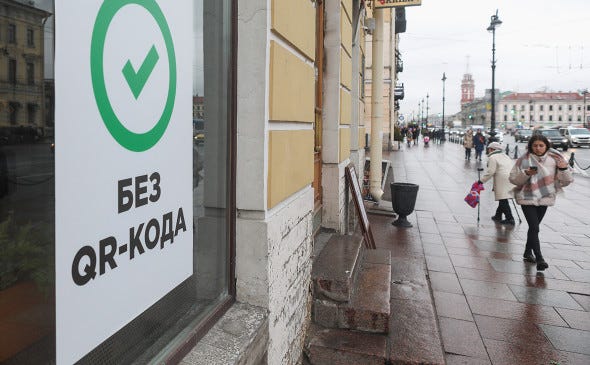
Resistance to QR codes in Russia has taken on many forms, including boycotts and beating up ID inspectors. It is what it is.
By Edward Slavsquat | December 15, 2021
The Russian government is still planning to push through a deeply unpopular nationwide QR code law—but making such legislation a reality could be a tall order.
In some regions where QR codes are already in place, authorities have hastily abandoned enforcement efforts.
Fed-up Russians are boycotting, bypassing, and beating people up.
Non-existent enforcement in Kazan
On November 22, Kazan, the capital of Tatarstan, became the first city in Russia to require QR codes for public transportation. The new rule led to absolute chaos: buses were being delayed by twenty minutes or more as conductors struggled to check QR codes—and there were numerous reports of angry passengers starting brawls.
It appears that Kazan basically… gave up. QR codes are still required to use public transport, but the rule is not enforced in any meaningful way.
In early December, Ilya Zotov, a member of the Public Chamber of the Russian Federation, Chairman of the All-Russian Association of Passengers, decided to investigate how Kazan’s QR codes regime works in practice.
His findings were quite extraordinary:
“Briefly: I traveled on 4 different bus routes, 1 trolleybus, and also in the metro. What did I see in fact?
– on 4 bus routes the QR code was never asked;
– in the trolleybus they asked if I had a code, I said yes (which is true), but they did not ask me to show it;
“In the metro, QR codes are checked at the entrance to the station, but you can show any code (of a relative or friend), there is no data reconciliation,” Zotov, wrote in his Telegram channel.
He also said that 70% of passengers were not complying with mask rules. The takeaway? Maybe this is not such a good policy:
“I come to the conclusion that this whole imitation is not needed… It is better for the authorities of Tatarstan to honestly admit this and cancel QR codes in transport,” Zotov wrote.
Enforcement reportedly remains quite lax. At the Doctors for Truth conference in Moscow on Sunday, your correspondent spoke with an activist who said that she recently took several bus rides in Kazan without having to present a QR code.
The most dangerous job in Russia?
One of the problems with enforcing QR codes in Russia is that you can get stabbed for doing it. On paper it sounds like a major growth industry, but is it really worth the lousy pay and the constant beatings?
For example, at the end of November a mall cop in Kazan was wounded in the arm with a knife after he asked a man for his QR code.
In some parts of Russia, violent opposition to QR codes appears to have played a key role in dropping the regime altogether.
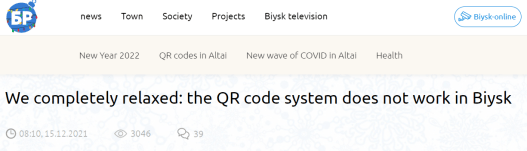
Reason: constant beatings.
REGNUM, citing local media, reported that a city in Altai gave up on enforcing QR codes in their shopping centers—partly due to the “very aggressive attitude of citizens towards the procedure”:
According to one of the managers of the shopping center, two inspectors were beaten up in the first ten days of the introduction of the vaccination inspection system in the Altai Territory.
We’ve read similar reports from across Russia.
St. Petersburg business revolt
St. Petersburg restauranteur Alexander Konovalov owns dozens of businesses. He announced last month that he would not be complying with the city’s QR code rules:
“The introduction of QR codes, the assignment of numbers, as in a concentration camp, is fascism. I have more than 200 establishments (among them bars, hookah bars, bakeries, beauty salons), in all my establishments they will not ask for a QR code. From time to time they come to us with checks, but we simply do not pay attention to it. Let them come.”
Notably, he claimed he has yet to be fined for disobeying the “public health” measure.
Meanwhile, dozens of St. Petersburg residents have filed a class action lawsuit against the city government demanding the removal of the QR code regime.
United Russia continues to push for nationwide QR codes
Curiously, Putin’s United Russia continues to ignore overwhelming opposition to legislation that would make QR codes mandatory nationwide for many aspects of ordinary life:
The United Russia party supported the bill on QR codes in public places, subject to its deep revision. This was announced on Monday, December 13, by the head of the faction in the State Duma, Vladimir Vasiliev.
Earlier this week it was announced that the State Duma had withdrawn parts of this bill that called for QR codes for trains and air travel—but it turns out this was slightly inaccurate:
“As for the introduction of QR codes in transport, this bill has not been removed from the agenda, but sent for revision. It is being studied and worked out in detail. As a doctor and as an MP, I believe it is very important to maintain restrictive anti-epidemic measures in order to curb the growth of morbidity. Tatyana Alekseevna Golikova came to the State Duma, she answered questions in great detail, with all the clarifications. In public places, QR codes will be valid. The only exception will be grocery stores and pharmacies. And all other publicly accessible places will be admitted only by QR codes. These are restaurants, theaters, museums, shopping centers—all of this will be done using QR codes,” said [United Russia member] Tamara Frolova, member of the State Duma Health Protection Commission.
What is the public health benefit of these codes? Can anyone explain this? And why does United Russia continue to pursue brazen political suicide? It’s very weird.
As we’ve mentioned before, the Russian government will probably need to simulate a fake alien invasion in order to spook people into accepting a digital ausweis. In the meantime, Russians will continue to use QR codes taken from washing machines to gain access to their local shopping centers.
It’s Russia.
Featured Video

AIDS Inc. by Gary Null (2007)
or go to
Aletho News Archives – Video-Images
From the Archives
Clash of Civilization, Iran Part II
By Jamal Kanj – Intifada-Palestine.com – January 14, 2011
Israel’s survival kit is: perpetuate conflict, insecurity to rationalize collective hate and finally playing victim.
Devoid of conflict, Israel implodes internally; without hate, Zionism loses its justification; and playing eternal victim to continue blackmailing the West. Absence of this holy trinity, Israel ceases to exist.
From its inception, the house of Zion has mastered exploiting adversarial powers to advance Israel’s cause. For instance, their influence over the Democratic Party in the US began with President Truman’s bid for 2nd term election in 1948.
Responding to strong opposition from Secretary of State General George Marshall and Department experts urging against recognition of Israel, President Truman replied: “I’m sorry gentlemen but I have to answer to hundreds of thousands [Jewish voters] who are anxious for the success of Zionism. I do not have hundreds of thousands of [voting] Arabs among my constituents”
Zionists influence over liberal American politics was matched with the doctrinal school of Conservative theoreticians aligning the Republican Party’s platform with Israel’s objectives. The Neoconservative Zionists, coined Zioncons, invented the “Clash of Civilization” concept to fight Israel’s wars. … continue
Blog Roll
 Aletho News
- Merck Virologists Admitted to Falsely Certifying Vaccine Efficacy
- Mandatory Folic Acid for every man, woman & child
- Pro-Palestine protesters arrested outside UK’s ruling Labour Conference in Liverpool
- Mauritius denies landing permit to flight from Israel, forcing cancellation: Tour operator
- Israeli finance minister calls for genocidal war on West Bank, annexation of south Lebanon
- 12 Things Your Psychiatrist Was Trained Not to Tell You
- From Unipolar Universalism to Multipolar Civilizational Distinctiveness
- RSF military group defects, joins Sudanese army: State media
- Ireland goalkeeper refuses to play ‘Israel’ as squad weighs boycott
- China pushes back against US on Cuba, Iran
- If Americans Knew
- Israel forces Gazans to live in constant peril – Daily Update
- Deconstructing Netanyahu’s pants-on-fire UN rant – Daily Update
- Trump betrayed voters with his campaign lies and prioritized a foreign country once he took office
- Netanyahu calls Israel’s war in Gaza ‘opposite of genocide’ in UN speech to near-empty hall
- Settler Kidnappings: Torture, Sexual Abuse and Terrorisation of Palestinian Abductees as Israel Deepens Annexation of West Bank
- Gaza winter nears as 162,000 tents become unusable, raising fears of humanitarian crisis
- Netanyahu says, “It’s the opposite of genocide”; UN says Gaza economy is world’s ‘most severe crisis on record’ – Daily Update
- Israel’s US-Backed Assault on Gaza Has Created the ‘World’s Most Severe Economic Crisis on Record’: UN
- ‘Protecting U.S. Citizens’… From Israel
- ‘This is where I live now, the back of a truck’: a day in the life of a grandmother in Gaza
- No Tricks Zone
- New Study: Earth And Venus Surface Warmth Largely Explained By Convection And Lapse Rate, Not CO2 Or Radiation
- 2025 Nature Paper Claiming Worsening Global Drought Gets RETRACTED …Heavily Flawed
- New Study: ‘Global Drought Shows No Detectable Recent Acceleration Under Climate Warming’
- Economic Masterminds: German Socialists Suggest Taxing Productivity Gains Stemming From Using AI
- The South China Sea Has Not Been Cooperating With The Climate Change Narrative
- Energy Crisis: Germany Enters Heating Season With Historically Low Gas Reserve Fill Levels
- New Study: The Antarctic Ice Sheet Gained Mass From 2020-2024 Due To Staggering Snow And Ice Accumulation
- Study: Ocean Heating Rates From Thousands Of Years Ago ‘Dwarf’ Modern Ocean Heating Rates
- Climate Extremists Target, Attack Large-Scale Power Grid Infrastructure In Germany!
- New Study: Antarctic Ice Melt Has Contributed Less Than 1 Centimeter To Sea Level Rise In The Last 30 Years

